Feeds:
Posts
Comments

The year 2020 is turning out to be an extraordinary challenge for individuals, families and businesses. Coronavirus has spread several other viruses – those of fear, uncertainty, hunger, jobs, lack of physical interactions in education as well as in life, and the like.

The pandemic has left traditional business models in a shambles. Supply chains have got disrupted. Businesses have shut shops. Industries with some core strengths have diversified into newer markets and products. The first priority happens to be that of servicing the critical requirements of customers while shielding the employees to the extent possible.

Economies the world over have taken a severe beating. For a vast majority, sources of income have simply vanished overnight. The virus has exposed, yet again, the fault-lines in our health, social and economic infrastructure.

The Innate Goodness in Humanity

Many amongst us have already turned cynical towards a proposition of this kind and believe that human beings are selfish. Being bombarded relentlessly by the propaganda mills run by shameless politicians, a TRP-chasing media and movie directors who keep churning out dark and depressing flicks, we often end up taking a jaundiced view of people and events around us.

Rutger Bregman, the popular Dutch historian, in his book Humankind, argues otherwise. He points out that there is a spontaneous coming together of people immediately after any natural disaster. He says that ‘cooperation has been more important in our evolution as a species than competition. What we assume in other people is what we get.’

Walter Scheidel, in his book, The Great Leveler, argues that throughout human history, the following four kinds of disasters have led to economic equality: wars, revolutions, pandemic and state collapse. Each of these, he proposes, results in excess mortality, thereby creating a shortage of working hands and, as a consequence, a general rise in incomes.

A ‘X’ Shaped Recovery?!

However, the proposition is arguable. Take the case of the pandemic stalking us at present. It is true that it strikes all and sundry. But to say that the loss of livelihoods and economic hardships faced is the same across different income levels and business verticals would be wrong. Social biases, disparity in access to quality education, health and networking and a non-level playing field for small businesses to cash in on newer opportunities in the environment – all these play spoilsports. With each disaster faced by humanity, the inbuilt inequalities and fault lines only end up getting reinforced. The plight of the millions of Indian migrant labourers who travelled long distances on foot to reach their homes during April and June 2020 cannot be erased from our collective memory easily.

Credit Suisse economist Neelkanth Mishra speaks of four classes in the society: government, wage earners, informal enterprises and formal firms. For 2020-21, he has attempted to examine which group bears how much of the overall GDP loss. In these computations, 50% of loss is borne by the government, 25% by the wage earners and 10% each by informal and formal firms. Looking beyond 2020-21, a growth slowdown will be unequally distributed between these groups.

Recovery in the economy would not be as rapid as the slowdown has been. From the computation done by Mishra, it appears that it would neither be a ‘V’ or a ‘W’ shaped one. Perhaps, a ‘X’ shaped recovery is in the offing.

A Silver Lining in the Corona Virus Cloud

Broad sweeping generalizations of a situation could also hide some silver linings in an otherwise gloomy-looking cloud. According to a study done by Badri Narayan, a social historian and cultural anthropologist and, Director, GB Pant Social Science Institute, major challenges also tend to bring out the innate goodness in human beings.

He has interviewed 215 quarantined rural migrants in the Indian states of Uttar Pradesh and Bihar. The respondents were from a diverse set of castes like dalits, other backward classes and upper castes.

By way of a conclusion, he states that ‘Caste is deeply ingrained in our social system….. but an emergency like a pandemic gives jolts and shocks to it.’

In other words, when it comes to handling overwhelming challenges, caste considerations normally take a back seat. This indicates a possibility of the pandemic facilitating better social unity and cohesion, an idea which deserves to be explored further. This proposition fits in well with the views of Rutger Bregman.

The underlying need is to build resilience and inclusivity across the vast socio-economic spectrum of our society. Our politicos, economists and social activists appear to be missing a road map to counter a strategic challenge of this kind.

(Part 4 of a series of articles on Corona virus and Leadership) 

(Inputs from Prof G P Rao are gratefully acknowledged.)

(Image courtesy https://medium.com/@brca.iitdelhi/social-harmony-e7cbacc76287)

(Related Posts:

https://ashokbhatia.wordpress.com/2020/09/05/corona-virus-and-an-early-onset-of-industrial-revolution-4-0

https://ashokbhatia.wordpress.com/2020/09/08/corona-virus-leadership-traits-and-human-values

https://ashokbhatia.wordpress.com/2020/09/14/corona-virus-some-lessons-from-bhagavad-gita)
In Part 2 of this series of thoughts on the challenges posed by the pandemic to business leaders, we had noticed that the same are being met by:

  • Reposing one’s faith in the basic goodness of human beings,
  • Responding to fresh challenges in a creative and innovative manner,
  • Adopting a sunnier disposition,
  • Preparing for contingencies in advance, and
  • Reconfiguring operations with due respect to nature and mother earth.

One no longer has the luxury of treating these traits as being theoretical constructs. Leadership is always context-specific and top managements need to evaluate the seniors on the traits listed here. These are the transformative professionals in the organization who need to be brought into critical roles without delay.

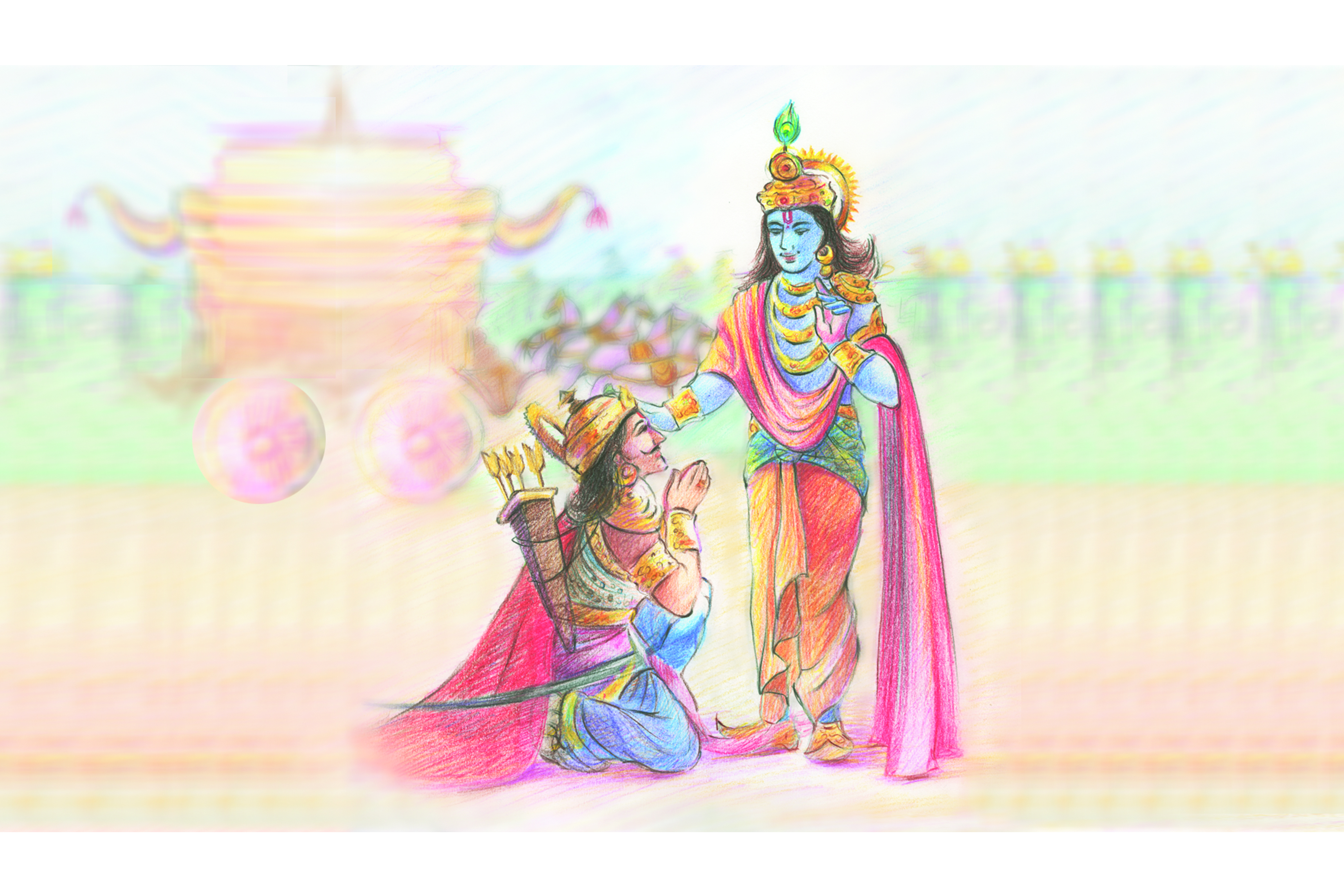
Much like a befuddled Arjuna twiddling his thumbs at the beginning of Bhagavad Gita who is made to realize his true path of righteousness towards the end of this unique Manual of Motivation, the pandemic is telling leaders to wake up to a new reality and get their act right.

Lord Krishna does not directly refer to human values; instead, he places a premium on one following the path of righteousness, a concept which is all-encompassing. He exhorts us to work in a detached manner, to focus on our efforts and be clear that results are not in our control. He speaks of the virtues of higher resilience, equanimity and the extent of control we exercise over our desires. All these enable us to enjoy an inner sense of peace and joy. He also speaks of human behavior being governed by the mix of three ‘gunas’: Sattvic, Rajasic and Tamasic.

The qualities mentioned in Bhagavad Gita mostly match with the traits mentioned earlier. Businesses and traders downing their shutters and moving on to totally different activities surely have owners who are learning the art of detachment the hard way. Many have expanded their footprints, revealing their nerves of chilled steel and reflecting a high degree of resilience. Seeking inner peace and equanimity by adopting some meditative practices and doing yoga is helping professionals to switch over to a work-from-home mode, despite distractions caused by family matters. All these have made leaders discard their sense of pessimism and get cracking in the face of a pandemic, setting an example for others to follow.

It would be appropriate to revisit some verses of the scripture:

Whatever actions great persons perform, common people follow. Whatever standards they set, all the world pursues. (3.21) 

When the mind, restrained from material activities, becomes still by the practice of Yog, then the yogi is able to behold the soul through the purified mind, and he rejoices in the inner joy. (6.20)


 In that joyous state of Yog, called samādhi, one experiences supreme boundless divine bliss, and thus situated, one never deviates from the Eternal Truth. (6.21)


 Having gained that state, one does not consider any attainment to be greater. Being thus established, one is not shaken even in the midst of the greatest calamity. (6.22)


 That state of severance from union with misery is known as Yog. This Yog should be resolutely practiced with determination free from pessimism. (6.23)


 Completely renouncing all desires arising from thoughts of the world, one should restrain the senses from all sides with the mind. (6.24)


With the benefit of hindsight, those who have a positive attitude are not only surviving the virus but have also discovered newer dimensions in their lives. They are on the way to re-skilling themselves and learning other trades. For many, especially in countries like India, an abiding faith in a divine power brings about a sense of surrender, acceptance, patience and resilience. The result is that they end up following the key lessons of Bhagavad Gita, even though in a subconscious manner. This helps them to do well during the kind of churning that the pandemic has inflicted on us.

What the virus has thrown up is a challenge to human beings to live, work and become smarter; to respect nature and environment better and to focus on being sustainable. It has prodded us in the ribs to be more flexible in our thinking and to expect the unexpected.

It has brought home some basic truths: that human beings come first; also, that the key lessons imparted by Lord Krishna to Arjuna on a battlefield some 5,500 years ago continue to be relevant to this day.

(Inputs from Mr Ashok Narayan are gratefully acknowledged; translations of Gita verses courtesy https://www.holy-bhagavad-gita.org)

(The illustration is reproduced with permission from the illustrator, Arati Shedde, and Heartfulness Magazine – www.heartfulnessmagazine.com.)


(Part 3 of a series of articles on Corona virus and Leadership)

(Related Posts:

https://ashokbhatia.wordpress.com/2020/09/05/corona-virus-and-an-early-onset-of-industrial-revolution-4-0

https://ashokbhatia.wordpress.com/2020/09/08/corona-virus-leadership-traits-and-human-values)

ashokbhatia's avatarashokbhatia

In order to commemorate 125 years of the Chicago address of Swami Vivekananda, Integrating Spirituality and Organisational Leadership (ISOL Foundation) had recently organised a World Congress on Vedic Foundations of Management Science.

Several luminaries and experts in diverse fields addressed the gathering, which was inaugurated on the 11th of September at the Breasted Hall, The Oriental Institute, The University of Chicago. Distinguished Trinity and ISOL Awards were presented on the day. The event concluded on the 13th of September, 2018.

The Inaugural Session started with a Welcome Address by Dr J L Raina, Chairman of ISOL Foundation. Vedic Mantras were chanted by Mr Ashok Vyas, followed by a Welcome Song penned by Mr D V Shastry.

Prof Sunita Singh Sengupta, Founder ISOL Foundation, welcomed the delegates and presented a Background Paper.

The Inaugural Addresses were delivered by the following:

  • Ms Neeta Bhushan, Consul General of India in Chicago
  • Dr Larry…

View original post 298 more words

How have some of our business leaders responded to the challenges posed by the pandemic? Well they appear to be following the popular saying that when times get tough, the tough get going!

As per press reports, Sanjiv Mehta, Chairman and MD of Hindustan Unilever, has spoken of the kind of steps taken to boost the company’s prospects by focusing better on health, hygiene and sanitation products. As many as 50 new product and pack innovations are said to have been made. Agility and speed have helped.

Manu Jain, MD of Xiaomi India, has said that the pandemic has taught him the importance of empathy and patience during tough times. The ability to be able to put oneself in another person’s shoes stands out. Instant gratification is nowhere on the horizon; patience alone helps. So does slowing down and staying calm.

Ronojoy Dutta, CEO, IndiGo, has highlighted the importance of staying connected as well as being transparent with employees so as to retain their trust. According to him, irrespective of the situation, honesty and transparency win in the harshest of times. According to C P Gurnani, CEO and MD, Tech Mahindra, leaders need to give up their ‘command and control’ mindset and shift to a ‘mentor and inspire’ mindset.

Manish Sabharwal, Chairman, Teamlease Services, concludes that resilience matters as much as performance.

(*Source: The Economic Times Magazine, August 30-September 05, 2020, etc)

Leadership traits which help

Leaders who thrive in an era of heightened uncertainty and bloated entropy are better placed to steer their organizations more purposefully and effectively. The virus has highlighted the following qualities in someone who leads an organization in such stormy times: Prioritizing people. Creating clarity on what needs to be done; providing hope and refusing to let a mood of despondency creep in. Having an ear to the ground and being flexible in an evolving crisis; engaging with other stakeholders, including employees, to understand their concerns better.

The virus has brought into focus the dire need for such leaders. It has even indicated the kind of traits such leaders should have: empathy, compassion, higher resilience, an inner sense of peace and equanimity, brain stilling, actions which are rooted in basic human values and better concern for the environment.

It is already understood that leaders who believe in delegation, decentralization and quiet consensus building are able to handle crises better. The approach to problem solving needs to be non-muscular. A shock-and-awe tactics is best avoided.

Leader Mindsets and Human Values

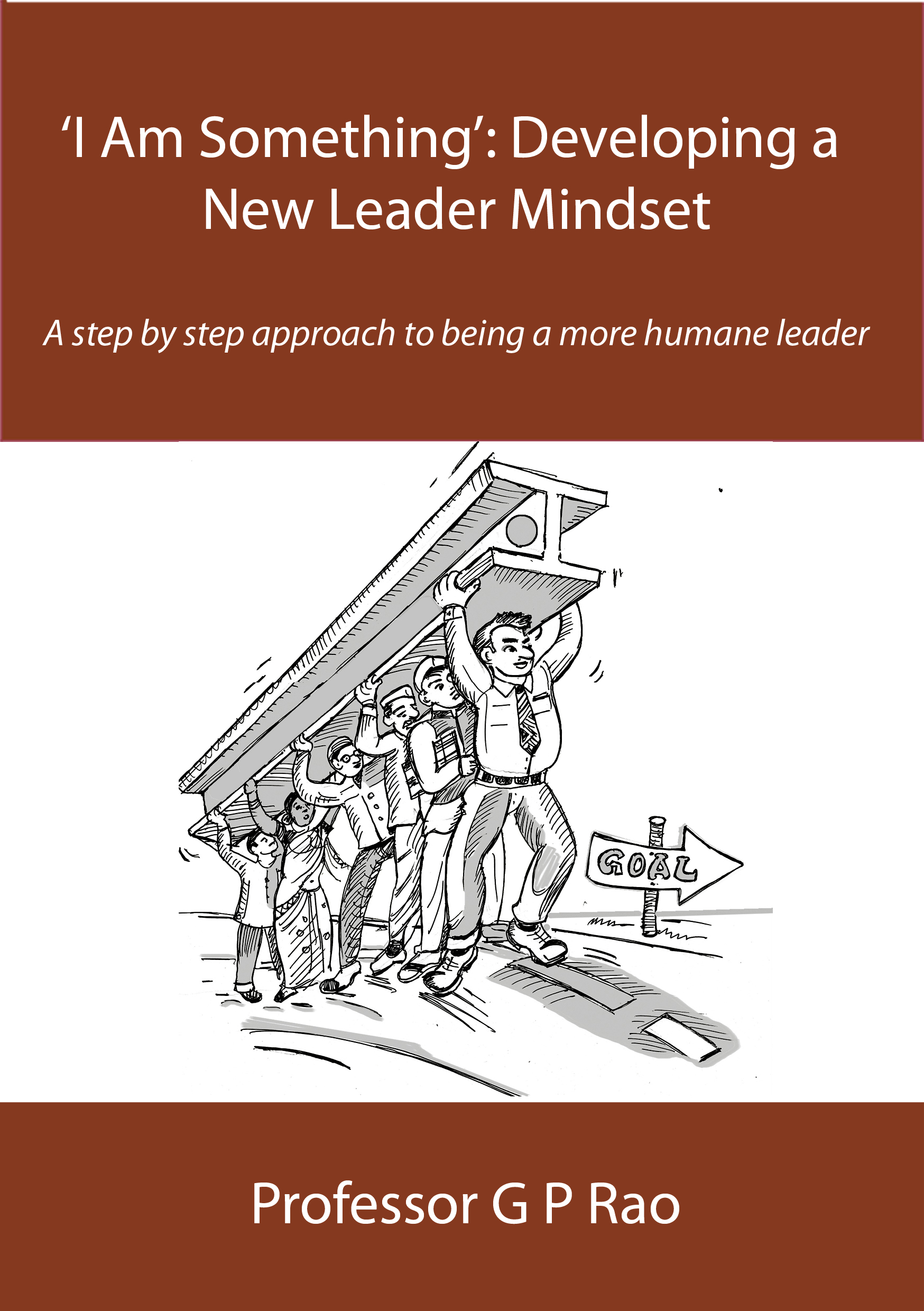
Prof G P Rao, a behavioural scientist of repute and the founder of SPANDAN, a NGO which espouses the cause of human values in organizations, demonstrates that leaders have three kinds of mindsets: ‘I am Everything’, ‘I am Nothing’ and ‘I am Something’.

In a recent study, he has identified the following five topmost values perceived as being conducive to tackling the pandemic successfully:

  • Faith in basic goodness of human beings
  • Creativity and Innovation
  • A positive outlook: Happiness – contentment – self fulfillment
  • Respect to nature and mother earth, and,
  • Preparedness.

The empirical study covered a total of 100 professionals, of which 57 were drawn from the senior and middle management rungs of a software company and 43 belonged to a mixed group from different professions and organizations. The study was conducted during the months of July and August, 2020.

The basic premise is that ‘I am Something’ leader mindset needs to balance the needs and aspirations of others and that of the environment, choose suitable human values and facilitate others to do likewise.

Examples quoted above from the practical business world also testify to the proposition put forward by Prof Rao – that the aim of a leader should be to strike and acquire an optimal balance between and among the select human values so that there is synergy between ‘I am Something’ leadership and human values.

By reposing one’s faith in the basic goodness of human beings, by responding to fresh challenges in a creative and innovative manner, by adopting a sunnier disposition, by preparing for contingencies in advance and by reconfiguring operations with due respect to nature and mother earth – that is how the challenges posed by the pandemic are being met.

(Inputs from Prof G P Rao are gratefully acknowledged.)

(Part 2 of a series of articles on Corona virus and Leadership) 

(Related Posts:

https://ashokbhatia.wordpress.com/2020/09/05/corona-virus-and-an-early-onset-of-industrial-revolution-4-0

https://ashokbhatia.wordpress.com/2020/09/14/corona-virus-some-lessons-from-bhagavad-gita)


When businesses started limping back to a state of suboptimal normalcy – call it the new normal, if you will – they woke up to the kind of belt-tightening they could do by increasing their dependence on Artificial Intelligence, Machine Learning and many other technological advances. Many digital czars see the pandemic accelerating tech-trends in the long run, driving social good.

The future portends enlarging the scope of technology in such diverse realms as education, health, security, agriculture, river management and the like. India has just announced plans to create a health data base for its citizens. Hopefully, when a suitable vaccine comes up, an ambitious roll-out program could be undertaken.

According to Genpact CEO Tiger Tyagarajan, the pandemic has cut companies’ digital transformation timelines to as little as 6-12 months from about 4-5 years. Remote working and online transactions have already become a norm rather than an exception across industries.

Rahul Aggrawal, CEO and MD of Lenovo India believes that ‘the recovery journey could be tedious and technology is playing a critical role in helping us adapt to this new reality. The growing role of technology is already evident through enabling remote working, virtual learning, remote business engagement and significant growth in tele-medicine, e-commerce, PCs, smart phones and many other industries.’

Cheer-bots and Bot-dogs have started brightening up life for sports persons and patients. In Japan, in stadiums bereft of human presence, robot cheerleaders have perked up players on the field. Robotic priests have started popping up in Buddhist temples. Therapy dogs have started spreading sweetness and light amongst patients.

Large companies which place a premium on employee goodwill have responded by hiking salaries, promoting good performers and facilitating work-from-home. Quite a few others have had no other option but to resort to issuing pink slips and giving people a compulsory break from work. Many have slashed salaries temporarily so as to manage their cash flows better. Many others are struggling to cope with a sudden spike in demand after a lull induced by extended lockdowns.

The fact that growth rates have plummeted across most sectors of the economy indicates the need for accelerated innovation and a higher rate of learning. Since newer technologies like Artificial Intelligence and Machine Learning need to be absorbed faster, there is a need to have hybrid organizations which utilize technological interventions alongside human ingenuity.

As per recent press reports, Nandan Nilekani, Chairman of Infosys, has highlighted the need to absorb newer technologies faster. Falguni Nayar, Founder and CEO of Nykaa, emphasizes that ‘Digital has emerged as a clear Winner.’ Whether shopping for daily provisions or for cars, the customers have shown a preference for digital transactions. Virtual meetings have become a norm. Carbon footprints of organizations have got reduced.

The pandemic is helping leaders to identify the slack in their systems. The need for leaders to keep coming up with out-of-box solutions was never higher.

(Part 1 of a series of articles on Corona virus and Leadership)

(Related Posts:

https://ashokbhatia.wordpress.com/2020/09/08/corona-virus-leadership-traits-and-human-values

https://ashokbhatia.wordpress.com/2020/09/14/corona-virus-some-lessons-from-bhagavad-gita)

ashokbhatia's avatarashokbhatia

panjab-university-ubs

An academic course in management obviously does not offer lessons in managing the affairs of the heart. But the Class of 1977 broke through the academic shackles, with some of its members walking out of the campus with a clear strategy as to who their future soul mate shall be.

The stiff-upper-lip approach

Management education is all about the stiff-upper-lip approach of the mind. Analytical skills rule supreme, leading to rummy situations where analysis often leads to paralysis. Linear programming models get worked upon. Statistical techniques get dished out by stern looking professors who might have been hotter in their jobs more as police officers or as judges.

Hapless students are made to understand exponential smoothening techniques so as to be able to forecast business parameters in an uncertain business environment. Those with an engineering background struggle to match their debits and credits. The lucky ones who have had a…

View original post 1,066 more words

ashokbhatia's avatarashokbhatia

Besides perfecting the art of getting suspended, organizing musical events and assisting in the successful launch of such cult classic movies like Sholay, the Class of 1976 also indulged in various pseudo-academic pursuits. Panjab_University

These included holding pan-Indian conferences in the pre-Jurassic days when not many money-gobbling dinosaur-like management institutes with a dubious pedeagogy happened to be clogging our streets.

Participation in elocution contests and winning trophies for the Alma Mater was a routine affair. So was attending professional events in New Delhi, holding a bridge championship, organizing a quiz contest and such other endeavours.

Maruti was then being heralded as a fulfilment of the common man’s transport ambitions. A detailed market survey based on ‘product attribute analysis’ was conducted, the results of which were eagerly lapped up by the Automobile Association of India.

Here are some details of the pseudo-academic endeavours of the gang of 1976.

A confluence of…

View original post 990 more words

ashokbhatia's avatarashokbhatia

One of the major rewards of being a part of the gang of 1976 has been the kind of strong and resilient bonds of friendship one has been able to forge. Bonds which have survived the harsh slings and arrows of Life. Bonds which are like underground cable connections – dormant, but in place, ready to be reactivated as and when necessary.Panjab_University

Way back in the 1970s, UBS was an integral part of what was then known as the Department of Commerce and Business Management. Students of the Commerce stream would tend to treat the ones from the Management stream with some degree of awe, though laced with not-so-healthy contempt. Some lecturers from the Commerce side regularly put on a tie, trooped down to the ground floor, and shared their wisdom in de-mystifying balance sheets and cash flows with the Management students.

How friends made me gate-crash, cruise through, and…

View original post 1,320 more words

Background

In this series, we have tried to look at some movies through the spiritual lens of 12 personality traits mentioned by The Mother of Sri Aurobindo Ashram at Pondicherry in India.

Part 1 had covered the traits of Sincerity and Humility. Part 2 had looked at movies which touch upon such traits as Gratitude, Perseverance, Aspiration and Receptivity. In Part 3, we had checked out some movies which could be held to be representing the following personality traits: Progress, Courage, Goodness and Generosity.

Here is the concluding part, which covers the remaining two traits, namely Equality and Peace.

Thank you for joining me in this exploratory journey!


Equality

Here is a rare virtue, seldom practiced, whether at an individual level or in a society. Walls of race, caste, colour, creed, gender and financial well-being keep going up. The notion of ‘I’ takes precedence over that of ‘We’. Deriding ‘the other’ often satisfies our ego more readily. In many parts of the world, even some professions get looked down upon.


Boot Polish (1954) brought home the point that one’s self-respect is paramount, that polishing shoes is better than begging and also that work of any kind is dignified.


Shree 420 (1955) showed us how Ponzi schemes trick ordinary people into parting with their hard earned money. The stark contrast between the haves and the have-nots of the society formed the backdrop of the movie.


Meri Surat Teri Ankhen (1963) and Satyam Shivam Sundaram (1978) both highlighted the need for giving more importance to inner beauty rather than the external appearance of a person.


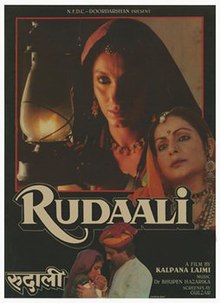
Rudaali (1993) touched upon the plight of social discrimination, based as it was on the tribe of women of a lower caste who are invited as professional mourners when a person from higher caste passes away.


Philadelphia (1993) covered the trials and tribulations of someone who suffers from AIDS and is a homosexual. He is sacked by the legal firm he works for on made-up work-related grounds but fights for his dignity and his rights.


Article 15 (2019) is a telling commentary on the perils of the caste system prevalent in the Indian society.


Several movies have touched upon the issue of racial prejudices. Schindler’s List (1993) and Munich (2005) are some examples.

When it comes to gender equality, our dream merchants appear to have kept the issue under focus for a long time, much before the #MeToo campaign gained popularity.

In Aandhi (1975), we meet a couple who get reunited after a long time, but decide to keep pursuing their different career paths


Arth (1982) and Luck By Chance (2009) had the heroines walking off from a relationship.


If Abhimaan (1973) touched upon the balance of power between a couple, Ki and Ka (2016) showcased a role reversal between the husband and the wife.


Parched (2015) narrated the story of four women breaking through the shackles of rigid practices of patriarchy. Thappad (2020) highlighted the issue of patriarchal attitudes and the lack of gender equality within the ambit of marriage.


Peace

Many movies depict the gory details of a war to highlight its futility. Here is but a random sample of the ones which drive home the importance of peace in our lives.


Life Is Beautiful (1997) made us feel not only the pangs of separation of a couple but also the blossoming of a special bond between a father and his son when they are held in confinement in a concentration camp. When the war gets over, the son, unaware that his father has met his death, excitedly tells his mother about how he had ‘won’ a tank, just as his father had promised if he played the game between them right.


Mr. and Mrs. Iyer (2002) was a poignant tale of the kind of affection which develops between two strangers in the midst of chaos and uncertainty caused by communal riots.


Veer Zara (2004) narrated the travails of star-crossed lovers. The Indian Air Force officer Veer (Shah Rukh Khan) sacrifices his freedom to protect the honour of the Pakistani heroine’s family. The latter, Zara (Priety Zinta), after a failed marriage, decides to support his elderly parents in India. Both get reunited, thanks to the efforts of a lawyer (Rani Mukherji). Not a single bullet gets fired. Nowhere does a prisoner get tortured. Yet, the message of peace between two warring nations gets delivered.


Life Is A Miracle (2004) had the backdrop of the Bosnia-Serbia conflict. When the hostilities break out, Luka’s wife goes away and love blossoms between him and Sabaha. His son is conscripted in the army and is then taken a prisoner of war. The dilemma faced by Luka is that of an exchange between Sabaha and his son Milos. Family gets reunited in the end.


From Heartless to Heartful

The movies mentioned here were not necessarily made for any spiritual purposes. These appear here simply because a part of theirs touches upon the 12 personality traits under discussion. In fact, some of these – like Saving Private Ryan and Lakshmi – have graphic violence which often creates revulsion and intellectual indigestion. Perhaps these are designed to hasten our progress from practicing heartlessness to heartfulness!


Almost all of these have an underlying streak of spirituality. These affirm the positivity of life, hold human beings as sacred rather than expendable, depict the practice (or otherwise) of human values and encourage the audience to ponder over their existence more deeply than they would in the course of their day-to-day routines.

Another common trait of these movies is that these do not promote a sectarian or religious worldview. Rather, the focus is on highlighting what, in essence, our scriptures and spiritual masters tell us.

Movies with a streak of spirituality stand in sharp contrast to the kind of inane ones which win popular appeal by using item songs, soft porn, obscenity, graphic violence, sadism and torture for sport. This virus, to be dreaded more than the current pandemic, has already spread into video games, kids’ cartoons and gaming applications, polluting the minds of the coming generations and promoting a shoot-first-think-later culture.

We also get hooked by the car chase/big explosion flicks like Fast & the Furious series; high-tech gadget movies like the Mission Impossible franchise; nationalistic movies like Independence Day; heist-based movies and web-series like Ocean’s 11 etc, Money Heist and Jamtaara which do not feel shy of using cuss words; and high school sex-obsessed, gross-out films like the American Pie franchise. Thrillers like Sholay, Khaki, Kahaani and Mom also keep us glued to our seats. But so do such movies with socially relevant themes as Gulaab Gang, Padman and Toilet – Ek Prem Katha.

Perhaps there is an emotional disconnect between Mother Earth and its denizens. Perhaps we are bringing up a bunch of bleary eyed kids glued to their screens – oblivious of the joys of human interface; in the process, dehumanizing them.

Rays of Hope

But we can find some solace in the fact that movies with a dash of spirituality do keep turning up. These keep illuminating the world outside and within us, restoring our faith in the basic goodness of Homo sapiens. Even though these may be few and far between, our producers, directors and script writers have a sharp eye for public tastes. The fact that these are getting made is a positive sign in the first place. There is hope.

Moreover, there must be several others which do not boast of popular stars. We would have never heard of the same. All these, in regional and other languages, must be out there, waiting to be discovered by a receptive audience.

Different approaches to spirituality could lead us to yet another set of movies. But the challenge of choosing the right movies on one of the media platforms we subscribe to would always remain. More so in times which are highly uncertain and when the fear of contracting a disease keeps nagging us from within.

To change and enrich our taste of movies – from heartless to heartful, from mindless to mindful, from hopeless to hopeful, from gory to glory and from demonic to angelic – may not be that easy, unless our own mindset changes. When that happens, our craving for a deeper meaning in our movies would get a leg up. Producers and directors would then offer juicier flicks. Once a ‘critical mass’ is achieved, our collective consciousness shall start changing its contours.

This could be our own humble contribution to some desirable changes in the society at large.

(This series of posts is dedicated to Ms Usha Bhatia, my late wife. Inputs from Mr Sanjay Mohan and Ms Gargi Banerjee are gratefully acknowledged)

(Related Posts:

https://ashokbhatia.wordpress.com/2020/08/13/some-movies-with-a-dash-of-spirituality-part-1-of-4

https://ashokbhatia.wordpress.com/2020/08/16/some-movies-with-a-dash-of-spirituality-part-2-of-4

https://ashokbhatia.wordpress.com/2020/08/20/some-movies-with-a-dash-of-spirituality-part-3-of-4)

Background

In this series, we consider some more movies through the spiritual lens of 12 personality traits mentioned by The Mother of Sri Aurobindo Ashram at Pondicherry in India.

Part 1 had covered the traits of Sincerity and Humility. Part 2 had looked at movies which touch upon such traits as Gratitude, Perseverance, Aspiration and Receptivity.

In Part 3, we cover the following personality traits: Progress, Courage, Goodness and Generosity.

Progress

This could be of several kinds – material, spiritual and social. Most of us keep chasing materialistic goals in our lives. Some who feel a nagging emptiness within despite outstanding success on the material plane get awakened to the possibility of a spiritual growth. Few others try and work on such social ills as corruption and hygiene.

Guide (1965) showed us the transformation of an ambitious Raju (Dev Anand) from being an ordinary tourist guide to a successful businessman, thanks to a talented dancer Rosie (Waheeda Rehman). What followed was a web of commerce and misuse of funds, leading to a jail term for Raju. Eventually, upon nearing death, he experiences an awakening of the soul.


Invictus (2009) captures the manner in which Nelson Mandela endeavours to overcome racial prejudices not only in his team of personal assistants but also in his country, using the unlikely sport of rugby to make progress. The movie sets an inspiring example of achieving social harmony by dismantling apartheid through a spot of out-of-box thinking.

When it comes to progress on the social front, several movies have touched upon the issues of corruption, regressive attitudes and sexual exploitation.


Jaane Bhi Do Yaaron (1983) and Well Done Abba (2009) addressed the issue of corruption with dollops of humour.


Toilet – Ek Prem Katha (2017) and Padman (2018) championed the cause of hygiene.


Gulaab Gang (2014) spoke of various ills plaguing the Indian society.


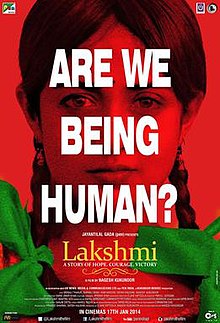
Mardaani (2014) and Lakshmi (2014) were both hard-hitting but highlighted the challenges one faces while battling human trafficking and child prostitution.

Movies which focus on social attitudes are often preachy and negative. But these serve a useful purpose by telling us where we are going wrong, thereby hampering our own progress.

Courage

The hero who shows courage by bashing up a bunch of goons to save the honour of his beloved on the silver screen gets lauded enthusiastically by a cheering audience. But here we shall touch upon the courage which manifests in many other ways, mostly utilized to achieve a higher goal in life.

Pyaasa (1957) depicted the courage of a poet Vijay (Guru Dutt) to denounce a corrupt and materialistic world. Unable to tolerate the hypocrisy in the society, he decides to start a new life with Gulabo (Waheeda Rehman), the woman in his life.


Lakshya (2004) takes us on an inner journey of a happy go lucky but aimless Karan Shergill (Hrithik Roshan) who joins the army during the Kargil conflict between India and Pakistan. Death of a close friend leads him to discover his aim – that of capturing Point 5179, a strategic mountain peak on the border by ascending a 1000 feet high rocky vertical cliff.


A Wednesday (2008) shows the extent to which a common man (Naseeruddin Shah) can go to meticulously avenge all the terrorist attacks some people had helped carry out in Mumbai and other major cities of India, specifically the 2006 Mumbai train bombings.


Life of Pi (2012) shows the kind of courage it takes to survive and do well in life. The search for an identity becomes a voyage extraordinaire. The movie has a touch of sentimental spirituality.  Pi survives his great adventure of crossing an ocean in the company of an adult Bengal tiger!


Neerja (2016) is a tribute to Neerja Bhanot (played by Sonam Kapoor) who laid down her life while protecting passengers on a hijacked Pan Am flight 73. The film ends with a tribute to Neerja, who was eventually honoured posthumously with the Ashoka Chakra, India’s highest military decoration awarded for peacetime valor, courageous action or self-sacrifice.

Goodness

When we overcome our greed and our prejudices, and when we learn to radiate love and display concern and empathy, we practice goodness.

Parakh (1960) was about an award from an anonymous donor of Rupees 5,00,000 to any resident of a particular village who will use it for the benefit of the entire village. Villagers decide to use democratic methods and favour an election where the winner gets the money. Each candidate tries to woo the villagers by being sympathetic and by becoming a cheerful giver to all by offering various sops. Goodness, however superficial, prevails. Eventually, the decision comes from the benefactor who lives in the village in disguise. At a deeper level, the movie highlighted the limitations of the concept of democracy.


Satyakam (1969) introduced us to Satyapriya (Dharmendra) who tries to live a truthful, honest and good life. Even in great adversity he doesn’t let go of his ideals. A fatal illness leads to his death and the grandfather (Ashok Kumar) who had sworn him to a path of righteousness realizes that even though he has spent his whole life studying religious scriptures and philosophical books as well as practising many rituals, he still had much to learn about the nature of truth. He overcomes his moral prejudices and vows to take care of his daughter-in-law (Sharmila Tagore) and the grand kid.


 

Raincoat (2004), based on O. Henry’s short story ‘The Gift of the Magi’, brings together two ex-lovers Mannu (Ajay Devgun) and Neeru (Aishwarya Rai). The former is unemployed and has limited means. The latter is now a housewife leading a frugal life. Each boasts to the other about their successful life but realize the hollowness of the other’s claims. Mannu ends up paying Neeru’s overdue rent for many months whereas she slips in two of her gold bangles into the pocket of a raincoat he has borrowed from her.


Patch Adams (1998) was all about the importance of laughter, empathy and concern for patients who are often treated in a soulless and mechanical manner in the medical world. The hero’s conviction of his own approach never waivers, except when his companion dies in unfortunate circumstances. But he soon recovers and reverts to his practice of goodness, dedicating his work to her memory.

Generosity

Many of us have occasionally had a helping hand from someone who went out of the way to offer support when it was badly needed. Those who are kind, empathic and compassionate could be said to be of a generous disposition. Somehow, life always gifts them with generous bonuses – whether financial or in terms of a cult status.


Schindler’s List (1993) portrayed the efforts of Oskar Schindler, a German industrialist, who saves the lives of more than a thousand Polish-Jewish people from the Holocaust. When World War II is declared to be over, the workers give Schindler a signed statement attesting to his role in saving Jewish lives and present him with a ring engraved with a Talmudic quotation: “Whoever saves one life saves the world entire.” Schindler is touched but also ashamed, as he feels he should have done even more. In a scene which is deeply touching, he breaks down sobbing, and is comforted by the workers.


Erin Brockovich (2000) was all about a legal clerk motivating a group of sufferers to stand up against a large company and get suitable compensation awarded by a court of law. Her identification with the cause and her perseverance – both are worth emulating. She does not expect any personal benefit in return, though she does get suitably rewarded for her services at the end of the movie.

The generosity showcased in these movies is neither feigned nor artificial. Both are based on actual incidents, restoring our faith in the innate goodness in people.

(This series of posts is dedicated to Ms Usha Bhatia, my late wife. Inputs from Mr Sanjay Mohan and Ms Gargi Banerjee are gratefully acknowledged)

(Related Posts:

https://ashokbhatia.wordpress.com/2020/08/13/some-movies-with-a-dash-of-spirituality-part-1-of-4

https://ashokbhatia.wordpress.com/2020/08/16/some-movies-with-a-dash-of-spirituality-part-2-of-4

https://ashokbhatia.wordpress.com/2020/08/24/some-movies-with-a-dash-of-spirituality-part-4-of-4)