Feeds:
Posts
Comments

ashokbhatia's avatarashokbhatia

While taking a leisurely stroll through the sunlit streets of Plumsville, lined on both sides with trees offering low-hanging ripe mangoes of unalloyed mirth, we come across quite a few authors, editors and publishers.

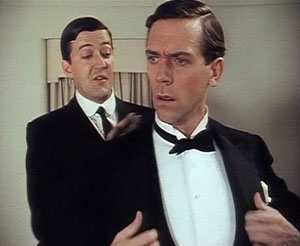
We get to meet Florence Craye, the famous author of ‘Spindrift’. We run into Oliver Randolph ‘Sippy’ Sipperley, the aspiring author. Gwendolen Moon, the poetess, crosses the street in front of us. George Webster ‘Boko’ Fittleworth bumps into us at the next corner. Smooth Lizzie, a poetess in whom critics might be disappointed, flashes past us in her two-seater. Even Bertie Wooster, our favourite hero, can be seen rushing to the offices of Milady’s Boudoir, possibly to submit his piece on ‘What the Well-Dressed Man is Wearing’.

Daphne Dolores Morehead can be seen headed somewhere in a hurry. Rosie M. Banks can be seen rushing to her humble abode, just to check if Bingo Junior’s bank…

View original post 1,313 more words

Jose Ignacio Escribano García-Bosque's avatarA Crime is Afoot

OIPSir Pelham Grenville Wodehouse KBE (15 October 1881 – 14 February 1975) was an English author and one of the most widely read humorists of the 20th century. Born in Guildford, the third son of a British magistrate based in Hong Kong, Wodehouse spent happy teenage years at Dulwich College, to which he remained devoted all his life. After leaving school he was employed by a bank but disliked the work and turned to writing in his spare time. His early novels were mostly school stories, but he later switched to comic fiction, creating several regular characters who became familiar to the public over the years. They include the feather-brained Bertie Wooster and his sagacious valet, Jeeves; the immaculate and loquacious Psmith; Lord Emsworth and the Blandings Castle set; the Oldest Member, with stories about golf; and Mr Mulliner, with tall tales on subjects ranging from bibulous bishops to megalomaniac…

View original post 587 more words

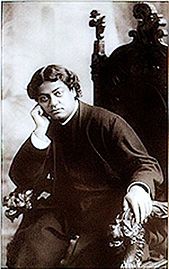
 A Tribute to Swami Vivekananda: Leader Extraordinary


“On the seventh of August 1941, in the city of Calcutta, a man died. His mortal remains perished but he left behind a legacy… that no fire can ever consume…”

That was the baritone, sonorous voice of Satyajit Ray in his documentary titled ‘Rabindranath’ created as a tribute to Rabindranath (a project mandated on Ray, the genius in film making, arts and literature, commissioned by Ministry of Culture, Government of India) on the occasion of the birth centenary of the another genius, Rabindranath Tagore the Nobel laureate poet, musician, novelist, dramatist, artist and philosopher. The first scene of the documentary depicted the last and final journey of Tagore to the burning ghat (crematorium).

Ray’s portrayal of Tagore began with the scene finale. But where do we start in our odyssey with the volcanic monk of India whose 150th birth anniversary we celebrated earlier in this decade?

“Let’s start from the very beginning/ a very good place to start…” (The Sound of Music)

Naren or rather Bile (Narendranath Datta) was storm or turbulence personified from childhood in the premises of the Datta household in North Calcutta. Never obedient to seniors, ever an enigma to peers (his local friends), he would relish his father’s hookas (smoking pipes) or throw away his mother’s clothes from the windows to the beggars on street even while he was locked up in a room for his erratic unmanageable behaviour.  But when the time of crisis came, his friends would run away at the sight of a snake. But he would remain seated, immersed in meditation while the snake rustled away leaving him in peace. Trained in the art of physical mastery, he would combat the white man for speaking ill of Indians. He showed the promise of a Life Exemplary and Leader Extraordinary!

“His pre-eminent characteristic was kingliness. Wherever he went he was the first.’ (Romain Rolland).

Narendranath was a born leader, never ‘made’ – only refined and directed by his great master Shri Ramakrishna.

A good leader accepts the situation at hand and tries to find a way out. But a great leader is ever in discomfort with the commonplace and the hackneyed reality. Naren began his quest for the beyond with burning questions on the existence of God and purpose of Life – only to be answered clear and direct by Sri Ramakrishna, who was to become his master though in appearance, upbringing and otherwise his direct antithesis. But this was not by any devout dedication but through a series of questioning he hurled upon his master. And then came the hour of consecration.

Ei jonmo ei shorir oi murkho bamun kine niyeche”. (This life, this body is consecrated to that old illiterate Brahmin!) – He wrote to a brother disciple later.

By the way, Narendranath was projected as the leader of tomorrow by his master – not by himself!

Naren shikshe debe” (Naren will teach the world) – was the prophecy of Shri Ramakrishna in the Master’s own writing.

A great leader emerges out of stormy crisis from various fronts – death of father, deprivation of mother from family property, futile search for a job. But he had the fortitude to stick to his master’s promise that he would never be plagued with basic sustenance. His primary preoccupation became an immersion into the self, deep in meditation. “Mon cholo nijo niketone…’ (O Mind! Return to thy own repose!). It was for his Master to turn him towards the world with the message of service, love, education to humanity. He was destined to be a leader –a banyan tree for one and many.

Storm as in crises for him was lifetime companion – severe hardship n Baranagar Math in North Calcutta after the death of his Master, hunger and uncertainty during his parivrajaka (the wandering monk) life in India, anxiety about funds for the America trip, spending sleepless and shivering night in Chicago railway station, lampooned and maligned by his opposition religious groups in the West and even from his close quarters back home.

But the fire in him was never to extinguish.

Vivekananda stood for the principles of acceptance and assimilation of diverse opinions, values and cultures. A true global leader in thoughts, words  and action, he became a fiery inspiration to men and women from the East and West from myriads of background – businessmen like Rockefeller and Jamshetji Tata, European women like Margaret Noble (Sister Nivedita) and Emma Calve, scientists like Acharya J C Bose and many more. His style of communication was different for each according to the nature and character of individuals. His was an enlightened universal mind a century ahead of his times. But never did he lose his anchor in India.

“India was his daydream. India was his nightmare.” (Sister Nivedita)

And his thundering voice rose: “He Bharat bhuliona…” (O India! Forget not…). He never disowned the past and ever cherished the golden heritage of India. But he was ever stretching out his hand and heart of welcome to the West as well, to a future that is different and diverse yet mutually and globally enriching for one and all.

Je somonnvoy kore sei lok” (The one who can synthesize is truly a human) said his Master. Swamiji lived this message throughout life – a grand synthesis of the best from all parts of the world that he had visited during his brief life span.

Srinvantu Vishwe Amritasya Putrah’ (Listen! O Children of Immortality, world over!). This was the invocation of the rishis of the Upanishads. The voice of Swamiji in Chicago Parliament of Religions resonated; “Sisters and brothers of America…” He was a modern incarnation of the ancient rishis (sages and seers) in the attire of a monk.

Back home he chose ‘atmanomoksharatham jagat hitaya cha’ as the motto of the Ramakrishna Mission – (For the liberation of the self and the welfare of the world)  on the foundation of the philosophy and principle of action ‘Siva jnana jivaseva’ (To serve man is to serve God n Man) as he learnt from his Master.

His last life in Belur Math was like that of a child – playing with animals and enjoying the company of tribal people while giving lessons on Upanishads to brother monks. In fact his was a life of a child-like leader yearning for fresh air and new light and learning forever. He learnt from all possible sources including a low caste ‘bhangee’ (one from a low caste) with whom he had smoke and also a dancing girl who, in Rajasthan at the palace of Maharaja of Khetri, taught him the message of non-discrimination among humans.

Jabot bnachi tabot shikhi” (I learn as long as I live) – was the message of Shri Ramakrishna. Following this precious teaching from his Master Swamiji lived, loved, learnt and left a legacy that is lasting and growing even beyond a century! Ramakrishna Mission is sustaining and flourishing every day all over the world for the service of humanity at large – spiritual, social and educational.

His funeral pyre was lit on the bank of the Ganges on the fifth of July 1902. The body of the monk inferno Swami Vivekananda was stretched on pyre in his chosen place under the bilwabrikshwa (The Bengal Quince tree) in Belur Math. His mother Bhubaneshwari Devi was sitting and watching the rising flames from the body of his eldest son. A speck of his saffron robe flew in the wind to Sister Nivedita, the devout disciple of the monk. She collected and preserved that ‘memento’ for her inspiration to action in the days to come.

Thus was the mortal consummation of the Swami, the Prince among men –the volcanic monk who shook the world with the fiery message of the Upanishads under the spiritual umbrage of his ‘seraphic master’ Sri Ramakrishna and ignited the spirit of India towards freedom.

Netaji (Subhas Chandra Bose) accepted him as his fiery guru in mortal absentia. In the words of Sri Aurobindo, it was like “baptism with blood and fire”. Netaji described Swamiji as a leader extraordinary in the following words:

“Reckless in his sacrifice, unceasing in his activity, profound and versatile in his wisdom, boundless in his love, exuberant in his emotions, merciless in his attacks and yet as simple as a child, he was a rare personality in this world of ours.

If Swamiji had been alive today he would have been my guru.”

I have ransacked the history of leadership and management literature in my voyage through Human values and Indian Ethos in Management, Spirituality and Leadership for nearly three decades but never found such a detailed, succinct yet most powerful and accurate assessment in these seven leadership qualities of one genius of a world leader by another of no mean stature.

We began with a tribute to Tagore by Satyajit Ray. And here we find a tribute to Swami Vivekananda, the Great Master and Leader Extraordinary by none other than Netaji Subhas Chandra Bose. They remain with us as fountainhead of boundless inspiration in a world ruled and dictated by leaders who at best belong to the class of mediocrity in academia and otherwise!

But the fire in the volcanic monk still remains alive and aflame in those who are willing and ready to be ignited.

Agne twam hridayam agachha’ – Oh Fire Eternal! Come and set our hearts ablaze!

Amar modhye je agun jwolchhe tomader modhye o sei agun jwole uthuk… Ei sodai Vivekanandar prarthana.”

(The fire that is burning within me may set all your hearts aflame! This will ever be the eternal prayer of Vivekannada.)

May we live up to his prayers!

It was high in the snowy Himalayas. Swamiji was on pilgrimage with a few chosen disciples. His intense meditation led him to a vision of the Mother Kali, the Black Goddess, the mighty Destroyer and Time Eternal, lurking behind the veil of life. During one evening in a state of high fever he wrote a famous poem that concludes thus:

“Who dare misery loves,

And hug the form of Death,

Dance in destruction’s dance,

To him the Mother comes.”

He said to her chosen disciple Nivedita (an Irish lady of noble origin): “Meditate on death. Only by the worship of The Terrible can The Terrible itself be overcome…There could be bliss in torture too…The Mother Herself is Brahman…The heart must be a cremation ground – pride, selfishness, desire, all burnt to ashes. Then and then alone, will the Mother come!”

Vivekananda exemplified an authentic synthesis of the East and the West, the past and the present, Science and Religion, contemplation and action, spiritual pursuit and service to humanity. He was the messenger of dynamism and hope to India and the world. Could it be that he was under a spell of so-called negative thinking when he wrote the above verse? Or did he want to convey a pertinent message in a different mood that might be useful for all in moments of turbulence and uncertainty?

Leaders of tomorrow in business or otherwise, when shall we learn from death and destruction of old orders that we need creative quantum breakthroughs in our leadership principles, roles and practices to shake the very foundation of our outdated models and worn out concepts, our tunnel vision and fossilized values, by keeping alive and aflame just one precious element within our hearts – the passion to transform and infuse new life in our organizations and the planet at large?

Millennia ago, Socrates exhorted us to think and look within ourselves: “An unexamined life is not worth living.”   Closer in time, the voice of Nietzsche sounded even more daring and adventurous: “If one is to live, one is to live dangerously.”


{Tribute to Swami Vivekananda, the Great Master and leader extraordinary on The Foundation Day (May 1st, 1897) of The Ramakrishna Mission, the first Indian international organization with headquarters in India (Belur Math, Howrah – Kolkata on the bank of the Ganges) but outreach all over the world with more than 200 centres and still thriving in glory for almost more than a century and a quarter dedicated to the service of suffering humanity. An entrepreneurial venture of timeless significance even in times of crisis as in the present, this institution remains and grows as the ever expanding  global vision of this great master as an inexhaustible source of energy and inspiration, firmly rooted in Indian culture, ethos and heritage but with appeal reaching all over the world. At a level of Philosophy in Practice (Practical Vedanta, a term coined by himself that he spread like wild fire in the West even within the short span of his life of less than forty years) he gave a new turn to the ideal of monkhood with simultaneous emphasis on pursuit of salvation of the self through evolution of Consciousness and welfare of humanity at large.The Ramakrishna Mission that embodies the ideals of globalization and sustainability propounded by its founder a century before the pioneers of management in the West could even conceive of these ideas and principles. Even at a functional level the structure of the main temple of Shri Ramakrishna in Belur Math represents a grand synthesis of the East and the West – of Christian, Islamic and ancient Indian architecture.]

(Sanjoy Mukherjee (58) is Faculty of the Sustainability, CSR and Ethics academic group at the Indian Institute of Management (IIM) Shillong. He is the Chairperson of the Institute’s Annual International Sustainability Conference (SUSCON) and also the Chairperson of Student Affairs, Placement and Public Relations.

His detailed profile can be accessed at https://www.linkedin.com/in/sanjoy-mukherjee-72b18823

Permission to publish this tribute here is gratefully acknowledged.)

findshars's avatarMy Views On Bollywood

By

Sharada Iyer       

The ‘mother’ figure has played a very prominent and significant part in Hindi cinema. Though mostly seen in the role of a warm, loving, caring, understanding and sacrificing person which a mother is without doubt, she is sometimes portrayed as an intimidating and powerful woman and she can also become ruthless and cruel as a ‘mother-in-law’ or a stepmother. A number of actresses have brought to life these myriad shades of our on-screen Bollywood mother in their own unique way and added their special ‘X’ factor to make these characters realistic and life-like.

This blog-post is a tribute to all the on-screen mothers of Bollywood. It must be mentioned however that neither is it possible to cover all the types of mother’s roles played in a single blog-post nor will it do justice to the talent of these actresses who have immortalized the ‘mother’ character with…

View original post 2,690 more words

ashokbhatia's avatarashokbhatia

Success often makes us complacent. On the other hand, failures help us in our relentless pursuit of excellence.OVERSTAYING ONE’S WELCOME

My own experience tells me that it helps to befriend and manage our failures. Each failure makes us discover a latent strength of ours. Each one has the potential to open up fresh vistas in our lives.

Yes, it also helps to take a step back to evaluate our successes, so the critical factors behind those could be understood better.

Befriending Failures

There is no cut-and-dried formula for managing failures. However, I do believe that a renewed focus on the following factors can help us in getting more out of our failures.

Giving up Self-pity

It does not get us anywhere. It only ties us down to a past which can’t be rewound and rerun. Negative things do happen. It does not mean that all others are as happy as they…

View original post 695 more words


Of all the reading that I have done, I have never ever had so much fun,
Than whilst perusing Wodehouse, Laughing to burst out of my blouse.

That Bertie Wooster is so British, such a jolly good fellow,
Can erupt like a volcano at times, yet is disarmingly mellow,
Ample bosomed Aunt Agatha et al bully him into the ground,
Bertie would be lost if Jeeves, that paragon wasn’t around.

The aunts make mincemeat of Bertie without so much as a by your leave,
If it wasn’t for Jeeves the saviour, we’d weep for Bertie and for him grieve,
The Wooster name would fall into ruin, rust corrode their noble family crest,
Sans Jeeves to keep a vigilant eye and shoo away both aunt and other pest.

Bertie Wooster is so upper class, so stiff upper lip, simply so very English,
He belongs to the right club, yet tormented by kinsfolk who can be devilish,
He can be downright foolish dealing with matters of finance and of the heart,
Both sorted out impeccably by Jeeves, his man for all seasons from the start.

Bertie’s a sharp judge of character, he knows a man who is a good egg,
In a silk dressing gown B.W. loves to lounge all day without shake of a leg,
If a challenge confronts his intellect he turns to Jeeves with a : What ho?
What ho? What ho? he choruses on till his Man Friday makes it right to go.

Of all the reading that we do, Wodehouse brings us so much fun,
Don’t ask me why, just pick up a book, turn the pages and no further look.


(Ruby Haider loves to write. The magic of language fascinates her. She has been a teacher and an advertising professional. She loves poetry and believes herself to be a bit of an idealist and dreamer.

Her permission to blog this composition here is gratefully acknowledged.)


Even though the dark clouds of a virus envelop us and Life makes us glum,

Many of us bask in the brilliant rays of humour which greet us in the form of a narrative Plum;

Our suggestion to all clueless politicians and caregivers is never to despair,

We support all your lockdowns, we write this merely to make you aware.


With his head bulging at the back, many a problem Jeeves can still solve,

Ordering stuff online and keeping scheming aunts away with a goofy resolve;

Keeping at bay girl friends who wish to improve Bertie’s grey cells,

Arming him with some quotes from Spinoza which he uses over phone, casting transient spells.


Jeeves keeps shimmering in with one of his pick-me-ups on a tray,

While the master sharpens his skills at sock-darning, forgetting all shades of grey;

An article on ‘What the Well-dressed Dictators are Wearing’ is being whipped up by him,

Alas, the chances of the next issue of Milady’s Boudoir coming up soon are rather slim.


The pride of the Wooster clan is close to his heart, the feudal spirit intact,

For the sake of an aunt, restoring a stolen cat to its owner is part of a pact;

For the happiness of an uncle, thirty days without the option is no big deal,

At the end of which he merely aspires for a delectable Anatole meal.


Uncle Tom is not amused by the sudden downturn in his earnings,

His solace lies in keeping a tighter leash on the tax wolves’ yearnings;

Aunt Dahlia continues to ensure that Anatole keeps them both in good humour,

Relishing a unique phase of togetherness where the silver collection is safe from any intruder.


 Lord Emsworth potters about his gardens in a state of bliss,

Thanks to Gladys, he no longer hesitates to tell McAllister to call it quits;

The sanctity of the moss-covered yew alley is being maintained,

The Empress is in the pink of health, thanks to the advice of Augustus Whiffle being entertained.


The Bingeese love enjoying their quite life, sans the fear of a

Laura Pyke popping up at home,

Bingo Little ensures a cup of afternoon tea while Rosie works on her next tome;

Rosie keeps a sharp eye on the internet banking transactions of her dear hubby,

Lest he be attempting to fund one of his sporting impulses with the support of a buddy.


Florence Cray is delighted at the prospect of finishing Spindrift-2,

Edwin the Scout plays fire fighting games on his tablet new;

Madeline is delighted at seeing the stars shine so very brilliantly,

Pauline plays tennis on the roof top of her high rise diligently.


Unless you speculate, you do not accumulate, is what Ukridge keeps doing online,

Many of the doctors we know in Plumsville are already co-opted by WHO on the front line;

Mr Schnellenhamer whips up the script of his next medical thriller, extending his range,

Nodders having been persuaded to go on leave without pay, surviving only on the juice of an orange.


Gussie is delighted that his newts no longer complain about the quality of water,

Of another notebook with juicy comments on Pop Bassett he claims to be an author;

To deliver speeches at schools only in the video conferencing mode he is braced,

Non-availability of tissue restoratives ensures he faces no risk of feasting on orange juice duly laced.


Ashe Marson provides online tips to all those wanting to remain fit,

Larsen exercises, brisk walks and cold baths form a part of his wellness kit;

Troubles of the lining of the stomach unite those who are young at heart,

Forsaking the pleasures of the table and allowing Prudence to win over Greed being a worthy art.


Rozzers keep a ceaseless vigil on ‘criminals’ who move around freely without a mask,

 Their sinister ‘Ho’s and ‘Ha’s and investigative techniques make easier their task;

The risk of getting their helmets pinched has all but vanished,

But the practice of getting pushed into water bodies is yet to get banished.


Indoor and online games of all kinds have risen to the kids’ defences,

Would-be step-fathers not coughing up protection money face consequences;

Rogue ones, when in love with Hollywood divas, start behaving angelically,

Priests need them around so as to be hotter on their jobs and to evolve spiritually.


Entrepreneurs and business honchos await the new normal to unfold,

Psmith helping them to recast operations into the Industrial Revolution 4.0 mould;

Sally and Joan Valentine inspire them online to worry more about sustainability,

Scaling up their efforts to contribute towards creating an inclusive society.


To put it simply, God is in Heaven and all is well with many amongst us,

While providing succour, our Guardian Angels are not missing the bus;

The elements are in a better shape, flora and fauna lead a contented life,

With males wearing skirts, spouses are delighted, families missing many a strife.


  The challenge we face now is an opportunity to evaluate our priorities anew,

The value of interrelationships, quality time with loved ones who may be few;

Realizing that Mother Earth needs to be treated with greater respect,

That all of us play a role in maintaining civility by way of a public debt.


The virus has thrown many V-and-W shaped depressions our way,

Teaching us never to allow the dismal forces of despondency to make us sway;

Having a chin up attitude, no matter how dark the skies may look,

The sun is surely shining somewhere, smiling benevolently above a babbling brook.


The victory of Homo sapiens shall need an analytical frame of mind,

Besides empathy, compassion and gestures kind;

Many of our delicately nurtured leaders across the world have already set the bar high,

The so-called sterner ones may now reveal their milk of human kindness and refrain from making us sigh.


 Plum’s works carry life lessons which we continue to pick up and apply,

Many of us are surviving the lockdowns so far on his works’ supply;

Upcoming ones would afford us an opportunity to keep devouring more,

Soon, we may look back at this phase of mirth and make it a part of our family folklore.


(Related Posts:

https://ashokbhatia.wordpress.com/2020/04/11/who-ropes-in-doctors-and-paramedics-from-plumsville-to-counter-corona-virus-part-1-of-2

https://ashokbhatia.wordpress.com/2020/04/14/who-ropes-in-doctors-and-paramedics-from-plumsville-to-counter-corona-virus-part-2-of-2

https://ashokbhatia.wordpress.com/2020/03/23/psmith-shares-with-lord-emsworth-a-smart-marriage-plan-to-ward-off-corona-virus)

ashokbhatia's avatarashokbhatia

Bertie Wooster, as you know,
Is not really a true Lothario.
Sure, he’s admired a girl or two,
As lively young Drones are apt to do.

There was Bobby, of the fiery tresses,

Who got Bertram into tangled messes.

And haughty Lady Florence Craye,

A lovely profile, seen sideway.

Pauline Stoker gave him quite a scare,
Lolling about in his gents’ sleepwear.
Honoria Glossop was a strong maybe,
‘Til her father gave the nolle prosequi.

The menace of Madeleine Bassett was there,
Like Damocles’ Sword, hung above Bertie’s hair.
Only Gussie Fink-Nottle, her prospective mate,
Stood between Bertram and a most hideous fate.

An English gentleman’s honour code,
Pointed Bertie down the matrimonial road.
Only an iron hand in a velvet glove,
Could loose the tightening fetters of love.

Fresh off a fish-containing snack,
Head visibly bulging at the back,
Jeeves glides in and finds a way,
To free…

View original post 64 more words


The placid streets of the village of Market Blandings were adorned on this June afternoon by a jaunty figure in a pale grey suit and matching derby hat and by his companion, somewhat less well-attired, in patched tweed and a battered straw boater.

The natty dresser dabbed his brow with a silk handkerchief, for the day was warm. Beach, the butler who had driven them down from Blandings Castle, had opted to remain at the Emsworth Arms for a cool one, while Galahad, for it was he, and his brother Clarence, the ninth Earl of Emsworth, strolled off to the tobacconist.

“I had a letter from young Ronnie the other day,” said Gally.

“Ah, yes, Ronnie. Yes, indeed. Ronnie who? “ asked Lord Emsworth courteously.

“Your nephew Ronnie. Ronald Overbury Fish. You know, Clarence- Julia’s boy— pink face, married Sue Brown, prettiest girl in three counties.”

“Ah yes, Ronnie, of course Ronnie. And how is he?”

“Very well. In fact, from hints he dropped, I fancy there may be a little Sue or Ronnie on the way.”

“The way here?” Clarence asked in alarm. “The summer has so far been remarkably quiet and free of pests, er guests.”

“No, no, a little bundle, to be brought by the stork in a number of months, you know… never mind, Clarence. The point is, he may need some extra income and wants to buy out his partners in the onion soup bar.”

“Ah, just so, good for him. Good for him.”

“In order to become sole proprietor of the onion soup bar he naturally needs some capital,” said Galahad, “and as you surely are aware, it would be a good investment, Clarence. Late night revelers and after-theatre crowds are always clamouring for onion soup, and young Ronnie has turned out, unlikely as it may seem, to be a canny businessman. Of course with Sue by his side, the world’s his oyster, or rather his onion, I might say. The world’s his onion,” he repeated, rather louder. “Ha, ha. Anyway, shall I tell him you are good for the money?”

Gally was glad to see that Lord Emsworth was fingering his chin and wrinkling the brow in concentration. It was not always easy to capture his full attention.

“Onions. Yes, hmm. Onions. Do you know, Galahad,” he said, swimming up suddenly from his brown study, “My veterinarian Banks has been advising me, and very strongly, I might add, against feeding the Empress onions. Onions of any sort, mark you. And yet, Whiffle, in The Care of the Pig, most clearly states that onions are not at all detrimental to pigs, if lightly boiled first. Lightly boiling them appears to remove any toxicity whatsoever!” He brooded a moment. “Banks is an ass. I shall take a strong line with him in this matter.”

“My sainted aunt, Clarence! You haven’t heard a word I’ve said.” Gally removed his pince nez and used them to rap Clarence sharply on the head. “Now listen, and forget about that blasted pig for a moment! Who is more important, your nephew Ronald or the Empress?”

Lord Emsworth regarded him with surprise. “The Empress, of course.”

“Clarence!”

“Well, really Galahad, I have…several nephews. Quite a few, I fancy. But there is only one Empress.”

“And I yield to no one in my appreciation of her many admirable qualities,” said Galahad, “but she is, after all is said and done, just a pig.”

Lord Emsworth started so violently that his glasses fell from his nose to dangle freely from their chain. “Just a pig! The Empress is a thoroughbred, an aristocrat, dash it, descended on both maternal and paternal side from prize-winning porcine pedigrees. She has three times won the silver medal in the fat pigs class at the Shropshire agricultural show and there is no reason why she may not win a fourth, no matter what drivel that fellow Banks says about onions in her diet. She is certainly not just any pig.”

“A pig is, in the end, a pig, Clarence. Yes, she is a good pig, a large pig, but a pig by any other name would smell as sweet.” Galahad paused. “Well perhaps not quite that, but I’m sure there are plenty of other pigs that, if fed properly for awhile, could match her girth and magnificence.”

“I beg to differ, Galahad, Lord Emsworth said stiffly, “I beg to differ indeed. Few other pigs match her lineage, precious few, if any.”

“All right. How about this? If I can take a pig, a common local young pig from the village here or its environs, and, given six weeks to feed it up, nurture it, and make it a match for the Empress in girth, you will cut Ronnie a sizeable cheque.”

“Certainly. I agree to your proposal. There is surely no chance of you doing it, none at all, but I give you leave to try. If you manage to turn a plebian local animal into something resembling my prize pig (and I scoff at the idea), I will not only give Ronald the money, but I will… I will eat my hat!” he finished hotly.

“That I will not require, Clarence. But after we obtain our tobacco, let us go to a nearby farm with the purpose of purchasing a pig.”

**********

Five and one half weeks later, the Honourable Galahad Threepwood and the Castle’s butler, Beach, stood gazing morosely at a pig rooting contentedly in a ramshackle pen behind the abandoned garden shed. More precisely, Gally was gazing morosely— he would have described Beach as wearing his customary demeanour, that of a stuffed frog.

“No use sugar-coating it, Beach,” he said, screwing his black-rimmed monocle more firmly into his eye. “This pig, though certainly day after day, in every way, it’s been getting fatter and fatter, is nowhere near in the Empress’s class.”

“I have not neglected a single feeding, sir,” said Beach. “Despite it having added considerably to my regular duties, I have carried comestibles amounting to approximately 57,800 daily calories in starches, proteins and additional roughage to the animal. As far as I can tell, it has consumed them all.”

“I don’t doubt it, Beach. I don’t doubt it. Be that as it may, this porker is never going to win Ronnie the money for his onion soup bar. What is worse, Clarence will be able to crow over me for making that silly bet. “

The butler nodded mournfully. He was fond of Mr. Ronald Fish, and his wife Sue Brown had made a strong impression on his susceptible heart.

“Too bad, too bad, sir. Poor Mr. Ronald. He will be disappointed, I fear. Perhaps he can acquire the money from some other source.” Beach stood a moment in a grave silence. “Ah, well. I must return to the house, sir. Tea will be served on the terrace in approximately twenty minutes, if you require sustenance.”

“Damn the terrace, and damn tea!” Beach turned back as Galahad, removing his hat and slapping it on the railing of the pen, burst into impassioned speech. “I won’t accept defeat this easily. Did my ancestors at Agincourt, when faced with a few bloodthirsty foes, turn and go home for tea? Pshaw! Besides, you know I never touch tea, not after what happened to my old pal Buffy Struggles. Gave up cocktails for the foul stuff after attending a temperance lecture and the poor fellow was dead within a week!”

“Dear me!”

“Absolutely. Run over by a hansom cab in Piccadilly Circus. No,” he mused, “what we are going to do-“

“We, sir?” the butler quavered.

“Most certainly we. I shall need you for this next phase of the plan, or Plan B, as it were. Now, I have heard that Sir Gregory Parsloe-Parsloe down the road at Matchingham Hall is boarding a prize pig in the hopes of mating his own pig, Pride of Matchingham, to it. Clarence has never seen that sow, so we, or more accurately you, will sneak over in the dead of night and borrow it. We will then present it to Clarence in the place of this pig, and he will have to admit that we have won the bet. You can leave old Parsloe this smaller sow for a couple of days, just to confuse him.”

Beach was trembling all over like a jelly in a brisk wind. “But sir…”

“But me no buts, butler! Would you want to be the one to dash that young Fish’s hopes and dreams? Or cause Sue’s starry blue eyes to fill bravely but despairingly with unshed tears? Surely the Beach I have known practically from a lad would not be the man to allow fear of a simple pig-swap to dash the food from the mouth of Sue and Ronnie’s first-born, or soon-to-be born, child?”

“Mrs. Ronald is expecting, Mr. Galahad?” Beach drew a deep breath and a look of noble sacrifice passed over his large face, causing his chins to quiver. “Tell me what I need to do, sir.”

**********

“I would never have credited it, Galahad. It seems a miracle, but you have done it!” Lord Emsworth shook his head wonderingly two days later. You have taken a common farmyard sow, even perhaps a somewhat scrawny sow, and transformed her into a magnificent creature. I do not say she is the equal of the Empress, but you have certainly won your point.”

He took another turn around the large, placid animal that a rather pale and haunted-eyed Beach had led by a rope out into the stable-yard.

“Yes, she is a very fine animal indeed. I will be happy to add her to the Castle’s livestock. She will not by any means do us shame.”

“Er, as to that, Clarence,” Galahad said hastily, “I have promised her back to the farmer from whom we bought her. It seems her litter-mates in his pig-sty have been missing her. Pining away in fact, and refusing their food.”

“Egad, that is most worrisome, Galahad.” The Earl of Emsworth took one last covetous look at the sow. “Pigs will not thrive if they do not ingest their regular daily nutrients. Wolff-Lehmann is very clear on that in his book on the subject. Perhaps you’d better bring her back to the farm after all.”

“And that cheque for Ronald? Your nephew Ronald, that is, for his onion soup business.”

“Ah yes.” A slight shadow crossed Lord Emsworth’s face. “Exactly how much was he needing, Galahad?”

Galahad told him and the ninth earl winced.

“But look at the bright side, Clarence. Ronnie will be so busy with the increased responsibilities of his business and his growing family that he will have no time at all to make pleasure trips down to Blandings. And as our sister Julia will soon be presented with a grandchild in London, she will surely remain in the metropolis as well.”

“Er, for quite some time, do you think, Galahad?”

“Indefinitely, I’m sure.”

“Ah, well, that’s… too bad, of course, and all that. However, the pressures of business and family, yes, certainly. Let them know we quite understand if they stay away…, er, quite some time. Er… indefinitely, as you say.”

With the look of one who sees the sun coming out from behind the clouds, Lord Emsworth turned towards the house. “Come see me in the library in ten minutes, Galahad. I will be writing that cheque.”


(Permission to post this piece here is gratefully acknowledged.)

(On the 1st of January, 2017, Mr K V Rao, Resident Director – ASEAN, Tata Sons Pvt Ltd. Chairman & Board Member, Tata Group Regional Subsidiaries – ASEAN, had posted this thought-provoking article on LinkedIn. His permission to blog it here is gratefully acknowledged!) 


31st Dec 2016, the last day of the year, and the New Year makes one more reflective. I step into my 37th year of corporate “experience” – which often is questionable, whether it is an asset or liability! One of my bosses in my early years hanged a quote : “Experience is what you get, when you don’t get what you want”. The cryptic one liner holds much meaning – it is all about what one “learns” from daily experiences, the day you stop learning slowly that experience looses its it shine and fades into becoming a liability, and once you cant keep pace with the changes you become anachronistic. While its now time for me to research on the latest mobile app, learn about the features of an iPhone 7, or about the SSD hard disk, i-Cloud storage and what have you on all embracing technology to keep myself in step with the 20 somethings in my office, experience has indeed taught me much more.

Everything about modern management, over the years has tended to bring about is an acute left- brain centricity – rationality, data crunching, analysis, and a compulsive need to ‘prove everything’ and so on, while inversely making huge efforts to be innovative, creative, and break away from the strong holds of purely rational thinking. As these apparently opposing forces of the left and right brains jostle with each other, for space – there is this whole effort and premium placed on the right “leadership”. From experience in the practice of leading, it is not so much about how much you know or how smart you are, but all about how you impact others – inspire them to achieve their highest, and have a perception beyond the ordinary. It is more to do with what you are made of, and living that authentic person.

To me, it is simple. Instead of only using the lone brainpower, lets look at our own gift of the 5 Senses that nature has bestowed upon us. My experience has taught me that we use little of these magnificent senses that have immense power upon others and us. We seem to use little of our wonderful 5S in our daily practice of leadership. Here you go.

S1 – Sight: The greatest gift we have from nature is the ability to simply “see”. In our work life, for a leader “seeing” is the power of observation, of concentration, and ability see-through the things others are not obviously in a position to see. It needs practice, peace, concentration and training to constantly “look for” say – the beyond i.e. a vision, a future, a pathway that you are able to see, also the trained ability to see through darkness, when the team is say lost, and through the moving shadows when clarity is absent. In today’s corporate world, the ability to see what others don’t is a singular leadership trait. Train it, you will have it – but one has to silence one’s overactive rational mind that finds only the familiar paths, looses the forest for the woods. The subtle next step on seeing is the ability of the “inner eye” – the ability to visualize, the ability to build a powerful and vivid vision! It is not just words but being able to see the vision in its manifested forms and colours, but to also to share and inspire others its power.

S2 – Touch: The gift of touch is magnificent. Imagine how life will be for us if we did not have that powerful gift. Touch in our organizational context has a vital role – it denotes: caring, intimacy, bonding, emotional connect, and vital in building and leading a team, for we as leaders primarily touch the lives of all our teammates, our partners, our customers. A well-trained expression of the feeling of “touch” enhances a leader’s ability to identify more touch points, and be sensitive. It makes one a natural leader. In short, it is the conscious practice of empathy. These touch points are not just with employees, these are with stakeholders, customers, just about everybody the leaders comes in contact with.

S3 – Taste: Beyond being a foodie, the importance of Taste in our senses is almost unique. The imprint of the experience of Taste is almost unexplainable in words. It is a complete experience that’s unique. When you live whole heartedly, (just as you eat whole heartedly and are a foodie like me), the experience is very “memorable”. The power of the experience of Taste in leadership is that unexplainable feeling – the pain, joy, delight, despair, disconnect, elation, contentment etc. … That one goes through a leader when you “taste the success” or “taste the failure”, or “taste the dejection”. Training one’s own taste of the experience leaves behind rich learning and deep insights. Memories have a bearing on your leadership style.

S4 – Hear : Often, leaders speak more than they listen. The power of hearing (listening!) is multidimensional. It is about extending a listening ear, for a human issue, system issue or an idea or a problem. Intent listening with a trained ear is an asset. It is not only the verbal hearing – it is also about perceiving the sounds, which others have not yet picked up. Recognizing low decibel sounds as it were, from the team, from the market, the environment i.e. picking up early signals, and early warnings – a trait which is so very important for an adept leader. This has little to do with rationality. I have had the pleasure of working with what I call 200% attentive leaders. They would pick up so much more in a meeting, than the normal managers, for they are so very attentive and perceptive.

S5- Nose (smell): The nose, like the powerful experience of taste, has a huge impact on memorability. Often a smells reminds you of your past, your college room or a person or whatever. Smells leave a permanent stamp on our olfactory memory, and trigger associated past experiences – pleasant or painful. In our corporate world – it is very important for leaders to spot opportunities. It is often said, “he has a nose for new opportunities and consumer trends”… it is a delicate and refined quality of using one’s nose, to identify the areas of growth. Part perception, part instinct. Many great ideas have come to fruition for someone “smelt them” before you, or did something that you too smelt and then regret you did not do anything about it!

Now that you are sensitized to your wonderful gift of senses, and harness them in your daily leadership practice, you obviously need to put back the  “thinking cap” of your rational mind with both the hemispheres – right & left – snuggly for you to become an exceptional leader.

Often, I am asked how can one be more “intuitive” – which is fast becoming a buzzword too. My short answer, in my own experience, is that one needs to take a pause from the overworked rational self, hone one’s senses, and often it acts to gently nudge some inner workings within all of us, thus giving rise to “intuition”. Often the first signs of intuition dawning on one can easily be confused as irrational and daydreaming. Pause, and think – it might be the Eureka moment. It may be the first experience of the “Sixth Sense”. Indulge in it and it gets cultivated. Intuition starts finding a home and a friend in you.

When you look at the millennials, the bright kids who will lead this world for the next few decades, they are wired very differently. High on adrenaline, voracious technology adopters, impatient, connected and high on social media, and having grown up on a staple diet of almost constant instant gratification, and their parents (us!) who have provided for them – best education, best upbringing, best environments and the best this and the best that. They seem to have it all, but seem woefully deficient in facing adversity, prone to depressions, inability to deal with the “real others”, build deep lifetime bonds, to remain focused and bull-headedly persistent. Not knowing how to build trust, empathy, and authenticity. Lonely, unsure, and short fused at times. In short, high on energy – fast, furious, and determinate – yet missing out on the use of a 5S leadership or even a 5S lifestyle.

In many ways our generation, has had its role to play in the shaping of the new millennial. As parents, we have given the our “bests” to our next generation, to perhaps unwittingly further a race of “patrimonial capitalism”, as Thomas Piketty, the French economist who is churning new thinking, argues. A privileged few, who go on to create still more privileged few, widening the gap between the haves and the have-nots, and making the entire dispensation less “sensitive” to people.

In our need for speed and urgency in everything, we make use less of ourselves and our full potential that remains unutilized within each one of us. While we are highly digitally distracted and as we furiously run back to clear all our mails, greetings, and meetings calendar for the New Year, it’s time for us to take a long pause and a deep breadth – and to look around, with a fine eye. There is so much comedy around us. Smile. Slow down. “Patience” has a new premium over speed.

Increasingly, organizations and life in general are moving on to a pace that makes them senseless. How do we become sensible leaders in a senseless or low sense, or non sense (pun intended) environment? Live life in its fullness and lead life with all the 5 Senses, and feel and share the difference.

Wish you a wonderful 2017 – reflective, intuitive and harnessing the power of 5 -Senses Leadership, and also help yourself to loosen up and have a great laugh, every day of 2017.

Cheers

KV Rao


(Related Posts:

https://ashokbhatia.wordpress.com/2018/04/13/heartfulness-management-and-leadership

https://ashokbhatia.wordpress.com/2013/01/23/of-idleness-innovation-and-the-peter-principle)