Feeds:
Posts
Comments

There come some truly humbling moments in one’s life when, while imagining that one’s Guardian Angels are surely in a benevolent mood, one suddenly wakes up to a reality which appears to be quite to be contrary. Scales fall from one’s eyes. One realizes with sudden horror that one had perhaps been promoted to the post of an honorary Vice President of the Global Association of Morons, exuding negative vibes to all the hapless souls around. Or, as P G Wodehouse would have put it, one looks ‘like the hero of a Russian novel debating the advisability of murdering a few near relations before hanging himself in the barn.’ 

Yours truly was recently in a suburb of a city known as Trondheim in Norway. Nudged by my hosts, I had decided to take a walk on a relatively lonely road overlooking the fjord. Seagulls were having a gala time, hunting for their supper. A gentle wind was blowing, creating small ripples in the water. Several boats belonging to a bunch of houses nearby were gently rolling in the mild waves, awaiting their turn to be able to provide satisfaction to their masters. Motor boats were occasionally zipping across, leaving trails of white foam in the otherwise bluish-green waters. The sun was on its home run, rushing to get a well-earned night’s repose.

To be able to access the beach, I had been advised to cross a railway track which lay between the beach and the road. Somehow, given the low level of my intelligence, I had not been able to locate the point from where one could cross the tracks. Having taken a walk along the road, I had been unsuccessful in locating either an underpass or an over bridge across the tracks. Nor did I imagine one coming across an unmanned railway crossing in an advanced country like Norway. Having temporarily given up hopes of being able to make it to the beach, I decided to sit on one of the several benches which dotted the road. The bliss of a contemplative communion with Nature is unique. I was relishing the same.

Two young girls, perhaps around 8 years of age, passed me by, accompanied by a devoted member of the canine species. The latter gave me an inquisitive glance. Having quickly ascertained that I had nothing of interest to offer, it continued to march onwards to greener pastures. After some time, the trio returned, with the canine in tow. The girls were enjoying their ice cream bars and merrily chatting between themselves in Norwegian.

Having crossed me, the girls went ahead a little. Then, suddenly, one of them returned to where I was. Her outstretched hand carried a few coins of Norwegian Kroner, the local currency. She addressed me in clear English.

“Please, sir, these are for you.”

I looked at her dumbstruck. I could not fathom her thought processes.

“No, thanks”, I bleated.

“We want you to be happy. Please accept this.”

My first reaction was shock and surprise. Then came to me an appreciation for the kind of etiquette and manners this young girl friend of mine had. While I was contemplating giving her a long lecture on what money could or could not buy one in life, she was giving me a sympathetic look, a faint smile on her face. She was obviously enjoying one of her daily acts of kindness, a la Edwin the Scout. I dismissed the thought of a lecture, deciding not to spoil her day.

“No, thanks. I do not need this.”

Disappointed, she turned and started to walk away. An idea struck me then.

“If you want to see me happy, perhaps you could do me a favour?”

She turned and walked back up to me, happy to be of some assistance. Fearless, composed and courageous, she looked enquiringly into my eyes.

“For some time now, I have been trying to find a way to the beach. Do you think you could help me, please?”

She was obviously delighted at this suggestion. Excitedly, she gesticulated and tried to indicate to me the spot down the road from where the tracks could be crossed.

“If you have some time, could you please show me where exactly the spot is?”

“Sure….come along.”

She took me to a dead end in the road. Next to this was a wooden gate, held in position by a loose metal chain. She took it off, showing me from where exactly to cross the tracks. I thanked both of them profusely. Goodbyes were exchanged. The pet wagged its tail tentatively. The trio resumed their walk towards their respective abodes.

I confess to being a bit woolly headed, much like Lord Emsworth happens to be. But I have neither a big castle nor a large estate to take care of. Nor do I have the need to hire Scottish gardeners or to worry about such important things in life as the calorie count of the Empress of Blandings or oversized pumpkins winning prizes. Having been born a single child to my parents, I am spared the trauma of being bossed over by someone like Constance. On Parva School Treat days, I don’t have to go pottering about, judging cottage gardens in villages and running into girl friends in the Gladys mould, made of far sterner stuff than that of mine.

But the episode brought home few things very clearly.

One, on that fateful evening, I must have been radiating negativity in very large doses, turning all radioactive materials which appear in our Periodic Table green with envy. Sure enough, a Byronic gloom had enveloped me.

Two, kids in advanced countries are perhaps brought up believing that money can buy anything, especially if the intended recipient appears to hail from a dark continent faraway.

Three, their benign motives deserve to be commended. So do their courage and fearlessness in approaching desolate-sounding strangers, with an idea to bring some sunshine into their lives. Perhaps when they grow up, they might be taken through some migrant camps, or even deputed for some time to one of the emerging economies, so they could understand the kind of deprivations a major part of the humanity puts up with.

The fact remains that there is no shortage of the milk of human kindness coursing through their veins – a sentiment that Bertie Wooster would surely approve of. One merely hopes that the heat of advancement in age does not make the milk evaporate, come what may!

(Comment:

In the famous story ‘Lord Emsworth and the Girl Friend’, it is the latter which seeks protection from the former’s irate head gardener. Having done the needful, Lord Emsworth feels like a man amongst men. However, in the encounter that yours truly had, the party of the other part turns out to be the benefactor.

In case you wish to look up a visual version of the original story, please check out the following link:

Lord Emsworth and the Girl Friend: A Visual Version

(Illustration courtesy: Suvarna Sanyal)
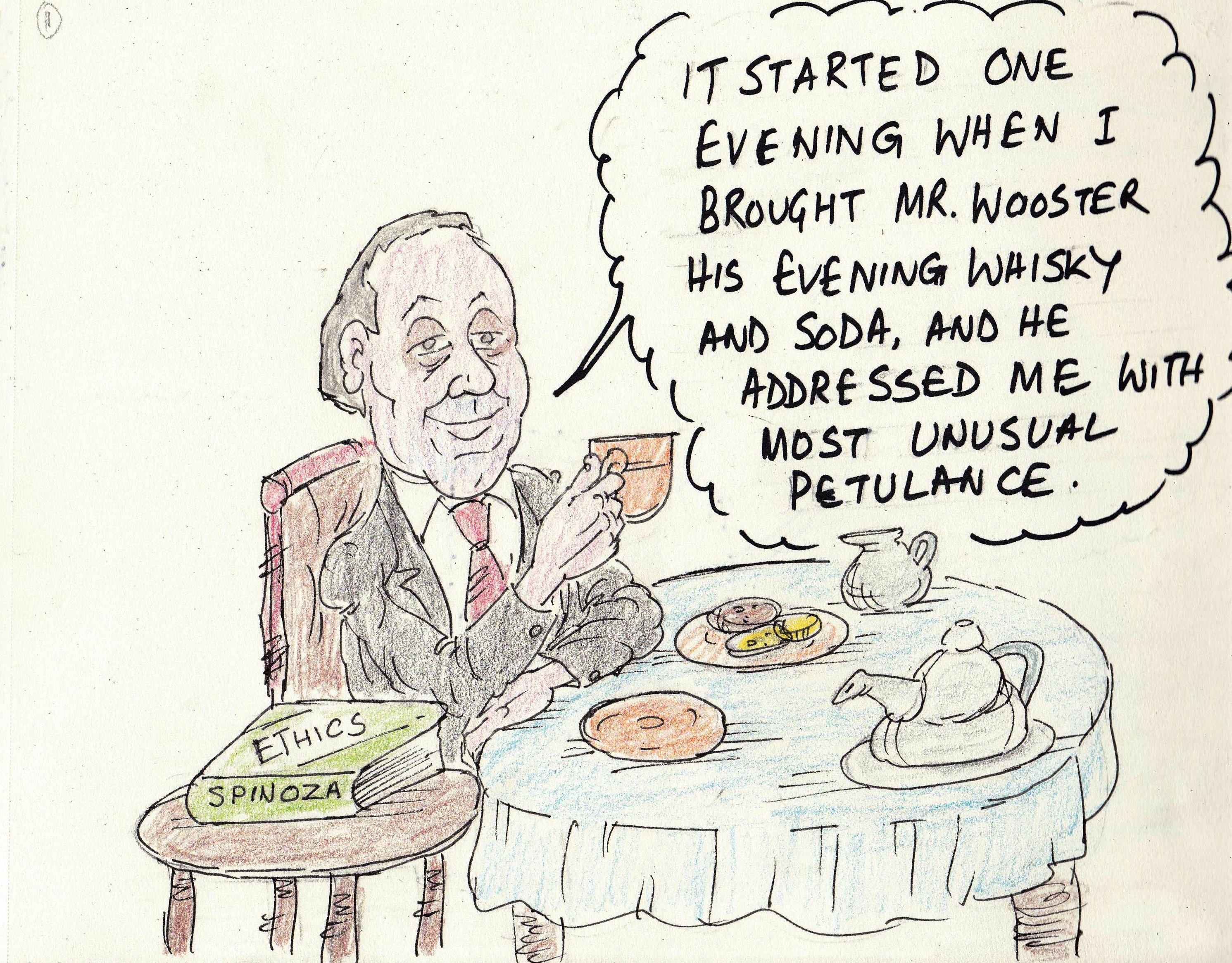
 

What happens when a banking professional like Suvarna Sanyal, who has spent a life time poring over bulky ledgers and checking debit and credit figures, turns his attention to one of the popular stories dished out by P G Wodehouse? Well, he simply whips up a series of illustrations which figure some of the better known characters from the canon in some selected scenes from the story!

Residents of Plumsville would recall that this is the only story in the canon which is narrated by Jeeves. Savour below the results of his labour of love which, incidentally, have already undergone a scrutiny under the precise microscope of an expert in all Plummy matters.


I want to explain to you why I am speaking to you directly, instead of letting Mr Wooster present one of his tales.  I have been asked quite frequently to explain any formula I might have for success in my profession, and have concluded it could be summarised as ‘Resource and Tact’.  I hope the example of this story will show you what I mean.


“Oh, dash it, Jeeves!” he said, sort of overwrought. “I wish at least you’d put it on another table for a change.”

“Sir?” I said.


I should mention that Mr Wooster then told me he was considering adopting a kid, but also wondering whether to give up his London flat, take a house, and have his sister and her three little girls to live with him.  But I avoided the blunder of outwardly expressing my disapproval of the idea at this juncture.

Well, it was a respite, and I welcomed it. But I began to see that a crisis had arisen which would require adroit handling. 


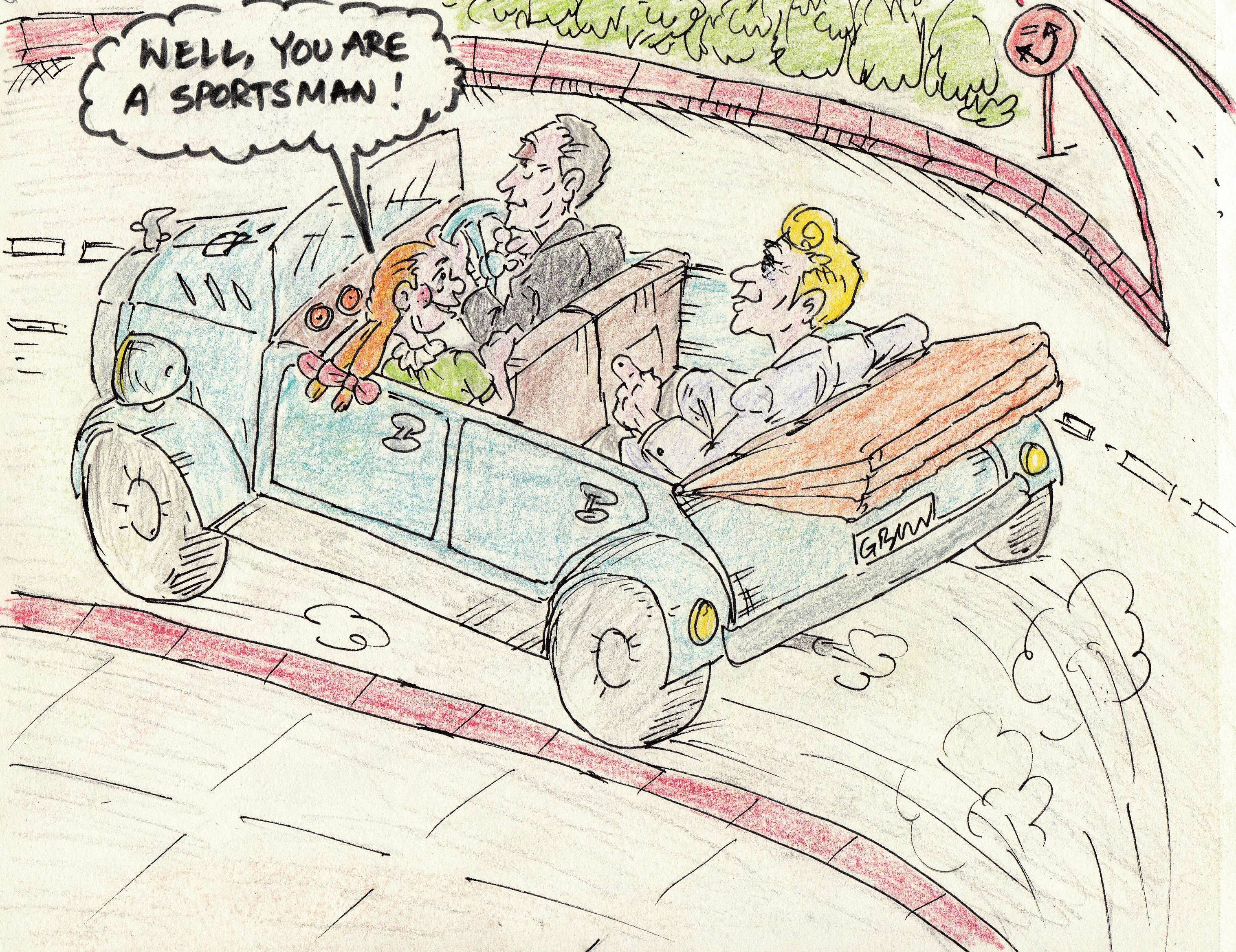
Mr Wooster wearied of Brighton after two days, and decided to return home, and we started back about 5 on a fine summer’s day.  We had only gone about two miles when I noticed a red-haired young person of about 12, with a snub nose and an extremely large grin, seeking a lift.  She seemed to me to have the air of one who had been absenting herself from school without leave.


“I’m going to get into a frightful row,” she began. “Miss Tomlinson will be perfectly furious. I thought I could get back in time so that nobody would notice I’d gone, but I got this nail in my shoe.”

“Oh, I say, this is rather rotten,” he observed. “Isn’t there anything to be done? I say, Jeeves, don’t you think something could be done?”

“I think it would be a legitimate subterfuge were you to inform the young lady’s school-mistress that you are an old friend of the young lady’s father; that you had been passing the school and had seen the young lady at the gate and taken her for a drive. Miss Tomlinson’s chagrin would no doubt in these circumstances be sensibly diminished if not altogether dispersed.”


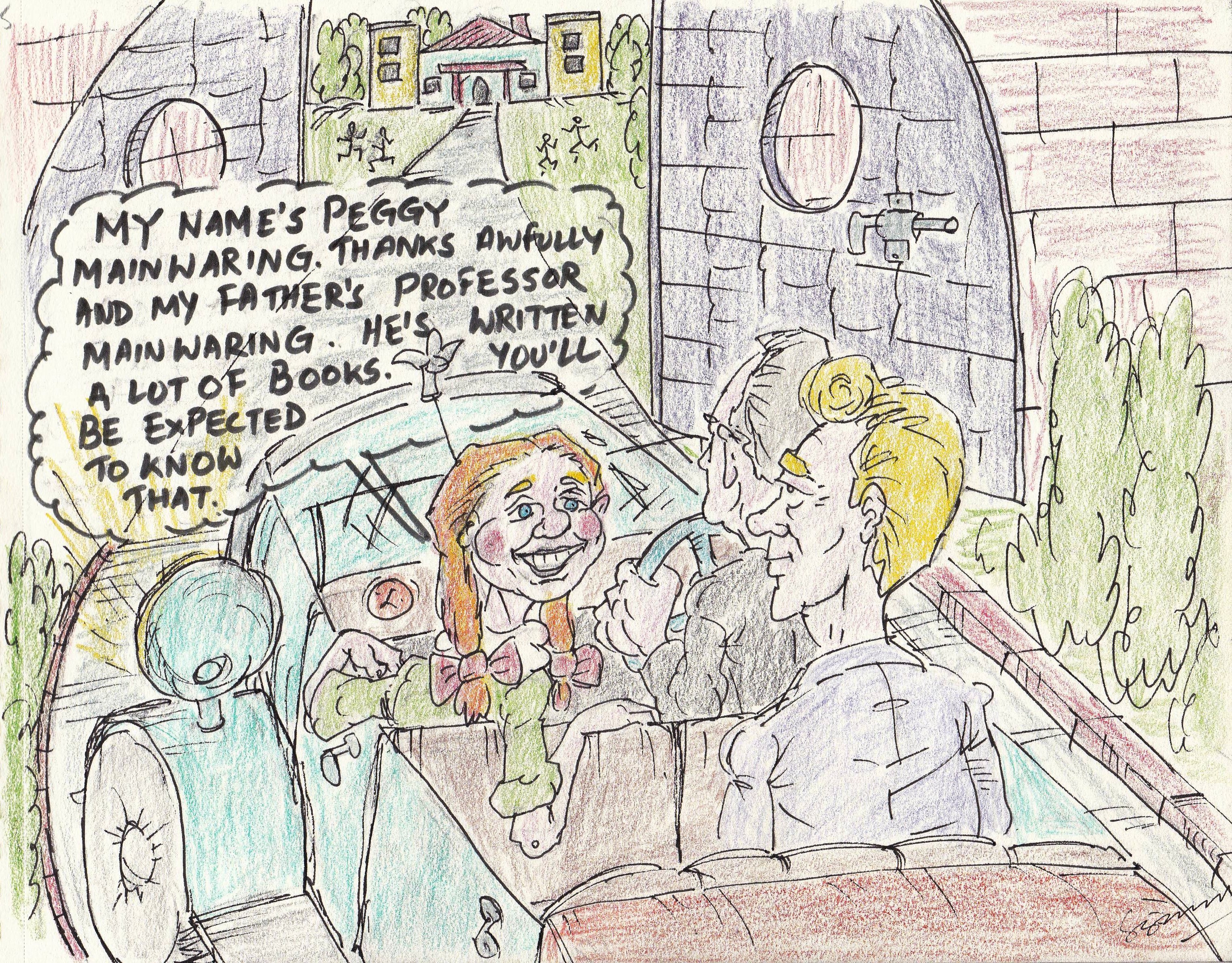
The young one was delighted at this generous offer, and as I turned in at the gates of a house of imposing dimensions, and brought the car to a halt at the front door, she volunteered her name.


I decided it might be simpler if I explained the situation to Miss Tomlinson, who proved to have a handsome but strong-minded appearance, and she recalled to my mind Mr Wooster’s Aunt Agatha.  ‘She had the same penetrating gaze and that indefinable air of being reluctant to stand any nonsense.’

I went on to explain to her that Mr Wooster is an extremely retiring gentleman.

“He is an extremely retiring gentleman, madam, and would be the last to suggest it himself, but, knowing him as I do, I am sure that he would take it as a graceful compliment if you were to ask him to address the young ladies. He is an excellent extempore speaker.”

“A very good idea!” said Miss Tomlinson, decidedly.


I drove round to the stables, and although the car was in excellent condition, I seemed to feel that something would go wrong with it, something which I would not be able to put right for a couple of hours. One gets these presentiments.

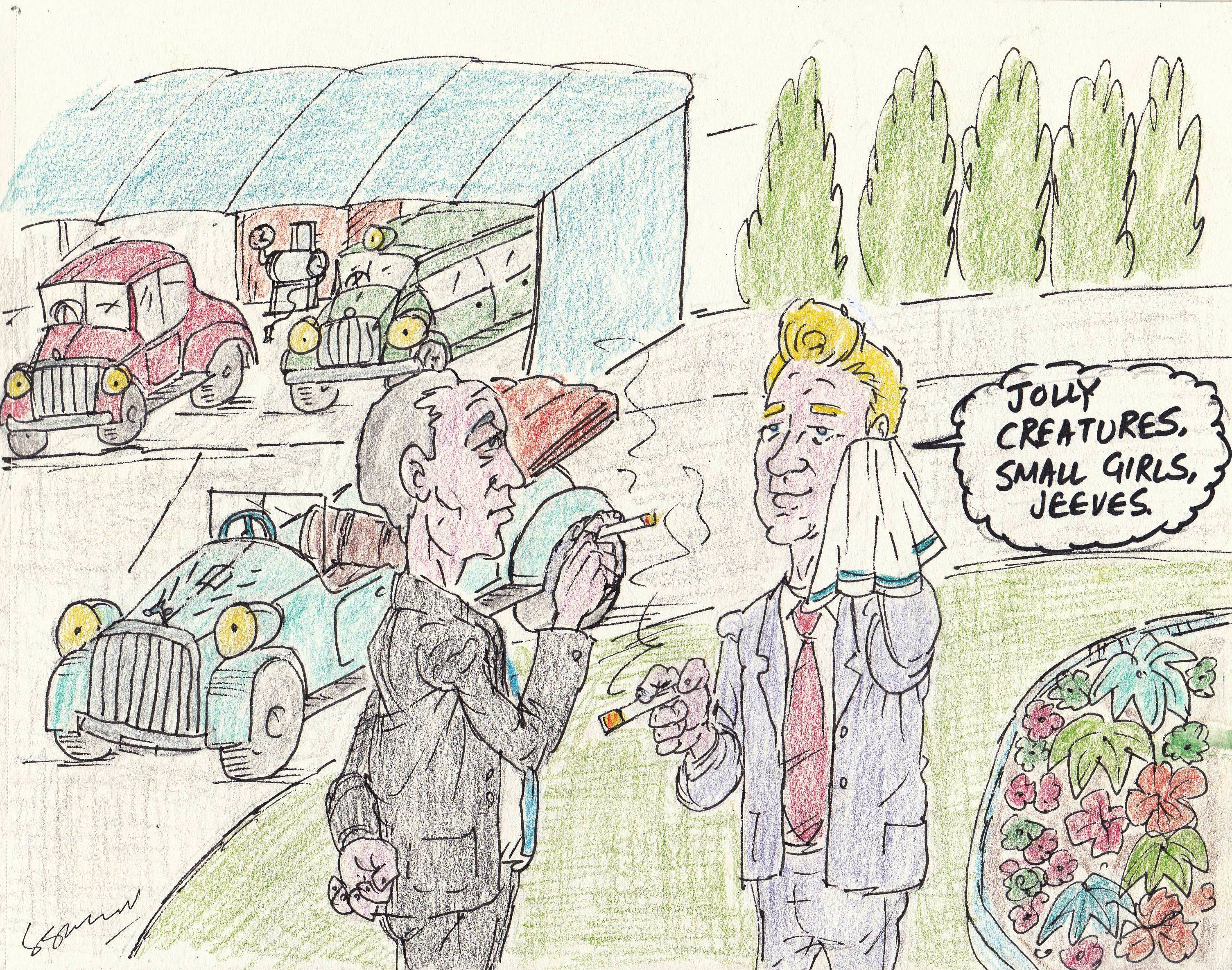
It was about half an hour later that Mr Wooster came into the stable-yard, and complained that he had lost his cigarette case.  He then went on to extol the virtues of his recent companions.

“Extremely so, sir,” I said. 

“But a bit exhausting en masse.  And they giggle so much.  Makes a fellow feel a bit of an ass.  And they stare at you.”

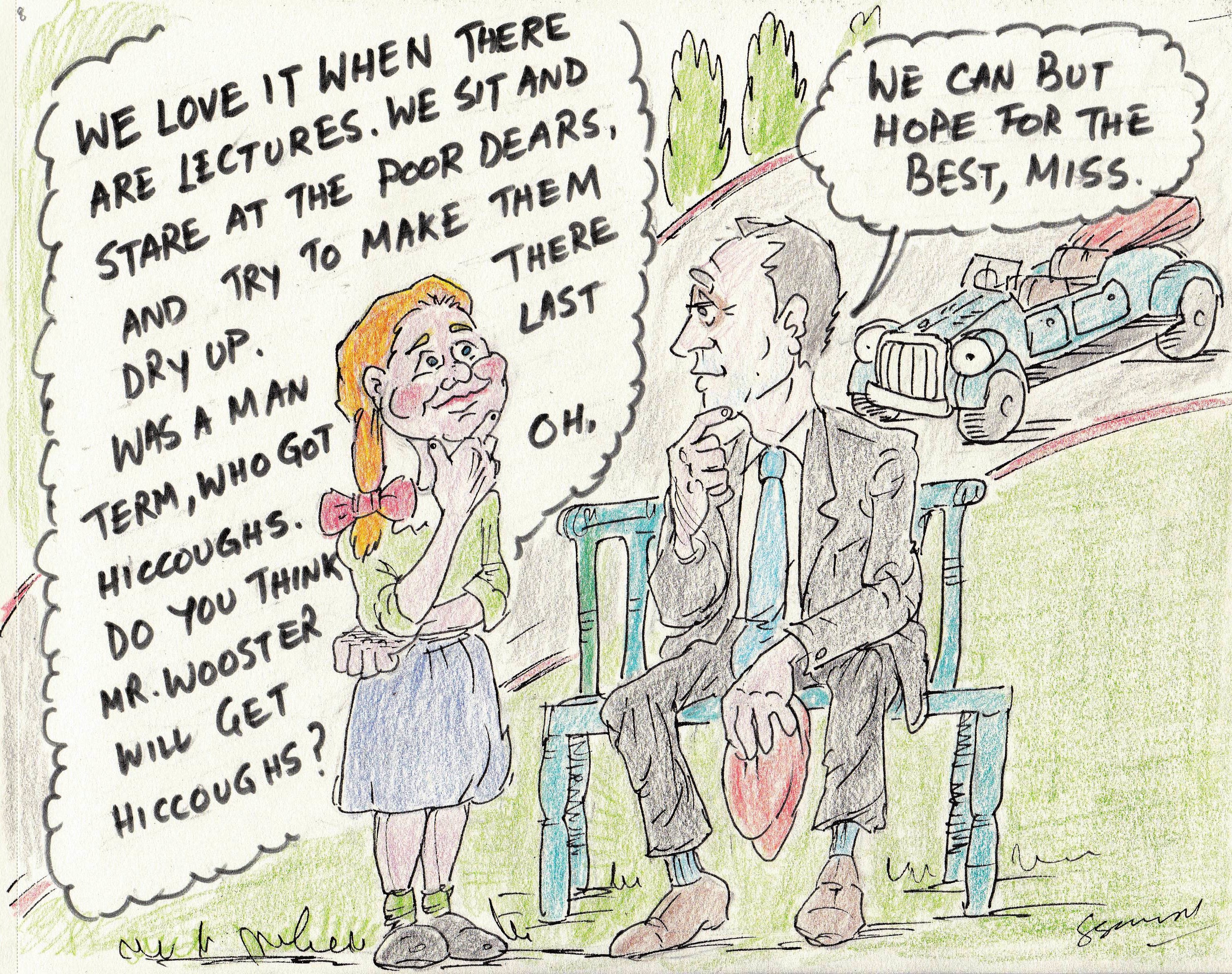
“When I was employed as a page-boy at a school for young ladies, sir, they had a regular game which they used to play when a male visitor arrived. They would stare fixedly at him and giggle, and there was a small prize for the one who made him blush first.”

“I’d no idea small girls were such demons.”

“More deadly than the male, sir.”


Mr Wooster returned to the company of the girls, while I took tea with the maids in the kitchen, after which I returned to the stable-yard, and Peggy Mainwaring appeared.  She asked me to return Mr Wooster’s cigarette case to him, which she said he must have dropped somewhere.

She then told me he was going to give a lecture to the school.


She had barely scampered off to rejoin her friends when a deeply perturbed Mr Wooster came round the corner.


And within minutes, Miss Tomlinson appeared, and spoke to Mr Wooster.


The large schoolroom was situated on the ground floor, with commodious French windows, which, as the weather was clement, remained open throughout the proceedings. By stationing myself behind a pillar on the porch or veranda which adjoined the room, I was enabled to see and hear all. It was an experience which I should be sorry to have missed. Mr Wooster indubitably excelled himself.

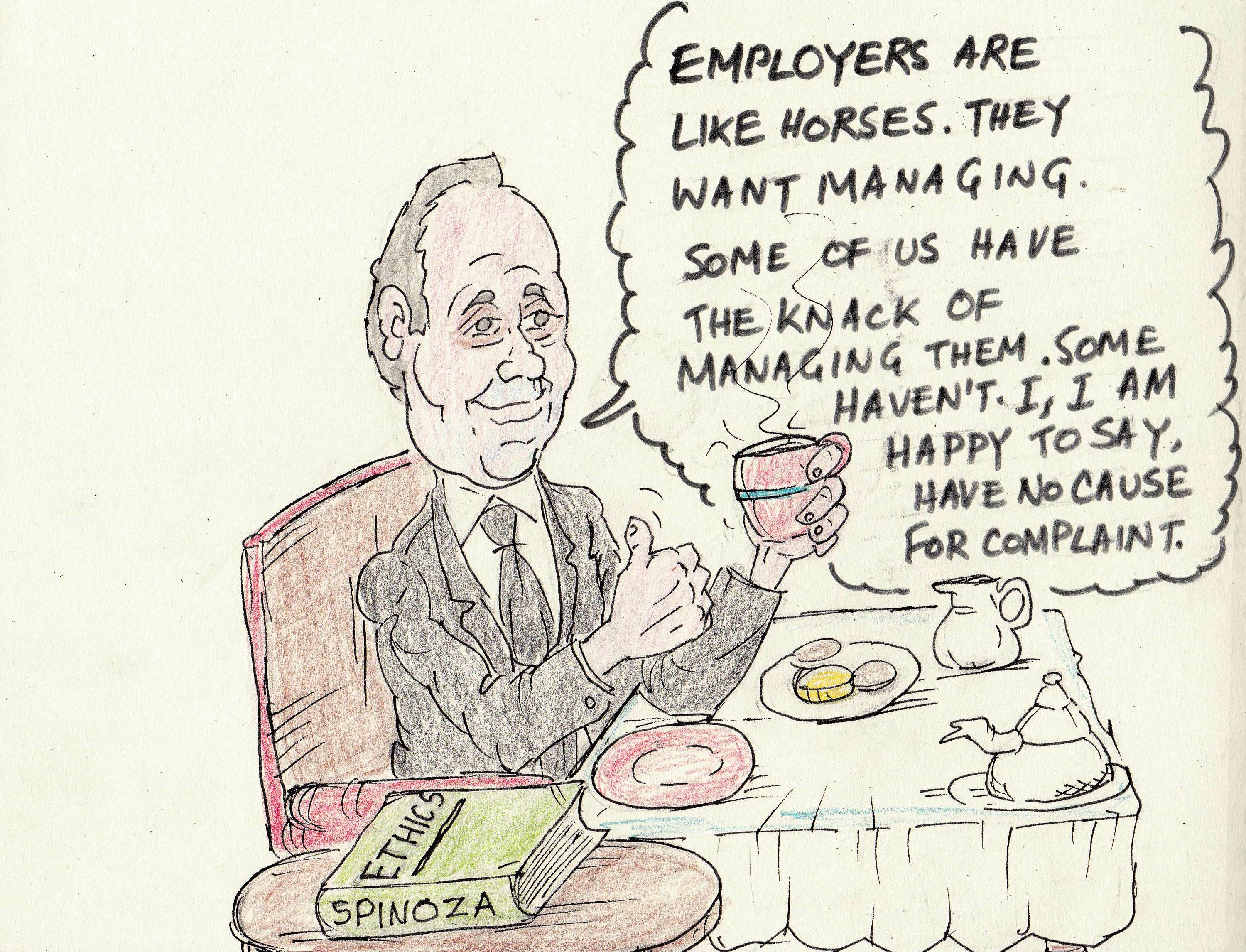
Mr. Wooster is a young gentleman with practically every desirable quality except one. I do not mean brains, for in an employer brains are not desirable. The quality to which I allude is hard to define, but perhaps I might call it the gift of dealing with the Unusual Situation.


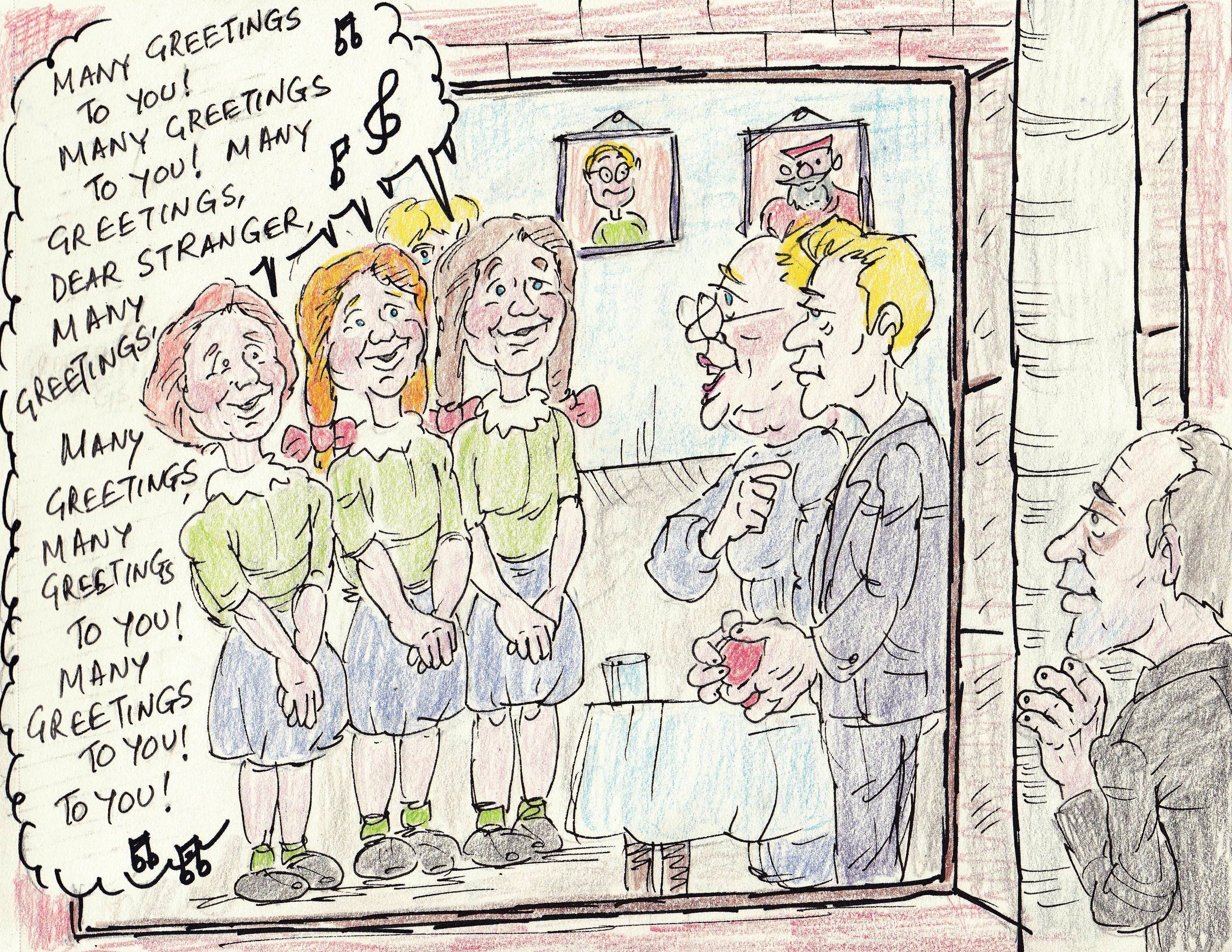
Miss Tomlinson  made a short but graceful speech of introduction, stressing the fact that he was Mr Bertram and no other breed of Wooster. But before he was able to open his mouth, the young ladies burst into a species of chant, of which I am glad to say I remember the words, if not the tune.


The performance, which was notably devoid of cooperative effort, seemed to smite Mr Wooster like a blow. And then he tottered forward.

Girls!” said Miss Tomlinson. She spoke in a low, soft voice, but the effect was immediate. Perfect stillness instantly descended upon all present. I am bound to say that, brief as my acquaintance with Miss Tomlinson had been, I could recall few women I had admired more. She had grip.


I fancy that Miss Tomlinson had gauged Mr Wooster’s oratorical capabilities pretty correctly by this time, and had come to the conclusion that nothing much in the way of a stirring address was to be expected from him.

“Perhaps,” she said, “as it is getting late, and he has not very much time to spare, Mr. Wooster will just give you some little word of advice which may be helpful to you in after-life, and then we will sing the school song and disperse to our evening lessons.”

She looked at Mr Wooster, who passed a finger round the inside of his collar. It was painful to see his brain endeavouring to work.

“We will now sing the school song,” said Miss Tomlinson, rising like an iceberg.


I hurried round to the car, and in a very few moments Mr Wooster came tottering up. I had climbed into my seat and was about to start the engine, when voices, including those of Miss Tomlinson,  made themselves heard.  At the first sound of them Mr Wooster sprang with almost incredible nimbleness to the floor covering himself with a rug. The last I saw of him was a pleading eye.

When Miss Tomlinson asked about the whereabouts of Bertie Wooster, I expressed helplessness, but she went on, obviously stirred with emotion.

“Mademoiselle has just found several girls smoking cigarettes in the shrubbery.  They stated Mr Wooster had given them the horrid things.  I think the man is out of his senses.”


One night about a week later, I took the whisky and siphon into Mr Wooster’s study.

“Jeeves, this is dashed jolly.  A sort of safe, restful feeling.  Soothing.  That’s the word,” he said.

“Indeed, sir.  By the way, sir, have you succeeded in finding a suitable house yet?

“House?  What do you mean, house?”

“I understood, sir, that it was your intention to give up the flat and take a house of sufficient size to enable you to have your sister, Mrs. Scholfield, and her three young ladies to live with you.”

Mr Wooster shuddered strongly.


So, how does one manage bosses and ensure they never go round the bend when they get too enthusiastic about an idea of theirs? Jeeves would heartily recommend ‘tact’ and ‘resource’!


(Related Posts:

https://ashokbhatia.wordpress.com/2019/06/28/when-bertie-entertains-thoughts-of-having-children-around

https://ashokbhatia.wordpress.com/2019/06/08/lord-emsworth-and-the-girl-friend-a-visual-version)


ashokbhatia's avatarashokbhatia

LEADERSThere is something unique about managers from India. Apparently, they have a Western mind and an Eastern heart. In other words, a unique combination of analytical prowess and intuitive faculties.

Here is a thought-provoking guest post from Mr K V Rao, Resident Director – ASEAN, Tata Sons Ltd , Singapore.

“I was born and raised in India in small towns, and started reflecting how is it that so many of my compatriots make it to global leadership positions ?

Many of our ilk have left the shores, for distant foreign lands. Have studied and imbued the best of cultures, but retained some of some of that inner rusticity, and native eclectic personalities. They have made it to the top jobs of Google, Microsoft, Mastercard, or a Pepsi, and the list is endless and still more to surface. All have been exceptional fighters, who seem to compete fiercely but fairly, often guided…

View original post 898 more words

By Sharada Iyer Multifaceted Kishore Kumar was an enigmatic personality and an entertainer par excellence. A truly gifted singer with a God-given voice who never received any typical classical training yet proved with every song that he was in no way lesser than any of his contemporaries of the ‘Golden era’. Blessed with a rare […]

via The inimitable Kishore Kumar in ‘classical’ mode — My Views On Bollywood

findshars's avatarMy Views On Bollywood

By

Sharada Iyer

It is sad that our beloved Superstar Rajesh Khanna is not around to celebrate what would have been a milestone year in his amazing career. As five of his super-hit films Aradhana, Do Raaste, Ittefaq, Doli and Bandhan enter their 50th golden year, the actor is not around to enjoy and bask in this glorious moment. But as his character in Anand saysZindagi aur maut toh ooparwaale ke haath mein hai jahanpanah! Ise na toh aap badal sakte hain na main’ in other words-life and death are not in our hands and no one can change what is ordained. Well! Rajesh Khanna may not be physically around but he continues to live in the hearts of his fans and entertain us even today through his movies and songs…

Rajesh Khanna was a phenomenon who crashed into the industry like a meteor and exploded…

View original post 2,079 more words

The proposition of reincarnation contained in Bhagavad Gita leads one to an interesting corollary – that of accumulation of the effect of one’s actions over several lives. It is as if one has a Savings Bank account of one’s Karmas.

The good news is that if one’s present is based on one’s past actions and thoughts, one can use one’s Free Will to shape one’s own future by punching the right buttons in the present.

A Do-It-Yourself Approach

In other words, what is on offer here is a Do-It-Yourself approach. This is how Lord Krishna explains it:

उद्धरेदात्मनात्मानं नात्मानमवसादयेत् |
आत्मैव ह्यात्मनो बन्धुरात्मैव रिपुरात्मन: || 6.5||

Elevate yourself through the power of your Self, and not degrade yourself, for the Self can be the friend and also the enemy of oneself.

Ultimately, it is up to an aspirant alone to accept the responsibility for either blessing or damning herself. Each life gives one an opportunity for self-growth and also the strength to pull oneself out of one’s bubble of misconceptions and prejudices. How one makes use of these is up to oneself.

The Divine is not a Chief Administrative Officer who keeps an account of all of one’s thoughts and actions of endless lifetimes. Surely, our Guardian Angels would then have to undertake a massive work of this nature with the help of several super computers, duly backed by an elaborate system of codes, managing a huge database, backed by impeccable information security and a sharp Operating System which could give our colleagues in the Silicon Valley a run for their money.

नादत्ते कस्यचित्पापं न चैव सुकृतं विभु: |
अज्ञानेनावृतं ज्ञानं तेन मुह्यन्ति जन्तव: || 5.15||

The omnipresent God does not involve Himself in the sinful or virtuous deeds of anyone. The living entities are deluded because their inner knowledge is covered by ignorance.

But one’s personal system is designed such that when one is reborn, the operating system of Karma gets freshly installed. Past files containing memories get quarantined in the deep recesses of the subconscious, only to be partially retrieved if one decides to undergo professional regression therapy of some kind. Evidence of this kind has been reported by Dr Brian Leslie Weiss in a series of books, like the one entitled ‘Many Lives, Many Masters’. But there is no dearth of sceptics who take a dim view of an approach of this kind.

However, with each birth, files containing all the past attachments are brought forward intact and stored in a hidden encrypted secured partition. This balance sheet of one’s actions, alluded to as Sanchita Karmas, or Collective Actions, has a component of current asset which goes by the name of Destiny (Praarabdha). It captures one’s past actions which are due for fruition during the current life. The core Karma application computes the result from one’s actions in the present life, keeping in view one’s Sanchita Karmas, and keeps updating the balance sheet.

The Theory of Karma

In accordance with the Theory of Karma, the spiritual earnings of an unsuccessful aspirant in the previous life bear fruit. Accordingly, ones who had not made much progress in their past lives are kept waiting in the stack of celestial abodes whereas those who had traversed quite a distance and developed dispassion are not sent to the celestial abodes. They are given birth in a spiritually evolved family, to facilitate the continuance of their journey, albeit through a newly installed operating system along with the updated balance sheet in the hidden partition. Such a birth is a great fortune because the parents inculcate divine wisdom in the child from the very beginning, thereby putting the new born soul on a faster track of evolution.

Lord Krishna explains this concept as follows:

प्राप्य पुण्यकृतां लोकानुषित्वा शाश्वती: समा: |
शुचीनां श्रीमतां गेहे योगभ्रष्टोऽभिजायते || 6.41||
अथवा योगिनामेव कुले भवति धीमताम् |
एतद्धि दुर्लभतरं लोके जन्म यदीदृशम् || 6.42||

The unsuccessful yogis, upon death, go to the abodes of the virtuous. After dwelling there for many ages, they are again reborn in the earth plane, into a family of pious and prosperous people. Else, if they had developed dispassion due to long practice of Yog, they are born into a family endowed with divine wisdom. Such a birth is very difficult to attain in this world.

If Charles Darwin had ever ventured to touch upon the process of further evolution of human consciousness, Homo sapiens would perhaps have been enlightened on the subject. However, here we are given a proposition which provides us a ready template for the spiritual ascension of an individual. It also provides us with a tacit assurance that all our benign motivations are likely to get fulfilled sooner or later, provided these are strong enough and are accompanied by intense activities appropriate for their fulfilment.

तत्र तं बुद्धिसंयोगं लभते पौर्वदेहिकम् |
यतते च ततो भूय: संसिद्धौ कुरुनन्दन || 6.43||

On taking such a birth, O descendant of Kurus, they reawaken the wisdom of their previous lives, and strive even harder toward perfection in Yog.

Stalwarts like Buddha, Christ, Adi Shankaracharya, Swami Vivekananda and Mother Teresa who continue to inspire lesser mortals the world over were surely purer souls which had attained a much higher level of perfection in their previous lives, thereby leading by example in their lives that we happen to know of. All these persons were obviously a rare breed.

Here, the importance of perseverance takes on a deeper meaning. Whereas many of us pursue several things with single-minded devotion in our lives and produce significant results for ourselves and also for those around us, here we find an overarching endeavour of perseverance, spread over many lives. The project of attaining liberation is managed throughout the life cycle of one’s journey. With each life, one’s brand equity gets a boost.

प्रयत्नाद्यतमानस्तु योगी संशुद्धकिल्बिष: |
अनेकजन्मसंसिद्धस्ततो याति परां गतिम् || 6.45||

With the accumulated merits of many past births, when these yogis engage in sincere endeavour in making further progress, they become purified from material desires and attain perfection.

A CEO who has aligned herself to the practice of self-control and detachment is bound to be as close to perfection as possible. This does not permit her to avoid acting as an intra-preneur, though. Taking a proprietary interest in the scheme of things is essential to her personal growth and evolution in the realm of management.

Easing the iron grip of Karma

If what one is now is the result of our past actions, it follows that whatever one wishes to be in future can be produced by one’s present actions. One creates one’s own future and either beefs up or tarnishes one’s own brand equity.

Though Bhagavad Gita waxes eloquent on Karma Yoga, it does not necessarily showcase the Theory of Karma. Instead, the enticement on offer here is that it shows one a way to transcend the cycle of one’s actions, by controlling one’s desires and by practising the art of detachment from its results.

It is a well recognized fact that in any given hierarchy, rules governing the conduct of employees vary depending upon one’s level of operation. Take the example of punching clocks or gadgets which help administrators keep a track of late comers or early leavers from a factory. The rules which govern, say, shop-floor level employees, cannot be the same as those applied to CEOs, simply because the latter’s roles are far wider. The hapless souls have to maintain their sangfroid in an era of 24×7 connectivity. Hence, their time-bound physical availability on the campus need not be as strict as that of a shop-floor employee. However, if they happen to be heading the manufacturing activities, they set a healthy example by being on their desk some thirty odd minutes before the work day starts. This way, they not only avoid traffic blues of a rush hour but also enjoy a quiet time which helps them to organize their work better for the day.

Likewise, the Theory of Karma espoused in Indian scriptures applies only to those who operate at the material level of things. As they start growing out of the operational level and give up attachment, as well as aversion, altogether and perform all actions with a sense of duty, maintaining their equipoise in success and failure, they get released from the bondage of their own actions. With such a balance in the account, the application starts rewarding with higher privileges. Such souls end up easing the iron grip of Karma on their lives. Unless they start abusing their privileges, they end up experiencing the bliss of true freedom.

The Savings Bank accounts of Karma of such souls could gradually be declared to be inoperative in nature. Their personal Operating System of Karma could breathe easy, with the core application deactivated.

Indeed, the proposition of enabling one to transcend the cycle of Karma is a Unique Selling Proposition of Bhagavad Gita.

(Inputs from an IT-expert are gratefully acknowledged)

(A version of this blog post will appear in a yet-to-be-published book on Gita and Management, authored by yours truly) 

The 29th of July, 1030 AD is an important day in the history of Norway. For, on that day, the well-organised farmer’s community in the Stiklestad, located in an area known as Verdal, saw itself threatened by an invading army, as the exiled King Olav Harldsson came from the East to claim back his kingdom. The area became the battlefield which marked the transition of the country from paganism to Christianity.

The Stiklestad National Cultural Centre at the location is a national hub institution with special responsibility for disseminating knowledge about Olav the Holy, the Battle of Stiklestad and the history associated with the events on the side.

The folk museum at Stiklestad consists of over 30 buildings, most of which are from the 17th and 19th centuries. The museum also has close to 30,000 objects and photos, some of which are in the buildings, but most are stored in a magazine.

Around the 29th of July each year, quite a few cultural activities get planned, including stage adaptations of the battle, often with audience being invited to participate.

The Tronder’s Right of Resistance

The oldest law in Trondelag that one becomes familiar with, Frostatingsloven, contains three chapters. These can be summed up as follows:

  • No man shall commit an act of violence…
  • But if the King should do this, you shall go after him and kill him…
  • But if he escapes, then he shall never return to the land.

An exhibition at the Centre presents a glimpse of everyday life in the heathen Viking age, when different regions practised diverse customs and traditions for religious succour. It also presents scenes from the battle and the changes the Christian medieval age brought with it – a uniform religion across the entire country.

Central to battle scene at the exhibition is the slaying of Olav. The blood from his three legendary wounds is later said to have created miracles. A year after the battle, Olav was made a saint of the Catholic Church. Thus, the battle became a turning point of the Norwegian history.


An interesting exhibit I discovered was a diagram which depicts the origin of several languages globally.

The effort to showcase the country’s rich history is indeed praiseworthy. Active dissemination of the same is even more laudable.


(Related Post: https://ashokbhatia.wordpress.com/2018/09/01/a-walk-around-the-city-of-trondheim-in-norway-part-1-of-2)

.


Fans of P G Wodehouse often twiddle their fingers trying to figure out if his works need to be adapted for showcasing on different artistic platforms.

Plumtopia has this unique piece which argues that there is indeed a strong case in favour of adpatations.


Honoria Plum's avatarPlumtopia

My recent post on the Centenary of the P.G. Wodehouse novel Piccadilly Jim, prompted some discussion about Wodehouse adaptations.

Some people think it impossible and ought not be attempted. I disagree. What the world needs is more and better Wodehouse adaptations.

While it’s true that some of the linguistic joys of Wodehouse’s prose cannot be translated to the screen, his complex plots and fabulous characters absolutely can. But they must be handled sympathetically, by scriptwriters, directors, and cast members who appreciate the material they’re working with — and want to produce it faithfully.

For a thorough criticism of the various Wodehouse adaptations, I direct you to a piece entitled Spats, by Shadowplay.

Spats | shadowplay

Happy viewing!

HP

View original post

ashokbhatia's avatarashokbhatia

Why do we hold leadership to be something which is fascinating? Perhaps we do so because of the inherent complexity it represents.

One, it is the outcome of a delicate chemistry between an individual and his/her environment. All individuals have personality traits. Some of these come to the fore under some special circumstances. Take away those circumstances, and the trait may continue to remain dormant for a long time.

It follows that there is as much probability at work here as, say, in the tossing of a coin or in a game of chance. In the realm of human resources, we see examples of dullards becoming heroes in a given situation. In case of brands and organizations, we come across several cases where some which were ‘nothing’, when assiduously worked upon and when the market conditions were right, evolved into ‘everything’ and started enjoying commendable market equity.

Two, experts have…

View original post 311 more words

ashokbhatia's avatarashokbhatia

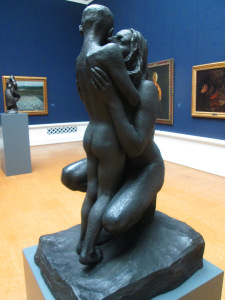
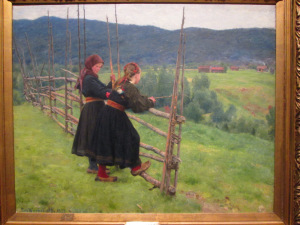
A friend suggested visiting the National Gallery in Oslo. Having had the opportunity of admiring the works of Leonardo da Vinci, Michelangelo, Pablo Picasso and others in the last few years, I was naturally curious as to what Norwegian artists had come up with in the past. The visit turned out to be a truly instructive one. I realized the depth and range of work done by painters as well as sculptors and marvelled at the passion and artistic fervour of the artists concerned.IMG_1716

Founded in 1837, the National Gallery houses Norway’s largest public collection of paintings, drawings and sculptures. In its permanent and temporary exhibitions, the museum presents older art, with principal emphasis on art from Norway.IMG_1652

Highlights from the collection are shown in the permanent exhibition “The Dance of Life – The Collection from Antiquity to 1945”.IMG_1664

The exhibition presents a chronological overview of more than 300 Norwegian…

View original post 515 more words