Feeds:
Posts
Comments

ashokbhatia's avatarashokbhatia

The brand called Jeeves stands for impeccable service. It signifies delivery of results which exceed one’s expectations, that too with due respect, politeness and sagacity. The methods may be rough at times, but the neat results obtained do provide satisfaction to all concerned.

On the flip side, the brand also represents cunning. An undercurrent of subterfuge often manifests itself. An excessive control over the affairs of the hapless and mentally negligible masters is a cost to be borne to avail of the service package on offer.

Residents of Plumsville often wonder as to how Jeeves, the well-known gentleman’s personal gentleman, acquired the traits that eventually made him an indispensable asset to the upper crust of English society – the art of shimmering in and out, the detailed knowledge of Debrett’s British Peerage, the knack of solving some tricky problems facing his blue-blooded masters or his pals, and, of course…

View original post 1,864 more words


Now, when a friend like Psoumya approaches with a problem of Plummy proportions what is one to do? I mean noblesse oblige and all that rot.

Especially a pal with whom you have swapped creative juices while working on a series of books, a saga that you have let loose on unsuspecting masses in five bally parts. Add to that more such collaborations are in the works, to be hurled at naïve souls when they are at their most vulnerable.

The Code of the Psenguptas compels you to spring into action, sleeves rolled up and palms spat on. The old bean races like a cheetah resolved to catch the first scene before the curtain is raised, unscheduled maintenance work on Piccadilly notwithstanding.

You see, Psoumya was just pottering about, minding her own business and generally spreading sweetness and light, when she was blind-sighted by this blighter of a friend asking her to compile a list of ten books. Following that she was to publish the list, one measly volume after another, into what has become the tangled web of our lives, FaceBook – that mingled yarn, fusing good and ill together.

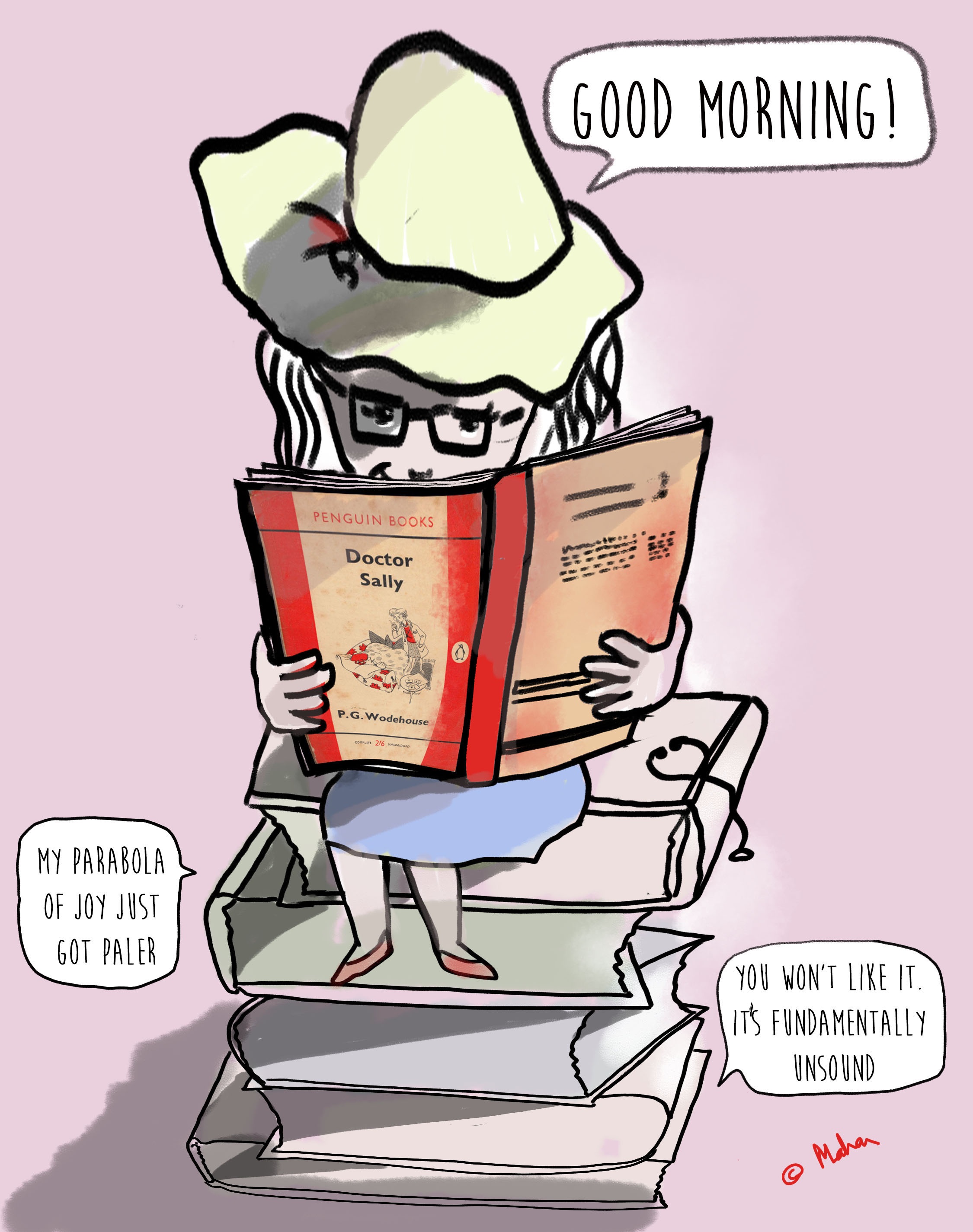
Being an artist, and a topping one at that, Psoumya decided to put her own crafty spin on it. With her diligent brush-strokes, she dragged her choice of books onto canvas. She made them wear the frame, Spode-like, around their spines and leather jackets. To cut a long story short, she started making paintings of each book in her list.

And having dipped the wick of her creative soul in the dangerous spirit of graphic novelling, in which yours truly has waded alongside as her comrade in arms, she was ignited with the desire to put words into the mouths of the books. As if all that they held from cover to cover was not good enough. She brought in speech bubbles.

Being a Plummite herself, it was not too long before she plunged for Doctor Sally among her choices. And with jolly old Wodehouse fare literally in the picture, so to say, she rang for her partner in crime to come to her aid.

“What ho!”

“Of all the infernal nuisance …”

“Good morning to you too.”

“I picked Doctor Sally.”

“Did you now? No Psmith, no Blandings, no Jeeves. That’s the most unkindest cut of all.”

“I could pick only one Wodehouse book. Dashed difficult thing too, given he seems to have produced one every alternate day.”

“I wonder what the rest of the volumes have to say about that in your cartoon?”

“They will have some testy tinkerty-tonks up their sleeves, won’t they?””

“Given they will be cut to the quick at not being picked, I doubt they will stop at the unprintable.”

“They are books, for g’s sake. They cannot access the unprintable.”

“Take it from me, old p-in-c, that little technical impossibility won’t stop them. Besides, this is the electronic world. Print is passe and all that sort of thing… Also, given a shelf, they can stand up for themselves … and they don’t lack spines.”

There was what you would call a pregnant silence before she gushed forth:

“I say, can you help me come up with some words for these pestilent perishers?”

“Well, you see, what with this thing and that …”

“Arun, I mean now!”

“Oh, sure, indeed, right-ho, sure thing, happy to help and all that.”

So, that was the gist of it. As rummy old Shakespeare says, if you’re going to do a thing you might as well pop right at it and get it over.

With firmness of purpose we did just that, and in the image above you see the result.

If for some reason you find yourself intrigued about the Psoumya-Psengupta collaborations I surreptitiously hinted at (perhaps because someone took away your all-day sucker at the age of six), I am adding the details of the blasted lot without a blush of shame on our cheeks of modesty.

(Sportswriter Arun Sengupta and artist Soumya Ganesh (Maha) have collaborated in producing a series of graphic novels based on the History of World Cup Football. However, both remain Plummy types. Hence, faced with a FaceBook challenge, they combined to produce something Wodehousean.

Arun Sengupta writes the story behind the Plum-piece. The artwork is by Soumya Ganesh.

Sudden Death: An Illustrated History of World Cup Football as a Mystery Thriller Volumes 1 to 5 by Arun and Maha …published by Criketsoccer … available from Amazon and other outlets)

(This article appeared in the May-June 2019 issue of Nothing Serious, the journal of the P G Wodehouse Society of Netherlands)

Life is not fair. Once in a while, when one’s Guardian Angels decide to go off to enjoy a long furlough, it decides that merely throwing some brickbats at one is not enough. Instead, it derives a sadistic pleasure in hurling huge rocks at us. These are instances when it is no longer a question of one’s ego to be kept on a tight leash or just managing one’s basket of desires. The challenge in such cases is that of meeting one’s basic needs; of keeping one’s body and soul together. Even one’s survival could be at stake.

On one of those not-so-fine mornings, one gets called by the boss with a stiff upper lip and handed over a pink slip. Given advances in technology, one is told that one’s services are no longer required. Thanks to the Industrial Revolution 4.0, one’s career goes for a toss.

Or, a CEO who has built an enviable reputation for herself over the years, comes under the cloud of a corporate scandal which gets eagerly sniffed at by various regulatory agencies. This prompts her to put in her papers and face the legal consequences. The media, of which she was a darling till the other day, decides to start shaming her. A severe loss of prestige comes about. A glorious career comes to a sudden halt. Her feelings in a situation of this kind could not be much different than those of Napoleon after his Waterloo debacle.

Some once-in-a-blue-moon experiences

Allow yours truly to share few experiences from his personal life.

A low point in the career

While working in a company which was steadily going downhill due to very high overheads and also an unhealthy level of internal bickering and politics, a highly embarrassed moment had to be faced. In a meeting of all senior managers, I was somehow singled out to be publically lynched for much of what was going wrong with the operations. The unfairness of it, and that too delivered in wide public view, left me shaken to my core. Whereas all those who know me personally can vouchsafe for my chin-up attitude towards life, on this particular occasion, I confess that suicidal thoughts plagued my mind. Always appreciated for my work and sincerity, this was indeed the lowest point in my career.

Late evening, though, my boss offered his sincere apologies. Thoughts of a spiritual nature and a dash of equanimity helped me to regain my sangfroid, so to say. A few months down the road, I moved on to a much better position in another outfit.

The kidnapping fiasco

While working in a very senior position in a small town in India, on one fateful night, I and my son were kidnapped by a gang of four and kept in captivity overnight. They were under the impression that I was the owner of the business I was working with at the time. They had a ransom demand which I had no way of fulfilling.

While held in captivity, I could imagine the sequence of events if they decided to bump me off and dump the body at a desolate location. But faith in a higher power saw me regaining my confidence. Despite a language barrier, I could explain my financial constraints to them. We could eventually manage to get released without much physical harm by the time the next day dawned.

Swift police action followed. Based on my cell phone records, the miscreants were identified and nabbed. But it took me a very long time to mentally recover from the trauma suffered.

Partition blues

One of the heavy costs paid by the society at large when India became independent in 1947 and a new country known as Pakistan got carved out of it was the riots which broke out. Families had to leave their properties, home and hearth behind, and run across the newly formed border to safer sanctuaries. According to UNHCR estimates, partition led to a displacement of some 10-12 million persons along religious lines.

My wife’s Hindu family, located then at Bahawalpur in Pakistan, was one such which faced a trauma of this kind. Interestingly, it was a Muslim family which stitched ‘burqas’ for the entire family and assisted them in fleeing to India. From being rich landlords in Pakistan, overnight they became paupers.

It was by sheer dint of her father’s hard work and resilience that they rebuilt their lives in India from scratch. Prosperity and happiness rules the family today, thanks in part also due to the innate faith they have in their family deity. An old cot from Pakistan, donated by the family, is one of the items on display now at the Partition Museum at Amritsar in the Punjab province of India.

Crucial enabling factors

With the benefit of a 20/20 hindsight, one can analyze and identify the crucial underlying factors which enabled a successful handling of such challenges. If the low point in career could be handled with the help of humility and one’s own job knowledge, skills and attitude, the kidnapping incident could be overcome with faith and an inclination to surrender to a higher power. As to the partition catastrophe, hard work backed by my father-in-law’s own skill-bank and innate faith eventually led to success.

It is not difficult to discover traces here of what Bhagavad Gita proposes.

अमानित्वमदम्भित्वमहिंसा क्षान्तिरार्जवम् |
आचार्योपासनं शौचं स्थैर्यमात्मविनिग्रह: || 13.8||
इन्द्रियार्थेषु वैराग्यमनहङ्कार एव च |
जन्ममृत्युजराव्याधिदु:खदोषानुदर्शनम् || 13.9||
असक्तिरनभिष्वङ्ग: पुत्रदारगृहादिषु |
नित्यं च समचित्तत्वमिष्टानिष्टोपपत्तिषु || 13.10||
मयि चानन्ययोगेन भक्तिरव्यभिचारिणी |
विविक्तदेशसेवित्वमरतिर्जनसंसदि || 13.11||
अध्यात्मज्ञाननित्यत्वं तत्वज्ञानार्थदर्शनम् |
एतज्ज्ञानमिति प्रोक्तमज्ञानं यदतोऽन्यथा || 13.12||

Humbleness; freedom from hypocrisy; non-violence; forgiveness; simplicity; service of the Guru; cleanliness of body and mind; steadfastness; and self-control; dispassion toward the objects of the senses; absence of egotism; keeping in mind the evils of birth, disease, old age, and death; non-attachment; absence of clinging to spouse, children, home, and so on; even-mindedness amidst desired and undesired events in life; constant and exclusive devotion toward Me; an inclination for solitary places and an aversion for mundane society; constancy in spiritual knowledge; and philosophical pursuit of the Absolute Truth—all these I declare to be knowledge, and what is contrary to it, I call ignorance.

Here, one has a virtual ready reckoner of certain mental and emotional attributes, moral attitudes and ethical principles. These are held to be the essential prerequisites for one to discover – and act in tandem with – the Self within.

तमेव शरणं गच्छ सर्वभावेन भारत |
तत्प्रसादात्परां शान्तिं स्थानं प्राप्स्यसि शाश्वतम् || 18.62||

Surrender exclusively unto Him with your whole being, O Bharat. By his grace, you will attain perfect peace and the eternal abode.

Much like a Senior Vice President who gets promoted as a CEO after the seniors notice a potential in her to shoulder a higher responsibility, coupled with a match between the value system of the incumbent and that of the business, and a deep sense of loyalty (read surrender) to the organization, Lord Krishna also stipulates the condition under which His grace would help a person to attain perfect peace – exclusive surrender. A conscious realization that it is not one’s own efforts alone which get success in life, and that it is one’s destiny also which plays a crucial role, helps one to surrender in such a manner. 

Challenges and evolution

Each of the demeaning experiences faced by yours truly led to some inner growth. A public rebuke made me learn the value of sensing dangerous turbulence on the flight path in advance, and punching the eject button in the cockpit before things spun out of control. Likewise, the kidnapping incident taught me the importance of having some acquaintance with the law and order and regulatory agencies in the country. As an additional perk, each incident revealed the true friends and foes of those around me at the time. An enriching string of experiences, one would say in retrospect.

When a pink slip gets dished out, one finds an opportunity of reassessing one’s strengths and weaknesses and act on them. A fall from grace eventually ends up increasing the depth of one’s inner reservoirs of patience, equipoise and fortitude.

Challenges come in all sizes, hues and degrees of seriousness. Each challenge faced by one in life eventually results in speeding up one’s progress on the tricky path of evolution. One gains maturity and experience. One learns to be grateful when one is feeling unduly elated, and graceful when feeling totally down. One learns to be more careful and patient. Challenges are blessings which bring about changes which uplift and enrich one.

(Related Posts:

When Life hurls big rocks at one (Part 2)

https://ashokbhatia.wordpress.com/2011/10/05/divine-grace-works-all-the-time)

ashokbhatia's avatarashokbhatia

Dear All,

As an Executive Secretary of the Animal Division of the International League of Happiness, I hereby appeal to all of you, especially sociologists, linguists, litterateurs, politicos and legal luminaries amongst you, to quickly evolve a purely vegan code of conduct for the usage of English and also to push through some judicial reforms, thereby facilitating happiness in the animal world.

Several species of animals are miffed at direct as well as indirect references to the members of their respective tribes, often in a derogatory manner. They believe that the tendency of Homo sapiens to use references to animals of any kind is to be curbed. They also plead for some legal reforms to be pushed through.

Some of the species which have already registered a protest with us are as follows:

  • Potato Chip, the famous race horse, takes a jaundiced view of the fact that politicians…

View original post 1,318 more words

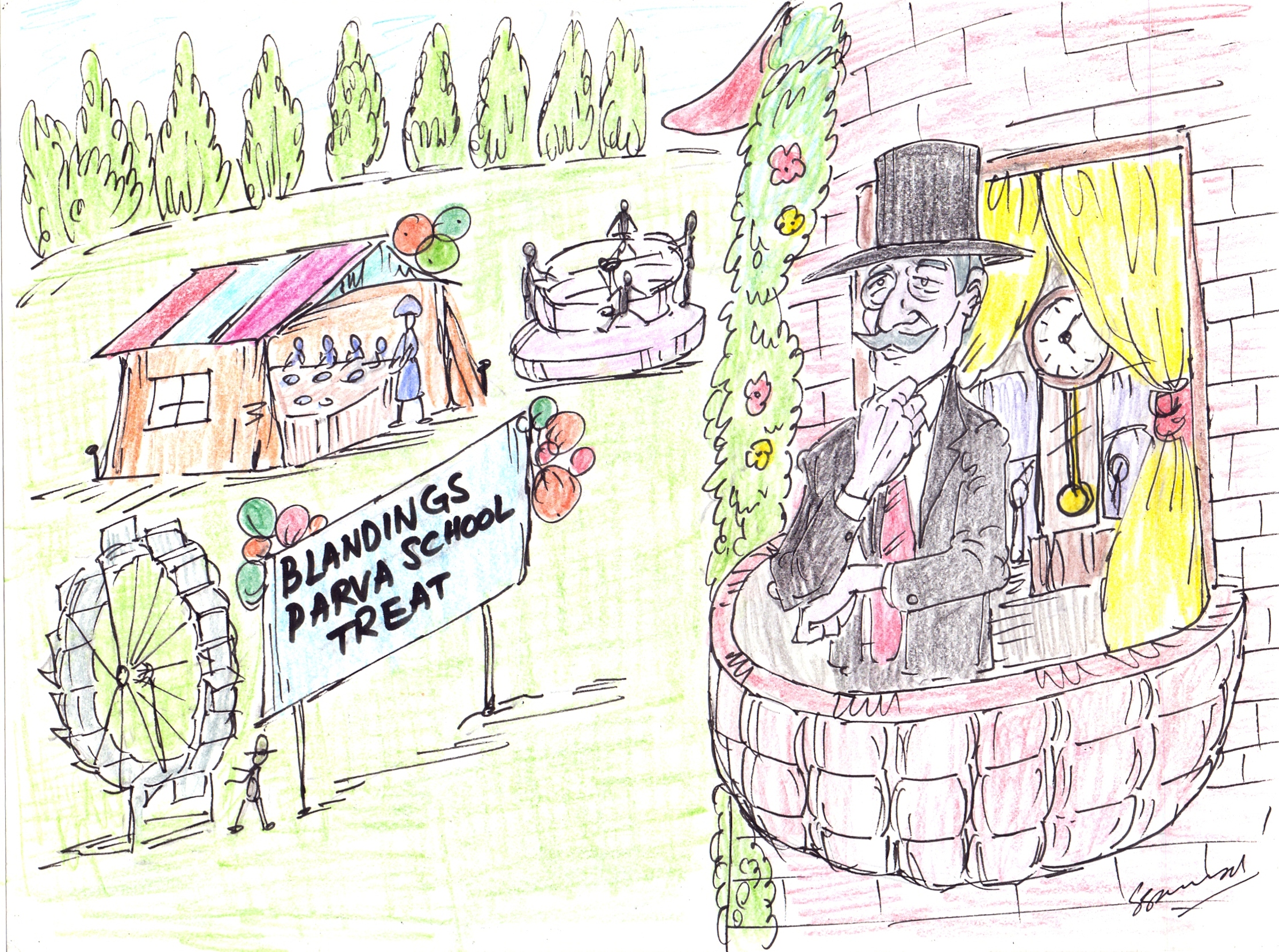
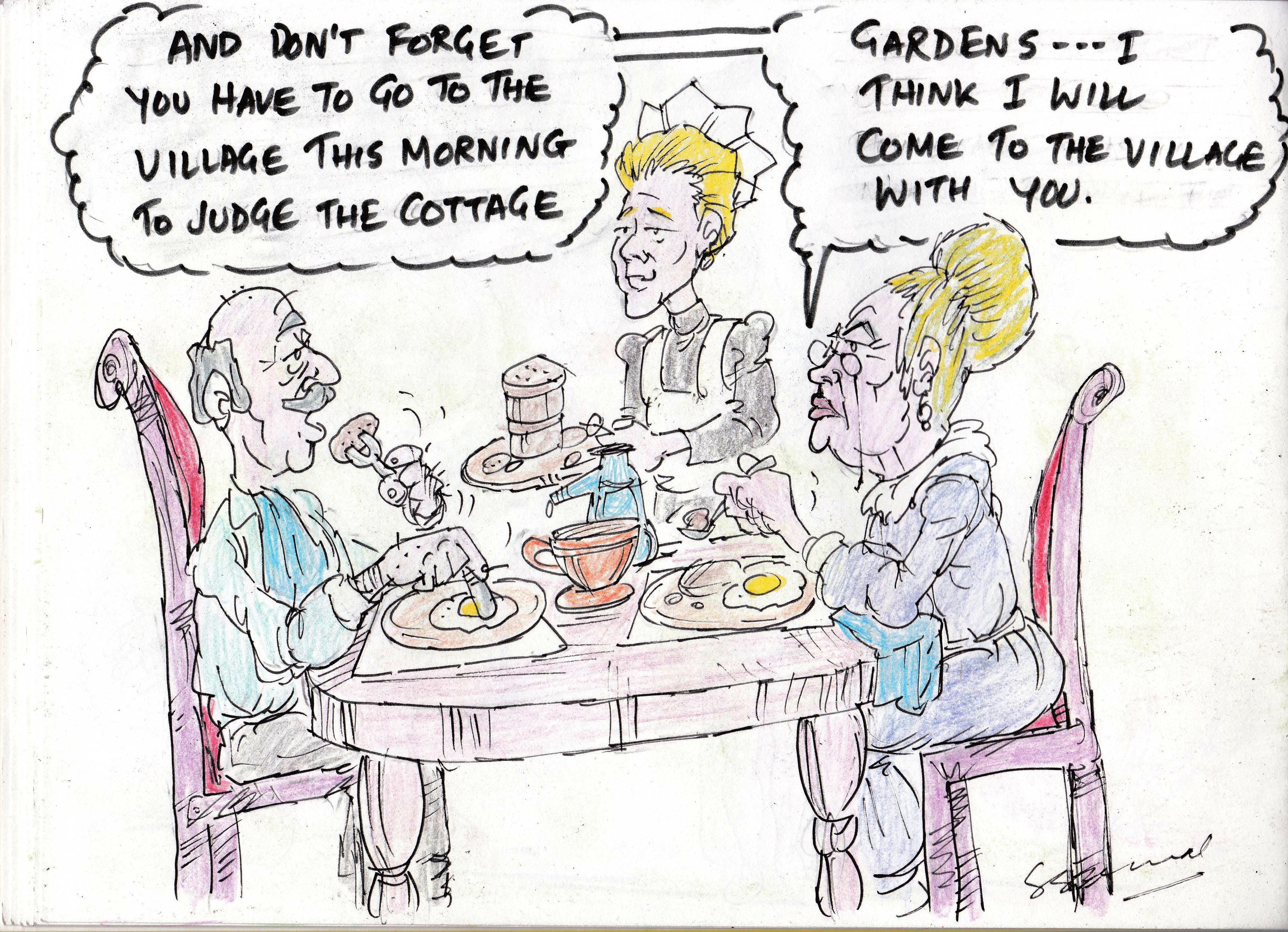
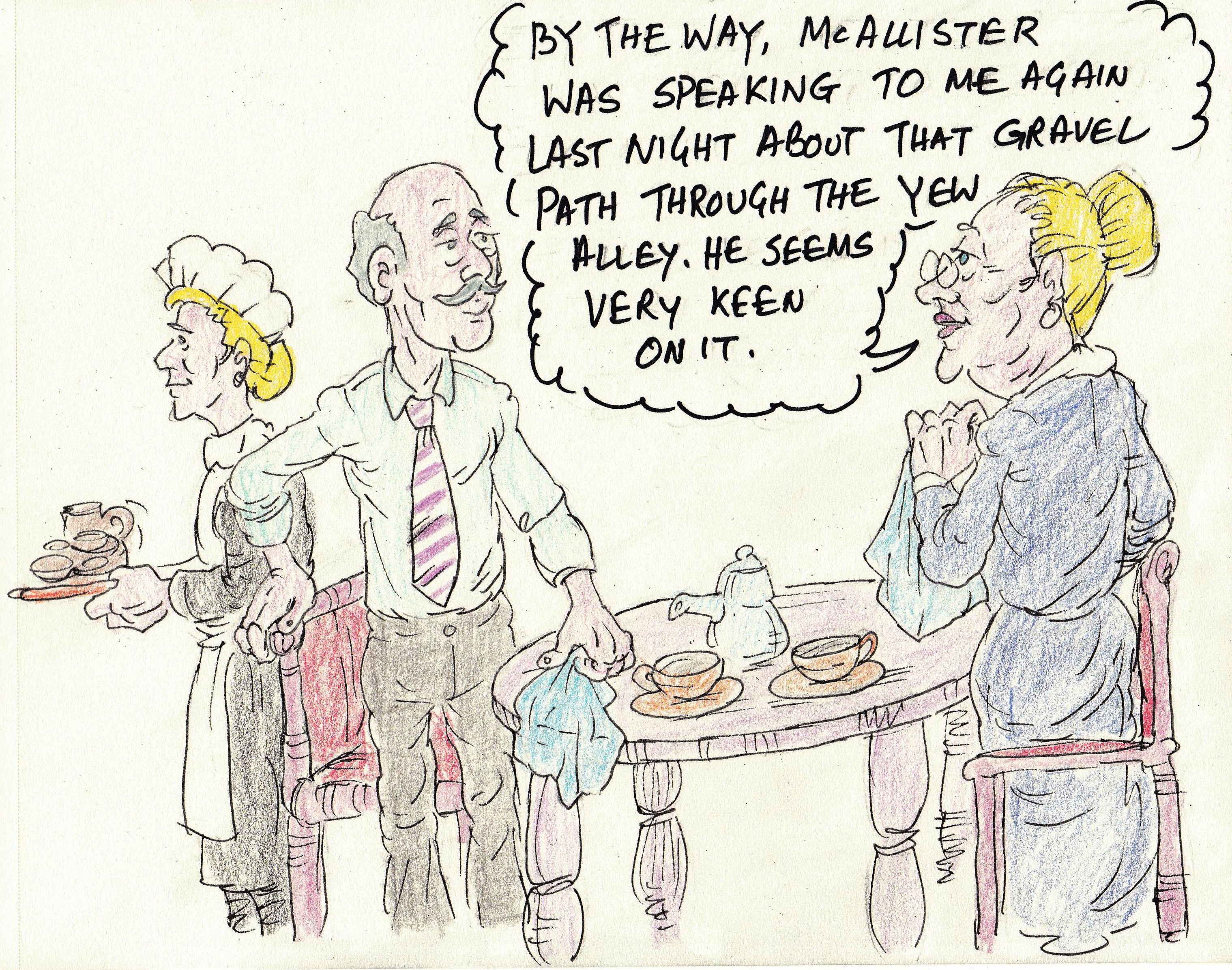
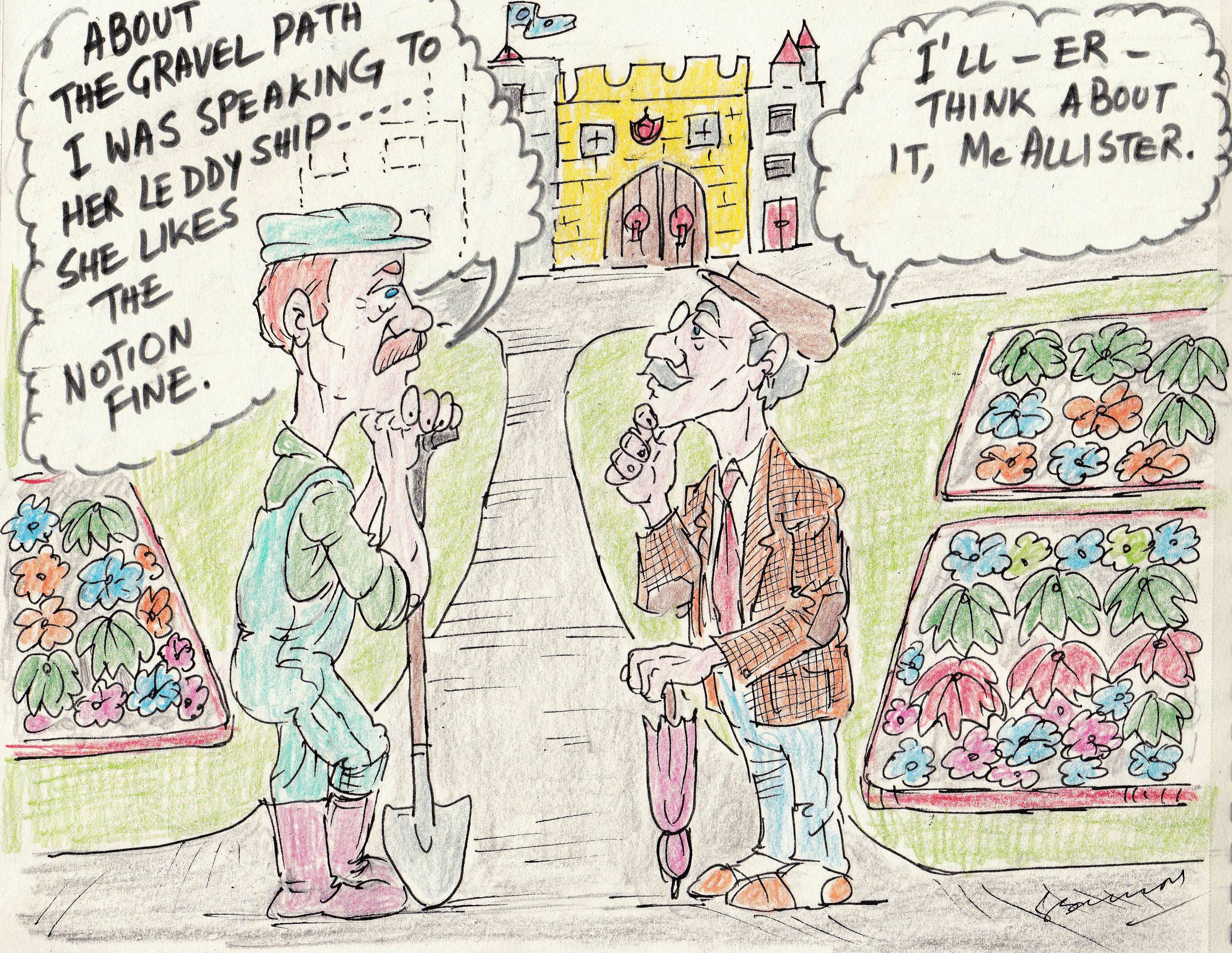
What happens when a banking professional like Suvarna Sanyal, who has spent a life time poring over bulky ledgers and checking debit and credit figures, turns his attention to one of the popular stories dished out by P G Wodehouse? Well, he simply whips up a series of illustrations which figure some of the better known characters from the canon in some selected scenes from the story!

Savour below the results of his labour of love which, incidentally, have already undergone a scrutiny under the precise microscope of an expert in all Plummy matters.


‘The day was so warm, so fair, so magically a thing of sunshine and blue skies and bird-song that anyone acquainted with Clarence, ninth Earl of Emsworth, and aware of his liking for fine weather, would have pictured him going about the place on this summer morning with a beaming smile and an uplifted heart.’


‘Instead of which, humped over the breakfast-table, he was directing at a blameless kippered herring a look of such intense bitterness that the fish seemed to sizzle beneath it. For it was August Bank Holiday, and Blandings Castle on August Bank Holiday became, in his lordship’s opinion, a miniature Inferno.’


Breakfast over, Lord Emsworth’s sister, Lady Constance Keeble, looked brightly at him across the table.


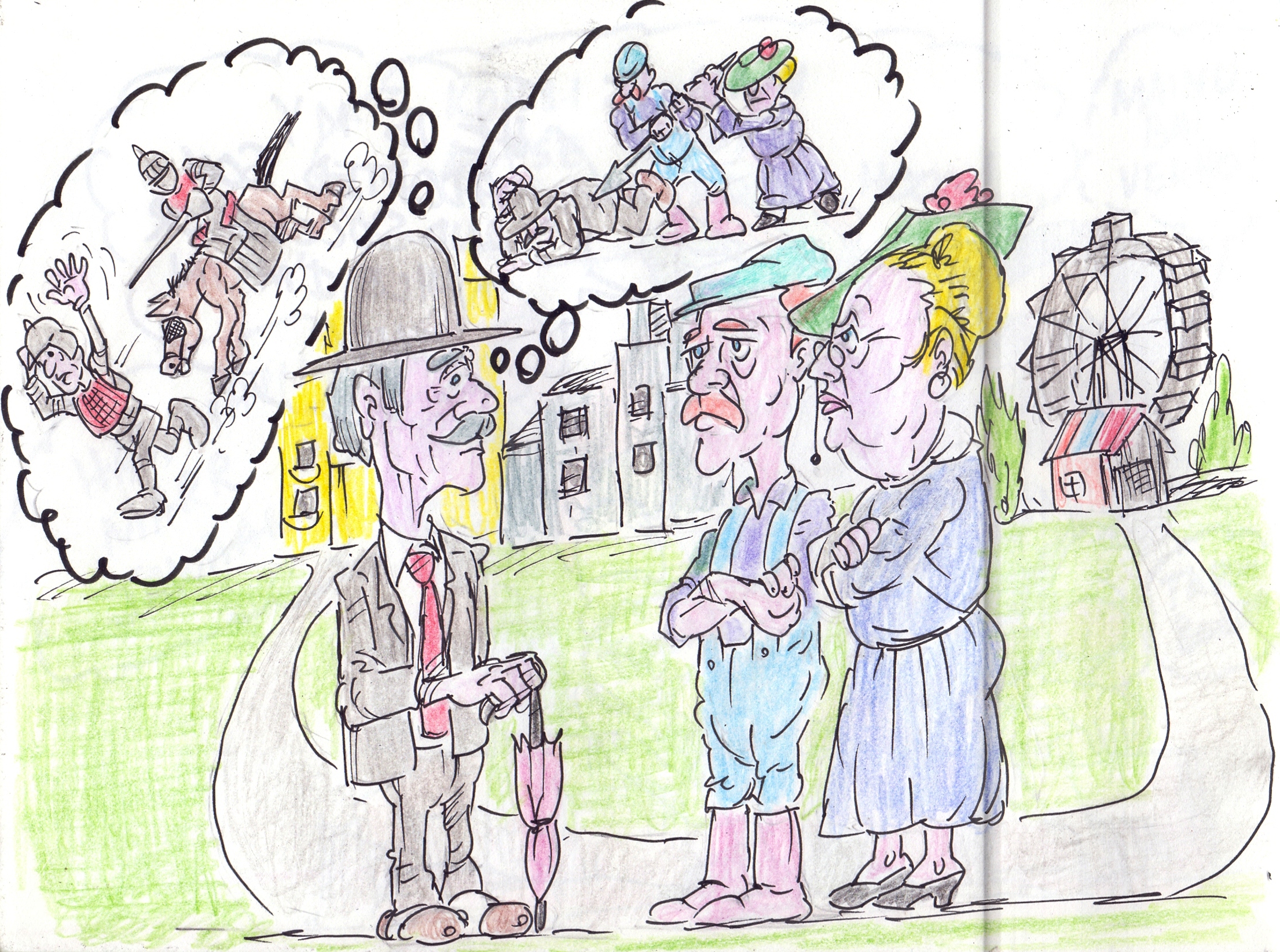
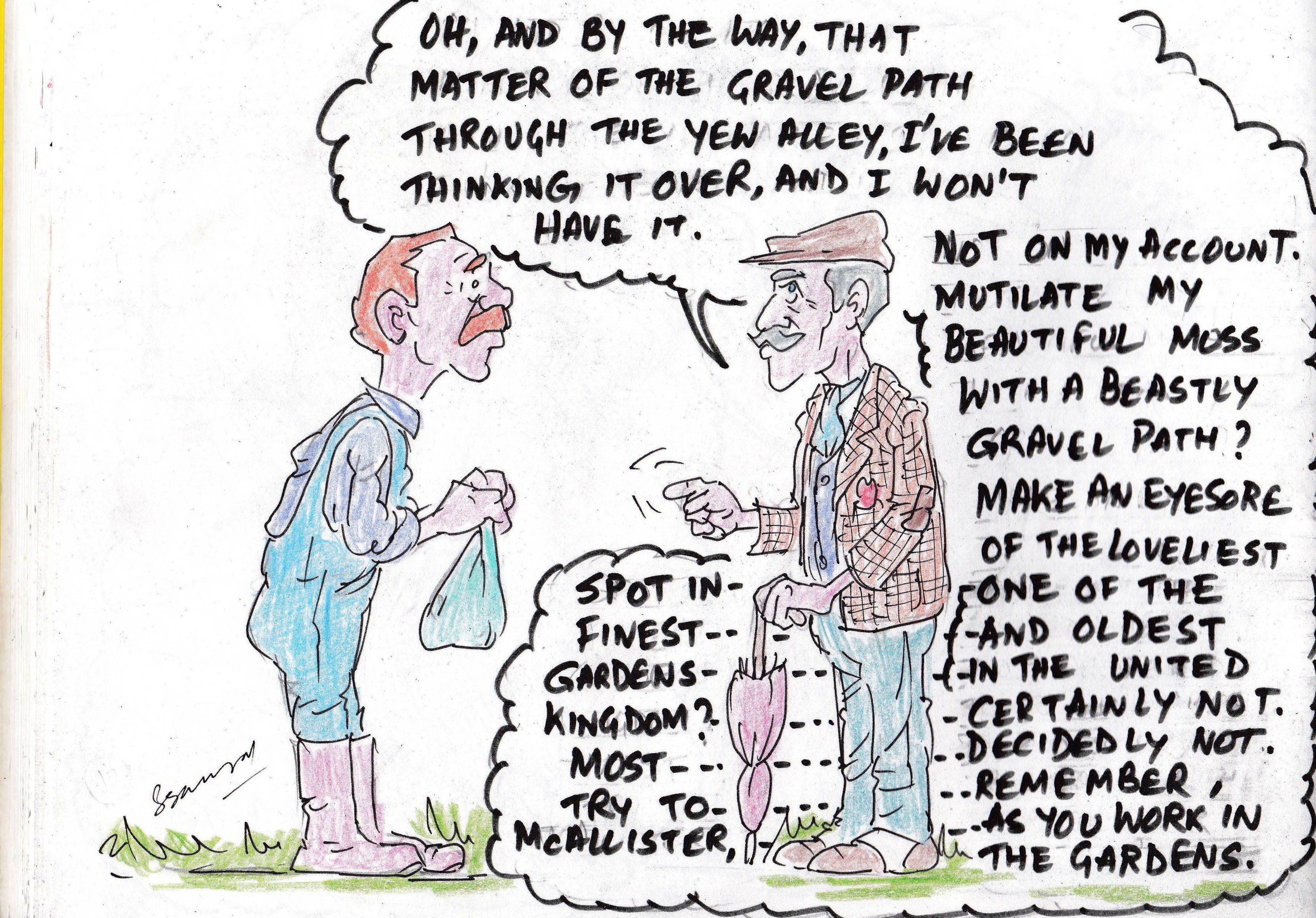
Lord Emsworth left the table, the room and the house, but on reaching the yew alley some minutes later was revolted to find it infested by Angus McAllister in person.

Lord Emsworth told McAllister he is off to the village to judge the cottage gardens and will see him later.


‘It is always unpleasant for a proud man to realize that he is no longer captain of his soul; that he is to all intents and purposes ground beneath the number twelve heel of a Glaswegian head-gardener.’

He recalls the greatness of his brave and bold ancestors, whereas he himself reels under the tyranny of his sister and his head-gardener.


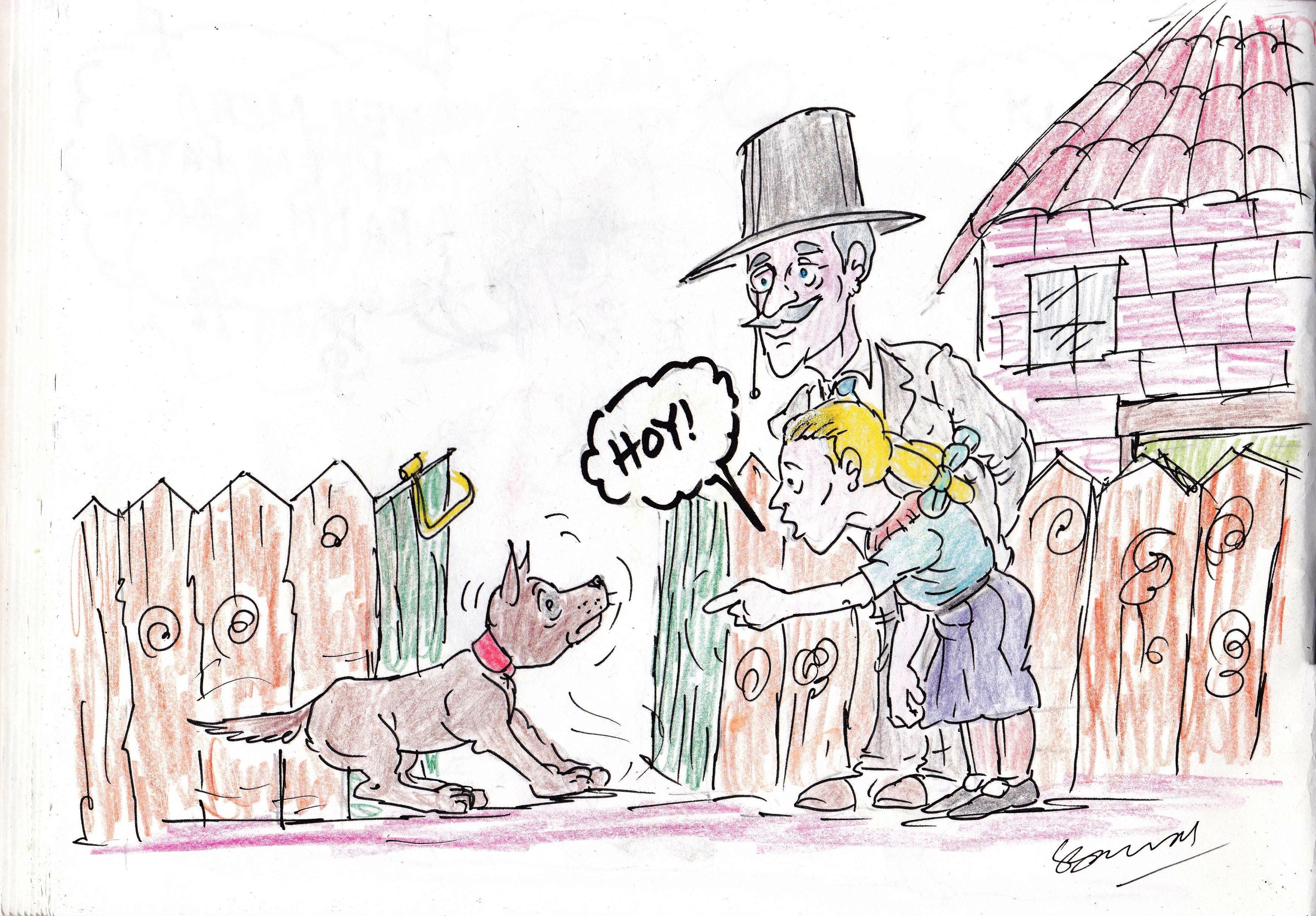
As he came to the last cottage garden, he unlatched the gate and pottered in.  A hairy, nondescript dog opened one eye and looked at him in a suspicious manner.  And when Lord Emsworth sniffed one of the flowers, the world became full of hideous noises.  He suddenly had a passionate desire to save his ankles from harm.’

At the sound of the girl’s voice, the mongrel suspended hostilities and writhed on its back with all four legs in the air.  And that was how Lord Emsworth met Gladys, and she introduced herself and her brother Ern, who was carrying a bunch of flowers.


‘Lord Emsworth looked at the girl almost reverentially.  Not content with controlling savage dogs with a mere word, this super-woman actually threw stones at Angus McAllister, and copped him on the shin.’


On learning that they would be at the Fetê in the park later, he made a vague rendezvous.


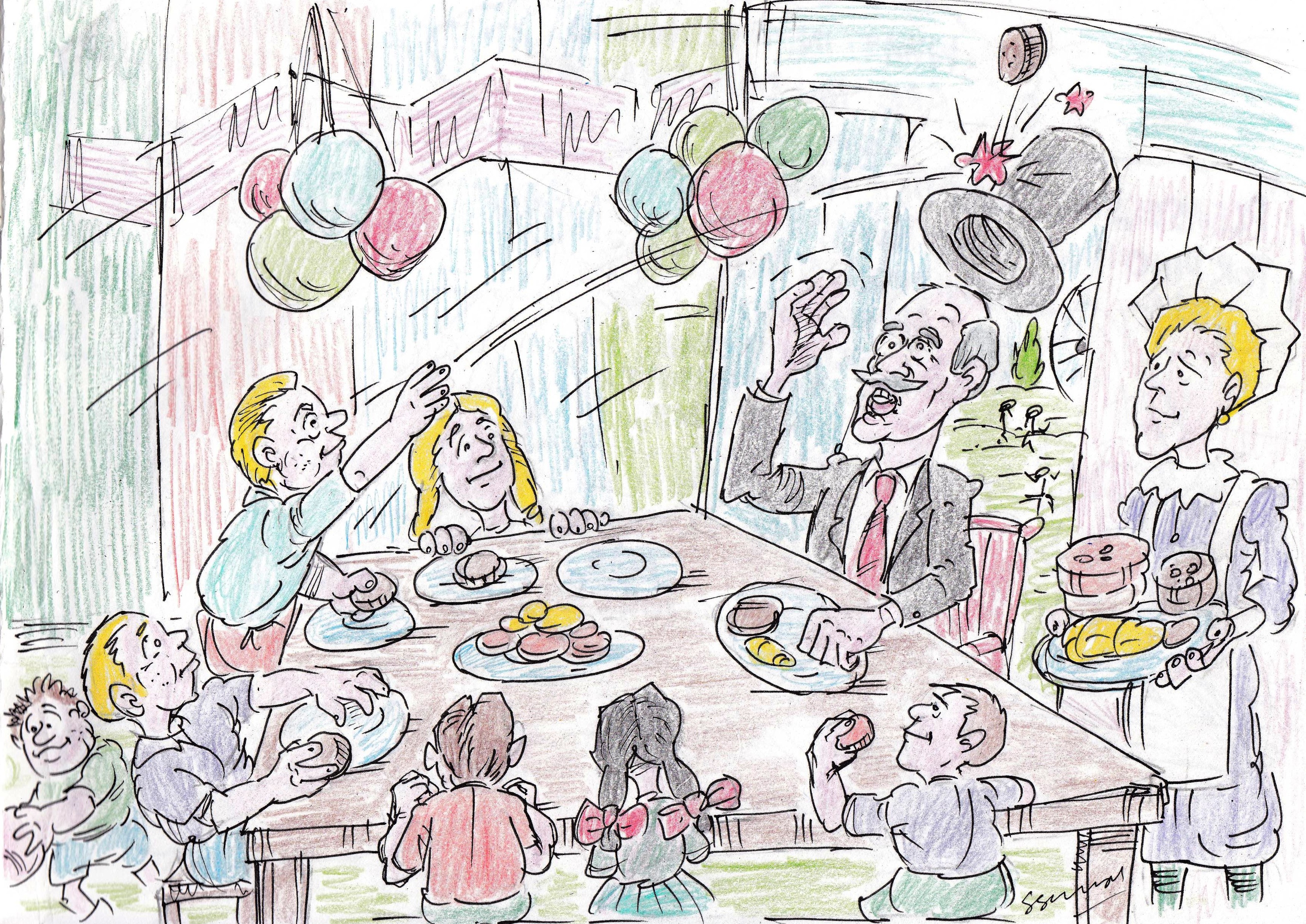
Clarence runs into Constance, who plans to tick off the kids who had misbehaved on their last visit to the Castle lawns.


‘It always seemed to Lord Emsworth that the annual Fête at Blandings Castle reached a peak of repulsiveness when tea was served in the big marquee.  It occurred to him that it would be a prudent move to take off his top hat before his little guests appreciated its humorous possibilities, but even as he raised his hand, a rock cake took it off for him.’


He craved solitude and made for the nearby cowshed, where he was surprised to meet a sobbing Gladys.

‘Tear-stains glistened on her face, and no Emsworth had ever been able to watch unstirred a woman’s tears.  He was visibly affected.

“Why,” he asked, “could Ern not have pinched them for himself?”’


Gladys recounts the encounter between Lady Constance and Ern. She concludes by saying she had told Ern she would “bring ’im back somefing nice.”

Lord Emsworth thought ‘it was like listening to some grand old saga of the exploits of heroes and demigods.’

He was further surprised to learn that Gladys had herself had no tea!

‘Do you mean to tell me that you have not had tea?’

‘No, sir. Thank you, sir. I thought if I didn’t ‘ave none, then it would be all right Ern ‘aving what I would ‘ave ‘ad if ‘ad ‘ave ‘ad.’


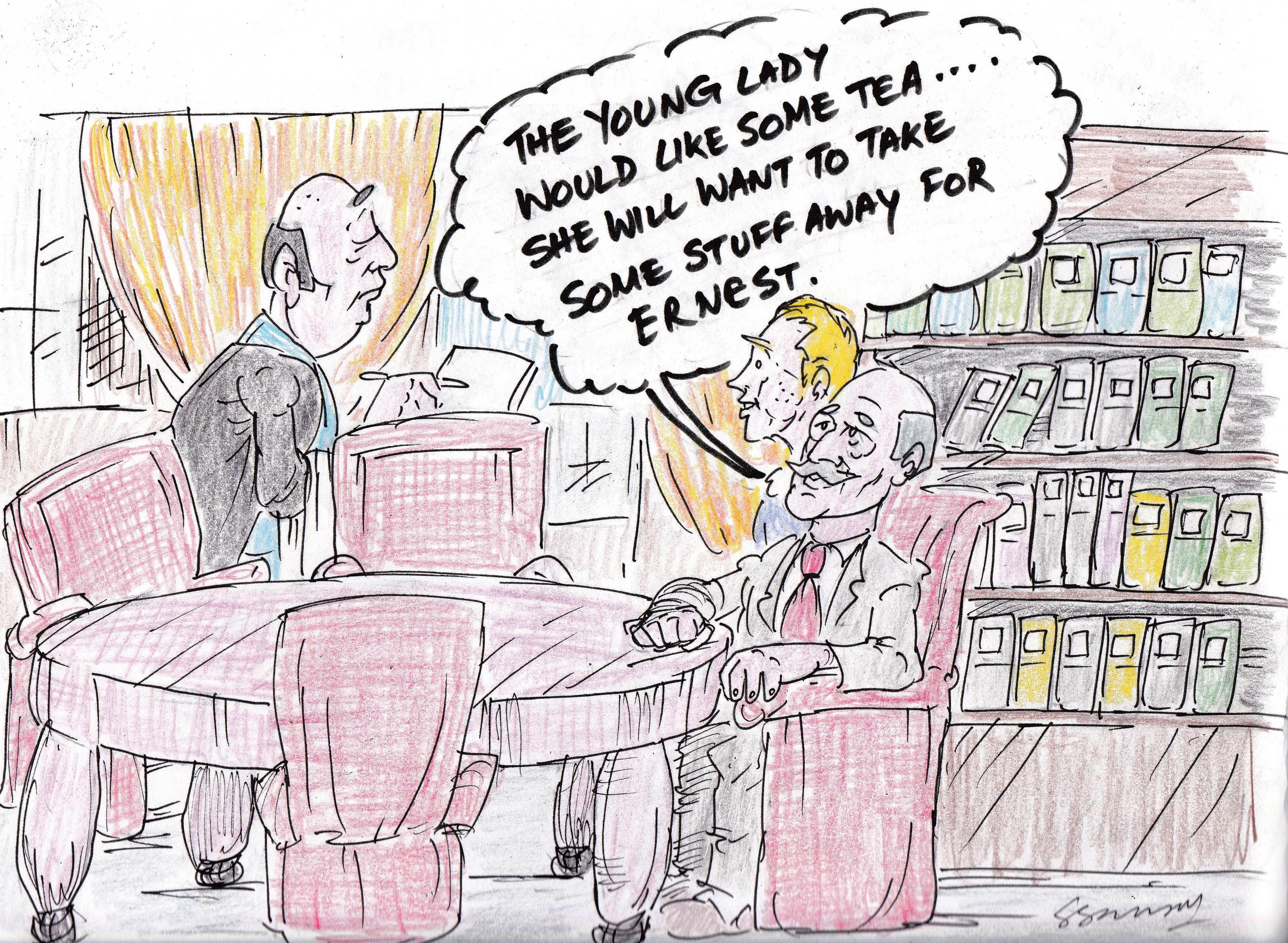
Five minutes later, Beach the butler answered the summons of a bell in the library, where he found his employer in the company of a young person in a velveteen frock.

After doing herself well at the tea-table, and clutching a well-filled parcel destined for Ern, Gladys was asked by Lord Emsworth if Ern would like something else.

‘Could he ‘ave some flarze?’

‘Certainly, certainly, certainly,’ he said, though not without a qualm. ‘Take as many as you want.’


When from his potting-shed Angus McAllister saw a small girl in a velveteen frock picking his sacred flowers, and realised that it was the same small girl who had copped him on the shin with a stone, he came out of the potting-shed at forty-five miles per hour.

Gladys did not linger, but scuttled to where Lord Emsworth stood and, hiding behind him, clutched the tails of his morning-coat.  Lord Emsworth’s knees shook at the spectacle of the man charging down on him with gleaming eyes and bristling whiskers.  But at that moment, Gladys, seeking further protection, slipped a small, hot hand into his.  It was a mute vote of confidence, and Lord Emsworth intended to be worthy of it.


Lord Emsworth pressed home his advantage while he could.

‘Angus McAllister made his decision.  Better to cease to be a Napoleon than to be a Napoleon in exile.’


Lord Emsworth was shaken but a novel sensation of being a man among men thrilled him.  He almost hoped that his sister Constance would come along and start something while he felt like this.

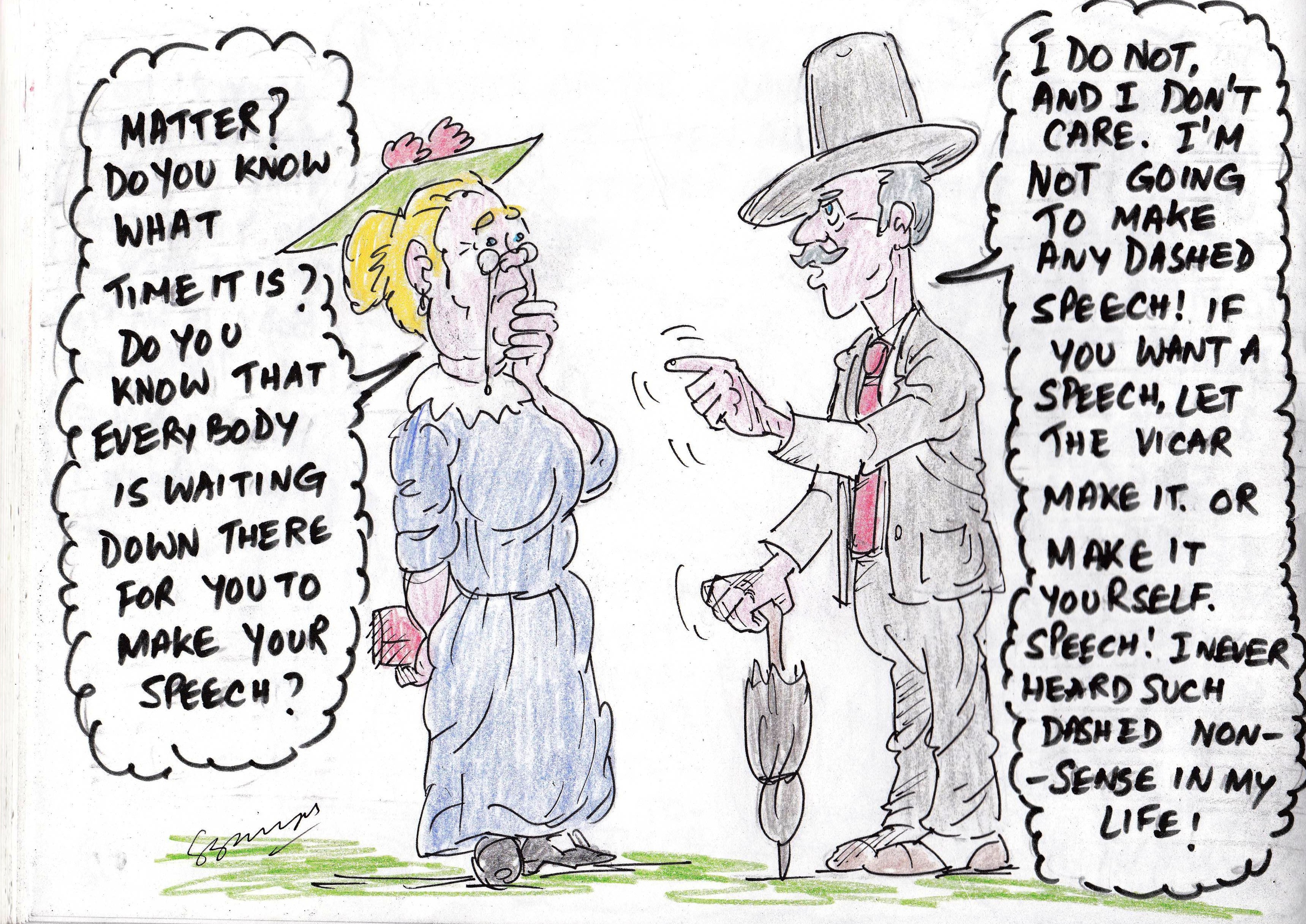
He got his wish, and asked her what the matter was.


He turned to Gladys.

Lord Emsworth had eventually proved worthy of his glorious ancestors.


This is how love conquers all. The desire to please the party of the other part. The need to be worthy of her trust and affection. Even spines made of cottage cheese get transformed into those made of chilled steel!


(Related Posts:

https://ashokbhatia.wordpress.com/2019/05/09/lord-emsworth-and-the-girlfriend-a-viewpoint

https://ashokbhatia.wordpress.com/2019/05/30/lord-emsworth-and-the-girl-friend-when-nature-stands-still

https://ashokbhatia.wordpress.com/2016/04/16/great-wodehouse-romances-lord-emsworth-and-the-girl-friend-by-ken-clevenger)

findshars's avatarMy Views On Bollywood

By

Sharada Iyer

Our rich repertoire of films boasts of many kinds of unique song picturizations which have kept the songs as well as the artistes associated with them alive in our hearts. Take for instance the innumerable songs picturized on different modes of transport- from bullock cart and horse cart to cycle, car, jeep, bus, train, plane and even helicopter- the vehicle in all these songs imparts a special character to the songs and thus help the actors in conveying their emotion in a distinctive manner in the concerned situation .

The very conception of such ideas requires tremendous imagination that definitely needs to be lauded. The director who thinks of the apt situations to insert such songs in the narrative, the dance director or choreographer who translates this idea into reality, the lyricist who writes the words, the music director who turns them into catchy songs and finally…

View original post 1,663 more words


When the silver rays of a refined full moon descend upon Blandings Castle, the ancestral home of Clarence, ninth Earl of Emsworth, queer things start happening.

Would-be brides find themselves quarantined, so obdurate mothers may breathe easy. Romantic aspirations get into a jumble. Phantom faces keep popping up, proving the theory advanced by Dr E. Jimpson Murgatroyd that excess consumption of tissue restoratives results in such hallucinations. A diamond necklace goes missing, thereby creating conditions which could lead to a nasty divorce.

But Gally is there to set things right, acting like an elderly Christopher Robin, leaving everybody happy, loving young hearts united, and nothing for anyone to worry about.

Here are some of the gems from Full Moon which fans of P G Wodehouse may relish.


When clotted cream becomes audible

Her reverie was interrupted by the opening of the door. The pencil of light beneath it had attracted Colonel Wedge’s eye as he started forth on his mission. She raised her head from the pillow and rolled two enormous eyes in his direction. In a slow, pleasant voice, like clotted cream made audible, she said:
‘Hullo, Dad-dee.’

Some basics of Cardiology

To say of anyone’s heart that it stood still is physiologically inexact. The heart does not stand still. It has to go right on working away at the old stand, irrespective of its proprietor’s feelings. Tipton’s, though he would scarcely have believed you if you had told him so, continued to beat. But the illusion that it had downed tools was extraordinarily vivid.

The proceedings at reunions

Few things are more affecting than these reunions of old buddies after long separation, but they involve too many queries as to what old What’s-his-name is doing now and whatever became of old So-and-so to make good general reading.

When business magnates behave like Roman Emperors

You don’t know my father-in-law, of course. He’s a bird who looks like a Roman emperor and has a habit of hammering on the table during conferences and shouting: “Come on, come on, now. I’m waiting for suggestions.”


Einstein and Gally

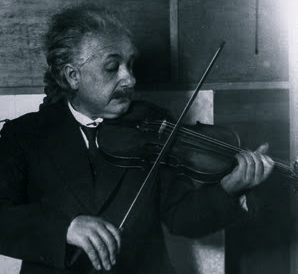
There were men in London – bookmakers, skittle sharps, jellied eel sellers on race-courses, and men like that – who would have been puzzled to know whom you were referring to if you had mentioned Einstein, but they all knew Gally.

A beleaguered garrison in India

It was with something of the emotions of the beleaguered garrison of Lucknow on hearing the skirl of the Highland pipes that he came at long last out of a sort of despairing coma to the realization that the dressing gong was being beaten, and that for half an hour he would be alone.

When a gnat bite depreciates radiant beauty by between sixty and seventy per cent, Sugg’s Soothine helps

As Veronica Wedge stood gazing at Tipton Plimsoll with her enormous eyes, like a cow staring over a hedge at a mangel-wurzel, no one could have guessed that a few brief hours previously the nose beneath those eyes had been of a size and shape that had made her look like W. C. Fields’s sister.

Uninspiring dinners at English country homes

Too often, in English country houses, dinner is apt to prove a dull and uninspiring meal. If the ruling classes of the island kingdom have a fault, it is that they are inclined when at table to sit champing their food in a glassy-eyed silence, doing nothing to promote a feast of reason and a flow of soul.
 

The Thinker (Auguste Rodin)


A meditative state

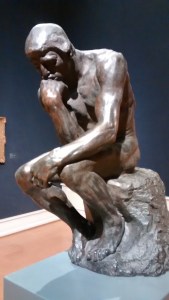
He went back to the bed and sat down again, his chin on his hand, motionless. He looked like Rodin’s Penseur.

When an ex-fiancé spoils the fun

Ex, one says, for where he had once beheld in Frederick Threepwood a congenial crony and a sidekick with whom it had been a pleasure to flit from high spot to high spot, he now saw only a rival in love, and a sinister, crafty, horn-swoggling rival at that, one who could be classified without hesitation as a snake. At least, if you couldn’t pigeon-hole among the snakes bimbos who went about the place making passes at innocent girls after discarding their wives like old tubes of toothpaste, Tipton was at a loss to know into what category they did fall.

Trouser seats

The face which now looked up into his was one which harmonized perfectly with the trouser seat. It was the face, as the trouser seat had been the trouser seat, of a tortured soul.

A perspective on future sons-in-law

There are fathers, not a few of them, who tend to regard suitors for their daughter’s hand with a jaundiced and unfriendly eye, like shepherds about to be deprived of a ewe lamb.

A bad bit of casting

His eyes rested on Prudence and in them now there was nothing but affection, gratitude, and esteem. It amazed him that he could ever have placed her among the squirts. An extraordinarily bad bit of casting. What had caused him to do so, of course, had been her lack of inches, and he realized now that in docketing the other sex what you had to go by was not size, but soul. A girl physically in the peanut division steps automatically out of her class if she has the opalescent soul of a ministering angel.

The perks of wearing a false fungus

Every young man starting out in life ought to wear a false beard, if only for a day or two. It stiffens the fibre, teaches him that we were not put into this world for pleasure alone.

Of Clarence and jellyfish

‘My dear boy, I have been closely associated with my brother Clarence for more than half a century, and I know him from caviare to nuts. His I.Q. is about thirty points lower than that of a not too agile-minded jellyfish.’


Poet Robert Burns

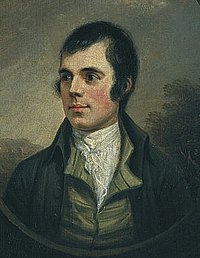
It is a truism to say that the best-laid plans are often disarranged and sometimes even defeated by the occurrence of some small unforeseen hitch in the programme. The poet Burns, it will be remembered, specifically warns the public to budget for this possibility.

The density of face fungus

Too little, the chronicler realizes, has been said about that beard of Fruity Biffen’s, and it may be that its concealing properties have not been adequately stressed. But reading between the lines, the public must have gathered an impression of its density. The Fruities of this world, when they are endeavouring to baffle the scrutiny of keen-eyed bookmakers, do not skimp in the matter of face fungus. The man behind this beard was not so much a man wearing a beard as a pair of eyes staring out of an impenetrable jungle; and, try as she might, Lady Hermione was unable to recall any more definite picture than just that.

A puma of the Indian jungle

Throughout this well-phased harangue Lady Hermione had been sitting with twitching hands and gleaming eyes. It had not occurred to the speaker that there was anything ominous in her demeanour, but a more observant nephew would have noted her strong resemblance to the puma of the Indian jungle about to pounce upon its prey.

The Aunt, the whole Aunt, and nothing but the Aunt

Lady Hermione was still sitting behind the teapot, as rigidly erect as if some sculptor had persuaded her to pose for his Statue of an Aunt. In all the long years during which they had been associated it seemed to Freddie that he had never seen her looking so undisguisedly the Aunt, the whole Aunt, and nothing but the Aunt, and in spite of himself his heart sank a little. Even Lady Emily Finch, though her mental outlook was that of a strong-minded mule, an animal which she resembled in features as well as temperament, had been an easier prospect.

An unbridgeable gulf

The Hon. Galahad snorted sharply. Himself a bachelor, he was unable to understand and sympathize with what seemed to him a nephew’s contemptible pusillanimity. There is often this unbridgable gulf between the outlook of single and married men.

When equanimity gets ruffled

‘She’ll divorce me.’

‘Nonsense.’

‘She will, I tell you. American wives are like that. Let the slightest thing ruffle their equanimity, and bingo! Ask Tippy. His mother divorced his guv’nor because he got her to the station at ten-seven to catch a train that had started at seven-ten.’


Poet Samuel Taylor Coleridge

There is a widely advertised patent medicine which promises to its purchasers a wonderful sense of peace, poise, neural solidity and organic integrity, and guarantees to free them from all nervous irritability, finger-drumming, teeth-grinding, and foot-tapping. This specific Tipton Plimsoll might have been taking for weeks, and the poet Coleridge, had he been present, would have jerked a thumb at him with a low-voiced: ‘Don’t look now, but that fellow over there will give you some idea of what I had in mind when I wrote about the man who on honeydew had fed and drunk the milk of Paradise.’

The omelette gag

‘But you can’t make an omelette without breaking eggs. Not Shakespeare,’ said the Hon. Galahad. ‘One of my own. Unless I heard it somewhere. Besides, Freddie’s agony will be only temporary.’

Of lovers’ impulses

The primary impulse of every lover, on seeing the adored object on a balcony, is to shin up and join her.

Cactus in a trouser seat

What urged him to retreat was the thought of having to meet Lady Hermione again. It stimulated him to action like a cactus in the trouser seat.

A family’s average of mental anguish

It is fortunately only very rarely that in any given family in the English upper classes you will find two members of it who have drained the bitter cup in a single afternoon. The average of mental anguish is as a rule lower.


Full Moon is only one example of the virtuosity of Plum, whose narratives are littered with similes, literary allusions and insights on human behaviour. These amuse, entertain and educate.


(Related Post: https://ashokbhatia.wordpress.com/2015/03/19/some-juicy-quotes-from-stiff-upper-lip-jeeves)

Honoria Glossop pulls it off yet again, spreading sweetness, light and joy all around!

Honoria Plum's avatarPlumtopia

My Man Jeeves was published 100 years ago in May 1919.

Jeeves–my man, you know–is really a most extraordinary chap. So capable. Honestly, I shouldn’t know what to do without him. On broader lines he’s like those chappies who sit peering sadly over the marble battlements at the Pennsylvania Station in the place marked “Inquiries.” You know the Johnnies I mean. You go up to them and say: “When’s the next train for Melonsquashville, Tennessee?” and they reply, without stopping to think, “Two-forty-three, track ten, change at San Francisco.” And they’re right every time. Well, Jeeves gives you just the same impression of omniscience.

my man jeevesMay 2019 marks 100 years since the publication of My Man Jeeves, P.G. Wodehouse’s first Jeeves story collection.

Well, sort of. It’s complicated.

Wodehouse chronology always is, because many of his works were published in magazine format on both sides of the Atlantic before appearing…

View original post 801 more words

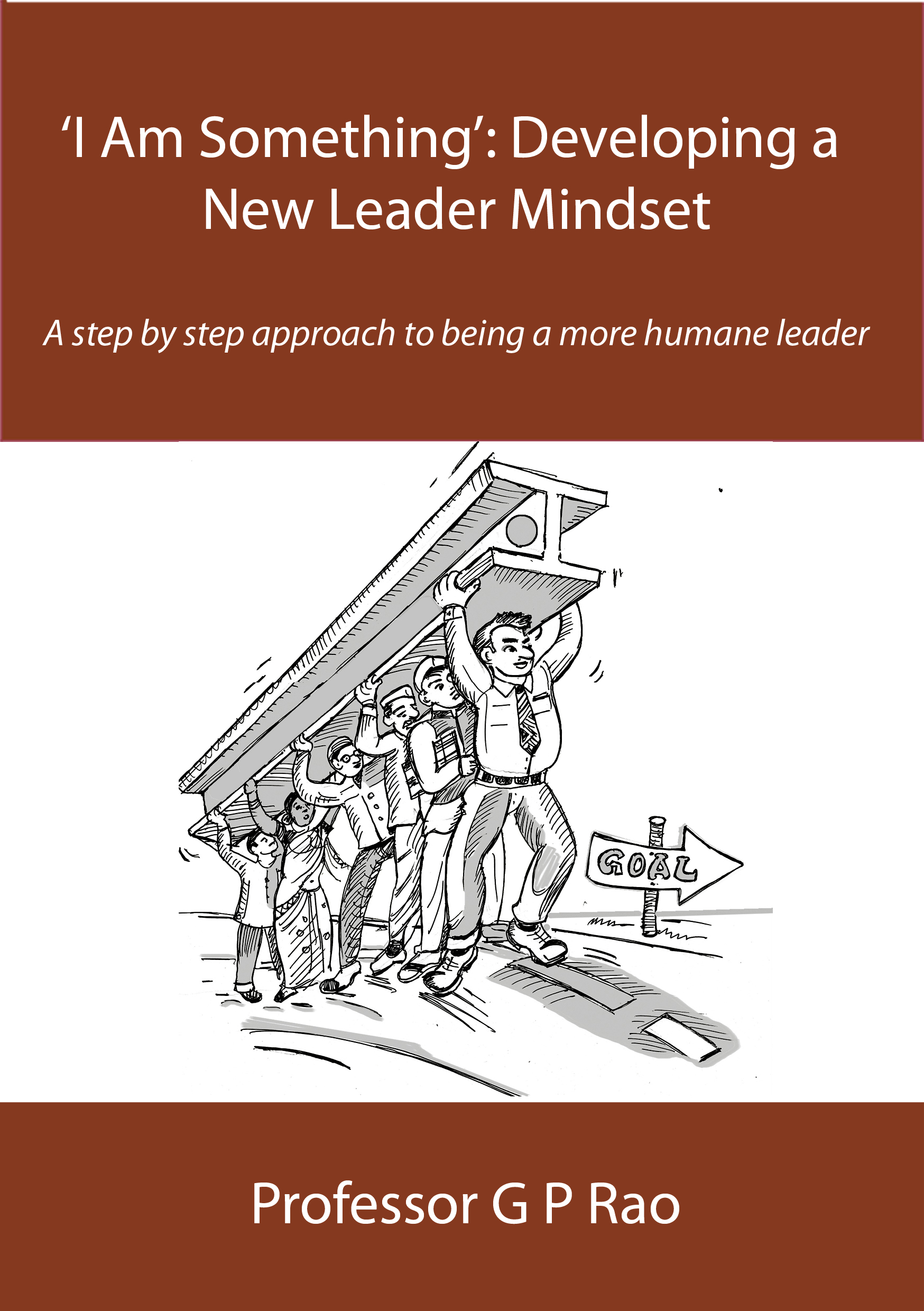
“Little did I imagine that someday Professor Rao will do an empirical study and bring out a book on this subject. The book brings out leadership mindsets so clearly and analyses these based on research and experiential wisdom. The thing that struck me most was the linkage of these styles with the three gunas in Hindu scriptures: Sattva, Rajas and Tamas. The book does not prescribe any style but makes the reader think through what his style is and what he would like it to be. Then, it provides the reader with a pair of new glasses and suddenly one starts seeing things in a different perspective.”

Satish Sekhri

Formerly Managing Director

Bosch Chassis Systems Ltd,

Pune, India

(An excerpt from the Foreword to the book)

“I think the leader mindset proposed in the book is “Indian tinted”. As someone from the “West”, I am pleased to enrich my understanding with “your views”. You make a good contribution to enlarge our perspectives on how you see the leader mindset.

Very few of us are internally STRONG to accept negativity; also, the contexts that most of us live with is toxic. So, “I Am Something” approach can be extremely healthy.

When you try to explore the role of human values in the face of Industrial Revolution 4.0 (AI, Robotics, etc), you may consider the fact that the drivers of technology ARE weak in terms of human values.

I think that we are headed towards a phase of self-inflicted extermination, possibly leading to the emergence of a new species. Before the end of this century, we will have ourselves and the others species. We will be creating living beings among us and, little by little, we (little and fragile creatures) will fade away, hopefully graciously. We do not wish to change ourselves. We also do not have the collective will power to change the context in which we operate. So, the next evolutionary step of our civilization may get taken much earlier than most of us may think.”

Marco Paulo Abrunhosa Cardoso 

Serving in boards in different jurisdictions

Finland

“The writing is excellent. As the editor of a journal, I rarely see papers with no errors. Your book is thus a rarity. I initially wondered why some words like “Student” and “Maternalistic” are capitalized. I now realize that there is a meaningful reason behind it.

I see that the style is half-way between a discourse and a scholarly
paper. If you are positioning it as a scholarly paper (like a journal
article or academic book), it certainly needs more references. The book has some quotations which too need references.

This book is obviously positioned as to not tap into management
literature on leadership a lot (at least in part 1). Rather, it offers another way to look at leadership.”

Ram Mohan Pisharodi 

Marketing Professor/Chief Editor, Alliance Journal of Business Research at Oakland University

Greater Detroit Area, USA

“From an Australian’s point of view, I found that the thesis of the book provides a fresh perspective on the issue of leadership – a very sub-continental perspective and interpretation.

It appears that the intent of the book is to provide aspiring (or current) leaders with a way for them to become a happier and more contented person. Greater contentment would lead to a warmer and more positive individual. The thesis is supported by research and empirical observation.

My conclusions include the following issues:

  1. As relevant as is the thesis and its accompanying discussion, the esoteric nature of the discussion, notwithstanding the empirical support provided, will struggle to resonate with Western audiences who are both unfamiliar with some of the philosophers and others cited.
  2. The “I am Something”, in my view, rests on the concept of profound empathy. One of the principles of Spandan is the “belief in innate divinity.” Implied in this is that someone who does not possess “a belief in an innate divinity”, can’t be empathic and therefore can’t develop superior leadership. If that is not so, then why must one have “a belief in an innate divinity” if one can be empathic without it?
  3. That of course highlights a view of leadership through a “religious” lens, which will be problematic for many people who separate organizational leadership from religion, spirituality or personal belief. There are effective and humanist leaders in every spiritual dimension, including atheism.
  4. It depends what the leader is leading. Altruism, another axiomatic dimension of Spandan, implies that to be a “good” leader, you need to be altruistic. One can be driven by one’s own well-being and still have empathy and still be a good and effective leader – it’s just that the person knows what the objective is and what will help them achieve it. Is that wrong? A leader of a commercial enterprise may pursue a financial reward for shareholders (or self) and treat staff and other stakeholders empathically and responsibly.
  5. Individuals, as noted in the book, find it hard to change themselves – because they’re human and self-change is difficult.
  6. Leaders within organizations are not only at the head of the organization; they are also found throughout the organization. People who have even one person for whom they are responsible are leaders. Therefore, the lower in the organization a leader is located, the harder it will be to make the systematic and operational changes suggested in the book, even if they want to. Even if the leaders can effectively change themselves, the organization may not be willing to cooperate.
  7. Some people can’t achieve an empathic capability because of the way they are; they may have an authoritarian approach to the business. That doesn’t necessarily mean that they will fail, but it might lower the chances of “effective and humane success.”
  8. A leader is not necessarily a leader in every aspect of their existence, nor is a follower, a follower in everything. Every individual is both a leader and follower in a diversity of contexts throughout their lives.
  9. In relation to “Maternalism” I have found that men can also act, behave and care maternalistically in organizations (and elsewhere). They inevitably possess strong empathic skills, values and attributes. The stories abound of strong leaders who were loved by their staff for their capable, caring and empathic attitudes.
  10. The nature of empathy may be uniform, but the level of empathy needed to make a noticeable difference will vary. Where an organizational culture is strongly empathic and positive, a leader who “ups” their level of empathy may not even be noticed by those who are affected. That same level of additional empathy will act as a massive change stimulus if occurring in a brutal and savage culture.
  11. I Am Something’ believes that I am neither above you, nor below you. I am neither in front of you, nor behind you.” The issue here is that if someone possesses empathy, they don’t need to “pull their rank” to get things done. But to say that leaders believe they are neither above nor below is unrealistic. The effective, empathic leader knows they have the authority but don’t need to exercise it.
  12. For any meaningful change to take place, leaders themselves have to take the initiative.” For most people, such a change is a serious threat to their self-image. They may need the change, but it’s not as easy as just stating it.
  13. Facilitating others remake themselves along similar lines.” Philosophically, it sound nice, but it may not be necessary. It is not true that everyone in every organization needs to be empathic and “nice” for the leader to achieve. Everyone benefits if they are, but it’s not a truism that they must be transformed for the leader to be effective and for the organization to achieve its KPOs. Sad but true.
  14. The research undertaken appears to have a fairly small sample size to be statistically significant.
  15. On the topic of A.I., robotics and similar, I am of the view that “leadership” and “followship” will still be with us for many years to come. I am also of the view that the nature of leadership and followship will inevitably evolve. Notwithstanding predications of A.I. being able to eventually emulate Man in some areas, I believe that such advances are inevitable, but Man will still call the shots. And the importance of effective human interaction will be as vital and important as ever. And it may be that the attributes (“I am Something) of the book will be more important then, than they are now. In other words, the quality of the human interaction and the leadership that directs it, will be elevated to a higher level because much of the “low-level” stuff will be provided by machines.
  16. In my line of work, I reckon I’ve pretty much seen it all – brilliant leaders through to outright destructive maniacs, and everything in between. Over 35 years of being and working with and talking to leaders has generated mixed emotions: from being inspired and in awe, to turning around and running as fast as I could. What I see in this community of the ‘number 1 citizens’ of their organizations, are mistakes that are repeated over and over again. Things that corporate rhetoric and intellectualization would speedily deny, but things that I see and hear from those affected and things that I see with my own eyes.
  17. I can’t recall any relationship I have had with a leader, where their motivation wasn’t ‘to do the best for their organization,’ and therefore for themselves by so doing. Unfortunately, though, subjectivity and self-interest get in the way. This article is not intended to explore this point, since I’ve done it before, but rather to identify the categories of behaviours that trap many leaders and subvert effective leadership.
  18. Some leaders just aren’t ethical and condone (or even initiate) unethical behaviour. These days, it’s enough to merely say ‘Volkswagen” to prove this point. And if you think that they are the only ones, then you’re kidding yourself. I personally know of companies where the leader fired staff to capture their share entitlements; where a major multi-national milked the balance sheet to avoid showing an operating loss; leaders who condone deceptive advertising; and so on and on and on. These are not nice people.
  19. The corporate rhetoric is about delivering for shareholders (in a for-profit organization) or for members (in an NFP organization). The reality is that executives define what shareholders will get (or should I say ‘what the executives are prepared to give them’) and then define their own benefit by the KPIs set against the criteria they have set for themselves – screwing shareholders in the process. See the research in my book Corporate Crap. Not one single listed corporation in 2015 asks all its shareholders what they want from their investment – they merely (and incorrectly) assume an outcome or use institutional shareholders as a proxy for all shareholders.
  20. Almost all leaders miscalculate (i.e. underestimate) the complexity of change.
  21. Many leaders communicate by issuing edicts and believe that just because they have said or written something, that is what is heard, understood and accepted or adopted. What they don’t understand is that every communication requires both a sender and a receiver. What is said does not necessarily get interpreted the way the sender intended – the receiver absorbs the communication through their own filters, perceptions, subjectivities and contexts – always. And then leaders wonder why instructions, visions and intentions aren’t complied with.
  22. Too many leaders rely solely on their own interpretation or judgment. Many leaders can’t talk with people down the organization because issues or plans once discussed will generate thoughts and actions in those who were party to the discussion. Sometimes, those issues get resolved and plans don’t get adopted, yet people still have feelings, fears and need for security. These feelings ignite the moment the matters are discussed. Sometimes they lead to more severe reaction in the organization – an IR backlash or even organizational sabotage. Conversely, the leader can’t take every issue to the board as the leader was employed to have most answers. Therefore, leaders rely on their own judgment. What they should be doing is networking with independent and non-competitive peers with whom they can bounce ideas and gain the benefit of others’ experience.
  23. Many leaders suffer from the Devil Ego: not the Good Ego that ignites their passion and drives them to excel, but the negative one that poisons relationships and destroys self-confidence in others.
  24. Leaders must have a keen radar for identifying individuals worthy of their trust. When you don’t trust anyone, then no one will trust you – and you will not be a very nice person to be around. To be able to trust others, you must have mature emotional intelligence, a strong sense of self-worth and therefore self-confidence (but not arrogance), and an ego that is not in a permanent ‘self-defense’ position. If you are unable to trust, then you’re unable to delegate effectively, and if you can’t delegate effectively, then you can’t lead a large organization.
  25. I constantly see leaders who are unable to straddle the right and left-brain hemispheres of leadership – they must be able to envision an effective and fulfilling future for their corporation/organization, yet simultaneously watch over their shoulder how the organization is performing to deliver that vision. Being able to envision without managing performance is as fruitless as watching performance but not knowing where you’re going.
  26. Many leaders don’t walk their talk. And when they do, “many walk funny and talk crap” as quoted by a well-known commentator on leaders and leadership.
  27. It is tragic to encounter leaders who believe that the only people in the organization who can come up with good ideas is the leader themselves or their ‘C’ suite executive team. Not only is this detrimental to the organization, but one hell of an insult to its people – particularly when people within the business who are ‘down the organization’ often understand the mechanics and detail of their operational responsibility better than the managers at the top.
  28. Too many leaders look for someone to blame. Instead they should seek the learning from the issue to grow. Leaders who blame will find that mistakes are hidden, truth is guided by self-interest and evolution is subservient to revolution. Poor leaders ‘put down’ a peer or subordinate in front of others or even in private. Instead they should identify the issue, identify the better path, and give the ‘culprit’ a chance to redeem themselves (within reason). The blame culture is toxic.
  29. Poor leaders often think simplistically – and they are lousy at managing nuance – and after all, that’s what management is all about. As an example, it is easier to believe that everyone is motivated by money, than it is to acknowledge that different people are driven by different motivations and that to build a culture that works with that knowledge is difficult – yet worth doing (or at least worth trying.)
  30. Poor leaders talk a lot and really listen infrequently.
  31. Poor leaders never show gratitude to those who provide extra effort, extra performance, extra consideration, extra support to others, and who share their knowledge and experience. That’s because the leader interprets gratitude as a sign of their own failure to do that which they should be grateful for.
  32. Lousy managers pursue the status quo because they are afraid of the unknown, of the future, and of their ability to deal with it.”

Dr Jack Jacoby

Executive Chairman

Jacoby Consulting Group, Australia

Lord Emsworth

Much like all masters perched on the literary high table, P G Wodehouse also used Nature as a colluding partner in his narratives. When all is well with the world, roses are in bloom, bees and birds go about doing what they are ordained to do, and the sun goes about spreading cheer with due benevolence. But when giant egos clash or a disaster looms large, Nature stops in its tracks, birds stop chirping noisily, breeze ceases to blow and even flowers stand still.

In other words, Nature is depicted as having a sensitive soul, cheered up when the proceedings are going as per plans, but looking askance when the reverse happens. In the hands of proficient wordsmiths, it assumes a character of its own and provides mute support to the goings on in the narrative.

By way of an example, consider the story ‘Lord Emsworth and the Girl Friend.’

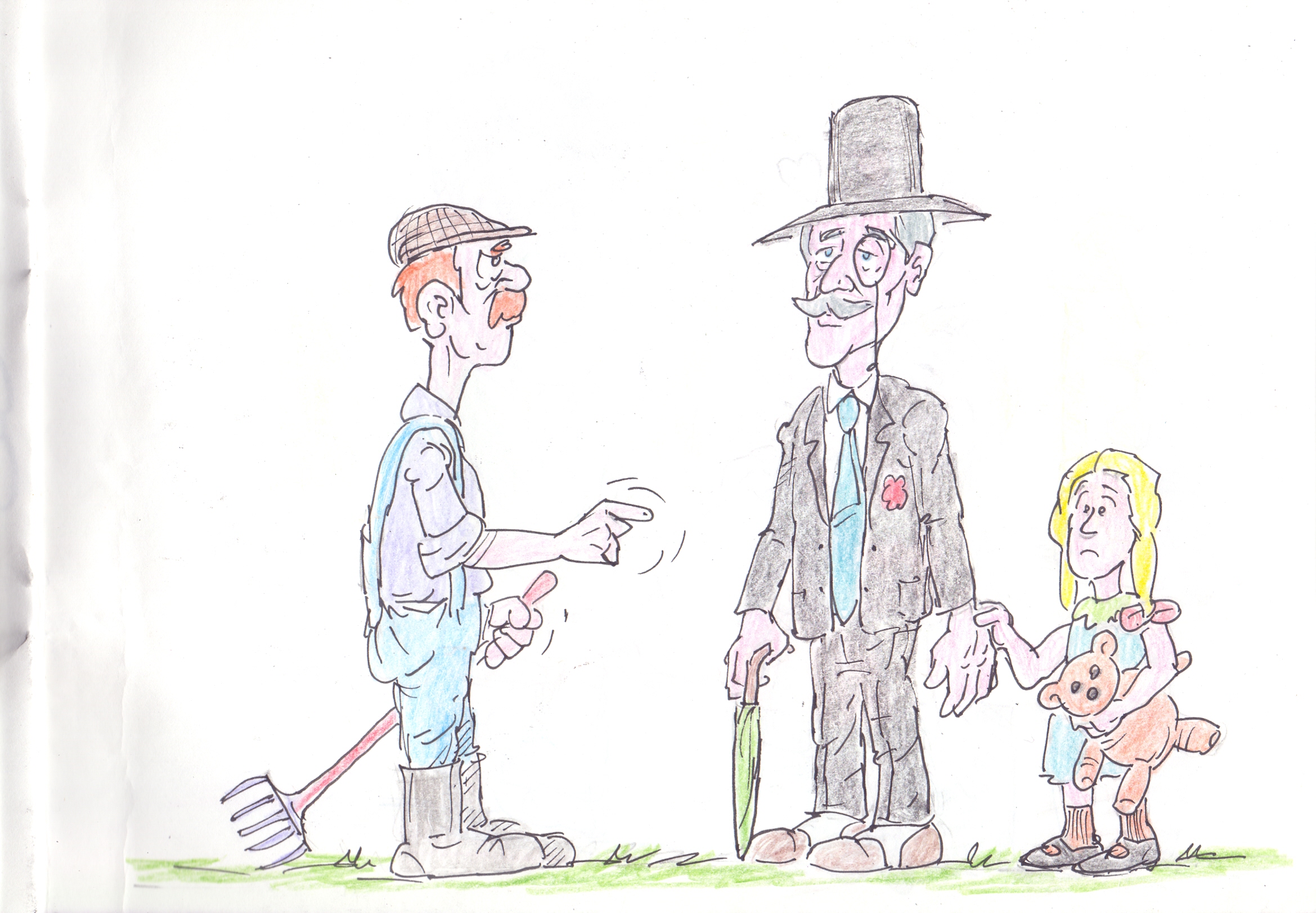
Angus McAllister, the head gardener at Blandings Castle, has an anti-moss spirit. Lord Emsworth often wonders why Providence had not taken note of his sterling qualities and made him a first class mule. He recalls the time when, after having sacked him, McAllister, he, Lord Emsworth, had to plead with him to come back. This alone had resulted in his favorurite pumpkin winning the Agricultural Show.

It was a supreme sacrifice at the altar of an employer’s ego, paving the way for a subsequent loss of the iron hand to have an effective control over his own property, comprising not only the castle and its grounds but also the exquisite flora and fauna hosted therein. Lord Emsworth had thus ended up becoming the ground under the number twelve heel of the Glaswegian head-gardener.

He believed that he had thus evolved into a spineless and unspeakably unworthy descendant of his ancestors who had perfected the art of handling employees, even if it involved dividing an obdurate employee into four employees by using a battle-axe without any eyebrows getting raised.

Till the time Gladys popped up in the scheme of things, McAllister’s control over ‘flarze’ in the Blandings Castle gardens was absolute. Anyone desirous of acquiring some of these had to wait till the time he was in an amiable state of mind, steer the conversation around to the subject of interior decoration, and then took a pot shot at one’s desire.

If one’s Guardian Angels were in a benevolent mood, and if McAllister chose to show you around the gardens with a dash of Scottish pride, one could see the following species in full bloom:

Achillea


Bignonia Radicans


Campanula


Digitalis


Euphorbia


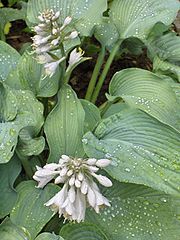
Funkia


Gypsophila


Helianthus


Iris


Liatris


Monarda


Phlox Drummondi


Salvia


Thalictrum


Vinca


Yucca

And when a small girl in a velveteen frock is seen flitting about his sacred gardens and picking his sacred flowers – that too, a girl who had copped him on the shin with a stone just the other day, he rushes out of his den at forty-five miles per hour.

Lord Emsworth’s soul quivers at the spectacle of the man charging down on him with gleaming eyes and bristling whiskers. But with the soft hand of Gladys in his hands, his spine sheds all the cottage cheese it had accumulated over time and gets converted into one made up of chilled steel.

‘This young lady,’ said Lord Emsworth, ‘has my full permission to pick all the flowers she wants, McAllister. If you do not see eye to eye with me in this matter, McAllister, say so and we will discuss what you are going to do about it, McAllister. These gardens, McAllister, belong to me, and if you do not – er – appreciate that fact you will, no doubt, be able to find another employer – ah – more in tune with your views. I value your services highly, McAllister, but I will not be dictated to in my own garden, McAllister. Er – dash it,’ added his lordship, spoiling the whole effect.

The sudden transformation in the character of the main protagonist leaves Nature baffled and astounded. All is still for some time. The Achillea, the Bignonia Radicans, the Ampanula, the Digitalis, the Euphorbia, the Funkia, the Gypsophila, the Helianthus, the Iris, the Liatris, the Monarda, the Phlox Drummondi, the Salvia, the Thalictrum, the Vinca and the Yucca – all are still.

Angus McAllister is perplexed. He decides it is better to cease to be a Napoleon than to be a Napoleon in exile. ‘Mphm,’ he says.

Nature resumes its breathing. The breeze begins to blow again. And all over the gardens the birds resume their musical notes. And the Achillea, the Bignonia Radicans, the Ampanula, the Digitalis, the Euphorbia, the Funkia, the Gypsophila, the Helianthus, the Iris, the Liatris, the Monarda, the Phlox Drummondi, the Salvia, the Thalictrum, the Vinca and the Yucca, much relieved, start swaying in the gentle wind yet again.

The repertoire of such literary giants as Shakespeare, William Wordsworth, Charles Dickens, Thomas Hardy and Kalidasa are littered with natural allusions. Same is true of P G Wodehouse.

(Illustration courtesy Suvarna Sanyal, a retired banker who has an eye and an ear for all there is to see, listen to and laugh at in this world.

Representations of flowers courtesy Wikipedia. Given the non-floricultural background of yours truly, errors and omissions in these may kindly be excused.)

(Related Posts:

https://ashokbhatia.wordpress.com/2019/05/09/lord-emsworth-and-the-girlfriend-a-viewpoint

https://honoriaplum.wordpress.com/2014/01/16/great-wodehouse-romances-lord-emsworth-and-the-girl-friend-by-ken-clevenger)