Feeds:
Posts
Comments

Many of the fans of P G Wodehouse suffer occasional pangs of anxiety. They fear that the species comprising the admirers of P G Wodehouse may soon become extinct. They suspect that not many of the younger generation may be getting infected enough with the delectable affliction of Wodehousitis, simply because his works belong to a bye-gone era which fails to connect with the youth of today.

When they sit down to relish the pleasures of the table, the food – even if it is dished out by a spouse who might be God’s gift to the gastric juices – simply turns into ashes in their mouths. Their brow is furrowed. They shudder at the prospect of a PGW-less society in the future, devoid of the pristine humour which makes one unwind after the harsh slings and arrows of Life have taken their toll. The human race, which is trying to cope with such dark clouds on the horizon as global warming, terrorism, economic inequality, exclusivity, et al, deserves as many rays of bright sunshine as life can offer. Unless the young ones take sprightly interest in some Plummy offerings, the future would be utterly dull, dreary, desolate and depressing, to say the least.

But what the well-meaning coves ignore in the process are the kind of positive vibes being generated and the good work being done by PGW societies in UK, Netherlands, USA and elsewhere. Erudite scholars keep coming up with delectable analyses of the Master’s works across dedicated websites and blog sites. Authors of all hues keep dishing out Plummy narratives at frequent intervals. Ardent fans keep exchanging Plummy notes with each other over various social media platforms. Then there are celebrities and members of royal families who keep chipping in with their endorsements, thereby facilitating the spread of Wodehousitis.

The bright parabola of joy

The bliss one experiences while devouring any segment of the Master’s canon is cheerfully bright. His innovative use of language is only one of the factors. The sunlit streets of Plumsville are paved with cobbled stones of subtle humour. These also have a depth which comprises a rich foundation of diverse facets of human knowledge, values and psychology. While pottering about in these, one is apt to come across not only such intellectual coves as Spinoza and Nietzsche, but also literary giants like Shakespeare, Tennyson, Byron, and even historic figures like Julius Caesar, Sir Philip Sidney and Napoleon. Shadrach, Meshach, Abednego and several other Biblical references keep popping up.

When admiring the gardens at Blandings Castle, one comes across a delightful variety of flora and fauna which enlarge the frontiers of one’s knowledge. Many of his narratives enthuse one to not to give in to the pleasures of the table and thereby keep one’s lining of the stomach in the pink of health. Some others impart lessons in morality, especially when it comes to pinching manuscripts, scarabs, silver cow creamers and even cooks. Not to forget the kind of spiritual and pragmatic lessons underlying in his works.

In fact, the more the human race hurtles forward on its perilous journey plagued by such technological developments as Artificial Intelligence, Robotics, Data Analytics and the Internet of Things, the higher would be the relevance of the kind of rich lessons embedded in the fare dished out by Plum. Industrial Revolution 4.0 (or even 5.0) notwithstanding, humans cannot be wished away. Yes, with each leap of technological faith, their role in the society would evolve. But one wonders if the psychology of the individual would ever vanish from the face of our planet. And herein lies the hope for the survival of Wodehousitis.

In defence of the Escapist tag

In a thought-provoking article ‘P G Wodehouse: Balm for the Modern Soul’, (Wooster Sauce: March 2019), Dean Abbott argues as follows:

‘Outside of the sheer pleasure that reading a Wodehouse story provides, there are deeper rewards a reader gleans from his work, benefits that accrue long after any volume is closed. Wodehouse excels at providing the reader two important spiritual benefits: consolation from the sufferings of the world and some insight regarding why we suffer in the first place. In the end, his work is singular balm for the modern soul, comedy that tends towards theodicy.

‘The reality is that modern people, even if they are unconscious of it, require consolation, a buffer against and an escape from the disappointment and turmoil of earthly life, as much as people in any other period ever did – quite possibly more so. People in the old world, at least, could admit without shame their need for consolation. We are denied even that.’

One could not agree more with the proposition that the modern man, mentally fatigued by the relentless pounding of social media and 24×7 connectivity, richly deserves to win a reprieve for himself and his loved ones. Project this into a future replete with technological advances, and one would realise the increasing relevance of the scintillating and wisdom-laced humour found in the Master’s repertoire.

A peep into the future
Just imagine the future. The day is not far off when the following would cease to surprise:

  1. Someone of the calibre of Spinoza releasing a tome entitled An Ethical Theory for Bots.
  2. Gussie Fink Nottle gushing over genetically modified newts.
  3. Madeline Bassett using an Emotion Tracking App to check the right time to gaze up at the stars and reaffirm these to be God’s daisy chain.
  4. Uncle Tom deploying Artificial Intelligence to keep the taxation wolves at bay.
  5. Aunt Dahlia using crowd-funding to keep Milady’s Boudoir alive and kicking, so her nephews like Bertie Wooster could contribute such articles as What the Well-Dressed Robots are Wearing.
  6. Jeeves using Data Mining and Data Visualisation to be able to argue against the suitability of wannabe spouses for Bertie Wooster, thereby keeping his own career prospects as bright as ever.
  7. Gussie, when suspecting that his notebook containing juicy remarks on Pop Bassett and Roderick Spode may be in Stiffy’s possession, merely using a paper-whiffing GPS-enabled gadget to locate the same, rather than trying to persuade Bertie to give up his chivalrous tendencies.
  8. Bingo Little deploying the Internet of Things to ensure that Rosie M Banks never misses her afternoon cup of tea, thereby ensuring that matrimonial peace prevails.
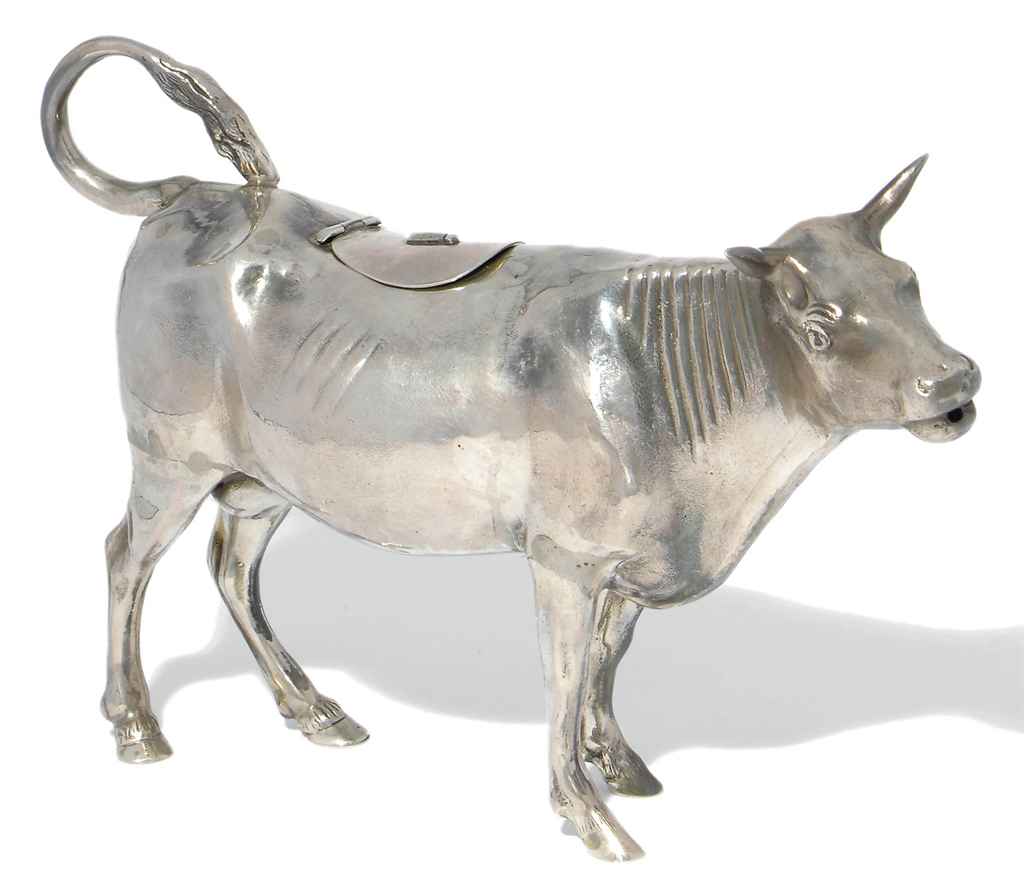
  9. Silver cow creamers coming with embedded smart chips, making it easier to track them, thereby rendering endeavours to register scorn at them in antique shops futile, thus reducing the carbon footprints of mentally negligible nephews.
  10. The Efficient Baxter leveraging technology to ensure that the Empress of Blandings gets her daily nourishment of 57,800 calories, as per the Wolff-Lehmann feeding standards, thus maintaining the prospects of her winning silver medals at the Shropshire Agricultural Show year after year.

The possibilities are endless. The mind boggles.

An informal reality check

Arising out of a discussion between two PGW fans at the virtual Drones Club, a query was recently posted by Pradeep Swaminathan (the gentleman who had recently unleashed his book ‘Enter Mrs Bertie’ on the unsuspecting public) as to the age of the fans in the group. Of the 145 fans who responded, as many as 103 were found to be below the age of 40! Moreover, 4 of the fans were of 80 years and above, what with Mrs Sushama Varma from India (who has already seen 88 springs in her life time, though she is merely 22 at heart) being the senior most fan active in the gang.

A very small and unrepresentative sample from the universe inhabited by Plum’s fans the world over, skeptics might be quick to point out. Admittedly, yes. But hope remains in the form of the younger ones who march into the future with their chins up and with their upper lips unstiffened, duly emboldened by the germs of Wodehousitis coursing through their veins.

And if some of them were to decide to walk the aisle together, the progeny is quite likely to inherit the pleasurable affliction alluded to here. This would mean that the nurses, the baby-sitters, the governesses, the private-school masters and the public-school masters who will take on the responsibility of looking after such rare specimen of humanity who represent a delectable blend of the genes of their parents, could breathe easy.

So could those of the well-meaning souls which worry about the future of Wodehousitis.

(Related Posts:

https://ashokbhatia.wordpress.com/2015/07/30/the-epidemic-of-wodehousitis

https://ashokbhatia.wordpress.com/2017/12/02/the-need-to-look-for-plummy-soul-mates

https://ashokbhatia.wordpress.com/2018/01/01/spreading-wodehousitis-some-plummy-awards)


Quite a few CEOs, when they wake up the day after having secured a crucial business deal, experience a sense of calm happiness within. The flowers are in full bloom, the sun shines with due benevolence, the birds and the bees hop around doing what Mother Nature has ordained them to do, God is in heaven and all appears to be fine with the world.

If they happen to be at a resort with a fresh water lake nearby, they prefer to splash about a bit and invigorate themselves. While taking a leisurely swim, they even start exercising their vocal chords, belting out a favourite song of theirs, generating in the process an off-tune gruesome sound which is calculated to startle the stoutest. Two bees, buzzing among the roses, stop as one bee and look at each other with raised eyebrows. Snails withdraw into their shells. A squirrel practicing for her athletic performance in the upcoming Olympics on a nearby tree nearly falls off its branch. A deer roaming around in the bushes nearby, its reverie disrupted, decides to scoot off to a quieter location. But such CEOs, blissfully unaware of the confusion being caused in the animal kingdom by virtue of their expression of inner bliss, persevere in their endeavours.

Bhagavad Gita speaks of three kinds of happiness – the Sattvic (Pure) kind, the Rajasic (Passionate) kind, and the Tamasic (Dull) kind.

Sattvic: The unalloyed bliss of happiness

The happiness that a CEO experiences when she has executed a business plan successfully, or has convinced the board of directors of the merits of an acquisition proposal, would be that of the pure kind. A path-breaking approach has been taken. Her vision, courage and conviction are easily visible. Much hard work and effort has gone into the work accomplished. Details have been examined with a fine tooth comb. While working on such plans, the proverbial midnight oil has been burnt. Some personal sacrifices have been made. Initial pain and difficulties have been suffered and overcome. A combination of the hard work put in, the self-control exercised in the process, and the resultant sense of self-perfection leads to this kind of happiness.

When we use the term Peace, this is indeed the kind of happiness we refer to.

यत्तदग्रे विषमिव परिणामेऽमृतोपमम् |
तत्सुखं सात्विकं प्रोक्तमात्मबुद्धिप्रसादजम् || 18.37||

That which seems like poison at first, but tastes like nectar in the end, is said to be happiness in the mode of goodness. It is generated by the pure intellect that is situated in self-knowledge.

For those of you who have come across the movie Invictus, the visionary leadership of Nelson Mandela comes across very clearly. He blunts the edge of apartheid by using the game of rugby to unite his populace, when they cheer Springboks, the team of the South African Rugby Union, to a victory in the 1995 Rugby World Cup.

The title of the movie could be translated from Latin to mean ‘unconquered’. Here is the poem bearing the same title:

Out of the night that covers me,

Black as the pit from pole to pole,

I thank whatever gods may be

For my unconquerable soul.


In the fell clutch of circumstance

I have not winced nor cried aloud.

Under the bludgeonings of chance

My head is bloody, but unbowed.


Beyond this place of wrath and tears

Looms but the Horror of the shade,

And yet the menace of the years

Finds and shall find me unafraid.


It matters not how strait the gate,

How charged with punishments the scroll,

I am the master of my fate,

I am the captain of my soul.


(William Ernest Henley)

 One can well imagine the kind of unalloyed happiness experienced by those at the helm of affairs in a challenging situation of that kind.

Many CEOs keep fighting the battle of the abdominal bulge. When they take their doctor’s advice seriously and start either jogging or brisk walking, the initial pain and resistance from within act as a deterrent. However, once a habit gets formed, they enjoy better health and happiness.

Rajasic: The mundane shade of happiness

The passionate kind of happiness gets experienced when her ambition of a C-suite gets fulfilled. Or, when she gets a reserved parking slot earmarked for her vehicle. Or, even when the security guard and the liftman salute her upon entry to her fiefdom. Power, pelf and prestige present a package which gives rise to a fleeting sense of happiness in her bosom. But beneath the happiness is a layer of anxiety, because none of these can be taken for granted. In fact, the risk of her developing a queen-size ego and believing that she is omnipotent is pretty high. A major setback in career could just be around the corner, sneaking up and striking her with the stuffed eel-skin of business life.

विषयेन्द्रियसंयोगाद्यत्तदग्रेऽमृतोपमम् |
परिणामे विषमिव तत्सुखं राजसं स्मृतम् || 38||

Happiness is said to be in the mode of passion when it is derived from the contact of the senses with their objects. Such happiness is like nectar at first but poison at the end.

Indira Nooyi, ex-President of PepsiCo, says:

‘Just because you are CEO, don’t think you have landed. You must continually increase your learning, the way you think, and the way you approach the organization.’


Tamasic: Happiness which leads to a fall from grace

The dull kind is one which is based entirely on the gratification of senses. Lord Krishna points out three specific causes which result in a happiness of this kind:

  1. When emotional and mental sleep leads to one not being able to understand the reality, or one trudges through life without a clear goal in life;
  2. A state of inertia of the intellect when one decides to let others govern one’s life, or allows one’s instincts and impulses to govern her decisions and approach to problem solving.
  3. Ignoring the ‘inner voice’, one perfects the art of heedlessness and often gets into an adventurous mode, indulging in sensory gratification, eventually leading to a spectacular downfall.

यदग्रे चानुबन्धे च सुखं मोहनमात्मन: |
निद्रालस्यप्रमादोत्थं तत्तामसमुदाहृतम् || 39||

That happiness which covers the nature of the self from beginning to end, and which is derived from sleep, indolence, and negligence, is said to be in the mode of ignorance.

Ask Martin Winterkorn, the former chairman of the board of directors of Volkswagen AG, who put in his papers during September 2015, several days after the infamous emissions cheating scandal came up. He also resigned as chairman of Audi on 11 November 2015, after further information associated with the scandal was revealed in regard to VW’s gasoline-powered engines. He was criminally indicted over the emissions cheating scandal in the USA on May 3, 2018 on charges of fraud and conspiracy. In April 2019, he was criminally indicted on charges of fraud in Germany. His is a clear case for the kind of transient happiness CEOs should not aim for.

A wise CEO who happens to be aware of different hues of happiness would manage the wild horses of her desires, her egoistic tendencies and her anger and resentments in such a manner as to truly aim for the Sattvic variety of happiness. In other words, do a great job and experience the inner glow of contentment.

Peter Drucker is also of the opinion that happiness is irrelevant in the management context:

‘Never mind your happiness; do your duty.’


(Related Posts:

https://ashokbhatia.wordpress.com/2018/12/05/looking-for-a-ceo-who-is-peaceful-and-happy

https://ashokbhatia.wordpress.com/2014/07/02/a-quest-for-true-happiness)

David Kennedy Bird's avatarall flockbinkers are treadknicious... and other salient observations

Abstract:  In which P.G. Wodehouse’s classic creation Mr. Bertram Wooster dines at Chili’s with two classical Asian philosophers–Mr. Confucius and Mr. Buddha–and finds himself, oh, a bit out of his depth. Eh what?


If you’ve ever dipped into the fiction of British author P.G. Wodehouse, you are doubtless familiar with the character of Bertie Wooster.  You know, the somewhat sub-brainful scion of one of the English ruling families of about a hundred years ago.  And if you’ve ever dipped into the literature of the Ancient East, you are probably familiar with the characters of Kung Fu Tzu (Confucius) and Shakyamuni (the Buddha).

But…ha! And i shall say it again: Ha! Has it ever occurred to you to imagine the conversation that might arise should Young Bertram find himself in the presence of these two ancient worthies, at Chili’s Restaurant? No! Of course it hasn’t. That’s why i’m the one…

View original post 1,046 more words

ashokbhatia's avatarashokbhatia

A saunter down the Gallery of Rogue Kids in Plumsville leaves us amazed at the innovative skills, cunning and resource of the children we come across in the works of P G Wodehouse.

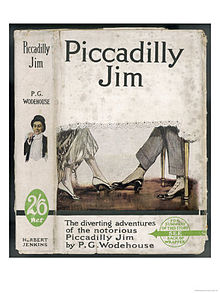
Some end up boosting the sagging morale of their fathers. Some treat their step fathers with as much scorn as theyPGW PiccadillyJim can muster at a tender age. They do not spare them while out to collect protection money. Their antics could make or break matrimonial alliances in a jiffy. Souring up business deals comes easy to them. When they burn down cottages, guests are forced to seek shelter in garden sheds.

When seniors devise a Good Conduct award, they leave no stone unturned to prove their mettle. When infatuated with celebrities, they devote their lives to being worthy of their affections. When in the company of clergymen, they end up making them more spiritual, thereby making them…

View original post 1,115 more words

ashokbhatia's avatarashokbhatia

We have already discussed the antics of some of the kids we encounter in Plumsville. Barring Edwin the Boy Scout and Ogden Ford, we have failed to meet anyone who can aspire to rise to the same heights of roguishness that Master Thomas achieves.

Thos

Master Thomas is the King of the Underworld. He is also known as The Shadow. He has carroty hair and a cynical expression. His manner is curt and supercilious. Annoy him, and he could arrange for a drawing pin to greet your fleshy parts when you sit on your favourite chair.

A tip from Captain Flint

In Jeeves and the Impending Doom (Very Good, Jeeves), Thos is being tutored by Bingo Little at Woollam Chersey, Aunt Agatha’s place, where Bertie has been invited over. Unbeknown to him, the aunt aspires for a secretarial career for Bertie, assisting Mr Filmer, the Cabinet Minister.

When…

View original post 1,622 more words

ashokbhatia's avatarashokbhatia

Bingo Little Junior and Prudence Baxter earn a negative ranking on the Richter scale of Roguishness. However, there are several others who deceive us with their apparent innocence – Kid Clamentina, Oswald and Peggy Mainwaring, to name the ones we have covered in the last post.

Here are a few more who deserve to be considered.

Bonzo

Bonzo, the son of Aunt Dahlia, has a sound reputation as a pest. But if Thos sets a gold standard in devilry, Bonzo is merely a good, ordinary mischief-maker. His proud mother compares the two as follows:

‘Whenever it comes to devilry, Bonzo is a good, ordinary selling-plater. Whereas Thomas is a classic yearling.’

When Bonzo is in love, his nature gets altered. He tries to lead a finer, betterVeryGoodJeeves life. When tempted to climb on the roof and boo down Mr Anstruther’s chimney, he refuses to oblige. When prompted to burst a…

View original post 1,692 more words

ashokbhatia's avatarashokbhatia

Here is a country where the mind is without fear

And the head is held high

Where knowledge to children and youth is virtually free

And those distressed by the world are welcomed with open arms;

Where the definition of nationalism implies inclusivity

Fine arts of all countries and cultures are welcome

If narrow domestic walls exist, these are only to protect national interests

Where respect for the law of the land reigns supreme;

Where gender equity and diversity is not a mere slogan

The care offered to the elderly is exemplary

Some wish the taxes to be lower but realize the money is well spent

In many ways does it serve and comfort the citizens; 

Where human endeavour aims to attain perfection

Words come out from an inner conviction

Gentle, helpful, physically active and resilient

Following a work culture which deserves to be aped;

Where one can encounter the true…

View original post 51 more words

ashokbhatia's avatarashokbhatia

P G Wodehouse has etched out the kids in his works with much finesse.  When it comes to ranking these kids on a Richter scale of Roguishness, our task is not too difficult. If Edwin, Thos and Seabury secure the top ranks, kid Blumenfeld, Bonzo and Sebastian Moon occupy the middle order. Kid Clementina, Oswald and Peggy Mainwaring appear to be competing for the lower ranks.

We also get to meet kids who can only earn a negative rank on the Richter scale of Roguishness. Their conduct is as pure as driven snow.

Prudence Baxter does not herself outsmart the real winners at an Egg and Spoon race. It is Jeeves’ desire to help a Bingo in distress which helps her to claim the prize.

Bingo Junior wins a baby contest and is blissfully unaware of the extent to which his accomplishment boosts up the morale of his father. He…

View original post 1,557 more words

Adults love obedience. But give them a simple kid who is plain subservient and they start complaining about life being rather monotonous and dull. Kids who are not naughty at all could prove to be somewhat boring. The higher the Naughtiness Quotient (NQ) of a kid, the brighter the life is. The challenge of having a high NQ kid around keeps one on one’s toes. One becomes hotter at one’s job. Outlook towards life becomes more indulgent. Capacity to handle the harsh slings and arrows of life shows a substantial improvement. Spiritual growth gets hastened up.

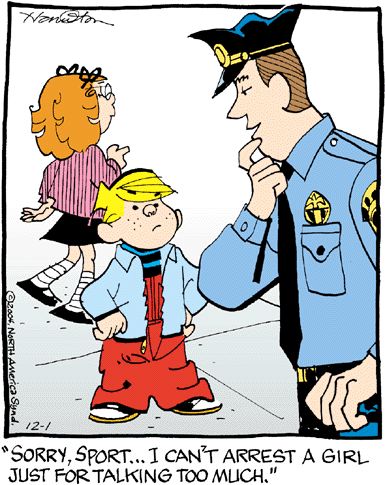
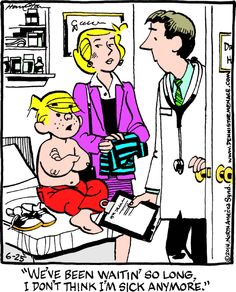
P G Wodehouse gave us such sterling kids as Thomas Travers, Seabury, Edwin the Scout and many others. Hanry King Ketcham gave us Dennis the Menace, based on the daily exploits of his own son.

Here is a quick look at some of the escapades of Dennis which amuse and entertain us just like those of Plummy kids.

Just the question Algernon Aubrey Little would have asked his parents, Bingo Little and Rosie M Banks, had they been living in our internet-infested times these days!

A scene of unalloyed domestic bliss, with the chivalrous husband wearing an apron and pitching in to assist in domestic chores!

When hapless parents bringing up a Thos-like son yearn for some kid-free time!

This is what could happen if Edwin the Scout were to complain to D’Arcy Stilton Cheesewright about a friend of his!

The progeny of Stiffy Byng and Harold Stinker Pinker would invariably be unpopular amongst the public at large. The poor souls get to inherit the combined loopiness of both their parents.

A sentiment dreaded by such lion-tamers as Rev. Aubrey Upjohn, Miss Mapleton and Miss Tomlinson!

Refuse to cough up protection money and the prospect of treading down a hard staircase covered with soft butter would await one.

When he grows up a little bit, he might make some such confessions so as to be worthy of the affections of either a Greta Garbo or a Clara Bow.

Many of us would be inclined to be patient and give Dr. E. Jimpson Murgatroyd here a chance to check on the pink spots on Dennis’ chest!

The fate of a clueless Ann Banister when endeavouring to baby sit for Joey Cooley!

It is not easy to compare the brilliance of the written word with that of an illustration. Perhaps, there is no need for us to compare the two genres. We just need to sit back and bask in the pristine humour these two forms of art represent.

The fulcrum which makes the two forms of art converge is that of the Naughtiness Quotient of the kids in general. Or, their rank on the Richter Scale of Roguishness.

(Dennis the Menace cartoons courtesy the world wide web)

(Related Posts:

https://ashokbhatia.wordpress.com/2015/07/05/the-gallery-of-rogue-kids-in-plumsville

https://ashokbhatia.wordpress.com/2015/04/01/when-masters-thos-bonzo-and-moon-rise-in-love)

Lord Emsworth

The narratives dished out by Plum not only amuse but also educate the lay reader. Critics may label these as escapist fares, but that does not take away the kind of social and spiritual lessons which are embedded therein.

When a girl whom you have come to respect seeks your protection, you try to rise to her expectations. Suddenly, the spine which was made of cottage cheese gets transformed into one of chilled steel. You stand up to bullies and tell them where they get off. You look them in the eye and make them wilt, making them beat a hasty retreat from their time-tested positions. Like Angus McAllister, they suddenly find more merit in ‘ceasing to be a Napoleon than to become a Napoleon in exile.’

The Parva School Treat Transformation

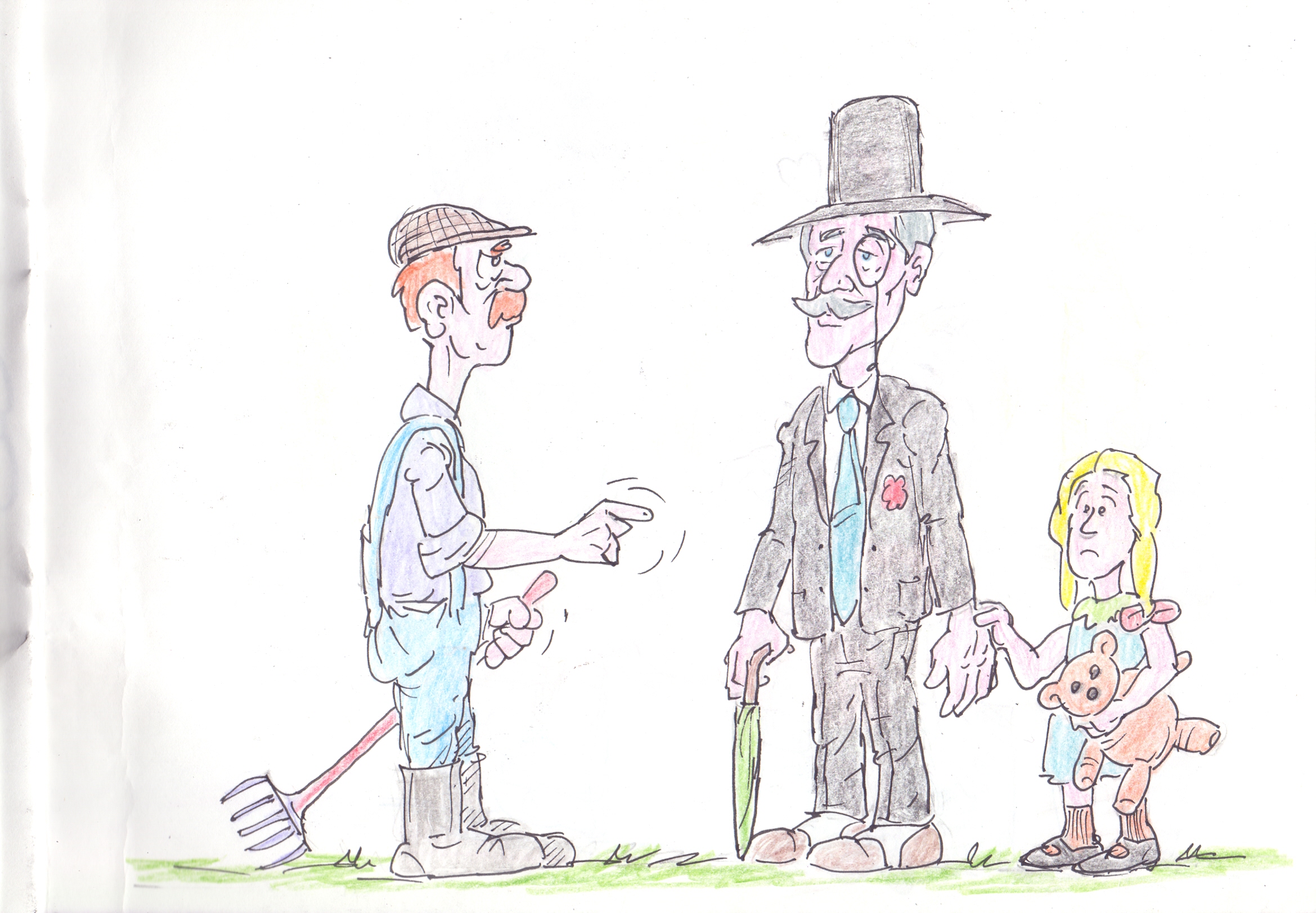
When the story begins, we find that Lord Emsworth’s soul is weighed down with woe. The sun is going about its task with great aplomb, but he is unable to potter around in his own gardens. For, this is the day of the August Bank Holiday, ‘when a tidal wave of the peasantry and its squealing young engulfed those haunts of immemorial peace.’ In place of an old coat, he is forced to wear a stiff collar and a top hat and be genial. As if this were not enough, he is expected to make a speech in the evening.

However, by the time the story reaches its climax, he has become a transformed man. He has become a man amongst men. He can stand up to Angus McAllister, his gardener, and boldly reject his proposal to lay a gravel path through the moss-covered yew alley. He has even found the courage to give a piece of his mind to Constance, his dominating sister.

His foremost concern is to bring some sunshine into the life of Gladys, his girlfriend. If she has not had any nourishment, she must be provided a sumptuous fare not only for her but also for her younger brother, Ern. If she asks for flowers from the Blandings gardens, she must have them. He would rather walk back with her to the cottage she is staying at, rather than face the prospect of making a speech.

Doing the ancestors proud

Lord Emsworth detests the fact that he is no longer the captain of his soul. But he ends up acquiring the courage to stand up to the bullies in his life. From being a spineless and unspeakably unworthy descendant of ancestors who had certainly known how to handle employees, he can now boast of being a tough egg. Even though his soul quivers, the simple act of Gladys seeking his protection from a menacing Angus McAllister by slipping her small, hot hand into his, he secures a mute vote of confidence. It is something that he wishes to be worthy of.

Learning from kids of a metropolitan origin

Street smart kids of metropolitan origin have perfected their survival and self-preservation skills. They acquire a ‘breezy insouciance’ which their country cousins lack. Shyness is not one of the virtues they can boast of. They have no difficulty in translating their thoughts into speech. Their dog-management skills are something to write home about.

If they need to pick flowers, they stoop to conquer. They have no reservations about throwing stones at those who endeavour to thwart their floral ambitions. Those attempting to do so even run the risk of getting copped on the shin. And if someone were to deliver a sharp reprimand, they are not averse to biting them in the leg.

These are the kind of personality traits which appeal to someone like Lord Emsworth who believes that he is not a captain of his own soul. Kids with a kindred spirit end up earning his unalloyed reverence.

One of the kids who earns the awe and admiration of Lord Emsworth is Gladys. She is described as a ‘small girl, of uncertain age – possibly twelve or thirteen, though a combination of London fogs and early cares had given her face a sort of wizened motherliness which in some odd way caused his lordship from the first to look on her as belonging to his own generation. She was the type of girl you see in back streets carrying a baby nearly as large as herself and still retaining sufficient energy to lead one little brother by the hand and shout recrimination at another in the distance.’ Ern, her younger brother, also falls in the same category.

Pristine love that uplifts

A streak of independence, disobedience and childlike vehemence invariably appeals to someone who is not himself in the firing line. When it affects the parties who happen to be the tormentors, the sense of awe and admiration experienced by the tormentee grows manifold. Lord Emsworth is no exception to this general rule.

Love results into a spiritual upliftment of sorts. One is no longer concerned only about one’s own discomforts, whether material or spiritual. One starts looking at the broader picture. The vision is no longer myopic. The scales fall from one’s eyes. One works towards bringing some sunshine into the lives of those who are somewhat disadvantaged. Social and economic barriers fade away. Empathy and compassion kick in. So does the milk of human kindness. One focuses only on providing adequate succour to the object of one’s affections.

(Illustration courtesy Suvarna Sanyal, a retired banker who has an eye and an ear for all there is to see, listen to and laugh at in this world.)

(Related Posts: 

https://honoriaplum.wordpress.com/2014/01/16/great-wodehouse-romances-lord-emsworth-and-the-girl-friend-by-ken-clevenger

https://ashokbhatia.wordpress.com/2015/04/01/when-masters-thos-bonzo-and-moon-rise-in-love)