Much like all masters perched on the literary high table, P G Wodehouse also used Nature as a colluding partner in his narratives. When all is well with the world, roses are in bloom, bees and birds go about doing what they are ordained to do, and the sun goes about spreading cheer with due benevolence. But when giant egos clash or a disaster looms large, Nature stops in its tracks, birds stop chirping noisily, breeze ceases to blow and even flowers stand still.
In other words, Nature is depicted as having a sensitive soul, cheered up when the proceedings are going as per plans, but looking askance when the reverse happens. In the hands of proficient wordsmiths, it assumes a character of its own and provides mute support to the goings on in the narrative.
By way of an example, consider the story ‘Lord Emsworth and the Girl Friend.’
Angus McAllister, the head gardener at Blandings Castle, has an anti-moss spirit. Lord Emsworth often wonders why Providence had not taken note of his sterling qualities and made him a first class mule. He recalls the time when, after having sacked him, McAllister, he, Lord Emsworth, had to plead with him to come back. This alone had resulted in his favorurite pumpkin winning the Agricultural Show.
It was a supreme sacrifice at the altar of an employer’s ego, paving the way for a subsequent loss of the iron hand to have an effective control over his own property, comprising not only the castle and its grounds but also the exquisite flora and fauna hosted therein. Lord Emsworth had thus ended up becoming the ground under the number twelve heel of the Glaswegian head-gardener.
He believed that he had thus evolved into a spineless and unspeakably unworthy descendant of his ancestors who had perfected the art of handling employees, even if it involved dividing an obdurate employee into four employees by using a battle-axe without any eyebrows getting raised.
Till the time Gladys popped up in the scheme of things, McAllister’s control over ‘flarze’ in the Blandings Castle gardens was absolute. Anyone desirous of acquiring some of these had to wait till the time he was in an amiable state of mind, steer the conversation around to the subject of interior decoration, and then took a pot shot at one’s desire.
If one’s Guardian Angels were in a benevolent mood, and if McAllister chose to show you around the gardens with a dash of Scottish pride, one could see the following species in full bloom:
Achillea

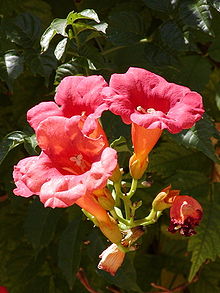
Bignonia Radicans
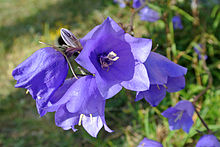
Campanula
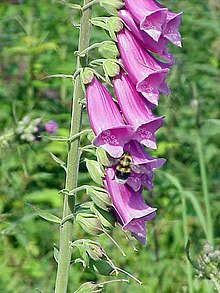
Digitalis
Euphorbia

Funkia
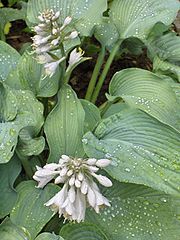
Gypsophila
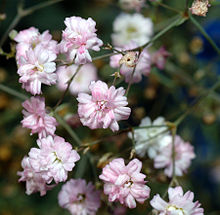
Helianthus

Iris

Liatris

Monarda

Phlox Drummondi

Salvia
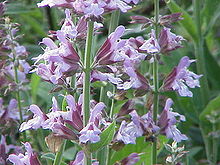
Thalictrum
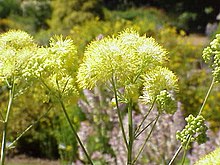
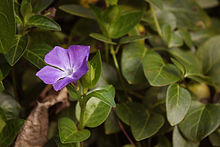
Vinca
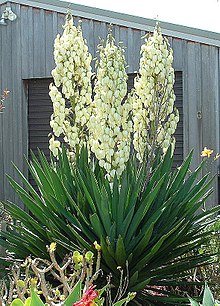
Yucca
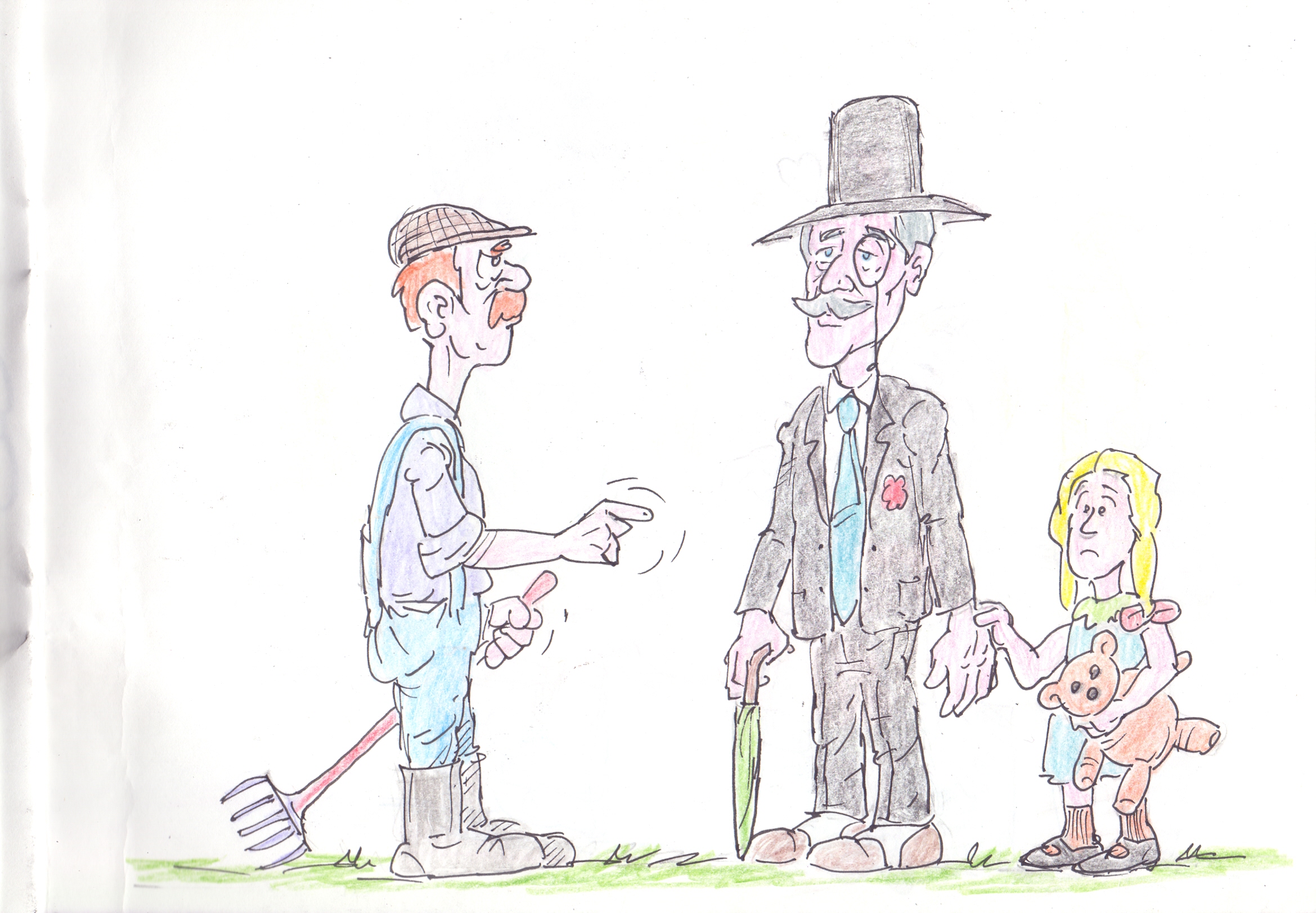
And when a small girl in a velveteen frock is seen flitting about his sacred gardens and picking his sacred flowers – that too, a girl who had copped him on the shin with a stone just the other day, he rushes out of his den at forty-five miles per hour.
Lord Emsworth’s soul quivers at the spectacle of the man charging down on him with gleaming eyes and bristling whiskers. But with the soft hand of Gladys in his hands, his spine sheds all the cottage cheese it had accumulated over time and gets converted into one made up of chilled steel.
‘This young lady,’ said Lord Emsworth, ‘has my full permission to pick all the flowers she wants, McAllister. If you do not see eye to eye with me in this matter, McAllister, say so and we will discuss what you are going to do about it, McAllister. These gardens, McAllister, belong to me, and if you do not – er – appreciate that fact you will, no doubt, be able to find another employer – ah – more in tune with your views. I value your services highly, McAllister, but I will not be dictated to in my own garden, McAllister. Er – dash it,’ added his lordship, spoiling the whole effect.
The sudden transformation in the character of the main protagonist leaves Nature baffled and astounded. All is still for some time. The Achillea, the Bignonia Radicans, the Ampanula, the Digitalis, the Euphorbia, the Funkia, the Gypsophila, the Helianthus, the Iris, the Liatris, the Monarda, the Phlox Drummondi, the Salvia, the Thalictrum, the Vinca and the Yucca – all are still.
Angus McAllister is perplexed. He decides it is better to cease to be a Napoleon than to be a Napoleon in exile. ‘Mphm,’ he says.
Nature resumes its breathing. The breeze begins to blow again. And all over the gardens the birds resume their musical notes. And the Achillea, the Bignonia Radicans, the Ampanula, the Digitalis, the Euphorbia, the Funkia, the Gypsophila, the Helianthus, the Iris, the Liatris, the Monarda, the Phlox Drummondi, the Salvia, the Thalictrum, the Vinca and the Yucca, much relieved, start swaying in the gentle wind yet again.
The repertoire of such literary giants as Shakespeare, William Wordsworth, Charles Dickens, Thomas Hardy and Kalidasa are littered with natural allusions. Same is true of P G Wodehouse.
(Illustration courtesy Suvarna Sanyal, a retired banker who has an eye and an ear for all there is to see, listen to and laugh at in this world.
Representations of flowers courtesy Wikipedia. Given the non-floricultural background of yours truly, errors and omissions in these may kindly be excused.)
(Related Posts:
https://ashokbhatia.wordpress.com/2019/05/09/lord-emsworth-and-the-girlfriend-a-viewpoint








 ashokbhatia
The Book on Leader Mindsets: Some Comments
June 1, 2019 by ashokbhatia
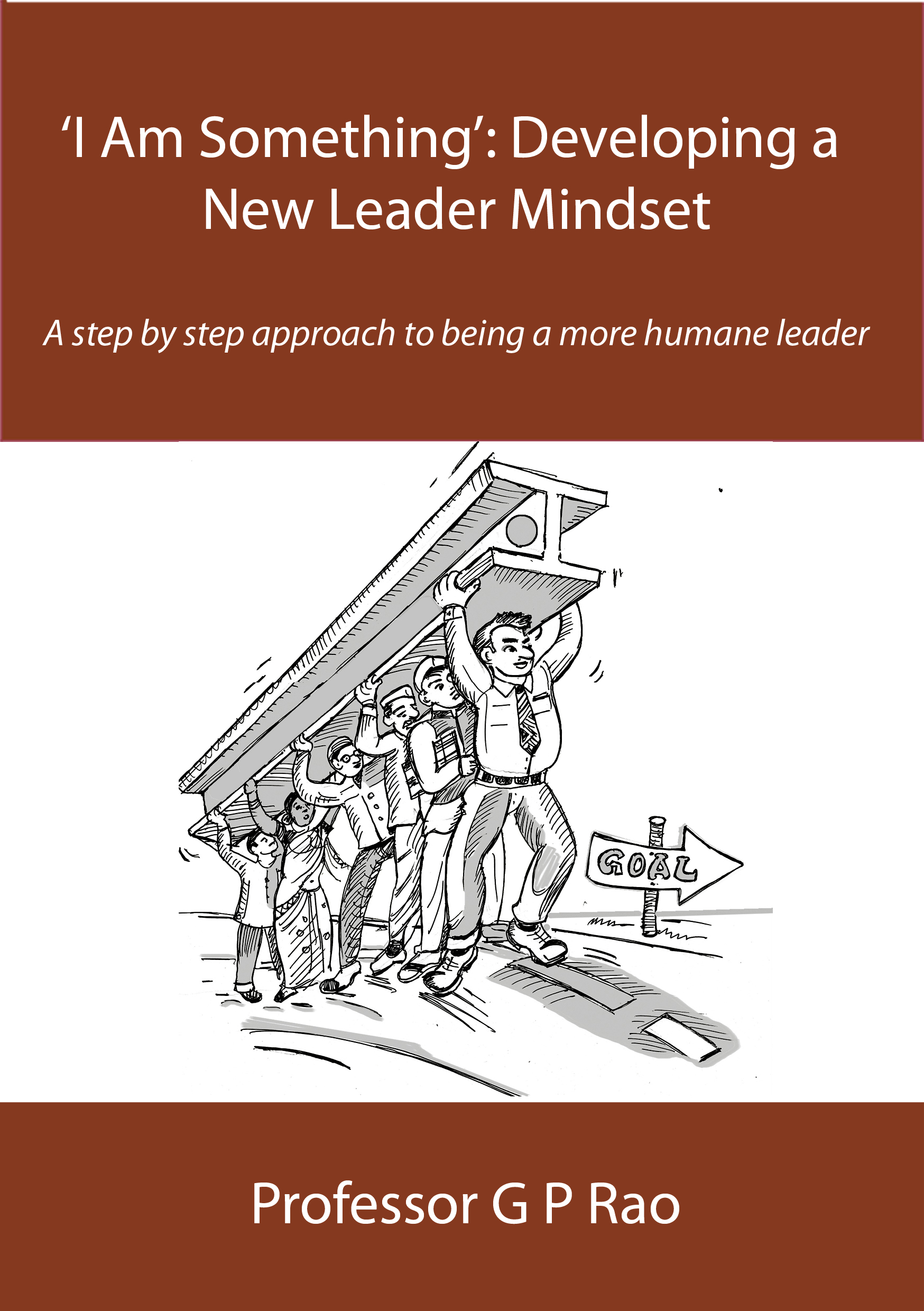
“Little did I imagine that someday Professor Rao will do an empirical study and bring out a book on this subject. The book brings out leadership mindsets so clearly and analyses these based on research and experiential wisdom. The thing that struck me most was the linkage of these styles with the three gunas in Hindu scriptures: Sattva, Rajas and Tamas. The book does not prescribe any style but makes the reader think through what his style is and what he would like it to be. Then, it provides the reader with a pair of new glasses and suddenly one starts seeing things in a different perspective.”
Satish Sekhri
Formerly Managing Director
Bosch Chassis Systems Ltd,
Pune, India
(An excerpt from the Foreword to the book)
“I think the leader mindset proposed in the book is “Indian tinted”. As someone from the “West”, I am pleased to enrich my understanding with “your views”. You make a good contribution to enlarge our perspectives on how you see the leader mindset.
Very few of us are internally STRONG to accept negativity; also, the contexts that most of us live with is toxic. So, “I Am Something” approach can be extremely healthy.
When you try to explore the role of human values in the face of Industrial Revolution 4.0 (AI, Robotics, etc), you may consider the fact that the drivers of technology ARE weak in terms of human values.
I think that we are headed towards a phase of self-inflicted extermination, possibly leading to the emergence of a new species. Before the end of this century, we will have ourselves and the others species. We will be creating living beings among us and, little by little, we (little and fragile creatures) will fade away, hopefully graciously. We do not wish to change ourselves. We also do not have the collective will power to change the context in which we operate. So, the next evolutionary step of our civilization may get taken much earlier than most of us may think.”
Marco Paulo Abrunhosa Cardoso
Serving in boards in different jurisdictions
Finland
“The writing is excellent. As the editor of a journal, I rarely see papers with no errors. Your book is thus a rarity. I initially wondered why some words like “Student” and “Maternalistic” are capitalized. I now realize that there is a meaningful reason behind it.
I see that the style is half-way between a discourse and a scholarly
paper. If you are positioning it as a scholarly paper (like a journal
article or academic book), it certainly needs more references. The book has some quotations which too need references.
This book is obviously positioned as to not tap into management
literature on leadership a lot (at least in part 1). Rather, it offers another way to look at leadership.”
Ram Mohan Pisharodi
Marketing Professor/Chief Editor, Alliance Journal of Business Research at Oakland University
Greater Detroit Area, USA
“From an Australian’s point of view, I found that the thesis of the book provides a fresh perspective on the issue of leadership – a very sub-continental perspective and interpretation.
It appears that the intent of the book is to provide aspiring (or current) leaders with a way for them to become a happier and more contented person. Greater contentment would lead to a warmer and more positive individual. The thesis is supported by research and empirical observation.
My conclusions include the following issues:
Dr Jack Jacoby
Executive Chairman
Jacoby Consulting Group, Australia
Posted in Management Lessons | Tagged Book, Comments, feedback, Leadership, Management, SPANDAN | Leave a Comment »