Feeds:
Posts
Comments

findshars's avatarMy Views On Bollywood

By

Sharada Iyer

The musical instrument ‘Guitar’ has always been associated with love, romance and a youthful vigour in Hindi cinema. From the Black & White era to the present scenario we have had various actors and actresses lip-syncing to some fabulous songs in different situations in our films.

Many songs were picturized in clubs and party settings while others were solo numbers sung by the hero to the heroine and in rare instances vice versa. Still others became part of the film’s story when the actor concerned was playing the role of a singer in a band in the film. Some directors imaginatively picturized guitar songs as part of the background in a situation.

Ironically many of our popular stars like Dilip Kumar, Raj Kapoor, Dharmendra, Salman Khan, etc., never got the opportunity to have a full-fletched guitar song picturized on them. On the other hand some of the…

View original post 2,570 more words

When owners and founders of businesses hire CEOs, they hope for an attitude of quiet and respectful deference towards themselves, sans dissidence of any kind. Often, their attachment to the business surpasses all other considerations. Thus, fissures between the two power centers soon start popping up. If some of the actions of a CEO are leading to a compromise on the basic values of the business, like in the case of Tatas and Cyrus Mistry, or like in the case of Infosys and Vishal Sikka, it is understandable. But if the gaps have arisen due to the manner in which operations are getting handled, it just shows that the owner or founder is not willing to let go.

In family owned businesses, the younger generation is often raring to go. Many a scion keep twiddling their thumbs trying to figure out as to when the elder owner would hang his corporate boots or sandals, so they could have a free hand to nudge the enterprise towards newer markets, adopting the latest technologies sprouting in the era of Industrial Revolution 4.0. But for most of the elderly owners, it is a tough challenge to give up controls. Like the proverbial man who keeps clinging to a tree but blames the tree for not allowing him to let go, they refuse to fade away gracefully into the sunset. During the period of transition, chaos and confusion reigns. Hapless employees continue to suffer silently, caught as they are between the divergent thought processes of the two generations.

The war depicted in the epic Mahabharata, of which Bhagavad Gita is an integral part, came about only because King Dhritarashtra could not overcome his attachment to either the throne or his son, Duryodhana. The outcome was the death of all his hundred sons, loss of prestige and kingdom and, of course, social and economic misery of the multitudes who had earlier thrived during his reign.

Different Hues of Attachment

Attachment is an intoxicant which, when taken in excessive doses, leads to perilous outcomes. When consumed without a moderating dose of detachment, it could prove to be a disastrous tissue restorative, a concoction which is surely injurious to the efficiency and effectiveness of a manager.

Attachment with a Lion King could leave a sheep ending up as its prey. If the Lion King himself feels attached to a wily Finance-Fox and ends up promoting him as a CEO, the organization may soon start running only on Standard Operating Procedures, neglecting customer service and employee relationships. A Production-Bovine who is attached to the technology in use on the shop floor would take a jaundiced view of a more efficient technology being planned to be introduced by the management. A Human-Resources-Canine may start hiring people only from his own ethnic background, resulting into lack of diversity in the organization. Separations with non-performing employees do not get handled well, impacting down-sizing initiatives of the management. A sprightly Operations-Reindeer might start believing that the whole organization would collapse if he were to proceed on leave.

Often, attachment to a person leads to complications. Those who do not deserve a raise might even end up getting a promotion, impacting employee morale adversely. Those who are competent could get sidelined, increasing the chances of their seeking greener pastures. Ultimately, the organization suffers. Undue attachment to a senior could gradually transform one into a seasoned Yes-person. If ever the senior’s career graph takes a hit, the one hanging onto his coat tails would also suffer.

Likewise, when one gets attached to an experience, whether positive or negative, one’s Guardian Angels go into a state of hibernation and disaster lurks around the corner. A promotion could go to one’s head, leading to aberrant behaviour, with negative results quick to follow. Spectacular success in a project could lead to complacency. On the flip side, a sharp public rebuke from someone senior could make one withdraw into an emotional shell, thereby impacting one’s performance. One could decide to play the victim card for some time and continue to seek solace from those who are in no way capable of helping. It does not bring about desired results.

Attachment and Resistance to Change

In other words, attachment often leads to resistance to change. One’s sense of objectivity gets compromised. A tendency to remain in one’s comfort zone rules the roost. Innovation takes a back seat. Procrastination kicks in. Delegation gets dumped. Distortions start popping up. Conflicts and dilemmas do not get resolved in an unbiased manner. Relationships with key stakeholders turn sour. Signals of an imminent shift in customer tastes and preferences start getting neglected. Market share starts shrinking. Advances in technology do not get absorbed in the organizational processes. Business takes a hit. Brand equity nosedives. Existence of a business itself may come under a cloud.

Elsewhere, we have already touched upon the manner in which such market leaders as Kodak and Nokia have suffered in the past. Likewise, organizations which resist absorbing the newer technologies coming up in Industrial Revolution 4.0 could face a serious threat of either scaling down or getting completely wiped off in the times to come.

The Approach of Detached Attachment

All this is not to say that attachment is something which can be completely avoided. The concept of attachment is central to organizational life. Attachment is essentially an enduring emotional bond between people, events and belief systems. Experts have studied the nature, development, maintenance, and dissolution of this emotional bond through the lens of Attachment Theory, providing an insightful perspective in the understanding of human relationships. Dynamics of leadership is surely impacted by it. So is the concept of trust, mentoring and employer-employee relationships. Employees get motivated and become proactive when under the spell of attachment. It impacts ethical behaviour in a significant manner.

If the Western models of Attachment touch upon its gravitational pull and inevitability, Lord Krishna presents an Eastern template of Detachment, which could be held to be a spaceship which enables one to foray into interstellar space and enjoy the captivating beauty of a fraction of the universe.

Can a target be cracked unless the team working on it is truly attached to it? But the sense of attachment need not cloud the team’s judgement and even make it blind to other options which might result in the target being achieved more effectively and efficiently. Similarly, a leader has to give up his likes and dislikes for individual team members and handle all in an impartial manner, thereby highlighting the need to remain detached.

What is desirable is a healthy combination of Attachment and Detachment. Some may allude to it as a Detached Attachment!

Detachment: The Art of Living in the Present

Bhagavad Gita elaborates on the basic concept of detachment. It exhorts a CEO not to worry over and get herself preoccupied with the anxieties for the rewards of her actions, thereby avoiding a tendency to live in the future. Nor does it make sense for her to keep analyzing as to what transpired in the past and get overly worked up about it. The advice here is not to waste the present moment in inane memories and in concerns about the future. Rather, she can do her very best in the present moment, keep relevant stakeholders in the loop, and perform her duties, as dictated by a sense of virtuous righteousness. This way, she is released from all of her mental preoccupations. Work alone makes her live in the joy and ecstasy of inspired self-forgetfulness. The work itself becomes the reward.

कर्मण्येवाधिकारस्ते मा फलेषु कदाचन |
मा कर्मफलहेतुर्भूर्मा ते सङ्गोऽस्त्वकर्मणि || 2.47 ||

You have a right to perform your prescribed duties, but you are not entitled to the fruits of your actions. Never consider yourself to be the cause of the results of your activities, nor be attached to inaction.


Cultivating a sense of detachment is easier said than done. CEOs need to make frequent inward journeys a habit. What helps is a practice to mentally walk away from a given situation and view it not as a participant but as a neutral witness or observer. As a neutral person, the CEO does not interfere with things. Nor does she expect or impose anything. She may still experience thoughts, but does not judge them or fight with them. There may still be chaos all around, but the witness is disinterested, and does not react to these inputs. To the witness, they are like the clouds that merely pass us by.

Who is this witness? It is not the mind. The mind is incapable of witnessing. Lord Krishna says that one’s soul is the Witness. If the CEO assumes a witness-like stance – witnessing her own thoughts, likes, dislikes actions and intentions – she is in resonance with her inner self. This has the potential to bring about a harmony between her thoughts, her words and her actions, thereby making her an inwardly happier and an outwardly successful professional.


(Published in the April 2019 issue of New Race journal of SACAR, Sri Aurobindo Centre for Advanced Research)


Honoria Plum's avatarPlumtopia

‘…he [Barmy] would have been the first to agree that he had never been one of those brainy birds whose heads bulge out at the back. Some birds bulged and some birds didn’t, you had to face it, he would have said, and he was one of the birds who didn’t. At Eton everyone had called him Barmy. At Oxford everyone had called him Barmy. And even in the Drones Club, a place where the level of intellect is not high, it was as Barmy that he was habitually addressed.’

Barmy in Wonderland (1952)

1952 Barmy in Wonderland (UK title) mycopyCyril “Barmy” Fotheringay-Phipps (pronounced Fungy), a member of Wodehouse’s famed Drones Club, stars in two stories of his own.

‘Tried in the Furnace’ is a short story from Young Men in Spats (1936 UK edition), and a great favourite of mine. Barmy and fellow Drone Pongo Twistleton-Twistleton retire to the country to rehearse their act for…

View original post 354 more words

findshars's avatarMy Views On Bollywood

By

Sharada Iyer 

The rich repertoire of our century-old Hindi film music boasts of a wide range of songs based on a variety of classical Hindustani ragas. There is no denying that the reach of Hindi films and Hindi film music in our country is far beyond any other form of music. Therefore instead of composing these songs in a typical classical style which may appeal only to a select audience with in-depth knowledge of the technicalities of classical music, our music directors draw inspiration from our vast legacy to compose either semi-classical songs or just touch upon the raga lightly. 

These subtle modifications in the raga allows them to compose apt songs to suit the mood and setting of  the story and the character keeping in mind the visual medium of cinema. Therefore, such compositions not only help to enhance the appeal and reach of these ragas to the large…

View original post 1,469 more words


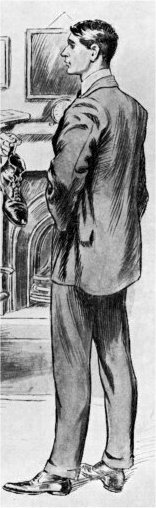
Vision and Mission Statements of corporates adorn their walls and can be readily copied. However, the value system of an organization is not something which can be copied very easily. It permeates the entire organization – its hierarchy, its various divisions or departments. It rubs off on most of its employees. Even service providers and supporting manufacturers get tuned to the same frequency.

Our youth are already reeling under the impact of latest technologies being unleashed on the unsuspecting work-force with gay abandon, leading to drastic changes in the skills required to survive and do well in the times to come. Were they to decide to join an owner-driven smaller business, it would be wise on their part to be aware of the nature of values that such outfits could be following.

Those who get hired by such businesses are the ones who offer willing service and selfless cooperation, even to the extent of taking pay cuts when they are told that business is in the red. They need to be quiet, respectful and deferential by nature. They need to have an adventurous outlook on life and be always prepared to receive a pink slip at a very short notice.

Employees are expected to be timid and behave like worms endowed with a backbone made of cottage cheese. Smarter ones who have backbones made of sterner stuff would be inclined to look for greener pastures within a few months of joining up. Those who somehow survive longer would soon find getting hauled out unceremoniously, much like worms found floating on top of a bowl of chicken soup meant for the Lion King.

While entering the company campus, the employees find it worth their while to leave their ego at the main gate. A doormat-like behaviour alone ensures that they do not suffer the spiritual anguish like that of the person who, having grown accustomed to opening the crackling salary envelope on the first day of each month, reaches out for it one day and finds it empty.

When securing a job offer, only the naïve ones amongst us would expect to be issued a formal appointment letter. As to firing, the axe could fall any time anywhere, irrespective of the length of service. A person who gets fired would do well to not only forget about any parting compensation being shelled out but also give up hopes of ensuring that the money deducted towards provident fund etc has indeed been deposited with the regulatory bodies. 

When asking for leave, they need to deploy tact and delicacy. Long vacations are obviously ruled out, simply because the stiff-upper-lip visage of the Lion King simply discourages such inane requests, work-life balance be damned.

The proceedings are invariably of a nature as to create an inferiority complex amongst its employees. Whenever anything goes wrong, even if the decision had emanated from either the Lion King or a member of his family, they willingly take the rap and get frequently ticked off by the top brass. Over time, they start resembling one of the more shrinking and respectful breeds of rabbit.

One of the values which some owner-driven companies find difficult to imbibe is that of respecting its people. Employees often get treated like chattel, getting hired and fired based on assessments made either in the bedroom or on the dining table of the owner’s abode. If the mood of the Lion King fluctuates in tandem with either the Dow Jones Index or the Sensex, the employees feel as if they are always on a roller coaster ride.

An incoming employee is never permitted to meet the outgoing one, thereby ensuring that negative vibes do not get passed on from the latter to the former. Inevitably, this ensures that past experience continues to get lost. Continuity in systems and procedures becomes a victim. Each incumbent keeps trying to reinvent the wheel.

When a meeting gets called, the Lion King alone presides. When he throws out a statement of opinion, a respectful silence prevails. He looks about him expectantly. This is the cue for the senior Yes-Sheep to say yes. He is followed, in order of precedence, by the middle-rung Yes-Sheep and then the junior Yes-Sheep. Then the turn of all the Nodder-Dormice comes. They simply nod, one after the other.

When the Lion King delineates a new business plan, he merely informs. He directs the Marketing-Monkeys, the Production-Bovines and the Supply-Chain-Management-Goats to get down to their respective tasks without delay. The Human-Resources-Canines are told to take care of their part of the work, while the Finance-Felines are told to keep a sharp eye on the collections against invoices raised by the Marketing-Monkeys. The Research-Pachyderms are exhorted to keep coming up with innovative products and services. The System-Giraffes are advised to ensure that the high-hanging fruits of the latest advances in technology are made available to the team. The Liaison-Fox is tasked to see that all regulatory permissions are in place well within due time.

All this is not to say that all smaller outfits fit the pattern outlined here. There are many others who respect the people who contribute towards their goals. But if one does willy-nilly get stuck with one of the obnoxious kinds, one can work with a sense of true detachment and seek greener pastures at the earliest possible opportunity. 

Working in a smaller outfit has some unique perks as well. Besides being able to observe the core business processes at a close quarter, one is apt to face mighty challenges, thereby growing spiritually. One can pretty soon evolve into a Spiritual Manager who practices detachment and handles tough situations with alacrity and equanimity.

Peter Drucker, the renowned management expert, has this to say about imbibing spiritual values:

‘The individual needs the return to spiritual values, for he can survive in the present human situation only by reaffirming that man is not just a biological and psychological being but also a spiritual being, that is creature, and existing for the purposes of his Creator and subject to Him.’

Different organizations sport different cultures, presenting an interesting rainbow of values. The most prominent colour in such parabolas of joy happens to be black, denoting profits. The most disliked colour is obviously red, a prospect which leaves many a business owner and CEO cold in the feet and shuddering.


  1. Mahatma Gandhi held that “To remake ourselves as human beings, our greatness lies not so much in remaking the world – which is the myth of atomic age – as in being able to remake ourselves.”
  2. Jacquelyn Small, the French psychologist, stated, “We are not small human beings trying to be spiritual, we are spiritual beings practicing to be human”.
  3. Proust: We don’t receive wisdom; we must discover it for ourselves after a journey that no one can take for us or spare us.
  4. Johann Goethe: Self-knowledge is best learned not by contemplation, but by action. Strive to do your duty and you will soon discover what stuff you are made of.
  5. Albert Einstein: The only source of knowledge is experience.
  6. Oliver Wendell Holmes, Jr: A mind that is stretched by a new experience can never go back to its old dimensions.

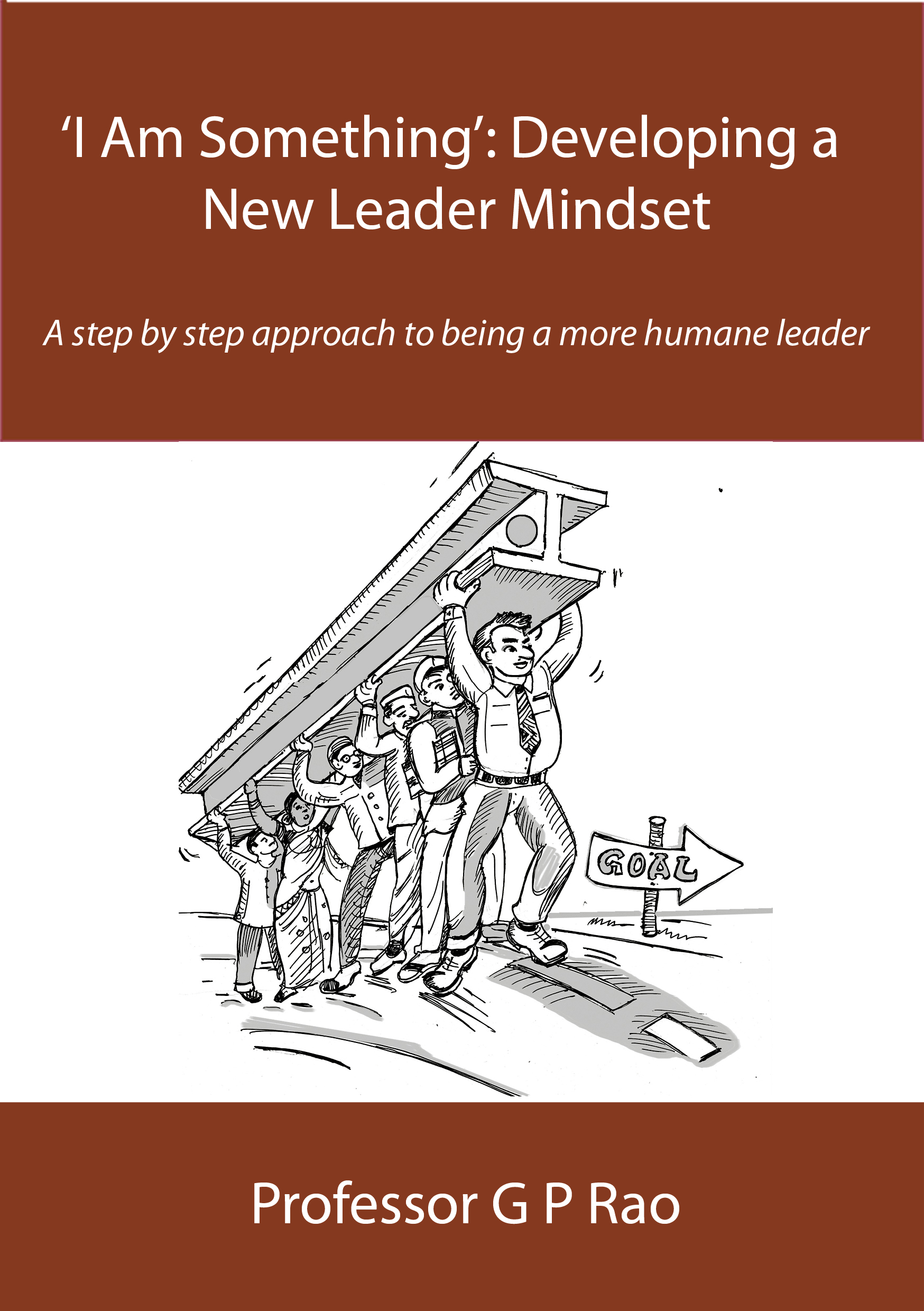
(Yours truly has contributed some of the chapters in the book and has also edited it.)

(Related Post: https://ashokbhatia.wordpress.com/2019/03/18/some-quotable-quotes-which-appear-in-the-book-on-leader-mindsets-part-2)


Psmith put his smart phone away. A sigh escaped him.

“Nothing makes sense”, he muttered.

For the space of about twenty-five seconds, Mike, sitting across a small table on a sunlit balcony in Mumbai, India, sat in silence.

“What is wrong with you?” asked Mike, with a concerned look on his face.

Some time back, Psmith and Mike had returned to the Mumbai branch of the New Asiatic Bank for a short audit spree. It had again taken them some time to get used to the hustle bustle of the metropolis, which they found much noisier than during their last stay, what with elections in India just round the corner.

They were put up in a guest house of the bank located at Worli in one of the high-rise buildings overlooking the Arabian Sea. Being a Sunday, both were in a relaxed state of mind.

“It is a pity to see the hapless denizens of most countries getting bombarded with all kinds of inane propaganda around election time. The level of allegations and counter-allegations leave them totally aghast, wondering if there is any sense of decency left in the world. I am sure they are clueless about being able to separate the wheat from the chaff, especially when it comes to deciding who to vote for”, said Psmith, looking somber and grave.

“Yes. Perhaps, they would end up voting for those who have greater lung power, both in the physical and in the virtual world!” said Mike.

“Elections will come and go. But, frankly, I do not really see any hope for the millions who have put their faith in the concept of democracy without realizing the kind of chaos and confusion it so very often amounts to.”

Mike eyed Psmith with grave concern.

“What gives? I have never seen you so very pessimistic about things.”

“In general, I feel that politicians of all hues have failed the public at large. People should start using the None Of The Above option more aggressively!” said Psmith ruefully.

“Why do you think so?” asked Mike, picking up his cup of tea from the table separating the two.

“One, I do not see any party speaking of issues which really matter. Talk of global warming and the threat people face from rising sea levels is nowhere to be heard. We have come to a stage where we need kids like Greta Thunberg to remind us of our obligations to Mother Earth. World over, use of land is a question which never gets raised, even though instances of urban flooding keep popping up every once in a while. Another crisis which looms large is that of the acute shortage of potable water, but our politicos appear to be behaving like well-fed ostriches on all these counts.

“Two, the basic needs, like providing for affordable healthcare, an education which makes the young employable, and an ecosystem which enables the people to make a decent living, are only touched upon obliquely and never addressed in a meaningful way. We are already well into Industrial Revolution 4.0. Requirement of skill-sets is changing rapidly, creating a new set of haves and have-nots. But I do not see any politician talking about this grave challenge.

”Three, many of the founders of modern democracies had vowed to create a just society. They seem to be nowhere near the goal that their founding fathers had set. Not to talk of either Millennium Development Goals or a gradual shift to Gross National Happiness Index for measuring progress.”

Psmith paused and looked at the seagulls flapping their wings over the Arabian Sea.

“Yes, I understand your anguish”, said Mike. “But this is true for many of our politicians in many countries. They are essentially dream merchants, with an eye on their own seat of power. Lofty promises get made at election time, mostly to be forgotten thereafter. The execution part is left to poor mandarins who sit in their ivory towers and keep swaying like wild grass on a sea coast to the likes and dislikes of different political masters from time to time.

“We live in times of volatile politics and general insecurity. We are just getting used to some stunning and illogical triumphs. Over the past few years, we have seen it in France, Italy, USA, India and elsewhere. A wave of isolationism appears to be washing down upon us. So is a phase of de-globalization.”

“Let us not lose heart, Comrade Jackson. The world follows its own cycles. Pretty soon, the tide could turn again. The omissions and commissions of those who look invincible today may soon return to haunt them. But what amuses me is that rather than focusing on long term key issues, our politicians just keep goading the ordinary person into making a choice between a brand of hyper-nationalism and a secular and liberal outlook. They sound much like our corporate honchos who live from one quarter to the next, dishing out guideline values!”

“We are lucky that elections keep popping up every once in a while. Some work gets done, at least!” quipped Mike, a chuckle adorning his visage. “Also, you ignore the fact that poor politicians have a tough job on hand”, he added.

“Oh, and what makes you say that?” asked Psmith.

“You see, they have to cope with diametrically opposite demands from different sections of the public. They have to persevere. They have to be fleet-footed and switch sides when it suits them. You may recall the case of John Bickersdyke who switched over from being a Liberal to a Unionist!

“Much like the Hon’ble A B Filmer and Roderick Spode, they have to be a model of respectability; their past should bear the strictest investigation. Their misdemeanours – financial, social or entrepreneurial – have to be kept hidden from the public view. Their encounters with angry swans have to be kept under wraps. Hell hounds of media have to be kept off the scent of any Eulalie-type endeavours.

“At all times, when commenting on something, they have to be politically correct. Very frequently, they have to make speeches full of empty rhetoric, a task which could leave many in a befuddled state of mind. Often, they have to listen to addresses of welcome in stuffy halls through the better part of a night. They must kiss babies, even if they happen to be dribbling by the sides of their mouths.

“They even have to undertake arduous journeys to far off villages, sit on the ground and have meals with their sympathizers, and even sleep in cottages with minimal facilities. They have to keep smiling while hugging world leaders who are otherwise sworn enemies of the state. Surely, they are more to be pitied than to be censured, don’t you think?”

“Well, all professions come with their own perks and perils” remarked Psmith philosophically. “And what about political funding, Comrade Jackson, what do you think of it? Would that not be effective in reining in corruption and in keeping the parallel economy in better check?” enquired Psmith.

“Well, some countries have given it a respectable name like lobbying. But the fact remains that a quid pro quo exists between private players and politicos. Surely, private players know how to extract their pound of flesh from whosoever makes it to the seat of power.”

“Hmm. But if political funding is made transparent, the voters would know exactly who stands to eventually benefit from their votes, even if these be such obnoxious businesses as those dealing in arms.”

Mike frowned.

“Yes, but there are so many other subterfuges a government in power can resort to, so as to quietly favour the businesses of their choice!” he added.

“Such as….?” Psmith enquired, raising an eyebrow a fraction of an inch.

“A pliant central bank can come in handy and get treated like a cash cow. In emerging economies, it can simply tinker with the way Non Performing Assets get classified. It can use forward swaps to enable private players to dip into the forex reserves. May be, there are several other ways which lesser mortals like us would be blissfully unaware of!” said Mike.

“Spoken like a true banker, Comrade Jackson! And the tab gets picked up by the common man!!”

“But if the businesses are worried about adverse reprisals when and if the opposite party makes it to the seat of power, and if the politicos do not wish to go to the public in a transparent manner, what do you think can be done?”

“I think power has to be truly secured back by the people!”

“Oh, so you mean riots, civil disobedience and all that stuff? Or, are you saying people should return to a dictatorship model?” Mike said in a surprised tone.

“No, no. I am not a social scientist. I can’t say if the democratic model is at fault here. It fails when those in power do not engage with the dissenters. Dictatorship is not necessarily a solution. God forbid if someone like Roderick Spode ends up controlling the affairs of a nation!”

“On the contrary, he could be very popular with the masses. If he announces plans of giving each citizen at birth a bicycle and an umbrella, a swanky tablet to all students who enter an institution of higher learning, a cooking stove, a pressure cooker and a kitchen cabinet to all those getting married, building world-class infrastructure, and even compulsory, scientific measurement of all male knees, he would romp home with a thumping majority. People just love elections for the kind of freebies these bestow upon an otherwise deprived population.”

“Yes, I have vaguely heard of some politicians from the southern parts of India who have perfected this art”, said Psmith.

“Not to forget the hard cash, occasional meals and a sumptuous supply of tissue restoratives during elections. But we digress. You were mentioning civil disobedience.”

“In fact, days when most Indians were starving and could register their protest by resorting to civil disobedience are long since past. Hunger inevitably leads to a seething anger within, and someone like Mahatma Gandhi who is smart enough to channelize it properly brings home the bacon, so to say. This tactic can now only be used by those at the bottom of the pyramid.

“As to all the others, it might only yield results if the delicately nurtured in their families follow the example of Wilmot Mulliner and go on a crash slimming spree by shifting to a diet based only on the juice of an orange. Pretty soon, their natures would become warped, and they will start spewing off the resultant venom on the men around them. Gradually, the men would undergo a transformation in their characters. From being ewe lambs, they would become crouching tigers, ready to pounce upon anyone who they believe is dishing out injustice to them and their families.

“Or, something more imaginative has to be done in the case of the well-endowed classes.”

“Like what?” asked Mike.

“For one, I think we need professionals from the fine arts side to come up with a sustained campaign to keep the key issues alive and kicking. Not-For-Profit entities can pitch in and so can intellectuals. Above all, we need a band of committed comedians, the stand-up kind or otherwise, who can churn out shows over social media to convey the importance of such issues which are critical to the survival of our race. A silence would willy-nilly imply either a state of resignation and disinterest, or quiet acquiescence. The coming generations would never forgive us otherwise.”

“Interesting” said Mike. “Perhaps you take a leaf out of Ukraine where Vlodymyr Selenskiy, an anti-establishment comedian, has played a role in elections! But who will fund the kind of activities mentioned by you? One would not like this to remain an open-ended challenge,” said Mike.

“Crowd-funding could work. Also, there is no shortage of well meaning people who wish to do something good. But the real challenge is to identify a leader who would be committed to a cause of this nature and magnitude, despite opposition.”

“Opposition will of course be there. I read somewhere recently that eminent lion-tamers like Rev Aubrey Upjohn, Miss Mapleton and Miss Tomlinson have appealed to students the world over to give up their tirade regarding global warming and instead focus on their studies. On the contrary, I thought they would be feeling proud that they have tutored their pupils rather well.”

“Oh. One person who could possibly be consulted on the issue is Jacinda Ardern, the present Prime Minister of New Zealand, who has demonstrated exceptional leadership qualities recently.”

“Perhaps you should then seek an audience with her. But wait, this merely goes on to show that a situation produces a leader. So, if the steps outlined by you are taken and sustained for a long time, one can hope for an enigmatic leader to emerge from such peaceful protests, right?”

“I do believe so.”

Mike rose from his chair and stretched his arms. His gaze drifted off to a couple of fishing boats bouncing up and down on the bluish-green waters of the Arabian Sea. The rays of a setting sun were waltzing over the waves.

“These are deep waters, indeed. I wonder why we are discussing such matters on a lazy Sunday evening! I rather think I’ll nip down to the beach at Santa Cruz and take some fresh air into my lungs,” said he. “You couldn’t come too, I suppose?”

“On the contrary,’ said Psmith, ‘I could, and will. A stroll will just restore those tissues which our intense discussion of the last half-hour has wasted away. It is a fearful strain, this political quagmire. Let us trickle towards the place mentioned by you. Comrade Jackson, lead me to this picturesque beach of yours of which I have heard so much.”

(Related Posts:

https://ashokbhatia.wordpress.com/2015/10/10/politicos-in-plumsville-part-1

https://ashokbhatia.wordpress.com/2015/10/12/politicos-in-plumsville-part-2

https://ashokbhatia.wordpress.com/2015/10/18/how-about-promoting-election-tourism)


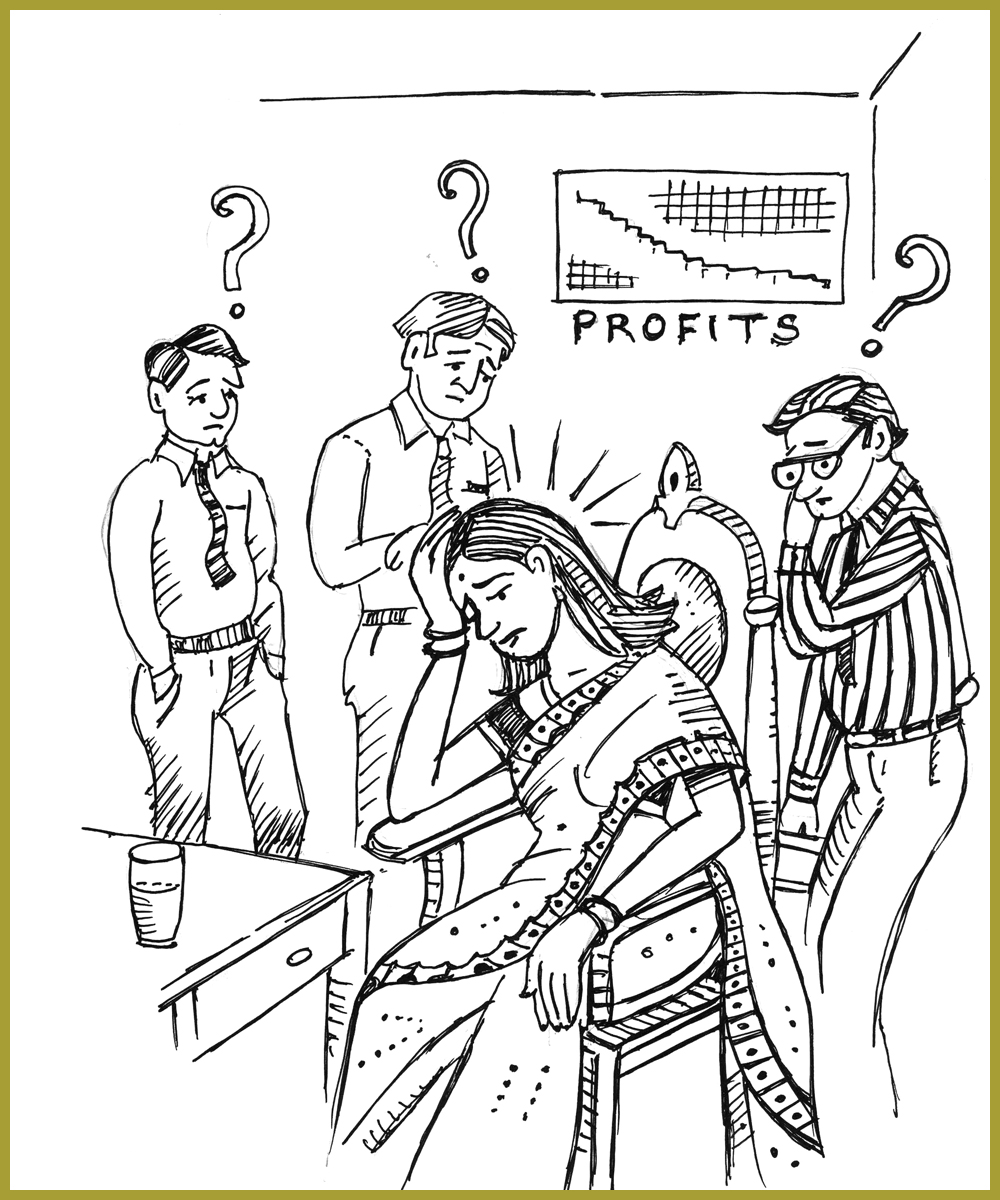
Many a times, CEOs and managers give in to a mood of despondency, much like Arjuna on the battle field of Mahabharata. It becomes a case wherein the person may approve of the broad general principle of a strategy to be followed or a target to be cracked, but cannot help but shudder inwardly at the prospect of putting it into effect.

Outside the window of the incumbent’s corner office, the sun may be shining. The sky may be an azure blue. A gentle breeze may be swaying the trees. Birds may be chirping. But Nature fails to provide solace. The mind is boggled. The heart is laden with woe. Confusion and self-doubt reign. A defeatist attitude prevails. Decisions taken in a mental state of this nature merely add to the chaos.

When the mind is boggled

CEOs would formulate a business strategy and even go into detailed planning of the steps involved with their team members. But when implementation starts, there is always a chance that they might develop cold feet. Practical considerations which were latent earlier suddenly pop up. Some initial steps reveal a chink in the organization’s armour. Or, some fresh feedback comes in, changing their perception of reality.

A new product launch could have been conceptualized and details worked out. Product attributes and design might have got frozen. R&D and Production might have burnt the proverbial night oil to come up with bulk samples which would have been successfully test marketed. Pricing might have been finalized. Packaging might have been given the go ahead. Members of the supply chain might have been brought on board.

However, when the launch day dawns, they might wake up all of a twitter, trying to imagine the reaction of a mightier competitor, or discover an environmental challenge or a customer health issue the product may pose, when pushed aggressively in the market.

Likewise, when a big manufacturing unit has to be shut down in the overall interest of the business, the unit head may develop feet of clay, twiddling her thumbs about the future of the career of so many capable persons who would have to be called in, looked into the eye, and handed over a pink slip. Persons with whom there has been a long working relationship. Professionals who have been groomed by the unit head herself. Those who have been key members of the next rung of the organization’s hierarchy.  Employees who are elder in age and had assisted her in so many ways to settle down when she came into the organization and took over the reins of the unit. Those who have been loyal and had supported her through the slings and arrows of business faced by the unit.

Ramping down a business unit

Yours truly once faced a similar situation. A premium unit of a very large export house had become a liability in more ways than one. Over time, quality had suffered. Productivity was abysmally poor. Industrial relations had deteriorated. Every month, the headquarters had to be approached with a begging bowl, so wages and statutory dues could be paid off. Repeated attempts to revive the fortunes of the unit had failed. The mists of doubt had engulfed the befuddled mind.

Aided by a senior team member, a water tight case recommending immediate closure of the unit was prepared and presented to the management. A long phase of discussions, exchange of ideas and explanations ensued. Finally, clear thought and perseverance paid off. The painful decision to ramp down that part of the business was taken. Careful separation plans were worked out in advance. The pain of implementation followed. Some professionals had to suffer in the process. But in the overall interest of the organization, the task was carried out.

Of corporate dilemmas

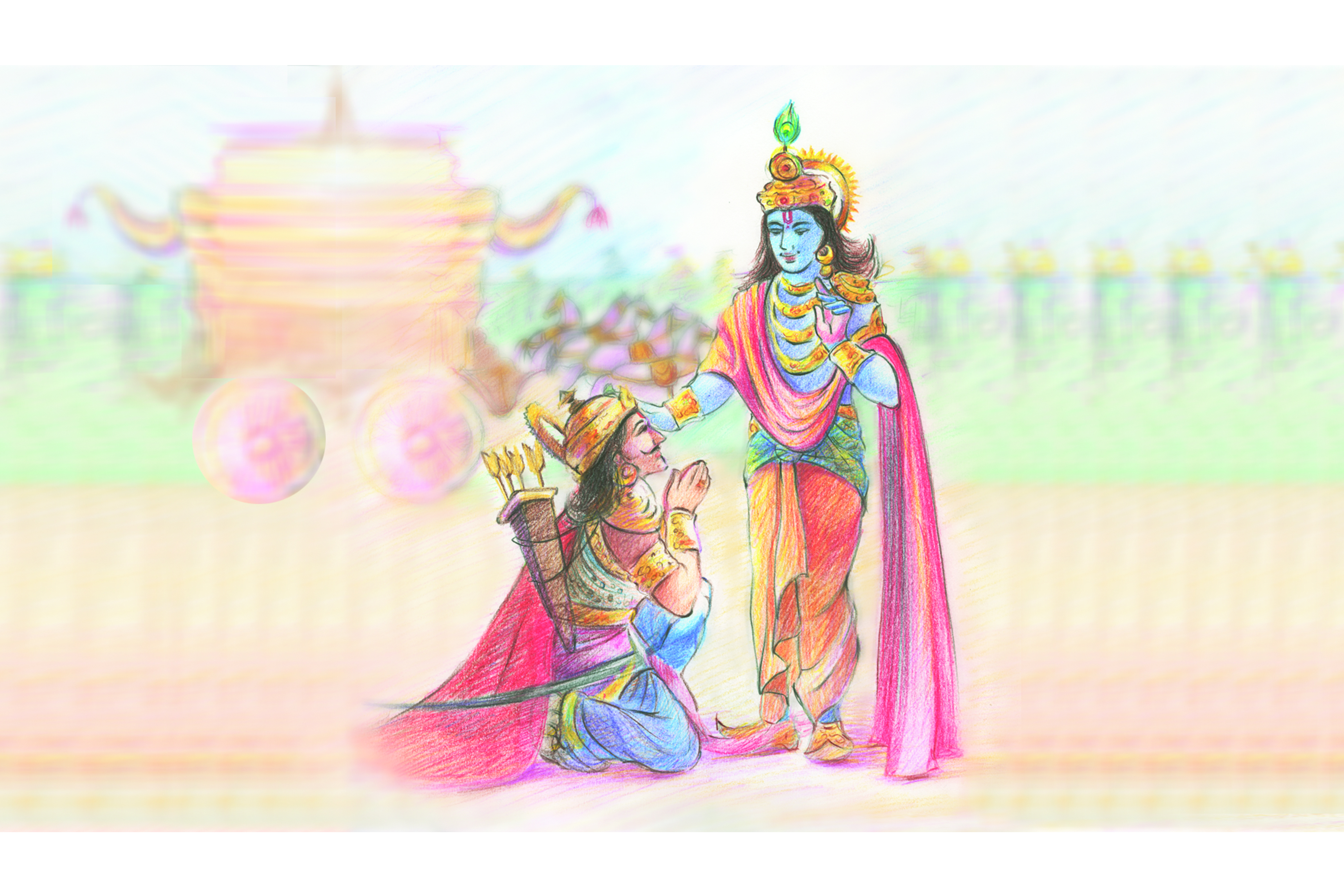
The dilemma facing Arjuna on a battlefield some 3,500 years back was whether to go ahead with a war against his own cousins and senior family members.

Here are only two of the several cases which arose due to in-family disputes and misunderstandings.

Of Puma and Adidas

When brothers Adolf and Rudolf Dassler founded a shoe company in their mother’s laundry room in the town of Herzogenaurach, Germany, in 1924, little did they imagine that their relations would turn sour during World War II. A split followed in 1948, leading to the emergence of two brands – Puma and Adidas. The two still have rival factories on opposite sides of a river. Rudolf died in 1974 at age 76, Adolf in 1977 at 78. Never did they reconcile. Both are reportedly buried at opposite ends of the same cemetery.

The human pain behind Raymonds

Back in India, retired tycoon Vijaypat Singhania, entangled in a property dispute with his son Gautam Singhania, concluded thus: “Love your children and care for them, but don’t love them so much that you are blinded”.

Having made Raymond a household name across India, the father had handed over his shares, worth over Rs. 1,000 crore, to his son who now controls the Rs. 6,000-crore group. At the core of the dispute between the father and son were their rights over JK House, a family owned 36-storey redeveloped property in the posh Malabar Hill area of south Mumbai. The father was forced by the son to move to a rented accommodation, causing him discomfort and mental anguish.

If one considers the mental state of the businessmen who acted in the manner they did in a given situation, one’s mind invariably goes back to the kind of despondency and fatalism experienced by the great warrior Arjuna, upon surveying the armies facing each other. The army of Kauravas was not only numerically superior, but was also led by Bhishma, the grandsire. The futility of war which had cousins belonging to the same clan on either side left him twiddling his thumbs and wondering why to go ahead with the same, causing death and ruin all around.

Of Dualities, Dilemmas and Analysis Paralysis

CEOs of today face not only challenges of an economic nature, but also emotional upheavals caused by ethical and moral dilemmas involved in decision making. Regulators and NGOs keep snapping at their heels, while they are busy in a relentless pursuit of materialistic goals. There are indeed times when self-doubt plagues them. They feel as if they have reached the level of incompetence and can neither face a business battle, nor dare to tinker with the targets of economic expansion and business lust which normally pervade any business enterprise.

CEOs in the corporate world routinely face dilemmas which arise out of the dual nature of things. Almost all business situations are based on dualities. Often, these lead to the CEOs suffering from an Analysis Paralysis Syndrome.

Peter Drucker, the renowned management expert, frequently touched upon the dualities of freedom and power, authority and responsibility, progress and conservation, good and evil, worldly actions and spiritual fulfillment. He believed in the sanctity of spiritual creation. He considered traditional Christian values to be a type of practical wisdom and an ethical basis for responsible corporate leadership.

But Arjuna is smart. He is not only a proficient warrior prince, but also someone who has had the sterling sense of befriending a great friend, philosopher and guide in Lord Krishna. Gita is all about how Krishna pulls Arjuna out of this sense of despondency and motivates him to do his duty without attachment to the result thereof. Krishna has extraordinary skills in transforming the thinking of his disciple’s mind, gently steering it towards the task at hand.

The Bhagavad Gita for a befuddled mind

It is a human tendency to magnify one’s weaknesses and provide some extraneous reasons for justifying one’s state of inaction. Also, when one realizes the kind of sacrifices one has to make to achieve the goal one has set for oneself, doubts arise about the worth of the goal itself.

This is how Arjuna expresses himself at the beginning of the Great War, in Chapter 1:


वेपथुश्च शरीरे मे रोमहर्षश्च जायते || 29||
गाण्डीवं स्रंसते हस्तात्वक्चै व परिदह्यते |

My whole body shudders; my hair is standing on end. My bow, the Gandiv, is slipping from my hand, and my skin is burning all over. My mind is in quandary and whirling in confusion; I am unable to hold myself steady any longer. O Krishna, killer of the Keshi demon, I only see omens of misfortune. I do not foresee how any good can come from killing my own kinsmen in this battle.


न काङ्क्षे विजयं कृष्ण न च राज्यं सुखानि च |
किं नो राज्येन गोविन्द किं भोगैर्जीवितेन वा || 32||

O Krishna, I do not desire the victory, kingdom, or the happiness accruing it. Of what avail will be a kingdom, pleasures, or even life itself, when the very persons for whom we covet them, are standing before us for battle?


येषामर्थे काङ्क्षितं नो राज्यं भोगा: सुखानि च |
त इमेऽवस्थिता युद्धे प्राणांस्त्यक्त्वा धनानि च || 33||

They for whose sake we desire kingdom, enjoyment and pleasures stand here in battle, having renounced life and wealth.


Handling the lioness of a mighty challenge

When mighty challenges in one’s career menacingly stare at one, much like a lioness surprised when running into a hunter in the forest, one is apt to see no ray of light in one’s life. One feels as if one’s Guardian Angels have gone off on a long vacation, that too without seeking any prior consent, let alone permission.

At such times, when the fighting option has simply evaporated, Bhagawad Gita gives one a chance to introspect and make an objective assessment of the situation at hand. In the midst of an overwhelming situation, reason returns to its throne. Trees and bushes nearby, which are just a step away and offer a possibility of the flight option getting exercised, get evaluated. The time it would take to load the rifle and shoot the lioness gets assessed. One even weighs the option of smiling and looking into the eyes of the animal, thereby hoping to settle down in a spirit of peaceful coexistence. One thinks of nibbling at some juicy lamb sandwiches after having first shared some with the cub lurking around nearby. Sure enough, a gesture of this kind is apt to make the lioness take a less jaundiced view of the proceedings, enabling the hunter to emerge unscathed from the encounter.

When one has sunk to the bottom of an emotional pit, and the horizon looks bereft of any hope, one can safely find solace, inspiration and guidance in the Bhagavad Gita. It speaks in detail about such concepts as detachment, equanimity and the need to uphold righteousness under all circumstances. It describes in detail the kind of practical steps one can take to handle the harsh slings and arrows of one’s life and career.


(Illustration on top has been drawn by Mr Upendra Ratra, an artist. The illustration depicting Krishna and Arjuna in the battlefield has been reproduced with permission from the illustrator, Arati Shedde, and Heartfulness Magazine – www.heartfulnessmagazine.com.)


ashokbhatia's avatarashokbhatia

World over, one activity which keeps ordinary citizens delightfully preoccupied is that of exercising their right toelection voting choose the government they deserve. Travel to any continent, and one is apt to find a set of either countries or states which have either held an election, or are gearing up for the same.

Indians had their share of the fun in 2014 itself. Citizens of Zambia and Italy enjoyed casting a vote earlier this year. So did the denizens of Israel, UK, Poland, Mexico, Turkey and Singapore. Those who live in Portugal have just cast their votes. The ones who inhabit Egypt, Switzerland and Canada are just relishing the build-up of election rhetoric in their respective countries. Citizens of Myanmar, Spain and US are surely looking forward to the experience.

The Amusement Quotient

The process of holding aloft some core democratic values is not bereft of its entertainment value. Hapless citizens…

View original post 1,278 more words

Netizens who happen to be on Facebook come in different sizes, shapes, hues and ethnicities. Their value systems, personalities, mentalities and quirkiness quotients form a captivating rainbow of humanity. The psychology of the individual varies for all. So do their posts.

Even though the Posters and the Postees on Facebook are merely prisoners of their own individual psychologies, one can discern broad patterns in their behaviour. Some are compulsive Posters who consider a day wasted if they are not able to pass by their Facebook account. Others are casual by temperament and saunter in occasionally, sharing something on their timeline and then getting busy with the mundane affairs of their lives. Many others, who form but a minority, create an account and then blissfully forget all about it.

(The term Poster here refers to those who post on Facebook. The term Postee alludes to the hapless souls who have no choice but to go through it in their daily feed.)

If Rupert Psmith (of P G Wodehouse fame) were to endeavour to classify different kinds of Posters normally found on this social media platform, the results may be somewhat along the following lines.

  1. The Conscientious Poster

The Poster posts something of genuine interest to many, gets beefed up by the number of ‘likes’ and comments received, and a healthy discussion ensues.

If the Postees happen to be chasing their own dreams in life and no ‘likes’ and comments ensue, the Poster is likely to get into a V-shaped depression which takes some time to wear off.

Such bouts of depression are not dissimilar to the kind of traumatic phases Lord Emsworth passes through when the Empress of Blandings starts refusing her daily dose of nourishment.

The popularity and longevity of a post depends on many factors: (a) Contemporary relevance of the topic, (2) The time at the disposal of the Postees, (3) The degree to which the topic is controversial, and (4) Whether the Poster keeps responding to the steady stream of comments pouring in.

  1. The Ghost Poster

The Postee gets a notification from someone like Stiffy Byng on her friends’ list providing a link to something which interests the Postee. However, upon visiting the link, the Postee finds the item alluded to missing, much like a fakir of yore doing his vanishing trick.

Perhaps the administrators, in their infinite wisdom, decided to dump the link, deeming it to be inappropriate for civilization at large.

  1. The Detached Poster

Such Posters follow the advice dished out by Lord Krishna in Bhagavad Gita. They merely exercise their right to post things which, in their opinion, could interest the hoi polloi. They do not crave for any results from such posts. Having posted, they move on to perform other duties in their lives, only to return with yet another post. ‘Likes’ and comments on their posts are none of their concerns. They post in the true spirit of a detached soul. They happen to be true practitioners of renunciation.

  1. The Share-a-Crap Poster

Some people are in the habit of unleashing every single thing they find in their notification upon all the unsuspecting persons on their friends’ list, leaving many of the Postees twiddling their thumbs trying to figure out the rationale of such posts. Many of them, particularly those who believe in the power of introspection, start wondering as to what they have done to deserve the honour of receiving such inane posts.

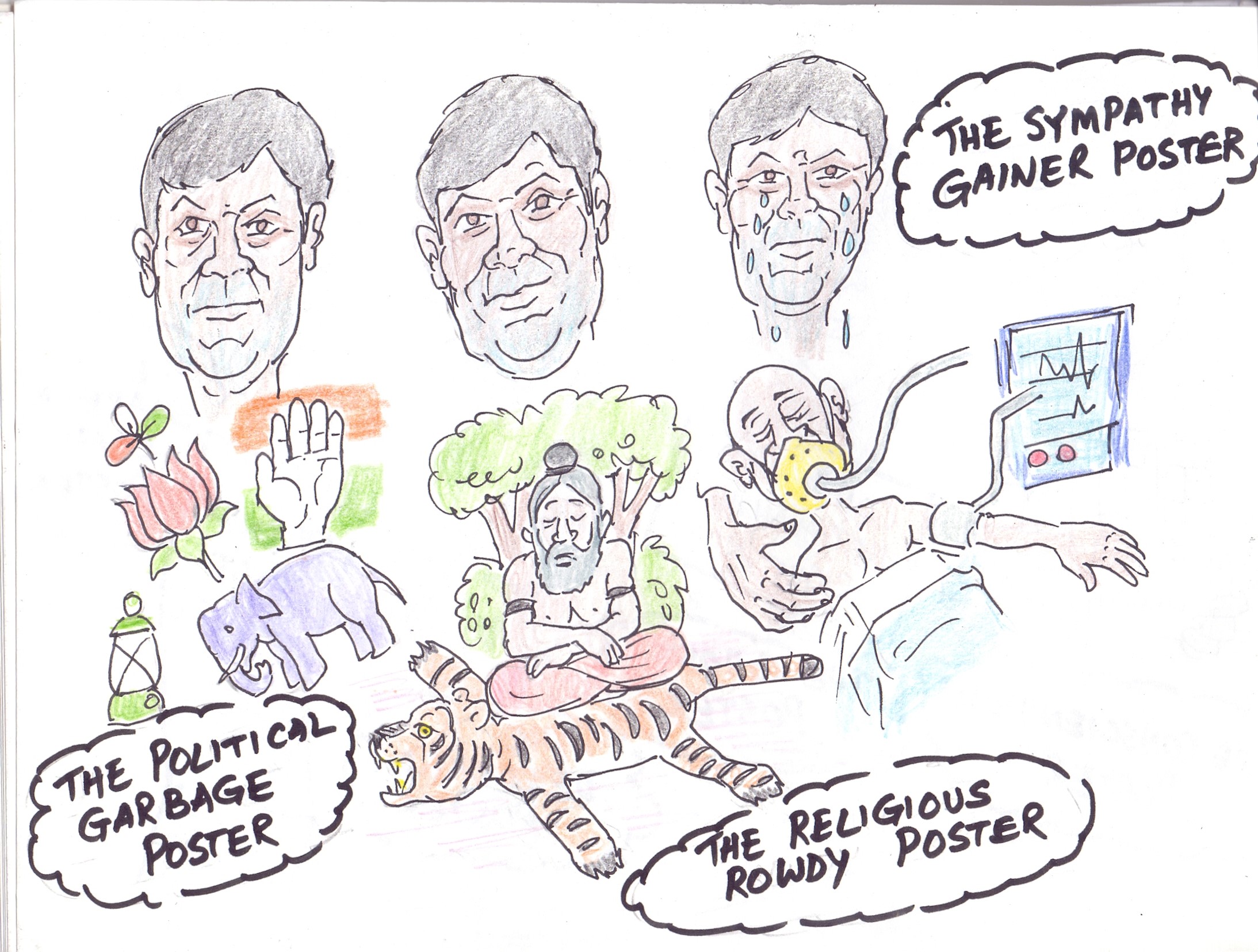
  1. The Political Garbage Poster

Nowadays there are many arm-chair political analysts who keep posting their political opinions disguised as deep analyses about everything happening on either the national or the international stage. They keep unleashing unwarranted garbage of all kind on the clueless Postees, while themselves living in a delusional bubble of superior knowledge and analytical stills on matters in which they have no real responsibility of their own. It is a superb exercise in flattering the fledgling ego of the Poster.

Come election time and such posts further heighten the decibel level of the kind of rhetoric and jingoism which is sometimes made to look like hyper nationalism. Roderick Spode would heartily approve.

The presence or absence of ‘Likes’ and comments on their posts fail to dampen their enthusiasm; they keep posting relentlessly on matters of national and international geopolitics.

  1. The Religious Rowdy Poster

The Posters of such posts forward photos of some benevolently smiling God over Himalayas or a boon-granting Goddess with the backdrop of a jungle, both clearly a result of some clever photo-shopping. The hapless Postees are then threatened with dire consequences if they fail to share forward the post within 3 seconds of having set their eyes on it.

The fate of Postees who do follow such instructions is not known; what is certain, however, is that such chain-posts do keep the Facebook guys and the internet service providers laughing all the way to their respective banks.

When the same Poster keeps posting about the same God most of the times, he willy-nilly ends up offending the Gods left out, who take a jaundiced view of the proceedings. The risk of inviting their collective wrath keeps going up with each offending post.

  1. The Sympathy-gainer Posters

These are Posters who follow the rules of commerce laid down by Ukridge. They have perfected the art of playing with the Postees’ heart-strings. Emotional blackmail of this kind could take the shape of either a blood-smeared kid or an IV lined ICU patient whose photo is posted, claiming that Facebook gives them One rupee for every ‘Like’, Five Rupees for every Share and 10 Rupees for a comment. Some posts even try and touch the wallets of the gullible Postees.

One can be certain that poor Mark Zuckerberg has enough troubles on his plate other than facing the prospect of going bankrupt thus.

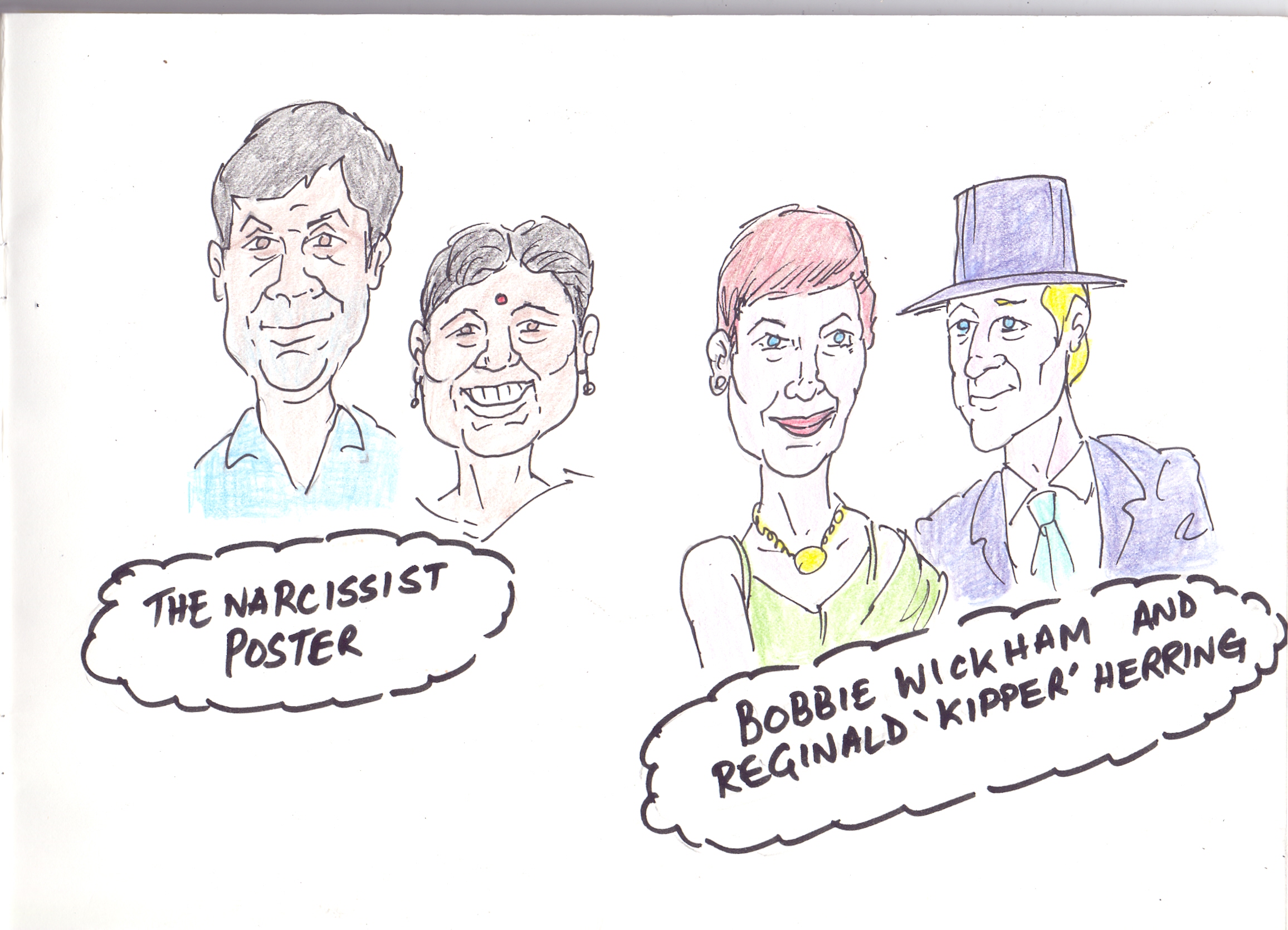
  1. The Narcissist Poster

In the universe of this brand of Posters, God is always in heaven. There is never a problem in sight. The sun never sets. Rain never plays a spoil sport.

Hourly updates concerning themselves, their families and friends, their pets, their escapades in life and anything that happens to them under the sun keep popping up at such regularity as to put even atomic clocks to shame.

It is common to find an apparently loving wife posting an anniversary greeting to her equally apparently loving husband; fathers greeting their sons on their birthdays, even when both are living under the same roof, and doting daughters wishing their mother on her birthday, etc.

The underlying belief obviously is that love for their near and dear ones needs to be expressed publically and not in private; that public approval of a private sentiment is necessary.

Imagine Bobby Wickham having access to Facebook. In order to get her mother to approve of her intentions of walking down the aisle with Reginald “Kipper” Herring, all she has to do is to announce her feigned plan of marrying Bertie Wooster on her timeline, accompanied by a selfie of herself and her mentally negligible fiancée beaming happily together at an exotic locale.

Under this category, there exist several sub-categories of Posters.

a. The Foodie (Bakasura) Posters, who post photos of what and where they are eating at any point in time.

Fast food joints like McDonalds’ and CCD just love such Posters, though it is not clear why they don’t offer freebies to such promotional creatures. For all the Postees care, they could be swallowing some form of poison or the other.

After all, drooling over the snaps of a 32 course meal dished out by a local Anatole is injurious to the lining of the stomach of any of the Postees who might already be suffering under strict instructions from their physicians and better halves to lay off the succulent variety of vitamins.

b. The Travelling Posters, who keep posting photos of their national or international sojourns, thereby keeping not only airlines, hotels and other service providers but even robbers back home in brisk business.

The destination as well as the mode of travel is often highlighted so as to make the Postees green with envy.

Often, the Posters forget that one is permitted to catch a flight or a train without having to compulsorily post it on Facebook. Sure enough, they believe in the sage counsel from Jeeves – that travel is highly educational.

c. The Emotional Posters: They could be feeling sad or elated at some event and would post a soulful quote of a famous poet or lyricist. They simply forget that when they cry, the Postees are not interested in sharing their bad fortune. Yes, some might make sympathetic noises. Also, when they laugh, quite a few may join in, but are not enthused enough to get out on the street and shake a leg or two.

  1. The Thoughtless Posters

It is a sad commentary on the kind of times we live in when we find that even terrorists decide to become tech-savvy Posters.

Gullible Postees who act like headless chickens, lose no time in becoming Posters themselves, thereby giving instant publicity and wide coverage to such heinous acts.

The case for a Social Media Detox

Some posts are amusing and anecdotal in nature. Some are entertaining. Few are educational. Quite a few are inane and eminently forgettable. But a vast majority of the posts basically share information about happier occurrences in the lives of a Poster with the Postees in their circle of friends and acquaintances.

Those who have become addicted to social media are more to be pitied than to be censured. Rather than using a platform like Facebook as a useful tool in life, they have opted to become its slaves.

Perhaps, there is a strong case for more of such hapless souls to join SPIN, the Society for Prevention of Internet Narcissism! Or, taking up an internet de-addiction course offered by the Droitgate Spa!!

(Note: Sriram Paravastu is an ex-Indian Air Force professional. When he decides to take a dig at some of our social ills, he uses the laser beam of a soldier-like discipline and precision to carpet bomb the issue at hand.

This blog post is penned by him. Yours truly is guilty of having taken quite a few liberties with his original text.

Illustrations are courtesy Suvarna Sanyal, a retired banker who has an eye and an ear for all there is to see, listen to and laugh at in this world.)

(Related Posts:

https://ashokbhatia.wordpress.com/2014/08/04/mirror-mirror-on-the-wall-who-is-the-smartest-of-them-all

https://ashokbhatia.wordpress.com/2019/01/05/the-droitgate-spa-now-offers-net-detoxification-programs)