Feeds:
Posts
Comments

findshars's avatarMy Views On Bollywood

By

Sharada Iyer

“Your classicism is of value only if you know how to fine-tune it to the peculiar visual needs of instant cinema. In the end in the recording room it is not who knows classical singing but who has the ability to modulate classicism to the adolescent needs of mainstream cinema”

– Raju Bharatan (taken from his book- ‘A Journey Down Melody Lane’, 2010)

The repertoire of our century old Hindi film music boasts of a wide range of songs based on a variety of classical Hindustani ragas. As the object of a raga is to express a certain emotional mood and sentiment each music director has captured the essence of the raga in his/her own way to fit into the milieu of the narrative- ranging from deep love and longing, to the agony of separation, a heart-felt devotional ‘bhajan’ or just a peppy dance number.

Instead of…

View original post 1,310 more words

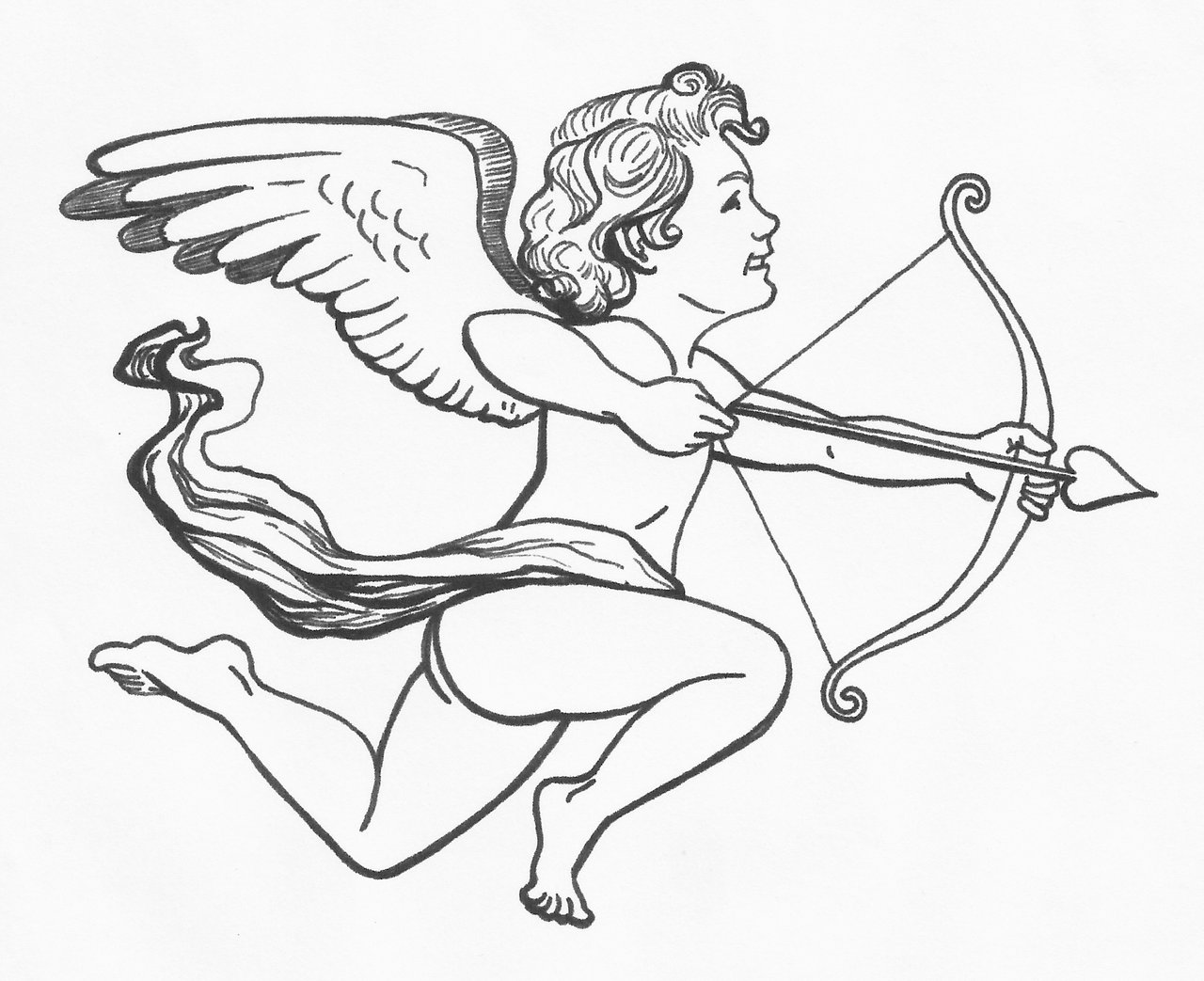
Cupid in Plumsville

Cupid has a free run in Plumsville. He is present everywhere. He influences and enables incidents which go beyond the normal call of his duty, not restricting himself merely to generating and sustaining magnetic currents flowing between two individuals.

The large circle of influence of Cupid

When he wants someone goofy like Thos to acquire a saintly disposition, he strikes at him, leaving him besotted with Greta Garbo, thereby making him rise in love. When he decides to champion the cause of vegetarians, he uses Madeline Bassett as a front and forces Gussie Fink-Nottle to lay off all the vitamins of animal origin, making him skip Anatole’s lavish spreads and survive only on spinach, sprouts, broccoli and similar stuff. When he wishes to campaign for safety of sharks, he deploys Angela to do his bidding.

Those who serve in the constabulary, however tough their exteriors and however pure their intentions to bring the culprits to book, also fall under his spell. When one of them has to be taught a lesson in humility, Stiffy Byng becomes an instrument in his hands, persuading even a vicar to pinch a policeman’s helmet. When the intellectual level of those who belong to the so-called sterner sex has to be raised, Cupid uses such characters as Florence Craye and Vanessa Cook to give the project a good shot. When he decides to downgrade obesity, he finds an ally in Maud, who scratches her fixture with Geoffrey Raymond to bring home the point.

When casinos at Monte Carlo need some promotion, Cupid makes two perfect strangers meet. If George Albert Balmer is an insurance clerk, the party of the other part is a companion of Lady Julia. Within a day of their having met, George proposes and finds that he is getting accepted. It is only then that he gets asked by his lady-love as to what his name happens to be! (The Tuppenny Millionaire, The Man Upstairs and other stories)

Bingo Little and the Evolution of Romantic Maturity

But the character Cupid is particularly fond of in Plumsville is Bingo Little. It appears that there are repeated attempts on Cupid’s part to enable his favourite person to ‘settle down’ in life. Objects of Bingo’s affection have included a waitress named Mabel; Honoria Glossop, the formidable daughter of Pop Glossop; Daphne Braythwayt, a friend of Honoria; Charlotte Corday Rowbotham, a revolutionary; Lady Cynthia Wickhammersley, a family friend of Bertie’s; and Mary Burgess, niece of the Rev. Francis Heppenstall. After each failed affair, Bingo does not necessarily sulk. Cupid rushes to his aid. The scales fall from his eyes, and he suddenly realizes that the next girl alone is his true soul mate.

After many failed affairs, Bingo ends up marrying the romance novelist Rosie M. Banks, an author whose outlook on life happens to match well with that of his. Cupid does not desert him even in his post-nuptials phase, setting the bar rather high for all the men who attach a premium on matrimonial bliss.

We now find a Bingo Little who is completely transformed. He is singularly devoted to his wife. Maintaining matrimonial peace and harmony is the sole purpose of his life. When it comes to keeping his lady-love happy and contented, there is little that he leaves to chance.

Charles Darwin, had he come across this unique case, might have gifted humanity with a treatise on The Evolution of Romantic Maturity instead.

Taking care of those young at heart

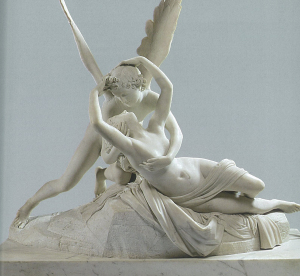
When it comes to Cupid’s machinations, age, caste, creed, profession and social status do not really matter. He does not discriminate between the younger lot and those who might be advanced in age but are young at heart. Other than the topsy-turvy romances of younger couples, he also does justice to those who are advanced in age and young at heart. An affection which was discernible in a couple’s younger days – whether declared or otherwise – survives the harsh slings and arrows of life. A chance meeting unearths and rekindles the deep buried embers of love. A well seasoned romance bears fruit. The Valentine Spirit prevails. Love may remain dormant for a long time, but can get revived in a jiffy – much like a Psyche getting revived by a Cupid’s kiss!

The case of Joe and Julia springs to one’s mind. So does the case of Piggy and Maudie. Not to forget the case of Mrs Spottsworth and Captain Biggar-Biggar. Even someone of the stature of Sir Roderick Glossop, the eminent nerve specialist, is not spared. Having fathered such exquisite specimens as Honoria and Oswald Glossop in the past, and having been a widower for two years, he decides to get hitched to Myrtle, Lady Chuffnell, later in his life.


The limitations of Cupid

But the freedom to strike at will does not come without its attendant responsibilities. Cupid has some serious obligations to meet in Plumsville. The strict code of chivalry in vogue therein does not permit physical intimacy. It looks askance at someone bandying about the name of a female. It does permit a sideways scrutiny of a lissome profile but scoffs at any attempts to outrage the modesty of a member of the tribe of the delicately nurtured. In Plumsville, romance blossoms. Love is in the air. Devotion is permitted. But physical intimacy is a taboo. Aphrodite has limited access to the goings on in Plumsville. Eroticism is denied entry. An occasional occurrence which could amount to mild titillation alone is allowed.

Consider some such instances where Cupid’s advances have met with a resounding buff in Plumsville.

When Bertie Wooster stands up to Gussie’s Amorous Plans
The Mating Season touches upon Gussie’s notebook which contains some juicy remarks on Pop Bassett and Rederick Spode and continues to be in Stiffy’s possession. Gussie comes up with a fruity scheme to retrieve the notebook from her.

‘Well, listen. You could easily engage her in a sort of friendly romp, if you know what I mean, in the course of which it would be simple to…well, something in the nature of a jocular embrace…’

I checked him sharply. There are limits, and we Woosters recognize them.

‘Gussie, are you suggesting that I prod Stiffy’s legs?’

‘Yes.’

‘Well, I’m not going to.’

‘Why not?’

‘We need not delve into my reasons’, I said, stiffly. ‘Suffice it that the shot is not on the board.’

He gave me a look, a kind of wide-eyed, reproachful look, such as a dying newt might have given him, if he had forgotten to change its water regularly.

Unfortunately, Gussie proceeds with his plans. This prompts Madeline Bassett to scratch their engagement, thereby putting both Gussie and Bertie in a limbo.

Of girls clad in swimsuits in one’s bed
Bertie is never too keen on having Pauline in his bedroom in the small hours of night, and that too dressed in a wet swimsuit. But his reaction upon finding her there is not to fall for one of the devilish schemes of Cupid. His primary concern is to get her out of his cottage at the earliest possible. He does not even try to kiss her. Deciding to wait till the morning, he himself sleeps in the garage. (Thank You, Jeeves)

Bertie often comments on women’s bodies but only as an appreciation of beauty. There’s never any lust involved and he treats his female friends well, though he considers Madeline a drip and Bobbie Wickham and Stiffy Byng as troublemakers.

The closest he appears to come to expressing some lascivious thoughts is perhaps in The Mating Season. But here again, the Code of the Woosters reigns supreme.

When reproduction is embarrassing
The very idea of reproduction embarrasses Bertie Wooster, making him blush, as in this conversation he once had with Aunt Agatha:

‘Aline Hemmingway,’ said Aunt Agatha, ‘is just the girl I should like to see you marry, Bertie. You ought to be thinking of getting married. Marriage might make something of you. And I could not wish you a better wife than dear Aline. She would be such a good influence in your life.’ 

‘Here, I say!’ I chipped in at this juncture, chilled to the marrow. 

‘Bertie!’ said Aunt Agatha, dropping the motherly manner for a bit and giving me the cold eye. 

‘Yes, but I say–’ 

‘It is young men like you, Bertie, who make the person with the future of the race at heart despair. Cursed with too much money, you fritter away in idle selfishness a life which might have been made useful, helpful and profitable. You do nothing but waste your time on frivolous pleasures. You are simply an anti-social animal, a drone. Bertie, it is imperative that you marry.’

 ‘But, dash it all–’

 ‘Yes! You should be breeding children to – ‘

 ‘No, really, I say, please!’ I said, blushing richly. Aunt Agatha belongs to two or three of these women’s clubs, and she keeps forgetting she isn’t in the smoking-room.

 (The Inimitable Jeeves)


Of upturned faces and burning kisses

Showering upturned face with burning kisses is another tactic that brings a Plummy reader to a somewhat provocative titillation. Constable Ernest Dobbs of The Mating Season fame indulges in such a naked display of affection towards Queenie, the maid at Deverill Hall. However, he is quick to apologize.

The perks of being an eccentric

Rupert Psmith hastens to rush across to handover a virtually stolen umbrella to Eve Halliday in Leave it to Psmith. He indulgently tolerates a stain on his assumed character when Eve takes him to task during a boat ride for mistreating his supposed wife who is a close friend of hers. Cupid brings them close together yet again while facing Smooth Lizzie, but there is never any trace of any physical intimacy between the two of them. This is how their alliance gets sealed:

‘Cynthia advised me’, proceeded Eve, ‘if ever I married, to marry someone eccentric. She said it was such fun…Well, I don’t suppose I am ever likely to meet anyone more eccentric than you, am I?

‘I think you would be unwise to wait on the chance.’

When class distinctions evaporate

Other than cross-class affairs at many places, we also run into Lord Emsworth treating his young friend who happens to be a girl rather well. When Gladys requests some flowers, he hesitates, but cannot refuse her. Just as she is picking her flowers, McAllister rushes up in a fury, but his master, encouraged by Gladys’ hand in his, stands up to the man, putting him in his place. (Lord Emsworth and the Girl Friend)

Here is a case where the innocence of Master Cupid does the trick, holding the adult Cupid at bay.

Snuggling close together

In one of the short stories, estranged lovers get reunited on an isolated beach. When a chilly wind starts blowing in, the girl, who is not sufficiently clad, ends up asking the party of the other part if it would not be better if they snuggled together. The rest, of course, is left to the reader’s imagination. (Wilton’s Holiday, The Man with two left feet)

She seated herself with her back to him. Dignity demanded reprisals, so he seated himself with his back to her; and the futile ocean raged towards them, and the wind grew chillier every minute.

 Time passed. Darkness fell. The little bay became a black cavern, dotted here and there with white, where the breeze whipped the surface of the water.

 Wilton sighed. It was lonely sitting there all by himself. How much jollier it would have been if—

 A hand touched his shoulder, and a voice spoke—meekly.

 ‘Jack, dear, it—it’s awfully cold. Don’t you think if we were to—snuggle up—’

 He reached out and folded her in an embrace which would have aroused the professional enthusiasm of Hackenschmidt and drawn guttural congratulations from Zbysco. She creaked, but did not crack, beneath the strain.

 ‘That’s much nicer,’ she said, softly. ‘Jack, I don’t think the tide’s started even to think of going down yet.’

 ‘I hope not,’ said Wilton.

Warm embraces and progeny

Perhaps the top slot for flirtatious initiatives in Plumsville would go to Gally and Lord Ickenham, who are known to have embraced young ladies with warmth much greater than what might be warranted.

The paternalistic origins of Sue Brown, the daughter of Gally’s old flame Dolly Handerson, leave Plum fans twiddling their thumbs. In any case, illegitimate children are never in the scheme of things in Plumsville.


Plumsville: Intentions as pure as freshly driven snow

If one were lucky enough to have gone through all the works of Wodehouse, and even his biographies, one is unlikely to find any traces of either overt sexuality or vulgarity. Strong attraction, yes. Infatuation, decidedly. Cupid’s arrows, surely. The world he has left behind for us to revel in is innocent, with intentions as pure as freshly driven snow. And therein we have the unique appeal of his canon.


Several lenses of viewing the Wodehouse canon

There are several lenses with which one could discern the messages embedded in his works. A literary lens would reveal his canvas to be very wide. A spiritual lens would bring into sharp focus the kind of lessons he forks out about life in general. A fitness lens would nudge us to avoid the pleasures of the table and remain fit and trim. A social lens would make the scales on our eyes fall and help us in seeing the perils of economic inequality.

However, a romantic lens would reveal a clear absence of cruder passions. Respect for women reigns supreme. In fact, his canon is a sterling example of a superficial male supremacy where, in reality, it is the females who call almost all the shots, whether in the form of domineering aunts and love interests who have perfected the art of wrapping the males around their dainty fingers, enterprising collaborators who think nothing of stealing scarabs, efficient secretaries who wish to earn their pay through hard work, romantic interests who think stars are God’s daisy chains, and of course those who have the grit and determination to pursue their careers with reverent support from the Bingo Littles of their lives.

Cupid is invariably omnipresent. But one would not be surprised to find a note from him one of these days, protesting overwork and lack of any assistance whatsoever. If Santa Claus, who gets busy only around Christmas time, could have elves and a fleet of reindeer supporting him, why he, who has to remain preoccupied throughout the year, 24 by 7, has to work single-handedly, he might well ask.


Blessing: A singular absence of Vitamin S

Dishing out narratives which get lapped up by common folk like us despite a missing element of Vitamin S, considered so very critical to the commercial success of an author, is no mean task. P G Wodehouse accomplished it. His plots invariably stuck to the conventional norms of morality.

A blessing, indeed. Much like seeing a family movie which is certified as ‘U’, reading the works of P G Wodehouse gives us a neutral ring side view of romantic affairs of all kinds. But to label these as ‘romcoms’ might not be proper. Perhaps, as suggested by Honoria Plum of Plumtopia fame elsewhere, a term along the lines of ‘comroms’ might do the Wodehouse canon better justice.

In an age when the threshold of childhood innocence is getting lowered with each passing year, his works happen to be squeaky clean, safe to be devoured even by kids and adolescents about whom their hapless parents lose much of their beauty sleep these days.

Educationists could improve upon the effectiveness of the sex-education packages for their wards by including some references to the works of Wodehouse.

Judicial beaks the world over, while dishing out harsh sentences to those convicted of sexual adventurism, could seriously consider gifting a tome of the Master’s works for them to compulsorily devour while cooling their heels in prison.

Societies and associations which propagate Wodehousean thoughts could come up with annual awards which get dished out to those who demonstrate a chivalrous approach to the challenges faced by their heart-throbs.

The possibilities are limitless. The mind boggles.

(Yours truly acknowledges with great respect the inputs of those Plum fans whose thoughts have enriched this post many times over.)

(Related Posts:

https://honoriaplum.wordpress.com/2019/02/09/wodehouse-and-the-romantic-novelist-sophie-weston

https://ashokbhatia.wordpress.com/2014/04/12/different-shades-of-women-in-plumsville

https://ashokbhatia.wordpress.com/2016/02/14/when-rozzers-in-plumsville-fall-in-love

https://ashokbhatia.wordpress.com/2015/04/01/when-masters-thos-bonzo-and-moon-rise-in-love

https://ashokbhatia.wordpress.com/2015/02/13/joe-julia-and-a-seasoned-romance

https://ashokbhatia.wordpress.com/2014/02/04/piggy-maudie-and-a-seasoned-romance

https://ashokbhatia.wordpress.com/2017/02/14/of-mrs-spottsworth-and-the-biggar-code-of-white-men)



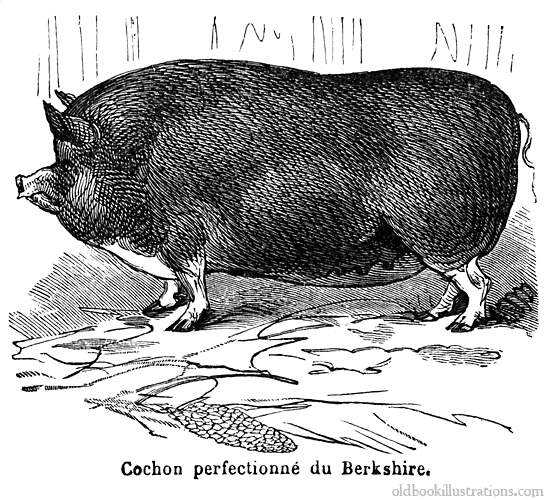
The International League of Happiness hereby invites all residents of Plumsville to a glittering ceremony at the Tinanmen Square in Beijing, where the Empress of Blandings shall be conferred with a prestigious award, based on the following citation:

—————————————————————————————————————————————–

Pig of the Year Award

Hereby conferred upon the Empress of Blandings, in recognition of her literary contributions which keep bringing happiness and joy to humanity, as also owing to her such sterling qualities as follows:

  • Optimism, as reflected in the attitude of equanimity she maintains even when remaining at the centre of many a kidnapping plot foisted on her from time to time;
  • Enthusiasm, by way of her openness towards feasting on all kinds of nourishment that comes her way, including, but not limited to, tissue restoratives of all kinds; and,
  • Hard work which she demonstrates by sticking to her trough at all times, gobbling up not only what is on offer but even dubitable memoirs, protecting the family honour at all costs.

—————————————————————————————————————————————–

The ceremony shall be held on February 14, 2019, starting at 1700 hours, local time. It would involve presentation of a gold medal, an honorary red colour ribbon and a silver plaque with the aforesaid citation.

Lord Emsworth, the Chief Patron of ILH, has kindly consented to preside over the brief function. George Cyrill Beloved shall be in attendance, taking due care of the honourable awardee.

Mr Rupert Psmith, Secretary General of ILH, shall deliver a small talk on ‘Getting the Suidae members of our Planet to contribute towards Global Peace and Harmony.’

Miss Gladys, the famous girl friend of Lord Emsworth, shall propose a Vote of Thanks.

High Tea by Beach.


Note:

The International League of Happiness is a not-for-profit organization where:

-Destructive propaganda of any kind is sneered at

-Global interests are accorded higher priority than narrow national/regional interests

-Healthy discussion is encouraged but indifference to, or defiance of, its collective resolutions is discouraged

(Limited seats. Please register without delay at http://www.ilh.com.)

(Illustration courtesy: OLDBOOKILLUSTRATIONS.COM)


ashokbhatia's avatarashokbhatia

Some residents of Plumsville may like to join me in recalling our pre-adolescence days. Our first ever encounter withVeryGoodJeeves Cupid’s arrows. The time when innocence slowly started giving way to half-baked romances of a transient nature. The neighborhood crush and the chance encounters. The classroom and the furtive glances. The one-sided affections. The attempts at showcasing gallantry and modesty. The unfulfilled desire to share tips on demystifying Romeo and Juliet. The relentless yearning for companionship. The possibility of a picnic where the presence of a certain person made our hearts go all of a twitter.

A more sinister restlessness crept in when we got infatuated with someone within the dark confines of a cinema hall. Posters of an upcoming movie featuring the adored person invariably got more attention than any text-book at hand. Sneaking off to a matinée, while giving a skip to the homework assigned, was also attempted…

View original post 1,381 more words


You are a leader in any realm of human endeavour, whether managerial, social, political or cultural. You could be an entrepreneur, an institution builder, a Chief Executive Officer, a policy maker or a related functionary, either in the private sector, or in the public sector. You could be serving as a senior officer in a government department. You could even be heading the operations at a non-governmental organization.

You are perceived to be a successful leader. However, somewhere deep within, you carry within you a sense of creative dissatisfaction; a yearning to discover a practical way to transport yourself, your team and your organization into a happier and contented frame of mind. You are keen on going beyond your own professional and personal interests and in getting involved in humanizing your organization.

If so, this book could prove to be a game changer in more ways than one. It makes you see the world around you in a new light, without the filters of your preconceived notions. By making you aware of the kind of mindsets which affect your decision making, it offers a new lens with which you can view the phenomenon we call leadership.  The book then goes on to capture the results of an empirical study done by the author, thereby demonstrating the practical wisdom of what it proposes. Eventually, it offers you a practical guide as to how to go about implementing the changes you wish to make, so as to become a happier and a contented leader.

This book is not about a new leadership theory which might leave you fuming after discovering that it merely offers the proverbial old wine in a new bottle. It provides a fresh perspective on leadership. The perspective it presents has already been tried and tested in real time. Much along the lines of the famous Hawthorne studies of the 1920s, the approach to leadership is being rolled out in a corporate entity in India even as you go through the book in your hands.

The book also presents divergent perspectives on the subject of leadership from different subject experts, touching upon globalization and a bird’s eye view of different theories of leadership through the recent history of management thought. There is an attempt to understand leadership through the basic tenets of Buddhism. It also endeavours to connect the key teachings of Raman Maharishi to the realm of leadership.

The Soul of the Book and Some Crystal Gazing

The soul of the book, however, lies in its unique approach of SPANDAN, or human vibrations. Around the nucleus of this concept, it builds a mighty edifice of propositions which offer the potential of making you a more effective leader.

In the times to come, just how serious would be the threat to human supremacy from machines? In our age of Artificial Intelligence, Robotics, Machine Learning, Algorithm Analytics and Internet of Things, just how relevant would this new approach to leadership be?

The book proposes that in the impending man–machine conflict, human beings are not likely to suffer the same fate as that of the non-avian dinosaurs which went extinct some sixty-five million years ago. But the writing on the wall is clear. They need to roll up their sleeves and get down to the task of sharpening their soft skills. A humane approach to handling team members needs to be consciously developed.

Transforming Yourself and Others

To sum up, the book, through theoretical propositions and empirical evidence, presents a new way to look at the kind of a leader you could aspire to be, and the potential you have to grow further, making you a happier and contented person, exuding warmth and positivity to those whom you happen to lead.

It provides a fresh perspective which is not likely to lose its relevance in a future replete with technological advancements, environmental challenges and more potent uncertainties which leaders in any field of human endeavour would face in the decades to come.

Chapter-end Tasks on Introspection, Interaction and Initiation (3 Is)

To facilitate your learning process, the author has selected some themes and some quotes from mentors of repute. These are designed to enable you to Introspect at the individual level and also to Interact with others at a small group level. These could also motivate you to Initiate suitable steps at the collective/large group level, so members of your organisation could empower themselves and become more productive and responsible citizens over a period of time.

You will come across these suggestions at the end of some of the chapters. You can develop these themes further and convey the same to key individuals, small groups and large groups, in any form of communication – written, verbal, a group presentation and even a panel discussion. A final report based on collective feedback could assist you in measuring the effectiveness of this approach.


The #MeToo allegations which have popped up recently in Bollywood go on to show the extent to which the virus of the infamous Director’s Couch Syndrome has not only permeated our entertainment industry but also morphed into a more disgraceful version of itself.

Perhaps a part of the solution lies within Bollywood itself. The gender insensitivity which is showcased and glorified in our movies is something which leaves us gasping for some innovative scripts. Exceptions are there. But these remain just exceptions.

When it comes to winning the affection of a heroine, a typical Bollywood hero spares no effort. He charms. He dazzles. He pursues. He flexes his rippling muscles. He shows off his biceps. He chases away a gang of baddies who try to harass his lady love. He poses as a well-endowed person. He even threatens and imposes himself.

Our heroes are adept at expressing their emotions in a song and dance routine. It would be worth our while to look up some such songs which showcase different shades of romancing our Bollywood heroes use to fulfill their romantic ambitions.

When chivalry works

The importance of a chivalrous approach towards impressing one’s lady love was etched out in the movie Shagird (1967). Sample this song:


The reluctant wooer

A hero of this kind is at one end of the spectrum. He could either believe that he is not good enough for the lady of his dreams, or is simply not interested in a romantic alliance. The reason could either be social, financial, or the phase through which he happens to be passing by. The burden of convincing him otherwise falls on the heroine. There are occasions when he does not mind getting wooed, though!

Saath Saath (1982)


Woh Saat Din (1983)


Dil Chahta Hai (2001)


The sacrificing lover boy

The guiding principle of such a wooer is that when it comes to bringing some sunshine into the life of the heroine, no sacrifice is small. There are times when such selfless love is shown to lead to a failure in the relationship.

Sangam (1964)


Teesri Kasam (1966)


Ek Vivah Aisa Bhi (2008)


The post-marriage wooing

In many cases, love blossoms in the post-marriage phase. The hero goes to great lengths to win over the affections of his wife.

Hum Dil De Chuke Sanam (1999)


Rab Ne Bana Di Jodi (2008)


Dum Laga Ke Haisha (2015)

When a choice has to be made between a pre-matrimonial lover and a husband, the heroine keeps social sensitivities in mind and walks into the arms of her husband. Movies like Gumrah (1963), Woh Saat Din and Hum Dil De Chuke Sanam attest to this trend in the past.

The empathetic wooer

The heroine has just had a rather traumatic experience at the hands of her spouse. But support is at hand, in the form of an empathetic hero. At times, a soulful song makes the heroine fall into his loving embrace.

Guide (1965)


Arth (1982)


The quintessential romanticist

He is soft and gentle. He is often diffident but tender in his approach. His soft power often wins over the heart of the heroine in question. The impression he conveys is that chivalry works well.

Ek Musafir Ek Hasina (1962)


Baton Baton Mein (1979)


Hum Aapke Hain Koun (1994)


The playful wooer

The value system of a hero of this kind permits him to tease the heroine a wee bit, hoping that he would not only be noticed but also accepted as a suitable candidate for a romantic alliance.

Aradhana (1969)


1942 A Love Story (1994)


The dashing lover

He is the one who believes that a relentless chasing of the party of the other part would bring home the bacon. Irrespective of the time and the place, he continues with his efforts with gay abandon. Flowers, chocolates and even pumpkins come to the aid of the dashing hero. He is so very self-obsessed that he is clueless about the career aspirations of his lady love. Needless to say, he wins, thereby conveying a message to all wannabe lovers that mild aggression in pursuing the heroine indeed works.

Jaanwar (1965)


Sholay (1975)


Satte Pe Satta (1982)


Badrinath Ki Dulhaniya (2017)


The tormentor

At the other end of the spectrum, we have heroes who suffer from an excessive dose of supreme self confidence. They treat the heroine as chattel and think nothing of even terrorising her to get results. Physical intimidation is taken recourse to. Stalking becomes the norm. Threats of rape not only get made but even get executed.

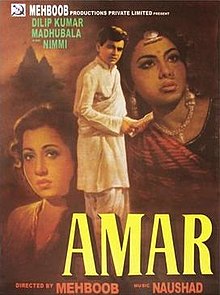
Amar (1954)


Dil (1990)


Darr (1993)


A wide spectrum of chivalry

Bollywood movies offer a very wide range of the kind of treatment that women receive at the hands of their wannabe or ex-lovers.

If a Rajendra Kumar in Dil Ek Mandir (1963) sacrifices his life trying to save the husband of his ex-girl friend, a Dilip Kumar in Amar (1954) rapes Nimmi, a principal character in the movie. If a dacoit played by Sunil Dutt abducts a courtesan in Mujhe Jeene Do (1963), a Good Samaritan played by Dharmendra marries a lady who has been sexually abused by a prince in Satyakam (1969).

If a Kamal Hasan provides shelter and care to an unfortunate accident victim in Sadma (1983), a Vivek Oberoi mistreats his wife in Sathiya (2002). If a Sanjeev Kumar does not get distracted by a lady in the buff in Aandhi (1975), a Manoj Bajpeyi abducts and forcibly marries a damsel in distress, and even persuades her to change her religion, in Pinjar (2003). It is another matter he eventually develops a soft corner for his wife.

Distorted messaging

When heroines happen to respond favourably to either dashers or tormentors, the message conveyed to the audience is crystal clear – that a macho image and a misogynist attitude help in romantic pursuits. Add to this the tendency of our directors to objectify women so as to keep the box office collections alive and kicking, and the recipe for a wrong kind of social messaging is ready.

Since films influence the society in a big way, our dream merchants would do well to churn out more movies which have gender sensitive portrayals. Scripts which are based on negative societal attitudes towards women could be readily avoided.

In a study conducted by IBM India, gender stereotypes in as many as 4,000 Bollywood movies released between 1970 and 2017 were examined. Of these, researchers came up with only 30 movies in the last couple of years where such stereotypes were broken.

According to the study, females were the central characters in 11.9% of Hindi movies released between 2015 and 2017. Back in the 70s, this figure was closer to 7%.

The solution within

The power-puff girls of Bollywood have recently done well in such movies as Jalpari, Gulaab Gang, Queen, NeerjaPink, Nil Battey SannataMargarita with a StrawMardaani, Parched, Jai Gangaajal, Ki and Ka, Dear ZindagiAkira, and the like.

Our future generations cannot be made to live in a world where men are encouraged to harass and rape women. Sexist behaviour is passé. It no longer attracts women. What does is unalloyed chivalry, where the old notions of a patriarchic mindset find no place; where violence and intimidation has no place.

This could be a solution to the #MeToo tsunami that appears to have hit Bollywood in the recent past. Perhaps Bollywood can start a self-certification process which rates movies based on their gender sensitivity.

Charity begins at home, as they say.

(Related Posts:

https://ashokbhatia.wordpress.com/2017/10/21/bollywood-divas-join-in-at-metoo

https://ashokbhatia.wordpress.com/2017/01/06/the-powerpuff-girls-of-bollywood

https://ashokbhatia.wordpress.com/2014/01/01/women-through-the-bollywood-lens-part-1)


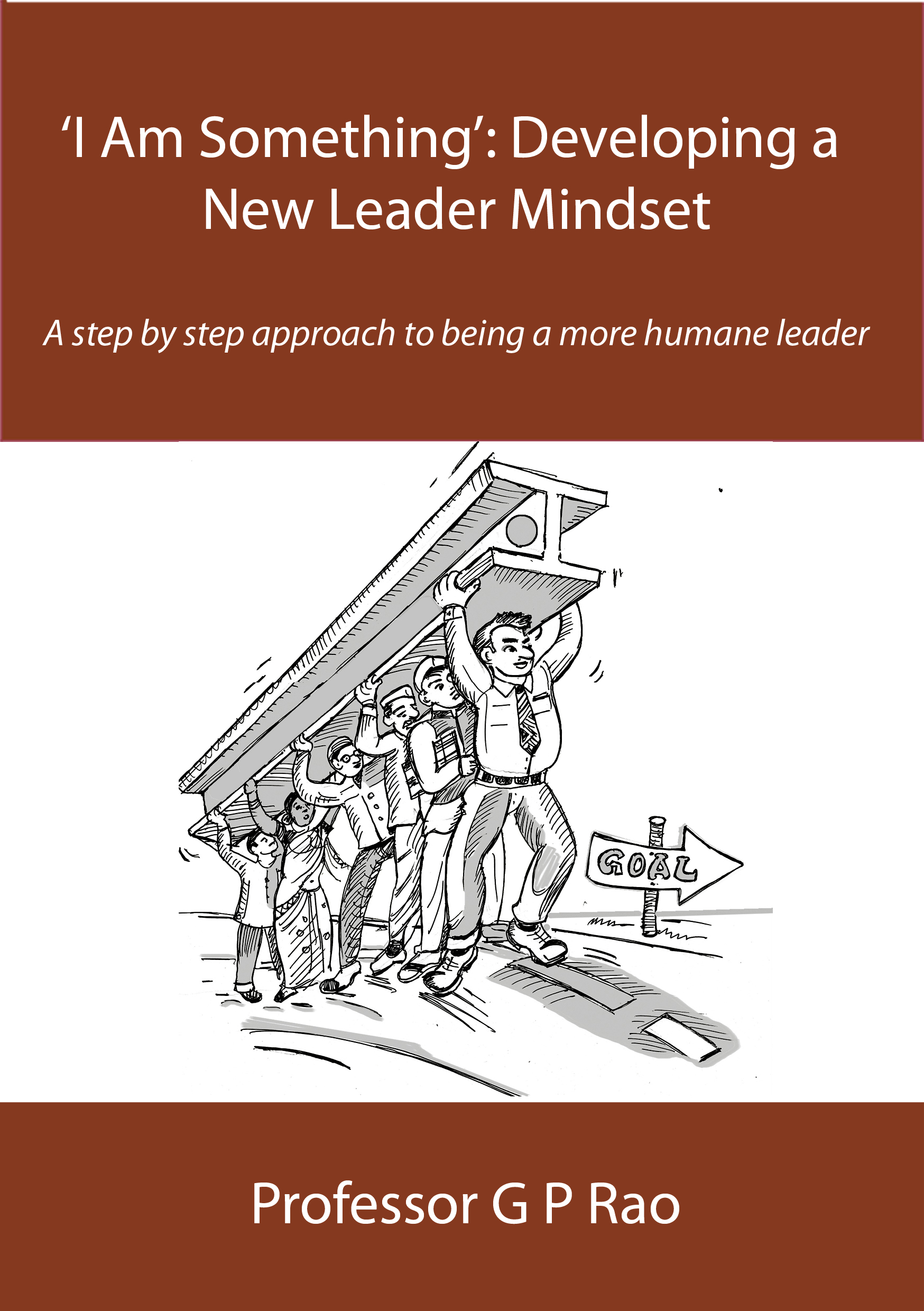
The importance of human values in our lives – whether personal or professional – can never be overestimated. In a book about to hit the market, the author, Professor G P Rao, builds upon his considered belief that managements which choose to ignore this crucial aspect in their decision-making do so at their own risk and peril. Their market valuations take a hit. Their brand image gets dented. They fail to take a long-term view of things. Instead, they end up window dressing the key performance parameters till the time the proverbial bubble bursts. They simply live from one quarter to the next, focusing on immediate deliverables.

In the upcoming book, the author not only proposes a theoretical construct of Leader Mindsets but also takes you through the steps involved in practising the same. Whether by way of an empirical study or by the means of a practical roll-out of the Spandan approach in an organization, results have been gratifying, establishing the value of the ‘I Am Something’ mindset towards the goals of organizations.

As humanity cruises along and takes off on the path of an exponential growth in technology, the need for a Spandan kind of approach would come into a sharper focus. Human values alone have the potential of acting as a rudder, keeping the trajectory of our evolutionary path on the right track. Leaders of tomorrow would find better satisfaction and happiness by adopting the ‘I Am Something’ mindset. So would their team members, were the leader to decide to facilitate their developing along similar lines. A spread across organizations and then across societies would be a logical corollary.

ashokbhatia's avatarashokbhatia

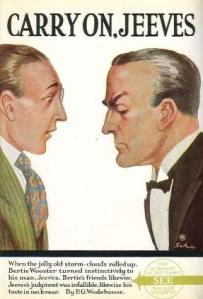
Quite a few fans of P G Wodehouse often wonder as to how Jeeves and Bertie come together and why they stick PGW CarryOnJeevestogether despite having stark differences in matters of attire, appearance, love and relationships in general. Is there an underlying message in all their innumerable escapades that we are treated with, each one laced with intoxicating verbosity and linguistic opulence – a hallmark of this great author?

Getting Hired the First Time

In Jeeves Takes Charge, we are treated to the scenario of Bertie Wooster hiring Jeeves in the first place.

For the privilege of someone of the caliber of Jeeves shimmering into Bertie’s life, we have to thank two persons. One is Bertie’s previous valet, a bloke by the name of Meadows. Had he not stolen a couple of things from the master’s place, a request for a replacement would not have gone to the registry office…

View original post 1,526 more words

ashokbhatia's avatarashokbhatia

Bollywood’s take on corruption differs across various time zones. Just as the society has evolved, so has the approach taken by Bollywood on depicting and tackling corruption changed over the past few decades.

In the black and white era of Gandhian simplicity, it was often more about the bad guys being urban gentlemen and the good guys being rural urchins. Movies like ‘Do Bigha Zameen’ (1953), ‘Jagte Raho’ (1956) and ‘Parakh’ (1960) readily come to one’s mind.

Jagte_Raho_1956_film_poster

We have also had movies where the lead cast suffered in dignified silence. The audience was often left with a feeling of disgust towards all those who were shown as corrupt. Movies like ‘Satyakam’ (1969) left us with a fond hope that things would somehow improve in the future. satyakam

Then came the angry-young-man phase. Here, we had the revenge theme. Muscular power ruled and the…

View original post 851 more words

How times change! Four years down the road, the delicately nurtured amongst us have been spared the trauma of being exhorted to bear as many children as they possibly can!!

ashokbhatia's avatarashokbhatia

The Indian Republic is awash with fresh winds of change these days. New policies and programs are getting rolled out. Animal spirits of the economy are attempting to come out of a period of relative hibernation. Start-ups of all sizes and shapes are mushrooming by leaps and bounds. World leaders appear to be courting India in the hope that their own countries become an integral part of the growth story of India.happy-republic-day

Our science historians are busy digging up the glory of our ancient knowledge. Flying contraptions, genetic feats and precision surgical achievements of yore dominate the public discourse. Educationists are busy twiddling their thumbs trying to figure out ways of revamping the entire education system.

Some of our religious and political leaders are busy exhorting young women to reproduce at a higher rate, so the future of the country is brighter. Reversing the inverted triangle in red which denoted…

View original post 717 more words