Feeds:
Posts
Comments

ashokbhatia's avatarashokbhatia

CEOs lead a challenging life. Apart from making and meeting long-term business goals, they face a relentless SQpressure, living from one quarter to the next. Customers have to be handled with kid gloves. Suppliers have to be kept in good humour. People have to be kept motivated at all times. Interpersonal conflicts between team members have to be sorted out. A lonely life has to be lived.

Unlike their juniors who invariably face Peer Pressure, CEOs face Pear Pressure. Some call it signs of prosperity. Some refer to it as a Battle of the Bulge. Others label it as flab around the waist.

The Battle of the Bulge

A CEO in possession of a portly disposition projects an image of a soul which has finally attained salvation and has become a super-hero of the species generally alluded to as managers. Walk into any gathering of the top dogs across most…

View original post 779 more words

Those exposed to the vicissitudes of a manager’s life often get unduly perturbed about the people around them, or the circumstances and formidable challenges they face in their careers.

But think of it. A manager would strongly protest if another one is made to occupy the office space assigned to her. Why, even a parking space allocation could disturb office harmony! The boss, spending a lot of time with a favourite manager of hers, could create a sense of envy amongst other managers; it could even initiate a chain of rumours and lead to animated discussions at the coffee machine.

Envy, jealousy, hatred, unbridled ambition – all of these happen to be strong undercurrents which could be detected within an outwardly quiet and serene looking manager. Given a chance, managers, like politicians and other professionals, would never cede even a square inch of their turf to someone else.

But if so, one may well ask as to how managers end up permitting others to enter their mental space and cause internal turbulence, often losing a well-earned peaceful sleep at night. They suffer at the hands of a boss or a colleague whom they have come to trust. They get swayed by external circumstances and people, losing their mental equipoise and balance in the process. This obfuscates their vision and disturbs their thinking processes. At times, such negative occurrences even chip off a part of their own self-confidence as well.

Tough bosses routinely rebuke their team members but end up affecting different people differently. Those with a lower self-esteem and a lower Inner Resilience might even contemplate taking a drastic step under external provocation, in some cases leading even to homicidal thoughts. But those who are wired differently might just take such occurrences in their stride, just shrugging off, noticing the underlying lessons and going ahead with the task at hand in a more effective manner.

Higher Inner Resilience is a stress buster

This shows the importance for a manager to have a high degree of Inner Resilience within her mental makeup. This way, she retains her sense of self-esteem. Her perception of reality remains balanced and objective. She is able to punch the right buttons and take better decisions. She owns her actions and takes responsibility for what she does. She does not gloat in a success, attributing it only to her own efforts and initiatives. Nor does she get unduly depressed when faced with failure. The tendency to blame other people or circumstances for her failures does not appeal to her. Instead, a pitiless analysis of the situation at hand gets done. A bout of introspection is attempted.

Her anxiety and stress levels are low. She is more likely to remain in the pink of health. This enables her to live her life to the hilt. An inner bliss is often experienced.

Much like a person who enters the sea for a swim, she is aware that it involves handling mighty waves. Also, that the water is not sweet. So, she is better prepared. Likewise, a manager who possesses a high degree of Inner Resilience is better prepared to handle challenges in her career, whether mighty or otherwise.

In other words, she is smarter than those around herself, better equipped to break the glass ceiling and make it to the higher echelons of an organization.

The risk of Sensitivity

Managers who are sensitive to others’ needs do not necessarily make better bosses. Emotions could cloud their judgement, thereby lowering their level of Inner Resilience. An excess of the Milk of Human Kindness sloshing about in the veins could make them lose their effectiveness as a manager. Moderation is what the doctor would recommend.

However, when Sensitivity gets deployed in tandem with Rational Thought, as drawn from the company’s objectives and policies, they end up being realistically empathic.

Another way of conveying this delicate balance is by the means of a Blake Mouton Grid, which is built upon two dimensions – Concern for People and Concern for Production. Add to this the third dimension – that of Concern for Ethics – and one gets somewhat closer to the quality which the Bhagavad Gita refers to as equipoise.

Learning from Bhagavad Gita

Lord Krishna explains this beautifully to Arjuna. In verse 38 of Chapter 2 of the Bhagavad Gita, He says:

सुखदु:खे समे कृत्वा लाभालाभौ जयाजयौ |
ततो युद्धाय युज्यस्व नैवं पापमवाप्स्यसि || 38||

sukha-dukhe same kitvā lābhālābhau jayājayau
tato yuddhāya yujyasva naiva
pāpam avāpsyasi

‘Having made pleasure and pain, gain and loss, victory and defeat the same, engage in battle for the sake of battle; thus, you shall not incur sin.’

When it comes to understanding the happenings around us, this inner equilibrium is the key facilitator. By attaining this state, a manager can shore up her Spiritual Quotient, of which Inner Resilience is a critical component.

Building up Inner Resilience

Meditative practices help. So does a realization that one is acting as per one’s own conscience and what one believes to be right. In other words, one is following one’s ‘swa-dharma’.

The ability and openness to appreciate a deemed adversary’s view point also helps.

Ignoring people with a negative persona and consciously choosing to remain in the company of some positive thinkers assists.

An attitude of ‘This too shall pass’ helps.

Above all, the wisdom gained from the harsh slings and arrows of Life supports in this endeavour. It follows that introspection helps.


An opportunity arose recently for yours truly to be able to revisit the National Gallery of Norway in Oslo. Time spent in its serene ambience, soaking in the artistic brilliance in each of its works on display, was time well spent, indeed.

This post captures some of the paintings which depict the beauty of nature in all its glory.

Oak Tree by the Elbe in Winter (Johan Christian Dahl)


The Labro Falls at Kongsberg (Thomas Fearnley)


The Grindelwaldgletscher (Thomas Fearnley)


Winter at the River Simoa (Frits Thaulow)


Storm, Evening (Eugene Jansson)


Street in Roros in Winter (Harald Sohlberg)


Flower Meadow in the North of Norway (Harald Sohlberg)


Summer Night (Kitty Kielland)


Moonlight (Edvard Munch)


Landscape from Holmsbu (Oluf Wold-Torne)


The White Horse in Spring (Nikolai Astrup)


In the Garden (Astri Welhaven Heiberg)


Each painting is unique, and captures a different mood of Mother Nature in a very effective manner.

(Related Post: https://ashokbhatia.wordpress.com/2014/07/24/the-dance-of-life-at-the-national-gallery-of-norway)


Of Swollen Minds and Shallow Hearts

A vast majority of managers fall in this category. With money power ruling their lives, they cannot be blamed for behaving like robots, relentlessly chasing materialistic goals. With the heart playing a subservient role to that of the mind, analytical skills rule supreme. Intuition, feelings and emotions take a back seat, leading to rapid burnouts and build up of stress. We run into managers who are driven entirely by results, a prospect tolerated with much glee by top managements. Often, they lose the trust and confidence of their team members, resulting into a human relations crisis. External titillations offered by life provide transient moments of gratification. The inner glow of happiness eludes them.

This tribe, which puts a premium on the ‘I and Me’ approach to decision-making, experiences a hollowness within. Minds are whirling with ideas, indicating the dire need to practice brain-stilling, as opposed to brain-storming. Hearts are shallow, resulting into lack of empathy and concern for others. They need the maximum amount of the kind of meditation practice one would refer to as Heartfulness.

Of Balanced Hearts and Minds

Managers in this category are indeed the luckier ones, because they are able to deliver results on a more sustainable basis. Their heads are screwed on right. Their hearts have a modicum of the milk of human kindness flowing through its chambers. By balancing the output of their active brains with the emotional vibes generated by their empathic hearts, they lead happier and more contented lives.

This tribe takes the ‘We and Us’ approach to decision-making. Loved by their team members, they make better business leaders. Since the emphasis placed on results is balanced by the importance given to their people, they command a high level of trust from their loyal team members. If one were to look back at the kind of bosses one still keeps in touch with, even if the formal association had occurred quite some time back, one is apt to find them having achieved this delicate balancing act between the mind and the heart while handling matters.

Of Larger Hearts and Sharper Minds

These are the ones who care about humanity in general. They end up assuming leadership roles while handling challenges facing a particular business group or the society at large. Their thinking is strategic. Their vision is lofty and innovative, at times even disruptive. They take a holistic view of matters at hand. In the process, they extend their sphere of influence to all stakeholders of business. Corporate Social Responsibility is not a mere public relations exercise for them, but an agenda which has to be pursued as vigorously as any other business goal. The inner glow of happiness and contentment does not elude them.

This is a rare breed indeed. It believes in, and follows, a ‘They’ approach to decision-making. Fame comes easily to them. Humility is one of their key personality traits. They become role models, not only for those who observe them at close quarters, but also for people at large. Their minds are vibrant, firing on all twelve cylinders. Their hearts are already overgrown, encompassing a much wider segment of humanity. They are living examples of the potential Heartfulness has, and what it can offer to humanity.

The opportunity of a transformation  

A manager has it within herself to bring about an inner transformation from the ‘I and Me’ attitude to the ‘We and Us’ mindset. Introspection can lead to it. A benevolent senior could propel her on this path of an inner journey of evolution. Even a major setback in life could lead to it.

The germ of this inner desire nestles within her, silently planted there in an embryonic form by their upbringing. The trick lies in discovering and nurturing it, so an opportunity of transforming oneself is not lost. Her core personality and attitudes help. The catalyst of this process of transformation happens to be the value system inherited by her from her elders.

Managers who ignore the need for a transformation of this kind run the risk of being poor team players, stunting their own growth.

findshars's avatarMy Views On Bollywood

By

Sharada Iyer

The very mention of Naushad’s name brings to our mind this genius composer’s heartfelt and melodious compositions steeped in Indian ethos and transports us to a magical era when music reigned supreme in our films and meaningful lyrics added beauty to these tunes. Naushad had tremendous knowledge of Indian classical music and could play several musical instruments and to him goes the credit of pioneering a unique style by bringing Indian classical ‘ragas’ into popular film music. He also added a touch of folk music to his songs and being a poet himself always gave importance to lyrics. All these gave his songs a unique edge and set him apart from his contemporaries.

ACCOLADES

naushadpiano6(Image source:Internet)

He was also the proud recipient of one of the highest civilian honours bestowed by our country Padma Bhushan and the recipient of the highest award for contribution to Indian cinema-

View original post 2,243 more words


Portrait Torvald Stang


Seated Model on the Couch


Summer in the Garden


Sunrays


The Pathfinder


The Sun


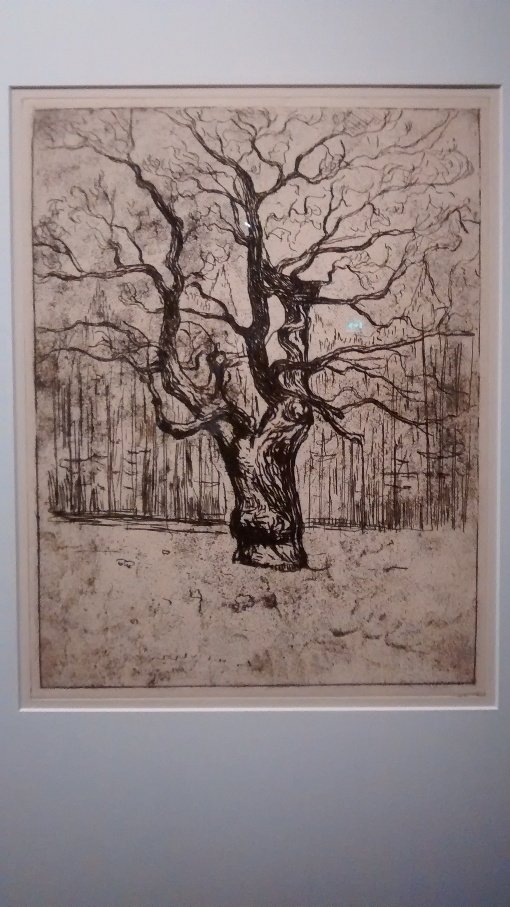
Tree


Two Backfisches


Two Maids


Two Women


Waves Against the Shore


Winter Landscape


Winter Night


Woman with Poppies


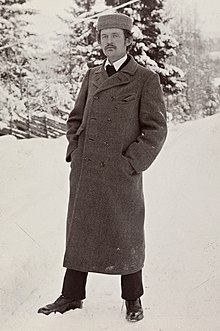
Edvard Munch


The creative outpourings of artists depend on several factors. One such factor is their upbringing, which shapes their value systems and their outlook towards life in general. Yet another is the kind of challenges life throws at them. The opportunities they get matter. The people who surround and support them in their work also matter.

Above all, the fact that their ideas find a resonance amongst those who have an eye for the kind of creative output they are capable of churning out.


(Note: The poor quality of reproduction of these paintings is surely not a reflection on the original work of the artist. These merely expose the limited photography and photo-editing skills of yours truly.)

(Related Posts:

https://ashokbhatia.wordpress.com/2018/04/03/a-saunter-down-the-munch-museum-in-oslo-norway-part-1-of-3

https://ashokbhatia.wordpress.com/2018/04/06/a-saunter-down-the-munch-museum-in-oslo-norway-part-2-of-3)


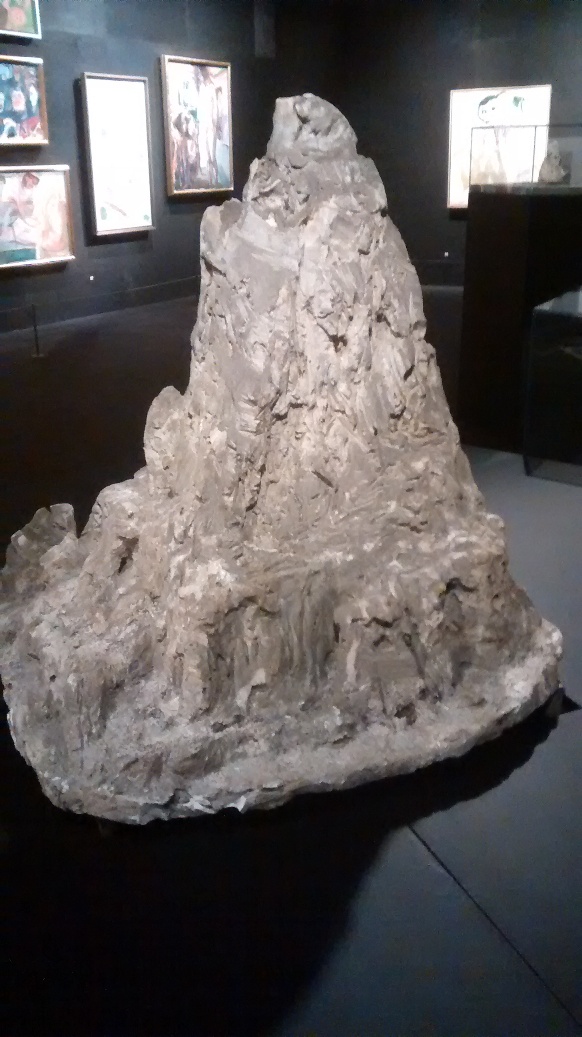
Human Mountain in plaster


Kneeling Nude


Melancholy


Midsummer Night’s Eve


Model by the Wicker Chair


Mother and Daughter in Garden


Nude Female Back


Oslo Bohemians


Portrait Ingeborg Kaurin


Portrait Ingse Vibe


Portrait Self


(Note: The poor quality of reproduction of these paintings is surely not a reflection on the original work of the artist. These merely expose the limited photography and photo-editing skills of yours truly.)

Continued……

(Related Post:

https://ashokbhatia.wordpress.com/2018/04/03/a-saunter-down-the-munch-museum-in-oslo-norway-part-1-of

https://ashokbhatia.wordpress.com/2018/04/08/a-saunter-down-the-munch-museum-in-oslo-norway-part-3-of-3)


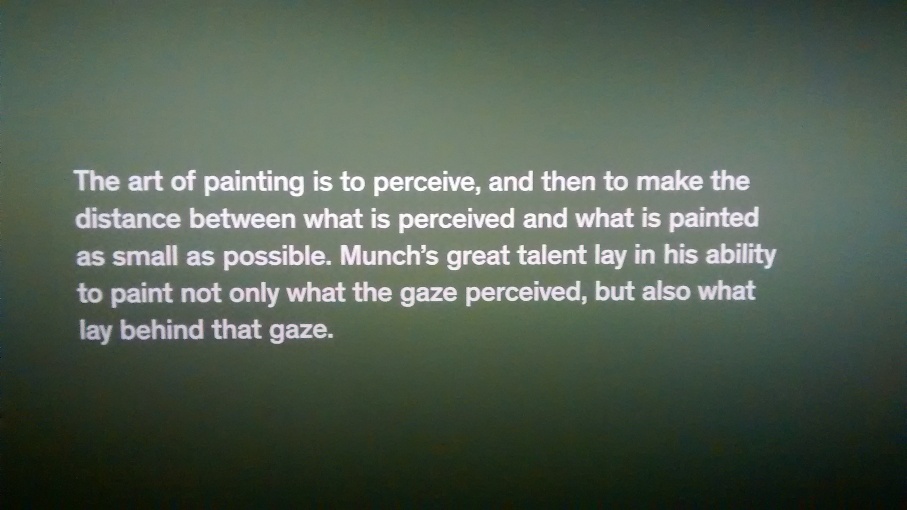
Edvard Munch (1863-1944) is well known for many of his paintings, like The Scream, Madonna and The Sick Child.

A possibility to visit the Munch Museum in Oslo some time back gave yours truly an opportunity to look up several of his other works.


Adam and Eve


Apple Tree in Garden


Beneath the Red Apples


Cabbage Field


Elm Forest Autumn


Elm Forest Autumn


Elm Forest Spring


Forest in Snow


Four Women in the Garden


Girls Watering Flowers


Continued……

(Note: The poor quality of reproduction of these paintings is surely not a reflection on the original work of the artist. These merely expose the limited photography and photo-editing skills of yours truly.)

(Related Posts:

https://ashokbhatia.wordpress.com/2018/04/06/a-saunter-down-the-munch-museum-in-oslo-norway-part-2-of-3

https://ashokbhatia.wordpress.com/2018/04/08/a-saunter-down-the-munch-museum-in-oslo-norway-part-3-of-3)

About me

ashokbhatia's avatarashokbhatia

Netizens who have made the cardinal error of following me on any social network could be forgiven for imagining me as a dashing speaker, blogger and author.

Not a Jeeves in the realm of Management

Snapshots, videos and blog posts would inevitably depict me as a managementPGW MuchObligedJeeves expert dishing out sage advice with an impish sparkle in the eyes, often misconstrued as indicating supreme intelligence. Seasoned observers would notice a receding hairline and imagine me to be an intellectual cove. Perhaps a head bulging out at the back, much like that of Jeeves, would lead many amongst my followers to conclude that I would have minted millions by this time, squeezing the last penny out of some Bertie-like super rich but mentally negligible bosses I would have assisted in a long career.

Well, nothing could be father from the truth. Those who wish to dig deeper into the subject of…

View original post 870 more words

Preamble

Hassled CEOs have no other option but to keep issuing guidelines from one quarter to the next without fail. Much in tandem, every quarter, a new corporate scam hits the headlines. The precise regularity with which skeletons keep tumbling out of corporate closets at frequent intervals would put the atomic clocks on our planet to shame.

When it comes to perpetrating a fraud on unsuspecting stakeholders, human ingenuity has never been found wanting. If America had Enron and Lehman Brothers, UK had Barclays. If Norway had Nortel, Portugal had Banco Espirito Santo. If Switzerland had UBS, Germany had Volkswagen. India has had Satyam and Punjab National Bank. She has also earned the dubious distinction of improving upon its Ease of Emigration rank for defaulting high net worth individuals in the recent past.

No industry could lay a specific claim on such man-made disasters. Be it banking, insurance, mining, automobiles, liquor, energy, commodities, IT or real estate, all have set examples of devious plans to deceive their stakeholders, whether of the gullible kind or the colluding kind.

Human greed and avarice are obviously the root cause. The sheer pleasure derived by a minority in making some extra gains at the cost of a silent majority apparently has a sense of gratification which surpasses all else.

A business environment of this nature needs leaders and managers who have nerves of chilled steel and a disposition backed by a high degree of inner resilience. A deep commitment to values and ethics in business. A premium on fairness and transparency in all kinds of deals. A long-term view of sustainable success, as opposed to a fly-by-night approach to decision-making. A constant connection with one’s inner self. In short, they need to have a high Spiritual Quotient.

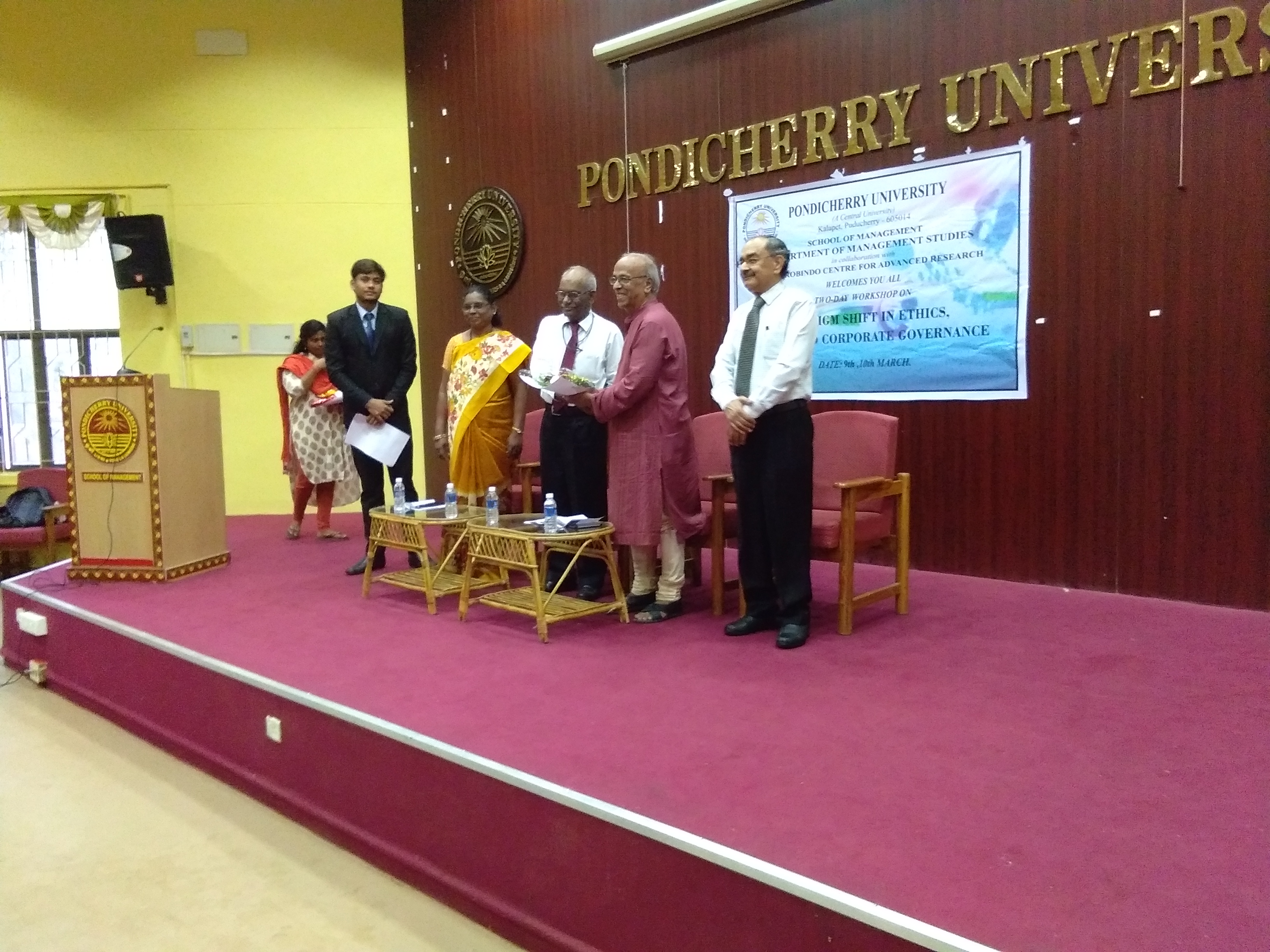
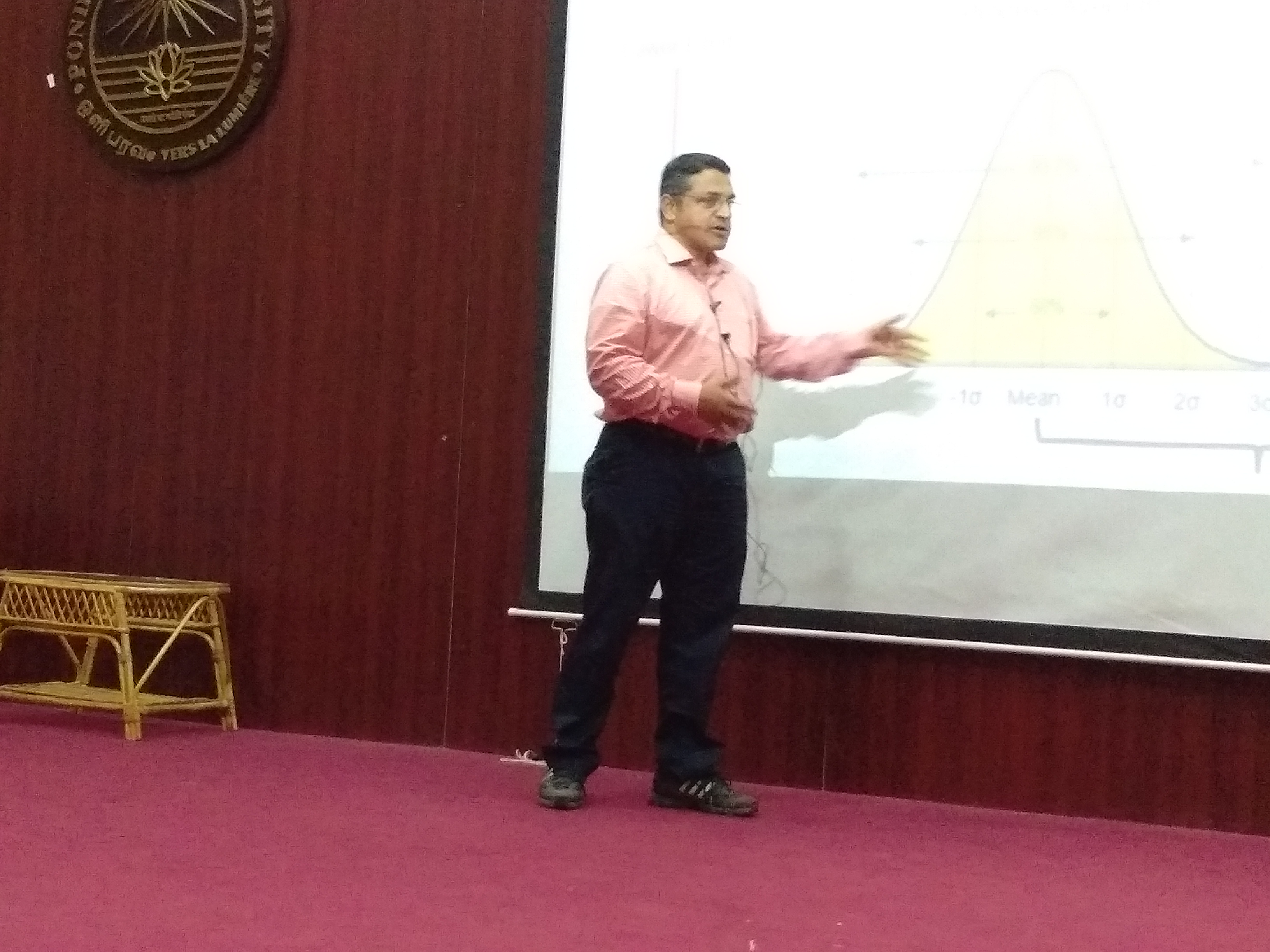
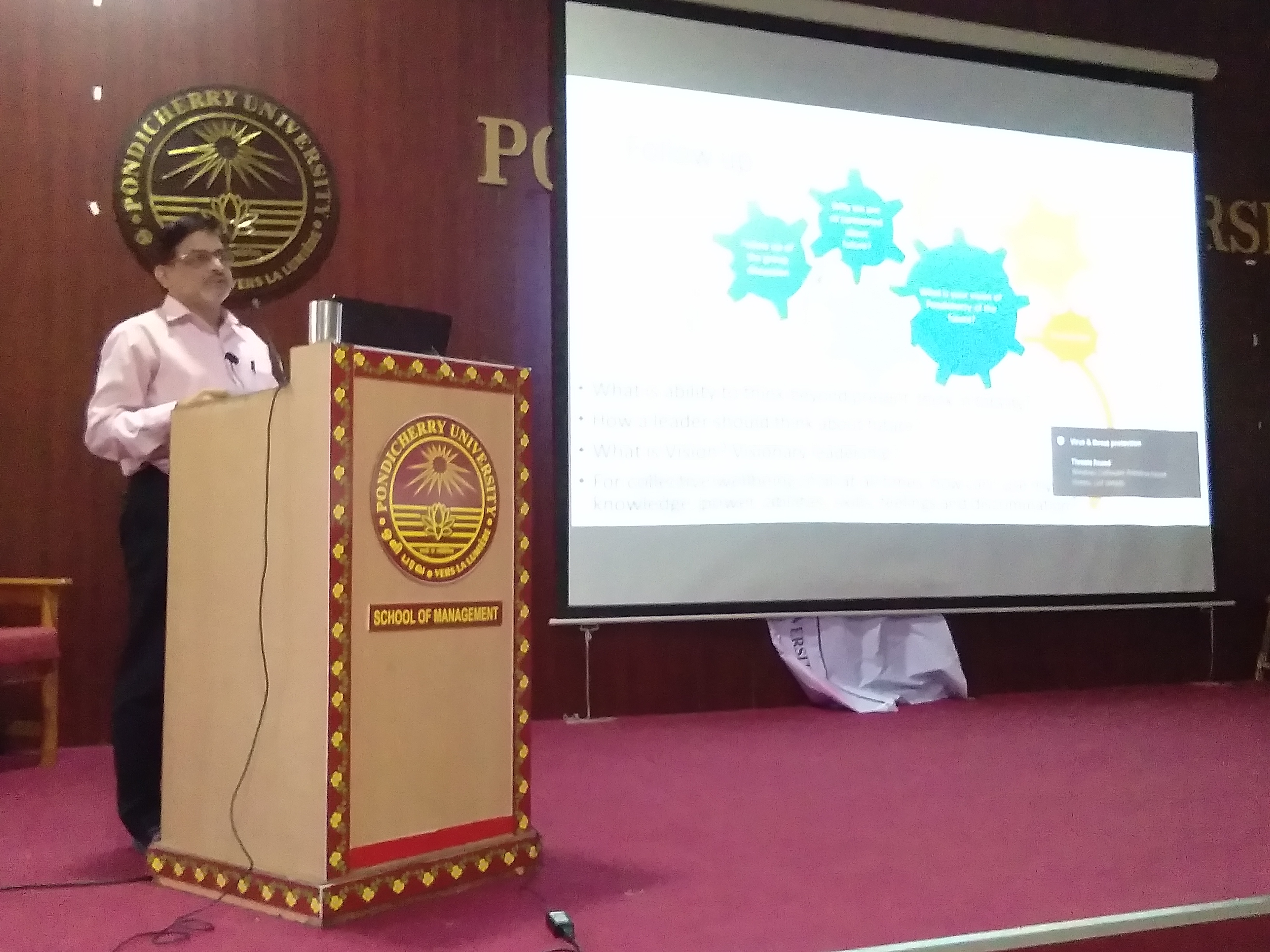
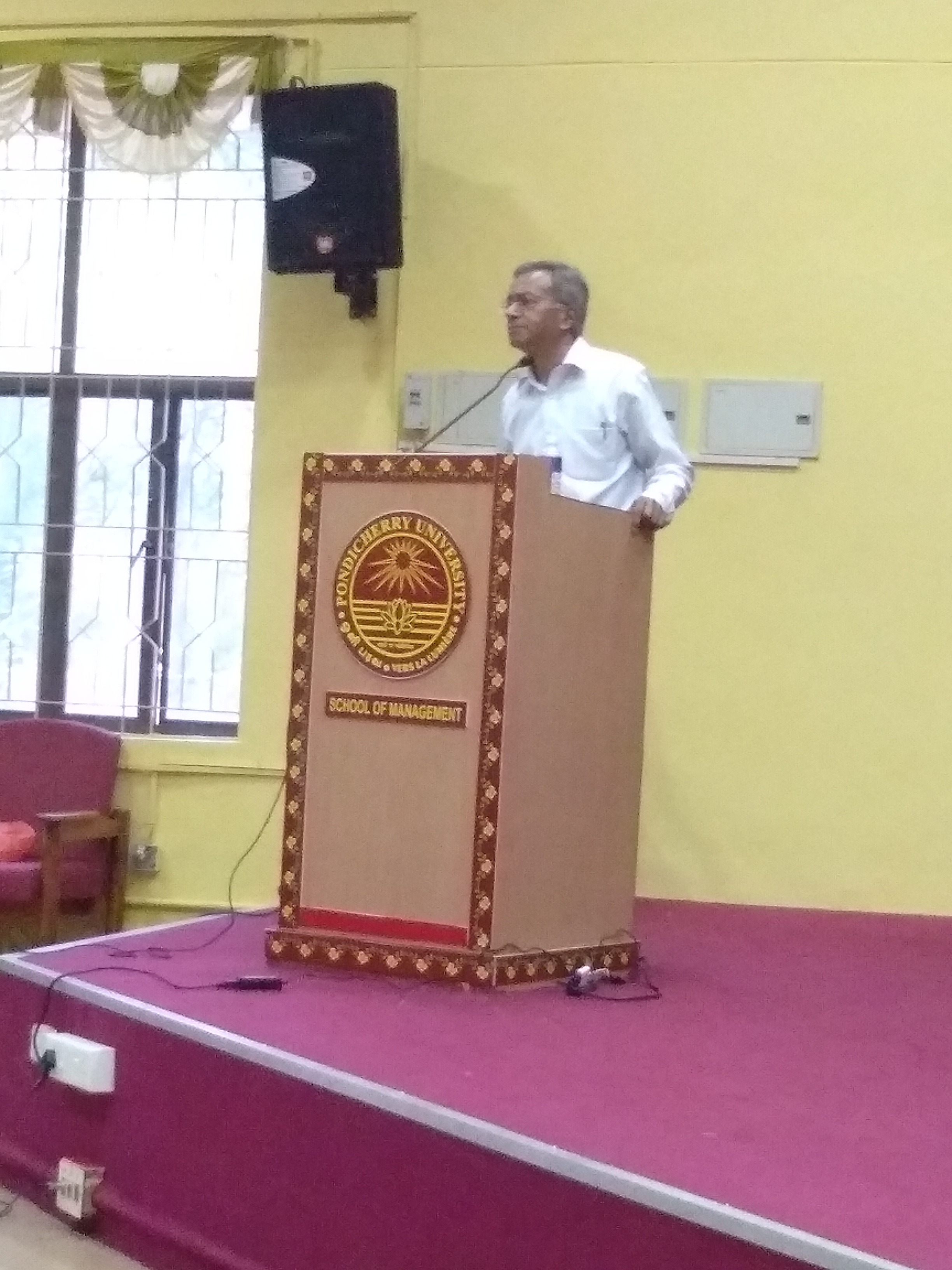
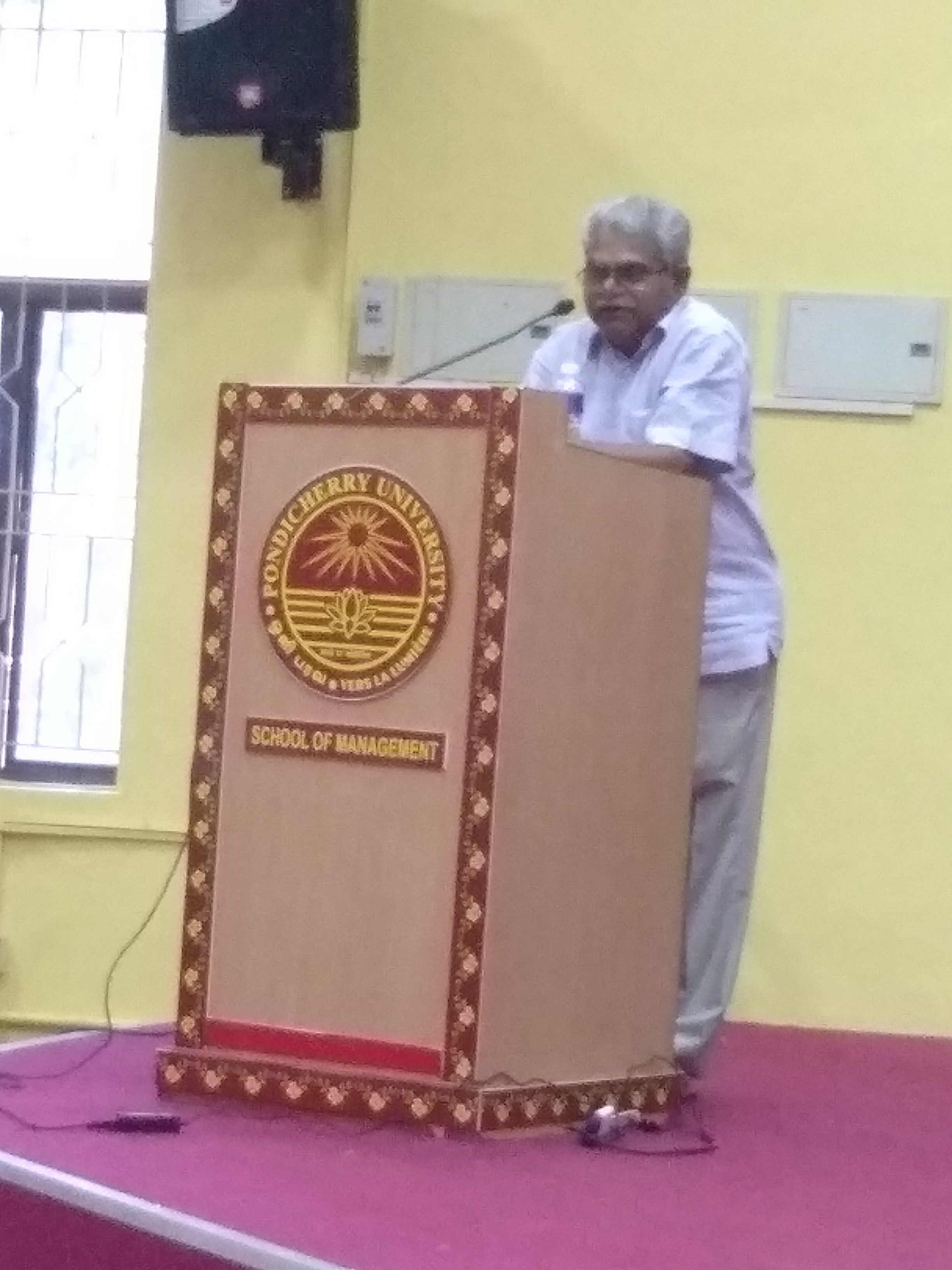
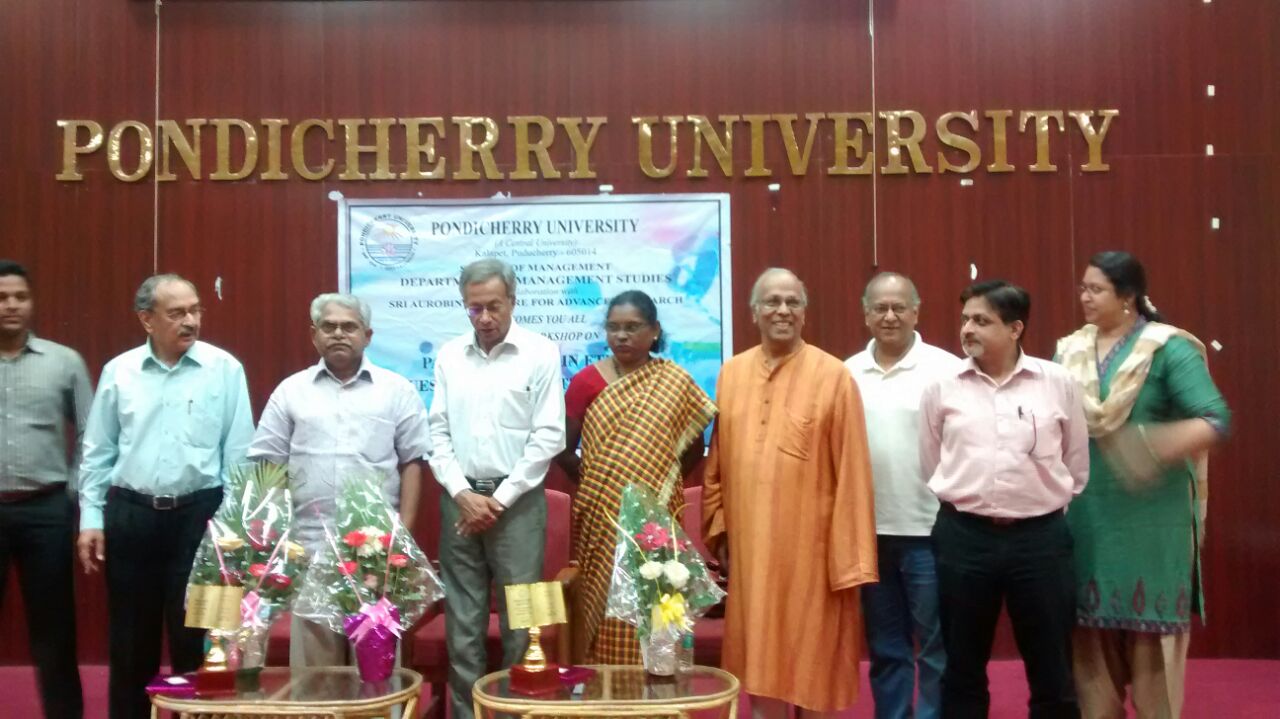
A two-day workshop at Pondicherry University

The Department of Management Studies of Pondicherry University, in collaboration with Sri Aurobindo Centre for Advanced Research (SACAR), recently conducted a two-day workshop, highlighting the manner in which aspiring managers can work on an inner transformation and achieve unparalleled satisfaction and growth in their careers, whether as professionals or as individuals.

In his keynote address, Dr Ananda Reddy, Director, SACAR, highlighted the challenge the leaders and managers of today face: that of following values and ethics in business, of imbibing the principles of corporate governance in their decision-making, and the need for being aware of the potential of spiritual consciousness as a solution to the problems they face.

Organizations are made up of human beings. Thus, the mantle of transforming corporates falls squarely on the young and strong shoulders of individual leaders and managers. This alone can lead to a meaningful evolution in the manner in which organizations function. By being an important part of society at large, such organizations set high standards and spearhead social evolution.
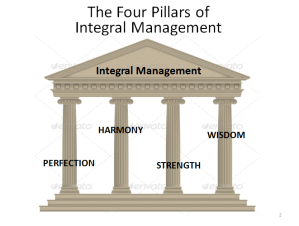
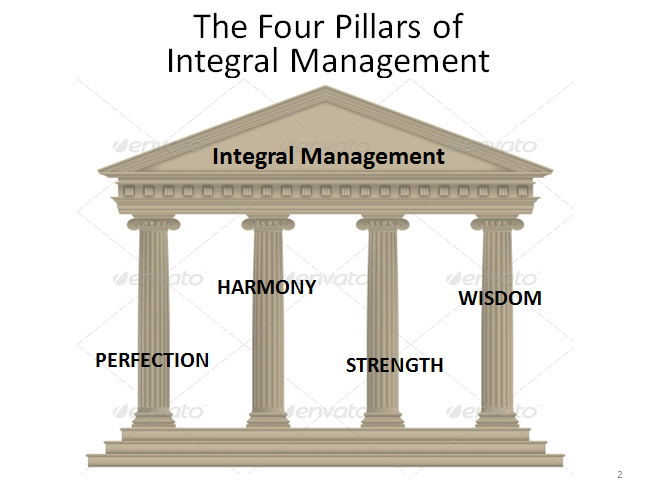
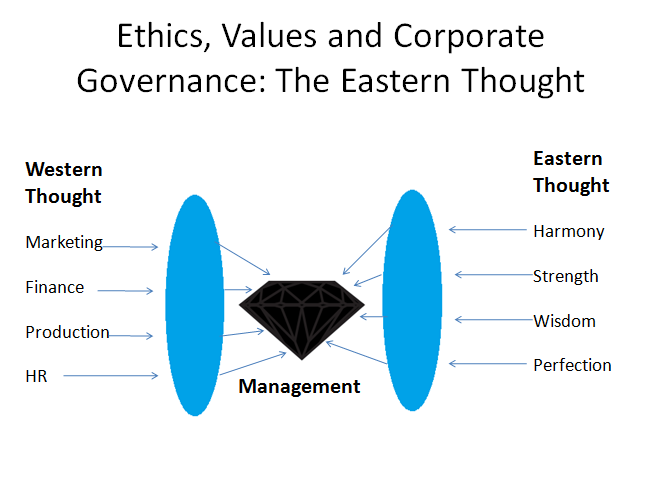
The need of the day is to view the management process through a new lens – that of the Four Pillars of Harmony, Strength, Perfection and Wisdom. This new paradigm of Management goes beyond the self-centred ‘I and Me’ approach of Western models. Rather, it focuses on the overall good, espousing a ‘We and Us’ approach, which is more holistic in nature. This new paradigm is based on ancient Indian wisdom and can help leaders and managers to deal with corporate affairs more effectively and efficiently.

The new paradigm of Integral Management

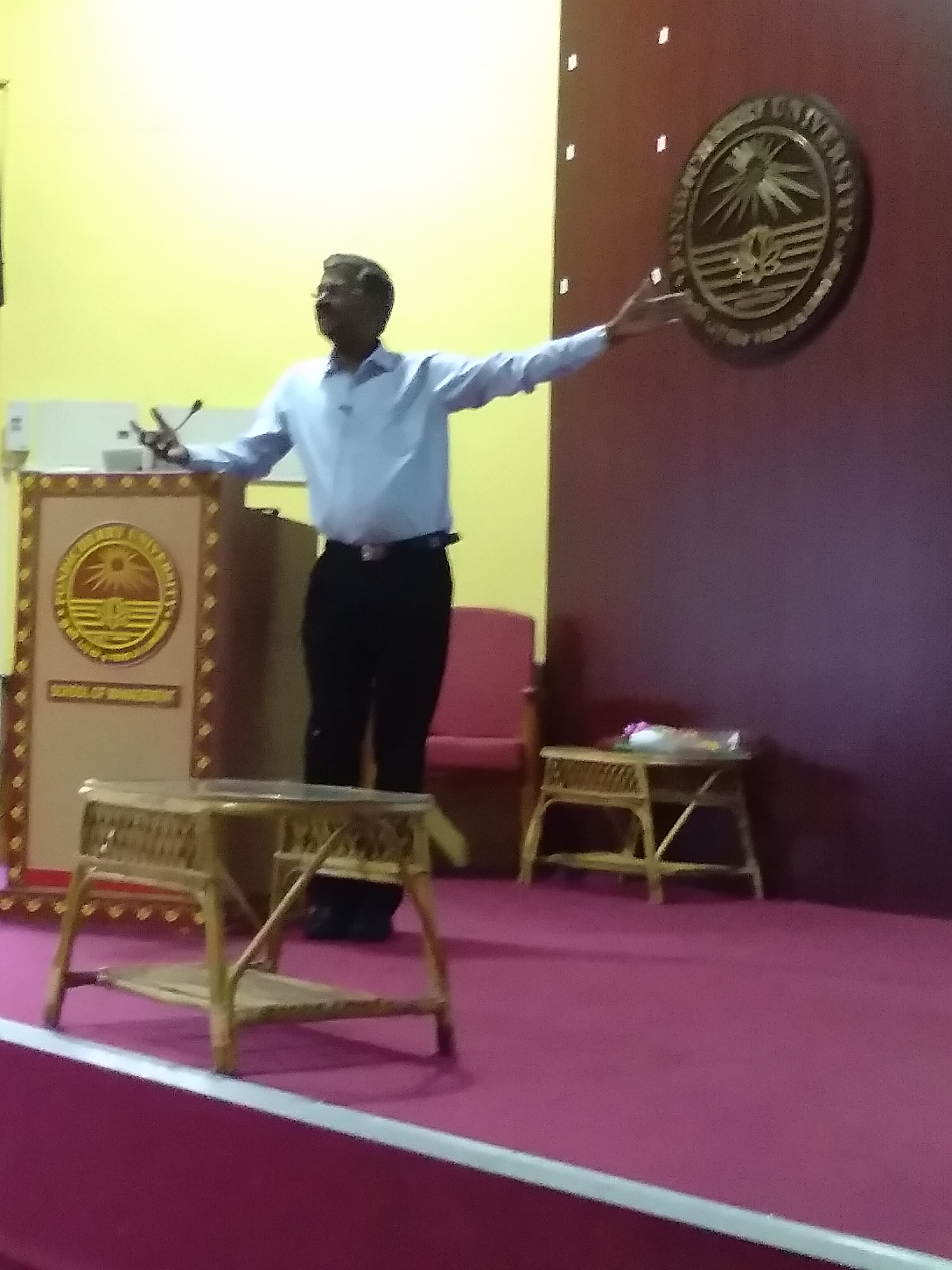
Yours truly provided to the participants an overview of the Four Pillars of Integral Management, backed by real life examples from the business world.

The challenges of maintaining Harmony were brought up, as also the need for a higher Spiritual Quotient. Use of planned disharmony in the market place, as evidenced by the disruptive entry of Reliance Jio in the telecom sector and that of Patanjali in the FMCG sector, was mentioned.

The need to deploy Strength for the overall good was substantiated by the case of Tata Trusts. The abuse of corporate muscle power was brought out by quoting the case of Erin Brockovich, who spearheaded the campaign to secure substantial relief for those who suffered at the hands of the Pacific Gas and Electric Company of California in 1993.

The development of hybrid cars and several product recalls were cited as examples of dynamic Wisdom in company’s policies. The need to build brand equity was discussed, so was the role of intuition in decision-making. The story of how the Indian Institute of Science at Bangalore came up based on the singular initiative of Sir Jamsetji Tata (1839-1904) was narrated.

Participants were exhorted to give up the culture of mediocrity and strive for Perfection in all their actions. Example of Apple products and Rolls Royce cars were cited.

Harmony and Collaboration

Professor Kisholoy Gupta, an accomplished international trainer in Management Sciences, based in Bangalore, invited the participants to play some games to demonstrate the role and importance of Harmony and to experience a freedom of expression, so one could feel free and happy, and therefore, work more productively.

Ms Padma Asokan, who manages Omeon Solutions, a global software company in Chennai, explained the need and mechanics of achieving Harmony in organizations.

The core of any organization being love and harmony, managers can improve their contribution by achieving a balance between their inner and outer selves.

Managements need to enable harmony at different levels. At the infrastructure level, care needs to be taken of tools, office layouts, work station design, and rest and recuperation facilities. The top person is the DNA of the company’s culture and thereby enables organizational harmony. Operational harmony is achieved through teams which aim to achieve success in whatever they choose to do. Smooth communication, whether vertical or horizontal, ensures better harmony across an organization. Treating employees with respect and dignity and innovative HR policies ensure a high degree of motivation at all levels.

Order and cleanliness attract all stakeholders to a business. Waste reduction, productivity improvement and minimal friction are the key benefits one derives.

The highest form of harmony results from conflict resolution of values across individuals, departments and profit centers. Managements keen to achieve a state of sustainable corporate harmony counsel their employees to cleanse their minds of such negative emotions as anger, hatred, passion, lust, delusion and pride.

The Strength of Self-belief

Professor Kisholoy Gupta conducted some practical exercises to make the participants aware of the importance of the Strength of being impartial and objective and “stepping-back” before taking any decision.

Mr Ganesh Babu, a strategic thinker and a coach extraordinaire based at Pondicherry, touched upon the importance of self perception, self-control and a belief in one’s own abilities. By quoting examples of several spiritual stalwarts in the fields of business as well as in spirituality, he demonstrated that it was their belief in themselves and their unique capabilities that led them to scale great heights and become the leading lights of humanity, inspiring one and all.

An individual manager’s values and beliefs shape his attitude. These, in turn, determine his feelings and behaviour, making him what he is. The power that he exercises is often derived from his beliefs. By reviewing one’s belief systems, one can enjoy greater power over one’s actions and circumstances, thereby enhancing one’s efficiency and effectiveness.

A manager can increase his Strength manifold by:

-Basing his decisions on empathy and respect towards others;

-Refusing to accept anything below standard, treating all tasks as Divine work and, thus, striving for perfection;

-Dealing with Materialistic Resources in a firm and polite manner.

Perfection in Management

Professor Kisholoy Gupta conducted a series of practical exercises of making quality products, thereby driving home the relevance of Perfection in management.

Dr Sridarshan Kaundinya, having had cross-functional experience in such companies as GE, Indus and TCS, and presently based in Bangalore, explained the manner in which Perfection gets practiced in the industry. The need to go for quality levels far beyond Six Sigma, like in aircraft engines where a failure could directly lead to loss of precious human lives, was touched upon.

Perfection is not only about having an intuitive power to accuracy but also about an unfailing attitude of fulfilling commitment, of being unscrupulous, unsleeping, indefatigable, and touching every detail, and of organizational execution and achieving an unfailing exactitude of result.

The Power of Wisdom in Values

By way of a warm-up exercise on Wisdom, participants were invited to describe the lines along which the city of Pondicherry should develop in another decade or so. Brighter minds at the workshop came up with some lofty and pragmatic goals for the city planners and administrators.

Dr Narendra Joshi, an eminent educationist from Mumbai, who has also worked on the interface between Artificial Intelligence and Spirituality, described Wisdom as comprising vision, wideness of understanding, and as a result, an endless compassion and patience for the time needed to effectuate and implement the intention of the Supreme in the manifestation.

He stated that it is not uncertainty alone that has paralyzed CEOs today. Many find it difficult to reinvent their corporations rapidly enough to cope with new technologies, demographic shifts, and consumption trends. They’re unable to develop truly global organizations that can operate effortlessly across borders. Above all, leaders find it tough to ensure that their people adhere to values and ethics.

The prevailing principles in business make employees ask, “What’s in it for me?” Missing are those that would make them think, “What’s good, right, and just for everyone?”

Practical wisdom, according to several studies, is experiential knowledge that enables people to make ethically sound judgements. It is similar to the Japanese concept of Toku—a virtue that leads a person to pursue the common good and moral excellence as a way of life. It is also akin to the Indian concept of Yukta, which connotes “just right” or “appropriate.”

One way of describing Wisdom is to have the ability to see the trees and the forest at the same time. With meditation and an inner connection with oneself, this can be cultivated.

Going beyond CSR

Mr. N Harihara Subramanian, a passionate Social Worker involving and supporting many Projects and a founder and promoter of the Indian Institute of Governance (IIG), Chennai, delivered the Valedictory Address.
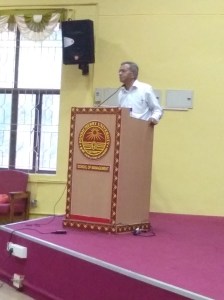
He exhorted the participants to propel their organisations beyond traditional norms of Corporate Social Responsibility, and work for the overall benefit of the communities surrounding them.

Proceedings summarized

Dr Ananda Reddy, Director, SACAR, summed up the proceedings of the workshop. He reiterated the need to train young managers not only based on the Western models of management, but also to draw deeply from the wisdom contained in Indian scriptures. This alone could lead to businesses which work for the overall good of the society.

Workshop Design, Execution and Coordination

The workshop was designed to develop the inner capabilities of students as future managers in terms of the aforesaid Four Pillars of Harmony, Strength, Wisdom and Perfection.

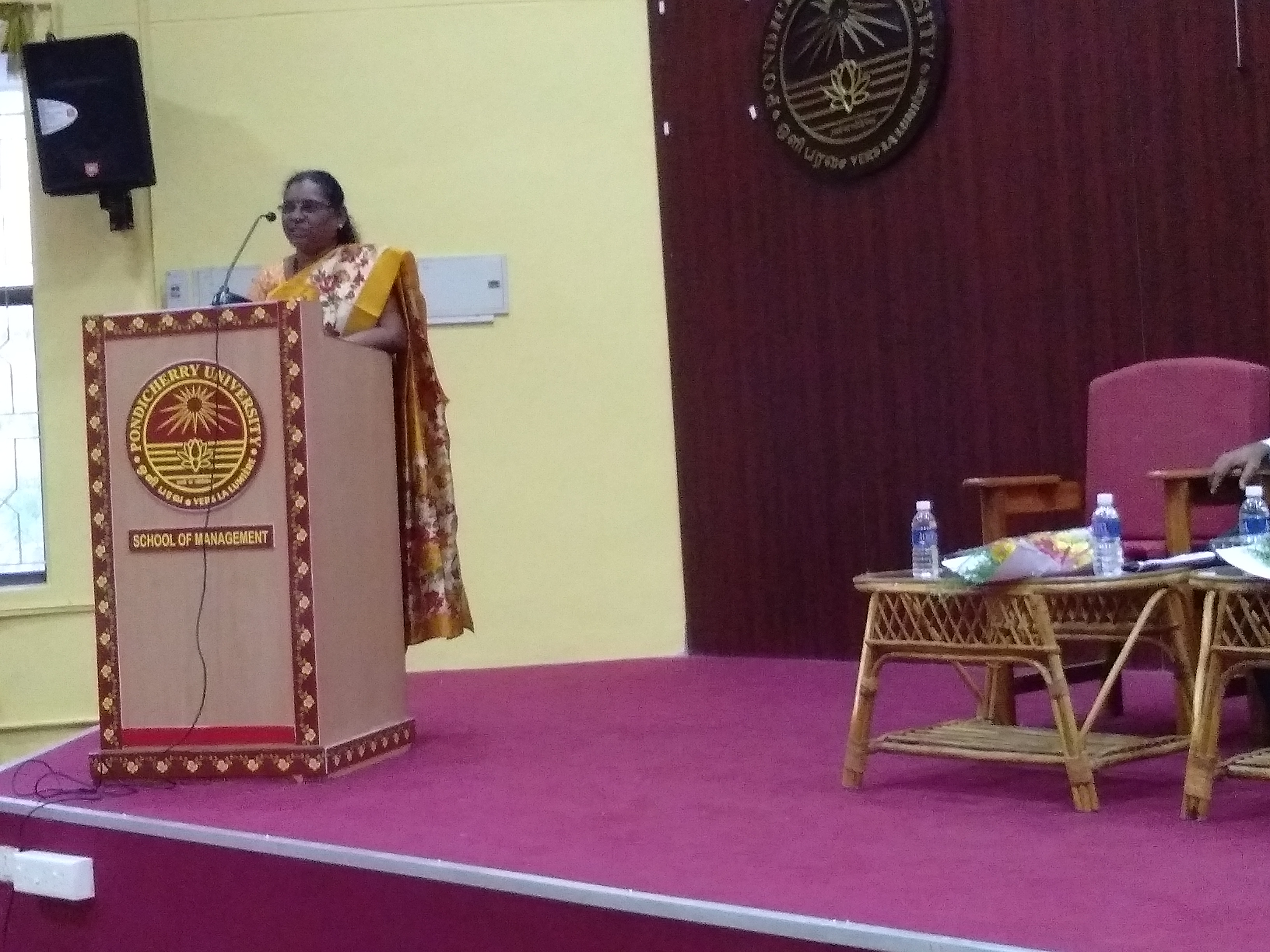
The event was chaired by Dr. G. Anjaneyaswamy, Professor and Dean, School of Management, Pondicherry University. In his concluding remarks, he appreciated the unique contents of the workshop and expressed a hope that the Department of Management Studies may like to have the same incorporated into the formal syllabus of a regular MBA course at Pondicherry University.

The Inaugural Session was chaired by Professor K C S Rao, Head, Department of Banking Technology, School of Management, Pondicherry University.

The Convener of the workshop was Dr. R. Chitra Sivasubramanian, Professor & Head, Department of Management Studies (DMS), Pondicherry University.
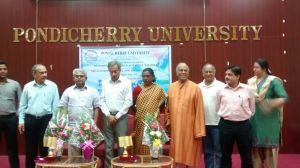
The entire event was coordinated by Dr. B. Rajeswari, Assistant Professor, and Dr. R. Venkatesakumar, Assiociate Professor, DMS, School of Management, Pondicherry University. Dr Shruti Bidwaikar was the main coordinator from Sri Aurobindo Centre for Advanced Research (SACAR), Pondicherry.

The Road Ahead

Businesses with a futuristic vision need managers who are not only tech-savvy but also situation-savvy, adept at handling stressful challenges with ease and aplomb.

SACAR is open to the prospect of conducting similar workshops in commercial organizations as also at management institutes of repute, whether for the students or for the faculty.

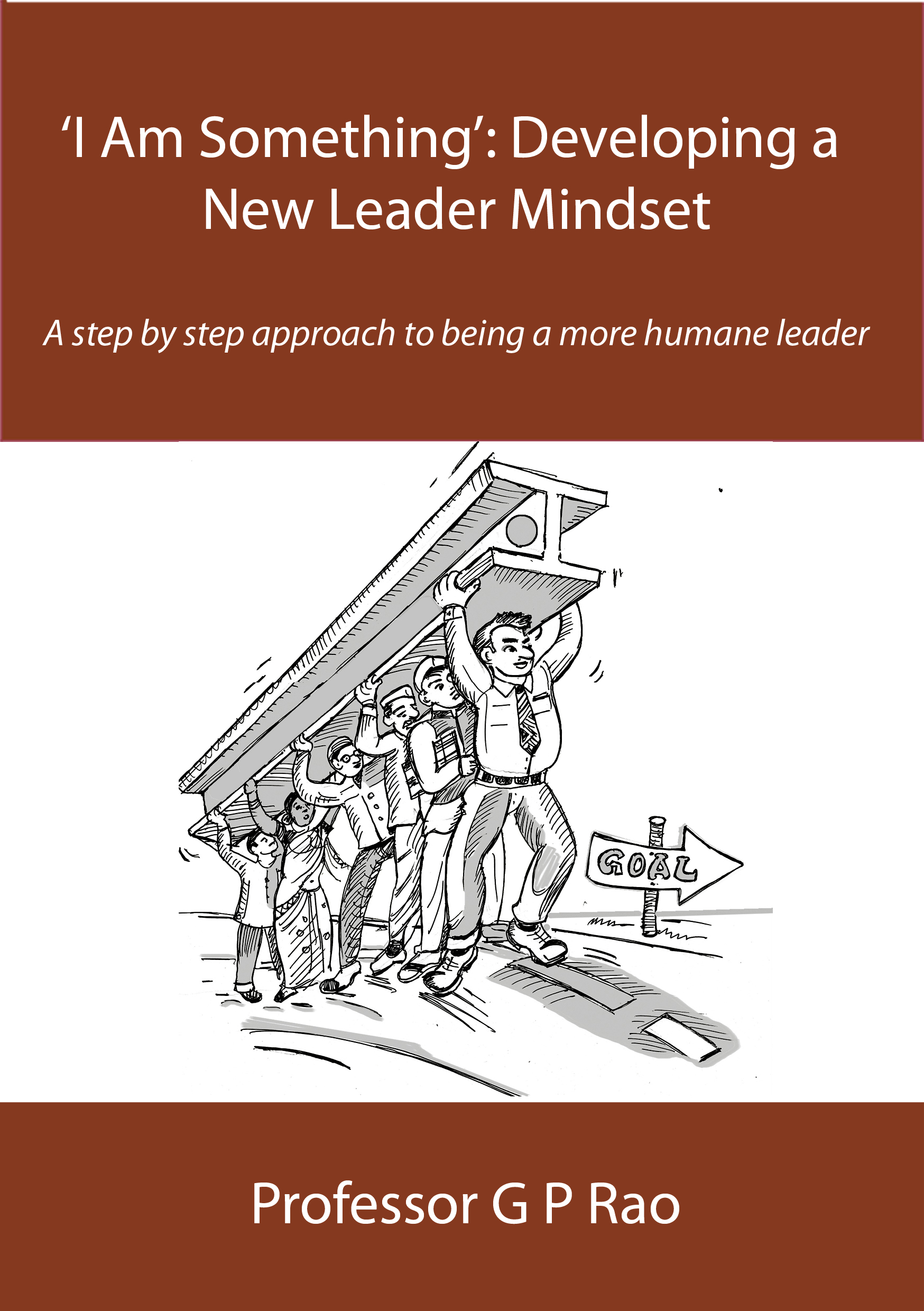
For institutes interested in incorporating the content in their regular management courses, a draft syllabus has also been prepared under the guidance of Professor G P Rao, who, after retiring from Madurai Kamaraj University in 1997, has devoted himself to the mission of spreading human values in organizations, through his NGO, SPANDAN.

(Related Posts:

https://ashokbhatia.wordpress.com/2012/11/19/spirituality-in-management

https://ashokbhatia.wordpress.com/2015/10/06/managerial-perfection-notes-from-a-seminar-at-pondicherry-india

https://ashokbhatia.wordpress.com/2016/03/26/harmony-in-management-a-seminar-at-pondicherry-india

https://ashokbhatia.wordpress.com/2016/08/30/power-in-management-a-seminar-at-puducherry-india

https://ashokbhatia.wordpress.com/2017/04/04/the-element-of-wisdom-in-management-a-seminar-at-pondicherry)