Feeds:
Posts
Comments
Wodehouse

P. G. Wodehouse is essentially a romantic at heart. Matters of the heart play a vital role in almost all the narratives dished out by him.

Bertie Wooster keeps avoiding a walk down the aisle, thanks to the support he gets from Jeeves. Yet, at the end of The Mating Season, we find him basking in the glow of satisfaction at having been instrumental in putting the affairs of quite a few couples in order.

In the Blandings saga, we meet a morose Gertrude who is pining for Beefy Bingham, her lover. She spreads depression in the house and, worse still, tries to be “helpful” to Lord Emsworth by tidying his study.

Mr. Mulliner keeps recounting love stories of various nephews and nieces of his. Ukridge may try and run a chicken farm, but the subplot of the love affair between Jeremy Garnet and Phyllis runs throughout the narrative. The spell of a quiet summer evening prompts Jeremy to confide his love to Phyllis.

The Literary Parabola of Seasons

It is hard to think of romance without thinking about the seasons. Whether it is the first warmth of spring pulling us out of hibernation or the quiet reflection that comes with autumn, there is an innate connection between the rhythm of nature and the emotional lives we lead. Wodehouse, of course, recognises this. He does not just use the seasons as convenient backdrops for romantic entanglements; he weaves them into the very fabric of his characters’ emotional journeys. Like that feeling of optimism you get on the first sunny day after months of grey skies, Wodehouse’s characters are often moved by the weather in ways they barely recognize themselves. It is this subtlety—this almost imperceptible nudge from nature—that aligns him with the great literary tradition of using the external world to reflect inner states.

The motif of seasons is deeply embedded in literature, symbolising various emotional and psychological states of characters. Many English literary experts have skilfully employed seasons to reflect inner turmoil, personal growth, and other emotional shifts.

In Sonnet 18 (“Shall I compare thee to a summer’s day?”), Shakespeare compares the beloved to a summer’s day, symbolising beauty, and vitality, while also lamenting the fleeting nature of summer and, by extension, life, and youth. In The Winter’s Tale, the season of winter represents both the coldness of jealousy and tyranny as seen in King Leontes’ irrational behaviour, whereas spring (in the later acts) symbolises rebirth, redemption, and forgiveness.

In his poem To Autumn, John Keats captures the beauty and melancholy of autumn, a season of maturity and ripeness and goes on to meditate on the bittersweetness of life’s temporality.

Tess of the d’Urbervilles by Thomas Hardy aligns Tess’s emotional journey with the changing seasons. The novel starts in spring, symbolising Tess’s innocence, and moves through summer and autumn, reflecting her growing despair and tragedy. Winter, in the end, represents death and loss.

In A Christmas Carol, Charles Dickens uses winter as a backdrop to explore themes of coldness, isolation, and redemption. The harsh, biting cold reflects Ebenezer Scrooge’s miserly, frozen heart. Yet, through transformation, the holiday spirit (and warming of his heart) mirrors a kind of internal spring-like rejuvenation.

Robert Frost, in Stopping by Woods on a Snowy Evening, depicts winter as representing solitude, contemplation, and the pull of death. The character’s momentary pause in a quiet, snow-covered wood suggests the allure of rest and surrender, while the journey he must continue reflects the mundane obligations of life.

These writers masterfully intertwined the natural cycle of seasons with human emotions, adding symbolic depth to their character’s emotional and psychological experiences. The ever-changing seasons become metaphors for the ups and downs of human life, making them a timeless tool in literary exploration.

The USP of Wodehouse

What sets Wodehouse apart is his imaginative use of Cupid’s machinations during different seasons. Cupid is indubitably one of the author’s most important comrade-in-arms. But the freedom to strike at will does not come without its attendant responsibilities. Love is in the air. Devotion is permitted. But physical intimacy is a taboo. Aphrodite has limited access to the goings-on. Eroticism is denied entry. An occasional occurrence which could amount to mild titillation alone is allowed. Across the oeuvre, Cupid is subject to strict Victorian norms of behaviour.

However, all this does not lessen his ingenuity in bringing lovers together. There are occasions on which even a member of either the feline or the canine species facilitates the development of a bond. Behind the frivolity and farcical events of Wodehouse’s narratives, Cupid ensures an almost imperceptible use of natural elements to influence the lives of the author’s characters. While stuck together on a rock by the seaside, a high tide in Mr. Wilton’s Holiday leads to a reconciliation between Jack and Mary.

Cupid even goes on to use different seasons as arrows in his quiver to smoothen the way to new relationships blossoming. In many of the relationships between two love birds, seasons provide a perfect backdrop. While the seasons may appear incidental to the plot, these not only embody the emotional states of the characters but also serve as invisible matchmakers.

Seasons become mere puppets in the deft hands of Cupid in a few cases. These play a key role in nudging Wodehouse’s characters toward romantic resolutions. Spring, summer, autumn, and winter often serve as metaphorical agents of Cupid, facilitating encounters, softening hearts, and reuniting sundered hearts. In fact, in such cases, seasons don the hat of an active participant in the narrative, behaving like key actors involved in the act.

Let us consider a few examples to see how Cupid assists Wodehouse in propelling the romantic chemistry between his characters by using various seasons as either a backdrop or a catalyst.
Spring: The Season of Blossoming Love

In Wodehouse’s fiction, spring invariably represents renewal, hope, and the blossoming of love. The imagery of spring, with its vibrant colours, warming temperatures, and burgeoning life, mirrors the rekindling or the birth of romantic feelings among characters. Wodehouse takes advantage of spring’s association with new beginnings to nudge his characters towards forging romantic affiliations, often underlining the season’s role as Cupid’s chief lieutenant.

Bertie Wooster takes some inspiration from Tennyson when he says:

“In the spring, Jeeves, a livelier iris gleams upon the burnish’d dove.”

He even imagines a charming girl to come up to him and seek his assistance in saving her from assassins.

“I don’t know if you know that sort of feeling you get on these days around the end of April and the beginning of May, when the sky’s a light blue, with cotton-wool clouds, and there’s a bit of a breeze blowing from the west? Kind of uplifted feeling. Romantic, if you know what I mean. I’m not much of a ladies’ man, but on this particular morning it seemed to me that what I really wanted was some charming girl to buzz up and ask me to save her from assassins or something.”

Similarly, in No Wedding Bells for Bingo, Cupid assists Wodehouse in explicitly tying romantic developments to the season. Bertie Wooster’s bumbling friends, eager to woo their respective partners, often find their romantic aspirations coming to fruition as spring blooms. Wodehouse seems to imply that the very air of spring carries romance, infecting even the most hopeless of suitors with renewed vigour and enthusiasm. Even Jeeves, who, when surprised, raises his eyebrows merely a fraction of an inch, is affected by spring fever. Towards the end of the story, we find that Bertie tells Bingo Little’s uncle that Bingo wants to marry Mabel, a waiter, and he, moved by the books read out to him, approves. Uncle declares that he plans to marry his cook, in whom Jeeves had shown interest earlier. However, Jeeves has already scratched the fixture and instead has another engagement of sorts with another girl, Mabel, the waiter whom Bingo had wanted to marry!

In Something Fresh, the sunshine of a fair spring morning incites a feeling of novel jauntiness amongst the residents of London. This is followed by the scene where Ashe Marson and Joan Valentine discover each other, and the seeds of romance get planted.

It is not that Cupid’s arrows prove to be effective in all the cases.

The spring motif continues with novels like Uncle Fred in the Springtime wherein the affair between Valerie and Horace comes to a satisfactory conclusion. However, Cupid’s arrows fail in the case of Polly and Gilpin. In Spring Fever too, Terry, who is initially wary of Mike due to his overwhelming good looks, warms up to him when she sees his battered face after a failed burglary attempt. Stanwood and Eileen also get together. But Mrs Punter runs off with Augustus Robb, leaving Shorty and Spink ruing their loss in love.

In the short story The Custody of the Pumpkin, the annual Spring Flower Show provides the backdrop for a classic Wodehouse romance. Lord Emsworth, obsessed with his prized pumpkin, is blissfully unaware that his son, Freddie Threepwood, is using the occasion to court a gardener’s daughter. The setting, with its blossoming flowers, is emblematic of the unanticipated flourishing of romance. While Lord Emsworth is preoccupied with his vegetables, spring’s inherent charm works on Freddie and his love interest, quietly orchestrating their courtship. Spring’s effect here is subtle but inevitable, as the characters seem unable to resist its influence.

Spring is also often a time for transformation in Wodehouse’s world. Characters who, during winter, might have been cynical, brooding, or emotionally distant, find themselves rejuvenated as the warmer weather arrives. When the ogre of winter is around, the characters’ instincts for self-preservation often dominate their tender thoughts of love. But once the winter is gone, the seasonal change from gloom to joie de vivre affects not only flora and fauna but also causes an emotional thawing amongst the Homo sapiens. Cupid assists Wodehouse in using this to show characters moving from a state of emotional hibernation to one of action and, eventually, romantic fulfilment.

Summer: Love in Full Bloom

If spring is the season of new beginnings, then summer in Wodehouse’s works represents the full bloom of love. It is as if Cupid decides to deploy the season at full throttle, its quiver operating on all its six cylinders. The warmth of the sun, long days, outdoor events such as garden parties and village fairs, a quick swim in a lake, and occasional bouts of rain create ideal conditions for love to grow further, often leading to a cementing of romantic affiliations. The languid pace of summer reflects the unhurried nature of developing affections, where flirtations deepen, and scales fall from couples’ eyes as they realise their love for each other.

Summer is the time when you can hear a snail clear its throat a mile away. When the sun is finishing its obligations for the day and rushing to a well-earned night of rest and repose, gnats and many other kinds of insects start fooling about all over the place.

In Right Ho, Jeeves, Bertie tells us it is July twenty-fifth when he returns from a trip to Cannes looking bronzed and fit. While at Cannes, a crisis arises in the matter of Tuppy Glossop and Angela Travers. They fall out due to Angela saying that Tuppy was getting fat and Tuppy not believing that a shark attacked her while at Cannes. Gussie Fink-Nottle is besotted with Madeline Bassett but does not have the courage to express his love to her. Eventually, it takes a dangerous midnight cycle ride by Bertie for Angela and Tuppy to reconcile their differences and for Madeline and Gussie to make up.

In The Mating Season, Madeline is yet again convinced that Bertie is secretly pining for her when he catches a 2.45 AM Milk Train and hides in the shrubbery, aiming to intercept the morning post which carries a letter from Gussie scratching the fixture with Madeline, thereby throwing a spanner in his plans to retain his bachelorhood. By the time the narrative ends, we find that Madeline and Gussie are reunited, Esmond Haddock has defied his aunts and is engaged to Corky, Constable Dobbs is reconciled with Queenie, and Gertrude has eloped with Catsmeat. Bertie’s bachelor status remains protected.

Cupid’s Benign Arrows

Cupid’s quiver contains many kinds of arrows. Other than the normal ones directed at consenting adults, on a few occasions, he also shoots the benign kind which are devoid of amorous intentions of any kind. Instead, these uplift the Spiritual Quotient of the ones at the receiving end. Or the kind that make one live up to the expectations of someone who is much younger in age, thereby also proving oneself worthy of one’s glorious ancestors.

In The Love that Purifies, we come across boys of a tender age who happen to be infatuated with Hollywood divas. We have Thos, who is besotted with Greta Garbo. We have Bonzo, who is in awe of Lilian Gish. Then, we have Sebastian Moon, whose affections are focused on Clara Bow. How these infatuations transform the behaviour of young boys is the nub or crux of the story. We are reminded that even menaces to society, in general, assume a saintly disposition when under the influence of the charms of their transient heartthrobs.

In Lord Emsworth and the Girl Friend, we discover that the lordship detests wearing stiff collars and making speeches. However, on the Parva School Treat Day, coinciding with the August Bank Holiday, when Blandings Castle becomes, in his lordship’s opinion, a miniature Inferno, he has little option but to fall in line with the command of Lady Constance Keeble. But that does not come in the way of his developing a respectful devotion towards Gladys. When she desires to have some flarze and gets spotted by Angus McAllister when doing so, the latter comes out of the potting shed at forty-five miles per hour. Gladys is quick to seek protection. She not only clutches the tails of Lord Emsworth’s coat but also slips her small, hot hand into his. It is a mute vote of confidence, and Lord Emsworth intends to be worthy of it. He stands up to the gardener and even defies his sister by refusing to deliver a speech.

The experience of Esmond Haddock and Lord Emsworth shows us that when Cupid strikes, even spines made of cottage cheese get transformed into those made of chilled steel!

When Rain Gods Assist Cupid 

In Summer Lightning, Hugo Carmody is surprised to find that it has been raining and decides to rush to the cottage nearby.

Ho! for the cottage, felt Hugo, and headed for it at a gallop. He had just reached the door, when it was flung open. There was a noise rather like that made by a rising pheasant, and the next moment something white had flung itself into his arms and was weeping emotionally on his chest.

The ‘something white’ is Millicent, Lord Emsworth’s niece, frightened by the Empress stashed in the gamekeeper’s cottage.

In Leave it to Psmith, the hero’s first encounter with Eve comes about when she is caught in a sudden spell of rain beneath the awning of Messers Thorpe & Briscoe. Even though he says he is above softer emotions in general, Eve, who is sumptuously upholstered at the time, stirs a chord within him. Chivalry comes into play. Stealing the best umbrella available in the cloakroom of the club and rushing out to offer it to her is the work of a moment for him. Had Cupid not been assisted by the Rain Gods at the time, his machinations might have been in vain.

Summer’s role as Cupid’s agent is also evident in the way characters often find themselves outdoors during the warm months, in situations that lend themselves to romantic misunderstandings and reconciliations. Wodehouse’s characters often attend tennis matches, picnics, and boating excursions during the summer, all of which provide opportunities for private conversations, furtive glances, and sudden declarations of love. The idyllic natural settings serve as romantic catalysts, drawing characters together under the spell of the summer sun.

Moreover, summer’s association with heat and intensity often mirrors the emotional heat of Wodehouse’s love stories. The heightened emotions of characters — whether it is the confusion of unspoken feelings, jealousy, or the passion of newfound love — often come to a head during this season.
Autumn: The Season of Mists and Mellow Fruitfulness

Autumn, with its falling leaves and cooling air, often signals a time of reflection in Wodehouse’s works. This season is less about the exuberance of new love and more about characters realizing their feelings, coming to terms with past mistakes, or making decisions about their romantic futures. In many ways, autumn represents a transitional phase in the romantic arc of Wodehouse’s characters — a period of contemplation before the final act of a romantic resolve. Cupid, perhaps tired of the hectic time he has had in the previous two seasons – spring and summer – does a bit of introspection, reviewing the progress of the arrows shot earlier on whatever technical gizmo he uses to keep a track of things, and deciding the future course of action in each case.  

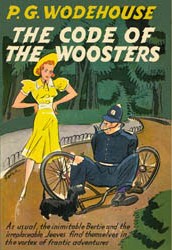
In The Code of the Woosters, Jeeves tells Bertie that autumn is a season of mists and mellow fruitfulness.

One of the reasons for Bertie visiting Totleigh Towers is to heal a rift between Gussie Fink-Nottle and Madeline, Sir Watkyn’s daughter. Madeline incorrectly believes Bertie to be in love with her, and she has promised to marry him if her engagement should ever fail. To avoid this calamity to befall him, Bertie persuades Madeline to invite him down, but he learns upon arriving that Gussie and Madeline have already reconciled. A parallel romantic track is that of Stiffy Byng and Harold Pinker. A silver cow creamer, a notebook of Gussie’s which insults the host, Sir Watkyn Bassett, a policeman’s helmet, and the Eulalie effect on Roderick Spode – all take turns to play a spoilsport. Eventually, Cupid succeeds in his mission and both the couples get united.

In Jeeves and the Old School Chum, when a carefully packed lunch basket goes missing at the Lakenham Races, and the car carrying Rosie M Banks and her old school friend Laura Pyke runs out of fuel in the middle of nowhere, a fight ensues between the two friends. Bingo Little wins an intense argument with the owner of a house nearby and ensures that his wife gets her afternoon cup of tea. The romance between the couple is back on its throne.

She turned for an instant to Bingo, and there was a look in her eyes that one of those damsels in distress might have given the knight as he shot his cuffs and turned away from the dead dragon. It was a look of adoration, of almost reverent respect. Just the sort of look, in fact, that a husband likes to see.

“Darling!” she said.

“Darling!” said Bingo.

“Angel!” said Mrs Bingo.

“Precious!” said Bingo.

Cupid is thus successful in rekindling the romance between the wife and the husband, which had earlier come under strain owing to a clash between Bingo’s dietary habits and Laura Pyke’s strict diet regime based only on fat-soluble vitamins.

The Indian Summer

Many of Wodehouse’s fans are aware of his evocative use of the term Indian Summer, which is said to be a period of unseasonably warm, dry weather that sometimes occurs in autumn in temperate regions of the northern hemisphere. The UK Met Office Meteorological Glossary published in 1916 defines an Indian summer “a warm, calm spell of weather occurring in autumn, especially in October and November”.

In Indian Summer of an Uncle, Wodehouse touches upon yet another facet of love – that of a more mature variety. When Uncle Goerge starts planning a walk down the aisle with a much younger Rhoda Platt, Jeeves explains the phenomenon as follows:

“One must remember, however, that it is not unusual to find gentlemen of a certain age yielding to what might be described as a sentimental urge. They appear to experience what I may term a sort of Indian summer, a kind of temporarily renewed youth.”

For those in an advanced age, holding hands and physical intimacy gets relegated to the background. Instead, common ailments and related medications and therapies rule the roost. At times, the lining of the stomach paves the way for a couple to start sharing the trials and tribulations of life with each other. When Piggy and Maudie, the latter being the aunt of Rhoda Platt, happen to meet after a gap of many years, Cupid is quick to seize the initiative and ensures that their romance gets rekindled.

While autumn may lack the vibrancy of spring and summer, its quiet beauty is essential to Wodehouse’s romantic narratives. It allows characters the space to reflect, reconsider, and eventually take action to secure their happy endings. In this way, autumn becomes an integral agent of Cupid, providing the emotional clarity needed for love to succeed.

Autumn’s natural imagery — with its sudden riot of beige, yellow and brown colours, and the promise of winter’s chill and its eventual strokes of brilliant white on the landscape — often evokes a sense of urgency in Wodehouse’s characters. As the days grow shorter, characters are compelled to make decisions about their romantic futures. Cupid can be seen using this season to build tension, pushing characters toward decisive action. The cooling air of autumn can often be seen as a metaphor for the characters’ cooling patience, forcing them to act before it is too late.
Winter: Love Amidst the Chill

Though less frequently employed in Wodehouse’s works, winter nonetheless plays a significant role in his romantic comedies. The cold, stark landscape of winter can serve as a powerful contrast to the warmth of human affection. In some of his stories, the challenges of winter — whether it be physical cold, isolation, or the dormant state of nature — underscore the importance of companionship and love as a source of warmth and vitality.

In The Ordeal of Young Tuppy, the latter and Angela have again had the proverbial lover’s tiff. While on a rebound, Tuppy starts flirting with an athletic girl named Miss Dalgleish who lives near Bleaching. The girl is fond of dogs; Bertie supposes Tuppy wants an Irish water-spaniel to give her as a Christmas gift. To impress the girl, Tuppy participates in a local game of football, where he performs well but is sad to find out later that the girl was not present on the occasion, having rushed off to London looking for an Irish water-spaniel. A fake telegram imploring Tuppy to rush to the aid of an ailing Angela lands up, restoring the relationship between the two.

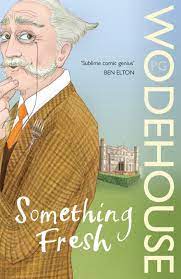
In Something Fresh, a concatenation of circumstances leads to Ashe Marson travelling in an open cart from Market Blandings to the Castle in biting cold. Wodehouse describes cold as an ogre that drives all beautiful things into hiding.

Below the surface of a frost-bound garden there lurk hidden bulbs, which are only biding their time to burst forth in a riot of laughing colour; but shivering Nature dare not put forth her flowers until the ogre has gone. Not otherwise does cold suppress love. A man in an open cart on an English Spring night may continue to be in love; but love is not the emotion uppermost in his bosom. It shrinks within him and waits for better times.

In The Knightly Quest of Mervyn, Mervyn Mulliner wants to marry Clarice Mallaby. She thinks he is a chump and does not consent to marry him. Mervyn wants to prove himself and asks her to give him a quest, like the knights of old. It is December, and she has always wanted to eat strawberries in the middle of winter, so she tells Mervyn that she will reconsider his proposal of marriage if he acquires a basket of strawberries for her before the end of the month. After having had many setbacks in his knightly mission, he lands up at Clarice’s house and intercepts a package which has strawberries for her from Oofy Posser in whom Mervyn had earlier confided. He gets an idea and calls out to Clarice that he brought her strawberries. However, by the time she reaches the room, he has absent-mindedly eaten all the strawberries. Clarice throws him out in the chilly weather, not even allowing him to retrieve his hat. Cupid fails yet again, though Mr Mulliner concludes the story to his companions at Angler’s Rest thus:

“So there the matter rests. The whole thing has been a great blow to my cousin’s son, for he considers — and rightly, I suppose — that, if you really come down to it, he failed in his quest. Nevertheless, I think that we must give him credit for the possession of the old knightly spirit to which our friend here was alluding just now.

He meant well. He did his best. And even of a Mulliner more cannot be said than that.”

In A Damsel in Distress, Maud is shocked to see how fat Geoffrey has become since the one year they met in Wales. Though he has inherited a great deal of money, he now sports a triple chin and talks only of food. Winter forms a backdrop when Geoffery speaks of his having lived on a yacht during the previous winter.

Upon discovering that the party of the other part is now close to thirty pounds overweight, the tender emotion of love in Maud’s bosom evaporates. She realises her mistake. She rushes to the nearest phone, gets George on the line, and asks if he has gained any weight in the last year and if he has ever been to Florida during winter and relished a fish called pompano! When George replies in the negative, Cupid’s endeavours succeed, and their romantic affiliation is sealed.

Winter’s challenges — both literal and metaphorical — often lead characters to realise the value of love as a source of comfort and joy in an otherwise cold world. The season’s emphasis on survival and endurance mirrors the perseverance required for love to thrive despite obstacles. In many ways, Cupid uses the season of winter as a test of true love, as couples must navigate the season’s difficulties to find warmth and happiness in each other’s company.

Though less romantic on the surface than spring or summer, winter provides Wodehouse with opportunities to explore the depth and resilience of romantic relationships. It is a season where love tries to prove its worth by enduring hardship and by a conduct which is not only chivalrous but also knightly. Seeds of love may occasionally lie dormant in the frozen soil, ready to sprout as and when the season of spring kicks in.

The Six Seasons of Kalidasa

Yet another literary figure who, like Wodehouse, has captured different seasons with highly insightful narratives is Kalidasa.

Kalidasa, said to be born in India in the fourth century AD, is widely regarded as the greatest poet and dramatist in the Sanskrit language. His evocative portrayal of female beauty, an enthusiastic depiction of the affairs of the heart, and the diverse ways in which ladies dress up for a romantic encounter with their beloved in each of the six seasons typical of a tropical country would have surely attracted Cupid’s attention.

In one of his seminal works, Ritusamhara (Medley of Seasons), Kalidasa describes six seasons in his inimitable style: Spring (Vasanta), Summer (Greeshma), Monsoon (Varsha), Autumn (Sharad/Patjhad), Pre-winter (Hemant), and Winter (Shishir). Each one is dealt with evocative descriptions of the elements of nature. The seasons form a backdrop for the affairs of the heart and the sensuous pleasures of the skin.

In Harmony with Mother Nature

In the works of P.G. Wodehouse, the seasons play a subtle yet significant role in shaping the romantic lives of his characters. Spring brings new beginnings and the promise of love, summer sees romance in full bloom, autumn provides space for reflection and realisation, and winter challenges love to survive amidst the cold. Each season, with its unique qualities, acts as an agent of Cupid, quietly orchestrating the romantic entanglements and resolutions that define Wodehouse’s timeless comedies.

All of us have occasionally experienced that curious, unexplainable surge of nostalgia that comes with a crisp autumn breeze or a sudden downpour in summer. An often-overlooked slice of his literary brilliance is how he grounds quite a few exaggerated situations in something so universal — the changing seasons. We have all watched relationships blossom in spring, only to weather the storms of winter. Wodehouse reminds us, with a wink and a smile, that love, like the seasons, goes through its cycles. And while his characters might find themselves tangled in knots, he trusts that much like nature itself, things have a way of sorting themselves out in time. In a world that so often feels chaotic, it is this quiet reassurance that keeps us coming back to his stories, much like the comfort of the seasons returning year after year.

By aligning the emotional journeys of his characters with the changing seasons, Wodehouse creates a world where love is not only a matter of human interaction but also a natural phenomenon, influenced by the rhythms of the earth itself. The seasons, in their silent and invisible way, become crucial agents in the hands of Cupid to stage the grand drama of attraction, affection, desire, infatuation, and love.

After all, he is supposed to be the son of the love goddess Venus and the god of war Mars. His role in nudging Wodehouse’s characters towards a conclusion of their affairs of the heart deserves to be appreciated and applauded.

Notes:

  1. This article is inspired by Plumtopia’s blog post ‘The Four Seasons of Wodehouse’ (link below).
  2. Inputs from a Wodehouse expert and Suryamouli Datta are gratefully acknowledged.
  3. Plum’s caricature courtesy Suvarna Sanyal.
  4. A version of this article appears in the March 2025 issue of Wooster Sauce, quarterly journal of the P G Wodehouse Society (UK).

Related Posts:

P.G. Wodehouse, an Englishman who eventually settled in America, wrote novels set in a charming, idealized version of England—a place that, while fictional, captures a timeless allure. His stories are peopled with endearing characters: affluent young men with time and money to spare, formidable aunts, eccentric American millionaires, temperamental French chefs, and the ever-resourceful Jeeves, alongside the delightful The Empress of Blandings, the apple of the eye of absent-minded Lord Emsworth.

At first glance, Wodehouse’s plots might seem repetitive. However, much like Bach’s intricate counterpoints and fugues or the variations in a jazz improvisation or Carnatic Kalpana swaras, Wodehouse’s stories are masterful variations on simple themes. Their charm lies in their subtlety and simplicity, creating a captivating experience that speaks to readers across different backgrounds.

How do his novels set in 1920s English country houses resonate universally? Let’s explore the reasons behind their widespread appeal.

Most of us harbor a certain resentment towards authority. Whether dealing with bossy relatives, stern headmasters, or demanding bosses, we often yearn for the chance to rebel against those who impose their will upon us. Wodehouse’s humor, which targets pompous magistrates, domineering aunts, and cigar-smoking tycoons, provides a delightful escape. His satirical treatment of such figures allows us to revel in their ridiculousness and momentarily escape the constraints of authority.

The Drones Club members, epitomized by the charmingly clueless Bertie Wooster, live lives of leisure—an existence many of us can only dream of. While we may outwardly dismiss the idle rich, there’s often a hidden envy for their carefree existence, so different from our own routines. Although our work may have its moments of interest, it often involves mundane tasks and repetitive duties.

Wodehouse’s protagonists are not heroic supermen but rather ordinary young men with sunny dispositions. Unlike the Casanova on steroids James Bond or the suave Saint, his characters are more relatable: shy eccentrics like Gussie Fink-Nottle, small-time fixers like Ukridge, and domineering domestic servants like McAllister. In my own life, I have encountered people reminiscent of these characters, yet I have never met anyone resembling a James Bond. Wodehouse’s characters, though exaggerated, embody qualities found universally.

Occasional mavericks like Piccadilly Jim or the irrepressible Psmith add to the charm of Wodehouse’s world. Who can resist Psmith’s nonchalant umbrella appropriation on a rainy day? These mildly caricatured individuals are both believable and endearing, whether in Knightsbridge or Kolkata.

Finally, Wodehouse’s prose is irresistible. His ability to seamlessly integrate quotes from Latin and Greek classics, the Bible, and Shakespeare into whimsical situations demonstrates his linguistic brilliance. His writing flows with a natural, effortless grace reminiscent of Beethoven’s serene and evocative second movement of the Pastoral Symphony.

As someone from Coimbatore, a small city in southern India, I first encountered Wodehouse’s novels in my teens, beginning with Piccadilly Jim. The charm and wit of his writing enchanted me then, and seventy years later, my admiration remains as strong as ever.

Wodehouse’s work transcends borders and cultures—he belongs to the world.

(Captain Mohan Ram, ex Naval designer, eventually moved to the automobile industry where, if one may hazard a guess, he might have been designing some amphibian vehicles. His career trajectory followed the Peter’s Principle. He rose to senior positions, until finally retiring recently at the age of eighty four. He is currently cooling his heels, writing inane posts on Facebook.

His permission to reproduce this piece here is gratefully acknowledged.)

Related Post:

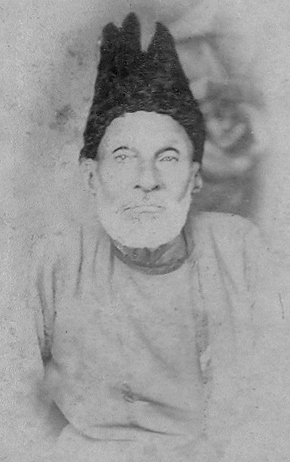
Mirza Asadullah Baig Khan, known popularly as Mirza Ghalib, was not just a poet but a literary phenomenon whose works have transcended time and space. He lived during the turbulent period from 1797 to 1869. He ended up being a chronicler of the chaotic times faced by the country during the 1857 revolt when many of the markets and localities in Delhi vanished. The mansions of his friends were razed to the ground. He wrote that Delhi had become a desert. Water was scarce. The city had turned into “a military camp”. It was the end of the feudal elite to which Ghalib had belonged. He wrote:

है मौजज़न इक क़ुल्ज़ुम-ए-ख़ूँ काश यही हो

आता है अभी देखिए क्या क्या मिरे आगे

An ocean of blood churns around me – Alas! Was this all?

The future will show what more remains for me to see.

Having settled down in the Chandni Chowk area of Delhi, he experienced first-hand the demise of the Mughal dynasty and the rise of the British Empire in India. Within a few months of his death in 1869, Mahatma Gandhi, who eventually led India to its independence in 1947, was born, though far away in Gujarat.

Why Chandni Chowk? I guess it would have been a posh area of the walled city known as Shahajahanabad then. Proximity to the Mughal court might have also weighed on his mind. The ease of shopping might have been another consideration.

The Moonlit Square in Delhi

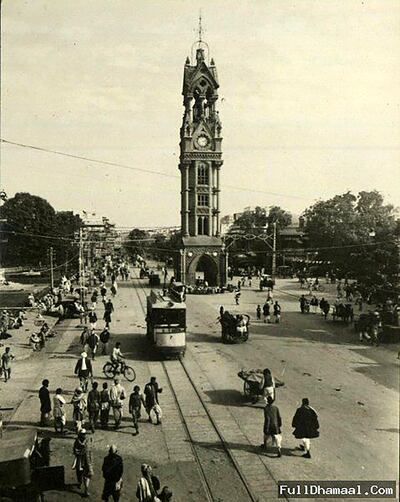
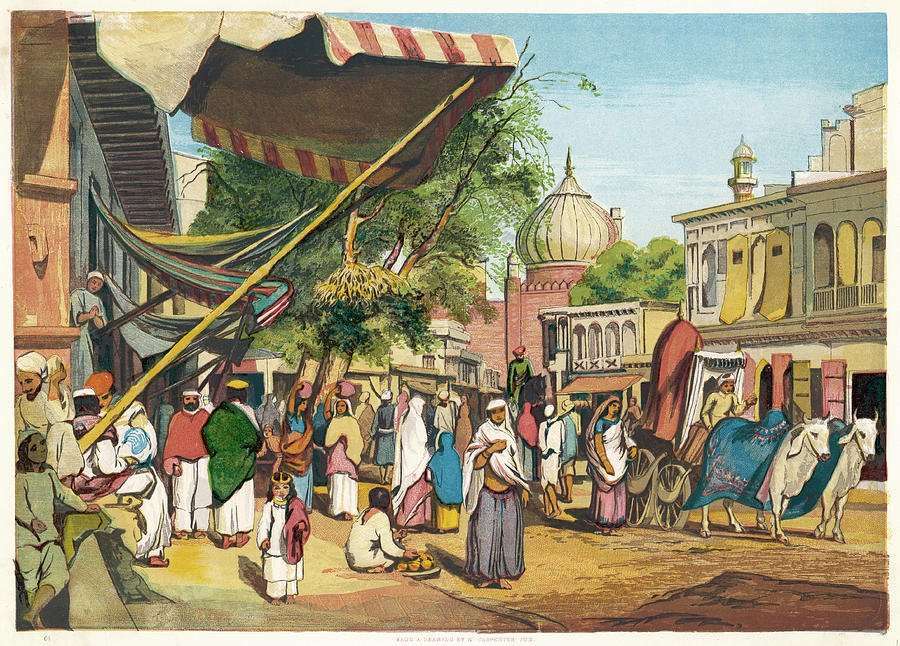
History buffs may recall that Chandni Chowk was built in 1650 by the Mughal Emperor Shah Jahan, and designed by his daughter, Jahanara. The market was once divided by a shallow water channel (now closed) fed by water from the river Yamuna. It would reflect moonlight. Hence its name.

There were roads and shops on either side of the channel. Ladies from the royal family are said to have ventured out of the Red Fort to shop for jewellery, clothes, and accessories. The place continues to be a shoppers’ paradise and has also become the biggest wholesale market in North India.

Shakeel Badayuni, the poet and lyricist, beautifully captures the image of this shoppers’ paradise thus in one of his nazms, ‘Tasaadum’:

वो बाज़ार की ख़ुशनुमा जगमगाहट

वो गोशआश्ना चलने फिरने की आहट

वो हर तरफ़ बिजलियों की बहारें

दुकानात की थी दुरबिया कतारें

That blissful glow of the market

That hustle-bustle of wide-eyed shoppers

A veritable spring of well-lit places

The endless rows of jewellery shops.

The range of products available is truly mind-boggling. Electrical goods, lamps and light fixtures, medical essentials and related products, silver and gold jewellery, trophies, shields, mementoes, and related items, metallic and wooden statues, sculptures, bells, handicrafts, stationery, books, paper and decorative materials, greeting and wedding cards, plumbing and sanitary ware, hardware and hotel kitchen equipment, all kinds of spices, dried fruits, nuts, herbs, grains, lentils, pickles and preserves/murabbas, industrial chemicals,  home furnishing fabrics, including ready-made items as well as design services.  

As to the mouth-watering sweets, savouries, and street food available in Chandni Chowk, right from the crispy jalebies of Dariba Kalan to the spicy chhole-chawal of Gol Hatti at Fatehpuri, full-length books alone may suffice.

Kuchas, katras, and havelis

The road now called Chandni Chowk has several streets running off it which are called kuchas(streets/wings). Each kucha usually had several katras (cul de sac or guild houses), which, in turn, had several havelis.

Typically, a kucha would have houses whose owners shared some common attributes, usually their occupation. Hence the names Kucha Maaliwara (the gardeners’ street) and Kucha Ballimaran (the oarsmen’s street).

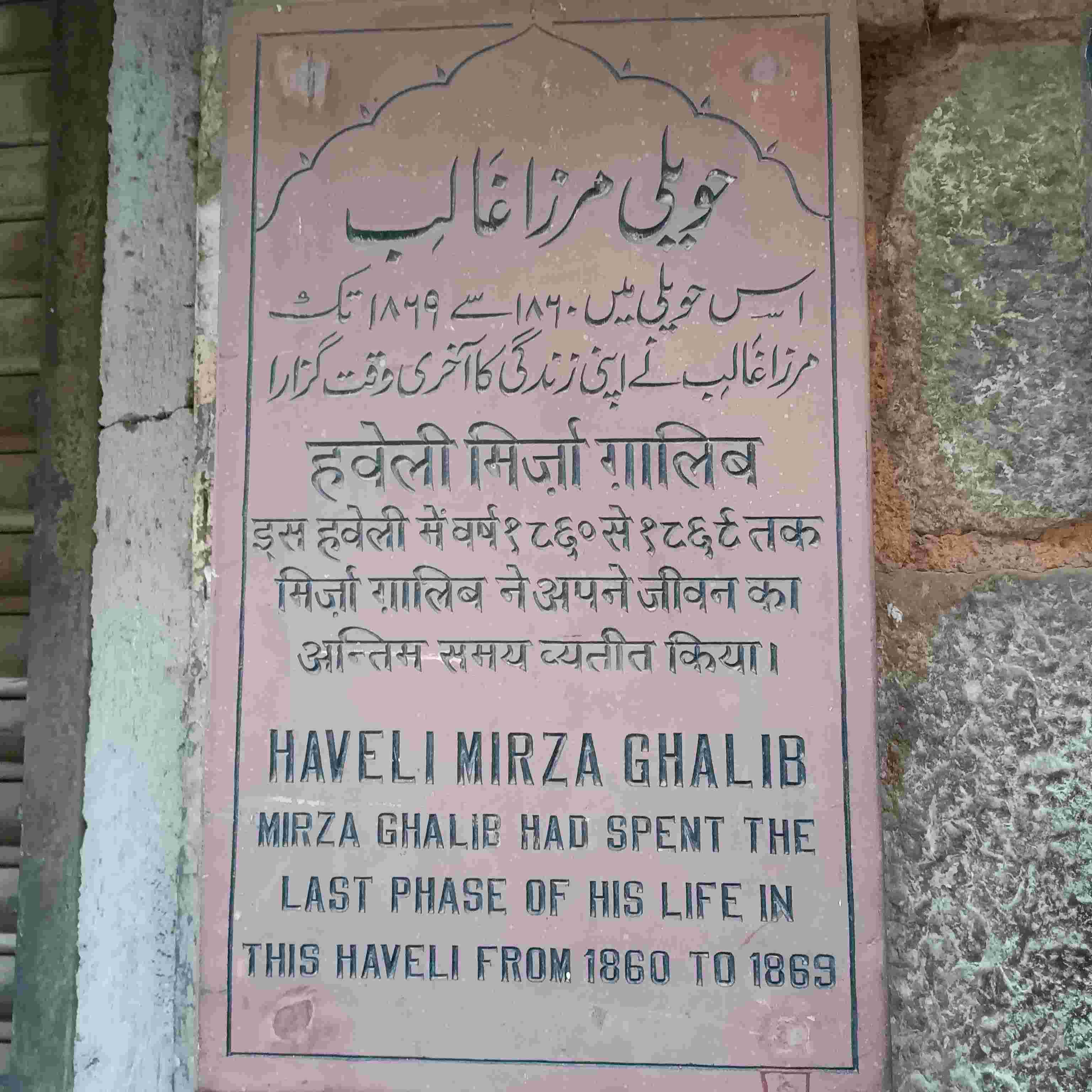
All this is not to say that there are no aspects of Chandni Chowk which one does not despise. One loathes its jostling crowds, its smells, its noises, its congested lanes, the mind-boggling variety of vehicles on its roads, its endless traffic snarls, its highly polluted air, its beggars trying to persuade perfect strangers to bear the burden of their maintenance with an optimistic vim, and its crowded pavements with aggressive sellers pouncing upon one to peddle their stuff. But if one has nerves of chilled steel and can manage all these with a chin-up attitude, one could eventually find one’s way to Ghalib ki Haveli, located in Gali Qasim Jan of Kucha Ballimaran.

As to Ghalib’s choice to live in Kucha Ballimaran, an area where oarsmen used to reside, one may merely surmise that as a creative genius of the literary world, he believed himself to be an oarsman, guiding his catamaran through the choppy waters of life!

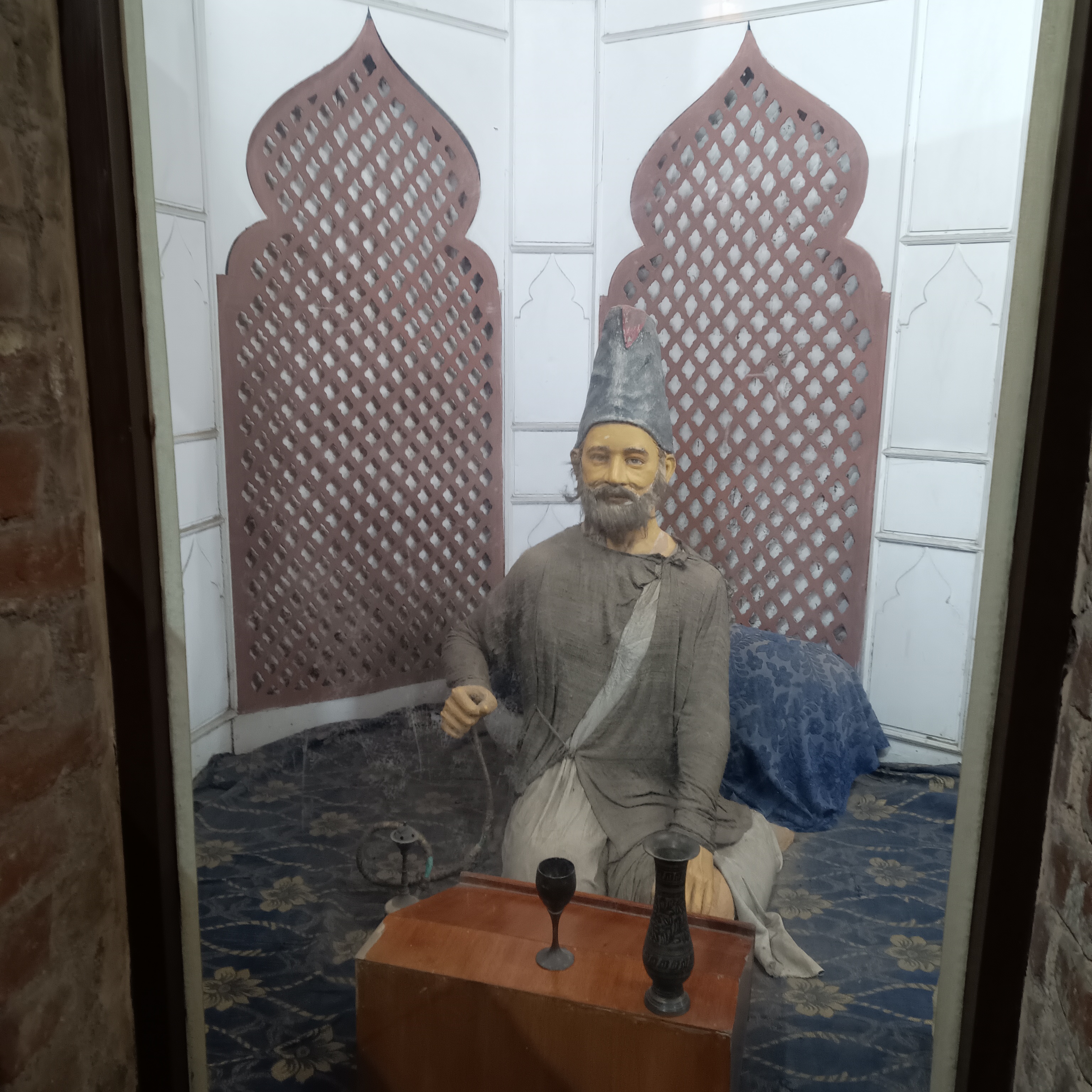
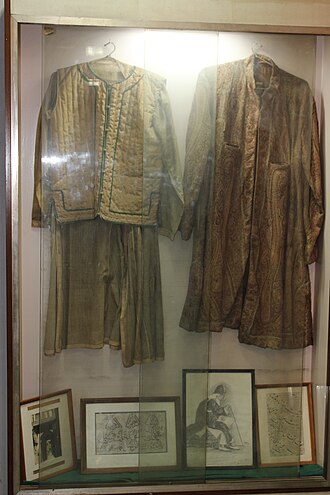
This place, where he lived from 1860 to 1869, till the time he breathed his last, has now been converted into a small museum of sorts. The main bust of Ghalib’s on display here has been gifted by Gulzar.

Mirza Ghalib

Born on December 27, 1797, in Agra, India, Ghalib’s life was marked by personal tragedies, political upheavals, and cultural transitions, all of which deeply influenced his poetic expression. Today, more than a century after his death, Ghalib remains one of the most celebrated poets in the Urdu and Persian literary traditions. His verses, rich with layers of meaning, continue to resonate with readers and scholars alike, offering insights into the human condition, love, pain, and the complexities of life.

Early Life and Personal Struggles

Ghalib was born into a family of Turkish aristocrats who had settled in India during the Mughal era. His father, Abdullah Beg Khan, was an officer in the army, but he died when Ghalib was just five years old. This left young Ghalib under the care of his uncle, Nasrullah Beg Khan, who also passed away a few years later. The early loss of his parents had a profound impact on Ghalib, and themes of loss, loneliness, and existential inquiry are recurrent in his poetry.

At the age of thirteen, Ghalib was married to Umrao Begum, a match arranged by his family. However, the marriage did not bring him the solace one might expect. Ghalib’s domestic life was fraught with tensions, and he found little happiness in it. None of his seven children survived beyond infancy. His financial struggles added to his woes, as he never held a stable job and relied on royal patronage, which was inconsistent at best.

The idea that life is one continuous painful struggle that can end only when life itself ends, is a recurring theme in his poetry. Consider this:

जब ज़िंदगी की क़ैद और ग़म का बन्धन एक ही है तो…

मरने से पहले आदमी ग़म से निजात पाए क्यूँ ?

The prison of life and the bondage of sorrow are the same,

Why should man be free of sorrow before dying?

Ghalib’s Literary Genius

Despite his personal hardships, Ghalib’s intellectual and poetic prowess blossomed. He was a polyglot, proficient in Urdu, Persian, and Turkish, and his poetry is a testament to his erudition. Ghalib’s work in Persian is extensive, but it is his Urdu poetry that has earned him eternal fame.

Ghalib’s ghazals are celebrated for their depth and complexity. A ghazal is a poetic form consisting of rhyming couplets and a refrain, with each line sharing the same meter. Ghalib mastered this form, infusing his verses with profound philosophical reflections, emotional intensity, and linguistic ingenuity. His poetry often grapples with the paradoxes of existence, the transience of life, and the elusive nature of love.

In keeping with the conventions of the classical ghazal, in most of Ghalib’s verses, the identity and the gender of the beloved are indeterminate. The critic/poet/writer Shamsur Rahman Faruqui explains that the convention of having the “idea” of a lover or beloved instead of an actual lover/beloved freed the poet-protagonist-lover from the demands of realism.

In one of my personal favourites on the tender emotion of love, he says:

उनके देखे से जो जाती है मुहं पर रौनक,

वो समझते हैं की बीमार का हाल अच्छा है.

My face is flushed with joy upon seeing my beloved,

Beloved mistakes my sickness to be a sign of good health.

One of the most remarkable aspects of Ghalib’s poetry is his exploration of the self. He delves into the intricacies of human identity, the soul’s relationship with the divine, and the quest for meaning in an indifferent world. For instance, in one of his famous couplets, Ghalib writes:

हज़ारों ख्वाहिशें ऐसी के हर ख्वाहिश पर दम निकले,

बहुत निकले मेरे अरमान फिर भी कम निकले

Thousands of desires, each worth dying for,

Many of them I have realised… yet I yearn for more.

This couplet reflects the insatiable nature of human desires, a theme that recurs throughout Ghalib’s poetry. His verses often portray a deep sense of melancholy, rooted in the understanding that the fulfilment of worldly desires is fleeting, and the ultimate truth lies beyond the material realm.

In many ways, the core of Ghalib’s poetry is not too far off from what Indian scriptures speak of.

The Philosophical Depth of Ghalib’s Poetry

Beyond his commentary on the socio-political changes of his time, Ghalib’s poetry delves into the philosophical. He was influenced by Sufism, a mystical Islamic belief system that emphasises the inward search for God and the personal experience of the divine. Sufi themes of love, union with the divine, and the eternal quest for truth permeate his poetry. However, Ghalib’s relationship with Sufism was complex. While he was drawn to its ideals, he also maintained a rational scepticism, often questioning established religious norms and dogmas. In one of his compositions, he mocks the hypocrisy of the preachers of Islam thus:

कहाँ मय-ख़ाने का दरवाज़ा ‘ग़ालिब’ और कहाँ वाइ’ज़

पर इतना जानते हैं कल वो जाता था कि हम निकले

What is the relation between the Preacher and the door of the tavern,

But believe me, Ghalib, I am sure I saw him slip in as I departed.

Ghalib’s poetry is also notable for its exploration of existential themes. He frequently contemplates the nature of reality, the impermanence of life, and the mysteries of the cosmos. His verses suggest a deep awareness of human knowledge’s limitations and the unknown’s vastness. In this sense, Ghalib can be seen as a precursor to modern existentialist thinkers, who similarly grappled with existence’s uncertainties.

Legacy and Influence

Ghalib passed away on February 15, 1869, in Delhi, but his legacy has only grown stronger with time. His poetry has been translated into numerous languages and continues to be studied, recited, and cherished by people across the world. Ghalib’s influence extends beyond literature; he has inspired musicians, filmmakers, and artists who have drawn upon his work to create new forms of artistic expression.

In India, Pakistan and elsewhere, Ghalib is not just a literary figure but a cultural icon. His ghazals are an integral part of the classical music tradition, and his life has been the subject of numerous plays, films, and television series.

Way back in 1954, Sohrab Modi gave us the movie Mirza Ghalib. Likewise, in 1961, Ataullah Hashmi of Pakistan gave us a movie on him.

In 1988, Gulzar came up with his television series which featured ghazals sung and composed by Jagjit Singh and Chitra Singh.

Various ghazal maestros like Mehdi Hassan, Iqbal Bano, Abida Parveen, Farida Khanum, Tina Sani, Noor Jehan, Suraiya, K L Saigal, Mohammed Rafi, Asha Bhosle, Begum Akhtar, Ghulam Ali, Lata Mangeshkar, Nusrat Fateh Ali Khan, and Rahat Fateh Ali Khan have sung his ghazals.

Low on The Richter Scale of Comprehension

Modern-day communication thrives on simplicity. Complex ideas are conveyed in a language that the masses understand. In other words, verses which would rate extremely high on the Richter Scale of Comprehension. However, it appears that most of our famous poets and literary figures perfected the art which is just the opposite. Simple ideas couched in high-profile and complex language, which only those at the top of the Language Proficiency Pyramid might fathom. Perhaps such literary geniuses wish to differentiate themselves from the hoi polloi.

When it comes to this particular trait, Ghalib has good company. In Urdu poetry, he is not always easy to understand. The poems dished out by him are often tough to understand, enriched as they happen to be with words drawn from the Persian language. In Hindi, the poetry of Jai Shankar Prasad comes to my mind. In Sanskrit, Kalidasa often keeps a lay reader guessing. In English, Shakespeare always leaves me baffled.

Quite some time back, I had luckily invested in a book of his poems which has not only the Urdu versions but also the corresponding translations in English and Hindi. As and when the ambience is right, I would play one of the renderings of Jagjit Singh, but only after having spotted the poem in the book. With lights dimmed, and one’s favourite tissue restorative perched on the table nearby, I get to feel the intensity of his words and end up experiencing a bliss which cannot be described in words!

Mirza Ghalib’s poetry is a treasure trove of wisdom, beauty, and emotional depth. His verses transcend the boundaries of time, language, and culture, speaking to the universal human experience. Ghalib’s ability to articulate the complexities of life with such eloquence and grace makes him a timeless poet, one whose work will continue to inspire generations to come. His legacy, like his poetry, is eternal—a shining beacon in the vast ocean of literary history.

For all lovers of Urdu poetry, visiting Ghalib’s haveli is a pilgrimage of sorts.

Notes:

  1. Vignettes of Chandni Chowk and movie/series posters courtesy of the World Wide Web.
  2. Museum snaps taken by yours truly during a recent visit to the place.
  3. Inputs received from Colonel Vivek Prakash Singh (Retired), a renowned poet in Urdu and Hindi, are gratefully acknowledged.
  4. Thanks are due to Sanjay Bhatia and Ashok Kalra who enabled this visit!

Related Posts:


Oh, the eternal conundrum of a wannabe raconteur! How to entice the dear reader with a ripping yarn, without getting bogged down in the quagmire of tedious explanations? I, for one, have frequently found myself in this very predicament, my literary endeavours stymied by the pesky queries that insist on popping up every once in a while, much like the kind of obnoxious queries raised by Aunt Myrtle of The Mating Season fame at a family gathering. 

“Where, oh where, do I begin?” I cry, throwing up my hands in despair, as the words “It was a dark and stormy night” wither and die on my lips. For, you see, dear reader, I am not one of those dashed clever fellows who can effortlessly spin a tale, replete with vivid descriptions and witty asides. No, I am but a humble wordsmith, prone to getting tangled in the underbrush of my own verbosity.

Take, for instance, this endeavour of mine to regale you with the tale of our merry jaunt to Bangriposhi, a picturesque hamlet nestled in the eastern reaches of India, in the charming state of Odisha. I began, with all the confidence of a debutante at her first ball, “It was at the crack of dawn that we set forth on our journey to Bangriposhi…” only to be met with a chorus of “Wait, what’s the name of the place?” and “Why on earth did you go there?” and “Were you alone?” and so on, ad infinitum.

I confess, dear reader, that I was soon reduced to a state of utter exhaustion, my responses growing more and more feeble, like the dog Bottles of Blandings and Elsewhere fame, after it has been subjected to an excessive number of baths. “Well, you see, it was like this… we were in couples, and didn’t have any kids, so… er… yes, I suppose we did enjoy the scenery…” Ugh, the very thought of it makes me shudder!

But fear not, dear reader, for I have since sought the counsel of a wise and venerable sage, who has imparted upon me the ancient secrets of storytelling. And thus, with a renewed sense of purpose, let me share with you with the tale of our Bangriposhi adventure, sans the tedious interruptions. 

The halcyon days of Bangriposhi, where the scenic beauty unfolded like a tantalising tapestry, precisely as one would expect. A diminutive jungle, a cosy cottage, and a caretaker-cum-chauffeur, along with his better half, all combining to create an ambience reminiscent of the cinematic masterpiece, “Days and Nights of the Forest.” Our merry band of five families, sans the tiny terrors, converged upon this idyllic setting, our camaraderie forged in the crucible of our apartment complex in the bustling metropolis we infest. And yet, I confess, I felt as out of place as a toupee on a turtle’s head. The crowd, you see, was not exactly my cup of tea. Initially, I attributed this unease to my introverted nature, which, I feared, was not quite in harmony with the group’s collective psyche.

But, as I delved deeper into the mystery of my discomfort, I discovered that the root of the problem lay not with the group, but with my trusty sidekick, my wife. It was as if Bertie Wooster, sans Jeeves, had embarked on an adventure with the formidable Aunt Agatha in tow. Now, before you label me a bounder for making such a statement, permit me to explain. I have conducted an exhaustive study of my own psyche (well, as exhaustive as one can be when sipping tea and nibbling on biscuits) and discovered that, on occasion, I have mingled with groups with the élan of a seasoned socialite. So, what was the source of my trepidation this time around?

The answer, my friends, lay in the confidence-sapping presence of my wife, who, I dare say, is otherwise an epitome of virtue and rectitude. You see, in days of yore, my confidence was fuelled by those devilish cigarettes, but with my wife by my side, even the thought of those white sticks with filters at the end was tantamount to committing a mortal sin. I felt like Ignatius Mulliner, craving a smoke, but acutely conscious of the weight of my self-esteem, lest I incur the displeasure of my better half, which might precipitate a domestic turbulence of epic proportions.

In short, I was a man torn asunder by the conflicting desires of his heart and the stern dictates of his conscience, all the while attempting to navigate the treacherous waters of matrimonial bliss. Ah, the trials and tribulations of being a married man!  

Many of you may agree with me when I say that maintaining a stiff upper lip in the face of impending lunacy is something that could test the resilience of even those who are made of sterner stuff! I was, in a word, a bit of a mess, rather like Ignatius, that talented but temperamentally-challenged nephew of Mr. Mulliner. It seemed that with each tick of the clock, my grip on sanity was slipping, much like a chap trying to cling on to a greased pig at the village fair. But, by Jove, I was determined not to let the good people around me catch on to my internal turmoil. No, no, I played it cool, a regular mask of tranquillity, all the while thinking, “Good fellow, you’re one step away from being carted off to the loony bin!” If any of the group members had indeed caught onto the kind of inner torment I was experiencing, services of someone configured along the lines of Sir Roderick Glossop would surely have been sought.

And, I must confess, it’s a dashed difficult thing to do, this keeping-a-stiff-upper-lip business. I daresay, that’s why the bachelor chaps always seem so carefree – they can let their hair down, as it were, and express themselves without fear of being thought a bit…well, dotty. Alas, I felt like Horatio, constantly on the lookout for signs of my own Hamlet-esque madness bursting forth from its hiding place.

As a result, the kindly hospitality of our homestay hosts was rather lost on me. I’m afraid I responded to their warm overtures with all the enthusiasm of a sleepy sloth, muttering the occasional “thanks” and “so kind of you” in a tone that suggested I’d rather be undergoing a root canal without anaesthesia. In short, I was about as far from being my natural self as a fish is from flying. But, by George, I managed to keep the old mask in place, even if it was held together with nothing more than a few threads of sanity and a healthy dose of British pluck!

The dashed awkwardness of it all! I’m afraid I’ve made a thorough ass of myself by presenting myself in this tranquil and inviting setting, looking for all the world like a chap who has the look of one who had drunk the cup of life and found a dead beetle at the bottom. My companions, no doubt, had been hoping to indulge in a spot of idle chatter or a hearty guffaw or two, but instead, they were stuck with a fellow who resembled a fugitive from a particularly dismal funeral procession. I daresay, they must be thinking, “Good heavens, what’s got into this blighter? Has he been taking elocution lessons from a dyspeptic owl?” Ah, the horror! The shame! I might as well have worn a T-shirt proclaiming, “I’m a killjoy, avoid me at all costs!” 

As luck would have it, on a rainy day when any outdoor expedition was ruled out, the group decided to play Antakshari, a game based on songs. Amidst the dampness all around, some inner clouds of despair also gathered, leading to a veritable tempest of tune-less-ness.  I, a vocal virtuoso of the most dubious sort, found myself floundering in the depths of Antakshari despair. My usually trust-worthy memory, capable of recalling the most obscure ditties with the precision of a Swiss watch, had apparently gone on a spot of holiday, leaving me high and dry, like a chap who’s misplaced his favourite umbrella on a drizzly day. The lyrics, those pesky little devils, seemed to vanish into thin air, rather like Dr. Watson’s hasty estimate of James Mortimer’s age, which, if I recall rightly, went up in smoke the moment the good doctor cast his eye on the fellow in person.

As I stumbled from one musical misstep to the next, I felt my Superman cape fluttering to the ground, leaving me exposed, a mere mortal, stripped of my melodic mojo. It was a bit like Napoleon’s ill-fated Waterloo campaign, only instead of cannons and cavalry, I was facing a barrage of bemused glances and stifled giggles from my opponents. The ‘War of Songs’, that most noble of pursuits, had reduced me to a quivering mass of uncertainty, a chap who couldn’t carry a tune in a bucket, let alone emerge victorious in the fray.

The tribulations of a chap on holiday! As the inimitable Bertrand Russell so sagely observed, “The wise man will be as happy as circumstances permit, and if he finds the contemplation of the universe painful beyond a point, he will contemplate something else instead.” Ah, but what happens when the universe, in all its inscrutable wisdom, decides to play a trick or two on one?

On the final day of our jaunt, I found myself in a state of utter despondency, feeling as though I’d lost my own identity in the great vortex of travel. The atmosphere around me had grown as heavy as the infamous London fog, with nary a glimmer of sunshine in sight. It was as if the very clouds themselves were conspiring against me, refusing to yield even a single, solitary yellow gap which would allow a ray of sunshine to creep in and dispel the darkness of my melancholy. And then, like a beacon of hope, I chanced upon Russell’s wise words, reminding me that when the weight of the world becomes too much to bear, one must seek solace in more pleasant pursuits.

For me, that pleasant thought was a nice, long soak in the tub. Ah, bliss! We’d been cooped up in that confounded place for a couple of days, and I’d already indulged in a pre-trip scrub at home, but now, I was determined to treat myself to a good, old-fashioned bath. I became as resolute as a bulldog guarding its favourite bone, refusing to budge until I’d had my fill of hot water and soap. Much like Bertie Wooster, you would have found me soaping a meditative torso and even belting out something along the lines of Pale Hands I Loved Beside the Shalimar, if you know what I mean.

Almost all of our scriptures exhort us to introspect and meditate on the state of affairs in one’s life. Being a firm believer, I daresay there is no place other than the bathroom where one could experience this bliss and have an uninterrupted conversation with the universe, thereby giving a boost to one’s Spiritual Quotient.     

Alas, my companions, those dear, long-suffering souls, grew anxious at my intransigence, their faces as long as a wet weekend in Brighton. My wife, that paragon of patience, took centre stage, her eyebrows shooting up like a warning flag on a stormy day, signalling to me that I was being, well, a bit of a cad. But I, like Bertie Wooster in his most obstinate moments, chose to ignore her gentle remonstrations, much as he would have disregarded Jeeves’ sage advice on the perils of donning a white mess jacket with brass buttons.

The tension was palpable, the air thick with the weight of my own stubbornness. I can only imagine the trauma I inflicted upon my fellow travellers, who, in their infinite wisdom, chose to support my wife’s sensible entreaties over my own, ahem, principled stance. And yet, at the time, I felt the kind of hollow defeat that plagues a character from R.K. Narayan’s stories—like a weary clerk who, after dodging creditors, losing his lunch money, and missing the last bus, drags himself home only to find the milk curdled and the fan creaking in the sweltering heat.

But fate, in its infinite mercy, intervened, and the caretaker’s wife announced that they were running low on fuel, and hot water was a luxury we could ill afford. With a sigh that was equal parts relief and frustration, I beat a hasty retreat, my dignity bruised.

And so, dear reader, we come to the end of this tale of woe, a chronicle of one man’s valiant struggle to maintain a stiff upper lip in the face of impending lunacy. As I reflect on the trials and tribulations of our Bangriposhi adventure, I am reminded of the wise words of that great sage, G.K. Chesterton: “The only way to be sure of catching a train is to miss it.” Ah, the profound wisdom of those words! For, in the end, it was not the scenic beauty of Bangriposhi, nor the camaraderie of our merry band, that proved the greatest challenge, but rather the internal turmoil of my  own mind, aided and abetted by my better half. When everyone took my wife’s side instead of mine, in that moment of extreme insult, I was reminded of the following words by P.G. Wodehouse:

Are wives often like that? Welcoming criticism of the lord and master, I mean?’

‘They are generally open to suggestion from the outside public with regard to the improvement of their husbands, sir.’

Note: Images courtesy of the World Wide Web we have spun around ourselves.

Related Posts:

Much like all the mothers on this planet, my mother also thought me intelligent.

However, I suspect I might have become mentally arrested at an early age, dishing out the sort of articles and books which people, not knowing the facts, assume to be the work of a cheerful, if dense, young fellow of about thirty-five.

My readers, God bless their souls, perhaps tell one another that they might do well to lend an ear to what this youngster has to say. Get the aspiring generation’s point of view, and all that. Some of them, unable to contain their enthusiasm, occasionally manage to persuade the authorities to invite me over to their educational institute and share a few words of wisdom.

However, when the day finally dawns, they are in for a rude shock. Contrary to what they imagined, they find a septuagenarian with a stooping back whose bald pate is shining in the overhead lights. When invited, they are aghast at finding him tottering up the stairs to the stage. His face often sports a permanently worried expression, making the onlookers wonder if he happens to be one of the honorary Vice Presidents of the Global Morons’ Association.

A collective gasp of disbelief and disappointment emanates from the audience. Such was indeed the fate of a motley crowd of young ladies on a recent occasion.

Like many authors, I am content to remain in my own bubble of thoughts, ideas and words. Solitude is what I crave.

Public speaking for me is a tortuous experience. I detest the fact that whereas I need to work hard on preparing for a talk, the audience merely needs to troop in, listen to the sagacious wisdom being imparted in a nonchalant manner, often paying more attention to the birds twittering outside the windows of the auditorium. And if the audience were to comprise young ladies who have perfected the art of unnerving the speaker by either staring at the poor fellow, or simply giggling when something serious is being said, you can well imagine the rapidity with which the butterflies inside my abdomen start flapping their wings.

I have had the occasion to study the methods of some of the more popular public speakers. Other than excellent oratorial skills, they possess a quality which is not easy to define. Let me say that they appear to have undergone a crash course in Decision Making Under Uncertainty. They have what I might call the gift of dealing with the Unusual Situation. The staring and giggling technique adopted by my audience, though, queers the pitch.

In the presence of the Unusual, I am rather prone to smile weakly and allow my eyes to protrude. Perhaps, I lack Pluck and Presence. Thus, it proves to be an ordeal which knocks all the stuffing out of me right from the start. I look at the young ladies and find each one staring at me with an unwavering gaze. I blink, then begin picking feebly at my coat sleeve.

Most lectures I get invited to follow a similar blueprint. Somebody gets up and introduces the chairperson and the speaker of the evening. Both amble up the stage. The chairperson on this occasion was built along the lines of Mother Abbess of The Sound of Music fame. She does not croon an invigorating melody like Climb every mountain. Instead, she mumbles a few words designed to cheer up the speaker, to allay his anxiety as to whether the audience is carrying any supplies of rotten eggs, potatoes, and tomatoes which may come in handy in case they do not receive his words of wisdom in the right spirit.

She concludes by making a few sympathetic observations about the subject at hand. Later, while the talk is being delivered, she can be seen making brief notes on a scrap of paper in a studious manner. Later, she uses these to wrap up the proceedings as quickly as the norms of society, the dictates of behavioural sciences and the standards of politeness would allow.

As a distinguished speaker of the evening, I am invariably dressed in an impeccable corporate style. This is merely to mask the inner shivering I happen to be experiencing at the prospect of facing a firing squad comprising close to seventy-odd students. Externally, I exude confidence. Internally, I am all of a twitter. I regret not having been prescient enough to help myself to generous helpings of a strong tissue restorative prior to arriving at the venue to deliver a speech.

True to form, once the introductions are made, an uproarious bout of clapping comes about, and an air of expectancy falls upon the hall. I gulp, mop my brow, and take a tentative sip from the glass of water in front of me. Then, after having fortified myself with a deep breath, I totter forward.

“Well, you know——” I said.

Then it strikes me that this opening lacks the proper formal dignity.

“Ladies——”

A silvery peal of laughter from the front row stops me again.

I then summon all the courage at my command, take another deep breath, and go on to describe at great length what I think of the scandalous way the tyranny of the classroom gets unleashed upon unsuspecting students. I highlight to them the benefits of taking their studies seriously, to be better prepared to face the harsh slings and arrows of life. I even go on to exhort them to get rid of their addiction to smartphones.  

While I try my best to convey a few messages of the serious kind, I also attempt to induct some humour into the otherwise drab, listless, and sombre proceedings. This helps me to sugarcoat the otherwise dull and boring content of my talk.  

The audience upon which my verbosity is getting unleashed listens in a state of polite resignation, often suppressing a yawn or two. With an eye on the wristwatch and a nose trying to detect the faint aroma of snacks and coffee being served outside the lecture hall, it is not difficult to discern that they are merely biding their time, hoping for the ordeal to end soon.

Then comes the time to face the firing squad, so to say. A few in the audience take turns to rise and ask carefully phrased questions which are perhaps meant less to gain a better understanding of the subject but more to impress the faculty members present. When a question gets asked in the pure spirit of proving to the assembled group that the questioner is smarter than the questioned, I decide to assert myself by saying haughtily that I can find her arguments but cannot find her brains.

Occasionally, I need to do a mental foxtrot, sidestep a question of an obnoxious kind, and instead narrate a joke, thereby leaving the audience in a confused yet pleasant frame of mind. I find that it is always a good trick to occasionally lace one’s answers with high-sounding words and complex ideas. One of the golden rules to be followed is that an audience that is bewildered and clueless about what is being said would be less prone to raising penetrating queries.

I consider myself lucky that the meeting has not turned boisterous; had that happened, the audience would surely have had more fun, but yours truly a good deal less.

As the discussion teeters on the edge of chaos, the chairperson swiftly steps in, perhaps noticing that I am just moments away from starting to twiddle my thumbs. She rushes in to conclude the affair, thereby bringing joy and relief all around. As a speaker, I am delighted that I was rescued just in time. I look upon the chair much like a typhoon survivor would look upon the US Marines when they arrive to rescue him from a disastrous situation.

Someone from the institute’s side quickly offers a vote of thanks to all and sundry, lest I might change my mind and go on to depress the audience any further. Mother Abbess hands over a ghastly-looking trophy by way of a token of appreciation and gratitude, duly accompanied by a round of applause from the audience, who are obviously delighted that their trauma is finally over. They rush out to grab the vitamins laid outside the hall, not only to keep their body and souls together but also to overcome the state of depression induced by my talk.

The organisers breathe easy, having saved their reputation as well as the furniture and other items from any damage.

The pleasant surprise is that while gobbling up the refreshments served, some of the eager beavers surround me and question me on several topics of contemporary interest. I confess this works like a soothing balm to an otherwise bruised soul. A gentle glow of inner satisfaction, howsoever transient in nature, suffuses the mortal frame. However, this is not to say that one looks forward to repeating a public speaking appearance in the future.    

Anyhow, it can be safely stated that a smoothly conducted lecture meeting is one of our civilisation’s most delightful indoor games. The speaker gets to build on his brand equity and indirectly promote the inane stuff he keeps dishing out. His ego gets a boost. Surrounded by youthful energy and waves of curiosity, he ends up expanding his canvas of knowledge. If it is instead a congregation of business magnates, his circle of influence gets enlarged. The possibility of landing a consultancy assignment improves.

What is the moral of the story, you might well ask.

Well, accept any such invitation to deliver a lecture at a public forum only at your own risk and peril. Do a cost-benefit analysis before accepting the invitation. Have pluck. Have the capacity to handle the Unusual Situation. Be cautious that such an experience could end up smothering your ego. The poor thing could not be blamed for feeling as if it were getting pummelled with size twelve hobnailed army boots. If the audience comprises young students who might have perfected the art of unnerving speakers by alternately staring and giggling, develop nerves of chilled steel before heading to the venue.

Notes:

  1. Illustration courtesy Suvarna Sanyal.
  2. This article had first appeared on Slo Word: https://www.sloword.com/isbf24-the-perks-and-perils-of-public-speaking-by-ashok-kumar-bhatia.

Related Post:

वो सद-रश्क जन्नत वो गुलज़ार देहली

वो देहली जो फ़िरदौसेहिंदोस्ताँ है


वो मजमुआ-ए-हुस्नो अनवार देहली

वो देहली के जिसकी ज़मीं आस्माँ है


वही जिसने देखे हैं लाखों ज़माने

सुने हैं बहुत इन्क़लाबी फ़साने


जहाँ दफ़्न हैं सैकड़ों ताज वाले

दोरोज़ा हुकूमत के मैराज़ वाले


वहाँ शम्मा जलती है धीमीसी लौ की

जहाँ जल्वारेज़ी है तहजीबेनौ की


वहीं की ये दिल दोज़ रूदाद सुनिये

जहानेअलमज़िक्रे बेदाद सुनिये


शफ़क से पहर के ठिकाने लगी थी

सियाही फ़िज़ाओं पे छाने लगी थी


फ़लक पर सितारे चमकने लगे थे

मुहब्बत के मारे बहकने लगे थे


वो बाज़ार की ख़ुशनुमा जगमगाहट

वो गोशआश्ना चलने फिरने की आहट


वो हर तरफ़ बिजलियों की बहारें

दुकानात की थी दुरबिया कतारें


ये मंज़र भी था किस कदर कैफ़सामाँ

ख़ुदा की ख़ुदाई थी जन्नत बदामाँ


सड़क पर कोई रहरू कुए जाना

चला जा रहा था ख़रामा ख़रामा


इधर राह पर नौजवाँ जा रहा था

उधर कोई मोटर चला रहा था


ये गाड़ी थी जो चली रही थी

हक़ीक़त में जन्नत खिंची रही थी


कोई क्या बताये कि जन्नत में क्या था

वही था जो अब तक देखा हुआ था


वो हुस्नेमुक़म्मिल वो बर्केमुजस्सिम

वो जिसके तसव्वुर से भी दूर हो ग़म


वो इक पैकरेसादगी अल्लाहअल्लाह

वो नाज़ुक लबों पर हँसी अल्लाहअल्लाह


सरापा मुहब्बत सरापा जवानी

सितम उसपे साड़ी का रंग आस्मानी


वो रह रह के आँचल उठाने का आलम

वो हँसहँस के मोटर चलाने का आलम


ये आलम बज़ाहिर फ़रेबे नज़र था

कि बस एक लम्हे में रंगेदिगर था


बश्शाश चेहरा लब पे तबस्सुम

सुकून आश्ना था अदाये तकल्लुम


गिरा बारियाँ दिल को शर्मा गई थीं

निगाहों पे तारीकियाँ छा गई थीं


हुये सनफे नाज़ुक के होशो ख़िरद गुम

ज़ुबाँ ने पुकारातसादुमतसादुम


ये मंज़र भी था किस कदर वहशत अफ़्जा

कि मोटर सरे राह ठहरा हुआ था


दिगर गूँ थी हालत तमाशाईयों की

ख़बर थी उन्हें दिल की गहराईयों की


इधर नौजवाँ खूँ बदामा पड़ा था

उधर एक मासूम क़ातिल खड़ा था


इधर रूह अज़्मेसफ़र कर चुकी थी

उधर दिल पे वहशत असर कर चुकी थी


इधर मौत ख़ुद ज़िन्दगी अस्ल में थी

उधर ज़िन्दगी मौत की शक़्ल में थी


गरज़ खुल गई असलियत हादसे की

हुई मरने वाले की जामा तलाशी


पसे जेब क़ातिल की तस्वीर निकली

इलावा अज़ीं एक तहरीर निकली


तसल्ली हुई जान में जान आई

जो पर्चे पे लिखी इबारत ये पाई


जफ़ाएमुसल्सल से घबरा गया था

मैं ख़ुद आके मोटर से टकरा गया था


टिप्पणियाँ:
  1. मेरे दिवंगत पिताजी मुझे बचपन में बताते थे की यह नज़्म चांदनी चौक दिल्ली में बहुत साल पहले हुई एक असली दुर्घटना पर आधारित है
  2. तस्वीर हिंदुस्तान टाइम्स के सौजन्य से
  3. विवेक प्रकाश सिंह का विशेष आभार

Non-statutory warning: This post is not about mountaineering. Nor is it about either global warming or the pollution of the Himalayas. It is about different shades of narcissism.

A vast majority of those I come across happen to have an ‘I-am-OK-but-you-are-not-OK’ disposition towards their fellow beings. Like Thomas ‘Thos’ Gregson, the fiend in human shape, they cast supercilious glances at others, often treating them like the dust beneath their chariot wheels. Talk to them on any subject, and they puff up their chests and play a game of one-upmanship, trying to prove their superior knowledge on the subject at hand. They come in many forms, sizes, and shapes. They pop up as relatives, friends, acquaintances, superiors, colleagues, or even subordinates.

Some of them have perfected the art of first gaining your attention and then peeping deep into your lives, asking all kinds of inane questions, much like Aunt Agatha. Often, they leave you convinced that you are an utterly-butterly useless person, a mere parasite eking out an existence while cornering some valuable resources of the planet. Ferreting out some unknown part/incident of your life and then subsequently using it to ridicule you is the work of a moment for them. When it comes to the fine art of seeking details about your finances, sleuths from the Income Tax department could learn a lot from them.

At social gatherings, they monopolise the conversation. They simply love hearing their own voice. When they narrate a joke, they expect all others to guffaw, that too in an appreciative manner. If they get requested to belt out a song like Sonny Boy, they, believing that their skill level at singing is superior to that of Cora Bellinger of The Song of Songs fame, consent to do so only after throwing some tantrums. At the end of the performance, they expect to be lustily applauded.

A few others excel at gaslighting, raising queries that leave you shaken from the base of your feet to the top of your head. Remember Dame Daphne Winkworth of The Mating Season fame? In the company of such people, you can be forgiven for feeling baffled, befuddled, bewildered, confounded, confused, fazed, flummoxed, mystified, perplexed, puzzled, and stumped, all at the same time. You are left twiddling your thumbs trying to figure out if your life is going in the right direction.

Such people believe that they happen to be perched atop the Mount Everest. Whichever way they look, they only find other mountains that are not as high as they happen to be stationed on. They suffer from what yours truly would allude to as The Everest Syndrome.  Let me hasten to add that I do not refer here to the genial souls who offer constructive criticism and help me to improve myself.   

Do you have a career issue? They will tell you how they would manage the same better. A health challenge? They would pounce upon you with an exotic treatment that has already given them superior results. A diet plan? They would invariably have a better one up their sleeves. Putting a morsel of food down the hatch in their presence? Be prepared for it to turn into ashes in your mouth when told of the innumerable unhealthy constituents it may hold. It is another matter that when the evening dawns, they could be found chomping on a samosa or some other deep-fried stuff with much glee.

A moody and obdurate teenager at home? They would make it a point to counsel you and point out where you are at fault. An elaborate lecture on kid management will soon follow. A prompt comparison will be made between you and another family member, proving you are deficient in your teen management skills. Their own family members could not be smarter and more successful. Their affairs are always in perfect order. They themselves could do nothing wrong.

Oh, you just got back from a trip to Norway? Great. But you missed seeing the Northern Lights? What a pity! Could you at least visit the spiral tunnel in Drammen? Oh, you missed that, too? A wasted trip! A comment of this kind, accompanied by a condescending glance, makes them sound like Doctor E. Jimpson Murgatroyd. You may recall that he has sad, brooding eyes and long whiskers, and his resemblance to a frog which has been looking on the dark side since it was a slip of a tadpole is apt to send your spirits right down into the basement.

Simply put, they happen to be omniscient, having expertise in all knowledge domains, be it astrology, astronomy, gastronomy, medicine and its myriad branches, meditation, nature cure, reiki, regression therapy, spirituality, and yoga. They are the lord and master of all that they survey. Wherever they go, they need to have the last word. They believe themselves to be God’s gift to humanity. Judging others is what they do with great enthusiasm and aplomb.

Unlike Sir P. G. Wodehouse, whose works spread light, joy, and sweetness, any interaction with these descendants of Sir Edmund Hillary leaves you a wee bit depressed and glum, diluting your self-confidence and making you wonder why you are not as smart as they pose themselves to be. Contrary to being ‘sources’ of wisdom, joy, and comfort, they tend to be ‘sinks.’ If you happen to be one of those over-sensitive types, you will need to develop nerves of chilled steel, so they do not end up sapping your energy.

On the mere mention of such people, you could be excused for giving in to trembling your knees a trifle. The thought of being confronted with such a solid bunch of detractors who otherwise wear the masks of a well-wisher is unnerving.

If Jeeves were to be consulted on the matter, he would surely provide a few insights on the psychology of such persons.

One, they could be inwardly jealous of your multi-faceted achievements. They could thus be behaving like Aunt Agatha, trying to hide their own embarrassment at having temporarily lost a pearl necklace, thereby trying to overcome their own inferiority complex while in your company.

Two, they might be living in a bubble of superciliousness and simply enjoying the game of psychologically putting down all those whom they meet. In other words, it is a personality trait which is deeply ingrained in them. Thus, they might deserve more to be pitied than censured.

Three, they happen to be deficient in such behavioural traits as empathy, generosity, humility, and sincerity. Expressing gratitude and acknowledging the value others bring to their lives does not occur to them. Honest communication is not their forte. As a result, they often lack adaptability and fail to grow themselves, blissfully unaware of what they are missing in life.    

Without a doubt, they have shades of what could be alluded to as a narcissistic personality. They exaggerate their achievements and talents and disregard others’ feelings. They have perfected the art of blaming others for all their problems, and unabashedly play the victim card.

How does one handle such people? Consider the following.

  • Reminding ourselves that in this life it is not such people that matter but the courage with which one maintains a sang froid in their company. Our lives are our own responsibility. We cannot live as per the opinion of others about us. Often, we waste much time in our lives worrying about what others would say about our decisions and actions. But if we act as per our conscience and if our moral/value compass is functional, the only thing we need to watch out for are the karmic consequences of our actions. This, in turn, needs deep reservoirs of resilience, a stiff-upper-lip attitude in general, and a higher level of self-confidence.
  • Let us cut through the mists of our own prejudices and try and sift the grain and the chaff. There could indeed be some merit in what such persons say. It can help if we were to first judge if such people happen to be genuine well-wishers; and if they are sincere. If so, their feedback could be given some weightage, paving the way for us to improve our lives.
  • We can of course decide to go on the offensive. Lives are seldom perfect. Pointing out a few flaws in their own scheme of things could be tried, though subject to the boundaries prescribed by the norms of civilised society, the dictates of behavioural sciences, and the standards of politeness. Occasionally, a back-handed compliment could stop them in their tracks, not unlike Roderick Spode when the word Eulalie is mentioned to him. A joke can lead to a light-hearted banter, designed to make them sit up and take notice. In any case, arguing with them on some point or the other might as well turn out to be an exercise in futility.
  • We also have the option to laugh it off and not take such people seriously. Any feedback from them could be brushed off nonchalantly, much like Bertie Wooster would tick off a dust particle from his coat sleeves. In other words, try and develop a Teflon-coated skin which repels any water that may happen to fall on it.

All of us have distinctive personalities. All of us have a set of unique circumstances under which we operate. Our responses to similar situations are as varied as the colours of a rainbow. The universe created us to enjoy our lives and strive towards achieving a state of bliss, harmony, and perfection. Those of us who happen to be steeped in consciousness seek purity and unity of thought, words, and deeds. Do we have a right to judge others? Do others have a right to judge us? I doubt.

However, as long as we are in the company of those who suffer from The Everest Syndrome, we are apt to find that the air is congested with V-shaped depressions. Consequently, while standing atop the K-2 that we infest, we look north, south, east, and west and discover quite a few clouds on the horizon.

But Bertie Wooster would tell us never to repine, never to despair, never to allow the upper lip to unstiffen, but always to remember that, no matter how dark the skies may be, the sun is shining somewhere and will eventually come smiling through.

In general, we would do well to pull ourselves together, have a chin-up attitude, and march on with our lives. If we were to gear ourselves up to scale the world’s tallest mountain, let the mountain be defined as that of our aspirations in life, whether material or spiritual. We can care better for our fellow beings and our environment. We can focus on reining in our ego, desires, anger, jealousy, avarice, and greed. We can be grateful for what we have. We need not allow others to treat us as a doormat. We can elevate our level of consciousness.

Notes:

  1. Illustrations courtesy www.
  2. Inputs from Suryamouli Datta and Rajeev Verma are gratefully acknowledged. 

Related Post:

Gulzar once said lyrics should “amaze or amuse”, or otherwise no one would care. In his six-decade career as a poet-lyricist, he certainly stuck to this principle.

His best work in the first half of his career was with R.D. Burman. After a lull following Burman’s death, with composers like A.R. Rahman, Vishal Bhardwaj and Shankar-Ehsaan-Loy entering his world, his lyrics gained a new ferocity, as filmmakers and their gradually evolving subject matters gave him room to experiment and push the envelope.

Here are only some of Gulzar’s best-written (not necessarily his most successful) songs.

‘Mora Gora Ang’, Bandini (1963)

A textbook example of how Gulzar turns a traditional love song into something ethereal: evoking “Shyam”, which means evening as well as the Hindu god of love Krishna. He writes: “Mora gora ang lai lemohey shyam rang dei de / Choop jaungi raat hi meinmohey pee ka sang dei de” (‘Take my fair body, colour me as dark as shyam / I will hide myself in the night, grant me the company of my beloved’).

‘Humne Dekhi Hai Un Aankhon Ki Mehakti Khusboo’, Khamoshi (1969)

Can you see the fragrance of the eyes? Gulzar can. This was among one of Gulzar’s earliest songs where a sensory experience is accorded to a body part to which it is foreign. But what makes this song work, after its unorthodox opening, are the graceful lines that follow.

‘Haal Chaal Theek Thaak Hai’, Mere Apne (1971)

Among one of Gulzar’s earliest political songs, the lines here are caustic and timeless. In one verse, he refers to the ruling class with “makaanon pe pagdi waale sasur khade” (‘Tough father-in-laws stand atop buildings’), which is rhymed with “koi in buzurghon se kaise lade?” (‘How do we fight these old men?’).

In another, he explains the food-and-money situation with the image of a roti rolling down the street followed by a silver coin, but a kite flies away with the roti and a crow escapes with the coin.

‘Musafir Hoon Yaaron’Parichay (1972)

Gulzar creates some really simple but evocative images in this song about a wanderer. He writes, ‘if one path didn’t work out, another came by, and sometimes the path followed me the way I turned’. Then he writes: ‘sometimes the day beckoned me there, the night called me there, I made friends with both dawn and dusk’.

‘O Majhi Re’Khushboo (1975)

Rivers, shores and boatmen are recurring images in Gulzar’s lyrics, and this is perhaps his most definitive song in that respect. Among the stand-out metaphors here is Gulzar’s description of lonely wanderers as eroded strips of land floating in search of a shore.

‘Dil Dhoondhta Hai’, Mausam (1975)

In contrast to the upbeat tune, Gulzar’s free verse about reminiscing an old love is rather poised and graceful.

The lyrics perhaps may be better appreciated if read as a poem. Some pleasant imagery here: “Jaadon ki narm dhoop aur aangan mein let kar, aankhon pe kheench kar tere daaman ke saaye ko / aundhe pade rahe kabhi karvat liye huye” (‘I lay prone in the courtyard under the soft shade of trees, drawing your shadow over my eyes, sometimes twisting and turning’).

‘Tere Bina Zindagi’, Aandhi (1975)

Once again with a romantic song, Gulzar’s powerful introduction sets up and defines the sort of love to be explored. This time, there’s affection, but between old souls: ‘Without you, I have no complaints with life, but life isn’t life without you’, he writes.

‘Masterji Ki Aa Gayi Chitthi’, Kitaab (1977)

Gulzar’s reputation for wacky, out-there lyrics is surely courtesy his work with the post-1990s composers, but some of his particularly eccentric work with R.D. Burman deserves credit for sending him down that road.

In this song, among other things, out of the masterji’s letter pops out a betel leaf-chewing cat wearing shades and a mosquito with a mountain-carrying moustache.

‘Ek Akela Iss Shahar Me’, Gharaonda (1977)

A terrific song about urban loneliness. Had Travis Bickle heard this, he may have calmed down and not attempted assassinations and gunfights. Among its most haunting lines about the indifferent city: “Din khali khali bartan hai aur raat hai jaise andha kuaan” (The days are like empty vessels, the nights are a bottomless well).

‘Aaj Kal Paon Zameen Par’Ghar (1978)

The lightness of touch in Gulzar’s lyrics complements the optimistic yet modest hopes of a young blooming romance. In a standout verse, Gulzar writes, ‘whenever I held your hand and looked, people said it’s only the lines on your palm, but I saw two destinies coming together’.

‘Phirse Aaiyo Badra Bidesi’, Namkeen (1982)

Splendid imagery abounds in this haunting song filled with longing. With mentions of clouds, a lake, a terrace, a peepal tree, a garden, a small bridge and so on, he magnificently creates a psycho-geography that gets engulfed in yearning with each passing line.

‘Mera Kuchh Samaan’, Ijaazat (1987)

Gulzar’s ultimate breakup/heartbreak song, but such a facetious description hardly does justice to the brilliance of ‘Mera Kuchh Samaan’. From the simple idea of wanting your stuff back from your ex-lover’s house, Gulzar creates a tapestry of the haunted memories of a relationship that once was.

‘Khamosh Sa Afsana’, Libaas (1988)

This feels like a song created out of ideas and metaphors Gulzar has turned to before in other songs, for example, ‘Humne Dekhi Hai In Aankhon Ki Mehakti Khushboo’, which is concerned with love that is best left unexpressed, and ‘O Majhi Re’, with its metaphors of river as life and shore as companion. It is the combination of these two ideas that lend the song its potency.

‘Chhod Aye Hum’, Maachis (1996)

A great song that documents the emotions and memories one has for their homeland and the endless gloom that follows when it is ravaged. The best line in the song goes, “Ek chota sa lamhaa haijo khatam nahi hota / Main laakh jalata hoonyeh bhasm nahi hota”. (‘A small moment in time that just doesn’t end / I keep setting it on fire, but it is never burned down’).

‘Dil Se Re’, Dil Se.. (1998)

An absolutely bombastic declaration of love, in contrast to the subdued grace of the earlier romantic songs in this list. Just a sigh of the heart causes the sun to shine, the mercury to melt and a storm to rise, Gulzar writes in the opening verse. Then he creates some extraordinary imagery about two stray leaves in another verse, which gets better the more you listen and contemplate the lines.

‘Goli Maar Bheje Mein’, Satya (1998)

Don’t think, just shoot, for if you think, you die – Gulzar spins a rollicking fun song out of this simple gangster’s code of living. Gulzar is writing from the perspective of absolute scoundrels, using their lingo, and despite the coarseness of the words (or because of it), the message is communicated sharply.

‘Ghapla Hai Bhai’, Hu Tu Tu (1999)

Everything is a scam, Gulzar writes, in this satirical song through which he takes potshots at the political class. Gulzar drops the mocking tone in the final verse and embraces the true sadness of the subject matter: “… ghiste ghiste fat jaate hai juton jaise log bechaare … pairon mein pehne jaate haijalse aur jalluso mein”. (‘People are like shoes, tattered from overuse, worn at celebrations and processions’).

‘Hum Bhul Gaye’, Aks (1999)

If we are to strip the song of the film’s context, Gulzar’s lyrics, which depict an experience of feeling disassociated from oneself, might just be about depression. He writes, “Umeed bhi ajnabee lagti hai aur dard paraya lagta hai / Aaine me jisko dekha tha bichda huwa saya lagta hai.” (‘Hope seems like a stranger and pain feels foreign, the one I see in the mirror seems like a shadow separated from me’).

‘Haath Choote’Pinjar (2003)

Gulzar’s lyrics are a 101 on how to deal with relationships that are about to or have completely run their course. He writes, ‘even if the holding of hands gets loose, do not end ties’. Then he writes, ‘if one has to indeed leave, don’t break your heart for them’.

‘Piya Tora Kaisa Abhimaan’, ‘Raincoat’ (2004)

In a song essentially about endlessly waiting for your beloved, the allusions to Hindu traditions and myths lend it a timeless folkish quality. Gulzar weaves the angst of pining with the images of Radha-Krishna’s romance under the kadam tree, kahars carrying a palanquin, bathing in the Jamuna for absolving one’s sins and wearing the “garal saman” or poison-like mark of sandalwood on the forehead to embrace a hermit’s life as one’s lover won’t ever return.

‘O Saathi Re’, Omkara (2006)

As much as choosing the best lyrics in Omkara is a toss-up between the ornate raunchiness of ‘Namak’ and the sublime beauty of ‘O Saathi Re’, the warmth in the latter’s description of mutual affection is more effective than the cleverness of the former’s innuendos. Gulzar draws some lovely images in O Saathi Re, particularly in a verse that follows a couple fishing on a riverbank on a red evening.

‘Ay Hairathe’, Guru (2007)

Like moments in ‘O Saathi Re’ and a bunch of other love songs, like the ones from Ghar and Ijaazat, Gulzar is a master at highlighting the particularities of a relationship, mentioning specific details and giving the relationship a lived-in quality. ‘Ay Hairathe’ is just one more example in which Gulzar brings grace to the intense cuteness of a marriage’s honeymoon years.

‘Kaminey’, Kaminey (2009)

Gulzar writes, ‘everyone and everything is damned, including me, my hopes, my dreams, my friendships’, the list goes on. In a song where self-pity is the only conclusion of introspection, there are moments of cruel beauty, such as a verse where Gulzar writes, “Jiska bhi chehra cheelaandar se aur nika / Masoom sa kabootar / naacha to mor nika”. (‘I found someone else everytime I scratched a face’ / ‘An innocent pigeon danced, turned out to be a peacock’).

‘Dil To Bachcha Hai Ji’, Ishqiya (2010)

What’s great about the lyrics here is how from a definite premise – that of an old man feeling young again because of love – Gulzar draws out all kinds of specific images and ideas that feel extremely effortless. There are no complex metaphors at work, nothing that’s tired and overused, and it all comes together so neatly.

‘Bekaraan’, 7 Khoon Maaf (2011)

There are some lovely moments in this romantic paean. There’s the part where Gulzar writes, ‘please see beneath your feet if something’s stuck … it’s just time, please ask it to move along’.

But then written from the perspective of an abusive husband, the line “Kya laga honth talejaise koi chot chale” (‘What’s that under your lips, looks like a bruise’), gives the song a sinister edge.

‘Heer’, Jab Tak Hai Jaan (2012)

Yet another song about pining, but how to keep it fresh? Gulzar brilliantly blends two tragic romances: Heer-Ranjha and Mirza-Sahiban. He writes, ‘don’t call me Heer’ (who doesn’t get to build a home with her lover Ranjha, as she is married off, and both die before they can be united), ‘for I’ve become Sahibaan, and Mirza will bring a horse and take me away soon’. (Mirza escaped with Sahibaan on his horse the night right before her wedding ceremony).

‘Khul Kabhi Toh’, Haider (2014)

Like ‘Bekaraan’, again an intense love song written from the perspective of a guy who is not quite there in his head.

Beautiful lines like “saanssaans sek doon tujhe” (‘breath by breath, I will heat you up’), lead up to violent imagery: ‘when I was kissing your earrings, a gulmohar tree kept dancing’ … ‘in the heat, I felt ‘why don’t I throw you into the fire of the burning gulmohar’’.

‘Kill Dil’, Kill Dil (2014)

There are fantastic images and metaphors all throughout this song, which tells the story of two daredevil gunslingers. Gulzar himself recites their introduction: ‘Here come two bastard sons of darkness, walking down a coal-black road … they were raised drinking blood … they neither have skies overheard nor ground underneath … perhaps their life was crushed, this is their story’.

‘Patli Gali’, Talvar (2015)

A fun sardonic take on how torturous the legal system is for the common citizen, ‘Patli Gali’ is filled with delightful lines. For example, in the “patli gali” (narrow lane), Gulzar writes, ‘bald men sell combs, while lawmakers sell the ropes twisted round their [the people’s] necks’.

‘Aave Re Hichki’, Mirzya (2016)

Gulzar ties up the folk myth of hiccups occuring when one is remembered by their beloved with the widely held belief of their occuring due to a dry throat. But going past this conceit, Gulzar yet again evocatively describes the sorrow of longing, drawing in elements of the geography of the story, as he did with ‘Phirse Aaiyo Badra Bidesi’.

About the author:

Devarsi Ghosh loves to write on films, books and music when he is not working on his screenplays.

Notes:

  1. August 18 is Gulzar’s birthday.
  2. This article first appeared on The Wire: https://thewire.in/the-arts/gulzar-at-90-his-30-best-lyrics.
  3. The author’s permission to reproduce this article here is gratefully acknowledged.

Related Posts: