Feeds:
Posts
Comments

Residents of Plumsville are aware of such couples as Piggy-Maudie and Joe-Julia. To lovebirds that are young at heart and have matured over time, lining of the stomach plays an important role. At times, the prospect of an alliance between their respective children reunites them. PGW RingForJeeves

In ‘Ring for Jeeves’, we get to meet Mrs. Spottsworth and Captain Biggar. They are also young at heart but not as advanced in age as to merit consideration either to bodily afflictions or to children’s marriage prospects.

The two get introduced to each other while on a hunting spree in Kenya. Much later, they run into each other in the coffee room of the Goose and Gherkin, one of the wayside inns in England. A day later, they happen to be staying together at Rowcester Abbey, a property Mrs. Spottsworth is considering buying.

Of chance meetings which are ‘meant’

Mrs. Spottsworth exudes an aura of wealth. She is as rich as she looks. At the mere mention of her name, the blood-sucking leeches of the Internal revenue Department ‘raise their filthy hats with a reverent intake of the breath.’

Her first husband, Cliffton Bessemer, died in a road mishap, leaving behind sackfuls of the green stuff, which got further supplemented when her second husband, A. B. Spottsworth, made the obituary column, when, while hunting in Kenya, ‘thought a lion to be dead, whereas the lion thought it wasn’t.’

Colonel Cuthbert Gervase Brabazon-Biggar had the privilege then of picking up the mortal remains of her second husband and of getting those shipped out to Nairobi.

She remains in touch with both her husbands through a Ouija board. Broadminded and considerate, they keep egging her on to marry yet again. They assert that a woman, irrespective of her bank balance, needs a mate by her side.

She is intensely interested in psychical research and looks forward to enthralling spiritual manifestations, that too with a dash of impatience. She does not believe in chance. She believes that even chance meetings are ‘meant’.

Of cavemen and clubs

Mrs. Spottsworth is a romantic at heart. When ‘a night complete with moonlight, singing nightingales, gentle breezes and the scent of stock and tobacco plant’ brings the two lovers together, she tries her best to kindle the passion which happens to be dormant in the bosom of Captain Biggar.

The latter even gets persuaded to put on a pendant around her shapely neck, driving knives into his trembling frame.

Do you remember the day we met in Kenya?’

‘Oh, rather,’ said Captain Biggar.

‘I had the strangest feeling, when I saw you that day, that we had met before in some previous existence.’

‘A bit unlikely, what?’

Mrs. Spottsworth closed her eyes.

‘I seemed to see us in some dim, prehistoric age. We were clad in skins. You hit me over the head with your club and dragged me by my hair to your cave.’

‘Oh, no, dash it, I wouldn’t do a thing like that.

Mrs. Spottsworth opened her eyes, and enlarging them to their fullest extent allowed them to play on his like searchlights.

‘You did it because you loved me,’ she said in a low, vibrant whisper.

Kind words and melting looks

Despite being cold shouldered, her female instincts do not lead her astray. She knows that when a man chokes up and looks like an embarrassed beetroot every time he catches her eye, he is bound to be passionate about her. To bring that passion to a boil, few kind words and a melting look or two would be quite sufficient.

When an opportunity presents for her to dance the Chesterton with the ninth Earl of Rowcester and rousing the fiend that slept in Captain Biggar, she exploits it. The latter walks out in a dark mood, giving the frogs on the open lawns an impression that ‘it was raining number eleven boots.’

When her diamond pendant gets purloined, she merely expects justice, not vengeance. When Captain Biggar is held to be the prime suspect, she starts losing her faith in human nature.

When a woman loves a man with every fibre of a generous nature, it can never be pleasant for her to hear this man alluded to as a red-faced thug and as a scoundrel who can’t possibly get away but must inevitably ere long be caught and slapped into the jug.

The Biggar Code

On his part, Captain Biggar has loved her from the very moment when she, a combination of Cleopetra and Helen of Troy, had briefly popped up in his life. But his code was rigid on such matters. A pauper like him could not go mixing with wealthy widows. Tubby Frobisher and the Subahdar in the old Anglo-Malay Club at Kuala Lampur would not approve.

The Biggar code not only forbids poor persons proposing to rich widows. It also encourages a white man to shield young and innocent women from the seamy side of life. When it comes to alerting poor Jill about her affianced, Bill, cooing to Mrs. Spottsworth like a turtle-dove, Captain loses no time. The code also enjoins one to be honest in one’s dealings – whether by way of chasing defaulting bookies or by returning stolen pendants. If one values money, it is only to ensure that one can feel in a position to express one’s love for a woman with a magnificent bank balance.

He has a penchant for expressing himself in Swahili as also in some languages of the East. When craving clarity of mind, he is wont to do yogic breathing exercises and practice ‘communion with the Jivatma or soul.’

Breaking the code jinx

The code jinx is broken by Mrs. Spottsworth by confirming to Captain Biggar that one of the code’s main proponents, Augustus Frobisher, has already gone ahead and married a woman who has much more money than herself.

Captain’s plans of wandering out into the sunset alone get scratched. Jeeves’ services get relied upon for announcing the banns in The Times, the Telegraph and Mail and Express.

Unlike the narratives which capture the characters of Piggy-Maudie and Joe-Julia, the main protagonists in this case do not get united owing to one of the juicy schemes of Jeeves.

(Related Posts:

https://ashokbhatia.wordpress.com/2014/02/04/piggy-maudie-and-a-seasoned-romance

https://ashokbhatia.wordpress.com/2015/02/13/joe-julia-and-a-seasoned-romance)


findshars's avatarMy Views On Bollywood

By

Sharada Iyer

Waheeda Rehman with her exquisitely chiselled features, a rare simplicity, amazing grace and immense talent had a truly transcendental appeal. Her beautiful presence lent dignity to every character she portrayed in her long and illustrious career spanning more than three decades. From the vamp of CID in 1955 to the grandmother of Delhi-6 in 2009, she was fortunate to have got a variety of roles and her career graph is not only studded with memorable performances but also some remarkable on-screen dances.

waheeda-dance1

Waheeda Rehman danced like a dream and being one of the few dancing heroines to have entered the industry she brought with her the beauty of our cultural arts. She put life into all her dances and her eyes beautifully captured the different emotions and nuances required for the song situation. Apart from typical classical dances she also performed other lighter styles and left her graceful…

View original post 1,789 more words

ashokbhatia's avatarashokbhatia

The conscientious ones amongst the mandarins in the Indian Health Ministry cannot really be blamed for having sleepless nights. The epidemic of such lifestyle diseases as obesity, diabetes, hypertension and cardiovascular abnormalities is leaving them a wee bit clueless. The need of the hour is to come up with a scheme which nudges Indians of all sizes and shapes to start living slimmer and healthier lives.

Take obesity, for instance. As many as 60 million Indians – roughly 5% of the population – are considered obese. With more than 50 millionObesity image suffering from high blood sugar, India is a nation headed for a health tsunami the devastation caused by which would be anything but sweet. This is a grave threat to our vision of the country reaping a hefty demographic dividend in the years to come.

How do we motivate the Indian couch potatoes to switch off their TV sets…

View original post 993 more words

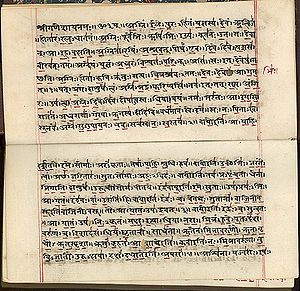
India offers to the world an immensely rich collection of sacred scriptures.rig-veda First and foremost are the Vedas, which could be justifiably referred to as the core of the spiritual and psychological soft power of India. Then there are the Upanishads, which capture the highest spiritual knowledge and experience that India can offer to the world.

India also has Puranas, Itihasas, Tantras, Dharma Shastras, and Sutras, besides the innumerable works of religious poetry in regional languages.

Ramayana and Mahabharata

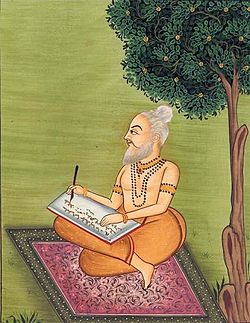
Amongst Indian scriptures, Ramayana and Mahabharata happen to be the most popular narratives. Both are pregnant with mature thought. Both contain teachings of political, religious, ethical and social kind. Both showcase, in a relatively simple language than that of the Vedas and the Upanishads, the Indian idea of Dharma, or righteousness.valmiki_ramayana

Both appeal to the soul as well as to the imagination of an intelligent mind. Even illiterates find gems of wisdom in these two epics. If philosophy, ethics, morals, social concepts, political thoughts or administrative justice form the warp in this unique fabric, heroic tales, human emotions, poetry, aesthetics, fiction, romance and villainy form the weft.

These epics showcase a highly developed sense of ethics and values, social and cultural realities of a distant past, besides intellectual and philosophical refinement. Lay persons could draw several life lessons from both these works. So could professionals of all hues.

Sanskrit, the supreme language  

Sanskrit is the language which forms the bedrock of a vast majority of these works. An intimate feeling of the language helps in understanding the multi-layered narratives better. One acquires a heightened sensitivity towards the shades of style and the context in which a statement is being made.

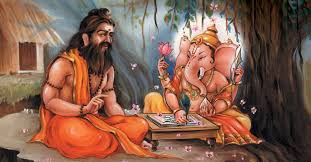
In today’s inter-connected world, one may not know Sanskrit but can still savour a fraction of the fragrant nectar of knowledge offered through any of the Indian scriptures.mahabharata-vyasa-ganesha

Sacred scriptures comprise a minor part of all the Sanskrit literature available from the Vedic to the pre-modern times. Nonetheless, they form the bedrock of Indian culture and spirituality.

Bhagavad Gita: The Song Celestial

Bhagavad Gita forms an integral part of Mahabharata, appearing in its Bhishma Parva. It comprises eighteen chapters. Broadly speaking, this unique composition touches upon three kinds of Yogas – Karma Yoga (The Yoga of Action), Gnana Yoga (The Yoga of Knowledge) and Bhakti Yoga (The Yoga of Devotion). [Yoga is a term which is often confused with physical practices of a certain kind. However, the term is used here in the sense of describing a communion, specifically the communion of an individual soul with the Divine.]

Upanishads articulate the philosophical principles concerning mankind, world and God. Gita explains the manner in which human beings can practice these subtle philosophical principles in their mundane lives.

Soulful management

One of the basic concepts enunciated by Krishna in the Bhagavad Gita is that Mahabharat Krishna Arjunaof the everlasting nature of the soul. The concept of a soul now finds a resonance even in modern management literature. In his book ‘The 8th Habit’, Stephen Covey urges professionals to pay heed to their ‘inner voice’. While proposing the whole person paradigm, he speaks of the four dimensions of a person – spirit, body, heart and mind.

From a management point of view, perhaps the most relevant are the concepts espoused under the overall umbrella of Karma Yoga. Here, Lord Krishna emphasizes the importance of self-less action, free of its rewards and gains. A state of inaction is held to be another form of action itself.

Gita III 6

कर्मेन्द्रियाणि संयम्य य आस्ते मनसा स्मरन्।

इन्द्रियार्थान्विमूढात्मा मिथ्याचारः स उच्यते।।

[A hypocrite is one who suffers from a false notion of having self-discipline. He is someone who controls the organs of action but continues to dwell upon the objects of sense.]

Gita III 7

यस्त्विन्द्रियाणि मनसा नियम्यारभतेऽर्जुन।

कर्मेन्द्रियैः कर्मयोगमसक्तः स विशिष्यते।।

[He who controls his senses by his mind and engages with the organs of action in a Yoga of Action achieves excellence in whatever he does.]

The concepts enshrined under Gnana Yoga are also highly relevant for management professionals. This is so because one of the major challenges in their careers is to keep unlearning, so the process of real learning can never cease.

Smart professionals always keep an open mind. They strive to keep abreast of latest technological developments. They keep learning from their failures as well as from their successes.

The Yoga of Devotion

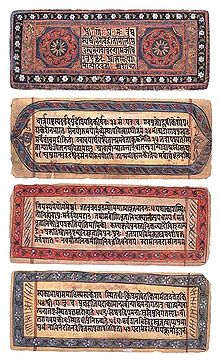
When it comes to Bhakti Yoga, the relevance of what Gita says is perhaps bhagavad_gitasomewhat limited as far as a practicing professional is concerned.

Loyalty and devotion – to a superior as well as to the company – are terms which readily spring to one’s mind. But in the absence of a truly charismatic business leader of the stature of Lord Krishna, blind devotion could perhaps lead to a catastrophe in one’s profession. A sense of misplaced loyalty often becomes an excuse for senior managers to remain in their comfort zones. Accepting fresh challenges becomes a key challenge. Their skill-sets start getting rusted. Much like stones which do not roll, they start gathering moss.

Time to rediscover the Gita

There is much that CEOs and managers can learn from the Bhagavad Gita. Its language is pregnant with symbolism at times. But it has rich lessons to offer for day-to-day conduct of business.

This stream of knowledge is close to 3,500 years old. It is never too late to rediscover it.

(Illustrations courtesy Wikipedia)

(Related Posts:

https://ashokbhatia.wordpress.com/2013/05/27/management-lessons-from-ramayana

https://ashokbhatia.wordpress.com/2013/07/12/management-lessons-from-mahabharata

https://ashokbhatia.wordpress.com/2015/09/04/management-lessons-from-the-life-of-lord-krishna

https://ashokbhatia.wordpress.com/2016/06/07/some-management-lessons-from-india)


For those who are new to the world of P G Wodehouse, here is a post which offers interesting tips on where to start devouring his sunlit works.

To those who already reside in Plumsville, this post offers a new perspective on the order in which his works may be savoured.

Honoria Plum's avatarPlumtopia

world-of-jeevesThis piece is the second in a series of guides for readers wanting to discover the joys of Jeeves and Wooster, Blandings, and the wider world of Wodehouse ‘hidden gems’. The previous post provided reading suggestions for new Wodehouse readers.

Today’s piece offers a suggested reading order for the Jeeves and Wooster stories, followed by some general notes and guidance for readers.

If you particularly dislike short stories and want to skip straight to the novels, I suggest starting your reading from Right Ho, Jeeves.

Jeeves and Wooster Reading List

View original post 820 more words

Most authors happen to be sensitive souls. The kind of cruelty they get subjected to in their routine lives makes one wonder as to how they keep dishing out juicy narratives day after day, despite facing mighty challenges.

For those who specialize in spinning fictional yarns, the basic challenge is that of cranking up a plot and etching out characters which fit into the overall scheme of things. For those who dish out a non-fiction piece of work, the challenge is that of coming up with a novel subject which would provide some satisfaction to their target audience.

Cruelty in the Creative Phase

When their creative juices are in full flow, distractions abound. Social commitments often impede the pace of work. Spouses pop up with some mundane queries just when the proceedings happen to be perking up. Maid servants and postmen come in just at the time when the heroine is about to swoon and fall into the hero’s out-stretched arms. An all too important marriage comes up in the spouse’s family just when the manuscript is being given the finishing touches.

Distractions of this kind interrupt the flow of creative juices. The author develops a ‘block’. To claw her way out of a block, a muse has to come to the aid of the party of the first part. Sanity is restored on its throne. Creative juices resume their flow.

Cruelty in the Publishing Phase authors-n-publishers

Once the creative foray in the imaginary mind space is over, a wannabe author lands on the hard terrain of real life. Publishers of all hues get contacted. The agonizing wait for a firm but polite rejection note, if any, begins. Quite a few publishers believe in the dictum that ‘Silence itself signifies rejection’. Heart-broken, the hapless author starts examining other options. Self-publishing pundits get consulted.

Leads given by friends who are blissfully ignorant of the current challenges being faced by traditional publishers keep getting followed up. The fact that they face an existential crisis these days, what with the barrage of e-books available at the click of a button, gets neglected. Their survival instincts lead them to woo well-established authors even while being wooed by newbie authors.

Surviving in the Publishing Jungle

Keen to share her work with the world, the author finally relents and settles down to a mode of publishing which meets her ambition, her purse strings and the content of the work to be peddled.

The interaction with a publisher – whether of the traditional, the print-on-demand, or the vanity kind – saps the energy of the author no end. Reserves of patience get called upon to answer all the queries raised and the permissions asked for. A realization dawns that nerves of chilled steel are a prerequisite for publishing a work. Exasperation sets in.

Reaching out to potential readers

The mood of despondency gets somewhat lifted when the first copy of the book comes into the author’s hands. But this is no time to sit back and relax. Marketing plans need to be acted upon. Social media updates have to be fed to the virtual world in a relentless manner. Myriad queries keep the poor soul in a perennial state of torment.

Harsh critics pan either the contents or the approach of the book. Dreams of being on the To-Be-Read list of the target audience evaporate. Visions of one being on the Best Seller list in some part of the world get clouded. The art of competing with millions of other wannabe authors to attract the eye-balls of unsuspecting readers gets learnt the hard way.

A Plummy initiativePGWodehouse

Some of you would be delighted to know that Rosie M Banks, the Chair-person of the Society for Prevention of Cruelty to Authors (SPCA), is recently said to have invited nominations for some of the annual awards conferred by the society in the following categories:

  1. Bingo Little Award: For spouses who provide flexible me-only distraction-free time to wannabe authors and ensure that their afternoon cup of tea is invariably served piping hot.
  2. Aunt Dahlia Award: For family members who keep inviting authors to devour the lavish spreads of Anatole, thereby keeping them in a positive frame of mind and ensuring a free flow of their creative juices.
  3. Bertie Wooster Award for Milk of Human Kindness: Meant for pals who are present only when they are needed, and are part of the cheering squad, specifically when the chips are down and tissue restoratives need to be served.
  4. Lord Tilbury Award: For publishers who display their kindness by responding to unsolicited manuscripts within two weeks, and, when rejecting one, are gracious enough to suggest alternate publishing houses who might be interested in the material submitted.
  5. Florence Craye Award: For intellectual critics who realize the kind of hard work that goes into whipping up a book like ‘Spindrift’ and provide constructive criticism of any work referred to them for a review.
  6. Daphne Dolores MoreheadAward: For bulk buyers who pick up more than 25% of the total first print order of an upcoming book.

Do you wish to nominate someone for any of these coveted awards? Further details can be had at www.plumspca.com. The entry fee is a modest tenner, to be remitted to the bank account of Bingo Junior.

The 19 rejections of Plum

A word to cheer up wannabe authors would be in order.

As reported by the late Norman Murphy in the September 2016 issue of ‘By The Way’, published by the P G Wodehouse Society (UK), during the month of June, 1901, a twenty year old Plum was down with mumps and was at Stableford for three weeks.  During this period, he wrote 19 short stories. All were rejected!

If this is what could happen to a Master Wordsmith of our times, there is much hope yet for first time authors of all sizes and shapes.

Having a chin up attitude, recalling one’s bulldog spirit, and facing the harsh slings and arrows of cruelty with aplomb would surely help!

(Related Posts:  

https://ashokbhatia.wordpress.com/2015/10/23/of-writers-and-their-blocks

https://ashokbhatia.wordpress.com/2013/09/30/the-confessions-of-an-armchair-blogger)

(Ask Kristen Lamb for more!)

Bollywood playback singer Mahendra Kapoor has rendered songs of all genres. Here is an exhaustive look at his duets, many of which have an immortal quality to them.

findshars's avatarMy Views On Bollywood

By

Sharada Iyer

Mahendra Kapoor with his distinct robust vocals carved a unique niche for himself as a superb singer during the Golden era of Hindi cinema. He was adept at singing all kinds of songs which included bhajans, ghazals, qawaalis, romantic numbers, sad songs as well as patriotic songs. His voice was immortalized on the small screen also when he sang the title track of director B R Chopra’s magnum opus TV serial Mahabharat. He was loved by his fans across all age-groups not only for his style of singing but also for his soft-spoken, friendly and humble demeanor.

For his outstanding contribution to the world of Indian film music, the Government of India bestowed upon him the coveted Padma Shree in the year 1972. He also won the prestigious Filmfare trophy for the ‘Best Male Playback Singer’ three times in his career (1964, 1968,1975) and the National Award…

View original post 1,755 more words

panjab-university-ubs

An academic course in management obviously does not offer lessons in managing the affairs of the heart. But the Class of 1977 broke through the academic shackles, with some of its members walking out of the campus with a clear strategy as to who their future soul mate shall be.

The stiff-upper-lip approach

Management education is all about the stiff-upper-lip approach of the mind. Analytical skills rule supreme, leading to rummy situations where analysis often leads to paralysis. Linear programming models get worked upon. Statistical techniques get dished out by stern looking professors who might have been hotter in their jobs more as police officers or as judges.

Hapless students are made to understand exponential smoothening techniques so as to be able to forecast business parameters in an uncertain business environment. Those with an engineering background struggle to match their debits and credits. The lucky ones who have had a background in commerce twiddle their fingers trying to grasp the complexities of quantitative techniques in decision-making.

The neglected need to boost our EQs

The behavioural sciences do provide a little bit of cheer to the tormented souls undergoing a typical MBA course. But to understand the psychology of an individual is no mean task. Mere case studies and management tips for handling an industrial strife do not improve one’s EQ substantially. Handling a tough boss eventually gets learnt only in the corporate world outside. The real world also teaches us to handle errant subordinates whose emotional blackmail upon reporting for work after a spell of French leave needs deft handling. The harsh realities of business world provide a high quality learning which can surely not be replicated within the stifling confines of a classroom.

The dashers and the rabbits

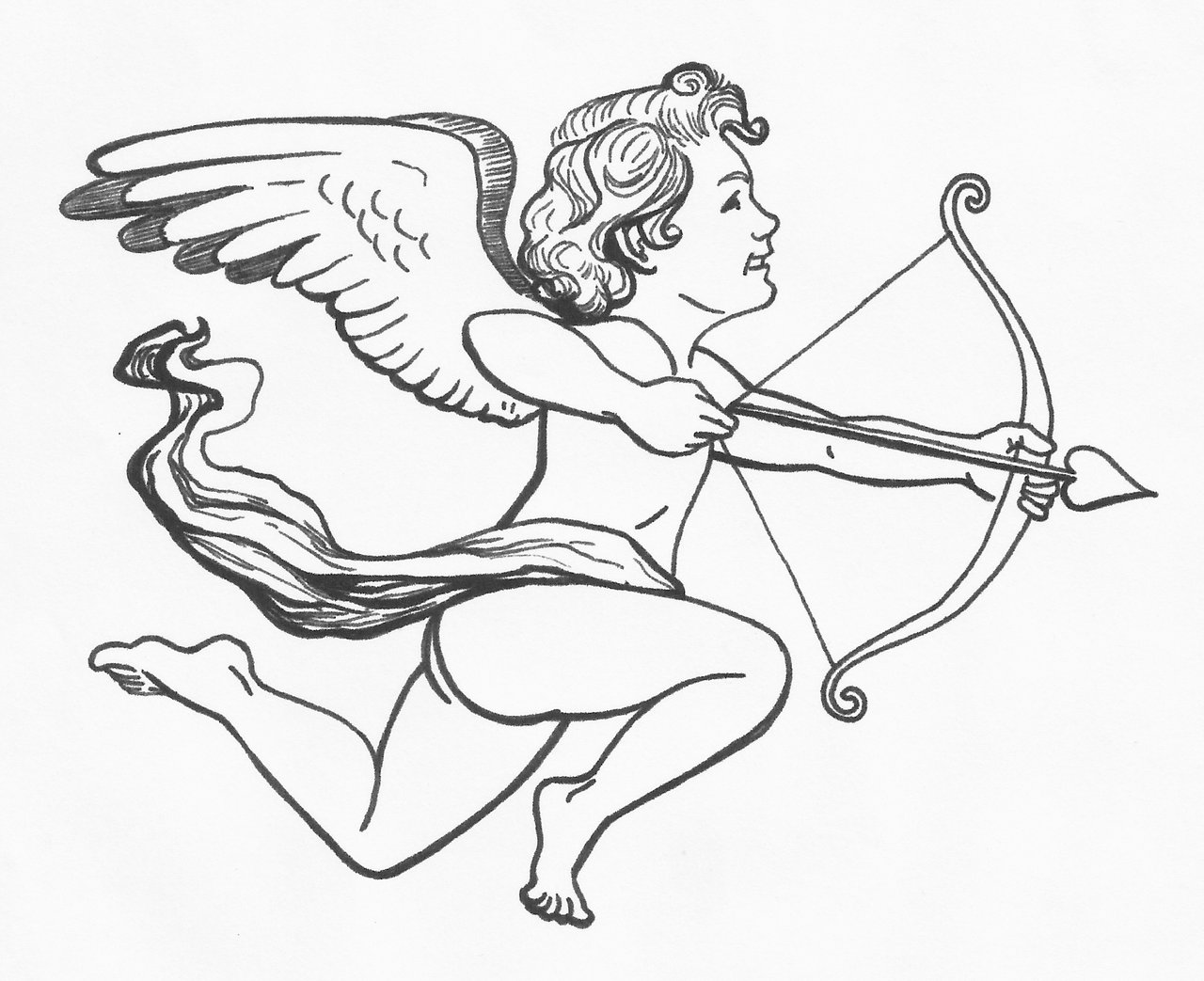
In fact, for some of those who formed the batch of 1977, the beautifully laid out campus outside provided a far better laboratory to test their hypotheses on the softer matters of the heart. These were the chosen ones who were smitten by the tender arrows of a smart Cupid.

The snag in the business of falling in love is much like that of mixed up career choices. Take an introvert and put him in a marketing assignment and the results could be disastrous. Take an extrovert used to making tall claims and put him in charge of manufacturing. The customers could soon melt away, leaving the company grappling with a credibility gap.

Bertie image

Same is the case in matters of love. As per the Bertie Wooster doctrine:

“….parties of the first part so often get mixed up with the wrong parties of the second part, robbed of their cooler judgment by the parties of the second part’s glamour. Put it like this. The male sex is divided into rabbits and non-rabbits and the female sex into dashers and dormice, and the trouble is that the male rabbit has a way of getting attracted by a female dasher (who would be fine for the male non-rabbit) and realizing too late that he ought to have been concentrating on some mild, gentle dormouse with whom he could settle down peacefully and nibble lettuce.”

The USP of the Class of 1977

The batch of 1977 had as many as five members of the tribe of the delicately nurtured. Since the previous one, the Class of 1976, had none, they were the cynosure of all eyes. They were invariably the prime focus of attention for many of us in the batch of 1976. All we seniors required was an inane excuse to pop up and try to grab the attention of at least one out of the five pairs of eyes we could feast on. The faculty members simply loved them – not necessarily for their academic proficiency, but merely for ensuring some discipline amongst the men folk loitering around.

Some of the members of our tribe of the so-called sterner sex were the shy and silent kind. Some were busy chasing their academic pursuits and kept their hormones under check. Others were benignly interested but limited their interactions to admiring gazes alone. Very few were the dashing types who, their puny chests all puffed up, attempted to indicate a more than passing interest in the parties of the other part.

Managed walks down the aisle

Those were traditional times when the distinction between an ‘arranged marriage’, a ‘love marriage’ and a ‘love marriage which had to be managed’ was pretty clear. Live-in relationships were not heard of.

The majority amongst us believed in the straight and narrow path that life offered then – the comfort of an ‘arranged marriage’ where the parents take the flak for subsequent problems, if any, and where love blossomed, albeit hesitatingly in some cases, much after the walk down the aisle took place. The time on the campus was, therefore, used by the members of this tribe merely to exchange furtive glances, suffer the pangs of transient infatuations and a silent admiration for the physical profile of the party of the other part.

pu-student-center

Then there were the dashing types, the risk takers who could use their time on the campus to firm up their affection for each other and concoct some dreamy plans for their future together. To avoid inquisitive and prying eyes, they would often vanish in thin air, possibly to land in such distant locales as the Sukhna Lake or the Rose Garden.

Management knowledge put to loving use

These were indeed the souls which put most of their management knowledge to actual use. No manual has been published till now, but it is clear that strategic decisions were taken by them with due diligence. Flawless planning and execution followed. Regression Analysis was applied to ensure that respective parents fell in line with the wishes of their wards. Soft-nosed commerce was used to draw up joint P&L Accounts and Balance Sheet, so the planned merger would face little financial turbulence. Principles of Materials Management were applied to ensure that the eventual stock transfer of one party to the abode of the party of the other part was carried out in a smooth and cordial fashion. Inspiration was drawn from a random sample of other couples who had successfully handled their affairs in an exemplary fashion.

Managing the Affairs of the Heart

cupidCupid, when it chooses to strike, is pretty democratic in nature. If one of the Class of 1977 decided to hitch her lot with a classmate of hers, yet another signed and sealed a merger deal with a senior of the Class of 1976. Both lived happily thereafter!

Close to forty years down the road, looking at the success of these mergers and alliances, it is highly regrettable that management academics still continue to adopt the stiff-upper-lip approach which focuses on analytical skills alone.

A day should surely dawn when ‘Managing the Affairs of the Heart’ gets introduced as a compulsory full semester subject across all management institutes; a time when doctoral theses on such subjects shall be encouraged.

After all, there are as many management lessons to be drawn from the works of Shakespeare, Thomas Hardy, P G Wodehouse, O Henry and Jane Austen as can be gleaned from the tomes dished out by such luminaries as Peter F Drucker, McGregor and Philip Kotler.

(Related Posts:

https://ashokbhatia.wordpress.com/2016/10/01/the-class-of-1976-how-it-managed-to-get-suspended-for-a-week

https://ashokbhatia.wordpress.com/2016/12/25/the-class-of-1990-how-ubs-prompted-sandeep-mann-to-learn-management-from-movies)

AyurvedaAyurveda, the Indian science of physical and mental well-being, is more than 5,000 years old. It may lack the kind of scientific rigour which Western thought demands, but its recommendations are highly effective.

Much of this knowledge gets passed down from one generation to the next in an informal manner – not by means of written texts but by way of sheer practice.

Here are some tried and tested recipes which could help one in facing challenges of a physical nature.

Gastritis 

  • Lightly roast ajwain seeds (50gms), cumin seeds (50 gms) and asfoetida  (1 gm) in ghee
  • Grind to powder and add 1 tablespoon of rock salt
  • Store in a glass bottle and use 1 tablespoon of powder before all meals with lukewarm water.

Heartburn 

  • Cold coconut water (1 cup)
  • Cold rice milk (half cup), if taken immediately when symptoms arise.

Constipation

  • 1 banana followed by a cup of warm milk with green cardamom daily at nighttime.
  • 6-8 figs and black raisins soaked overnight to be chewed in the morning followed by warm water

Lack of sleep 

  • Warm milk with ghee 5 drops, turmeric half teaspoon and honey 1 teaspoon
  • One hour before going to bed, watch or read any thing that soothes your frayed nerves and makes you smile and relax.

Chest congestion 

  • Roast 5 pods of garlic in mustard oil and apply it on chest every morning and evening.

Fever

  • Squeeze half lemon for its juice and add same amount of honey to the lemon juice.
  • Drink with warm water and sit with 2 blankets wrapped around.

These treatments are tested on oneself and have been found to be quite effective. This is traditional knowledge which is being shared here so all may benefit.

(Image, courtesy the world wide web, used only for representational purposes)

On the occasion of Thiruvalluvar day, celebrated on this day in the state of Tamil Nadu in India, in memory of Saint Thiruvalluvar who is said to have lived in a period between second century BC and 8th century AD.

ashokbhatia's avatarashokbhatia

Thirukkural (திருக்குறள்), also known as the Kural, is a classic Tamil ‘sangam’ (3rd century BC to 4th century AD) literature composition. It has 1,330 couplets or ‘kurals’. It was authored by the renowned poet Thiruvalluvar.

The Thirukkural is one of the most important works in the Tamil language. This is reflected in some of the other names by which the text is given by such as ‘Tamil marai’ (Tamil Vedas); ‘poyyamozhi’ (words that never fail); and ‘Deiva nool’ (divine text).

Just like ‘Ramayana’, ‘Mahabharata’, ‘Bhagavad-Gita’ and other scriptures, Thirukkural is also replete with words of wisdom. It is simple and contains profound messages.

Thirukkural has 133 chapters, each containing 10 couplets. Broadly speaking, all the 133 chapters can be divided into three sections: Righteousness, Wealth and Love. In the text below, the serial number of each couplet appears on the top, followed by its Tamil text and then by…

View original post 1,682 more words