Feeds:
Posts
Comments

Bollywood playback singer Mahendra Kapoor has rendered songs of all genres. Here is an exhaustive look at his duets, many of which have an immortal quality to them.

findshars's avatarMy Views On Bollywood

By

Sharada Iyer

Mahendra Kapoor with his distinct robust vocals carved a unique niche for himself as a superb singer during the Golden era of Hindi cinema. He was adept at singing all kinds of songs which included bhajans, ghazals, qawaalis, romantic numbers, sad songs as well as patriotic songs. His voice was immortalized on the small screen also when he sang the title track of director B R Chopra’s magnum opus TV serial Mahabharat. He was loved by his fans across all age-groups not only for his style of singing but also for his soft-spoken, friendly and humble demeanor.

For his outstanding contribution to the world of Indian film music, the Government of India bestowed upon him the coveted Padma Shree in the year 1972. He also won the prestigious Filmfare trophy for the ‘Best Male Playback Singer’ three times in his career (1964, 1968,1975) and the National Award…

View original post 1,755 more words

panjab-university-ubs

An academic course in management obviously does not offer lessons in managing the affairs of the heart. But the Class of 1977 broke through the academic shackles, with some of its members walking out of the campus with a clear strategy as to who their future soul mate shall be.

The stiff-upper-lip approach

Management education is all about the stiff-upper-lip approach of the mind. Analytical skills rule supreme, leading to rummy situations where analysis often leads to paralysis. Linear programming models get worked upon. Statistical techniques get dished out by stern looking professors who might have been hotter in their jobs more as police officers or as judges.

Hapless students are made to understand exponential smoothening techniques so as to be able to forecast business parameters in an uncertain business environment. Those with an engineering background struggle to match their debits and credits. The lucky ones who have had a background in commerce twiddle their fingers trying to grasp the complexities of quantitative techniques in decision-making.

The neglected need to boost our EQs

The behavioural sciences do provide a little bit of cheer to the tormented souls undergoing a typical MBA course. But to understand the psychology of an individual is no mean task. Mere case studies and management tips for handling an industrial strife do not improve one’s EQ substantially. Handling a tough boss eventually gets learnt only in the corporate world outside. The real world also teaches us to handle errant subordinates whose emotional blackmail upon reporting for work after a spell of French leave needs deft handling. The harsh realities of business world provide a high quality learning which can surely not be replicated within the stifling confines of a classroom.

The dashers and the rabbits

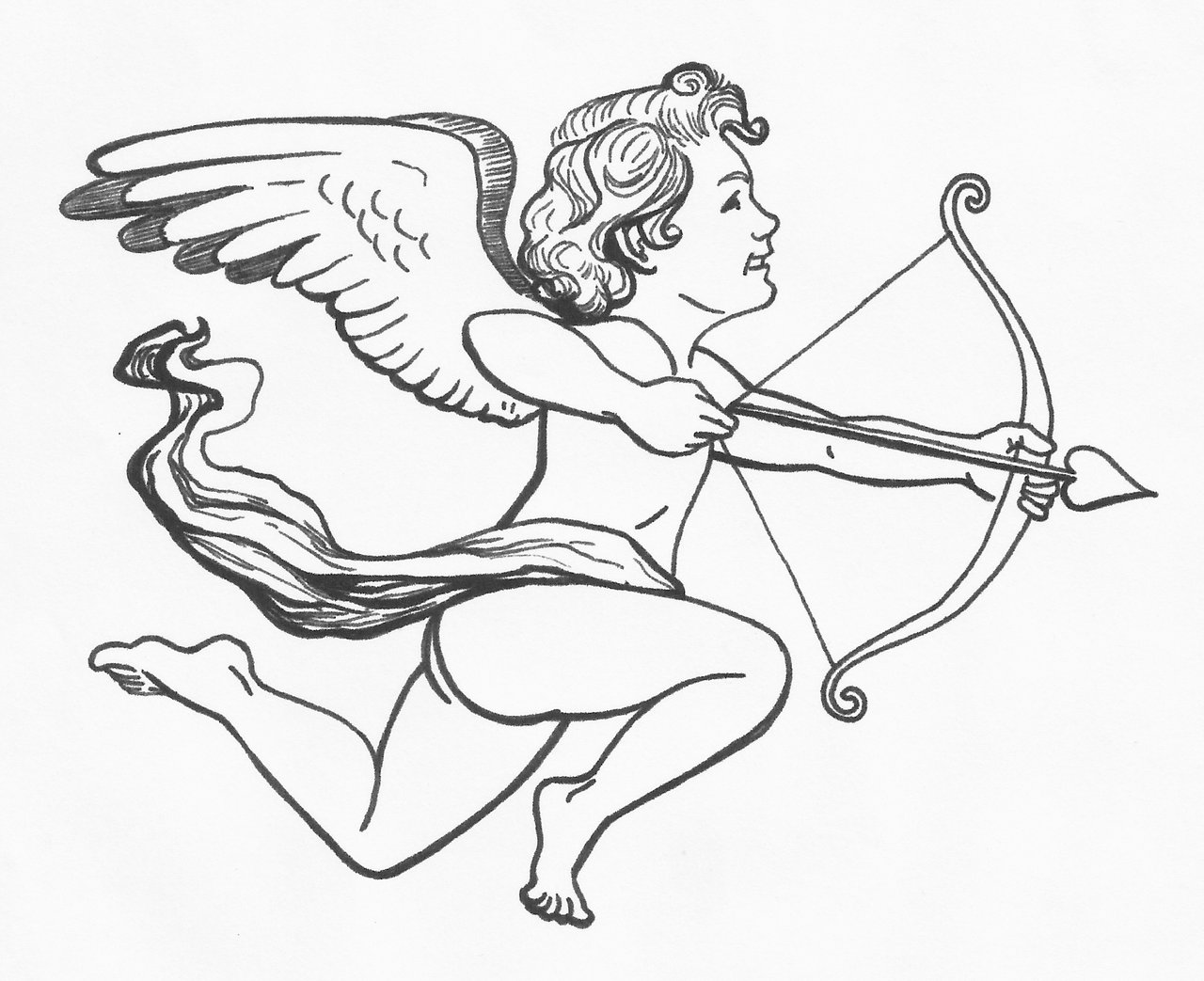
In fact, for some of those who formed the batch of 1977, the beautifully laid out campus outside provided a far better laboratory to test their hypotheses on the softer matters of the heart. These were the chosen ones who were smitten by the tender arrows of a smart Cupid.

The snag in the business of falling in love is much like that of mixed up career choices. Take an introvert and put him in a marketing assignment and the results could be disastrous. Take an extrovert used to making tall claims and put him in charge of manufacturing. The customers could soon melt away, leaving the company grappling with a credibility gap.

Bertie image

Same is the case in matters of love. As per the Bertie Wooster doctrine:

“….parties of the first part so often get mixed up with the wrong parties of the second part, robbed of their cooler judgment by the parties of the second part’s glamour. Put it like this. The male sex is divided into rabbits and non-rabbits and the female sex into dashers and dormice, and the trouble is that the male rabbit has a way of getting attracted by a female dasher (who would be fine for the male non-rabbit) and realizing too late that he ought to have been concentrating on some mild, gentle dormouse with whom he could settle down peacefully and nibble lettuce.”

The USP of the Class of 1977

The batch of 1977 had as many as five members of the tribe of the delicately nurtured. Since the previous one, the Class of 1976, had none, they were the cynosure of all eyes. They were invariably the prime focus of attention for many of us in the batch of 1976. All we seniors required was an inane excuse to pop up and try to grab the attention of at least one out of the five pairs of eyes we could feast on. The faculty members simply loved them – not necessarily for their academic proficiency, but merely for ensuring some discipline amongst the men folk loitering around.

Some of the members of our tribe of the so-called sterner sex were the shy and silent kind. Some were busy chasing their academic pursuits and kept their hormones under check. Others were benignly interested but limited their interactions to admiring gazes alone. Very few were the dashing types who, their puny chests all puffed up, attempted to indicate a more than passing interest in the parties of the other part.

Managed walks down the aisle

Those were traditional times when the distinction between an ‘arranged marriage’, a ‘love marriage’ and a ‘love marriage which had to be managed’ was pretty clear. Live-in relationships were not heard of.

The majority amongst us believed in the straight and narrow path that life offered then – the comfort of an ‘arranged marriage’ where the parents take the flak for subsequent problems, if any, and where love blossomed, albeit hesitatingly in some cases, much after the walk down the aisle took place. The time on the campus was, therefore, used by the members of this tribe merely to exchange furtive glances, suffer the pangs of transient infatuations and a silent admiration for the physical profile of the party of the other part.

pu-student-center

Then there were the dashing types, the risk takers who could use their time on the campus to firm up their affection for each other and concoct some dreamy plans for their future together. To avoid inquisitive and prying eyes, they would often vanish in thin air, possibly to land in such distant locales as the Sukhna Lake or the Rose Garden.

Management knowledge put to loving use

These were indeed the souls which put most of their management knowledge to actual use. No manual has been published till now, but it is clear that strategic decisions were taken by them with due diligence. Flawless planning and execution followed. Regression Analysis was applied to ensure that respective parents fell in line with the wishes of their wards. Soft-nosed commerce was used to draw up joint P&L Accounts and Balance Sheet, so the planned merger would face little financial turbulence. Principles of Materials Management were applied to ensure that the eventual stock transfer of one party to the abode of the party of the other part was carried out in a smooth and cordial fashion. Inspiration was drawn from a random sample of other couples who had successfully handled their affairs in an exemplary fashion.

Managing the Affairs of the Heart

cupidCupid, when it chooses to strike, is pretty democratic in nature. If one of the Class of 1977 decided to hitch her lot with a classmate of hers, yet another signed and sealed a merger deal with a senior of the Class of 1976. Both lived happily thereafter!

Close to forty years down the road, looking at the success of these mergers and alliances, it is highly regrettable that management academics still continue to adopt the stiff-upper-lip approach which focuses on analytical skills alone.

A day should surely dawn when ‘Managing the Affairs of the Heart’ gets introduced as a compulsory full semester subject across all management institutes; a time when doctoral theses on such subjects shall be encouraged.

After all, there are as many management lessons to be drawn from the works of Shakespeare, Thomas Hardy, P G Wodehouse, O Henry and Jane Austen as can be gleaned from the tomes dished out by such luminaries as Peter F Drucker, McGregor and Philip Kotler.

(Related Posts:

https://ashokbhatia.wordpress.com/2016/10/01/the-class-of-1976-how-it-managed-to-get-suspended-for-a-week

https://ashokbhatia.wordpress.com/2016/12/25/the-class-of-1990-how-ubs-prompted-sandeep-mann-to-learn-management-from-movies)

AyurvedaAyurveda, the Indian science of physical and mental well-being, is more than 5,000 years old. It may lack the kind of scientific rigour which Western thought demands, but its recommendations are highly effective.

Much of this knowledge gets passed down from one generation to the next in an informal manner – not by means of written texts but by way of sheer practice.

Here are some tried and tested recipes which could help one in facing challenges of a physical nature.

Gastritis 

  • Lightly roast ajwain seeds (50gms), cumin seeds (50 gms) and asfoetida  (1 gm) in ghee
  • Grind to powder and add 1 tablespoon of rock salt
  • Store in a glass bottle and use 1 tablespoon of powder before all meals with lukewarm water.

Heartburn 

  • Cold coconut water (1 cup)
  • Cold rice milk (half cup), if taken immediately when symptoms arise.

Constipation

  • 1 banana followed by a cup of warm milk with green cardamom daily at nighttime.
  • 6-8 figs and black raisins soaked overnight to be chewed in the morning followed by warm water

Lack of sleep 

  • Warm milk with ghee 5 drops, turmeric half teaspoon and honey 1 teaspoon
  • One hour before going to bed, watch or read any thing that soothes your frayed nerves and makes you smile and relax.

Chest congestion 

  • Roast 5 pods of garlic in mustard oil and apply it on chest every morning and evening.

Fever

  • Squeeze half lemon for its juice and add same amount of honey to the lemon juice.
  • Drink with warm water and sit with 2 blankets wrapped around.

These treatments are tested on oneself and have been found to be quite effective. This is traditional knowledge which is being shared here so all may benefit.

(Image, courtesy the world wide web, used only for representational purposes)

On the occasion of Thiruvalluvar day, celebrated on this day in the state of Tamil Nadu in India, in memory of Saint Thiruvalluvar who is said to have lived in a period between second century BC and 8th century AD.

ashokbhatia's avatarashokbhatia

Thirukkural (திருக்குறள்), also known as the Kural, is a classic Tamil ‘sangam’ (3rd century BC to 4th century AD) literature composition. It has 1,330 couplets or ‘kurals’. It was authored by the renowned poet Thiruvalluvar.

The Thirukkural is one of the most important works in the Tamil language. This is reflected in some of the other names by which the text is given by such as ‘Tamil marai’ (Tamil Vedas); ‘poyyamozhi’ (words that never fail); and ‘Deiva nool’ (divine text).

Just like ‘Ramayana’, ‘Mahabharata’, ‘Bhagavad-Gita’ and other scriptures, Thirukkural is also replete with words of wisdom. It is simple and contains profound messages.

Thirukkural has 133 chapters, each containing 10 couplets. Broadly speaking, all the 133 chapters can be divided into three sections: Righteousness, Wealth and Love. In the text below, the serial number of each couplet appears on the top, followed by its Tamil text and then by…

View original post 1,682 more words

ashokbhatia's avatarashokbhatia

In Ritusamhara, Kalidasa uses the season of winter to give his readers a sneak peek into the inner chambers of houses where couples are eager to get reunited. Given his flair for romance, he does not disappoint. He touches upon the use of intoxicants and the amorous intentions of women of age. He speaks of the agony of the air trapped between intimate body parts of a couple who are in a tight embrace. He talks of the dressing behavior of women in the mornings after they have experienced intense love-making during the preceding night.

Bollywood is not far behind in giving its viewers a sneak peek into the private moments of a couple. In fact, with each passing year, the envelope only gets pushed further and bedroom scenes become bolder and steamier. But to do so, our dream merchants do not necessarily depend upon the winter season alone…

View original post 670 more words

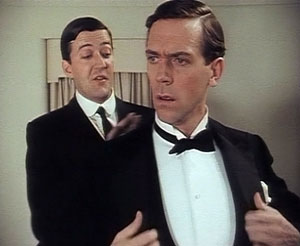
PGW HughLaurie-BertieWoosterResidents of Plumsville would surely savour this delectable piece, if piece is indeed the word one wants, discovered somewhat late by yours truly!

Gone are the days when Bollywood used to specialize in churning out only male-centric movies. There were times when our heroes used to be super humans with powers that even God would have hesitated to manifest. Our heroines were inevitably ‘cute’, irrational and dumb. Our families were massive piles of relatives dressed in garish clothes and living in ugly bungalows. Our idea of wooing a girl was dangerously close to molestation. Our assumptions regarding the IQ of our audiences were different. The movies catered mostly to the intelligence of an imagined front-bencher, and were inane, vulgar and obscene.

Cut to the present. The heroes are no longer diffident about shedding their macho image and reveal their softer side on the screen. The heroines have now become far more decisive and assertive. They resist amorous advances. They call the shots. They continue to be as beautiful as ever, but have become far bolder.

Women have found their own voice in the movies, perhaps mirroring the kind of social changes in the offing. More and more female protagonists now sweep us off our feet not only by their chutzpah but also by their brains and brawn. The males are still around, but they often got relegated to the background. If they happen to be in the foreground, they happen to be in a supportive role. Or, they get teased, mocked at and hounded till the time they mend their corrupt and lecherous ways.

Some movies have even gone ahead and made us wonder if the members of the tribe of the so-called sterner sex are even necessary in the scheme of things. However, for the evolution of our species, a balanced approach is called for. A realization is to dawn that women are not objects of lust, violence and humiliation. They deserve all the respect and adoration that is rightfully due to them.

Rays of hope

Here are some Bollywood offerings in the recent past which have had women-centric scripts and have also done well commercially. Most of these have depicted strong females, real or imaginary, who have carried the narrative on their strong shoulders and turned the tables on the so-called sterner sex.

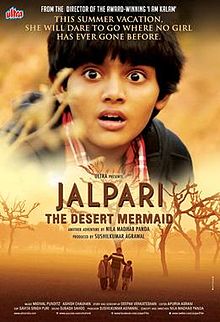
Jalpari

(The Mermaid, 2012, Nilab Madhab Panda)

jalpari

A delightful movie which makes an effective comment on the issue of female foeticide.

Kahaani

(The Story, 2012, Sujoy Ghosh)

kahaani

A courageous widow who tries to unravel the mystery behind the unfortunate death of her husband in a poison gas attack on the Kolkatta metro.

Gulaab Gang

(The Pink Brigade, 2014, Soumik Sen)

gulab_gang

Here is a gang of women activists and vigilantes who take up issues like domestic violence, the dowry system, rape, civic service deficiencies, and female education.

Queen

(2014, Vikas Bahl)

Print

When her fiancé calls off their wedding, the heroine decides to register a protest by proceeding on a mono-honeymoon trip, savouring life on her own.

Lakshmi

(2014, Nagesh Kukunoor)

lakshmi-movie

A girl is kidnapped and sold into prostitution. Assisted by a lawyer, she faces violent threats, coercion and bribes, stands up in court and in a landmark case in India, succeeds in putting the traffickers behind bars.

Mary Kom

(2014, Omung Kumar)

marykom

A biographical sports film which depicted the famous Indian boxer’s ascendance to fame. The heroine pursues her passion even while she discharges her family responsibilities with the support of her husband.

Mardaani

(The Masculine One, 2014, Pradeep Sarkar)

mardaani

A policewoman takes personal interest in the case of a kidnapped teenage girl and ends up busting a gang specializing in human trafficking in India.

Parched

(2015, Leena Yadav)

parched

The movie captured various evils of the society – deep-seated attitudes of patriarchy, child marriage, dowry, marital rapes and physical and mental abuse of women.

Jai Gangaajal

(Hail the water of the Ganges, 2016, Prakash Jha)

jai_gangaajal_poster

A newly appointed police officer stands up to her seniors and attempts to end the reign of corruption, terror and anarchy in the area under her charge.

Pink

(2016, Aniruddha Roy Chowdhury)

pink

Built around an incident of molestation and attempted rape, the movie highlighted the regressive attitudes towards women who dress ‘inappropriately’ and attend parties, thereby being considered fair game. A “NO” may come from any woman – a girlfriend a sex-worker, or even one’s wife – and needs to be respected as such.

Neerja

(2016, Ram Madhvani)

neerja

A courageous flight head purser stands up against the vicious hijackers of a plane. She helps to save 359 of the 379 passengers and crew on board but gets killed in the process. Based on a true incident, wherein the woman received Ashok Chakra posthumously, the highest civilian honour in India.

Nil Battey Sannata

(Good for nothing, 2016, Ashwini Iyer Tiwari)

nil_battey_sannata

An uneducated household maid and single mother of a young girl sets out to ensure that her daughter dreams big and changes her lot in life.

Ki and Ka

(She and He, 2016, R Balki)

ki_and_ka

A delectable tale of role reversal of genders in a marriage, where the wife becomes the bread-winner and the husband takes care of the household.

Dangal

(The Wrestling Competition, 2016, Nitesh Tiwari)

dangal_poster

A real-life father braves opposition from the society to train his daughters to become star wrestlers, who go on to win international recognition. 

Blast from the past

This is not to say that Bollywood has not come up with women-centric movies in the past. Here are some which readily spring to one’s mind.

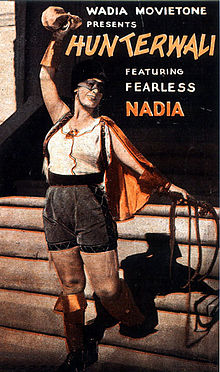
Hunterwali (1935, Homi Wadia)

nadia-hunterwali

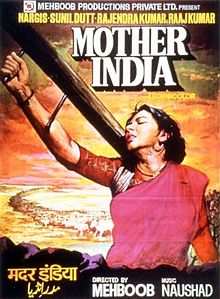
Mother India (1957, Mehboob Khan)

Movie Mother_India

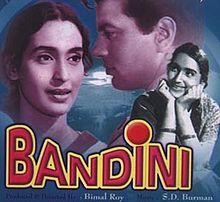
Bandini (1963, Bimal Roy)

Dark Bandini

Khamoshi (1969, Asit Sen)

khamoshi

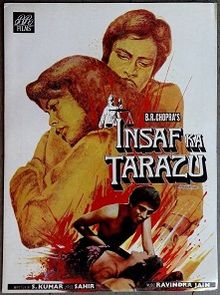
Insaaf Ka Tarazu (1976, B R Chopra)

insaaf_ka_tarazu

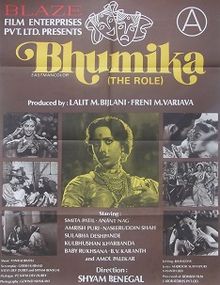
Bhumika (1977, Shyam Benegal)

bhumika

Arth (1982, Mahesh Bhatt)

arth

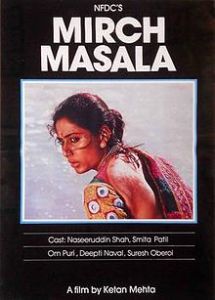
Mirch Masala (1987, Ketan Mehta)

mirch_masala

Aastha (1997, Basu Bhattacharya)

aastha_-_in_the_prison_of_spring

Godmother (1999, Vinay Shukla)

godmother

Astitva (2000, Mahesh Manjrekar)

astitva

Lajja (2001, Rajkumar Santoshi)

lajja

Then and now

The difference is that women in earlier movies were mostly the sacrificing, the weepy and the self-pitying kind. They would take matters in their own hands but only when driven against a wall. Now, they come into their own out of sheer free will, revealing the inner strength they possess.

However, the fight against a deeply entrenched patriarchical mindset is far from being over. What we see today are mere green shoots, that too on the silver screen, which are confined to the metrosexual male. Movies directed at upwardly mobile urban youth alone mirror the new set of values. Centuries of social hierarchy has conditioned male minds to accept only certain conservative patterns of behaviour and dress for women. A person who deviates, dresses differently and goes partying is seen as fair game.

Creativity, Commerciality and Social Challenges

Creativity innovates. Commerciality exploits. For good cinema to flourish, a culturally vibrant social environment is necessary. If fine arts are better understood and appreciated, if there is a solid rooting in humanities and social sciences, imaginative and responsible movie makers would surely come up with meaningful entertainment which nurtures the soul while giving pleasure.

The intrinsic purpose of movies is commercial. However, if the message being conveyed also helps the society to correct itself, there is a real value-add which needs to be lauded. Producers and directors who come up with such creative offerings deserve all the admiration and adulation they richly deserve.

Needed: Different shades of chivalry

Indian males really need to reboot themselves for the 21st century. They could learn a lot about the art of chivalry from such heroes as Ashok (Anupama, 1966, Hrishikesh Mukherjee) and Arun (Chhoti Si Baat, 1975, Basu Chatterjee). This change can only start at the dining table and in the kitchen, within the confines of a home.

Parents of those who indulged in ‘mass molestation’ in a premier metro of India recently need to seriously introspect and start grooming their wards to practice different shades of chivalry in the days to come.

Bertie Wooster would surely approve. So would the likes of Honoria Glossop and Florence Craye.

(Related Posts:

https://ashokbhatia.wordpress.com/2014/01/01/women-through-the-bollywood-lens-part-1

https://ashokbhatia.wordpress.com/2014/01/05/women-through-the-bollywood-lens-part-2-of-2

https://ashokbhatia.wordpress.com/2014/04/12/different-shades-of-women-in-plumsville)


ashokbhatia's avatarashokbhatia

The quiet evening saw the silver rays of moonshine descending upon Blandings Castle. The soft and silvery glow dimly lit up its ivied walls, its rolling parks, its gardens and its outhouses. The frenzied revelries of Christmas were another month away. Peace prevailed. Tranquillity ruled.

Blandings castle-enIn the cozy smoking room of Blandings Castle, two persons could be sighted. In the big chair nearest to the door, one could see the Earl of Emsworth, His Excellency the President of the Republic of Plumsville. He had a cigar in his mouth and a weak highball at his side. His fuzzy brain was softly whispering in his ears that life could not get any better. His son, Hon. Freddie, was happily busy in America, executing his marketing plans for Donaldson’s Dog-Joy Biscuits. Lady Constance Keeble was off to some South American countries on a charity drive for a few more weeks. He was…

View original post 2,530 more words

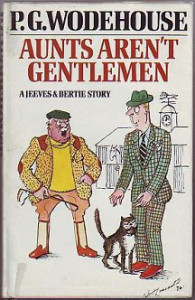
Aunts Aren’t Gentlemen

If Wodehouse would have been around in our turbulent and protectionist times, his next whodunit would have surely contained some juicy references to the political environment of the day. Perhaps he would have made Bertie Wooster comment upon Brexit and the US politics in his unique humour-laden manner!

Relish this post on the author’s political comments in ‘Aunts Aren’t Gentlemen’ and elsewhere.

Honoria Plum's avatarPlumtopia

A response to the critic Emsworth

Emsworth, that worthy critic with an equally worthy name, suggests “P.G. Wodehouse had hung on too long when he wrote The Cat-NappersThe Cat-Nappers being an alias for the work known to British readers as Aunts Aren’t Gentlemen. Emsworth provides some good evidence that this 1974 work of a nonagenarian is not Wodehouse at his finest.  For those unacquainted with Emsworth’s excellent piece, I suggest reading it for yourself.  When my considered response (however unqualified I am to make it)  ran to half a page, I decided to post it here instead.

Wodehouse was a careful and proficient editor in the habit of  re-working his stories thoroughly until he was satisfied with them. I wonder whether this book received a less scrupulous reworking than Wodehouse was accustomed to. Perhaps Wodehouse felt he was running out of time…

Emsworth’s comments on…

View original post 670 more words

(This is a dramatized version of the experiences of Prof. Sandeep Mann while he was at UBS. It is built around some facts furnished by him as to his movie marathon experience of those days. Inputs from him are gratefully acknowledged.

The narrative below is penned – or, key-board-ed, if you prefer – on his behalf. For bouquets, if any, please feel free to contact him. As to brickbats, you may risk hurling those at yours truly.)

Much before one of our learned professors started sharing with us, the batch of 1990, the nuances of Decision Making Under Uncertainty (DMUU, in short) and statistical models of exponential smoothening, we had figured out that two of the most high-risk businesses that beckoned us in the post-UBS phase of our lives were Politics and Movies, not necessarily in that order. Both need deep pockets, a very high risk appetite and, of course, the kind of obnoxious approach to human relations which many of us were not quite comfortable with.

Be that as it may, endeavours in both fields need as much support as they can get. The support may be in the form of either adulation or vitamin M.

Learning DMUU from movies

I confess my approach to learning Decision Making Under Uncertainty was by simply trooping in to movie halls and making my humble contribution to keep the hapless producers afloat. As the lights within the hall faded, I could readily identify myself with the kind of uncertainties the hero and the heroine faced in their lives, and how they managed to overcome the same.

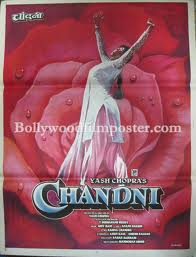
poster of chandni

This is precisely the manner in which I focused my energies on supporting Bollywood in my own humble way. Bollywood’s financial stress was pulling at my heart-strings and I did my very best to cheer up our dream merchants in days which were so very obviously distressful for them.

Anyone in my place, exposed to an all-male batch listening to monotonous lectures inside class rooms, would have preferred the company of the likes of Sridevi, Madhuri Dixit, Kimi Katkar, et al.

khoj-hindi-film

From the 1st of July 1989 till the 30th of September 1989, in 92 days flat, I saw 104 movie shows. Quite a few were repeated several times.

The Just-In-Time approach

Here is the general schedule I used to follow:

11 AM: KC theatre

3 PM: Jagat theatre

6 PM: Neelam theatre

9 PM: Kiran theatre

The Just-In-Time approach always worked. The fact that three of the theatres mentioned were located within a walking distance of each other made the project feasible. The shoeshine boys outside these halls contributed their own bit by providing tickets as and when the same were not available through the official channels. As to meals, these comprised ‘samosas’, ‘bread pakodas’ and sandwiches dished out by the theatre canteens during intervals.

ram-lakhan

The Guinness Award which never came

There were several perks that I enjoyed in the process.

With all the brisk walking and jogging between theatres, a healthier glow suffused the physical frame. My interpersonal relationship skills got honed up, what with the extent of networking with ticket counter clerks I had to indulge in.

Each night, during sleep, dreams came of the motley gang of heroines seen on the screen, somewhat filling the void created by a singular absence of the delicately nurtured in our batch. Some dreams were about terrifying encounters with villains and their henchmen. During day times, I would imagine myself to be one of the dashing heroes, though I never dared to bash up any gang of broad-chested males I encountered on and off the campus.

honey_i_shrunk_the_kids

I am still baffled though as to how I was never contacted by any pretty lass from Guinness, offering me a kiss on a cheek and a nomination for holding the world record in watching so many movies back to back.

The magic of movies

The movies seen then remain a string of blurred imagery in the deep recesses of the little grey matter I can boast of.

when-harry-met-sally

Come September, and the priorities of life changed somewhat. The task of supporting Bollywood was left in the safer hands of the average person on the street, while the budding manager in me strived to catch up with my academic pursuits, so as to not cause a distress to my family.

No frivolous pursuit, this

Mind you, this was no frivolous pursuit. UBS indirectly enabled this with a deeper purpose. Several management lessons were learnt from the movies seen. The value of perseverance and hard work was understood. As the lights dimmed, one learnt the art of suspension of disbelief. Appreciation of arts led to an expansion of the consciousness. This led to some degree of spiritual upliftment.

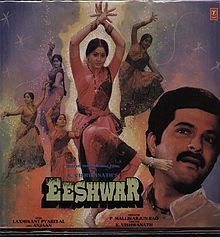
eeshwar-film

The mind could get back to the all-male boredom of the classroom with some degree of freshness. The tyranny of the classroom became more bearable. The academic content could be absorbed better.

With me being literally off the campus for 92 days, peace prevailed. The delicately nurtured, giggling around at the Student Centre and hassled in general elsewhere, breathed easy.

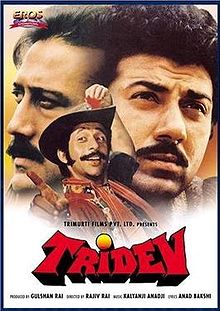
tridev-film

Reorienting Management Education

People like Sanjay Leela Bhansali, R Balki and Rajkumar Hirani can teach us quite a lot about the techniques of managing uncertainty in our lives. Actors of the stature of our current MP from the City Beautiful, or her famous spouse, Anupam Kher, could also make us understand the nuances of managing careers rather well.

Lessons from literature, fine arts and movies have already become a part of the curricula at the premier institutes of management. I heartily approve. That is indeed the right way to make the young minds to get reconnected to their hearts and blossom even better. Absorbing the academic inputs with a dash of fine arts.

Mandarins who design courses for aspiring managers would do well to take note.

(Have a juicy anecdote to share with the alumni of UBS? Write to yours truly at akb_usha@rediffmail.com)

(Related Post: https://ashokbhatia.wordpress.com/2016/10/01/the-class-of-1976-how-it-managed-to-get-suspended-for-a-week)