Feeds:
Posts
Comments

(This post is dedicated to my mother, who earned her BA degree from the Department of Correspondence Courses of Delhi University in the year 1972. In the same year, I completed my B.Sc. Honours in Physics from Hansraj College, Delhi University, through the regular classroom method.)

Synopsis

The future of Distance Education can be bright and rosy only if it aims to improve the EmployabilityMay 2014 033 Quotient of those who subscribe to this stream of knowledge. Given the challenges it faces from traditional class-room learning and from the emerging realm of open on-line learning, there is a strong need to reinvent and reinvigorate the content being offered by it.
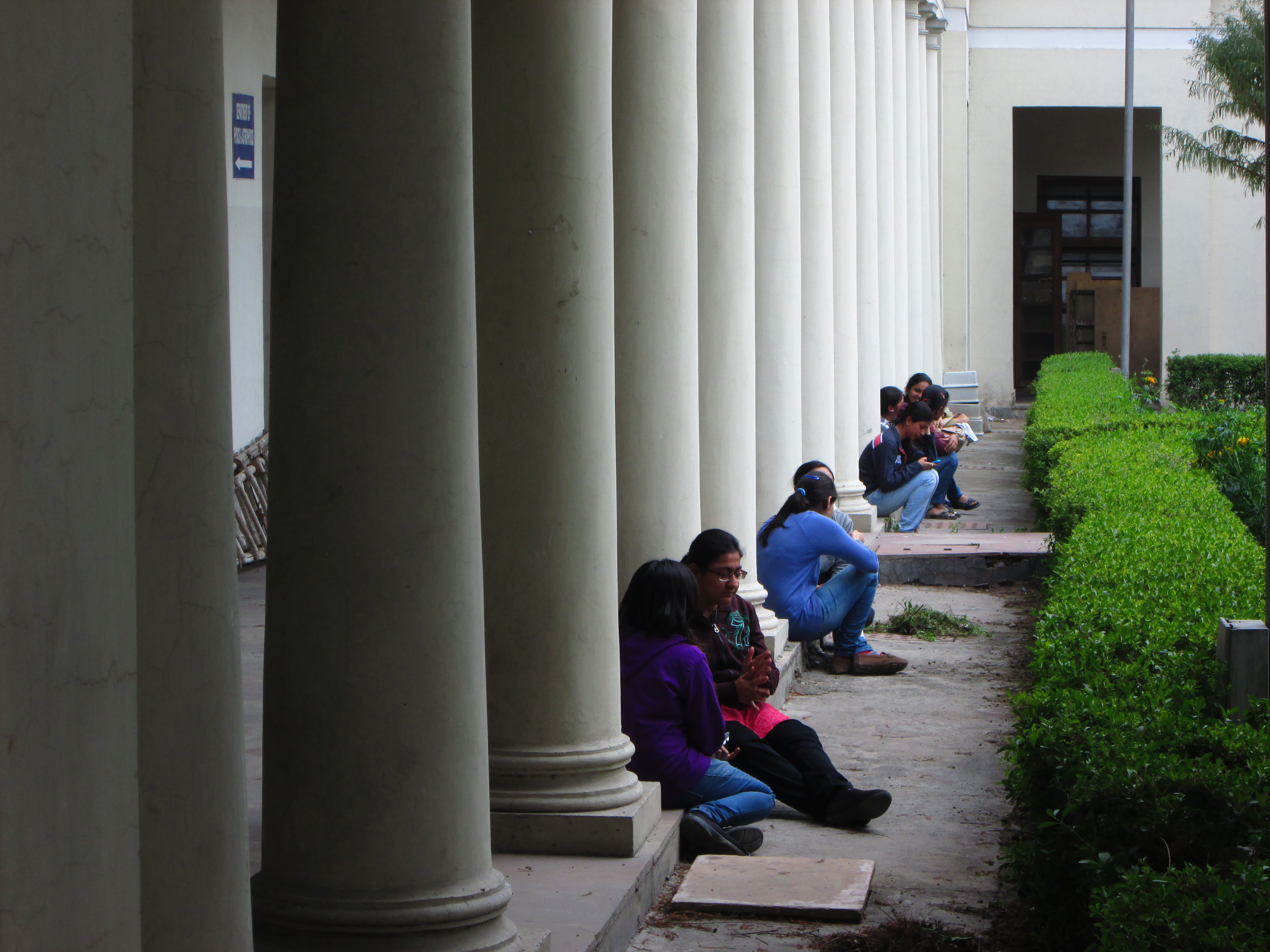
The mode of distance education therefore faces a twin challenge. One, proving itself superior to the traditional class-room learning. Two, that of being one-up on the open on-line content on offer to the youth of today, thanks to advances in technology.

Looked at from the perspective of an employer, when a candidate is being considered to be hired, she needs to not only overcome the barrier of a weaker perception of the distance education mode but also demonstrate her superior depth of applied knowledge. The unique strength that such a candidate brings to the table is possibly that of her prior working experience. It also shows that the candidate has the grit and determination necessary to complete the academic criteria of a course, even while handling a career and other mundane responsibilities of life.

In terms of credibility, on-line courses rank a poor third as of now. But the possibility of these catching up and making HR managers sitting up and taking notice of its contemporary and dynamic nature cannot be ruled out in the very near future.

How does the distance learning mode reinvigorate itself? The key lies in understanding the industry requirements and in incorporating the same to redesign the content on offer. Irrespective of the subject, contact programs which offer workshops on body language, communication skills and in building up self-confidence can help. In some cases, elementary IT skills could add value to a student’s marketability. In others, a crash course in a specific foreign language could perhaps help the candidate bag a dream assignment.

Customer is said to be the king. In the case of distance learning, the customer is the prospective student. If the focus is on improving her Employability Quotient based on the skill-gap felt by the industry, the mode of distance learning would improve upon its unique place in the education-mix on offer to the aspiring youth of today.

What the industry looks for

For any business, hiring is a critical activity. One, the person being recruited also brings in a set of attitudes, beliefs and value systems into the organization. These need to be matched with the core values and the culture of the organization. Two, the skills being brought to the table by the candidate have to be assessed realistically, so the person does not prove to be a misfit. Three, the kind of experience and its relevance to the assignment on hand needs to be evaluated. Four, the qualifications need to be checked, so the organization does not end up hiring either an over-qualified or an under-qualified person.

A premium on values

Attitudes, beliefs and values get formed from an early stage of one’s life. Hence, it would be naïve tovalues cartoon corruption assume that formal education at the higher level could play a role in shaping up the same. Yet, some steps could indeed be taken. Management lessons from literature and Indian scriptures, if made a part of the curriculum, would surely reinforce the learning of a career aspirant. Case studies which focus on the values that some brands stand for, such as Tatas and Siemens, could demonstrate the importance of fairness in business dealings. Likewise, details of corporate scandals could drive home the point that excessive greed leads to commercial ruin. Examples such as Satyam and Lehman Brothers readily come to one’s mind.

Skilling the young

Skill sets which a candidate is expected to possess obviously vary from assignment to assignment. In most cases, jobs of a technical nature need higher proficiency in the relevant technical domain. However, depending upon the candidate’s aptitude, skills can also be imparted on the job. For instance, a shoe factory can hire an engineering graduate engineer from any discipline and mould her according to their internal requirements.

For jobs of a non-technical nature, particularly those which fall in the realm of marketing, customer service, procurement, and the like, soft skills carry a much higher weightage. Skills in communication, leadership, collaboration, teamwork, analytics, adaptability and planning assume higher importance.
Evaluating experience

With a clear tendency amongst candidates to overstate their career accomplishments and emoluments, recruiters often have to dig deep to ferret out the truth. Often, past employers need to be contacted so as to ascertain the facts. Successes being quoted by a job seeker need to be seen in the context of the business environment in which the same are said to have been accomplished. The recruiter also needs to evaluate if the success was a team effort or an individual one.

Detailed questioning during the course of a personal interview alone enables the hiring person to understand the nuances of the range and depth of experience of a person.

The knowledge matrix

Often, one is aghast to find that a post-graduate in commerce cannot clarify as to on which side of the balance sheet the profit figure should appear. In such a case, a recruiter has to check her enthusiasm and not proceed to ask as to why it should appear on the ‘Liabilities’ side.

Our learning outcomes happen to be weak on conceptual clarity but excel at promoting rote and memory enhancement. Alas, such is the legacy of Lord Macaulay that we continue to follow till this day!

Unless one is hiring for a research and development slot or for an assignment which is highly technical in nature, one does not look for top grades and academic accomplishments. Grades may not be too good a measure of a candidate’s Intelligence Quotient but do show the capacity to work hard and the propensity to reproduce in an examination hall what has been taught in the classroom.

Pedigree does matter, though. Academic institutions have an image which invariably influences thec1 (25) learning outcomes, and thence, the value attached to a candidate’s qualifications.

A candidate who has undergone a standard classroom process gets taken more seriously than one who has been through the distance education mode. However, the advantage of the latter is that the candidate is likely to have a better Emotional Quotient, especially if she has been pursuing a career as well. This improves the adaptability of the employee and indicates better chances of success on the job.

Distance Education: Unique Selling Propositions

The stream of distance education offers several Unique Selling Propositions.

One, the seeker of knowledge is free of the tyranny of the classroom. No more for her the drudgery of listening to endless uninspiring lectures. There is no emphasis on fixed duration, fixed content dosage of a repetitive kind.

Two, a vast majority of those who opt for this stream are already pursuing either a career or another full-time educational endeavour. Upon successful completion, they bring much higher value to a prospective employer.

Three, prior practical experience brings in a level of maturity which helps the aspirant to shore up her Emotional Quotient, besides adding value to her knowledge base. From the point of view of the employer, this is a great value add.

Four, by shifting from the one-size-fits-all modules to flexible and segmented offerings to a career aspirant, the distance mode has the potential of surpassing the learning outcomes of traditional classroom learning as well as those of on-line learning.

When tyranny begets tyranny

Despite these unique features, employers have an in-built bias in favour of the products of the traditional classroom system.

This bias is rooted in the belief that those who have undergone the traditional process have followed a MICROMANAGINGdiscipline of fixed timings and withstood the boredom which goes with repetitiveness. On the other hand, those who have undergone the distance education mode are perceived to have merely wasted their time in worthless pursuits rather than focusing on academic enrichment of their lives.
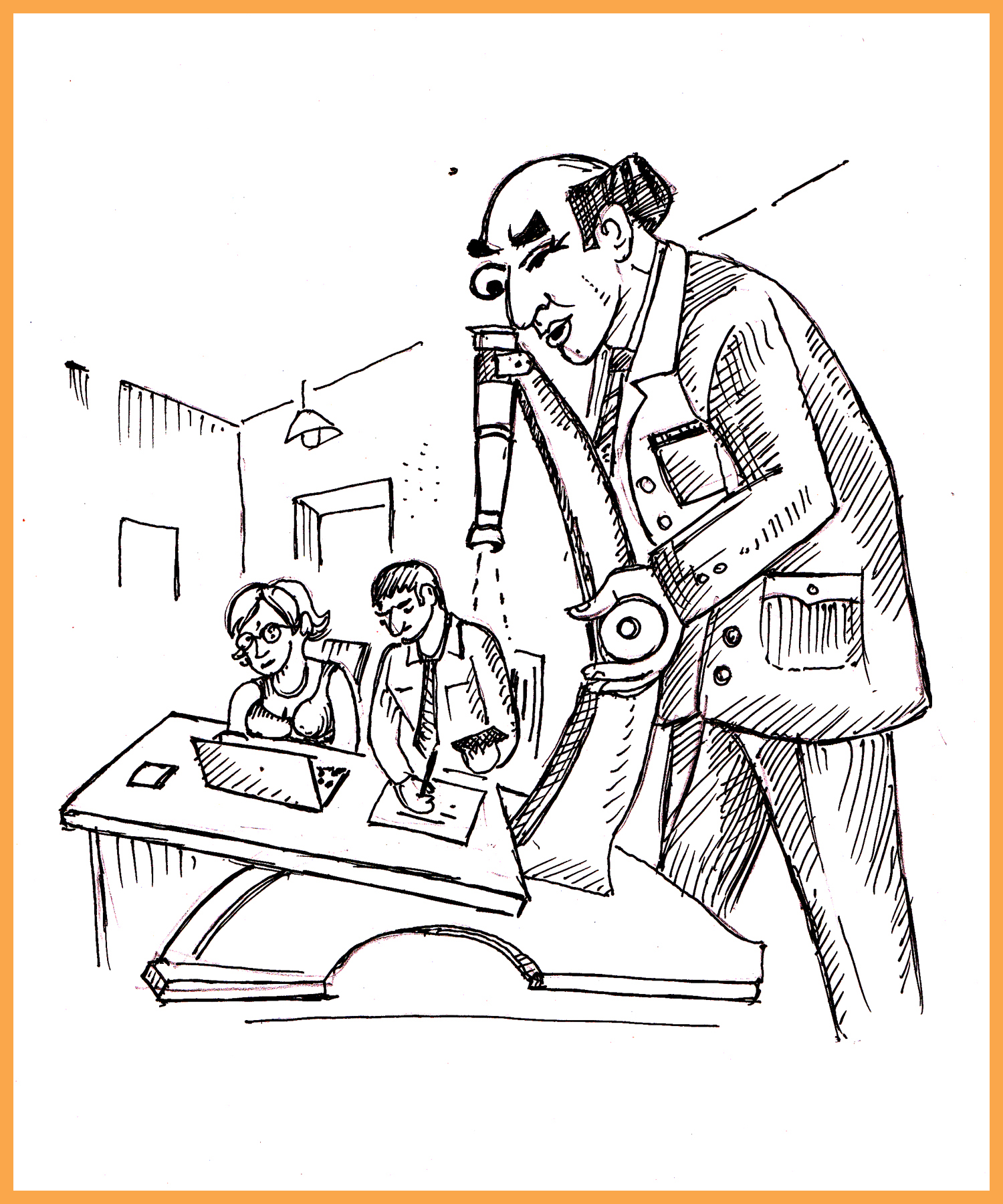
Managements often believe that employees have to be physically available to them for a certain duration in the day and have to fall in line with the overall discipline of reporting times and a singular absence of check-out times. It is believed that to young ones, all work becomes routine and boring after some time. So, a candidate who has already undergone a possibly boring process might survive better and longer within the organization!

Such mundane considerations end up tilting the recruitment windmills in favour of those who have undergone a classroom stream of regular education. In other words, managements which believe in tyrannical practices at the work place end up reposing their trust and faith in hapless candidates who happen to be the products of yet another tyrannical system.

However, with the focus in the economy shifting from manufacturing to services, work-from-home is becoming a buzz word. This is happening also due to the personality traits of the millenials who are joining the work force, as also due to better availability of internet and connectivity. Better prospects are surely ahead for the stream of distance education.

Distance Education: Challenges

Being an important sub-set of the entire education eco-system, the challenges faced by the Distance Education mode are essentially the same as the ones being faced by the overall education system. Admittedly, there are finer differences which make this mode more susceptible to disruptive changes in the society at large.

The onslaught of technology

The rapid pace at which technology is changing is making the tasks of education and skill developmentinternet image 1 tougher. Artificial Intelligence (AI) is capable of taking on the tasks which require analytical skills. Capgemini, the consulting major, recently decided to replace 40% of its work done by its resource management group with IBM’s cognitive computing system, Watson. This shows that it is just not mechanical or repetitive jobs that are at risk.

Some crystal gazing

By 2025, almost 70% of India’s population is expected to be in the working age group. By then, thanks to AI and robotics, a large chunk of India’s present knowledge economy would have shrunk. As the contours of the new economy emerge, the country’s collective strength would get determined by world-class education. It would no longer be enough to have commerce and engineering students who can write codes. India would need thousands of research scholars who would be capable of critical thought. This work has to start today.

Augmenting ability, not merely certifying it

It is hoped that the forthcoming new educational policy of the country would suitably address the upcoming challenges of the 21st century. This policy needs to focus on enhancing cognitive skills, capacities for critical thinking and innovation. A robust foundation for the future can only be laid by gearing up all streams of education, including that of distance education, to augment cognitive skills and promote out-of-the-box thinking at all levels. Innovation, and research and development need to emerge as the primary goals of the higher education system. The focus of skill development needs to shift to augmenting the ability rather than remaining confined to the task of merely certifying skills.

The three Rs – reading, writing, arithmetic – must continue to form the core of education. Students who learn these must also learn to question and criticize, to think afresh and come up with new paradigms. They can then end up extending AI, rather than just succumbing to its growing prowess.

Meeting the challenges head-on

The feature of contact classes is a crucial one inasmuch as it gives the students a first-hand feel of the03 subject and the teacher an opportunity to engage in a direct interaction with the knowledge seeker. The image of the institute gets burnished. So does the quality of skills being imparted.

Enriching the contact element

The approach in future needs to be to enrich this feature even further. Tie ups with local professionals who are adept at imparting the kind of skills the industry looks for is a sure way to be one-up on the on-line courses. Students can obviously be given a basket of courses to choose from. Additional fee can be charged from those who wish to also take up an intensive communication or leadership course.

Another way to enrich this feature is to make management games, case studies and role-playing as essential elements of contact classes. An internship with a local business, under the guidance of a faculty member, can help the student hone her industrial skills and also add value to her curriculum vitae.

Segmented and specialized offerings

For those taking up courses related to travel and hospitality management, foreign language courses can be offered on an optional basis. Visits to local businesses and an apprenticeship with these could improve the Employability Quotient in a significant manner.

Quite a few vocational skills can be brought under the domain of distance education. This would be a great value add to the employment eco-system. Elementary IT skills, if imparted as a part of the academic offering, can surely help.

Adaptive learning: a flexible way forward

Adaptive learning views attainment of competency as its central goal, the duration of learning being

Squatting Scribe

Squatting Scribe

largely irrelevant. It recognizes that each knowledge seeker is unique and needs a tailor-made basket of courses which, if completed successfully, would make her a productive member of the society. Admittedly, this necessitates a common entry-level screening, which is simple and which gauges the capabilities of the incoming students at the entry-level and then offers them a route which makes them reach their career goals in the shortest possible time.

An industry interface

Distance education institutions which offer career counseling services and have full-time placement executives on board have a definite edge over those who neglect this vital last-mile connectivity

between the employers and the prospective employees.

By adding video sessions covering chats on important subjects with industry leaders, placement officers can add much value to the overall learning of the students. This is especially true of management courses where practical experience matters much more than the knowledge of theoretical formulae and concepts.

The need to reinvent distance education

Albert Einstein famously quipped that insanity is the act of doing the same thing over and over again and expecting different results. By that yardstick, if educationists persist in their belief that continuing with the traditional paradigm of distance education would be a panacea for India’s deepening youth skill crisis, it would amount to insanity!

The need of the hour is to reinvigorate and reinvent this crucial stream of education. A new paradigmpondy-univ-emblem needs to emerge. This paradigm needs to be based on the challenges of the 21st century. By substantially enriching the learning process alone can one hope to see India capitalizing on its demographic dividend. We are perhaps about to miss the bus already. The time to bring about this change starts now.

(A paper presented at the National Conference on Distance Education in India: Emerging Challenges and Prospects, organized by the Directorate of Distance Education, Pondicherry University, Pondicherry, India, on September 8th and 9th, 2016)
Psmith put the newspaper away. A sigh escaped him.

“Nothing makes sense”, he muttered.

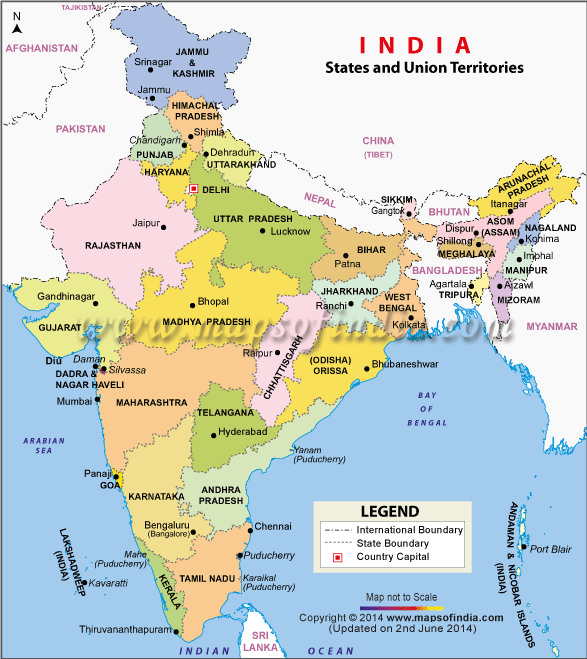
For the space of about twenty-five seconds, Mike, sitting across a small table on a sunlit balcony ingateway-of-india Mumbai, India, sat in silence.

“What is wrong with you?”, asked Mike, with a concerned look on his face.

Some time back, Psmith and Mike had been posted to the Mumbai branch of the New Asiatic Bank. It had taken them some time to get used to the hustle bustle of the noisy metropolis, often reeking of stale fish.

They had a centrally air-conditioned apartment all to themselves at Worli in one of the high-rise buildings overlooking the Arabian Sea. Being a Sunday, both were in a relaxed state of mind.

“How could people be so very excited about being taxed differently?”

“Who is excited? What are you referring to?”

“You would know that India is soon set to hop on to the Goods and Services Tax (GST) bandwagon. What the poor guys do not realize is that life is not going to be a bed of roses, as it is being made out to be.”

Mike continued to concentrate on the designer tea-pot in front of him, a complete picture of the model gown-wearing bank officer on his weekly off day.

“It is good to notice the concern you display for the citizenry which managed to slip out of British control some seventy years back. Perhaps, you are upset that it took them so long to realize that their entire country needed to be a unified market?”

“No. What I object to is the fundamental flaw in the GST. It is un-Indian. It is just too simple.”

Mike looked up in surprise. “What do you mean?”

“Comrade Jackson, no Indian tax system could be that simple. A universal tax percentage applied to everything so you know how to calculate it is just not right. It is handing over the power of understanding a tax to the people. Does this not take away the basic right of Indian taxation: confusion, opacity and obfuscation?’”

“But, surely, that should be good news?”

“Not for the few bespectacled gentlemen who try to figure things out, buried under the weight of those heavy tax books in some library of a government department. They would be rendered simply rudderless. They would resent this sudden deprivation of their tremendous power – of being the select few who could interpret and explain away the laws, the bye-laws, the rules, the notifications, the rulings by various tribunals and councils from time to time, and what not. I sense a revolt of sorts brewing up soon enough.”

“Oh, you mean to say that the bureaucrats would not be too pleased with the new taxation system?”

“Elementary, my dear Jackson. They would surely not relish the prospect of losing their power over the people. Also, the only way they can earn the extra money required to keep their families grinning from ear to ear.”

“Hmm…you do have a point there.”

“Not only this. Should a simple taxation law come into play, imagine the number of taxation experts India Parliament Housewho would be rendered jobless. Their care-worn clients would no longer be spending hours in their plush offices, trying to figure out the nuances of filing quarterly returns. They would instead be sitting in a fine dine restaurant, treating their lissome secretaries to a sumptuous dinner, while having told the spouse of a pressing need to attend a crucial meeting at the office.”

“But you would agree that the GST idea is indeed noble, simple, global and logical.”

“Which is why I suspect there is so much resistance to it. The government has been trying to sit people down and explain to them why the current system of taxation is the work of some mad people who happen to grace the opposition chairs now. Of late, it even decided to reach out to the latter and ensure that they were no longer sulking at the party presently in power walking off with all the credit for having brought in this landmark change. And note that the party in power now had itself obstructed the same change when it happened to be in the opposition.”

“But what do you think is so very exciting about the present system? I think it is known as Value Added Tax. They have several other taxes as well.”

“Well, for one, that should be known instead as Value Reduced Tax, simply because you have less value once you have paid it. Then they have excise, individual state taxes, octroi tax, entry tax, professional tax, luxury tax, entertainment tax, sleeping peacefully at night tax, Bengali sweets tax, South Indian dosa and idli tax, North Indian chhole bhatoore tax, West Indian poha and shri khand tax, did-not-tell-your-wife-and-came-to-Pondicherry tax, Clean India tax, farmers’ mental happiness tax, road accident tax, child-not-doing-too-well-at-school tax, mother-in-law irritant tax, enduring the politicians tax, having-to-watch-inane-movies tax, waiting for delivery of public services tax, and many more in the same genre.”

“Ah, life could be surely simpler!”

“But the good point here is that the common citizen can never afford to be lazy or complacent. The Indian tax system has always been designed to keep the common citizen on his toes. Agile. Confused. Uncertain. Feeling illiterate. There has always been an element of surprise. He opens a letter and finds that he has a tax due. And he starts asking himself, ‘What tax is this? I was not aware a tax like this existed. Do I need to pay it? Is there no way to avoid paying it?’ And off he goes to seek some solace from his tax consultant who is happy to demystify the affair and get another excuse to raise a bill on the hapless wannabe tax-evader.”

“You appear to be quite impressed with the Indian taxation system!”

“Yes, Comrade! They have an excellent system which matches their age-old spiritual values. Anythingemblem_of_india-svg that makes you feel small, negligible and illiterate is bound to flatten your ego in no time. You could even be a director of our bank. But when you get a tax notice which you do not understand, you feel all of a twitter. You take a more benevolent view of humanity in general. Even your driver and your lift operator seem like angels in distress, facing similar challenges in life. You realize that there is no escaping the taxation system. It is as immortal as a soul is said to be.”

“But what makes you think the GST is likely to be simpler, when it comes to the fine print? I was told that it would need even the humble barber to file as many as forty odd returns to the government every quarter?”

Psmith slid out of his chair with a disgruntled sigh, and dusted his dressing gown. “Perhaps there is something in what you say. I propose that we call the new system as the Great Spiritual Tax instead. It would make all businesses across all the states and territories of India equally worried. They might even turn to spirituality and seek divine intervention to set their house in order. It would not be wrong to surmise that a commercial crisis has indeed arisen. A period of great anxiety has begun, especially so for small businesses.”

Mike looked up with some surprise.

“Let me explain,” said Psmith, raising his hands. “Once the new system takes over, all businesses would be required to register. Whether for manufacturers, distributors or retailers, it would be virtually impossible to escape the tax net. The luxury of doing business based on fake bills would no longer be theirs. In fact, past transactions could also come in for greater scrutiny. Besides, the Income Tax sleuths would be easily able to figure out the real income levels of businessmen of all hues, sizes and shapes. The entire business eco-system would totter.”

“Are you trying to say that the size of the Indian parallel economy would shrink?”

“Quite possible, Comrade Jackson. Your keen intelligence reaffirms my faith in your unique abilities. However, I doubt if this could be good news for the country.”

“How do you say this?”

“If you would delve deep into your memory cells, you would recall the 2008 financial crisis which engulfed the world. Do you think the Indian economy suffered as much as our so-called advanced economies then?”

“I do not think so. The Indian economy showed greater resilience then.”

“If so, allow me to point out that one of the major factors discovered and held to have helped India then was the existence of an underground economy.”

“Indeed?!”

“I do believe so, though I confess I am not an expert at such matters. Take the informal economy awayRashtrapati Bahavan and what do you get? A rigid and formal economy which has a much higher dependence on formal debt markets. The risk of overstating debts grows manifold. Next time round, when another Lehman Brothers show up on the horizon, the Indian economy could be found in deeper waters. Having a thriving parallel economy helps.”

“You surely surprise me. You sound like an ardent advocate of the parallel economy!”

“On the contrary, I do not. My point is very simple. Why should we allow only our businesses to suffer when the political parties themselves continue to enjoy the fruits of an underground nature? Why not clean up the Indian political act as well and provide a level playing field to all her citizens? Why should the Indian politicos be spared of a taste of their own medicine that they prescribe for the toiling masses?”

“Whatever, the Indian GST is now already on a roll. The bill has received the assent of the President of India. The only hope you can entertain is that of the implementation getting goofed up and the process getting delayed somehow. My understanding is that if the steps of setting up a GST Council, an agreement on a basic tax rate and the detailed procedures take longer than a year, the implementation deadline might as well get shifted to April 2018. If that happens, the government itself may keep it on the back burner for some time.”

“Oh, you allude to the risk of embracing unpredictable consequences of adopting a new taxation system in the run-up to the 2019 parliamentary elections!”

“Yes. In fact, yet another challenge before them might be that of the absence of internet connectivity all over the country. Even if the GST Network gets perfected, how would they ensure that a dealer in, say, Sikkim, can secure a registration in Kerala? It is good to hear of a seamless market, but a smooth roll-out would need a strong internet backbone all across.”

“Well, sure enough, their best men would be working out the finer details and smoothening the road to implementation. The stakes are high indeed. The reputation of the present government rides on how it handles a challenge of this nature. But what you are missing on, Comrade Jackson, is the key factor of human ingenuity. When it comes to paying any taxes, it knows no bounds.”

“But I am not quite sure if there could be an easy escape route for any business, as you yourself had rightly pointed out just now.”

“But we underestimate the propensity of human beings to go to any lengths to avoid paying any taxes. Innovation is the name of the game in this case. Sure enough, the Indian tax experts would now bemap-of-india burning the proverbial mid-night oil, getting ready to advise their anxious clients about some new creative practices they could adopt under the new tax regime. Given the level of primal hate harboured by all businesses towards the act of paying any kind of taxes, advisors in the business of tax avoidance would be twiddling their thumbs, endeavouring to figure out ingenious methods of beating the new system at its own game.”

Mike smiled.

“As always, you have hit the nail on its head. But this is a universal fact which governments all over the world have to cope with. Is there any other thing you are not too comfortable about?”

“Yes, though I do not know how your intuitive faculties are so very advanced as to guess this. I do not quite see eye to eye on the strategy of dumping more and more indirect taxes on the hapless citizenry, while not working aggressively to expand the direct taxes base.”

“I really do admire your depth of thinking on the subject. Do you refer to recent reports that merely one percent of the people pay income tax in India?”

“Indeed. What an irony!”

“Perhaps, you imply that politicians of all hues lack the courage to take some unpopular steps. Rather than chasing more people to pay income tax, they prefer to use the indirect taxes route which is relatively invisible?”

“Yes. Perhaps they follow the advice of their sage Chanakya who famously said that taxes should be collected by inflicting the least possible pain on the citizens, much like a bee would collect nectar from a flower in bloom!”

“And what do you think our own bank would have to undergo?,” Mike asked.

“Serious matter. Under the new dispensation, we shall need to register in all the states and unionpsmith-1909 territories. Perhaps, even in districts, where we have branches. This is going to be a compliance nightmare. I hear some talk of all the banks lobbying for a facility to register with a centralized agency which would pool, reconcile, analyze and audit our transactions. If so, this agency could distribute the revenue earned through us to different states where the transaction has occurred.”

Mike rose from his chair and stretched his arms. His gaze drifted off to a couple of fishing boats bouncing up and down on the bluish-green waters of the Arabian Sea.

“These are deep waters, indeed. I wonder why we are discussing such matters on a lazy Sunday morning? I rather think I’ll nip down to Haji Ali and take some fresh air into my lungs,” said he. “You couldn’t come too, I suppose?”

“On the contrary,’ said Psmith, ‘I could, and will. A stroll will just restore those tissues which the gruelling discussion of the last half-hour has wasted away. It is a fearful strain, this taxation toil. Let us trickle towards the place mentioned by you. Comrade Jackson, lead me to this picturesque dargah of yours of which I have heard so much.”

Those who use the humble mode of travel by a bicycle in Plumsville are many. A hero gets trapped into a fruitless expedition one night. A cop gets dislodged from a bicycle by a member of the canine species and falls into a ditch. Yet another cop resents a member of the public using a bicycle in the service of the Crown to impart cycling lessons to his heart throb.

There is yet another danger that bicyclists face on the roads of Plumsville – that of being hit by a well-aimed tomato hurled by a mother who is out to declare a party open.

Savour this piece from Plumtopia which serves a friendly warning to those who plan to use this environment-friendly mode of transport.

Honoria Plum's avatarPlumtopia

When you are shut up all the year round in a place like Maiden Eggesford, with nothing to do but wash underclothing and attend Divine Service, you naturally incline to let yourself go a bit at times of festival and holidays.

‘Tried in the Furnace’ (Young Men in Spats)

What Ho! What Ho!

I’m in an effervescent sort of mood today as I’m about to motor to the seaside for a short, much-needed holiday. My journey will take in the Dorset towns of Maiden Newton and Bridport, which the scholars at Madam Eulalie suggest as likely locations for P.G. Wodehouse’s Maiden Eggesford and Bridmouth-on-Sea.

Barmy Fotheringay-Phipps and Pongo Twistleton-Twistleton visit Maiden Eggesford in one of my favourite Wodehouse stories, ‘Tried in the Furnace’, where they both fall in love with the Reverend P.P. Briscoe’s daughter, Angelica. In accordance with her wishes, Barmy reluctantly agrees to take the Village Mothers on…

View original post 274 more words

findshars's avatarMy Views On Bollywood

By

Sharada Iyer

Only a fewactors and actresses either get the opportunity orhave the guts to be cast alongside each other in different roles which allow them to explore their versatility beyond their romantic image.

Take the case of Sanjeev Kumar and Jaya Bhaduri. In Koshish they played husbandandwife, in Sholay they were father-in-law and daughter-in-law, in Parichay they were father and daughter and in the unusual film Naya Din Nayi Raat, one Jaya Bhaduri meets nine Sanjeev Kumars and hence there are nine types of interactions. Likewise Amitabh Bachchan played father to Aishwarya Rai in Mohabbatein, was her elder brother in Hum Kisise Kum Nahin and also does an item number with her in Bunty aur Babli. We also had Raakhee playing Amitabh’s lover in Kabhi Kabhie and his mother in Shakti. Similarly Shammi Kapoor was Saira Banu’s lover in Junglee but became her father in

View original post 2,335 more words

The festival season is already upon us. Markets and malls are full of wide-eyed wannabe shoppers who are out to strike good bargains.

Time to revisit and recount the festive frenzy which sweeps all Homo Sapiens off their delicate feet at regular intervals.

ashokbhatia's avatarashokbhatia

The festival season is already upon us, yet again. Those in the Western world are gearing up for celebrating Christmas and New Year. Those in such emerging economies as India are already in the midst of a shopping frenzy, having kick-started the season with Raksha Bandhan, Janamashtami, Ganesh Chaturthi, Durga Puja, Vijayadashmi and Muharram.new-year-2014-firework

They now eagerly look forward to celebrating Guru Nanak Dev’s birthday, Diwali, the festival of lights, and Eid. These would be followed by Christmas, just before the New Year rings in, bringing in its wake Pongal, celebrated in the southern parts and Makar Sankranti, celebrated in the northern parts of India.

Come festive season and a new spirit seems, every year, to cast its spell over the entire community. A spirit of outwardly cheerfulness and goodwill prevails. Fresh rays of hope penetrate through the dense clouds of gloom. Concerns of…

View original post 1,849 more words

The Indian view of the discipline of management speaks of four pillars of Integral Management – Wisdom, Power, Harmony and Perfection. Of these, Power is a potent tool which, when harnessed judiciously, enables organizations and individual managers to scale greater heights.

Organizations wield tremendous power. They do so not only by virtue of their financial prowess but also by way of their brand equity, their size, their reach in the market and the kind of innovative products or services they offer. They exercise influence on the society – first, by identifying its latent desires, and then by serving the same.

Individuals who are part of organizations also wield tremendous power over its resources and its people. Arrogance and exploitation could easily follow.

However, if Power is understood as “strength and force, Shakti, which enables one to face all that can happen and to stand and overcome” difficulties connected with “men, events, circumstances, means”, then Power could be used for the overall good of humankind.

Thus, with power comes the attendant responsibility of using it wisely and equitably. Checks and balances need to be put in place to ensure that boundaries set by values and ethics do not get transcended. Keeping a strict control on arrogant behaviour is the sine qua non of long-term success in career.

Power needs to be used in a socially responsible manner. Using the power to share the gains of business with relevant stakeholders makes good sense. Deployment of power to benefit the society at large, that too in a manner which does not harm the environment, ensures that the business remains sustainable.

Managers also have a latent power – of their mind, their will, their ambition, their attitude, their passion and their soft skills. By channelizing the same appropriately, they could rise to greater heights and become more evolved persons, exercising greater influence on the events and people they are connected with.

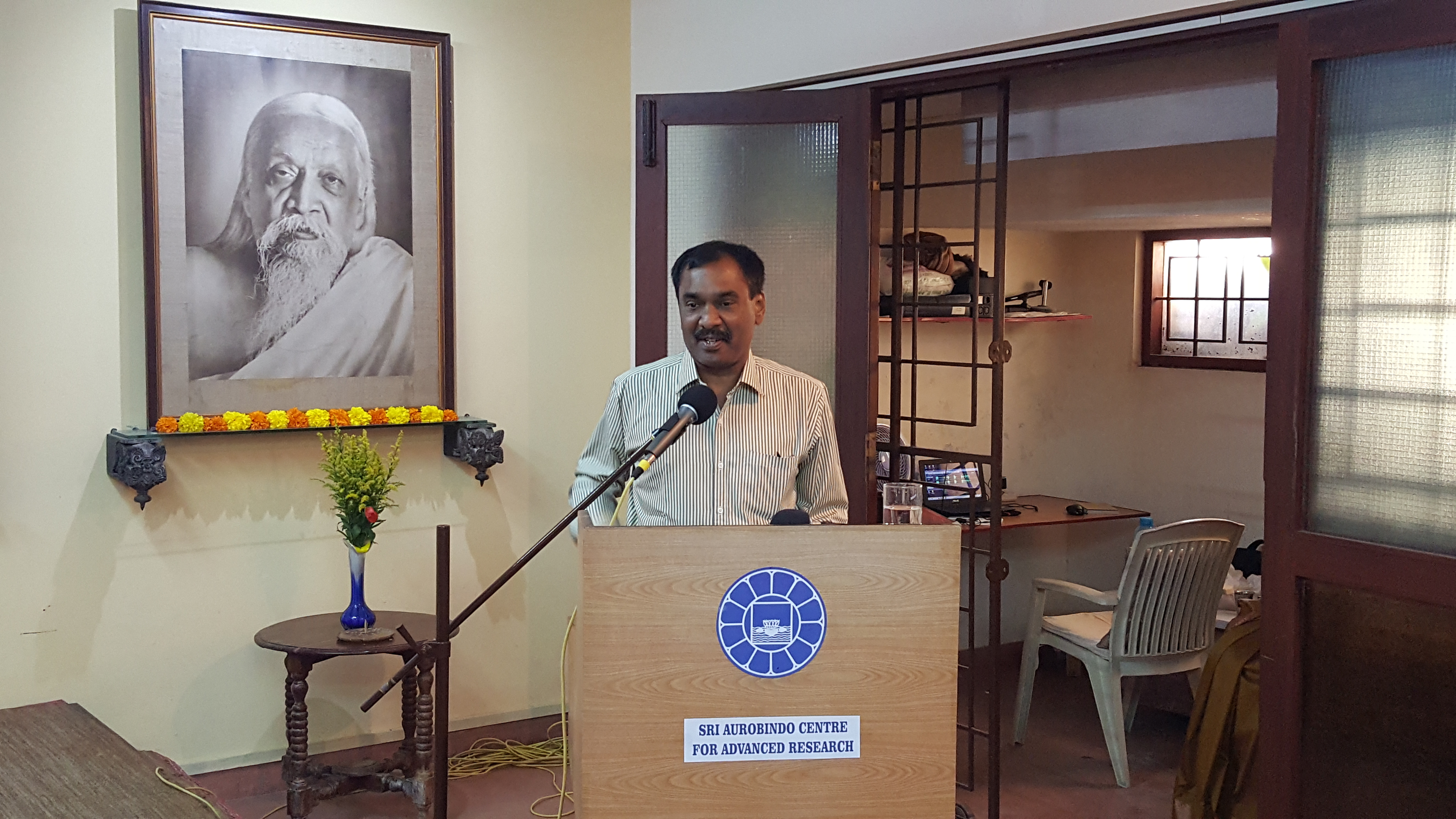
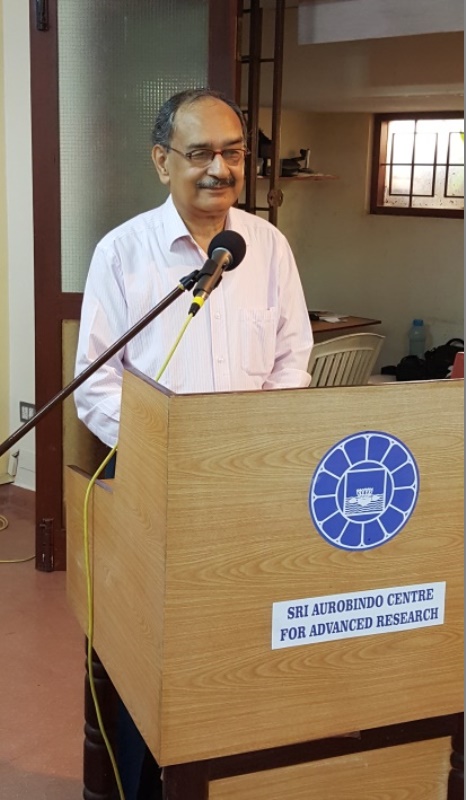
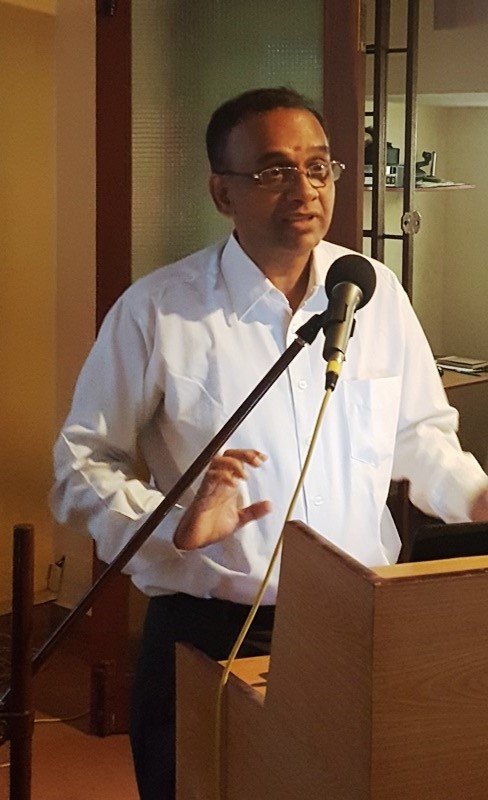
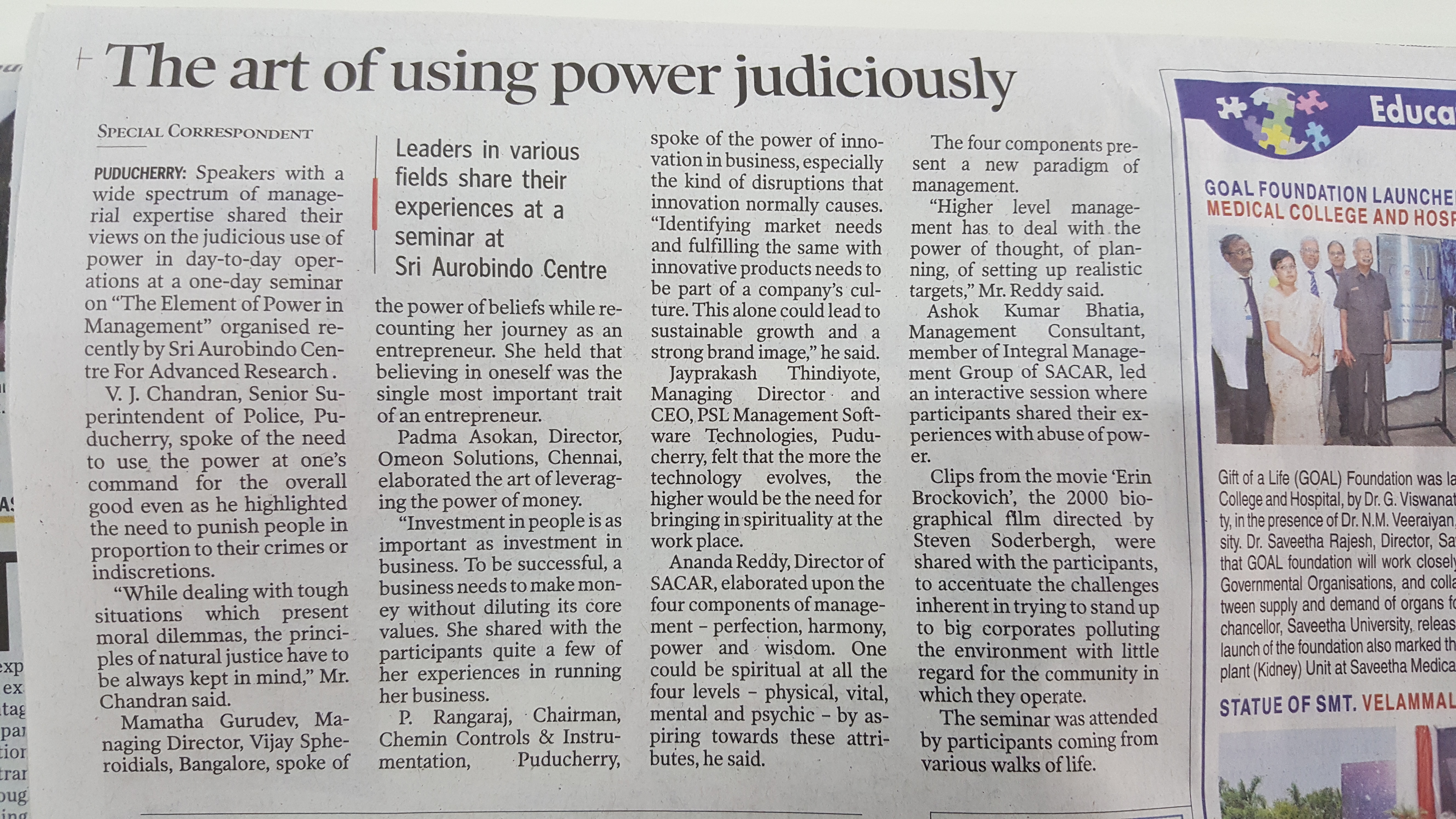
At a one-day seminar on “The Element of Power in Management” organized by SACAR on the 6th of August, 2016, speakers from a wide spectrum of managerial expertise shared their views on the judicious and responsible use of power in day-to-day operations.

SACAR Power Aug 2016 B

Dr. Ananda Reddy, the Director of SACAR, elaborated upon the four components of Management ― Perfection, Harmony, Power and Wisdom. He said that one could be spiritual at all the four levels – physical, vital, mental and psychic by aspiring towards what are called perfection, harmony, power and wisdom. These, he proposed, present a new paradigm of Management. On the level of thought, Power comes into play. Higher level management has to deal with the power of thought, of planning, of setting up realistic targets. He highlighted the importance of using power in a responsible and judicious manner.

SACAR Power Aug 2016 A

Dr. V. J. Chandran, IPS, SSP, Government of Puducherry, spoke of the need to use the power at one’s command in a spiritual manner – for the overall good. He highlighted the need to punish people in proportion to their crimes or indiscretions. While dealing with tough situations which present moral dilemmas, the Principles of Natural Justice have to be always kept in mind. Assuming responsibility and accountability is important. Improving upon one’s quality of work, one’s ability and one’s personal expertise alone helps. He shared with the participants certain instances where abuse of power led to severe complications for the society at large.

SACAR Power Aug 2016 3Ms. Mamatha Gurudev, Managing Director, Vijay Spheroidials, Bangalore, spoke of the power of beliefs while recounting her journey as an entrepreneur. She held that believing in oneself was the single most important trait of an entrepreneur. It makes sense to cultivate a habit of looking within and of being in touch with one’s own inner self. Trust reposed in one by others also empowers oneself. The focus should always be on the process, not on the person. She exhorted the participants to change their attitude from ‘I can’t do it yet’ to that of ‘I can do it’.

SACAR Power Aug 2016 4Ms. Padma Asokan, Director, Omeon Solutions, Chennai, elaborated the art of leveraging the power of money. Money needs constant activity and circulation. It should be used to increase wealth and prosperity. Wealth belongs to the divine and those who hold it are mere ‘’Trustees” and not “Possessors”. Investment in people is as important as investment in business. To be successful, a business needs to make money without diluting its core values. She shared with the participants quite a few of her experiences in running her business.

SACAR Power Aug 2016 5

As part of an interactive session, conducted by yours truly, participants spoke of the various ways in which they had experienced, and occasionally countered, the abuse of power. Clips from the movie ‘Erin Brockovich’ were shared with the participants, showcasing the challenges inherent in trying to stand up to big corporates polluting the environment with little regard for the community in which they operate.

SACAR Power Aug 2016 6

Mr. P. Rangaraj, Chairman, Chemin Controls & Instrumentation, Puducherry, spoke of the power of innovation in business. He touched upon some unique success stories and highlighted the need to make frugal engineering a routine habit. He described the kind of disruptions that innovation normally causes and explained the elements of perfection, harmony and wisdom which are necessary to upscale and market a new product or service.  Identifying market needs and fulfilling the same with innovative products needs to be part of a company’s culture. This alone could lead to sustainable growth and a strong brand image.

SACAR Power Aug 2016 7

Mr. Jayprakash Thindiyote, Managing Director and CEO, PSL Management Software Technologies, Puducherry, touched upon the power of technology. He spoke of rapid advances in the field of robotics and the advent of Artificial Intelligence. He felt that the more the technology evolves, the higher would be the need for bringing in spirituality at the work place. Having respect for alternative views, effective communication, genuine compassion and a creative approach to problem solving alone could help a business grow in future. He exhorted managers to be like an I-POD, that is, have an Inner Peace but be Outwardly Dynamic.

Mr. Ganesh Babu, Founder and CEO, Winning Minds Solutions, Puducherry, and Dr. Arvind Gupta, Assistant Director, Directorate of Distance Education, Pondicherry University, coordinated the entire event. Their back up support was invaluable in the planning as well as the hosting of the entire event.

Dr. Shruti Bidwaikar, Assistant Director, SACAR, summed up the proceedings and offered a vote of thanks.sacar-power-seminar-hindu

The seminar received an overwhelming response from participants coming from various walks of life, like government officials, management educationists, corporate executives, businessmen, Aurovillians, entrepreneurs and students.

The Integral Management Group of SACAR had already covered the facet of Perfection and Harmony in the past. The next event, focusing on the facet of Wisdom, is planned to be hosted during March, 2017.

(Link to a write up which appeared in The Hindu of September 13, 2016:

Best Regards

ashokbhatia's avatarashokbhatia

Sweden is famous for its fetish with gender equality. So it came as no surprise recently when the male train drivers there started wearing skirts to work. Faced with high temperatures, the guys had actually asked for permission to wear shorts. The same was promptly denied – because the dress code permits only trousers and skirts! By doing so, however, the male train drivers possibly revived a fashion invented long time back by the Greeks, Egyptians and Romans!

Ask a psycho-analyst and he is likely to dismiss the news rather calmly. Most behavioral studies establish that our personalities area1 1 (14b) made up of masculine as well as feminine traits. So, what is new, he might well ask. Ask a spiritual guru from India and he is sure to point out the relevance of the concept of ardha-nareeshwara – a combination of the Purusha and the Prakriti – propounding the unified nature…

View original post 924 more words

There is no dearth of movie fans who straddle the worlds of Hollywood as well as Bollywood. Here is a delectable post from Madhulika Liddle that such souls are bound to relish!

dustedoff's avatarDustedoff

Specifically, Hindi cinema of the 50s and 60s.

This post had its genesis in a post sometime back, in which blog reader and fellow blogger Rahul commented that he tended to not watch foreign films. I decided, then, to create a list of ten foreign films that might appeal to a lover of old Hindi cinema. Then, a couple of weeks down the line, when I reviewed The Woman in Question, Rahul reminded me of that promise, asking me when I’d be posting that list of English films. There had obviously been a misunderstanding somewhere; I had meant non-English films. But it gave me an idea; why not a list of English-language films too?

After all, it’s not as if the plots and themes of Hollywood and British cinema from the Golden Years were completely alien to Indian audiences. In fact, many of them would be familiar to watchers…

View original post 1,649 more words

Not everyone can withstand the pressure of stardom and a celebrity status with equipoise. Here is a post which brings out the negative side of being in the arc lights of society.

findshars's avatarMy Views On Bollywood

By Sharada Iyer

Indeed, the strains and pressures of being in showbiz are best understood only by those deeply immersed in it. Being public figures in the world of glamour does not mean their personal lives are perfect. They have their own share of weaknesses and handling the pressures of public scrutiny and heart-breaks can take its toll…

Recently when Deepika Padukone went public with her own struggles and battle with depression, it sent a shock wave in the industry as well as among her countless fans. It was difficult to imagine how such a beautiful actress with all top banners, endorsements, plum roles, hit films and numerous awards have depressing thoughts!!!

If we look back, the 100-year history of this great industry is dotted with tragic deaths of many artistes who after tasting enormous success became victims of depression and sorrow and turned to alcohol or drugs for succour…

View original post 2,373 more words

Napoleon, had he been around in our times, would have been amused upon discovering the high level of influence he exerts over the residents of Plumsville. Much like a spiritual sun which shines with equal benevolence on all, his leadership traits and planning skills provide inspiration to almost all the characters we come across in the narratives dished out by Plum. Even in defeat and disorderly retreat, he does not fail to provide succour to a tormented soul. His soft power extends to a wide variety of situations and continues to enthuse many amongst us.

When it comes to handling a difficult task, Napoleon provides the inspiration. With him around, failure is not an option. When irate nerve specialists have to be confronted, his skills in planning wars come in handy.

Members of the so-called sterner sex shudder at the prospect of being expected to carve out a Napoleonic career for themselves so as to earn the respect of the delicately nurtured in their lives. Overbearing sisters get labelled as persons who could dominate even the likes of Napoleon.

When a goofy plan is laid bare, it gets listened to with the same reverence with which Napoleon was heard by his humble adherents.  When impelled by a youthful and hypnotic Napoleon, one meekly accepts a course of action which one does not really approve of oneself.

A confident and resourceful person often commands the reluctant respect of a woman, much like Napoleon would. The latter’s trait of going for the enemy’s weak point comes in for praise. When it comes to imperious gestures, Napoleon even gets compared to Henry VIII.

Should one have suffered a crushing defeat in an enterprise, mere mention of what Napoleon suffered at Moscow soothes the soul.

Here are some quotes which demonstrate the power that Napoleon exerts in various narratives of Plum.

Napoleon inspires Bingo Little

If Bingo Little has to save his job at Wee Tots, he has to attend a luncheonEggsBeansAndCrumpets being hosted by Bella Mae. The challenge he faces in doing so is to convince Mrs. Bingo to celebrate their wedding anniversary by having a dinner together, instead of a lunch.

“And then, after he had been sitting for a goodish time with his head in his hands, exercising every cell in his brain to its utmost capacity, he received an inspiration and saw what Napoleon would have done. A moment later, he was on the telephone, with Mrs. Bingo’s silvery voice are-you-there-ing at the other end. 

“Hullo, darling,” he said. 

“Hullo, angel,” said Mrs. Bingo. 

“Hullo, precious,” said Bingo. 

“Hullo, sweetie-pie,” said Mrs. Bingo. 

“I say, moon of my delight,” said Bingo, “listen. A rather awkward thing has happened, and I should like your advice as to how to act for the best. There’s a most important litterateuse we are anxious to land for the old sheet, and the question has arisen of my taking her out to lunch to-day.” 

“Oh, Bingo!” 

“Now, my personal inclination is to tell her to go to blazes.” 

“Oh, no, you mustn’t do that.” 

“Yes, I think I will. ‘Nuts to you, litterateuse? I shall say.” 

“No, Bingo, please! Of course you must take her to lunch.” 

“But how about our binge?” 

“We can have dinner instead.”

 “Dinner?”

 “Yes.”

 Bingo allowed himself to be persuaded. “Now, that’s an idea,” he said. “There, I rather think, you’ve got something.”

 “Dinner will be just as good.””

[The Editor Regrets (Eggs, Beans and Crumpets)]


Napoleon sets the bar for a difficult task

Aunt Julia expects Ukridge to ingratiate himself with a tycoon of the jute industry and land a job, thereby doing something useful and ceasing to be what she calls a wastrel and an idler.

“‘Idler! I’ll trouble you! As if for a single day in my life, Corky, I have ever not buzzed about doing the work of ten men. Why, take the mere getting of that couple of quid from old Tuppy, for instance.

 ‘Simple as it sounds, I doubt if Napoleon could have done it. Tuppy, sterling fellow though he is, has his bad mornings. He comes down to the office and finds a sharp note from the President of Uruguay or someone on his desk, and it curdles the milk of human kindness within him. On these occasions he becomes so tight that he could carry an armful of eels up five flights of stairs and not drop one. And yet in less than a quarter of an hour I had got a couple of quid out of him.’

 ‘Oh, well, women say these things.”

 [Ukridge and the Old Stepper (Eggs, Beans and Crumpets)]


When failure is not an option

Reginald Mulliner is bucked up after his sterling performance at the villageAFewQuickOnes concert and is intent upon giving a piece of his mind to Sir Jasper Todd, the financier. He proceeds to Wissel Hall.

‘When Reginald reached the massive front door, the fact that repeated ringing of the bell produced no response suggested that the domestic staff had been given the night off to attend the concert. But he was convinced that the man he sought was somewhere inside, and as he had now thought of five more names to call him, bringing the total to eleven, he had no intention of being foiled by a closed front door. As Napoleon would have done in his place, he hunted around till he had found a ladder.

Bringing this back and propping it up against the balcony of one of the rooms on the first floor, he climbed up. He had now thought of a twelfth name, and it was the best of the lot.’

(A Few Quick Ones)


A singular absence of nerves of chilled steel

 A nerve specialist like Sir Roderick Glossop can hardly help taking a ratherThe Inimitable Jeeves 1st edition (1923) image courtesy of wikipedia warped view of humanity. It stands to reason that when Aunt Agatha plays a match-maker for his daughter Honoria, he wishes to check the Pumpkin Quotient of Bertie Wooster, the groom-to-be. Some cats in Bertie’s bedroom, a stolen hat and nerves of a weaker version of steel ensure that the fixture is scratched.

‘I say! This isn’t my hat!’

‘It is my hat!’ said Sir Roderick in about the coldest, nastiest voice I’d ever heard. ‘The hat which was stolen from me this morning as I drove in my car.’

 ‘But-’

 I suppose Napoleon or somebody like that would have been equal to the situation, but I’m bound to say it was too much for me. I just stood there goggling in a sort of coma, while the old boy lifted the hat off me and turned to Jeeves.

 ‘I should be glad, my man,’ he said, ‘if you would accompany me a few yards down the street. I wish to ask you some questions.’

 ‘Very good, sir.’

[Sir Roderick Comes to Lunch (The Inimitable Jeeves)]


The challenge of carving out a career

Eustace entices Bertie to visit Twing Hall, where, upon arrival, he runs into Cynthia.

‘Oh, hallo, old thing,’ I said.

Great pals we’ve always been. In fact, there was a time when I had an idea I was in love with Cynthia. However, it blew over. A dashed pretty and lively and attractive girl, mind you, but full of ideals and all that. I may be wronging her, but I have an idea that she’s the sort of girl who would want a fellow to carve out a career and what not. I know I’ve heard her speak favourably of Napoleon. So what with one thing and another the jolly old frenzy sort of petered out, and now we’re just pals. I think she’s a topper, and she thinks me next door to a loony, so everything’s nice and matey.

[The Great Sermon Handicap (The Inimitable Jeeves)]


Someone who could dominate even Napoleon

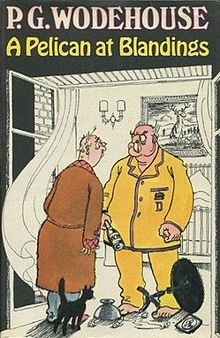
“Precisely as stated Lady Constance was in the amber drawing-room, APelicanAtBlandingssipping sherry and looking as formidable and handsome as ever. 

All Lord Emsworth’s sisters were constructed on the lines of the severer type of Greek goddess, except Hermione, who looked like a cook, and Connie in particular was remarkable for aristocratic hauteur and forcefulness of eye. One felt immediately on seeing her that there stood the daughter of a hundred earls, just as when confronted with Lord Emsworth one had the impression that one had encountered the son of a hundred tramp cyclists. He was wearing at the moment patched flannel trousers, a ragged shirt, a shooting coat with holes in the elbows and bedroom slippers. These, of course, in addition to the apprehensive look always worn by him when entering this formidable woman’s presence. From childhood onward she had always dominated him, as she would have dominated Napoleon, Attila the Hun and an all-in wrestling champion.”

 (A Pelican at Blandings)


Plans which are listened to with reverence

When Dolly lays out her plans, these get listened to with reverence, thoughMoneyForNothing tinged with some doubt.

‘Don’t you worry, Soapy. I’ve got this thing well in hand. When we’ve gone, you jump to the ‘phone and get Chimp on the wire and tell him this guy and I are on our way over. Tell him I’m bringing the kayo drops and I’ll slip them to him as soon as I arrive. Tell him to be sure to have something to drink handy and to see that this bird gets a taste of it.’

‘I get you, pettie!’ Mr. Molloy’s manner was full of a sort of awe-struck reverence, like that of some humble adherent of Napoleon listening to his great leader outlining plans for a forthcoming campaign; but nevertheless it was tinged with doubt. He had always admired his wife’s broad, spacious outlook, but she was apt sometimes, he considered, in her fresh young enthusiasm, to overlook details.

(Money for Nothing)


Being impelled by a youthful hypnotic Napoleon

Plans to park Ogden somewhere safe get made all the time. Mr. PrettPiccadillyJim reluctantly agrees to fall in line with Ann’s fruity scheme, a scheme he himself does not approve of.

‘In the boyhood of nearly every man there is a single outstanding figure, someone youthful hypnotic Napoleon whose will was law and at whose bidding his better judgment curled up and died. In Mr. Pett’s life Ann’s father had filled this role. He had dominated Mr. Pett at an age when the mind is most malleable. And now—so true is it that though Time may blunt our boyish memories the traditions of boyhood live on in us and an emotional crisis will bring them to the surface as an explosion brings up the fish that lurk in the nethermost mud—it was as if he were facing the youthful Hammond Chester again and being irresistibly impelled to some course of which he entirely disapproved but which he knew that he was destined to undertake. He watched Ann as a trapped man might watch a ticking bomb, bracing himself for the explosion and knowing that he is helpless. She was Hammond Chester’s daughter, and she spoke to him with the voice of Hammond Chester. She was her father’s child and she was going to start something.’

(Piccadily Jim)

The reluctant respect that Napoleon commands

With his tall claims, Mr. Bulpitt earns the reluctant respect of Lady Abbott.

‘You and your science!’

‘All right, then, me and my science.’

There was hostility in Lady Abbott’s eyes, but also a certain reluctant respect, such as the Napoleon type always extorts from women.

‘Have you ever been beaten at this game, Sam?’

‘Once only,’ said Mr. Bulpitt, with modest pride.

(Summer Moonshine)


Going straight for the enemy’s weak point

Joe tells Jane that his stepmother has bought the entire rights to his successfulSummerMoonshine (1) play and plans to take it off stage so as to avoid getting sniggered at by her close friends for some inappropriate parts therein. He is therefore planning to leave for California. Jane realizes that the cold fury she felt against Joe could well have been a deeper affection. The character of his stepmother comes into focus.

“Jane was in no mood to share this detached, sportsmanlike attitude.

‘She’s a hellhound.’

‘But a Napoleonic one. Like Napoleon, she sees the enemy’s weak point and goes straight at it, crumpling him up and causing him to fly from the field in rout. You see me now about to fly from the field.’”

(Summer Moonshine)

When Napoleon competes with Henry VIII

When Princess Dwornitzchek discovers that her stepson is engaged to be married to a secretary, she loses no time in ticking off Sir Buckstone.

“The Princess Dwornitzchek turned to Sir Buckstone with a sweeping gesture.

‘So!’ she said.

There are very few men capable of remaining composed and tranquil when a woman is saying ‘So!’ at them, especially when a sweeping gesture accompanies the word. Napoleon could have done it, and Henry VIII, and probably Jenghiz Khan, but Sir Buckstone was not of their number. He collapsed abruptly into his chair, as if he had been struck by a thunderbolt.”

(Summer Moonshine)

Retreating in disorder

The search for the prized Lady in Blue has left Jerry feeling defeated. HePGW TheGirlInBlue confides in Jane who is ready to buzz off to London on some legal errand.

‘My New York lawyer has come over and wants to see me. He’s just telephoned. Something about my legacy, I suppose. I’ll be back this evening. But never mind that, I want to hear what happened. How did you get on?’

‘Not too well.’

‘I thought as much.’

It had not taken great perception to bring her to this conclusion. Even at a distance he would have struck her as being on the sombre side. To be obliged to retreat in disorder from a stricken battlefield always tends to lower the spirits. Napoleon, who had this experience at Moscow, made no secret of the fact that he did not enjoy it, and Jerry, going through the same sort of thing at Mellingham Hall, Mellingham-in-the-Vale, was definitely not at his perkiest.

(The Girl in Blue)


Squelching back from Moscow

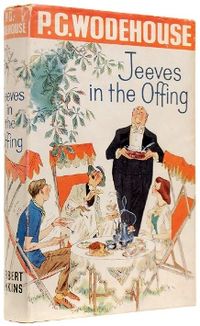
A confrontation between Augustus and Rocket has led to the party falling intoPGW JeevesInTheOffing the lake at Brinkley Court.

‘Reaching the mainland some moments later and squelching back to the house, accompanied by Bobbie, like a couple of Napoleons squelching back from Moscow, we encountered Aunt Dahlia, who, wearing that hat of hers that looks like one of those baskets you carry fish in, was messing about in the herbaceous border by the tennis lawn. She gaped at us dumbly for perhaps five seconds, then uttered an ejaculation, far from suitable to mixed company, which she had no doubt picked up from fellow-Nimrods in her hunting days.’

(Jeeves in the Offing)


The Napoleonic Code and the Wooster Code

Napoleon, born on the 15th of August, 1769, was a great military and political reader. His lasting legal achievement, the Napoleonic Code, is said to have influenced the legal systems of more than 70 nations around the world. According to British historian Andrew Roberts, “concepts such as meritocracy, equality before the law, property rights, religious toleration, modern secular education, sound finances, and so on—were championed, consolidated, codified and geographically extended by Napoleon. To them he added a rational and efficient local administration, an end to rural banditry, the encouragement of science and the arts, the abolition of feudalism and the greatest codification of laws since the fall of the Roman Empire.”

Some of these are rather close to the key values we find covered in the Code of the Woosters. As discussed elsewhere in a series of posts, the C of the W is not only about standing by one’s pals through thick and thin. It is also about equality before, and respect for, the law. It is about one being a Preux Chevalier. The spirit of Noblesse Oblige. The capacity to tame a hippopotamus like Roderick Spode by teamwork. Of having a bulldog spirit. Of refusing to be a doormat. Of being aware of one’s Pumpkin Quotient. Of attempting a pitiless analysis of one’s own actions.

The only aspect of the Wooster Code which would have possibly met with Napoleon’s stern disapproval would be that of upholding the feudal spirit. Being the proponent of a democratic outlook on life, he might have taken a dim view of aunts endeavouring to influence the cause of justice by offering to trade-off their favourite chefs so as to avoid the prospect of their nephews serving thirty days without the option.

Of ‘Napoleon Complex’ and the contempt for intellectuals

Napoleon’s sense of humour is said to have been so limited that he demandedNapoleon that all court painters refrain from putting a smile on any of his portraits.  As luck would have it, other than Roderick Spode, there are not many characters in Plum’s works that could be said to suffer from a ‘Napoleon Complex.’

Quite a few of the delicately nurtured fail in their attempts to raise the Bertie Wooster’s level of intellect by making him read such profound works as ‘Types of Ethical Theory’. Bertie has this innate tendency of avoiding intellectual pursuits of any kind. It is quite likely that Napoleon, had he ever run into him, would have heartily approved of this trait of his. The great strategist is reported to have once said that “You don’t reason with intellectuals; you shoot them.

A French honour for Plum?!

Given his poor sense of humour, it would have surely surprised someone like Napoleon to hear from one of his humble adherents about the kind of influence he exercises upon the goings-on in Plumsville.

Discovering the manner in which his sterling qualities of head and heart have been showcased by Wodehouse in his numerous works, Napoleon might have even considered making our beloved Master Wordsmith an honorary Knight in the French Legion Of Honour!

(Related post: https://ashokbhatia.wordpress.com/2014/11/16/de-codifying-the-code-of-the-woosters)