Feeds:
Posts
Comments

After the 2008 economic meltdown, the management world has discovered that CEOs need to follow not only a Business Compass but also a Moral Compass to steer the enterprises they happen to head. Improving one’s Spiritual Quotient is now a sheer business necessity, and shall be more so in the decades to come.

It is here that Indian scriptures and sages provide a ready template for managers of all sizes and shapes. Let us consider a few facets of some of the pearls of Indian wisdom which find ready application in the realm of management.

Some pearls of Indian wisdom 

Ramayana

  • The entire narrative highlights the importance of values in our lives.Ramayana 1 Businesses which follow a policy of righteousness and conduct their operations in an ethical manner enjoy tremendous brand equity in the market. This rubs off on their products as well as on their employees.
  • Lord Rama decides to leave his comfort zone for fourteen years and ends up connecting with lesser mortals better. Likewise, CEOs and marketing honchos of today who travel through the hinterland to get a better first-hand feel of the customer’s pulse do a far better job of servicing the market.
  • An alliance with Sugreeva, coupled with an out-of-the-box unconventional army, eventually leads to Sita getting traced and Ravana getting vanquished. Mergers and alliances based on mutual respect and trust leads to better market share. Mighty objectives can be achieved even based on frugal resources.
  • Beware of sycophants. A couplet in Sundara Kanda of Ramcharitmanasa clearly advises us to ignore the advice of a paid deputy, a doctor and a teacher who speak positively out of either fear or expectation of a gain. A king who acts upon such motivated advice loses his kingdom, his body and his righteousness (dharma) as well.
  • When Sita gets banished from the kingdom, Rama’s role is not much different from that of a true-blue CEO whose loyalty to the company’s overall welfare is unflinching.
  • CEOs and managers who entertain amorous intentions in respect of women team members and managements which look the other way just because they accord a higher priority to business goals than to the character of their top honchos could take a leaf out of Rama’s conduct.

Mahabharata

  • The attachment of Dhritarashtra, the blind king, to his evil son, Mahabharat Draupadi_and_PandavasDuryodhana, proves to be highly destructive in nature. The entire Kuru clan gets eliminated. CEOs who promote their kith and kin without assessing the overall welfare of an organization get doomed likewise. Same holds true for many a political outfit.
  • Arjuna’s skills in archery are well-known. He achieves mighty feats based on his power of intense concentration on the job at hand. Multi-tasking, a misleading buzzword in current business parlance, has no place in his dictionary.
  • The perseverance of Pandavas eventually pays off. Repeated setbacks do not deter them from seeking their share in the kingdom. War follows only when even a settlement with five villages only gets turned down by Duryodhana. The tenacity of bouncing back in the face of adversity that Pandavas display is worth emulating by MNCs which try to penetrate the Indian market.
  • The unity of purpose amongst the five Pandava brothers is exemplary. Theirs is a unified and invincible family which goes through its trials and tribulations as a single unit. Likewise, large conglomerates like Tatas draw their strength from a set of core values. Each company within the group’s fold has a unique place in the market. The companies operate in fields as disparate as salt and software. Yet, all of them are connected by a common value system and a similar business philosophy.
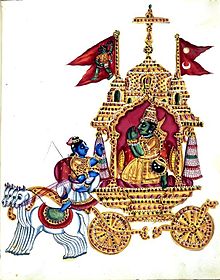
  • The manner in which Krishna persuades a demoralized Arjuna to take up his arms by enunciating the basic principles of life in the Bhagavad-Gita is exemplary.

Bhagavad-Gita

  • One of the basic concepts enunciated by Krishna in the Bhagavad-Krishna_Arjuna_GitaGita is that of the everlasting nature of the soul. The concept of a soul now finds a resonance even in modern management literature. In ‘The 8th Habit’, Stephen Covey urges professionals to pay heed to their ‘inner voice’. While proposing the whole person paradigm, he speaks of the four dimensions of a person – spirit, body, heart and mind.
  • Over its eighteen chapters, Krishna propounds the intricacies of different forms of Yoga, a philosophical system which treats all life as a management enterprise. It exhorts managers to be impartial, not favouring any one goal, any one mode any one or group of persons.
  • A manager’s goal is the total overall good, in keeping with environmental necessities and societal requirements.
  • He is not swayed by happiness or sorrow, ego or nepotism, greed or desire.
  • He is not swayed by external temptations of tangible, material success and thus attains a state of happiness, peace and contentment. He radiates positivity and his decisions bring happiness sooner or later to maximum number of people.
  • In other words, detachment is the key takeaway from Bhagavad-Gita. Detachment from the rewards of any work or action taken results into a neutral state of mind.

Thirukkural

This is a classic Tamil ‘sangam’ (3rd century BC to 4th century AD) literature

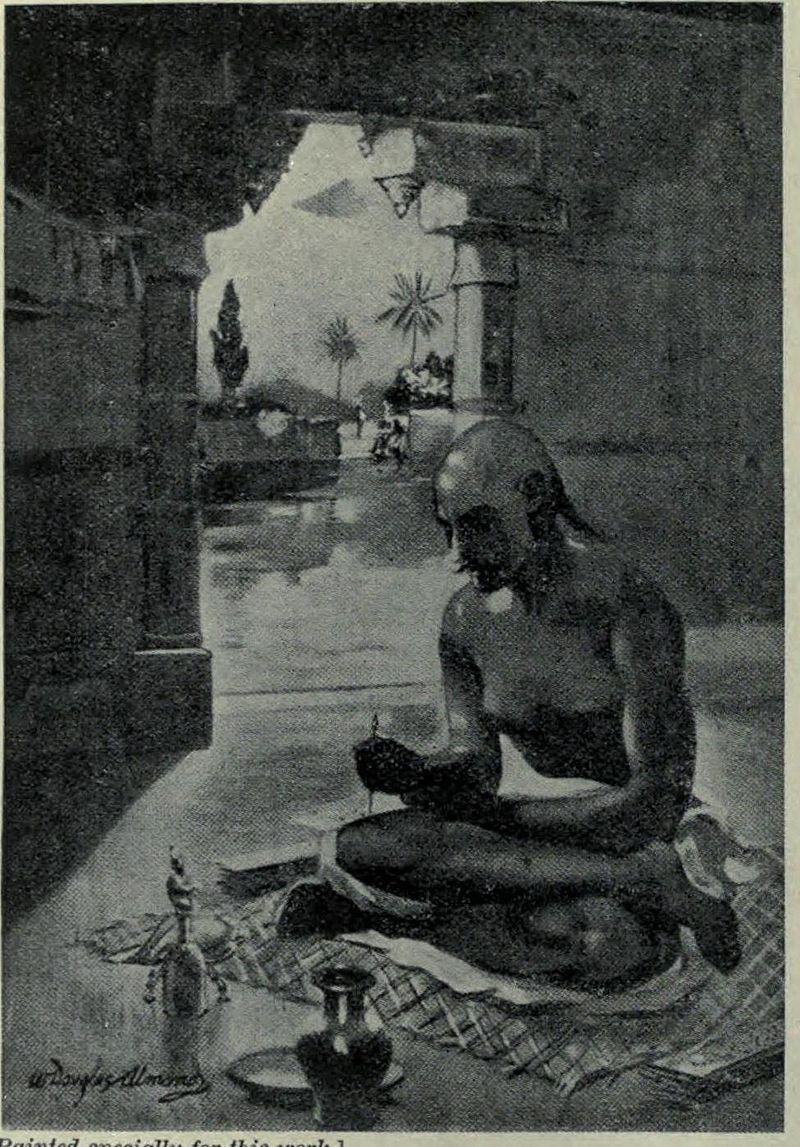
Thiruvalluvar

Thiruvalluvar

composition. It has 1,330 couplets or ‘kurals’. It was authored by the renowned poet Thiruvalluvar. It is replete with words of wisdom. It is simple and contains profound messages.

Thirukkural has 133 chapters, each containing 10 couplets. Broadly speaking, all the 133 chapters can be divided into three sections: Righteousness, Wealth and Love. Even though the contents are meant for kings of yore, many of the messages are equally relevant for CEOs of business world.

Consider these ‘kurals’:

  • It is not good to forget the benefit received; but it is good to forget then and there the injury done by another. (108)
  • Those who alienate friends by back-biting may have forgotten the art of making friends through suavity of speech. (187)
  • Entering an assembly without sufficient knowledge is like playing at a dice board without its knowledge. (401)
  • Men of foresight who guard themselves against coming events know no distress. (429)
  • A king must act after measuring the strength of his plan, his own resources, the strength of the enemy and that of the ally. (471)
  • Let men be chosen with deliberate care; when once the choice is made, let no suspicions crawl into your soul. (509)
  • Strict enquiry and impartial justice mark the rule of a just monarch. (541)
  • The greatness of a person is proportionate to the strength of his will power. (595)
  • What you have clearly decided to do, do it without hesitation and delay. (668)
  • An unfinished deed and an unfinished fight will, like a half-extinguished fire, cause ultimate harm. (674)

Each ‘kural’ is complete in itself. It deserves to be meditated upon, one at a time, and imbibed in our day-to-day lives. One wonders at the keen observations of the poet, his sagacity and the effort he has taken to collate and compile this beautiful work, replete with words of wisdom which continue to be as relevant today as they were in the days of yore.

Chanakya Neeti 

Chanakya is a well-known Indian teacher, philosopher, economist, jurist and chanakyaroyal advisor. He is said to have lived from 350-275 BCE. He authored the ancient Indian political treatise, the Arthshastra. He is considered a pioneer in the field of political science.  He assisted the first Mauryan emperor, Chandragupta, in his rise to power. He is widely credited for having played an important role in the establishment of the Mauryan Empire.

One of his seminal works happens to be Chanakya Neeti, or Chanakya’s Aphorisms. It is a treasure trove of wisdom and speaks of the criteria to be used to judge people, the need for keeping one’s intentions confidential, the value of continued learning, situations wherein it pays to be a hypocrite, the supremacy of one’s duty, and the like.

He draws an interesting analogy between the animal kingdom and those who waste their time criticizing others. He holds such persons to be worse than the crows amongst birds and dogs amongst animals.

Sri Aurobindo

Profound thoughts of one of the prominent Indian seers of modern times, Sri Aurobindo, could be interpreted to propose a different paradigm of management. Sri_aurobindo

Whereas the Western model of management thought is based on such functions as Marketing, Finance, Production and People, the Eastern model, so to say, could be said to comprise four pillars of management: Perfection, Harmony, Power and Wisdom. Collectively, this paradigm could be called Integral Management.

Analyze the conduct of any business leader and one is apt to find the underlying presence of all these elements. It does not matter whether a manager handles marketing, finance, production or human resources.

  • It is by striving for perfection that one achieves excellence in results. Being perfect implies putting our best foot forward and doing our best under the given circumstances. It is the striving for perfection which assumes significance.

When Apple launches a new product, the whole market is abuzz. The toil and hard work which goes into creating and launching a new product is exemplary indeed.

  • A harmonious conduct with respect to all key stakeholders is essential for sustained success in business. Relations with financial institutions, regulatory authorities, customers, distributors, suppliers, staff and labour need to be based on a harmonious blend of business needs and the principles of natural justice.

The manner in which the Taj Hotel management responded after the 26/11 terror attack is a shining example of harmonious conduct of business.

  • Use of power with a sense of responsibility, that too for the greater good, leads to higher brand equity for a business. Marketing prowess can influence customers’ decision making, and has to be directed at their needs and not wants. Financial strength can also be leveraged to do something useful for the society. Administrative authority comes with a great deal of responsibility.

The case of Dr Pachauri being shown the door by TERI in a sexual harassment case is just one of the several examples of how the high and mighty should not exercise the power at their command.

  • Wisdom in decision-making leads to a sustainable business, which gives back to the society and the environment what it draws from the same.

In September 1898, Jamsetji Nusserwanji Tata decided to set aside half of his wealth as an endowment to establish a university of science. His donation was worth Rs. 30 lacs in those days. The other half he left for his two sons. The Indian Institute of Science eventually came up in 1911, paving the way for quality research and teaching in India.

This is the kind of unique learning which an aspiring manager receives in her formative years in the Eastern world.

Managers with a Western Mind and an Eastern Heart

Successful CEOs and managers of the future would need to be those who have a Western Mind and an Eastern Heart.

The success of the likes of Satya Nadella (currently the CEO of Microsoft) and Sundar Pichai (currently the CEO of Google Inc) goes on to show the growing importance of managers who are not only exposed to the Western models of management but also steeped in Eastern wisdom in the realm of management.

(Presented as a talk to the members of the Pondicherry Chapter of Madras Management Association during June 2016)

(Related Posts:

https://ashokbhatia.wordpress.com/2013/05/27/management-lessons-from-ramayana

https://ashokbhatia.wordpress.com/2013/07/12/management-lessons-from-mahabharata

https://ashokbhatia.wordpress.com/2015/09/04/management-lessons-from-the-life-of-lord-krishna

https://ashokbhatia.wordpress.com/2015/01/16/management-lessons-from-thirukkural

https://ashokbhatia.wordpress.com/2015/10/06/managerial-perfection-notes-from-a-seminar-at-pondicherry-india

https://ashokbhatia.wordpress.com/2016/03/26/harmony-in-management-a-seminar-at-pondicherry-india)

In Ritusamhara, Kalidasa uses the season of winter to give his readers a sneak peek into the inner chambers of houses where couples are eager to get reunited. Given his flair for romance, he does not disappoint. He touches upon the use of intoxicants and the amorous intentions of women of age. He speaks of the agony of the air trapped between intimate body parts of a couple who are in a tight embrace. He talks of the dressing behavior of women in the mornings after they have experienced intense love-making during the preceding night.

Bollywood is not far behind in giving its viewers a sneak peek into the private moments of a couple. In fact, with each passing year, the envelope only gets pushed further and bedroom scenes become bolder and steamier. But to do so, our dream merchants do not necessarily depend upon the winter season alone. For them, any season is good enough for passionate love-making. In fact, they capitalize on the winter season by capturing the scintillating outdoors on celluloid. A vast snow-covered landscape forms the perfect backdrop for a scantily clad heroine and a well-groomed hero to profess their love for each other.

Here are some of the couplets from Canto Five of Ritusamhara, followed by few songs which come to one’s mind.


“Sandal-paste cool like moonbeams, building tops pleasant with immaculate moonshine, or sleet chilled dense breezes…  presently none of them is delightful for the people. [5-3]

Aman (1967, Mohan Kumar)

Aa Gale Lag Jaa (1973, Manmohan Desai)

Phir Kab Milogi (1974, Hrishikesh Mukherjee)

Roja (1992, Mani Ratnam)


“Taking betel leaves and their enclosing material like lime, areca-nut parings, and other fragrant material for chewing, besides handling body creams and tassels of flowers, for it is cool to wear them on, women folk with their lotus-like faces that are fragranced with delightful recreational drinks are enthusiastically entering their bedchambers that are desirably fragranced with the fumigation of aloe vera resin. [5-5]

Geet Gaya Pattharon Ne (1964, V Shantaram)

Chandni (1989, Yash Chopra)

Parineeta (2005, Pradeep Sarkar)


“On entering bedchambers seen are the irritant husbands irritating for the arrival of their wives; but these husbands were at fault once for which they were daunted repeatedly earlier, for which they are now wavery as hesitation ciphered their hearts; on looking at such husbands who are now longing for lovemaking, the lustful women overlooking their faults are joining them, lest time and opportunity fritters away… thus this season unites couples, though they are at loggerheads… [5-6]

Suhagan (1964, K S Gopalakrishnan)

Anubhav (1971, Basu Bhattacharya)

Mausam (1975, Gulzar)

Darr (1993, Yash Chopra)


“With their discoid faces just cleansed with water looking more like golden lotuses, on which wide and medially whitish eyes whose edges touch the edges of ears, and with just cleansed hair dangling and clasping their shoulders, those women of age that are snugly in the heart of their houses in these days, appear to be many a personified prosperity, goddess Lakshmis, amidst her golden lotuses. [5-13]

An Evening in Paris (1967, Shakti Samanta)

Saudagar (1973, Sudhendu Roy)

Dilwale Dulhaniya Le Jayenge (1995, Aditya Chopra)

Fanaa (2006, Kunal Kohli)


“In this season, new sugar-candies and their modified sweetmeats will be abundant, new rice relishable, new sugar-cane juice delightful, disport of lovemaking intensified for the hauteur of Love God occasions anew, but this season alone will be the cause for scorching the hearts of those that are devoid of their loved ones; however, let this winter season be always bring propitiousness to you all.  [5-16]

Junglee (1961, Subodh Mukherjee)

Sangam (1964, Raj Kapoor)

Maachis (1996, Gulzar)

Veer-Zaara (2004, Yash Chopra)


Here is a medley of Bollywood winter songs entitled ‘Bollywood’s Winter Wonderland’ which some of you may like.

Writers and poets enjoy much greater degrees of freedom in expression when they decide to depict romantic affairs. Their vision can touch intimate spaces where even sun rays cannot aspire to reach.

Kalidasa is often referred to as the supreme poet of the senses and of aesthetic beauty, and rightly so.

Over the past few decades, Bollywood has willy-nilly evolved into a money-making arena, where style often rules over substance, where glamour invariably overrides content, where a loud orchestra often dominates inane lyrics and where raw displays of an erotic nature mostly take precedence over a depiction of refined sensuousness. The ‘success’ of a movie is now measured in terms of money and not in terms of either its content or its artistic orientation. Once in a while, one does come across some sensible and exceptional movies, but these remain mere exceptions.

One hopes that Bollywood would soon come out of this phase of its thematic and lyrical winter and enter into an exciting new spring of fresh ideas, richer content, soulful lyrics and soothing music.


(Note: Translation of ‘Ritusamhara’ courtesy Mr. Desiraju Hanumanta Rao:http://www.sanskritdocuments.org/sites/giirvaani/giirvaani/rs/rs_5.htm)


(Related Posts:

https://ashokbhatia.wordpress.com/2016/05/14/the-six-seasons-of-kalidasa-in-bollywood

https://ashokbhatia.wordpress.com/2016/05/15/the-six-seasons-of-kalidasa-in-bollywood-summer

https://ashokbhatia.wordpress.com/2016/05/20/the-six-seasons-of-kalidasa-in-bollywood-monsoon

https://ashokbhatia.wordpress.com/2016/05/27/the-six-seasons-of-kalidasa-in-bollywood-autumn

https://ashokbhatia.wordpress.com/2016/06/01/the-six-seasons-of-kalidasa-in-bollywood-pre-winter-hemanta)

In Ritusamhara, Kalidasa paints a highly romantic picture of the pre-winter season. Given the lower temperatures, metallic embellishments get avoided by the delicately nurtured. The fabric chosen for clothing undergoes a subtle change. The pastes and lotions to be applied to the body are different. Liquors come into play. Passions get aroused by the sheer promise of the winter season which is yet to arrive.

When it comes to capturing different shades of passion and putting across suggestions of love-making, Bollywood is never found wanting. Snow-covered mountains, gently murmuring rivulets, enchanting lakes, flying birds and lotuses in bloom form the perfect backdrop for romantic songs. Heroes can be seen aggressively pursuing lissome heroines clad in figure-enhancing dresses.

Here are some of the couplets from Canto Four of Ritusamhara and the kind of songs which could possibly do some justice to the poet’s evocative portrayal of nature and romance.

“Delightful are trees and fields with the outgrowth of new tender-leaves and crops; Lodhra trees are with their blossomy flowers, crops of rice are completely ripened, but now lotuses are on their surcease by far, for the dewdrops are falling. Hence, this is the time of pre-winter that drew nigh. [4-1]

Hamraaz (1967, B R Chopra)

Jewel Thief (1967, Vijay Anand)

Silsila (1981, Yash Chopra)

Veer-Zaara (2004, Yash Chopra)

“Unbearable is the touch of metallic circlets on wrists and bicep-lets on upper-arms of the couple of arms of vivacious women, or the touch of new silk cloths on the discoid of their waistline, or fine fabric on their robust breasts. [4-4]

Madhumati (1958, Bimal Roy)

Bees Saal Baad (1962, Biren Nag)

Chandni (1989, Yash Chopra)

“Overspread with abundant rice crops and ornamented with herds of she-deer, and delightfully reverberated by the ruddy geese, with their calls and counter-calls, the complacent corridors of confines are captivating hearts. [4-8]

Dharti Kahe Pukar Ke (1969, Dulal Guha)

Aradhana (1969, Shakti Samanta)

Prem Pujari (1970, Dev Anand)

Saathiya (2002, Shaad Ali)


“Now the lakes are adorned with fully blossomed black-lotuses, and elaborated with swan-like water fowls in their excitement, and sheeted with considerably coldish waters that are depurated, thus these lakes are stealing the hearts of men, for men look up to them as the visages of women that are with black-lotus-like hairdo, with swan like eyes, and whose bodies are cold, wanting a warm hug. [4-9]

Hum Dono (1961, Amarjeet, Vijay Anand)

Ek Musafir Ek Hasina (1962, Raj Khosla)

 Tere Ghar Ke Samne (1963, Biren Nag, Vijay Anand)

Who Kaun Thi? (1964, Raj Khosla)

Sangam (1964, Raj Kapoor)

Kabhie Kabhie (1976, Yash Chopra)


“Oh, dear, the Priyangu plants that give fragrant seeds are ripened by the snow caused coldness, and they are frequently wobbled by the snowy winds, and they now appear like the fragrant and frisky women gone into paleness and wobbliness by their dissociation from their lovers. [4-10]

Jab Jab Phool Khile (1965, Suraj Prakash)

Prem Pujari (1970, Dev Anand)

Aandhi (1975, Gulzar)

“Let this season hemanta, dew fall, pleasant with many an attribute, a stealer of the hearts of women, fields of villages abundantly overspread with rice-crop, sky overlaid with garlands of ruddy geese flights, and which always is a heart-pleasing season, endow comfort to all of you passionate people. [4-18]

Waqt (1965, Yash Chopra)

Dil To Pagal Hai (1997, Yash Chopra)

Saathiya (2002, Shaad Ali)

Veer Zara (2004, Yash Chopra)

Lakshya (2004, Farhan Akhtar)


During this season, the sky is a clear blue, the water is sparkling clean and the trees are lush green. Flowers are in full bloom and fields are about to deliver a bountiful harvest to humanity. Snow has just started reminding us that winter is not too far away.

Kalidasa captures the pre-winter season in all its glory, interspersed with some details of passionate love-making. Bollywood strives hard to catch up with the poet and, quite understandably, leaves much to the imagination of the viewers. Poets obviously enjoy certain degrees of freedom which our dream merchants lack, though they often make up for it by bringing in lewd lyrics and suggestive body gyrations in what are euphemistically referred to as ‘item numbers.’

[Note: Translation of ‘Ritusamhara’ courtesy Mr. Desiraju Hanumanta Rao:http://www.sanskritdocuments.org/sites/giirvaani/giirvaani/rs/rs_4.htm]


(Related Posts:

https://ashokbhatia.wordpress.com/2016/05/14/the-six-seasons-of-kalidasa-in-bollywood

https://ashokbhatia.wordpress.com/2016/05/15/the-six-seasons-of-kalidasa-in-bollywood-summer

https://ashokbhatia.wordpress.com/2016/05/20/the-six-seasons-of-kalidasa-in-bollywood-monsoon

https://ashokbhatia.wordpress.com/2016/05/27/the-six-seasons-of-kalidasa-in-bollywood-autumn)


The departure of the rainy season leaves us with a weather which is hot and humid. The sky is a clean blue. The sun tends to get merciless yet again but is unable to catch up with the ferocity it displays during summers. Rivers and lakes are full to the brim, but are relatively quieter.

In ‘Ritusamhara’, Kalidasa captures this season as evocatively as he does all others. All the natural features of autumn get compared to either some activity or some ornament of the delicately nurtured. Immaculate moonshine is often said to be veiled by clouds. Twinkling stars get alluded to as jewellery of the autumnal night. Affairs of the heart invariably take centre stage.

Bollywood does not refrain from showing us the beauty of this season in all its glory while the hero and the heroine profess their love for each other. But there is a difference. Whereas the attention of the poet is invariably on nature, ornamentation and courtship, Bollywood goes a step further. It uses the season of autumn to also depict hearts which are steeped in a sense of melancholy. The spectacle of dry yellow leaves getting crushed beneath the feet of separated lovers singing soulful songs is common place. The hero and the heroine suffer the pangs of loneliness, laying the blame at the door of a harsh Fate. Their faces are invariably downcast. A sense of despondency prevails.

Consider these couplets from Canto Three of this work of the poet and some of the songs which spring to one’s mind.

“Presently the rivers are journeying slowly with a strutting of prideful lovely girls, for the rising and falling fish in the rivers seem to be the delightful sets of strings at the waistlines of rivers, like the sets of girdle-strings on the waists of girls, and the ranges of white waterfowls on riverbanks seem to be the whitish pearly pendants of rivers, like the pearly pendants around the bosoms of prideful girls, more so the broad sand-dunes at edges of those rivers appear to be the roundish fundaments of those rivers like that of those girls. [3-3]

Baiju Bawra (1952, Vijay Bhatt)

Mujhe Jeene Do (1963, Moni Bhattacharjee)

Kashmir Ki Kali (1964, Shakti Samanta)

Safar (1970, Asit Sen)


“A girl burgeons as a damsel day by day, so the autumnal night is lengthening its night-time day by day, and as a damsel wears shiny jewellery on her nubility, this damsel, called the autumnal night, is wearing clusters of twinkling stars as her jewellery, as the veil of a damsel will be unveiled frequently presenting her face, these veils called clouds on the sky scape are now being unveiled to present the moon like face of this autumnal damsel, and a damsel starts to wear raiment with unblemished whiteness at her pubescence, so also, this autumnal damsel’s wraparound is the immaculate moonshine. [2-7]

Chaudavin Ka Chand (1960, Mohammed Sadiq)

Ganga Jamuna (1961, Nitin Bose)

Bandini (1963, Bimal Roy)

Chandni (1989, Yash Chopra)

“These days the moon is an eye-festival and heart-stealing with his profuse moonbeams, and he is the real gladdener for he is the sprinkler of fresh and coolant dewdrops through those moonbeams, but nowadays he alone is becoming an inflamer, for he is burning the bodies of the women, who are already felled by the arrow of Love-god, which arrow is daubed with the venom, which venom is nothing but their own lusting after their itinerant husbands, that are now separated from them. [3-9]

Jhumroo (1961, Shankar Mukherjee)

Kohinoor (1960, S U Sunny)

Maya (1961, D D Kashyap)


“The fragrance of flowers of white-flower trees is heart-stealing, and nowadays birds are not scorched by the sun, thus they are there in fine fettle, and they are calling each other reciprocally, thus those birds and their callings are heart-stealing, and the eyes of she-deer that are abiding all over there are like black-lotuses, thus with all them the woodlands and their fringes beyond ken, are ecstasizing the hearts of men. [3-14]

Anupama (1966, Hrishikesh Mukherjee)

Black Mail (1973, Vijay Anand)

Kabhi Alvida Na Kehna (2006, Karan Johar)

“These days the vault of heaven smiles with the vast of earth in their forms of exalted splendour. On the earth the lakes are bejewelled with emeraldine waters; similar is the sky with somewhat emeraldine hue. Such water is overspread with white-lotuses, similar is the cloudless sky overlaid with stars. These waters are overprotective to kingly swans, similarly the vault of cloudless heaven is holding out the moon, the king of the nights. [3-21]

Jhanak Jhanak Payal Baaje (1955, V Shantaram)

Rajkumar (1964, K Shankar)

Aandhi (1975, Gulzar)


Autumnal blues

Bollywood has a marked preference for using the autumn season as a backdrop for melancholic songs of separation and for depicting the yearning for the beloved. Even though Kalidasa refrains from painting this aspect of the season, it may be worth our while to look at some songs which fall in this category.

Dulaari (1949, A R Kardar)

Awaara (1951, Raj Kapoor)

Baiju Bawra (1952, Vijay Bhatt)

Chaudvin Ka Chaand (1960, Mohammed Sadiq)

Baaton Baaton Mein (1979, Basu Chatterjee)


When it comes to capturing the beauty of nature and describing the affairs of the heart, Kalidasa reigns supreme. His knowledge of the geography as well as the topography of India is even more commendable, given the fact that he lived in times when maps, modern navigation tools, internet and global positioning systems did not exist.

[Note: Translation of ‘Ritusamhara’ courtesy Mr. Desiraju Hanumanta Rao: http://www.sanskritdocuments.org/sites/giirvaani/giirvaani/rs/rs_3.htm]


(Related Posts:

https://ashokbhatia.wordpress.com/2016/05/14/the-six-seasons-of-kalidasa-in-bollywood

https://ashokbhatia.wordpress.com/2016/05/15/the-six-seasons-of-kalidasa-in-bollywood-summer

https://ashokbhatia.wordpress.com/2016/05/20/the-six-seasons-of-kalidasa-in-bollywood-monsoon)


A health seeker often gets to revisit some of the long forgotten science lessons learnt in the early years of his life.

Einstein’s theory of relativity

It gets understood more easily when a minute spent on a treadmill sounds likeScientist Albert_Einstein fifteen minutes snoozing on the bed. Thirty minutes spent on a dentist’s reclining chair feels like thirteen hours spent in the company of one’s mother in law.

The mystery of the formula linking energy and mass also unfolds. Wisdom eventually dawns that E (Energy and Enthusiasm) to achieve a heightened state of well-being is equal to the product of ‘m’ (mental peace and positivity) and ‘c’ squared, where ‘c’ stands for conviction or faith in the treatment opted for.

Much like the speed of light, each kind of treatment has a unique upper limit to heal, beyond which one moves into the realm of prayers, divine intervention and spirituality. This is a universe which is surely not governed by the conventional laws of science as we understand them today.

First Law of Motion

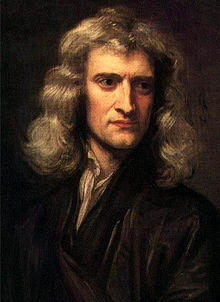
Newton is found to be dead right when he postulates that a stationary object moves only when an external force is applied to it. When a couch potato is toldScientist IsaacNewton-1689 by the good doctor to exercise regularly, much will power needs to be summoned. Social challenges like the sudden appearance of a maid servant or the newspaper boy to collect his dues need to be handled. Startled glares from a younger person living across the street have to be summarily ignored. Presence of relatives and friends has to be managed. Ridicule hurled at one from any quarter needs to be summarily rejected, so the object, in this case the health seeker’s physical body, can get moving.

Non-linear regression analysis

Harsh slings and arrows of life make the patient understand that bodily afflictions are not necessarily explained by a linear formulation in mathematics. When it comes to good health, the link between cause and effect is never straightforward. Variables like mental attitude, reserves of will power, social mores, genetics, biological factors, environmental constraints, spiritual propensity and perhaps even factors beyond our present frontiers of knowledge need to be considered.

A person who is a chain smoker survives much longer than a non-smoking one who gets diagnosed for cancer much earlier in his life. Someone who is a happy-go-lucky person lives life to the hilt even with several arterial blocks whereas someone who takes a dim view of life in general needs to undergo repeated surgical interventions.

Laws of Thermodynamics

The patient may find that even Laws of Thermodynamics apply to the realm of life style afflictions.

Zero-th Law

If two persons are in the equilibrium of a stable relationship with a life styleJosiah_Willard_Gibbs Thermodynamics disease and lead their lives as per the Principle of Peaceful Coexistence with the said disease, it follows that they could develop a good relationship with each other as well.

First Law

The Law of Conservation of Energy applies. There is a limit to which a patient may exercise to remain fit. Other activities may have to be given the short shrift so a regular exercise regimen may not suffer.

Second Law

Over time, Entropy or disorder is bound to increase in an entity comprising a body, a mind and a soul relationship. The only way out is to keep cleansing one’s system of negative thoughts at regular intervals. By means of meditation, the patient can keep creating inner space for positive thoughts to come in and hold sway.

Some crystal gazing

Add to all this the growing uncertainty of disruptive technologies and the cause-effect equation of well-being becomes even more complex.

If one were to attempt some crystal gazing in the field of medicine, the results could cheer up a lay patient. A pill to dissolve and cure cataract could revolutionize eye care. Early detection of a would-be patient’s disposition to develop diabetes could lead to preventive lifestyle changes which could save millions from getting into the clutches of this dreaded affliction. 3-D printing of living tissue can be used to make body parts.

The implications are mind-boggling. But the fact remains that advances in medical science would merely touch the sheath and not the core of an individual patient – the soul.

Faith and the sincerity of prayer

More than a century back, Quantum physicists confirmed what our sages had held long back – that our thoughts determine the reality we experience.  Ifa1 1 (11) the mind is taken to be a canvas on which our thoughts get projected, our body could then perhaps be taken as a holographic projection of our consciousness. So, if we have a genuine intention to heal, have an abiding faith, entertain positive thoughts, and if our prayer is sincere enough, a state of better health would follow.

The challenge for a patient, therefore, is to elevate his consciousness to a level where he gets an insight to heal himself. In her book Molecules of Emotion, Candace Pert had indeed predicted that the time is not far off when a patient with a headache will simply sit in a quiet corner to meditate to elevate his consciousness to get total relief from headache instead of popping some inane pain-killer pills.

A state of bliss with no date of expiry

Undoubtedly, a patient faces a multi-faceted challenge. Besides the art of managing the affliction itself, he has to learn the science behind his disease. He needs to confront the forces of commerce which drive healthcare today. Newer discoveries in medicine do give him hope for a healthier future, if not for him but at least for some of his fellow beings.c1 (25)

Nature provides each patient with a physical body which comes with an inbuilt feature of planned obsolescence. But the indomitable spirit and the innate tendency of the soul to be blissful does not come with any date of expiry. Besides medication, exercise and proper food, his source of relief is his conscious effort to nurture the connection with his own inner self. Having faith in the medical system he decides to follow surely helps. So does a sunnier outlook and his endeavours to serve those less fortunate than himself.

(Note: Part of an article which appeared in NAMAH journal: http://www.namahjournal.com/doc/Actual/Patients-and-the-art-and-science-of-healing-Vol-24-iss-2.html)

(Related Post: https://ashokbhatia.wordpress.com/2016/05/04/the-perils-of-being-a-patient)

After a long spell of a harsh summer, the monsoon ushers in a season of joy and relief. The aroma of the scorched earth touched by the first torrent of rains is intoxicating. Birds and beasts are equally delighted. The whole nature changes its texture.

This is indeed the season where Bollywood outdoes itself. Farmers rejoice. Those who are lonely go about dancing in the rain, hoping that a beloved would be discovered soon enough. Lissome heroines prance about in their fully drenched attires, performing dance steps which could put an Olympic gymnast to shame. When it gets pitch dark, lightning helps young ladies to locate their lovers.

Courtship reaches a higher level of intensity. Hormones run amok. Sounds of thunder make the heroine cling closer to the hero. Those who have lost their beloveds to the harsh workings of Fate fondly recollect their lady-love in this season. Perched on their mighty swings, groups of young ones indulge in much playfulness.

Kalidasa holds monsoon to be the king of all seasons and draws a parallel between sweaty elephants and dark water-laden clouds. The copious rains these bring are even compared to the elixir of life on the lips of offspring: mother’s milk. Peacocks dance in gay abandon. Rainbows get linked to the waistline ornaments of young ladies. Rivers in spate get compared with damsels who flirt with their lovers with gay abandon. In doing so, both are reckless about their own kith and kin. The season unites a separated couple. It also brings about separation between lovers.

Consider some of the couplets from Canto Two of Ritusamhara and few Bollywood songs which come to one’s mind.

“Oh, dear, now the kingly monsoon radiantly shining like a king is arriving with a convoy of rainy clouds as its ruttish elephants; lighting flashes as its pennants and buntings; percussive thunder-claps as its drum beats… welcome it for it is the delight of voluptuous people… [2-1]

Do Bigha Zameen (1953, Bimal Roy)

Chhalia (1960, Manmohan Desai)

Dil To Pagal Hai (1997, Yash Chopra)

“Oh, dear, sheeny are the faces of the deer with their swiftly zipping eyes, which are akin to black-lotuses and to your eyes as well, and they the deer and you, zip your eyes more and more, when there is a thunder or a rumble, then you run into my embrace, as they run to overcrowd the white sand-beds amidst lushly thickets of forests, and this gorgeous beauty of forests and the graceful beauty of yours, all this is promptly rendering the heart highly ecstatic… [2-9]

Chalti Ka Naam Gaadi (1958, Satyen Bose)

1942: A Love Story (1994, Vidhu Vinod Chopra)

Koi Mil Gaya (2003, Rakesh Roshan)

Hum Tum (2004, Kunal Kohli) 2004

“Though the cloud-cover rendered the nights as pitch-dark, and though thundering is thunderous, and though the pathways on ground are indiscernible for it is pitch-black, even in such nights the lover-seeking women are making haste on those paths, that are indiscernibly shown by the flashes of torch-lights, called the flashes of lightning, for they are impassioned to meet their lovers, to all intents and purposes… [2-10]

Kala Bazar (1960, Vijay Anand)

Barsaat Ki Raat (1960, P L Santoshi)

Mera Naam Joker (1972, Raj Kapoor)

“Well decorated are the water-bearing blackish clouds with the wiry flashes of lightning and with rainbows, and they are flashily dangling down with the weight of water, likewise the jewelly ear-hangings and waist-strings of the womenfolk are dangling down that flashily, thus even those vivacious women are instantly stealing the hearts of sojourners, for these exotic women are reminiscent of the lady loves of those sojourners… [2-19]

Parakh (1960, Bimal Roy)

Jeevan Mrityu (1970, Satyen Bose)

Guru (2007, Mani Ratnam)

“These days the women are not applying sandal-paste that is mixed with yellow camphor etc., for it will be too coolant, and hence their limbs are quietly bedaubed with the powder of aloe vera and sandal-paste as bodily scents, and with flowers bedecked as ear-hangings at hairslides, their plaited hairdo is rendered fragrant with these flowers and shampoos, such as they are, they are in the service of their in-laws in their chambers, but on hearing the rumbles of clouds, they are hastening themselves to their own bedchambers, where their men are in long wait, though the nightfall has not fallen that deep…[2-21]

Barsaat (1949, Raj Kapoor)

Milan (1967, Adurthi Subba Rao)

Fanaa (2006, Kunal Kohli)

“In this rainy season when congeries of clouds have showered enough, plethoric is the flowery blossom, hence the womenfolk embed their hairdos with the tassels of Maalati flowers together with Vakula flowers, and with other new blossomy flowers, and the tassels of new buds of Kadamba flowers are pinned and pensile like their ear-hangings, and this has all the hallmarks of lovers, that decorate the hairdos of their lady loves, themselves with their own hands… [2-24]

Chandni (1989, Yash Chopra)

Lamhe (1991, Yash Chopra)

Rudaali (1993, Kalpana Lajmi)

Bollywood uses rains to depict not only the hopes and aspirations of spinsters and the blossoming of romantic affairs of ardent lovers. Once in a while, it also uses the rainy season to capture the moods of separation and melancholy. Some of the compositions and their settings in a movie are quite innovative, and are based on pure classical music, like this one:

Saaz (1997, Sai Paranjpye) 

In Ritusamhara, Kalidasa captures different shades of the rainy season so very eloquently. Luckily for us, he lived and worked in a tropical country and thus included this season in his classic work.

Our dream merchants also do a fine job, armed as they happen to be with a medium which is visual and has a greater potential for engrossing the senses. However, Bollywood songs often lack the emotional depth and societal context which the poet captures in some detail.

[Notes:

  1. Translations of ‘Ritusamhara’ courtesy Mr. Desiraju Hanumanta Rao:

http://www.sanskritdocuments.org/sites/giirvaani/giirvaani/rs/rs_2.htm

  1. Movie buffs might be surprised at not finding the iconic song from Shri 420 ‘Pyaar hua iqrar hua…’ here. Since it has already been covered in the opening post, one did not wish to repeat it here as well.]

(Related Posts: https://ashokbhatia.wordpress.com/2016/05/14/the-six-seasons-of-kalidasa-in-bollywood

https://ashokbhatia.wordpress.com/2016/05/15/the-six-seasons-of-kalidasa-in-bollywood-summer)


When Kalidasa speaks of Summer in Ritusamhara, he not only talks of the hot and dusty earth but also of the comfort of fountains and lily ponds, the moonlit nights spent either on cold slabs of marble or on terraces, the expectations of a good monsoon soon to follow and the affairs of the heart. He touches upon the manner in which lovers prepare for courtship in this harsh season. The use of fragrant flowers and sandal paste gets mentioned. The mention of soft sounds of the anklets worn by lissome damsels fires up our imagination.

How does Bollywood depict summer?  If the hero happens to be an agriculturist, and the script has a situation pertaining to drought, starvation or death, despondency prevails. Prayers get offered to the Rain God. Farmers even repose their faith in a saint-like man who, they believe, has miraculous powers to bring copious rains.

Romance is invariably in the air. Lovers continue to express their sentiments for the party of the other part. Young ladies pine for the company of their beloved, either alone or in the company of a close friend and confidante. Nights, moonlit or otherwise, offer a unique opportunity for a couple to enjoy few moments of privacy. The intoxicating fragrance of flowers cannot be smelt, though the joyful faces of the hero and heroine say it all.

Let us consider translation of some of the couplets of ‘Ritusamhara’ and some Bollywood songs which give us an inkling of the various ways in which our dream merchants depict the summer season.

“Oh, beloved, somewhere the moon is shoving the blackish columns of night aside, somewhere else the palace-chambers are highly exciting with water showering, sprinkling and splashing machines, and elsewhere the matrices of gems like moon-stones, coolant pearls etc are there, and even the pure sandalwood is liquefied with other coolant scents for smearing on bodies… thus, this season is getting an adoration from all the people…” [1-2]

Chori Chori (1956, Anant Thakur)

Dilli Ka Thug (1958, S D Narang)

Silsila (1981, Yash Chopra)

Razia Sultan (1983, Kamal Amrohi)

“Throughout the night the moon beheld the lineaments of damsels comfortably sleeping on white terraced rooftops and he is ecstasised, for he is unpossessed of any such flawless face; for his own face is dented with rabbit or deer; he is becoming pale-faced with the dwindling of night and surely he must be going into hiding as he has no face to face the flawless sun.”[1-9]

Asli-Naqli (1962, Hrishikesh Mukherjee)

Pakeezah (1972, Kamal Amrohi)

Lamhe (1991, Yash Chopra)

“The intolerable westerly wind of the summer is upheaving the clouds of dust; set by the blazing sun even the earth is ablaze; for the itinerants whose hearts are already put to blaze by the blaze called the detachment from their lady loves, now it has become impossible even to look at the blazing earth, to tread further…” [1-10]

Lekin (1991, Gulzar)

 Saathiya (2002, Shaad Ali)

“Certain women with their eagerness to meet their lovers are decorating necklaces on biceps, girdle chains at arms, eye mascara on forehead, and the vermilion mark of forehead – tilaka – on cheeks, and red lipstick as eye mascara etc in ecstatic confusion, which is inciting love in the hearts of itinerants.” [1-12]

Saudagar (1973, Sudhendu Roy)

Utsav (1984, Girish Karnad)

“Extremely withered as though by wildfire and utterly shriveled are the tender stalks of crops; as if windswept by harsh winds they are uprooted and completely wilted and reduced to straw; all over scorched are they in an overall manner as the water is vanished; if seen from highlands till the end of forest, this summer is foisting upon the onlookers a kind of disconcert, as the straw in the wind about the monsoon is unnoticeable.” [1-22]

Guide (1965, Vijay Anand)

Lagaan (2001, Ashutosh Gowariker)

“Oh, dear melodious singer, what if the summer is scorching… fragrant lotuses are overlaid on coolant waters, agreeably refreshing is the fragrance of Trumpet flowers, comfortable is the fresh water in bathing pools, pleasurable are those moonbeams, and with these pearly pendants and these jasmine garlands, let our simmering summer nights enjoyably slip by, while we abide on the tops of buildings right under the moonscape, savouring potations and amidst music and song…” [1-28]

Jaal (1952, Guru Dutt)

Leader (1964, Ram Mukherjee)

Kalidasa also speaks of forest fires and its devastating effect on the flora and fauna. He talks of lions, elephants and buffaloes who roam around with their parched throats. The searing heat makes them forget the natural animosity towards each other. Snakes find a shade beneath the plumage of peacocks, who are otherwise their sworn enemies. Even animals, when they face a mighty challenge of nature, they tend to forget a basic instinct – that of attacking their prey and devouring them.  Social dangers pale in significance when a natural calamity strikes.

“When wildfire scorched their bodies, elephants, buffalos and lions are coming together as friends discarding their dichotomic thinking of mutual hostilities; blighted thus by the fire, they are quickly exiting their habitual confines to enter the areas of rivers that have broad sandbanks…” [1-27]

Bollywood does not appear to have paid much attention to this aspect of Kalidasa’s work.

Admittedly, literature and movies are different genres in the realm of art and entertainment. The endeavour in this series of posts is not to compare Kalidasa’s inimitable works to Bollywood songs. It is merely to connect the dots, as it were, and check if some songs generate the kind of emotions the poet so very poignantly captures in his classical work.

[Note:

Translations of ‘Ritusamhara’ courtesy Mr. Desiraju Hanumanta Rao (http://www.sanskritdocuments.org/sites/giirvaani/giirvaani/rs/rs_1.htm)]

(Related Post: https://ashokbhatia.wordpress.com/2016/05/14/the-six-seasons-of-kalidasa-in-bollywood)


KalidasaKalidasa, said to be born in the 4th century AD, is widely regarded as the greatest poet and dramatist in the Sanskrit language.  Had he been alive today, he would have been a very busy man, possibly assisted by a huge team of research assistants, dishing out scripts, dialogues and lyrics for a vast majority of our dream merchants in Bollywood.

His emphasis on capturing the innate beauty of nature might not have enthused many of our present day producers and directors. However, his evocative portrayal of female beauty and the passionate depiction of the affairs of the heart would have surely had the Bollywood movie makers in enthrall.

In his ‘Ritusamhara’ (Medley of Seasons), Kalidasa describes six seasons in his inimitable style: Summer (Greeshma), Monsoon (Varsha), Autumn (Sharad/Patjhad), Pre-winter (Hemant), Winter (Shishir) and Spring (Vasanta). Each one is dealt with evocative descriptions of the elements of nature. The seasons form a backdrop for the affairs of the heart and the sensuous pleasures of the skin.

The four seasons of Bollywood

Bollywood movies also capitalize on the affairs of the heart. But these use primarily four seasons as a backdrop: Summer, Monsoon, Winter and Spring. Autumn and Pre-winter do not get covered so very explicitly, though the landscape and the situation in the story can often give the viewer a clue about the same.

The following songs readily attest to the concept of four seasons expounded by Bollywood.

Jhanak Jhanak Payal Baaje (1955, Director: V. Shantaram)

Aap Ki Kasam (1974, Director: J. Om Prakash)

Some Bollywood songs and the lens of Kalidasa

Even though Bollywood explicitly speaks of four seasons, it is tempting to use the lens of Kalidasa to view Bollywood songs.

Bollywood lovers court each other with gay abundance in all the seasons. Seasons often act as a complimentary backdrop to the mood of the hero and the heroine.

Moonlit nights of Summer facilitate singing of melodious songs in gardens with swaying palm trees.

Love Marriage (1959, Subodh Mukherjee)

Monsoon invariably induces a bolder expression of love. Hormones get all charged up.

Shri 420 (1955, Raj Kapoor)

Autumn is the season when lovers pine for each other.

Arzoo (1965, Ramanand Sagar)

Pre-winter is the season of renewed hope for the lovers.

Silsila (1981, Yash Chopra)

Winter ushers in a season of warm embraces and closer encounters of the amorous kind.

Aap Ki Kasam (1974, J. Om Prakash)

Spring is decidedly the season when thoughts of the young ones turn to romance.

Aandhi (1975, Gulzar)

For each of the seasons, a wide variety of songs can be mentioned. In the following posts, we shall review the six seasons of Kalidasa in some detail and try to see if Bollywood has willy-nilly celebrated these in the same spirit as that of the great Sanskrit poet.

Kalidasa’s challenges in the 21st century

Kalidasa, had he been around in our materialistic times, would have surely been laughing all the way to the bank, thanks to the insatiable appetite of Bollywood producers and directors for bolder and raunchier item numbers year after year. Commercial success being the motto, the demand for situations which justify an erotic twist to their scripts would have kept him and his team overworked at all times.

Nevertheless, one doubts if he would have been a happy man. Feminists of all hues would have hounded him no end, perhaps charging him with objectification of women’s anatomies. The delicately nurtured might have taken offence at the graphic details of their intimate affairs. Even those belonging to the tribe of the so-called sterner sex would have registered strong protests, demanding equal rights for their muscular and brawny anatomies also to be covered in the future editions of ‘Ritusamhara’.

Kalidasa might have taken a jaundiced view of the cinematic liberties taken with his scripts. He would have surely protested at being asked to pen inane soulless songs to suit whacky situations – that too with his lyrics expected to fit into a melody which would have already been composed and decided upon.

He would have lamented the lack of reference to nature, flora and fauna in Bollywood’s present day offerings. He would have fervently wished for yet another V. Shantaram to have burst upon the scene, with a delectable offering like this one from the movie Boond Jo Ban Gayi Moti of 1967 vintage.

(Related Posts:

https://ashokbhatia.wordpress.com/2016/05/15/the-six-seasons-of-kalidasa-in-bollywood-summer

https://ashokbhatia.wordpress.com/2016/05/20/the-six-seasons-of-kalidasa-in-bollywood-monsoon

https://ashokbhatia.wordpress.com/2016/05/27/the-six-seasons-of-kalidasa-in-bollywood-autumn

https://ashokbhatia.wordpress.com/2016/06/01/the-six-seasons-of-kalidasa-in-bollywood-pre-winter-hemanta

https://ashokbhatia.wordpress.com/2016/06/04/the-six-seasons-of-kalidasa-in-bollywood-winter-shishira

https://ashokbhatia.wordpress.com/2016/06/11/the-six-seasons-of-kalidasa-in-bollywood-spring-vasanta)

Here is a delectable post which celebrates women empowerment in Bollywood in a unique way!

(Related post: https://ashokbhatia.wordpress.com/2014/01/01/women-through-the-bollywood-lens-part-1)

raja_harishchandra_1913On the 3rd of May, 1913, the first ever Bollywood movie, ‘Raja Harishchandra’, was screened at Mumbai’s Coronation Cinema. Here is a tribute to some of the directors who have made the 103 year long journey of Bollywood so very remarkable.

ashokbhatia's avatarashokbhatia

Quite early in life, I discovered that a movie should be selected for viewing not based on its cast Lekinbut based on its director. Each director has a distinctive perspective on life, and the manner in which he/she presents a theme is as unique as, say, one´s finger prints. Admittedly, the core brilliance of a movie is determined by the producer-director duo. But the unmistakable stamp on the narrative is that of the director. To put it simply, if you sit down to watch a movie by Gulzar saheb, you know what to expect. On the other hand, if you are going to see a David Dhawan flick, you already suspect what is in store.

The Brand Equity of a Director

Over a period of time, a movie director builds up a strong brand equity for himself. It comes from the uniqueness of his style, the choice of his…

View original post 2,706 more words