When it comes to sports-based themes in movies, the batting average of Bollywood seems to be improving of late. The latest release, Bhaag Milkha Bhaag, based on the life and times of ‘Flying Sikh’ Milkha Singh, exemplifies this trend.
The movie, directed by Rakeysh Omprakash Mehra, is truly captivating. It is 188 minutes long and belongs to the old Bollywood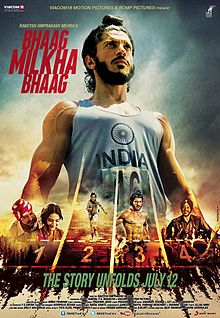 format. One needs to sit back, relax and let the narrative unfold at its own pace. Sterling performances, great cinematography and a tight script which keeps relapsing into flashbacks make it a memorable movie. The passion, the pain and the hard work involved in training for sports at the global level are etched out in great detail. And so have been the common setbacks – failure in love, distraction owing to a casual fling, inability to bury the ugly past, to name a few.
Songs are genuine breaks in the story and do not rush one along. The viewer is mercifully spared of the trauma of strained optical nerves due to the absence of excessive freeze frames and two-second shots juxtaposed together – a standard recipe in Bollywood these days. The movie captures the pangs of partition of India and Pakistan in 1947 very vividly. And, of course, there is an undercurrent of humor to pep up the proceedings. Overall, a movie not to be missed!
The movie also has a few things that appear out-of-place; for example, the high mast tower on the railway tracks and a clean-shaven chest for the hero, both of which look out of tune with the times. Then there are a couple of steamy sequences – one involving Milkha’s sister in a refugee camp and another between Milkha and an Australian beauty. These take the movie out-of-bounds for conservative families who have children in the impressionable-cum-inquisitive age. A pity indeed, because the message is essentially intended to motivate the younger generation to consider taking up sports as a serious activity, as also to encourage youngsters to strive for perfection in any field of their choice.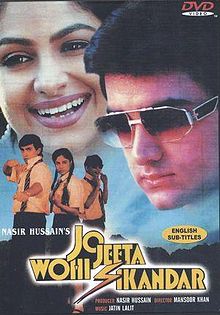
In the past, Bollywood has come up with movies which are centered on sports. However, these can be counted on finger tips. Here is a quick recap.
- Jo Jeeta Wohi Sikandar (1992, Mansur Khan)
A tale of two rival colleges set in the age of innocent romance. The climax of the movie is a bicycle race which the hero must win to reclaim the honor for his family and his college. He does so, and wins over his sweetheart as well.
- Hip Hip Hurray (1984, Prakash Jha)
The story of a computer engineer turned sports instructor who overcomes several obstacles and leads his football team to victory. 
- Lagaan (2001, Ashutosh Gowarikar)
When the impoverished villagers seek a relief from land tax from their British rulers, a wager is offered instead: if they win a game of cricket with them, tax for three years would be waived. The villagers go on to learn an alien game and then win so as to bring prosperity to their village. They do so with sheer grit and determination.
- Iqbal (2005, Nagesh Kukunoor)
Heart-warming story of a village boy who is deaf and mute. He is obsessed with cricket and dreams of making it to the Indian national cricket team. He is opposed by his father but supported by his mother and sister. He manages to get coached by a local drunkard, Mohit, who was once a great cricketer himself, and realizes his dream.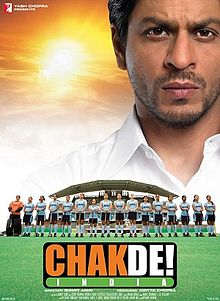
- Chak De! India (2007, Shimit Ameen)
A brilliant movie which explores religious discrimination, ethnic and regional prejudice and sexism prevalent in India. It is set against the backdrop of field hockey and narrates how the coach overcomes prejudices against him, unites players from diverse Indian backgrounds and leads the team to victory at the international level.
- Patiala House (2011, Nikhil Advani)
A disagreement comes about between a father and a son over the latter trying to make a career out of cricket. The son is a fast bowler, the role being loosely based on Monty Panesar. Based on his passion for the sport, support from his mother, girl friend and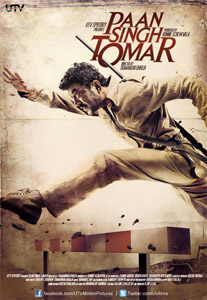 siblings, the son wins his argument in the end.
- Paan Singh Tomar (2012, Tigmanshu Dhulia)
The movie is based on the real story of a steeplechase athlete who wins international recognition but turns to dacoity due to a land grab dispute in his native village. A riveting performance by Irrfan Khan had the viewers in thrall. Like Milkha, his talent was also spotted and developed in the Indian Army.
- Kai Po Che! (2013, Abhishek Kapoor)
The movie, based on the novel ‘The Three Mistakes of My Life’ by Chetan Bhagat, captures the love for cricket against a backdrop of poverty, lack of resources, an earthquake and the Gujarat communal riots of 2002. The challenge of nurturing talent in the field of sports forms an important part of the plot.
The success of Iqbal, a small budget movie, eventually led to a renewed interest in sports-based themes in Bollywood. While the focus so far has been on cricket and hockey, one hopes that badminton, lawn tennis, chess and other games would also get added to Bollywood’s repertoire soon enough. And, yes, the success of a biopic like Bhaag Milkha Bhaag could possibly spawn a string of flicks recreating the inspiring stories of many of our real world heroes and heroines on the silver screen!


 ashokbhatia