She is the one with a resilient spirit. She takes up an issue and brings it to a logical conclusion.
Nadira started this trend in Hunterwaali(The Lady with a Whip) way back in 1935. Several others followed.Hema Malini played a role with negative shades in Laal Patthar(Red Stone, 1971). Rekha extracted a revenge in Khoon Bhari Maang (The Blood-filled Hair Parting, 1988). In Insaaf Ka Tarazu(Scale of Justice, 1980), Zeenat Amaan took a serial rapist to court. Mirch Masala(Spices, 1987) depicted a fiery Smita Patil who resists the amorous advances of a village headman. Zakhmi Aurat(Wounded Woman, 1988), had Dimple Kapadia avenging her rape by means of castrating the perpetrators of the crime.
Damini(Lightning, 1993) raised the issues involved in bringing a rapist to justice. In Bandit…
Recently, a friend asked me what I thought of Katrina Kaif’s character in the just released Dhoom-3(The Blast-3, 2013). Even at the risk of offending some of you, I confess I found it full of chutzpah and oomph but, alas, hollow otherwise. From this perspective, the script of Dhoom-2 perhaps etched the characters played by Aishwarya Rai and Bipasha Basu in somewhat greater detail.
This led me to think of the kaleidoscope of movies churned out by Bollywood and the wide spectrum of roles written for and played by women. It is also interesting to see how their roles have evolved over the past few decades, much in tune with two inter-related trends in the Indian society – a deeply patriotic fervor giving way to the rise of consumerism, and the outlook changing from a society-centric one to an individual-centric one. The first one has to do with…
Often, we get to see men portraying women in Bollywood movies. In the distant past, social compulsions led to such cases. In the recent past, such cases have proliferated based on the need to amuse the masses. Some were essayed in an artistic manner. Many others were crude attempts at entertaining the front benches in movie halls.
By Sharada Iyer The heroine of Raja Harishchandra, the first full-length feature film of Indian Cinema, was a male actor Anna Salunke cast in the role of Queen Taramati. Acting was a profession …
When it comes to essaying the role of a lawyer in a Bollywood movie, one fondly remembers such male actors as Motilal and Ashok Kumar. Even the much-hated Gabbar (Amjad Khan) tickled our funny bones in the comedy ‘Chameli ki Shadi’.
Here is a great listing of movies where our favourite heroines have donned the mantle of a lawyer, proving their acting prowess and versatility in an area where our mainstream heroes have not been very active.
In October 2015, after a five-year hiatus post her delivery, Aishwarya Rai made a grand comeback with the taut thriller Jazbaa, which had her essaying the role of a suave criminal lawyer with effortless ease. The film made me wonder why our industry makes such few films focussing on lawyers and courtroom drama and even fewer ones where the female protagonist is a lawyer.
Looking back one realizes that this genre has never been accorded much importance in our films which probably explains why many of our top male stars like Raj Kapoor, Dilip Kumar, Amitabh Bachchan, Shammi Kapoor, Aamir Khan, Shahrukh Khan, Salman Khan, etc., have refrained from essaying the role of a lawyer.
After a lot of research, I came across 14 remarkable films where our actresses have had the opportunity to don the black robe. Interestingly out of these, except for Insaaf Ka…
What is it that makes us label a movie as a classic? A unique blend of enchanting visuals, a rich story line, fine acting, lilting music and captivating lyrics are some of the features a successful movie invariably has. However, to be considered a classic, it would also have a multi-layered narrative with a social message which connects with us at a deeper level. Its theme would have an underlying timelessness, often brought in by the values it espouses.
Values which happen to be eternal in nature. Family values. Faint stirrings within a society to transform itself. The need for a soul to be free and joyous. The assertion of independence which demolishes societal norms of the time. The harmony in working towards a jointly shared goal or ambition. A meteoric rise in terms of materialistic goals. The frustration of having hit a plateau of sorts. The complex interplay of human emotions. The gradual transformation of relationships. The downfall arising out of human greed. The introspection. The burden of guilt. The beginning of a spiritual awakening. The search for a utopia. The redemption.
Here are some movies released fifty years back which remain as fresh as ever in one’s mind.
GUIDE
Released in 1965, this movie, directed by Vijay Anand, was based on a novel of R. K. Narayan, The Guide. The U. S. version of the movie was written by Pearl S. Buck.
The heroine, Rosie, walks out of a loveless marriage, so as to be able to pursue her passion of dance. The hero, Raju, helps her in achieving stardom. The song ‘Tere mere sapne’, though four minutes long, had merely three shots, each helping the heroine to gradually overcome her hesitation to accept the offer of reassurance and love from the hero.
The movie had great dance performances by the inimitable Waheeda Rehman. Other than the snake dance, we got treated to the six-part extravaganza – ‘Piya to se naina laage re’.
With success comes the fading away of love, which gradually gives way to self-interest. The transformation of tender love depicted in ‘Tere mere sapne’ gets eventually replaced by an emotional chasm between the main protagonists, so delectably captured in the song ‘Din dhal jaaye’.
The movie had a female lead character who was ahead of her times. The climax was rooted in superstition, though. The hero attained a spiritual enlightenment of sorts.
The charm of this landmark movie remains undiminished even after fifty years of its release, proving the immense possibilities of artistic collaboration.
The Sound of Music
Based on the memoir The Story of the Trapp Family Singers by Maria von Trapp, the film is about a young Austrian woman studying to become a nun in Salzburg in 1938 who is sent to the villa of a retired naval officer and widower to assume charge as a governess to his seven children. She brings love, spontaneity and music into the lives of the family through kindness and patience.
The manner in which mutual respect and affection grows between the naval officer and the governess is delicately captured in this tender piece.
The governess ends up marrying the officer. Together with the children they find a way to survive the loss of their homeland through courage and faith.
The musical scores stand out for their richness and the way in which they advance the plot of the movie. The heroine, though plagued by self-doubt, shows ample pluck and resource to win over a bunch of defiant children and their disciplinarian father. Characters of all the kids are well etched out and enamour us no end. Underlying the whole narrative is the value of family togetherness, delicate love interwoven with the need for discipline, and the loyalty towards each other.
Even after fifty long years, the movie does not fail to cast a spell. Watch any portion of fifteen minutes and one would come back refreshed and invigorated.
Chemmeen
Even though one is not familiar with Malayalam language, one has heard a great deal about this movie. Released on August 19, 1965, it acquired a cult status in the minds of movie buffs.
The success of this movie is said to be due to its heady combination of social-realistic melodrama, bolstered by high production values. It had creative inputs from some of the most talented persons from the Indian movie industry at that time – music by Salil Chowdhury, editing by Hrishikesh Mukherjee, cinematography by Marcus Bartley and lyrics by Vayalar Rama Varma.
The tale of Pareekutty and Karuthamma is a tragic romance. It makes one cry. It gives one a feel as if one lives close to the sea-coast, listening to the incessant roar of the waves, rising to the cries of fishermen and joining their yells of glee when their catch is a bumper one.
At a deeper level, in a muted manner, the movie argues for social transformation. It portrays the problems that arise when an Araya girl falls in love with a Muslim trader. This is a chasm that most of us are still grappling with.
This New Year eve, one would be tempted to curl up in bed to soak in the delectable cinematic brilliance on offer in any one of these movies. As the New Year rings in, we could be joining the Von Trapp family in its trek across the Alps, looking ahead to the future with hope, faith and goodwill!
When it comes to scenes of physical intimacy, Bollywood seldom disappoints. Most of the offerings from our dream merchants use these as an essential ingredient to ensure success at the box office.
Here is yet another thought-provoking post from Sharada Iyer.
There has been so much brouhaha in the past few days over the censored kiss in the latest James Bond film Spectre, which released on Friday, 20th November 2015. While many people have criticized the Censor Board Chief Mr Pahlaj Nihalani calling him a ‘sanskari’ Chief, there are others who endorse his views and stand by the decision.
But the debate reached ridiculous proportion and assumed unnecessary importance when Mr Arnab Goswami of Times Now channel decided to devote one whole hour of his show , trying to corner Mr Nihalani asking him repeatedly throughout the interview as to why was the kissing scene between Daniel Craig and Monica Belluci watered down to a mere few seconds…Honestly was it such a big issue to discuss on prime time television?
The censor board chief remained unperturbed by all the accusations hurled at him and…
When winsome kids get cast in Bollywood flicks, the results are invariably gratifying. They could be playing to role of a Cupid, reuniting sundered hearts. They could be showcasing a unique illness, thereby winning our sympathies. They could be providing comic interludes, so as to pep up the proceedings. Or, they could be chasing their simple but profound dreams, battling parental oversight, poverty and other odds. Whatever their role, they bring solace to our souls.
It is a tough task to try to encapsulate all such roles essayed by children in movies. It goes to the credit of Sharada Iyer to whip up yet another detailed post on an important facet of Bollywood!
Our film industry has been very fortunate to have had some of the most brilliant child artistes who have given memorable performances in scores of films. These child-stars have endeared themselves to us with their spontaneity and natural acting. Coupled with their innate innocence and amazing confidence, they have effortlessly stolen the show from their seasoned co-stars on screen.
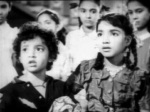
Daisy Irani and Baby Naaz
Daisy Irani, Honey Irani, Baby Naaz, Baby Tabassum, Baby Farida, Baby Gowri, Wonder child-Bobby, Baby Guddu, Master Raju, Master Ratan, Master Sachin, Master Satyajeet, Master Alankar, Master Shahid, Master Tito, Junior Mehmood, etc., are some of the names which immediately come to our mind though there are many more who have been associated with our films. It is really difficult to comprehend how such small children could memorize such long dialogues and bring such perfect expressions and emote with so much feeling…
For those who love songs from Bollywood, the versatile singing talent of the late Geeta Duttis remembered very fondly to this day. Here is an article from Mr Raj Kanwar, an India-based author, freelance journalist and music lover.
A Singer called ‘Geeta’
Geeta Dutt and her versatile voice are remembered on her death anniversary, which was on July 20.
When Geeta Dutt (née Roy) sang, ‘Yaad karoge, yaad karoge, ik din humko yaad karoge’ in ‘Do Bhai’ in 1947, she had not imagined how prophetic the lyrics by Raja Mehdi Ali Khan would turn out to be. Today, 68 years after that song had captured the imagination of music lovers and 43 years since her death in 1972, three generations of her die-hard fans still fondly remember her and her melodious voice continues to mesmerise them. Her 43 death anniversary was observed on July 20.
The music of ‘Do Bhai’ with another of Geeta’s song, ‘Mera sundar sapna beet gaya,’ topping the charts, was a hit, and the movie became the second highest grosser at the box office in 1947.
It was virtually Geeta’s first movie, and the countrywide popularity of her songs made the teenager’s nascent career leap overnight to another dimension. Her popularity scaled newer heights in 1948 and 1949, eclipsing Shamshad Begum and Raj Kumari, who then ruled the roost. She became every director’s choice and the reigning diva.
Then suddenly, she found her supremacy being challenged by another teenager, Lata Mangeshkar. Lata had scored a unique hat-trick in 1949 with three mega-hits in ‘Mahal,’ ‘Andaz’ and ‘Barsaat.’ Naushad’s lilting music in Mehboob Khan’s ‘Andaaz’ and Khemchand Prakash’s soulful songs in Kamal Amrohi’s ‘Mahal,’ enthralled listeners. However, it was in Raj Kapoor’s ‘Barsaat,’ with amazing music by the new duo Shankar-Jaikishan, that Lata demonstrated new facets of her talent. She emerged as the new singing sensation, and Geeta found herself relegated to the second position. Nevertheless, Geeta managed to hold her own.
In fact, 1950 turned out to be the most productive year for Geeta, during which she recorded more songs than in the previous year. In ‘Jogan,’ she sang six of Meerabai’s devotional bhajans. ‘Mat jaa mat jaa jogi,’ ‘Main to Giridhar ke ghar jaaoon,’ ‘Eri main to prem diwani’ and the most popular one, ‘Ghunghat ke pat khol’ that captivated the devout. That year, she sang for several reputed music composers as well, such as S.D. Burman, Avinash Vyas, Bulo C. Rani, Chitragupta, Ghulam Mohammed, Khayyam, Hansraj Behl, Khemchand Prakash, Husnlal Bhagatram, SN Tripathi and Vasant Desai.
Then Guru Dutt happened in 1951. Dev Anand’s ‘Baazi’ was his directorial debut. It was on its sets that Geeta and Guru met and fell in love. They married in May, 1953. They spent the first three years blissfully. Their first son Tarun came in 1954 and the next, Arun, in 1956.
Ironically, Dutt’s entry into her life became both a blessing and a curse. A blessing, as Geeta’s career blossomed and she sang some of the most lilting songs in movies such as ‘Aar Paar’ (1954) and ‘Mr. and Mrs. 55’ (1955). Both were huge hits. Coquettish songs such as ‘Ye lo main haari piya’, ‘Jaa jaa jaa bewafa’ and ‘Babu ji dheere chalna’ became chartbusters.
Other singers, such as Lata, were as good if not better, but Geeta’s singing possessed an ethereal charm; she sang from the heart. At one moment, she would sing a devotional song and the next, she would switch over to a catchy ‘Mera naam chin chin chu,’ and then to a seductive number, ‘Tadbir se bigdi hui taqdeer bana de.’ There was no end to her versatility.
“A soft spoken woman in real life, she would metamorphose into an exotic cabaret performer with clever modulation of voice in the recording studio. Her voice was rich, vibrant and well-toned and could switch from exotica to melancholy in a matter of minutes,” says Shikha Biswas Vohra, daughter of the veteran composer, Anil Biswas.
Both Geeta and Guru were temperamental, sensitive and emotionally fragile. Geeta as a top playback singer in 1953 made more money than Guru Dutt, who was struggling to make his mark as a director. A few busybodies insinuated that Dutt had married Geeta for money. That hurt Guru no end and he asked her to sing only for his movies. Some brushed aside these insinuations. “Guru Dutt belonged to the type for whom money meant nothing; it was only a commodity to trade dreams with,” comments Amit Biswas who, as a child, used to play with Tarun and Arun in their beautiful bungalow on top of Pali Hill.
Guru was a strict disciplinarian on the sets, but was the opposite in personal life; he was a chain smoker and drank a lot. Though ostensibly they continued to live together, they had started drifting apart. In the midst of this marital turmoil, Guru Dutt introduced a newcomer, Waheeda Rehman in his movie ‘C.I.D.’ in 1956. Rumours of Guru’s affair with Waheeda distressed Geeta. She ignored rehearsals and recordings, neglected her riyaz and took to drinking. Both began neglecting their respective careers. Then Guru Dutt faced heavy financial loss with ‘Kaagaz ke Phool.’
Amid the personal problems was born their third child, Nina, in 1962. Two years later, on October 10, 1964, Guru Dutt allegedly committed suicide. His death shattered Geeta. Then followed the years of financial hardship.
It was out of compulsion that she took up singing again in Basu Bhattacharya’s ‘Anubhav.’ Music was by Kanu Roy and lyrics by Gulzar. She sang three memorable songs, ‘Meri jaan mujhe jaan na kaho,’ ‘Koi chupke se aake’ and ‘Mera dil jo mera hota.’ It was remarkable that Geeta, despite a gap of a few years, had not lost the verve and vivacity of old.
She loved her children. “She was an extrovert and a fun-loving person. I remember the good times we had; at a moment’s notice Mummy would say, ‘Come on, let’s go for a picnic,’ and we would pack up and leave. She loved having people around, our friends used to stay over and she would cook and look after everyone. She loved doing that,” Arun had said about his mother.
But she continued to drink, which eventually took its toll and she died on July 20, 1972, of cirrhosis of the liver. She was only 42.
Notes:
The writer Mr Raj Kanwar can be reached at rkanwar_in@yahoo.co.uk.
Recently three powerful filmmakers of Bollywood, viz., Karan Johar, Rohit Shetty and Subhash Ghai got together to announce their latest collaborative venture titled Ram Lakhan– the remake of Subhash Ghai’s 1989 super-hit film-Ram Lakhan. This has come as a surprise and makes one wonder why would these three well-established bigwigs of the industry with all the money and resources at their disposal choose a ‘remake’ rather than come-up with an original story! And that too of a movie whose stars are still associated strongly with the original film. Even in the recently concluded finale of the popular TV show, Indian Idol Junior, Anil Kapoor made his entry dancing to the title song of this film-‘My name is Lakhan…’
A funny point about this remake is that while the original starring Anil Kapoor and Jackie Shroff was made at the time when…




 Daisy Irani and Baby Naaz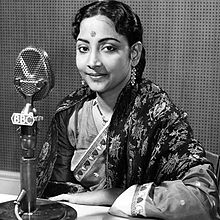


 ashokbhatia