Feeds:
Posts
Comments

Posts Tagged ‘Bollywood’

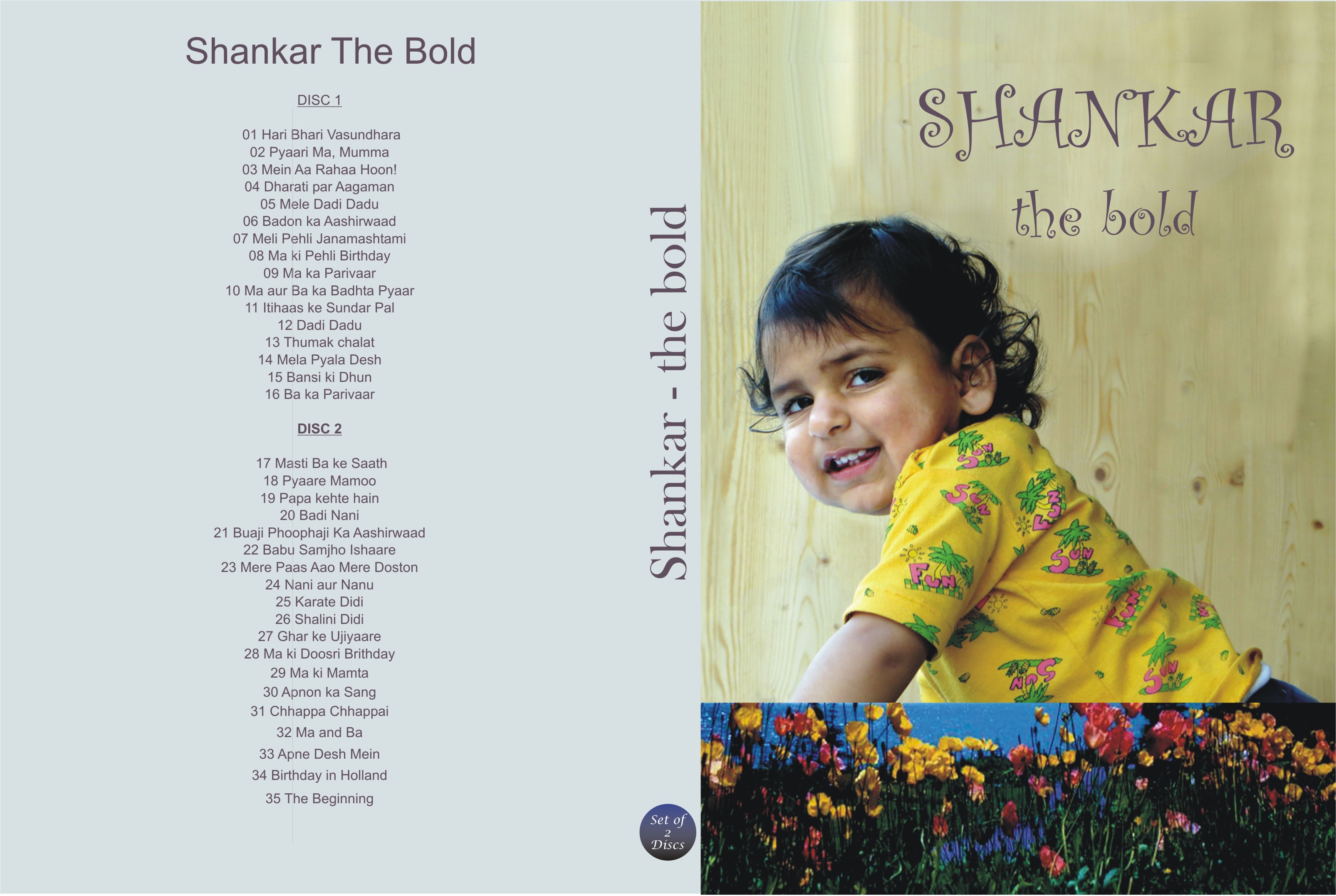
The latest family movie soon to hit a restricted number of screens is “Shankar-the bold”. It captures the life and times of the youngest one in our family, right from his birth till the time he celebrates his second birthday. Shankar The Bold  cd cover

Preparing for the Movie

As always, the process remains the same. Going through family pictures and videos. Selecting the ones which are worth preserving. Conceptualizing the overall script. Deciding on various sections. Putting them in a tentative sequence. Screening the photos once again. Rearranging some of these into newer sections. Putting these through an Adobe Photoshop wringer.

Selecting the music to be used in the background. Consulting friends and family members for the choice of music. Seeking the help of others to download relevant songs. For some favourite songs, creating a special sequence of the visuals, in sync with the lyrics. Rearranging the script, if necessary.

Getting Connected

For the period to be covered, ensuring that all important events and people are getting covered. Retrieving poems, notes and letters specifically composed for some of these events. Planning to use these at appropriate places in the narrative. Using instrumental music as a backdrop so it does not distract from the verbal content on the screen.

The younger generation needs to understand the background of the family. It also needs to know who all comprise the extended family. Members are spread over all the continents. To collect their photos, getting their names and relationships right and inserting them in the narrative is no mean task.

Elders in the family are immensely useful in providing the finer details of the lives and times of our ancestors. A whiff of nostalgia, laced with family history, ensures that the movie does not remain an exercise in narcissism. Instead, it ends up being a valuable addition to the family archives.

Composing the Movie

There are several movie-making softwares available. The one that we have liked is Womble Multimedia. Arranging the photos section-wise and inserting relevant audio tracks is a skill which one learns over a period of time.

Once the movie has been composed, the question of its disc reproduction comes up. Each set has to be individually checked for its correctness. Defects in sound track or composition have to be ironed out. Eventually, a Master Disc takes shape. This is again played out on a dvd player, just to check that the aspect ratio and other details are well taken care of.

Scope for Innovation

Making each family movie unique is one of the serious challenges. For the latest offering, we came up with the idea of linking family events to important events. So, if the boy was born at a time when an important merger and acquisition had taken place in the business world, the event found a mention in the narrative.

Since ours is a family of movie buffs, we decided to link important family events to movies released around that time. Let us say a marriage in the family took place in a year in which a blockbuster had hit the silver screen. So, a short clip from the movie found a place in the narrative.

A Labor of Love

An exhausting but uplifting process. The unalloyed joy of creativity. The satisfaction of having made something which entertains, educates and celebrates a milestone for the family. Something which the younger ones would cherish when they grow up. A fragment of the subtle connection between the past and the future.

(If you like this post, there is a good chance you may like an earlier one as well: https://ashokbhatia.wordpress.com/2012/07/07/some-baby-steps-in-movie-making)

Read Full Post »

Come Valentine’s Day and the air is fragrant with thoughts of love, caring and compassion. The movie buffs amongst us are literally spoiled for choice. For example, we can catch up on one of the breezy romcoms, like 50 First Dates (2004, Peter Segal), Rab Ne Bana Di Jodi (2008, A Match Made by God, Aditya Chopra), No Strings Attached (2011, Ivan Reitman) or Yeh Jawaani Hai Deewani (2013, Crazy Youth, Ayan Mukerji). Movie 50 First Dates

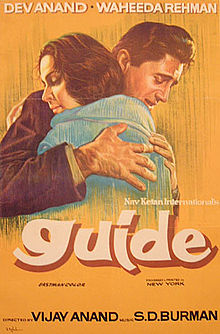
Or, we can delve into our personal collections and rediscover classics such as Gone With the Wind (1939, Victor Fleming, George Cukor, Sam Wood), Mughal-e-Aazam (1960, K Asif, The Emporer of the Mughals), The Sound of Music (1965, Robert Wise) or Guide (1965, Vijay Anand).Guide_poster

We also have the choice of curling up on a love couch and savoring romantic escapades of the mature and ripe kind. Here are some movies which are some of my personal favorites in this category.

Doctor Zhivago

Movie Dr Zhivago

The romance between Dr Yuri Zhivago and Lara Antipov has an ageless quality about it. The underlying message appears to be that true love does not amount to a bondage; on the contrary, it means letting go. (1965, David Lean)

Anubhav and Avishkaar

Basu Bhattacharya gave us a unique insight into life of couples who are married for about seven years. The relationship has turned stale, devoid of any spark and zing.

movie anubhavAnubhav saw the arrival of a college time friend of the heroine leading to the romantic flame getting reignited. The care the heroine took of the hero when he falls sick and is confined to bed for some time also helps. (1971, Experience)

movie avishkaarAvishkaar had the couple reminiscing about their college romance, when they would meet – all decked up to impress each other – for limited hours. They realize that a 24 by 7 exposure in married life has resulted into their taking each other for granted. Romance gets rekindled. (1974, Invention)

Aandhi

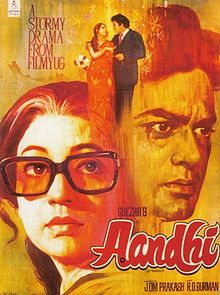
Movie Aandhi

When political ambitions of a wife need to be reconciled with the need for togetherness and love, a way forward is eventually found, reuniting the couple in a rather unconventional way. (1975, Storm, Gulzar)

Ghar

movie Ghar

The rehabilitation of a victim of rape with loads of love and affection provided by a caring husband make this one unique in more ways than one. (1978, Home, Manik Chatterjee)

Khatta Meetha

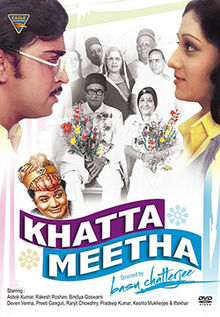
Movie Khatta_Meetha_(1978)

The versatile Ashok Kumar and the effervescent Pearl Padamsee come together in old age, complimenting each other’s needs. How their grown up children get reconciled to each other and eventually get united in face of adversity forms the rest of the plot. (1978, Basu Chatterjee)

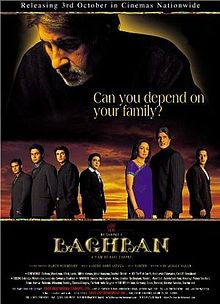
Baghban

Movie Baghban

The couple’s yearning for each other’s company, when separated due to family obligations, could not have been essayed more poignantly. When children turn out to be unreasonable and insensitive, the couple chooses to live together independently. (2003, The Gardener, Ravi Chopra)

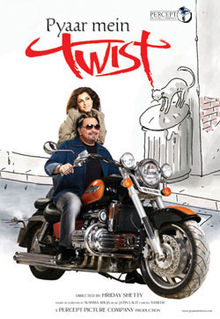
Pyaar Mein Twist

Movie Pyaar_Mein_Twist

Invoking the on-screen chemistry of the lead pair in their younger days in the hugely successful Bobby (1973, Raj Kapoor), this movie saw them battling opposition from within their respective families to live together. (2005, Karan Kapoor)

Mamma Mia!

Movie Mamma Mia

Her upcoming marriage prompts a daughter to identify her father out of the three former lovers of her mother. Misunderstandings get clarified and a new beginning is made by the mother. Great music and lots of fun and frolic. (2008, Phyllida Lloyd)

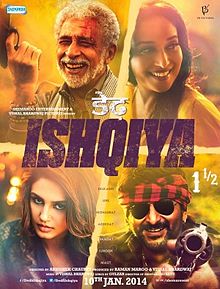
Dedh Ishqia

Movie Dedh_Ishqiya

The movie is all about deception, crime, suspense and passion. The senior pair epitomizes love on a platonic plane, backed by soulful poetry and intense gazes overflowing with mute passion. The junior pair is more intimate on the physical plane. However, it turns out that the women have other plans in mind. (2014, Lover Boys, Abhishek Chaubey)

A normal romantic flick usually ends up on a happy note. In Hollywood, either a natural disaster has just been faced or a misunderstanding between the couple has just got resolved. As the sun sets, the simpering beloved runs into the arms of the hero.

In Bollywood, the dashing hero has just clobbered a dozen or so goons who had evil ideas of their own. The police arrive, but only after the hero has had the chance to demonstrate his martial skills. The kingpin of the villains is promptly handcuffed and driven off to some unknown destination. As credits start rolling, we give up our willing suspension of disbelief and saunter off to some mundane task of life, happy in the firm belief that the couple would live happily thereafter.

The movies I have listed above are scripted differently. Some capture the post-matrimonial phase of a couple’s life. Some speak of the raw chemistry between men and women who discover each other in the mature phase of their lives. The trial and tribulations they go through, the compromises and adjustments they make and the manner in which they rediscover each other when at close quarters – these aspects have been etched out in some detail. Such movies do not fall in the candy floss variety of romance. Instead, these depict a genre of romance which is mature, ripe and deep.

This Valentine’s Day, take your pick.


Read Full Post »

Sixteen Shades of the Bollywood Eve

(Continued from Part 1)

  • ·         The Avenger

She is the one with a resilient spirit. She takes up an issue and brings it to a logical conclusion.movies nadira

Nadira started this trend in Hunterwaali (The Lady with a Whip) way back in 1935. Several others followed. Hema Malini played a role with negative shades in Laal Patthar (Red Stone, 1971). Rekha extracted a revenge in Khoon Bhari Maang (The Blood-filled Hair Parting, 1988). In Insaaf Ka Tarazu (Scale of Justice, 1980), Zeenat Amaan took a serial rapist to court. Mirch Masala (Spices, 1987) depicted a fiery Smita Patil who resists the amorous advances of a village headman. Zakhmi Aurat (Wounded Woman, 1988), had Dimple Kapadia avenging her rape by means of castrating the perpetrators of the crime.

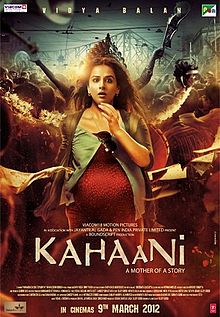
Damini (Lightning, 1993) raised the issues involved in bringing a rapist to justice. In Bandit QueenMovie Kahaani (1994), we had Seema Biswas portraying Phoolan Devi, a real life character who avenges her humiliation on her own terms. Corporate (2006) had a business executive using her charms to steal a competitor’s marketing plan from his laptop. In No One Killed Jessica, (2011), Rani Mukherjee worked with a missionary zeal and secured justice for a bereaved family. A supposedly pregnant Vidya Balan avenged the death of her husband in a terrorist attack in Kahaani (Story, 2012).

  • ·         The Silent Sufferer

The delicately nurtured are invariably shown to suffer silently, a virtue which was much celebrated in the past. However, with social changes, women have assumed a more assertive role.

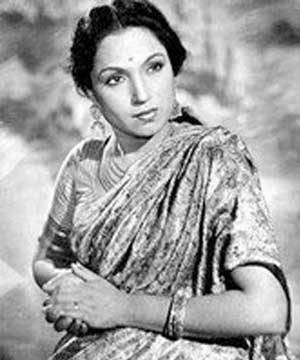
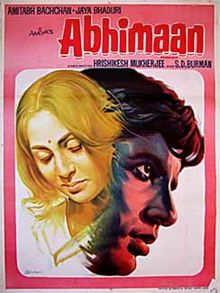
Leela Naidu suffered due to neglect at the hands of her professionally committed doctor husband inMovie Anuradha Anuradha (1960). Tapasya (Penance, 1976) had a woman sacrificing her own interests so as to take care of her family. Jaya Bachhan silently tolerated a difference of opinion with her husband in Kabhi Khushi Kabhi Gham (Happiness at times, Sadness at times, 2001). Earlier, in Abhimaan (Pride, 1973), she had suffered because of the superior quality of her singing as compared to that of her celebrity singer husband who developed an inferiority complex.

These are archetypal kinds, for whom the marriage is sacrosanct, the only deliverance being death.

  • ·         Mothers of all Hues

No movie could be complete without her. There are finer shades in their portrayal as well.

The Sacrificing and Crying Ma

The mother of all mothers was Nirupa Roy who acted in over 400 films and played a mother in most movies Nirupa_Royof them. Deewar (Wall, 1975) and Amar Akbar Anthony (1977) are two movies which readily spring to one’s mind. She cried when she lost her children, when she found them, when she either got separated or rejoined them, when she turned blind and when she regained her vision. 

In Leela Chitnis, we had the aboriginal kind mother who was the eternally sacrificing type. Whether it was Hum Dono (Both of Us, 1961), Guide (1965) or Waqt (Time, 1965), she played the role of a devoted and suffering mother to the hilt.

The Dominating Ma

Lalita Pawar has left a deep impression on our minds, playing the role of a dominating mother andmovies Lalita_Pawar mother-in-law who is adept at creating trouble for her daughter-in-law. She embodied the nasty woman who terrorized her family and the audience.

The Revengeful Mother

The wronged mother, the one who suffered at the hands of the villain and patiently waited for her sons to grow up and then beat up the bad guys. In Karan Arjun (1995), we had Rakhee playing this kind of a mother.

The Doting Ma

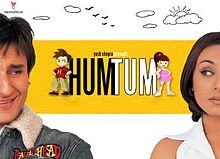
Here is the sweet and indulgent mother who doubles up as a friend. Rakhi in Kabhie Kabhie (AtMovie Hum_Tum times, 1976) played such a mother to Rishi Kapur. Reema Lagoo in Maine Pyar Kiya (I Fell in Love, 1989), Hum Aapke Hain Kaun….! (Who Am I to You…!, 1994) and Hum Saath Saath Hain, (We Stand United, 1999), Farida Jalal in Dilwaale Dulhaniya Le Jaayenge (The Bravehearts will Take Away the Bride, 1995), Dil To Paagal Hai (The Heart is Crazy, 1997) and Kuch Kuch Hota Hai (I Feel Something, 1998) and Kirron Kher in Devdas (2002) and Dostana (Friendship, 2008) played similar mothers. And yes, in Hum Tum (You and I, 2004) we had both Rati Agnihotri and Kirron Kher playing a friend, philosopher and Ma to Saif Ali Khan and Rani Mukherjee. Helen had a simiar role in Hum Dil De Chuke Sanam (I Have Already Given My Heart, Darling, 1999).
The Manipulative One

We had Aruna Irani portraying a manipulative mother in Beta (Son, 1992). In Hum Saath Saath Hain (We Stand United, 1999), Reema Lagoo mistreated her adopted son under the influence of malicious advice from her friends, only to repent later. Movie English_Vinglish
The Modern Ma

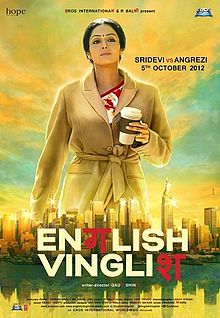
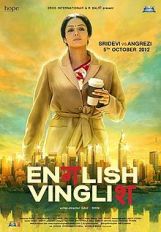
We get to see fashionable mothers as well. Aaja Nachle (Come, Let’s Dance, 2007) had Madhuri Dixit playing a single mother guiding her teenage daughter through the by-lanes of a small town in India while attempting to revive a theater. Vicky Donor (2012) had Dolly Ahluwalia, hero’s mother,  bonding well with her mother-in-law while sharing a peg or two. Forget self-pity; in English Vinglish (2012), we had Sridevi learning the English language, eventually winning the respect of her derisive family.

The Revolutionary Ma

In Shaheed (Martyr, 1965), we had Kamini Kaushal playing the role of revolutionary Bhagat Singh’sMovie Mother_India courageous mother. We also got to see a homely mother turning into a revolutionary, like Jaya Bachhan in Hazaar Chaurasi ki Maa (The Mother of 1084, 1998).
The Stiff Upper Lip Ma

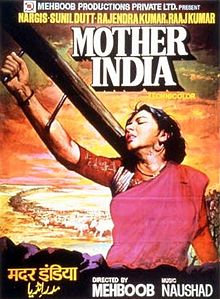
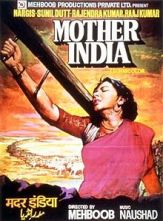
She is a stickler for principles and invariably assumes a high moral ground when dealing with an errant child. In Mother India (1957), we had Nargis killing her own son because he misbehaves with a girl from the village. Durga Khote essayed the role of Jodha Bai in Mughal-e-Azam, (The Emperor of the Mughals, 1960) torn between the loyalty to her husband, Prithviraj Kapur, and the love for her son, Dilip Kumar.

In Julie (1975), Nadira softened up with her daughter only in the climax scene. Dina Pathak inmovies durga khote Khubsoorat (Beautiful, 1980) played a disciplinarian who exercises strict control over all her family members in all spheres of their lives. In Khamoshi-the Musical (Silence, 1996) and Vivah (Marriage, 2006), we had Seema Biswas playing a mother who does not approve of the goings-on.

We had Reema Lagoo in Vaastav (Reality, 1999) who shot her own son, Sanjay Dutt, dead. Dimple Kapadia in Luck by Chance (2009) disapproved of her daughter’s relationship with a struggling hero. At one stage, she even shares with her daughter the kind of casting couch harassment she herself faced at the beginning of her career in Bollywood.  

The Mumbling Ma

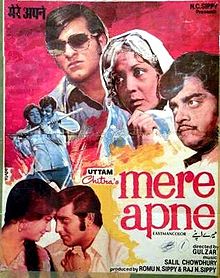
Here is the kind who ends up embarrassing her children. She is a simpleton with a heart of gold and a childlike simplicity. She lacks the social grace and manners, thereby becoming an object of light-hearted ridicule. Pearl Padamsee portrayed such characters with great finesse in movies like KhattaMovie Mere apne Meetha (Sweet and Sour, 1978) and Baaton Baaton Mein (Just Like That, 1979).
The Ma-like Women

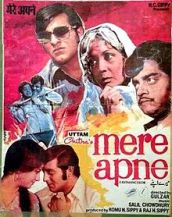
Lalita Pawar played the role of a caring motherly figure in Shri 420 (1955), Anari (Simpleton, 1959) and Anand (1971). Meena Kumari played a central role in Mere Apne (My Own, 1971), exhorting the young ones to give up violence.  

  • ·         The Bold One

In several movies, we find strong and independent women who live life on their own terms. TheyMovie Aandhi walk into the sunset, head held high.

In Anupama, Sharmila Tagore broke the emotional barrier of paternal authority and scorn to join up with Dharmendra, the love of her life. Guide had the heroine walking out on her husband to pursue her dancing career. In Aandhi (Storm, 1975), Suchitra Sen pursued her ambitions in the realm of politics at the cost of separating from her family.

In Arth (Meaning, 1982), Shabana Azmi refused to take her husband back while also spurning the offer of companionship from Raj Kiran. In Videsh (Heaven on Earth, 1998), a fiesty Preity Zinta walks out of an abusive matrimonial relationship. Astitva (Existence, 2000) had Tabu confronting her husband despite the social stigma of adultery.

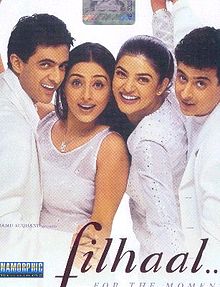
In Zubeidaa (2001), Karishma Kapoor stood up against her family and carved a new life for herself,Movie Filhaal even leaving behind a child from a failed marriage. Filhaal (Momentary, 2001) was based on the theme of surrogate motherhood. Sushmita Sen went against the wishes of her fiancee and offers timely help to Tabu who had had a miscarriage.

Lakshya (Goal, 2004) depicted a heroine who walks away first from a relationship because the hero is clueless about his career goals, she also decides to break an alliance to pursue a career of her choice. Chak De! India (Go India!, 2007) had a similar character who ends a relationship so as to be able to focus on her choice of playing hockey. 

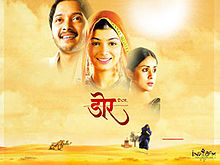
In Paheli (Riddle, 2005), Rani Mukherji opted to live with a caring and loving ghost, knowing fully well that he is just a look alike and not her real husband who is away on aMovie Fashion professional errand. In Dor (String, 2006), a widowed Ayesha Takia chose to run away and face an uncertain future rather than facing illegitimate pressure at her in-laws’ place.

Provoked (2006) depicted a harassed Aishwarya Rai burning her husband alive. The judiciary eventually allows her to walk away free. In Fanaa (Annihilated, 2006), Kajol put her patriotic feelings uppermost and killed Aamir Khan who played a terrorist.

Priyanka Chopra was shown having carved a niche for herself in a challenging industry in Fashion (2008). In The Dirty Picture (2011), Vidya Balan demonstrated how sleaze could be made fashionable and marketed in the world of cinema.

  • ·         The Patient One

Whether it is memory loss or disability, heroines have managed to keep our tear glands in an activePoster Khamoshi mode. Some have evoked pity whereas some have given us hope and the courage to face adversity. Many have protected men  who suffer from some ailment.
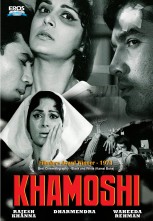
Nutan took care of an ailing husband in Khandan (Family Tribe, 1965). In Khilona (Toy, 1970),  it was Mumtaz’s turn to do so. The role of a nurse essayed by Waheeda Rehman in Khamoshi (Silence, 1969) would remain etched in our minds for a long time to come. Eeshwar (God, 1989) had Vijayshanti taking care of a mentally challenged Anil Kapur.

Sridevi was simply brilliant in Sadma (Trauma, 1983).  Maushumi Chatterji played the role of a blind woman in Anurag (Affection, 1972), as did Madhuri Dixit in Sangeet (Music, 1992).

Rani Mukherjee portrayed the role of a deaf and blind girl in Black (2005) with much aplomb.Movie Barfi! Likewise, we had a blind Deepika Padukone in Lafangey Parindey (Cheeky Birds, 2010), trying to fulfill her skating ambitions. Priyanka Chopra excelled in her portrayal of a woman suffering from autism in Barfi (2012).      
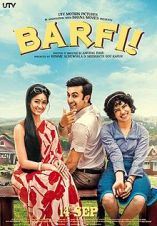
Kajol was not daunted by cancer in We Are Family (2010), adopted from Stepmom. Vidya Balan was courageous in the face of progeria in Pa (2009). Tisca Chopra took her own time in coming to terms with dyslexia in Taare Zameen Par (Like Stars on Earth, 2007).

  • ·         The Widowed One

The social stigma attached to widowhood and the issue of a widow’s remarriage has been tackled in quite a few Bollywood movies. Most of the roles evoke sympathy whereas some turn amorous. Movie Prem_Rog
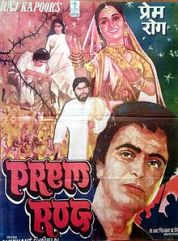
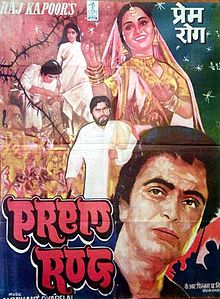
In Bahu Beti (Daughter-in-law, Daughter, 1965), it was the father-in-law who organized the remarriage of his widowed daughter-in-law. A well made movie in this genre was Prem Rog (Love Malady, 1982), where Rishi Kapur and Padmini Kolhapure got united after the latter gets widowed. Likewise, in Baabul (Girl’s Father, 2006), Amitabh Bachhan, playing a doting father-in-law, got Rani Mukherjee remarried to her former lover.

All these roles reinforce the overt dependence of a woman on a man in her life. All these movies depict the men taking decisions over the fate of women. However, viewed against the backdrop of the social norms prevalent in India, the importance of a widow being shown to getting remarried itself deserves to be appreciated.

In Choker Bali (Sand in the Eye, 2003), we found Aishwarya Rai unleashing her charms on the males she comes in contact with. A moving narrative of the widows’ plight appeared in Water (2005).

  • ·         Villains and Dons

Comely heroines do spring a surprise when they turn out to be villains in some of the moviMovie Aishwarya_Rai_Canneses. Nanda in Ittefaq (Chance, 1969), Kajol in Gupt (Secret, 1997), Preity Zinta in Armaan (Desire, 2003), Aishwarya Rai in Khakee (Brown Uniform, 2004) and Pink Panther 2 (2009) and Katrina Kaif in Race (2008) are some examples which come to mind.

Rekha played the role of a don in Khiladiyon Ka Khiladi (Player of Players, 1996). Shabana Azmi played an underworld don’s role in Godmother (1999). Neha Dhupia portrayed the role of a gangster in Phans Gaye Re Obama (We are Stuck, Obama, 2010). Amrita Singh played a negative role in Aurangzeb (2013).  In Ram Leela (2013), Supriya Pathak sprang a surprise in a similar role.

  • ·         The Weird One

From Nagin (Female Snake, 1954) of earlier days to Hisss (2010) of recent times, several movies have captured the role of a vengeful female snake assuming a human form. Shabana Azmi surprised us with a weird role in Makdee (Spider, 2002). Konkona Sen played a witch in Ek Thi Daayan (Once There was a Witch, 2013).

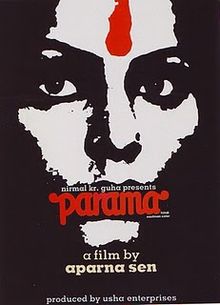
  • ·         The Seductress, The Adultress Movie Paroma

In few movies, women have been shown to have extra-marital relations. In some, they come out as ambitious seductresses.

Parveen Babi in Deewar (Wall, 1975), Rakhee in Parama (The Ultimate Woman, 1984), Rekha in Aastha (Belief, 1997) and Silsila (Continuity, 1981), Tabu in Maqbool (Accepted, 2003), Urmila Matondkar in Pyar Tune Kya Kiya (Consequences of Your Love, 2001) and Bipasha Basu in Jism (Body, 2003) are some of the portrayals which fall in this category.

  • ·         The Comedienne

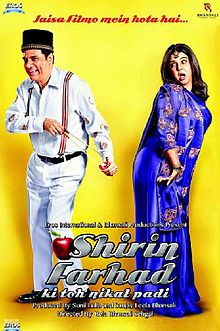
Shubha Khote followed by Aruna Irani played such roles with much aplomb opposite Mehmood and other comedians. Manorama, Farida Jalal and Tabassum kept this traditionMovie SHIRIN_FARHAD_KI_TOH_NIKAL_PADI alive, till the omnipotent heroine herself donned the mantle of keeping the audience in good humor. With ready wit and renewed self-confidence, a middle aged Farah Khan charmed us admirably well in Shirin Farhaad Ki Toh Nikal Padi (How Shirin and Farhad Had Trouble, 2012).
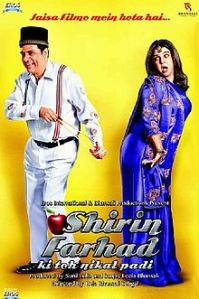
Women of course appear as helpful sisters as well. This aspect has already been covered in an earlier post.

Objectifying men, for a change!

In the Tamil language fantasy Irandaam Ulagam (Second World, 2013), it is the heroine who walks up to him to tell him she wants to marry him. For a change, it is the man who ends up being objectified, with comments being passed on his eyes, lips and thighs.

In Singh Saab the Great (2013), women dominate not only with wits but also with muscle power.

All About Money, Honey!

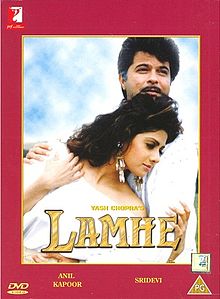
To set the cash registers tingling, our dream merchants have a standard recipe – shock and awe. Movie Lamhe-cover-smallGlorification of stalking, objectification of women, endorsement of lewd behavior and sexual harassment continue to be part of the box-office winning formula. With each passing year, the envelope only gets pushed more and more. The probability of commercial success of a movie is believed to be directly proportional to the skin exposure and the bold content, rather than to a strong script or a realistic characterization. Increasing number of explicit scenes go on to prove that it is all about money, honey!
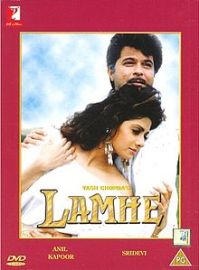
In a scenario where art takes a back seat and the concern to draw customers into theater seats reigns supreme, there is limited scope for flexibility in plots; moviegoers largely want their expectations and prejudices reinforced.

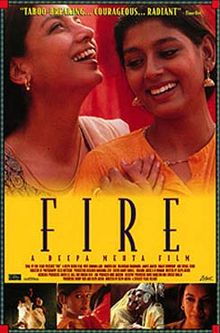
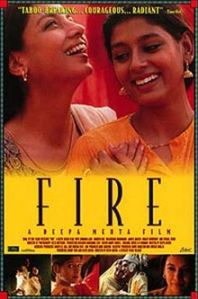
At the same time, innovation is the only key to sustained engagement, so newer and bolder themes ahead of their times always keep coming up. Movies like Mera Naam Joker (My Name is Joker, 1970), Rihaee (Release, 1988), Lamhe (Moments, 1991), Fire (1996) and Nishabd (Without Words, 2007) came when the audience was not really ready for them. Some of these achieved a cult status after many years.

The Entertainer’s Role

In a recent interview, Aamir khan aptly summed it up by pointing out that we have entertainers whoMovie - Fire use cheap jokes and lewd comments to appeal to our baser instincts. Then there are those who create a movie lovingly, rich in poetry, music and visuals, thereby appealing to our finer sensibilities.
But they have a much larger role to play in society, by being graceful in presentation, by instilling higher values in the younger generation and by enriching the moral fabric of our society.

Bollywood can play a very important role indeed in making women safer in our public spaces. Movies from such directors as Hrishikesh Mukherjee, Gulzar, Basu Chatterjee and Sooraj Barjatya have repeatedly proven that a decent depiction of women does not mean absence of commercial success.

Some of the women directors who have wielded the megaphone have also come up with sensitive portrayals of women. Aparna Sen, Deepa Mehta, Kalpana Lajmi, Zoya Akhtar and Gauri Shinde have given us remarkable movies which were not only artistically rich but also commercially successful.

As a mature industry which is now a century old, it is unfortunate that there are very few women-centric movies Bollywood can boast of. Old values continue to get perpetuated, reinforcing a patriarchal mindset in the society.

Our dream merchants would do well to introspect on this account and start regaling us with movies which transform the society’s attitudes towards women. This would make it easier for a woman to enjoy social freedom, respect and dignity she truly deserves.

(Related Posts:

https://ashokbhatia.wordpress.com/2014/01/01/women-through-the-bollywood-lens-part-1-of-2

https://ashokbhatia.wordpress.com/2012/03/18/can-we-have-some-decency-please

https://ashokbhatia.wordpress.com/2017/01/06/the-powerpuff-girls-of-bollywood)

Read Full Post »
Recently, a friend asked me what I thought of Katrina Kaif’s character in the just released Dhoom-3movies katrina (The Blast-3, 2013). Even at the risk of offending some of you, I confess I found it full of chutzpah and oomph but, alas, hollow otherwise. From this perspective, the script of Dhoom-2 perhaps etched the characters played by Aishwarya Rai and Bipasha Basu in somewhat greater detail.

This led me to think of the kaleidoscope of movies churned out by Bollywood and the wide spectrum of roles written for and played by women. It is also interesting to see how their roles have evolved over the past few decades, much in tune with two inter-related trends in the Indian society – a deeply patriotic fervor giving way to the rise of consumerism, and the outlook changing from a society-centric one to an individual-centric one. The first one has to do with growing incomes, and the second one to the gradual decay of the joint family system.

If there is a similarity in women’s portrayal across various films, there is also a stark contrast. In some, they are put on a pedestal and venerated. In others, they are subject to humiliation and objectification. Yet, they end up forgiving their tormentors, eventually running into their arms. Somemovies LeelaChitnis films portray them as epitomes of virtue where they are depicted as silent sufferers, always putting their families first. Some show them as temptresses who manipulate, destroy and seduce while unleashing their charms. In some, they are victims of betrayal. In others, they turn out to be ruthless avengers. 

They portray motherhood in myriad hues. They might be nagging housewives within the confines of the house, but would protect their soul-mates and family members against external harm much like tigresses out to protect their cubs. They turn up as great doctors. They also play fashionable patients who are often undaunted by their ailments. They portray meek and submissive daughters. They also turn out to be rebellious bold ones, breaking the rigid barriers of convention and overcoming societal stigma.

Of late, they have even managed to turn the tables on the sterner sex and started objectifying men. A welcome development indeed!

Ev(e)olution   

The portrayal of women in films getting churned out by Bollywood has undergone a sea change overMovies Achhut_Kanya the past few decades. The earlier notion of the perfect woman — tradition-bound, a lot of glory in sacrifice, her duty to accept what comes to her, etc – has now metamorphosed into an unabashed display of physical assets and a liberal attitude towards sexuality.

Way back in the 1960s, touching of hands used to be the outer limit of physical contact between the hero and the heroine. Kissing was a taboo and could only be hinted at indirectly, often by the camera capturing two blooming flowers swaying next to each other in a gentle breeze. Actresses would roll down a snow-covered slope with the hero, or go under a waterfall in their sari, but they would not kiss. A gruesome rape scene would be fine, but not any kind of sexual overtures.

If a woman was a prostitute, she had to be rescued before she lost her virginity. A woman could neither have an affair nor sex. If she did, the poor thing had to die in the end.

One factor has remained unchanged, though. In many movies, women are not human beings. They are just pretty dolls, mostly there to support the hero, incidental to the plot and exploited for their sex appeal.

A Masculine Outlookmovie Nikaah

Showing women in a helpless mode somehow appeals to the male audience. The image of stalking and hurting a woman excites this segment of the audience. Women in the audience perhaps identify with those on the screen and grin and bear the feudal treatment.

As a society, women are second-class citizens from birth, and cannot openly express any anger about that situation. Typically, a man is being cared for by his mother, by his sisters, by his wife and also by his daughter. So, he fantasizes about a woman who is passive and open to subjugation.

When a wronged heroine turns an avenger, the man claps in the theatre. However, at home, the way he treats the females around him shows a reality which is quite different.  

Love and Lust

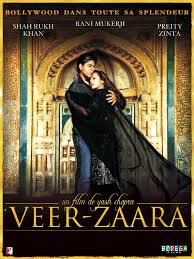
Even as late as in Veer-Zaara (2004), we had a romantic relationship which retained its innocencePoster Veer Zaara and celebrated the deep commitment between the hero and the heroine. Contrast this with Love Aaj Kal (Love Nowadays, 2009), Anjaana Anjaani (Strangers, 2010), and Ek Main aur Ekk Tu (One Me and One You, 2012), where the couples showed a different attitude towards the bliss of togetherness.  In Ram Leela (2013), we get to see a Leela in Deepika Padukone who thinks nothing of unabashedly wooing a Ram in Ranveer Singh.

A hug is no longer much to write home about. Intimate scenes are the new buzzword, even from the stable of Yash Raj Films (Jab Tak Hai Jaan – As Long as I am Alive, 2012) and Rakeysh Omprakash Mehra (Bhaag Milkha Bhaag – Run Milkha, Run, 2013) who have otherwise given us romantic and socially relevant themes devoid of any obscenity in the past. These are subtle hints that lust is increasingly getting portrayed as love these days.

Sixteen Shades of the Bollywood Eve

  • ·         The Simpering Beloved

A majority of movies have black hats who are wooed and won over by white knights – in some with prior societal or parental approval. In others, a post-facto reconciliation takes place between the young couple and their parents just as the camera fades out and credits start rolling out towards the end.

Despite a relatively modern upbringing, Kajol remains a traditionalist to the core in Dilwaale Dulhaniya Le Jaayenge (The Bravehearts will Take Away the Bride, 1995). In the climax, she joins the hero only after receiving her father’s consent.

  • ·         The Soulmate

A spouse or a girl friend is often found leveraging her strength of character to support the hero inDark Bandini distress.

In Hum Dono (Both of Us, 1961), Sadhana did so. In Bandini (The Female Prisoner, 1963), Nutan decided to support her sick but long since separated husband – played by Ashok Kumar – rather than starting a new life with a younger and healthier Dharmendra.

In Maachis (Matchbox, 1996) and Hu Tu Tu (1999), Tabu turned into a terrorist and a human bomb so as to join the cause being championed by her lover. In Aitraaz (Objection, 2004), Kareena Kapur played a lawyer who wins a case for her husband. In Veer-Zaara (2004), Preity Zinta relocated to India from Pakistan so as to serve Shahrukh Khan’s parents who, unknown to her, was languishing in a jail in Pakistan. In Wake Up, Sid (2009), Konkona Sen Sharma became a friend and guide to Ranbir Kapur.

  • ·         The Venerated One

If the woman gets stalked in a majority of Bollywood flicks, she also gets venerated in few. And onemovie Vivah is not referring to the mythologicals here.

In Saathi (Companion, 1968), the love shown between husband Rajendra Kumar and wife Vyjantimala bordered on the reverential. In Purab aur Paschim (East and West, 1970), Manoj Kumar handled a heroine brought up in a western country with due regard to the diferences in their cultural upbringing. In Khushboo (Aroma, 1975), a sober Jeetendra was made to realize his folly by his wife who takes him to task for dithering in inviting her to join him in his home. 

At a time when harassment of women in all walks of life appears to be on the rise, Vivah (Marriage, 2006) came as a fresh whiff of air, projecting a male character who was considerate, caring and compassionate. The hero’s decision to marry the heroine who was from an economically weaker strata was praiseworthy. No dowry was demanded. Above all, the marriage got solemnized despite the heroine having received severe burns in a fire. 

  • ·         Femme fatale

A vamp is inevitably an insider to the affairs of the lead pair, whereas women portrayed in thismovies nadira category tend to be on the fringes of the narrative.

Gangster’s molls, sex objects and item dancers are all there to appeal to our baser instincts. Smoking, drinking and making seductive overtures comes habitually to them. Right from Cuckoo and Nadira to Helen and Bindu, we just love to hate them. While the gangsters are busy unfolding their Machiavellian plots to torment the lead cast and their near and dear ones, the molls provide the perfect foil to soothe the frayed nerves of the audience.  

When it comes to seductive dances, Helen’s belly dance in Inteqam (Revenge, 1969) and Padma Khanna’s cabaret in Johny Mera Naam (My Name is Johny, 1970) immediately spring to one’s mind.

Over the years, the presentation of ‘item numbers’ has got increasingly refined. There are severalmovie Helen crude ones which have kept a part of the male audience glued to their seats, their eyeballs popping out of their sockets with each gyration and pelvic thrust of a lissome dancer. Increasingly, this space has been taken over by the leading ladies themselves, relegating the poor side heroine to the background.

Aruna Irani did prance around a young Rishi Kapur in Bobby (1973). But it was Aishwarya Rai who wooed us with her ‘Kajra re…’ in Bunty aur Babli (Bunty and Babli, 2005). Rekha gyrated to songs old and new in Parineeta (The Married Woman, 2005) and Yatra (Journey, 2006). Katrina Kaif scorched the floors in Tees Maar Khan (2010) and Dhoom-3 (The Blast-3, 2013).

Sushmita Sen played a teacher in Main Hoon Na (I Am Here to Support You, 2004), but that did not restrain her from having a sensuous duet with her student, Shahrukh Khan.

  • ·         The Vamp

The woman with malicious intentions towards either the lead couple or the whole family. She is sexymovie ABHIMAAN and could be shown either smoking or drinking. She wears high heels, garish makeup and could be caught doing a cabaret at least once in the movie.

Nadira is remembered for her negative role in Shri 420 (Mr 420, 1955). Shashikala had evil designs in very many films, though B R Chopra and Hrishikesh Mukherjee used her in positive roles in films like Gumraah (Gone Astray, 1963) and Anupama (The Incomparable, 1966). Bindu played the spoilsport in Do Raaste (Two Separate Ways, 1969), Kati Patang (A Free-floating Kite, 1970) and Imtihaan (The Test, 1974); her role opposite Ajit as ‘Mona Darling’ in Zanjeer (The Shackle, 1973) is remembered till today, as is that of someone supporting the lead couple in Abhimaan (Pride, 1973). In Caravan (1971) and in several other movies, Aruna Irani played a negative role.

With changing social mores, vamps and dancing girls have become an endangered species. A courtesan played by Meenoo Mumtaz – in Sahib Bibi Aur Ghulam (The Boss, The Wife and the Servant, 1962), for instance – who used to present a dance based on a classical form while lip-synching soulful lyrics – has become virtually extinct. She has been crowded out by skimpily clad heroines seductively gyrating to item numbers like ‘Beedi jalayi le’, ‘Chikni Chameli’ and ‘Shiela ki jawaani’. In Dhoom-3, Katrina Kaif treats the voyeuristic amongst the male audience to a family friendly striptease.    

  • ·         The Victim

Greedy relatives, encounters of an unfortunate kind, social stigma and poverty have repeatedly beenmovie Pakeezah shown to force women away from following the straight and narrow path of chastity, matrimonial bliss and happiness.

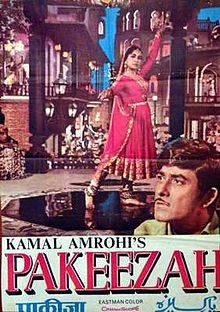
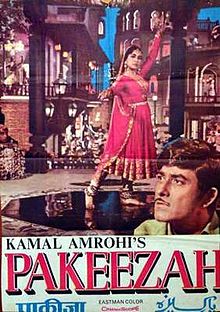
In Sujata (1959), Nutan portrayed the character of an orphan girl facing caste prejudices. In the lavishly mounted Pakeezah (The Pure One, 1972), Meena Kumari got rescued by the hero who faces stiff social resistance, finally overcome by the revelation that his uncle was the real father of the heroine.

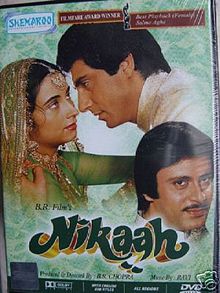
Ankur (Seedling, 1973) and Rudaali (The Professional Griever, 1993) effectively captured the oppression of women in a male dominated society. Sharmila Tagore in Satyakam (1969) and Saira Bano in Chaitali (1975) were only two of the several others who have portrayed hapless women being exploited. Bhumika (Role, 1977) captured the pathos of an exploited woman very well. In Umrao Jaan (1981), Rekha’s search for true love proved to be elusive. In an unabashed display of male parochialism, Nikaah (The Betrothal, 1982) and Woh 7 Din (Those 7 Days, 1983) showed two males arguing out the fate of the woman both are in love with, as if she herself need not be consulted.

Lajja (Shame, 2001) raised several feminist issues in a predominantly male chauvinistic world.movie Pinjar Pinjar (The Cage, 2003) portrayed the agony of a heroine disowned by her own family after getting kidnapped by a person from another religion.

In Aradhana (Worship, 1969), a widowed mother successfully brought up her son all by herself. In Silsila (Continuity, 1981), a pregnant Jaya Bachhan sought social approval and financial safety by getting married to the younger brother of her beau who had passed away in an air accident. In 1947: Earth (1998), Nandita Das ended up suffering at the hands of her lover. In Banaras (2006), Urmila Matondkar turned into an ascetic after her beau, hailing from a lower caster, was ordered to be murdered by her own mother.

In Pati, Patni aur Woh (The Husband, The Wife and The Other, 1978), the hapless housewife tried her best to restrain the romantic escapades of her husband who suffered from the ‘roving eye syndrome’. In Rang Birangi (Colourful, 1983),a bored wife found that an affair in the office prompted her husband to pay better attention to her at home!

Stalking is often depicted as a birth right of the men. Darr (Fear, 1993), led to tragic consequences. However, in most other movies, the heroine forgives and ends up accepting a romantic relationship with the former stalker. Raanjhanaa (The Beloved, 2013), took the art of stalking to new lows. Inmovie Ghar R…Rajkumar (Prince, 2013), the heroine eventually ends up falling for the hero, despite his wayward ways to win her over.

In Gori Tere Pyaar Mein (For Your Love, Fair Maiden, 2013), the heroine is a social worker, relentlessly pursued by the self-centered hero. When he points out a strand of white in her hair, she is not on the defensive. Here is an acknowledgement of the woman as being a person who ages like anybody else. Eventually, she ends up coyly in the hero’s arms. 

Rape scenes have been an integral part of the Bollywood movies. Roti, Kapada aur Makaan (Food, Clothing and Shelter, 1974), had a particularly graphic rape scene involving Maushumi Chatterji. We have also had sensible depiction of such scenes in some movies – like Satyakam, where a lamp rolling about on the floor was used to depict the traumatic event in the heroine’s life. One of the rare movies which handled the post-rape emotional rehabilitation of the heroine very delicately was Ghar (Home, 1978).

(Next part: https://ashokbhatia.wordpress.com/2014/01/05/women-through-the-bollywood-lens-part-2-of-2)

(Related Post:

https://ashokbhatia.wordpress.com/2017/01/06/the-powerpuff-girls-of-bollywood)

Read Full Post »

Inventors of the world need to quickly come up with a Poop Scoop which would work for humans. This would solve a messy problem which is driving governments all over the world a bit potty.

In third world countries, it is pretty common to find people defecating in the open. Any train passenger who has been Potty open-defecation-titleadventurous enough to peep out of his window while the train is entering an urban settlement in the morning hours would readily attest to the same.

The Great Public Loo

Ask any of the defecators and he would be quick to point out the benefits of open air ablutions – minimal irritation to the olfactory organs, a gentle breeze soothing the hind quarters and the pleasure of a comforting smoke without the imminent danger of a secondary inhalation by any of the co-defecators. A very environment friendly and socially sustainable practice, he would say.

Push him a wee bit more and he is bound to come out with yet another justification. Well-heeled passengers of railways are permitted to litter the tracks all across the length and breadth of the country with smelly abandon. They enjoy this liberty irrespective of whether the train is stationary or moving over vast tracts of land and rivers, pious or otherwise. If so, why should his tribe of open defecators alone be singled out and reprimanded?

A Potty Dawn

Come morning time and vast stretches all over the country witness the unusual spectacle of human droppings, putting Potty Roman Public Toiletsmany a bird and beast to shame. Early morning joggers have already perfected the art of dodging such excrescence, thereby saving their precious branded footwear from getting soiled.

In the bye-lanes of small towns, toddlers can be easily spotted relieving themselves just outside the main door of their palatial houses, thereby saving their parents the hassle of suffering from an Undue Potty Syndrome.

Marketing honchos of companies making diapers and plastic potty contraptions would do well to target this segment in their next promotional blitzkrieg.

A Gratitude towards Mother Earth

Those of the two-legged Homo-sapiens who are far away from home and hearth find the vacant stretches of land Potty Limbourg Belgiumabutting our swank new highways quite suitable for the purposes of fertilizing the soil. This is their way of expressing heart-felt gratitude towards Mother Earth.

In towns and market places, walls become an easy prey to such offerings, duly supported by the local civic authorities who ensure that our streets are poorly lit; if power is available, that is.

In most public spaces, denizens hardly need directions to the nearest rest room. Their keen sense of smell does not lead them astray. Their olfactory organs turn out to be better direction-finders than their GPS-enabled gizmos.

In many countries, democracy is taken pretty seriously. Quadrupeds of all sizes and shapes – whether bovine, canine, feline, or of any other kind – also believe that they have equal rights on public spaces. Since their lives invariably run as per the solar clock, they exercise their rights at any time of the day.

Bollywood Beats

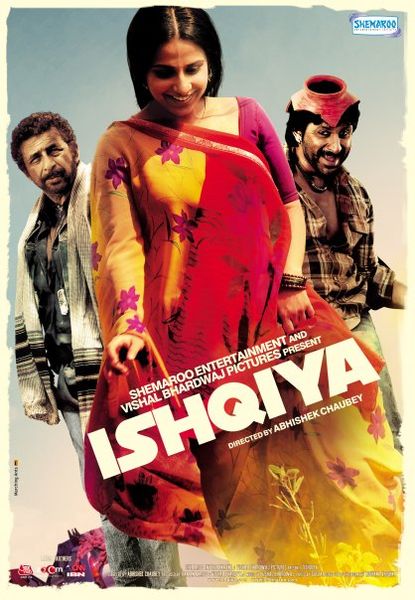
Bollywood is not far behind in promoting the practice of open air urination and defecation. Showing a bunch of boys Potty Ishqiyarelieving themselves in an open space is no longer a taboo.

One of the protagonists in a recent flick (the inimitable Naseeruddin Shah in a particular scene in ‘Ishqia’) waxes eloquent over the sheer bliss of resorting to this ‘environment friendly’ practice.

However, there is some consolation that the heroine (Vidya Balan) subsequently supported a campaign by the Ministry of Sanitation and Rural Development of Government of India to promote an extensive drive towards toilet building.

Petty and Potty Problems

As we celebrate yet another World Toilet Day today (on the 19th of November), one hopes that the coming days would see a better focus on resolving this predicament of our modern lives.

Manufacturers of all kinds of sanitary products can pitch in and tackle this issue. Technocrats and scientists who are busy exploring the universe can come up with scoops designed to handle excreta of all hues and shapes.

Social scientists who keep discussing inane matters on our TV screens ad nauseam can plan for campaigns which are directed towards changing the mindset and attitudes of our citizens.

Movie directors can weave in clear messages denouncing the practice of open defecation in their future projects. Potty Vidya-BalanMayors of our cities can raise pig squads which would hopefully ensure that our streets are squeaky clean.

Politicians of all hues can stop wasting their energies in running down each other and highlighting petty problems; instead, they can address potty problems.

Mind over Matter  

The fact that we have more phones and TV sets than toilets goes on to show that, as a civilization, we accord a higher priority to matters of the mind than to those of the material body.

We are perhaps heading towards the next step of our human evolution into a species which would be far better endowed in terms of its intellectual capabilities!

(Related post: https://ashokbhatia.wordpress.com/2013/04/09/the-monkey-business-in-india)

Read Full Post »

‘Once a sister, always a sister’ goes the adage in Bollywood. Quite a few wannabe heroines, howsoever well endowed in their acting prowess, get typed in sisterly roles. Think of Nazima, Naaz, Daisy Irani, Tabassum, Farida Jalal and several others who got ‘typified’ and had to remain content playing docile sisters to dashing heroes in several movies. In fact, one of them was even labeled as a ‘Resident Sister’!

But some fine actresses had the guts and the opportunity to prove their detractors wrong. They managed to break through the glass ceiling, so to say, and metamorphosed into highly successful romantic heroines. Consider Mumtaz, for example. Having played a sisterly role in Gehra Daag (Director: O P Ralhan, 1963), she went on to become the darling of the masses later in her career.

Romance vs. Filial Love

We also have actresses who, despite playing a romantic lead against leading heroes of the day, ventured into unchartered waters andRakhi Bombaykababu played loving sisters with much aplomb. In some cases, they did so opposite the very hero whom they were romancing in some other flicks!

Here is a quick recap of some of Bollywood’s actresses who have dared to experiment along these lines.

Suchitra Sen

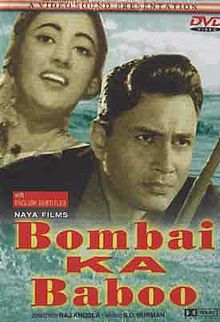
The diva from Tollywood, Suchitra Sen, started off in Bollywood by playing an ‘assumed’ sister to the debonair Dev Anand in Bombai Ka Babu (Raj Khosla, 1960). The movie tapped her emoting strengths quite successfully. When she realizes that the hero is impersonating her long-lost brother only to get access to her family’s wealth, her shock and surprise is spontaneous. Her anguish on finding a ‘brother’ making romantic overtures is well portrayed. Eventually, the hero is forced to accept their brother-sister relationship. He ends up supporting her marriage elsewhere.

Suchitra Sen also played a romantic lead opposite Dev Anand in the movie Sarhad. However, both these movies did not do well at the boxRakhi Hare Rama Hare Krishna office. Her subsequent movies, like Devdas, Mamta and Aandhi are classics which won critical acclaim as well as cine-goers’ appreciation.

Zeenat Aman

Who can forget the enchanting song ‘Dum maro dum…’? Picturised on a debutant Zeenat Aman in Hare Rama Hare Krishna (Dev Anand, 1971), the song remains fresh in public memory even today. The movie touched upon the decadence of the hippy culture and the drug menace. Dev ends up in Nepal, looking for her long-lost sister, played by Zeenat. He succeeds but the sister is unable to reconcile herself to a normal lifestyle and ends her own life.

Subsequently, Zeenat Aman slipped into romantic roles opposite Dev Anand in several movies directed by him, including Heera Panna (1973) and Ishq Ishq Ishq (1974). The fact that she eventually went on to become a successful star in mainstream Bollywood flicks shows that out-of-box career starts do not always lead to disasters. Rakhi Josh

Aishwarya Rai Bachchan

In Josh (Mansoor Khan, 2000), Aishwarya played Shahrukh Khan’s sister with much ease. Both were established stars in Bollywood by then but took up the challenge of portraying siblings in this flick. They also romanced each other in Mohabbatein (Aditya Chopra, 2000) and then in Devdas (Sanjay Leela Bhansali, 2002). 

Aishwarya made yet another foray into the sibling territory by playing Amitabh Bachchan’s sister in Hum Kisise Kum Nahin (David Dhawan, 2002).

Neelam Rakhi Hum Saath Saath Hain

In Ek Ladka Ek Ladki (Vijay Sadanah, 1992), Neelam played a romantic lead opposite Salman Khan. Subsequently, they teamed up as a brother-sister duo in Hum Saath Saath Hain (Sooraj Barjatya, 1999).

Juhi Chawla

In Darr (Yash Chopra, 1993), Juhi was hounded and stalked by Shahrukh who is obsessive about her. In Raju Ban Gaya Gentleman (Aziz Mirza, 1992), Yes Boss (Aziz Mirza, 1997), Duplicate (Mahesh Bhatt, 1998) and Phir Bhi Dil Hai Hindustani (Aziz Miraza, 2000), Juhi and Shahrukh portrayed an intensely romantic relationship. However, in Paheli (Amol Palekar, 2005), Juhi played the role of Shahrukh’s sister-in-law!

Sisterly StarsRakhi My_Brother…_Nikhil_

Juhi Chawla played the role of a caring sister in My Brother, Nikhil (Onir, 2005). Her brother, played by Sanjay Suri, gets afflicted by HIV. The cause is never explained, but the effect is vividly captured. Juhi played the heart-warming role very well indeed, portraying the inner strength of her character of a sister who stands up for her brother, even though suffering internally herself.

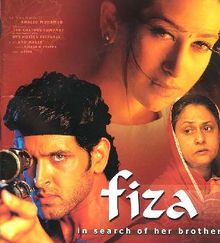
A successful romantic star in her own right, Karishma Kapoor played Hrithik Roshan’s sister in Fiza (Khalid Mohammed, 2000). In a happy Muslim family, tragedy strikes when the brother is wrongly implicated in the serial blasts which rocked Mumbai in 1993. He ends up becoming a terrorist. To save him from getting captured live by the police, the sister ends up killing him at his own behest. Rakhi Fiza

Exclusive Sister-Brother Movies

Once in a blue moon, Bollywood has also come up with movies which are based entirely on brother-sister relations. The fondness for each other, the pranks they play on one another and the special bond they share – to the exclusion of even their parents – are all features which have been captured in great detail.

Other than My Brother, Nikhil, an outstanding example is that of Boot Polish (Prakash Arora, 1954) which won critical acclaim as well as box office success. Rattan Kumar and baby Naaz put in credible performances in the movie which exhorted us to live even a penniless life with dignity. The importance of education for children was another critical message which was conveyed by the movie.

Divya Dutta’s scintillating performance as a loving sister in the recently released Bhaag Milkha Bhaag is worth mentioning.

A Professional ActRakhi Boot_Polish_

It goes to the credit of Bollywood that besides being secular, it provides a diverse platform for actors to showcase their talent. The fact that several stars are open to taking up challenging roles which change their on-screen romantic relationship into a filial one goes on to show the innate professionalism at work. The credit also goes to producers and directors who take a risk and cast popular stars in such roles.

This is but one facet of the maturity that Indian cinema has achieved in its hundred years of existence. 

(Inputs from Sanjana are gratefully acknowledged!)

Read Full Post »
In a majority of movies churned out by Bollywood, doctors and nurses have only been on the fringes of the narrative. But there are some which have highlighted the professional trials and tribulations faced by our healers. Few have even commented upon the complex challenges of poverty, malnutrition and scarce resources faced by doctors and nurses in a developing country like India.

Keeping in tune with the times, the depiction has also undergone a major transformation. As our society has become more self-centered, so has the general character of the doctors and nurses shown in the Bollywood flicks. The self-sacrificing doctors of yesteryears have slowly but steadily given way to glamorous ones playing second fiddle to a mostly romantic script at hand.

Risking Their Own Lives

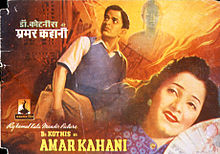
In the pre-independence era prior to 1947, we had self-sacrificing doctors who rendered their services in alien lands, serving the Poster Dr_Kotnis_ki_Amar_Kahanipeople affected by war and plague. Old timers may remember Dr. Kotnis Ki Amar Kahani (1946, V. Shantaram, ‘The Immortal Saga of Dr. Kotnis’) which was based on the true life-story of Dr. Dwarakanath Kotnis who was sent to China during World War II. Dr. Kotnis helps the people of China during the Japanese invasion. Rendering a selfless service, he marries and settles down there itself but eventually dies of plague.

Post-independence, we had Dil Ek Mandir (1963, C. V. Sridhar, ‘Heart is a Temple’), where the doctor performs a successful surgery but ends up collapsing due to the tireless effort he puts in preparing for the same. Aman (1967, Mohan Kumar, ‘Peace’) was inspired by the story of Dr. Kotnis. The hero gets inspired to serve humanity after meeting Sir Bertrand Russell and goes to Japan to serve the victims of nuclear holocaust.

In Selfless Service  

In movies like Anuradha (1960, Hrishikesh Mukherjee) and Khushboo (1975, Gulazar, ‘The Fragrance’), the heroes are doctors Poster Khamoshiwho decide to serve poor villagers in the interiors of India. Risking their own health and welfare, they keep busy with their work and neglect their family and personal lives. In Anuradha, the wife eventually ends up sacrificing her urbane musical ambitions to support the husband. In Khushboo, the wife does so but not before she has questioned his lack of initiative in inviting her to live with him. Both movies had finely chiseled performances by the lead actors – Balraj Sahni, Leela Naidu, Jeetendra and Hema Malini.

Khamoshi (1969, Asit Sen, ‘Silence’) had the inimitable Waheeda Rehman playing a nurse in a mental asylum. She falls in love with a patient who gets well and moves out without reciprocating her sentiments. Impressed by her success, the doctor-in-charge entrusts yet another patient to her care. She falls in love with him as well but loses her own mental balance when he is cured. The moral of the story: a medical professional should not get personally involved with a patient. Easier said than done!

Battling the Big C

In the 1970s, Bollywood came out with several movies which had a medical problem as the cornerstone. In quite a few movies, cancer took over from TB as the real villain. Most of these movies tugged at our heartstrings. One, there was the inevitability of death. Two, the sheer helplessness of a doctor made the narration even more poignant. Audiences loved them nevertheless and often came out of theatres with drenched handkerchiefs.

Safar (1970, Asit Sen, ‘The Journey’) had a doctor facing the charge of intentionally killing someone dear to her. The story was Poster Anandessentially a love triangle. The underlying theme was that of jealousy of the doctor’s husband, guilt of the doctor wife and reconciliation with the fact of impending death by the wife’s close friend who is afflicted with cancer.

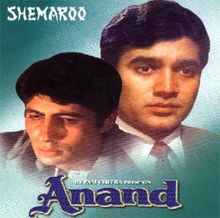
Anand (1971, Hrishikesh Mukherjee, ‘Bliss’) was a landmark film which touched upon several facets of a doctor’s life. Indian health care system’s discrimination between the haves and the have-nots of the society was one of the facets. Yet another was the transformation of an atheist doctor into someone who starts  believing in the power of prayer to heal. The need to have a positive attitude towards life, howsoever short it may be, was the basic message of the movie.

Commercial and Legal Dilemmas

Tere Mere Sapne (1971, Vijay Anand, ‘Your Dreams, My Dreams’) narrated the story of a doctor who migrates to a city after Poster Tere Mere Sapnehaving suffered professional as well as personal setbacks in a rural setting. His transformation into a money spinning professional in an urban environment is well captured. Eventually, he migrates back to the village and regains his sense of good values and ethical practices in healthcare.

Achanak (1973, Gulzar, ‘All of a sudden’) posed an interesting dilemma faced by a doctor at times. Does it make sense for a doctor to strive hard to save the life of a convict who is to be sent to the gallows? The movie answers this question in the affirmative.

The Fringe Benefits of Healthcare

In Silsila, we had a hapless doctor (Sanjeev Kumar) trying to figure out how to handle the post-marital affair of his wife (Rekha). In Satte Pe Satta, we had the heroine (Hema Malini) playing a gutsy nurse, though only in the first few reels.  Salman Khan in Maine Pyar Kyun Kiya, Abhishek Bacchhan in Dostana, Kareena Kapoor in 3 Idiots, Vidya Balan in Pa and Aishwarya Rai in Guzaarish were all glitzy characters playing to the gallery, with their medical talents appearing only on the fringes of the main narrative.  

Healthcare with Bear Hugs

Munna Bhai MBBS (2003, Rajkumar Hirani) was a hilarious take on the medical profession. It touched upon the mixed up Poster-Munna_Bhai_M.B.B.S.priorities in hospitals where patients lack a personal healing touch and where procedures take precedence over urgent medical issues. Quite a few of our aspiring and practicing doctors would have drawn inspiration from the movie to improve the healthcare system by according better priority to compassion, empathy and liveliness in treating patients!

Summer 2007 (2008, Suhail Tatari) raised the issue of lack of awareness amongst medicos about the social ills and absence of any healthcare delivery service in India’s rural areas. Greedy moneylenders and power-hungry politicians rule the roost. A group of medical interns attempts to cope with the daunting challenges facing villagers.

Waiting for Medical Blockbusters!

The wide variety of healthcare related issues touched upon in these movies is commendable. However, one still waits for an in-depth poster comatreatment of the field of medicine at the hands of Bollywood. There is immense scope for medical thrillers based on patent rights of gene based therapies, moral dilemmas raised by the new frontiers of medicine, whistle blowers exposing corrupt practices in the pharmaceutical industry, shortages of critical vaccines and contemporary challenges on providing universal healthcare services in India.

In the last decade, Bollywood has demonstrated its capacity to make shorter movies based on innovative themes. Hopefully, the field of medicine would also get better attention with script-writers and directors coming out with a Coma, a Strong Medicine, a Virus and, possibly, even an Erin Brockovich in not too distant a future!

Read Full Post »
Movies from Hollywood as well as Bollywood are often based upon romantic affairs which unfold against the backdrop of a work related scenario. Some of these also touch upon the issue of sexual harassment at the work place.

Since there are major differences between the Western and the Eastern cultural milieu and values, movies churned out by Hollywood are invariably bold. On the other hand, those coming out of Bollywood are relatively tame affairs, often confining themselves to flirtatious bosses.

But whenever either has chosen to dive into the murky waters of sexual harassment at work place, the director concerned has been rather liberal in depicting the relationship between a CEO and a team member. Yes, true to style, both Hollywood and Bollywood have ensured that the proceedings willy-nilly end up on a positive note!

THE HOLLYWOOD TAKE

9_to_5_movie_poster

  • 9 to 5 (Colin Higgins, 1980) 

A comedy starring Jane Fonda, Lily Tomlin, Dolly Parton and Dabney Coleman, the movie is about three women living out their fantasies of getting even with their autocratic and sexist boss. Eventually, they manage to successfully overthrow him, extracting sweet revenge in the process. 

  • Disclosure (Barry Levinson, 1994)

Instead of getting an expected promotion, Tom ends up reporting to a woman with whom he had an affair in his bachelor days. His new boss, not only dangerously sexy but also overtly ambitious, has climbed the corporate ladder by exerting undue influence on the CEO. She apparently tries to pick up where they left off but he just about manages to resist. Eventually, realization dawns that she intends to use Tom merely as a scapegoat to cover her technical misdeeds. He decides to file charges of sexual harassment, a development of which the company takes a jaundiced view. The movie starred Michael Douglas and Demi Moore.

  • North Country (Niki Caro, 2005)NorthCountryPoster

The movie depicts a fictionalized account of Jenson v. Eveleth Taconite Co., the first sexual harassment class action lawsuit in the U.S. Josey’s refusal to give in to her male co-workers’ demands causes them to spread lies about her being promiscuous and trying to seduce them. When the company board does not take her charges of sexual harassment seriously, she decides to file a case. In court, an attempt is made to paint Josie as being promiscuous. Eventually, co-workers stand up to support Josey’s complaint. They are followed by more women, family members, and miners. With this, the mining company loses the case and is forced to pay the women for what they suffered, in addition to establishing a sexual harassment policy at the workplace.

  • The Proposal (Anne Fletcher, 2009)The_Proposal_poster

Starring Sandra Bullock and Ryan Reynolds, the movie depicts a hard-nosed boss Margaret Tate terrorizing Andrew Paxton at a New York publishing house. To avoid deportation to Canada upon expiry of her visa, Margaret hatches a scheme to marry Andrew – he agrees if she’ll promise a promotion. She flies to Andrew’s home to Sitka in Alaska and realizes the essential values of decency and goodness his family stands for. After she runs off from the marriage ceremony, Andrew’s grandma feigns sickness and facilitates a matrimonial union between the two.

THE BOLLYWOOD TAKE  

  • Pati, Patni aur Woh (B R Chopra, 1978, ‘Husband, Wife and the Other One’)

Ranjit is a CEO, happily married to his lady-love Sharda. He exploits his poor secretary Nirmala by arousing her sympathy over a fake illness of his wife. Eventually exposed, he tries to mend his ways but ends up falling for the charms of his next secretary! The movie starred Sanjeev Kumar and Vidya Sinha.

  • Rang Birangi (Hrishikesh Mukherjee, 1983, ‘The Colourful One’)Rang_Birangi Poster

Yet another comedy in which Ajay, a workaholic boss who neglects his wife Neema, is persuaded by his best friend to start a romance with his secretary, basically to bring some pep back into his seven-year old married life. The wife also decides to reciprocate the sentiment by taking up a job and then claiming to be getting close to her own boss. Eventually, Ajay realizes his mistake and they both live happily thereafter. The cast comprised Amol Palekar, Parveen Babi and Deepti Naval.

  • Chandni  (Yash Chopra, 1989, ‘Moonlight’)

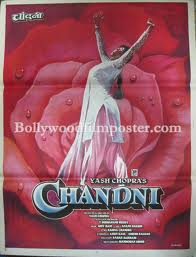
Chandni (Sridevi) and Rohit (Rishi Kapoor) meet at a family wedding and fall for each other. Due to a misunderstanding, they get separated. Chandni shifts to another city and lands a job with a travel agency headed by Lalit (Vinod Khanna) who falls for her. He is already grieving over the loss of the love of his life and eventually ends up losing Chandni as well to her lover.Aitraaz Poster

  • Aitraaz (Abbas-Mustan, 2004, ‘Objection’)

The female boss Sonia (Priyanka Chopra) has the hot pants for Raj, a happily married subordinate. Raj resists her advances, with Sonia dragging him to court on a trumped-up attempt-to-rape charge. However, the subordinate has a lawyer wife who comes to his rescue, with the female boss committing suicide in the end. The movie was inspired by Disclosure.

  • Inkaar (Sudhir Mishra, 2013, ‘Refusal’)

This one is Bollywood’s latest take on sexual harassment at work place. Based on gender politics and power play in a large advertisingInkaar-Movie-Poster agency, the movie covers an investigation into a sexual harassment complaint filed by Maya (Chitrangada Singh) against Rahul (Arjun Rampal). Whereas the agency can obviously do without a scandal of this nature, both Maya and Rahul realize towards the end that they are in love with each other!

Story and screenplay writers for movies based on management related themes no longer need to scratch their heads to get new ideas for their scripts. Nor do they need to look around for a muse or even bother about the writers’ block. All they have to do is to build up on the juicy details of the sexploits of CEOs of various hues provided by the real corporate world and convert these into mega successes in the reel world.

Read Full Post »

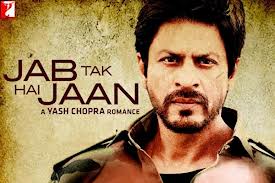
When we think of gorgeous heroines draped in plain color chiffon saris and sleeveless blouses – swaying to rhythmic beats composed poster jab tak hai jaanby eminent musicians and lip-synching soulful lyrics penned by proficient poets – with the magnificent Alps as a backdrop, the only name that comes to our minds is that of Yash Chopra!

The producer and director showed us the value of pure romance sans vulgarity in times when the only mantra to box office success appears to be “the lewder and cruder, the better”. He passed away last year. He has left behind a rich legacy of social comment through the wide-ranging themes of movies he produced or directed.

But the king of romance acquired this sobriquet by a very interesting process of evolution, through a long and arduous journey of making socially relevant movies which reflected our society’s challenges of their respective times. Like other popular directors of Bollywood – Raj Kapoor, Subhash Ghai and others – he had a unique ear for music, which was a hallmark of all his movies. The lyricists he associated with were accomplished poets who invariably came up with relevant and meaningful verses.

Evolving Into a King of Romance220px-Dhool_Ka_Phool

Partition, Secularism and Peace

If ‘Dhool ka Phool” (1959) was about illegitimate children, ‘Dharamputra’ (1961) touched upon religious intolerance in days when the term Hindu fundamentalism was not part of our vocabulary. The story of a Muslim bringing up a Hindu boy tugged at one’s heart-strings. The scenes of partition were hard-hitting, leading to a backlash at the time. That was perhaps the reason he never ventured to make a film on a political theme again during his lifetime.

However, he did come up with a clear message on peace and unity with his ‘Veer Zaara’ (2004). Not even a single bullet was fired in the film, but the message was loud and clear – that India and Pakistan share a common culture and a strong bond – by implication, both countries deserve a poster veer zaarachance to be together again, pooling their scarce resources to alleviate poverty, hunger and disease, instead of war mongering.

Family Values, Wealth and Bigamy

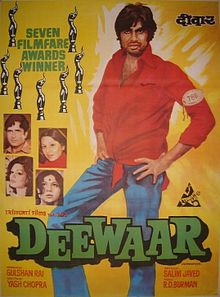
‘Waqt’ (1965) was his last movie where he worked with his elder brother Baldev Raj Chopra. It was the first one to have had a multi-star cast, a practice which is followed till today. It also spawned several other movies in the lost-and-found genre, popular ones being ‘Yaadon ki Baraat’ and ‘Amar Akbar Anthony’. The movie also depicted the lavish styles of the rich, conveying that 220px-Deewar_posteracquiring wealth is not necessarily evil.

Then he formed Yash Raj Films, his own banner, and came out with ‘Daag’ (1973). The issue of bigamy was handled with his trademark elegance and suavity.

The Angst of the Youth

This was followed by two angry-young-man-phase movies, capitalizing on Amitabh Bachchan’s recently acquired image in ‘Zanjeer’. It started off with ‘Deewar’ (1975) and was followed by ‘Trishul’ (1978). In ‘Mashaal’ (1984), he cast thespian Dilip Kumar who portrayed an angry old man. Much to the glee of middle class audience struggling with rising aspirations kabhie kabhie posterand astronomical living costs, the means were no longer important; ends were.

Elegant Romance

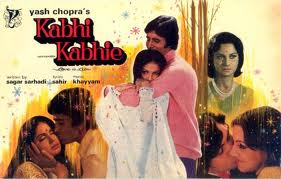
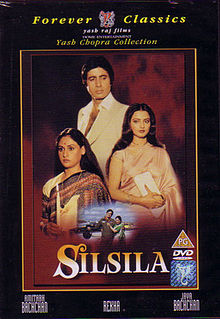
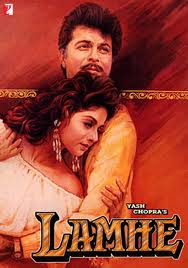
With ‘Kabhie Kabhie’ (1976), he introduced a poetic touch into the art of commercial movie making and set the box office registers tingling. This trend continued in his subsequent movies like ‘Silsila’ (1981), ‘Chandni’ 220px-Silsila(1989) and ‘Lamhe’ (1991). The angst eventually mellowed down and human emotions acquired center stage. All the characters in these movies were from an affluent background. In each venture, the canvas only got larger. In each, candy-floss romance was in the air, backed by melodious music and soulful lyrics that would remain etched in our collective psyche for a long time to come.

His style of depicting romance was muted, elegant and refined. The main protagonists were invariably civil and dignified, following the norms of propriety. It was devoid of lewd dialogues, coarse lyrics and vulgar scenes. Even in ‘Darr’ (1993), we had an anti-hero stalking the heroine, but never in bad taste.

Social Values and the Indian Diaspora Lamhe poster

He produced ‘Dilwaale Dulhania Le Jayenge’ (1995), which was directed by his son, Aditya Chopra. The movie set new records and Indians world over could readily connect with the superiority of family values it espoused. A daughter brought up in UK needs permission from her overbearing father for a vacation in Europe; a hero refuses to get persuaded by the heroine’s mother to elope with the heroine; instead, the couple works towards getting an approval of the match from the heroine’s father, come what may – these were market savvy master strokes in the script which made the movie immensely popular with all age groups.

Musical Romanceposter of chandni

Very few directors have ventured to work on a theme with music as a backdrop. ‘Dil To Pagal Hai’ (1997) did precisely that. All the main characters had a different perspective on love, and the movie was about the transformation of their belief systems. It was beautifully built around music and dance, elevated to a level where soul-mates discover each other.

We live in terrorism infested times. It is not surprising that his last venture, ‘Jab Tak Hai Jaan’ (2012) used this as a backdrop of a triangular love story.

An Ear for Music and Rich PoetryDDLJ poster

While supporting his brother, B. R. Chopra, Yash Chopra got to work with music directors like N. Dutta and Ravi. However, once on his own, he first worked with Lakshmikant Pyarelal for ‘Daag’, and then with Rahul Dev Burman for ‘Deewar’. Khayyam was his choice for ‘Kabhie Kabhie’ and ‘Trishul’. All through these movies, he worked with Sahir Ludhianvi as the lyricist.

Yet another master stroke was his persuading legendary classical musicians Shiv Kumar Sharma and Hari Prasad Chaurasia to compose the music for several of his movies. Together, they created a rich legacy of music in such movies as ‘Silsila’, ‘Chandni’, ‘Lamhe’ and ‘Darr’. The classical dance sequences performed with aplomb by  Sridevi in ‘Chandni’ and ‘Lamhe’ remain as fresh today as they were when captured on celluloid. ‘Silsila’ and ‘Veer Zaara’ had lyrics by Javed Akhtar, whereas all others had poetic inputs from Anand Bakshi.DTPH poster

For ‘Dil To Pagal Hai’, he turned to Uttam Singh, who came up with mellifluous compositions for the movie. His best was, however, reserved for ‘Veer Zaara’, which dug up old compositions of the legendary Madan Mohan, revived by the latter’s son Sanjeev Kohli.

In his last offering, ‘Jab Tak Hai Jaan’, he teamed up with A. R. Rehman, with lyrics by Gulzar.

Setting New Benchmarks

Undoubtedly, he set new benchmarks for the film industry. Several trends that we take for granted today were initiated by him. He set the template for future Bollywood directors who continue to ape his technical gloss but lack the depth of romance and human emotions captured by him. He was among the first to push the industry into professionalism. Working with classical musicians and accomplished Urdu poets, he has left behind a rich repertoire of music for all of us to savor for a long time to come.

He would always be fondly remembered for a certain elegance and refinement of language which many of the current breed of Bollywood dream merchants sadly lack. Also, for the unique brand of secularism, peace and unity he propagated through his movies.

Read Full Post »
Quite early in life, I discovered that a movie should be selected for viewing not based on its cast Lekinbut based on its director. Each director has a distinctive perspective on life, and the manner in which he/she presents a theme is as unique as, say, one´s finger prints. Admittedly, the core brilliance of a movie is determined by the producer-director duo. But the unmistakable stamp on the narrative is that of the director. To put it simply, if you sit down to watch a movie by Gulzar saheb, you know what to expect. On the other hand, if you are going to see a David Dhawan flick, you already suspect what is in store.

The Brand Equity of a Director

Over a period of time, a movie director builds up a strong brand equity for himself. It comes from the uniqueness of his style, the choice of his scripts, consistency in quality of his directorial ventures, earning a respect from the discerning viewers, crowned by some degree of commercial success.

As a person who has been brought up on a rich diet of Bollywood fare right since his childhood, and maachisas someone who has dabbled in the art of movie making himself, it is not difficult for me to appreciate the complexity of producing a commercial pot-boiler. The cine-goers eventually get to see only the end result on the screen, little realizing the hard work done by all to ensure a high quality product. That is why, a good movie makes me feel fulfilled. I feel like saluting the producers and directors who have invested their effort and money on a worthwhile product.

The CEO of a Dream Merchandise Factory

A director’s role in shaping a movie would perhaps be comparable to that of either the CEO of a company or the conductor of an orchestra. A CEO’s mindset determines the business strategy of a company. His style of functioning and his value system permeates across all levels of the company. Likewise, the conductor of an orchestra blends the notes of stringed, percussion and other instruments, creating a symphony which is unique. Like a CEO guiding a company or a conductor presenting a symphony, the director also balances the strengths and weaknesses of his team members and comes up with a movie which is entertaining – and possibly educative – in the social context.

Surely, a director coordinates and guides various specialists to achieve the level of perfection in hisGaja_Gamini_ product. Apart from the choice of a script and the main caste, no department of movie making would remain aloof from the influence of a director. Screenplay, cinematography, sound design, choreography, music, editing, budgeting, financing, marketing and many other facets of movie making come under a director’s watchful eye, thereby making each movie a unique attempt at story telling. And when someone as accomplished as M F Hussain decides to wield the megaphone, we are in for a stupendous visual treat, as in ‘Gaja Gamini’ and ‘Meenaxi – A Tale of Three Cities’!

A Director’s Take

Exploiting the latent potential of an actor is surely one of the key traits of a director. Look at some of the amazing transformations we have seen on the silver screen all these years! To recapitulate just a few:

  • A villain or a vamp being cast in a positive role: Remember Lalita Pawar in a matronly role in Raj Kapoor´s ‘Anari’? Or, Shashikala supporting the sulking heroine in Hrishikesh Mukherji´s ‘Anupama’? Cut to ‘Abhiman’ and you notice Bindu empathising with the lead pair. Under the baton of Manoj Kumar and Manmohan Desai, we had Pran playing positive roles in ‘Shaheed’, ‘Upkar’ and ‘Zanjeer’. From a staunch villain, Madan Puri became a doting grand-pa in Rajshri Production’s ‘Dulhan Wohi Jo Piya Man Bhaye’.
  • From a flamboyant playboy to a chivalrous gentleman: Yesteryear´s jumping jack JeetendraHum aapke hain kaun becomes a simpleton in ‘Geet Gaya Pattharon Ne’ and ‘Boond Jo Ban Gayi Moti’ under the watchful eyes of V. Shantaram. Gulzar is equally effective with Jeetendra in ‘Parichay’ and ‘Khushboo’. Lately, we have seen Salman Khan being tamed by Suraj Barjatya in ‘Maine Pyar Kiya’, ‘Hum Aapke Hain Koun..!’ and ‘Hum Saath Saath Hain’.
  • From a debonair hero to a villain: Under Brij, Ashok Kumar, the quintessential hero, becomes a villain in ‘Ustadon ke Ustad’; under Vijay Anand, he springs a surprise in ‘Jewel Thief’.

The chemistry between a music director and a director has also produced enchanting results for music buffs.

  • Besides raucous beats in movies like ‘Bombay’ and ‘Rangeela’, A R Rehman comes up withZubeidaa soulful music in ‘Zubeida’ for Shyam Benegal. Likewise, for Subhash Ghai, he composes a different genre of music in ‘Taal’.
  • The duo of Shankar-Jaikishan, when working with Raj Kapoor, left behind a rich repertoire of scores, some of which are evergreen and a treat for movie goers of all ages.
  • Salil Chaudhury, when coupled with Basu Chatterjee, came up with some unique scores in ‘Rajnigandha’ and ‘Chhoti Si Baat’.

Some Directors I Admire

Selection of a script essentially determines the social message that a director wishes to convey through his work. One fondly recollects the following directors who have sought to convey a unique message of their own through their work:

  • Aparna Sen did a great service to the senior citizens by highlighting their plight in the thought-provoking ’36 Chowringhee Lane’. The acute loneliness of Violet Stoneham touched our hearts. In ‘Paroma’, she explored the psyche of a tradition-bound housewife seeking liberation in her own way. In my opinion, her best offering so far has been ‘Mr. & Mrs. Iyer’. It conveyed the message of inter-religious harmony in a very effective manner. Her latest offering, ‘The Japanese Wife’, depicts the true meaning of love, sans any physical contact. One wishes her a long innings of creative offerings.
  • Ashutosh Gowarikar is another director whose work one has come to admire. ‘Lagaan’, ‘Swades’, ‘Jodha Akbar’ and ‘What is Your Rashee’ were all brilliant offerings. One surely looks forward to more movies from his stable in the days to come.
  • Basu Bhattacharya excelled in depicting the post-matrimonial relationships between couples. If ‘Anubhav’ captured the vacuum felt in the absence of a child and the misunderstandingTeesri kasam created as a result of an ex-lover of the wife walking into the household, ‘Aavishkar’ dwelt at length on the dissappointment caused by the realization that a college romance is so very transient. In ‘Teesri Kasam’, he came up with a classic philosophical treatise, whereas in ‘Sparsh’, he touched upon the challenges faced by the differently abled in our society. Finally, in ‘Aastha’, we saw him covering the impact of a materialistic culture on our morality and social values.
  • Basu Chatterjee‘s movies are classics in their own right. Depicting the dilemmas faced by the great Indian middle class with a dash of humour was his forte. Right from ‘Chameli Ki Shadi’ to ‘Baaton Baaton Mein’, ‘Chitchor’, ‘Hamari Bahu Alka’ and ‘Piya Ka Ghar’, he has regaled us with heart-warming tales, backed by tongue in cheek humour. In ‘Rajanigandha’, the hero, while watching a movie, imagines himself and the heroine as Dharmendra and Hema Malini on the screen – one of the several master strokes of the director. In ‘Chhoti Si Baat’, the hero and the heroine go about singing a song in crowded places whereas all others around them remain preoccupied with their own activities! In ‘Khatta Meetha’, we find an irritated Ashok Kumar threatening to kill Pradip Kumar, the heroine’s father, if he fails to bless her marriage with his adopted son.
  • One has admired some of the B. R. Chopra movies because of not only their socially Gumrahresponsible messages but also for their experimental streak. If ‘Naya Daur’ was about rapid industrialization leading to labour unrest, ‘Gumrah’ was about the perils of a wife likely to go wayward. ‘Humraz’ spoke of the dangers inherent in a situation where one attempts to hide facts from one’s spouse. ‘Insaf Ka Tarazu’ covered the trauma of rape, whereas ‘Nikaah’ was about a woman asserting her rights to choose a husband. ‘Pati Patni aur Woh’ was a humouros take on the proverbial seven-year itch of the male of the species, a theme which was effectively countered in ‘Rang Birangi’ subsequently by none other than Hrishikesh Mukherjee! His experimental foray into the genre of suspense led to two classics: ‘Kanoon’ and ‘Ittefaq’, both of which broke from convention and did not boast of any song, a taboo for the mainstream BollywoodDark Bandini cinema. ‘Baghban’, directed by his son Ravi Chopra, is a great comment on the derogatory attitude adopted by some of the grown up children towards their parents.
  • Bimal Roy gave us realistic movies with a socialistic message. ‘Do Beegha Zameen’ and ‘Bandini’ shall remain etched in our minds forever. In ‘Sujata’, he touched upon the stigma of untouchability in a very poignant manner.
  • David Lean‘s work has left an indelible impression on me. Think of either the elements of nature or the complexity of human relationships and you end up remembering ‘The Lawrence of Arabia’, ‘Dr. Zhivago’ and ‘Ryan’s Daughter’. ‘The Bridge on the River Kwai’ was yet another masterpiece from this great man.
  • Govind Nihalani has given us some brilliant movies over the years. ‘Aakrosh’ was based on a real life incident. ‘Ardh Satya’ captured the realities faced by our police force in stark detail. Much later, the trauma faced by youth involved in the naxalite movement was poignantly captured in ‘Hazaar Chaurasi Ki Ma’. Another unforgettable offering of his was the TV serial ‘Tamas’.
  • Gulzar is another favourite of mine. Right from ‘Mere Apne’, ‘Koshish’, ‘Parichay’, ‘Achanak’Ijaazat and ‘Kitaab’ to ‘Khushboo’, ‘Kinara’, ‘Aandhi’ ‘Angoor’, ‘Namkeen’ and ‘Ijazat’, he demonstrated a finely nuanced grip on capturing human emotions. Using flashbacks as an essential ingredient of his inimitable style of story telling, he has created a series of movies which explore the human psyche with unparalleled depth. For Doodrdarshan, he created a master piece in the serial ‘Mirza Ghalib’, ably assisted by Jagjit Singh and Naseeuddin Shah. Other unforgettable movies directed by him are ‘Lekin’, ‘Maachis’ and ‘Hu Tu Tu….’. What a creative line up!
  • Guru Dutt has left behind a series of thought-provoking movies for all of us to enjoy for all times to come. ‘Pyaasa’ captured not only the frustration of a creative poet who earns recognition only after he is presumed to be dead, but also the angst of the youth dissppointedPyaasa poster by the shattering of socialistic dreams in post independence India. ‘Kagaz Ke Phool’ was autobiographical in nature, and went on to assume a cult status in black and white cinematography. ‘Sahib Bibi aur Ghulam’ looked at the degrading zamindari system and was backed by powerful performances. He also gave us ‘Chaudavin Ka Chaand’, memorable for its music.
  • Hrishikesh Mukherjee is yet another director who has captured the value system of the great Indian middle class in a very effective manner. If ‘Anupama’ portrayed the transformation of a docile daughter into a rebel of sorts, ‘Satyakam’ touched upon the trials and tribulations of a whistle-blower who values integrity and honesty above all else in his life. ‘Aashirwad’ captured a daughter’s longing for her father, whereas ‘Anand’ captured the dilemmas of the medical profession in a heart-wrenching manner. In ‘Guddi’, he touched upon the perils of hero-worship amongst teenagers and the negative influence of movies on those in an impressionable age. ‘Abhimaan’ put the fragile male ego under a microscope. In ‘Chupke Chupke’, he came up with a rip-roaring treatise on the eccentricities of the linguistic purists. ‘Bawarchi’ touched upon the joint family system, whereas ‘Golmaal’ was well-intended pun directed at moustache maniacs. In ‘Khubsoorat’, he drove home in his inimitable style the need of striking a balance between fredoom and discipline in family life, espousing the cause of nirmal anand (unalloyed bliss). His last offering was ‘Jhoot Bole Kauwa Kaate’ Pakeezahwhich conveyed the value of truthfulness in all relationships in a very humorous manner. One truly misses such directors!
  • Kamal Amrohi came up with virtual poetry on celluloid with ‘Pakeezah’. The whole movie was a work of passion, akin to the rich tapestry of the bright red carpet he had got specially woven for a single dance sequence to be picturized. His ‘Razia Sultan’ was also a rich offering.
  • When it comes to clean family entertainment steeped in Indian tradition, Rajshri Productions has always been very consistent. Right from ‘Aarti’, ‘Dosti’, ‘Jeevan Mrityu’ andmovie Vivah ‘Tapasya’ to ‘Hum Aapke Hain Kaun…!’, ‘Hum Saath Saath Hain’ and ‘Vivah’, we have lived through good and bad times faced by families we could easily identify with. Several of their offerings have tugged at our heart-strings: ‘Uphaar’, ‘Ankhiyon Ke Jharokhon Se’, ‘Chitchor’, ‘Dulhan Wohi Jo Piya Man Bhaye’ and ‘Maine Pyar Kiya’, to name a few.
  • If there is one person who earned money in routine Bollywood pot-boilers and ploughed it back to produce some unique movies, it is Shashi Kapoor. ‘Vijeta’ captured in detail the challenges faced by young officers in the Indian Air Force. ‘Utsav’, directed by Girish Karnad, was yet another master piece, based on the famous Sanskrit play ‘Mriccha-katikam’. ‘Kalyug’ was based on the epic Mahabharata and was directed by ShyamAnkur Benegal.
  • Shyam Benegal started off as a master of alternate cinema, offering such hard-hitting comments on the under-privileged of the society as ‘Ankur’, ‘Nishant’, ‘Manthan’ and ‘Bhumika’. ‘Zubeidaa’ presented an interesting slice of history. However, his recent offerings have been rich public-spirited satires, highlighting glaring deficiencies in the public delivery system and also taking a dig at our age-old misconceptions and taboos. If you have seen ‘Welcome to Sajjanpur’ and ‘Well Done, Abba’, you would know what I am talking about.
  • V Shantaram gave us classics which drew on the traditional values and art forms. If ‘Dr. Kotnis Ki Amar Kahani’ was based on a real life happening, ‘Jhanak Jhanak Payal Baaje’ captured the dilemmas faced by artists committed to their profession. ‘Do Aankhen Barah Haath’ touched on the criminal system, whereas ‘Navrang’ explored in detail the male fantasy of having the perfect female as a life companion. 
  • Vijay Anand gave us jewels like ‘Nau Do Gyarah’, ‘Jewel Thief’, ‘Tere Mere Sapne’ and ‘JohnyGuide_poster Mera Naam’. ‘Guide’ immortalized one of the great works of R. K. Narayan. Performance of the lead pair of Dev Anand and Waheeda Rehman still remains fresh in our memories. His penchant for perfection was such that in ‘Nau Do Gyarah’, if a bomb was to go off in seven minutes, the on-screen suspense went on for precisely seven minutes!

Several other legendary directors, like Raj Kapoor, Mehboob, K. Asif, Subhash Ghai, Yash Chopra, Shekhar Kapur and others do not appear here. Their exclusion here is in no way meant to belittle their immense contribution to the art and form of cinema as we know it today. It is just that a majority of their work has come to define what we generally refer to as ‘mainstream cinema’, whereas the idea here has been to capture directors who have been innovative in their own way.

Directors to watch out for

All this is not to say that brilliant work is not being done these days. ‘Khosla ka Ghosla’ directedDor by Dibakar Banerjee, ‘Iqbal’, ‘Dor’ and ‘Mod’ from Nagesh Kukanoor, ‘Tare Zameen Par’ by Aamir Khan, ‘Black’ by Sanjay Leela Bhansali, ‘Munnabhai’ series and ‘3 Idiots’ by Raj Kumar Hirani, ‘Chak de India’ by Shimit Amin, ‘Cheeni Kum’ and ‘Pa’ by R. Balakrishnan, ‘The Blue Umbrella’ by Vishal Bhardwaj, ‘Atithi Tum Kab Jaoge’ by Ashwani Dheer, ‘Chhodo Kal ki Baatein’ by Pramod Joshi, ‘Do Dooni Chaar’ by Habib Faisal, ‘Stanley ka Dabba’ by Amol Gupte, ‘I am Kalaam’ by Nila Madhab Panda and ‘Vicky Donor’ by Shoojit Sircar are all movies which give us the firm hope that Bollywood is finally out of the singing around the tree days, willing to experiment with unconventional themes, that too while keeping the box officeTaareZameenPar registers tinkling.

Rise in disposable incomes has led to the proliferation of multiplexes. Audience has turned younger. In turn, small budget movies have carved out a niche for themselves. Several producers have learnt to minimize financial risks by beating the star system and are instead banking on smarter scripts, thereby achieving better returns on their investments.

Exercising Our Emotional Muscles

Consider this: why do we get hooked on to movies in the first place? Is it sheer escapism? May be, yes, but also coupled with an appreciation of – and fascination with – this genre of entertainment. Identifying oneself with either a character or a situation presented on the screen gives one immense psychological relief. Also, one needs to exercise one’s emotional muscles or skills in a way that may or may not be acceptable in our routine lifestyles!

A director with a strong brand equity surely knows how to touch our heart-strings. In the process, he teaches us to exercise our emotional muscles better and think out-of-the-box when confronted with a real life situation!!

Read Full Post »

« Newer Posts - Older Posts »