To encompass the greatness of a singer of Mohammed Rafi’s stature into one blog-post is not only impossible but will also not do justice to this incomparable jewel of Hindi film music. On the occasion of his 94th birth anniversary, this blog-post attempts to trace his early steps in the forties which eventually set him on the path to become the emperor of Hindi film music.
Right from childhood he had the rare gift of picking up any song he heard and singing it exactly like the original much to the surprise of the people around him. As a little boy he was drawn to the songs sung by a wandering ‘fakir’ (minstrel) in his village. Enchanted by the fakir’s song little Rafi would follow him everywhere and was able to reproduce it to perfection. The fakir was so impressed by the little boy that he…
For avid fans of P G Wodehouse, it is not easy to relish the kind of comedies Bollywood keeps churning out. Humour which is loud, crass and uncouth repels them. Back-slapping and guffawing is something they do not take kindly to. What appeals to their finer sensibilities is a subtle brand of humour. Even mild sarcasm does not make their shapely eyebrows arch upwards by a fraction of an inch, as long as it is delivered in fine taste.
Play a so-called comedy which is full of inane humour, double entendres and much back-slapping, and they are apt to recoil in horror. Bring in a typical rom-com and they would bemoan the repetitive nature of the goings on. But switch to a movie with a dash of Wodehousian humour, and one would find them in good cheer, nibbling a yummy chocolate with their soul-mate sprawled next to them on the…
Diwali, the Indian Festival of Lights, occupies a very prominent place in the minds of its citizens. Given the propensity of Bollywood producers and directors to cash in on events which touch the audience’s lives, one would presume that the festival would have had a major role to play in many of the flicks churned out by our dream merchants.
In quite a few story lines, Diwali does form the background of some events of major importance in the lives of the principal characters. The villain and his henchmen decide to massacre an entire family just when the latter happen to be celebrating the festival together. However, they willy-nilly leave behind a survivor who grows up with the single aim of identifying the villain and liquidating him even as the law enforcing authorities take their own sweet time to troop in.
But when one starts looking around for songs which are inspired by this magnificent festival, one is likely to be disappointed. These are few and far in between.
Here is a small collection which was recently brought to my attention by an elderly cousin who has a personal collection of movies and songs which could beat any museum professing to represent the best that Bollywood has to offer.
Aayi Diwali Deep Jala Ja: Pagdi (1948)
Deep Jale Ghar Ghar Mein: Lata: 1955
Deep Jalenge Deep Diwali Aayi: Paisa (1957)
Kaise Diwali Manayen Lala: Paigham (1959)
Mele Hein Chiragon Ke: Nazrana (1961)
And here is a famous song from the movie Guide (1965) where an entire stanza is devoted to Diwali.
Happy Diwali: Home Delivery (2005)
Perhaps, there are several reasons for Diwali songs being very few.
One could be that the joint family system has given way to unit families. Main protagonists in Bollywood movies have become more self-centred, pushing the broader family into the shadows. Over time, the importance attached to a family-focused festival like Diwali has gone down. We still get to see it, but merely as a backdrop to the small part of a song where the hero and the heroine are shaking their legs and limbs with much gusto.
Another could be the fact that Diwali was earlier considered a private family affair, with sweets getting distributed amongst neighbours after the traditional puja had been performed. But the current trend is that of a socializing event where those who could assist us in fulfilling our ambitions receive gifts much prior to the festival. In other words, if it was a single transaction between a family and the Goddess of Wealth in the past, it has now taken the shape of a multi-dimensional event of a transactional nature where one’s circle of influence plays a far more important role.
It is remarkable that Holi, the Festival of Colours, has found better attention from our film makers. Bollywood specializes in glorifying eve-teasing and this is one festival which provides ample scope for amorous advances to be showcased on the silver screen.
Here is wishing all of you a great Diwali!
(Note: Yours truly is grateful to the senior cousin who facilitated this post.)
Gone are the days when Bollywood used to specialize in churning out only male-centric movies. There were times when our heroes used to be super humans with powers that even God would have hesitated to manifest. Our heroines were inevitably ‘cute’, irrational and dumb. Our families were massive piles of relatives dressed in garish clothes and living in ugly bungalows. Our idea of wooing a girl was dangerously close to molestation. Our assumptions regarding the IQ of our audiences were different. The movies catered mostly to the intelligence of an imagined front-bencher, and were inane, vulgar and obscene.
Cut to the present. The heroes are no longer diffident about shedding their macho image and reveal their softer side on the screen. The heroines have now become far more decisive and assertive. They resist amorous advances. They call the shots. They continue to be as beautiful as ever, but have become…
Kalidasa, said to be born in the 4th century AD, is widely regarded as the greatest poet and dramatist in the Sanskrit language. Had he been alive today, he would have been a very busy man, possibly assisted by a huge team of research assistants, dishing out scripts, dialogues and lyrics for a vast majority of our dream merchants in Bollywood.
His emphasis on capturing the innate beauty of nature might not have enthused many of our present day producers and directors. However, his evocative portrayal of female beauty and the passionate depiction of the affairs of the heart would have surely had the Bollywood movie makers in enthrall.
In his ‘Ritusamhara’ (Medley of Seasons), Kalidasa describes six seasons in his inimitable style: Summer (Greeshma), Monsoon (Varsha), Autumn (Sharad/Patjhad), Pre-winter (Hemant), Winter (Shishir) and Spring (Vasanta). Each one is dealt with evocative descriptions of the elements of…
With its scenic promenade, picturesque locations, an old world French ambience, Sri Aurobindo Ashram and Auroville, Puducherry offers the lay visitor a curious combination of hedonistic as well as spiritual opportunities. One could go on a spirited binge and simply freak out. Otherwise, one could soak in its spiritual glow and get mentally uplifted.
True to the innate character of Puducherry, most of the films shot in the town also reflect a somewhat similar bipolar tendency. Amorous endeavors get captured on celluloid. Themes with a spiritual strain also find Puducherry attractive. Occasionally, one would find the town getting mentioned in a block buster!
Here is a quick recap of the Hindi and English movies which have had a Puducherry connection.
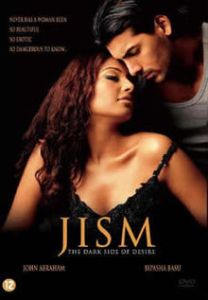
Jism (2003, Amit Saxena) was an erotic thriller. Obsession with the pleasures of the flesh and greed for wealth eventually drive the main protagonists towards a tragic end.
The very mention of their names immediately brings to our mind the evergreen super-hit song ‘Zindagi ek safar hai suhana…’ from the film ANDAZ. From the opening prelude to the yodelling to the fast-paced beats – everything about the song became unforgettable! Added to that superstar Rajesh Khanna’s charismatic screen presence turned this song not only into one of the most loved songs of Hindi cinema but also became one of the biggest hits of the careers of Rajesh Khanna, Kishore Kumar and Shankar-Jaikishen.
ANDAZ (1971): ‘Zindagi ek safar hai suhana…’
Shankar-Jaikishen (SJ): The music director duo who revolutionized the very definition of Hindi film music with their path-breaking music and tunes…
Kishore Kumar: The genius actor-singer who created his own path and carved a place in the Hindi film music scene which people cannot even dream of achieving…
By Sharada Iyer Fifty years ago it was on 26th April 1968 that this superbly directed and thoroughly entertaining evergreen musical Brahmachari released and went on to become a runaway hit at the box-office! The film won six prestigious Filmfare awards that year: Best Film of the Year Best Actor: Shammi Kapoor Best Screenplay: Sachin Bhowmick Best Music: Shankar-Jaikishen Best Male Playback Singer: Mohammed Rafi (‘Dil ke jharoke mein tujhko bithakar…’) Best Lyricist: Shailendra (‘Main gaoon tum so jao…’ ) Nominations: Best Director: Bhappi Sonie Best Lyricist: Hasrat Jaipuri (‘Dil ke jharoke mein tujhko bithakar…’) Best Male Playback Singer: Mohammed Rafi (‘Main gaoon tum so jao…’) Today on the occasion of its golden anniversary let us take a trip down memory lane to recollect some of its glorious moments… To begin with, the film ranks high on…
The very mention of Naushad’s name brings to our mind this genius composer’s heartfelt and melodious compositions steeped in Indian ethos and transports us to a magical era when music reigned supreme in our films and meaningful lyrics added beauty to these tunes. Naushad had tremendous knowledge of Indian classical music and could play several musical instruments and to him goes the credit of pioneering a unique style by bringing Indian classical ‘ragas’ into popular film music. He also added a touch of folk music to his songs and being a poet himself always gave importance to lyrics. All these gave his songs a unique edge and set him apart from his contemporaries.
ACCOLADES
(Image source:Internet)
He was also the proud recipient of one of the highest civilian honours bestowed by our country Padma Bhushan and the recipient of the highest award for contribution to Indian cinema-
The very mention of Naushad’s name brings to our mind this genius composer’s heartfelt and melodious compositions steeped in Indian ethos and transports us to a magical era when music reigned supreme in our films and meaningful lyrics added beauty to these tunes. Naushad had tremendous knowledge of Indian classical music and could play several musical instruments and to him goes the credit of pioneering a unique style wherein he brought Indian classical ragas into popular film music. He also added a touch of folk music to his songs and being a poet himself always gave importance to lyrics. All these gave his songs a unique edge and set him apart from his contemporaries.
Indeed success comes only to those who are truly passionate about their goal and are ready to face any obstacle in their path. And success certainly did not come easy to Naushad as…







 ashokbhatia