Feeds:
Posts
Comments

Posts Tagged ‘Book’

Most of the management events we get enticed to attend are very much alike. Somebody gets up and introduces the chair person and the speaker of the evening. Then, the chair person mumbles a few words designed to cheer up the speaker. The speaker of the evening then goes on to describe at great length what he thinks of the scandalous manner in which private sector managements behave or exposes the inefficient goings-on in the public sector.

The hapless soul tasked to chair the session makes sympathetic observations about the subject at hand. He makes brief notes in a studious manner. Later, he uses these to wrap up the proceedings as quickly as norms of society, dictates of behavioural sciences and standards of politeness would allow.

The speaker of the evening is invariably dressed in an impeccable corporate style. This is merely to mask the inner shivering he experiences at the prospect of facing a firing squad. Externally, he exudes confidence. Internally, he is all of a twitter. Unfortunately, many speakers are blissfully unaware of the technique of public speaking unwittingly perfected by Gussie Fink Nottle of P G Wodehouse fame – that of getting adequately braced with generous helpings of a strong tissue restorative prior to delivering a speech.

While he tries his best to convey some serious messages to the unsuspecting audience, he also attempts to induct some humour into the otherwise listless and sombre proceedings. This helps him to sugar-coat his dull message to the unsuspecting audience.

The audience upon which the speaker’s verbosity is unleashed listens in a state of polite resignation, often suppressing a yawn or two. With an eye on the wrist watch and a nose trying to detect the faint aroma of snacks and coffee being served outside the lecture hall, they bide their time, hoping for the ordeal to end soon.

From time to time, some members in the audience rise and ask carefully rehearsed questions, which get answered fully and satisfactorily by the speaker. Often, when a question gets asked in the pure spirit of proving to the assembled group that the questioner is smarter than the questioned, the latter either ignores him, or says haughtily that he can find him arguments but cannot find him brains. Or, occasionally, when the question is an easy one, he answers it.

When the discussion gets out of hand, and the speaker is found to be twiddling his thumbs, the chair person rushes in to conclude the affair, thereby bringing joy and relief all around.

The speaker is delighted that he has been rescued just in time and looks upon the chair much like a typhoon survivor would look upon the US marines when they arrive to rescue him from a disastrous situation.

The audience is happy that the trauma is finally over. They look forward to grabbing the vitamins laid outside the hall, so as to keep their body and souls together and also to overcome the state of depression induced by the presentation.

The organisers breathe easy, having saved their furniture and other items from any damage. Someone from their side quickly offers a vote of thanks to all and sundry, lest the speaker change his mind and go on to bore the audience any further.

A smoothly conducted management meeting is one of our civilization’s most delightful indoor games. When the meeting turns boisterous, the audience has more fun, but the speaker a good deal less.

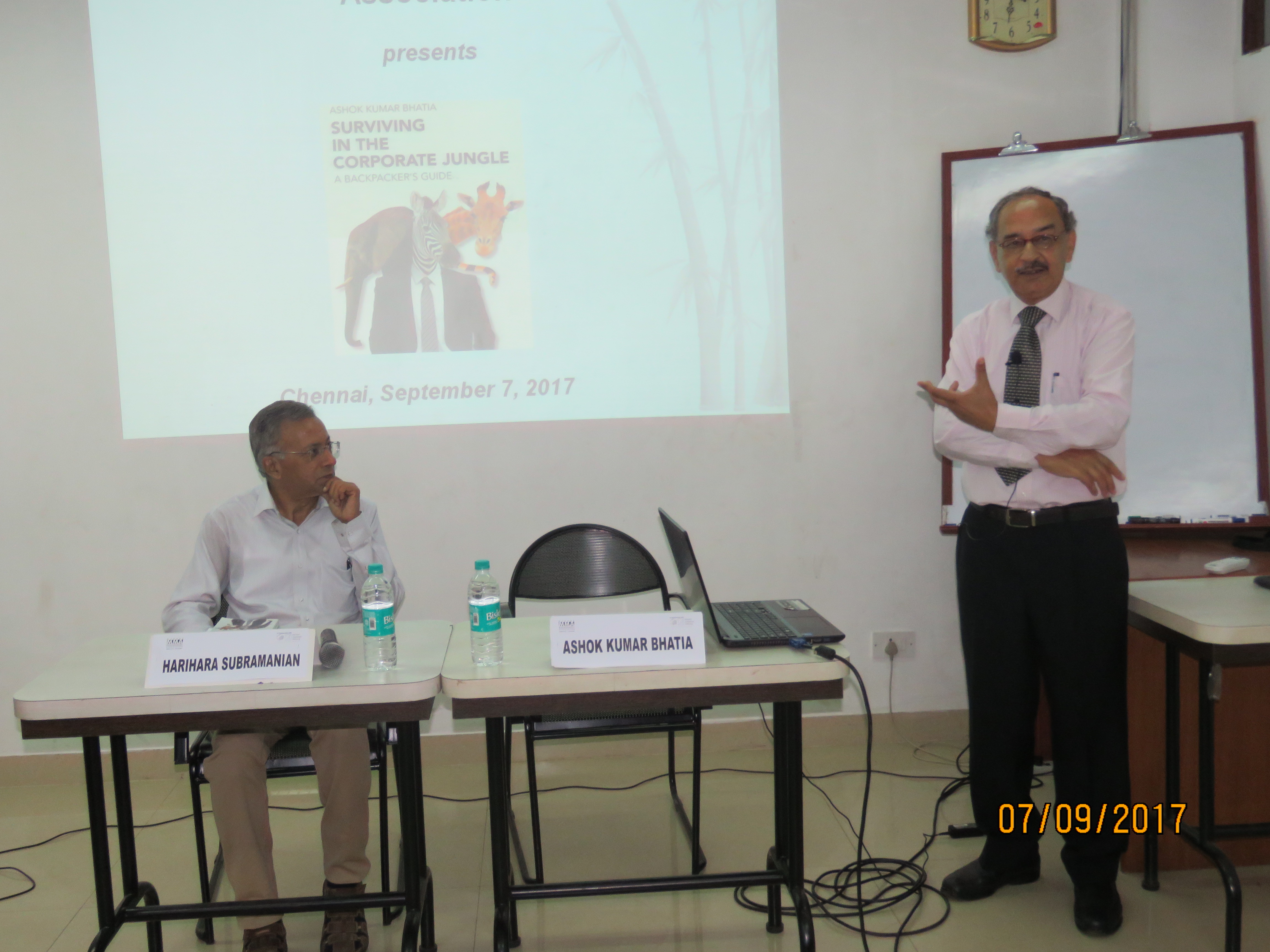
The book presentation session at Madras Management Association recently was true to form in more ways than one. Save and except for the following:

– Being chaired by an exceptional business person who is practising the art of true social responsibility.

– The presentation of some portions of the book was more of an interactive session which never tended to be boisterous.

– There was a singular absence of any rehearsed questions from the audience.

The session had attracted around forty odd souls who suffered the trauma of listening to yours truly and others for about forty minutes or so. Perhaps Einstein’s Theory of Relativity kicked in and these forty minutes felt like forty hours to them, because when it was time for the Q and A, they pounced on an inwardly shuddering yours truly with much glee.

As luck would have it, much light was generated in the discussion that followed the brief presentation. The heat generated was perceptibly less; thus, no fire alarms went off in the lecture hall. The brainy coves assembled for the evening proved their mettle by coming up with astute observations and insightful comments. An enlightened soul in the audience even went on to enquire as to what precisely is meant by Spiritual Quotient, and what could be done to shore it up.

Leadership styles got discussed. Tips on managing Lion Bosses got shared. Dignity of women at workplace came in for a mention. The delicate art of dishing out selective favours to those who really deserve support was brooded upon. Several other topics of contemporary interest were discussed, including the recent boardroom battles which played out at Infosys and at Tata House.

One is grateful to Madras Management Association for having provided this opportunity to share one’s thoughts with their brainy members and honourable invitees.

(Related Post: https://ashokbhatia.wordpress.com/2017/07/31/a-tale-of-two-countries-and-a-book-launch)

Read Full Post »
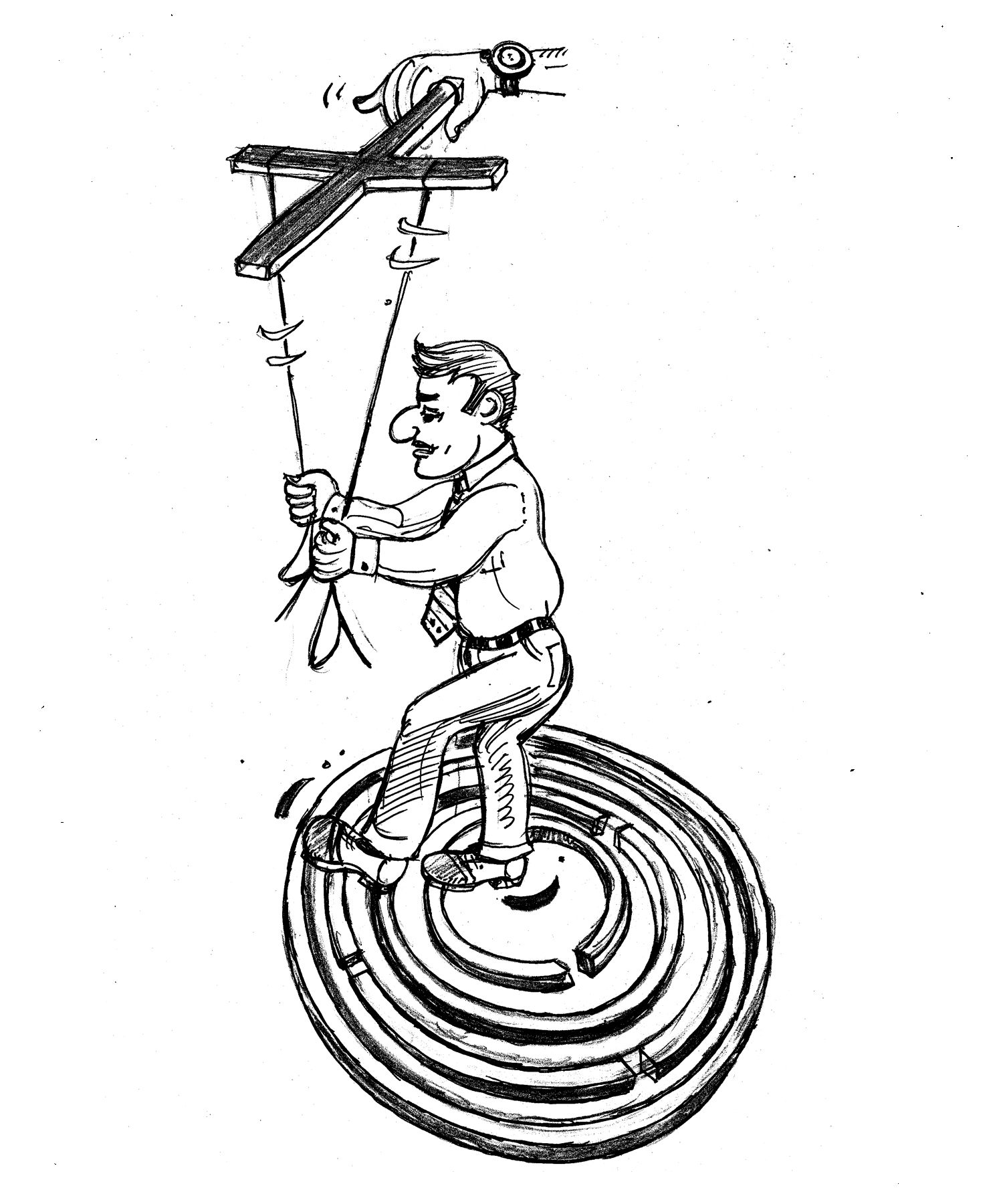
There are Lion King bosses who epitomize terror at the work place. Insulting and demeaning you is second nature to them. As long as the task is in your hands, it would be top priority; once it reaches their own desk, you may not hear of it for the next two months. Some of them have agricultural inclinations – a suggestion made by you would get rejected with much fanfare, in full public view; after six months, it would sprout as ‘their’ idea and get marketed to the top brass.

Fight or flight? If you are sure of your ground and stand up to them once in a while, heavens will not fall. You could end up dealing with a less aggressive boss in the days to follow. The flight option gets linked to the status of the industry as well as your own Unique Selling Proposition in the job market.

When under such a boss, bide your time and hope for a better planetary configuration to emerge in the days to come. Or, quietly work through the grapevine to have alternate relationships and collaborations within the company, so the immediate boss’ sins get exposed to others who might be able to do something about it.

(Excerpt from my book ‘Surviving in the Corporate Jungle’, the English version of which was released recently. The Portuguese version of the excerpt follows.)

Read Full Post »

Teams

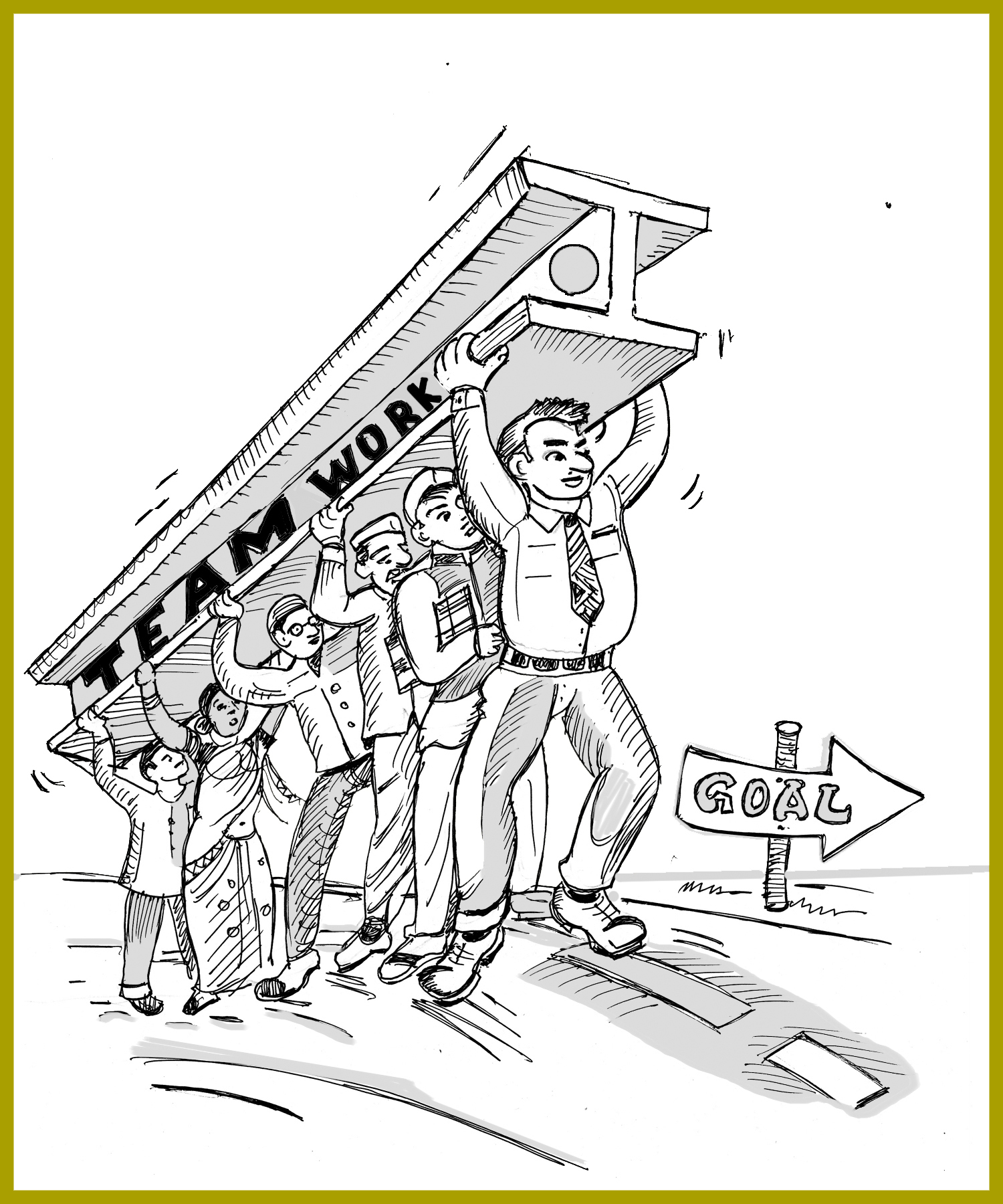
For cross-functional tasks to be carried out, build teams with due care. Let your team have like-minded people as well as a minority of likely dissidents who will ensure the team does not go off track.

Hunters have practised this art since the beginning of our civilization.

(Excerpt from my book ‘Surviving in the Corporate Jungle’, the English version of which was released recently. The Portuguese version of the excerpt follows.)


EQUIPAS

Para que as tarefas multifuncionais possam ser realizadas, deverá constituir as equipas com todo o cuidado. Assegure que na sua equipa há pessoas que pensam da mesma forma, mas também alguns tendencionais dissidentes que irão garantir que a equipa se mantém no bom caminho.

Os caçadores praticam esta arte desde o início da nossa civilização.

(This is how you can lay your hands on the Portuguese version of the book, launched in Portugal during March, 2016.)


Read Full Post »

Pressure is an ‘external’ stimulus. Stress is what ‘we’ experience. The level of stress we experience therefore is directly proportional to the pressure we receive. The good news is that stress is inversely proportional to our inner strength and resilience.

Since each individual is uniquely configured, the response of each person to the same level of pressure would be different. Some would take it lightly and focus on the action at hand, thereby improving their chances of a better and quicker delivery of results. Others would take it seriously, and jeopardize their own achievements and career. Those who are ever-anxious and have an ‘A’ type personality would invariably experience more stress than those who are the happy-go-lucky ‘B’ types.

Stress experienced by a professional is also a function of time. The psychological condition varies with time and also plays a role.

To sum up, a mathematical formulation for stress could qualitatively be along the following lines:

stress

Distress can be handled positively. Art of creative dissatisfaction, loosening up and letting go, a habit of forgiveness, a dash of humour, and meditation can help.

A little bit of stress is good for a professional’s health and output. Thanks to Richard Lazarus and Hans Selye, we understand the distinction between ‘eustress’ and ‘distress’!

(Excerpt from my book ‘Surviving in the Corporate Jungle’, the English version of which was released recently. The Portuguese version of the excerpt follows.)


STRESS

A pressão é um estímulo “externo”. O stress é o que “nós” sentimos. O nível de stress que sentimos, portanto, é diretamente proporcional à pressão que recebemos. A boa notícia é que o stresse é inversamente proporcional à nossa
força interior e resiliência.

Como cada indivíduo tem uma configuração única, a resposta de cada um ao mesmo nível de pressão será diferente. Alguns conseguem aceitar a pressão de ânimo leve, concentrando-se naquilo que estão a fazer e aumentando, assim, as suas probabilidades de uma execução mais rápida e com melhores resultados. Outros levam a pressão demasiado a sério, pondo em perigo as suas próprias realizações e carreira. Aqueles que estão sempre ansiosos e têm uma personalidade do tipo A sofrem invariavelmente de mais stresse do que os ‘deixa-andar’ do tipo B.

O stress que um profissional sente é também uma função do tempo. A condição psicológica varia com o tempo e também desempenha um papel.

É possível lidar com a angústia de forma positiva. A arte da insatisfação criativa, soltar-se e deixar andar, o hábito de perdoar, uma pitada de humor e meditação, tudo isso pode ajudar.

Um pouco de stress é bom para a saúde e para os resultados de um profissional.  Graças a Richard Lazarus e Hans Selye, sabemos distiguir o ‘eustress’ (stress bom) do ‘distress’ (stress mau)!

(This is how you can lay your hands on the Portuguese version of the book, launched in Portugal during March, 2016.)

Read Full Post »

Chief Executive Officers and  top honchos should retire themselves every five to six years. This would ensure some sanity in the operations of the company. As to lesser mortals, there is no point in clinging to their seats of power till ill health (or worse, death) comes knocking on the door.

Life is much bigger and brighter than work. The many shades of life which remain to be explored after retirement include simple joys – spending exclusive time with one’s spouse, putting life in the reverse gear by playing with grandchildren, taking up hobbies neglected for years, and fulfilling other desires which had merely remained benign intentions all those years.

(Excerpt from my book ‘Surviving in the Corporate Jungle’, the English version of which was released recently. The Portuguese version of the excerpt follows.)


REFORMA

Os Diretores Executivos e os manda-chuvas devem reformar-se ao fim de 5 ou 6 anos. Com isso garantem alguma sanidade às operações da empresa. Quanto aos simples mortais, não há nenhuma vantagem em manterem-se agarrados aos seus lugares de poder até que os problemas de saúde (ou, pior, a morte) lhes venham bater à porta.

A vida é muito maior e mais interessante do que o trabalho. Entre as muitas nuances da vida que continuam a ser exploradas após a reforma estão as alegrias simples – passar mais tempo com o cônjuge, fazer marcha-atrás e brincar com os netos, dedicar-se a passatempos que foram negligenciados
durante anos e cumprir outros desejos que nunca passaram.

(This is how you can lay your hands on the Portuguese version of the book, launched in Portugal during March, 2016.)

Read Full Post »

Quality

Hire a quality expert who is practical and does not live in an ivory tower, or else your billings may nosedive and your entire manufacturing team may end up doing only rework.

In the services sector, quality invariably means an extension of the core job being done. A shipping agent who keeps you updated of the status of a shipment at all times is a delight to work with; so is a dentist who sends you a discreet short message reminding you of your appointment that evening!

To quote Dr. Laurence J Peter and Raymond Hull: ‘…man cannot achieve his greatest fulfilment through seeking quantity for quantity’s sake; he will achieve it through improving the quality of life, in other words, through avoiding life-incompetence’.

(Excerpt from my book ‘Surviving in the Corporate Jungle’, the English version of which was released recently. The Portuguese version of the excerpt follows.)

QUALIDADE

Contrate um especialista em qualidade que seja pragmático e não viva numa torre de marfim; caso contrário, a sua faturação poderá cair a pique e toda a equipa de produção pode acabar a retrabalhar produtos e nada mais.

No setor dos serviços, a qualidade significa sempre uma extensão do trabalho principal que é feito. É um prazer trabalhar com uma transportadora que o mantém a todo o momento a par do estado de uma encomenda; tal como com
um dentista que lhe envia uma mensagem breve e discreta a lembrar-lhe que tem consulta nesse dia!

Para citar o Dr. Laurence J. Peter e Raymond Hull: “…um homem nunca estará realizado se procurar a quantidade por si só; realizar-se-á através da melhoria da qualidade de vida, ou seja, evitando as incompetências da vida”.

(This is how you can lay your hands on the Portuguese version of the book, launched in Portugal during March, 2016.)

Read Full Post »

Good public relations could keep your business image bright and shining. With the advent of the Internet, it has become easier to be in the public eye. To ensure you remain so for the right reasons depends upon the quality of product/service on offer, the manner in which either customer complaints or labour issues are handled, and your corporate governance record.

In a large complex business, you may need to hire an expert to handle your public relations. Check the guy’s credentials and sign him on for a maximum period of two years at a time. Better still, get one of the smart secretaries to handle it in-house.

Read Full Post »

An effective tool in the management’s arsenal to reward and motivate guys who excel in their jobs.

There are two key challenges faced in case of promotions:

  1. Pressure for time-bound promotions

Everyone expects to get promoted after having slogged it out at a given level in the organization for a few years. The reason you find most organizations top-heavy today is because the management twenty years back did not pay attention to managing the aspirations of its people and instead went along with the philosophy of time-based promotions!

  1. Managing is different

Doing a job yourself is one thing. Getting it done through others is a different ball game altogether. To be a good manager, one needs to be a leader, bestowed with skills in team building, communication, delegation, and supervision. Often, two-thirds of the promotions in corporates are based on incumbents putting in an impressive show in their present role. Once promoted, the incumbent is left twiddling his thumbs, trying to figure out how to manage the same activity through others.

The solution possibly lies in building up a culture which rewards good performance but does not overlook the projected managerial talent of the promotee. Job rotation, counselling, and job enrichment are some of the tools which a wise Human Resource guy may use to manage the majority which deems a promotion as its birth-right, based only on the fourth dimension of our universe – time!

A populist approach like resorting to time-based promotions can also be practised, provided there is an aggressive scheme in place to enforce employee separations as well, that too in a time-bound manner!

(Excerpt from my book ‘Surviving in the Corporate Jungle’, the English version of which was released recently. The Portuguese version of the excerpt follows.)

PROMOÇÕES

Uma ferramenta eficaz no arsenal de gestão para premiar e motivar os indivíduos que se destacam nas suas funções.

As promoções levantam sobretudo duas dificuldades:

1. Pressão para ser promovido dentro de um determinado limite de tempo

Qualquer um espera vir a ser promovido depois de se ter arrastado num determinado nível da organização durante vários anos. A razão por que a maioria das organizações hoje em dia são tão pesadas é porque há  vinte anos as chefias não souberam gerir as aspirações dos seus subordinados e deixaram-se levar pela filosofia das promoções baseadas no tempo!

2. Ser chefe é diferente

Uma pessoa fazer um trabalho ela própria é uma coisa. Fazer com que esse trabalho seja feito por outros é uma coisa completamente diferente. Para ser um bom chefe, é preciso ser um líder, dotado de competênciasde
coordenação de equipas, comunicação, delegação e supervisão. Muitas vezes, dois terços das promoções das empresas baseiam-se no facto dos candidatos à
promoção ressaltarem de forma impressionante as suas funções atuais. Uma vez conseguida a promoção, o promovido fica a girar os polegares, a tentar descobrir como realizar as mesmas funções através dos outros.

A solução passa, possivelmente, por estabelecer uma cultura empresarial que recompense o bom desempenho, mas sem negligenciar o potencial talento de gestão dos promovidos. A rotação no trabalho, o aconselhamento e o enriquecimento das funções são algumas das ferramentas que um Diretor de Recursos Humanos sábio poderá usar para gerir a maioria dos colaboradores que estão convencidos que a promoção é um direito que lhes assiste desde
a nascença, com base apenas na quarta dimensão do nosso universo – o tempo!

Uma abordagem populista que recorra a promoções baseadas no tempo também pode ser praticada, desde que esteja igualmente implementado um sistema agressivo que permita distinguir os colaboradores, também de forma
limitada no tempo!

(This is how you can lay your hands on the Portuguese version of the book, launched in Portugal during March, 2016.)

Read Full Post »

packages

Packages are negotiable only at the entry stage; later on, they tend to lose their elasticity!

Bear in mind that packages are not necessarily related to the innate worth of an incumbent. These have more to do with the company’s corporate ego (read brand value), and also the comfort levels offered. Companies offering high-pressure assignments in high-entropy business environments tend to be more liberal with the packages they offer.

The rate of growth of packages outside the company would always be better than the jumps you get in-house. If you are willing to challenge yourself and move out of your present comfort zone, do not grumble for long; find another exciting opportunity and move on!

As postulated by the Motivation-Hygiene Theory of Herzberg, packages fall in the Hygiene category of rewards. To use a medical analogy, their presence does not necessarily make a person healthier; on the contrary, their absence can cause deterioration in health.

To put it simply, when it comes to individual motivation levels, packages have a rather short shelf life.

When it comes to chucking out the deadwood, organizations could come up with innovative severance packages!

(Excerpt from my book ‘Surviving in the Corporate Jungle’, the English version of which was released recently.)

Read Full Post »

All ideas which sound revolutionary from a new incumbent fade exponentially over a period of time. The incumbent himself gets bored and a sense of fatalism sets in. A smart incumbent would call it quits before he reaches this state of vegetation.

Seniors who decide to overstay their welcome run the risk of being derided and hounded out. They do a great disservice to the organization and also end up lowering the morale of their would-be-successors who have to wait interminably for getting a shot at occupying the throne in the corner office.

A tired and exhausted lion can no longer afford to cling to his seat of power.

(Excerpt from my book ‘Surviving in the Corporate Jungle’, the English version of which was released recently. The Portuguese version of the excerpt follows.)


Read Full Post »

« Newer Posts - Older Posts »