Those who happen to know me personally are often deceived by my polite manners. They often wonder as to why I never opted for a diplomatic career.
Allow me to set the record straight. P G Wodehouse played some role in indicating that my Guardian Angels had planned my life much unlike that of Eustace Mulliner, who was a part of the British Embassy in Switzerland.
Jeeves’ psychology-of-an-individual factor has also led me to believe that the diplomatic corps on this planet are better off without me.
My limited intuitive faculties also tell me that life as a career diplomat could not be as glamorous and hunky dory as it might appear to be from the outside of an embassy building.
The Eustace Mulliner saga

Wodehouse fans might recall that the splendid idea of Eustace Mulliner joining the British Embassy in Switzerland was dangled before him by his godfather, Lord Knubble of Knopp. Eustace had stoutly refused to avail himself of the offer.
However, things turned out differently when he was caught misbehaving with Francis, a feline creature which was a favourite of his Aunt Georgiana. At the time, two more characters had popped up, taking a jaundiced view of the proceedings. His obduracy evaporated. He decided that Switzerland was a safer country to be in.
Unlike Eustace Mulliner, my Guardian Angels had planned my life along different lines.
One, I never fancied maintaining a ‘Open House’ for pets of all kinds.
Two, Fate never bestowed upon me a girl friend, that too someone like Marcella Tyrrwhitt, who would take the risk of entrusting her favourite Peke and her canary to me while going off to Paris on a brief sojourn.
Three, I have never had the privilege of having a wealthy aunt who might have taken offence at my throwing cucumber sandwiches at her cat.
Four, never have I come across an ardent animal lover like Orlando Wotherspoon, the perennial Vice President of the Dumb Chums’ League, who would threaten to thrash me within an inch of my life.
Nor have I had the privilege of coming across a girl friend who had Spanish blood in her; someone who would have liked to whack me with the heaviest parasol she could lay her hands on, the provocation being her discovery that a favourite Peke of hers had been gifted by me to one Beatrice Watterson. Those who have followed the ruminations of Mr Mulliner (Mulliner Nights, Open House) would recall that Eustace, upon joining the British Embassy in Switzerland, had stuck to his duties with unremitting energy.
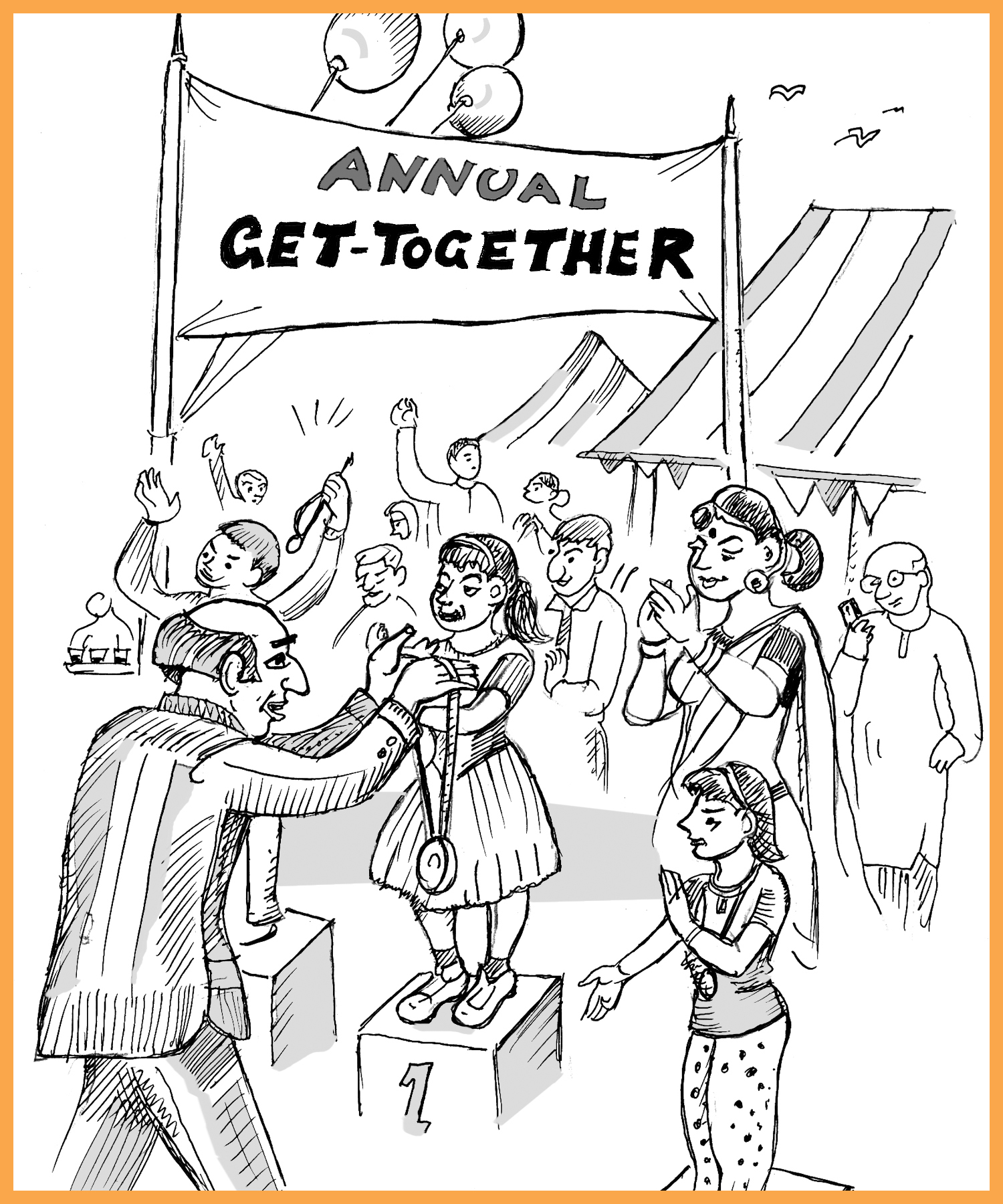
‘So much so that, he had been awarded the Order of the Crimson Edelweiss, Third Class, with crossed cuckoo-clocks, carrying with it the right to yodel in the presence of the Vice-President.’
One might miss the rights to yodel in the presence of the high and mighty, but life has been kind to me in so many other ways.
The psychology of the individual
Jeeves would have surely approved of my keeping away from a diplomatic career. I am certain that several diplomatic disasters and gaffes have thus been avoided, saving our planet from a more uncertain future. August bodies such as the United Nations surely breathe easier.
The simpleton that I am, a career in diplomacy would have tested my reserves of patience to the hilt. Putting on a plastic smile, when necessary, would have tried my nerves no end. A Bollywood producer, had he cast me as a lead actor for one of his inane movies, would have cried all the way to his bank. Having to make inane conversations with perfect strangers on topics which are alien to the restricted domain of my knowledge would have left my soul in perennial torment.
To a lay person, the life of a career diplomat might sound flashy and exciting. Rubbing shoulders with world leaders. Travelling to exotic locales. Devouring Anatole-ish spreads. Attending conferences and banquets. Making clever speeches which get received with a thunderous applause and, possibly, even a standing ovation.
But it is not too difficult to surmise the harsh realities of a diplomatic life. These pose many challenges of a managerial kind.
Of diplomats and their career blues
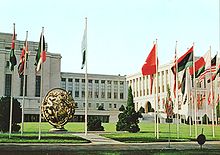
Maintaining cordial international relations in our turbulent times would be no mean task. The dignity and the image of the home country needs to be upheld. Culture, heritage and values need to be showcased. Cultural nuances of the land where they happen to be posted need to be understood and rigorously followed.
Besides negotiating and facilitating treaties, opportunities for trade promotion and closer collaboration have to be exploited to the hilt. An eye has to be kept open for business opportunities between the two countries. Unique strengths of the home country have to be showcased. Stakeholders of diverse hues, shapes, sizes and temperaments have to be kept in a positive frame of mind. Political masters have to be kept in good humour. Business barons snapping at their heels have to be kept at bay.
Meetings, conferences and banquets have to be attended. Impeccable sartorial standards have to be maintained, showcasing their home country while keeping the local sensibilities in mind. Consular services have to be dished out with courtesy, transparency and efficiency.
Morale of the staff has to be upheld at all times. Resistance to change needs to be overcome. Maslow’s hierarchy of needs has to be understood and applied in all cases. Career priorities invariably take precedence over personal matters.
The harsh slings and arrows of fate do not stop with such mighty challenges. Once in a blue moon, some odd requests have to be granted. Interviews by a bunch of giggly communication students may need to be granted. Inquisitive media journalists desperately searching for some exciting sound bites may have to be tolerated.
Lay citizens of a distant country could pop up, wanting to present a book authored by them on a subject which sounds like Latin and Greek, simply because the book was launched back home, in the home language.
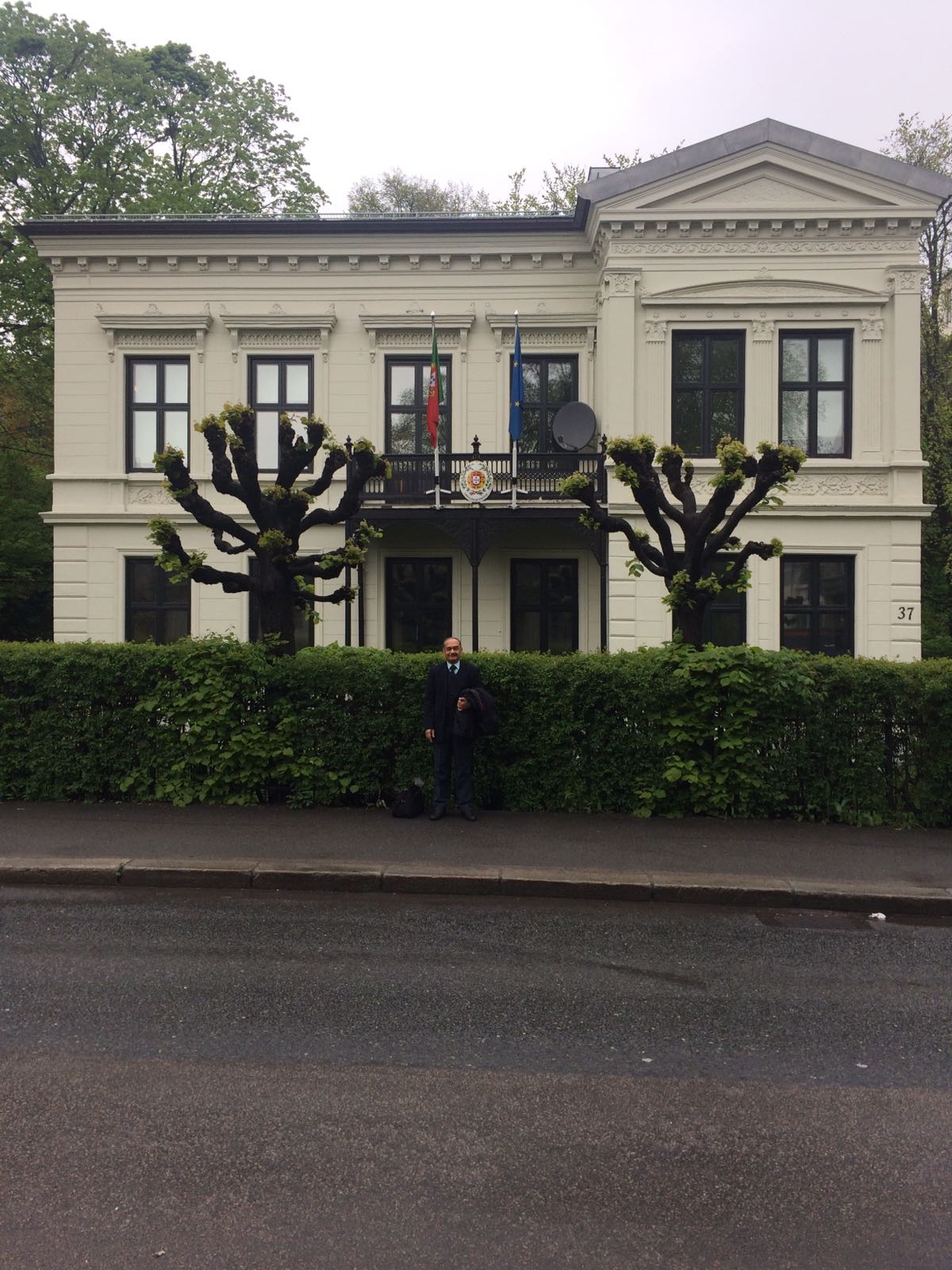
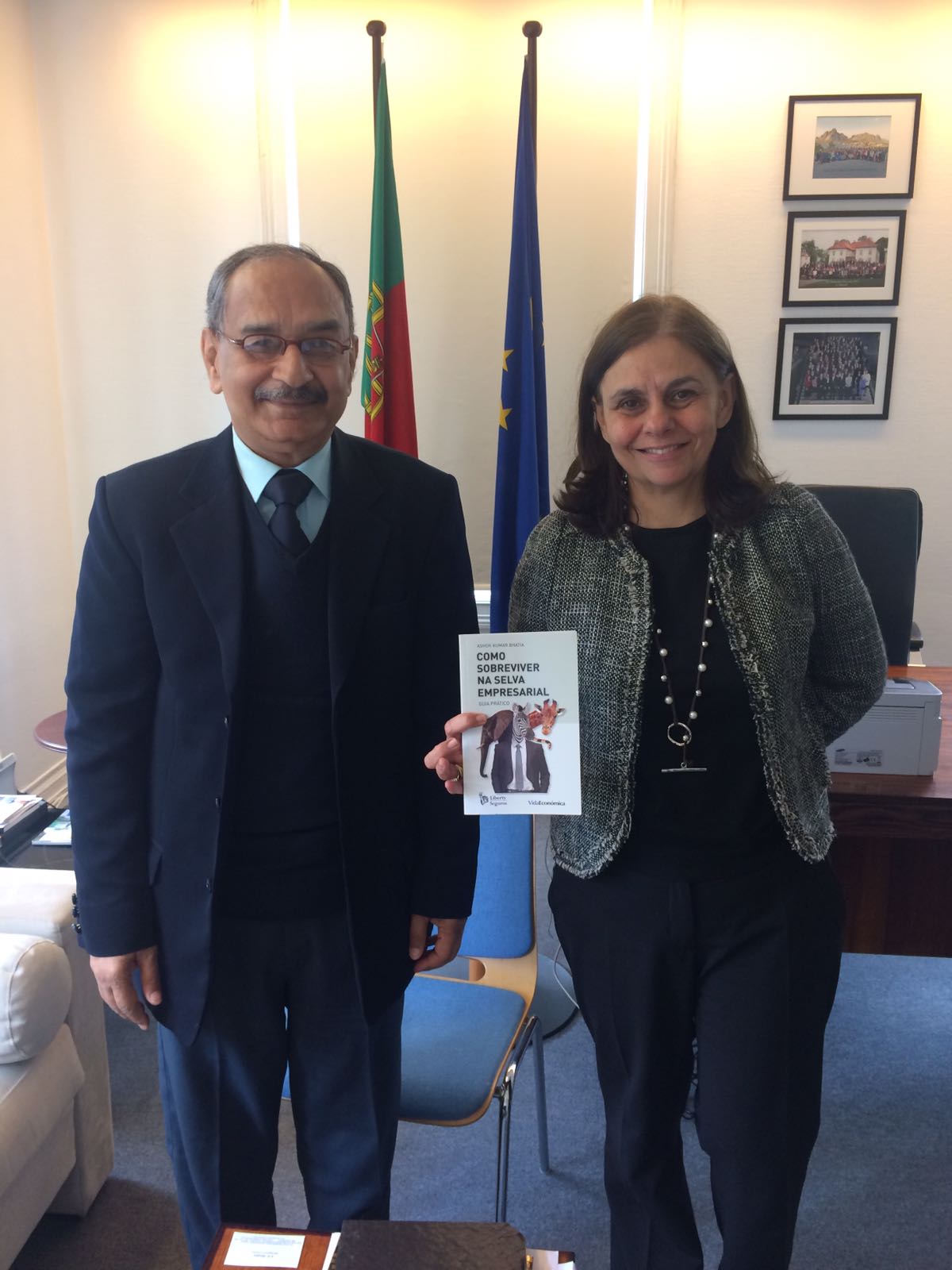
The last mentioned was the fate suffered recently by two senior members of the international diplomatic corps, when I popped up in flesh and blood to present to them a copy of my book ‘Como Sobreviver Na Selva Empresarial’.
It was kind of them to have granted me an audience. Like many a harsh slings and arrows of Fate coming their way, they took it very sportingly, thereby shoring up the image of their country in the feeble mind of a lesser mortal from one of the emerging economies of the world.
Bertie Wooster would have heartily approved of their chin up attitude. So would have Eustace Mulliner.
As to my not having gravitated towards a diplomatic career myself, Jeeves would have surely approved.

Thank you, Plum!
(Related Posts:
https://ashokbhatia.wordpress.com/2017/05/30/a-meeting-with-the-ambassador-of-portugal-in-norway
https://ashokbhatia.wordpress.com/2017/06/21/a-meeting-with-the-minister-counsellor-of-portugal-in-switzerland)
Read Full Post »










 ashokbhatia