So, you think that P G Wodehouse is only about farcical butlers, upper-class twits, domineering aunts, goofy females, rogue kids, dogs with supercilious gazes, cats that wear snootiness on their sleeves, horses that are fond of cats, and pigs which need their daily quota of 57,800 calories?
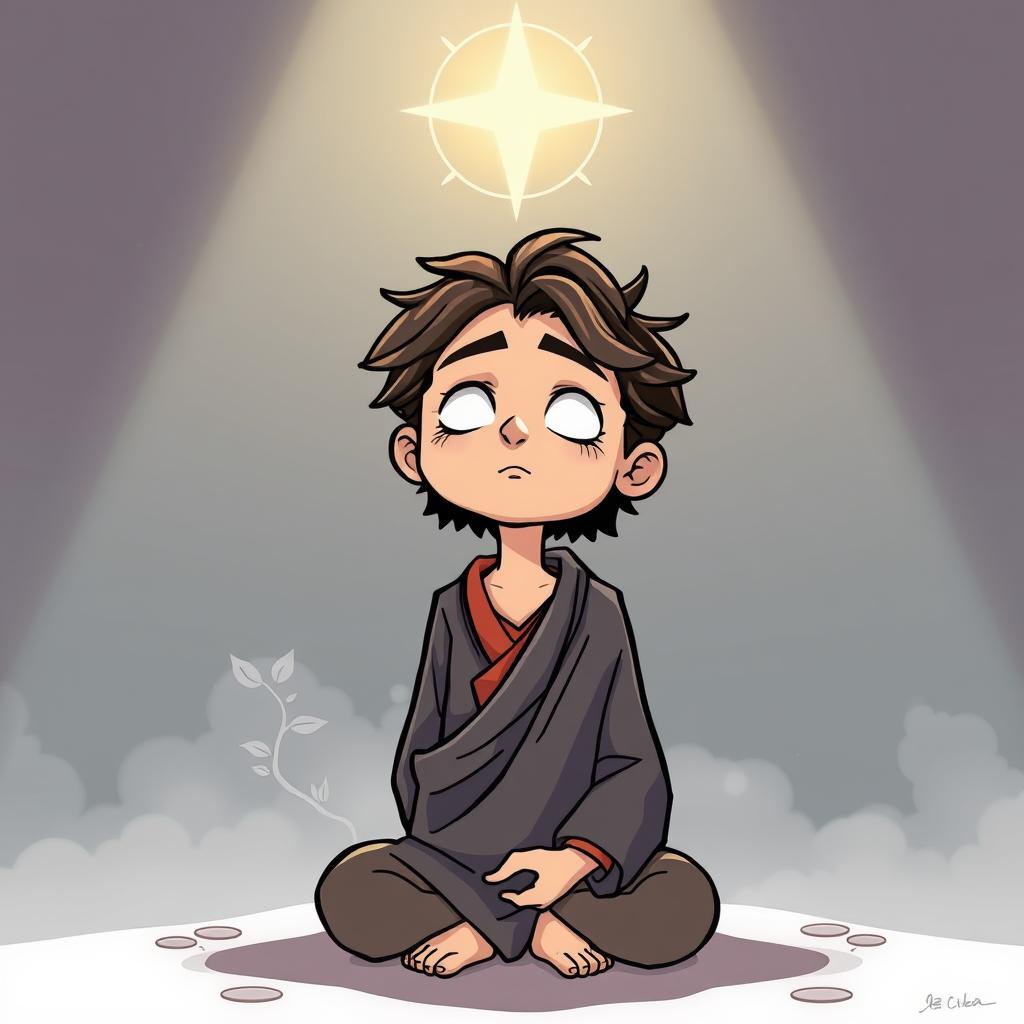
Think again, I would say! For, deep within the juicy narratives dished out by the Master Humourist of our times lie buried many lessons of a spiritual kind. These are latent nuggets of wisdom that, if adopted, could enable one to lead a spirited life, facing its ups and downs with a jaunty sang froid.
Baffled, bewildered, confounded, confused, flummoxed, mystified, perplexed, and puzzled?
Allow me to elucidate.
A Journey of Self-Discovery: Embracing the ‘Me First’ Mindset
Any spiritual quest begins with an inner journey of self-discovery. Like Bertie Wooster, one has to be a keen observer of the inner workings of one’s mindset. One should know when to slide down a pipe and when to board a cruise ship to avoid an impending encounter of an unpleasant kind. Self-preservation serves one well. To put it simply, one must have a ‘Me First’ approach to life.
Take my own case. Well, I must say, I happen to be a prime candidate for the “Me First” award, if ever one is instituted by the concerned authorities. You see, I’ve got this knack of putting my own pleasure and happiness on the pedestal, leaving others hanging like a wet sock in the wind.
It’s like that old saying about chasing the rainbow – the closer you get, the further it slips away. So, here I am, with my long face like a dropped pie, whinging about my sorry lot in life. And let me tell you, it’s not a pretty sight.
If I were watching myself on the telly, I’d hand that grumpy old git the remote control and tell him to skip to the next channel, pronto! Because, my friends, a moaner, and a whinger, is about as popular as a caterpillar discovered at the bottom of a bowl of salad.
My dears, we humans are like archers, shooting our arrows of hope into the void, never sure if they’ll hit their mark. I’ve tried everything under the sun, from meditation to listening to hot-air speeches. And let me tell you, spirituality is a tough nut to crack. It’s like trying to peel a banana with oven mitts!

Finding Light in the Darkest Moments: Unravelling the Tapestry of Adversity
Now, I know this is the path to freedom from my woes, but here’s the rub: I can’t seem to figure out the ‘how-to’ manual. It’s like trying to find Waldo in a crowd of walruses. Frustrating, isn’t it? But fear not, for I’m blessed with nerves of chilled steel and am not one to give up easily. I continue my quest, armed with a magnifying glass that remains duly focused on the works of the Master.
My dear compatriots, the pursuit of spirituality proved to be a meandering journey through the labyrinth of existence, a perplexing conundrum that tested the limits of my mortal soul. Alas, in the face of such a formidable challenge, we resilient humans are wont to seek out solutions that may not blaze a trail to perfection, but rather offer a semblance of respite in the stormy seas of life.
As fortune would have it, amidst my quest for spiritual enlightenment, I stumbled upon a veritable treasure trove – the timeless works of Sir Pelham Grenville Wodehouse. Ah, the sheer delight and solace that his writings brought to my weary heart in times of dire need! My lineage, bless their souls, had been perusing his literary masterpieces for generations, paving the way for my own delectable encounter with this literary luminary.
One of the things that captivates me most was the uncanny comportment of Wodehouse’s characters in the face of adversity. Take for instance the indomitable Psmith in “Psmith Journalist”, who maintains an air of nonchalance even when confronted by kidnappers.
Such a profound sense of detachment amidst chaos brings to mind the teachings of the Bhagavad Gita, does it not? Indeed, could we not consider this delightful escapade into the world of Wodehouse as a form of modern-day spirituality? My friends, the parallels are as intriguing as they are enlightening.
The Perks of Forgetfulness and Living in the Present
Ah, Lord Emsworth! A man with an asset so heart-warming that it could melt the frigid polar ice caps – forgetfulness, leading to a habit of living in the present!
In the annals of history, great minds have extolled the virtues of forgetting. Our scriptures enjoin us to live in the present. It’s like dusting off the cobwebs in your attic – why cling to the dusty remnants of the past when you could embrace the sparkling potential of the future?
Lord Emsworth’s forgetfulness is a veritable cornucopia of blessings. It allows him to shed the heavy cloak of past grievances, like an absent-minded hiker shedding a backpack filled with regrets. And behold, he emerges anew, lighter, brighter, and infinitely more lovable to those who grace his presence.
Perhaps the saints of yore sought solace in this blessed amnesia, freeing their spirits to soar among the celestial heights. For in forgetting, we find not only liberation from the shackles of the past but also an uncanny ability to charm the socks off those around us. Thoughts of future encounters with a belligerent sister never fill us with a sense of dread.
In the realm of the spirit, or that which offers me a sense of tranquillity, I find that Wodehouse has bestowed upon me a profound lesson. Lord Emsworth stands as a beacon of hope in this respect. His forgetfulness of past events allows him to embrace the present with an unencumbered mind. Unburdened by the weight of memory, he revels in his solitude, finding pleasure in his own company. As Plum so aptly puts it,
‘Lord Emsworth sat and smoked, and sipped and smoked again, at peace with all the world. His mind was as nearly a blank as it is possible for the human mind to be. The hand that had not the task of holding the cigar was at rest in his trousers pocket. The fingers of it fumbled idly with a small, hard object.’
When he finds a scarab in his pocket, does he not simply conclude that it must have been gifted to him by the American millionaire? Once he starts focusing on the Empress of Blandings, does he ever worry about the pumpkin? He surely practices the delicate art of detachment, spoken of so very highly in our scriptures.
From Being a Self-doubting Thomas to an Opportunity-Grabber
In my annals of domestic disputation, I recall a particular clash with my bitter half. She, with her fervent tongue, extolled the valour of a dear friend who had summoned the intrepidity to pen a social media missive, heedless of any sinister implications. And I, rather than question her judgment, was exhorted to contemplate my own measly progress in the realm of social media.
The aftermath of this matrimonial contretemps was, as one might surmise, somewhat perplexing. I found myself in an odd state of accordance with her sentiments, heaping further ignominy upon my own head. For though my pen may have faltered, I had hitherto cherished the notion that the contemplation of others’ creations and the articulation of my own preferences constituted an inherent privilege.
Yet now, as if by some cruel twist of fate, I could conjure no words for my own use. Unlike some prodigies, blessed with an inexhaustible reservoir of ideas, I had no such celestial aid. Suffice it to say, my aspirations of literary heroism faded before my wife’s eyes, leaving me a mere buffoon engaging in a pathetic display of self-sabotage.
And as I spiralled further into this abyss of self-reproach, a voice whispered through the labyrinth of my mind, a voice I recognized from Joy in the Morning:
‘It was one of those cases where you approve the broad, general principle of an idea but can’t help being in a bit of a twitter at the prospect of putting it into practical effect. I explained this to Jeeves, and he said much the same thing had bothered Hamlet.’
Dear readers, lend an ear to these words that wrought a profound transformation within me. Like a veil lifted from my vision, I beheld the absurdity of my former self-chastisement. A chuckle escaped me, a gentle mockery of the charade that had held sway over my existence.
And so, I cast off the shackles of self-criticism and chose a path of liberation. This, my friends, is spirituality in its purest form—not a celestial embrace or mystical communion, but a triumph over the prison of my self-limiting beliefs. For, in embracing the folly of self-doubt, we find true freedom and the boundless expansiveness of the human spirit.
Though not directly akin to the realm of the spirit, dear reader, I often find solace in the words of P. G. Wodehouse’s The Small Bachelor. When the weight of life’s trials weighs heavy upon my mind, I turn to these lines, finding therein a gentle balm that soothes my troubled heart.
‘That’s the way to get on in the world – by grabbing your opportunities. Why, what’s Big Ben but a wristwatch that saw its chance and made good?’
By Jove, friends! When I hear such stirring words, my very essence is transformed. I feel a surge of vigour coursing through my veins, aided and abetted by a burning desire to embrace uncharted territories. The shackles of doubt and hesitation fall away, replaced by a boundless sense of possibility. Trust me, friends, such words are the catalyst that ignite the flame of adventure within me! So, dear readers, let us raise a toast to such characters as Lord Emsworth, the master of forgetting, Bertie, the epitome of chivalry, and Jeeves, whose sage counsel is akin to the teachings of Bhagavat Gita.

Different Facets of Life and the Transformative Power of Wodehouse
Overcoming Road Rage
Picture yourself on a bustling Monday morning as you prepare to embark on your daily pilgrimage to the office – the place where your purpose perhaps lies. You find yourself surrounded by a sea of cars, all honking impatiently, and scowling faces in desperate search of an outlet for their irritation. In that moment, your motivation wanes, the world around you darkens, and you feel like you are trapped in a never-ending episode of the Twilight Zone.
But then, like a bolt from the blue, something changes. The darkness dissipates, and you find yourself grinning in the face of this adversity when you get reminded of the following quote, all of a sudden!
‘The best method of getting to the Highfield is by the Subway. To see the Subway in its most characteristic mood one must travel on it during the rush-hour, when its patrons are packed into the carriages in one solid jam by muscular guards and policemen, shoving in a manner reminiscent of a Rugby football scrum.’
Now, as a mere neophyte in the realm of spirituality, I hesitate to delve deeper into this phenomenon. Yet I can’t help but wonder – does spirituality possess the power to transform our outlook so swiftly, like a magician pulling a rabbit out of a hat? The mysterious ways of the author P. G. Wodehouse never cease to amaze me, dear reader!
Meeting Theatrical Challenges with a Chin-up Attitude
Coming to the dreaded stage fright, my fellow thespians! When all eyes are peeled upon you, like a banana waiting to be devoured, your mind races at a million miles per second, a veritable rollercoaster of emotions. You fear deviation from the script, like a wayward sailor lost at sea. And let us not forget the dreaded missiles from the audience. No, I do not allude here to rotten potatoes, tomatoes or eggs. I mean words that can sting like bees, leaving you with a swollen performance.
In these trying times, performers seek solace in a tonic, a shot of confidence to carry them through the ordeal. And may I suggest that this tonic be none other than Plum’s following lines:
‘To an outside spectator he would have seemed rather like a very well-dressed Daniel introduced into a den of singularly irritable lions.’
Upon getting reminded of these words, a surge of tranquillity washes over the performer. They gaze upon themselves from a newfound perspective, an indifferent platform. A sterling performance comes about, followed by a burst of applause which could be heard across many a busy street outside the auditorium.

Tackling Lion Bosses at Office
When life’s a right ol’ cacophony, with your boss booming like a bassoon, your missus harping on you like a broken trumpet, and your pals piping up with their well-intentioned but ear-splitting advice, I find solace in the quotes delivered by this fellow who is fondly referred to as Plum.
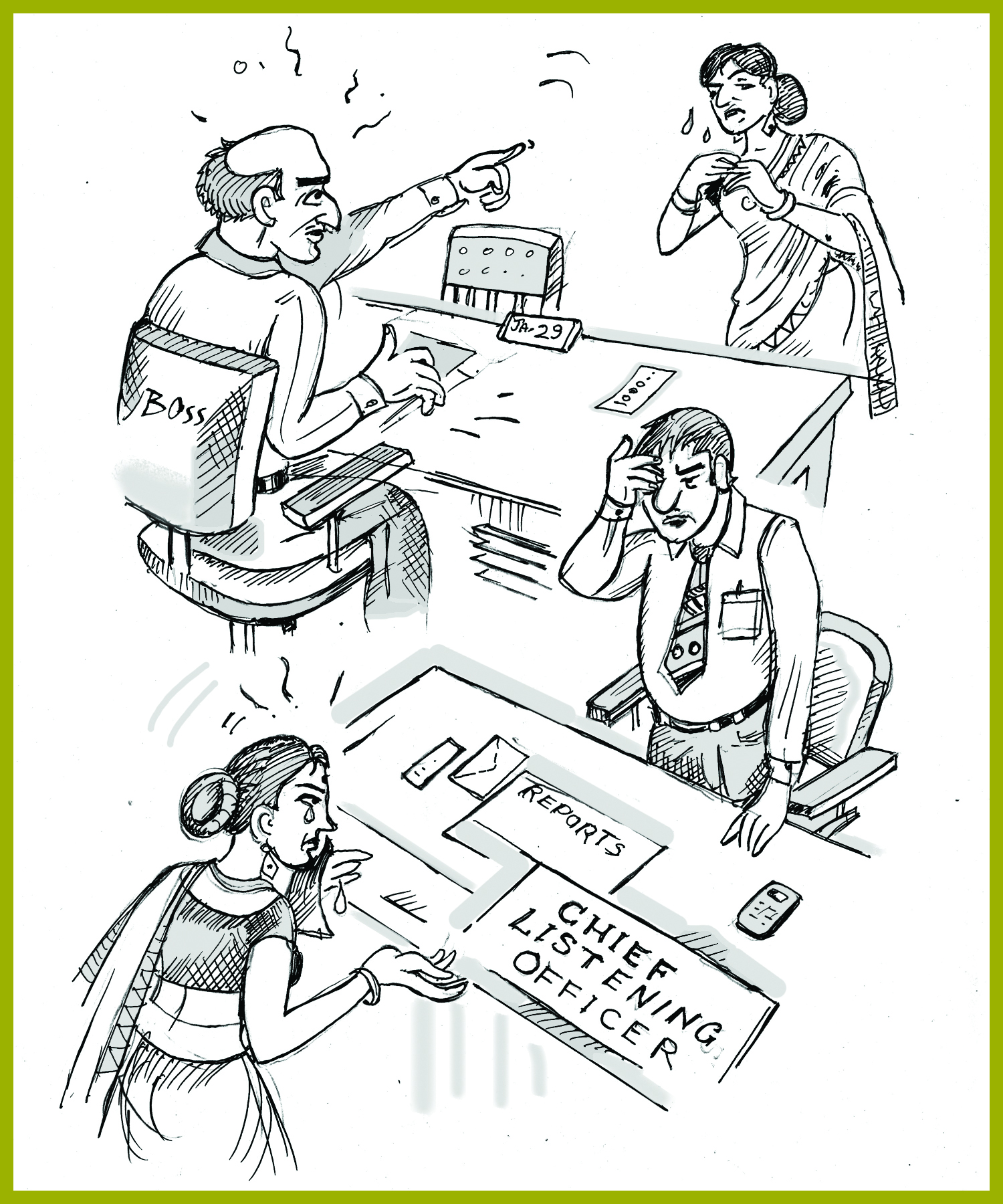
By Jove, my dear readers, have you ever felt as though you’ve been thrown into a spin cycle by your boss? Like a tie caught in a washing machine, I find myself being mercilessly zipped and tumbled around when summoned for a “little chat.”
As I stand before my superior, shuffling my feet, my tongue resembling a malfunctioning typewriter, I utter the fateful words, “I, er… well, I went into the call and told, er…”
“Spare me the details, my boy,” he interrupts with the subtlety of a charging rhinoceros. “Let’s cut to the chase and unscrew this mess.”
Oh, the irony! My boss, the man with the power to “screw” me over, is demanding a “solution” to the screw-up I was being “screwed” for. It is enough to make me feel like a human pretzel.
For those who have trodden the path of such encounters, the subsequent unfolding is a familiar script. But for the uninitiated, allow me to veil the scene in the obscurity reminiscent of the ancient Greek plays where violence was shown. The tumultuous emotions surging within me after such an encounter were weighty enough to prompt contemplation of departure from my current vocation.
But then, as if a bolt of lightning has struck my brain, I recall these wise words from the pages of P G Wodehouse:
‘The fact is, uncle—’
‘Never mind the facts. I know them! What I require is an explanation.’
In that instant, like a light bulb illuminating a dusty attic, the missing pieces of my explanation miraculously reappear. The scales fall from my eyes. I can finally see a way out of this corporate labyrinth.
My spirits, as I said before, were as low as a politician’s poll ratings after a particularly scathing dressing-down from the discerning public. It was a veritable downpour of negativity, threatening to drench my career aspirations and send them scurrying for cover. But the words from the maestro, in their infinite wisdom, have a rather amusing trick up their sleeves.
As the day wore on, a queer thing happened. I caught a glimpse of my reflection in the office window and, lo and behold, the thunderous frown that had been etched upon my visage had mysteriously evaporated, replaced by a glow as radiant as a summer sunset. As if on cue, the sun broke through the clouds, casting its golden rays upon the scene like a celestial stand-up comedian.
And then I realized it. My boss, who had hitherto been as dour as Bingo Little who has just been ridiculed by Laura Pyke for gorging on food like a python, now bore an uncanny resemblance to Sir Thomas, while I, your humble narrator, took on the unmistakable air of the legendary Lord Dreever, a man known for his wit and indomitable spirit. The realization was like a tonic, lifting my spirits and rendering the boss’s earlier admonishments as mere comedic fodder.
Indeed, I believe that if I had dared to venture into the restroom, I would have encountered a mirror that reflected not the glum visage of a man on the brink of despair, but a veritable symphony of smiles, as if the entire universe was conspiring to cheer me up. And so, my friends, I leave you with this profound observation: even in the darkest of times, Wodehouse has a way of finding its place, painting a smile upon our souls, and reminding us that life, like a good joke, is often more amusing than it first appears.
Depression comes in all sizes and shapes. But irrespective of whether it is U-shaped, V-shaped, or W-shaped, we would do well to remember this advice from Bertie Wooster.
‘A short while ago, the air was congested with V-shaped depressions, but now one looks north, south, east and west and descries not a single cloud on the horizon – except the fact that Gussie’s wedding is still off, and that can’t be helped. Well, this should certainly teach us, should it not, never to repine, never to despair, never to allow the upper lip to unstiffen, but always to remember that, no matter how dark the skies may be, the sun is shining somewhere and will eventually come smiling through.’

Marriage Melee: A Battle of Wits and Wiles
Now, the trials and tribulations of married life! The constant struggle for supremacy between husband and wife can often lead to heated arguments. I remember one particular instance when my bitter half uttered a particularly sharp remark, causing me to contemplate throwing in the towel altogether.
Indulge me in the whimsical ramblings of a man ensnared in married life’s merry-go-round of mishaps. Picture the daily drudgery: the perpetual hide-and-seek with misplaced keys, the ceaseless battle against the despotic alarm clock – each a farcical subplot in the grand theatrical spectacle of existence. Yet, amidst the cacophony of chaos, I find refuge in the absurdity, relishing the comedic undertones of my predicaments. Armed with naught but a wry grin and a dollop of fortitude, I gallantly press forward, for in the face of adversity, it’s not the weight of our burdens that defines us, but the panache with which we pirouette through the harsh slings and arrows of life.
Measuring Up: Dealing with Matrimonial Blues
Growing up in a typical Indian household, I was no stranger to the dreaded act of comparison. Whether it was with the neighbour’s kid, my cousins, or my school chums, I was always being held up against others to highlight my shortcomings. These never-ending comparisons turned even the sweetest successes sour, casting a shadow of self-doubt over my young existence.
When I finally graduated from college and landed a job, I thought I had escaped the torment of comparison, once and for all. Alas, fate had other plans in store for me, as I soon found myself walking down the aisle and entering the realm of marriage. To my dismay, the comparisons from my youth had simply taken on a new form – instead of being measured against other youngsters, I was now being pitted against other fellow husbands.
Despite the familiar pang of depression that accompanies these regular comparisons, I find solace in the wise words of the great author. Remembering his following lines helps me to shake off the gloom and face the day with renewed vigour:
‘Chumps always make the best husbands. When you marry, Sally, grab a chump. Tap his head first, and if it rings solid, don’t hesitate. All unhappy marriages come from husbands having brains. What good are brains to a man? They only unsettle him.’
It is said that indifference is the key to true enlightenment. Perhaps that is why this quote also enters my mind upon meeting my wife’s friends. After all, they are a minefield of potential misunderstandings, where every word uttered can be met with laughter… or judgment. The joys of married life indeed!
Dinner Dynamics: A Delicate Dance of Drollery and Discretion
In this age of dual toilers, the dining hour has become our cherished trysting place. Yet, for some hapless souls like mine, it brings nought but tribulation.
For, the myriad oddities I perpetrate throughout the day come under my beloved’s scrutiny at this nocturnal tribunal. The evaluation process is akin to a relentless gauntlet, where each gaffe is met with a withering gaze and each feeble defence checkmated with a dismissive sigh.
To endure such a scenario demands the courage of a martyr and the willingness to face the unvarnished truth about oneself. And woe betide those who would dare to argue, for their fate is to be cornered and outmanoeuvred with surgical precision.
Well, I found myself in a bit of a pickle the other day. I wasn’t paying proper attention to my bitter half’s chatter, and it wasn’t long before her dulcet tones turned into something akin to a vinegar factory. In a moment of weakness, I surrendered to my plate much like a hungry squirrel would to a nut.
But alas, my hopes for a swift meal were dashed, for when one is in a spot of bother, even the most basic of tasks seem to conspire against one. The words of humiliation flowed from my wife as freely as water over Victoria Falls, and I found myself longing for the respite that only a finished meal could provide. But as we all know, when we most need something, it inevitably eludes us, and so I was forced to endure the verbal onslaught, my own loquacity proving no match for her linguistic torrent.
Terribly wounded by the slings and arrows of outrageous fortune, my dear readers, I sought refuge in yonder privy, a sanctuary most welcome after such a verbal tempest. Upon reflection, however, I found myself dishing out a double dose of censure to my ears, for my assailants’ barbs had stung me less sharply than my inner dialogue. Indeed, I resembled the legendary Ratnakar the Bandit (later known as Valmiki – the esteemed composer of that epic tale, the ‘Ramayana‘), when his kith and kin turned a cold shoulder upon discovering the slightly unsavoury nature of his profession.
Perhaps the following limerick might better explain my predicament:
There once was me so vain,
My ego could cause quite a strain.
I felt humiliated,
My pride, agitated,
Frowning at myself was his bane!
Well, my word, I was right down in the dumps, looking for a celestial lifebuoy, only to be greeted by a chorus of proverbs that made my predicament look as clear as a bottle of brown ale. Allow me to enlighten you with their profound wisdom:
‘He had just about enough intelligence to open his mouth when he wanted to eat, but certainly no more.’
(On how I took my dinner while braving the crisis.)
‘He had the look of one who had drunk the cup of life and found a dead beetle at the bottom.’
(On my present disposition.)
‘I could see that, if not actually disgruntled, he was far from being gruntled.’
(On my present mental state.)
‘I’m not absolutely certain of the facts, but I rather fancy it’s Shakespeare who says that it’s always just when a fellow is feeling particularly braced with things in general that Fate sneaks up behind him with the bit of lead piping.’
(On my fate.)
Well, bless my buttons, as I sat there in the midst of all that gloom, a flicker of mirth gently tickled my lips. My addled noggin, after a spot of sulking, decided to drag its weary feet from the doldrums and amble towards the sunny uplands!
Stakeholder Strife: Navigating the Minefield of Marred Joys and Spousal Scrutiny
The joys of childhood! Such innocent days were tarnished only by the looming spectre of criticism from the dreaded external stakeholders. The lion-tamers at the school, who, when annoyed at a group of boisterous and noisy backbenchers, flash their canes, leaving the tender spots on one’s backside throbbing as if hit by electric jolts. Neighbours, those ever-watchful guardians of politeness, who never failed to report any deviation in my behaviour to my dear mother. Oh, the horrors that ensued! One might think that growing older would bring respite from such sinister critiques, but, alas, fate had other plans.
Enter marriage, that venerable institution where the list of stakeholders expands faster than rabbits in spring. And the criticism? It descends upon me with the relentless persistence of British rain, every deviation dissected with the meticulousness of a tax inspector. My once-dreaded mother’s interventions have faded into mere historical footnotes, overtaken by the ever-vigilant gaze of my beloved wife. It feels as though I am trapped in an endless cycle of scrutiny, with no escape from those eager to critique my every move.
In this bleak landscape, I am often reminded of the haunting lines from W.H. Auden’s The Unknown Citizen:
‘Was he free? Was he happy? The question is absurd:
Had anything been wrong, we should certainly have heard.’
So you see, my friends, the feeling of emptiness and how it impacts my mental well-being at times?
Indeed, the struggle is real. Yet, in moments of solitude, when the weight of the world threatens to crush my spirit, I find solace in the words of P. G. Wodehouse:
‘Marriage is not a process for prolonging the life of love, sir. It merely mummifies its corpse.’
Wodehouse! His wit and wisdom are like a tonic for the soul, lifting my spirits and infusing me with the courage to face whatever life may throw my way. And so, armed with the sagacity of Jeeves and the indomitable spirit of Bertie Wooster, I march forward, ready to take on whatever stakeholder challenges lie ahead.

Friends – The Good, The Bad, and The Ugly
Friends, like the delectable variety of cheese, come in all shapes and sizes. You’ve got the brie-lliant ones who lift you like a hot air balloon when you’ve plummeted into a pit of despair, and then the tangy Swiss kinds who puncture your ego with holes of different sizes using harsh words as soon as you confess your blunders.
On paper, the latter may seem like a blessing, especially when it comes to spiritual enlightenment. However, my heart belongs to the feta-tastic crew who know the art of providing a shoulder to cry on rather than dishing out a lecture. These friends are as rare as a unicorn riding a unicycle, and their absence can be as painful as an ingrown toenail.
Now, dear listeners, I shall not bore you with the details of my recent blunder (let us just say that I’m still learning the difference between ‘brake’ and ‘accelerator’), but as one of my well-meaning friends was giving me a verbal scolding that could have curdled milk, I heard the screeching of tires. And like a magic skipping rope, those words from the wise P. G. Wodehouse unravelled the knot in my mind, leaving me laughing at my own misfortune.
‘…she turned away, and the lift bore her aloft. Its machinery badly needed a drop of oil, and it emitted, as it went, a low wailing sound that seemed to John like a commentary on the whole situation.’
My dear astute readers, while I eschew the mantle of a pontificator, I must confess that spirituality for me is like a tête-à-tête with oneself, a tête-à-tête that, as the aforementioned anecdotes so eloquently attest, has the miraculous power to vanquish external woes like a magician making a rabbit disappear.
The Ambivalence of Aid: To Help or Not to Help?
As certain well-intentioned individuals may perceive me, I am eternally grateful for their estimation of my character, particularly their belief in my inherent propensity to extend assistance to those in need and remain steadfast in times of adversity. However, in all humility, I regret to disappoint them.
Indeed, there have been numerous occasions when I have grappled with the profound internal struggle ‘To help or not to help’. The nagging fear that my actions might lead to calamitous consequences, akin to those suffered by Corky Corcoran in his ill-fated attempts to aid Ukridge, has repeatedly paralyzed me. Thus, I have likely squandered countless opportunities to transcend my mortal coil and attain the ethereal heights of a Bertie Wooster, who unflinchingly sacrifices his own well-being for the sake of his companions.
One particularly vivid literary example that haunts my consciousness is P. G. Wodehouse’s timeless masterpiece, The Code of the Woosters. In its pages, we witness the indomitable Bertie willingly leaping into the abyss to rescue his beleaguered friend Gussie. Bertie’s unwavering loyalty is an exemplar of selfless love and unwavering friendship.
Moreover, Bertie’s compassion knows no bounds. To safeguard the delicate health of his esteemed Uncle Tom, he willingly embraces the ignominy of incarceration, all to ensure that the culinary artistry of the inimitable Anatole would continue to nourish the elderly gentleman.
‘You were actually contemplating giving up Anatole for my sake?’ I gasped.
‘Of course.’
‘Of course jolly well not! I would not hear of such a thing.’
‘But you can’t go to prison.’
‘I certainly can, if my going means that that supreme maestro will continue working at the old stand. Don’t dream of meeting old Bassett’s demands.’
‘Bertie! Do you mean this?’
‘I should say so. What’s a mere thirty days in the second division? A bagatelle. I can do it on my head. Let Bassett do his worst. And,’ I added in a softer voice, ‘when my time is up and I come out into the world once more a free man, let Anatole do his best. A month of bread and water or skilly or whatever they feed you in these establishments, will give me a rare appetite. On the night when I emerge, I shall expect a dinner that will live in legend and song.’
‘You shall have it.’
In contemplating Bertie’s unwavering moral compass, I am forced to confront my own shortcomings. I lament the realization that I fall woefully short of the spiritual ideal espoused by Wodehouse, who believed that true happiness lies in the selflessness of bringing joy to others.
Lessons from Literary Luminaries: Rajanikant Sen and the Art of Spiritual Affection
Dear friends, the memory of the celebrated Bengali poetaster Rajanikanta Sen dances upon my fancy like a sprite! For, through his enchanting melodies, he has instructed us in the art of coalescing prayer and affection for the Great Architect of the Cosmos. Indeed, a certain passage from his oeuvre brings to mind my own peculiar connection with the wordsmith Wodehouse. It is a bond forged in the crucible of admiration, tinged with a soupçon of jovial banter, akin to that between Jeeves and his beloved Wooster.
In the grand tapestry of literary artistry, where words are spun like silken threads to weave tales that captivate and inspire, I raise my voice in a resounding ode to the master wordsmith. Like the legendary Rajanikanta, whose words danced with such grace and power, I offer my humble tribute to the one who wields the magical power of lifting my spirits to the highest level with unmatched skill.
‘… You try to embrace me, with bonds so tight,
Through myriad ties, freedoms take flight.
Thoughts of parting, but I turn to see,
Not a step you’ve taken away from me.’

Wodehouse: The Divine Comic Conductor of My Life’s Soothing Symphony
Now, let us ponder, dear readers, who it is that has been my spiritual confidante? Why, none other than the literary luminary P. G. Wodehouse! One of my superiors (not the previously mentioned one) once referred to Wodehouse as a saint. Even at the risk of being labelled a Yes-Man, I find myself in complete accord. In the tapestry of life, Wodehouse has been an unwavering presence, a steadfast companion through both the sunny meadows of joy and the murky depths of despair. Like a literary guardian angel, he has assumed the weighty burden of my well-being, leaving me free to frolic in the fields of fancy.
If I may indulge in a bit of literary wordplay, I might say that Wodehouse’s prose has been the balm that has soothed my troubled mind, the tonic that has invigorated my weary spirit, and the elixir that has granted me spiritual stamina. In short, my dear readers, P. G. Wodehouse is the holy grail of my spirited pilgrimage of life, the literary oracle who has guided me through the labyrinth of life with his wit, his wisdom, and his unforgettable characters who have made me laugh and reflect upon the human condition in all its splendid absurdity.

A Plummy Plan for My Celestial Departure
The curious customs of humanity! In the land of the sacred Ganges, where the earthly shed their mortal coils, a peculiar tradition persists. They furnish the departed with a copy of the Bhagawat Gita, believing it shall guide the soul through the ethereal realms, awakening it to the futility of earthly attachment.
As for myself, I confess to being a shameless opportunist, teetering between the realms of faith and scepticism. When the spectre of danger looms, I implore the divine, accusing Him of neglect and demanding succour as a matter of fraternal obligation. But when fortune smiles upon me, my atheism reasserts itself, and I become an artist extraordinaire.
Contemplating my own celestial departure, I ponder the tome I shall carry to enlighten me enroute to my heavenly abode. After much deliberation, I have come to a profound realization: it must be a work by the inimitable P.G. Wodehouse. For he, to me, in the words of the great Tagore, which I have translated with my limited knowledge, is:
‘My Lord divine, my treasure rare,
On every path, with me You fare.
In joy or sorrow, let me find,
In freedom’s call, no chains to bind,
In life’s sweet song, Your presence there.
Within my soul, Your essence gleams,
In love’s eternal, flowing streams.
Oh, universal, oh, my own,
In every heart, Your light be shone,
In endless dance, where beauty teems.’
With Wodehouse as my cosmic companion, I shall traverse the celestial planes with a knowing grin, revelling in the absurdity of existence and finding solace in the delightful follies of humanity.
Comrades, consider this to be my last wish. When I get around to kicking the proverbial bucket, I shall bid a hearty farewell to all mortal concerns! I shall breathe my last with a copy of Right Ho, Jeeves by my side. If Yamaraj, the Lord of Death, would allow me some time, I may even ask him if he has ever read Plum. If he replies in the negative, I could perhaps read a part of the speech delivered by Gussie Fink-Nottle to him, hopefully cheering up the hapless guy a wee bit in the midst of the kind of gloomy and obnoxious work he has been assigned by the celestial powers.
I shall then gaze at him brightly, bracing myself with the old Wooster grit. Up will come the chin, and back will go the shoulders.
‘Lead on,’ I shall say, and he will lead on.
As the flames consume my mortal remains, the jolly old fumes of Right Ho, Jeeves shall waft in the air, spreading joy, sweetness, and light all around. Roses shall then be in bloom, butterflies shall be merrily flapping their wings, birds and bees shall be happily going around doing whatever nature ordains them to do, God shall be in heaven, and all will be well with the world.
Thus only shall I embrace the celestial with a dash of wit and humour, and carry with me the indomitable spirit of P. G. Wodehouse.
Related Posts:
https://ashokbhatia.wordpress.com/2018/02/14/the-death-of-death-at-the-hands-of-p-g-wodehouse
https://ashokbhatia.wordpress.com/2014/10/30/of-bertie-goofy-females-and-the-wooster-clan






 ashokbhatia