
The youth today live in technology-infested times which run closer to the speed of thought. Besides performing well at their jobs in accordance with their business leaders’ exhortations to work ninety hours a week, they have to cope with such delicate matters of the heart as maintaining relationships, situationships, and even mini-micro alliances, sans a commitment of any kind. If some are lucky to reach their romantic goals, there are many others who fail. They get up in the middle of the night to check if their current heartthrob has answered their latest missive on WhatsApp. In the absence of one or realising that their number itself has been blocked by the party of the other part, a sense of gloom envelopes them. A state of despondency follows. Some of them feel as if life has come to a dead end. A sense of lack of self-worth follows. Rejection stares them in the face.
The Sting of Rejection
Rejection is said to be a universal experience, but few words capture its sting better than Mirza Ghalib’s timeless couplet:
‘Nikalna khuld se Adam ka sunte aaye hain lekin,
Bade beabru ho kar tere kuche se hum nikle.’
Which translates to (according to my humble sense of English):
“We have heard of Adam’s fall from Eden’s gate,
But I was cast from your street in a far worse fate.”
This poignant verse reminds us that rejection feels deeply personal, like being cast out of paradise itself. For many, the road to recovery feels arduous. But as you journey through this article, you will see that rejection, though painful, is not the end. By the end of this journey, you might even find yourself humming a tune of resilience and joy.
It has been immortalised in poetry, literature, and song, proving that unrequited love is as old as humanity itself. Shakespeare, with his knack for articulating the ineffable, said it best in Twelfth Night:
“If music be the food of love, play on,
Give me excess of it; that, surfeiting,
The appetite may sicken, and so die.”
In other words, even the Bard himself recognised the bittersweet ache of rejection.
Yet, rejection is not a closed door; it is merely a redirection. As Robert Burns mused in A Red, Red Rose, love’s pain is as much a part of the human condition as its joys. While rejection spares no one, this article shines a light on the unique challenges men face, from societal pressures to emotional expectations. It offers a humorous yet empathetic lens to navigate this universal experience.
But before diving into the tales of resilience and humour, let us first unravel the many reasons behind romantic rejections.
Why Rejections Happen
Romantic rejection is a dance as old as time, its steps often clumsy and fraught with miscommunication. Why does it happen? The reasons are many. Sometimes, it is a simple lack of compatibility—a collision of two worlds that fail to align. At other times, it is the timing: meeting the right person at the wrong time or vice versa. Social conventions, family expectations, or even the mysterious workings of the human heart often create barriers.
In a world of ever-shifting expectations and instant communication, misunderstandings and mismatched desires are common culprits in any episode of romantic rejection. Yet, understanding these dynamics can help demystify the pain and bring clarity to the situation. Often, rejection is less about the person being rejected and more about circumstances, timing, incompatible goals, or a stark mismatch between the value systems of two souls.
Consider Kipling’s words in his poem If:
“If you can meet with Triumph and Disaster
And treat those two impostors just the same…”
For all its inevitability in the course of life, rejection is not without its sting. It is a curious mix of bruised ego and wounded hope, a moment that can leave even the most self-assured feeling disheartened. To pretend it does not hurt would be a folly. While the rainstorm may feel unwelcome, it clears the air for brighter days. Rejection, too, serves as a temporary squall, one that will pass, leaving behind a wiser and stronger self.
Tales from the Epics: Lessons in Rejection
Rejection is an ancient theme, and even the heroes of great epics have faced it. These stories demonstrate that being turned down, though painful, often becomes a defining moment in a person’s journey, shaping their character and decisions. However, they also serve as cautionary tales of how unresolved rejection can spiral into bitterness or tragedy.
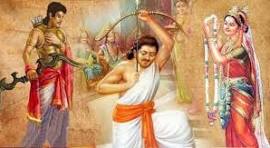
Consider the story of Karna from the Mahabharata. During Draupadi’s swayamvara, Karna, a warrior of unmatched skill and bravery, is rejected outright when Draupadi declares she will not marry someone of uncertain lineage. Publicly humiliated, Karna’s bitterness festers and influences his alliances and decisions, leading to devastating consequences during the Kurukshetra war. His story is a powerful reminder of how unaddressed emotions from rejection can ripple destructively through one’s life.
Similarly, in The Iliad, Achilles feels slighted when Briseis, his war prize, is taken from him. Though not a romantic rejection, the perceived insult plunges him into a spiral of rage and withdrawal. His refusal to fight leads to the death of his close friend, Patroclus, a tragedy that forces Achilles to confront the cost of his wounded pride.
In the Odyssey, Odysseus’s encounters with rejection are more symbolic, but they highlight the importance of perseverance in the face of adversity. His unwavering determination to return to his wife, Penelope, and reclaim his kingdom reflects how resilience can prevent rejection from devolving into despair or destructive behaviour.
In modern contexts, such unresolved emotions can have equally dire consequences. Many tragic stories emerge from individuals who, unable to process rejection, spiral into harmful behaviours—hurting themselves or others. From violent outbursts to long-lasting emotional scars, unaddressed rejection can take a dangerous toll. It underscores the critical need to develop emotional resilience and seek healthy outlets for processing these experiences.
These stories, spanning cultures and eras, echo a universal truth: rejection is a part of life’s fabric. What matters is how we respond—whether we let it define us or use it as a catalyst for growth, wisdom, and a deeper understanding of our place in the world.

Modern-Day Tales of Rejection
From digital ghosting to public embarrassments, rejection wears many faces in today’s world, and here is how some navigated through it.
- The Coffee Refund Request
In Sydney, a man requested a refund for a coffee he purchased on a date that did not meet his expectations. After the woman expressed disinterest, he sent her a payment request for $6. This unusual reaction garnered attention online and sparked debates about entitlement in dating. - Astrological Overshare
Chloe Ferrari shared an embarrassing personal story where, after being rejected, she coped by excessively discussing astrology and tarot readings with her friends. While harmless, the incident left her cringing at her own over-analysis of the rejection. - Public Humiliation at a School Dance
A teenager’s rejection at a school dance became a public ordeal when the girl’s friends repeatedly relayed her disinterest throughout the day. The boy’s embarrassment served as a harsh reminder of how peer dynamics can amplify rejection. - Digital Ghosting
In the age of online dating, ghosting has become an ordinary form of rejection. One Reddit user recounted how an intense emotional connection developed over weeks disappeared without explanation, leaving them questioning their self-worth. - The Entitled Ex
A man who was rejected after a brief romantic encounter became infamous online for his persistence in trying to rekindle the relationship. His entitled behaviour was widely criticised as an inability to accept rejection gracefully. - Cultural Mismatches
Cultural differences often contribute to romantic rejections. One story highlighted a relationship that ended due to family pressures and differing cultural expectations, leaving both individuals feeling torn between personal desires and societal norms. - Extreme Responses
A tragic case involved Antonio Wilson, who reacted violently after being rejected by a woman he had recently met. This devastating incident underscored the importance of emotional regulation and the dangers of taking rejection too personally. - Rejection Leading to Growth
Many stories online feature individuals who used rejection as a catalyst for personal growth. One individual shared how a painful breakup inspired them to pursue a long-dormant passion for art, eventually leading to a career change. - Social Media Missteps
Rejection through social media miscommunications is increasingly common. In one instance, a person’s message to a potential partner was misconstrued, leading to a rejection that could have been avoided with clearer communication. - Violent Reprisals: In deeply patriarchal societies like those of India, we keep hearing about cases where rejection could result in either an acid attack or even death for the female who is supposed to have meekly accepted a proposal.
Rejection: A nudge from the universe?
But why linger in the shadow of rejection when the world offers an abundance of opportunities to move forward? But while some rejections sting, others, when seen in a rear-view mirror, can be downright amusing. Perhaps this is the perfect moment to sign up for that art class you have been eyeing or to rediscover an old hobby. Each new endeavour not only serves as a distraction but as a gateway to fresh connections and experiences. Let rejection be the beginning of something exciting—a new chapter in your story, one that is brimming with promise.
Let us consider another angle—what if rejection was not a loss but a rescue mission in disguise? Sometimes, the very person whose approval you were seeking might not have been the best fit for your life. Imagine being tied to someone who critiques your choice of socks or insists that pineapple belongs on pizza (the horror!). Rejection, in such cases, is not a rejection of you, but a quiet nudge from the universe saying, “You are dodging a bullet here, mate.”
So, the next time you feel the sting of rejection, think of it as a form of celestial quality control—a chance to wait for someone whose quirks and kindness complement yours, rather than someone who sees you as a “project” to be fixed. After all, is freedom not better than being saddled with someone who might have made your life a continuous “series of unfortunate events”?

Finding Comfort in Wodehouse’s World
Not everyone reacts to rejection the same way. While some graciously accept their fate, others let rejection gnaw at them—brooding over imagined slights, raging against rivals, or sinking into self-pity. Then there are some, like Psmith (Leave it to Psmith), who refuse to take a no as an answer and even go to the extent of lying through their teeth to win over the party of the other part amid a boat ride. Also consider the case of Sam Shotter (Sam the Sudden) who does not get stupefied when his first impulsive kiss ends up offending Kay Derrick. He persists. He even gets injured while trying to rescue Kay’s cat from atop a tree, eventually tilting the scales in his favour.
For those who feel rejection is the end of the road, P. G. Wodehouse’s works might help by showing that every setback carries the potential for laughter and growth. His stories transport us to a world where heartbreak is tinged with hilarity and optimism is always just around the corner. Wodehouse’s characters endure romantic calamities, yet they emerge unscathed—often better off.
Wodehouse’s characters showcase a wide spectrum of responses:
- The Diplomatic Resigner (Henry in Frozen Assets): When rejected by Kay, he quietly accepts it, shrugs, and exits stage left.
- The Jealous Brooder (Arthur Welsh in When Doctors Disagree): Turns suspicious and miserable but does not refrain from jousting like a knight in shining armour.
- The Misunderstood Optimist (Bertie Wooster) – Laughs it off and moves on, seeing rejection as just another twist in life’s comedy. He is often misunderstood, even while planting a brotherly kiss on the cheeks of a lady with whom he might have been engaged at some point of time in the past. Many of his misguided rivals call him a snake in the grass.
- The Persistent Wooer (like Psmith and Sam, as above, and George Emerson, a Hong Kong Police Officer (Something Fresh) who eventually succeeds in convincing Aline to elope with him.
- The Rejection Technocrat (Bobby Wickham) who has perfected the art of engineering rejections in her favour, as in Mr. Potter Takes a Rest Cure, and in Jeeves in the Offing.
- The Sulker, like the Nodder, who, when rejected, turns to food for comfort.
At its heart, Wodehouse’s world suggests the best way to handle rejection – with humour. His characters may falter, but they never let rejection define them—they dust themselves off, find something (or someone) else to amuse them and carry on.
Wodehouse’s genius lies not just in his comic prose but also in his ability to show that every setback is a setup for a delightful comeback. His characters stumble, falter, and fall, but they rise with an unwavering sense of humour that is nothing short of inspiring. They pick up the fragments of their crushed souls, reassemble them together with the glue of equanimity, and march on to greener pastures. In their resilience, readers find a comforting reminder that no setback is insurmountable. His wisdom lies in showing us that rejection is never the end but a bend in the road, often leading to a brighter future. This is how Rudyard Kipling puts it:
“If you can keep your head when all about you
Are losing theirs…
Yours is the Earth and everything that’s in it…”
Wodehouse himself often revels in the relief his characters feel after narrowly escaping unsuitable matches. Bertie Wooster, for instance, pops champagne every time he wriggles free from Madeline Bassett’s dreamy clutches. In the grand scheme of things, rejection may simply be a way of sparing you from a relationship that might have been, let us say, less of a romantic comedy and more of a psychological thriller.
Rejection is often mistakenly seen as a judgment of one’s character or worth, but this could not be farther from the truth. Much like Bertie Wooster, who never allows a broken engagement to dampen his unshakable spirit, you too can rise above the moment. Your value is intrinsic, unshaken by external opinions.
Often, it is others who can see your brilliance when you are blinded by the fog of rejection. Let this be a reminder that your self-worth is untouchable, regardless of any romantic setback.
If handling rejections is an art, then Bertie Wooster, ably assisted by Jeeves, is its Picasso.

The Pale Parabola of Rejection in Wodehouse’s World
When the world seems bleak and rejection has you questioning your charms, there is no better balm than the tales of P. G. Wodehouse. His stories remind us that life’s hiccups, including romantic rejections, can often be blessings in disguise, served by the universe with a generous dash of humour. Let us delve into some of his timeless works where even the downtrodden and rejected find their way to a jolly good resolution!
1. Jeeves in the Offing
- Synopsis: Bertie Wooster is surprised to find from an announcement in The Times that he has willy-nilly become engaged to Roberta “Bobbie” Wickham. The latter’s motive is to put a pressure on her mother to instead approve of her plans to walk down the aisle with Reginald “Kipper” Herring. With Jeeves’s assistance, the engagement is amicably dissolved, and Bobbie gets engaged to Kipper, allowing Bertie to return to his bachelor life.
- Best for: Individuals entangled in unintended romantic commitments seeking a graceful exit.
- Quote to Recharge: “You would not enjoy Nietzsche, sir. He is fundamentally unsound.”
2. The Rummy Affair of Old Biffy
- Synopsis: Biffy Biffen becomes engaged to Honoria Glossop but realizes they are incompatible. Despite initial despair, he eventually finds happiness elsewhere, illustrating that initial rejections can lead to better outcomes.
- Best for: Those mourning the end of a mismatched relationship, seeking hope for future compatibility.
- Quote to Recharge: “The voice of Love seemed to call to me, but it was a wrong number.”
3. The Story of Webster
- Synopsis: Bingo Little’s affection for Mary Burgess is unreciprocated. He finds solace in the companionship of Webster, highlighting the comfort pets can provide during emotional lows.
- Best for: Individuals experiencing unrequited love, seeking comfort in non-human companionship.
- Quote to Recharge: “It is a good rule in life never to apologise. The right sort of people do not want apologies, and the wrong sort take a mean advantage of them.”
4. The Metropolitan Touch
- Synopsis: Bertie Wooster attempts to assist his friend Tuppy Glossop in winning the affections of a girl, but their efforts lead to humorous failures. The tale emphasises the unpredictability of romantic pursuits and the importance of humour in facing rejection.
- Best for: Individuals who have faced repeated romantic setbacks and need a reminder to find humour in the situation.
- Quote to Recharge: “Chumps always make the best husbands. When all is said and done, someone has to sit opposite you at the breakfast table.”
5. The Delayed Exit of Claude and Eustace
- Synopsis: Bertie’s cousins, Claude and Eustace, face romantic rejections but soon move on to new adventures, demonstrating the transient nature of such setbacks.
- Best for: Individuals struggling to move past a recent rejection, needing encouragement to embrace new opportunities.
- Quote to Recharge: “There is no surer foundation for a beautiful friendship than a mutual taste in literature.”
6. The Inferiority Complex of Old Sippy
- Synopsis: Sippy Sipperley, feeling inadequate after a romantic disappointment, rediscovers his confidence through writing, highlighting the therapeutic power of creative pursuits.
- Best for: Those whose self-esteem has been affected by rejection, seeking to rebuild confidence through personal achievements.
- Quote to Recharge: “The only cure for grey hair is the guillotine.”
7. Jeeves and the Yuletide Spirit
- Synopsis: Bertie’s plans to win over a love interest during Christmas go awry, but he finds contentment in the festive spirit and companionship, suggesting that joy can be found beyond romantic pursuits.
- Best for: Individuals feeling the sting of rejection during festive seasons, seeking solace in other aspects of life.
- Quote to Recharge: “I had not the heart to touch my breakfast. I told Jeeves to drink it himself.”
8. A Damsel in Distress
- Synopsis: In this delightful tale, George Bevan, a composer, falls for Maud Marshmoreton, only to find himself caught in a series of misunderstandings. Though initially rejected, George learns to take setbacks in his stride and remains steadfast in his pursuit of happiness. Eventually, owing to Maud’s strong dislike of obese gentlemen with triple chins, he scores.
- Best for: Those grappling with misunderstandings in romantic pursuits, seeking encouragement to approach the situation with optimism.
- Quote to Recharge: “She had the look of one who had drunk the cup of life and found a dead beetle at the bottom.”
9. Fate (from Young Men in Spats)
- Synopsis: Freddie Widgeon, perpetually unlucky in love, faces yet another romantic disappointment. However, through a series of comedic events, he realises that life’s twists and turns often lead to unexpected joy.
- Best for: Those feeling that rejection is a recurring pattern in their lives, needing a reminder that fate has its own plans.
- Quote to Recharge: “It is never difficult to distinguish between a Scotsman with a grievance and a ray of sunshine.”
10. The Man Upstairs
- Synopsis: Annette Brougham, an artist, initially rejects the advances of her upstairs neighbour, a struggling composer. Through shared interests and persistence, the story unfolds into a lesson about patience and timing in love.
- Best for: Those who feel disheartened by initial rejections, reminding them that persistence, when respectful, can sometimes lead to success.
- Quote to Recharge: “She had an eye that could open an oyster at sixty paces.”
11. Uncle Fred Flits By
- Synopsis: In this tale, Uncle Fred intervenes in a romantic mix-up involving his nephew. The story is a whirlwind of wit and absurdity, showing how humour and boldness can transform awkward situations.
- Best for: Those seeking to laugh at the absurdities of life and approach rejection with audacious humour.
- Quote to Recharge: “Some minds are like soup in a poor restaurant—better left unstirred.”
12. The Ordeal of Young Tuppy
- Synopsis: Tuppy Glossop falls for the athletic Miss Dalgleish, a dog lover. To win over her affections, he endures a rough match of rugby football, only to discover that she had instead preferred to go to the city to check on a water spaniel. He returns to the fold of Angela, thereby fulfilling the wishes of Aunt Dahlia.
- Best for: Those who have exaggerated their interests to impress a romantic interest, only to be caught in an uncomfortable situation.
- Quote to Recharge: “The sky darkened, birds stopped singing in the trees, and a great hush seemed to fall upon nature as young Tuppy came to grips with his fate.”
13. Frozen Assets
- Synopsis: Henry, convinced that his fiancé Kay is the love of his life, is devastated when she chooses Jerry Shoesmith over him. However, in a rare moment of self-awareness, he realises that her departure is a blessing in disguise. Instead of wallowing in sorrow, he gracefully moves on, content in the knowledge that an incompatible relationship has been averted.
- Best for: Those who, in retrospect, recognise that rejection saved them from an ill-suited relationship.
- Quote to Recharge: “He felt he had had an escape. He was a man who liked an orderly existence. Kay, whatever her superficial charms, was manifestly a girl who preferred her existences disorderly.”
14. Bingo Little: A Serial Romantic’s Journey
Synopsis: In his pre-nuptial phase, Bingo Little’s romantic escapades are nothing short of legendary. His affections shift between a waitress named Mabel, the formidable Honoria Glossop, revolutionary Charlotte Corday Rowbotham, and several others. However, after each failed affair, Bingo does not sulk—he simply realises that his latest flame was never meant to be, and his “true soulmate” is still out there waiting. Eventually, he finds lasting love with Rosie M. Banks, a romance novelist whose sentimental outlook aligns with his own.
Best for: Those who fall in love too quickly and end up subjecting many of those from the tribe of the delicately nurtured to bouts of rejection, can yet believe that fate would be kind to them and the best match could just be round the corner.
Quote to Recharge:
“Bingo, like so many of the population of the world, had had love in his life before and had thought each time that it was the real thing.”
15. The Juice of an Orange
Synopsis: Wilmot Mulliner is devastated when his beloved, Mabel, rejects him. Instead of rebounding gracefully, he takes solace in food—only to find himself plagued by indigestion. A doctor prescribes a strict diet of orange juice, and miraculously, this new regimen transforms not just his digestion but his entire personality. From a timid nodder, he evolves into a man who asserts himself, speaking up to authority and reclaiming control over his life.
Best for: Those who need a post-breakup confidence boost through a healthier diet.
Quote to Recharge:
“There is no surer foundation for a beautiful friendship than a mutual taste in literature.”
16. Mr Potter Takes a Cure: An Engineered Rejection
Synopsis: Not all rejections are inflicted by the party of the other part; sometimes, they are cleverly orchestrated by the party of the first part itself. Bobbie Wickham, ever the mischief-maker, finds herself beset with Clifford Gandle, a member of Parliament. Her mother believes he would be a steadying influence on her and, thus, the right match. She concocts an elaborate scheme that leads her mother to believe that Clifford is eccentric, making her forbid Bobby to dream of marrying him.
Best for: Those looking for creative ways to shoo off imposed suitors without breaking hearts outright.
Quote to Recharge: “Bobbie is one of those girls you can’t say no to. And the trouble is, she knows it.”
17. Pongo Twistleton in “Uncle Fred in the Springtime”
Synopsis: Pongo Twistleton often finds himself ensnared in romantic entanglements thanks to his uncle’s schemes. In one instance, he is pursued by a woman who ultimately rejects him upon realising he is not as wealthy as she assumed. Pongo is secretly thrilled, as he has no real interest in the relationship.
Best for: Those who have ever been pursued for the wrong reasons, only to be freed by rejection.
Quote to Recharge: “There are few things in life so agreeable as being rejected by someone you had no intention of proposing to in the first place.”
18. Monty Bodkin in “Heavy Weather”
Synopsis: Monty Bodkin, a charming but somewhat directionless young man, is briefly involved with a woman who ultimately rejects him, deciding he lacks ambition. Rather than sulking, Monty rejoices—he had no desire for a life filled with excessive responsibilities anyway.
Best for: Those who prefer living on their own terms rather than meeting someone else’s expectations.
Quote to Recharge: “There is a certain serene joy in realising you have been spared from a lifetime of unnecessary hard work.”
19. Eustace Mulliner in “Open House”
Synopsis: The idea of his joining the British Embassy in Switzerland had never appealed to Eustace. However, he changed his mind when an argument arose between his girlfriend and his aunt as to who should whack him first with the heaviest parasol at hand. He went on to being awarded the Order of the Crimson Edelweiss, Third Class, with crossed cuckoo-clocks, carrying with it the right to yodel in the presence of the Vice-President.
Best for: Those who are flexible when it comes to making career choices.
Quote to Recharge: “Women, he knew, in moments of mental stress, are always apt to spray the blame a good deal.”
Wodehouse – A Breakup Guru
Well, of the many things that Wodehouse has taught us, one stands out. It is that rejection may not always be a tragedy, making one plumb new depths of despondency and wallow in self-pity. On the contrary, it is sometimes the universe handing you a lucky escape on a plate with a watercress around it. After all, who would not breathe easier knowing they have narrowly avoided drawing a father-in-law like Pop Bassett, whose disapproving stare could crack granite? Or a mother-in-law like Lady Wickham who could turn a casual conversation into an inquisition? Worse still, imagine being shackled for life to someone like Aunt Agatha, a woman with all the warmth of an overzealous prison warden.
So, the next time life hands you a romantic “no,” take a leaf out of Wodehouse’s world—laugh it off, see the humour in it, and move forward with the light-hearted wisdom of a true Wodehousean. Some escapes, as Bertie Wooster would tell you, are worth celebrating with a stiff w. and s., though, in his case, he is adequately supported in such matters by Jeeves.
Transforming Rejection into Resilience
The lessons gleaned from Wodehouse’s characters offer a roadmap for handling rejection with humour and grace, proving that resilience is not just about moving on or surviving – it is about thriving.
Rejection is as inevitable as the rising sun, but how we respond to it defines us. With the right perspective, even the most painful rejection can be an opportunity for growth, self-reflection, and, dare we say, humour. Some find solace in intellectual pursuits, others in sheer determination—but the key lies in embracing rejection as a moment of transformation rather than defeat. And nowhere is this lesson better embodied than in the resilience of great minds, from history to literature. And who better than P.G. Wodehouse to provide that shift? His characters, forever tumbling from one disaster to the next, show us that even rejection can be an art form—if approached with the right mix of wit and nonchalance.
And if rejection does rear its head again, do not let it be a tragedy. Down the road, when you look back at that experience, you might be thanking the universe for nudging you in a better direction in life. Picture yourself recounting the moment with all the theatrical flair of a Shakespearean soliloquy or the dry wit of a Wodehouse character. Turn it into an anecdote to laugh over with friends, one that garners chuckles rather than sympathy. Remember, life is far too short to dwell on the rejections of yesterday. As the ever-optimistic Bertie might say,
“A short while ago, the air was congested with V-shaped depressions, but now one looks north, south, east, and west and descries not a single cloud on the horizon – except the fact that Gussie’s wedding is still off, and that cannot be helped. Well, this should certainly teach us, should it not, never to repine, never to despair, never to allow the upper lip to unstiffen, but always to remember that, no matter how dark the skies may be, the sun is shining somewhere and will eventually come smiling through.”
How Wodehouse Can Help
Wodehouse is not just about dodging doomed engagements or bouncing back from rejection—he is the literary equivalent of a well-brewed cup of tea on a rainy day, served with some hors d’oeuvres dished out by Anatole. His words have a way of making life’s messiest moments feel like harmless inconveniences. In a world full of serious literature, Wodehouse reminds us that it is perfectly fine to laugh at ourselves.
Reading Wodehouse is an intellectual exercise wrapped in laughter. His clever wordplay and unexpected twists distract you from sadness and pull you into a world where the grandiosity of life’s troubles is reduced to a ‘well-being.’

The Fermat Analogy
Some people nurse heartbreak by drowning in sorrow; others tackle their misfortunes with distraction. There is a story about a man so devastated by a romantic rejection that he became obsessed with solving Fermat’s Last Theorem—and in doing so, forgot all about his heartbreak.
This is not unlike the effect of reading Wodehouse. Much like a mathematician tackling an impossible proof, a Wodehouse reader gets caught up in his intricate wordplay, precise comedic setups, and masterful use of logic and absurdity. By the time you have unravelled his sentences, the sadness has vanished, replaced by a deep appreciation for the precision of comedy.
Reading Wodehouse is, in many ways, like solving an elegant mathematical problem—it is structured, logical, and immensely satisfying. He sets up his premises like a scientist forming a hypothesis, leads us through an unexpected middle like an experiment gone amusingly wrong, and lands at a conclusion so inevitable yet surprising that it feels like Q.E.D.
Take, for instance, Wodehouse’s approach to comic miscommunication. His ability to create farcical situations often follows the patterns of logical paradoxes and probability problems, where each new event is an unintended consequence of the previous one, creating a feedback loop of hilarity.
One of the best examples of this is in Right Ho, Jeeves, where Bertie Wooster, in an attempt to help his friend Gussie Fink-Nottle confess his love to Madeline Bassett, inadvertently sets off a chain reaction of disasters. Bertie helps Gussie, a lifelong teetotaller, to consume alcohol for courage before proposing. However, Gussie overindulges, leading to an entirely unforeseen series of events—offending dinner guests, delivering an embarrassing speech, and mistakenly proposing to the wrong woman, Angela Travers.
This setup mirrors a logical paradox—where each action taken to resolve a problem only amplifies it, leading to an absurd yet inevitable conclusion. Just as mathematical paradoxes create seemingly contradictory truths, Wodehouse’s miscommunications turn simple conversations into elaborate webs of confusion, proving that even the most calculated plans can unravel in the most delightful ways.
If Fermat’s Last Theorem captivated mathematicians for centuries, Wodehouse’s writing does the same for the humourist’s mind. His works are a masterclass in comedic mechanics, sentence precision, and intricate plotting—qualities that should delight any scientist, mathematician, or logician who enjoys a perfectly constructed problem and its delightful resolution.
Whether you are a romantic or a rationalist, a mathematician, or a misfit, one thing is clear – losing yourself in Wodehouse is the best possible distraction from heartbreak.

A Song to End the Journey
Before we bid adieu, let us celebrate the spirit of resilience and light-heartedness—values that Wodehouse championed, and that life often demands of us. Rejection, as we have seen, is not the end of the story—it is merely a plot twist. What begins in sorrow can transform into joy with the right perspective.
As Ghalib reminds us of the sting of heartbreak, he also hints at better times ahead:
“Unke dekhe se jo aa jate hain munh pe raunaq,
Woh samajhte hain ke beemar ka haal achcha hain.”
(“My face is flushed with joy upon seeing my beloved,
Beloved mistakes my sickness to be a sign of good health.”)
Also, this philosophy is captured beautifully in a timeless Bollywood song from the Hindi movie Hum Dono (1961). In this film, the hero, a happy-go-lucky man, approaches his beloved’s father to ask for her hand in marriage. In his enthusiasm, he prioritises the meeting over an important job interview, hoping love will triumph. But reality strikes hard—the father, unimpressed, rejects him outright, citing his irresponsibility and lack of financial stability. Instead of despairing, the hero takes this rejection as a challenge and enlists in the army, proving that setbacks can be stepping stones.
The song Main Zindagi Ka Saath Nibhata Chala Gaya, written by the legendary lyricist Sahir Ludhianvi, composed by Jaidev, and sung by the inimitable Mohammad Rafi from the same film, seconds the opinion that setbacks can be stepping stones and that one must take them sportingly. It echoes the very essence of Wodehouse’s world—where setbacks are met with a smile, and where a light heart can weather any storm. It is a melody of acceptance, resilience, and moving forward with indefatigable enthusiasm.
As the lyrics remind us, life is best lived with a smile, a touch of humour, and an unwavering faith that brighter days always lie ahead.
References
- https://www.theguardian.com/lifeandstyle/2022/sep/07/man-demands-refund-after-unsuccessful-coffee-date
- https://www.bbc.com/lifestyle/articles-astrology-and-heartbreak
- https://www.teenvogue.com/story/teen-rejected-at-dance-personal-essay
- https://www.nytimes.com/modern-dating-ghosting
- https://www.buzzfeed.com/article-entitled-ex-boyfriend-viral-rejection-story
- https://timesofindia.indiatimes.com/lifestyle/culture-based-breakups
- https://www.cnn.com/news/tragic-rejection-response
- https://medium.com/how-rejection-transformed-my-life
- https://www.huffpost.com/miscommunication-in-modern-dating
- https://www.psychologytoday.com/relationship-miscommunications
Related Posts:


 ashokbhatia