Posts Tagged ‘Business’
A few things which make me angry these days!
Posted in A Vibrant Life!, tagged Association for Democratic Reforms, Autobiographical, Business, CBEC, CEN, Conscious Leaders, Constitutional Reforms, Corruption, Democracy, Dictatorship, Dissent, Economic Growth, Ethics, Female Empowerment, Gender Bias, Hari Shankar Parsai, Human Values, Humour, Inequality, Leadership, Mahatma Gandhi, Management, Media, Oxfam, P G Wodehouse, Patriarchy, Politics, Samudra Manthan, Satire, Shakti Leadership, Silence, Social Harmony, Social Media, Soft Power, SPANDAN, Vales, Vasudhaiv kutumbukam, WEF, WWC, Zombies on February 21, 2021| 5 Comments »
(Non-statutory warning: Reading the article below could be injurious to readers’ mental health and leave them a wee bit depressed. Caution is advised.
The author is reasonably certain that this article is not an outcome of the kind of wholesome pessimism which is believed to envelope one in advancing age.)
There is a mood of despondency which descends upon my frail grey cells once in a while. Dark clouds which have gathered upon me are accompanied by sinister rumblings. Lightning streaks of a menacing kind keep lighting up the sky, duly followed by thunderous howls which pierce my ears. One peers into the future and one shudders to think of the kind of world one would leave behind for our progeny to live in. Tectonic plates of our society appear to be shifting, causing major upheavals.
No, one does not allude to the pandemic stalking us these days. Nor does one refer to such universal problems like global warming, economic disparities, widespread poverty and illiteracy etc. Instead, one refers here to tectonic plates of a different kind – the ones which impact our value systems, human values, social harmony, honesty, fairness and justice, norms of democracy, absence of truthful and factual information, materialistic progress, and the like.
Consider what is happening around us these days.
Some Ground Realities
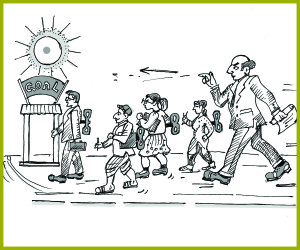
The Lack of a Conscious Approach to Business Goals
Businesses continue to be driven by greed and avarice alone. Hapless CEOs have no other option but to keep delivering results from one quarter to the next.
There are no guarantees that Volkswagen will not soon come up with yet another technical trick to befool the regulators and its customers. Boeing may yet again secure approvals for launching a model which might put air passengers’ lives at risk. Financial scams will keep tumbling out of corporate closets at a standard frequency which might put an atomic clock to shame.
Think of rising inequalities. Consider a report presented by Oxfam at the January 2021 World Economic Forum’s Davos Agenda, titled ‘The Inequality Virus’. It says that the 1,000 richest people on the planet recouped their Covid-19 losses within just nine months of 2020, whereas the world’s poorest could take up to a decade to recover from the pandemic induced setback. I am certain that philanthropic initiatives of the richest have not suddenly seen a proportionately higher uptick.
So, every crisis that humanity faces turns out to be an opportunity for the well endowed to amass greater wealth. Is this the kind of Materialistic and Unconscious Business model that we wish to continue following? Our answer would of course depend based on whether we are from the ‘haves’ side or the ‘have-nots’ side of the society.

The Monkey Business Called Politics
Probity and decency in the public life of our leaders is long since buried. Gone are the days when vibrant democracies needed a strong opposition to thrive. These days, even the President of a country can himself turn against the hallowed portals of democracy and send rampaging mobs braying for the blood of those out to declare him defeated in an election. In other words, it is one of those promotional offers – you vote in a President and get another one for free!
The aforesaid top boss’ term has revealed enormous gaps between the ideals of American democracy and the reality. Even before he exhorted his followers to attack the Capitol and the legislative branch of government, he ignored watchdog rulings and constitutional safeguards, pressed to overturn the outcome of an election, and pardoned those who covered for him, all the while funneling taxpayer dollars to his family business.
In yet another country, the main adversary runs the risk of not only being poisoned but also getting imprisoned on some ground or the other, while those in power brutally suppress dissent marked by men’s underwear and gold-painted toilet cleaning brushes.
World over, there is no dearth of leaders who have dictatorial ambitions but mask these well with democratic credentials. Speak of transparent political funding and all one gets is the silence of a tomb.
In yet another country, lies, obfuscation of facts and clever data management seem to have become a norm. Photo-ops, positive optics and feel-good media feed by devout followers keep the entire nation in thrall. Attempts to stifle dissent and to paint anyone not toeing the rulers’ line as unpatriotic continue unchecked. Getting offended by comments made by those living thousands of miles away appears to have become a national pastime. When a stand-up comedian speaks up, our clairvoyant nature allows us to guess what offending remark he is yet to make. Prompt legal action gets taken, nipping the intended mischief in the bud.
Building physical infrastructure is simply great. So is the drive to embrace technology to make life of a common man simpler. But when this comes at the cost of demolishing social harmony and making a democratic country free of any kind of opposition worth its while, the long term price of a ‘progress’ of this kind is rather high. I am not an economist, but I wonder if an economy can grow while the society itself is getting fragmented.
World over, quite a few governments have even used the pandemic as a cover to suppress dissent and cut short processes to introduce laws of an unpopular kind. In the process, their soft power is bound to dive down.
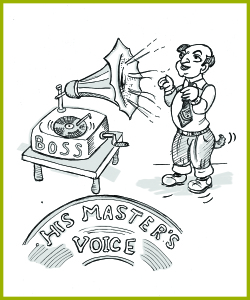
The Rudderless Social (and Anti-Social) Media
During 2020, in India, when our northern neighbour had encroached upon our land, and when the media should have been doling out useful health tips for people to stay safe in the midst of a pandemic, the only ‘breaking news’ was the suspected suicide of a Bollywood actor and the activities of his girl friend.
Social media, duly backed by smart algorithms, Artificial Intelligence and Machine Learning, keeps shaping our thought processes, our choices, our preferences, our perceptions and our beliefs. We are already living in a fish bowl where the law makers as well as the private players are hands in glove to sell detailed information about us to the highest bidder. Privacy concerns and personal liberties be damned. Pretty soon, it may happen that government support is available only to those who have a pro-government presence on various media platforms.
The whole idea is perhaps to help a lay person evolve into a dumb chum of the first order, unable to use his own judgement in matters of public importance; essentially, to numb the person’s grey cells. In other words, we all become zombies (or jack asses, if you prefer) of the first order.
Little do we realize that there are no free lunches in life. Any service available to us free of cost over the world-wide-web we have spun around ourselves only means that ‘We, the People’ are the product on sale!
If our social media czars do not come up with a realistic code of conduct for themselves soon enough, governments, to salvage their public image, may soon have to start dishing out harsher laws.
Perhaps, one of the czars will soon set up an academy to groom many of our whizz kids into becoming ethical hackers and algorithm developers.

Neglecting Half of the Homo Sapiens
If they stay at home, their contribution to society is never even acknowledged. Rather, it is taken for granted. If they venture out of their home and hearth, lustful gazes disrobe them mentally. If they get violated, they only have to take the rap. In war zones, they are the instruments used to inflict deep wounds on the psyche of the other.
Yes, I refer to the tribe of the so-called delicately nurtured. They are the ones upon whom Mother Nature has conferred the unique capacity of keeping our civilization alive and ticking. They may be as tough as nails and proving themselves to be better than the so-called sterner sex in all fields of human endeavour. A fact which was reinforced yet again when a deadly pandemic arrived at our doorsteps. In public, they may get put on a pedestal and revered. But in private, they often get treated like a doormat, treated as mere objects, only to be used and abused.
Doting lover boys, upon metamorphosing into husbands, often shed their chivalrous masks and start behaving like dictators. If a family breaks up owing to mistreatment, ridicule, abuse and violence at the hands of their husbands, it is the lady of the house alone who gets the entire blame – for being obstinate and uncompromising. The general view is that she is a gold digger of sorts.
Such a patriarchal mindset is not an exclusive prerogative of the poor alone. Nor does it respect geographical boundaries. Education levels also do not make much of a difference. Take couples across different countries, economic status and education level and one is apt to find this to be a universal phenomenon. The Chivalry Quotient may vary across all these parameters, but a singular shortage of preux chevaliers is felt all over our planet. Religious beliefs and even some spiritual tenets reinforce such derogatory views.
In respect of the legal framework, our experience in India has been a mixed one. The females have learnt the art of terrorizing their husbands and their families by foisting cases of imagined harassment, with the sole aim of securing better settlements while seeking divorce. Surely, the training in chivalry truly begins at home – either in the kitchen or at the dining table. Laws can play only a limited role.
The tectonic shift taking place here is that of divorce rates going up and couples preferring to remain friends with perks. Upwardly mobile wives who can stand on their own feet detest drawing husbands who refuse to wear skirts and help out with domestic chores. Once the family structure crumbles, there is a higher probability of the value system of the next generation going for a toss.
The Silence of the Lambs
In many of the issues brought out above, are we ourselves not responsible for the mess that we are in? The silence of our intellectuals, the self-centredness and public apathy of the middle class which more or less upholds values in society and the mute surrender of the common man – are these not some of the factors which have enabled this situation to have come about?
Many years back, I vaguely recall having read a satirical story in Hindi, written by a well known humourist in the language, Hari Shankar Parsai. A herd of lambs is made to believe that few wily foxes alone can solve all their problems. Pretty soon, foxes get voted in. One fine day, a ruling comes that to save the ruling foxes, some sheep should voluntarily surrender to be sacrificed each day so the patriotic fervour is kept alive and the nation is run effectively!
I am not a political science buff. Thus, I am not qualified to say if democracy as a model of governance is failing us. But one of its enabling factors is the presence of conscious leaders who are not shameless and still have traces of humility, empathy, decency and a concern for genuine overall good.
With No Malice towards Anyone
Educated youth who have no means of earning a living, will they not have a raw anger simmering within them? Will the poorer lot not take a jaundiced view of grand government schemes the benefits of which do not reach them?
Perhaps there is a feeling of helplessness within them. Perhaps they have dollops of patience. May be they realize that they are too small to bring about any change and feel it is better to accept things as they are and continue wallowing in misery and self-pity, blaming God for all their troubles.
But is a meek acceptance of murkier developments in the world around us a better approach? Can we not dissipate the seething anger within by at least saying what we find to be reproachable? Can we not break our silence of the lambs and speak up?
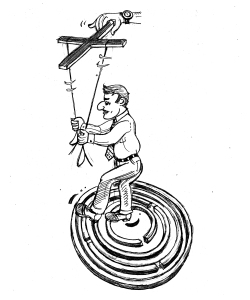
With Whom Does the Buck Stop?!
Are we ourselves not a part of the problem? Why have we, reasonably educated and rather wise people, decided to outsource our thinking processes and have instead opted to become zombies?!
Do we not keep patronizing companies even when we know that they have been cheating in the past? Are we not the ones who get swayed by propaganda and cast a vote for a particular party or a particular leader? Do we ever boycott a media outlet which acts as a mouth piece of those in power?
If we are addicted to, say, WhatsApp or Facebook, can we really blame their inventors for the issues that we face? Don’t we find it convenient to remain in touch with our friends and family members through these platforms?
When we notice a female being harassed, are we not likely to look the other way? Is the onus of ‘adjusting’ not always put on the female? Can we take a pause before we make a victim the facilitator of a crime?
Overall, by remaining a mute spectator and witness to acts of corruption, misinformation, lies and half-truths, do we not become accomplices to such misdeeds?
It is not wise to altogether point a finger at others only. A knife kind of a tool is given to us. Let us use it to prepare a juicy dish and not to hurt someone. The choice of usage is with us.
Our endeavour therefore should be to stand up, be courageous and outspoken. This alone can get us counted. Even if there is one sane voice amongst all the noise and din, it would resonate with other like-minded individuals out there.
Our salute needs to reach out not only to those who are already raising their voices but also to the decision makers who might eventually get around to listening to us.

Some Silver Linings
All this is not to say that there are no silver linings in the dark clouds hovering above us. As P G Wodehouse puts it, even when the air is pregnant with V or W-shaped depressions, there are always silver linings on the clouds. We shall do well never to repine, never to despair, but to work upon our own selves and on others in our sphere of influence. It is good to remember that, no matter how dark the skies may be, the sun is shining somewhere and will eventually come smiling through.
There are business houses which keep following good values and ethics in their day to day operations. There are leaders who respond well to challenges like social disharmony and stalking pandemics with a dash of human values. They treat dissent as a valuable input for their decision making processes. We also have very few social media and gig economy barons who are being forced by their own employees to either shape up or ship out.
Lawmakers and pressure groups in USA are already reported to be thinking of ways to bring in a wide-ranging overhaul of ethics, laws, the likes of which have not been seen since the post-Watergate era.
Perhaps, eminent legal eagles in India can also take a leaf out of the USA experience. As a country, we had experienced suppression of dissent even during the 1970s, when an emergency was declared. Can some more constitutional safeguards be brought in so that a popular mandate does not give the executive the right to ride rough shod over other arms of the government, thereby increasing the probability of the country being taken in a direction which is not the same as what our founding fathers had envisioned?
Above all, it is the man on the street, busy keeping his body and soul together, eking out a living for his family and even helping others in distress. When the scales from his eyes fall and he wakes up to a life threatening situation at hand, he reacts. The farmers in India are already showing their resolve following the strategy of peaceful protests and civic disobedience used by Mahatma Gandhi many decades ago.
Then we have lone wolf professional bodies. World Without Corruption in Belgium gives businesses a voice in fighting corrupt practices. The Conscious Enterprises Network in UK speaks of conscious leaders leading their enterprises in a holistic value-based manner in all spheres of human enterprise. The Center for Business Ethics & Compliance in Russia is focused on best practices in the realm of ethics and compliance.
Likewise, in India, Spandan Foundation is passionate about human values in organizations and even plans to set up a centre dedicated to the cause. Shakti Leadership highlights the importance of using feminine traits like empathy and compassion in decision making and assists individuals and organizations in their quest for conscious evolution. The Association for Democratic Reforms keeps relevant political issues alive and kicking in public eye.
I am sure there are many others scattered over other continents. Their attempt is to bring like-minded people together and keep the embers of a pious fire aglow, focused on values and ethics.
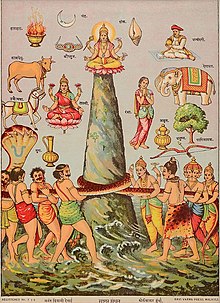
The Mighty Churning
The society is always in a flux. These days, it appears to be undergoing a mightier churning which reminds one of the episode of Samudra Manthan (The Churning of the Sea) in Indian scriptures. The churning throws up poison as well as the nectar which grants immortality. Those who believe in following the path of righteousness end up securing the latter.
It is easy to see that we have a leadership crisis on our hands. Since a situation also produces a leader, one hopes that more and more conscious leaders keep emerging, nudging us in the right direction.
Admittedly, the silver linings appear to be like a pale parabola of joy, to borrow an expression from P G Wodehouse. This will remain so till the time a bevy of conscious leaders – whether in business or in politics – do not appear on the scene and convert this into a shimmering parabola of bliss.
The solution is not to keep sweeping issues like hunger, poverty, economic non-inclusion, global warming and prejudicial animosity under the carpet. Nor is it to raise the existing walls, whether political, commercial, attitudinal or religious. It lies instead in a truly global view based on the concept of Vasudhaiva Kutumbukam: The World is One Family.

Being a born optimist who believes in having a chin-up attitude, I do hope that some of these tectonic shifts can at least get retarded, if not altogether reversed, in the years to come.
(Related Posts:
https://ashokbhatia.wordpress.com/2020/11/23/jeeves-and-the-social-media-challenge
https://ashokbhatia.wordpress.com/2016/09/23/bertie-jeeves-and-the-internet-of-things
https://ashokbhatia.wordpress.com/2014/12/08/bertie-social-media-and-blogging-blues
https://ashokbhatia.wordpress.com/2018/01/10/jeeves-seeks-a-placement)
‘Can you apply Good Karma to Business?’ (Guest Post by Mr Sanjay Sehgal)
Posted in Management Lessons, tagged Bhagavad Gita, Business, Human Values, Leadership, Management, Strategy, Sustainability on November 15, 2020| Leave a Comment »
(Sanjay Sehgal is Chairman & CEO at MSys Technologies, USA. His profile is accessible at https://www.linkedin.com/in/sehgalsanjay. In this post, he examines the relevance of some of the basic tenets of Bhagavad Gita to real-life business situations.)

The saying “As you sow, so shall you reap,” is considered one of the best-known representations of the concept of “Karma.” It got me thinking when it comes to work, how far can we caution ourselves about what we are “sowing” into our business (money, work, culture, decisions, conflicts, resolutions, etc.)? More importantly, how will we know if our dealings are in line with constructive evolution (the good side of the scale of karmic balance) or submerging us further into karma’s vicious cycle (the bad side of the scale of karmic balance)?
A rare tale of a leap of good faith
I still remember reading this inspiring news that made me smile with moist eyes. In 2015, Dan Price, the CEO of Gravity Payments, raised the minimum wage of all his employees to $70,000 a year. Dan had slashed his salary to $70,000 from $1.1 million to do so. Dan had once pronounced that he wishes to buy his dream car. To return the favor, 120 employees of Dan’s firm saved their one month’s salary and gifted him his dream car. It was Karma unfolding in its classic style.
Karma – the good, the bad, and the ugly
The notion of karma is comparable to a balance sheet, with the golden principle – debit in, credit out. You earn credit for all your debits. This credit will be good, bad, or ugly, depending on the debit you produce.
When you marry karma and business, you are bounded by the law –
A. Good karmic debits = Good Credit>input
B. Bad karmic debits = Bad Credit >input
C. Ugly karmic debits = Ugly Credit >input
Where karmic debits are your intentions, the input is your action based on intentions, and credit is your output. In any way, your output is greater than the input. Therefore, rule A is what we all must aim.
After having set up several ventures, and mentoring start-up enthusiasts I’ve consolidated the five Sutras of Karmic Management, which I feel can be applied in almost all situations:
1. The Law of Growth
While starting a new project, venturing out to materialize an idea, or managing a team, hasten the course of inevitable failure and stop doing anything that is not working out. That way, you may fail fast but it will turn out better if you also learn fast, and can help you grow faster. Take a new path that promises to take you to your destination. The great Abraham Lincon lost elections eight times and failed in business twice. But, he quickly moved on by failing fast and recovering faster for success.
2. The Law of Synchronicity
You’re thinking of replacing your car while driving on a highway, and you drive past a billboard, which advertises a good exchange offer on a car. This phenomenon is called synchronicity. The law of synchronicity is looking out for signals or events in the external surroundings that can help us achieve our objectives. You’re attracted to such signals unconsciously; as you’re constantly thinking of your objective, you are linking everything around to it. Logically, the idea emanates from the bedrock of curiosity that makes one look for the answer in everything around. Therefore, you are more aware of the external world that attracts you to the desired answer quickly, just like the law of attraction.
3. The Law of Reflection
We reflect our surroundings, and our surroundings mirror us. When we carry positivity within, we also reflect the same in people around us. Resultant – you are appreciative of people’s efforts and become a source of motivation. On the contrary, when you’re always complaining and criticizing, it is a clarion call to look within and reignite the fire of positivity. Take someone like Mahatma Gandhi, who was filled with hope and selflessness. He invariably saw the same in everyone and inspired the whole world to lead the life of righteousness.
4. The Law of Focus
In the face of problems, if you tend to lose direction, you are giving way to insecurity and rage. Instead, the best way to rise above challenges is by seeing them as opportunities to focus on your goals. Despite hurdles and lawsuits, the great Nicolas Tesla never lost sight and created over 300 patents to his name. It is said that he once worked 84 hours straight.
5. The Law of Significance and Inspiration
Your good returns are the fruits of your energy and intent. Fair use of intelligence is to have positive intentions and to put your energy into fructifying them. Invest in improving your business conduct. Use the profits to thank, encourage, and improve the lives of those who helped you succeed. Humility is the best form of investment.
The Karmic Philosophy of Business Sustainability
The core objective of any business is sustainability. A good business Karma will ensure a long run for any organization. Let’s decode further. The business Karma consists of four key elements
- Strategy – Implementing decisions that are thought through and would reap long term benefits. For example, mergers and acquisitions or product diversification.
- Transparency – Acting per policies and communicating in all openness, honesty, and goodwill to employees and customers. For example, intimating clients in case of an operational-hiccup.
- Nurturing – Promoting a culture of care and empowering employees to grow in the system. For example, a manager guiding his/her team by sharing expertise and wisdom.
- Objectivity – Acting fair by ensuring pragmatic criteria to arrive at a decision. For example, eliminating personal biases when addressing employee grievances.
When actions comply with these four elements the good business karma is manifested in form of sustainability. On contrary, bad business karma will impact a business’s lifeline.
(Link: https://yourstory.com/mystory/apply-good-karma-business?utm_pageloadtype=scroll)
(Related Posts:
https://ashokbhatia.wordpress.com/2019/08/01/the-karma-operating-system
https://ashokbhatia.wordpress.com/2018/06/11/ignoring-the-small-stuff-focusing-on-values-in-business)
Ten Management Lessons CEOs can learn from Mahatma Gandhi
Posted in Management Lessons, tagged Business, Mahatma Gandhi, Management, Values on October 2, 2018| Leave a Comment »


Mahatma Gandhi, revered the world over as an apostle of peace and non-violence, led India’s freedom movement. His birth anniversary gets celebrated on the 2nd of October.
Are his teachings relevant to the world of commerce and business? Can CEOs of today learn a thing or two from his aphorisms?
Here are few of his thoughts which business owners, CEOs and managers might find of some interest.
The future depends on what you do today.
Managements who care for their brands re-engineer their business processes and ensure sustainable operations. They respect the environment and the aspirations of the local communities. They ensure compliance with local laws. Ethics and values are strictly adhered to.
A customer is the most important visitor on our premises. He is not dependent on us. We are dependent on him. He is not an interruption in our work. He is the purpose of it. He…
View original post 757 more words
‘Surviving in the Corporate Jungle’ – Another video
Posted in Management Lessons, tagged Business, Ethics, HR, Interpersonal Relations, Leadership, Management, Results, The Book, Values on January 15, 2018| Leave a Comment »
Often, your truly is asked about the contents of the book entitled ‘Surviving in the Corporate Jungle’.
The video clip here covers in brief some of the 110+ topics covered in the book.
Enjoy, and be a smarter and happier manager!
(Related Post:
https://ashokbhatia.wordpress.com/2017/10/14/surviving-in-the-corporate-jungle-a-video)
A book presentation session at Madras Management Association, Chennai, India
Posted in Management Lessons, tagged Book, Business, Corporate Jungle, Ethics, Gussie Fink Nottle, Leadership, Madras Management Association, Management, MMA, P G Wodehouse, Values on September 14, 2017| 2 Comments »

Most of the management events we get enticed to attend are very much alike. Somebody gets up and introduces the chair person and the speaker of the evening. Then, the chair person mumbles a few words designed to cheer up the speaker. The speaker of the evening then goes on to describe at great length what he thinks of the scandalous manner in which private sector managements behave or exposes the inefficient goings-on in the public sector.
The hapless soul tasked to chair the session makes sympathetic observations about the subject at hand. He makes brief notes in a studious manner. Later, he uses these to wrap up the proceedings as quickly as norms of society, dictates of behavioural sciences and standards of politeness would allow.
The speaker of the evening is invariably dressed in an impeccable corporate style. This is merely to mask the inner shivering he experiences at the prospect of facing a firing squad. Externally, he exudes confidence. Internally, he is all of a twitter. Unfortunately, many speakers are blissfully unaware of the technique of public speaking unwittingly perfected by Gussie Fink Nottle of P G Wodehouse fame – that of getting adequately braced with generous helpings of a strong tissue restorative prior to delivering a speech.
While he tries his best to convey some serious messages to the unsuspecting audience, he also attempts to induct some humour into the otherwise listless and sombre proceedings. This helps him to sugar-coat his dull message to the unsuspecting audience.

The audience upon which the speaker’s verbosity is unleashed listens in a state of polite resignation, often suppressing a yawn or two. With an eye on the wrist watch and a nose trying to detect the faint aroma of snacks and coffee being served outside the lecture hall, they bide their time, hoping for the ordeal to end soon.
From time to time, some members in the audience rise and ask carefully rehearsed questions, which get answered fully and satisfactorily by the speaker. Often, when a question gets asked in the pure spirit of proving to the assembled group that the questioner is smarter than the questioned, the latter either ignores him, or says haughtily that he can find him arguments but cannot find him brains. Or, occasionally, when the question is an easy one, he answers it.
When the discussion gets out of hand, and the speaker is found to be twiddling his thumbs, the chair person rushes in to conclude the affair, thereby bringing joy and relief all around.
The speaker is delighted that he has been rescued just in time and looks upon the chair much like a typhoon survivor would look upon the US marines when they arrive to rescue him from a disastrous situation.
The audience is happy that the trauma is finally over. They look forward to grabbing the vitamins laid outside the hall, so as to keep their body and souls together and also to overcome the state of depression induced by the presentation.
The organisers breathe easy, having saved their furniture and other items from any damage. Someone from their side quickly offers a vote of thanks to all and sundry, lest the speaker change his mind and go on to bore the audience any further.
A smoothly conducted management meeting is one of our civilization’s most delightful indoor games. When the meeting turns boisterous, the audience has more fun, but the speaker a good deal less.

The book presentation session at Madras Management Association recently was true to form in more ways than one. Save and except for the following:
– Being chaired by an exceptional business person who is practising the art of true social responsibility.
– The presentation of some portions of the book was more of an interactive session which never tended to be boisterous.
– There was a singular absence of any rehearsed questions from the audience.

The session had attracted around forty odd souls who suffered the trauma of listening to yours truly and others for about forty minutes or so. Perhaps Einstein’s Theory of Relativity kicked in and these forty minutes felt like forty hours to them, because when it was time for the Q and A, they pounced on an inwardly shuddering yours truly with much glee.
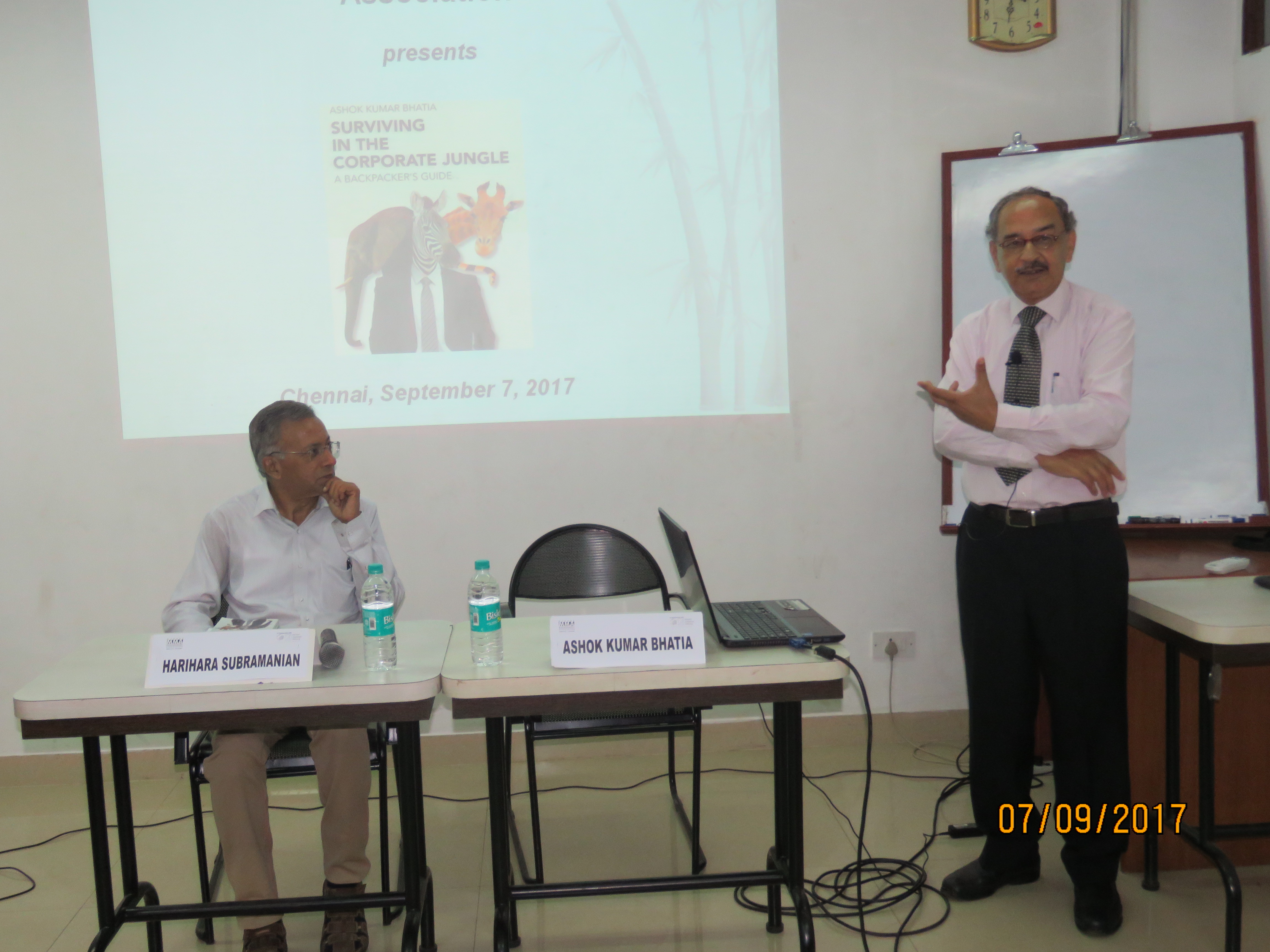
As luck would have it, much light was generated in the discussion that followed the brief presentation. The heat generated was perceptibly less; thus, no fire alarms went off in the lecture hall. The brainy coves assembled for the evening proved their mettle by coming up with astute observations and insightful comments. An enlightened soul in the audience even went on to enquire as to what precisely is meant by Spiritual Quotient, and what could be done to shore it up.

Leadership styles got discussed. Tips on managing Lion Bosses got shared. Dignity of women at workplace came in for a mention. The delicate art of dishing out selective favours to those who really deserve support was brooded upon. Several other topics of contemporary interest were discussed, including the recent boardroom battles which played out at Infosys and at Tata House.
One is grateful to Madras Management Association for having provided this opportunity to share one’s thoughts with their brainy members and honourable invitees.
(Related Post: https://ashokbhatia.wordpress.com/2017/07/31/a-tale-of-two-countries-and-a-book-launch)
An open letter to the Independent Directors of Tata companies
Posted in Management Lessons, tagged Arun Maira, Business, Cyrus Mistry, Ethics, Jamsetji Tata, Jehangir Pocha, JRD Tata, Management, R Gopalakrishnan, R M Lala, Ratan Tata, Succession Planning, Tata Group, Values on November 23, 2016| 3 Comments »
Respected Ladies and Gentlemen,
Some of you might be twiddling your fingers these days, trying to figure out exactly what is happening, why things have come to such a pass, and if there is some way you could pitch in to resolve the Tata-Mistry issue.
I do believe there is a way you can make a difference. You can do so by taking a stand which would make you look back at your decision in the future with a feeling of glowing satisfaction and contentment.
Allow me to share some of my own thoughts on the subject. I write with all humility at my command. I write this as a lesser mortal who is not privy to the power conflicts at the top levels of the Tata group. I write this as a common man, and also as an ex-employee of one of the companies of the group, namely Tata International.

Forced separation only under grave provocation
The rather uncharacteristic manner in which Cyrus Mistry has been shown the door by Tatas some time back only goes on to establish a truth – that you all support an elephant which has not only learnt to dance but also knows how to be nimble-footed when the situation so demands. Step on the wrong toes and the message is loud and clear. Core values are not negotiable. Cross that invisible line at your own risk and peril. Provoke the elephant in a wrong way and face the music.
Way back in 1993, Russi Mody also underwent the experience of a forced separation.
There are many other instances which one can go on quoting, but the moot point remains that those entertain individual ambitions and start nudging the group against its core values invariably get ejected from the pilot’s cockpit.
Even at lower levels, the old perception that Tatas work like a massive bureaucracy and a job with them is for one’s life time is altogether wrong. I have myself been a witness to some such cases, where managers who had either performed very poorly, or offered speed money, or otherwise acted in bad faith, were clearly told to look for greener pastures elsewhere.
In Tata we trust
You are well aware that the brand equity that the group enjoys is as much about product quality as it is about trust and faith which stakeholders of all hues, sizes and shapes repose in its operations.
Tatas happen to support trusts which are some of the oldest charitable institutions in India. The group has pioneered modern ideas of secular, social services-oriented philanthropy.
It is not easy to name another business empire which has invested in the social sectors even when no law ever mandated it. Or, one which has invested in areas totally unrelated to the core business activities of the group. Iconic institutions like the Indian Institute of Science, the Tata Institute of Fundamental Research, the Tata Institute of Social Sciences, the National Center for Performing Arts are but some of the examples which spring to one’s mind.
A habit of going beyond the mandate

It may also not be possible for us to locate another business house which has gone out of its way to incur a liability out of a sheer sense of decency even when not having a formal agreement to that effect.
In one of his scintillating articles, Arun Maira, ex-member of the Indian Planning Commission and an ex-Tata senior, recounts a 1946 meeting between the KraussMaffei board and J R D Tata and Sumant Moolgaokar on the platform of the bombed out Munich station. In those times, Indian companies had no way of entering into any agreement with German companies. The Germans requested Tatas to take their best technicians and their families to India, who were starving without work in Germany. So, Tatas learnt metal-working from the best of the best.
He says that many years later, when India had become independent, the German company’s headquarters received a letter from Tatas, asking how much to pay for the technology they had provided to Tatas. That letter showed the true spirit of the group – one honours one’s debt, even when it is not legally binding, and even when it is not demanded of one.
You may also recall the Tata Finance fiasco in 2001, when a letter alleging some wrongdoings at the company reached the desks of several Tata seniors. Tata Sons could have well adhered to admitting its limited legal liabilities, but Ratan Tata took a courageous and humane view to publicly declare that interests of every small investor shall be protected.
In his brilliant book, Six Lenses, R Gopalakrishnan, cites several examples from the Tata history to sketch out the kind of culture the group has.
You are well aware that much of the goodwill enjoyed by the group is because of the perception that, as a business house, it has always tried to put into practice the Zoroastrianism principles of Humata (Good Thoughts), Hukhta (Good Words) and Hvarshta (Good Deeds).
A unique vision and the spirit of enterprise

Elsewhere, R M Lala speaks of the spirit of enterprise by quoting the instance when Sir Jamsetji N. Tata traveled all the way to Pittsburgh in USA to realize his dream of building a steel plant in India. In 1901, he met Julian Kennedy, the foremost steel expert, who warned him that even the preliminary investigation could cost a fortune and there was no guarantee of any returns. He suggested that survey of the raw materials be made by Charles Page Perin, the best geologist in America.
In New York, Jamsetji went to Perin’s office who was impressed by the passion and the sincerity of the aging entrepreneur. In April 1903, his partner, C. W. Weld, came over to India to kick-start the process of setting up a steel foundry. Even though Jamsetji passed away in 1904, his vision was brought to fruition and the first ingot of steel rolled out of the Sakchi plant during 1912. World War I broke out soon after and Britain found that the only source of steel for the war effort East of Suez was in India.
Within two months of the War ending, the Viceroy came to the Steel Works at Sakchi, and rechristened it Jamshedpur.
Many of you may believe that the Tatas can grow faster by being more aggressive in existing as well as in green field verticals. But you can not miss the point that tremendous progress has been made already, and never by compromising on the core ethics and values the group companies adhere to. Running the same businesses without this core would be like having living organisms sans their souls.
Succession and moments of mental aberration
Succession in a complex organization which is 148 years old is often a delicate issue.

JRD is reported to have often joked that the Tata Sons board made him chairman in a moment of mental aberration. While he was anointed thus in 1938, his ascendance was never a cake walk. He took over the baton of the group from his second cousin Nowroji Saklatwala.
To quote Jehangir Pocha:
Inwardly, he was none too pleased with Shapoorji’s “intrusion” into Tatas. He is said to have got even more infuriated when Shapoorji proceeded to buy further stakes in Tata Sons from his siblings, Sylla and Darab Tata. This event has now come back to haunt the group.
JRD himself never spoke publicly about Shapoorji, Darab or Sylla, as was the norm in the days when grace mattered and linen was never washed in public. But he did say in his later years that Shapoorji took advantage of people who were “weak-willed and credulous”.
He surrounded himself with exceptional managers and threw the somnolent group into expansion mode. Tata Chemicals was incorporated in 1939 and became India’s first soda-ash supplier under Darbari Seth. Tata Motors was established in 1945 and nurtured by Sumant Moolgaokar. Tata Steel grew under Homi, and then, Russi Mody. JRD himself was the steward of Air India’s growth, even after its nationalisation in 1953. Naval Tata led the Tata electric companies, and the group’s textile and oil mills.
Fast-forward to 1991, when Ratan Tata took over the reins of the house of Tatas. He then faced the challenge of managing the then existing power structure within the group to be able to assert himself.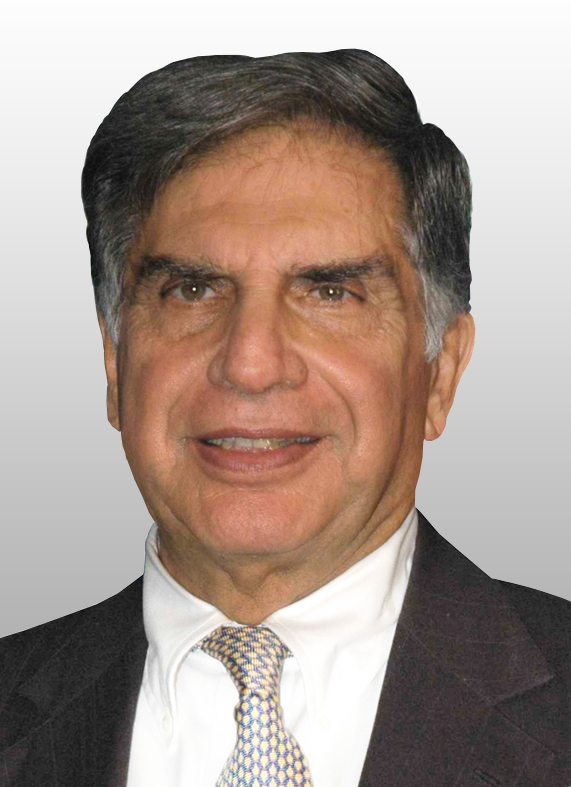
Of de-globalization and corporate governance
On the global stage, these are challenging times for many of the group’s business verticals. Brexit and the recent US elections are events which need great attention. Post-2008, the world appears to have entered into a phase of de-globalization. Protectionist barriers are likely to get higher. Right-wing enthusiasts world over are basking in the perceived glory of their resurgence on the global stage. The Mistry fiasco is a distraction the group can surely do without.
The current feud does throw up several serious challenges. One is that of achieving managerial excellence within the framework of ownership by a particular family – something that Tatas have always managed to do so very well. Another is that of articulating the invisible authority lines between owners and professionals. Both these factors need strategic thought from persons of such eminence as your goodselves.
Yet another issue pertains to managing the employees and the business ecosystems as long as the turbulence persists.
Support a business with its soul intact

Allow yours truly to urge upon all of you to think deeply on the issues that the group faces at this time. Go back to your conscience and check if you view your relationship with any of the Tata companies purely through a materialistic lens, or through a lens which also incorporates the kind of values the group stands for.
You are well aware that in many areas of management, Tatas have set the bar very high. Giving back to society. Business strategy. Employee welfare. Women empowerment. Avoiding the bribe traps. Avoiding, but never evading, taxes. Going beyond the mandate.
One would hope that persons of your eminence would choose not to wash dirty linen in public and resolve your differences in a spirit of mutual accommodation. That you shall respect your custodianship role and live it. That you shall conduct yourself in a manner which would justify the trust and faith reposed in you not only by the group but also by the shareholders of the company you happen to be associated with.
That you shall subdue your ego and care for the long term bigger picture. That if your value systems happen to be out of sync with those of the Tata group, you shall quietly withdraw from the eminent position you enjoy on the board of any of the group companies. That, hopefully, you shall support Ratan Tata and his team to protect their turf.
If the differences between you continue to fester, the brand equity of the group might take a short-term hit. However, one has no doubt that, given your support, it shall scale greater heights in the years to come.
One wishes Ratan Tata the best of deliberations to find a perfect professional to steer the group in the coming decades.
(Further reading:
Article by Mr Arun Maira
http://www.livemint.com/Opinion/GOx9Ym0MSLSGwbHb6WSvsO/The-Tatas-and-a-matter-of-trust.html
Article by Mr R M Lala
http://www.thehindubusinessline.com/todays-paper/tp-opinion/in-the-company-of-men-of-steel/article1649373.ece
Book by Mr R Gopalakrishnan (www.themindworks.me)
Six Lenses, ISBN 978-81-291-3587-2)
(Related Posts:
https://ashokbhatia.wordpress.com/2012/12/27/bidding-an-adieu-to-mr-ratan-tata
https://ashokbhatia.wordpress.com/2016/04/04/super-leaders-the-near-perfect-ceos
The cost of not innovating
Posted in Management Lessons, tagged Business, Innovation, Management on April 7, 2016| Leave a Comment »
Here is an excerpt from a book titled ‘Future Proof Your Business‘ by Mr Prakash Seshadri.
Realistically speaking, we are always on the verge of a slow down or a flat economy. In the past, CEOs made serious mistakes in trying to cope with a slowing economy. Here is a list of What Not to Do.
All of them hurt innovation. Unless you really want to compete on price, the ability to do sustained innovation is the one competitive edge left. Innovation is the driver of performance, growth and stock market valuation.
Here are the 10 worst mistakes you can make in a slow down that will hurt innovation:
1) Fire talent
Cutting back on people, especially really smart, high-priced people, is a quick way to cut costs. It will hurt companies who follow this way. Talent is the single most important variable in innovation.
2) Cut back on technology
It is being reported that companies are already curbing investments in technology to save money; banks especially. The rise of social networking and consumer power means that companies have to be part of a larger conversation with their customers. This means big money spent on IT.
3) Reduce Risk
Innovation requires taking chances and dealing with failure. Recessions push managers to be more conservative. They need to fight this instinct.
4) Stop New Product Development
Saving money often means cutting back on new products and services during an economic downturn. This hurts companies when growth returns and they have fewer offerings in the marketplace to attract consumers.
5) Boards Replace Growth-Oriented CEOs with Cost-Cutting CEOs
Sudden declines in revenues and profits often lead boards of directors to search for managers with experience in pinching pennies. That’s what appeared to happen recently at Bang & Olufsen. Penny-pinching CEOs don’t have the skills to grow, when growth returns.
6) Companies Retreat from Globalization
It’s expensive to expand globally and managers often save money by cutting back on emerging markets. It’s a big mistake. Emerging markets are sources of new revenue, business models, and talent.
7) CEOs Replace Innovation as Key Strategy
By turning defensive, top managers take innovation off the top of the official agenda and replace it with systems management and squeezing costs. The entire organization follows. It is extremely hard to reverse this when growth returns.
8) Performance Metrics Are Changed
To save money and cut costs, managers shift employee evaluations away from rewarding riskier new projects toward sustaining safer older goals. Risk-averse behavior follows. Again, this is hard to change.
9) Hierarchy Is Reinforced Over Collaboration
Sudden drops in revenue and profit often lead companies to panic and mobilize to stem the decline. The need for fast decision-making often leads to a return to command-and-control management. This alienates creative-class employees, young Gen Y and Xers and stops the evolution of corporation organization toward a flat, collaborative, open source model.
10) Retreat into Walled Castles
Cutting back on outside consultancies is seen as a quick way to save money. Yet one of the key ways of introducing change into business culture is to bring in outside innovation and design consultants. They know what companies across a broad range of industries around the world are doing to promote change. Not receiving this information can hurt a company’s global competitive position.
Winners always emerge out of slow downs and they almost always beat their competition on the basis of something new. Apple worked on iTunes, iPod and its retail stores during the last slow down and came out swinging once growth returned to destroy its competition. Apple didn’t make any of the top 10 innovation mistakes. Your company shouldn’t either.
(Here is a link to a teaser of the book:http://imojo.in/crpeqy)
(Related Post: https://ashokbhatia.wordpress.com/2013/01/23/of-idleness-innovation-and-the-peter-principle)
Ten Management Lessons CEOs can learn from Mahatma Gandhi
Posted in Management Lessons, tagged Business, Mahatma Gandhi, Management, Values on October 2, 2015| 8 Comments »

Mahatma Gandhi, revered the world over as an apostle of peace and non-violence, led India’s freedom movement. His birth anniversary gets celebrated on the 2nd of October.
Are his teachings relevant to the world of commerce and business? Can CEOs of today learn a thing or two from his aphorisms?
Here are few of his thoughts which business owners, CEOs and managers might find of some interest.
The future depends on what you do today.
Managements who care for their brands re-engineer their business processes and ensure sustainable operations. They respect the environment and the aspirations of the local communities. They ensure compliance with local laws. Ethics and values are strictly adhered to.
A customer is the most important visitor on our premises. He is not dependent on us. We are dependent on him. He is not an interruption in our work. He is the purpose of it. He is not an outsider in our business. He is part of it. We are not doing him a favor by serving him. He is doing us a favor by giving us an opportunity to do so.
Smart CEOs already know this, thanks in part perhaps to Philip Kotler and others who have proclaimed that ‘Customer is King.’ A small time retailer practices this axiom even without having come across it. Managements of organized retail chains try to drill this message into their front-line staff, hoping to make shopping a pleasurable experience.
Marketing honchos these days are twiddling their thumbs trying to solemnize a holy matrimony between e-commerce outfits and brick-and-mortar stores.
Be the change you want to see in the world.
CEOs spend a lot of their time trying to reform others. But the trick perhaps lies in understanding oneself internally – one’s own motivations, value systems, strengths and weaknesses.
To be a true leader also means to lead by example. A business leader who cries hoarse over corruption but is seen as dishing out lucrative business deals to a family member would never get taken seriously. A company which projects a clean image but does not deliver good value for customer’s money, or sets aside funds for speedier navigating through the politico-bureaucratic maze of a country it operates in, succeeds only in the short run.
Freedom is not worth having if it does not include the freedom to make mistakes.
CEOs in the King Lion mode make good mentors when they take the mistakes of their cubs in their stride, coach them appropriately and do not indulge in demolishing their sense of self-worth.
It is unwise to be too sure of one’s own wisdom. It is healthy to be reminded that the strongest might weaken and the wisest might err.
Great leaders are often humble. They learn from their failures as well as from their successes. CEOs and marketing heads of FMCG companies who are getting out of their silos and venturing into rural markets are learning this rather quickly.
Be congruent, be authentic, be your true self.
Gravitating towards an external profile which is a reflection of what one happens to be internally is one of the ingredients of success. This harmony leads to better degree of mental peace and equanimity, which in turn brings about better decision-making.
If I have the belief that I can do it, I shall surely acquire the capacity to do it even if I may not have it at the beginning.
A clear sense of purpose and a strong self-belief alone are necessary but not sufficient for go-getter CEOs to realize their aims. A conscious effort to acquire the knowledge and the skills necessary to achieve one’s aim is a pre-requisite of success.
Strength does not come from physical capacity. It comes from an indomitable will.
A strong will power and a sense of conviction help CEOs in achieving their goals. Followers look up to them for strategic inputs and end up assisting them in execution.
Will it with all your heart, and see your vision taking a tangible shape.
A ‘No’ uttered from the deepest conviction is better than a ‘Yes’ merely uttered to please, or worse, to avoid trouble.
Smart CEOs know when and how to say a ‘No’. They also understand the perils of being a ‘Yes’-person. Registering dissent is an art which they often learn the hard way.
Live as if you were to die tomorrow. Learn as if you were to live forever.
Living in the present is an art which successful CEOs practice in a state of blissful ignorance. Ensuring that all customer queries get responded to on the very day these are raised is a matter of habit for them.
Going back to school is an option which many senior managers exercise these days. Organizations which encourage such endeavours keep topping the charts of the most-favourite-employers year after year.
Mahatma Gandhi was not a management consultant. What he said was not in the context of business management. But some of the principles he has left behind for us to munch upon are practical, hard-nosed and shrewd.
Business owners, CEOs and managers of all hues are sure to find that many of his ideas are worth emulating. Mere brooding over these gems of business could transform our attitudes and produce gratifying results. Bringing them in practice could help businesses burnish their brands and build a formidable competitive edge.
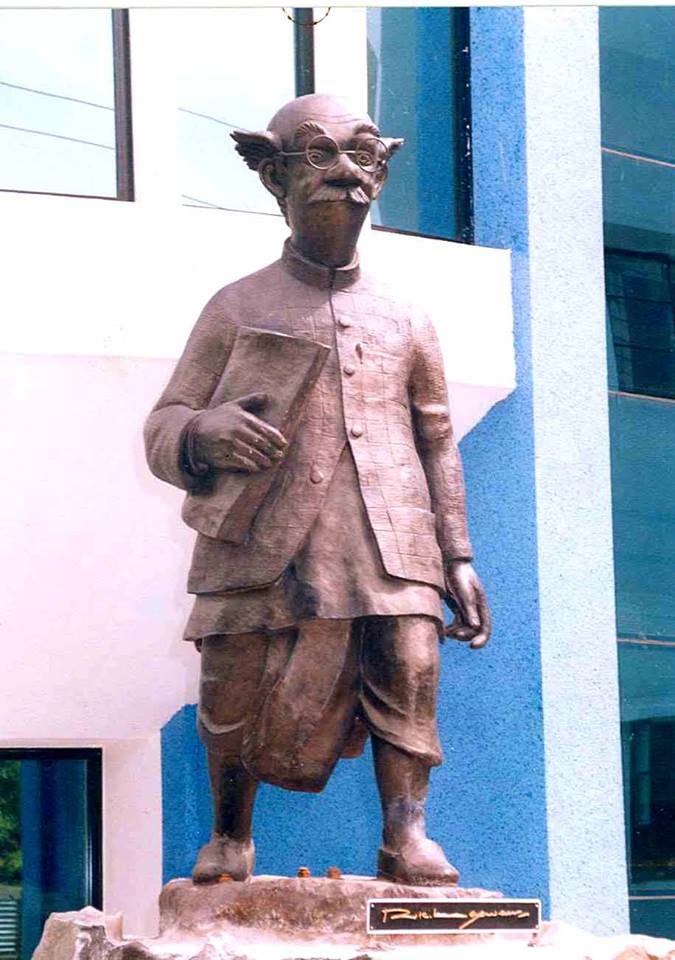
(Caricature by late Sh. R K Laxman)
(This post can also be found at http://www.mdaceoworld.com/blog)
-
Recent Posts
Buy the Book

buy the book
Categories
-
cc
Tags
Art Bertie Wooster Bhagavad Gita Bingo Little Birthday Blake Mouton Grid Blogging Bollywood Book Campus Life CEO Chivalry Consciousness Coronavirus Corruption Edwin Empress of Blandings English Ethics Feminism Happiness Health Hindi Hollywood Human Values Humour India Jeeves Kalidasa KIds Leadership linkedin Literature Lord Emsworth Love Lyrics Mahabharata Mahatma Gandhi Management Movies Music Norway Paintings Panjab University People P G Wodehouse Politics Pondicherry Portugal Psmith Puducherry Rabindranath Tagore Ramayana Ritusamhara R K Laxman Romance Rosie M Banks Rupert Psmith Seasons Shakespeare Social Media Something Fresh Songs SPANDAN Spirituality SQ Sri Aurobindo Stephen Covey Switzerland Tatas Thos UBS Values Wodehousitis WomenArchives
- March 2026 (1)
- February 2026 (5)
- January 2026 (2)
- December 2025 (1)
- November 2025 (2)
- October 2025 (2)
- September 2025 (3)
- August 2025 (3)
- July 2025 (2)
- June 2025 (2)
- May 2025 (4)
- April 2025 (5)
- March 2025 (5)
- February 2025 (4)
- January 2025 (4)
- December 2024 (6)
- November 2024 (6)
- October 2024 (6)
- September 2024 (5)
- August 2024 (5)
- July 2024 (4)
- June 2024 (4)
- May 2024 (5)
- April 2024 (5)
- March 2024 (3)
- February 2024 (1)
- January 2024 (4)
- December 2023 (2)
- November 2023 (3)
- October 2023 (3)
- September 2023 (3)
- August 2023 (5)
- July 2023 (5)
- June 2023 (7)
- May 2023 (6)
- April 2023 (6)
- March 2023 (8)
- February 2023 (8)
- January 2023 (7)
- December 2022 (6)
- November 2022 (5)
- October 2022 (8)
- September 2022 (5)
- August 2022 (6)
- July 2022 (6)
- June 2022 (8)
- May 2022 (7)
- April 2022 (8)
- March 2022 (7)
- February 2022 (3)
- January 2022 (7)
- December 2021 (4)
- November 2021 (8)
- October 2021 (7)
- September 2021 (6)
- August 2021 (7)
- July 2021 (7)
- June 2021 (9)
- May 2021 (8)
- April 2021 (9)
- March 2021 (10)
- February 2021 (8)
- January 2021 (8)
- December 2020 (7)
- November 2020 (6)
- October 2020 (5)
- September 2020 (9)
- August 2020 (9)
- July 2020 (8)
- June 2020 (8)
- May 2020 (6)
- April 2020 (5)
- March 2020 (7)
- February 2020 (4)
- January 2020 (7)
- December 2019 (12)
- November 2019 (10)
- October 2019 (5)
- September 2019 (9)
- August 2019 (10)
- July 2019 (9)
- June 2019 (14)
- May 2019 (13)
- April 2019 (14)
- March 2019 (11)
- February 2019 (11)
- January 2019 (14)
- December 2018 (12)
- November 2018 (12)
- October 2018 (14)
- September 2018 (9)
- August 2018 (10)
- July 2018 (10)
- June 2018 (8)
- May 2018 (11)
- April 2018 (11)
- March 2018 (6)
- February 2018 (9)
- January 2018 (10)
- December 2017 (10)
- November 2017 (9)
- October 2017 (8)
- September 2017 (11)
- August 2017 (10)
- July 2017 (10)
- June 2017 (11)
- May 2017 (9)
- April 2017 (7)
- March 2017 (7)
- February 2017 (8)
- January 2017 (10)
- December 2016 (9)
- November 2016 (11)
- October 2016 (10)
- September 2016 (10)
- August 2016 (9)
- July 2016 (6)
- June 2016 (10)
- May 2016 (10)
- April 2016 (10)
- March 2016 (10)
- February 2016 (12)
- January 2016 (10)
- December 2015 (11)
- November 2015 (11)
- October 2015 (10)
- September 2015 (10)
- August 2015 (10)
- July 2015 (10)
- June 2015 (10)
- May 2015 (10)
- April 2015 (10)
- March 2015 (9)
- February 2015 (10)
- January 2015 (8)
- December 2014 (9)
- November 2014 (8)
- October 2014 (8)
- September 2014 (7)
- August 2014 (7)
- July 2014 (7)
- June 2014 (7)
- May 2014 (7)
- April 2014 (7)
- March 2014 (7)
- February 2014 (6)
- January 2014 (7)
- December 2013 (6)
- November 2013 (6)
- October 2013 (6)
- September 2013 (6)
- August 2013 (6)
- July 2013 (6)
- June 2013 (6)
- May 2013 (6)
- April 2013 (6)
- March 2013 (6)
- February 2013 (6)
- January 2013 (6)
- December 2012 (4)
- November 2012 (4)
- October 2012 (3)
- September 2012 (2)
- August 2012 (4)
- July 2012 (2)
- June 2012 (2)
- May 2012 (2)
- April 2012 (2)
- March 2012 (2)
- February 2012 (3)
- December 2011 (3)
- November 2011 (1)
- October 2011 (2)
- September 2011 (2)
- August 2011 (2)
- July 2011 (2)
- June 2011 (3)

 ashokbhatia