Feeds:
Posts
Comments

Posts Tagged ‘CEO’

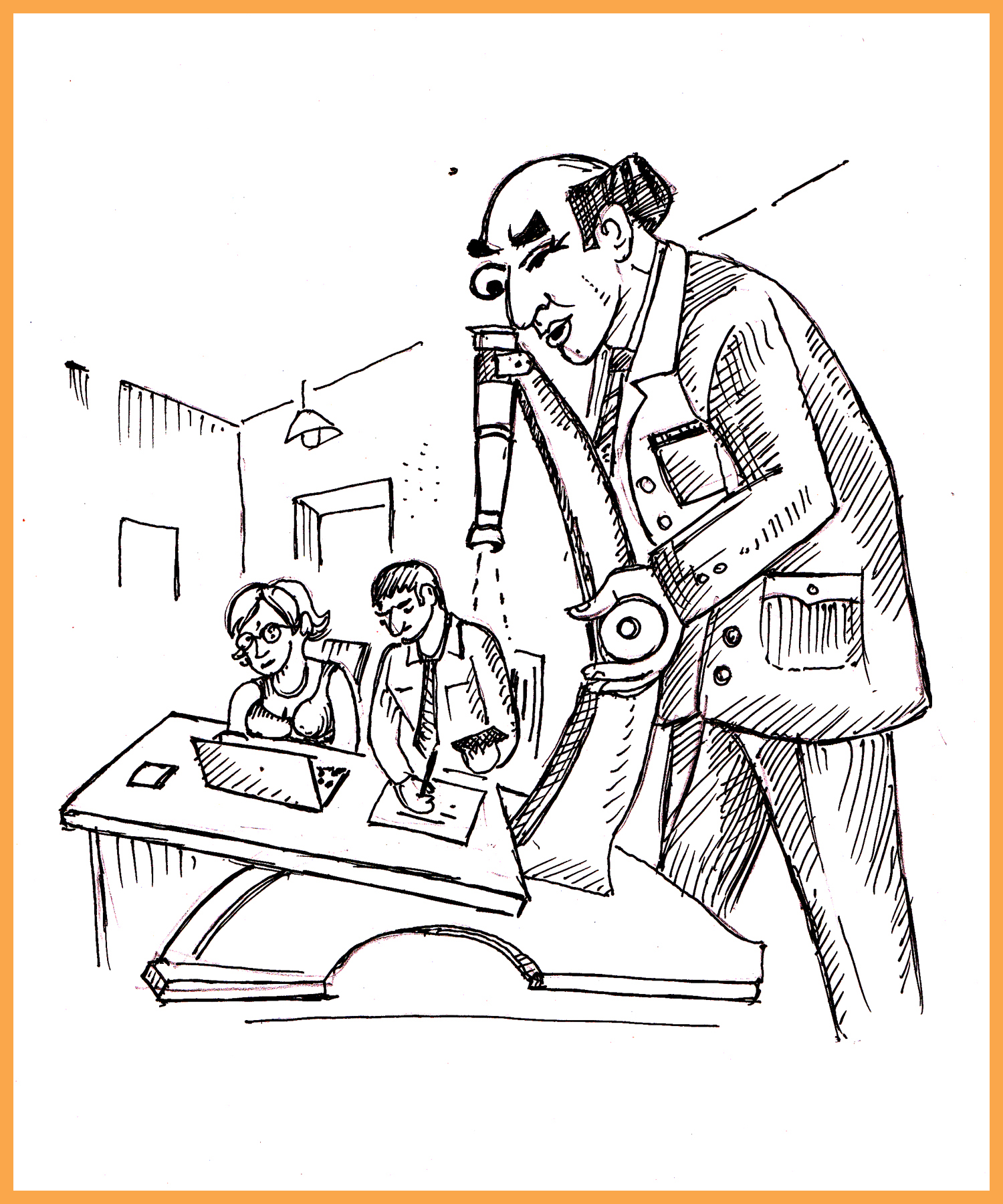
This is the most commonly found breed of CEOs. They are crazy about getting results. They plan well. They execute even better. People rank high amongst their priorities. They protect them much like a tigress would shield her cubs. But when it comes to ethics, values and systems, they could not care less. Auditors cannot be faulted for labelling them as arsonists.

Managements love them. The efficient ones amongst their team members adore them. The sloppy ones dread them. Their Concern for Production is invariably high. They are often sharp when it comes to adapting newer technologies in the organization’s processes. Their Concern for People is also high. They can be found praising their people in public while ruthlessly ticking them off in private.

However, when it comes to Concern for Ethics, they rank very poorly. Their value systems are driven by commercial goals alone. Systems and procedures are merely the dust beneath their chariot wheels, leaving Finance honchos as well as auditors aghast and exasperated.

In terms of the modified Blake Mouton Grid, they rank at 9,9,1.X Y Z upgraded

Under them, short-term and medium-term goals get achieved. In their heydays, the Goddess of Success courts them. But harsh arrows and slings of an unforgiving commercial world bring about a day when their Guardian Angels are no longer in a benevolent mood. Regulatory agencies catch up with them and demand their pound of flesh. They get trapped in the intricate web of deceit, evasion and non-compliance they have woven around themselves. Brand image of the organization takes a hit. Competitors swiftly move in to occupy the mind-space of customers. Market valuations drop. Stakeholders and employees start seeking greener pastures.

Gradually, they start getting transformed into CEOs whom we could classify as Charmless Charlies.

A deeper malaise

A charitable way of looking at Arsonist Achiever CEOs would be to say that they happen to be the product of a system which thrives on greed and avarice. When they get results by using unfair means, managements feign to be in a state of blissful ignorance.

In general, the business world does suffer from this omnipresent affliction. When it comes to perpetrating a fraud on unsuspecting stakeholders, human ingenuity has never been found wanting.

If America had Enron, Lehman Brothers and Tyco, UK had Barclays. If Norway had Nortel, Portugal had Banco Espirito Santo. If Switzerland had UBS, India had Satyam and Kingfisher Airlines. Germany has just had Volkswagen.

No specific industry could lay an exclusive claim on such man-made disasters. Be it banking, insurance, mining, automobiles, energy, commodities, IT or real estate, all have set examples of devious plans to deceive the gullible stakeholders.

Human greed and avarice are obviously the root cause. The sheer pleasure derived by a minority in making some extra gains at the cost of a silent majority apparently has a sense of gratification which surpasses all else.

CEOs of the kind discussed here symbolize this deeper malaise. However, this does not mean that their acts of omission are worthy of being condoned. Apparently, there is a flaw in their innate character – they accept cheating as a way of life.

Correcting the myopic vision

What is it that makes a business owner or a CEO to put his conscience to sleep and take a decision which could impact the whole organization a few years down the road?

There could be several factors at work here. A trade-off between extraordinary gains in sight and the risks involved. A hope and a prayer that a deviation would never get caught. A major investment that cannot be written off merely to make a process legally compliant. A gut feel that the regulatory agencies are invariably open to manipulation. The need for a tight squeeze on costs which makes them shift a part of their operations to distant but cheaper pastures, at times ignoring the interests of the local community. The option of using speed money to get the necessary approvals from concerned government agencies.

More often than not, continued success in meeting business goals proves to be their undoing. Arrogance creeps in. Self-confidence brims over. Few Yes-men around them add fuel to the fire. In their relentless pursuit of business results, they develop a myopic vision. Everything else becomes the last priority.

Smarter ones, however, would take a longer view of things. They would have a 6/6 vision. Their decision-making models would invariably take into consideration the moral and the ethical aspects of a situation at hand.

Yet another solution could be to support them with a Conscience Keeper!

Note: Inputs from Ms Somali K Chakrabarti are gratefully acknowledged. She can be found at Scribble and Scrawl (https://prepforum.wordpress.com)

(Related Posts:

https://ashokbhatia.wordpress.com/2015/12/24/looking-for-ceos-inspired-by-the-yuletide-spirit

https://ashokbhatia.wordpress.com/2016/01/07/ceos-who-happen-to-be-charmless-charlies

https://ashokbhatia.wordpress.com/2016/01/14/ceos-who-end-up-becoming-road-rollers

https://ashokbhatia.wordpress.com/2016/01/22/the-sponge-comforter-ceos)
Read Full Post »

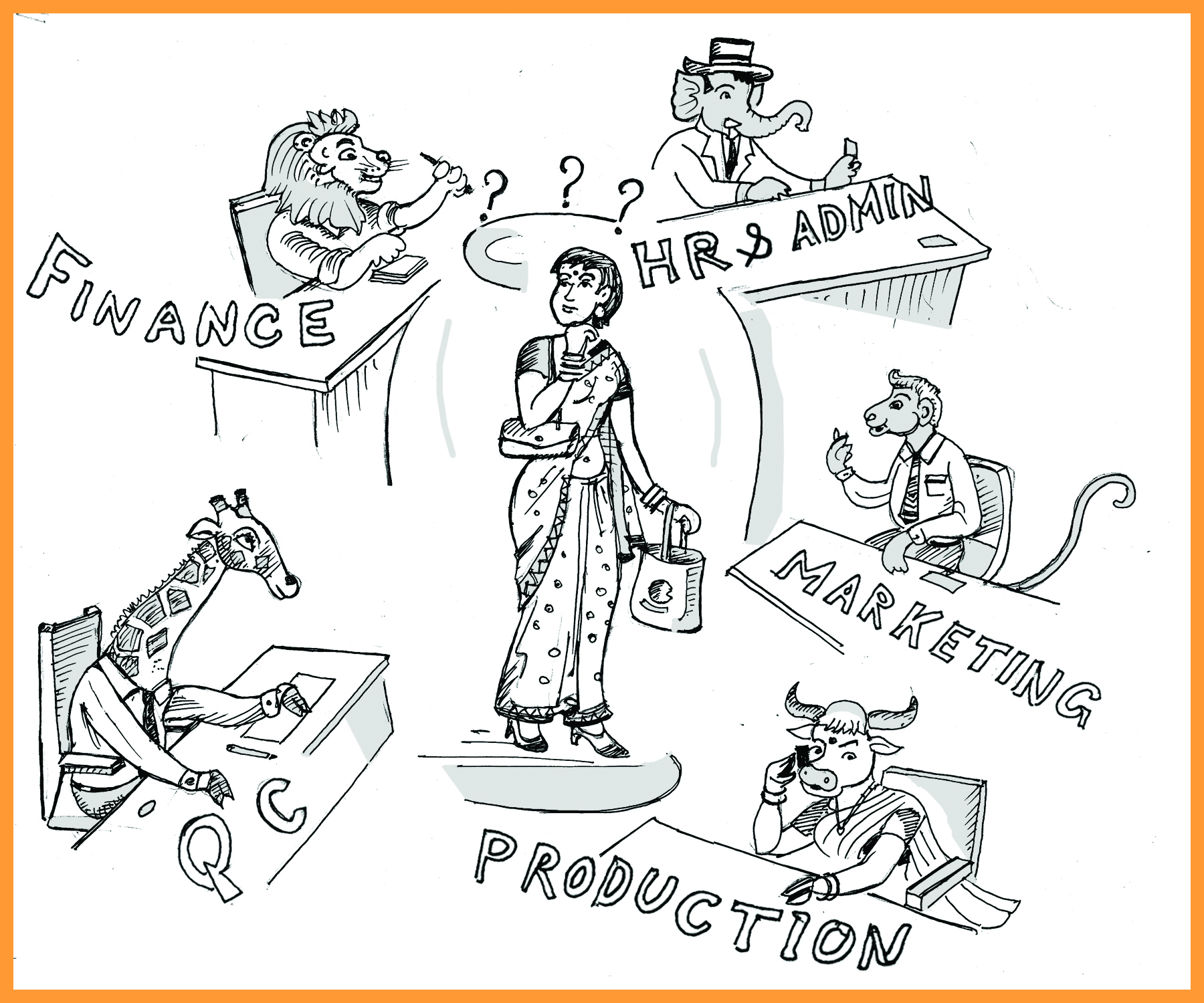
One of the relatively rare species of CEOs is that of the Sponge Comforters. These are hapless souls who are gifted with too much of the Milk of Human Kindness sloshing about within them. They happen to be compassionate by nature. People are their first priority. It is easier to persuade them to buy excuses.

Their key strength is their Concern for People. In their value paradigm, Concern for Production and Concern for Ethics take a back seat. In terms of the modified Blake Mouton Grid, they happen to be in the 1,9,1 slot.X Y Z upgraded

Their people just love them. The loyalty they command is often exemplary. Even though the feudal spirit prevails, their style of functioning is democratic in nature. People working with them are invariably happier. Work gets done in a calmer and more relaxed atmosphere. Physical activity does not get confused with efficiency. Their planning is excellent. Their execution is often tardy.

Such CEOs add value to their organizations by being great ‘Demo Versions’. They handle Public Relations with much aplomb. They are the first contact for professionals who aspire to make a career with the organization.

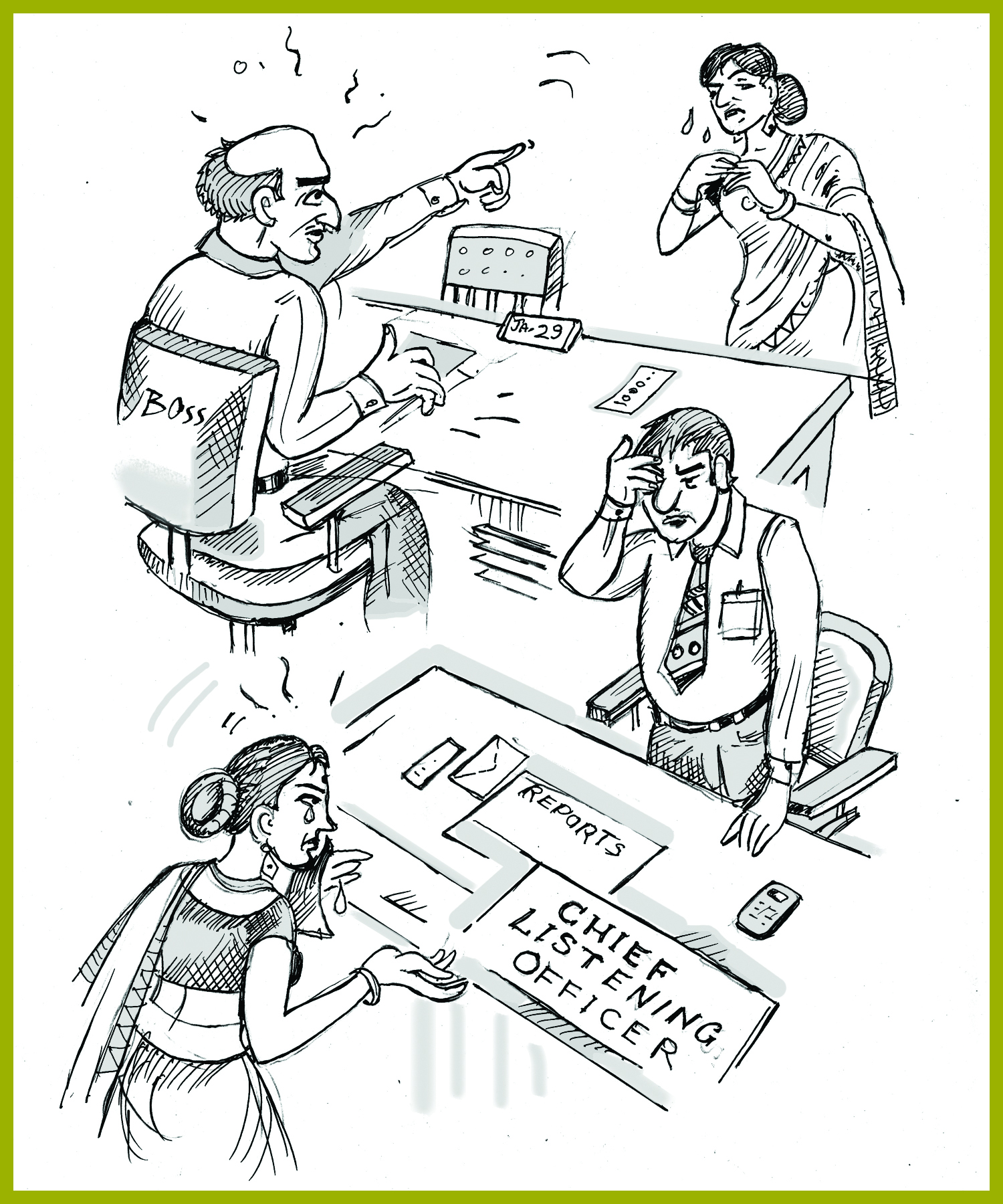
This breed thrives in an organization where the top boss happens to be unduly aggressive by nature. Employees often face an identity crisis. The CEOs offer a crying shoulder to those who feel harassed and victimized. After meeting them, a depressed employee entertaining suicidal thoughts could come back revived and invigorated – much like a watered plant. They are supreme comforters who are forever ready with a sponge, nay, even a bucket and a towel, to wipe off the tears of those who rush to them for solace.

Another designation that fits them is that of a Chief Listening Officer.

Featured Image -- 2827Their ability to convince top performers to not to seek greener pastures at the drop of a hat is unparalleled. So is their proficiency in the realm of grooming and mentoring.

Seniors from the realm of HR, who have decided to come out of their comfort zones and have started grasping the nuances of the core business process of the organization, could gradually evolve into Sponge Comforter CEOs. Externally, they sound like communists. Internally, they happen to be true blue capitalists.

Managements are often sceptical about such CEOs. To ensure that results keep coming in, they get some tough-as-nails managers to support them. Or, they are made to handle portfolios which keep them at an arm’s length from marketing and production.

Managements who excel at running their businesses without much regard for the norms of statutory compliance are desperately on the lookout for this species of CEOs. Members of this breed discharge their obligations with a misplaced sense of loyalty, often getting lynched in the process. An acrimonious parting of ways follows.

Note: Inputs from Ms Somali K Chakrabarti are gratefully acknowledged. She can be found at Scribble and Scrawl (https://prepforum.wordpress.com)

(Related Posts:

https://ashokbhatia.wordpress.com/2015/12/24/looking-for-ceos-inspired-by-the-yuletide-spirit

https://ashokbhatia.wordpress.com/2016/01/07/ceos-who-happen-to-be-charmless-charlies

https://ashokbhatia.wordpress.com/2016/01/14/ceos-who-end-up-becoming-road-rollers)

Read Full Post »

One of the professional hazards CEOs face is that of giving in to relentless pressure and becoming Road Rollers. Quarterly targets have to be necessarily met. Stakeholders have to be kept happy. Auditors have to be kept in good humour. Regulatory agencies have to be held at an arm’s length. Star performers have to be kept excited.

Amidst all this razzmatazz, CEOs run the risk of caring about results alone. They would achieve targets by ruthlessly crushing anything that comes in their way. Concern for Production gets the top priority. Concern for People takes a back seat. Concern for Ethics gets dumped. In terms of the modified Blake Mouton Grid, they end up being slotted at 9,1,1.X Y Z upgraded

Such heartless hard task masters end up neglecting even the genuine needs of their team members. Employees have to be dealt with in a stern manner. Shorter working hours are held to be injurious to employee’s health. Trade unions have to be manipulated. Signs of a white-collar mutiny, if any, are to be handled severely. People are like spare parts in a machine, simply to be replaced at the first signs of trouble.

In their jaundiced view, someone asking for some time off to ensure her kid makes a successful bid to enter a prestigious academic institution simply lacks commitment to organizational goals. A person wanting to leave office one hour early so as to be able to celebrate her marriage anniversary is merely offering an excuse to shirk her responsibility.

In the pursuit of excellence on the bourses, accounting norms evolve to loftier levels. Window dressing of financial information becomes the norm. Customer billings get preponed and get squeezed into the last few days of each month. Hapless auditors are kept busy highlighting Receivables and Customer Returns which get deftly swept under the carpet. Auditors keen on not losing a prestigious client easily get persuaded to fall in line.

Since the entire focus is on quarterly guidelines being exceeded, the organization suffers from Corporate Myopia. Vision Statements remain a set of pious intentions and can be seen only where these belong – on office walls and on display shelves.

When it comes to complying with a plethora of rules and regulations, the regulatory agencies have to be simply ‘managed’. Records need to be fudged, wherever necessary. Testing software and instrumentation has to be rigged, so as to show results within the legal parameters. Liaison officers need to be appointed so the inspectors could be kept in good humour. Government seniors have to be molly cuddled, so that they look the other way when violations are brought to their attention. Lobbying for suitable changes in government policy invariably assumes top priority.

When Road Rollers rule the roost for a long time, organizations often end up sitting on a dormant volcano which could erupt any time. Attrition rates gallop. Key performers get burnt out. People lack focus and work merely to show off. A sense of lethargy pervades. The percentage of employees of the Y-kind plummets. Managements concerned about lack of employee morale and motivation keep calling in experts to cheer up team members, with minimal results. MICROMANAGING

Often, micro-managing skills are applauded. Thus, grooming of future leaders assumes a lower priority. This leads to an absence of succession planning.

When faced with smarter government agencies who either sense a loss of public revenue or a scandal which might sully the image of the political party in power, such CEOs often invite greater trouble for their organizations. In one stroke, financial gains made over several years get wiped out. The organization’s brand image gets sullied.

Most of the times, such CEOs behave like pilots about to press the eject button in their cockpits. However, their reputation precedes them. Parachuting down to greener pastures becomes a challenge.

Have you ever had the good fortune of working with a Road Roller CEO? If so, and if you survived for a long duration, sincere appreciation is in order. You have already developed nerves of chilled steel, a trait so very essential to success in business. What you need now perhaps is a crash course to boost your Emotional and Spiritual Quotients, so your organization and your team members can breathe easy!

Note: Inputs from Ms Somali K Chakrabarti are gratefully acknowledged. She can be found here.

{Related Posts:

https://ashokbhatia.wordpress.com/2015/12/24/looking-for-ceos-inspired-by-the-yuletide-spirit

https://ashokbhatia.wordpress.com/2016/01/07/ceos-who-happen-to-be-charmless-charlies}

Read Full Post »

CEOs lead a challenging life. Apart from making and meeting long-term business goals, they face a relentless SQpressure, living from one quarter to the next. Customers have to be handled with kid gloves. Suppliers have to be kept in good humour. People have to be kept motivated at all times. Interpersonal conflicts between team members have to be sorted out. A lonely life has to be lived.

Unlike their juniors who invariably face Peer Pressure, CEOs face Pear Pressure. Some call it signs of prosperity. Some refer to it as a Battle of the Bulge. Others label it as flab around the waist.

The Battle of the Bulge

A CEO in possession of a portly disposition projects an image of a soul which has finally attained salvation and has become a super-hero of the species generally alluded to as managers. Walk into any gathering of the top dogs across most professions and one would be convinced that bosses are generally more portly than their bossed-over managers.

The smarter the top boss, the more he is likely to make his team members run around achieving targets. In the process, the juniors end up getting flatter tummies, a much-coveted attribute. In turn, hard-working subordinates often end up making their bosses lazier, with the latter ending up with convex-shaped protrusions in their midriffs.

Over 1.9 billion adults worldwide are overweight. Of these, some 600 million are further classified as obese. How does this come about? Lack of exercise is said to be the main culprit. Stress is yet another. Genetic factors take a part of the blame. Long working hours leading to lesser workouts get blamed.Exercise 1

Of decision-making and waistlines

Recently, a study by Australian universities has ended up linking decision-making to higher Body Mass Index.

According to researchers, people whose work days require constant decision-making are at greater risk of expanded waistlines. Conversely, workers who exercise control by regularly applying their skills to their jobs — known as skill discretion — were found to have lower Body Mass Index and a smaller waist size.

In other words, the researchers conclude that it is skinny people who are most often good at what they do and enjoy using their skills. However, those who have the power to make decisions are distinctly wider around the middle.

This justifies the derisive term Fat Cats often used to refer to those who control the levers of business. Admittedly, larger waistlines are perhaps a consequence of the CEOs’ sedentary job requirements instead of being the reason for their elevation to decision-making levels.

Perhaps further studies may reveal that weighty decisions need personal countervailing ballast in order to be balanced. It sounds as if power ends up making business leaders more expansive.

Beyond the Peter Principle

Concerned CEOs may wish further research to be designed in such a way as to establish the veracity of some Peters_principle.svgprinciples of the following kind:

1. A manager’s waistline is directly proportional to his position in any decision-making hierarchy.

2.  According to the Peter Principle, in any organization, employees rise to their level of incompetence. Further studies could confirm if their rise is also linked to the propensity of their bodies to achieve the maximum girth permitted by their constitution.

3.  Depending upon their Body Mass Index and the waistline, successful CEOs could be classified into three categories.
Potato CEOs: Those who have dazzled with their performance in the good old days. They have outgrown   the stage of feeling Pear Pressure.
Pear CEOs: Those who are currently guiding teams and delivering reasonably good results. The hapless souls are yet to come to terms with their pear-shaped midriffs.
Banana CEOs: Those who are good at planning as well as execution. They aspire to attain the status of Peer CEOs, without their bariatric blues.

4. For Potato CEOs, Pear CEOs are objects of envy. Likewise, Pear CEOs, howsoever reassured they might sound, secretly aspire to be like Banana CEOs, with concave-shaped bellies.

5. A hypothesis that can be put to test would be if the rate of rise in a hierarchy determines the rate of increase in waistlines.

6. All these propositions need to be cross-validated across different cultures and societies.

Such studies would enrich the science of Hierarchiology. These would be highly useful for head hunters as well as for Human Resource professionals. The insights gained thus would enable managers of all sizes and shapes to improve their quality of life.

Pear Pressure in organizations

Ironically, what is true of individual CEOs is also true of organizations.

The very successful and dynamic ones indulge in frequent bariatric surgeries and ensure that their midriffs remainZOO ORGANIZATIONS under strict control. They are acutely aware of Pear Pressure and have checks and balances in place to avoid carrying excessive flab.

The mediocre ones end up accumulating flab in the middle. At every success, they end up hiring more people than is necessary. At every failure, they undergo a liposuction procedure. They have learnt the art of managing Pear Pressure.

The not-so-successful organizations have the highest Body Mass Index. They are replete with massive layers in their hierarchies. Their processes are bogged down with archaic procedures. Most public sector undertakings are shining examples of this kind.

This is THE challenge all CEOs need to fight single-handedly. They have to wage a relentless war on adipose tissue of all kinds. Unless they decide to take the matter in their own hands, literally as well as metaphorically, the excess belly fat – whether on their own personas or in their organizations – would refuse to melt away.

(Reference: http://www.theweek.in/news/sci-tech/how-your-job-could-be-influencing-your-waistline-study.html)

Read Full Post »

LEADERSLet us say that you happen to be a very successful CEO. A spate of rewards, tons of recognition and loads of adulation has left you with an after-glow of inner contentment. Entrapped by the spoils of success, have you started taking life easy? Have you started believing that you are infallible?

It is perhaps a good time to introspect. Here are seven habits which highly successful CEOs never get addicted to. Let us check our present score and evaluate where we stand.

1. Being partial or dishonest

You would always find them transparent and fair in their dealings. Never would you find them cheating. They set high standards in conduct of business, based on values and principles they cherish and believe in.

2. Dwelling on the past

It is not that they have not made their share of mistakes in the past. But they have learnt from them and marched on towards the future. Never would you find them gloating about their past companies and victories. They live in the present, never allowing their past to define them.

3. Letting down their team members

They would never let down a team member. Praising in public and firing in private is one of their key personality traits. They identify, nurture and mentor talent. They take good care of their people, earning life-long loyalty. Those who have hung onto their coat tails would be willing to make important sacrifices for them.

4. Being conformists

They know what they want. They are willing to get off the beaten track and achieve what they have set their hearts and minds on. They know how to manage controversies. They have the requisite skills to bring even their worst critics on board.

5. Saying ‘Yes’ when they mean ‘No’

They tend to be good listeners. Whether they agree or disagree with you is entirely a different matter. They can argue out their case well. They have mastered the art of putting across a disagreement without breaking a relationship.

6. Being surrounded by sycophants

They encourage dissent. They believe that healthy disagreements form the bedrock of good decision-making. Listening to – or indulging in – gossip or lose talk is never one of their favorite activities. Attention to detail is one of their key characteristics.

7. Being late

Unless they have a very good reason to have got delayed, highly successful CEOs are downright punctual. And we are not talking of client meetings alone. We are also speaking of internal meetings, with their own team members. This trait keeps others in the company on their toes, invariably following the dictum of punctuality.

Are we guilty of having cultivated any of these habits? If so, can we make a conscious attempt at overcoming these?

Which are the habits you try not to form, so as to sustain your progress in life?

Would you like to add some more habits to the list above?!

Read Full Post »

Is there a scope of improvement in management education? If so, how do we enrich it further?

I confess that management education is not my forte. The only exposure I have had to this exalted field was when I was at the receiving end, so to say – that is, as a MBA student myself! But, over the years, interaction with the younger managers has provided me with valuable clues as to the challenges being faced by the current crop of MBAs. This alone emboldens me to endeavor to propose what I believe could be done to enrich the process further. Of course, I do so with utmost humility at my command!

·         A 360-degree CEO View

Management education opens up one’s mind to various facets of an enterprise. However, it does so through the bifocals of a top honcho’s perspective. Upon entering the industry, a befuddled greenhorn could get a thermal shock. Most of the concepts covered in a typical MBA course appear to be irrelevant at that stage of one’s career. Depending upon an incumbent’s innate strengths and the type of opportunities one gets in one’s career, it could take around 15-20 years for one to reach a level where the first whiff of real business strategy and corporate planning etc comes one’s way.

What we need perhaps is a better emphasis on the dilemmas faced by middle level managers. This can possibly be achieved by structured interactions with management experts in the middle rung of large organizations. Case studies which are designed to showcase the types of challenges faced by middle management could also help.

A 360-degree view is absolutely fine, as long as the gondola takes us not only to a mountain top at 3,500 m in the Swiss Alps, but also delights us with the panoramic views at 1,500 m and 2,500 levels.

·         Business History

The way Tatas, Birlas and Ambanis grew up, adapting to times which ranged from British governance to the license and permit-raj days, followed by the phase of economic reforms in India, is fascinating.

If one group focused on weaving ethical values into its business operations, the other capitalized on the pent-up demand in the market. Even their approach to philanthropy was different – one ploughed back its resources by focusing on the fine arts, fundamental sciences and medical facilities, the other earned the public’s respect by constructing a string of temples and related facilities for the common man.

Dhirubhai Ambani became a darling of the masses and popularized the concept of equity investments amongst the teeming millions of India. Post economic reforms, entrants like Infosys delivered good value to shareholders and employees in the newly emerging knowledge economy of India.

Examples abound from the international business arena as well. One is not talking merely of legends like Henry Ford and Steve Jobs here. Alfred D. Chandler’s ‘The Visible Hand: The Managerial Revolution in American Business’, and Charles Wilson’s ‘History of Unilever’ offer great insights into the field of business history.

While pursuing business history, one comes across entrepreneurial heroes as well as exploitative villains and empire builders as well as corporate raiders. A truly enriching exposure for a wannabe entrepreneur and/or an intra-preneur!

·         Lessons from Scriptures

Whether it is Ramayana, Mahabharat, Thirukkural or Chanakya’s Artha Shastra, there is a rich repertoire of management strategy as well as tactics enshrined in our scriptures. Each one contains gems of wisdom which can be put to effective use by management institutes which are already waking up to utilizing the wealth of wisdom available in literature to drive home some key management concepts.

The story of Lord Rama teaches us about waging a war with very limited resources. It also tells us about succession planning, ideal management practices based on fair and impartial conduct of those in power, humility, besides covering several other concepts.

Mahabharat can teach us about the perils of attachment to one’s near and dear ones in life/career, merit taking precedence over pedigree in promotions, tactical retreats in the face of imminent disaster and the risks of hasty decision making sans careful thought, to name only a few. Bhagavat Gita is full of practical wisdom for those aspiring to become professional managers.

Thirukkural tells us about the duties of a king and so does Chanakya Neeti.

For grooming business leaders who have a strong sense of values embedded in their thought processes, our scriptures are an invaluable resource.

·         Finishing

For those who are aspiring for a global career, the main cultural differences between different continents of the world can improve the value-add of management education. Dining habits, etiquette and manners followed by diverse cultures across the globe can also be incorporated in consultation with institutes of learning in the field of hospitality and tourism management.

Observing and following the organization’s culture when kick-starting one’s career, protocols of behaving with seniors, peers and subordinates and do’s and don’ts of e-manners to be followed while handling e-mails, etc. can also be driven home.

Some of the above could be immensely useful to students who step into management education with socially disadvantaged sections of our society. Covering such areas would tend to make this field more inclusive in nature.

·         A Focus on Follower-ship As Well

‘Leadership’ is a favorite topic in management. We have a rich literature providing invaluable insights into various aspects of leadership. Somehow, the traits of ‘Follower-ship’ have not merited much attention at the hands of management gurus and academics. As a discipline, does management education not need to create good followers as well? After all, a leader without a gang of followers could end up being pretty clueless!

The harsh reality is that an overwhelming majority of MBAs would turn out to be followers. If a leader is expected to have charisma, a follower needs to have common sense. If a leader leads by example, the follower realizes that blind faith could mislead the team. If a leader is supposed to be adept at resolving inter-personal conflicts, a follower is expected to work harmoniously with other team members.

Most business leaders today concur that planning is relatively easy; their real challenge lies in flawless implementation. Now, if a leader lays out a strategic vision backed by meticulous planning, smooth   implementation can only come through a bevy of hard-working followers.

·         Yoga and Meditation

Physical and mental fitness is a sine qua non to do well in one’s career. Institutions training the managers for tomorrow can figure out innovative ways to bring in these elements as well into the management education curriculum.

It appears that we would do well to beef up conceptual knowledge imparted in management courses with skills and values that would make MBAs more competitive and more balanced in their approach to real issues in the industry.

The managers of management education (in India, as also elsewhere) may find some merit in the above propositions.  


Read Full Post »

« Newer Posts