Feeds:
Posts
Comments

Posts Tagged ‘Challenges’

Wodehouse’s fiction, though celebrated chiefly for its whimsical aristocrats and shambolic bachelors, also furnishes a surprisingly detailed anatomy of the Edwardian and inter-war publishing world. He uses owners, publishers, and editors not merely as comic foils, but also nudges us towards a broader meditation on responsibility, power, and vocation. Through a kaleidoscope of characters—from absentee proprietors who think of their periodicals only while pronging a kippered herring on their plate with a gloomy fork, to editors who sacrifice sleep, dignity, and occasionally their trousers—Wodehouse rehearses the perennial tensions between commerce, conscience, and creativity.

Three Types of Owners

Wodehouse distinguishes three archetypes. The “absentee capitalist,” embodied by Mr Benjamin Scobell in The Prince and Betty, treats a publication as an elegant bauble within a far wider portfolio. The “romantic acquirer,” who buys a journal under the influence of either Cupid or a literary crush and sheds it as soon as the passion cools. Finally, we have the “hands-on mogul,” typified by Lord Tilbury of the Mammoth Publishing Company, who prowls city streets incognito lest aspiring scribblers hurl unsolicited manuscripts through omnibus windows. Lord Tilbury’s hunger for “juicy memoirs” and his ruthless eye on circulation figures epitomise the hard-nosed side of media ownership, reminding readers that even genteel magazines are ultimately businesses subject to profit and loss.

Editors: The Lion Kings

However, the slender shoulders on which the burden of keeping the publishing activity alive and kicking falls invariably happen to be those of the editors. They are the eager beavers who keep a sharp eye on the circulation figures and decide the nature and form of the content that gets routinely unleashed upon hapless readers like us. They happen to be industrious little creatures who work hard and shrink from the public gaze. They are the lion kings of their publishing fiefdom and are the masters of all they survey. Bosses love them when circulation figures show an upward trend. Yet, they are hated by authors whose manuscripts they keep throwing into the nearest dustbin in their office. In Plum’s world, alluded to above as Plumsville, editorial life is equal parts chess match and boxing bout; success demands both strategic foresight and literary prowess.

No case illustrates editorial resilience better than Aunt Dahlia Travers and her chronically unprofitable women’s weekly, Milady’s Boudoir. She marshals fox‑hunting grit, occasional grand larceny (commandeering a painting for a scoop), and the incomparable cuisine of Anatole to keep the presses rolling. Her magazine’s survival hinges not only on high finance but on familial diplomacy—extracting cheques from her dyspeptic husband, Uncle Tom, trading serial rights to pay printers, and manipulating Bertie Wooster into sartorial columns. Thus, Plum applauds tenacity while exposing the precarious economics of niche publishing.

Conversely, Cosy Moments—the ostensibly saccharine “journal for the home”—demonstrates how editorial ethos can metamorphose a title’s fortunes (Psmith, Journalist). When the fatigued Mr Wilberfloss departs for a rest cure, deputy Billy Windsor, aided and abetted by the restless Psmith, transforms the paper into a crusading watchdog. Exposés on New York tenement squalor replace homely recipes. A “fighting editor” is recruited to deter mob intimidation. Circulation soars, advertising revenue floods in, and Cosy Moments becomes “red‑hot stuff.” We discover the perils of mission-driven journalism: bribery, kidnapping, and street‑corner brawls lurk behind every righteous paragraph. Plum thus warns that social crusades, however noble, exact a steep personal price.

Hiring and firing supply further comic ammunition. Lord Tilbury, ever allergic to falling readership, sacks Monty Bodkin from Tiny Tots for peppering copy with whisky bottles and betting jargon, then dismisses Jerry Finch of Society Spice for failing to match Percy Pilbeam’s flair for fashionable scandal (Frozen Assets).

By contrast, editors like Joseph Kyrke of The Mayfair Gazette and Alexander Tudway of the Piccadilly Weekly (“The Kind-Hearted Editor”) discover that excessive kindness breeds calamity. Kyrke inherits the wreckage of predecessors who indulged amateur contributors; Tudway, having “improved” the dreadful manuscripts of Aubrey Jerningham and clan, ends up enslaved to an entire family of mediocre wannabe authors after marrying one to soothe her tears. Through these narratives, Plum demonstrates how editorial milk of human kindness could become a long-term liability.

A recurrent motif is the pursuit of sensational memoirs. Lord Tilbury’s frantic chase for the Hon’ble Galahad Threepwood’s reminiscences (Heavy Weather) and Florence Craye’s demand that Bertie incinerate Uncle Willoughby’s scandal-laden Recollections of a Long Life (“Jeeves Takes Charge”) dramatise both the cash value and moral hazard of exposé literature. Editors and owners salivate over sales figures, yet risk libel suits, family ruptures, and even the gobbling up of a manuscript by the Empress of Blandings.

Legal jeopardy surfaces again when Kipper Herring’s blistering anonymous review of Reverend Upjohn’s prep‑school history in the Thursday Review provokes threatened litigation (Jeeves in the Offing). Jeeves’s diplomatic ingenuity averts the writ, but the incident underscores an editor’s obligation to balance candour with accuracy.

Advertising masquerading as editorial content offers another ethical minefield. In “Healthward Ho,” quack doctors flood multiple periodicals with letters questioning the modern diet while discreetly touting their Spartan cure. Overworked editors struggle to distinguish between covert marketing and genuine debate, revealing how commercial pressures can erode editorial independence. Here, Plum, decades ahead of today’s “native advertising,” warns against blurred boundaries that compromise reader trust.

Romantic entanglements complicate these professional dilemmas. Editors woo rejected contributors to soften disappointment (“The Kind‑Hearted Editor”), propose marriage to avoid publishing dire stories, or, like Egbert Mulliner, fall in love only to discover their muse has begun penning bestselling fiction that traps them in promotional drudgery (“Best Seller”, the Mulliner version). We get to realise that the heart and the column space can conflict irreconcilably.

Sudden success in love enables Sippy, the editor of Mayfair Gazette, to stand up to his old headmaster. (“The Inferiority Complex of Old Sippy”)

Plum also cautions lovers about the perils of taking the romantic tips dished out by such columns as Doctor Cupid at face value. If so, much chaos, heartache, and hilarity could ensue (“When Doctors Disagree”).

Humour Laced with Social Conscience

Behind the laughter runs a social conscience. While Plum rarely preaches, the transformation of Cosy Moments and the tenement crusade reveal a genuine sympathy for the urban poor. He demonstrates that a periodical can transcend mere entertainment to serve as an agent of civic improvement, provided its guardians possess courage, networking prowess (even with underworld figures), and an unwavering purpose. The narrative demonstrates that there is indeed a socialistic streak in Plum, rebutting claims that he wrote solely for and about the idle rich.

Plum makes us realise that media, like all institutions, depend on people who must reconcile personal values with systemic demands. His brilliance lies in revealing that reconciliation as an endlessly inventive dance—sometimes dignified, often chaotic, always instructive.

More to be pitied than censured?

Having considered some of the journalistic escapades of quite a few of Plum’s characters, one may safely conclude that they are more to be pitied than censured.

When it comes to those who keep the giant wheels of the publishing universe spinning, Plum paints a broad canvas of the kind of constraints they work under.  Financial pressures.  A rigorous scrutiny of the content they decide to publish. Hiring the right talent and firing the deadwood is an area of concern. Interpersonal and legal challenges must be faced with a chin-up attitude. Ethical issues need to be tackled with aplomb. Relationships with authors and other stakeholders deserve to be managed with empathy and firmness. Cosying up to celebrity authors. If a major social concern is to be addressed, networking with the underworld and strongmen becomes crucial for achieving success.

Plum’s light-hearted depictions of publishing contain a rich commentary on leadership, ethics, and resilience. Owners personify strategic intent, whereas editors incarnate operational reality. He demonstrates that humane stewardship—anchored in empathy, clarity, and principled resolve—can turn the perilous art of publishing into an enduring public good.

While capturing the nuances of professional hazards faced by doctors, lawyers, bank managers, dog-biscuit marketeers, rozzers, detectives, principals, politicians, movie magnates, actors, musicians, artists, painters, accountants, secretaries, valets, butlers, cooks, gardeners, pig-keepers, et al, Plum’s sharp eye does not miss much. Likewise, when it comes to describing a journalistic life, he does not disappoint.

Note

Read Full Post »

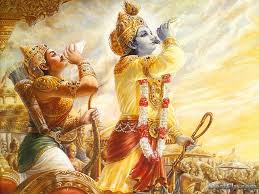
In its concluding chapter, Bhagavad Gita goes on to extol the virtue of surrender to a higher power. It does not specifically state that it is useful only when a CEO is facing a monumental challenge in her career or life. However, it is my belief that an attitude laced with liberal doses of surrender, duly backed by the personality attributes listed in the previous chapter, becomes the most crucial enabling factor which facilitates successful handling of such challenges.

तमेव शरणं गच्छ सर्वभावेन भारत |
तत्प्रसादात्परां शान्तिं स्थानं प्राप्स्यसि शाश्वतम् || 18.62||

Surrender exclusively unto Him with your whole being, O Bharat. By His grace, you will attain perfect peace and the eternal abode.

Much like a Senior Vice President who gets promoted as a CEO after the seniors notice a potential in her to shoulder a higher responsibility, coupled with a match between the value system of the incumbent and that of the business, and a deep sense of loyalty (read surrender) to the organization, Lord Krishna also stipulates the condition under which His grace would help a person to attain perfect peace – exclusive surrender. A conscious realization that it is not one’s own efforts alone which get success in life, and that it is one’s destiny also which plays a crucial role, helps one to surrender in such a manner. 

There are no free lunches in life, as the wise men say!

Challenges and evolution

Each of the demeaning experiences faced by yours truly and shared in the previous part led to some inner growth. A public rebuke made me learn the value of sensing dangerous turbulence on the flight path in advance, and punching the eject button in the cockpit before things spun out of control. Likewise, the kidnapping incident taught me the importance of having some acquaintance with the law and order and regulatory agencies in the country. As an additional perk, each incident revealed the true friends and foes of those around me at the time. An enriching string of experiences, one would say in retrospect.

When a pink slip gets dished out, one finds an opportunity of reassessing one’s strengths and weaknesses and act on them. A fall from grace eventually ends up increasing the depth of one’s inner reservoirs of patience, equipoise and fortitude.

When Kunti seeks challenges as a boon!

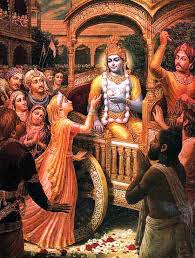
In one of the post-war episodes narrated in the Srimad Bhagavatam, when Krishna is about to depart for his kingdom of Dwarka, Uttara, the bereaved wife of Abhimanyu and the daughter-in-law of Arjuna, comes running to seek His protection for the son in her womb who has been killed by a mighty weapon unleashed by Ashwatthama. Krishna then brings the child back to life, at which time Kunti, the mother of the Pandavas and an aunt of Krishna, prays thus:

विषान्महाग्नेः पुरुषाददर्शनाद्  असत्सभाया वनवासकृच्छ्रतः ।
मृधे मृधेऽनेकमहारथास्त्रतो  द्रौण्यस्त्रतश्चास्म हरेऽभिरक्षिताः ॥ 1.8.24

My dear Krishna, you have protected us from a poisoned cake, from a great fire, from cannibals, from the vicious assembly, from sufferings during our exile in the forest and from the battle where great generals fought. And now You have saved us from the weapon of Asshwatthama.

विपदः सन्तु ताः शश्वत् तत्र तत्र जगद्‍गुरो ।
भवतो दर्शनं यत्स्याद् अपुनर्भवदर्शनम् ॥ 1.8.25

I wish that all those calamities would happen again and again so that we could see You again and again, for seeing You means that we will no longer repeated births and deaths.

Apprehending that she and her children would subsequently be missing being in touch with someone of the stature of Krishna, Kunti seeks a blessing from Him – that her family is always surrounded by some trouble or the other. The Lord is obviously surprised and bemused at someone seeking a negative blessing!

Of Challenges, Deprivation and Humiliation

Shri Ram Chandra Maharaj, affectionately referred to as Lalaji Maharaj by his followers the world over, was the original Master of the spiritual organization which is spear-heading the practice of Heartfulness Meditation globally these days. He has stated in one of his messages that there are three factors in one’s life which lead to spiritual evolution: Illat (Challenges), Quillat (Deprivation) and Zillat (Deprivation).

What is really implied here is that one needs to learn to accept challenges – major or minor – in the spirit of ‘illat’, ‘quillat’ and ‘zillat’. In other words, to have a little less money than necessary; to have a little less than good health; and to always have critics around one. Those who are on the path to an inward growth would do well to receive such brickbats and rocks as fragrant bouquets which life bestows on one.

The real examples quoted earlier in this context aptly justify this sobering thought.

Negatives support us better!

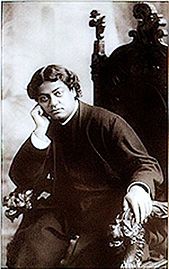
Swami Vivekananda, in his notes on Karma-Yoga, has the following to say:

‘Good and evil have an equal share in moulding character, and in some instances misery is a greater teacher than happiness. In studying the great characters the world has produced, I dare say, in the vast majority of cases it would be found that it was misery that taught more than happiness, it was poverty that taught more than wealth, it was blows that brought out their inner fire more than praise.’

Perhaps, if Mahatma Gandhi had not been kicked out of a train for traveling first class at Pietermaritzburg in 1893 in South Africa, the history of Indian continent might have been quite different!

The argument here is not that one should willingly court challenges and negativity in life. It is merely to state a basic truth in life – that challenges have an upside too.

The rhinoceroses of challenges

Challenges come in all sizes, hues and degrees of seriousness. Each challenge faced by one in life eventually results in speeding up one’s progress on the tricky path of evolution. One gains maturity and experience. One learns to be grateful when one is feeling unduly elated, and graceful when feeling totally down. One learns to be more careful and patient.

Challenges are blessings which bring about changes which uplift and enrich one. Our Guardian Angels would never desert us. Instead, they plan their furloughs in such a way that while they are having a rollicking time on a distant planet, one gets precisely the kind of challenges which enable us to become more humane, more pragmatic and more professional in our dealings with people and with situations.

One’s fight with mighty challenges in career and life could be decisively won by using the firepower of the tools in one’s arsenal – A relentless drive to keep upgrading one’s knowledge base and skill-sets, and to have faith in a higher power. An attitude of surrender enables one to march on in life, with one’s chin up, a smile adorning one’s visage, and a steely resolve to make the approaching rhinoceroses-like challenges to wilt and retreat into their own comfort zones.

(Sources:

The Spider’s Web, Vol. 3, Chapter “Attitude”, by Shri P Rajagopalachari;

Karma Yoga: The Yoga of Action, Chapter “Karma In Its Effect on Character”, Swami Vivekananda, ISBN 81-85301-89-1

Illustrations courtesy www)

(Related Post: https://ashokbhatia.wordpress.com/2019/06/13/when-life-hurls-big-rocks-at-one)


Read Full Post »

Life is not fair. Once in a while, when one’s Guardian Angels decide to go off to enjoy a long furlough, it decides that merely throwing some brickbats at one is not enough. Instead, it derives a sadistic pleasure in hurling huge rocks at us. These are instances when it is no longer a question of one’s ego to be kept on a tight leash or just managing one’s basket of desires. The challenge in such cases is that of meeting one’s basic needs; of keeping one’s body and soul together. Even one’s survival could be at stake.

On one of those not-so-fine mornings, one gets called by the boss with a stiff upper lip and handed over a pink slip. Given advances in technology, one is told that one’s services are no longer required. Thanks to the Industrial Revolution 4.0, one’s career goes for a toss.

Or, a CEO who has built an enviable reputation for herself over the years, comes under the cloud of a corporate scandal which gets eagerly sniffed at by various regulatory agencies. This prompts her to put in her papers and face the legal consequences. The media, of which she was a darling till the other day, decides to start shaming her. A severe loss of prestige comes about. A glorious career comes to a sudden halt. Her feelings in a situation of this kind could not be much different than those of Napoleon after his Waterloo debacle.

Some once-in-a-blue-moon experiences

Allow yours truly to share few experiences from his personal life.

A low point in the career

While working in a company which was steadily going downhill due to very high overheads and also an unhealthy level of internal bickering and politics, a highly embarrassed moment had to be faced. In a meeting of all senior managers, I was somehow singled out to be publically lynched for much of what was going wrong with the operations. The unfairness of it, and that too delivered in wide public view, left me shaken to my core. Whereas all those who know me personally can vouchsafe for my chin-up attitude towards life, on this particular occasion, I confess that suicidal thoughts plagued my mind. Always appreciated for my work and sincerity, this was indeed the lowest point in my career.

Late evening, though, my boss offered his sincere apologies. Thoughts of a spiritual nature and a dash of equanimity helped me to regain my sangfroid, so to say. A few months down the road, I moved on to a much better position in another outfit.

The kidnapping fiasco

While working in a very senior position in a small town in India, on one fateful night, I and my son were kidnapped by a gang of four and kept in captivity overnight. They were under the impression that I was the owner of the business I was working with at the time. They had a ransom demand which I had no way of fulfilling.

While held in captivity, I could imagine the sequence of events if they decided to bump me off and dump the body at a desolate location. But faith in a higher power saw me regaining my confidence. Despite a language barrier, I could explain my financial constraints to them. We could eventually manage to get released without much physical harm by the time the next day dawned.

Swift police action followed. Based on my cell phone records, the miscreants were identified and nabbed. But it took me a very long time to mentally recover from the trauma suffered.

Partition blues

One of the heavy costs paid by the society at large when India became independent in 1947 and a new country known as Pakistan got carved out of it was the riots which broke out. Families had to leave their properties, home and hearth behind, and run across the newly formed border to safer sanctuaries. According to UNHCR estimates, partition led to a displacement of some 10-12 million persons along religious lines.

My wife’s Hindu family, located then at Bahawalpur in Pakistan, was one such which faced a trauma of this kind. Interestingly, it was a Muslim family which stitched ‘burqas’ for the entire family and assisted them in fleeing to India. From being rich landlords in Pakistan, overnight they became paupers.

It was by sheer dint of her father’s hard work and resilience that they rebuilt their lives in India from scratch. Prosperity and happiness rules the family today, thanks in part also due to the innate faith they have in their family deity. An old cot from Pakistan, donated by the family, is one of the items on display now at the Partition Museum at Amritsar in the Punjab province of India.

Crucial enabling factors

With the benefit of a 20/20 hindsight, one can analyze and identify the crucial underlying factors which enabled a successful handling of such challenges. If the low point in career could be handled with the help of humility and one’s own job knowledge, skills and attitude, the kidnapping incident could be overcome with faith and an inclination to surrender to a higher power. As to the partition catastrophe, hard work backed by my father-in-law’s own skill-bank and innate faith eventually led to success.

It is not difficult to discover traces here of what Bhagavad Gita proposes.

अमानित्वमदम्भित्वमहिंसा क्षान्तिरार्जवम् |
आचार्योपासनं शौचं स्थैर्यमात्मविनिग्रह: || 13.8||
इन्द्रियार्थेषु वैराग्यमनहङ्कार एव च |
जन्ममृत्युजराव्याधिदु:खदोषानुदर्शनम् || 13.9||
असक्तिरनभिष्वङ्ग: पुत्रदारगृहादिषु |
नित्यं च समचित्तत्वमिष्टानिष्टोपपत्तिषु || 13.10||
मयि चानन्ययोगेन भक्तिरव्यभिचारिणी |
विविक्तदेशसेवित्वमरतिर्जनसंसदि || 13.11||
अध्यात्मज्ञाननित्यत्वं तत्वज्ञानार्थदर्शनम् |
एतज्ज्ञानमिति प्रोक्तमज्ञानं यदतोऽन्यथा || 13.12||

Humbleness; freedom from hypocrisy; non-violence; forgiveness; simplicity; service of the Guru; cleanliness of body and mind; steadfastness; and self-control; dispassion toward the objects of the senses; absence of egotism; keeping in mind the evils of birth, disease, old age, and death; non-attachment; absence of clinging to spouse, children, home, and so on; even-mindedness amidst desired and undesired events in life; constant and exclusive devotion toward Me; an inclination for solitary places and an aversion for mundane society; constancy in spiritual knowledge; and philosophical pursuit of the Absolute Truth—all these I declare to be knowledge, and what is contrary to it, I call ignorance.

Here, one has a virtual ready reckoner of certain mental and emotional attributes, moral attitudes and ethical principles. These are held to be the essential prerequisites for one to discover – and act in tandem with – the Self within.

तमेव शरणं गच्छ सर्वभावेन भारत |
तत्प्रसादात्परां शान्तिं स्थानं प्राप्स्यसि शाश्वतम् || 18.62||

Surrender exclusively unto Him with your whole being, O Bharat. By his grace, you will attain perfect peace and the eternal abode.

Much like a Senior Vice President who gets promoted as a CEO after the seniors notice a potential in her to shoulder a higher responsibility, coupled with a match between the value system of the incumbent and that of the business, and a deep sense of loyalty (read surrender) to the organization, Lord Krishna also stipulates the condition under which His grace would help a person to attain perfect peace – exclusive surrender. A conscious realization that it is not one’s own efforts alone which get success in life, and that it is one’s destiny also which plays a crucial role, helps one to surrender in such a manner. 

Challenges and evolution

Each of the demeaning experiences faced by yours truly led to some inner growth. A public rebuke made me learn the value of sensing dangerous turbulence on the flight path in advance, and punching the eject button in the cockpit before things spun out of control. Likewise, the kidnapping incident taught me the importance of having some acquaintance with the law and order and regulatory agencies in the country. As an additional perk, each incident revealed the true friends and foes of those around me at the time. An enriching string of experiences, one would say in retrospect.

When a pink slip gets dished out, one finds an opportunity of reassessing one’s strengths and weaknesses and act on them. A fall from grace eventually ends up increasing the depth of one’s inner reservoirs of patience, equipoise and fortitude.

Challenges come in all sizes, hues and degrees of seriousness. Each challenge faced by one in life eventually results in speeding up one’s progress on the tricky path of evolution. One gains maturity and experience. One learns to be grateful when one is feeling unduly elated, and graceful when feeling totally down. One learns to be more careful and patient. Challenges are blessings which bring about changes which uplift and enrich one.

(Related Posts:

When Life hurls big rocks at one (Part 2)

https://ashokbhatia.wordpress.com/2011/10/05/divine-grace-works-all-the-time)

Read Full Post »