
Based on the 1949 memoir The Story of the Trapp Family Singers by Maria Augusta von Trapp, the film is about a young Austrian woman studying to become a nun in Salzburg in 1938 who is sent to the villa of a retired naval officer and widower to assume charge as a governess to his seven children. She brings love, spontaneity, and music into the lives of the family members through kindness and patience.
The heroine, though plagued by self-doubt, shows ample pluck and resource to win over a bunch of defiant children and their disciplinarian father. The characters of all the kids are well etched out and enchant us.
The governess ends up marrying the officer. Together with the children, they find a way to survive the loss of their homeland through courage and faith.
Underlying the whole narrative is the value of family togetherness, delicate love interwoven with the need for discipline and loyalty towards each other.
The musical scores stand out for their richness and the way in which they advance the plot of the movie. Even after sixty long years, the movie does not fail to cast a spell.
In Hollywood, everything is not only glamourised but also presented on a larger-than-life canvas, thereby leaving the audience mesmerised. Thus, it was interesting to recently visit some of the real locations where the movie was shot in Salzburg, Austria, in 1964.
How the movie came to be
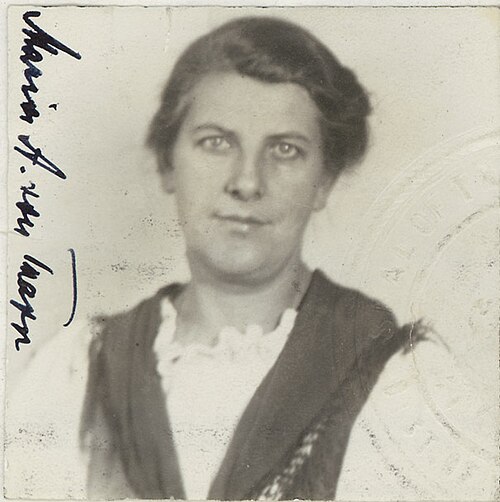
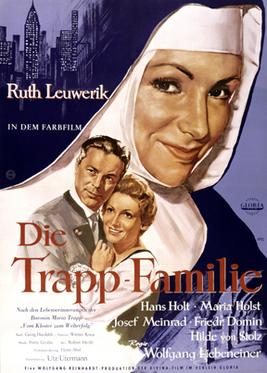
Maria Augusta von Trapp’s memoir was first brought to the silver screen in West Germany: Die Trapp-Familie (1956) and Die Trapp-Familie in Amerika (1958). Wolfgang Liebeneiner directed both.

Rodgers & Hammerstein’s Broadway musical opened at the Lunt-Fontanne Theatre on 16 November 1959. It ran for 1,443 performances and tied for the 1960 Tony Award for Best Musical with Fiorello!
Then came Robert Wise’s screen version for Twentieth Century-Fox. Released in 1965, it became a landmark musical, winning many accolades. The outdoor shooting in and around Salzburg took place in 1964. The planning was to wrap up the shoot within six weeks. However, due to disruptions caused by frequent rains, the crew had to camp there for around eight weeks, worrying the producers no end.
Salzburg: Places where key songs/scenes were filmed
The Opening
The opening sequence of Maria on the mountain was filmed at Mehlweg mountain near the town of Marktshcellenberg in Bavaria. The meadow itself is private property and, regrettably, is no longer accessible to the public. I was told that on a particular day, Julie Andrews and the entire crew had to wait for close to five hours for the rains to stop, so shooting could take place.
Solving a problem like Maria

For many of its scenes in the song, the film uses the authentic exterior of the Nonnberg Abbey, which is the real-life Benedictine convent where Maria was a novice. It sits on a hill above Salzburg and is still home to nuns. However, the interior “contemplation” scene was a set built in Hollywood to represent the abbey’s inner workings.
I have confidence

Maria’s walk into town includes the Residenzplatz Square, which is a significant landmark in the old part of the city. It is a historical fountain which uses a horse head as a spout. Before the scene at the fountain, there is a segment that was filmed in the pedestrian underpass named Domgang, a few meters away from the fountain, near the Cathedral entrance. The scene towards the end, where she is seen approaching the von Trapp estate, was possibly filmed in an alley next to Mondsee Lake.
The von Trapp villa

The original house the Captain lived in was found to be rather modest. Whereas they lived at Villa Trapp – an estate in Aigen, not far from the city of Salzburg, the movie makers decided to combine two different Salzburg sites:

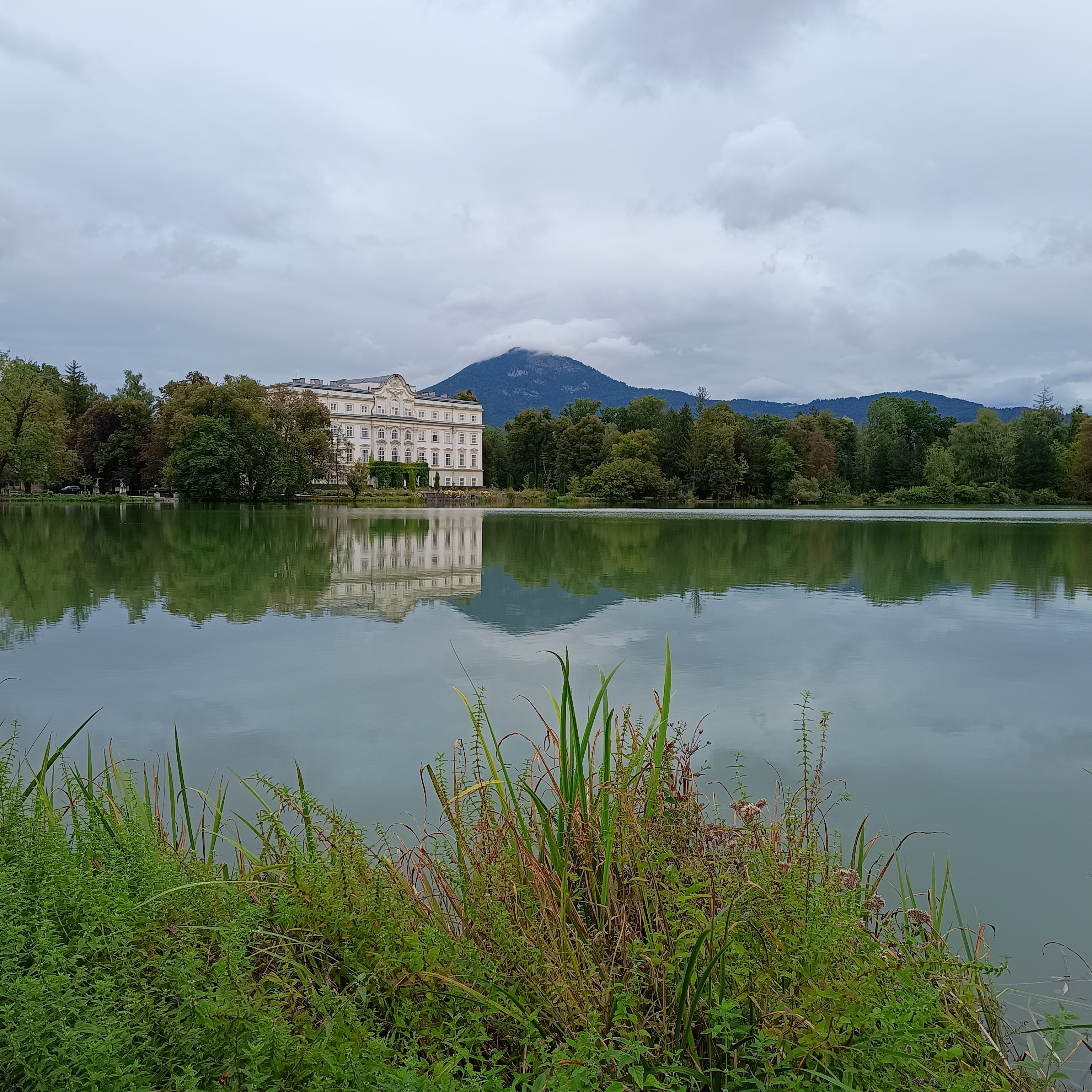
Schloss Frohnburg (front gates/drive) and Schloss Leopoldskron (lakeside terrace and gardens). Leopoldskron’s Venetian Salon inspired the ballroom set.
Do-Re-Mi
Some meadow shots were filmed near Werfen, where stunning rocky mountains form an enchanting backdrop. That is where the picnic scene was filmed, with Julie Andrews, playing everyone’s favourite nun Maria, strumming her guitar through these fields to teach the curtain-clad von Trapp kids to sing Do-Re-Mi.
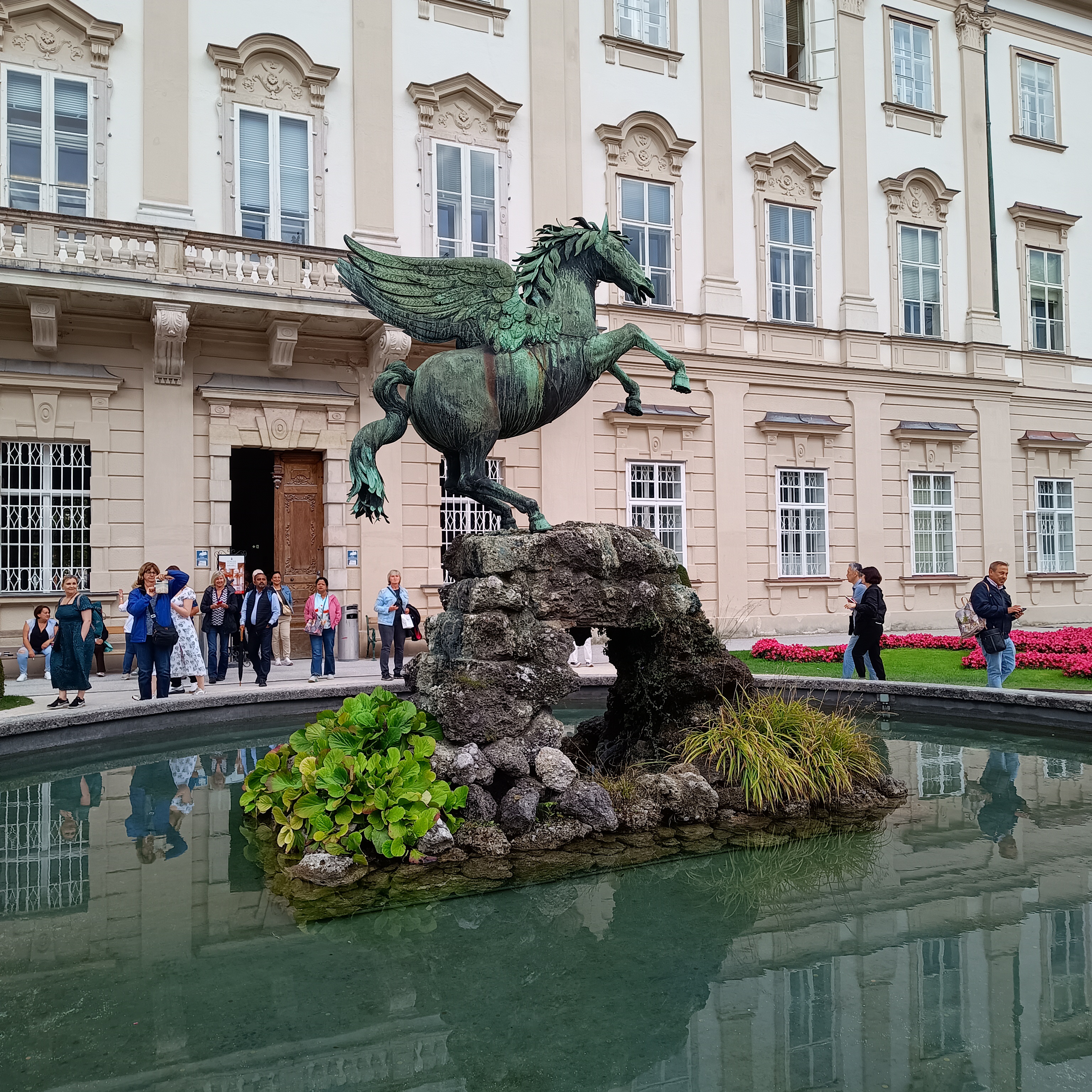

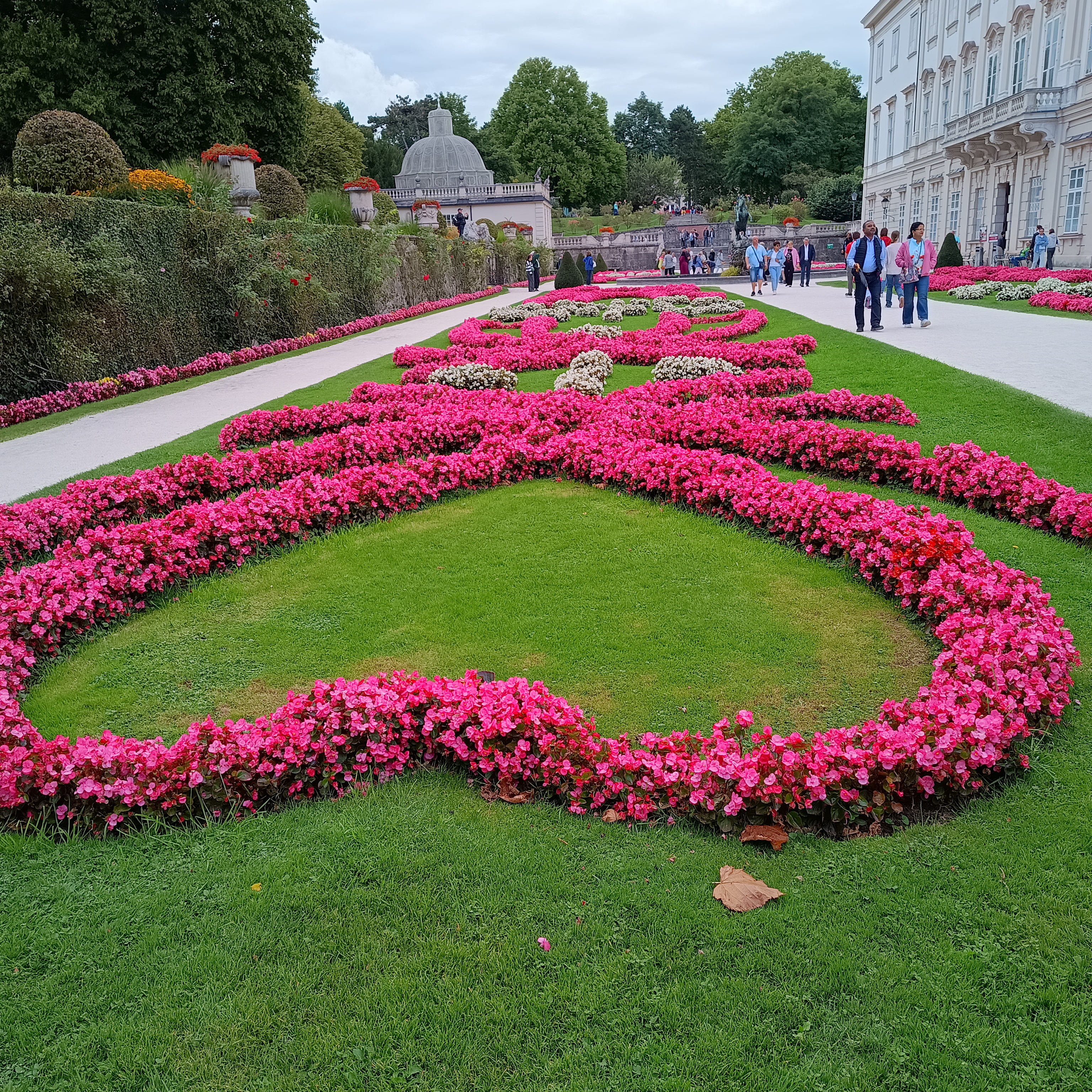


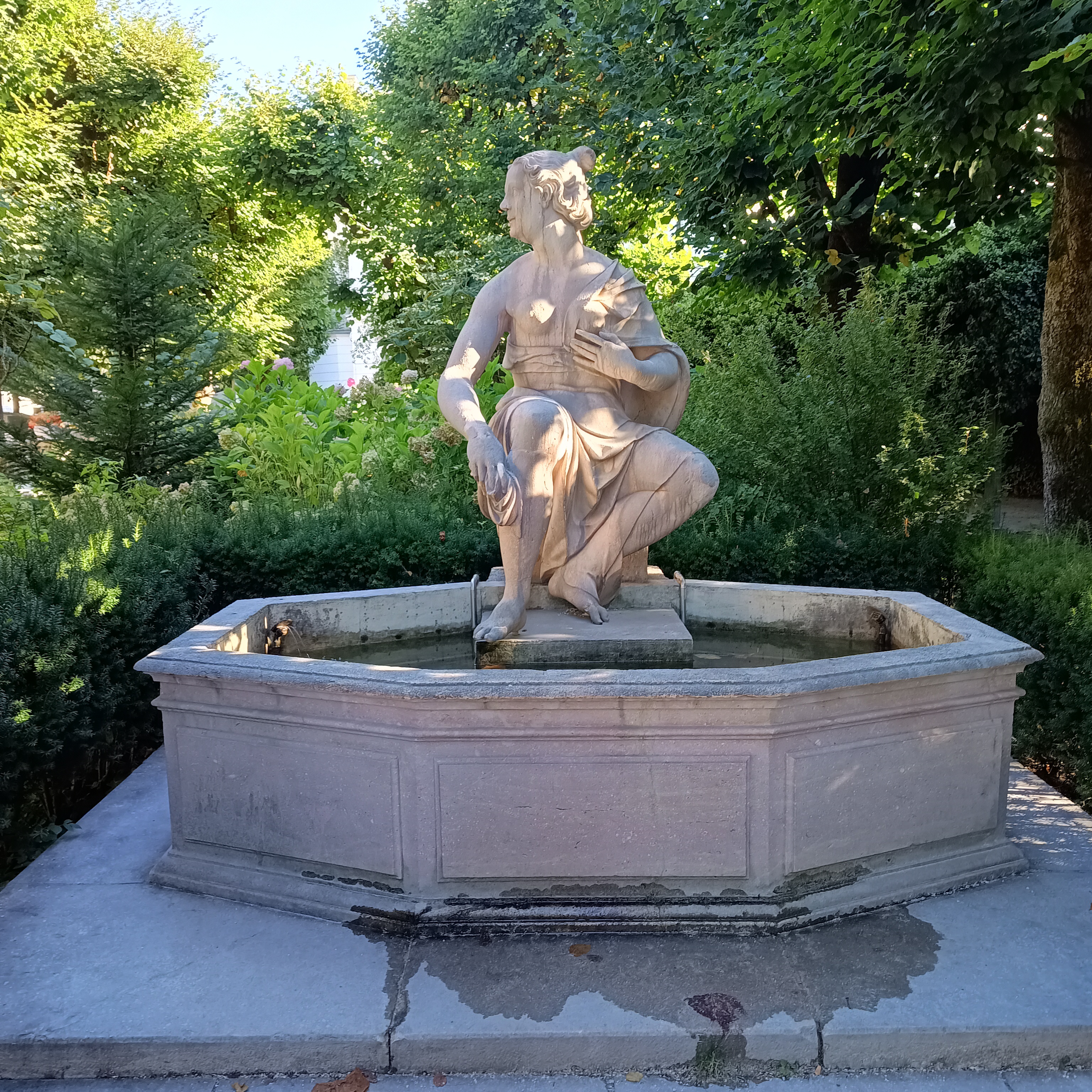
The famous montage uses Mirabell Gardens (Pegasus Fountain and “Do-Re-Mi” steps) and a few other places in Salzburg. (Regrettably, I could not capture the steps, owing to overcrowding at the place.)
Edelweiss
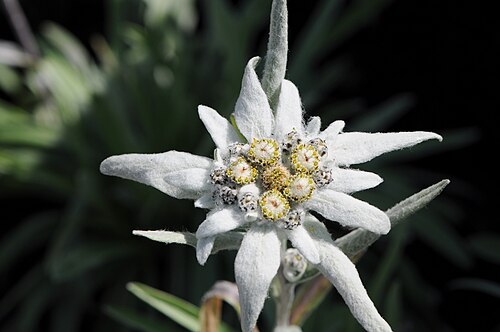
The locals told me that the flower is a delicate one. It is a mountain flower belonging to the daisy or sunflower family. The plant prefers rocky limestone areas at altitudes of about 1,800–3,400 metres. It is a non-toxic plant. It is a scarce, short-lived flower found in remote mountain areas and has been used as a symbol for alpinism, for rugged beauty and purity. It is a national symbol of several countries, like Austria, Bulgaria, Slovenia, Switzerland, and Italy.
It is a protected flower. If you spot one, you are permitted to photograph it. However, picking up one is considered an offence.
Reverend Mother’s Office
Scenes of Reverend Mother’s Office were shot at St. Margarethen Chapel and Dürer Studios.
Sixteen Going on Seventeen/Something Good

The iconic gazebo used for filming these songs was originally located at Schloss Leopoldskron. However, owing to frequent trespassers, it was moved and reconstructed in the gardens of Schloss Hellbrunn. The structure is small and has only four stone slabs within its circular structure. The film used the structure only for exterior shots; a large studio replica was used for the interiors.
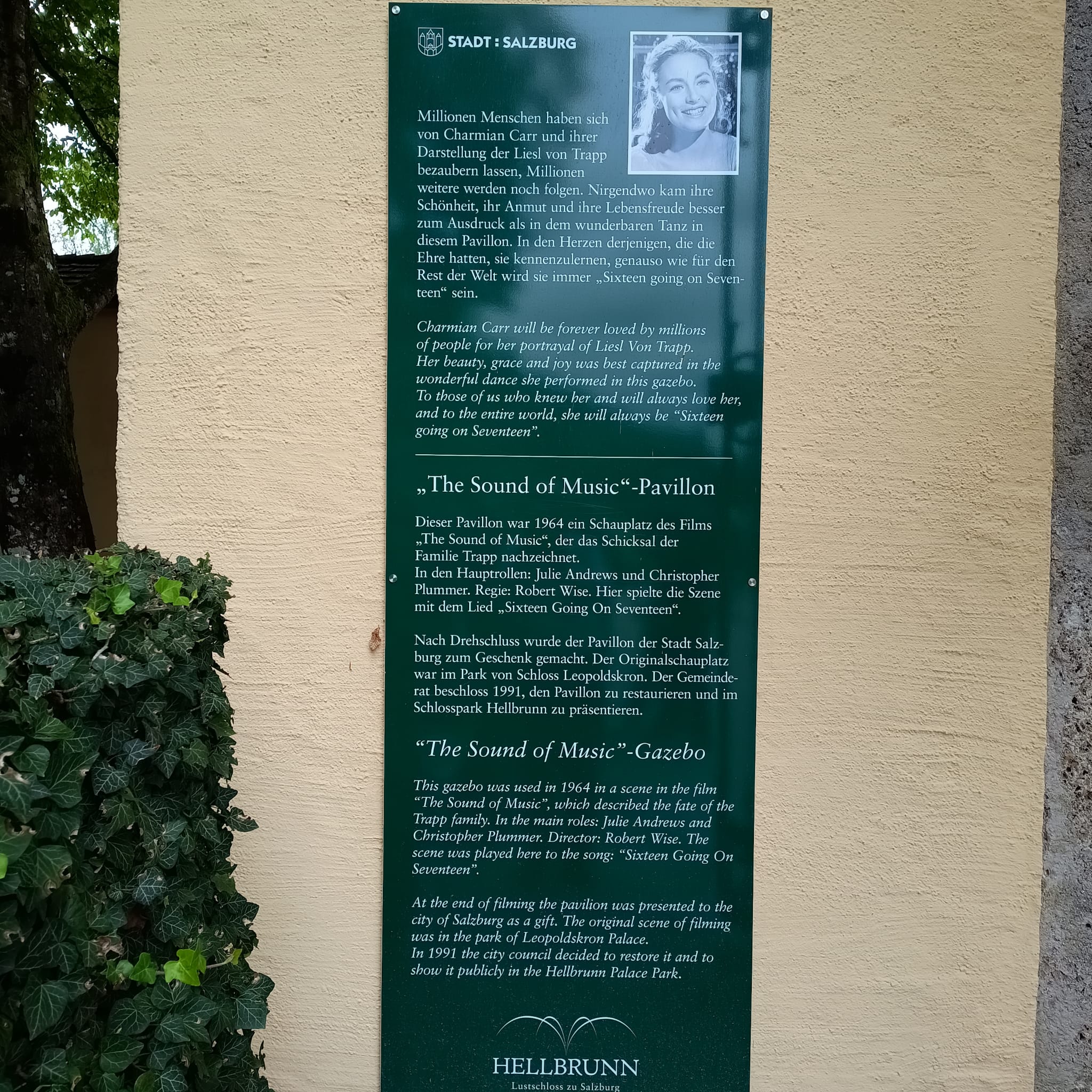
Just next to the Gazebo is a plaque featuring Charmine Carr who played Liesl in the movie.
The wedding


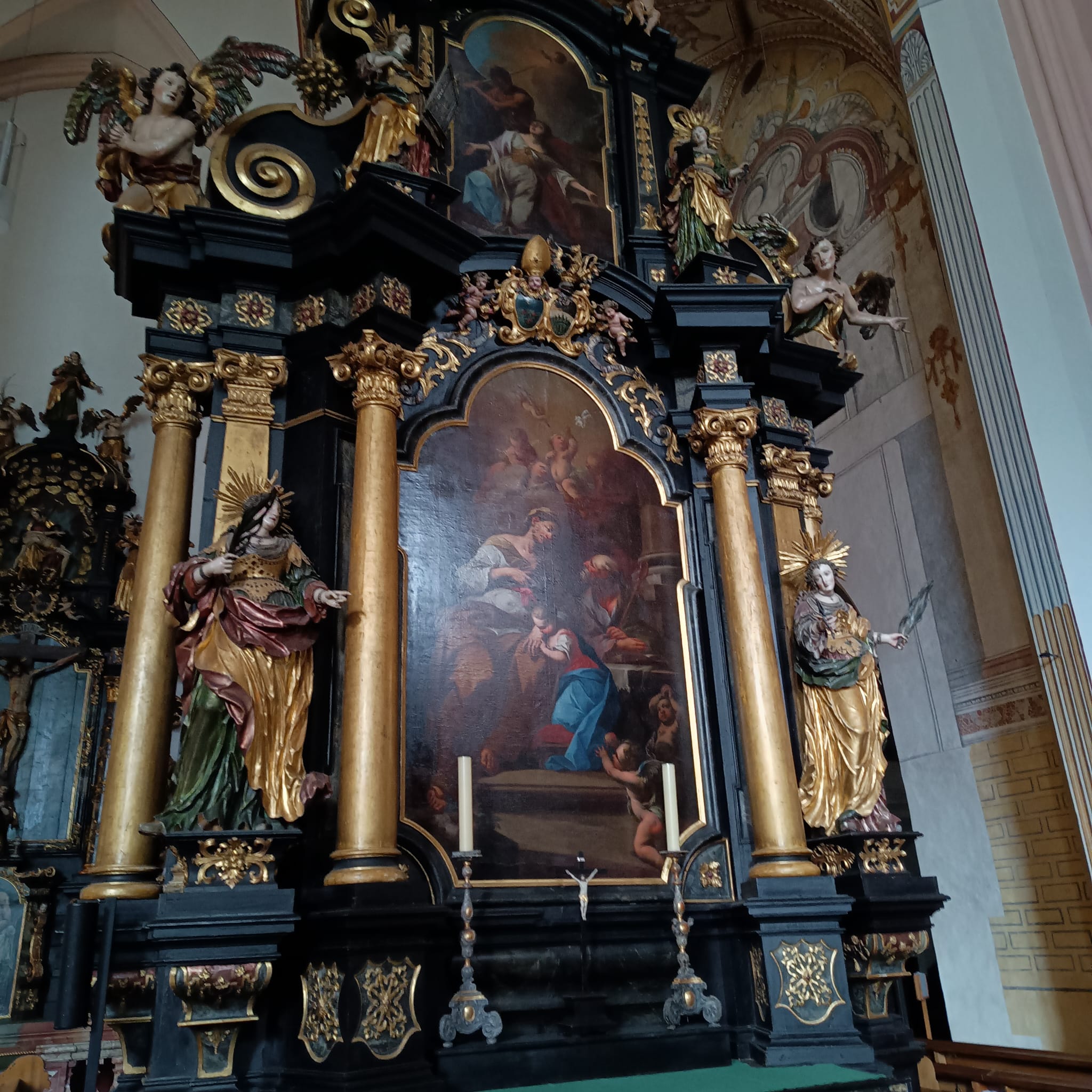

The interior wedding sequence was filmed at St Michael’s Basilica, Mondsee, which is about 30 km from Salzburg. The church is smaller than it appears on a large screen. However, the interiors are as captivating as shown in the movie.
The concert/finale
On the 12th of March 1938, Nazi Germany annexed the Federal State of Austria. The new rulers were keen on the captain joining the German navy, which had superior naval technology at its command. However, owing to ideological differences, the captain and his family decided to escape. The climactic festival performance used Salzburg’s Felsenreitschule (Rock Riding School), a real venue carved into the rock. This is where the escape plans were made.
Cemetery hideout
The tense hiding sequence was staged on a Hollywood set modelled on St Peter’s Cemetery in Salzburg.
The concluding scene
The final scene of the von Trapp family escaping over the mountains was filmed on the Obersalzberg in the Bavarian Alps.
The Making of a Classic
Principal photography began on March 26, 1964, at 20th Century-Fox studios in Los Angeles, where scenes were filmed from Maria’s bedroom and the abbey cloister and graveyard.
The company then flew to Salzburg, where filming resumed on April 23 at Mondsee Abbey for the wedding scenes. From April 25 through May 22, scenes were filmed at the Felsenreitschule, Nonnberg Abbey, Mirabell Palace Gardens, Residence Fountain, and various street locations throughout the old town area of the city.
From May 23 to June 7, the company worked at Schloss Leopoldskron and an adjacent property called Bertelsmann for scenes representing the lakeside terrace and gardens of the Trapp villa.
From June 9 to 19, scenes were shot at Frohnburg Palace, which represented the front and back façades of the villa.
The Do-Re-Mi picnic scene in the mountains was filmed above the town of Werfen in the Salzach River valley on June 25 and 27.
The opening sequence was filmed atop the mountain from June 28 to July 2, 1964.
The cast and crew flew back to Los Angeles and resumed filming at Fox Studios on July 6 for all remaining scenes, including those in the villa dining room, ballroom, terrace, living room, and gazebo. Following the last two scenes shot in the gazebo—for the songs Something Good and Sixteen Going on Seventeen—principal photography concluded on September 1, 1964.
A total of eighty-three scenes were filmed in just over five months.
Post-production work began on August 25 with three weeks of dialogue dubbing to correct lines that were ruined by various street noises and rain.
In October, veteran Disney playback singer Bill Lee dubbed Christopher Plummer’s singing voice. Christopher himself was a proficient singer and pianist and was not too pleased about this change.
Awards and accolades
- Academy Awards (38th, 1966). The Sound of Music won five Oscars, including Best Picture and Best Director (Robert Wise).
- Golden Globes (23rd, 1966). Won Best Motion Picture – Musical/Comedy and Best Actress – Musical/Comedy (Julie Andrews).
- AFI honours. Ranked #4 on AFI’s list of Greatest Movie Musicals; the AFI also places the film across several “100 Years…” lists.
- U.S. National Film Registry. Selected by the Library of Congress in 2001 as “culturally, historically, or aesthetically significant.”
Captain Georg von Trapp: life before Maria and career highlights

- Family life. Georg von Trapp (born 1880, Zara—now Zadar) married Agathe Whitehead (granddaughter of torpedo inventor Robert Whitehead) in 1912; they had seven children. Agathe died of scarlet fever in 1922.
- Naval career. An Austro-Hungarian Navy submarine commander in World War I, von Trapp commanded SM U-5, sinking the French armoured cruiser Léon Gambetta in April 1915, and later U-14; he became a decorated national figure.
- Before Maria arrived. After Agathe’s death, von Trapp raised his seven children at their Salzburg estate. In 1926, Maria Kutschera was sent from Nonnberg Abbey as a tutor for his convalescent daughter (also named Maria), not as a governess to all the children. Georg and Maria married in 1927.
Where the film diverges from reality (key examples)
How they left Austria
The film depicts a dramatic Alpine hike to Switzerland. In fact, the family left by train for Italy, first travelling to London, before sailing to the United States for their first concert tour. Georg’s place of birth meant the family held Italian citizenship after World War I border changes.
Timing of the marriage
The movie places the wedding on the eve of the 1938 takeover by Nazi Germany; in reality, they married in 1927.
Maria’s initial role
She tutored one child recovering from scarlet fever, not all seven, as a household governess.
Georg’s temperament
The real Captain was warm and musical, not the stern, whistle-wielding disciplinarian portrayed on screen.
The music director
The group’s long-time musical director was Father Franz Wasner, not a fictional impresario.
Children’s identities
The film changed the names, ages and even sexes of the children (for example, “Liesl” is fictional; the eldest was Agathe).
Edelweiss: the song
Often mistaken for an Austrian folk song, Edelweiss was newly written for the musical by Rodgers & Hammerstein.
Sixty years on, and still counting…
Even after six decades of its release, the echoes of the songs of “The Sound of Music” keep us enchanted. Often, when we are plagued by self-doubt while leaving our comfort zone, the words of the song ‘I have confidence…’ give us solace. Whenever the harsh slings and arrows of fate lower our spirits, the lyrics of ‘Climb every mountain…’ keep us focused on our goals. As and when we feel extremely grateful to someone or something, the phrase ‘Somewhere in my youth or childhood, I must have done something good…’ comes up in our minds.
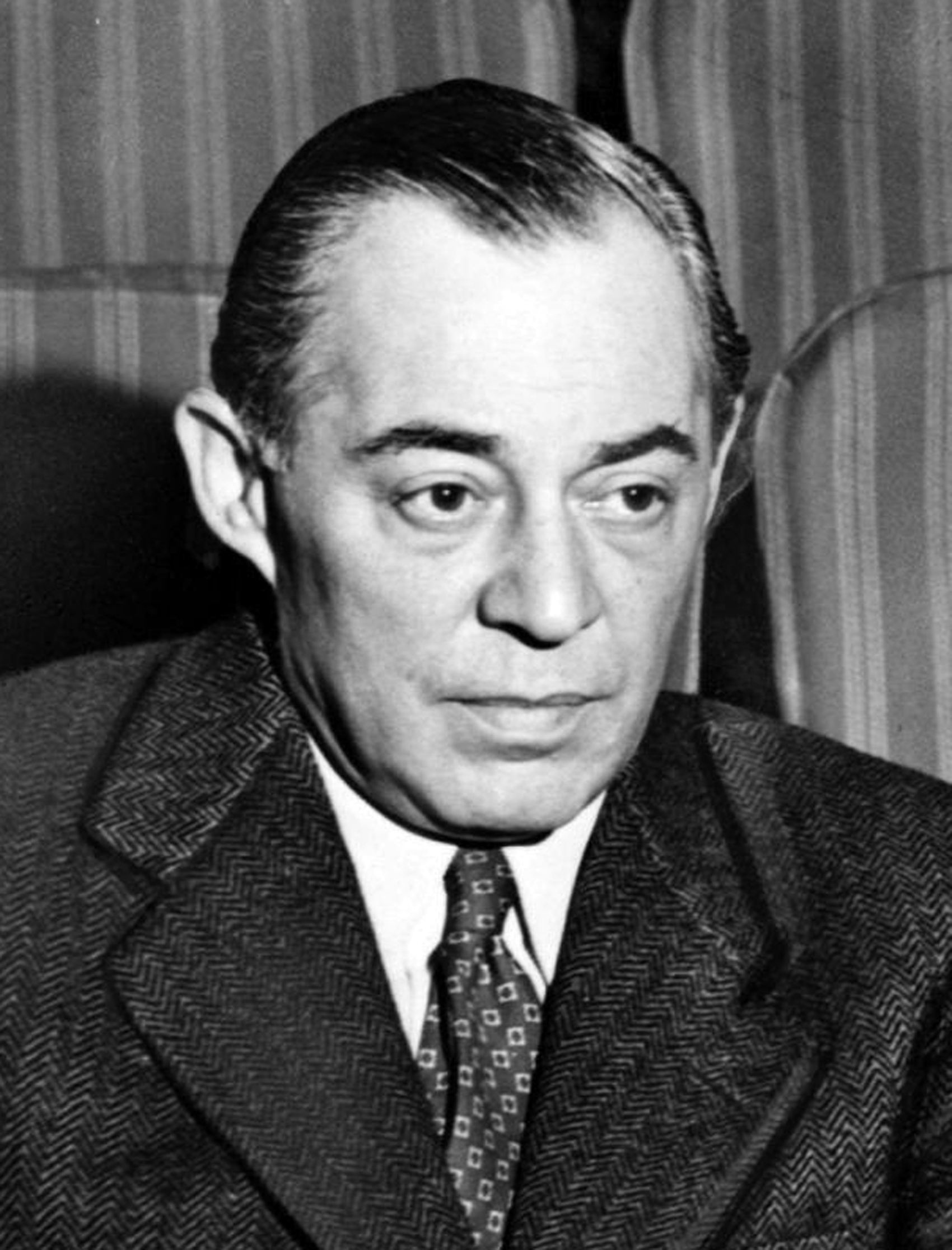

Richard Rodgers and Oscar Hammerstein deserve all the credit for creating such lilting and instructive compositions.
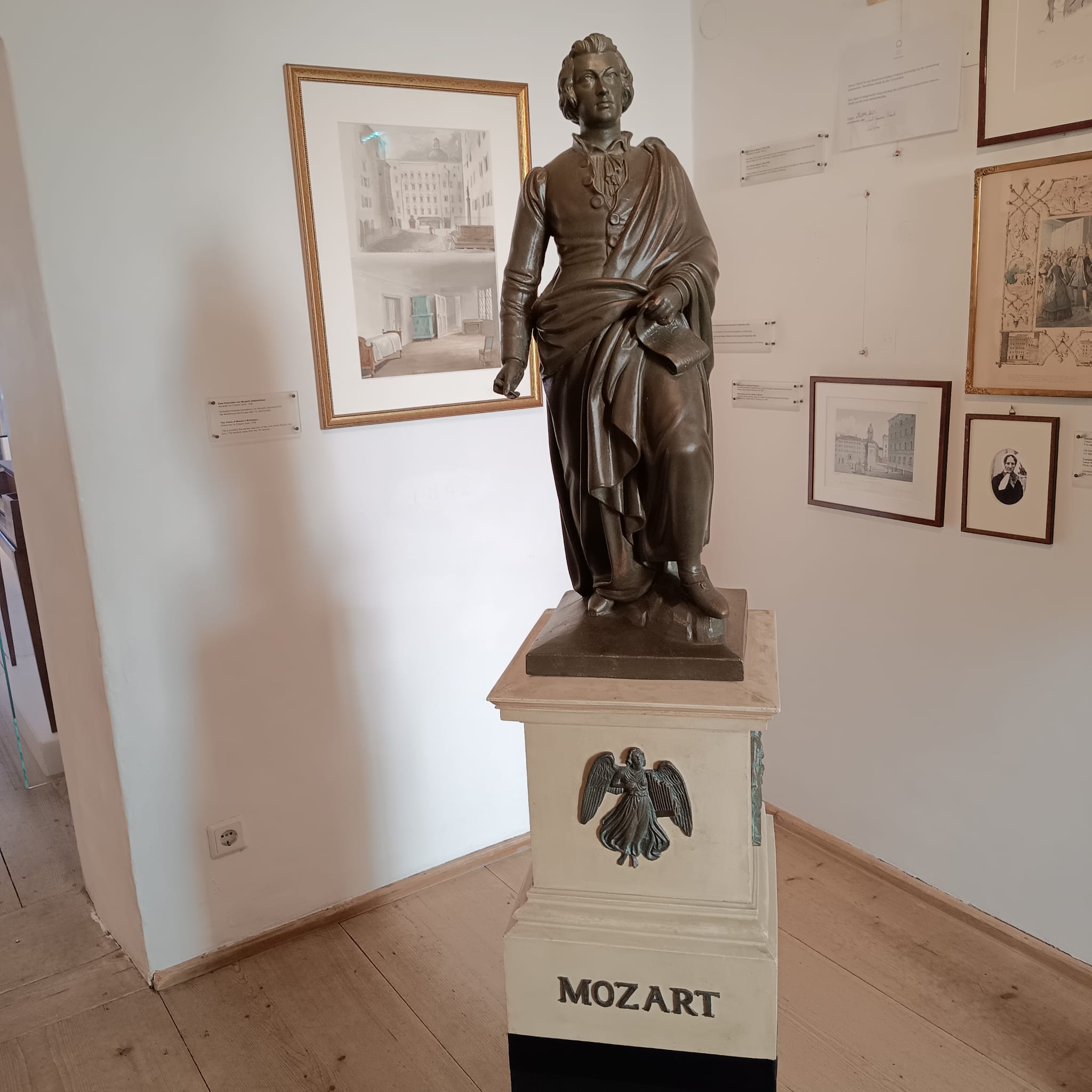
Hats off to the studio team, which whipped up a unique offering of this nature! It should come as no surprise that it originated in a city which is also famous for blessing humanity with a highly talented composer: Wolfgang Amadeus Mozart.
Notes:
- Sometime during 2026, just next to the present location of the gazebo, the gardens of Schloss Hellbrunn will also have an exclusive pavilion dedicated to the iconic movie.
- The photographs were either taken by me or subsequently downloaded from the internet.
References:
- U.S. National Archives, “Movie vs. Reality: The Real Story of the Von Trapp Family.” National Archives
- Filmportal (Germany) entries for Die Trapp-Familie (1956) and Die Trapp-Familie in Amerika (1958). Filmportal+1
- Rodgers & Hammerstein Organisation (official) — Broadway production notes; “Edelweiss” song page. Rodgers & Hammerstein+2Rodgers & Hammerstein+2
- Tony Awards (official) — 1960 winners; Best Musical tie. tonyawards.com
- Salzburg tourism/official venue pages — filming locations including Mirabell Gardens, Nonnberg Abbey, Felsenreitschule. Wikipedia, Goodreads, Barnes & Noble
- Hellbrunn Palace (official) — gazebo now on site. hellbrunn.at
- Schloss Leopoldskron (official) — filming location and ballroom inspiration. schloss-leopoldskron.com
- Awards round-ups — Oscars (1966) and Golden Globes (1966) winners. digitalhit.com+1
- AFI/Library of Congress — AFI rankings; National Film Registry selection (2001). American Film Institute, The Library of Congress
- HistoryNet — naval record and Maria Theresa Order context for Georg von Trapp. HistoryNet
- https://en.wikipedia.org/wiki/The_Sound_of_Music_(film)
Related Posts:


 ashokbhatia