Feeds:
Posts
Comments

Posts Tagged ‘Comedy’

Charles Darwin, were he to be around in the exciting times that we live in these days, and if commissioned by a prominent Hollywood studio to study the manner in which Hindi movies have evolved over time, might have come up with some unique insights into the matter!

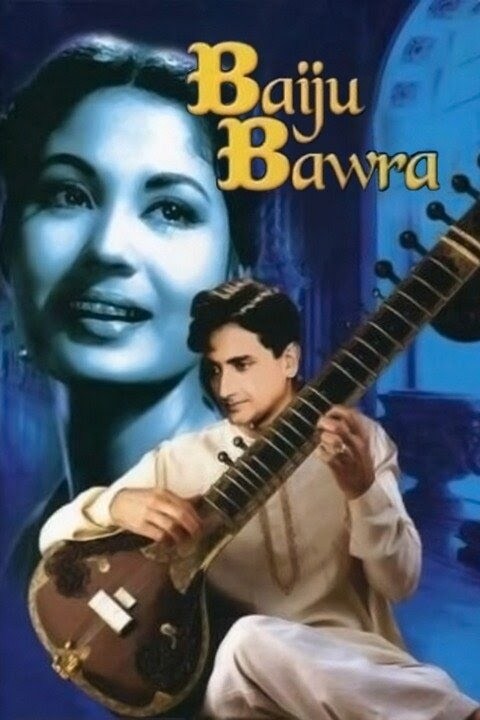
Perhaps, he might have proposed that movies do change over time, that new movies often pop up from some of the pre-existing ones, and that all movies share two common ancestors – an Adam who keeps providing the producers with healthy returns on their investment and an Eve who keeps nourishing wide-eyed-and-glued-to-their-seats kind of denizens with wholesome entertainment. He might have proposed that the concept of entertainment itself has undergone a major transformation. If the audience in the past used to get entertained by movies based on classical music and dance forms – like Baiju Bawra (1952) and Jhanak Jhanak Payal Baaje (1955), the flavour of the season now is that of item numbers, say, something on the lines of ‘Laila o Laila…’ in Raees (2017), which are meant for momentary gratification only, soon to be forgotten.

Recently, Bandish Bandits (2020) came as a whiff of fresh air.

He might have pointed out that there are indeed movies which try to convey a social message as well, but these belong to a different genre/species. When it comes to caste-based prejudices, we have had Sujata (1959), Masaan (2015) and Article 15 (2019). A movie like Jhund (2022) showcases the everyday struggles of vagabond Dalit youngsters, haunted by the humiliating gaze of society. Speak of the disadvantaged and we are apt to think of Ankur (1974), Akrosh (1980), Chakra (1981) and Nil Battey Sannata (2015). Think of the angst of the educated unemployed and we discover Albert Pinto Ko Gussa Kyoon Aata Hai (1980) and Rang De Basanti (2006). Speak of sex workers and movies like Chandni Bar (2001), Chameli (2003) and Gangubai Kathiawadi (2022) pop up in our minds.     

He might have even concluded that there is no universally applicable formula for whipping up a blockbuster, that past success does not guarantee future conquest, that such formulae have a rather short shelf-life, and that one must factor in the then prevailing social mores, the economic condition of the target audience and the impact of disruptive technology which has its own pace of evolution. If a delectable mix of sex and violence worked at a time, and if star power was the magnet which kept the box office aflame, content, acting prowess and slick editing work the magic now.

He might have pointed out that each genre/species has its own unique characteristics, that each one has its own path of evolution, and that the onset of the multiplex phase, followed by the OTT-era, has enabled our dream merchants to climb newer heights of imagination. Those of us who have loved such series as Gullak (2019-2022) and Panchayat (2020 onwards) might concur with this thought.   

Specifically, he may have made a few general observations about the evolution of our Hindi movies over time:

Some Tectonic Shifts

In the pre-partition days, the audience lapped up offerings which were based on values, patriotism, mythology, or religious beliefs. Raja Harishchandra (1913), Bhakt Vidur (1921), and Amar Jyoti (1936) can be mentioned in this context. Kismet (1943) was a different cup of tea altogether.   

In the years followed by India’s independence, hopes for a new country ran high. Besides romantic ones, idealistic movies steeped in socialistic thinking – like Awara (1951), Boot Polish (1954), Jagte Raho (1956), Do Aankhen Barah Haath (1957), Mother India (1957), Pyaasa (1957), and Phir Subah Hogi (1958) – came up. Mythologicals like Sampoorna Ramayan (1958) and Mahabharat (1965) also kept the audience engaged.  A primarily agrarian economy liked such offerings as Do Bigha Zamin (1953).  

In the next decade, we loved seeing movies like Mughal-E-Azam (1960), Hum Dono (1961), Sangam (1964), Guide (1965), and Aradhana (1969).

During the 1970s, the angst of the common man was identified by our dream merchants to be a key point of attraction. Movies like Deewaar (1975) and Sholay (1975) came to rule our collective psyche. Thanks to the likes of Shyam Benegal, Govind Nihalani and others, the parallel cinema stream catered to the tastes of the intelligentsia. We also had some Hollywood-style movies with a taut script, such as Ittefaq (1969) and Achanak (1973). The critics loved these, but not the non-discerning audience sold on cheap melodrama.

Thereafter, many of us would remember Tezaab (1988), Chaalbaaz (1989), DDLJ (1995), Lagan (2001), and Bunty aur Babli (2005). Somewhere down the road, cheap, low budget movies aimed at the front benchers also flooded the market. Many of these were South Indian productions made on tight budgets starring the likes of Jeetendra etc. in this phase, the production sources were dubious, and films were tasteless and crass. Over time, the upper classes withdrew from cinema halls and started devouring movies on VCRs.

Thanks to economic liberalization, we started becoming Westernised to an unrecognisable extent. Consumerism started blooming. The joint family system started disintegrating. Individualistic themes gained prominence. Gradually, we found ourselves faced with the reality of living not only in ‘Bharat’ but also in ‘India.’  The former was catered to by single-screen theatres. However, thanks to upward mobility, rising incomes, and ready availability of international merchandise, the culture of shopping malls and multiplexes sprouted. The multiplex phenomenon opened the doors for shorter and crisper flicks, based mostly on urban-centric themes. The cinematic landscape changed, offering ultra-commercial masala fare dished out by the likes of Subhash Ghai and Sanjay Leela Bhasali to the ultra-niche cinema of Vishal Bhardwaj, R Balki, Anurag Kashyap and Madhur Bhandarkar. 

Over time, internet became easily available and then OTT followed. We, the audience, exposed as we were to international media offerings, became choosier. Now, our critical eye looks at a wider range of the cinematic offerings – its genre, storyline, acting prowess of the characters, music, camera movements, technical excellence, and so forth.

The Yin and Yang Balance  

Most of you who have examined the phenomenon of falling in love would agree that in the earlier days of Bollywood, those belonging to the tribe of the so-called sterner sex happened to be the dashers and the knights in shining armours who could do nothing wrong. All the hero had to do was to flex his muscles, and a coy member of the tribe of the so-called delicately nurtured would swoon and fall in his arms. Most of the times, the females would not be dashers but merely dormice, exerting their soft power occasionally. Only once in a blue moon, when pushed with their backs to a wall, did they strike back.

Cut to the present. The heroes are no longer diffident about shedding their macho image and reveal their softer side on the screen. The heroines have now become far more decisive and assertive. They resist amorous advances. They call the shots. They continue to be as beautiful as ever but have become far bolder. Now, they come into their own out of sheer free will, revealing the inner strength they possess.

Even though the fight against a deeply entrenched patriarchal mindset is far from being over, the Yin-Yang balance has tilted in favour of the females. They rule the roost. On the other hand, the males are no longer shy about showing their vulnerabilities. The male rabbit often gets attracted by a female dasher. He no longer has the luxury of concentrating on some mild, gentle dormouse with whom he could settle down peacefully and nibble lettuce. In the past, we had Arth (1982) where the heroine chooses to lead a life independent of either her well-wisher or her ex-husband. Of late, we have had such movies as Astitva (2000), Aitraaz (2004), Wake-Up Sid (2009), Inkaar (2013), Queen (2013), Dedh Ishqia (2014), Ki and Ka (2016), English Vinglish (2012), Thappad (2020), and Jugg Jugg Jiyo (2022), which speak of women empowerment. On the OTT platforms, we have had Delhi Crime (2019), Bombay Begums (2021), Modern Love Mumbai (2022), and Modern Love Hyderabad (2022).

Not to forget such stand-alone female-centric movies as Kahaani (2012), Gulaab Gang (2014), Mardaani (2014), Parched (2015), Nil Battey Sannata (2015), Jai Gangaajal (2016), Neerja (2015), and Gunjan Saxena (2020), where males play either a supplementary or a villainous role. 

Of late, script-backed roles for heroines have gained better traction. The effeminate side of males has garnered better prominence. Heady days are here!
Mamma Mia!

The image of the Indian mother has got a 180-degree makeover.

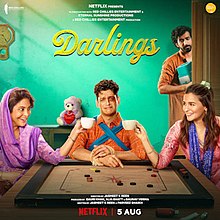
From a weepy, sacrificing Sulochana (Dil Deke Dekho, 1959) and Nirupa Roy (Do Bigha Zamin, 1953) to a dictatorial Dina Pathak (Khoobsurat, 1980) and Supriya Pathak (Goliyon Ki Rasleela Ram-Leela, 2013), we have seen her role metamorphosing over the decades. Now, we even have a mother who hatches a plan to torture/murder an abusive son-in-law, a la Shefali Shah (Darlings, 2022)!

Yes, we have always had the morally upright mother who goes to an extreme to restrain her errant son, like Nargis (Mother India, 1957) or Reema Lagoo (Vaastav, 1999).

Sex Education

No more flowers swaying in a gentle breeze touching other flowers. We are not only beautiful; we are also bold. Steamy scenes are now an essential part of a movie/series. Several movies use the services of an ‘Intimacy Director’ to manage the delicacy of such scenes, when getting shot. Teenagers no longer need to necessarily depend upon unreliable sources to learn the nuances of love making.

Consider the 1953 version of Parineeta (Ashok Kumar, Meena Kumari) wherein the mere act of garlanding signifies a matrimonial alliance. However, in the 2015 version (Saif Ali Khan, Vidya Balan), the level of intimacy between the couple goes to a different level altogether.

LGBT relationships are out of the closet and no longer make us raise our eyebrows, like Fire (1996) managed to do in the past. Whether it is a series like The Fame Game (2022) or movies like Badhai Do (2022) or Maja Ma (2022), such affairs are now out in the open.  

Technology Rules

No more dacoits on real horses. Thanks to our new-found sensitivity towards other species, most scenes depicting animals depend on technology, which has made things easier. Compare the magnificent battle scenes of Mughal-E-Azam (1960) with those of Samrat Prithviraj (2022). In the latter, whole battalions of soldiers can be seen marching ahead in perfect unison, putting our brave soldiers who participate in the Indian Republic Day parade each year to shame. The absurdity and the sheer artificiality of the scene made me laugh out aloud, prompting my multiplex co-viewers look at me with scorn, their shapely highbrows raised more than an inch.   

‘Dishoom-dishoom’ scenes have all but vanished. Instead, what we have now are gravity-defying stunts which would be leaving Sir Isaac Newton shaking his head in disbelief and perhaps even squirming in his grave.

The day is not far off when AI-backed tools will be churning out innovative scripts, screenplays, and lyrics, leaving many of the Bollywood writers and lyricists crying all the way to their respective banks.

The Diminishing Returns of Tragedies

One of the side-effects of the arrival of economic liberalization has been the reduction in the audience’s appetite for outright tragedies. When the aspirational upwardly class is obsessed with chasing economic goals, there is a greater need for positive narratives and happy endings. Tragedies like Andaz (1949) and Sahib, Bibi aur Gulam (1962), featuring such actors as Dilip Kumar and Meena Kumari, gradually become passe. While feel-good and revenge-oriented themes continue to be popular, movies like Matto Ki Saikil (2022), which depict the harsh realities of life, receive critical acclaim but meet with open disdain at the box office.

Many Shades of Grey

Gone are the days when we would be shuddering in our seats in a theatre while listening to Amrish Puri saying ‘Mogambo khush hua…’ while drumming his heavily ring-infested fingers on one of the arms of his throne, or Gabbar Singh calling out ‘Arre o Sambha, kitne aadmi they…?’ while prowling around menacingly with a pistol aimed at three of his terrified cronies, or Prem Chora pouncing upon a damsel in distress with clear intentions of outraging her modesty while mouthing such dialogues as ‘Prem naam hai mera, Prem Chopra’.

If Pran was a suave but scheming villain unleashing his vicious plans on a hapless couple, Ajit, duly attired in a white coat and even wearing white-coloured shoes, sent quite a few shivers down our spines. In each story, there was a good guy and a bad guy. When the ‘angry young man’ happened, the hero’s character itself took on an unapologetic black shade.

If Sholay set a new benchmark in the action sequences, directors like Vidhu Rahul Rawail, Vinod Chopra, and Ram Gopal Verma gave us gut-wrenching fights and dreaded villains in such movies as Arjun (1985), Parinda (1989), Satya (1998), Shool (1999), and Shiva (2006). These showcasedraw cycle chain and knuckle duster fights.

The advent of characters with negative shades has further accentuated this transformation; think of Shahrukh Khan in Baazigar (1993) and Darr (1993), Kajol in Gupt (1997), Aishwarya Rai in Khakee (2004), and Aamir Khan in Fanaa (2006), just to name a few.

I am skipping flicks in the horror genre here because I have never watched any of these.

Once liberalization happened, nobody had the nerve to lash out at a rich guy. Wealth ceased to be a liability; instead, it became a desirable goal and a badge to be unabashedly worn on one’s sleeve. Blacks and whites disappeared from our screens, and shades of grey became predominant. Movies moved closer to the real world and ceased to be pure fantasies. 

The brain started kicking on all its six cylinders and eventually started ruling over brawn. In the past, cerebral offerings such as Jewel Thief (1967) were few and far between. Now, we have the likes of Kahaani (2012), Andhadhun (2018), Raat Akeli Hai (2020) and Drishyam (2013, 2022) keeping us biting our nails and twiddling our thumbs trying to figure out what will hit us next.  

This trend gained further traction owing to a seminal change brought about by OTT. Think of Abhishek Bachchan playing Bob Biswas in Breathe: Into the Shadows (2020) series.

The original script of one of our epics, Ramayana, is still there. But the shades of the hero and the villain have evolved. Achieving the goal has become supreme; means be damned. Just like the characters in Mahabharata, different shades of grey prevail.

Lingua Franca

Given the delightfully rich diversity of Indian languages and dialects, movie makers obviously do a smart thing by resorting to the local dialect when presenting different characters on the screen. For example, Aamir Khan mouthed dialogues in what is alluded to as the tapori dialect of Mumbai (Rangeela, 1995). Tamannah Bhatia aped the Haryanvi dialect in Babli Bouncer (2022).  

But when the characters start using cuss words, things go a bit too far, especially in movies which are meant for general viewing. Take the case of Vidya Balan in Ishqia (2010) or Rani Mukherji in No One Killed Jessica (2011).

However, with the plethora of movies and serials which capture the endeavours of northern hinterland warlords inundating our screens of late, this appears to have become a trend. The warlords wait till the end to jump into the fray directly. They let their henchmen do the dirty work, while they enjoy a public life which is as pure as freshly driven snow.

Likewise, urban-themed offerings now ape the American way, routinely using such words as sh*t, fu*k, and the like. This is the new normal.

Consider Gangs of Wasseypur (2012), Jamtara – Sabka Number Ayega (2020), Masaba Masaba (2020), and Hush Hush (2022) for instance.
The Loo Mania

Relieving oneself in open is rather common in India. However, to have it depicted on our screens, is rather nauseating and appalling. By doing so, the message given out is that it is perfectly normal to do so.

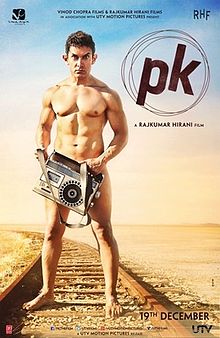
Even our top-notch actors have not shied away from performing such acts. Many of us would remember Akshay Kumar gleefully doing it in Singh is Kinng (2008), Madhavan and Sharman Joshi in 3 Idiots (2009), Ranbir Kapoor in Besharam (2013) and Yeh Jawaani Hai Diwaani (2013), Aamir Khan in PK (2014), and Anupam Kher in Baby (2015).

The fact that a tactic of this kind needs to be resorted to merely to improve the Comic Quotient of a movie goes on to show our directors and script writers to be woefully short of imagination at times. 


The Sounds of Music

Over the decades, the music in Hindi movies has evolved in more ways than one.

Mother Nature Gets a Short Shrift

Elements of nature (moon, rains, lakes, rivers, seasons, clouds…) have gone missing. High rises, cityscapes, interpersonal relations take the front seat. So do emotions, feelings, and the like.

Songs like ‘‘Ye raat ye chandni phir kahaan…’ (Jaal, 1952), ‘Aaja sanam Madhur chandni mein hum…’ (Chori Chori, 1956), ‘Ye raatein ye mausam…’ (Dilli Ka Thug, 1958), ‘O sajana, barkha bahaar aayi’ (Parakh; 1960) and ‘Chalo dildaar chalo, chaand ke paar chalo…’ (Pakeezah, 1972) have almost vanished from the silver screen. Once in a while, we get treated to such songs as ‘Suraj hua maddham’ (Kabhi Khushi Kabhi Gham; 2001), ‘Barso re…’ (Guru, 2007) and ‘Hawaayein…’ (Jab Harry Met Sejal, 2017).

Visual Appeal Elbows Out Our Ears and Minds 

Gradually, the orchestra and the sound have elbowed out the lyrics somewhat. Songs which appealed to the audience not only for their deep layered meaning but also for their soulful music have become part of a rare breed. Philosophical truths of life have got relegated to the background. Thus, we have become used to getting entertained by offerings which accord a higher priority to our ears than to our minds.

Moreover, with the new-found zeal for quick cuts, adroit camera work and the razzle-dazzle of a heightened visual appeal, we have virtually stopped hearing songs and have willy-nilly become reconciled to seeing them. Cinematography rules. Locations keep changing in quick succession. Even before we have had the chance to savour one, the next one pops up. The camera has become obtrusive. Even if a patriotic song like ‘Teri mitti mein mil jaawan…’ (Kesari, 2019) comes up, we are exposed to a visual world which is in the fast forward mode. Since our eyes are constantly being bombarded with visual information, the hapless ear often has no other option but to take the back seat. 

Actors no longer need to worry much about their lip-synching abilities. Most songs get relegated to the background.

Cabarets have metamorphosed into ‘item numbers’.

Lullabies Lose Out to Screen Time for Kids!

No longer do we have scripts with room for any lullabies. Remember ‘Aa ja ri aa, nindiya tu aa…’ (Do Bigha Zamin, 1953), ‘Mein gaoon tum so jaao…’ (Brahmachari, 1968) and ‘Pyara sa gaon…’ (Zubeida, 2001)? Of late, the only lullaby we got treated to was ‘Jo tum saath ho…’ (Salaam Venky, 2022).

Kids are smarter these days. They need only their technical gizmos to get to sleep. Parents may rest easy. Inspired by ‘Mere buddy…’ (Bhootnath, 2008), grandparents of all hues, sizes and shapes are busy honing their dancing skills!

Like real-life kids, reel-like kids have also become far more intelligent, often mouthing dialogues which would leave us twiddling our thumbs trying to figure out their real age. Gone are the day of innocence epitomized by Baby Naaz, Daisy Irani and Baby Farida.

Species Which Have Become Extinct

Besides vamps and villains, poor comedians have also become mostly extinct. Though we still have the likes of Raghuvir Yadav and Rajpal Yadav entertaining us, the separate comedy tracks have all but vanished from our screens. Such roles have been usurped by mainstream heroes and heroines.

The comic timing of such talented artists as Sridevi (Chandni, o meri Chandni…Chandni, 1989) and Akshay Kumar (Hera Pheri, 2000 onwards) has consigned the parallel comedy track in which we earlier had such character artists as Johnny Walker, Mehmood, Mukri, Agha, Tuntun, Aruna Irani, Manorama et al, to the dustbins of history. In the past, even some villains had tried their hands at comedy, and successfully, at that. I refer to Amjad Khan in such movies as Qurbani (1980) and Chameli Ki Shaadi (1986).

An interesting phase was that of the Wodehousian comedy of a subtle kind, presented to us by such artists as Om Prakash, Utpal Dutt, and David in such movies as Chupke Chupke (1975), Golmaal (1979) and Baaton Baaton Mein (1979)

Even the golden hearted house help, popularly known as ‘Ramu Kaka’,has all but vanished.

Of Political Headwinds

Our politicos have never shied away from influencing the kind of messages which need to be conveyed to the hoi polloi through the powerful medium of cinema. Our dream merchants have also been sensitive to the political thinking of the day, coming up with movies which are relevant to the theme of the times.

The first Chinese aggression in 1962 prompted Chetan Anand to come up with Haqeeqat (1964) which tugged at our heartstrings. 

Naunihal (1967), directed by Raj Marbros, was about Raju, an orphan, who believes that his only surviving relative is Chacha Nehru. The film’s music was composed by Madan Mohan, with lyrics by Kaifi Azmi, including the song ‘Meri Aawaz Suno, Pyar ka Raaz Suno’, sung by Mohammad Rafi. The song captured not only the funeral procession of the first Prime Minister of India, Jawahar Lal Nehru but also his study and his office; a loving tribute, indeed, to a towering personality then.

Much later, in 1988, one of his seminal works, The Discovery of India (1946), was presented by Shyam Benegal in the form of a television serial, labelled as Bharat Ek Khoj.

Rewind back to 1965, when Pakistan attacked India. Mr Lal Bahadur Shastri, the then Prime Minister, came up with the slogan ‘Jai Jawan Jai Kisan’. He is said to have persuaded Manoj Kumar to come up with a movie based on the slogan. That is how we got to see Upkar (1967).

Assassination of Prime Minister Indira Gandhi in 1984 led to riots in Delhi and elsewhere. The same were covered in the recent movie Jogi (2022) and were also briefly touched upon in Laal Singh Chadha (2022).

Mani Ratnam gave us Bombay (1995), based on the riots which took place in the city between December 1992 and January 1993 after the demolition of the Babri Masjid led to religious tensions between Hindu and Muslim communities. Gujarat riots in 2002 led to movies like Parzania (2005) and Firaaq (2008)

In the recent past, many of us have been swayed by the political headwinds and movies with a jingoistic nationalism have caught our imagination. A movie like Kashmir Files (2022) which shows a minority community in a negative light has been openly promoted by the present ruling dispensation. Another one, Samrat Prithviraj (2022), went a step further and highlighted the bravery and sense of nationalism of the majority community. The Accidental Prime Minister (2019) attempted to show the previous Prime Minister in a negative light, and now we wait for Emergency (2023).

Come to think of it, the worlds of movies and politics have several common traits. Dream merchants thrive in both. So does star power. Funding and returns on investment are fundamental concerns. Eventually, the onus of sifting the wheat from the chaff obviously falls on the common public. 
A Rich Cultural Heritage Getting Lost?

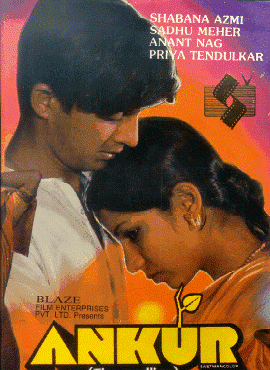
It may not be out of context to mention here that in the days of yore, the kings used to consciously nurture fine arts and culture by patronizing poets, musicians and dancers. However, the way successive governments are turning a blind eye to the essential task of preserving our cinematic heritage, and even gradually withdrawing support to creative cinema, while continuing to gobble up the revenue generated by this industry, is a travesty of justice and common sense. Remember the outfit known as the National Finance Development Corporation, which gave us a stream of gems in the past – Ankur (1974), Manthan (1976), Mirch Masala (1987), Ek Din Achanak (1989), Train to Pakistan (1998), Mammo (1994), and the like? The future looks bleak on this front.      

Acting Prowess and Content: The Ultimate Winners

Even though star-power, presentation and packaging continue to be important, content has now come to rule the roost. Acting is also back on its throne, where it rightfully belongs.

Now, if we root for a blockbuster like Pathaan, we also love an actor-driven movie like Laal Singh Chadha. If we like to see the trials and tribulations of the heroine in Gangubai Kathiawadi, we also empathize with the dilemmas faced by an elderly couple in Vadh, besides appreciating such off-beat offerings as Doctor G and Kantara.

As we sit bleary-eyed in front of our smart TVs, we now have the best of both the worlds – glamour, duly backed by razzmatazz, as well as the depth of genuine art.

(Some inputs from a few members of the Best of Cinema and OTT group on Facebook are gratefully acknowledged.)

Related Posts:

Read Full Post »

ashokbhatia's avatarashokbhatia

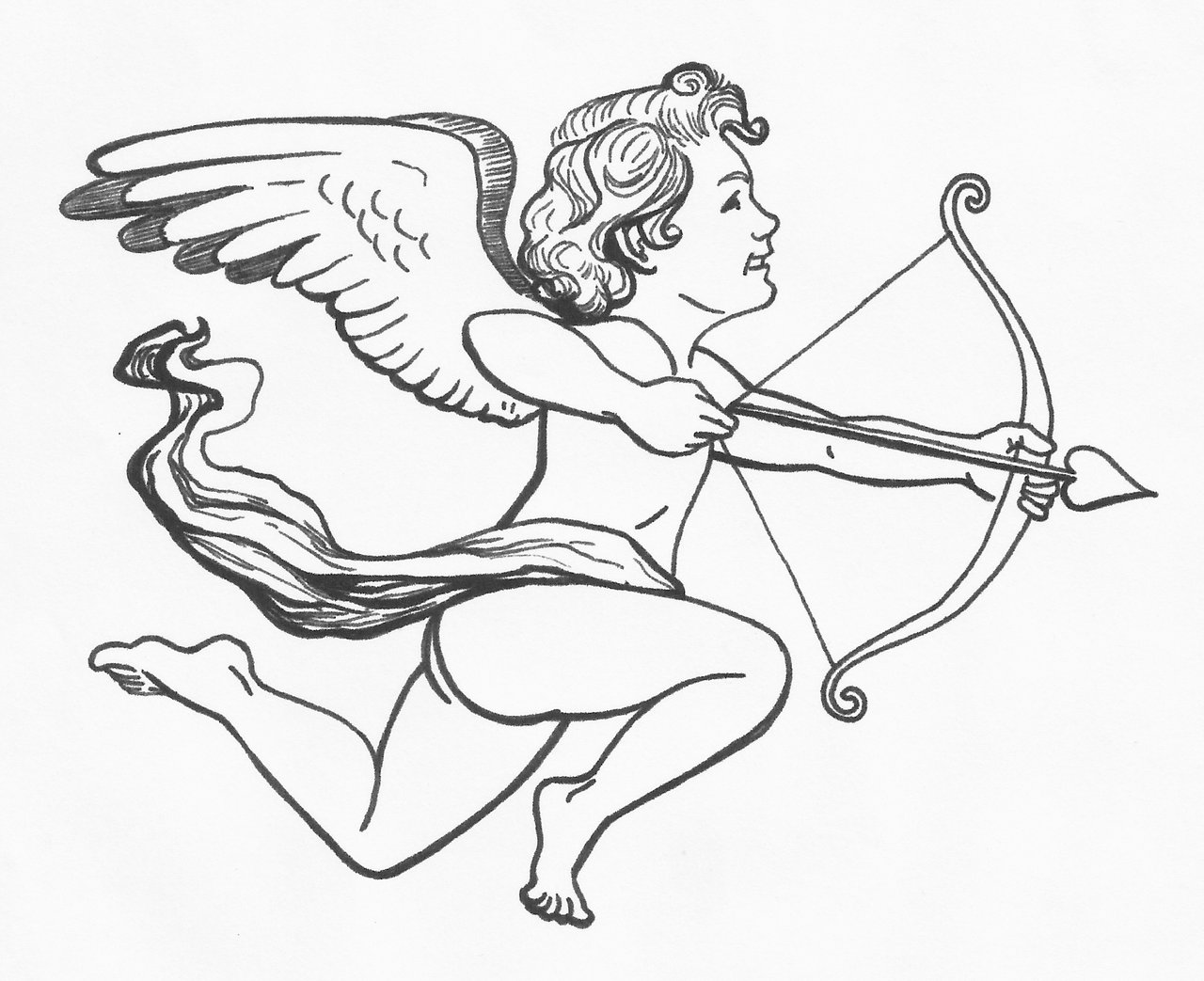
Cupid has a free run in Plumsville. He is present everywhere. He influences and enables incidents which go beyond the normal call of his duty, not restricting himself merely to generating and sustaining magnetic currents flowing between two individuals.

The large circle of influence of Cupid

When he wants someone goofy like Thos to acquire a saintly disposition, he strikes at him, leaving him besotted with Greta Garbo, thereby making him rise in love. When he decides to champion the cause of vegetarians, he uses Madeline Bassett as a front and forces Gussie Fink-Nottle to lay off all the vitamins of animal origin, making him skip Anatole’s lavish spreads and survive only on spinach, sprouts, broccoli and similar stuff. When he wishes to campaign for safety of sharks, he deploys Angela to do his bidding.

Those who serve in the constabulary, however tough their exteriors and however pure their intentions…

View original post 2,603 more words

Read Full Post »

Cupid has a free run in Plumsville. He is present everywhere. He influences and enables incidents which go beyond the normal call of his duty, not restricting himself merely to generating and sustaining magnetic currents flowing between two individuals.

The large circle of influence of Cupid

When he wants someone goofy like Thos to acquire a saintly disposition, he strikes at him, leaving him besotted with Greta Garbo, thereby making him rise in love. When he decides to champion the cause of vegetarians, he uses Madeline Bassett as a front and forces Gussie Fink-Nottle to lay off all the vitamins of animal origin, making him skip Anatole’s lavish spreads and survive only on spinach, sprouts, broccoli and similar stuff. When he wishes to campaign for safety of sharks, he deploys Angela to do his bidding.

Those who serve in the constabulary, however tough their exteriors and however pure their intentions to bring the culprits to book, also fall under his spell. When one of them has to be taught a lesson in humility, Stiffy Byng becomes an instrument in his hands, persuading even a vicar to pinch a policeman’s helmet. When the intellectual level of those who belong to the so-called sterner sex has to be raised, Cupid uses such characters as Florence Craye and Vanessa Cook to give the project a good shot. When he decides to downgrade obesity, he finds an ally in Maud, who scratches her fixture with Geoffrey Raymond to bring home the point.

When casinos at Monte Carlo need some promotion, Cupid makes two perfect strangers meet. If George Albert Balmer is an insurance clerk, the party of the other part is a companion of Lady Julia. Within a day of their having met, George proposes and finds that he is getting accepted. It is only then that he gets asked by his lady-love as to what his name happens to be! (The Tuppenny Millionaire, The Man Upstairs and other stories)

Bingo Little and the Evolution of Romantic Maturity

But the character Cupid is particularly fond of in Plumsville is Bingo Little. It appears that there are repeated attempts on Cupid’s part to enable his favourite person to ‘settle down’ in life. Objects of Bingo’s affection have included a waitress named Mabel; Honoria Glossop, the formidable daughter of Pop Glossop; Daphne Braythwayt, a friend of Honoria; Charlotte Corday Rowbotham, a revolutionary; Lady Cynthia Wickhammersley, a family friend of Bertie’s; and Mary Burgess, niece of the Rev. Francis Heppenstall. After each failed affair, Bingo does not necessarily sulk. Cupid rushes to his aid. The scales fall from his eyes, and he suddenly realizes that the next girl alone is his true soul mate.

After many failed affairs, Bingo ends up marrying the romance novelist Rosie M. Banks, an author whose outlook on life happens to match well with that of his. Cupid does not desert him even in his post-nuptials phase, setting the bar rather high for all the men who attach a premium on matrimonial bliss.

We now find a Bingo Little who is completely transformed. He is singularly devoted to his wife. Maintaining matrimonial peace and harmony is the sole purpose of his life. When it comes to keeping his lady-love happy and contented, there is little that he leaves to chance.

Charles Darwin, had he come across this unique case, might have gifted humanity with a treatise on The Evolution of Romantic Maturity instead.

Taking care of those young at heart

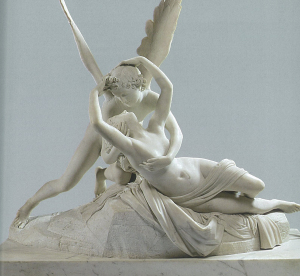
When it comes to Cupid’s machinations, age, caste, creed, profession and social status do not really matter. He does not discriminate between the younger lot and those who might be advanced in age but are young at heart. Other than the topsy-turvy romances of younger couples, he also does justice to those who are advanced in age and young at heart. An affection which was discernible in a couple’s younger days – whether declared or otherwise – survives the harsh slings and arrows of life. A chance meeting unearths and rekindles the deep buried embers of love. A well seasoned romance bears fruit. The Valentine Spirit prevails. Love may remain dormant for a long time, but can get revived in a jiffy – much like a Psyche getting revived by a Cupid’s kiss!

The case of Joe and Julia springs to one’s mind. So does the case of Piggy and Maudie. Not to forget the case of Mrs Spottsworth and Captain Biggar-Biggar. Even someone of the stature of Sir Roderick Glossop, the eminent nerve specialist, is not spared. Having fathered such exquisite specimens as Honoria and Oswald Glossop in the past, and having been a widower for two years, he decides to get hitched to Myrtle, Lady Chuffnell, later in his life.


The limitations of Cupid

But the freedom to strike at will does not come without its attendant responsibilities. Cupid has some serious obligations to meet in Plumsville. The strict code of chivalry in vogue therein does not permit physical intimacy. It looks askance at someone bandying about the name of a female. It does permit a sideways scrutiny of a lissome profile but scoffs at any attempts to outrage the modesty of a member of the tribe of the delicately nurtured. In Plumsville, romance blossoms. Love is in the air. Devotion is permitted. But physical intimacy is a taboo. Aphrodite has limited access to the goings on in Plumsville. Eroticism is denied entry. An occasional occurrence which could amount to mild titillation alone is allowed.

Consider some such instances where Cupid’s advances have met with a resounding buff in Plumsville.

When Bertie Wooster stands up to Gussie’s Amorous Plans

The Mating Season touches upon Gussie’s notebook which contains some juicy remarks on Pop Bassett and Rederick Spode and continues to be in Stiffy’s possession. Gussie comes up with a fruity scheme to retrieve the notebook from her.

‘Well, listen. You could easily engage her in a sort of friendly romp, if you know what I mean, in the course of which it would be simple to…well, something in the nature of a jocular embrace…’

I checked him sharply. There are limits, and we Woosters recognize them.

‘Gussie, are you suggesting that I prod Stiffy’s legs?’

‘Yes.’

‘Well, I’m not going to.’

‘Why not?’

‘We need not delve into my reasons’, I said, stiffly. ‘Suffice it that the shot is not on the board.’

He gave me a look, a kind of wide-eyed, reproachful look, such as a dying newt might have given him, if he had forgotten to change its water regularly.

Unfortunately, Gussie proceeds with his plans. This prompts Madeline Bassett to scratch their engagement, thereby putting both Gussie and Bertie in a limbo.

Of girls clad in swimsuits in one’s bed

Bertie is never too keen on having Pauline in his bedroom in the small hours of night, and that too dressed in a wet swimsuit. But his reaction upon finding her there is not to fall for one of the devilish schemes of Cupid. His primary concern is to get her out of his cottage at the earliest possible. He does not even try to kiss her. Deciding to wait till the morning, he himself sleeps in the garage. (Thank You, Jeeves)

Bertie often comments on women’s bodies but only as an appreciation of beauty. There’s never any lust involved and he treats his female friends well, though he considers Madeline a drip and Bobbie Wickham and Stiffy Byng as troublemakers.

The closest he appears to come to expressing some lascivious thoughts is perhaps in The Mating Season. But here again, the Code of the Woosters reigns supreme.

When reproduction is embarrassing

The very idea of reproduction embarrasses Bertie Wooster, making him blush, as in this conversation he once had with Aunt Agatha:

‘Aline Hemmingway,’ said Aunt Agatha, ‘is just the girl I should like to see you marry, Bertie. You ought to be thinking of getting married. Marriage might make something of you. And I could not wish you a better wife than dear Aline. She would be such a good influence in your life.’ 

‘Here, I say!’ I chipped in at this juncture, chilled to the marrow. 

‘Bertie!’ said Aunt Agatha, dropping the motherly manner for a bit and giving me the cold eye. 

‘Yes, but I say–’ 

‘It is young men like you, Bertie, who make the person with the future of the race at heart despair. Cursed with too much money, you fritter away in idle selfishness a life which might have been made useful, helpful and profitable. You do nothing but waste your time on frivolous pleasures. You are simply an anti-social animal, a drone. Bertie, it is imperative that you marry.’

 ‘But, dash it all–’

 ‘Yes! You should be breeding children to – ‘

 ‘No, really, I say, please!’ I said, blushing richly. Aunt Agatha belongs to two or three of these women’s clubs, and she keeps forgetting she isn’t in the smoking-room.

 (The Inimitable Jeeves)


Of upturned faces and burning kisses

Showering upturned face with burning kisses is another tactic that brings a Plummy reader to a somewhat provocative titillation. Constable Ernest Dobbs of The Mating Season fame indulges in such a naked display of affection towards Queenie, the maid at Deverill Hall. However, he is quick to apologize.

The perks of being an eccentric

Rupert Psmith hastens to rush across to handover a virtually stolen umbrella to Eve Halliday in Leave it to Psmith. He indulgently tolerates a stain on his assumed character when Eve takes him to task during a boat ride for mistreating his supposed wife who is a close friend of hers. Cupid brings them close together yet again while facing Smooth Lizzie, but there is never any trace of any physical intimacy between the two of them. This is how their alliance gets sealed:

‘Cynthia advised me’, proceeded Eve, ‘if ever I married, to marry someone eccentric. She said it was such fun…Well, I don’t suppose I am ever likely to meet anyone more eccentric than you, am I?

‘I think you would be unwise to wait on the chance.’

When class distinctions evaporate

Other than cross-class affairs at many places, we also run into Lord Emsworth treating his young friend who happens to be a girl rather well. When Gladys requests some flowers, he hesitates, but cannot refuse her. Just as she is picking her flowers, McAllister rushes up in a fury, but his master, encouraged by Gladys’ hand in his, stands up to the man, putting him in his place. (Lord Emsworth and the Girl Friend)

Here is a case where the innocence of Master Cupid does the trick, holding the adult Cupid at bay.

Snuggling close together

In one of the short stories, estranged lovers get reunited on an isolated beach. When a chilly wind starts blowing in, the girl, who is not sufficiently clad, ends up asking the party of the other part if it would not be better if they snuggled together. The rest, of course, is left to the reader’s imagination. (Wilton’s Holiday, The Man with two left feet)

She seated herself with her back to him. Dignity demanded reprisals, so he seated himself with his back to her; and the futile ocean raged towards them, and the wind grew chillier every minute.

 Time passed. Darkness fell. The little bay became a black cavern, dotted here and there with white, where the breeze whipped the surface of the water.

 Wilton sighed. It was lonely sitting there all by himself. How much jollier it would have been if—

 A hand touched his shoulder, and a voice spoke—meekly.

 ‘Jack, dear, it—it’s awfully cold. Don’t you think if we were to—snuggle up—’

 He reached out and folded her in an embrace which would have aroused the professional enthusiasm of Hackenschmidt and drawn guttural congratulations from Zbysco. She creaked, but did not crack, beneath the strain.

 ‘That’s much nicer,’ she said, softly. ‘Jack, I don’t think the tide’s started even to think of going down yet.’

 ‘I hope not,’ said Wilton.

Warm embraces and progeny

Perhaps the top slot for flirtatious initiatives in Plumsville would go to Gally and Lord Ickenham, who are known to have embraced young ladies with warmth much greater than what might be warranted.

The paternalistic origins of Sue Brown, the daughter of Gally’s old flame Dolly Handerson, leave Plum fans twiddling their thumbs. In any case, illegitimate children are never in the scheme of things in Plumsville.


Plumsville: Intentions as pure as freshly driven snow

If one were lucky enough to have gone through all the works of Wodehouse, and even his biographies, one is unlikely to find any traces of either overt sexuality or vulgarity. Strong attraction, yes. Infatuation, decidedly. Cupid’s arrows, surely. The world he has left behind for us to revel in is innocent, with intentions as pure as freshly driven snow. And therein we have the unique appeal of his canon.


Several lenses of viewing the Wodehouse canon

There are several lenses with which one could discern the messages embedded in his works. A literary lens would reveal his canvas to be very wide. A spiritual lens would bring into sharp focus the kind of lessons he forks out about life in general. A fitness lens would nudge us to avoid the pleasures of the table and remain fit and trim. A social lens would make the scales on our eyes fall and help us in seeing the perils of economic inequality.

However, a romantic lens would reveal a clear absence of cruder passions. Respect for women reigns supreme. In fact, his canon is a sterling example of a superficial male supremacy where, in reality, it is the females who call almost all the shots, whether in the form of domineering aunts and love interests who have perfected the art of wrapping the males around their dainty fingers, enterprising collaborators who think nothing of stealing scarabs, efficient secretaries who wish to earn their pay through hard work, romantic interests who think stars are God’s daisy chains, and of course those who have the grit and determination to pursue their careers with reverent support from the Bingo Littles of their lives.

Cupid is invariably omnipresent. But one would not be surprised to find a note from him one of these days, protesting overwork and lack of any assistance whatsoever. If Santa Claus, who gets busy only around Christmas time, could have elves and a fleet of reindeer supporting him, why he, who has to remain preoccupied throughout the year, 24 by 7, has to work single-handedly, he might well ask.


Blessing: A singular absence of Vitamin S

Dishing out narratives which get lapped up by common folk like us despite a missing element of Vitamin S, considered so very critical to the commercial success of an author, is no mean task. P G Wodehouse accomplished it. His plots invariably stuck to the conventional norms of morality.

A blessing, indeed. Much like seeing a family movie which is certified as ‘U’, reading the works of P G Wodehouse gives us a neutral ring side view of romantic affairs of all kinds. But to label these as ‘romcoms’ might not be proper. Perhaps, as suggested by Honoria Plum of Plumtopia fame elsewhere, a term along the lines of ‘comroms’ might do the Wodehouse canon better justice.

In an age when the threshold of childhood innocence is getting lowered with each passing year, his works happen to be squeaky clean, safe to be devoured even by kids and adolescents about whom their hapless parents lose much of their beauty sleep these days.

Educationists could improve upon the effectiveness of the sex-education packages for their wards by including some references to the works of Wodehouse.

Judicial beaks the world over, while dishing out harsh sentences to those convicted of sexual adventurism, could seriously consider gifting a tome of the Master’s works for them to compulsorily devour while cooling their heels in prison.

Societies and associations which propagate Wodehousean thoughts could come up with annual awards which get dished out to those who demonstrate a chivalrous approach to the challenges faced by their heart-throbs.

The possibilities are limitless. The mind boggles.

(Yours truly acknowledges with great respect the inputs of those Plum fans whose thoughts have enriched this post many times over.)

(Related Posts:
https://honoriaplum.wordpress.com/2019/02/09/wodehouse-and-the-romantic-novelist-sophie-weston

https://ashokbhatia.wordpress.com/2014/04/12/different-shades-of-women-in-plumsville

https://ashokbhatia.wordpress.com/2016/02/14/when-rozzers-in-plumsville-fall-in-love

https://ashokbhatia.wordpress.com/2015/04/01/when-masters-thos-bonzo-and-moon-rise-in-love

https://ashokbhatia.wordpress.com/2015/02/13/joe-julia-and-a-seasoned-romance

https://ashokbhatia.wordpress.com/2014/02/04/piggy-maudie-and-a-seasoned-romance

https://ashokbhatia.wordpress.com/2017/02/14/of-mrs-spottsworth-and-the-biggar-code-of-white-men)


Read Full Post »

ashokbhatia's avatarashokbhatia

For avid fans of P G Wodehouse, it is not easy to relish the kind of comedies Bollywood keeps churning out. Humour which is loud, crass and uncouth repels them. Back-slapping and guffawing is something they do not take kindly to. What appeals to their finer sensibilities is a subtle brand of humour. Even mild sarcasm does not make their shapely eyebrows arch upwards by a fraction of an inch, as long as it is delivered in fine taste.Movie Mad world

Play a so-called comedy which is full of inane humour, double entendres and much back-slapping, and they are apt to recoil in horror. Bring in a typical rom-com and they would bemoan the repetitive nature of the goings on. But switch to a movie with a dash of Wodehousian humour, and one would find them in good cheer, nibbling a yummy chocolate with their soul-mate sprawled next to them on the…

View original post 2,141 more words

Read Full Post »

For avid fans of P G Wodehouse, it is not easy to relish the kind of comedies Bollywood keeps churning out. Humour which is loud, crass and uncouth repels them. Back-slapping and guffawing is something they do not take kindly to. What appeals to their finer sensibilities is a subtle brand of humour. Even mild sarcasm does not make their shapely eyebrows arch upwards by a fraction of an inch, as long as it is delivered in fine taste.Movie Mad world

Play a so-called comedy which is full of inane humour, double entendres and much back-slapping, and they are apt to recoil in horror. Bring in a typical rom-com and they would bemoan the repetitive nature of the goings on. But switch to a movie with a dash of Wodehousian humour, and one would find them in good cheer, nibbling a yummy chocolate with their soul-mate sprawled next to them on the couch.

The purists amongst us would argue that movies mentioned below are not even a pale shadow of the original sunlit brilliance of the Wodehousian brand of humour. No disagreement whatsoever. Wodehouse is Wodehouse. He stands tall and alone in providing soothing comfort to tormented souls on this planet.

Yet, let us not overlook the fact that the luxury of eloquence enjoyed by literature is simply not available to movie Movie Mrs_Doubtfiremakers. Moreover, the commercial considerations weigh much more on the minds of a producer-director duo whose principal aim is to set the box office afire. Given these constraints, if a team does come up with an offering which is clean and unalloyed fun, due credit may be given. Yes, the movies listed below were not based on Wodehousian narratives. But they deserve a mention because at least a part of them manages to capture the kind of subtle humour which the residents of Plumsville relish.

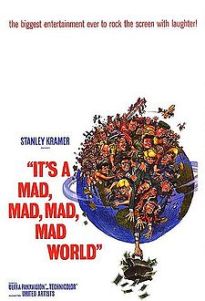
From the stable of Hollywood, one fondly recalls movies like ‘It is a Mad, Mad, Mad, Mad, World’, ‘Honey, I Shrunk the Kids’, ‘Mrs. Doubtfire’, ‘Baby’s Day Out’ and ‘Dunston Checks In’, just to mention a few.

Bollywood has also churned out quite a few rollicking comedies, but very few of these have the dash of subtlety which is the hallmark of Wodehouse in literature.

Here is a quick look at movies which have provided us a clean, sumptuous and sophisticated comic fare over the years.

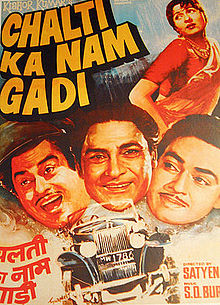
Chalti ka Naam Gaadi, 1958 (That which runs is a vehicle)

Chalti_ka_Naam_Gaadi

A story of three brothers who run an auto garage. The eldest takes a jaundiced view of the delicately nurtured and complications arise when the younger ones start behaving like Bingo Little and discover the Rosie M Banks of their lives.

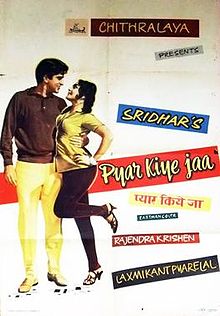
Pyar Kiye Jaa, 1966 (Keep Loving)Movie Pyaar_kiye_jaaA story of two couples who resort to a bag of tricks to get united. The scene where a Tuppy Glossop (Mehmood) aspiring to turn a movie director narrates a scene to Pop Glossop (Om Prakash) shall forever remain fresh in the memory of those who love a dash of Wodehousian humour on celluloid.

Padosan, 1968 (The Lady Neighbor)Movie PadosanA musical which brought out the Indian North-South divide in a humorous manner. A Bertie-like simpleton attempts to woo the woman in a neighboring house. A Jeeves-like friend, played by the inimitable Kishore Kumar, helps him in his mission.

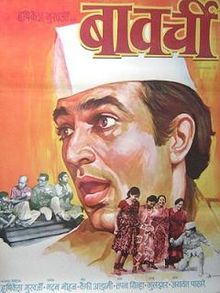
Bawarchi, 1972 (The Chef)Movie BawarchiWarmth of relationships in a joint family gets revived, thanks to the efforts of a servant. Much like Jeeves, he has a solution to all their problems.

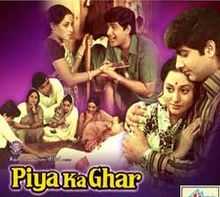
Piya Ka Ghar, 1972 (House of the Beloved)Movie Piya_Ka_Ghar,_1972A humorous take on the shortage of housing in the city of Mumbai. A newly married couple tries to find some privacy in a small place which is infested with parents, an elder brother and his wife, a young brother, inquisitive neighbors, intrusive friends and, of course, some mice.

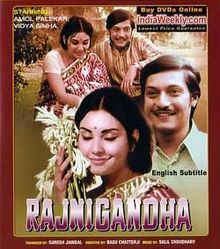
Rajnigandha, 1974 (Tuberose)Movie Rajnigandha,_1974A Madeline Bassett has to make a choice between two persons, eventually deciding in favor of a Bertie-like simpleton. Based on a story by Manu Bhandari.

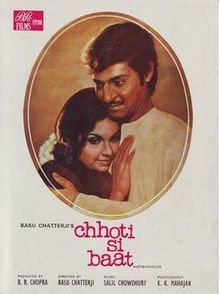
Chhoti Si Baat, 1975 (Such a Small Matter)Movie Chhoti_Si_BaatA Gussie Fink-Nottle type hero, shy and diffident to the core, gets tongue-tied when it comes to winning over the love of his life. Coaching by a Jeeves-type expert makes him successful in his endeavors. Based on ‘The School for Scoundrels’, a 1960 British comedy.

Chupke Chupke, 1975 (Hush Hush)Chupke_Chupke posterA rip-roaring treatise on the eccentricities of the linguistic purists. Tired of the lavish praises being heaped by his newly wedded wife onto her Lord Emsworth type brother-in-law, the husband assumes the role of a driver in the latter’s family. Much hilarity ensues as one subterfuge leads to another, eventually making the brother-in-law realize that he has indeed been outwitted.

Khatta Meetha, 1978 (Sweet and Sour)Movie Khatta_Meetha_(1978)An elderly couple ties the knot and handles the challenge of keeping their grown up children together. If Piggy and Maudie had children when they decided to live together, the scenario would have perhaps played out along similar lines. Unfortunately, a Jeeves does not figure in the narrative, nor does the lining of the stomach.

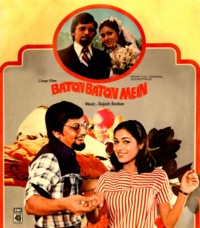
Baton Baton Mein, 1979 (By the way)Movie Baton Baton MeinA light-hearted comedy about two young persons discovering their love for each other. The only complication in their love story is the Gussie-like boy’s shyness in clearly expressing his love for the girl.

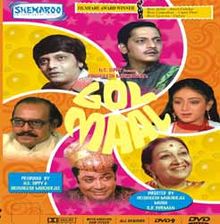
Gol Maal, 1979  (Hodgepodge)220px-Golmal_PosterA well-intended pun directed at moustache maniacs. A father, in the mould of a Pop Bassett, is convinced that those without a moustache are characterless. Unwittingly, his daughter falls for a smart young man who wears a false moustache to get a well-paying job with her father. Much hilarity ensues and the father eventually relents and accepts their marriage.

Khubsoorat, 1980 (The Beautiful One)Movie khoobsuratThe need to strike a healthy balance between freedom and discipline in family life, espousing the cause of nirmal anand (unalloyed bliss). The lady of the house is a strict disciplinarian; a stiff-upper-lipped person, much like Aunt Agatha. A Bobby Wickham type heroine who believes in spontaneity walks in and wins the heart of the family.

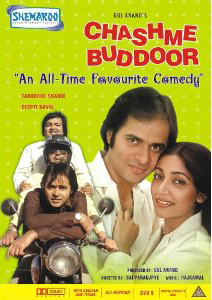
Chashme Buddoor, 1981 (Let No Evil Glance Come Your Way)Movie Chashme_BuddoorA youthful story of three friends and a damsel who is not in distress. Two of the friends are jealous of the third one for whom the damsel falls and create a rift between the two. Luckily, the damsel has an aunt fashioned on the lines of Dahlia, who intervenes to reunite the couple.

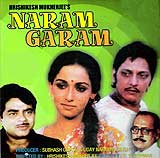
Naram Garam, 1981 (Soft but Hot)Movie Naram_GaramWhen a Lord Emsworth type landlord decides to get married to a much younger Honoria Glossop, the employee hero needs to call in the landlord’s young daughter and former mother-in-law to the marriage venue so as to walk down the aisle himself. In the process, he is able to negotiate a hefty increment as well as secure possession of a big house to stay in. The hero sounds like a Bertie, though with brains of a Jeeves.

Angoor, 1982 (The Grapes)Movie AngoorA modern-day take on ‘The Comedy of Errors’, with two pairs of identical twins getting mixed up in a series of funny situations.

Satte pe Satta, 1982 (Seven on Seven)Movie Satte_Pe_SattaA comic thriller, adapted from the 1954 Movie ‘Seven Brides for Seven Brothers.’

Hamari Bahu Alka, 1982 (Alka, our Daughter-in-law)Movie Hamari_Bahu_Alka,_1982A newly married couple tries to find some privacy by running away from home.

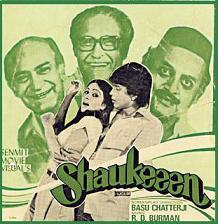
Shaukeen, 1982 (The Connoisseurs)Movie ShaukeenHow three elderly but young-at-heart friends learn to give up their lecherous and voyeuristic ways.

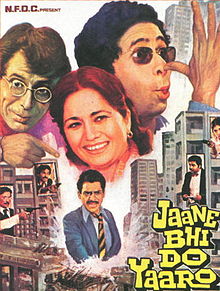
Jaane Bhi Do Yaaron, 1983 (Let It Pass, friends)Movie Jaane_Bhi_Do_Yaaro_1983The perils of investigative journalism.

Kisi Se Na Kehna, 1983 (Don’t Tell Anyone)Movie KissiseNaKehnaAn educated lady-love is projected as a traditional village belle. Post-marriage, however, it becomes a challenge for the couple to live the lie.

Rang Birangi, 1983 (The Colourful)Rang_Birangi PosterHow a bored housewife gets helped by a friend to rekindle the embers of love between herself and her husband. Many of us still remember the role played by Utpal Dutt, that of a police inspector named Dhurandhar Bhatawadekar. Goes on to show what a Constable Oates could achieve, when not restrained by a Justice of the Peace.

Chameli ki Shaadi, 1986 (Chameli’s Marriage)Movie Chameli ki ShaadiA comic look at how a couple overcomes objections from their guardians to get united, all thanks to a lawyer friend. A satire on the caste system prevalent in India.

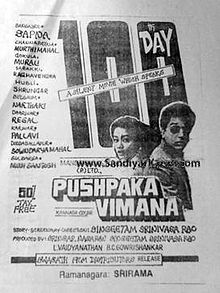
Pushpak, 1987 (The Love Chariot)Movie Pushpaka_VimanamA full length feature film sans dialogues of any kind, the movie remains a critic’s delight. Somewhat dark and pungent in parts, but otherwise a perfect fit to the kind of subtle humour a Wodehouse fan yearns for. A Bertie type hero faces joblessness but ends up with a positive attitude, with squared shoulders and a chin-up disposition.

Chachi 420, 1997 (Aunty 420)Movie Chachi_420Loosely based on Mrs. Doubtfire, the movie was about a father impersonating as a house maid so as to be close to his daughter.

Jhoot Bole Kauwa Kaate, 1998 (Speak a Lie and the Crow will Bite)Movie Jhooth_Bole_Kauwa_KaateThe value of truthfulness in all relationships. The hero begins to create a series of lies (hence the title – whenever he lies, the crow caws) in attempting to get the person he loves.

Munna Bhai MBBS, 2003Poster-Munna_Bhai_M.B.B.S.A hilarious movie showcasing the gaps in the medical education system. When a medical college is headed by a principal who is built along the lines of Rev. Aubrey Upjohn, a rowdy-turned-student determines to show him the need to treat patients with empathy.

Lage Raho Munna Bhai, 2006 (Keep at it, Munna Bhai)Lage_raho_munna_bhaiThe hero does not wear a green colour beard, but projects himself as a college lecturer with high ideals. In reality, he is a gangster. A rip-roaring comment on property sharks, inane superstitions and the need to uphold Gandhian values.

3 Idiots, 2009pondy movie 3_idiotsThe spirit of innovation often gets killed by the pressures of society and parents, when youngsters are not free to chase their own dreams and take up professions which they are passionate about. An Aubrey Upjohn, a Bertie Wooster, a Bingo Little, a Tuppy Glossop, a Roderick Spode and an Angela come together and present a sparkling narrative.

Well Done, Abba, 2009

Shyam Benegal is renowned for having exposed oppression and corruption of different kinds in his earlier works during the ‘parallel cinema’ wave. ‘Ankur’ (1974), ‘Nishant’ (1975), ‘Manthan’ (1976) and ‘Bhumika’ (1977) etc left us stirred and shaken up in the earlier years. All these were very intense and serious movies. In the recent past, he has effectively used humour and satire to convey a similar message. A remarkable transformation!

A clueless Sir Cuthbert, desirous of having a well of his own on his agricultural land, is unable to handle rampant corruption which makes a mockery of the benefit schemes rolled out by the government. His daughter, Bobbie Wickham, comes up with a fruity scheme. They report to the police that their non-existent well has been ‘stolen’! What ensues is sheer hilarity. Upcoming state assembly elections ensure the complaint gets heard and acted upon.

Atithi, Tum Kab Jaoge? 2010 (Dear Guest, When Would You Depart?)Movie Atithi_Tum_Kab_JaaogeHow even elderly strangers can add value to a family’s life.

Vicky Donor, 2012Movie Vicky_Donor_2012A delightful spoof on sperm donation and infertility. One of the main characters, a pseudo doctor who claims to specialize in assisting couples in begetting designer babies, sounds much like a Jeeves who has all the right answers.

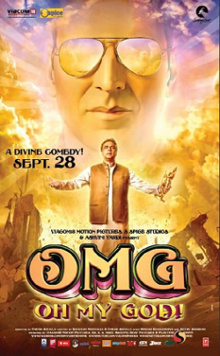
Oh My God! 2012Movie Oh My God PosterA satire on the ills plaguing organized religion and idle worship.

Finding Fanny, 2014Movie Finding_FannyThis one is like a Joe searching for a long-lost Julia. The story is essentially about a road trip set in Goa and follows the journey of five dysfunctional friends who set out in search of Fanny, the love-interest of Naseeruddin Shah. A gracefully matured Dimple Kapadia and a voyeuristic Pankaj Kapur add some extra zing to the proceedings.

PK, 2015Movie PKA delightful comedy which depicts the satirical outlook of an extra-terrestrial being towards our religious beliefs and practices. Some fundamental questions relating to faith get raised, but with liberal doses of sophisticated humour.

We are in luck that God has not stopped dishing out directors who excel at regaling the audience with sunlit humour woven into their scripts. If we had the likes of Hrishikesh Mukherji, Basu Chatterji, Gulzar and Sai Paranjpe in the past, now we have Ashwani Dheer, Shoojit Sircar and Rajkumar Hirani who have perfected the art of blending social messages with a dash of Wodehousian humour.

Admittedly, this could not have happened but for the support of some exceptional character actors. In the days of yore, we had the likes of Gope, Mehmood, Johny Walker, Mukri, Dhumal, Tun Tun, Manorama, Jagdeep and Asrani regaling the audience with their raucous and overdone funnies which kept popping up a dime a dozen. In the recent past, the likes of Raghuvir Yadav, Rajpal Yadav and Paresh Rawal have kept us rollicking in our chairs.

Nevertheless, one would be tempted to put Om Prakash and Utpal Dutt at the top of the pack. Their virtuosity, mannerisms and body language were always understated, and kept tickling our funny bones in the right spot.Movie Ram_Aur_Shyam

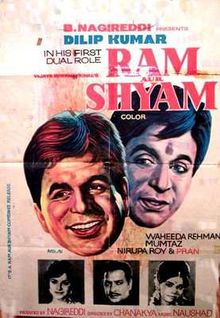
When it comes to providing a comic relief, heroes of mainstream commercial movies have often competed with hard-core comedians. Raj Kapoor came up with his Chaplinesque mannerisms. The ‘tragedy king’ Dilip Kumar made us smile with his antics in such movies as ‘Kohinoor’ and ‘Ram aur Shyam.’ The comic timing of Amitabh Bachhan and Dharmendra is legendary. In fact, over a period of time, mainstream heroes and heroines have somewhat managed to make the role of a stand-alone comedian redundant.

Even our much-hated villains have surprised us with their flair for comedy. Pran did a tango with the inimitable Ashok Kumar in ‘Victoria No. 203’. Amjad Khan, whom we all hated in ‘Sholay’, did not disappoint us in such movies as ‘Chameli Ki Shaadi’ and ‘Qurbani.’Movie Victoria_No._203

The core message in earlier Bollywood comedies was either about the value of togetherness and harmony or about the travails of a Sippy-type hero who suffers from an inferiority complex. Recent offerings have instead touched upon the ills plaguing our society. Many Bollywood movies have managed to deliver a message crafted of chilled steel couched in a velvet-like mirthfulness.

May the tribe of such directors, producers, actors and script-writers continue to multiply!

Read Full Post »