Feeds:
Posts
Comments

Posts Tagged ‘Dance’

It is not often that one comes across a live performance that promotes the cause of environment and sustainable living. The ballet from Ukraine, aptly titled Song of the Forest, takes the issue of environmental protection to a different level altogether.

The Theme

It is a magical tale of love between the forest girl Mavka and the young man Lukash. The world of man and nature interact. There is love, betrayal, despair, and human greed. There is the dependence of the animal kingdom on the forest. Either of the main protagonists cannot forget the magical moment of love. It is also a story about how fate changes for someone who loses touch with nature and stops listening to his inner voice.

The relationship between Mavka and Lukash develops gradually and coincides with the seasons. The ballet portrays the beginning of a relationship between Lukash and Mavka during spring. Their love blossoms during the summer, a season of fertility of the Ukrainian land.

Autumn brings Lukash’s betrayal as he marries another woman. Come winter, and both Mavka and Lukash die. Their souls eventually meet in the world of eternity.

The ballet has many mythological images from Ukrainian fairy tales. What is also endearing is the occasional presence of forest animals that appear on the stage at regular intervals. Characters with malevolent intentions are also unobtrusively woven into the flawless movements of the dancers.   

At its core, the ballet is a story of the fearless Mavka, who seeks peace in her world, just as Ukraine fights for freedom and peace in her country today.

Background

Song of the Forest is a legendary ballet that has been the pride of Ukrainian choreography for over 75 years. It celebrates romance as well as the purity of classical ballet technique. The ballet has already entered the Golden Fund of Ukrainian musical culture.

It is based on a play of the same name The Song of the Forest (1911) by Lesya Ukrainka, who was one of Ukrainian literature’s foremost writers, best known for her poems and plays. She was also an active political, civil, and feminist activist.

Gentle and lyrical music by the Ukrainian composer Mykhailo Skorulskyi was written for the ballet in 1936. It would not be wrong to say that he has gifted us with a real hymn to living nature and pure love. The music has a romantic aspect, is full of folklore, and captures the vivid moods of nature in a musical language. However, in the soundtrack, one misses a few sounds one typically associates with a forest. Like, either the occasional chirping of birds, or an infrequent roar of some animals.

Premiered in 1946, the ballet highlights the crucial need to promote a dialogue between man and nature, an aspect of our lives that most of us ignore these days, albeit at our own peril.
The Skill of the Artists

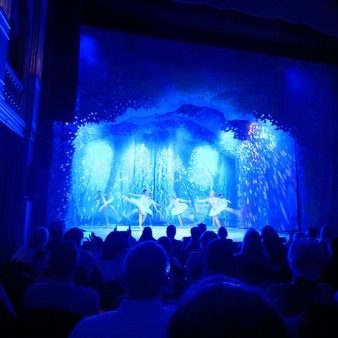
The ballet is filled with complex duet supports and has fascinating choreographic patterns. The skill and sophistication of the artists of Grand Kyiv Ballet artists leave the audience spellbound. The grace with which they move and the poise with which they perform either an assemble, a grande jeté, a plié, a pirouette, or a tour en l’air, leaves one mesmerised.
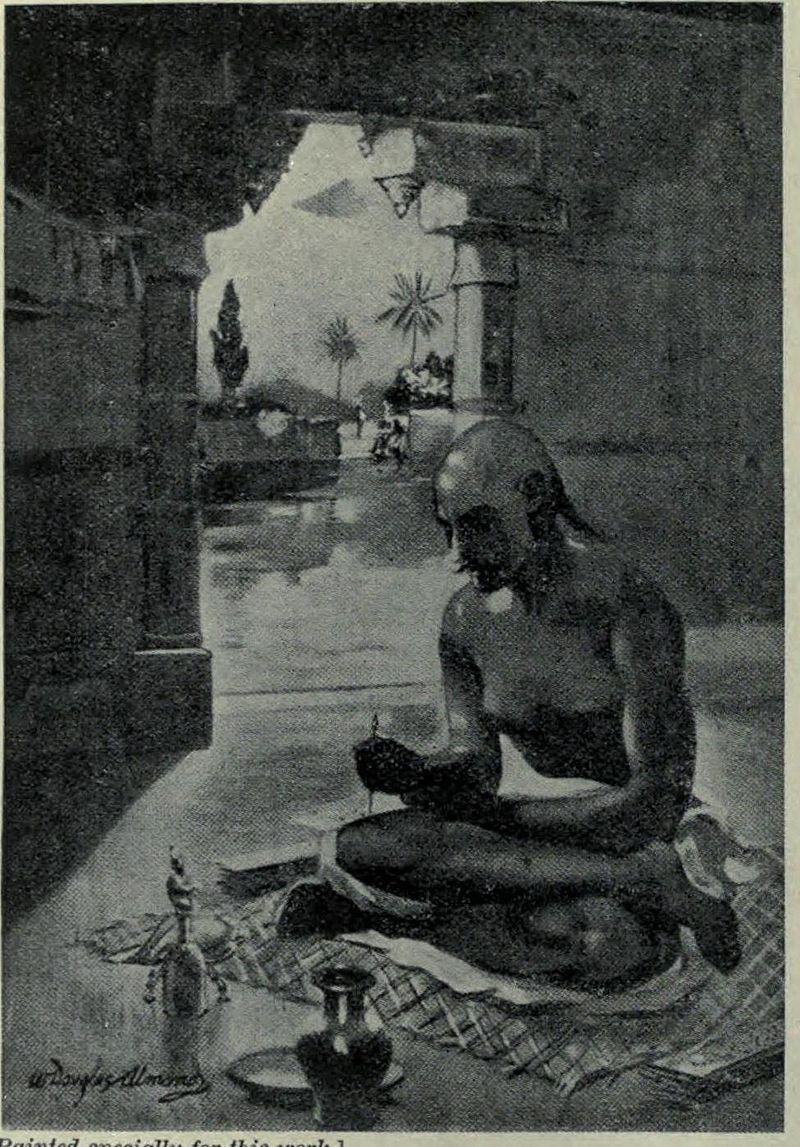
Forests in Indian Epics and Dramas

Forests play an important role on our planet and are part of many epic plays from India and elsewhere. Narratives of the Ramayana and the Mahabharata – both epics that are revered across South Asia – keep shifting from the kings’ palaces to forests. Almost all the works of Kalidasa in Sanskrit are replete with references to nature.  
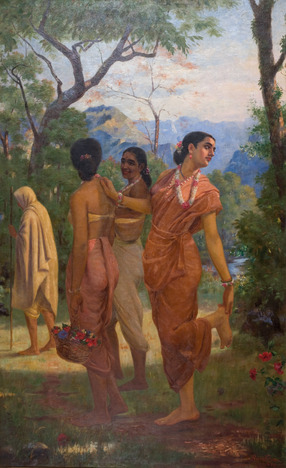
By way of an example, the heroine of Abhigyan Shakuntalam (The Recognition of Shakuntala) adores nature and is brought up in an area populated by dense forests. The play moves freely from the deep forest to the urban palace and from the earth to different levels of the heavens. The heroine falls in love with a king. Like Mavka and Lukash, their love also blossoms in the forest. However, upon return to his palace, the king forgets her. Eventually, the king realises his folly and the two get united.

Abhigyan Shakuntalam was probably the first Asian drama translated into Western languages. It is also one of the very first Sanskrit works ever translated into English. The first translation was done by the famous orientalist, Sir William Jones, in 1789. Its publication was a sensation and it went into five editions over two decades. It was translated into German in 1791, and into French in 1803. Later it was translated into several other Western languages. It inspired operas and ballets, including Marius Petipa’s ballet La Bayadère.

The hero of Meghadootam (The Cloud Messenger), a classic poem composed by Kalidasa, is a love-lorn yaksha. He has been banished by his master to a remote region for a year and is pining for his wife who lives in a far-off land. He requests a cloud hovering above to take a message of love to his wife.

Likewise, Ritu Samhara (An Account of All Seasons), a medium-length poem, captures in evocative detail all the six seasons in a tropical country like India. In all these literary masterpieces, nature plays an integral part.  

The Venue

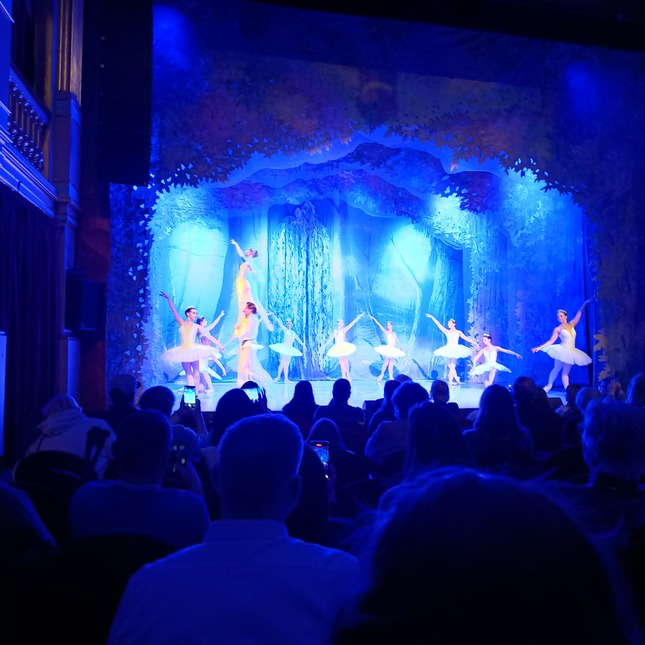
During April 2024, the Song of the Forest was performed at the Drammen Theatre in Norway.

It is a magnificent building dating back to 1870 and has faced many challenges, including fires. But with each setback, it has risen like a Phoenix and emerged stronger. The last upgrade of the complex happened in 1997.

The theatre, and its courteous staff, enabled many amongst the audience to create a memory to be cherished for a long time to come!  

Notes:

  1. Part of the text is borrowed from the websites of Grand Kyiv Ballet and Drammens Theatre.
  2. Illustrations are courtesy the world wide web. Painting of Shakuntala is by Raja Ravi Varma.

Related Posts:

https://ashokbhatia.wordpress.com/2016/05/14/the-six-seasons-of-kalidasa-in-bollywood
  

Read Full Post »

Music is the backbone of Hindi movies and OTT series, whether by way of songs and dances, or in the form of the background variety. However, there are very few offerings dished out by our Dream Merchants which are devoted to the subject of music itself, where the life of most of the characters revolves around the practice of music. Such human emotions as love, hatred, animosity, jealousy, pride, prejudices are all there, but music forms the central theme. The key characters get success after a great deal of practice. In the interim, they often taste heart-breaking failures. But spurred on by their immense talent, ardent passion, and sometimes by either a teacher or a muse, they persevere in their efforts and eventually achieve the recognition they deserve.

The idea here is not to recall and list movies which may be termed as musicals. Nor would I like to mention the ones which have provided uplifting music. In the list that follows, you will not find the ones where either music merely serves the purpose of entertainment or even where the main characters may be music teachers.

Thus, movies such as Dholak (1951), Phagun (1958), Jahan Ara and Chitralekha (1964), Heer Ranjha (1970), Pakeezah (1972), and Umrao Jaan (1981), do not appear here.

I have instead tried to focus here on the movies where music forms a core part of the script. Many of these depict the trials and tribulations of an artist who is enthusiastic about this form of fine arts. Many others capture the gravitational force exerted by music in making a relationship either blossom or wither.

Consider the following movies which are music-based offerings from our dream merchants.

Street Singer

(1938)

Direction: Phani Majumdar

Music: R. C. Boral

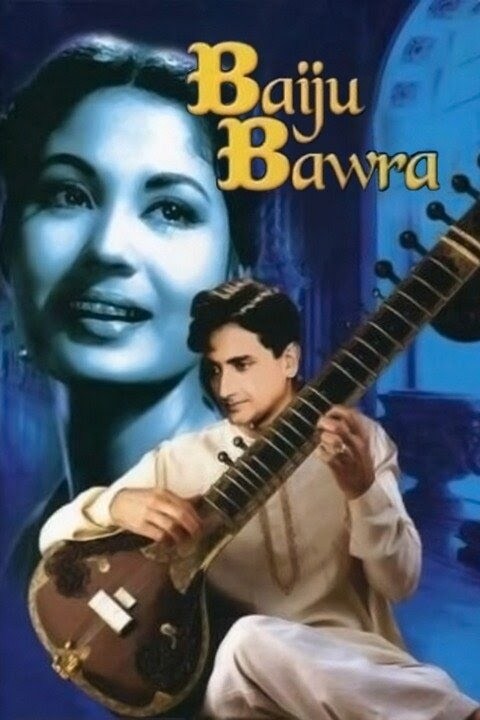
Baiju Bawra

(1952)

Direction: Vijay Bhatt

Music: Naushad

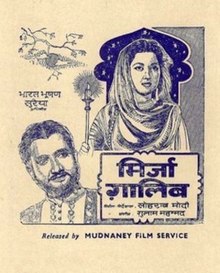
Mirza Ghalib

(1954)

Direction: Sohrab Modi   

Music: Ghulam Mohammed

Shabab

(1954)

Direction: M. Sadiq

Music: Naushad

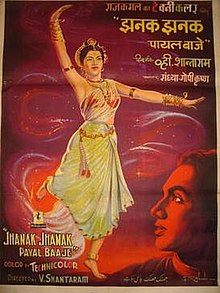
Jhanak Jhanak Payal Baje

(1955)

Direction: V. Shantaram

Music: Vasant Desai

Basant Bahar

(1956)

Direction: Raja Nawathe

Music: Shankar–Jaikishan

Phagun

(1958)

Direction: Bibhuti Mitra

Music: O. P. Nayyar

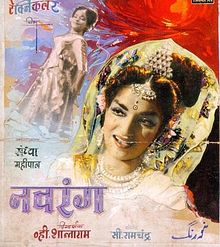
Navrang

(1959)

Direction: V. Shantaram

Music: C. Ramachandra

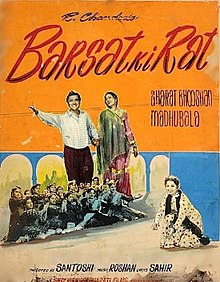
Barsaat ki Raat

(1960)

Direction: P. L. Santoshi

Music: Roshan

Sangeet Samrat Tansen

(1962)

Direction and Music: S. N. Tripathi

Meri Surat Teri Ankhen

(1963)

Direction: R. K. Rakhan

Music: S. D. Burman

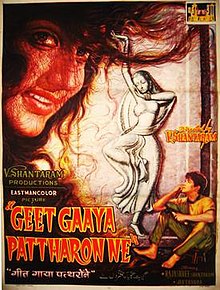
Geet Gaya Pattharon Ne

(1964)

Director: V. Shantaram

Music: Ramlal

Geet

(1970)

Direction: Ramanand Sagar

Music: Kalyanji–Anandji

Jal Bin Machhli Nritya Bin Bijli

(1971)

Direction: V. Shantaram

Music: Laxmikant–Pyarelal

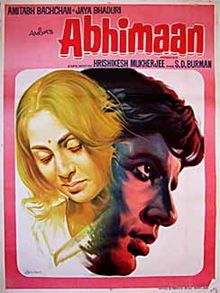
Abhimaan

(1973)

Direction: Hrishikesh Mukherjee

Music: S. D. Burman

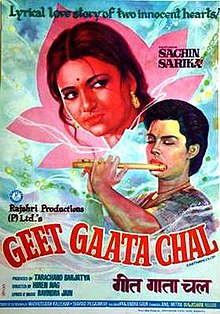
Geet Gata Chal

(1975)

Direction: Hiren Nag

Music: Ravindra Jain

Alaap

(1977)

Direction: Hrishikesh Mukherjee

Music: Jaidev

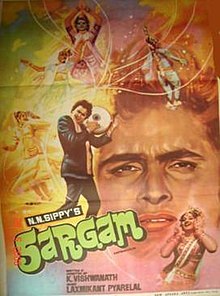
Sargam  

(1979)

Direction: K. Viswanath

Music: Laxmikant-Pyarelal

Kalaakaar

(1983)

Direction: P. Sambasiva Rao

Music: Kalyanji–Anandji

Sur Sangam

(1985)

Direction: K. Viswanath

Music: Laxmikant–Pyarelal

Naache Mayuri

(1986)

Direction: N. T. Rama Rao

Music: Laxmikant–Pyarelal

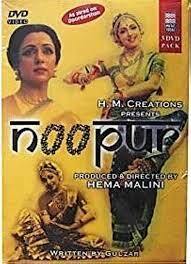
Noopur

(1990 TV series on Doordarshan)

Direction: Hema Malini

Sangeet

(1992)

Direction: K. Vishwanath

Music: Anand Milind

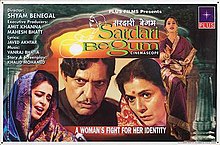
Sardari Begum

(1996)

Direction: Shyam Benegal

Music: Vanraj Bhatia

Taal

(1997)

Direction: Subhash Ghai

Music: A. R. Rahman

Dil To Pagal Hai

(1997)

Direction: Yash Chopra

Music: Uttam Singh

Saaz

(1998)   

Direction: Sai Paranjpye

Music: Yashwant Deo, Bhupen Hazarika, Zakir Hussain, Raj Kamal

Sur – The Melody of Life

(2002)

Direction: Tanuja Chandra

Music: M. M. Keeravani

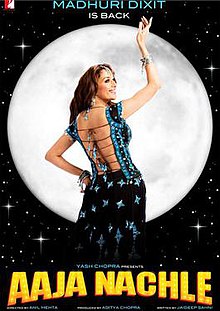
Aaja Nachle

(2007)

Direction: Anil Mehta

Music: Salim–Sulaiman

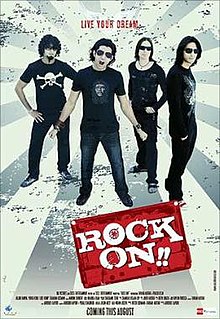
Rock on!

(2008)

Direction: Abhishek Kapoor

Music: Shankar–Ehsaan–Loy

Rockstar

(2011)

Direction: Imtiaz Ali

Music: A. R. Rahman

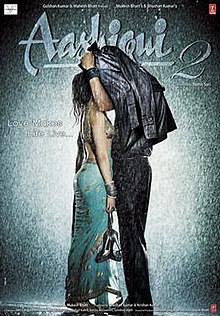
Aashiqui 2

(2013)

Direction: Mohit Suri

Songs: Jeet Gannguli, Mithoon, Ankit Tiwari

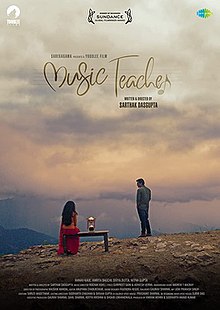
Music Teacher

(2019)

Direction: Sarthak Dasgupta

Music Original Composition: R.D. Burman

Music Re-created by: Rochak Kohli

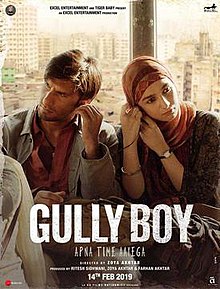
Gully Boy

(2019)

Direction: Zoya Akhtar

Music: The 18-song soundtrack, involving an estimated 54 contributors, was supervised by Ankur Tiwari

Bandish Bandits

(2020; Amazon Prime Video)

Direction: Anand Tiwari

Music: Shankar–Ehsaan–Loy,

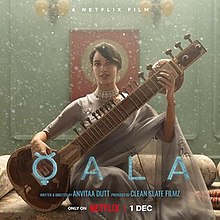
Qala

(2022)

Direction: Anvita Dutt

Music: Amit Trivedi

I am reasonably certain that there are many more which I might have missed out here. However, as the listing shows, over time, as Hindi cinema has moved away to modern settings, India’s rich cultural heritage is perhaps no longer getting the attention it deserves. That is how, a series like Bandish Bandits and a movie like Qala come like a whiff of fresh air in our turbulent times.

The price one pays for success

Some of these movies, like Saaz and Qala, depict the kind of competitive spirit which prevails in the field of music. A character even ends up jeopardizing the career of another, resulting in overpowering guilt. Such movies also capture the kind of cunning, guile and nerves of chilled steel needed to achieve success in a highly competitive world. Perhaps many of the famous artists we know of might have passed through quite a few such phases in their careers.

Like any other profession, the world of music is also replete with rivalry. It would be naïve to assume that success comes cheap. Often, the price it extracts from an artist’s inner being, especially in terms of a compromise on one’s ethics, beliefs, and values, is heavy.

For us, the audience, music is indeed an enriching food for the soul. However, the soul of an artist may carry a few scars, not known to us. But ignorance is bliss, as they say!

Note:

Inputs from Purva Agarwala, Dileep Raina, Madhulika Liddle, Avantika Nirupama, Sunil Jain, and a few others are gratefully acknowledged.

Related Posts:

Read Full Post »

There are persons in Bollywood who become a legend in their lifetime itself. Helen is one such actor. Here is an insightful review of a book by Jerry Pinto.
dustedoff's avatarDustedoff

I won’t go so far as to say that Helen was the first Hindi film actress I remember seeing (that would be Shakila, since CID was the first Hindi film I remember watching). But I distinctly remember being about 10 years old, watching Chitrahaar, and being very excited because an old favourite of mine, a song I had till then only heard and never seen, was going to come on (in Chitrahaar, there would always be a sort of intertitle between songs, a single frame in which the name of the next song, the film it was from, and the names of the music director, the lyricist, and the singer(s) would be listed).

This song was Mera naam Chin Chin Choo, and my feet were already tapping when it began. All that frenetic movement, those men in sailor suits dancing about. The energy, so electric that it…

View original post 1,412 more words

Read Full Post »

Many of our Bollywood heroines have waltzed into our hearts and minds based not only on their acting prowess but also owing to their knowledge of classical dance forms. The latter skill has enabled them to present some unique dances on the silver screen, with due support from their directors, music composers and choreographers. If some have been accompanied in their performances in the past by such stalwarts as Gopi Krishna, others have had the backing of legendary figures like Pandit Birju Maharaj.  
Allow me to share with you some dances which I would label as being unique. Either because these are based on classical or semi classical forms of Indian dances, or simply because the presentation as well as the sheer attention to detail leaves one awestruck. Quite a few are solo performances, backed only by instrumental music. Collectively, these present a vibrant rainbow of various human emotions, ranging from love and passion to a gutsy fury.

The Drum Dance (Nagada dance) here is the grand celebration of a royal marriage. It was well choreographed and presented in an era which did not have access to the kind of technology available these days. The story was about a feud between two brothers over their right to rule their father’s kingdom. Each of the huge drums acted like a Trojan horse, hiding soldiers from the rival’s camp. Apparently, it took six months’ practice to get this dance ready for the silver screen.

Chandralekha (1948)

Lead Dancer: T R Rajakumari

Music: S Rajeshwar Rao

Uday Shankar and Amala Shankar entertained us with quite a few classical dances in another movie released in the same year. It was the first film to present an Indian classical dancer in the leading role and was entirely shot as a dance ballet and a fantasy. Here is one gem of a dance which depicts Lord Shiva and Parvati gyrating to their heart’s content.

Kalpana (1948)

Lead Dancers: Uday Shankar, Amala Shankar

Music: Vishnudas Shirali

V. Shantaram’s offerings were invariably based on classical forms of music. Even the design of the titles was highly innovative, often summarizing the key message of the movie in a poignant manner.  

When Lord Shiva flies into a rage, he is believed to break into a special dance form: tandav. Part of this dance depicts the same. Eventually, a timely intervention by the feminine force of the universe – shakti – saves the day.  

Jhanak Jhanak Payal Baaje (1955)

Dancers: Gopi Krishna, Sandhya

Music: Vasant Desai

These are two unique dances. One speaks of the extent of imperfection in our lives. Another captures the playful spirit of Holi – the festival of colours – and even features an elephant trying to match the dancing steps of the heroine.  

Navrang (1959)

Dancer: Sandhya

Music: C. Ramchandra

Based on the classic play Abhigyan Shakuntalam from Kalidasa, this dance captures the feelings of a woman spurned in love.  

Stree (1961)

Dancer: Rajshri 

Music: C. Ramchandra

Here is yet another enchanting dance performance.  

Chhaya (1961)

Dancers: Baby Farida, Asha Parekh

Music: Salil Chowdhury

Many movies have depicted the folklore of love between Radha and Krishna. Songs like Hamen gop gwala kehte hain…(Navrang, 1955) and Mohe panghat pe…(Mughal-E-Azam, 1960) readily pop up in our minds.  Here is another such performance.

Phoolon Ki Sej (1964)

Dancers: Gopi Krishna, Vyjayanthimala

Music: Adi Narayana Rao

What we have here is a classic snake dance. A unique presentation, indeed, superbly crafted and rendered.

Guide (1965)

Dance: Waheeda Rehman

Music: S. D. Burman

Arthashastra of Kautilya mentions the grooming of visha kanyas (Poison Damsels) whose blood and body fluids had poisonous properties. They were used as assassins to eliminate powerful enemies of the state. This dance performance depicts one such case.  

Sagaai (1966)

Dance: Rajshri

Music: Ravi

When a proficient dancer gets challenged in a royal court, she leaves us spellbound by her dancing skills.   

Amrapali (1966)

Lead Dancer: Vyjayanthimala

Indian actress

Music: Shankar–Jaikishan

Yet another solo dance which leaves one mesmerized.

Chhoti Si Mulaqat (1967)

Dance: Vyjayanthimala

Music: Shankar–Jaikishan

A captivating dance performance by a multi-skilled actress who went on the become a member of the Indian Parliament.

Kinara (1977)

Dance: Hema Malini

Music: R. D. Burman.

Versatile directors like Hrishikesh Mukherjee had a knack of presenting character artists who are otherwise famous for their negative roles in a positive light on the silver screen. In this dance sequence, we find Shashikala joining hands with Rekha.    

Khubsoorat (1980)

Dancers: Shashikala, Rekha

Music: R. D. Burman

What happens when an introvert and shy person gets prodded by her well-wishers to showcase her dancing skills at a social gathering?

Chaal Baaz (1989)

Dancer: Sridevi

Music: Laxmikant–Pyarelal

This one is a temple dance by late Sridevi. Unfortunately, I am yet to trace the name of the movie.

Dancer: Sridevi  

Yash Chopra, known as the King of Romance, had a unique way of presenting his heroines at their sensuous best. His name always reminds us of the colour white and of gorgeous heroines draped in plain colour chiffon saris and sleeveless blouses, swaying to rhythmic beats composed by eminent classical musicians.

Chandni (1989)

Dancer: Sridevi

Music: Shiv-Hari

Lamhe (1991)

Dancer: Sridevi

Music: Shiv-Hari

A sophisticated way of telling the ruler to behave himself when it comes to visiting the ‘other woman’.  

Lekin (1991)

Dancer: Hema Malini

Music: Hridaynath Mangeshkar

This one captures the inner anguish felt by a woman who is part of a highly patriarchal family which tries to protect the name of a male member who, along with his friends, had gang-raped the maid servant.   

Damini (1993)

Dancer: Meenakshi Seshadri

Music: Nadeem-Shravan

Two more captivating dances from the stable of Yash Raj Films.

Dil To Pagal Hai (1997)

Dancer: Madhuri Dixit

Music: Uttam Singh

Dil To Pagal Hai: The Dance of Envy

Dancers: Madhuri Dixit, Karishma Kapoor

Sanjay Leela Bhansali is yet another director whose movies are lavishly produced and mounted on a larger-than-life canvas. Consider this song and dance sequence.

Hum Dil De Chuke Sanam (1999)

Lead Dancer: Aishwarya Rai

Music: Ismail Darbar

Here is yet another offering from Bollywood based on the Radha-Krishna folklore. This version brings in the dancing skills of Madhuri Dixit, duly backed by Birju Maharaj’s choreography, music, and lyrics.
Devdas (2002)

Singers: Birju Maharaj, Madhuri Dixit, Kavita Krishnamurthy

Composer/Lyricist: Birju Maharaj

The memories of a distant past come flooding back when the passion for dance resurfaces after the dancer runs into an old love interest.

Dedh Ishqia (2014)

Lead Dancer: Madhuri Dixit

Music: Vishal Bhardwaj

A solo dance, sans lyrics, surely leaves the entire burden of a sparkling performance on the shoulders of the heroine. Our multi-talented divas have never failed us on this count.   

It is not that our heroes do not possess outstanding dancing skills. However, these are very few. The names of Kamal Hasan, Hritik Roshan, Ranbir Kapoor, late Sushant Singh Rajput and Tiger Shroff can be mentioned in this context.  

Here are two video clips which some of you may relish.

Ek Duuje Ke Liye (1981)

Dancer: Kamal Hasan

Music: Laxmikant–Pyarelal

(Courtesy Aman and Swasti Sharma) 

Lakshya (2004)

Dancer: Hritik Roshan

Music: Shankar, Ehsaan & Loy

These days, most male actors can also shake a leg or two, though the trend is towards disco, break-dance, and such newer forms of dances as hip hop, lyrical, freestyle, and fusion.

Gaining proficiency in any form of art needs talent, passion, mentoring, and years of continuous practice. What we get to see for a few minutes on our screens is the culmination of a long-drawn-out effort towards conceptualization, synchronization, persistence, and hard work by all the crew members. One is filled with a feeling of reverence towards all the directors, choreographers, artistes, and technicians who bring such unique offerings to us.   

Recently, at a private party, some youngsters had to work assiduously for about two hours to eventually come up with a dance sequence which ran into merely 53 seconds!

One can well imagine the magnitude of effort artists, choreographers and directors put in to come up with unique dance sequences which keep us enchanted. Imagine creating something as elaborate as, say, Pyar kiya to darna kya… (Mughal-E-Azam, 1960), Hothon mein aisi baat… (Jewel Thief, 1967) and Dola re… (Devdas, 2004). The mind boggles!  

Related Posts:

Read Full Post »