Posts Tagged ‘Death’
Of Valentine’s Day, A Sentiment Called Love, and P G Wodehouse
Posted in Uncategorized, What ho!, tagged Death, Humour, Love, P G Wodehouse, Paradise Lost, Valentine's Day on February 14, 2026| Leave a Comment »
How P. G. Wodehouse helps me to grow spiritually: Guest Post by Suryamouli Datta
Posted in What ho!, tagged Bhagavad Gita, Bosses, Death, Friends, Humour, P G Wodehouse, Rabindranath Tagore, Rajanikant Sen, Spirituality, Spouses, Wisdom, Yamaraj on October 15, 2024| Leave a Comment »
So, you think that P G Wodehouse is only about farcical butlers, upper-class twits, domineering aunts, goofy females, rogue kids, dogs with supercilious gazes, cats that wear snootiness on their sleeves, horses that are fond of cats, and pigs which need their daily quota of 57,800 calories?
Think again, I would say! For, deep within the juicy narratives dished out by the Master Humourist of our times lie buried many lessons of a spiritual kind. These are latent nuggets of wisdom that, if adopted, could enable one to lead a spirited life, facing its ups and downs with a jaunty sang froid.
Baffled, bewildered, confounded, confused, flummoxed, mystified, perplexed, and puzzled?
Allow me to elucidate.
A Journey of Self-Discovery: Embracing the ‘Me First’ Mindset
Any spiritual quest begins with an inner journey of self-discovery. Like Bertie Wooster, one has to be a keen observer of the inner workings of one’s mindset. One should know when to slide down a pipe and when to board a cruise ship to avoid an impending encounter of an unpleasant kind. Self-preservation serves one well. To put it simply, one must have a ‘Me First’ approach to life.
Take my own case. Well, I must say, I happen to be a prime candidate for the “Me First” award, if ever one is instituted by the concerned authorities. You see, I’ve got this knack of putting my own pleasure and happiness on the pedestal, leaving others hanging like a wet sock in the wind.
It’s like that old saying about chasing the rainbow – the closer you get, the further it slips away. So, here I am, with my long face like a dropped pie, whinging about my sorry lot in life. And let me tell you, it’s not a pretty sight.
If I were watching myself on the telly, I’d hand that grumpy old git the remote control and tell him to skip to the next channel, pronto! Because, my friends, a moaner, and a whinger, is about as popular as a caterpillar discovered at the bottom of a bowl of salad.
My dears, we humans are like archers, shooting our arrows of hope into the void, never sure if they’ll hit their mark. I’ve tried everything under the sun, from meditation to listening to hot-air speeches. And let me tell you, spirituality is a tough nut to crack. It’s like trying to peel a banana with oven mitts!

Finding Light in the Darkest Moments: Unravelling the Tapestry of Adversity
Now, I know this is the path to freedom from my woes, but here’s the rub: I can’t seem to figure out the ‘how-to’ manual. It’s like trying to find Waldo in a crowd of walruses. Frustrating, isn’t it? But fear not, for I’m blessed with nerves of chilled steel and am not one to give up easily. I continue my quest, armed with a magnifying glass that remains duly focused on the works of the Master.
My dear compatriots, the pursuit of spirituality proved to be a meandering journey through the labyrinth of existence, a perplexing conundrum that tested the limits of my mortal soul. Alas, in the face of such a formidable challenge, we resilient humans are wont to seek out solutions that may not blaze a trail to perfection, but rather offer a semblance of respite in the stormy seas of life.
As fortune would have it, amidst my quest for spiritual enlightenment, I stumbled upon a veritable treasure trove – the timeless works of Sir Pelham Grenville Wodehouse. Ah, the sheer delight and solace that his writings brought to my weary heart in times of dire need! My lineage, bless their souls, had been perusing his literary masterpieces for generations, paving the way for my own delectable encounter with this literary luminary.
One of the things that captivates me most was the uncanny comportment of Wodehouse’s characters in the face of adversity. Take for instance the indomitable Psmith in “Psmith Journalist”, who maintains an air of nonchalance even when confronted by kidnappers.
Such a profound sense of detachment amidst chaos brings to mind the teachings of the Bhagavad Gita, does it not? Indeed, could we not consider this delightful escapade into the world of Wodehouse as a form of modern-day spirituality? My friends, the parallels are as intriguing as they are enlightening.
The Perks of Forgetfulness and Living in the Present
Ah, Lord Emsworth! A man with an asset so heart-warming that it could melt the frigid polar ice caps – forgetfulness, leading to a habit of living in the present!
In the annals of history, great minds have extolled the virtues of forgetting. Our scriptures enjoin us to live in the present. It’s like dusting off the cobwebs in your attic – why cling to the dusty remnants of the past when you could embrace the sparkling potential of the future?
Lord Emsworth’s forgetfulness is a veritable cornucopia of blessings. It allows him to shed the heavy cloak of past grievances, like an absent-minded hiker shedding a backpack filled with regrets. And behold, he emerges anew, lighter, brighter, and infinitely more lovable to those who grace his presence.
Perhaps the saints of yore sought solace in this blessed amnesia, freeing their spirits to soar among the celestial heights. For in forgetting, we find not only liberation from the shackles of the past but also an uncanny ability to charm the socks off those around us. Thoughts of future encounters with a belligerent sister never fill us with a sense of dread.
In the realm of the spirit, or that which offers me a sense of tranquillity, I find that Wodehouse has bestowed upon me a profound lesson. Lord Emsworth stands as a beacon of hope in this respect. His forgetfulness of past events allows him to embrace the present with an unencumbered mind. Unburdened by the weight of memory, he revels in his solitude, finding pleasure in his own company. As Plum so aptly puts it,
‘Lord Emsworth sat and smoked, and sipped and smoked again, at peace with all the world. His mind was as nearly a blank as it is possible for the human mind to be. The hand that had not the task of holding the cigar was at rest in his trousers pocket. The fingers of it fumbled idly with a small, hard object.’
When he finds a scarab in his pocket, does he not simply conclude that it must have been gifted to him by the American millionaire? Once he starts focusing on the Empress of Blandings, does he ever worry about the pumpkin? He surely practices the delicate art of detachment, spoken of so very highly in our scriptures.
From Being a Self-doubting Thomas to an Opportunity-Grabber
In my annals of domestic disputation, I recall a particular clash with my bitter half. She, with her fervent tongue, extolled the valour of a dear friend who had summoned the intrepidity to pen a social media missive, heedless of any sinister implications. And I, rather than question her judgment, was exhorted to contemplate my own measly progress in the realm of social media.
The aftermath of this matrimonial contretemps was, as one might surmise, somewhat perplexing. I found myself in an odd state of accordance with her sentiments, heaping further ignominy upon my own head. For though my pen may have faltered, I had hitherto cherished the notion that the contemplation of others’ creations and the articulation of my own preferences constituted an inherent privilege.
Yet now, as if by some cruel twist of fate, I could conjure no words for my own use. Unlike some prodigies, blessed with an inexhaustible reservoir of ideas, I had no such celestial aid. Suffice it to say, my aspirations of literary heroism faded before my wife’s eyes, leaving me a mere buffoon engaging in a pathetic display of self-sabotage.
And as I spiralled further into this abyss of self-reproach, a voice whispered through the labyrinth of my mind, a voice I recognized from Joy in the Morning:
‘It was one of those cases where you approve the broad, general principle of an idea but can’t help being in a bit of a twitter at the prospect of putting it into practical effect. I explained this to Jeeves, and he said much the same thing had bothered Hamlet.’
Dear readers, lend an ear to these words that wrought a profound transformation within me. Like a veil lifted from my vision, I beheld the absurdity of my former self-chastisement. A chuckle escaped me, a gentle mockery of the charade that had held sway over my existence.
And so, I cast off the shackles of self-criticism and chose a path of liberation. This, my friends, is spirituality in its purest form—not a celestial embrace or mystical communion, but a triumph over the prison of my self-limiting beliefs. For, in embracing the folly of self-doubt, we find true freedom and the boundless expansiveness of the human spirit.
Though not directly akin to the realm of the spirit, dear reader, I often find solace in the words of P. G. Wodehouse’s The Small Bachelor. When the weight of life’s trials weighs heavy upon my mind, I turn to these lines, finding therein a gentle balm that soothes my troubled heart.
‘That’s the way to get on in the world – by grabbing your opportunities. Why, what’s Big Ben but a wristwatch that saw its chance and made good?’
By Jove, friends! When I hear such stirring words, my very essence is transformed. I feel a surge of vigour coursing through my veins, aided and abetted by a burning desire to embrace uncharted territories. The shackles of doubt and hesitation fall away, replaced by a boundless sense of possibility. Trust me, friends, such words are the catalyst that ignite the flame of adventure within me! So, dear readers, let us raise a toast to such characters as Lord Emsworth, the master of forgetting, Bertie, the epitome of chivalry, and Jeeves, whose sage counsel is akin to the teachings of Bhagavat Gita.

Different Facets of Life and the Transformative Power of Wodehouse
Overcoming Road Rage
Picture yourself on a bustling Monday morning as you prepare to embark on your daily pilgrimage to the office – the place where your purpose perhaps lies. You find yourself surrounded by a sea of cars, all honking impatiently, and scowling faces in desperate search of an outlet for their irritation. In that moment, your motivation wanes, the world around you darkens, and you feel like you are trapped in a never-ending episode of the Twilight Zone.
But then, like a bolt from the blue, something changes. The darkness dissipates, and you find yourself grinning in the face of this adversity when you get reminded of the following quote, all of a sudden!
‘The best method of getting to the Highfield is by the Subway. To see the Subway in its most characteristic mood one must travel on it during the rush-hour, when its patrons are packed into the carriages in one solid jam by muscular guards and policemen, shoving in a manner reminiscent of a Rugby football scrum.’
Now, as a mere neophyte in the realm of spirituality, I hesitate to delve deeper into this phenomenon. Yet I can’t help but wonder – does spirituality possess the power to transform our outlook so swiftly, like a magician pulling a rabbit out of a hat? The mysterious ways of the author P. G. Wodehouse never cease to amaze me, dear reader!
Meeting Theatrical Challenges with a Chin-up Attitude
Coming to the dreaded stage fright, my fellow thespians! When all eyes are peeled upon you, like a banana waiting to be devoured, your mind races at a million miles per second, a veritable rollercoaster of emotions. You fear deviation from the script, like a wayward sailor lost at sea. And let us not forget the dreaded missiles from the audience. No, I do not allude here to rotten potatoes, tomatoes or eggs. I mean words that can sting like bees, leaving you with a swollen performance.
In these trying times, performers seek solace in a tonic, a shot of confidence to carry them through the ordeal. And may I suggest that this tonic be none other than Plum’s following lines:
‘To an outside spectator he would have seemed rather like a very well-dressed Daniel introduced into a den of singularly irritable lions.’
Upon getting reminded of these words, a surge of tranquillity washes over the performer. They gaze upon themselves from a newfound perspective, an indifferent platform. A sterling performance comes about, followed by a burst of applause which could be heard across many a busy street outside the auditorium.

Tackling Lion Bosses at Office
When life’s a right ol’ cacophony, with your boss booming like a bassoon, your missus harping on you like a broken trumpet, and your pals piping up with their well-intentioned but ear-splitting advice, I find solace in the quotes delivered by this fellow who is fondly referred to as Plum.
By Jove, my dear readers, have you ever felt as though you’ve been thrown into a spin cycle by your boss? Like a tie caught in a washing machine, I find myself being mercilessly zipped and tumbled around when summoned for a “little chat.”
As I stand before my superior, shuffling my feet, my tongue resembling a malfunctioning typewriter, I utter the fateful words, “I, er… well, I went into the call and told, er…”
“Spare me the details, my boy,” he interrupts with the subtlety of a charging rhinoceros. “Let’s cut to the chase and unscrew this mess.”
Oh, the irony! My boss, the man with the power to “screw” me over, is demanding a “solution” to the screw-up I was being “screwed” for. It is enough to make me feel like a human pretzel.
For those who have trodden the path of such encounters, the subsequent unfolding is a familiar script. But for the uninitiated, allow me to veil the scene in the obscurity reminiscent of the ancient Greek plays where violence was shown. The tumultuous emotions surging within me after such an encounter were weighty enough to prompt contemplation of departure from my current vocation.
But then, as if a bolt of lightning has struck my brain, I recall these wise words from the pages of P G Wodehouse:
‘The fact is, uncle—’
‘Never mind the facts. I know them! What I require is an explanation.’
In that instant, like a light bulb illuminating a dusty attic, the missing pieces of my explanation miraculously reappear. The scales fall from my eyes. I can finally see a way out of this corporate labyrinth.
My spirits, as I said before, were as low as a politician’s poll ratings after a particularly scathing dressing-down from the discerning public. It was a veritable downpour of negativity, threatening to drench my career aspirations and send them scurrying for cover. But the words from the maestro, in their infinite wisdom, have a rather amusing trick up their sleeves.
As the day wore on, a queer thing happened. I caught a glimpse of my reflection in the office window and, lo and behold, the thunderous frown that had been etched upon my visage had mysteriously evaporated, replaced by a glow as radiant as a summer sunset. As if on cue, the sun broke through the clouds, casting its golden rays upon the scene like a celestial stand-up comedian.
And then I realized it. My boss, who had hitherto been as dour as Bingo Little who has just been ridiculed by Laura Pyke for gorging on food like a python, now bore an uncanny resemblance to Sir Thomas, while I, your humble narrator, took on the unmistakable air of the legendary Lord Dreever, a man known for his wit and indomitable spirit. The realization was like a tonic, lifting my spirits and rendering the boss’s earlier admonishments as mere comedic fodder.
Indeed, I believe that if I had dared to venture into the restroom, I would have encountered a mirror that reflected not the glum visage of a man on the brink of despair, but a veritable symphony of smiles, as if the entire universe was conspiring to cheer me up. And so, my friends, I leave you with this profound observation: even in the darkest of times, Wodehouse has a way of finding its place, painting a smile upon our souls, and reminding us that life, like a good joke, is often more amusing than it first appears.
Depression comes in all sizes and shapes. But irrespective of whether it is U-shaped, V-shaped, or W-shaped, we would do well to remember this advice from Bertie Wooster.
‘A short while ago, the air was congested with V-shaped depressions, but now one looks north, south, east and west and descries not a single cloud on the horizon – except the fact that Gussie’s wedding is still off, and that can’t be helped. Well, this should certainly teach us, should it not, never to repine, never to despair, never to allow the upper lip to unstiffen, but always to remember that, no matter how dark the skies may be, the sun is shining somewhere and will eventually come smiling through.’

Marriage Melee: A Battle of Wits and Wiles
Now, the trials and tribulations of married life! The constant struggle for supremacy between husband and wife can often lead to heated arguments. I remember one particular instance when my bitter half uttered a particularly sharp remark, causing me to contemplate throwing in the towel altogether.
Indulge me in the whimsical ramblings of a man ensnared in married life’s merry-go-round of mishaps. Picture the daily drudgery: the perpetual hide-and-seek with misplaced keys, the ceaseless battle against the despotic alarm clock – each a farcical subplot in the grand theatrical spectacle of existence. Yet, amidst the cacophony of chaos, I find refuge in the absurdity, relishing the comedic undertones of my predicaments. Armed with naught but a wry grin and a dollop of fortitude, I gallantly press forward, for in the face of adversity, it’s not the weight of our burdens that defines us, but the panache with which we pirouette through the harsh slings and arrows of life.
Measuring Up: Dealing with Matrimonial Blues
Growing up in a typical Indian household, I was no stranger to the dreaded act of comparison. Whether it was with the neighbour’s kid, my cousins, or my school chums, I was always being held up against others to highlight my shortcomings. These never-ending comparisons turned even the sweetest successes sour, casting a shadow of self-doubt over my young existence.
When I finally graduated from college and landed a job, I thought I had escaped the torment of comparison, once and for all. Alas, fate had other plans in store for me, as I soon found myself walking down the aisle and entering the realm of marriage. To my dismay, the comparisons from my youth had simply taken on a new form – instead of being measured against other youngsters, I was now being pitted against other fellow husbands.
Despite the familiar pang of depression that accompanies these regular comparisons, I find solace in the wise words of the great author. Remembering his following lines helps me to shake off the gloom and face the day with renewed vigour:
‘Chumps always make the best husbands. When you marry, Sally, grab a chump. Tap his head first, and if it rings solid, don’t hesitate. All unhappy marriages come from husbands having brains. What good are brains to a man? They only unsettle him.’
It is said that indifference is the key to true enlightenment. Perhaps that is why this quote also enters my mind upon meeting my wife’s friends. After all, they are a minefield of potential misunderstandings, where every word uttered can be met with laughter… or judgment. The joys of married life indeed!
Dinner Dynamics: A Delicate Dance of Drollery and Discretion
In this age of dual toilers, the dining hour has become our cherished trysting place. Yet, for some hapless souls like mine, it brings nought but tribulation.
For, the myriad oddities I perpetrate throughout the day come under my beloved’s scrutiny at this nocturnal tribunal. The evaluation process is akin to a relentless gauntlet, where each gaffe is met with a withering gaze and each feeble defence checkmated with a dismissive sigh.
To endure such a scenario demands the courage of a martyr and the willingness to face the unvarnished truth about oneself. And woe betide those who would dare to argue, for their fate is to be cornered and outmanoeuvred with surgical precision.
Well, I found myself in a bit of a pickle the other day. I wasn’t paying proper attention to my bitter half’s chatter, and it wasn’t long before her dulcet tones turned into something akin to a vinegar factory. In a moment of weakness, I surrendered to my plate much like a hungry squirrel would to a nut.
But alas, my hopes for a swift meal were dashed, for when one is in a spot of bother, even the most basic of tasks seem to conspire against one. The words of humiliation flowed from my wife as freely as water over Victoria Falls, and I found myself longing for the respite that only a finished meal could provide. But as we all know, when we most need something, it inevitably eludes us, and so I was forced to endure the verbal onslaught, my own loquacity proving no match for her linguistic torrent.
Terribly wounded by the slings and arrows of outrageous fortune, my dear readers, I sought refuge in yonder privy, a sanctuary most welcome after such a verbal tempest. Upon reflection, however, I found myself dishing out a double dose of censure to my ears, for my assailants’ barbs had stung me less sharply than my inner dialogue. Indeed, I resembled the legendary Ratnakar the Bandit (later known as Valmiki – the esteemed composer of that epic tale, the ‘Ramayana‘), when his kith and kin turned a cold shoulder upon discovering the slightly unsavoury nature of his profession.
Perhaps the following limerick might better explain my predicament:
There once was me so vain,
My ego could cause quite a strain.
I felt humiliated,
My pride, agitated,
Frowning at myself was his bane!
Well, my word, I was right down in the dumps, looking for a celestial lifebuoy, only to be greeted by a chorus of proverbs that made my predicament look as clear as a bottle of brown ale. Allow me to enlighten you with their profound wisdom:
‘He had just about enough intelligence to open his mouth when he wanted to eat, but certainly no more.’
(On how I took my dinner while braving the crisis.)
‘He had the look of one who had drunk the cup of life and found a dead beetle at the bottom.’
(On my present disposition.)
‘I could see that, if not actually disgruntled, he was far from being gruntled.’
(On my present mental state.)
‘I’m not absolutely certain of the facts, but I rather fancy it’s Shakespeare who says that it’s always just when a fellow is feeling particularly braced with things in general that Fate sneaks up behind him with the bit of lead piping.’
(On my fate.)
Well, bless my buttons, as I sat there in the midst of all that gloom, a flicker of mirth gently tickled my lips. My addled noggin, after a spot of sulking, decided to drag its weary feet from the doldrums and amble towards the sunny uplands!
Stakeholder Strife: Navigating the Minefield of Marred Joys and Spousal Scrutiny
The joys of childhood! Such innocent days were tarnished only by the looming spectre of criticism from the dreaded external stakeholders. The lion-tamers at the school, who, when annoyed at a group of boisterous and noisy backbenchers, flash their canes, leaving the tender spots on one’s backside throbbing as if hit by electric jolts. Neighbours, those ever-watchful guardians of politeness, who never failed to report any deviation in my behaviour to my dear mother. Oh, the horrors that ensued! One might think that growing older would bring respite from such sinister critiques, but, alas, fate had other plans.
Enter marriage, that venerable institution where the list of stakeholders expands faster than rabbits in spring. And the criticism? It descends upon me with the relentless persistence of British rain, every deviation dissected with the meticulousness of a tax inspector. My once-dreaded mother’s interventions have faded into mere historical footnotes, overtaken by the ever-vigilant gaze of my beloved wife. It feels as though I am trapped in an endless cycle of scrutiny, with no escape from those eager to critique my every move.
In this bleak landscape, I am often reminded of the haunting lines from W.H. Auden’s The Unknown Citizen:
‘Was he free? Was he happy? The question is absurd:
Had anything been wrong, we should certainly have heard.’
So you see, my friends, the feeling of emptiness and how it impacts my mental well-being at times?
Indeed, the struggle is real. Yet, in moments of solitude, when the weight of the world threatens to crush my spirit, I find solace in the words of P. G. Wodehouse:
‘Marriage is not a process for prolonging the life of love, sir. It merely mummifies its corpse.’
Wodehouse! His wit and wisdom are like a tonic for the soul, lifting my spirits and infusing me with the courage to face whatever life may throw my way. And so, armed with the sagacity of Jeeves and the indomitable spirit of Bertie Wooster, I march forward, ready to take on whatever stakeholder challenges lie ahead.

Friends – The Good, The Bad, and The Ugly
Friends, like the delectable variety of cheese, come in all shapes and sizes. You’ve got the brie-lliant ones who lift you like a hot air balloon when you’ve plummeted into a pit of despair, and then the tangy Swiss kinds who puncture your ego with holes of different sizes using harsh words as soon as you confess your blunders.
On paper, the latter may seem like a blessing, especially when it comes to spiritual enlightenment. However, my heart belongs to the feta-tastic crew who know the art of providing a shoulder to cry on rather than dishing out a lecture. These friends are as rare as a unicorn riding a unicycle, and their absence can be as painful as an ingrown toenail.
Now, dear listeners, I shall not bore you with the details of my recent blunder (let us just say that I’m still learning the difference between ‘brake’ and ‘accelerator’), but as one of my well-meaning friends was giving me a verbal scolding that could have curdled milk, I heard the screeching of tires. And like a magic skipping rope, those words from the wise P. G. Wodehouse unravelled the knot in my mind, leaving me laughing at my own misfortune.
‘…she turned away, and the lift bore her aloft. Its machinery badly needed a drop of oil, and it emitted, as it went, a low wailing sound that seemed to John like a commentary on the whole situation.’
My dear astute readers, while I eschew the mantle of a pontificator, I must confess that spirituality for me is like a tête-à-tête with oneself, a tête-à-tête that, as the aforementioned anecdotes so eloquently attest, has the miraculous power to vanquish external woes like a magician making a rabbit disappear.
The Ambivalence of Aid: To Help or Not to Help?
As certain well-intentioned individuals may perceive me, I am eternally grateful for their estimation of my character, particularly their belief in my inherent propensity to extend assistance to those in need and remain steadfast in times of adversity. However, in all humility, I regret to disappoint them.
Indeed, there have been numerous occasions when I have grappled with the profound internal struggle ‘To help or not to help’. The nagging fear that my actions might lead to calamitous consequences, akin to those suffered by Corky Corcoran in his ill-fated attempts to aid Ukridge, has repeatedly paralyzed me. Thus, I have likely squandered countless opportunities to transcend my mortal coil and attain the ethereal heights of a Bertie Wooster, who unflinchingly sacrifices his own well-being for the sake of his companions.
One particularly vivid literary example that haunts my consciousness is P. G. Wodehouse’s timeless masterpiece, The Code of the Woosters. In its pages, we witness the indomitable Bertie willingly leaping into the abyss to rescue his beleaguered friend Gussie. Bertie’s unwavering loyalty is an exemplar of selfless love and unwavering friendship.
Moreover, Bertie’s compassion knows no bounds. To safeguard the delicate health of his esteemed Uncle Tom, he willingly embraces the ignominy of incarceration, all to ensure that the culinary artistry of the inimitable Anatole would continue to nourish the elderly gentleman.
‘You were actually contemplating giving up Anatole for my sake?’ I gasped.
‘Of course.’
‘Of course jolly well not! I would not hear of such a thing.’
‘But you can’t go to prison.’
‘I certainly can, if my going means that that supreme maestro will continue working at the old stand. Don’t dream of meeting old Bassett’s demands.’
‘Bertie! Do you mean this?’
‘I should say so. What’s a mere thirty days in the second division? A bagatelle. I can do it on my head. Let Bassett do his worst. And,’ I added in a softer voice, ‘when my time is up and I come out into the world once more a free man, let Anatole do his best. A month of bread and water or skilly or whatever they feed you in these establishments, will give me a rare appetite. On the night when I emerge, I shall expect a dinner that will live in legend and song.’
‘You shall have it.’
In contemplating Bertie’s unwavering moral compass, I am forced to confront my own shortcomings. I lament the realization that I fall woefully short of the spiritual ideal espoused by Wodehouse, who believed that true happiness lies in the selflessness of bringing joy to others.
Lessons from Literary Luminaries: Rajanikant Sen and the Art of Spiritual Affection
Dear friends, the memory of the celebrated Bengali poetaster Rajanikanta Sen dances upon my fancy like a sprite! For, through his enchanting melodies, he has instructed us in the art of coalescing prayer and affection for the Great Architect of the Cosmos. Indeed, a certain passage from his oeuvre brings to mind my own peculiar connection with the wordsmith Wodehouse. It is a bond forged in the crucible of admiration, tinged with a soupçon of jovial banter, akin to that between Jeeves and his beloved Wooster.
In the grand tapestry of literary artistry, where words are spun like silken threads to weave tales that captivate and inspire, I raise my voice in a resounding ode to the master wordsmith. Like the legendary Rajanikanta, whose words danced with such grace and power, I offer my humble tribute to the one who wields the magical power of lifting my spirits to the highest level with unmatched skill.
‘… You try to embrace me, with bonds so tight,
Through myriad ties, freedoms take flight.
Thoughts of parting, but I turn to see,
Not a step you’ve taken away from me.’

Wodehouse: The Divine Comic Conductor of My Life’s Soothing Symphony
Now, let us ponder, dear readers, who it is that has been my spiritual confidante? Why, none other than the literary luminary P. G. Wodehouse! One of my superiors (not the previously mentioned one) once referred to Wodehouse as a saint. Even at the risk of being labelled a Yes-Man, I find myself in complete accord. In the tapestry of life, Wodehouse has been an unwavering presence, a steadfast companion through both the sunny meadows of joy and the murky depths of despair. Like a literary guardian angel, he has assumed the weighty burden of my well-being, leaving me free to frolic in the fields of fancy.
If I may indulge in a bit of literary wordplay, I might say that Wodehouse’s prose has been the balm that has soothed my troubled mind, the tonic that has invigorated my weary spirit, and the elixir that has granted me spiritual stamina. In short, my dear readers, P. G. Wodehouse is the holy grail of my spirited pilgrimage of life, the literary oracle who has guided me through the labyrinth of life with his wit, his wisdom, and his unforgettable characters who have made me laugh and reflect upon the human condition in all its splendid absurdity.

A Plummy Plan for My Celestial Departure
The curious customs of humanity! In the land of the sacred Ganges, where the earthly shed their mortal coils, a peculiar tradition persists. They furnish the departed with a copy of the Bhagawat Gita, believing it shall guide the soul through the ethereal realms, awakening it to the futility of earthly attachment.
As for myself, I confess to being a shameless opportunist, teetering between the realms of faith and scepticism. When the spectre of danger looms, I implore the divine, accusing Him of neglect and demanding succour as a matter of fraternal obligation. But when fortune smiles upon me, my atheism reasserts itself, and I become an artist extraordinaire.
Contemplating my own celestial departure, I ponder the tome I shall carry to enlighten me enroute to my heavenly abode. After much deliberation, I have come to a profound realization: it must be a work by the inimitable P.G. Wodehouse. For he, to me, in the words of the great Tagore, which I have translated with my limited knowledge, is:
‘My Lord divine, my treasure rare,
On every path, with me You fare.
In joy or sorrow, let me find,
In freedom’s call, no chains to bind,
In life’s sweet song, Your presence there.
Within my soul, Your essence gleams,
In love’s eternal, flowing streams.
Oh, universal, oh, my own,
In every heart, Your light be shone,
In endless dance, where beauty teems.’
With Wodehouse as my cosmic companion, I shall traverse the celestial planes with a knowing grin, revelling in the absurdity of existence and finding solace in the delightful follies of humanity.
Comrades, consider this to be my last wish. When I get around to kicking the proverbial bucket, I shall bid a hearty farewell to all mortal concerns! I shall breathe my last with a copy of Right Ho, Jeeves by my side. If Yamaraj, the Lord of Death, would allow me some time, I may even ask him if he has ever read Plum. If he replies in the negative, I could perhaps read a part of the speech delivered by Gussie Fink-Nottle to him, hopefully cheering up the hapless guy a wee bit in the midst of the kind of gloomy and obnoxious work he has been assigned by the celestial powers.
I shall then gaze at him brightly, bracing myself with the old Wooster grit. Up will come the chin, and back will go the shoulders.
‘Lead on,’ I shall say, and he will lead on.
As the flames consume my mortal remains, the jolly old fumes of Right Ho, Jeeves shall waft in the air, spreading joy, sweetness, and light all around. Roses shall then be in bloom, butterflies shall be merrily flapping their wings, birds and bees shall be happily going around doing whatever nature ordains them to do, God shall be in heaven, and all will be well with the world.
Thus only shall I embrace the celestial with a dash of wit and humour, and carry with me the indomitable spirit of P. G. Wodehouse.
Related Posts:
https://ashokbhatia.wordpress.com/2018/02/14/the-death-of-death-at-the-hands-of-p-g-wodehouse
https://ashokbhatia.wordpress.com/2014/10/30/of-bertie-goofy-females-and-the-wooster-clan
Of Death and Grief
Posted in A Vibrant Life!, tagged Bhagavad Gita, Comforting Others, Death, Five Stages, Grief, Mahabharata, Myths, Sri Aurobindo, The Mother, Yaksha Prashna on March 24, 2023| 11 Comments »
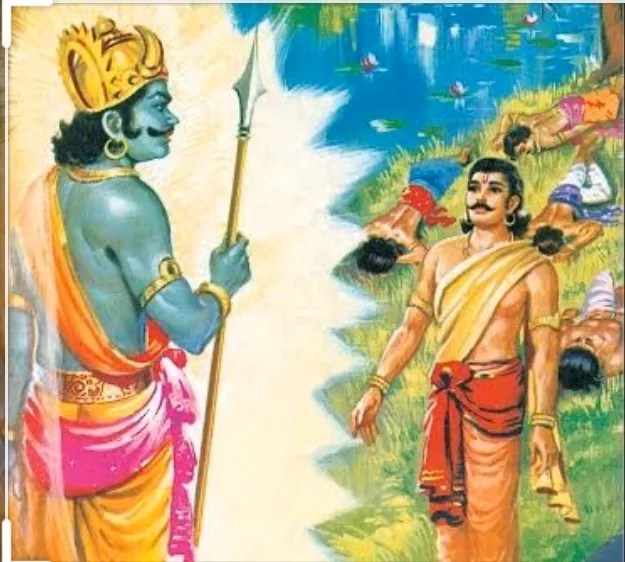
In the Yaksha Prashna episode of Mahabharata, Yudhishtira is asked many questions. One of these is:
“What do you find as the most surprising on earth?”
To which Yudhishtira replies:
“Numerous people are encountering death daily. Even though people are aware that they will have to die one day, they crave for worldly desires as if they are permanent on earth. There is nothing more surprising than this fact.”
Death and Taxes are both inevitable in life. But the sting of death is far deadlier than that of taxes. There is an irrevocability associated with it. When a loved one passes away, the physical form with which we associated ourselves for a long time simply vanishes. What is left behind is a void which is near impossible to fill.
The sting hurts us even more when the death is untimely. The passing away of a young person who was yet to drink deep from the joyful rivulet of life leaves us with a regretful feeling of deprivation. Shock, trauma, and depression follows. Our senses get numb. Nothing makes any sense anymore. A sense of disbelief envelopes us. Words of sympathy and condolences pour in, but these do not register. For some time, we act like zombies, moving about and doing things as we are advised by others to do. Lessons from Bhagavad Gita which tell us that the soul is immortal do not make any sense.
Feelings of guilt plague us. We regret not having done something more to save the person. We find it difficult to handle the anger we feel towards ourselves. Forgiving ourselves becomes an impossible task. We look up to the heavens and blame our favourite God for having been so cruel to us.
Losing a spouse is especially traumatic. I realized this myself when I lost my wife during 2018. Gradually, the reality of having lost a trusted companion, a bitter critic, and a true friend dawned upon me.
Two Persons Who Made Me Cry during 2022

Richa (1970-2022) was Principal Scientist at National Institute of High Security Animal Diseases (NIHSAD). Besides being an eminent scientist, she was a loving daughter, a devoted wife, and a caring and affectionate mother. She was not only a member of the selection committee of International Federation of Biosafety Associations for their much-coveted Biosafety Hero Awards; she had also won many awards herself at national as well as international level. She was the Secretary of Society for Biosafety, India, and a member of The Executive Council of the Asia Pacific Biosafety Association. She had published many research papers. A recognized badminton player, she was passionate about gardening, dancing, and singing. We lost her within a few months of 2022 to an aggressive form of cancer which was detected very late.

Pavan (1963-2022) was a self-made person. A first-generation entrepreneur par excellence. Someone who expanded his business by sheer dint of a lofty vision, hard work, perseverance, and a knack of identifying, nurturing, and deploying human talent. He played all the roles in his life to perfection, whether as a son, an elder brother, a husband, a father, and a grandfather. Above all, a fine and helping human being who would go out of his way to help the needy. With his passing away, we lost someone with excellent management skills. Premier management institutes would greatly benefit by publishing a case study on the business strategy which shaped his business and took it to dizzying heights. We lost him to a sudden cardiac arrest within a span of a few hours on a fateful day during December 2022.
The Five Aspects of Grief
In 1969, psychiatrist Elisabeth Kübler-Ross introduced what became known as the “five stages of grief.” These stages of grief were based on her studies of the feelings of patients facing terminal illness, but many people have generalized them to other types of negative life changes and losses, such as the death of a loved one or a break-up.
The five stages of grief, which I would prefer to refer to as aspects:
Denial: “This can’t be happening to me.”
Anger: “Why is this happening? Who is to blame?”
Bargaining: “Make this not happen, and in return I will ____.”
Depression: “I’m too sad to do anything.”
Acceptance: “I’m at peace with what happened.”
The reason I prefer to call these as aspects of grief rather than its stages is that these stages are not linear in nature, each following the preceding one over time. In my opinion, grief is cyclical or spiral in nature. Something happens, memories come flooding back, and we feel we are back to square one. But yes, the spiral does propel us forward, taking us gradually away from its epicentre.
Often, grief is like a sinusoidal curve of which the amplitude keeps decreasing over time, as the mundane concerns of life come back plaguing us soon enough. However, it is a curve which goes down in an exponential manner, never quite reaching a zero baseline. The emptiness within may never go away; we learn to accept it and move on in life. The time span of recovery is as individually unique as each one of us is.
Handling Grief
Remaining Surrounded by Loved Ones
In the initial phase, we tend to withdraw ourselves into a shell. Despite being surrounded by our loved ones, the feeling of loneliness and a vacuum inside persists.
Turn to friends and family members. Now is the time to lean on the people who care about us, even if we take pride in being strong and self-sufficient. Rather than avoiding them, draw friends and loved ones close and spend time together face to face. Physical hugs go a long way in the process of recovery.
Accepting the Assistance Offered
Often, people want to help but do not know how. We may have to be open and tell them what we need—whether it’s a shoulder to cry on, a listening ear, or just someone to hang out with. If we feel we do not have anyone you can regularly connect with in person, it’s never too late to build new friendships.
The Challenge of Comforting Others
We would do well to accept that many people feel awkward when trying to comfort us when we are grieving.
Grief can be a confusing, sometimes a frightening emotion for many people, especially if they have not experienced a similar loss themselves. They may feel unsure about how to comfort us and could be wary of saying or doing the wrong things.
Sharing Sorrow and Getting Busy
Sharing our sorrow with others who have experienced similar losses can help. What works best, however, is to get doubly busy with our occupation and start devoting more time to what we love doing.
Faith Can Help
As luck would have it, our physical body carries no guarantee. Perhaps, we can draw some comfort from our faith. If we follow a religious tradition, we may find that its mourning rituals may provide some comfort. Spiritual activities that are meaningful to us —such as praying, meditating, or going to religious places — can offer solace.
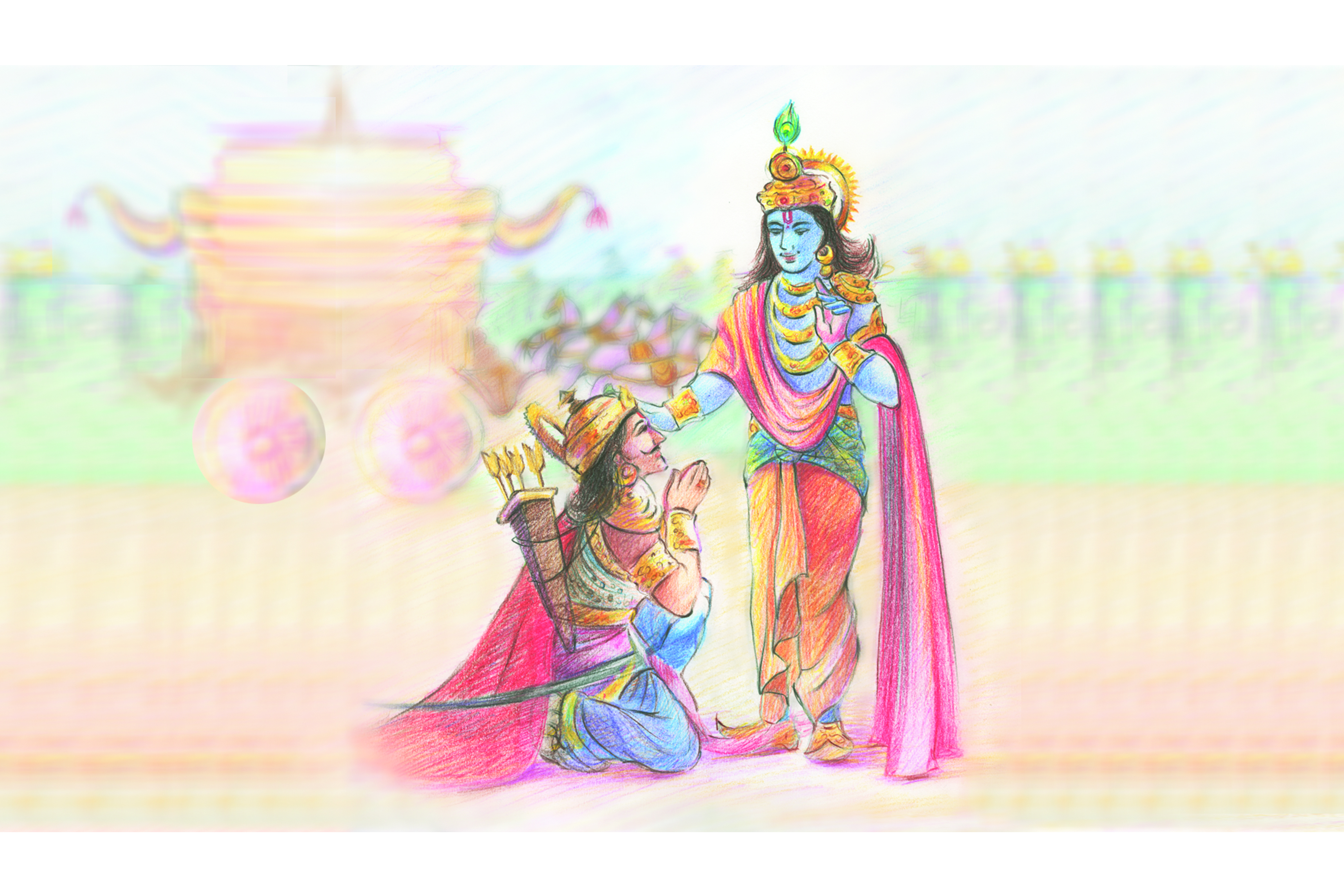
Lord Krishna speaks of reincarnation in the Bhagavad Gita, likening death to the way we change into a new set of clothes, discarding the old ones.
Fulfilling Pious Intentions
Most of us have a bucket list of things we always wished to do in our life. It helps to start fulfilling such pious intentions sooner than later.
It could be trips to places that we always wished to visit, a book that we always thought we could read, or write one of our own, few songs we could croon, close friends we wanted to visit, or movies that we wished to see, etc.
Imparting a Meaning to Our Suffering
Grief can beget meaning. It provides us an opportunity to reflect on what matters most to us. We could end up taking a social initiative which may, in some way, end up doing good to others. Suffering is virtually a steppingstone to spiritual upliftment.
On to Pleasant Memories
The good news is that the feeling of inner loneliness does get diminished over time. Our souls are forever seeking happiness within. Over time, memories which would have made us cry closer to the event, turn into pleasant ones. We remember the departed person with fondness. We keep in mind the values followed by the departed soul. We adapt to the new reality.
Making the Departed Soul Happier
The Mother of Sri Aurobindo Ashram, Pondicherry, India, has said that to make the soul happy, so that it reincarnates in good conditions, one should have no sorrow and remain very peaceful and quiet, while keeping an affectionate remembrance of the one who has departed. (Complete Works of the Mother; Words of the Mother – III; Death and Rebirth).
Some Myths and Misconceptions
Myth: The pain will go away faster if we ignore it.
Fact: Trying to ignore our pain or keep it from surfacing will only make it worse in the long run. For real healing, it is necessary to face our grief and actively deal with it.
Myth: It’s important to “be strong” in the face of loss.
Fact: Feeling sad, frightened, or lonely is a normal reaction to loss. Crying does not mean we are weak. We do not need to put on a brave front. Showing our true feelings can help us and those around us.
Myth: Not crying implies we are not sorry about the loss.
Fact: Crying is a normal response to sadness, but it is not the only one. Those who do not cry may feel the pain just as deeply as others. They may simply have other ways of showing it.
Myth: Grieving should last about a year.
Fact: There is no specific time frame for grieving. How long it takes differs from person to person.
Myth: Moving on with our life means forgetting about our loss.
Fact: Moving on means we have accepted our loss. This is not the same as forgetting. We can move on with our life and try to be happy. The memory of someone we lost shall always be an important part of us. In fact, as we move through life, these memories can become more and more integral to defining the people we are.
What To Avoid While Comforting Those Who Are Grieving
- Aggressively seeking details as to how it happened. Allowing the grieving person to open up on his/her own makes better sense.
- Right after the death, asking the affected person details about their immediate or future plans. Or, commenting on how things may shape up in the family in the times to come.
- Discussing financial details of any kind.
- Loose talk while being a part of any of the rituals or at any social gathering to mourn a death.
- Talking about health-related precautions being taken by one, thereby implying that the responsibility of the sudden demise somehow lies on the deceased person or his/her family.

A Transformative Event
In his epic poem Savitri, Sri Aurobindo, the renowned Indian seer, presents the end of a person’s life as a transformative event, a passage or a door through which one passes towards a greater life. Essentially, the poem recounts the saga of human victory over ignorance and conquest of death.
Thus, on the racing tracks of Life, Death is but a pit stop. One gives up one’s creaking old jalopy. In exchange, one gets a shimmering new vehicle. One then zooms off to a newer horizon, the engine firing on all six cylinders. With each pit stop, one evolves further.
Conveying Positive Vibes to Those Who Are Still Around
If I ever run into Yaksha and he asks me as to what the next most surprising thing in life is, I would surely respond as follows.
“All of us realize that those we love are not going to be around all the time. Yet, we consciously end up praising a person only when he/she is no longer alive. During their lifetime, most of the times, we take them for granted and spend quite some time censuring, condemning, criticizing, and ridiculing them.”
Think of those around us. When was the last time we conveyed our genuine appreciation, praise, and gratitude to them for their importance in our life? Is it not better to do so when the person we love is still around and can appreciate it?!
(1. The illustration depicting Krishna and Arjuna in the battlefield has been reproduced with permission from the illustrator, Arati Shedde, and Heartfulness Magazine – www.heartfulnessmagazine.com.
2. All other illustrations are courtesy www.
3. A version of this article also appears in the July 2023 issue of NAMAH, a journal of Sri Aurobindo Society, Pondicherry, India).
Related Post:
Of Valentine’s Day, A Sentiment Called Love, and P G Wodehouse
Posted in What ho!, tagged Death, Humour, Love, P G Wodehouse, Paradise Lost, Valentine's Day on February 10, 2023| 10 Comments »
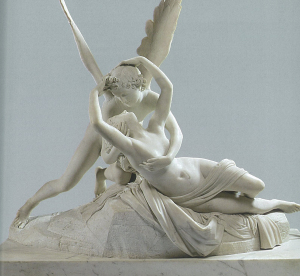
One of the major events our marketing honchos keenly look forward to happens to be the Valentine’s Day. Promotional goods flood the market. Aggressive campaigns get launched, with a sharp eye on the purse of the customer. Producers of chocolate, balloons and heart-shaped objects rule the roost. A sense of eager anticipation prevails. Love is in the air. Couples can be seen holding hands and whispering sweet nothings in each other’s ears, cooing to each other like turtle doves.
Quite a few friends of mine believe me to be a romantic. However, I confess I have never quite understood the sentiment alluded to as love. Perhaps, I am too much of a perfectionist. Or, I may be a creature of rigid habits, inwardly shuddering at the prospect of being ‘reformed’ in any way by a member of the species of the delicately nurtured.
Often, I wonder if the concept of love is merely a mirage which people keep chasing relentlessly, possibly encountering a few oases of a deeper level of infatuation along the way.
Love – A Gigantic Swindle?
What exactly does it entail to be in love with someone? If at all someone gets to experience this sentiment which is responsible for a major chunk of our literature, fine arts, and movies, why would one be referred to as having fallen in love? Is this sentiment akin to the ‘bottomless perdition’ referred to by John Milton in Paradise Lost?
Instead, why can’t people follow the example of such kids as Thomas Gregson, Bonzo Travers and Sebastian Moon? Some of you may recall how they rose in love by trying to be worthy of the affections of their favourite silver screen divas like Greta Garbo, Lilian Gish, and Clara Bow.
Consider the views of the highly opiniated and strong-willed Ann Chester of Piccadily Jim fame who calls love a swindle of gigantic proportions. She hates all this noise about love, as if it were something wonderful that was worth everything else in life put together.
“Because I’ve had the courage to think about it for myself, and not let myself be blinded by popular superstition. The whole world has united in making itself imagine that there is something called love which is the most wonderful happening in life. The poets and novelists have simply hounded them on to believe it. It’s a gigantic swindle.”
She continues further.
“I believe in marriage. . .but not as the result of a sort of delirium. I believe in it as a sensible partnership between two friends who know each other well and trust each other. The right way of looking at marriage is to realise, first of all, that there are no thrills, no romances, and then to pick out someone who is nice and kind and amusing and full of life and willing to do things to make you happy.”

Of Love, Saint Valentine, and Martyrdom
I am reasonably certain that the soul of the 3rd century Italian Saint Valentine would be rather pleased at the positive press he keeps getting year after year, though his name represents not only courtly love but also being worthy, strong, and powerful. Those who have already experienced this emotion can alone confirm if these personality traits happen to be essential for one to aspire to be a star performer in the realm of love.
However, there is no evidence that poor Saint Valentine was a patron of lovers. Just before his beheading, apparently, he wrote a note to a girl, whose eyesight he had restored, signed ‘from your Valentine’. This might have inspired today’s lovers to associate him with romantic overtures. Moreover, during the Middle Ages, it was believed that birds paired in mid-February. This could have been another factor which could have led to Valentine’s Day getting widely recognized as a day for romance and devotion.
The fact that he was martyred on February 14, 269 at the behest of Claudius II, the then Roman Emperor, might have even led people to say that they fall in love. Those who are experts on the topic of love alone may be able to say if it feels like being martyred at the altar of love when one falls in it. After all, it would need nerves of chilled steel to willingly surrender one’s freedom, carefreeness, and sovereignty to another human being, thereby, in a way, getting martyred upon falling in love. Sure enough, they follow Indian scriptures which strongly advocate the spiritual concept of surrender, albeit to a higher power.

Shades of Love
Having exercised my limited grey cells a wee bit and having perused some of the narratives of P G Wodehouse, I have veered around to the view that he captures at least three shades in the rainbow of this much-revered sentiment.
Light Pink: The Butterfly/Chamois State
Those who behave like either butterflies or the chamois of the Alps constitute this category. Consider these cases from the oeuvre of Plum and you would know what I mean.
“Are you insinuating that I am the sort of man who turns lightly from one woman to another—a mere butterfly who flits from flower to flower, sipping . . .?”
(Frederick Mulliner to Jane Oliphant in Portrait of a Disciplinarian)
“But the real reason was that he thought Boko was a butterfly.”
I couldn’t follow her. She had me fogged. Anything less like a butterfly than good old Boko I’ve never set eyes on.
“A butterfly?”
“Yes. Flitting from flower to flower and sipping.”
(Nobby Hopwood, to Bertie Wooster, Joy in the Morning)
“I haven’t seen Pongo since we were kids.”
“Even then he was flitting from flower to flower like a willowy butterfly.”
(Bill Oakshott and Lord Ickenham, Uncle Dynamite)
“I think young Mike Cardinal is a butterfly, Shorty; the kind that flits from flower to flower and sips.”
(Terry Cobbold to Lord Shortlands, Spring Fever)
“And this will show you the sort of flitting and sipping butterfly the hound is.”
(Catsmeat Potter-Pirbright, to Bertie, about Esmond Haddock, The Mating Season)
Like so many young doctors with agreeable manners and frank blue eyes, Ambrose Gussett continued to be an iodoform-scented butterfly flitting from flower to flower but never resting on any individual bloom long enough to run the risk of having to sign on the dotted line.
(Up from the Depths)
“He is a flitting butterfly and a two-timing Casanova.”
(Valerie Twistleton, speaking of Horace Davenport, The Shadow Passes)
For some time past, it appeared, he had been flitting round this girl like a pimpled butterfly, and it had suddenly come to him with a sickening shock that his emotional nature had brought him to the very verge of matrimony.
(Oofy Prosser’s self-realization, The Word in Season)
“And you stand revealed as a cross between a flitting butterfly and a Mormon elder,” said Sally with spirit. “You and Brigham Young, a pair.”
(Sally Painter to Freddie Widgeon, Ice in the Bedroom)
“The trouble with you, Bertie, is that you haven’t got it in you to understand true love. You’re a mere butterfly flitting from flower to flower and sipping, like Freddie Widgeon and the rest of the halfwits of whom the Drones Club is far too full.”
(Gussie Fink-Nottle accusing Bertie Wooster in Stiff Upper Lip, Jeeves)
“Like so many substantial citizens of America, he had married young and kept on marrying, springing from blonde to blonde like the chamois of the Alps leaping from crag to crag.”
(Summer Moonshine)
It was unfortunate that none of these arguments presented themselves to Bill Oakshott as he turned the corner. In Otis Painter he saw just another libertine, flitting from flower to flower and sipping, and we are already familiar with his prejudice against libertines.
(Uncle Dynamite)
‘What did he say?’
‘Well, he seemed to hint, unless I misunderstood him, that the above Haddock hadn’t, as it were, done right by our Nell. According to Catsmeat, you and this modern Casanova were at one time holding hands, but after flitting and sipping for a while he cast you aside like a worn-out glove and attached himself to Gertrude Winkworth. Quite incorrect, probably. I expect he got the whole story muddled up.’
(Corky and Bertie Wooster, The Mating Season)
Dark Pink: The Nightingale State
What happens when the sentiment of love has survived the ravages of time? Or, when two persons suddenly rediscover each other and sparks of love fly. Having had a rich experience in their lives, they use their astonishingly rich repertoire to ‘sing’ to each other like nightingales, sharing their social, familial, health, and many other issues with much felicity.
In most of his works, P G Wodehouse regales us with the topsy-turvy romances of couples who are invariably in the impressionable phases of their lives. But in a few of his narratives, such as Indian Summer of an Uncle, Extricating Young Gussie, and Ring for Jeeves, even a seasoned romance gets celebrated. Gone are the impulsive breakoffs linked to sharks, moustaches, and an abysmal record at the golf links. Nor are we treated here to an impetuous affair kick-started by the heroine’s cat being saved by a chivalrous and dashing hero. Instead, we are allowed to bask in the soft glow and warmth of a long drawn out romance the embers of which get rekindled after several years.
Such couples often find a common cause in family affairs, shared ailments, and, of course, areas of common interest. Piggy and Maudie, Joe and Julia, and Mrs Spottsowrth and Captain Biggar fit into this category. So do Sir Roderick Glossop and Lady Chuffnell and James Duff and Beatrice Chavender.
Bright Red: The Turtle Dove State
Marriage is not a process for prolonging the life of love, sir. It merely mummifies its corpse.
(The Small Bachelor)
However, the good news is that as long as the embers of romance are aglow, a bright red shade of love prevails.
Consider the state of matrimonial bliss Bingo Little attains after he has realized that Rosie M Banks is indeed The One as far as he is concerned. Much like a sub-atomic particle which altogether skips an orbit and jumps from one to another, he transcends from being a butterfly to a turtle dove state.
We know Bingo Little to be a diehard romantic, perennially in love with some dashing female or the other. Even when at school, he is reported to have had the finest collection of actresses’ photographs; at Oxford, his romantic nature was a byword. He is inclined to fall in love at first sight on a regular basis and become highly emotional about his affections.
Residents of Plumsville are aware that objects of his affection have included a waitress named Mabel; Honoria Glossop, the formidable daughter of Pop Glossop; Daphne Braythwayt, a friend of Honoria; Charlotte Corday Rowbotham, a revolutionary; Lady Cynthia Wickhammersley, a family friend of Bertie’s; and Mary Burgess, niece of the Rev. Francis Heppenstall. After each failed affair, Bingo does not necessarily sulk. The scales fall from his eyes, and he suddenly realizes that the next girl alone is his true soul mate.
After many failed affairs, Bingo ends up marrying the romance novelist Rosie M. Banks, an author whose outlook on life happens to match well with that of his.
Within ten days of having met his future wife, Bingo announces to Bertie Wooster that he has been successful in his latest endeavour.
‘Good Lord! That is quick work. You haven’t known her for two weeks.’
‘Not in this life, no,’ said young Bingo. ‘But she has a sort of idea that we must have met in some previous existence. She thinks I must have been a king in Babylon when she was a Christian slave. I can’t say I remember it myself, but there may be something in it.’
(The Inimitable Jeeves)
In the post-matrimony phase, we find a Bingo Little who is completely transformed. He is singularly devoted to his wife. Maintaining matrimonial peace and harmony is the sole purpose of his life. When it comes to keeping his lady-love happy and contented, there is little that he leaves to chance.
‘Oh, sweetie-lambkin, isn’t that lovely?’
‘What?’
‘Laura Pyke wants to come here.’
‘Who?’
‘You must have heard me speak of Laura Pyke. She was my dearest friend at school. I simply worshipped her. She always had such a wonderful mind. She wants us to put her up for a week or two.’
‘Right-ho. Bung her in.’
‘You’re sure you don’t mind?’
‘Of course not. Any pal of yours…’
‘Darling!’ said Mrs Bingo, blowing him a kiss.
‘Angel!’ said Bingo, going on with the sausages.
(Jeeves and the Old School Chum)
Wherever Plum is, love cannot be far behind. He covers its varied hues with much aplomb. If he, the Master Wordsmith of our times, has covered this sentiment so very extensively, I guess it must have some merit to it.
In any case, to all those who claim to be besotted, captivated, charmed, enamoured, enchanted, enraptured, obsessed, smitten, and taken in by a party of the other part, I hereby extend my best wishes. May their tribe flourish, keeping our marketing honchos, authors as well as publishers of mushy romantic books, movie moguls, and many others laughing all the way to their respective banks.
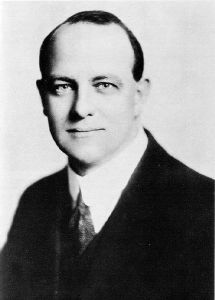
The Pale Parabola of Love
Staunch believers in the concept of love, as well as purists, may register a protest at missing out on a few other shades of this sentiment in Plum’s universe which thrives on humour, wit, and positivity. A unique feature of this universe is that nothing negative happens here. The worst suffering may involve looking for strawberries around Christmas time and getting fined as well as jugged for trying to steal some. Or, being confronted by someone like Roderick Spode who goes about issuing sinister threats to lover boys who make the party of the other part cry. The ultimate sacrifice may be going on a strict vegetarian diet and forsaking the pleasure of putting steak and kidney pie down the hatch till the time the relations are restored, and love is back on its shimmering throne.
Even death does not depress. Nor does it make the spirits sag. Instead, it finds mention in a positive vein. It confers wealth, castles and titles upon the best loved heirs and wards, thereby spreading joy and sunshine all around.
A Pristine Shade of Love
Plum presents a pristine version of love. He takes the reader on a leisurely stroll in his Garden of Eden where apples are of the high hanging kind and such creatures as snakes are singularly missing. A strict code of chivalry is in vogue. Romance blossoms. Devotion is permitted. But physical intimacy is a taboo. Aphrodite has limited access to the goings on. Eroticism is denied entry. Saint Valentine would have heartily approved.
It is rather fitting that Plum decided to hand in his dinner pail on Valentine’s Day, a day associated with love, romance, and devotion. He bequeathed his works to all his fans, spreading eternal joy and sweetness on this planet.
(Notes: Butterfly/Chamois quotes are courtesy Ana Jung. Inputs from Suryamouli Datta are gratefully acknowledged.)
Related Posts:
The death of Death at the hands of P G Wodehouse
Posted in What ho!, tagged Death, Humour, P G Wodehouse, Savitri, Sri Aurobindo on January 20, 2020| 2 Comments »
In fond remembrance of my wife, Usha Bhatia, whose second death anniversary falls today.

P G Wodehouse handed in his dinner pail on the 14th of February, 1975. While delving into any of his narratives, one is not likely to find a single character which comes under the clutches of one of the much-despised inevitable occurrences in life – Death (the other one being Taxation, which does get commented upon once in a while).
In the narratives dished out by him, Death figures only somewhere in the background. It does not depress. Nor does it make the spirits sag. Instead, it finds mention in a positive vein. It confers wealth, castles and titles upon the unsuspecting heirs and wards, paving their way for a smoother life, thereby spreading joy and sunshine all around.
The closest one gets to morbid thoughts is when a character is fed up with facing the harsh slings and arrows of Fate and contemplates an act of suicide, which, rather…
View original post 1,908 more words
An insightful poem by late Shri Harivansh Rai Bachchan
Posted in A Vibrant Life!, tagged Amitabh Bachchan, Death, Grief, Harivansh Rai Bachchan, Hindi, Poem, Positive Attitude, Sorrow on January 19, 2019| 4 Comments »
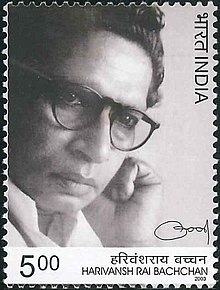
Creative persons often respond to crises in their lives with a renewed enthusiasm and vigour for their art and craft. Creative juices help them to not only retain a state of mental equipoise but also pour out some strikingly positive thoughts. The shadow of a deep sorrow within eventually decides to part company and move on to some other soul which happens to be more vulnerable. A pale parabola of joy becomes visible on the horizon, leading the tormented soul from an abyss of darkness to a brighter and cheerier environment. Goddess Saraswati provides a healing touch.
Late Shri Harivansh Rai Bachchan lost his first wife at a young age. One of the poems he penned at the time is a great composition which could enthuse anyone who is grappling with the sudden loss of a loved one.
Translation skills of yours truly are indeed debatable. However, the essence of the poem entitled, say, ‘What has happened has happened‘, is pregnant with some relevant lessons from one’s environment. But before we come to that, let us savour the original first.
जो बीत गई सो बात गई
जीवन में एक सितारा था
माना वह बेहद प्यारा था
वह डूब गया तो डूब गया
अम्बर के आनन को देखो
कितने इसके तारे टूटे
कितने इसके प्यारे छूटे
जो छूट गए फिर कहाँ मिले
पर बोलो टूटे तारों पर
कब अम्बर शोक मनाता है
जो बीत गई सो बात गई
जीवन में वह था एक कुसुम
थे उसपर नित्य निछावर तुम
वह सूख गया तो सूख गया
मधुवन की छाती को देखो
सूखी कितनी इसकी कलियाँ
मुर्झाई कितनी वल्लरियाँ
जो मुर्झाई फिर कहाँ खिली
पर बोलो सूखे फूलों पर
कब मधुवन शोर मचाता है
जो बीत गई सो बात गई
जीवन में मधु का प्याला था
तुमने तन मन दे डाला था
वह टूट गया तो टूट गया
मदिरालय का आँगन देखो
कितने प्याले हिल जाते हैं
गिर मिट्टी में मिल जाते हैं
जो गिरते हैं कब उठतें हैं
पर बोलो टूटे प्यालों पर
कब मदिरालय पछताता है
जो बीत गई सो बात गई
मृदु मिटटी के हैं बने हुए
मधु घट फूटा ही करते हैं
लघु जीवन लेकर आए हैं
प्याले टूटा ही करते हैं
फिर भी मदिरालय के अन्दर
मधु के घट हैं मधु प्याले हैं
जो मादकता के मारे हैं
वे मधु लूटा ही करते हैं
वह कच्चा पीने वाला है
जिसकी ममता घट प्यालों पर
जो सच्चे मधु से जला हुआ
कब रोता है चिल्लाता है
जो बीत गई सो बात गई
(Courtesy: http://kavitakosh.org)
If you had a star in your life which was bright and beautiful, the day it fell from the sky, it just fell. The sky does not grieve over it. When fragrant flowers fall, the forest of honey does not wallow in sorrow. The vessels of mud, containing tissue restoratives, fall and break. But those in a merry making mood move on with their celebration of life. There is not much point in mourning over the loved ones who have parted company for ever.
Life goes on. Look forward to tomorrow with some uplifting thoughts and ideas. Do not grieve over a lost opportunity.
A profound message, indeed.
(PS: If you liked this post, and happen to be a fan of P G Wodehouse, you may like to check this out as well:
https://ashokbhatia.wordpress.com/2018/02/14/the-death-of-death-at-the-hands-of-p-g-wodehouse)
The death of Death at the hands of P G Wodehouse
Posted in What ho!, tagged Death, Humour, P G Wodehouse, Savitri, Sri Aurobindo on February 14, 2018| 16 Comments »
P G Wodehouse handed in his dinner pail on the 14th of February, 1975. While delving into any of his narratives, one is not likely to find a single character which comes under the clutches of one of the much-despised inevitable occurrences in life – Death (the other one being Taxation, which does get commented upon once in a while).
In the narratives dished out by him, Death figures only somewhere in the background. It does not depress. Nor does it make the spirits sag. Instead, it finds mention in a positive vein. It confers wealth, castles and titles upon the unsuspecting heirs and wards, paving their way for a smoother life, thereby spreading joy and sunshine all around.
The closest one gets to morbid thoughts is when a character is fed up with facing the harsh slings and arrows of Fate and contemplates an act of suicide, which, rather understandably, never happens.
When husbands kick the bucket
Former husbands do find honourable mentions in some of his narratives. Hot Water scores on this front. So does Ring for Jeeves, where one runs into rich husbands of Mrs Spottsworth who have already kicked their respective buckets, leaving behind sackfuls of the green stuff.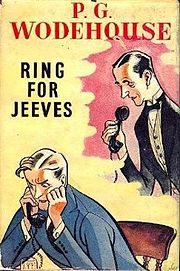
“Born Rosalinda Banks, of the Chilicothe, Ohio, Bankses, with no assets beyond a lovely face, a superb figure and a mild talent for vers libre, she had come to Greenwich Village to seek her fortune and had found it first crack out of the box. At a studio party in Macdougall Alley she had met and fascinated Clifton Bessemer, the Pulp Paper Magnate, and in almost no time at all had become his wife.
Widowed owing to Clifton Bessemer trying to drive his car one night through a truck instead of round it, and two years later meeting in Paris and marrying the millionaire sportsman and big game hunter, A. B. Spottsworth, she was almost immediately widowed again.
It was a confusion of ideas between him and one of the lions he was hunting in Kenya that had caused A. B. Spottsworth to make the obituary column. He thought the lion was dead, and the lion thought it wasn’t. The result being that when he placed his foot on the animal’s neck preparatory to being photographed by Captain Biggar, the White Hunter accompanying the expedition, a rather unpleasant brawl had ensued, and owing to Captain Biggar having to drop the camera and spend several vital moments looking about for his rifle, his bullet, though unerring, had come too late to be of practical assistance. There was nothing to be done but pick up the pieces and transfer the millionaire sportsman’s vast fortune to his widow, adding it to the sixteen million or so which she had inherited from Clifton Bessemer.”
When the cup that cheers causes death
In Summer Lightning, Galahad is seen advising his niece about the dangers of drinking tea (instead of whisky) and recalling the death of poor old Buffy Struggles.
“’You be careful,’ urged the Hon. Galahad, who was fond of his niece and did not like to see her falling into bad habits. ‘You be very careful how you fool about with that stuff. Did I ever tell you about poor Buffy Struggles back in ‘ninety-three? Some misguided person lured poor old Buffy into one of those temperance lectures illustrated with coloured slides, and he called on me the next day ashen, poor old chap – ashen.
“Gally,” he said. “What would you say the procedure was when a fellow wants to buy tea? How would a fellow set about it?”
“Tea?” I said. “What do you want tea for?”
“To drink,” said Buffy. “Pull yourself together, dear boy,” I said.
“You’re talking wildly. You can’t drink tea. Have a brandy-and-soda.”
“No more alcohol for me,” said Buffy. “Look what it does to the common earthworm.”
“But you’re not a common earthworm,” I said, putting my finger on the flaw in his argument right away.
“I dashed soon shall be if I go on drinking alcohol,” said Buffy.
Well, I begged him with tears in my eyes not to do anything rash, but I couldn’t move him. He ordered in ten pounds of the much and was dead inside the year.’
‘Good heavens! Really?’
The Hon. Galahad nodded impressively. ‘Dead as a door-nail. Got run over by a hansom cab, poor dear old chap, as he was crossing Piccadilly. You’ll find the story in my book.’”
Tea lovers would surely get offended by the sentiments expressed herein above. But Plum had a knack of making even Death amusing.
Being mentioned in passing
Elsewhere, one finds Clarence and Gally having a conversation of this nature:
“I wish I could consult Wolff-Lehmann”
“Why can’t you?”
“He’s dead.”
In Adventures of Sally, the main protagonist writes to Ginger: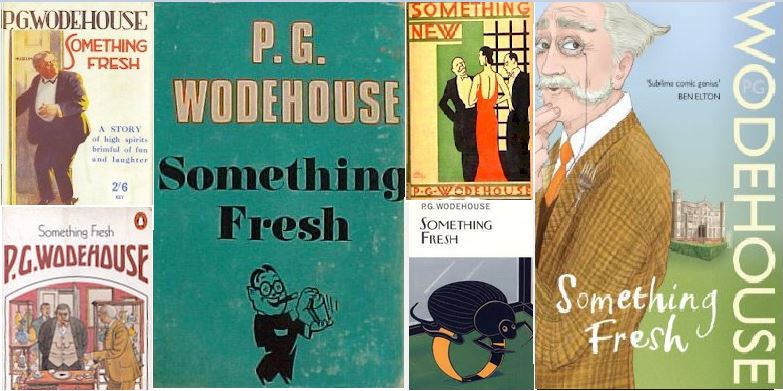
“If Gerald had died and I had lost him that way, I know quite well I shouldn’t be feeling as I do now. I should have been broken-hearted, but it wouldn’t have been the same. It’s my pride that is hurt.”
In Something Fresh, we find Ashe Marson suffering from a writer’s block. He looks blankly for half an hour in front of a sheet of paper bearing the words: “The Adventure of the Wand of Death,” and tries to decide what a wand of death might be. Joan Valentine walks in and demystifies it thus:
“Why, of course; it’s the sacred ebony stick stolen from the Indian temple, which is supposed to bring death to whoever possesses it. The hero gets hold of it, and the priests dog him and send him threatening messages.
What else could it be?”
When Uncles call it a day
Many of us successfully take off the negative emotions associated with death by using such clichés as “kicked the bucket,” and “cashed in his chips.” In a common Wodehouse usage, an uncle generally “hands in his dinner pail.”
“I’m taking my spade and bucket and going home” is a pout spoken by a child playing at the seashore who feels he or she is no longer wanted. Instead, like in Fixing it for Freddie, he uses the term “buckets and spades.”
When suicidal tendencies evaporate
In the short story Sea of Troubles, we get to meet Mr Meggs who happens to be a martyr to indigestion. Leading a sedentary life for over twenty years, and given to the pleasures of the table, he has no hope for the future.
After much thought, he has decided to commit suicide. The knife, the pistol and the rope do not charm him. Nor do the options of either drowning or jumping from a height. The idea of consuming poison alone appeals to him.
He has encashed his assets and decided to gift the same to six of his well-deserving pals. He has prepared letters enclosing neat wads of cash to all the six. He has even thought of his Miss Pellinger, his secretary, and gifts a sum of five hundred pounds to her by way of a parting gift. After handing over the letters to her, asking her to post the same, he hands over the money. Emotionally moved, he even plants a kiss.
But Miss Pillenger is a wary spinster of austere views, uncertain age, and a deep-rooted suspicion of men. She is always ready to swing her clenched fist on any male who might cross the limits of civil behaviour.
She takes the gesture amiss and runs off from the house, startling and shocking Mr Meggs who just cannot comprehend her act of perceived insult. So much so that he scratches the idea of gifting any of his money to some similarly ungrateful friends of his.
He starts chasing his secretary so as to be able to stop her from posting the six letters he has entrusted to her. The latter, thinking he is following him for some amorous reason, creates a scene on the street. A huffing and puffing Mr Meggs, red in the face with the exertion, explains his conduct to a rozzer who has descended on the scene and retrieves the letters.
Back home, he suddenly realizes that the infernal pain in his stomach has ebbed away. He finds hope in brisk walks and decides to cancel his suicide mission.
The Making of Mac’s is another story which also appears in The Man with Two Left Feet.
Katie is in love with Andy who is ambivalent towards her. She aspires to be a first-rate dancer but damages her ankle at one of the rehearsals. This crushes her ambition. Life turns hopeless.
This is how she expresses herself:
Darling Uncle Bill,
Don’t be too sorry when you read this. It is nobody’s fault, but I am just tired of everything, and I want to end it all. You have been such a dear to me always that I want you to be good to me now. I should not like Andy to know the truth, so I want you to make it seem as if it had happened naturally.
You will do this for me, won’t you? It will be quite easy. By the time you get this, it will be one, and it will all be over, and you can just come up and open the window and let the gas out and then everyone will think I just died naturally. It will be quite easy. I am leaving the door unlocked so that you can get in. I am in the room just above yours. I took it yesterday, so as to be near you.
Good-bye, Uncle Bill.
You will do it for me, won’t you? I don’t want Andy to know what it really was.”
Uncle Bill butts in at the last minute, consoles her, and rushes off to show the letter to Andy. Moved by the letter, Andy does not lose time and rushes to meet her. The affair ends on a positive note.
Slaying Death with his pen
Fans of P G Wodehouse are well aware that his world has different kind of challenges: Obdurate girl friends whose ambitions to either enforce dietary controls upon the parties of the other part, or uplift and refine their intellect, need to be kept on a tight leash; sartorial choices which unwilling masters bow to after having been saved from an impending disaster by their man servants; management of aunts who, when one’s Guardian Angels are busy elsewhere, are not gentlemen; tackling of stingy uncles who refuse to part with the green stuff for loftier goals in life; pigs which decide to register a protest by deciding to go in for unplanned dietary regimen; the art and science of pinching umbrellas and policemen’s helmets, and the like.
Death is on the other side of the spectrum and finds no place in his narratives, except when rich husbands or uncles decide to kick the bucket and leave a pile of money or real estate for their spouses or heirs. The D word, even if it makes a brief appearance, merely indicates a celebration of life.
A spiritual import
Incidentally, by treating Death as a celebration of life, Plum adds a deeper spiritual layer to his narratives.
In his epic poem Savitri, Sri Aurobindo, the renowned Indian seer, presents the end of a person’s life as a transformative event, a passage or a door through which one passes towards a greater life. Essentially, the poem recounts the saga of human victory over ignorance and conquest of death.
Thus, on the racing tracks of Life, Death is but a pit stop. One gives up one’s creaking old jalopy. In exchange, one gets a shimmering new vehicle. One then zooms off to a newer horizon, the engine firing on all six cylinders. With each pit stop, one evolves further.
All works of Wodehouse carry his trademark bright humour and sparkling wit. But hidden beneath the layers of his uplifting narratives are several gems of wisdom – material as well as spiritual.
He continues to live amongst us through his works. In his hands, even Death meets its own death.
(Inputs from the following fans of P G Wodehouse are gratefully acknowledged:
John Dawson, Lars Walker, Louise Culmer, Lucy Smink, Midge Coates, Murray Harper, Narayan Arvind, Pranava Singhal, Satish Pande, Subrata Sarkar and Sughosh Vardarajan.)
-
Recent Posts
Buy the Book

buy the book
Categories
-
cc
Tags
Art Bertie Wooster Bhagavad Gita Bingo Little Birthday Blake Mouton Grid Blogging Bollywood Book Campus Life CEO Chivalry Consciousness Coronavirus Corruption Edwin Empress of Blandings English Ethics Feminism Happiness Health Hindi Hollywood Human Values Humour India Jeeves Kalidasa KIds Leadership linkedin Literature Lord Emsworth Love Lyrics Mahabharata Mahatma Gandhi Management Movies Music Norway Paintings Panjab University People P G Wodehouse Politics Pondicherry Portugal Psmith Puducherry Rabindranath Tagore Ramayana Ritusamhara R K Laxman Romance Rosie M Banks Rupert Psmith Seasons Shakespeare Social Media Something Fresh Songs SPANDAN Spirituality SQ Sri Aurobindo Stephen Covey Switzerland Tatas Thos UBS Values Wodehousitis WomenArchives
- March 2026 (1)
- February 2026 (5)
- January 2026 (2)
- December 2025 (1)
- November 2025 (2)
- October 2025 (2)
- September 2025 (3)
- August 2025 (3)
- July 2025 (2)
- June 2025 (2)
- May 2025 (4)
- April 2025 (5)
- March 2025 (5)
- February 2025 (4)
- January 2025 (4)
- December 2024 (6)
- November 2024 (6)
- October 2024 (6)
- September 2024 (5)
- August 2024 (5)
- July 2024 (4)
- June 2024 (4)
- May 2024 (5)
- April 2024 (5)
- March 2024 (3)
- February 2024 (1)
- January 2024 (4)
- December 2023 (2)
- November 2023 (3)
- October 2023 (3)
- September 2023 (3)
- August 2023 (5)
- July 2023 (5)
- June 2023 (7)
- May 2023 (6)
- April 2023 (6)
- March 2023 (8)
- February 2023 (8)
- January 2023 (7)
- December 2022 (6)
- November 2022 (5)
- October 2022 (8)
- September 2022 (5)
- August 2022 (6)
- July 2022 (6)
- June 2022 (8)
- May 2022 (7)
- April 2022 (8)
- March 2022 (7)
- February 2022 (3)
- January 2022 (7)
- December 2021 (4)
- November 2021 (8)
- October 2021 (7)
- September 2021 (6)
- August 2021 (7)
- July 2021 (7)
- June 2021 (9)
- May 2021 (8)
- April 2021 (9)
- March 2021 (10)
- February 2021 (8)
- January 2021 (8)
- December 2020 (7)
- November 2020 (6)
- October 2020 (5)
- September 2020 (9)
- August 2020 (9)
- July 2020 (8)
- June 2020 (8)
- May 2020 (6)
- April 2020 (5)
- March 2020 (7)
- February 2020 (4)
- January 2020 (7)
- December 2019 (12)
- November 2019 (10)
- October 2019 (5)
- September 2019 (9)
- August 2019 (10)
- July 2019 (9)
- June 2019 (14)
- May 2019 (13)
- April 2019 (14)
- March 2019 (11)
- February 2019 (11)
- January 2019 (14)
- December 2018 (12)
- November 2018 (12)
- October 2018 (14)
- September 2018 (9)
- August 2018 (10)
- July 2018 (10)
- June 2018 (8)
- May 2018 (11)
- April 2018 (11)
- March 2018 (6)
- February 2018 (9)
- January 2018 (10)
- December 2017 (10)
- November 2017 (9)
- October 2017 (8)
- September 2017 (11)
- August 2017 (10)
- July 2017 (10)
- June 2017 (11)
- May 2017 (9)
- April 2017 (7)
- March 2017 (7)
- February 2017 (8)
- January 2017 (10)
- December 2016 (9)
- November 2016 (11)
- October 2016 (10)
- September 2016 (10)
- August 2016 (9)
- July 2016 (6)
- June 2016 (10)
- May 2016 (10)
- April 2016 (10)
- March 2016 (10)
- February 2016 (12)
- January 2016 (10)
- December 2015 (11)
- November 2015 (11)
- October 2015 (10)
- September 2015 (10)
- August 2015 (10)
- July 2015 (10)
- June 2015 (10)
- May 2015 (10)
- April 2015 (10)
- March 2015 (9)
- February 2015 (10)
- January 2015 (8)
- December 2014 (9)
- November 2014 (8)
- October 2014 (8)
- September 2014 (7)
- August 2014 (7)
- July 2014 (7)
- June 2014 (7)
- May 2014 (7)
- April 2014 (7)
- March 2014 (7)
- February 2014 (6)
- January 2014 (7)
- December 2013 (6)
- November 2013 (6)
- October 2013 (6)
- September 2013 (6)
- August 2013 (6)
- July 2013 (6)
- June 2013 (6)
- May 2013 (6)
- April 2013 (6)
- March 2013 (6)
- February 2013 (6)
- January 2013 (6)
- December 2012 (4)
- November 2012 (4)
- October 2012 (3)
- September 2012 (2)
- August 2012 (4)
- July 2012 (2)
- June 2012 (2)
- May 2012 (2)
- April 2012 (2)
- March 2012 (2)
- February 2012 (3)
- December 2011 (3)
- November 2011 (1)
- October 2011 (2)
- September 2011 (2)
- August 2011 (2)
- July 2011 (2)
- June 2011 (3)

 ashokbhatia