Feeds:
Posts
Comments

Posts Tagged ‘Entertainment’

Basu Chatterjee was a champion of the middle class, who turned ordinary lives into captivating stories. His films showcased relatable characters dealing with real challenges, making their triumphs and losses deeply affecting us.

Basu da had a unique way of showing female characters. He was curious about women’s thoughts and dreams, exploring their views on romance and meaningful relationships, both romantic and platonic.

He began directing in 1969 with his film Sara Akash, starring FTII-trained actor Rakesh Pandey. The story, set in Agra, follows a newlywed couple dealing with the challenges of an arranged marriage in a joint family. This year marked the onset of the first wave of parallel cinema, showcasing films like Mrinal Sen’s Bhuvan Shome and Mani Kaul’s Uski Roti. However, the audience for these films, including Sara Akash, remained largely confined to film festivals.

Basu Chatterjee first gained attention with his 1974 film, Rajnigandha, which is based on Manu Bhandari’s Hindi short story Yahi Sach Hai. The film looks at a woman’s struggle between her current partner and an ex who returns, evoking past emotions. Rajnigandha established Chatterjee’s unique filmmaking style. It featured newcomers Amol Palekar and Vidya Sinha, with mostly unknown actors, except for Dinesh Thakur. Chatterjee made a cameo as an annoyed moviegoer. The film’s music, by Salil Chowdhury with lyrics by Yogesh, included memorable songs. Its success led to lasting collaborations among Basu, Yogesh, Chowdhury, and cinematographer K. K. Mahajan. Shyam Benegal’s Ankur also found success that year, demonstrating that art and commerce could indeed thrive together.

He was a pioneering filmmaker who highlighted the Parsi community in Khatta Meetha, showing them authentically and avoiding clichés. Similarly, Baaton Baaton Mein focused on the Catholic community in Bandra, also avoiding stereotypes. Basu da’s films found romance in daily life in Bombay, whether on crowded trains, buses, or Delhi streets.

Basu Chatterjee, along with Gulzar and Hrishikesh Mukherjee, formed a strong trio that shaped middle-of-the-road cinema in the 1970s. Their films appealed to middle-class Indians longing for unique yet relatable stories, combining mainstream charm, memorable music, real emotions, and uplifting narratives based on everyday life.

Basu da was born in Ajmer on the 10th of January, 1927. Being close to his 98th birth anniversary, let me highlight a few of his timeless classics.
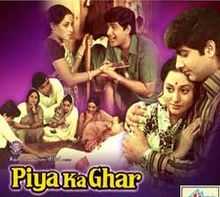
Piya Ka Ghar is a film featuring Jaya Bhaduri and Anil Dhawan, and is a remake of the Marathi film Mumbaicha Jawai. It tells the story of the difficulties faced by married couples in Mumbai, particularly due to limited living space. Malti, a girl from a village, marries Ram through a matchmaker but feels disappointed when she learns they must live with his extended family in a cramped apartment, which affects their privacy and intimacy. Available on Prime Video.
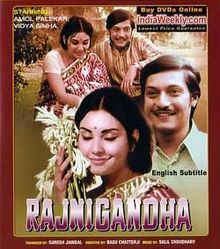
Rajnigandha, based on Mannu Bhandari’s short story Yahi Sach Hai, features Vidya Sinha as a woman torn between two suitors and takes her time to select a husband, a departure from typical glamorous roles. The film centers on the simple lives of three middle-class people without unnecessary melodrama. Vidya’s performance received praise from critics and audiences alike. The film marked the introduction of Amol Palekar and Vidya Sinha, and included memorable songs sung by Lata Mangeshkar and Mukesh, who won a National Award for their work. Available on Prime Video.
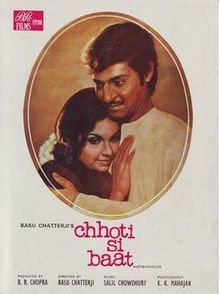
Chhoti Si Baat features Amol Palekar as a shy man who hires a life coach to learn how to propose to a girl. Palekar plays an introverted character, while Vidya portrays a woman who knows his feelings and waits for him to act. The film connects well with audiences due to its middle-class setting. It also includes beautiful music by Salil Chaudhury, showcasing Yesudas’ talent in the duet, Jaaneman Jaaneman Tere Do Nayan, filmed with Dharmendra and Hema Malini. Available on Prime Video.
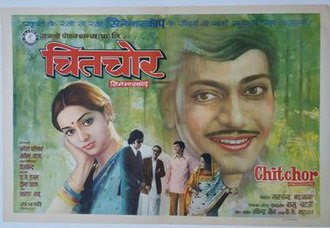
Chitchor is a romantic comedy about mistaken identities involving Geeta and her family eager for her to meet an eligible bachelor, Sunil, who is coming to their village. However, when overseer Vinod mistakenly arrives instead, he wins the affection of Geeta, who wants to marry him. The arrival of Sunil complicates matters as he also develops feelings for her. The film includes lovely songs by Ravindra Jain, such as Jab Deep Jale Aana. Available on Prime Video.
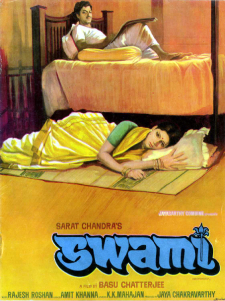
Swami is based on Sarat Chandra’s novel of the same name and follows Saudamini, played by Shabana Azmi, who admires her uncle while facing approval issues from her mother regarding her friendship with Naren. After marrying Ghanshyam, a kind wheat merchant, she feels trapped but learns of her husband’s true kindness. The film concludes with her transformation into a devoted wife, showcasing Azmi’s impressive performance. Available on YouTube.
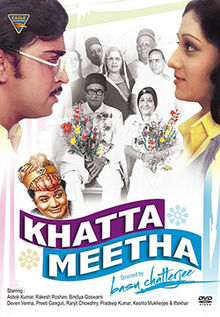
Khatta Meetha is inspired by the American classic Yours, Mine and Ours and tells the story of a middle-aged widower, played by Ashok Kumar, who marries a widow, portrayed by Pearl Padamsee. They both have children from previous marriages and face challenges in merging their families as the siblings conflict. Yet, through various trials, the family finds ways to unite and coexist peacefully, depicting a heartwarming conclusion. Available on YouTube.
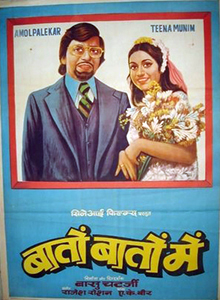
Baton Baton Mein is set in a Christian context and highlights the courtship of Amol Palekar and Tina Munim, with the help of her uncle, played by David. Rosie, a widow, wants her daughter to marry, while Nancy meets Tony on their daily commute. Tony’s shyness creates tension, prompting Rosie to look for other matches, but her uncle’s intervention helps reconnect Tony and Nancy. The film had some lovely songs like Suniye Kahiye Kahiye Suniye, Na Bole Tum Na Maine Kuch Kaha and Uthe Sabke Kadam tuned by Rajesh Roshan. Available on Prime Video.

Apne Paraye, inspired by Sarat Chandra’s novel Nishkriti, revolves around Utpal Dutt, a lawyer with a fondness for his cousin Chander (Amol Palekar), who prefers music over a steady job. Chander’s wife, Sheela (Shabana Azmi), is the strict one in the household. Their stable lives are disturbed when Utpal’s younger brother arrives with his wife, creating a complex family dynamic filled with rivalries. Available on Prime Video.
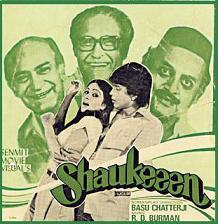
Shaukeen is adapted from the American comedy Boys’ Night Out and follows the lighthearted misadventures of three elderly men, played by Ashok Kumar, Utpal Dutt, and A K Hangal, who fantasize about romance while trying to meet a young woman. They embark on a trip to Goa thanks to their driver, Ravi, leading to humorous yet respectful situations. Ashok Kumar and the ensemble cast deliver exceptional performances throughout. Available on Prime Video.

Chameli Ki Shaadi represents a groundbreaking film tackling caste discrimination with a strong feminist lead. Charandas, (Anil Kapoor), is engrossed in wrestling but loses focus when he meets Chameli (Amrita Singh). Their love faces familial opposition due to caste differences, and to find a solution, they consult an advocate Harish (Amjad Khan), who suggests they elope. Available on YouTube.

One notable aspect of Basu da’s films was their exceptional music. He collaborated with a variety of music directors, including Salil Chowdhury, R D Burman, Laxmikant Pyarelal, Bappi Lahiri, Jaidev, and more. However, his most fruitful partnership was with Rajesh Roshan, producing memorable soundtracks for films like Swami, Khatta Meetha, Baaton Baaton Mein, Priyatama, and Hamari Bahu Alka.

The Chaterjee-Roshan duo have given some memorable songs, like, Pal Bhar Mein Yeh Kya Ho Gaya (Swami), Aaye Na Baalam (Swami), Koi Roko Na Deewane Ko (Priyatama), Tere Bin Kaise Din’(Priyatama), Thoda Hai Thode Ke Zaroorat Hai (Khatta Meetha), Badal Toh Aaye (Dillagi), Na Bole Tum Na Maine Kuch Kaha (Baaton Baaton Mein), Suniye Kahiye (Baaton Baaton Mein), Charu Chand Iss Chanchal Chitwan (Man Pasand), Prem Ki Hai Kya Sun Paribhasha (Hamari Bahu Alka), and many more.

In the 1980s, the number of supporters for his style of filmmaking dwindled, prompting Basu Chatterjee to transition to television. His debut serial, Rajani, featuring Priya Tendulkar, was a pioneering effort in consumer activism in India. Following Rajani, he directed other notable television series such as Darpan and Kakkaaji.

Basu Chatterjee received the Filmfare Best Director award for Swami, which also earned a National award. He was honoured with six Filmfare Awards – Critics for Screenplay.

In the new millennium, remakes of Chitchor and Shaukeen emerged, but they failed to capture the charm of the originals. Today, the success of films like Bareilly Ki Barfi and Badhaai Ho serves as a testament to the legacy of Basu Chatterjee’s cinematic style.

About the author

Shivdas Nair has been a cinephile for years. However, he has just started putting his thoughts on paper. A media professional for over two and half decades, and with changing times, now a Principal Advisor – Growth with a vibrant and innovative IT Consulting & Advisory Services company, i-Gizmo Global Technologies. He has just started blogging at https://thoughtsoveracuttingchai.blogspot.com.

Notes

  1. A version of this article first appeared in The Reviewer Collective group on Facebook. The author’s consent to reproduce it here is gratefully acknowledged.
  2. All the visuals are courtesy the World Wide Web.

Related Post

Read Full Post »

One of the compensations for leaving behind the phase of adolescence is a wholesome optimism that envelopes us in our youth. Yes, it does take the fine edge off the series of infatuations and whatever semi-romantic triumphs of a transient nature may have come our way in our formative years. But it has the admirable effect of making us believe that our Guardian Angels are working overtime to ensure that our cup is overflowing with hopes for a brighter future, whether professionally or personally. We are in an exuberant state of mind where the sun will always keep shining, the grass will always be green, flowers will forever be in bloom, and God will continue to be in heaven.

Our dream merchants have often showcased this state of affairs. Our heroes and heroines can be found admiring nature while belting out a melodious song, duly backed by a well-equipped orchestra amid the wilderness. In some cases, they are shown to realise that life is nothing but a journey, comprising ups and downs and twists and turns. A few are introspective, exemplifying the bliss of solitude, whereas some dream of a great career ahead.

Given the penchant of Bollywood to keep spinning romantic yarns, most of such solos showcase the inner yearning to run into a potential soul mate. One waits for a Cupid’s arrow to strike one sooner rather than later. A sinister restlessness creeps in and the unfulfilled desire for heartfelt companionship governs one’s behaviour. The latent wish to identify The Chosen One who will soon be swaying us off our feet gets expressed with gay abandon. A romantic spring is in the offing. Of interest here are songs wherein the party of the first part has dreams in his/her eyes and is seeking love, wandering around as a sole atom. The party of the second part is yet to appear on the horizon.

Here is a random sample of some such songs from Hindi movies.

A Communion with Mother Nature

Against a captivating landscape, our heroes and heroines cannot be blamed for feeling overawed and expressing their love for lush green mountains, sparkling lakes, roaring waterfalls, and the gentle rustle of water in a rivulet nearby.

Suhana safar aur ye mausam haseen

Movie: Madhumati (1958)

Music: Salil Chowdhury

Lyrics: Shailendra

Singer: Mukesh

Ye kaun chitrakar hai

Movie: Boond Jo Ban Gayi Moti (1967)

Music: Satish Bhatia

Lyrics: Bharat Vyas

Singer: Mukesh

Dil ye chota sa

Movie: Roja (1992)

Music: A.R. Rahman

Lyrics: P. K. Mishra

Singer: Minmini

Barso re

Movie: Guru (2007)

Music: A.R. Rahman

Lyrics: Gulzar

Singer: Shreya Ghoshal

Music: Food for the Soul

Occasionally, we get gently reminded of the unique power of music. The main protagonist finds music in whatever is happening in the environment. Mundane occurrences generate mellifluous notes which act like a balm for our frayed nerves.

Aawara bhanwre

Sapney (1997)

Music: A R Rahman

Lyricist: Javed Akhtar

Singer: Hema Sardesai

Sunne wale sun lete hain

Movie: Saaz (1998)

Music: Zakir Hussain, Bhupen Hazarika, Raj Kamal, Yashwant Dev

Lyricist: Javed Akhtar

Singers: Suresh Wadkar, Shraddha Pandit, Shweta Pandit

The Bliss of Solitude

Whether steering a vehicle on a busy road, relishing an introspective saunter in wooded hills, or riding a horse-driven carriage through a rural setting, reflecting on the purpose of life, these songs tug at our heartstrings.

Le chala jidhar ye dil nikal padey

Movie: Miss Bombay (1957)

Music: Hansraj Behl

Lyrics: Prem Dhawan

Singer: Mohd. Rafi

Kuchch dil ne kaha

Movie: Anupama (1966)

Music: Hemant Kumar

Lyrics: Kaifi Azmi

Singer: Lata Mangeshkar

Musafir hoon yaaron

Movie: Parichay (1972)

Music: R D Burman

Lyrics: Gulzar

Singer: Kishore Kumar

Jhooti mooti mitwa

Movie: Rudaali (1993)

Singer: Lata Mangeshkar

Lyrics: Gulzar

Music: Bhupen Hazarika

Celebrating freedom

Oh, the sheer joy of having freed oneself from the shackles of life and dreaming of soaring high in the sky!

Panchi banoon udti chaloon

Movie: Chori Chori (1956)

Music: Shankar – Jaikishan

Lyrics: Hasrat Jaipuri

Singer: Lata Mangeshkar

Dil mera ek aas ka panchi

Movie: Aas Ka Panchi (1961)

Music: Shankar – Jaikishan

Lyrics: Hasrat Jaipuri

Singer: Subir Sen

Udke pawan ke sang chaloongi

Movie: Shagird (1967)

Music: Laxmikant – Pyarelal

Lyrics: Majrooh Sultanpuri

Singer: Lata Mangeshkar

Dil chahta hai

Movie: Dil Chahta Hai (2001)

Music: Shankar – Ehsaan – Loy

Lyrics: Javed Akhtar

Singer: Shankar Mahadevan

Dil dhadakne do

Movie: Zindagi Na Milegi Dobara (2011)

Music: Shankar – Ehsaan – Loy

Lyrics: Javed Akhtar

Singers: Suraj Jagan, Joi Barua, Shankar Mahadevan

Jugni

Movie: Queen (2014)

Music: Amit Trivedi

Lyrics: Anvita Dutt

Singer: Amit Trivedi

Love you, zindagi

Movie: Dear Zindagi (2016)

Music: Amit Trivedi

Lyrics: Kausar Munir

Singer: Jasleen Royal

The Lonely Wanderers

Most of the time, we come across characters who wander hither and thither. They are keenly looking forward to an intense phase of courtship and, hopefully, an eventual walk down the aisle. The search for The Chosen One has begun in right earnest.

Hum hain rahi pyar ke

Movie: Nau Do Gyarah (1957)

Music: S.D. Burman

Lyrics: Majrooh Sultanpuri

Singer: Kishore Kumar

Ban ke panchi

Movie: Anari (1959)

Music: Shankar – Jaikishan

Lyrics: Hasrat Jaipuri

Singer: Lata Mangeshkar

Lakhon hain nigah mein

Movie: Phir Wohi Dil Laya Hoon (1963)

Music: O. P. Nayyar

Lyrics: Majrooh Sultanpuri

Singer: Mohd. Rafi

Kahin na kahin dil lagana padega

Movie: Kashmir Ki Kali (1964)

Music: O. P. Nayyar

Lyrics: S. H. Bihari

Singer: Mohd. Rafi

Pukarta chala hoon main

Movie: Mere Sanam (1965)

Music: O. P. Nayyar

Lyricist: Majrooh Sultanpuri

Singer: Mohd. Rafi

Ye samaan, samaan hai ye pyar ka

Movie: Jab Jab Phool Khile (1965)

Music: Kalyanji Anandji

Lyrics: Anand Bakshi

Singer: Lata Mangeshkar

Ye dil na hota bechara

Movie: Jewel Thief (1967)

Music: S. D. Burman

Lyrics: Majrooh Sultanpuri

Singer: Kishore Kumar

Bhai battoor

Movie: Padosan (1968)

Music: R.D. Burman

Lyrics: Rajendra Krishan

Singer: Lata Mangeshkar

Mere sapnon ki rani

Movie: Aradhana (1969)

Music: S. D. Burman

Lyrics: Anand Bakshi

Singer: Kishore Kumar

O ghata saanwari

Movie: Abhinetri (1970)

Music: Laxmikant Pyarelal

Lyrics: Majrooh Sultanpuri

Singer: Lata Mangeshkar

Aaj unse pehli mulaquat hogi

Movie: Paraya Dhan (1971)

Music: R. D. Burman

Lyrics: Anand Bakshi

Singer: Kishore Kumar

Mausam hai ashiquana

Movie: Pakeezah (1971)

Music: Ghulam Mohammed

Lyrics: Kamal Amrohi

Singer: Lata Mangeshkar

Meet na mila re man ka

Movie: Abhimaan (1973)

Music: S. D. Burman

Lyrics: Majrooh Sultanpuri

Singer: Kishore Kumar

Ek raasta hai zindagi

Movie: Kaala Patthar (1979)

Music: Rajesh Roshan

Lyrics: Sahir Ludhianvi

Singers: Kishore Kumar, Lata Mangeshkar

Papa kehte hain

Movie: Qayamat se Qayamat Tak (1988)

Music: Anand Milind

Lyrics: Majrooh Sultanpuri

Singer: Udit Narayan

Mere khwabon mein jo aaye

Movie: Dilwale Dulhaniya Le Jayenge (1995)

Music: Jatin – Lalit

Lyrics: Anand Bakshi

Singer: Lata Mangeshkar

Bholi si surat

Movie: Dil To Pagal Hai (1997)

Music: Uttam Singh

Lyrics: Anand Bakshi

Singers: Lata Mangeshkar, Udit Narayan

Kyon Hawa

Movie: Veer-Zara (2004)

Music: Late Madan Mohan

Music Recreated by: Sanjeev Kohli

Lyrics: Javed Akhtar

Voices: Yash Chopra, Lata Mangeshkar, Sonu Nigam

Challa

Movie: Jab Tak Hai Jaan (2012)

Music: A. R. Rahman

Lyrics: Gulzar

Singer: Rabbi Shergill

It is not that Bollywood does not believe in gender parity. Whether it is admiring the innate beauty of nature, realising the link between nature and music, soaring high like Jonathan Livingston Seagull and enjoying freedom, relishing the bliss of solitude, or looking out for The Chosen One, Bollywood does not discriminate between genders, ethnicity, caste, and religion.

As to the dashers who are like lonely wanderers, they often express their desire to be hit by an arrow of Cupid’s without any hesitation. Once a soul mate has been identified, a hectic phase of wooing dawns, wherein both parties can be seen cooing to each other like turtle doves. Love blossoms. Parental opposition is overcome. Nasty interference by a villain gets neutralised — eventually, love triumphs. Just before The End sign rolls up, the couple can be spotted rushing off to a honeymoon in a garishly decorated limousine, with the legend Just Married prominently adorning its boot.

The audience breathes easy, grateful that the movie has finally ended. However, they are blissfully unaware if the sheen of perfection that had enveloped the party of the other part so far might have a limited shelf life. Sometime after the couple walks down the aisle, scales could fall from their eyes, eventually mummifying the corpse of love.

Related Posts:

Read Full Post »

A voice that once resonated in the hearts of millions, Ameen Sayani’s journey through the golden age of radio is quite like a poetic legacy.

RJ-ing may be deemed modern and cool, but decades ago, Sayani redefined the art of storytelling, transforming radio waves into a mesmerising canvas of music, humour and heartfelt connection.

Through Binaca Geet Mala, later Cibaca Geet Mala, he brought alive songs in the minds of his listeners, making every home a stage and every heart a participant.

Sayani’s style was a symphony of modesty and charm.

Unlike the exuberant style of today’s RJs, he spoke softly, weaving nuggets of trivia, artiste anecdotes and public sentiments into a magical fabric.

His humour was gentle yet infectious, his knowledge vast yet accessible.

Listeners adored him for this balance, often valuing his voice over the songs he introduced.

The anticipation surrounding Binaca Geet Mala was unequalled.

Each week, families would assemble around the radio, waiting with bated breath to hear which song had claimed the coveted number one spot.

Behind the scenes, Sayani and his team meticulously curated rankings, with decisions accepted unquestioningly, a nod to his credibility.

Songs retired after 25 runs were saluted with dignity and a bugle, a ritual that amplified the programme’s charm.

In an era when radios were scarce, Sayani’s voice unified neighbourhoods, families, and even nations.

Broadcasting via Radio Ceylon, Binaca Geet Mala held sway for an extraordinary 42 years, a record that remains unbeaten.

His catchphrase greeting Bhaiyon aur behnon became a cultural phenomenon, as did the thousands of letters he received monthly from devoted fans.

Artistes revered him.

For musicians, singers, and composers, landing on Sayani’s charts was akin to earning a badge of honour.

The industry hung on his words, their hearts racing at his every announcement.

Such was his influence that Binaca Geet Mala turned chart-topping songs into timeless classics.

Beyond his flagship show, Sayani helmed iconic programmes like S. Kumar’s Filmi Mukadma and the Bournvita Quiz Contest.

His staggering repertoire, over 54,000 radio programmes and 19,000 jingles, stands as a monumental feat in broadcasting history.

Fluent in multiple languages, he reached a diverse audience, his voice bridging cultural and linguistic divides with ease.

Born in Bombay on 21st December, 1931, Sayani’s journey began at Scindia School and St. Xavier’s College, but it was his golden voice that would etch his name into history.

Honoured with the Padma Shri in 2009, he also made cameo appearances in a few films like Bhoot Bangla and Teen Deviyaan.

On 21st February, 2024, at the age of 91, Ameen Sayani’s voice fell silent.

Yet, his echo lingers, a melodic reminder of an era when radio was king, and one man’s voice united a nation.

Note

  1. Collage visual courtesy the world wide web.
  2. This article had first appeared in The Reviewer Collective group on Facebook.

Related Posts

Read Full Post »

For decades, Bollywood has showered us with unforgettable moments of romance under the rain, from shy glances under flickering streetlights to stolen moments beneath a sheltering umbrella. This humble prop, in Bollywood’s hands, transforms into much more than a simple shield from the rain. It becomes a cocoon, a private world that magically brings lovers closer, often igniting romance or intensifying feelings against the backdrop of monsoon showers.

Iconic and Unmatched – Shree 420 (1955)

Raj Kapoor and Nargis’ Pyar Hua Iqrar Hua remains Bollywood’s most legendary and unforgettable love scene under an umbrella. Here, the umbrella is a literal and a figurative shelter, a cocoon. Their rain-soaked declaration of love is still unmatched, symbolising romance that defies storms.

Rekindled Love – Kala Bazaar (1960)

Dev Anand and Waheeda Rehman’s enchanting stroll in Kala Bazaar unfolds the beautiful melody of Rimjhim Ke Tarane, an ode to love rekindled amidst the soothing Mumbai rains. This iconic scene captures the essence of timeless romance and heartfelt connection.

Enchanting Gem in Motion – Boond Jo Ban Gayi Moti (1967)

In the vibrant cinemascape of Bollywood, Jeetendra shines like a dazzling jewel. Especially in the enchanting song Ye Kaun Chitrakaar Hai, his innocent charm as the village educator weaves a spell. His trademark umbrella in hand, he renders a song which is an ode to the creator of this universe.  

Fragile Beginnings – Rajnigandha (1974)

In Rajnigandha, a broken umbrella offered by Amol Palekar to a Vidya Sinha stranded in a heavy downpour embodies the characteristics of a budding romance on the horizon. The scene beautifully captures the uncertainty, the hesitation, and the warmth of an empathic gesture. Based on the short story “Yehi Sach Hai” by noted Hindi writer Mannu Bhandari, Vidya Sinha’s character finds itself drawn back to a former flame. She is caught between past and present. How she overcomes this challenge forms the rest of the story.

Mystery Under Umbrellas – Judaai (1980)

In Judaai, Rekha and Jeetendra huddle together beneath an umbrella, creating a cocoon of secrecy and intimacy. This iconic moment beautifully encapsulates Bollywood’s enduring fascination with fleeting, stolen moments of love, highlighting the magic found in cherished connections.

Mera Kuch Samaan – Ijaazat (1987)

While umbrellas often signal romance, in Ijazat’s Mera Kuch Samaan, they represent nostalgia and lost love. As the song transports audiences through Anuradha Patel’s lyrical memories, the umbrella becomes a portal into the past, a shelter that once held warmth but now feels like an echo of something lost. Gulzar’s lyrics, in particular, Ek Akeli Chhatri Mein Aadhe Aadhe Bheeg Rahe They, Aadhe Sookhe, Aadhe Geele…captures a deep sense of nostalgia.

Iconic Sridevi Moments – ChaalBaaz (1989)

Sridevi’s iconic transparent umbrella in ChaalBaaz transcends mere props, becoming a vibrant symbol of her infectious playfulness and captivating charm. The song Na Jaane Kahaan Se Aayi Hai echoes the same magic, capturing a sense of wonder and spontaneity, much like Sridevi’s presence under that iconic umbrella.

Romantic Night – Afsana Pyar Ka (1991)

Aamir Khan serenading Neelam beneath an umbrella in Afsana Pyar Ka is a timeless tribute to Bollywood’s love for rain-laden romance. The song Tip Tip Tip Baarish Shuru Ho Gayi reiterates this sentiment, with its playful yet tender tone, as the rain becomes a backdrop for the blossoming connection, transforming the moment into a celebration of love’s simple joys.

Colourful Romance – Khiladi (1992)

Akshay Kumar and Ayesha Jhulka’s Khiladi brings to life playful moments under vibrant umbrellas, infusing their budding romance with a burst of colour, energy and innocence. Dekha Teri Masti Nigahon Mein captures this light-hearted spirit, with its playful rhythm reflecting the ease and charm of a love that blooms effortlessly, even in the rain.

Mountain Rains – 1942: A Love Story (1994)

The rain-soaked landscapes of Himachal provide the perfect backdrop for 1942: A Love Story, where Manisha Koirala’s red umbrella against Anil Kapoor’s embrace brings the song Rimjhim Rimjhim to life in a delicate, timeless romance.

Joyous Drizzles – Dil To Pagal Hai (1997)

Yash Chopra, known for cinematic romance, uses rain brilliantly in Dil To Pagal Hai. Shah Rukh Khan, under the spell of Madhuri Dixit’s smile, jokes that her smile causes a downpour before they dance joyfully in Chak Dhoom Dhoom. The rain here becomes an extension of their happiness and spark. Umbrellas make a sporadic appearance, though – first in the very beginning, and then later when Karishma gets escorted back by the hospital staff.  

Rain in The Big Apple – Kal Ho Naa Ho (2003)

In Kal Ho Naa Ho, Preity Zinta and Saif Ali Khan share an umbrella under New York’s rain, portraying friendship and affection amidst city lights. The rain-filled scene captures a mix of sweet nostalgia and urban romance.

Rain-soaked Realisations – Hum Tum (2004)

In Hum Tum, Rani Mukerji’s Rhea and Saif Ali Khan’s Karan find their love during a cold, rainy night. Rhea cares for Karan, who is drunk, and in that moment of vulnerability, their mutual feelings emerge. Lamhon Ki Guzarish Hai Yeh highlights moments where the rain acts as a backdrop to acknowledge love. Needless to say, umbrellas do put in a brief appearance.

A journey of Innocence and Hope – The Blue Umbrella (2005)

In The Blue Umbrella, the umbrella becomes a symbol of innocence and self-discovery. As the story unfolds, the simple act of holding the umbrella in the rain transforms into a journey of emotional growth for Pooja. The song Chatri Ka Udan Khatola carries this spirit, as the umbrella takes flight, not just through the skies but through the heart, weaving together themes of hope, dreams, and the quiet beauty of life unfolding under the rain.

Old-World Aesthetics – Saawariya (2007)

In Saawariya, Sonam Kapoor and Ranbir Kapoor’s romantic journey unfolds under Sanjay Leela Bhansali’s signature aesthetic. The umbrella in this film adds to the story’s vintage, dreamlike quality, even as their love story remains an unfulfilled yearning.

Saccharine Romance – Cheeni Kum (2007)

In London’s drizzling charm, every shared moment beneath the umbrella, helps blossom Amitabh and Tabu’s bond, proving that even the simplest things, like a rain-soaked city and a shared shelter, can weave stories of connection and understated romance.

A Captivating Tribute to Timeless Love – Rab Ne Bana Di Jodi (2008)

With Phir Milenge Chalte Chalte in Rab Ne Bana Di Jodi, Bollywood’s magic unfolds in a mesmerising homage to love across eras. Shah Rukh Khan and a bevy of heroines capture the essence of timeless romance, dancing through Bollywood’s golden moments. The very first sequence is a loving tribute to the umbrella of Shri 420 fame, as mentioned above. 

Fantasy in Polka Dots – 3 Idiots (2009)

In 3 Idiots, Aamir Khan and Kareena Kapoor light up the screen in a playful, dreamy sequence, dancing under polka-dotted umbrellas to the Zooby Dooby tune. This Bollywood-inspired rainy fantasy is a joyful tribute to the filmy romance we all adore.

Glamour and Chhatris – Race 2 (2013)

Deepika Padukone’s character in Race 2 shows that even the traditional umbrella can shine in high fashion. With her chic style, she seamlessly integrates this classic accessory, adding a sophisticated touch to Bollywood’s enchanting love affair with the rain.

Fashion Meets Rain – Kick (2014)

Jacqueline Fernandez in Kick brings a playful touch with her bright red umbrella, which adds flair to her character’s quirky look. It’s a lively reminder that umbrellas can also be fun, fashionable, and part of Bollywood’s colourful world.

Why Umbrellas Work: The Psychology of Umbrella Romance

Umbrellas naturally bring people closer together, creating a physical boundary that heightens the feeling of intimacy. They offer a shield from the outside world, creating a bubble of privacy even in the most public of places. The proximity, the shared warmth, and the playful tug-of-war as both try to fit under a single umbrella, these are elements that cinema uses to create moments of magic.

And in Bollywood’s signature use, umbrellas almost always appear when love is on the brink of blossoming or when emotions run high, turning mundane rainy-day encounters into moments of cinematic romance. They’re devices that trigger vulnerability, the need to protect, and the desire to draw close, lending themselves perfectly to Bollywood’s penchant for grand romantic expression.

A Lasting Symbol of Love and Shelter

From the monochromatic elegance of then to the vibrant visuals of now, umbrellas continue to hold a special place in Bollywood’s love stories. These cinematic moments remind us that sometimes, it’s the simplest things, a shared umbrella, a gentle rain, a crowded street, a song, that bring us closer, that make the world fall away so that all that remains is the quiet, breathtaking beauty of two souls meeting under a storm.

So the next time you find yourself in the rain, umbrella in hand, you might just be one scene away from your own Bollywood moment.

Related Posts:

Read Full Post »

Bhagavad Gita, one of the most revered scriptures from India, is rather esoteric in nature. Many of us dread wading into its deep waters to understand the profound truths it mentions. If we were to overcome our hesitation, we are apt to find ways that could enable us to lead happier and more fulfilling lives.

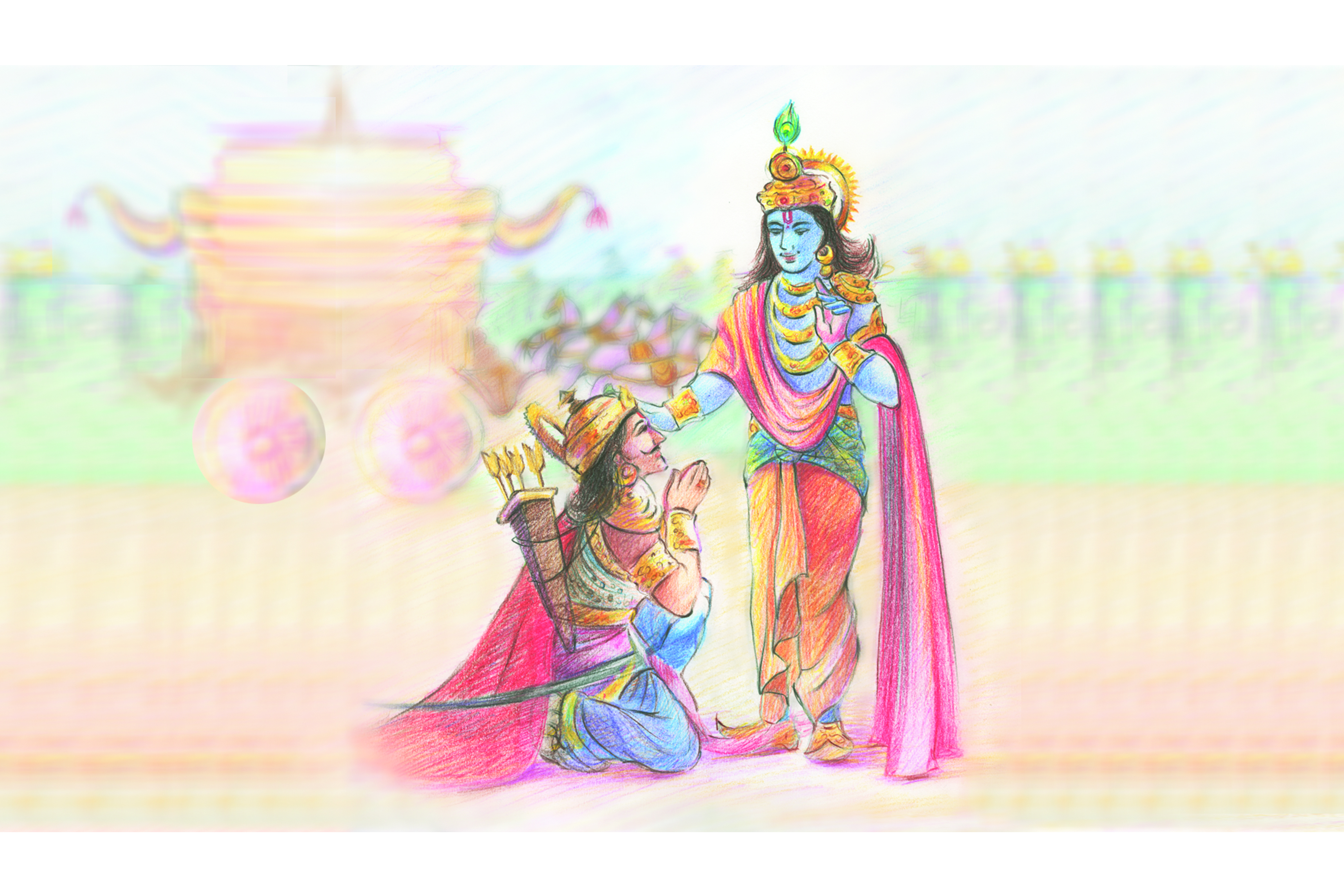
Bhagavad Gita is a great manual of motivation. At its beginning, we find a confused and despondent Arjuna who wants to abandon his duties as a warrior and wonders how he could kill his family seniors, teachers, and cousins. A friendly dialogue between him and Lord Krishna follows. We learn of the immortality of the soul. We understand the virtues of equanimity. We are briefed on the nuances of Karma Yoga, Gyan Yoga, and Bhakti Yoga. The need to rein in our ego, desires, anger, and senses gets highlighted. So does the importance of practicing detachment from the rewards of any work or action taken. We are advised to always live in the present. We understand the role of free will and destiny in our lives. In essence, we learn how to live a happier and contented life.

By the end of the seven hundred verses, we find a mentally rejuvenated and motivated Arjuna, willing to stand up for the rights of himself and his brothers and fight a war that would uphold dharma, the path of righteousness.    

Bollywood has no dearth of poets who keep churning out soul-stirring lyrics, some of which connect us to what Bhagavad Gita says. Movie songs are meant for mass entertainment and contain messages in simple words, whereas the lessons from the scripture happen to be rather complex. Even though a perfect match is not possible, it is instructive to see if the underlying thoughts of these two diverse streams match to some extent.

Here is a random selection of Hindi movie songs that, I believe, could help us grasp a bit of some of the key lessons that the scripture offers.     

Despondency

Almost all of us have passed through quite a few depressing phases in our lives. Times when things looked hopeless. Occasions when we thought of running away from it all. We could not see things clearly. Confusion prevailed.

Aye mere dil kahin aur chal…

Movie: Daag (1952)

Singer: Talat Mahmood

Music: Shankar Jaikishan

Lyrics: Shailendra

Teri duniya mein jeene se…

Movie: House No. 44 (1955)

Singer: Hemant Kumar

Music: S. D. Burman

Lyrics: Sahir Ludhianvi

Ye duniya agar mil bhi jaaye…

Movie: Pyaasa (1957)

Singer: Mohd. Rafi

Music: S. D. Burman

Lyrics: Sahir Ludhianvi

Immortality

Movie songs which speak of this facet of our souls invariably have a love-based background. However, the underlying sentiment remains the same.

Sau baar janam lenge…

Movie: Ustadon Ke Ustad (1963)

Singer: Mohd. Rafi

Music: Ravi

Lyrics: Asad Bhopali

Janam janam ka saath hai…

Movie: Tumse Achcha Kaun Hai (1969)

Singer: Mohd. Rafi

Music: Shankar Jaikishan

Lyrics: Hasrat Jaipuri

Janam Janam ka saath hai…

Movie: Bheegi Palkein (1982)

Singers: Mohd. Rafi, Lata Mangeshkar

Music: Jugal Kishore–Tilak Raj

Lyrics: M. G. Hashmat

Equanimity

Not getting unduly elated when something positive happens, and not getting overly sad when something negative happens – well, it is not easy to reach a mental state of that kind. But we can surely take inspiration from some of our heroes who speak about it.  

Mein zindagi ka saath nibhata chala gaya…

Movie: Hum Dono (1961)

Singer: Mohd. Rafi

Music: Jaidev

Lyrics: Sahir Ludhianvi

Ye jeevan hai…

Movie: Piya Ka Ghar (1972)

Singer: Kishore Kumar

Music: Laxmikant Pyarelal

Lyrics: Anand Bakshi

Ye jeena hai angoor ka daana…

Movie: Khatta Meetha (1978)

Singers: Kishore Kumar, Usha Mangeshkar

Music: Rajesh Roshan

Lyrics: Gulzar

Duty

Performing our duty to the best of our ability is what Bhagavad Gita recommends. In fact, it emphasises that our right is only to do work, not to its reward. As mortal beings, we have no other option but to keep working.  

Suraj re jalte rehna…

Movie: Harishchandra Taramati (1963)

Singer: Hemant Kumar

Music: Laxmikant Pyarelal

Lyrics: Pradeep

Nadiya chale chale ye dhara…

Movie: Safar (1970)

Singer: Manna Dey

Music: Kalyanji Anandji

Lyrics: Indeevar

Ruk jaana nahin

Movie: Imtihan (1974)

Singer: Kishore Kumar

Music: Laxmikant Pyarelal

Lyrics: Majrooh Sultanpuri

Knowledge

Acquiring knowledge need not always be a boring part of our lives. Learning is not necessarily about the tyranny of a classroom. It can also be fun.  

Eechak dana, beechak dana…

Movie: Shri 420 (1955)

Singers: Lata Mangeshkar, Mukesh

Music: Shankar Jaikishan

Lyrics: Hasrat Jaipuri

Bum bum bole…

Movie: Taare zameen par (2007)

Singers: Shaan, Armaan Malik, Aamir Khan

Music: Shankar-Ehsaan-Loy

Lyrics: Prasoon Joshi

Khol de par…

Movie: Hichki (2018)

Singer: Arijit Singh

Music: Jasleen Royal

Lyrics: Raj Shekhar

Devotion

To be in a state of constant remembrance of the divine is to enjoy unalloyed bliss. Surrender to a higher power follows.  

Ae malik tere bande hum…

Movie: Do Aankhen Barah Haath (1957)

Singer: Lata Mangeshkar

Music: Vasant Desai

Lyrics: Bharat Vyas

Ye kaun chitrakaar hai…

Movie: Boond Jo Ban Gayi Moti (1967)

Singer: Mukesh

Music: Satish Bhatia

Lyrics: Bharat Vyas

Khwaja mere khwaja…

Movie: Jodha Akbar (2008)

Singer and Composer: A. R. Rahman

Lyrics: Kashif

Detachment

We love being in our comfort zones. We place a higher premium on relationships the true worth of which is known only when we face a disaster in our lives. A realisation dawns that we should be grateful for whatever support we are receiving. After all, no one will die along with us. Attachment leads to disillusionment and disappointment. However, by remaining detached from rewards, relationships, and situations, we can lead a happier life.

Man re tu kaahe na dheer dhare…

Movie: Chitralekha (1964)

Singer: Mohd. Rafi

Music: Roshan

Lyrics: Sahir Ludhianvi

Yahan kaun hai tera, musafir…

Movie: Guide (1965)

Singer/Composer: S. D. Burman

Lyrics: Shailendra

Ek din bik jayega mati ke mol…

Movie: Dharam Karam (1975)

Singer: Mukesh

Music: R. D. Burman

Lyrics: Majrooh Sultanpuri

Reining in our desires

The Western concept of boosting economies is rooted in the concept of creating and fulfilling desires. However, Bhagavad Gita exhorts us to limit our desires, so as to attain a state of contentment and happiness.

Kai bar yuhin dekha hai…

Movie: Rajnigandha (1974)

Singer: Mukesh

Music: Salil Chowdhury

Lyrics: Yogesh

  Aye dil-e-nadaan…

Movie: Razia Sultan (1983)

Singer: Lata Mangeshkar

Music: Khayyam

Lyrics: Jan Nisar Akhtar

Hazaaron khwahishen aisi…

TV Series: Mirza Ghalib (1988)

Singer and Composer: Jagjit Singh

Destiny and Free Will

According to Bhagavad Gita, our past and present actions shape our destiny. It is within this paradigm that we exercise our so-called free will. Time exerts a mighty influence on the course of our lives.   

Waqt ne kiya kya haseen sitam…

      Movie : Kaagaz Ke Phool (1959)

      Singer: Geeta Dutt

      Music: S.D. Burman

      Lyrics: Kaifi Azmi

Waqt se din aur raat…

Movie: Waqt (1965)

Singer: Mohd. Rafi

Music Director: Ravi

Lyrics: Sahir Ludhianvi

Haathon ki chand lakeeron ka…

Movie: Vidhaata (1982)

Singer: Suresh Wadkar

Music Director: Kalyanji Anandji

Lyrics by: Anand Bakshi

Three kinds of attributes

Lord Krishna speaks of three gunas that are present in different proportions in all things and beings in the world. The interplay of these determines our character and governs our thoughts, our utterances, and our actions, thereby determining the progress of our lives.

Sattva denotes benevolence, calmness, goodness, and harmony. Rajas represents passion, activity, and movement. Tamas captures ignorance, inertia, malevolence, and laziness. The songs below follow in the same order.  

Kisiki muskurahaton pe ho nisaar…

Movie: Anari (1959)

Singer: Mukesh

Music Director: Shankar Jaikishan

Lyrics: Shailendra

Kandhon se milte hain kandhe…

Movie: Lakshya (2004)

Singers: Shankar Mahadevan, Sonu Nigam, Hariharan, Roop Kumar Rathod, Kunal Ganjawala and Vijay Prakash

Music: Shankar Ehsaan Loy

Lyrics: Javed Akhtar

Husn ke lakhon rang…

Movie: Johny Mera Naam (1970)

Singer: Asha Bhosle

Music: Kalyanji Anandji

Lyricist: Indeevar

Living in the present

There is no point in regretting what happened in the past. Nor is there any sense in worrying about what may happen in the future. By learning to remain in the present, we can live happier lives.

Aage bhi jaane na tu…

Movie: Waqt (1965)

Singer: Asha Bhosle

Music: Ravi

Lyrics: Sahir Ludhianvi

Aane wala pal jaane wala hai…

Movie: Golmaal (1979)

Singer: Kishore Kumar

Music: R. D. Burman

Lyrics: Gulzar

Ye lamha filhaal jeene de…

Movie: Filhaal (2002)

Singer: Asha Bhosle

Music: Anu Malik

Lyrics: Gulzar

Values and ethics  

A life lived without values and ethics is like a rudderless boat adrift on the high seas. A compass of fairness and justice can help us to navigate the choppy waters better.

Insaaf ki dagar pe…

Movie: Gunga Jamuna (1961)

Singer: Hemant Kumar

Music: Naushad

Lyrics: Shakeel Badayuni

Hothon pe sachchai rehti hai…

Movie: Jis Desh Mein Ganga Behati Hai (1961)

Singer: Mukesh

Music: Shankar Jaikishan

Lyrics: Shailendra

Sajan re jhoot mat bolo…

Movie: Teesri Kasam (1966)

Singer: Mukesh

Music: Shankar Jaikishan

Lyrics:  Shailendra

Constant Remembrance

The yearning of a soul to get united with the Supreme gets captured rather poignantly in these compositions.

O re manjhi…

Movie: Bandini (1963)

Singer and Composer: S. D. Burman

Lyrics: Shailendra

Laga chunri mein daag

Movie: Dil Hi To Hai (1963)

Singer: Manna Dey

Music: Roshan and Omi Sonik

Lyrics : Sahir Ludhianvi

How does one achieve this goal? Lord Krishna reveals to Arjuna the way He can be attained. Anyone who remains in a state of constant remembrance, even while engaged in worldly duties, can do so. Consider verse 56 from Chapter 18:

सर्वकर्माण्यपि सदा कुर्वाणो मद्व्यपाश्रय: |
मत्प्रसादादवाप्नोति शाश्वतं पदमव्ययम् || 18.56||

sarva-karmāṇy api sadā kurvāṇo mad-vyapāśhrayaḥ
mat-prasādād avāpnoti śhāśhvataṁ padam avyayam

Even performing all actions always taking refuge in Me, he attains through My grace, the eternal and immutable destination. (18.56)

Moving ahead

One of the unique features of the dialogue between Lord Krishna and Arjuna is that whereas rich lessons are imparted by the teacher, there is no pressure on the disciple to follow the advice rendered. The decision is left to the disciple. He chooses to move ahead in life with renewed gusto and enthusiasm.   

Saathi haath badhana…

Movie: Naya Daur (1957)

Singers: Mohd. Rafi, Asha Bhosle

Music: O. P. Nayyar

Lyrics: Sahir Ludhianvi

Aaj phir jeene ki tamanna hai…

Movie: Guide (1965)

Singer: Lata Mangeshkar

Music: S. D. Burman

Lyrics: Shailendra

Thaan liya…

Movie: Dasvi (2022)

Singers: Sukhwinder Singh & Tanishkaa Sanghvi

Music: Sachin-Jigar

Lyrics: Ashish Pandit

Some key takeaways

Bhagavad Gita has a unique depth of thought. It paints a wide canvas of concepts. It not only puts the onus of living a fulfilling life on an aspirant but also offers an assurance by Lord Krishna. He commits Himself to the overall welfare of common folk. He promises that whenever there is a loss of dharma, He would return to the mortal world to destroy the negative forces.

Here is a composition rendered by Jagjit Singh which is worthy of our attention.

To sum up

Having gone through this blog post, some of you may take a jaundiced view and hold it to be a frivolous attempt which denigrates the Bhagavad Gita. Far from it. Instead, the idea here is to celebrate this unique scripture which explains the true reality of life. When these truths get conveyed in a simpler language, through the lyrics of Hindi movie songs, they become easier to grasp and brood upon.

Hopefully, this humble endeavour of mine would prompt you to pick up the original scripture itself and wade into its pristine waters which contain countless gems of wisdom.

Notes:

  1. The Krishna-Arjuna illustration is reproduced with permission from the illustrator, Arati Shedde, and Heartfulness Magazine – www.heartfulnessmagazine.com.)
  2. Thanks are due to Mr. Prakash Kanungo and Mr. S. G. Maheshwari for having suggested this topic. The idea came up during a get-together over a cup of tea some time during 2023.
  3. Inputs from Mr. H. C. Verma are gratefully acknowledged.
  4. Translation of Gita verse 18.56 courtesy Mr. Ashok Narain.

Related Posts:

Read Full Post »

At present, the term GDP in India appears to have come to represent our collective Gross Despondency Perception. Our economists and statisticians can perhaps cheer up the hapless and overtly depressed citizens. They can do so by overcoming their obsession with pure materialistic growth. There are several ‘intangibles’ as well as ‘tangibles’ which can get added to the quantitative measure of our progress. For all you know, they could end up depicting a rosier picture which would also be closer to reality.

The following invisible facets of GDP could do with better visibility in the public domain:GDP Housewife

1.   Grand Domestic Pampering 

Household chores performed by a vast majority of the better half of our citizenry continue to remain invisible even to prominent economists who take such services for granted at their own homes. Home makers surely deserve a better deal. Without their contribution, the wheels of our economy would grind to a complete halt in no time. Home management services are provided by them 24×7. There is no doubt that they possess a high degree of multi-tasking skills. Also, their inventory management techniques always ensure that there are no stock-outs in the kitchen when uninvited guests suddenly pop up over the weekends.

 2.   Gross Dramatic ProduceGDP Tagore

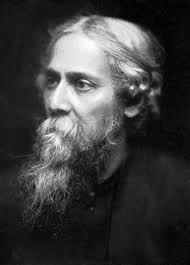
Why neglect works of entertainment, literature, music and art works? The movie industry keeps churning out pot-boilers one after the other. Over the years, only the bar of success at the box office keeps getting raised. Television has already blossomed into a primary source of entertainment for the masses. Both the mediums have transcended international boundaries and gone global. India boasts of prolific writers across all languages and there is no reason their contribution to the social thought process should get neglected. Creative personalities and achievers of all kinds have added value to the Indian identity – right from Rabindranath Tagore to M F Husain, from M S Subbulakshmi to Pandit Ravi Shankar, from Munshi Premchand to Vikram Seth and from Lala Amarnath to Saina Nehwal. The relative soundness of the Indian IP regime can facilitate the inclusion of this parameter in the GDP computation without much fuss.

 3.  Groovy Digital Products

With broadband getting rolled out across the country, and with spectrum sales eventually coming out of the depressing shadow of scams GDP Aishwaryaand judicial overreach, the Indian economy would soon start getting digitalized at a faster pace. Digital experiences are slated to improve in terms of reach as well as quality. This sector can boast of a unique range of intangible assets of its own. Such developments can only be ignored at our own risk and peril.

4.   Great Domestic Patience

Yet another soft power which remains ‘invisible’ to the Homo economicus (as opposed to the Homo reciprocans) amongst us is the religiosity, the innate bent towards spirituality and the resultant bias towards non-violence. The patience displayed by most of our denizens in dealing with shoddy civic facilities, super-slow public services and systemic corruption is perhaps a result of our social mores which are steeped in spirituality. By ignoring this facet, a great mechanism to handle setbacks in life is therefore left out of the reckoning.

GDP R&D

5.   Grand Design Patronage

R&D expenditure in the private sector is another area which deserves attention. Admittedly, we are far behind in the realm of innovation and design. But we do have the potential to catch up with the rest of the world. If such expenditure is considered an investment in the economy, a more realistic perspective would emerge.

6.   Green Development Plans

In the relentless pursuit of economic growth, we are guilty of drawing more than we replenish to Mother Nature. Whether it is mining, spectrum-sharing or water-management, we are taking myopic liberties which would prove very expensive, if not irreversible, in the timesGDP environment to come. Green initiatives taken to compensate for the loss of natural resources surely merit inclusion in our scheme of things. The aggregate value of ‘production’ should surely be adjusted to reflect the permanent damage caused to our fragile environment.

Considering intangibles in macroeconomics data is not a new idea at all. Way back in 1908, Thorstein Veblen, a sociologist and economist, had used the phrase ‘intangible investment’ to cover everything from innovation to promotion and advertising. At a business level as well, the proportion of tangible assets backing up a brand could be a miniscule 5% of the overall value of the brand.

The Bureau of Economic Analysis of US has recently created history of sorts by publishing a revised series of public accounts which include the R&D investment in private sector as well as original works of art such as films, books and music. As an example, for the period from 2002-12, the new data shows an annual average growth rate of 1.8% in place of the earlier declared rate of 1.6%.

We have a number of institutions, bodies, statisticians and economists who can surely propose a more balanced way of capturing the realities of the Indian economy. The data may not be easily available and may have its own share of initial controversies, but the attempt would certainly be an improvement in the right direction.

PS: Whatever little I understand of Economics, it is due to the learning received from late Prof. S P Singh, a friend, philosopher and guide. This article is merely a humble tribute to the great person. 

Read Full Post »