
Introduction
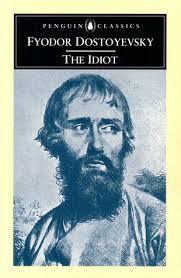
Fyodor Dostoevsky’s The Idiot is a profound journey into the clash between innocence and the disillusionment of a morally complex society. First published in 1869, this novel remains a monument of philosophical inquiry and character depth. Dostoevsky, a visionary in Russian literature, was no stranger to human suffering and societal injustices. His own trials, including facing near-execution, find a voice in The Idiot. Through Prince Myshkin, Dostoevsky ventures into the possibility of purity in a world overcome by cynicism, greed, and moral ambiguity. Can innocence survive in a landscape marred by corruption? Dostoevsky invites us to ponder this question.
Dramatis Personae
- Prince Lev Nikolayevich Myshkin
Known as the “idiot” for his naive, unguarded nature, Myshkin stands as the embodiment of childlike idealism. He is described as a “positively beautiful man,” possessing a purity that starkly contrasts with the self-interest and moral ambiguity of those around him. Myshkin’s nature makes him vulnerable to manipulation, but his unwavering compassion and ability to forgive create an indelible impact on others. His words, “I’m sure you think me incredibly stupid, but I assure you that I understand many things” (Part 1, Chapter 7), resonate as an assertion of his deeper understanding beyond superficial judgments.
- Nastasya Filippovna
A tragic figure, Nastasya Filippovna is tormented by feelings of worthlessness and self-hatred. Her beauty captivates Myshkin and Rogozhin alike, but her traumatic past and self-destructive tendencies create a complex inner conflict. Her declaration, “I’m a nobody, a sick soul, I don’t deserve you” (Part 3, Chapter 3), reveals her deep-seated vulnerability and her struggle with self-acceptance, which drives much of the novel’s drama.
- Parfyon Rogozhin
Rogozhin, passionate and impulsive, serves as a dark counterpoint to Myshkin’s purity. His obsessive love for Nastasya Filippovna leads him down a destructive path, symbolizing love’s potential for ruin when tainted by possessiveness and jealousy. His volatile nature and capacity for violence create a tragic tension that culminates in inevitable disaster. Rogozhin’s intensity and Myshkin’s gentleness interact in a way that illustrates the broader dichotomy between purity and corruption.
- Aglaya Ivanovna
Representing idealism and the potential for happiness, Aglaya is drawn to Myshkin’s goodness but is constrained by societal expectations. Her struggle between her admiration for Myshkin and the weight of social pressure is poignantly expressed in her lament, “Why do they always make me do what I don’t want to do?” (Part 3, Chapter 8). Her character embodies the tension between personal desires and societal demands, further illustrating the novel’s exploration of unattainable ideals.
- Gavril Ardalionovich Ivolgin (Ganya)
An ambitious young man, Ganya seeks social mobility through a marriage to Nastasya Filippovna, driven by his desire for wealth and status. His conflicting feelings for Nastasya and his disdain for Myshkin’s ideals illustrate the personal costs of ambition and moral compromise.
- Ferdyshchenko
A minor character but essential for comic relief, Ferdyshchenko is outspoken and often disrupts social gatherings with his crude humour. He reflects the novel’s theme of hypocrisy by exposing the pretensions of those around him through his blunt honesty.
Plot Summary and Themes
The Idiot traces Myshkin’s return to Russia from a Swiss sanatorium, where his arrival in St. Petersburg sets off a series of events that unveil the moral and spiritual decay of the people around him. His genuine kindness and childlike honesty clash with society’s cynicism, resulting in misunderstandings and conflicts, especially around Nastasya Filippovna and Aglaya Ivanovna. Themes like innocence versus corruption, love’s complexities, and the ongoing struggle between good and evil make The Idiot a timeless masterpiece that critiques societal norms while examining the possibility of redemption. Dostoevsky’s philosophical views on justice and compassion, illustrated by Myshkin’s reflection on capital punishment, reveal his belief in a humane approach to morality—one that transcends the ordinary.
A pivotal moment in the book occurs during Nastasya’s dramatic party, where she throws 100,000 roubles into the fire, daring her suitors to retrieve it. This act symbolises her contempt for wealth and societal values, as she exclaims, “There’s no end to my vileness!” (Part 1, Chapter 15).
Myshkin on Capital Punishment
In The Idiot, Prince Myshkin’s commentary on capital punishment reflects Dostoevsky’s deep moral convictions and individual experiences. Myshkin recounts witnessing a guillotine execution in France, emphasising the psychological torment of the condemned rather than the physical pain. He argues that the preparations for execution—leading a man to the scaffold—are more horrific than the act itself, as they strip away humanity and instil profound fear. Myshkin’s belief that “thou shalt not kill” underscores his view that punishing evil with evil is fundamentally wrong, echoing Dostoevsky’s own traumatic near execution.
Historical and Biographical Context
Dostoevsky wrote The Idiot during a turbulent period in his life. After suffering through the death of his first daughter and facing financial difficulties, he sought to create a narrative that explored the possibility of a genuinely good and beautiful person. The novel was written in the late 1860s, a time of social and political upheaval in Russia, which is reflected in the characters’ struggles and societal critique.
Dostoevsky’s views on capital punishment were profoundly shaped by his firsthand experiences, particularly a mock execution he faced in 1849. Sentenced to death for his involvement in the Petrashevsky Circle, he was blindfolded and prepared for execution, only to be spared at the last moment. This psychological torture left a lasting impact, leading him to explore themes of suffering, compassion, and the moral implications of state-sanctioned death in his works, especially through the character of Prince Myshkin in The Idiot, who articulates the deep anguish of awaiting execution and the inherent cruelty of capital punishment.
Narrative Techniques and Character Relationships
Dostoevsky employs a variety of narrative techniques to bring depth to his characters and their relationships. The novel’s contrapuntal structure allows multiple voices and perspectives to coexist, creating a rich tapestry of conflicting ideologies and emotions. This approach provides insight into the characters’ inner lives and reflects the chaotic and multifaceted nature of human existence.
Prince Myshkin’s relationships with other characters are central to the novel’s exploration of moral integrity versus and corruption. His interactions with Nastasya Filippovna are particularly poignant, as he is drawn to her suffering and seeks to save her despite her self-destructive tendencies. Myshkin’s compassion for Nastasya is evident when he says, “I will follow you wherever you go, even to your grave” (Part 2, Chapter 7). This relationship highlights the tension between Myshkin’s idealism and the harsh realities of the world.
Similarly, Myshkin’s bond with Rogozhin is marked by a blend of friendship and rivalry, underpinned by their mutual obsession with Nastasya. Rogozhin’s passionate nature contrasts sharply with Myshkin’s gentleness, creating a dynamic that leads to tragedy. Rogozhin’s declaration, “You and I cannot live together; the one will destroy the other” (Part 4, Chapter 10), foreshadows the novel’s dramatic conclusion.
Myshkin’s relationship with Aglaya Ivanovna introduces another layer of complexity, as she represents a potential for happiness and normalcy. However, societal pressures and misunderstandings prevent their union, underscoring the novel’s theme of unattainable idealism. Aglaya’s struggle to reconcile her feelings for Myshkin with her family’s expectations is poignantly expressed when she asks, “Why do they always make me do what I don’t want to do?” (Part 3, Chapter 8).
Adaptations and Cultural Impact

Mani Kaul’s Ahamaq (1992) serves as a reinterpretation of Dostoevsky’s The Idiot, adapting its themes to an Indian context. Both works explore the concept of “idiocy” through their protagonists—Prince Myshkin in The Idiot and his counterpart in Ahamaq, who struggles with epilepsy, often misinterpreted as madness.
While Dostoevsky’s narrative culminates in tragedy, reflecting societal cynicism, Kaul’s adaptation emphasises cultural nuances and the complexities of faith and desire within a contemporary Indian setting, offering a unique lens on the original themes of purity and delusion. In the television adaptation, Shah Rukh Khan portrayed the role of Rogozhin, Mita Vashisth the role of Nastasya, and M.K. Raina portrayed the role of Myshkin. Personally, I wish Shah Rukh had instead portrayed the role of Myshkin as he was doing enough negative roles on screen then.
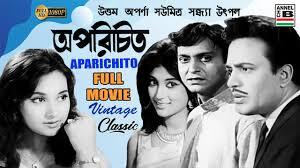
Samaresh Basu’s novel Aparichita draws considerable influence from Fyodor Dostoevsky’s The Idiot. Both works explore themes of innocence, morality, and the complexities of human relationships. In Aparichita, the protagonist’s struggles mirror those of Dostoevsky’s Prince Myshkin, highlighting the tension between idealism and societal corruption. The narrative delves into the psychological landscapes of its characters, reflecting Dostoevsky’s polyphonic style, where multiple voices and perspectives coexist, enriching the emotional depth of the story. The film (1969) portrays Uttam Kumar as Rogozhin, Soumitra Chatterjee as Myshkin, and Aparna Sen as Nastasya. Soumitra Chatterjee’s performance in the movie was power-packed.
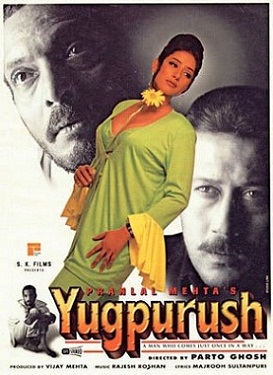
Additionally, the Bollywood film Yugpurush (1998) is based on Samaresh Basu’s novel Aparichita. The film starred Nana Patekar as Myshkin, Jackie Shroff as Rogozhin, and Manisha Koirala as Nastasya. The movie featured songs with music heavily influenced by Rabindra sangeet, composed by Rajesh Roshan. Yugpurush provides a fascinating lens on the themes of The Idiot, set within the Indian cultural milieu, and showcases the adaptability of Dostoevsky’s timeless themes.
Internationally also, The Idiot has inspired quite a few movies from such diverse countries as Russia, Germany, Japan, Estonia, and France.
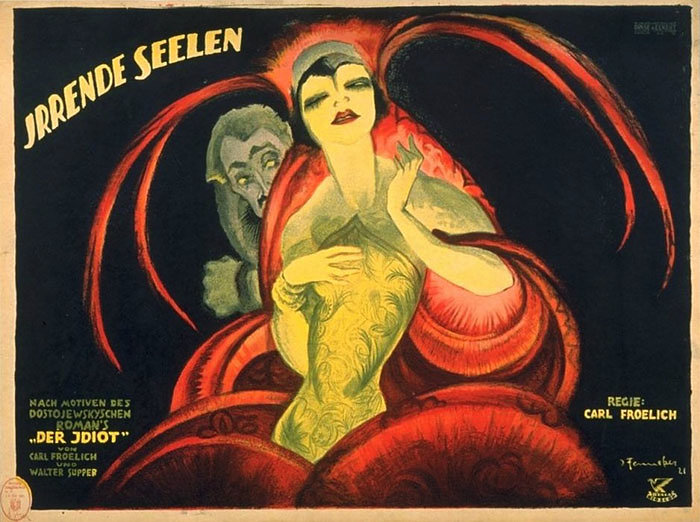
The earliest example is that of Wandering Souls (German: Irrende Seelen), a 1921 German silent drama film directed by Carl Froelich and starring Asta Nielsen, Alfred Abel, and Walter Janssen.
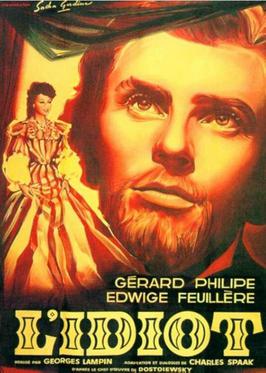
Yet another example is that of L’idiot (1946), a French drama film which was directed by Georges Lampin and starred Edwige Feuillère, Lucien Coëdel and Jean Debucourt.
Conclusion
The Idiot remains a profound exploration of the human condition, examining the fragile balance between integrity and corruption. Dostoevsky’s masterful characterisations and narrative depth invite readers to ponder the true nature of goodness and the possibility of redemption. As we reflect on Myshkin’s journey, we are reminded of the enduring relevance of Dostoevsky’s vision of a world where compassion and integrity can shine, even in the darkest of times.
The Idiot remains as relevant as it was in Dostoevsky’s time. Humanity faces many challenges today. Wars. Poverty. Income disparities. Climate change. Challenges posed by rapid advances in technology. If we were to dig deeper, we are apt to discover that what we face is a crisis of leadership in all realms of human endeavour. The themes of authenticity, integrity, and morality have all been relegated to the background. Few big corporates rule the world. Social media puts blinkers on our eyes, masks the reality, and shapes our opinions. Forget carbon monoxide. Hate, cynicism, and hypocrisy also pollute the air we breathe in.
Myshkin’s journey resonates with contemporary readers facing a world where virtues are often overshadowed by self-interest and superficiality, reminding us of the power of goodness even in the darkest of circumstances. Dostoevsky’s portrayal of Myshkin’s kindness and compassion challenges readers to consider the value of empathy, sincerity, and integrity in our interactions with others.
References
- Fyodor Dostoevsky, The Idiot. Translated by Richard Pevear and Larissa Volokhonsky. Vintage Classics, 2003.
- CliffsNotes on The Idiot
- [Schlemiel Theory] (https://schlemielintheory.com/2014/11/26/what-happens-when-an-idiot-reflects-on-a-beheading-on-dostoevskys-reading-of-the
Related Post


 ashokbhatia