In most biographies and essays in papers P. G. Wodehouse is regarded as naïve. He is politically ignorant and not interested. This fact in some way explains the great mistake of his life when speaking in the German radio 1941 to his readers in USA, which Goebbels later retransmitted to Britain. He has been compared with Lord Emsworth as he himself described him in Something Fresh 1915:
“Other people worried about all sorts of things – strikes, wars, suffragettes, diminishing birth rates, the growing materialism of the age, and a score of similar objects. Worrying indeed, seemed to be the twentieth century´s speciality. Lord Emsworth never worried.”
This comparison is very unfair. Already in the above number of problems Wodehouse is mentioning you notice his awareness of actual problems. My aim with the following analysis is to show how Wodehouse kept himself well informed politically if you read his stories…
There are indeed instances in one’s life which leave one shaken and stirred. Scales fall from one’s eyes. Like Bertie Wooster, one feels befuddled, bewildered, fazed, flummoxed, and perplexed. The reality of one of the several facets of life gets revealed, much like a mountain making a reappearance once the fog has vanished and the sun has come out in all its glory.
While travelling in a local train in Switzerland recently, I had a rather unpleasant experience when a gentleman of Swiss origin ridiculed me for being an Indian.
It happened on the 1st of January 2023. The family had boarded a train to Lucerne to enjoy the fireworks display in the evening hours. Few stops before Lucerne, very many people boarded the train. We are used to overcrowding in trains in India, but this was a new experience for me – to see this happening in one of the advanced countries. I was already sitting on one of the few spring-back chairs available.
A gentleman, surely cast in the mould of Roderick Spode, had just come in along with many others. He looked at me sternly and asked me to get up. I got up and enquired if the gentleman wanted to occupy the seat. The gentleman clarified that he had asked me to stand up so that there is more space for others to squeeze in. So far, so good. But then he went on to give me a supercilious look and added rudely that such things happen only in India.
The basic message from the gentleman was right, but the rude and insulting way he said it hurt all of us. The fact that he insulted my country really hit hard. My daughter-in-law and my son intervened to say that he could have discussed this cordially, rather than being abrasive about it. But he went on arguing about it, claiming that he had spent a good deal of time in India and knew about how things worked there. Other passengers nearby kept telling us to avoid listening to his comments.
To give him a benefit of doubt, perhaps he had had a fight with his wife before leaving home that evening. However, a realization also dawned – that beneath a veneer of polite manners and sweet smiles, quite a few people in other countries may carry some deep-seated prejudices against those of Indian origin.
Jeeves would concur with me if I were to say that our psychology is such that when we love something, we somehow feel entitled to criticize it and make fun of it. But when someone else does it, we take offence! We are left twiddling our thumbs. I confess this is what happened to me on the day. I felt deeply embarrassed and wondered what I had done to deserve a treatment of this kind.
I admit I am a bit fluffy headed and forgetful, but by no stretch of imagination can I match the high standards set by Lord Emsworth in that department. I found it very difficult to forget this incident. On the contrary, it made me recollect many earlier instances when I did not have a satisfactory response to some meaningful and thought-provoking questions asked about India by those living abroad.
A cabbie in New York asking me as to why the government in the country was against Muslims and Christians.
A tourist from Canada who had just returned from India asking why the cab drivers in most parts of the country tended to either overcharge or harass customers. I wonder if she had ever lapped up the book ‘India and the Indians’, written by Lady Malvern who had spent some time in India.
A young lady in Norway enquiring whether it was safe for her to travel to India alone. She quoted frequently reported rape and murder cases in the country she had read about.
Another lady in Sweden checking as to why Indians have a practice of shaming the victim in a rape case rather than putting the spotlight on the perpetrator of the crime.
A person of German origin asking if our metro cities did not have enough storm drains to ensure that periodic flooding did not take place.
A movie enthusiast of French origin enquiring why, despite the presence of a film certification body, people kept calling for boycotts of some movies. She wondered how Indians have become so intolerant, especially when they pride themselves on being an ancient civilization and have really demonstrated how to be a multi-ethnic society.
A teenager from Denmark asking why Indian households do not segregate their domestic waste and why the country lacks enough capacity to handle such waste.
A person from Denmark who asked me why India was so noisy.
A group of businesspersons from Finland wondering why it was far easier to deal with businesses in the west and the south of India than with those in the north of the country. Some of them said they had been cheated by the latter.
What I quote above happen to be snippets of conversations with lay citizens of different countries, spread over the past few years. Those of us who believe we have already acquired the status of a Vishwa Guru – A Global Teacher – and who are swayed by the nationalistic fervour so very fashionable in India these days, may immediately jump to enquire who gave the rights to people in advanced countries to judge India and Indians. They might even suspect and allege a global conspiracy to defame India.
It is no one’s case that our First World countries happen to be perfect. Of course, these suffer from many ills. Graffiti in public spaces is a common sight. So are cigarette butts in otherwise pristine public gardens.
But the point here is that if we Indians can ape the west in terms of fashion, social relationships and in so many other ways, why can’t we do something about the kind of courtesy we show to tourists and fellow citizens in public spaces? Why do we need a Prime Minister to tell us to improve our levels of hygiene and keep our public spaces spick and span? Why can’t we respect the law, rather than priding ourselves in breaking it? Why do our political parties depend on criminals to win over the voters? Why do justices of our Supreme Court have to get involved in ensuring that road safety standards improve across the entire country? Why are we worried about elections and inane internal issues when an enemy is gleefully usurping our territory on our borders? The mind boggles.
We live in a multipolar world where interdependence between countries is an essential fact. Yes, as a country, India remains a work-in-progress. But we have tremendous soft power, whether in terms of our ancient scriptures, rich culture, music, dance, movies and the like. The diverse cuisine we have is popular across all countries. When it comes to frugal engineering, we shine on the global stage. The manpower we offer to the world is unique in many ways.
It is surely not wrong to be proud of our heritage. Nor is it improper to demand respect from others. But to remain blissfully unaware of our weaknesses and to do nothing to address the same will simply go on to ensure that chinks in the Brand India armour continue to fester.
A sister of Bertie Wooster’s lives in India. It follows that he would be gravely concerned about this situation. Perhaps, he may seek Jeeves’ advice on the issue. If so, I wonder if Jeeves would recommend a public relation campaign to improve India’s brand image worldwide. He may also suggest a mass communication drive within the country and ways to make a genuine effort to improve our civic infrastructure. Someone like Rupert Psmith may get one of his rich uncles to buy out a premier media house in a western country.
But the nub of the matter is that we, the Indians, need to indulge in a bout of introspection, and work upon improving our own civic habits and our behaviour towards others. The buck stops at us!
In most biographies and essays in papers P. G. Wodehouse is regarded as naïve. He is politically ignorant and not interested. This fact in some way explains the great mistake of his life when speaking in the German radio 1941 to his readers in USA, which Goebbels later retransmitted to Britain. He has been compared with Lord Emsworth as he himself described him in Something Fresh 1915:
“Other people worried about all sorts of things – strikes, wars, suffragettes, diminishing birth rates, the growing materialism of the age, and a score of similar objects. Worrying indeed, seemed to be the twentieth century´s speciality. Lord Emsworth never worried.”
This comparison is very unfair. Already in the above number of problems Wodehouse is mentioning you notice his awareness of actual problems. My aim with the following analysis is to show how Wodehouse kept himself well informed politically if you read his stories and not the least his letters to his friends. Many letters have been published in Performing Flea 1953 and in Yours Plum, a collection of letters by Francis Donaldson 1990.
Between the wars
During these years the dictatorship ideologies became increasingly influential and Wodehouse make them ridiculous in his writing. The communist system is described by Comrade Psmith: It´s a great scheme. You work for the equal distribution of property and start collaring all you can get and sitting on it. You find the same description in The New Class by Milovan Djilas 1957.
In The Clicking of Cuthbert Vladimir Brusiloff explains the new situation in Russia: The latest news which Vladimir Brusiloff had had from Russia had been particularly cheering. Three of his principal creditors had perished in the last massacre of the bourgeoisie…
Later Vladimir tells about the golf match in Nisjni Novgorod against Lenin and Trotskij when some-body tries to kill Lenin with a revolver – …you know that is our great national sport, trying to assassinate Lenin with revolvers…
In Ring for Jeeves we learn thatBertie Wooster had thought it prudent to attend a course in which the aristocracy is taught to fend for itself, in case of the social revolution should set in with greater severity. And in Money for Nothing Bertie notices that the Bolscheviks are a permanent threat and he is sent for a course in darning of stockings.In Archibald and the Masses 1935 you get a glimpse of the proletariat in Bottleton East and what they think. Bingo Little´s love affair with the revolutionary Charlotte Corday Rowbotham reveals even more (Charlotte Corday was the girl who killed Marat during the French Revolution). And finally: in Psmith in the City Wodehouse is very engaged in the social problems of New York and its gangsters.
The classic examples
Perhaps the most cited example is from Buried Treasure 1936, when the discussion in The Angler’s Rest has come on Hitler´s moustache: he has to decide to let it grow or cut it off, there are no other options. Hitler has to show what he is up to! And also the episodes with Roderick Spode and his Black Shorts (Lederhosen) which is how Wodehouse makes the English Nazi leader Oswald Mosley look ridiculous.
The letters of Wodehouse
During the 1930´s Wodehouse is very clear about his opinion of the political situation in the world and Europe. In a letter to William Townend Dec. 2 1935 he comments upon the Italian attack on Abyssinia: Isn´t this sanctions the craziest thing you ever came across. All we need had to do was just leave Italy and Abyssinia alone and nobody would have got hurt, because I can´t imagine anything safer than being in an Italo-Abyssinian war. As far as I can make out, neither side has yet come within fifteen miles of the other.
Wodehouse was in good company with the English government who secretly had planned to let Italy take Abyssinia. (The Hoare-Laval affair 1935) He was also worried about the Japanese-Chinese war and how that would threaten British interests: Letter to William Townend Sept. 4 1937:
What a hell of a mess the world has got into! I suspect plots all around me, don´t you? I mean, this Japan business, for instance. My idea is that Italy and Germany said to Japan,´Hey! You start trouble in the East and do something to make England mad. Then they will take their Mediterranean fleet over to Shanghai, and then we´ll do a quick jump on their neck while they have no ships on this side`. I´ll bet they´re sick we haven´t fallen for that.
However, Wodehouse shares the common opinion in England that a war in Europe is out of the question. He sounds like an echo of some politicians in this: Letter to W. Townend April 23 1939:
Do you know, a feeling is gradually stealing over me that the world has never been further from war than it is at present… I think if Hitler really thought there was a chance of a war, he would have nervous prostration…
Incidentally, doesn´t all this alliance forming remind you of the form matches at school— I can´t realise that all this is affecting millions of men. I think of Hitler and Mussolini as two halves, and Stalin as a useful wing forward. Anyway, no war in our lifetime is my feeling. I don´t think wars start with months of preparation in the way of slanging matches. When you get a sort of brooding peace, as in 1914, when a spark lights the p. magazine that´s when you get a war. Nowadays, I feel that the nations just take it out in blowing off steam. (I shall look very silly if war starts on Sunday, after Hitler´s speech!)
The ghastly thing is that it´s all so frightfully funny. I mean, Hitler asking the little nations if they are in danger of being attacked. I wish one of them would come right out and say, ´Yes, we jolly well do´!
The war starts and Wodehouse writes to W.Townend Oct. 3 1939: Didn´t you think that was a fine speech of Churchill´s on the wireless? Just what was needed, I thought. I can´t help feeling that we´re being a bit too gentlemanly. Someone ought to get up in Parliament and call Hitler a swine.
And Dec. 8 1939 to W. Townend: I have been reading all Churchill´s books – e.g. the World Crisis series (1:st. World War). Have you read them? They are terrific. What strikes me most about them is what mugs Germans were to take us on again. You would have thought they must have known that we should wipe them out at sea and that there never has been a war that hasn´t been won by sea power…..I never realised before I read Churchill that the French started off in 1914 by losing four hundred thousand men in the first two weeks. Also, what perfect asses the Germans made of themselves. There was a moment when all they had to do was strike East and they needn´t have worried about the blockade. Instead of which, they went for Verdun, which wouldn´t have done them any good if they had got it.
The phoney war had been going on for almost 5 months when Wodehouse wrote Jan. 23 1940 to W. Townend: I agree with you about the weariness of war. I find the only thing to do is to get into a routine and live entirely by the day. I work in the morning, take the dogs out before tea, do a bit of mild work after tea, then read after dinner. It is wonderful how the days pass… My only fear is that Germany will be able to go on for years on their present rations. Apparently a German is able to live on stinging nettles and wood fibre indefinitely.
Wodehouse is quite aware of the war but doesn´t seem to worry much about the situation. He writes two short stories in December 1939 and February 1940 in Punch in which hemakes fun of Hitler´s war (The Big Push and Shock Dogs). In some way he had accepted Italy´s war in Africa and now Germany´s occupation of Poland to establish economic basis for their countries. He is not at all conscious of any threat against France and England and decides to stay in Le Touquet.
The Punch Articles
In The Big Push Wodehouse tells a story about a meeting at Wilhelmsstrasse with Hitler and the general staff at the headquarters. They discuss how to continue the war and conquer England. Hitler proposes an invasion of England by pocket battle ships. “You did say”, he added turning to Goebbels, “that we had destroyed the British Fleet?” Goebbels answers: “Well, we have sunk the Ark Royal seven times, but…” – “OK”, Hitler says, “let´s wait till the North Sea freezes, and skate across”. Someone remarks that by some rule the North Sea doesn´t freeze like the Baltic. Hitler says: “Oh well, then let´s destroy France”. – “We have some difficulties Leader”, says general Brauchitsch,”the Maginot line…” “Why wasn´t I told about this Maginot Line”, Hitler asks. “We are rather trying to conciliate France”, says Ribbentrop. And the discussion continues until they find the solution: invading Britain with German Brass bands, which will play day and night so no one can sleep. The English will have to pay the bands to go away, and that will ruin England. Field Marshall Goering shouts: “Heil Hitler. Against this secret weapon of our Leader´s the British have no defence.”
This demonstrateshow ridiculous Wodehouse regarded the German leaders. In Shock Dogs 1940 the story takes place at “Angler´s Rest” where Mr. Mulliner leads the discussion about the German hostilities in the war. The news is that Germany has employed a large number of dogs to dig under the Maginot Line and undermine the foundations. You must be prepared for every emergency, Mr. Mulliner and points to what happened in Finland in the winter war. The Russians had concentrated large forces at the railway to send to the front. But when going to take their seats on the train they found that the Finns had raided the booking office and destroyed all the third-class tickets. To send the soldiers first-class would be very expensive so it had to be cancelled.
By this Wodehouse hinted at the great problems Russia had when trying to invade Finland in the winter 1939-40 and lost a lot of soldiers. The cost of sending them first-class (well equipped and trained) would have ruined Russia. The same with the dogs. To feed them, to give them all the Iron Cross etc. would ruin Germany, so Hitler kept the German army at home and didn´t start an attack and tried to see what France would do during the “Phony War”. Wodehouse thought he was safe in Le Touquet and that no real war would come. A lot of people thought the same in England at that time.
P.G.Wodehouse’s early writings in the beginning of the century: The Parrot-period 1903 and onwards.
Towards the end of 1903 Wodehouse was asked to write daily poems for the front page of the Daily Express, commenting on a topical political controversy. He wrote at least 19 of the 51 poems which appeared on the front page of the paper between September 30 and the end of the year, in which a Parrot commented on its perception of the consequences of a proposed change in economic policy.
Joseph Chamberlain was eager to charge a duty on the import of cheap food from the colonies and drop the policy of free trade, which had been followed for a century. His motive was that the income from customs should be invested in industries in Britain´s colonies. The Unionist Party also wanted to protect the British farmers. This would mean that food prices would rise and affect those with low incomes. Wodehouse gives his view of the problem through the Parrot:
On the fore-top-gallant spanker
Of a first-class cruiser´s anchor,
Sat a handy-man of Plymouth,
And he warbled `John Bull´s Store´
With a face like a tomato
He had reached the pizzicato,
When a parrot, perched beside him,
Said `Your food will cost you more’.
(Oct 28, 1903)
In the usual Fleet-street garret
Sat a poet; and the parrot,
Full of quaint misinformation,
Fluttering idly through the door,
Found him dashing off a sonnet
He was gently musing on it,
When the parrot broke the silence
With `Your food will cost you more`. (Nov. 9 1903)
In A solitary Triumph 1903 Wodehouse has noticed that men are more criminal than women:
Oh, the progress of Woman has really been vast,
Since Civilization began.
She´s usurped all the qualities which in the past,
Were reckoned peculiar to Man.
She can score with a bat, use a rod or a cue;
Her tennis and golf are sublime.
Her aim with a gun is uncommonly true,
But Man beats her hollow at crime.
Wodehouse often uses language and similes from sports as in his reports from football matches in Punch 1913 when the reporters D-v-d Ll-yd G—oge, W-nst-n Ch-rch-ll and S-lv-a P-nkh-rst write about what happened, but their political views influence their sport reports.
One of my favourites among Wodehouse´s political poems is The Phalanx from 1906. England had a coalition ministry under Cambell-Bannerman, in which ministers with different political views had great difficulty to cooperate. Among these were Herbert Asquith, Winston Churchill, Edward Grey, H J Gladstone, and David Lloyd George. Wodehouse calls them The Happy Cabinet in his poem:
Of course it´s true that some of us
Hold views that scarce agree
With those expressed by all the rest:
Still, l hang it. Thought is free.
Besides, it´s not exactly what
You´d call a hitch or jar.
We are a happy Cabinet.
We are! We are!! We are!!!
If Winston Churchill thought the same
As Asquith, Burns or Grey;
If Asquith, too, affairs could view
In Herbert Gladstone´s way;
And if Lloyd George could be surpressed,
We´d then do better far.
We are a happy Cabinet.
We are! We are!! We are!!!
´Twere well if we united minds
To Ireland could apply,
On Rand Chinese, and points like these
Could see things eye to eye.
But as to details such as this
We´re not particular.
We are a happy Cabinet.
We are! We are!! We are!!!
In 1935 the English government was not to strong and didn´t expect any real danger from Hitler and Mussolini, so the Almanack below by Old Law demonstrates a situation where the members of the government sit calm and enjoy themselves.
The import of Chinese labour to South Africa in the beginning of the 20th century was not very popular, and the Ireland question was always present. Wodehouse must have been well informed when he could write his commentaries in such pregnant way.
At the same time he worked at The Globe, in which he commented world politics in Our Rapid Calendar. In By The Way Book you find calendars for 1908-1909 in which he jokes about the German Emperor trying to deceive England regarding navy disarmament. As Wodehouse writes: The German Emperor says his Navy is wanted to watch Switzerland (Oct. 1908) The German Emperor says his Navy is wanted to protect Germany from invasion by Persia (Nov.1908) et.sec. He also mentions President Roosevelt´s ambition to take action against the Trusts, a question which is still with us today. So, Wodehouse was following the political questions fairly well.
The political situation in Europe before World War I gave Wodehouse 1909 inspiration to write The Swoop, in which he describes the invasion of 9 foreign armies in England. The scout Clarence Chugwater is the hero who saves England, and later in 1915 even America as well when the invasion armies came there. The Swoop is joking with the mentalities of different states and emphasizes the British common sense.
So, if you consider these examples from different early writings by P. G. Wodehouse, it is not correct to characterize him as politically ignorant and not interested. But his aim was not to take part in political discussions and have a message to his readers, he wanted to amuse his readers, not worry. But his knowledge of political affairs was good.
P. G. Wodehouse in Germany 1940-41
When Germany invaded France in spring 1940, Wodehouse was taken as prisoner and interned at Tost until June 21st. 1941, when he was released and taken to Berlin. There he was persuaded to make his 5 talks via the German radio to his readers in USA from June 28st. to Aug. 6th. which caused an immense debate in England and he was condemned as being a traitor when talking in the Nazi radio. On July 19th 1941 Saturday Evening Post after the second talk published an article by Wodehouse, My War with Germany in which he describes his situation at Tost. This article was read and translated in Sweden only 2 months later under the title “Mitt krig med Hitler” (My War with Hitler)
The translator believed that the article was the second talk by Wodehouse, but it is written besides the talks. Wodehouse tries to be stiff upper lip in describing the time in the Nazi camp. The article has nothing political at all in it and the American readers get a picture of the camp life Wodehouse has at Tost. Quite remarkable that it was read and translated in Sweden so soon.
I will not discuss the Berlin talks here, only mention that one passage from his talks has been unfairly related later. In June 26 1941 Harry W. Flannery conducted an interview on the radio with Wodehouse. Flannery had written the manuscript in advance and he and Wodehouse read it from the script. In discussing his writings Wodehouse said: I´m wondering whether the kind of people and the kind of England I write about will live after the war – whether England wins or not, I mean. Flannery´s answer: Your characters will always live, Mr Wodehouse. Maybe in a different setting. (Assignment to Berlin p. 246) What Wodehouse actually was thinking when saying those words is impossible to know 72 years later, but my opinion is that he had his writing in mind, not the end of the war. (See also letter Dec. 8 1939!) After the war when Wodehouse was questioned by MI 5 and the circumstances around the talks, he was declared completely innocent of treachery, but the records of the questioning were kept secret for many years until he was completely acquitted.
If you consider the course of his life you notice, that he lived most of the period 1909-1920 in USA, though he spent some time in England as well up to 1914. He commuted between the UK and US, with an occasional visit to France in the 1920s. In the 1930s he started with 18 months in Hollywood. Then he had his base in England or France for the rest of the decade with another year in Hollywood 1936-37. Therefore he remained in his mind in the England as it was before 1920.
Consequently he probably was influenced by the situation in two isolationistic nations (UK and USA) who would not pay much attention to Europe´s political development until it was too late around 1937. The appeasement policy determined Britain´s conduct almost up to the annexation of Tchecoslovakia in March 1939. Wodehouse held the same opinion as the leading political groups inEngland (except Churchill), but he became the victim of a government under great pressure 1941, eager to find suitable scapegoats in an extremely threatening situation.
In Homage to P.G. Wodehouse 1973 Auberon Waugh has a good point when discussing the Great English Joke. Mr Waugh had noticed that very few in the British Cabinet had ever read Wodehouse; only two enjoyed him, several had never heard of him. “The political world does not take kindly to alternative perceptions of its own importance. Politicians may be prepared to countenance subversive political jokes, but the deeper subversion of totally non-political jokes is something they can neither comprehend nor forgive. It is no accident that of all twentieth-century English writers, Wodehouse is the one they have chosen, in their time, to persecute most bitterly.”
Auberon Waugh is of the opinion that Wodehouse´s influence politically is his sense of the ridiculous. “By teaching us that the best jokes completely ignore everything in which men of authority try to interest us, Mr. Wodehouse has kept the torch of freedom burning in England more surely than any avowedly political writer could ever have done.”
I agree with Mr. Waugh, that the political impact of Wodehouse on British society and thinking must be great. Through viewing the society and its problems with the glasses of humour, you get the right proportions of them, of the men and women who have influence, politically or economically, of pomposity and selfishness. And that strengthens the dignity of common people and thereby also democracy. So, my conclusion together with Auberon Waugh and many others is that Wodehouse was really politically interested and well aware of what was going on. There are a lot of examples in his books and letters that prove that! But his aim was not to take part in politics, only to amuse.
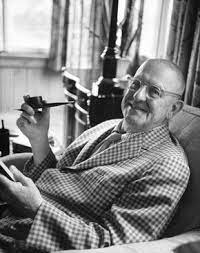
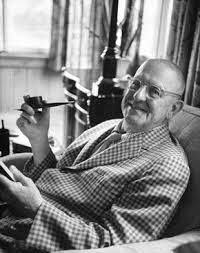
(Note: Bengt Malmberg is a Member of the Wodehouse Society Sweden. This article had first appeared in Plum Lines in 2014. His permission to publish it here is gratefully acknowledged. Illustration courtesy www)





 ashokbhatia