Feeds:
Posts
Comments

Posts Tagged ‘Gulzar’

Basu Chatterjee was a champion of the middle class, who turned ordinary lives into captivating stories. His films showcased relatable characters dealing with real challenges, making their triumphs and losses deeply affecting us.

Basu da had a unique way of showing female characters. He was curious about women’s thoughts and dreams, exploring their views on romance and meaningful relationships, both romantic and platonic.

He began directing in 1969 with his film Sara Akash, starring FTII-trained actor Rakesh Pandey. The story, set in Agra, follows a newlywed couple dealing with the challenges of an arranged marriage in a joint family. This year marked the onset of the first wave of parallel cinema, showcasing films like Mrinal Sen’s Bhuvan Shome and Mani Kaul’s Uski Roti. However, the audience for these films, including Sara Akash, remained largely confined to film festivals.

Basu Chatterjee first gained attention with his 1974 film, Rajnigandha, which is based on Manu Bhandari’s Hindi short story Yahi Sach Hai. The film looks at a woman’s struggle between her current partner and an ex who returns, evoking past emotions. Rajnigandha established Chatterjee’s unique filmmaking style. It featured newcomers Amol Palekar and Vidya Sinha, with mostly unknown actors, except for Dinesh Thakur. Chatterjee made a cameo as an annoyed moviegoer. The film’s music, by Salil Chowdhury with lyrics by Yogesh, included memorable songs. Its success led to lasting collaborations among Basu, Yogesh, Chowdhury, and cinematographer K. K. Mahajan. Shyam Benegal’s Ankur also found success that year, demonstrating that art and commerce could indeed thrive together.

He was a pioneering filmmaker who highlighted the Parsi community in Khatta Meetha, showing them authentically and avoiding clichés. Similarly, Baaton Baaton Mein focused on the Catholic community in Bandra, also avoiding stereotypes. Basu da’s films found romance in daily life in Bombay, whether on crowded trains, buses, or Delhi streets.

Basu Chatterjee, along with Gulzar and Hrishikesh Mukherjee, formed a strong trio that shaped middle-of-the-road cinema in the 1970s. Their films appealed to middle-class Indians longing for unique yet relatable stories, combining mainstream charm, memorable music, real emotions, and uplifting narratives based on everyday life.

Basu da was born in Ajmer on the 10th of January, 1927. Being close to his 98th birth anniversary, let me highlight a few of his timeless classics.
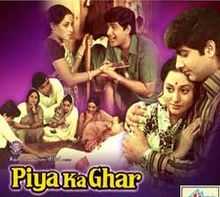
Piya Ka Ghar is a film featuring Jaya Bhaduri and Anil Dhawan, and is a remake of the Marathi film Mumbaicha Jawai. It tells the story of the difficulties faced by married couples in Mumbai, particularly due to limited living space. Malti, a girl from a village, marries Ram through a matchmaker but feels disappointed when she learns they must live with his extended family in a cramped apartment, which affects their privacy and intimacy. Available on Prime Video.
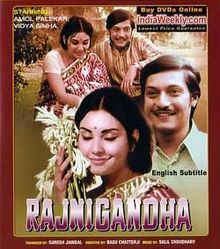
Rajnigandha, based on Mannu Bhandari’s short story Yahi Sach Hai, features Vidya Sinha as a woman torn between two suitors and takes her time to select a husband, a departure from typical glamorous roles. The film centers on the simple lives of three middle-class people without unnecessary melodrama. Vidya’s performance received praise from critics and audiences alike. The film marked the introduction of Amol Palekar and Vidya Sinha, and included memorable songs sung by Lata Mangeshkar and Mukesh, who won a National Award for their work. Available on Prime Video.
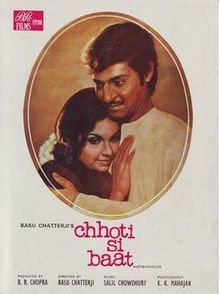
Chhoti Si Baat features Amol Palekar as a shy man who hires a life coach to learn how to propose to a girl. Palekar plays an introverted character, while Vidya portrays a woman who knows his feelings and waits for him to act. The film connects well with audiences due to its middle-class setting. It also includes beautiful music by Salil Chaudhury, showcasing Yesudas’ talent in the duet, Jaaneman Jaaneman Tere Do Nayan, filmed with Dharmendra and Hema Malini. Available on Prime Video.
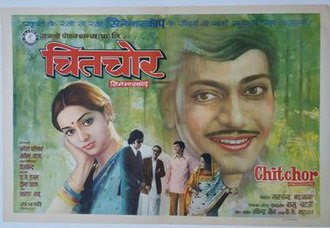
Chitchor is a romantic comedy about mistaken identities involving Geeta and her family eager for her to meet an eligible bachelor, Sunil, who is coming to their village. However, when overseer Vinod mistakenly arrives instead, he wins the affection of Geeta, who wants to marry him. The arrival of Sunil complicates matters as he also develops feelings for her. The film includes lovely songs by Ravindra Jain, such as Jab Deep Jale Aana. Available on Prime Video.
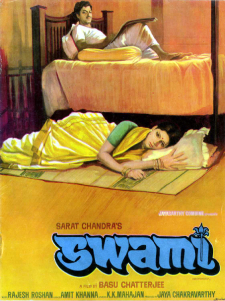
Swami is based on Sarat Chandra’s novel of the same name and follows Saudamini, played by Shabana Azmi, who admires her uncle while facing approval issues from her mother regarding her friendship with Naren. After marrying Ghanshyam, a kind wheat merchant, she feels trapped but learns of her husband’s true kindness. The film concludes with her transformation into a devoted wife, showcasing Azmi’s impressive performance. Available on YouTube.
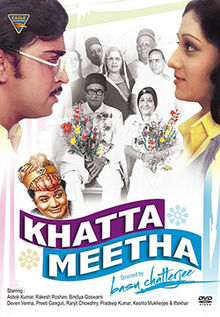
Khatta Meetha is inspired by the American classic Yours, Mine and Ours and tells the story of a middle-aged widower, played by Ashok Kumar, who marries a widow, portrayed by Pearl Padamsee. They both have children from previous marriages and face challenges in merging their families as the siblings conflict. Yet, through various trials, the family finds ways to unite and coexist peacefully, depicting a heartwarming conclusion. Available on YouTube.
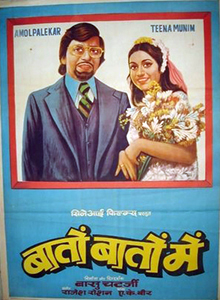
Baton Baton Mein is set in a Christian context and highlights the courtship of Amol Palekar and Tina Munim, with the help of her uncle, played by David. Rosie, a widow, wants her daughter to marry, while Nancy meets Tony on their daily commute. Tony’s shyness creates tension, prompting Rosie to look for other matches, but her uncle’s intervention helps reconnect Tony and Nancy. The film had some lovely songs like Suniye Kahiye Kahiye Suniye, Na Bole Tum Na Maine Kuch Kaha and Uthe Sabke Kadam tuned by Rajesh Roshan. Available on Prime Video.

Apne Paraye, inspired by Sarat Chandra’s novel Nishkriti, revolves around Utpal Dutt, a lawyer with a fondness for his cousin Chander (Amol Palekar), who prefers music over a steady job. Chander’s wife, Sheela (Shabana Azmi), is the strict one in the household. Their stable lives are disturbed when Utpal’s younger brother arrives with his wife, creating a complex family dynamic filled with rivalries. Available on Prime Video.
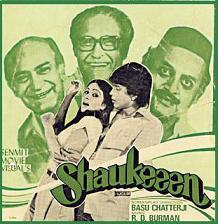
Shaukeen is adapted from the American comedy Boys’ Night Out and follows the lighthearted misadventures of three elderly men, played by Ashok Kumar, Utpal Dutt, and A K Hangal, who fantasize about romance while trying to meet a young woman. They embark on a trip to Goa thanks to their driver, Ravi, leading to humorous yet respectful situations. Ashok Kumar and the ensemble cast deliver exceptional performances throughout. Available on Prime Video.

Chameli Ki Shaadi represents a groundbreaking film tackling caste discrimination with a strong feminist lead. Charandas, (Anil Kapoor), is engrossed in wrestling but loses focus when he meets Chameli (Amrita Singh). Their love faces familial opposition due to caste differences, and to find a solution, they consult an advocate Harish (Amjad Khan), who suggests they elope. Available on YouTube.

One notable aspect of Basu da’s films was their exceptional music. He collaborated with a variety of music directors, including Salil Chowdhury, R D Burman, Laxmikant Pyarelal, Bappi Lahiri, Jaidev, and more. However, his most fruitful partnership was with Rajesh Roshan, producing memorable soundtracks for films like Swami, Khatta Meetha, Baaton Baaton Mein, Priyatama, and Hamari Bahu Alka.

The Chaterjee-Roshan duo have given some memorable songs, like, Pal Bhar Mein Yeh Kya Ho Gaya (Swami), Aaye Na Baalam (Swami), Koi Roko Na Deewane Ko (Priyatama), Tere Bin Kaise Din’(Priyatama), Thoda Hai Thode Ke Zaroorat Hai (Khatta Meetha), Badal Toh Aaye (Dillagi), Na Bole Tum Na Maine Kuch Kaha (Baaton Baaton Mein), Suniye Kahiye (Baaton Baaton Mein), Charu Chand Iss Chanchal Chitwan (Man Pasand), Prem Ki Hai Kya Sun Paribhasha (Hamari Bahu Alka), and many more.

In the 1980s, the number of supporters for his style of filmmaking dwindled, prompting Basu Chatterjee to transition to television. His debut serial, Rajani, featuring Priya Tendulkar, was a pioneering effort in consumer activism in India. Following Rajani, he directed other notable television series such as Darpan and Kakkaaji.

Basu Chatterjee received the Filmfare Best Director award for Swami, which also earned a National award. He was honoured with six Filmfare Awards – Critics for Screenplay.

In the new millennium, remakes of Chitchor and Shaukeen emerged, but they failed to capture the charm of the originals. Today, the success of films like Bareilly Ki Barfi and Badhaai Ho serves as a testament to the legacy of Basu Chatterjee’s cinematic style.

About the author

Shivdas Nair has been a cinephile for years. However, he has just started putting his thoughts on paper. A media professional for over two and half decades, and with changing times, now a Principal Advisor – Growth with a vibrant and innovative IT Consulting & Advisory Services company, i-Gizmo Global Technologies. He has just started blogging at https://thoughtsoveracuttingchai.blogspot.com.

Notes

  1. A version of this article first appeared in The Reviewer Collective group on Facebook. The author’s consent to reproduce it here is gratefully acknowledged.
  2. All the visuals are courtesy the World Wide Web.

Related Post
Read Full Post »
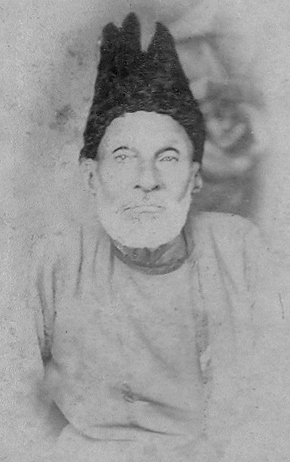
Mirza Asadullah Baig Khan, known popularly as Mirza Ghalib, was not just a poet but a literary phenomenon whose works have transcended time and space. He lived during the turbulent period from 1797 to 1869. He ended up being a chronicler of the chaotic times faced by the country during the 1857 revolt when many of the markets and localities in Delhi vanished. The mansions of his friends were razed to the ground. He wrote that Delhi had become a desert. Water was scarce. The city had turned into “a military camp”. It was the end of the feudal elite to which Ghalib had belonged. He wrote:

है मौजज़न इक क़ुल्ज़ुम-ए-ख़ूँ काश यही हो

आता है अभी देखिए क्या क्या मिरे आगे

An ocean of blood churns around me – Alas! Was this all?

The future will show what more remains for me to see.

Having settled down in the Chandni Chowk area of Delhi, he experienced first-hand the demise of the Mughal dynasty and the rise of the British Empire in India. Within a few months of his death in 1869, Mahatma Gandhi, who eventually led India to its independence in 1947, was born, though far away in Gujarat.

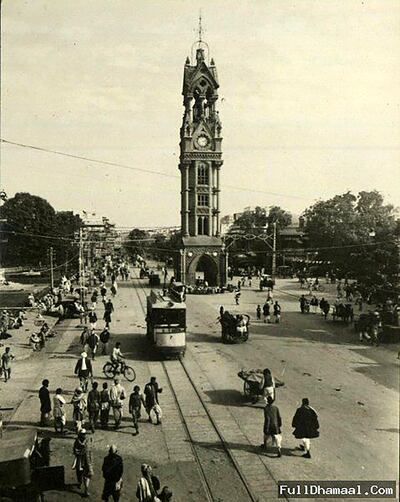
Why Chandni Chowk? I guess it would have been a posh area of the walled city known as Shahajahanabad then. Proximity to the Mughal court might have also weighed on his mind. The ease of shopping might have been another consideration.

The Moonlit Square in Delhi

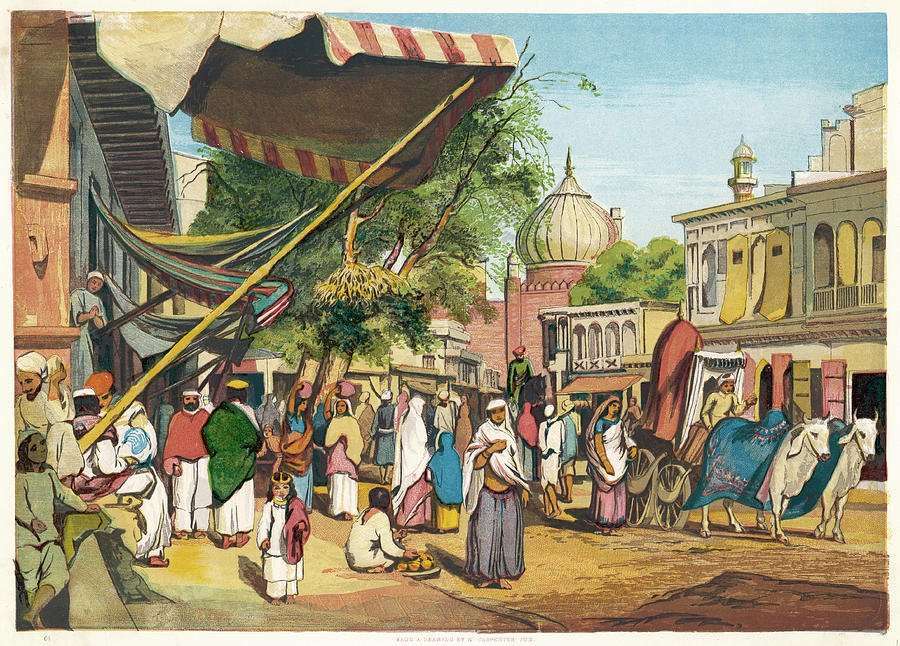
History buffs may recall that Chandni Chowk was built in 1650 by the Mughal Emperor Shah Jahan, and designed by his daughter, Jahanara. The market was once divided by a shallow water channel (now closed) fed by water from the river Yamuna. It would reflect moonlight. Hence its name.

There were roads and shops on either side of the channel. Ladies from the royal family are said to have ventured out of the Red Fort to shop for jewellery, clothes, and accessories. The place continues to be a shoppers’ paradise and has also become the biggest wholesale market in North India.

Shakeel Badayuni, the poet and lyricist, beautifully captures the image of this shoppers’ paradise thus in one of his nazms, ‘Tasaadum’:

वो बाज़ार की ख़ुशनुमा जगमगाहट

वो गोशआश्ना चलने फिरने की आहट

वो हर तरफ़ बिजलियों की बहारें

दुकानात की थी दुरबिया कतारें

That blissful glow of the market

That hustle-bustle of wide-eyed shoppers

A veritable spring of well-lit places

The endless rows of jewellery shops.

The range of products available is truly mind-boggling. Electrical goods, lamps and light fixtures, medical essentials and related products, silver and gold jewellery, trophies, shields, mementoes, and related items, metallic and wooden statues, sculptures, bells, handicrafts, stationery, books, paper and decorative materials, greeting and wedding cards, plumbing and sanitary ware, hardware and hotel kitchen equipment, all kinds of spices, dried fruits, nuts, herbs, grains, lentils, pickles and preserves/murabbas, industrial chemicals,  home furnishing fabrics, including ready-made items as well as design services.  

As to the mouth-watering sweets, savouries, and street food available in Chandni Chowk, right from the crispy jalebies of Dariba Kalan to the spicy chhole-chawal of Gol Hatti at Fatehpuri, full-length books alone may suffice.

Kuchas, katras, and havelis

The road now called Chandni Chowk has several streets running off it which are called kuchas(streets/wings). Each kucha usually had several katras (cul de sac or guild houses), which, in turn, had several havelis.

Typically, a kucha would have houses whose owners shared some common attributes, usually their occupation. Hence the names Kucha Maaliwara (the gardeners’ street) and Kucha Ballimaran (the oarsmen’s street).

All this is not to say that there are no aspects of Chandni Chowk which one does not despise. One loathes its jostling crowds, its smells, its noises, its congested lanes, the mind-boggling variety of vehicles on its roads, its endless traffic snarls, its highly polluted air, its beggars trying to persuade perfect strangers to bear the burden of their maintenance with an optimistic vim, and its crowded pavements with aggressive sellers pouncing upon one to peddle their stuff. But if one has nerves of chilled steel and can manage all these with a chin-up attitude, one could eventually find one’s way to Ghalib ki Haveli, located in Gali Qasim Jan of Kucha Ballimaran.

As to Ghalib’s choice to live in Kucha Ballimaran, an area where oarsmen used to reside, one may merely surmise that as a creative genius of the literary world, he believed himself to be an oarsman, guiding his catamaran through the choppy waters of life!

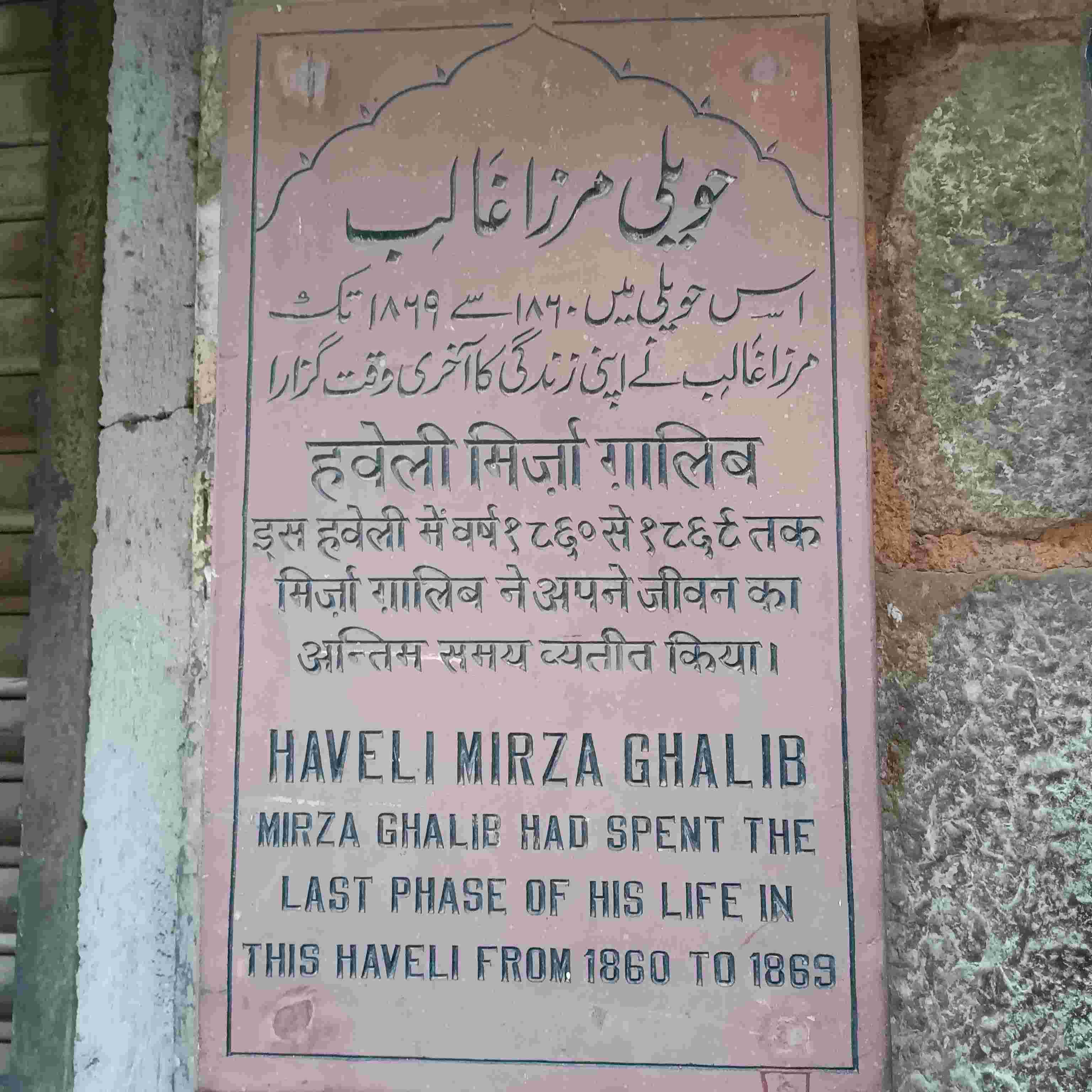
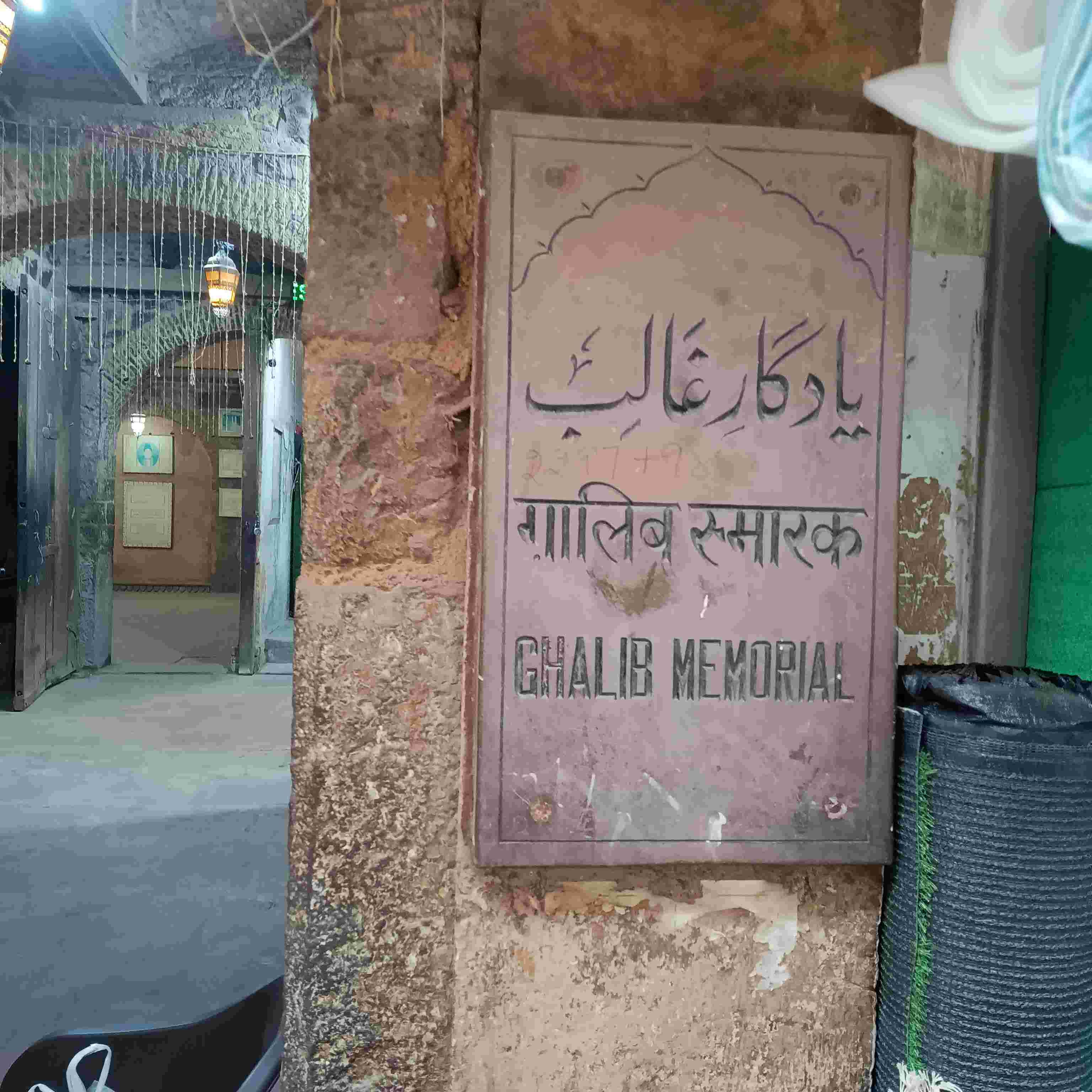
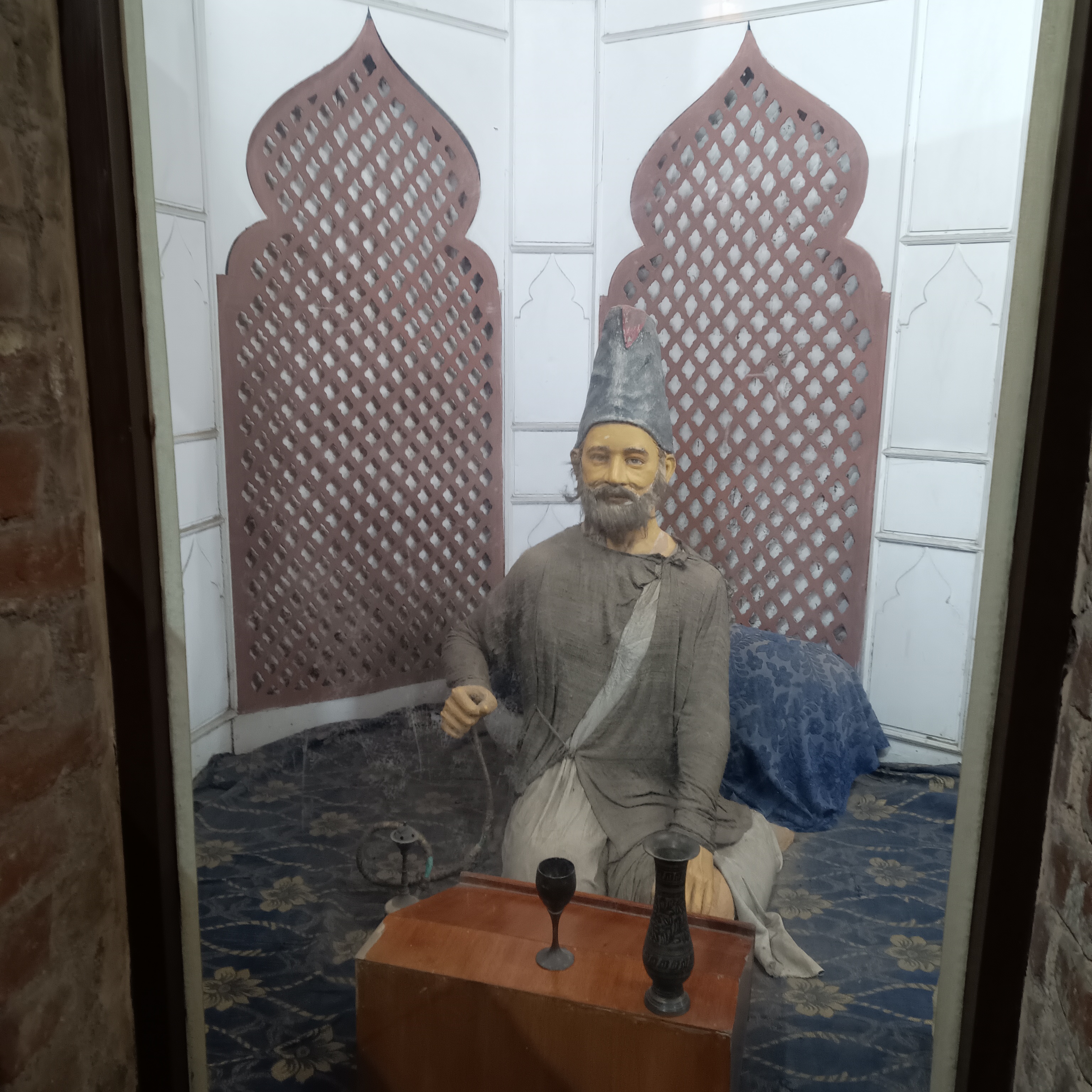
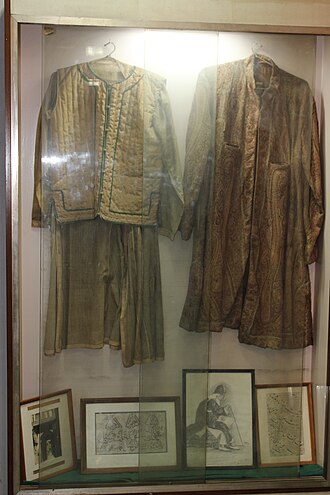
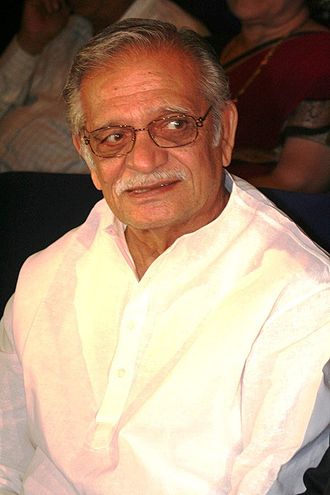
This place, where he lived from 1860 to 1869, till the time he breathed his last, has now been converted into a small museum of sorts. The main bust of Ghalib’s on display here has been gifted by Gulzar.

Mirza Ghalib

Born on December 27, 1797, in Agra, India, Ghalib’s life was marked by personal tragedies, political upheavals, and cultural transitions, all of which deeply influenced his poetic expression. Today, more than a century after his death, Ghalib remains one of the most celebrated poets in the Urdu and Persian literary traditions. His verses, rich with layers of meaning, continue to resonate with readers and scholars alike, offering insights into the human condition, love, pain, and the complexities of life.

Early Life and Personal Struggles

Ghalib was born into a family of Turkish aristocrats who had settled in India during the Mughal era. His father, Abdullah Beg Khan, was an officer in the army, but he died when Ghalib was just five years old. This left young Ghalib under the care of his uncle, Nasrullah Beg Khan, who also passed away a few years later. The early loss of his parents had a profound impact on Ghalib, and themes of loss, loneliness, and existential inquiry are recurrent in his poetry.

At the age of thirteen, Ghalib was married to Umrao Begum, a match arranged by his family. However, the marriage did not bring him the solace one might expect. Ghalib’s domestic life was fraught with tensions, and he found little happiness in it. None of his seven children survived beyond infancy. His financial struggles added to his woes, as he never held a stable job and relied on royal patronage, which was inconsistent at best.

The idea that life is one continuous painful struggle that can end only when life itself ends, is a recurring theme in his poetry. Consider this:

जब ज़िंदगी की क़ैद और ग़म का बन्धन एक ही है तो…

मरने से पहले आदमी ग़म से निजात पाए क्यूँ ?

The prison of life and the bondage of sorrow are the same,

Why should man be free of sorrow before dying?

Ghalib’s Literary Genius

Despite his personal hardships, Ghalib’s intellectual and poetic prowess blossomed. He was a polyglot, proficient in Urdu, Persian, and Turkish, and his poetry is a testament to his erudition. Ghalib’s work in Persian is extensive, but it is his Urdu poetry that has earned him eternal fame.

Ghalib’s ghazals are celebrated for their depth and complexity. A ghazal is a poetic form consisting of rhyming couplets and a refrain, with each line sharing the same meter. Ghalib mastered this form, infusing his verses with profound philosophical reflections, emotional intensity, and linguistic ingenuity. His poetry often grapples with the paradoxes of existence, the transience of life, and the elusive nature of love.

In keeping with the conventions of the classical ghazal, in most of Ghalib’s verses, the identity and the gender of the beloved are indeterminate. The critic/poet/writer Shamsur Rahman Faruqui explains that the convention of having the “idea” of a lover or beloved instead of an actual lover/beloved freed the poet-protagonist-lover from the demands of realism.

In one of my personal favourites on the tender emotion of love, he says:

उनके देखे से जो जाती है मुहं पर रौनक,

वो समझते हैं की बीमार का हाल अच्छा है.

My face is flushed with joy upon seeing my beloved,

Beloved mistakes my sickness to be a sign of good health.

One of the most remarkable aspects of Ghalib’s poetry is his exploration of the self. He delves into the intricacies of human identity, the soul’s relationship with the divine, and the quest for meaning in an indifferent world. For instance, in one of his famous couplets, Ghalib writes:

हज़ारों ख्वाहिशें ऐसी के हर ख्वाहिश पर दम निकले,

बहुत निकले मेरे अरमान फिर भी कम निकले

Thousands of desires, each worth dying for,

Many of them I have realised… yet I yearn for more.

This couplet reflects the insatiable nature of human desires, a theme that recurs throughout Ghalib’s poetry. His verses often portray a deep sense of melancholy, rooted in the understanding that the fulfilment of worldly desires is fleeting, and the ultimate truth lies beyond the material realm.

In many ways, the core of Ghalib’s poetry is not too far off from what Indian scriptures speak of.

The Philosophical Depth of Ghalib’s Poetry

Beyond his commentary on the socio-political changes of his time, Ghalib’s poetry delves into the philosophical. He was influenced by Sufism, a mystical Islamic belief system that emphasises the inward search for God and the personal experience of the divine. Sufi themes of love, union with the divine, and the eternal quest for truth permeate his poetry. However, Ghalib’s relationship with Sufism was complex. While he was drawn to its ideals, he also maintained a rational scepticism, often questioning established religious norms and dogmas. In one of his compositions, he mocks the hypocrisy of the preachers of Islam thus:

कहाँ मय-ख़ाने का दरवाज़ा ‘ग़ालिब’ और कहाँ वाइ’ज़

पर इतना जानते हैं कल वो जाता था कि हम निकले

What is the relation between the Preacher and the door of the tavern,

But believe me, Ghalib, I am sure I saw him slip in as I departed.

Ghalib’s poetry is also notable for its exploration of existential themes. He frequently contemplates the nature of reality, the impermanence of life, and the mysteries of the cosmos. His verses suggest a deep awareness of human knowledge’s limitations and the unknown’s vastness. In this sense, Ghalib can be seen as a precursor to modern existentialist thinkers, who similarly grappled with existence’s uncertainties.

Legacy and Influence

Ghalib passed away on February 15, 1869, in Delhi, but his legacy has only grown stronger with time. His poetry has been translated into numerous languages and continues to be studied, recited, and cherished by people across the world. Ghalib’s influence extends beyond literature; he has inspired musicians, filmmakers, and artists who have drawn upon his work to create new forms of artistic expression.

In India, Pakistan and elsewhere, Ghalib is not just a literary figure but a cultural icon. His ghazals are an integral part of the classical music tradition, and his life has been the subject of numerous plays, films, and television series.

Way back in 1954, Sohrab Modi gave us the movie Mirza Ghalib. Likewise, in 1961, Ataullah Hashmi of Pakistan gave us a movie on him.

In 1988, Gulzar came up with his television series which featured ghazals sung and composed by Jagjit Singh and Chitra Singh.

Various ghazal maestros like Mehdi Hassan, Iqbal Bano, Abida Parveen, Farida Khanum, Tina Sani, Noor Jehan, Suraiya, K L Saigal, Mohammed Rafi, Asha Bhosle, Begum Akhtar, Ghulam Ali, Lata Mangeshkar, Nusrat Fateh Ali Khan, and Rahat Fateh Ali Khan have sung his ghazals.

Low on The Richter Scale of Comprehension

Modern-day communication thrives on simplicity. Complex ideas are conveyed in a language that the masses understand. In other words, verses which would rate extremely high on the Richter Scale of Comprehension. However, it appears that most of our famous poets and literary figures perfected the art which is just the opposite. Simple ideas couched in high-profile and complex language, which only those at the top of the Language Proficiency Pyramid might fathom. Perhaps such literary geniuses wish to differentiate themselves from the hoi polloi.

When it comes to this particular trait, Ghalib has good company. In Urdu poetry, he is not always easy to understand. The poems dished out by him are often tough to understand, enriched as they happen to be with words drawn from the Persian language. In Hindi, the poetry of Jai Shankar Prasad comes to my mind. In Sanskrit, Kalidasa often keeps a lay reader guessing. In English, Shakespeare always leaves me baffled.

Quite some time back, I had luckily invested in a book of his poems which has not only the Urdu versions but also the corresponding translations in English and Hindi. As and when the ambience is right, I would play one of the renderings of Jagjit Singh, but only after having spotted the poem in the book. With lights dimmed, and one’s favourite tissue restorative perched on the table nearby, I get to feel the intensity of his words and end up experiencing a bliss which cannot be described in words!

Mirza Ghalib’s poetry is a treasure trove of wisdom, beauty, and emotional depth. His verses transcend the boundaries of time, language, and culture, speaking to the universal human experience. Ghalib’s ability to articulate the complexities of life with such eloquence and grace makes him a timeless poet, one whose work will continue to inspire generations to come. His legacy, like his poetry, is eternal—a shining beacon in the vast ocean of literary history.

For all lovers of Urdu poetry, visiting Ghalib’s haveli is a pilgrimage of sorts.

Notes:

  1. Vignettes of Chandni Chowk and movie/series posters courtesy of the World Wide Web.
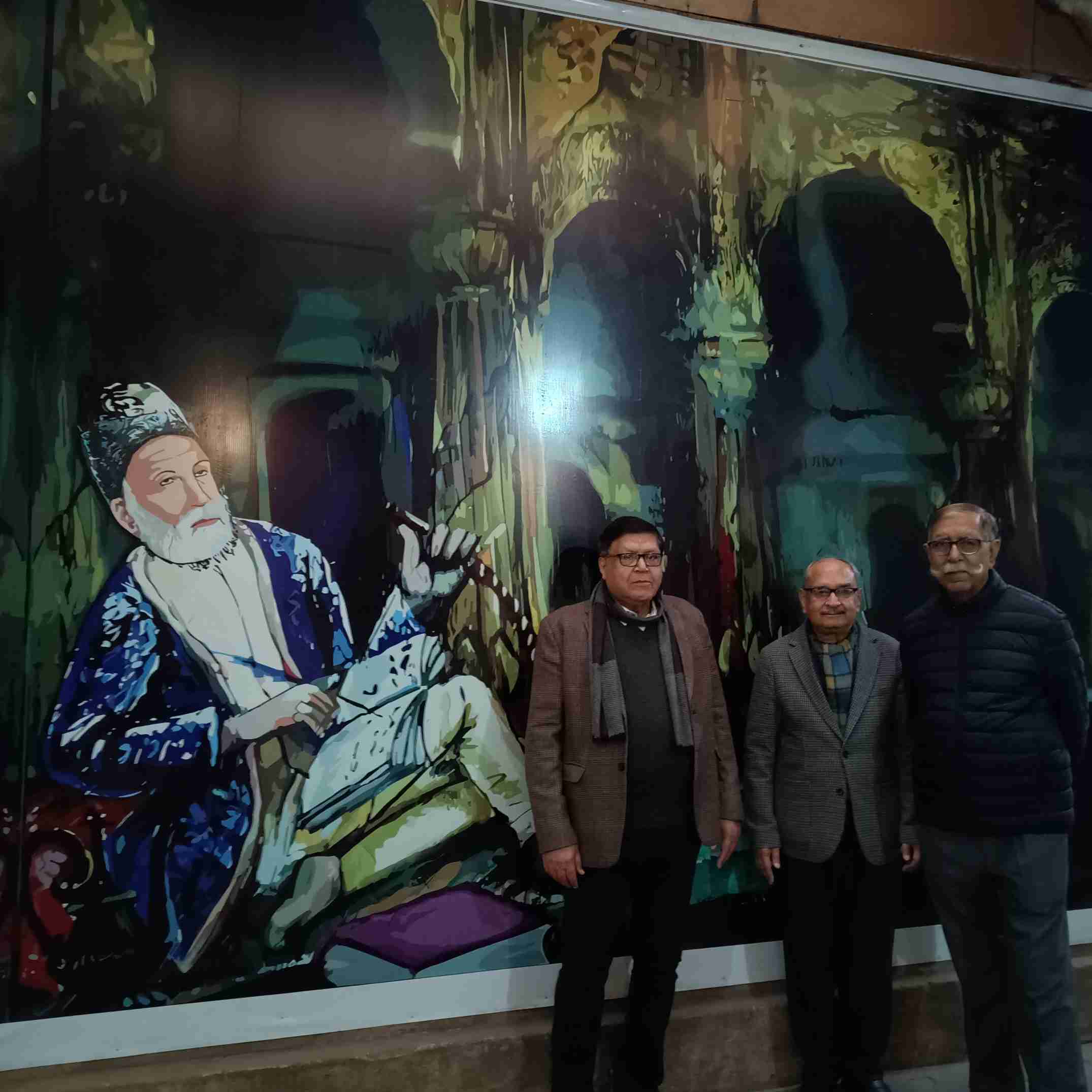
  2. Museum snaps taken by yours truly during a recent visit to the place.
  3. Inputs received from Colonel Vivek Prakash Singh (Retired), a renowned poet in Urdu and Hindi, are gratefully acknowledged.
  4. Thanks are due to Sanjay Bhatia and Ashok Kalra who enabled this visit!

Related Posts:

Read Full Post »

Gulzar once said lyrics should “amaze or amuse”, or otherwise no one would care. In his six-decade career as a poet-lyricist, he certainly stuck to this principle.

His best work in the first half of his career was with R.D. Burman. After a lull following Burman’s death, with composers like A.R. Rahman, Vishal Bhardwaj and Shankar-Ehsaan-Loy entering his world, his lyrics gained a new ferocity, as filmmakers and their gradually evolving subject matters gave him room to experiment and push the envelope.

Here are only some of Gulzar’s best-written (not necessarily his most successful) songs.

‘Mora Gora Ang’, Bandini (1963)

A textbook example of how Gulzar turns a traditional love song into something ethereal: evoking “Shyam”, which means evening as well as the Hindu god of love Krishna. He writes: “Mora gora ang lai lemohey shyam rang dei de / Choop jaungi raat hi meinmohey pee ka sang dei de” (‘Take my fair body, colour me as dark as shyam / I will hide myself in the night, grant me the company of my beloved’).

‘Humne Dekhi Hai Un Aankhon Ki Mehakti Khusboo’, Khamoshi (1969)

Can you see the fragrance of the eyes? Gulzar can. This was among one of Gulzar’s earliest songs where a sensory experience is accorded to a body part to which it is foreign. But what makes this song work, after its unorthodox opening, are the graceful lines that follow.
‘Haal Chaal Theek Thaak Hai’, Mere Apne (1971)

Among one of Gulzar’s earliest political songs, the lines here are caustic and timeless. In one verse, he refers to the ruling class with “makaanon pe pagdi waale sasur khade” (‘Tough father-in-laws stand atop buildings’), which is rhymed with “koi in buzurghon se kaise lade?” (‘How do we fight these old men?’).

In another, he explains the food-and-money situation with the image of a roti rolling down the street followed by a silver coin, but a kite flies away with the roti and a crow escapes with the coin.

‘Musafir Hoon Yaaron’Parichay (1972)

Gulzar creates some really simple but evocative images in this song about a wanderer. He writes, ‘if one path didn’t work out, another came by, and sometimes the path followed me the way I turned’. Then he writes: ‘sometimes the day beckoned me there, the night called me there, I made friends with both dawn and dusk’.

‘O Majhi Re’Khushboo (1975)

Rivers, shores and boatmen are recurring images in Gulzar’s lyrics, and this is perhaps his most definitive song in that respect. Among the stand-out metaphors here is Gulzar’s description of lonely wanderers as eroded strips of land floating in search of a shore.

‘Dil Dhoondhta Hai’, Mausam (1975)

In contrast to the upbeat tune, Gulzar’s free verse about reminiscing an old love is rather poised and graceful.

The lyrics perhaps may be better appreciated if read as a poem. Some pleasant imagery here: “Jaadon ki narm dhoop aur aangan mein let kar, aankhon pe kheench kar tere daaman ke saaye ko / aundhe pade rahe kabhi karvat liye huye” (‘I lay prone in the courtyard under the soft shade of trees, drawing your shadow over my eyes, sometimes twisting and turning’).

‘Tere Bina Zindagi’, Aandhi (1975)

Once again with a romantic song, Gulzar’s powerful introduction sets up and defines the sort of love to be explored. This time, there’s affection, but between old souls: ‘Without you, I have no complaints with life, but life isn’t life without you’, he writes.

‘Masterji Ki Aa Gayi Chitthi’, Kitaab (1977)

Gulzar’s reputation for wacky, out-there lyrics is surely courtesy his work with the post-1990s composers, but some of his particularly eccentric work with R.D. Burman deserves credit for sending him down that road.

In this song, among other things, out of the masterji’s letter pops out a betel leaf-chewing cat wearing shades and a mosquito with a mountain-carrying moustache.

‘Ek Akela Iss Shahar Me’, Gharaonda (1977)

A terrific song about urban loneliness. Had Travis Bickle heard this, he may have calmed down and not attempted assassinations and gunfights. Among its most haunting lines about the indifferent city: “Din khali khali bartan hai aur raat hai jaise andha kuaan” (The days are like empty vessels, the nights are a bottomless well).

‘Aaj Kal Paon Zameen Par’Ghar (1978)

The lightness of touch in Gulzar’s lyrics complements the optimistic yet modest hopes of a young blooming romance. In a standout verse, Gulzar writes, ‘whenever I held your hand and looked, people said it’s only the lines on your palm, but I saw two destinies coming together’.

‘Phirse Aaiyo Badra Bidesi’, Namkeen (1982)

Splendid imagery abounds in this haunting song filled with longing. With mentions of clouds, a lake, a terrace, a peepal tree, a garden, a small bridge and so on, he magnificently creates a psycho-geography that gets engulfed in yearning with each passing line.

‘Mera Kuchh Samaan’, Ijaazat (1987)

Gulzar’s ultimate breakup/heartbreak song, but such a facetious description hardly does justice to the brilliance of ‘Mera Kuchh Samaan’. From the simple idea of wanting your stuff back from your ex-lover’s house, Gulzar creates a tapestry of the haunted memories of a relationship that once was.

‘Khamosh Sa Afsana’, Libaas (1988)

This feels like a song created out of ideas and metaphors Gulzar has turned to before in other songs, for example, ‘Humne Dekhi Hai In Aankhon Ki Mehakti Khushboo’, which is concerned with love that is best left unexpressed, and ‘O Majhi Re’, with its metaphors of river as life and shore as companion. It is the combination of these two ideas that lend the song its potency.

‘Chhod Aye Hum’, Maachis (1996)

A great song that documents the emotions and memories one has for their homeland and the endless gloom that follows when it is ravaged. The best line in the song goes, “Ek chota sa lamhaa haijo khatam nahi hota / Main laakh jalata hoonyeh bhasm nahi hota”. (‘A small moment in time that just doesn’t end / I keep setting it on fire, but it is never burned down’).

‘Dil Se Re’, Dil Se.. (1998)

An absolutely bombastic declaration of love, in contrast to the subdued grace of the earlier romantic songs in this list. Just a sigh of the heart causes the sun to shine, the mercury to melt and a storm to rise, Gulzar writes in the opening verse. Then he creates some extraordinary imagery about two stray leaves in another verse, which gets better the more you listen and contemplate the lines.

‘Goli Maar Bheje Mein’, Satya (1998)

Don’t think, just shoot, for if you think, you die – Gulzar spins a rollicking fun song out of this simple gangster’s code of living. Gulzar is writing from the perspective of absolute scoundrels, using their lingo, and despite the coarseness of the words (or because of it), the message is communicated sharply.

‘Ghapla Hai Bhai’, Hu Tu Tu (1999)

Everything is a scam, Gulzar writes, in this satirical song through which he takes potshots at the political class. Gulzar drops the mocking tone in the final verse and embraces the true sadness of the subject matter: “… ghiste ghiste fat jaate hai juton jaise log bechaare … pairon mein pehne jaate haijalse aur jalluso mein”. (‘People are like shoes, tattered from overuse, worn at celebrations and processions’).

‘Hum Bhul Gaye’, Aks (1999)

If we are to strip the song of the film’s context, Gulzar’s lyrics, which depict an experience of feeling disassociated from oneself, might just be about depression. He writes, “Umeed bhi ajnabee lagti hai aur dard paraya lagta hai / Aaine me jisko dekha tha bichda huwa saya lagta hai.” (‘Hope seems like a stranger and pain feels foreign, the one I see in the mirror seems like a shadow separated from me’).

‘Haath Choote’Pinjar (2003)

Gulzar’s lyrics are a 101 on how to deal with relationships that are about to or have completely run their course. He writes, ‘even if the holding of hands gets loose, do not end ties’. Then he writes, ‘if one has to indeed leave, don’t break your heart for them’.

‘Piya Tora Kaisa Abhimaan’, ‘Raincoat’ (2004)

In a song essentially about endlessly waiting for your beloved, the allusions to Hindu traditions and myths lend it a timeless folkish quality. Gulzar weaves the angst of pining with the images of Radha-Krishna’s romance under the kadam tree, kahars carrying a palanquin, bathing in the Jamuna for absolving one’s sins and wearing the “garal saman” or poison-like mark of sandalwood on the forehead to embrace a hermit’s life as one’s lover won’t ever return.

‘O Saathi Re’, Omkara (2006)

As much as choosing the best lyrics in Omkara is a toss-up between the ornate raunchiness of ‘Namak’ and the sublime beauty of ‘O Saathi Re’, the warmth in the latter’s description of mutual affection is more effective than the cleverness of the former’s innuendos. Gulzar draws some lovely images in O Saathi Re, particularly in a verse that follows a couple fishing on a riverbank on a red evening.

‘Ay Hairathe’, Guru (2007)

Like moments in ‘O Saathi Re’ and a bunch of other love songs, like the ones from Ghar and Ijaazat, Gulzar is a master at highlighting the particularities of a relationship, mentioning specific details and giving the relationship a lived-in quality. ‘Ay Hairathe’ is just one more example in which Gulzar brings grace to the intense cuteness of a marriage’s honeymoon years.

‘Kaminey’, Kaminey (2009)

Gulzar writes, ‘everyone and everything is damned, including me, my hopes, my dreams, my friendships’, the list goes on. In a song where self-pity is the only conclusion of introspection, there are moments of cruel beauty, such as a verse where Gulzar writes, “Jiska bhi chehra cheelaandar se aur nika / Masoom sa kabootar / naacha to mor nika”. (‘I found someone else everytime I scratched a face’ / ‘An innocent pigeon danced, turned out to be a peacock’).

‘Dil To Bachcha Hai Ji’, Ishqiya (2010)

What’s great about the lyrics here is how from a definite premise – that of an old man feeling young again because of love – Gulzar draws out all kinds of specific images and ideas that feel extremely effortless. There are no complex metaphors at work, nothing that’s tired and overused, and it all comes together so neatly.

‘Bekaraan’, 7 Khoon Maaf (2011)

There are some lovely moments in this romantic paean. There’s the part where Gulzar writes, ‘please see beneath your feet if something’s stuck … it’s just time, please ask it to move along’.

But then written from the perspective of an abusive husband, the line “Kya laga honth talejaise koi chot chale” (‘What’s that under your lips, looks like a bruise’), gives the song a sinister edge.

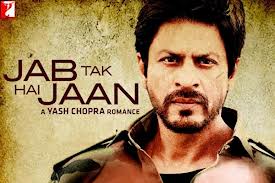
‘Heer’, Jab Tak Hai Jaan (2012)

Yet another song about pining, but how to keep it fresh? Gulzar brilliantly blends two tragic romances: Heer-Ranjha and Mirza-Sahiban. He writes, ‘don’t call me Heer’ (who doesn’t get to build a home with her lover Ranjha, as she is married off, and both die before they can be united), ‘for I’ve become Sahibaan, and Mirza will bring a horse and take me away soon’. (Mirza escaped with Sahibaan on his horse the night right before her wedding ceremony).

‘Khul Kabhi Toh’, Haider (2014)

Like ‘Bekaraan’, again an intense love song written from the perspective of a guy who is not quite there in his head.

Beautiful lines like “saanssaans sek doon tujhe” (‘breath by breath, I will heat you up’), lead up to violent imagery: ‘when I was kissing your earrings, a gulmohar tree kept dancing’ … ‘in the heat, I felt ‘why don’t I throw you into the fire of the burning gulmohar’’.

‘Kill Dil’, Kill Dil (2014)

There are fantastic images and metaphors all throughout this song, which tells the story of two daredevil gunslingers. Gulzar himself recites their introduction: ‘Here come two bastard sons of darkness, walking down a coal-black road … they were raised drinking blood … they neither have skies overheard nor ground underneath … perhaps their life was crushed, this is their story’.

‘Patli Gali’, Talvar (2015)

A fun sardonic take on how torturous the legal system is for the common citizen, ‘Patli Gali’ is filled with delightful lines. For example, in the “patli gali” (narrow lane), Gulzar writes, ‘bald men sell combs, while lawmakers sell the ropes twisted round their [the people’s] necks’.

‘Aave Re Hichki’, Mirzya (2016)

Gulzar ties up the folk myth of hiccups occuring when one is remembered by their beloved with the widely held belief of their occuring due to a dry throat. But going past this conceit, Gulzar yet again evocatively describes the sorrow of longing, drawing in elements of the geography of the story, as he did with ‘Phirse Aaiyo Badra Bidesi’.

About the author:

Devarsi Ghosh loves to write on films, books and music when he is not working on his screenplays.

Notes:

  1. August 18 is Gulzar’s birthday.
  2. This article first appeared on The Wire: https://thewire.in/the-arts/gulzar-at-90-his-30-best-lyrics.
  3. The author’s permission to reproduce this article here is gratefully acknowledged.

Related Posts:

Read Full Post »

ashokbhatia's avatarashokbhatia

When we think of gorgeous heroines draped in plain color chiffon saris and sleeveless blouses – swaying to rhythmic beats composed poster jab tak hai jaanby eminent musicians and lip-synching soulful lyrics penned by proficient poets – with the magnificent Alps as a backdrop, the only name that comes to our minds is that of Yash Chopra!

The producer and director showed us the value of pure romance sans vulgarity in times when the only mantra to box office success appears to be “the lewder and cruder, the better”. He passed away last year. He has left behind a rich legacy of social comment through the wide-ranging themes of movies he produced or directed.

But the king of romance acquired this sobriquet by a very interesting process of evolution, through a long and arduous journey of making socially relevant movies which reflected our society’s challenges of their respective times. Like other popular directors of…

View original post 1,076 more words

Read Full Post »

ashokbhatia's avatarashokbhatia

Nina Davaluri, a dark beauty of Indian origin, recently got crowned as Miss America. She ended up eliciting a backlash of Dark Nina_Davulurixenophobic and racist comments. Yet again, this brought to the fore our predisposition to judge people by the color of their skins.

We tend to forget that the pigmentation of our skins is a work of nature. To be able to judge people better, we have to look a little deeper. Their character, their attitudes and the qualities of head and heart are some of the attributes which define the real person behind the veneer of skin which could be of any hue or grain. Irrespective of the color of the skin, those who have true talent and a pure soul continue to outshine all around them in a very natural manner.

In marketing parlance, we live in times when the packaging appears to be more important than the…

View original post 572 more words

Read Full Post »

When it comes to capturing the wide canvas of human relationships and emotions for the silver screen, Gulzar saheb surpasses all others who wield the megaphone.

Here is an ode which would be relished by all those who are familiar with his work.

lopu123's avatarReflections, Ruminations, Illuminations

Note: My poetic tribute to the haunting, melancholic, yet the beautifully touching saga of love gone awry in the hands of destiny, the irresistibly deep and unforgettable chemistry between Mahinder, Maaya and Sudha in Gulzar’s timeless love saga ‘Ijaazat’, based on the Bengali story ‘Jatugriha’, by Subodh Ghosh.  The film, unforgettable till today for the tenderly crafted lyrics of Gulzar Saab composed with finesse by the phenomenal R.D. Burman,  followed the story of couple who are separated and who accidentally meet in a small waiting room of a railway station and discover some truths about their lives without each other.

ijaazat_movie

Like weary travelers, lost in the waxy orbit of time

We lose our shores, and then, keep coming back

To where our stories began, the Ground Zero

Where you slouched against my caramel skin,

Lost in the deep, blinding maze of a past, passionate, drunk

With the lyrics and heartbeats of…

View original post 316 more words

Read Full Post »

Nina Davaluri, a dark beauty of Indian origin, recently got crowned as Miss America. She ended up eliciting a backlash of Dark Nina_Davulurixenophobic and racist comments. Yet again, this brought to the fore our predisposition to judge people by the color of their skins.

We tend to forget that the pigmentation of our skins is a work of nature. To be able to judge people better, we have to look a little deeper. Their character, their attitudes and the qualities of head and heart are some of the attributes which define the real person behind the veneer of skin which could be of any hue or grain. Irrespective of the color of the skin, those who have true talent and a pure soul continue to outshine all around them in a very natural manner.

In marketing parlance, we live in times when the packaging appears to be more important than the product. But this is a myopic view of things. If the product does not perform to the satisfaction of the customer, it will eventually fade away. Likewise, irrespective of looks or the color of one’s skin, if a person has what it takes to be successful in a career, he/she is bound to get noticed sooner or later.

The Not-so-fair Divas

We have several examples out of tinsel town where gutsy divas are known to have clawed their way up to success despite having a skin tone which could be called anything but fair. Here is a quick look at some of those who continue to be heart throbs of millions of movie buffs all over the planet. Most of them have a multi-dimensional personality. Just to rustle up the memory cells, a single movie for each one of these divas also finds a mention. Admittedly, there are several others for which they are remembered.

Angela Bassett

(What’s Love Got to Do with It, 1993)

Dark Angela_Bassett

Bipasha Basu

(Corporate, 2006)

Dark Bipasha_Basu

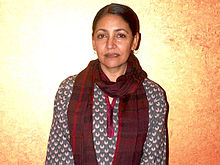
Deepti Naval

(Chashme Baddoor, 1981)

Black Deepti_Naval

Deepika Padukone

(Love Aaj Kal, 2009)

Dark Deepika_Padukone

Halle Berry

(Die Another Day, 2002)

Dark Halle_Berry

Jennifer Lopez

(Maid in Manhattan, 2002)

Dark Jennifer_Lopez

Kajol

(Fanaa, 2006)

Dark Kajol

Konkona Sen Sharma

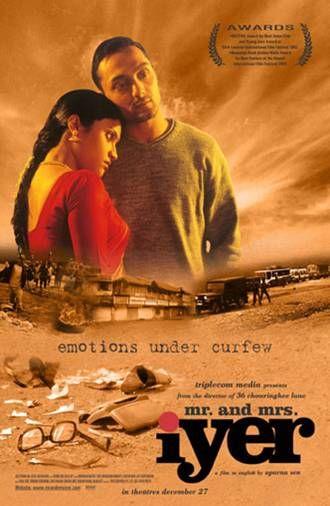
(Mr. and Mrs. Iyer, 2002)

Dark Konkona

Nandita Das

(Earth, 1998)

Dark NanditaDas

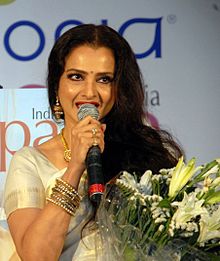
Rekha

(Khubsoorat, 1980)

Dark Rekha 1

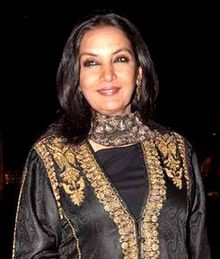
Shabana Azmi

(Saaz, 1997)

Dark Shabana_Azmi

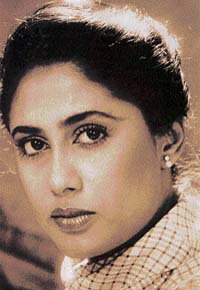
Smita Patil

(Mirch Masala, 1985)

Dark Smita_Patil

Sridevi

(English Vinglish, 2012)

Dark Sri Devi

The Perks of Being Chocolate-hued

All those who feel disheartened by the prominence of the fairer amongst us may take heart from the fact that most of them support a multi-billion industry which churns out fairness creams, thereby creating employment opportunities for many of our denizens.

Some orthopaedicians are of the opinion that those blessed with a dark skin have stronger bones because they end up absorbing much more Vitamin D from natural sunlight. Hence, they face lesser risk of being afflicted with either osteopenia or osteoporosis!

The Yearning for a Dark Tan

There are an equal number of fair skinned ones who would go to great lengths to acquire a darker tan. This yearning makes Dark Bandinipeople pack up their bags and head to the nearest sun-bathed tropical beaches over most weekends.

In one of the immortal songs penned by lyricist Gulzar for an old Hindi movie ‘Bandini’ (The Imprisoned, Director Bimal Roy, 1963), the fair skinned heroine expresses her yearning for a darker complexion thus:

‘Mera gora ang layi le, mohe shyam rang dayi de,

Chuup jaoongi raat mein, mujhe pee ka sang dai de.’

(Take away my limbs so fair, give my skin a dark hue,

So I may hide in the dark night, grant me the company of my beloved’)

A Festival to Dispel DarknessDeepawali-festival

As we get ready to celebrate the Festival of Lights in India, let us be aware that the real darkness to be dispelled is that of some of our belief systems and prejudices. In some regions, these take the form of apartheid; in some areas, these manifest as exploitation of the disadvantaged; whereas in some others these come up as harassment of the delicately nurtured.

The diversity of homo-sapiens – whether in terms of race, caste, creed, ethnic origin, monetary status, sex and the hues of the skin – is a wonderful fact of life which simply deserves to be celebrated. The brown and black beauties and celebrities from Hollywood, Bollywood and elsewhere are living examples of the fact that merit ranks supreme in any walk of life!

Read Full Post »

When we think of gorgeous heroines draped in plain color chiffon saris and sleeveless blouses – swaying to rhythmic beats composed poster jab tak hai jaanby eminent musicians and lip-synching soulful lyrics penned by proficient poets – with the magnificent Alps as a backdrop, the only name that comes to our minds is that of Yash Chopra!

The producer and director showed us the value of pure romance sans vulgarity in times when the only mantra to box office success appears to be “the lewder and cruder, the better”. He passed away last year. He has left behind a rich legacy of social comment through the wide-ranging themes of movies he produced or directed.

But the king of romance acquired this sobriquet by a very interesting process of evolution, through a long and arduous journey of making socially relevant movies which reflected our society’s challenges of their respective times. Like other popular directors of Bollywood – Raj Kapoor, Subhash Ghai and others – he had a unique ear for music, which was a hallmark of all his movies. The lyricists he associated with were accomplished poets who invariably came up with relevant and meaningful verses.

Evolving Into a King of Romance220px-Dhool_Ka_Phool

Partition, Secularism and Peace

If ‘Dhool ka Phool” (1959) was about illegitimate children, ‘Dharamputra’ (1961) touched upon religious intolerance in days when the term Hindu fundamentalism was not part of our vocabulary. The story of a Muslim bringing up a Hindu boy tugged at one’s heart-strings. The scenes of partition were hard-hitting, leading to a backlash at the time. That was perhaps the reason he never ventured to make a film on a political theme again during his lifetime.

However, he did come up with a clear message on peace and unity with his ‘Veer Zaara’ (2004). Not even a single bullet was fired in the film, but the message was loud and clear – that India and Pakistan share a common culture and a strong bond – by implication, both countries deserve a poster veer zaarachance to be together again, pooling their scarce resources to alleviate poverty, hunger and disease, instead of war mongering.

Family Values, Wealth and Bigamy

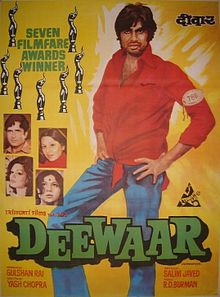
‘Waqt’ (1965) was his last movie where he worked with his elder brother Baldev Raj Chopra. It was the first one to have had a multi-star cast, a practice which is followed till today. It also spawned several other movies in the lost-and-found genre, popular ones being ‘Yaadon ki Baraat’ and ‘Amar Akbar Anthony’. The movie also depicted the lavish styles of the rich, conveying that 220px-Deewar_posteracquiring wealth is not necessarily evil.

Then he formed Yash Raj Films, his own banner, and came out with ‘Daag’ (1973). The issue of bigamy was handled with his trademark elegance and suavity.

The Angst of the Youth

This was followed by two angry-young-man-phase movies, capitalizing on Amitabh Bachchan’s recently acquired image in ‘Zanjeer’. It started off with ‘Deewar’ (1975) and was followed by ‘Trishul’ (1978). In ‘Mashaal’ (1984), he cast thespian Dilip Kumar who portrayed an angry old man. Much to the glee of middle class audience struggling with rising aspirations kabhie kabhie posterand astronomical living costs, the means were no longer important; ends were.

Elegant Romance

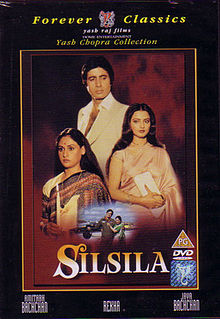
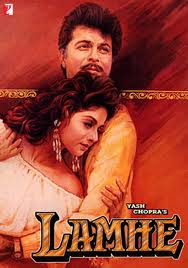
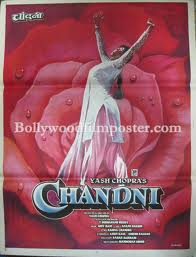
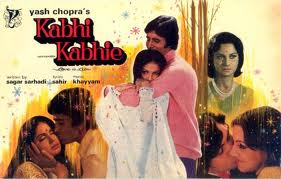
With ‘Kabhie Kabhie’ (1976), he introduced a poetic touch into the art of commercial movie making and set the box office registers tingling. This trend continued in his subsequent movies like ‘Silsila’ (1981), ‘Chandni’ 220px-Silsila(1989) and ‘Lamhe’ (1991). The angst eventually mellowed down and human emotions acquired center stage. All the characters in these movies were from an affluent background. In each venture, the canvas only got larger. In each, candy-floss romance was in the air, backed by melodious music and soulful lyrics that would remain etched in our collective psyche for a long time to come.

His style of depicting romance was muted, elegant and refined. The main protagonists were invariably civil and dignified, following the norms of propriety. It was devoid of lewd dialogues, coarse lyrics and vulgar scenes. Even in ‘Darr’ (1993), we had an anti-hero stalking the heroine, but never in bad taste.

Social Values and the Indian Diaspora Lamhe poster

He produced ‘Dilwaale Dulhania Le Jayenge’ (1995), which was directed by his son, Aditya Chopra. The movie set new records and Indians world over could readily connect with the superiority of family values it espoused. A daughter brought up in UK needs permission from her overbearing father for a vacation in Europe; a hero refuses to get persuaded by the heroine’s mother to elope with the heroine; instead, the couple works towards getting an approval of the match from the heroine’s father, come what may – these were market savvy master strokes in the script which made the movie immensely popular with all age groups.

Musical Romanceposter of chandni

Very few directors have ventured to work on a theme with music as a backdrop. ‘Dil To Pagal Hai’ (1997) did precisely that. All the main characters had a different perspective on love, and the movie was about the transformation of their belief systems. It was beautifully built around music and dance, elevated to a level where soul-mates discover each other.

We live in terrorism infested times. It is not surprising that his last venture, ‘Jab Tak Hai Jaan’ (2012) used this as a backdrop of a triangular love story.

An Ear for Music and Rich PoetryDDLJ poster

While supporting his brother, B. R. Chopra, Yash Chopra got to work with music directors like N. Dutta and Ravi. However, once on his own, he first worked with Lakshmikant Pyarelal for ‘Daag’, and then with Rahul Dev Burman for ‘Deewar’. Khayyam was his choice for ‘Kabhie Kabhie’ and ‘Trishul’. All through these movies, he worked with Sahir Ludhianvi as the lyricist.

Yet another master stroke was his persuading legendary classical musicians Shiv Kumar Sharma and Hari Prasad Chaurasia to compose the music for several of his movies. Together, they created a rich legacy of music in such movies as ‘Silsila’, ‘Chandni’, ‘Lamhe’ and ‘Darr’. The classical dance sequences performed with aplomb by  Sridevi in ‘Chandni’ and ‘Lamhe’ remain as fresh today as they were when captured on celluloid. ‘Silsila’ and ‘Veer Zaara’ had lyrics by Javed Akhtar, whereas all others had poetic inputs from Anand Bakshi.DTPH poster

For ‘Dil To Pagal Hai’, he turned to Uttam Singh, who came up with mellifluous compositions for the movie. His best was, however, reserved for ‘Veer Zaara’, which dug up old compositions of the legendary Madan Mohan, revived by the latter’s son Sanjeev Kohli.

In his last offering, ‘Jab Tak Hai Jaan’, he teamed up with A. R. Rehman, with lyrics by Gulzar.

Setting New Benchmarks

Undoubtedly, he set new benchmarks for the film industry. Several trends that we take for granted today were initiated by him. He set the template for future Bollywood directors who continue to ape his technical gloss but lack the depth of romance and human emotions captured by him. He was among the first to push the industry into professionalism. Working with classical musicians and accomplished Urdu poets, he has left behind a rich repertoire of music for all of us to savor for a long time to come.

He would always be fondly remembered for a certain elegance and refinement of language which many of the current breed of Bollywood dream merchants sadly lack. Also, for the unique brand of secularism, peace and unity he propagated through his movies.

Read Full Post »

Quite early in life, I discovered that a movie should be selected for viewing not based on its cast Lekinbut based on its director. Each director has a distinctive perspective on life, and the manner in which he/she presents a theme is as unique as, say, one´s finger prints. Admittedly, the core brilliance of a movie is determined by the producer-director duo. But the unmistakable stamp on the narrative is that of the director. To put it simply, if you sit down to watch a movie by Gulzar saheb, you know what to expect. On the other hand, if you are going to see a David Dhawan flick, you already suspect what is in store.

The Brand Equity of a Director

Over a period of time, a movie director builds up a strong brand equity for himself. It comes from the uniqueness of his style, the choice of his scripts, consistency in quality of his directorial ventures, earning a respect from the discerning viewers, crowned by some degree of commercial success.

As a person who has been brought up on a rich diet of Bollywood fare right since his childhood, and maachisas someone who has dabbled in the art of movie making himself, it is not difficult for me to appreciate the complexity of producing a commercial pot-boiler. The cine-goers eventually get to see only the end result on the screen, little realizing the hard work done by all to ensure a high quality product. That is why, a good movie makes me feel fulfilled. I feel like saluting the producers and directors who have invested their effort and money on a worthwhile product.

The CEO of a Dream Merchandise Factory

A director’s role in shaping a movie would perhaps be comparable to that of either the CEO of a company or the conductor of an orchestra. A CEO’s mindset determines the business strategy of a company. His style of functioning and his value system permeates across all levels of the company. Likewise, the conductor of an orchestra blends the notes of stringed, percussion and other instruments, creating a symphony which is unique. Like a CEO guiding a company or a conductor presenting a symphony, the director also balances the strengths and weaknesses of his team members and comes up with a movie which is entertaining – and possibly educative – in the social context.

Surely, a director coordinates and guides various specialists to achieve the level of perfection in hisGaja_Gamini_ product. Apart from the choice of a script and the main caste, no department of movie making would remain aloof from the influence of a director. Screenplay, cinematography, sound design, choreography, music, editing, budgeting, financing, marketing and many other facets of movie making come under a director’s watchful eye, thereby making each movie a unique attempt at story telling. And when someone as accomplished as M F Hussain decides to wield the megaphone, we are in for a stupendous visual treat, as in ‘Gaja Gamini’ and ‘Meenaxi – A Tale of Three Cities’!

A Director’s Take

Exploiting the latent potential of an actor is surely one of the key traits of a director. Look at some of the amazing transformations we have seen on the silver screen all these years! To recapitulate just a few:

  • A villain or a vamp being cast in a positive role: Remember Lalita Pawar in a matronly role in Raj Kapoor´s ‘Anari’? Or, Shashikala supporting the sulking heroine in Hrishikesh Mukherji´s ‘Anupama’? Cut to ‘Abhiman’ and you notice Bindu empathising with the lead pair. Under the baton of Manoj Kumar and Manmohan Desai, we had Pran playing positive roles in ‘Shaheed’, ‘Upkar’ and ‘Zanjeer’. From a staunch villain, Madan Puri became a doting grand-pa in Rajshri Production’s ‘Dulhan Wohi Jo Piya Man Bhaye’.
  • From a flamboyant playboy to a chivalrous gentleman: Yesteryear´s jumping jack JeetendraHum aapke hain kaun becomes a simpleton in ‘Geet Gaya Pattharon Ne’ and ‘Boond Jo Ban Gayi Moti’ under the watchful eyes of V. Shantaram. Gulzar is equally effective with Jeetendra in ‘Parichay’ and ‘Khushboo’. Lately, we have seen Salman Khan being tamed by Suraj Barjatya in ‘Maine Pyar Kiya’, ‘Hum Aapke Hain Koun..!’ and ‘Hum Saath Saath Hain’.
  • From a debonair hero to a villain: Under Brij, Ashok Kumar, the quintessential hero, becomes a villain in ‘Ustadon ke Ustad’; under Vijay Anand, he springs a surprise in ‘Jewel Thief’.

The chemistry between a music director and a director has also produced enchanting results for music buffs.

  • Besides raucous beats in movies like ‘Bombay’ and ‘Rangeela’, A R Rehman comes up withZubeidaa soulful music in ‘Zubeida’ for Shyam Benegal. Likewise, for Subhash Ghai, he composes a different genre of music in ‘Taal’.
  • The duo of Shankar-Jaikishan, when working with Raj Kapoor, left behind a rich repertoire of scores, some of which are evergreen and a treat for movie goers of all ages.
  • Salil Chaudhury, when coupled with Basu Chatterjee, came up with some unique scores in ‘Rajnigandha’ and ‘Chhoti Si Baat’.

Some Directors I Admire

Selection of a script essentially determines the social message that a director wishes to convey through his work. One fondly recollects the following directors who have sought to convey a unique message of their own through their work:

  • Aparna Sen did a great service to the senior citizens by highlighting their plight in the thought-provoking ’36 Chowringhee Lane’. The acute loneliness of Violet Stoneham touched our hearts. In ‘Paroma’, she explored the psyche of a tradition-bound housewife seeking liberation in her own way. In my opinion, her best offering so far has been ‘Mr. & Mrs. Iyer’. It conveyed the message of inter-religious harmony in a very effective manner. Her latest offering, ‘The Japanese Wife’, depicts the true meaning of love, sans any physical contact. One wishes her a long innings of creative offerings.
  • Ashutosh Gowarikar is another director whose work one has come to admire. ‘Lagaan’, ‘Swades’, ‘Jodha Akbar’ and ‘What is Your Rashee’ were all brilliant offerings. One surely looks forward to more movies from his stable in the days to come.
  • Basu Bhattacharya excelled in depicting the post-matrimonial relationships between couples. If ‘Anubhav’ captured the vacuum felt in the absence of a child and the misunderstandingTeesri kasam created as a result of an ex-lover of the wife walking into the household, ‘Aavishkar’ dwelt at length on the dissappointment caused by the realization that a college romance is so very transient. In ‘Teesri Kasam’, he came up with a classic philosophical treatise, whereas in ‘Sparsh’, he touched upon the challenges faced by the differently abled in our society. Finally, in ‘Aastha’, we saw him covering the impact of a materialistic culture on our morality and social values.
  • Basu Chatterjee‘s movies are classics in their own right. Depicting the dilemmas faced by the great Indian middle class with a dash of humour was his forte. Right from ‘Chameli Ki Shadi’ to ‘Baaton Baaton Mein’, ‘Chitchor’, ‘Hamari Bahu Alka’ and ‘Piya Ka Ghar’, he has regaled us with heart-warming tales, backed by tongue in cheek humour. In ‘Rajanigandha’, the hero, while watching a movie, imagines himself and the heroine as Dharmendra and Hema Malini on the screen – one of the several master strokes of the director. In ‘Chhoti Si Baat’, the hero and the heroine go about singing a song in crowded places whereas all others around them remain preoccupied with their own activities! In ‘Khatta Meetha’, we find an irritated Ashok Kumar threatening to kill Pradip Kumar, the heroine’s father, if he fails to bless her marriage with his adopted son.
  • One has admired some of the B. R. Chopra movies because of not only their socially Gumrahresponsible messages but also for their experimental streak. If ‘Naya Daur’ was about rapid industrialization leading to labour unrest, ‘Gumrah’ was about the perils of a wife likely to go wayward. ‘Humraz’ spoke of the dangers inherent in a situation where one attempts to hide facts from one’s spouse. ‘Insaf Ka Tarazu’ covered the trauma of rape, whereas ‘Nikaah’ was about a woman asserting her rights to choose a husband. ‘Pati Patni aur Woh’ was a humouros take on the proverbial seven-year itch of the male of the species, a theme which was effectively countered in ‘Rang Birangi’ subsequently by none other than Hrishikesh Mukherjee! His experimental foray into the genre of suspense led to two classics: ‘Kanoon’ and ‘Ittefaq’, both of which broke from convention and did not boast of any song, a taboo for the mainstream BollywoodDark Bandini cinema. ‘Baghban’, directed by his son Ravi Chopra, is a great comment on the derogatory attitude adopted by some of the grown up children towards their parents.
  • Bimal Roy gave us realistic movies with a socialistic message. ‘Do Beegha Zameen’ and ‘Bandini’ shall remain etched in our minds forever. In ‘Sujata’, he touched upon the stigma of untouchability in a very poignant manner.
  • David Lean‘s work has left an indelible impression on me. Think of either the elements of nature or the complexity of human relationships and you end up remembering ‘The Lawrence of Arabia’, ‘Dr. Zhivago’ and ‘Ryan’s Daughter’. ‘The Bridge on the River Kwai’ was yet another masterpiece from this great man.
  • Govind Nihalani has given us some brilliant movies over the years. ‘Aakrosh’ was based on a real life incident. ‘Ardh Satya’ captured the realities faced by our police force in stark detail. Much later, the trauma faced by youth involved in the naxalite movement was poignantly captured in ‘Hazaar Chaurasi Ki Ma’. Another unforgettable offering of his was the TV serial ‘Tamas’.
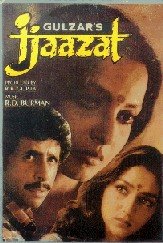
  • Gulzar is another favourite of mine. Right from ‘Mere Apne’, ‘Koshish’, ‘Parichay’, ‘Achanak’Ijaazat and ‘Kitaab’ to ‘Khushboo’, ‘Kinara’, ‘Aandhi’ ‘Angoor’, ‘Namkeen’ and ‘Ijazat’, he demonstrated a finely nuanced grip on capturing human emotions. Using flashbacks as an essential ingredient of his inimitable style of story telling, he has created a series of movies which explore the human psyche with unparalleled depth. For Doodrdarshan, he created a master piece in the serial ‘Mirza Ghalib’, ably assisted by Jagjit Singh and Naseeuddin Shah. Other unforgettable movies directed by him are ‘Lekin’, ‘Maachis’ and ‘Hu Tu Tu….’. What a creative line up!
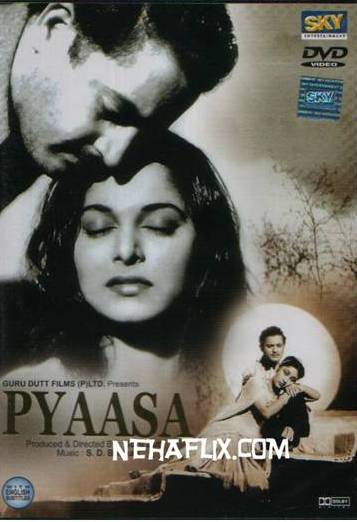
  • Guru Dutt has left behind a series of thought-provoking movies for all of us to enjoy for all times to come. ‘Pyaasa’ captured not only the frustration of a creative poet who earns recognition only after he is presumed to be dead, but also the angst of the youth dissppointedPyaasa poster by the shattering of socialistic dreams in post independence India. ‘Kagaz Ke Phool’ was autobiographical in nature, and went on to assume a cult status in black and white cinematography. ‘Sahib Bibi aur Ghulam’ looked at the degrading zamindari system and was backed by powerful performances. He also gave us ‘Chaudavin Ka Chaand’, memorable for its music.
  • Hrishikesh Mukherjee is yet another director who has captured the value system of the great Indian middle class in a very effective manner. If ‘Anupama’ portrayed the transformation of a docile daughter into a rebel of sorts, ‘Satyakam’ touched upon the trials and tribulations of a whistle-blower who values integrity and honesty above all else in his life. ‘Aashirwad’ captured a daughter’s longing for her father, whereas ‘Anand’ captured the dilemmas of the medical profession in a heart-wrenching manner. In ‘Guddi’, he touched upon the perils of hero-worship amongst teenagers and the negative influence of movies on those in an impressionable age. ‘Abhimaan’ put the fragile male ego under a microscope. In ‘Chupke Chupke’, he came up with a rip-roaring treatise on the eccentricities of the linguistic purists. ‘Bawarchi’ touched upon the joint family system, whereas ‘Golmaal’ was well-intended pun directed at moustache maniacs. In ‘Khubsoorat’, he drove home in his inimitable style the need of striking a balance between fredoom and discipline in family life, espousing the cause of nirmal anand (unalloyed bliss). His last offering was ‘Jhoot Bole Kauwa Kaate’ Pakeezahwhich conveyed the value of truthfulness in all relationships in a very humorous manner. One truly misses such directors!
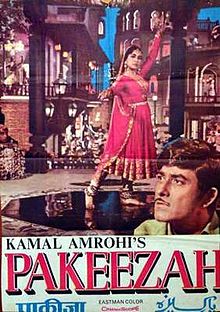
  • Kamal Amrohi came up with virtual poetry on celluloid with ‘Pakeezah’. The whole movie was a work of passion, akin to the rich tapestry of the bright red carpet he had got specially woven for a single dance sequence to be picturized. His ‘Razia Sultan’ was also a rich offering.
  • When it comes to clean family entertainment steeped in Indian tradition, Rajshri Productions has always been very consistent. Right from ‘Aarti’, ‘Dosti’, ‘Jeevan Mrityu’ andmovie Vivah ‘Tapasya’ to ‘Hum Aapke Hain Kaun…!’, ‘Hum Saath Saath Hain’ and ‘Vivah’, we have lived through good and bad times faced by families we could easily identify with. Several of their offerings have tugged at our heart-strings: ‘Uphaar’, ‘Ankhiyon Ke Jharokhon Se’, ‘Chitchor’, ‘Dulhan Wohi Jo Piya Man Bhaye’ and ‘Maine Pyar Kiya’, to name a few.
  • If there is one person who earned money in routine Bollywood pot-boilers and ploughed it back to produce some unique movies, it is Shashi Kapoor. ‘Vijeta’ captured in detail the challenges faced by young officers in the Indian Air Force. ‘Utsav’, directed by Girish Karnad, was yet another master piece, based on the famous Sanskrit play ‘Mriccha-katikam’. ‘Kalyug’ was based on the epic Mahabharata and was directed by ShyamAnkur Benegal.
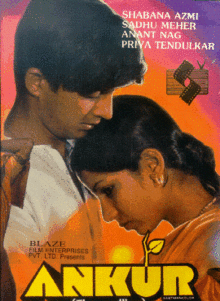
  • Shyam Benegal started off as a master of alternate cinema, offering such hard-hitting comments on the under-privileged of the society as ‘Ankur’, ‘Nishant’, ‘Manthan’ and ‘Bhumika’. ‘Zubeidaa’ presented an interesting slice of history. However, his recent offerings have been rich public-spirited satires, highlighting glaring deficiencies in the public delivery system and also taking a dig at our age-old misconceptions and taboos. If you have seen ‘Welcome to Sajjanpur’ and ‘Well Done, Abba’, you would know what I am talking about.
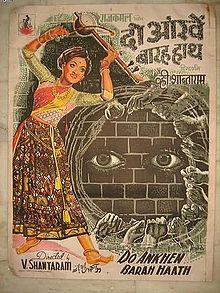
  • V Shantaram gave us classics which drew on the traditional values and art forms. If ‘Dr. Kotnis Ki Amar Kahani’ was based on a real life happening, ‘Jhanak Jhanak Payal Baaje’ captured the dilemmas faced by artists committed to their profession. ‘Do Aankhen Barah Haath’ touched on the criminal system, whereas ‘Navrang’ explored in detail the male fantasy of having the perfect female as a life companion. 
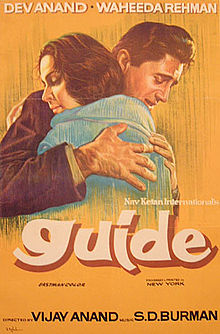
  • Vijay Anand gave us jewels like ‘Nau Do Gyarah’, ‘Jewel Thief’, ‘Tere Mere Sapne’ and ‘JohnyGuide_poster Mera Naam’. ‘Guide’ immortalized one of the great works of R. K. Narayan. Performance of the lead pair of Dev Anand and Waheeda Rehman still remains fresh in our memories. His penchant for perfection was such that in ‘Nau Do Gyarah’, if a bomb was to go off in seven minutes, the on-screen suspense went on for precisely seven minutes!

Several other legendary directors, like Raj Kapoor, Mehboob, K. Asif, Subhash Ghai, Yash Chopra, Shekhar Kapur and others do not appear here. Their exclusion here is in no way meant to belittle their immense contribution to the art and form of cinema as we know it today. It is just that a majority of their work has come to define what we generally refer to as ‘mainstream cinema’, whereas the idea here has been to capture directors who have been innovative in their own way.

Directors to watch out for

All this is not to say that brilliant work is not being done these days. ‘Khosla ka Ghosla’ directedDor by Dibakar Banerjee, ‘Iqbal’, ‘Dor’ and ‘Mod’ from Nagesh Kukanoor, ‘Tare Zameen Par’ by Aamir Khan, ‘Black’ by Sanjay Leela Bhansali, ‘Munnabhai’ series and ‘3 Idiots’ by Raj Kumar Hirani, ‘Chak de India’ by Shimit Amin, ‘Cheeni Kum’ and ‘Pa’ by R. Balakrishnan, ‘The Blue Umbrella’ by Vishal Bhardwaj, ‘Atithi Tum Kab Jaoge’ by Ashwani Dheer, ‘Chhodo Kal ki Baatein’ by Pramod Joshi, ‘Do Dooni Chaar’ by Habib Faisal, ‘Stanley ka Dabba’ by Amol Gupte, ‘I am Kalaam’ by Nila Madhab Panda and ‘Vicky Donor’ by Shoojit Sircar are all movies which give us the firm hope that Bollywood is finally out of the singing around the tree days, willing to experiment with unconventional themes, that too while keeping the box officeTaareZameenPar registers tinkling.

Rise in disposable incomes has led to the proliferation of multiplexes. Audience has turned younger. In turn, small budget movies have carved out a niche for themselves. Several producers have learnt to minimize financial risks by beating the star system and are instead banking on smarter scripts, thereby achieving better returns on their investments.

Exercising Our Emotional Muscles

Consider this: why do we get hooked on to movies in the first place? Is it sheer escapism? May be, yes, but also coupled with an appreciation of – and fascination with – this genre of entertainment. Identifying oneself with either a character or a situation presented on the screen gives one immense psychological relief. Also, one needs to exercise one’s emotional muscles or skills in a way that may or may not be acceptable in our routine lifestyles!

A director with a strong brand equity surely knows how to touch our heart-strings. In the process, he teaches us to exercise our emotional muscles better and think out-of-the-box when confronted with a real life situation!!

Read Full Post »

Discovering and Cultivating a Hobby

In the restricted circle of friends and relatives that our family is exposed to, it is common knowledge that since the past four years we have been assiduously chronicling the events and occurrences in the family. These chronicles have taken the shape of movies which are more in the nature of a collage of videos and still photos, backed by appropriate musical scores from diverse sources.

The intention of making these movies is surely not to advertise the family or its mundane achievements in life. The basic idea is to share the major events in the family with the extended family members who are spread across diverse geographical locations, as also to preserve the family history for posterity. If the history buffs in our future generations preserve these, our family background would always be just a click away.

Enabling Factors

What have been the enabling factors for the development of these movies? Let me attempt to list a few. One, a healthy dose of movies celebrating the middle class values like caring, sharing, mutual trust and a respect for one´s elders. Two, happy moments and events which leave one´s emotional core stirred and shaken. Three, a fondness for good music, backed by soulful lyrics. Four, a hobby of preserving the family archives, whether in the form of old photos, diaries left behind by our forefathers, and the like. Five, creative juices sloshing about inside one in gay abundance at times, not allowing one to rest till the time a meaningful external expression is found.

Challenges

What could be challenging about arranging some dumb photos in a sequence and backing them up with a few songs, you may well ask. Well, to present something new and unique to my audience every time is one. Also, one has to keep one´s self-promotional tendencies in check – so, no hapless visitor to our house shall ever be strapped to a couch and forced to watch one of these movies! Moreover, narcissism is not considered a virtue; so, each movie´s theme encompasses snippets of even those unsuspecting friends and relatives who are not necessarily a part of the main narrative.

The Journey So Far

Shruti-Vinod

The year 2007 saw our daughter getting married. Gradually, an idea took shape – to make a movie which would not only cover the various ceremonies that took place in connection with the marriage, but would also capture the childhood days and upbringing of both the bride and the bridegroom. Once old photos had been collected, search began for a studio which could transform the concept into reality. However, tradition-bound studios were not too keen to experiment with their own formats. With the help of a friend, we could identify a suitable software. Work started at home with a humble second-hand laptop.

Backed by quotations from Shri Aurobindo´s Savitri, the dvd took about eight months to get composed. Goodwill messages from all those who could not attend the event also got covered. Titled `Shruti Vinod`, the movie was 125 minutes long. Reactions from viewers were encouraging, to say the least.

Hamari Bahu Garima

Come 2008, and our son got married. Our daughter-in-law, Garima, joined the family. Motivated by the first experiment, the canvas of the second movie got wider. Appropriate cartoon sequences were added up, juxtaposed with audio clips of the bride and the groom. Few other special effects also brightened up the proceedings. The end result of this labor of love was a 250 minutes long movie. For the benefit of those in a hurry, a smaller version of 130 minutes was also prepared. This one was titled `Hamari Bahu Garima`.

Dhoom Macha Le

In 2009, our daughter had a toddler of her own. Aptly named Suman, the blossoming of this flower in the family garden at Asker in Norway was greeted with unbridled enthusiasm. A dvd running into about 35 minutes came up first. During 2010, a dvd named `Dhoom Macha Le` was completed and released. An interesting feature of this 100 minute long movie was a special chapter on Suman´s future career aspirations, with examples drawn from a long list of celebrity female achievers.

Both were followed up with another dvd which captured the second year of her life.

X´mas 2009 and God Bharai

This covered the get together of all the children and their families. Both the couples danced to their heart´s content, with Suman witnessing the God Bharai function of Garima.

Shalini´s Griha Pravesh

Lovingly done, this one hour-long dvd captured the birth of Shalini, our son´s daughter, in March 2010. It ended up showing the new-born entering her house in Basel, Switzerland, for the first time.

1962 : A Love Story

As I write this in July 2012, two more movies have got added to the family portfolio. In February, we could add `1962: A Love Story’. It is about 55 minutes long and covers the life and times of my eldest co-brother who completed 50 years of married life on the 8th of March this year. In this work, it was challenging to capture the trauma of partition of India in 1947, faced by the families then.

Shalini – The Beautiful

June 2012 brought about the completion of yet another movie, `Shalini – the beautiful`. Based on the first two years of our son´s daughter, this runs into 108 minutes. A special feature here is the coverage of diverse aspects of Shalini´s personality, as we have seen it evolving over time so far. The thematic peg used for this purpose is the `NAVARAS` concept espoused centuries back by Bharat Muni in his famous treatise on the fine arts, `Natya Shastra`.

An Enriching Experience!

Overall, cultivating this hobby has been a very fulfilling and enriching experience. The effort is highly labor intensive, what with a scheme to be followed for all inputs to be neatly arranged. Exhausting and challenging, yet exhilarating and liberating in more ways than one. Possibly, this is what Maslow meant when he spoke of self-actualization.

Courtesy Bollywood and Hollywood

All the family members have contributed immensely to all these ventures. However, the lion´s share of the credit goes to the creative minds from Bollywood as well as Hollywood. One has drawn liberally from the works of such creative geniuses as Gulzar, Basu Chatterji, Hrishikesh Mukherji, Yash Chopra, David Lean and the like. Movies from the Rajshri stable find a place of pride in our scheme of things. And, of course, renowned music directors whose immortal works have regaled all of us all these years have unknowingly enriched our family archives beyond compare.

One is grateful for all the grace one has received in different aspects of one´s life, including for the baby steps taken so far in capturing family events through the medium of movie making.

Read Full Post »