Feeds:
Posts
Comments

Posts Tagged ‘Hindi Movies’

Basu Chatterjee was a champion of the middle class, who turned ordinary lives into captivating stories. His films showcased relatable characters dealing with real challenges, making their triumphs and losses deeply affecting us.

Basu da had a unique way of showing female characters. He was curious about women’s thoughts and dreams, exploring their views on romance and meaningful relationships, both romantic and platonic.

He began directing in 1969 with his film Sara Akash, starring FTII-trained actor Rakesh Pandey. The story, set in Agra, follows a newlywed couple dealing with the challenges of an arranged marriage in a joint family. This year marked the onset of the first wave of parallel cinema, showcasing films like Mrinal Sen’s Bhuvan Shome and Mani Kaul’s Uski Roti. However, the audience for these films, including Sara Akash, remained largely confined to film festivals.

Basu Chatterjee first gained attention with his 1974 film, Rajnigandha, which is based on Manu Bhandari’s Hindi short story Yahi Sach Hai. The film looks at a woman’s struggle between her current partner and an ex who returns, evoking past emotions. Rajnigandha established Chatterjee’s unique filmmaking style. It featured newcomers Amol Palekar and Vidya Sinha, with mostly unknown actors, except for Dinesh Thakur. Chatterjee made a cameo as an annoyed moviegoer. The film’s music, by Salil Chowdhury with lyrics by Yogesh, included memorable songs. Its success led to lasting collaborations among Basu, Yogesh, Chowdhury, and cinematographer K. K. Mahajan. Shyam Benegal’s Ankur also found success that year, demonstrating that art and commerce could indeed thrive together.

He was a pioneering filmmaker who highlighted the Parsi community in Khatta Meetha, showing them authentically and avoiding clichés. Similarly, Baaton Baaton Mein focused on the Catholic community in Bandra, also avoiding stereotypes. Basu da’s films found romance in daily life in Bombay, whether on crowded trains, buses, or Delhi streets.

Basu Chatterjee, along with Gulzar and Hrishikesh Mukherjee, formed a strong trio that shaped middle-of-the-road cinema in the 1970s. Their films appealed to middle-class Indians longing for unique yet relatable stories, combining mainstream charm, memorable music, real emotions, and uplifting narratives based on everyday life.

Basu da was born in Ajmer on the 10th of January, 1927. Being close to his 98th birth anniversary, let me highlight a few of his timeless classics.
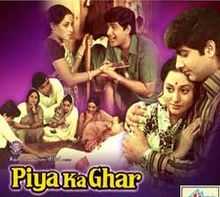
Piya Ka Ghar is a film featuring Jaya Bhaduri and Anil Dhawan, and is a remake of the Marathi film Mumbaicha Jawai. It tells the story of the difficulties faced by married couples in Mumbai, particularly due to limited living space. Malti, a girl from a village, marries Ram through a matchmaker but feels disappointed when she learns they must live with his extended family in a cramped apartment, which affects their privacy and intimacy. Available on Prime Video.
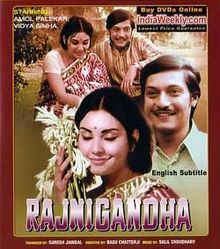
Rajnigandha, based on Mannu Bhandari’s short story Yahi Sach Hai, features Vidya Sinha as a woman torn between two suitors and takes her time to select a husband, a departure from typical glamorous roles. The film centers on the simple lives of three middle-class people without unnecessary melodrama. Vidya’s performance received praise from critics and audiences alike. The film marked the introduction of Amol Palekar and Vidya Sinha, and included memorable songs sung by Lata Mangeshkar and Mukesh, who won a National Award for their work. Available on Prime Video.
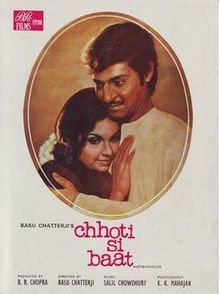
Chhoti Si Baat features Amol Palekar as a shy man who hires a life coach to learn how to propose to a girl. Palekar plays an introverted character, while Vidya portrays a woman who knows his feelings and waits for him to act. The film connects well with audiences due to its middle-class setting. It also includes beautiful music by Salil Chaudhury, showcasing Yesudas’ talent in the duet, Jaaneman Jaaneman Tere Do Nayan, filmed with Dharmendra and Hema Malini. Available on Prime Video.
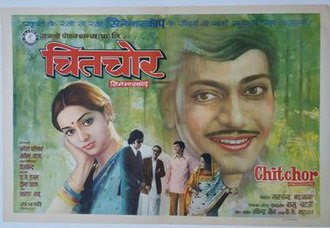
Chitchor is a romantic comedy about mistaken identities involving Geeta and her family eager for her to meet an eligible bachelor, Sunil, who is coming to their village. However, when overseer Vinod mistakenly arrives instead, he wins the affection of Geeta, who wants to marry him. The arrival of Sunil complicates matters as he also develops feelings for her. The film includes lovely songs by Ravindra Jain, such as Jab Deep Jale Aana. Available on Prime Video.
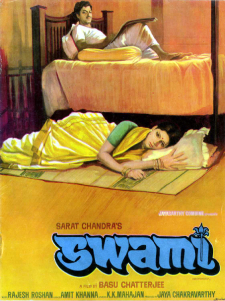
Swami is based on Sarat Chandra’s novel of the same name and follows Saudamini, played by Shabana Azmi, who admires her uncle while facing approval issues from her mother regarding her friendship with Naren. After marrying Ghanshyam, a kind wheat merchant, she feels trapped but learns of her husband’s true kindness. The film concludes with her transformation into a devoted wife, showcasing Azmi’s impressive performance. Available on YouTube.
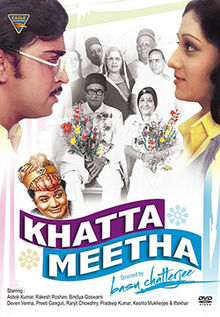
Khatta Meetha is inspired by the American classic Yours, Mine and Ours and tells the story of a middle-aged widower, played by Ashok Kumar, who marries a widow, portrayed by Pearl Padamsee. They both have children from previous marriages and face challenges in merging their families as the siblings conflict. Yet, through various trials, the family finds ways to unite and coexist peacefully, depicting a heartwarming conclusion. Available on YouTube.
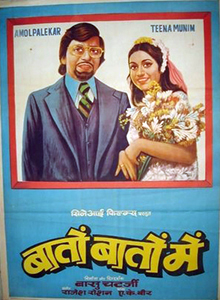
Baton Baton Mein is set in a Christian context and highlights the courtship of Amol Palekar and Tina Munim, with the help of her uncle, played by David. Rosie, a widow, wants her daughter to marry, while Nancy meets Tony on their daily commute. Tony’s shyness creates tension, prompting Rosie to look for other matches, but her uncle’s intervention helps reconnect Tony and Nancy. The film had some lovely songs like Suniye Kahiye Kahiye Suniye, Na Bole Tum Na Maine Kuch Kaha and Uthe Sabke Kadam tuned by Rajesh Roshan. Available on Prime Video.

Apne Paraye, inspired by Sarat Chandra’s novel Nishkriti, revolves around Utpal Dutt, a lawyer with a fondness for his cousin Chander (Amol Palekar), who prefers music over a steady job. Chander’s wife, Sheela (Shabana Azmi), is the strict one in the household. Their stable lives are disturbed when Utpal’s younger brother arrives with his wife, creating a complex family dynamic filled with rivalries. Available on Prime Video.
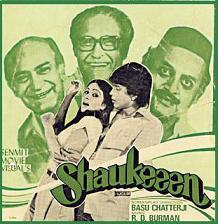
Shaukeen is adapted from the American comedy Boys’ Night Out and follows the lighthearted misadventures of three elderly men, played by Ashok Kumar, Utpal Dutt, and A K Hangal, who fantasize about romance while trying to meet a young woman. They embark on a trip to Goa thanks to their driver, Ravi, leading to humorous yet respectful situations. Ashok Kumar and the ensemble cast deliver exceptional performances throughout. Available on Prime Video.

Chameli Ki Shaadi represents a groundbreaking film tackling caste discrimination with a strong feminist lead. Charandas, (Anil Kapoor), is engrossed in wrestling but loses focus when he meets Chameli (Amrita Singh). Their love faces familial opposition due to caste differences, and to find a solution, they consult an advocate Harish (Amjad Khan), who suggests they elope. Available on YouTube.

One notable aspect of Basu da’s films was their exceptional music. He collaborated with a variety of music directors, including Salil Chowdhury, R D Burman, Laxmikant Pyarelal, Bappi Lahiri, Jaidev, and more. However, his most fruitful partnership was with Rajesh Roshan, producing memorable soundtracks for films like Swami, Khatta Meetha, Baaton Baaton Mein, Priyatama, and Hamari Bahu Alka.

The Chaterjee-Roshan duo have given some memorable songs, like, Pal Bhar Mein Yeh Kya Ho Gaya (Swami), Aaye Na Baalam (Swami), Koi Roko Na Deewane Ko (Priyatama), Tere Bin Kaise Din’(Priyatama), Thoda Hai Thode Ke Zaroorat Hai (Khatta Meetha), Badal Toh Aaye (Dillagi), Na Bole Tum Na Maine Kuch Kaha (Baaton Baaton Mein), Suniye Kahiye (Baaton Baaton Mein), Charu Chand Iss Chanchal Chitwan (Man Pasand), Prem Ki Hai Kya Sun Paribhasha (Hamari Bahu Alka), and many more.

In the 1980s, the number of supporters for his style of filmmaking dwindled, prompting Basu Chatterjee to transition to television. His debut serial, Rajani, featuring Priya Tendulkar, was a pioneering effort in consumer activism in India. Following Rajani, he directed other notable television series such as Darpan and Kakkaaji.

Basu Chatterjee received the Filmfare Best Director award for Swami, which also earned a National award. He was honoured with six Filmfare Awards – Critics for Screenplay.

In the new millennium, remakes of Chitchor and Shaukeen emerged, but they failed to capture the charm of the originals. Today, the success of films like Bareilly Ki Barfi and Badhaai Ho serves as a testament to the legacy of Basu Chatterjee’s cinematic style.

About the author

Shivdas Nair has been a cinephile for years. However, he has just started putting his thoughts on paper. A media professional for over two and half decades, and with changing times, now a Principal Advisor – Growth with a vibrant and innovative IT Consulting & Advisory Services company, i-Gizmo Global Technologies. He has just started blogging at https://thoughtsoveracuttingchai.blogspot.com.

Notes

  1. A version of this article first appeared in The Reviewer Collective group on Facebook. The author’s consent to reproduce it here is gratefully acknowledged.
  2. All the visuals are courtesy the World Wide Web.

Related Post

Read Full Post »

One of the compensations for leaving behind the phase of adolescence is a wholesome optimism that envelopes us in our youth. Yes, it does take the fine edge off the series of infatuations and whatever semi-romantic triumphs of a transient nature may have come our way in our formative years. But it has the admirable effect of making us believe that our Guardian Angels are working overtime to ensure that our cup is overflowing with hopes for a brighter future, whether professionally or personally. We are in an exuberant state of mind where the sun will always keep shining, the grass will always be green, flowers will forever be in bloom, and God will continue to be in heaven.

Our dream merchants have often showcased this state of affairs. Our heroes and heroines can be found admiring nature while belting out a melodious song, duly backed by a well-equipped orchestra amid the wilderness. In some cases, they are shown to realise that life is nothing but a journey, comprising ups and downs and twists and turns. A few are introspective, exemplifying the bliss of solitude, whereas some dream of a great career ahead.

Given the penchant of Bollywood to keep spinning romantic yarns, most of such solos showcase the inner yearning to run into a potential soul mate. One waits for a Cupid’s arrow to strike one sooner rather than later. A sinister restlessness creeps in and the unfulfilled desire for heartfelt companionship governs one’s behaviour. The latent wish to identify The Chosen One who will soon be swaying us off our feet gets expressed with gay abandon. A romantic spring is in the offing. Of interest here are songs wherein the party of the first part has dreams in his/her eyes and is seeking love, wandering around as a sole atom. The party of the second part is yet to appear on the horizon.

Here is a random sample of some such songs from Hindi movies.

A Communion with Mother Nature

Against a captivating landscape, our heroes and heroines cannot be blamed for feeling overawed and expressing their love for lush green mountains, sparkling lakes, roaring waterfalls, and the gentle rustle of water in a rivulet nearby.

Suhana safar aur ye mausam haseen

Movie: Madhumati (1958)

Music: Salil Chowdhury

Lyrics: Shailendra

Singer: Mukesh

Ye kaun chitrakar hai

Movie: Boond Jo Ban Gayi Moti (1967)

Music: Satish Bhatia

Lyrics: Bharat Vyas

Singer: Mukesh

Dil ye chota sa

Movie: Roja (1992)

Music: A.R. Rahman

Lyrics: P. K. Mishra

Singer: Minmini

Barso re

Movie: Guru (2007)

Music: A.R. Rahman

Lyrics: Gulzar

Singer: Shreya Ghoshal

Music: Food for the Soul

Occasionally, we get gently reminded of the unique power of music. The main protagonist finds music in whatever is happening in the environment. Mundane occurrences generate mellifluous notes which act like a balm for our frayed nerves.

Aawara bhanwre

Sapney (1997)

Music: A R Rahman

Lyricist: Javed Akhtar

Singer: Hema Sardesai

Sunne wale sun lete hain

Movie: Saaz (1998)

Music: Zakir Hussain, Bhupen Hazarika, Raj Kamal, Yashwant Dev

Lyricist: Javed Akhtar

Singers: Suresh Wadkar, Shraddha Pandit, Shweta Pandit

The Bliss of Solitude

Whether steering a vehicle on a busy road, relishing an introspective saunter in wooded hills, or riding a horse-driven carriage through a rural setting, reflecting on the purpose of life, these songs tug at our heartstrings.

Le chala jidhar ye dil nikal padey

Movie: Miss Bombay (1957)

Music: Hansraj Behl

Lyrics: Prem Dhawan

Singer: Mohd. Rafi

Kuchch dil ne kaha

Movie: Anupama (1966)

Music: Hemant Kumar

Lyrics: Kaifi Azmi

Singer: Lata Mangeshkar

Musafir hoon yaaron

Movie: Parichay (1972)

Music: R D Burman

Lyrics: Gulzar

Singer: Kishore Kumar

Jhooti mooti mitwa

Movie: Rudaali (1993)

Singer: Lata Mangeshkar

Lyrics: Gulzar

Music: Bhupen Hazarika

Celebrating freedom

Oh, the sheer joy of having freed oneself from the shackles of life and dreaming of soaring high in the sky!

Panchi banoon udti chaloon

Movie: Chori Chori (1956)

Music: Shankar – Jaikishan

Lyrics: Hasrat Jaipuri

Singer: Lata Mangeshkar

Dil mera ek aas ka panchi

Movie: Aas Ka Panchi (1961)

Music: Shankar – Jaikishan

Lyrics: Hasrat Jaipuri

Singer: Subir Sen

Udke pawan ke sang chaloongi

Movie: Shagird (1967)

Music: Laxmikant – Pyarelal

Lyrics: Majrooh Sultanpuri

Singer: Lata Mangeshkar

Dil chahta hai

Movie: Dil Chahta Hai (2001)

Music: Shankar – Ehsaan – Loy

Lyrics: Javed Akhtar

Singer: Shankar Mahadevan

Dil dhadakne do

Movie: Zindagi Na Milegi Dobara (2011)

Music: Shankar – Ehsaan – Loy

Lyrics: Javed Akhtar

Singers: Suraj Jagan, Joi Barua, Shankar Mahadevan

Jugni

Movie: Queen (2014)

Music: Amit Trivedi

Lyrics: Anvita Dutt

Singer: Amit Trivedi

Love you, zindagi

Movie: Dear Zindagi (2016)

Music: Amit Trivedi

Lyrics: Kausar Munir

Singer: Jasleen Royal

The Lonely Wanderers

Most of the time, we come across characters who wander hither and thither. They are keenly looking forward to an intense phase of courtship and, hopefully, an eventual walk down the aisle. The search for The Chosen One has begun in right earnest.

Hum hain rahi pyar ke

Movie: Nau Do Gyarah (1957)

Music: S.D. Burman

Lyrics: Majrooh Sultanpuri

Singer: Kishore Kumar

Ban ke panchi

Movie: Anari (1959)

Music: Shankar – Jaikishan

Lyrics: Hasrat Jaipuri

Singer: Lata Mangeshkar

Lakhon hain nigah mein

Movie: Phir Wohi Dil Laya Hoon (1963)

Music: O. P. Nayyar

Lyrics: Majrooh Sultanpuri

Singer: Mohd. Rafi

Kahin na kahin dil lagana padega

Movie: Kashmir Ki Kali (1964)

Music: O. P. Nayyar

Lyrics: S. H. Bihari

Singer: Mohd. Rafi

Pukarta chala hoon main

Movie: Mere Sanam (1965)

Music: O. P. Nayyar

Lyricist: Majrooh Sultanpuri

Singer: Mohd. Rafi

Ye samaan, samaan hai ye pyar ka

Movie: Jab Jab Phool Khile (1965)

Music: Kalyanji Anandji

Lyrics: Anand Bakshi

Singer: Lata Mangeshkar

Ye dil na hota bechara

Movie: Jewel Thief (1967)

Music: S. D. Burman

Lyrics: Majrooh Sultanpuri

Singer: Kishore Kumar

Bhai battoor

Movie: Padosan (1968)

Music: R.D. Burman

Lyrics: Rajendra Krishan

Singer: Lata Mangeshkar

Mere sapnon ki rani

Movie: Aradhana (1969)

Music: S. D. Burman

Lyrics: Anand Bakshi

Singer: Kishore Kumar

O ghata saanwari

Movie: Abhinetri (1970)

Music: Laxmikant Pyarelal

Lyrics: Majrooh Sultanpuri

Singer: Lata Mangeshkar

Aaj unse pehli mulaquat hogi

Movie: Paraya Dhan (1971)

Music: R. D. Burman

Lyrics: Anand Bakshi

Singer: Kishore Kumar

Mausam hai ashiquana

Movie: Pakeezah (1971)

Music: Ghulam Mohammed

Lyrics: Kamal Amrohi

Singer: Lata Mangeshkar

Meet na mila re man ka

Movie: Abhimaan (1973)

Music: S. D. Burman

Lyrics: Majrooh Sultanpuri

Singer: Kishore Kumar

Ek raasta hai zindagi

Movie: Kaala Patthar (1979)

Music: Rajesh Roshan

Lyrics: Sahir Ludhianvi

Singers: Kishore Kumar, Lata Mangeshkar

Papa kehte hain

Movie: Qayamat se Qayamat Tak (1988)

Music: Anand Milind

Lyrics: Majrooh Sultanpuri

Singer: Udit Narayan

Mere khwabon mein jo aaye

Movie: Dilwale Dulhaniya Le Jayenge (1995)

Music: Jatin – Lalit

Lyrics: Anand Bakshi

Singer: Lata Mangeshkar

Bholi si surat

Movie: Dil To Pagal Hai (1997)

Music: Uttam Singh

Lyrics: Anand Bakshi

Singers: Lata Mangeshkar, Udit Narayan

Kyon Hawa

Movie: Veer-Zara (2004)

Music: Late Madan Mohan

Music Recreated by: Sanjeev Kohli

Lyrics: Javed Akhtar

Voices: Yash Chopra, Lata Mangeshkar, Sonu Nigam

Challa

Movie: Jab Tak Hai Jaan (2012)

Music: A. R. Rahman

Lyrics: Gulzar

Singer: Rabbi Shergill

It is not that Bollywood does not believe in gender parity. Whether it is admiring the innate beauty of nature, realising the link between nature and music, soaring high like Jonathan Livingston Seagull and enjoying freedom, relishing the bliss of solitude, or looking out for The Chosen One, Bollywood does not discriminate between genders, ethnicity, caste, and religion.

As to the dashers who are like lonely wanderers, they often express their desire to be hit by an arrow of Cupid’s without any hesitation. Once a soul mate has been identified, a hectic phase of wooing dawns, wherein both parties can be seen cooing to each other like turtle doves. Love blossoms. Parental opposition is overcome. Nasty interference by a villain gets neutralised — eventually, love triumphs. Just before The End sign rolls up, the couple can be spotted rushing off to a honeymoon in a garishly decorated limousine, with the legend Just Married prominently adorning its boot.

The audience breathes easy, grateful that the movie has finally ended. However, they are blissfully unaware if the sheen of perfection that had enveloped the party of the other part so far might have a limited shelf life. Sometime after the couple walks down the aisle, scales could fall from their eyes, eventually mummifying the corpse of love.

Related Posts:

Read Full Post »

Read Full Post »

When Cupid strikes, a relationship blossoms. But when it comes to expressing love, our dream merchants often deem it fit to put the hero on the forefront, who conveys his feelings in myriad ways. The colourful spectrum of the ways in which they express their emotions ranges from their being chivalrous to even being tormentors. Earlier, in a blog post, I had touched upon the nine different ways in which a hero sets about wooing the love of his life.

But occasionally, our dream merchants overcome their patriarchal mindset and let the heroine also express such tender sentiments as affection, adoration, adulation, devotion, attachment, fondness, passion, or love. Occasionally, they capture the precise moment when it dawns upon her that she is falling in love with the hero.

However, such songs are rather few and rare. But howsoever limited the availability of such songs, the range of emotions these songs capture is very wide. Some are downright submissive or devotional in nature. The bliss of domesticity gets poignantly showcased.  Some are mildly flirtatious in their tone. Some others capture a dispute between the two also getting resolved in the process. Many others, picturized on the bold and the beautiful amongst the tribe of the delicately nurtured, express their admiration for the party of the other part in a frank and forthright manner. Some of these get rendered while the heroine is enjoying the bliss of solitude, or even in the presence of the party of the other part, thereby leaving the latter with no option but to eventually succumb to the charms of the party of the first part.  

I do not allude here to songs of a rather seductive nature, like ‘Raat akeli hai…’ (Jewel Thief, 1967), ‘Husn ke laakhon rang…’ (Johnny Mera Naam, 1970) or ‘Kajra re…’ (Bunty aur Babli, 2005). You are not apt to find any ‘item numbers’ listed here. Songs where the heroine is pining for the hero in his absence do not appear in this compilation. Nor do I wish to cover here the songs which capture both the hero and the heroine expressing their unabashed love for each other, because these are available a dime a dozen, so to say.   

Consider the following which come to my mind in this context.

Kisi ne apna banake mujh ko…

Movie: Patita (1953)

Singer: Lata Mangeshkar

Composer: Shankar Jaikishan

Lyricist: Shailendra

Aap ki nazron ne samjha…

Anpadh (1962)

Singer: Lata Mangeshkar

Composer: Madan Mohan

Lyricist: Raja Mehndi Ali Khan

Bhanwra bada naadaan…

Sahib, Bibi aur Ghulam (1962)

Singer: Asha Bhosle

Composer: Hemant Kumar

Lyricist: Shakeel Badayuni

Tere pyar mein dildaar…

Mere Mehboob (1963)

Singer: Lata Mangeshkar,

Composer: Naushad

Lyricist: Shakeel Badayuni

Jaaiye aap kahaan jayenge…

Mere Sanam (1965)

Singer: Asha Bhosle

Composer: O. P. Nayyar

Lyricist: Majrooh Sultanpuri

Tum hi meri manzil…

Khandan (1965)

Singer: Lata Mangeshkar

Composer: Ravi

Lyricist: Rajendra Krishan

O mere sona re…

Teesri Manzil (1966)

Singer: Asha Bhosle

Composer: R. D. Burman

Lyricist: Majrooh Sultanpuri

Dheere dheere machal…

Anupama (1966)

Singer: Lata Mangeshkar

Composer: Hemant Kumar

Lyricist: Kaifi Azmi

Ye kaun aaya…

Sathi (1968)

Singer: Lata Mangeshkar

Composer: Naushad

Lyricist: Shakeel Badayuni

Na jiya laage na…

Anand (1971)

Singer: Lata Mangeshkar

Composer: Salil Chowdhury

Lyricist: Gulzar

Le to aaye ho humein…

Dulhan Wohi Jo Piya Man Bhaye (1977)

Singer: Hemlata

Composer and Lyricist: Ravindra Jain

Tere bina jiya jaaye na…

Ghar (1978)

Singers: Lata Mangeshkar, Kishore Kumar

Composer: R D Burman

Lyricist: Gulzar

Ankhiyon ke jharokhon se…

Ankhiyon Ke Jharokon Se (1978)

Singer: Hemlata

Composer and Lyricist: Ravindra Jain

Sona kitna sona hai…

Hero No. 1 (1997)

Singers: Udit Narayan, Poornima

Composer: Anand-Milind

Lyricist: Sameer

Dil deewana…

Maine Pyar Kiya (1989)

Singer: Lata Mangeshkar

Composer: Raam-Laxman

Lyricist: Asad Bhopali

Dheeme dheeme gaoon…

Zubeida (2001)

Singer: Kavita Krishnamurthy

Composer: A.R. Rahman

Lyricist: Javed Akhtar

Khatti meethi…

Shirin Farhad Ki To Nikal Padi (2012)

Singer: Shreya Ghoshal

Composer: Jeet Ganguli

Lyricist: Amitabh Bhattacharya

Uff…

Bang Bang (2014)

Singers: Harshdeep Kaur & Benny Dayal

Composer: Vishal-Shekhar

Lyricist: Anvita Dutt

Moh moh ke dhaage…

Dum Laga Ke Haisha (2015)

Singers: Papon, Monali Thakur

Composer: Anu Malik

Lyricist: Varun Grover

Kaun tujhe…

M S Dhoni – The Untold Story (2016)

Singer: Palak Muchhal

Composer: Amaal Mallik

Lyricist: Manoj Muntashir

Pal…

Jalebi (2018)

Singer: Shreya Ghoshal

Music:  Javed – Mohsin

Lyrics: Prashant Ingole & Kunaal Vermaa

Over time, with changes in our social attitudes, the heroines have gradually evolved from being mostly devotional to being more open, frank, and even flirtatious and goofy; bindaas is the word that comes to my mind! 

On several occasions, the heroine tries to mollify a hero whose feelings have been willy-nilly hurt by her. For a list of such songs, please see this lovely post from Dusted Off.

Related Posts:

Read Full Post »