
Basu Chatterjee was a champion of the middle class, who turned ordinary lives into captivating stories. His films showcased relatable characters dealing with real challenges, making their triumphs and losses deeply affecting us.
Basu da had a unique way of showing female characters. He was curious about women’s thoughts and dreams, exploring their views on romance and meaningful relationships, both romantic and platonic.
He began directing in 1969 with his film Sara Akash, starring FTII-trained actor Rakesh Pandey. The story, set in Agra, follows a newlywed couple dealing with the challenges of an arranged marriage in a joint family. This year marked the onset of the first wave of parallel cinema, showcasing films like Mrinal Sen’s Bhuvan Shome and Mani Kaul’s Uski Roti. However, the audience for these films, including Sara Akash, remained largely confined to film festivals.
Basu Chatterjee first gained attention with his 1974 film, Rajnigandha, which is based on Manu Bhandari’s Hindi short story Yahi Sach Hai. The film looks at a woman’s struggle between her current partner and an ex who returns, evoking past emotions. Rajnigandha established Chatterjee’s unique filmmaking style. It featured newcomers Amol Palekar and Vidya Sinha, with mostly unknown actors, except for Dinesh Thakur. Chatterjee made a cameo as an annoyed moviegoer. The film’s music, by Salil Chowdhury with lyrics by Yogesh, included memorable songs. Its success led to lasting collaborations among Basu, Yogesh, Chowdhury, and cinematographer K. K. Mahajan. Shyam Benegal’s Ankur also found success that year, demonstrating that art and commerce could indeed thrive together.
He was a pioneering filmmaker who highlighted the Parsi community in Khatta Meetha, showing them authentically and avoiding clichés. Similarly, Baaton Baaton Mein focused on the Catholic community in Bandra, also avoiding stereotypes. Basu da’s films found romance in daily life in Bombay, whether on crowded trains, buses, or Delhi streets.
Basu Chatterjee, along with Gulzar and Hrishikesh Mukherjee, formed a strong trio that shaped middle-of-the-road cinema in the 1970s. Their films appealed to middle-class Indians longing for unique yet relatable stories, combining mainstream charm, memorable music, real emotions, and uplifting narratives based on everyday life.
Basu da was born in Ajmer on the 10th of January, 1927. Being close to his 98th birth anniversary, let me highlight a few of his timeless classics.
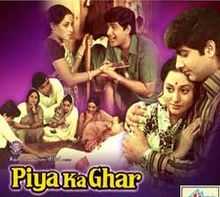
Piya Ka Ghar is a film featuring Jaya Bhaduri and Anil Dhawan, and is a remake of the Marathi film Mumbaicha Jawai. It tells the story of the difficulties faced by married couples in Mumbai, particularly due to limited living space. Malti, a girl from a village, marries Ram through a matchmaker but feels disappointed when she learns they must live with his extended family in a cramped apartment, which affects their privacy and intimacy. Available on Prime Video.
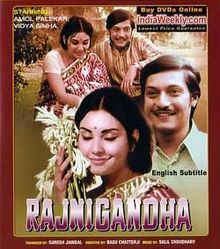
Rajnigandha, based on Mannu Bhandari’s short story Yahi Sach Hai, features Vidya Sinha as a woman torn between two suitors and takes her time to select a husband, a departure from typical glamorous roles. The film centers on the simple lives of three middle-class people without unnecessary melodrama. Vidya’s performance received praise from critics and audiences alike. The film marked the introduction of Amol Palekar and Vidya Sinha, and included memorable songs sung by Lata Mangeshkar and Mukesh, who won a National Award for their work. Available on Prime Video.
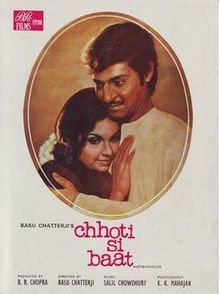
Chhoti Si Baat features Amol Palekar as a shy man who hires a life coach to learn how to propose to a girl. Palekar plays an introverted character, while Vidya portrays a woman who knows his feelings and waits for him to act. The film connects well with audiences due to its middle-class setting. It also includes beautiful music by Salil Chaudhury, showcasing Yesudas’ talent in the duet, Jaaneman Jaaneman Tere Do Nayan, filmed with Dharmendra and Hema Malini. Available on Prime Video.
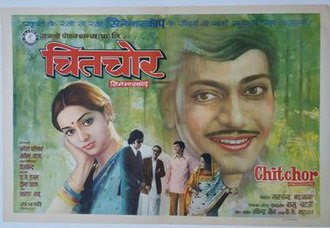
Chitchor is a romantic comedy about mistaken identities involving Geeta and her family eager for her to meet an eligible bachelor, Sunil, who is coming to their village. However, when overseer Vinod mistakenly arrives instead, he wins the affection of Geeta, who wants to marry him. The arrival of Sunil complicates matters as he also develops feelings for her. The film includes lovely songs by Ravindra Jain, such as Jab Deep Jale Aana. Available on Prime Video.
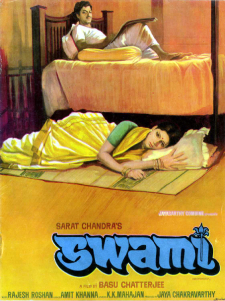
Swami is based on Sarat Chandra’s novel of the same name and follows Saudamini, played by Shabana Azmi, who admires her uncle while facing approval issues from her mother regarding her friendship with Naren. After marrying Ghanshyam, a kind wheat merchant, she feels trapped but learns of her husband’s true kindness. The film concludes with her transformation into a devoted wife, showcasing Azmi’s impressive performance. Available on YouTube.
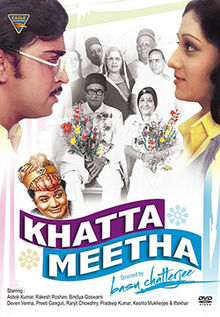
Khatta Meetha is inspired by the American classic Yours, Mine and Ours and tells the story of a middle-aged widower, played by Ashok Kumar, who marries a widow, portrayed by Pearl Padamsee. They both have children from previous marriages and face challenges in merging their families as the siblings conflict. Yet, through various trials, the family finds ways to unite and coexist peacefully, depicting a heartwarming conclusion. Available on YouTube.
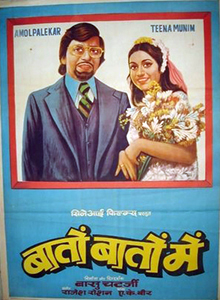
Baton Baton Mein is set in a Christian context and highlights the courtship of Amol Palekar and Tina Munim, with the help of her uncle, played by David. Rosie, a widow, wants her daughter to marry, while Nancy meets Tony on their daily commute. Tony’s shyness creates tension, prompting Rosie to look for other matches, but her uncle’s intervention helps reconnect Tony and Nancy. The film had some lovely songs like Suniye Kahiye Kahiye Suniye, Na Bole Tum Na Maine Kuch Kaha and Uthe Sabke Kadam tuned by Rajesh Roshan. Available on Prime Video.

Apne Paraye, inspired by Sarat Chandra’s novel Nishkriti, revolves around Utpal Dutt, a lawyer with a fondness for his cousin Chander (Amol Palekar), who prefers music over a steady job. Chander’s wife, Sheela (Shabana Azmi), is the strict one in the household. Their stable lives are disturbed when Utpal’s younger brother arrives with his wife, creating a complex family dynamic filled with rivalries. Available on Prime Video.
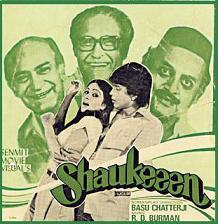
Shaukeen is adapted from the American comedy Boys’ Night Out and follows the lighthearted misadventures of three elderly men, played by Ashok Kumar, Utpal Dutt, and A K Hangal, who fantasize about romance while trying to meet a young woman. They embark on a trip to Goa thanks to their driver, Ravi, leading to humorous yet respectful situations. Ashok Kumar and the ensemble cast deliver exceptional performances throughout. Available on Prime Video.

Chameli Ki Shaadi represents a groundbreaking film tackling caste discrimination with a strong feminist lead. Charandas, (Anil Kapoor), is engrossed in wrestling but loses focus when he meets Chameli (Amrita Singh). Their love faces familial opposition due to caste differences, and to find a solution, they consult an advocate Harish (Amjad Khan), who suggests they elope. Available on YouTube.
One notable aspect of Basu da’s films was their exceptional music. He collaborated with a variety of music directors, including Salil Chowdhury, R D Burman, Laxmikant Pyarelal, Bappi Lahiri, Jaidev, and more. However, his most fruitful partnership was with Rajesh Roshan, producing memorable soundtracks for films like Swami, Khatta Meetha, Baaton Baaton Mein, Priyatama, and Hamari Bahu Alka.
The Chaterjee-Roshan duo have given some memorable songs, like, Pal Bhar Mein Yeh Kya Ho Gaya (Swami), Aaye Na Baalam (Swami), Koi Roko Na Deewane Ko (Priyatama), Tere Bin Kaise Din’(Priyatama), Thoda Hai Thode Ke Zaroorat Hai (Khatta Meetha), Badal Toh Aaye (Dillagi), Na Bole Tum Na Maine Kuch Kaha (Baaton Baaton Mein), Suniye Kahiye (Baaton Baaton Mein), Charu Chand Iss Chanchal Chitwan (Man Pasand), Prem Ki Hai Kya Sun Paribhasha (Hamari Bahu Alka), and many more.

In the 1980s, the number of supporters for his style of filmmaking dwindled, prompting Basu Chatterjee to transition to television. His debut serial, Rajani, featuring Priya Tendulkar, was a pioneering effort in consumer activism in India. Following Rajani, he directed other notable television series such as Darpan and Kakkaaji.
Basu Chatterjee received the Filmfare Best Director award for Swami, which also earned a National award. He was honoured with six Filmfare Awards – Critics for Screenplay.
In the new millennium, remakes of Chitchor and Shaukeen emerged, but they failed to capture the charm of the originals. Today, the success of films like Bareilly Ki Barfi and Badhaai Ho serves as a testament to the legacy of Basu Chatterjee’s cinematic style.
About the author
Shivdas Nair has been a cinephile for years. However, he has just started putting his thoughts on paper. A media professional for over two and half decades, and with changing times, now a Principal Advisor – Growth with a vibrant and innovative IT Consulting & Advisory Services company, i-Gizmo Global Technologies. He has just started blogging at https://thoughtsoveracuttingchai.blogspot.com.
Notes
- A version of this article first appeared in The Reviewer Collective group on Facebook. The author’s consent to reproduce it here is gratefully acknowledged.
- All the visuals are courtesy the World Wide Web.
Related Post


 ashokbhatia