The narratives dished out by Plum not only amuse but also educate the lay reader. Critics may label these as escapist fares, but that does not take away the kind of social and spiritual lessons which are embedded therein.
When a girl whom you have come to respect seeks your protection, you try to rise to her expectations. Suddenly, the spine which was made of cottage cheese gets transformed into one of chilled steel. You stand up to bullies and tell them where they get off. You look them in the eye and make them wilt, making them beat a hasty retreat from their time-tested positions. Like Angus McAllister, they suddenly find more merit in ‘ceasing to be a Napoleon than to become a Napoleon in exile.’
The Parva School Treat Transformation
When the story begins, we find that Lord Emsworth’s soul is weighed down with woe. The…
One of the several challenges of advancing age is the kind of vague pessimism which starts creeping upon us. The soul awakens us to some deeper realities of life. The mind takes a jaundiced view of Fate bearing gifts. The body, an old creaky jalopy that it becomes, needs to undergo more frequent bouts of denting and servicing.
Different body parts, of which we were blissfully unaware so far, start giving up their life long silence and start a ‘Me-Too’ kind of a campaign, demanding exclusive attention. The engine starts firing only on four out of its six cylinders. The fuel pump starts developing blockages. The carburettor needs cleaning more often. The radiator starts leaking. The battery charge keeps getting depleted faster. The nervous circuitry starts letting us down. The lining of the stomach starts registering a protest as and when greed takes over prudence on the dining table; no longer can it match the relative youth of one’s taste buds which keep making one drool over deep fried stuff and gorging upon it with gay abandon.
Every 3 to 5 years, a new pill has to be popped up, adding to the existing array of pills and capsules of different hues to be put down the hatch at regular intervals.
But howsoever dark the clouds may be, P. G. Wodehouse is there to help us to maintain a chin-up attitude!
A Cardiac Challenge
Fifteen years after I had undergone a cardiac bye pass surgery, a condition of gradually unstable angina again caught up with me recently. I would spare the hapless reader of this piece from the medical and technical details of what exactly transpired. Suffice it to say that a complex array of cardiac tests were done using menacingly hissing gigantic equipment which made one feel sympathetic towards the character played by Tom Cruise in the Mission Impossible series of flicks. After some of these tests, one was put on a drip, wired to a noisily beeping monitor and left to reflect on one’s life. The adventurous trauma finally ended with an angioplasty when a doctor with a stiff upper lip announced having sneaked in two stents inside the heart.
The process left one feeling like a much-punctured and deflated balloon, devoid of all vitality. In any case, at the best of times, one enters a hospital with a sense of deep trepidation. The fear of the unknown gnaws at one’s insides, leaving one wondering if someone sinister like Roderick Spode had eventually succeeded in turning one inside out and had then gleefully jumped upon the innards with hob-nailed boots.
But the adventure was not without its perks. Since one is willy-nilly forced to surrender to higher powers, one tends to become more spiritual. One learns to be more ‘patient’. One also runs into a delightful array of doctors, nurses and patients, almost all of different hues, ranks, sizes, shapes and temperament.
Some Doctors That I Ran Into
One of the doctors I ran into was built along the lines of Doctor E. Jimpson Murgatroyd of Aunts Aren’t Gentlemen fame. His looks could easily send one’s spirits down in the basement. He had sad and brooding eyes and looked like someone who had been looking on the dark side of life since he was a toddler. Nevertheless, his advice was sane, frank and honest, though brutal.
Yet another I came across sounded more like Doctor George Mulliner. He was a caring and compassionate doctor whose brow was perennially worried about his patients. Whether consulting or doing a procedure, he would intermittently flash a reassuring smile, arresting a sudden spike in the adrenaline coursing through the veins of the hapless patient. He gave an impression of someone who would be thinking beautiful thoughts while in bed but only after having read aloud a kids’ story from the oeuvre of someone like P. G. Wodehouse to his younger ones.
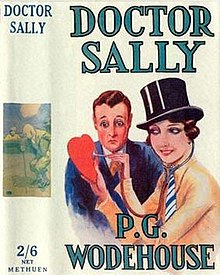
I also met Doctor Sally Smith who was not a generalist in this case but a junior cardiac specialist. I found her to be calm, empathic and fair. She placed a premium on understanding the psychology of the patient and genuinely tried to understand his/her concerns and address these to the best of her ability. When something critical was pointed out to her, her shapely eyebrows did not flicker even a fraction of an inch, making one remind of Reginald Jeeves. I am reasonably certain that during childhood, her doting mother had fed her with ample supply of salmon. She was a living proof of the fact that a woman cardiac specialist need not of necessity be an ugly duckling with steel-rimmed spectacles and a wash-leather complexion. In fact, she reminded one of Drew Barrymore of Charlie’s Angels fame, radiating charming competence of a high order.
Initially, I also ran into someone like Emerald Stoker. She was one of those soothing, sympathetic kind of doctors you can take your troubles to, confident of having your hand held and your head patted. She was quite young but there was a sort of motherliness about her which one found comforting and restful. One could ask her any question about the impending procedure and she would answer it with empathy and patience. When one left her cabin, the sagging spirits had soared and the brow was not as burrowed as before; the soul was no longer in as much of a torment as it happened to be in earlier.
The Nursing Angels
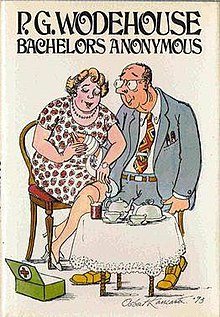
Some of you may remember Amelia Bingham of Bachelors Anonymous fame. She had fussed over Mr. Ivor Llewellyn, head of the Superba-Llewellyn studio of Hollywood, so very well that the latter ended up proposing to her, much against his own resolve to cease and desist from making impulsive marriage proposals.
Luckily, unlike Mr. Ivor Llewellyn, I do not head any Hollywood studio. Nor do I have a track record of having suffered through as many as five divorces. I am merely a widower. So, if any of you suspect my having fallen for one of the many nurses I ran into while in the process of getting an angioplasty done, you could not be more off the mark. One has one’s code, you see: The Code of the Bhatias!
If one of the nursing angels was like a Florence Nightingale who ensured that I kept getting adequate nourishment during my stay at the hospital, another was like Aunt Agatha who took sadistic pleasure in pricking the hands at all the wrong spots, eventually finding an appropriate vein in the forearms where a cannula had to be put. All of them had their own methods of removing the cannula and other sticky plasters. Some preferred to zip up the proceedings by doing it in a flash of a second, leaving one all shaken and stirred, ruing the painful loss of some body hair. Others went about it gradually, in slow motion as it were, making the proceedings somewhat painful, though for a longer duration.
However, in some aspects, their behaviour was pretty consistent. All of them kept treating me like an errant school kid who needs to be cautioned to have all his medications on time. When it came to checking blood sugar levels, all of them insisted upon puncturing one of the tender fingers. My repeated pleas to draw instead a sample from the cannula fell on deaf ears.
Patient care and comfort was, of course, their first priority. This included an ever-smiling visage as and when they entered the enclosure allotted to me. Some of them resorted to small talk, making decent and unobtrusive enquiries about one’s family members. When leaning over across the body to attach some leads, they would often apologize.
Some were cast in the mould of Mary Anthony of Absent Treatment fame. They were tall, had a ton and a half of red-gold hair, grey/blue eyes, and one of those determined chins. Few showed signs of superior intelligence, capable of such feats as supporting a team in burgling banks, like Jill Willard of Do Butlers Burgle Banks? One, with a lissom and willowy profile, came across as Audrey Blake (The Little Nugget), who could have aroused romantic thoughts in the hearts of some of her patients.
The Common Thread
For all medicos, the patient comes first and foremost. When working in a public hospital, the pressure of revenue generation is singularly absent. Their exposure to a large number of patients with a wide spectrum of ailments makes them hotter at their jobs. Their professionalism only grows and matures over time, benefiting humanity at large. They facilitate the process of longevity and make us happy in the process. Their methods may be rough at times, but, as Jeeves says, one has to break a few eggs to make an omelette.
It may be noted that there was a specific reason I did not carry any book of P. G. Wodehouse while being in the hospital. With all the tubes and monitors one was often connected to, one did not wish to add to medical complications by bringing about bouts of uncontrollable mirth. Guffawing, laughing out loudly and falling out of beds allotted to one would have raised many an eyebrow. Mere memories of his works and the delightful range of eccentric characters and goofy situations he has unleashed upon us are enough to help one to face the harsh slings and arrows of Fate.
I confess I underwent the traumatic experience only thanks to the support received from my family and owing to Plum’s works. He has left behind for all of us a world which is so very soothing and comforting that one could undergo any difficult experience in life and yet experience happiness.
After all, in Something Fresh, he has himself said that:
As we grow older and realize more clearly the limitations of human happiness, we come to see that the only real and abiding pleasure in life is to give pleasure to other people.
Sure enough, he delivers on his promise!
(Allusions to nurses are courtesy Neil Midkiff; Caricature of yours truly is courtesy Suvarna Sanyal)
Elango was not your ordinary sailor. He was fat; too fat for his seniors from Leading Telegraphists (Rank in the navy) to the Captain not to lecture him on getting his weight reduced to a decent level. He was not bothered too much about his resembling a rotund duck that had drunk all the water around it. Indeed, drink, particularly beer – never a single bottle – was the primary reason for Elango’s ever increasing girth.
He would grin sheepishly at anyone speaking on his expanding body. It is not that he did not try to get himself into shape; he ran, sweated it out with thimbles, swam but just could not stop drinking.
One day, five of us friends went to see a matinee show in the Strand Cinema in Colaba: To Sir with Love, a film that would find a place in anybody’s best movies’ list. The sky had been overcast when we went in to the theatre. When we came out after the movie, it was drizzling. We had to stand somewhere under the shade to escape the rain. What better place than Martin’s Restaurant opposite the cinema?
I do not know now but 45 years ago, you were guaranteed a fulfilling evening snack in the place. Elango was particularly fond of the pork vindaloo you got there. We ordered it along with some steamed rice. When it arrived, we pounced upon it with our hands rather than using the spoon and fork the gentleman in the restaurant had put on the table. As it turned out, that was the last time that Elango was going to taste the meat; in fact, any meat.
There was a girl with an old woman sitting two tables away from us. Beautiful was not the word that would have crossed your mind on beholding her; she was not that. There was, however, something about her that made you steal a second glance at her. Elango was sitting on the chair right opposite her. She was eating whatever she was eating with gusto.
We were only about ten minutes into clearing the plate of its contents by gobbling up what there was when the girl got up, paid her bill and went out to join her companion who had already exited and was standing under the sunshade of one of the row of shops in the street. There was no way they could venture out in the rain.
For one thing, the woman was old and frail and looked as if she would catch a cold and follow it up with high temperature if she as much as caught a single raindrop on her head which only had thinning strands of hair. Even a more compelling reason for them not to walk into the rain was the girl’s dress. It was too skin-fitting to get wet all over. She would not dare do that. Not all men are decent. Some can cause more harm with their eyes than with any physical activity.
I am not too sure if Rupert Psmith had ever given Elango some tips on the art and science of courtship. Taking a leaf out of Leave it to Psmith, Elango lost no time to take in the scene, told us to wait, ran out into the falling rain and disappeared. I went out and saw him turning the corner though I did not know where he was headed. The girl could not stop laughing at the fat boy whose limbs were doing dance steps of their own when he ran.
Within a very short time, Elango was running towards us as fast as he could which was not really fast. I saw that he had an umbrella with him. He slowed down as he approached us and without a word, offered the umbrella to the girl. The girl was taken aback and did not know what to do or say.
The old woman obviously believed in making hay while the sun shined; or to put it in context, grabbing an umbrella when it rained. She almost snatched the umbrella from Elango’s hand, stepped out on the road before nudging the girl to follow her even as she was opening the umbrella.
The girl gave Elango a smile and ran a step or two to catch up with the old woman. We noted that they went south towards the Radio Bhuvan. Elango gave them 10 seconds, followed them, stopped at the corner and watched. The two women jostling each other under the umbrella indeed went into the Radio Bhuvan.
Elango stood there in the rain, thought for a while and returned to us. We departed and walked towards Lion Gate. The rain-washed buildings lining the road on either side were not very different from the stately mansions on the streets of London we just saw in the movie. The grey clouds were getting darker in the evening sky and the buildings were glowing, bathed in the light emanating from the lamps all around.
Within a week Elango enrolled himself in the Radio Bhuvan for a telex operator course. Was there any need to do that? Absolutely not. But, why not? Wasn’t Gilda studying at the institute?
In what you can safely call a miracle, Elango shed his weight in a record time. He gave up meat, fish and eggs and shunned everything that could be called alcohol. What the chidings, mockery and his own determination could not achieve, love did. Easily. Such is the power of love. He visibly bloomed into a dashing hero in the mould of someone like Dean Martin, as handsome a man as you could imagine. Rupert Psmith would have heartily approved of his conduct in the matter.
Those of you who run into Geoffrey Raymond of A Damsel in Distress fame – the one who had acquired not only wealth but also a highly obese physical frame and a triple-chin visage – might want to tap him on the shoulder and quote to him the real life example of Elango. For all you know, scales may fall from his eyes and he might eventually end up winning the heart of someone in the mould of Lady Maud Marsh.
The duration of the short course was sufficient for Elango to woo the Eva/Maud of his life. Woo he did and went steady with her. They made a fine young couple.
As of now, those of you who happen to visit Goa might as well find them relaxing in a luxuriously furnished family room, relishing their favourite tissue restorative and enjoying the prattle of the tender feet of their grandchildren around them.
About the author:
Asokan Ponnusamy joined the navy at the tender age of 16. Had it not been for the libraries on board the ships, he would not have read books in the English language which woke up the writer in him. Simultaneously, he was enamored by rock music which he got to hear on the ships. Some fifteen years back, he wrote a book ‘500 Popping Questions, Rocking Answers’ on rock, pop, country and folk music. In 2019, he wrote his second book ‘The Funnyman Who Was Also A Sailor’. Besides unleashing his creative outpourings upon unsuspecting people like us, he also undertakes freelance and ghost writing occasionally.
His permission to blog this piece here is gratefully acknowledged. Yours truly confesses to have taken some liberties with the original text provided by him.
Netizens who happen to be on Facebook come in different sizes, shapes, hues and ethnicities. Their value systems, personalities, mentalities and quirkiness quotients form a captivating rainbow of humanity. The psychology of the individual varies for all. So do their posts.
Even though the Posters and the Postees on Facebook are merely prisoners of their own individual psychologies, one can discern broad patterns in their behaviour. Some are compulsive Posters who consider a day wasted if they are not able to pass by their Facebook account. Others are casual by temperament and saunter in occasionally, sharing something on their timeline and then getting busy with the mundane affairs of their lives. Many others, who form but a minority, create an account and then blissfully forget all about it.
(The term Poster here refers to those who post on Facebook. The term Postee alludes to the hapless souls who have no…
On 11th May, 2019, my wife and I were able to meet our daughter and members of her family near Bury, in Lancashire, for the first of about ten performances of the play A Damsel in Distress, written by Ian Hay and P G Wodehouse, and first performed in 1934. The performance we attended was presented by the small Whitefield Garrick Society, a local theatre group. What they had not realised was that their first night was just one day after the centenary of the publication of the first instalment of the Saturday Evening Post serialisation of the novel, on the 10th May, 1919. Their audiences didn’t remain in ignorance, as the anniversary was highlighted in their programme.
This coincidence demonstrates two things about Wodehouse – the longevity of his writing, and the hint which it offers of the different forms of his work. The purpose of this article is to expand on the latter point, and propose the suggestion that A Damsel in Distress represents its most comprehensive illustration. (At various points in this article, I will abbreviate the title to ‘the Damsel’, and P G Wodehouse’s name to ‘Plum’ or ‘PGW’.)
Wodehouse’s relationship with the Saturday Evening Post had started in 1915, when it published the serial of Something New (the American name for Something Fresh) in seven parts. The Damsel was PGW’s fourth serialised novel to appear in its pages, this time in eight parts, and by the end of 1919 it had also published ten of his short stories. Damsel was published in book form in the United States by George H Doran on 4 October, 1919.
Surprisingly, book publication in the UK was not its next appearance, even though Herbert Jenkins Ltd released it on 15 October, for a silent movie adaptation had already been produced by Pathé Exchange and released in the USA as A Damsel in Distress on 12 October! And there was to be an even more unexpected surprise four or five years later.
In 1922 or 1923, Pathé had launched Pathé Baby, a form of early home movie cut down to a 9.5mm frame width, and significantly edited from the original film. The diameter of each reel was only 50 millimetres, resulting in about three minutes running time per reel. Some clever techniques were utilised to maximise the use of the limited space. All silent movies incorporate ‘Intertitles’ on which descriptive text appears, and on normal silent movies this frame would be duplicated many times to give the viewer time to read the text. With the Baby, space was too precious, and each frame representing an intertitle was notched so that it would catch in the projector, and the operator would have to release it when the viewers had finished reading it.
A Damsel in Distress silent movie was released in the Baby format, probably in 1924, bearing the catalogue number 739, and is the only Wodehouse-related film that I am aware of to receive this treatment. Even though the credit as ‘Scénariste’ was given to Wodehouse, you wouldn’t guess from the revised title it was given that it had anything to do with him. The female star was June Caprice, and a reasonable guess about the title, Mam’zelle Milliard, is that it was a reference to her marriage in 1923 to Harry F Millarde. He was a film director who was to direct June Caprice in a total of eight silent films, but not in this one.
By the time this silent movie was released, there had been another book version. The first translation appeared in 1921 – in Swedish. It was entitled EnFlickaitrångmål, created by Ulla Rudebeck and published by Hökerberg. Three more translations, into Finnish, Dutch and Russian were published before the next main event, a dramatised version by Wodehouse and Ian Hay playing for 234 performances at the New Theatre in London in 1928.
Illustration of the Various Uses to which the Damsel has been put
In terms of the number of performances, A Damsel in Distress was PGW’s most successful play in the UK, and its run coincided in part with two other new plays on the West End stage for which he was co-author – Her Cardboard Lover and The Play’s the Thing. The review in Theatre World in September 1928 included the comment that the Damsel was ‘a farcical comedy that will be a boon to all amateur theatrical societies for years to come. It is the sort of play that no child need be afraid to take its parents to.’
To offer just one illustrative snatch of dialogue, the heroine Maud Marsh says the following to George Bevan, an American theatrical director who is in love with her, so far unreciprocated:
“Mr Bevan, I’m going to pay you the rarest compliment a woman can pay a man. I’m going to tell you the truth. Won’t you sit down.”
The play was presented with varying casts at more than forty theatres during the next four years, and has appeared from time to time right up, as we have seen, to the production in 2019.
And so we move into the 1930s, to see what else happened to the Damsel. Before we reach 1937, the date of a Hollywood musical based on the book, it is necessary to return to the list of translations, for the Czech, Polish and Portuguese translations were published in this period. So was an Italian translation, in 1931. And another – different translator and different publisher – in 1932. And yet another – in 1935. The details were as follows:
1931 Una signorina in imbarazzo, A Mozzati, Bietti
1932 Una donzella in imbarazzo, Francesco Palumbo, Libreria Editrice Monanni
1935 Un capriccio e poi, Alfredo Bianchini, SACSE Milano
In 1937, Wodehouse had been working in Hollywood for the second time in his career, and was about to return home when he was invited to join the production team (RKO-Radio Pictures) for a musical version of the Damsel starring Fred Astaire and featuring music by the Gershwins. The script proved to be a substantially redrafted version of book and play, with additional ideas added to respond to the qualities of the chosen actors, but Wodehouse played a significant role in its development.
Why was the book selected for cinema treatment at this time? According to a number of commentators including the late Benny Green, since George Gershwin had met Wodehouse in 1917, he had come to believe that the story of the novel reflected his own career. Like the book’s hero George Bevan, he too was from Brooklyn, and had become a successful American composer who went to Britain to supervise the London production of a Broadway hit. Accordingly, George Gershwin is thought to have used his considerable influence to have it made on screen as a musical, with Ira Gershwin even writing a lyric, Stiff Upper Lip, for the film, as a tribute to the language used by some of Plum’s young male characters.
His work on the Damsel was PGW’s last personal involvement with Hollywood, and completed the range of productions for which the story was the basis. But it was not wholly the end of the story. In Italy, for example, there was a fourth translation published in 1939, entitled ‘Una magnificaavventura’, translated by Gian Dauli and published by TEL Milan, and there were other translations in Norway in 1938 and Spain in 1944.
After the war, things were much quieter. A new Finnish translation in 1951 and a German translation in 1964 was a lone post-war translation until a new Swedish version, now entitled Flickaifara, translated by Birgitta Hammar, was published by Bonniers in 1979. In 1994, yet another Italian, Rosetta Palazzi appeared on the scene, producing ‘Una demigella in pericolo’ for Mursia. Apart from a Russian translation in 2002 and one in Hungarian in 2010, it does, now, seem that that particular well has run dry. (The original novel in English has, of course, been included in the 99-volume Collectors’ Wodehouse series published by Everyman between 2000 and 2015, and appeared in 2003.)
But using the novel as a basis for theatrical productions did not cease. Apart from further presentations of the 1928 Hay-Wodehouse play, there have been a number of new musical adaptations, using the outline of the novel’s story and a selection of George-and-Ira Gershwin songs, not all used in the 1937 film. The first of significance was probably A Foggy Day, presented at the Shaw Festival, at Niagara-on-the-Lake in Canada in 1998, and this proved so successful that itwas reprised at the equivalent festival the following year.
In 2015 the Chichester Festival in England featured the première of another new musical version, although this time the title A Damsel in Distress was retained. About half the lyrics which were included had been in the 1937 film, but all the lyrics in the show were composed by the Gershwin brothers.In the original story, the principal setting for the story had been called Belpher, a town on the south coast which had suffered badly from a scandal of the contaminated local oysters. Local residents attending the 2015 production would have recognised that had been a thinly veiled reference to Emsworth, just along the coast from Chichester, where Wodehouse had lived for many years, and which had given its name to his famous fictional Earl. In the film of the Damsel and in this production, however, the setting was renamed Totleigh – another fictional place with Wodehousean connotations, best known as the Gloucestershire home of Sir Watkyn Bassett.
And that completes the review of a century of A Damsel in Distress, probably the most widely adapted Wodehouse story in existence. How apt that its centenary was celebrated by yet another theatrical performance.
Note
This article had first appeared in the December 2021 issue of Jeeves, the annual journal of The Wodehouse Society in Sweden (WSS).
About the Author
It would be well nigh impossible to find a P. G. Wodehouse enthusiast who has not heard of Tony Ring. His name pops up often and in a surprising variety of places: from journal articles and forewords of new editions, to theatre programmes. Tony’s books on Wodehouse’s life and work adorn the book shelves of many of us, and his sparkling presence has enlivened Wodehouse society events around the world. It is an honour and a privilege to host his article on this website.
Few other posts which mention A Damsel in Distress
George Emerson is a persistent wooer. He is genuinely concerned about Aline getting thinner and paler since her arrival at the Castle, for which he holds her father responsible. The diet of the father of the wooed is his own problem, but for his daughter to support him by declining baked meats and restrict herself to some miserable vegetable dishes, is, he thinks, his problem. That is how he painstakingly assembles the tray which he intends to deliver at her doorstep late in the night. Unfortunately, laws of nature ensure that he collides with Ashe Marson on the staircase, rendering his efforts null and void, what with the cold tongue and its adjuncts getting strewn about the hall.
It never occurs to him that he is often offensively patronizing towards Aline. Supermen are made of a stern stuff of this kind.
Once the Cheops of the Fourth Dynasty goes missing and the needle of suspicion points to a forgetful Lord Emsworth, Mr Peters veers around to the view that:
‘There’s no morality among collectors, none.’
Rupert Baxter, having served collectors in a secretarial capacity earlier in his career, also knows that collectors who would not steal a loaf of bread even if they are starving do fall before the temptation of a coveted curio.
A Female Who Aims to Break the Glass Ceiling
The feisty heroine of Something Fresh could well be a role model for the younger females who have to bear with prying eyes, eve teasing and inappropriate advances in all spheres of life. This is how Plum describes her at one stage:
Her eyes were eyes that looked straight and challenged. They could thaw to the satin blue of the Mediterranean Sea, where…
When it comes to the oeuvre of P G Wodehouse, Stephen Fry says that ‘You don’t analyse such sunlit perfection, you just bask in its warmth and splendour.’
With due respects to him, yours truly would beg to differ. As someone who suffers from the 3rd and final stage of a pleasurable affliction alluded to as Wodehousitis, I cannot but analyse the sunlit perfection of his narratives. In a world full of hatred and conflicts, one survives on the metaphorical juice of the oranges of his whodunits. Unless one analyses, one does not extract the maximum possible juice out of these luscious oranges. My Guardian Angels have conspired thus, and I just cannot help myself.
Allow me, therefore, to capture here some of the life-enriching lessons which dot the vide canvas of one of his works, Something Fresh – tips on well being, riding the socio-economic divide, the spirit…
In 1954 P.G. Wodehouse published another novel. Well, why wouldn’t he? He was only 73, and the novel that he wrote – Jeeves and the Feudal Spirit – was only (by some accounting) his seventy-second book and only the seventh full-length Jeeves-and-Wooster story. (There had been many more short stories, and there were to be four more J-and-W novels before he died in 1975.) And as my illustration shows, I read this story in its recent Everyman hardback incarnation – a delight. Nice cover, nice design, nice typeface.
I’ve been enjoying Wodehouse’s work, especially the Jeeves and Wooster stories, for over 50 years myself, so it was no hardship to go back to this novel for the online #1954Club. Or was I not going back, but rather reading it for the first time? It’s difficult to be sure, for Jeeves and the Feudal Spirit (hereinafter JATFS) contains almost…
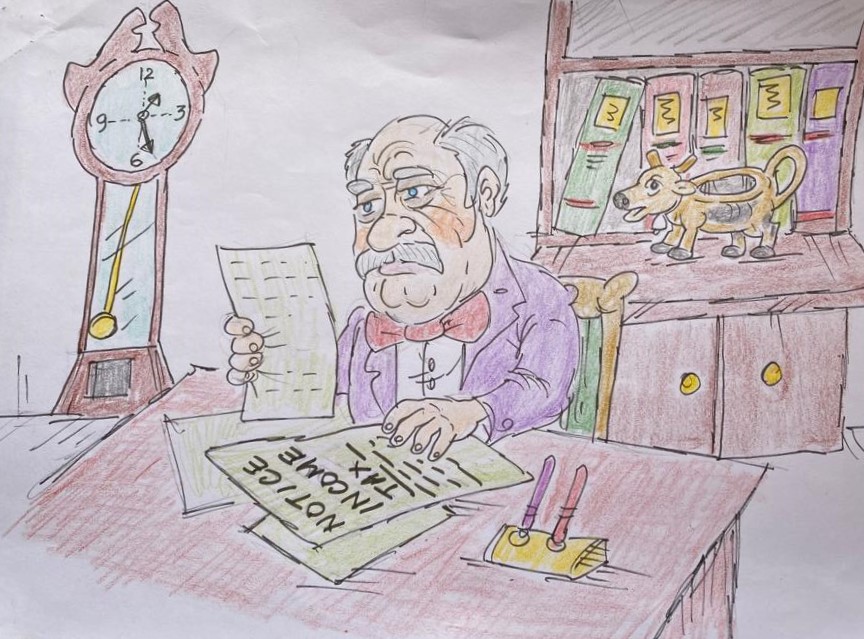
When it comes to owning a sprawling property like Brinkley Manor, there is no way I can compete with Bertie Wooster’s miserly Uncle Tom, or, if you wish me to be precise, Thomas “Tom” Portarlington Travers. I do have a humble roof over my head which serves its purpose rather well.
Nor do I have a dynamic wife like Aunt Dahlia who, when she loses a sum of 500 pounds while gambling at Cannes, might ask me to replace the money in order to keep financing her magazine, Milady’s Boudoir. Simply because I do not have ample resources at my command.
My lair can also not boast of someone like Anatole, God’s gift to our gastric juices. Guests who get invited over to my place often try to come up with the flimsiest of excuses to escape the trauma of having to put plain dal-roti-subzi-chawal down the hatch.
Nor am I a collector of silver cow creamers. I merely collect books, movies and music albums.
But when it comes to an aversion to payment of taxes, my thinking absolutely matches that of Uncle Tom.
The Psychology of a Taxpayer
I daresay it is not greed that makes one detest the payment of taxes. Rather, it is the disproportionately high rate of taxes which one objects to. Services delivered by the government barely touch one. Our roads continue to be as bumpy as ever. Our power supply often keeps us on tenterhooks. Our public transport systems offer services which are rarely punctual, seldom tidy and often substandard. Quality medical care only enriches either the hospital owners or the insurance companies. Premium education is a rare commodity, accessible only to the well heeled.
Above all, the taxation systems are designed to promote dishonesty. Evasion becomes the norm. By dodging taxes, a lay citizen has the power to cock a snook at the revenue authorities. What could be a sweeter revenge than to have been able to resort to some sharp practices to generate some black money and thereby contribute to the parallel economy of the country? In such matters, our ingenuity knows no bounds. Give us a tougher system and we shall always be one step ahead of the government of the day in browbeating it, appear to say the denizens.
In fact, by resorting to such practices, a citizen may as well be contributing to nation building in his own humble way. One, the parallel economy is well isolated from the formal financial systems, thereby acting as a shock absorber to the jalopy of the formal economy when it runs into a speed breaker like that of the infamous 2008 meltdown. Two, politicians of all hues badly need unaccounted funds to keep winning elections all the time. Thus, we, the people, stand a better chance of keep electing governments which we deserve. Three, the shadow economy keeps greedy banks in tax heavens in the pink of health, partially fulfilling one of the key dictates of our scriptures, namely Vasudhaiva Kutumbakam. Four, such professions as accountants, lawyers and management seniors keep thriving in a perennial state of blissful existence, guiding one through the taxation maze.
I wonder if the tax rates are deliberately kept high so the above mentioned objectives of diverse stakeholders keep getting met. Also, the compliance maze is so designed as to invariably need a bevy of professionals to keep interpreting the fine print year after year.
Perhaps, the sage advice dished out by Chanakya a few centuries back is willfully neglected. It may be recalled that in his seminal work Arthashastra, he had opined as follows:
Ideally, governments should collect taxes like a honeybee, which sucks just the right amount of honey from the flower so that both can survive. Taxes should be collected in small and not in large proportions.
What we have instead is a group of honeybees which collects not only the honey but also keeps a sharp eye on the soft petals and other tender parts of the flower.
Our revenue authorities would be quick to point out the miniscule base of the tax-paying public being a reason for high taxes. Uncle Tom may not concur, though. Instead, he may recommend the following: a relentless focus on the employment generating businesses, thereby ensuring a steady income in the hands of a majority; predictable taxation systems which enthuse investors; use of modern technology to connect the dots between the direct and the indirect tax bases.
However, these are not low hanging fruits. Our politicos typically have a five-year vision which prompts them to continue to be in an election mode most of the times.
The Great Indian Milled Class
Unlike Uncle Tom, I did not make a fortune doing business in the Far East. I belong to the great Indian Middle Class, famed for the manner in which it upholds such values as honesty, truthfulness and fairness in its dealings with others. Those who belong to this segment of the society also uphold family values and social harmony.
Having slogged for over 35 years in the private sector as a salaried employee, I have always been a sitting duck for tax collectors of all kinds. Scriptures have taught us the value of perseverance and patience. Take away our Standard Deduction and we would simply squirm and keep quiet. Reduce the rates of our bank deposits and some of us may merely write a protest letter to the editor of our daily newspaper. Keep threatening us with a change-over of our hard-earned savings parked in a public provident fund account from the Exempt-Exempt-Exempt category to the Exempt-Exempt-Tax category, and few of us might make some ineffective noises.
Keep inflating our personal transport costs and we shall meekly accept the same. We ignore the fact that close to 45% of the fuel prices get cycled back to the government of the day. Home makers amongst us may keep twiddling their thumbs trying to balance their domestic budgets, but unless there is a direct threat to political power, nary an eyebrow is raised. We eagerly look forward to the next round of elections in the country so at least a transient relief may come our way.
Not to forget the Great Spiritual Tax which does not discriminate between the haves and the have-nots. It is designed to make us suppress our desires, focusing only on our bare needs. Thus, it makes all of us a wee bit more spiritual. A CEO pays as much tax on a bottle of shampoo as his liftman or driver does.
In general, the only long term satisfaction we may have is that of educating our children well and facilitating a smoother life for them in the times to come.
The Exorbitant Price of Honesty
Honesty does not come cheap, though. Recently, when I enquired about the kind of taxes applicable if one were to sell a property and send funds abroad, I was baffled. The mind was boggled to its soggy core. If I were lucky enough to find a buyer who would agree to do a 100% transparent transaction, the dreadful tax implications left me shivering from the top of my head to the base of my feet.
The buyer would need to shell out close to 11% by way of registration charges. As to the seller, a slice of close to 23.6% will need to be paid by way of compliance to the mandarins in the taxation department. If this were not enough, the bank would be happy to provide foreign exchange only if the seller would agree to an additional cost of 5%, by way of a higher education cess. The plea that a 4% education cess would already have been paid as a part of the 23.6% and that a further 5% contribution towards improvement of higher education in the country made no sense may simply fall on deaf ears. The only assurance provided was that of the total damage of 28.6% suffered, the seller may get some refund in due course of time. Thus, between the buyer and the seller, the transaction would get shaved off by a whopping 39.6%. Add to this the legal costs and the speed money which smoothens our lives in general, and we are talking about a cost in excess of 40%!
I am not too sure if the government ever played any role in the organic appreciation of the value of the property over a period of some 20 years when it would have remained in my family’s investment basket. However, I am certain that those framing our taxation rules have undergone an advanced diploma at an academy run by Shylock somewhere on the outskirts of Venice. Chanakya, were he to discover this harsh reality, would surely be found turning in his grave.
A vast majority amongst you would be quick to point out the need for a prospective seller to promptly consult some sharp minds in the realm of finance, so that much of this excessive cost may be avoided. What else could a mentally negligible nincompoop like me do?
But what about one’s humble contribution to the mighty task of nation building? Also, is there a merit in inviting a jaundiced view of the authorities concerned, leading to some nasty notices in the letter box six months hence?
Indeed, it is at times such as these that one’s commitment to honesty and transparency gets tested. Scales fall from one’s eyes. It dawns upon one as to why the real estate market continues to be a shady one, perpetually contributing to the parallel economy of the country.
A Sense of Detachment
Just as P. G. Wodehouse once wrote in the Vanity Fair, I also imagine sitting in my poverty-stricken home and wondering how a tax bandit, having entered my house uninvited, would wave a gun at me, rummage through my pockets and empty these out. He now wears a mask which reminds me of the popular OTT serial Money Heist. Alas, he does not realize that I am not the Royal Mint of Spain.
Nevertheless, he would be leading me to cultivate a sense of detachment from my hard-earned money, much along the lines of what Lord Krishna advises in the Bhagavad Gita. Hope when he leaves me, I shall be in a carefree state of mind.
Next time I get invited to Brinkley Manor, I shall surely ask Uncle Tom about the tax expert he consults!












 ashokbhatia