Mr Schnellenhamer, the head of the Perfecto-Zizz-baum Corporation, the leading movie studio, is reported to be having an odd disagreeable feeling these days. Perhaps, it is caused by what Roget’s Thesaurus would describe as agitation, fury, violent anger, wrath and similar emotions listed under the heading ‘Rage’, that too of an impotent kind.
Having struck a deal with Coronavirus Global Corp (CGC in short) to unleash upon the public a movie based on the current pandemic, he believes things to be moving a tad sluggishly. He is not able to gather enough goofy ideas to add a sparkle to the script. Discussions with his team of directors, script-writers, music composers, yes-persons, deputy yes-persons, junior yes-persons, nodders and trainee nodders have led to finalization of the basic outlines of the movie. But he feels much more could be done. CGC had mandated that the movie should get released before any…
Of all the reading that I have done, I have never ever had so much fun,
Than whilst perusing Wodehouse, Laughing to burst out of my blouse.
That Bertie Wooster is so British, such a jolly good fellow,
Can erupt like a volcano at times, yet is disarmingly mellow,
Ample bosomed Aunt Agatha et al bully him into the ground,
Bertie would be lost if Jeeves, that paragon wasn’t around.
The aunts make mincemeat of Bertie without so much as a by your leave,
If it wasn’t for Jeeves the saviour, we’d weep for Bertie and for him grieve,
The Wooster name would fall into ruin, rust corrode their noble family crest,
Sans Jeeves to keep a vigilant eye and shoo away both aunt and other pest.
Bertie Wooster is so upper class, so stiff upper lip, simply so very English, He belongs to the right club, yet tormented by…
The big and fat weddings which keep taking place all across the length and breadth of India are well known. These are occasions on which gullible parents, overjoyed by the prospect of finally getting rid of their respective wards, loosen their purse strings, showcasing their wealth, power and pelf.
Ostentatious decorations, lavish dinner spreads which could make Anatole raise his eyebrows a fraction of an inch, sumptuous upholstering of those in attendance and a chain of rituals which keep the hapless bride and the groom on their toes – all of these create an ambience which befits the social status of the well-heeled parents, making many others green with envy. It is another matter that such display of wealth often makes our tax sleuths sit up and take notice. The Bartholomews under their supervision promptly start sniffing around, their bare teeth on full display. Unless prompt steps are taken through…
Ashok, your excellent Indian Curry is really spicy! I can imagine how hard you must have worked on it to find all those references to India.
Chakravarti Madhusudana, Australia
P G Wodehouse never visited India. But even a first reading of his works reveals his affinity for India, Indians and Indian things in general. He may not be always complimentary about Indians and sometimes be even wrong, but his observations were totally without malice and always with an acute sense of the absurd.
In “The Indian Curry Dished Out”, Ashok Bhatia has made an extensive study of Indian references in Plum’s stories and novels. He has classified them into more than a dozen categories and presented them in a style that would be the envy of probably the master himself. I particularly liked the section “Missed Ingredients…” which hints at how PGW’s works might have been enriched by looking at other aspects of Indian culture.
This is a momentous work performed with great love and respect for Plum. I am sure it will be read with delight by Wodehouse fans whether or not they have an Indian background.
John Dawson, USA
This is a unique, delightful and informative essay. Of course I knew that Plum had referenced Indian matters quite a few times in his books, but the volume of these references you’ve included were surprising to me. You’ve done a superb job on an ambitious project! I don’t believe anyone has heretofore attempted to gather all of the Indian references in Wodehouse’s books. Please accept my congratulations for a lovely and worthwhile contribution to Wodehouse scholarship.
Masha Lebedeva, Russia
The article is absolutely wonderful. It not only gives us a chance to enjoy Master’s humour again and again but also a possibility to look through Plum’s eyes at India’s history, politics and culture. Bravo, Ashok, great work!
Kartik Pashupati, USA
Excellent essay. It’s interesting that Plum’s cat was named Poona. “Poonai” is also the Tamil word for cat, although I doubt if that’s what he had in mind. It’s also worth noting that all of the references to gemstones and similar artifacts stolen from Indian temples are parodies of “The Moonstone” by Wilkie Collins, which is said to be one of the earliest detective novels in English.
Nikhil Rathod, India
Thank you for the fascinating piece. It took me a while, but I finally finished all 50+ pages. You’ve really researched it!
A couple of things stood out to me:
– India was a huge part of British culture. More than PGW having a fascination for India, I got the impression he was just reflecting the popular culture. PGW was quintessentially English, which is reflected in his writing-style and stories. The references to India weren’t particularly knowledge about India.
– Speaking of “stories”, I’ve loved reading PGW. But, I always knew that the storyline or theme of most books never changed. Obviously, that didn’t lessen my enjoyment of his writing. Similarly, the references that you pointed out in your essay were also repeated in several books. The essay really illustrated this point.
I would have said, Happy Reading, in conclusion, but I don’t think we’ll find an author to compare. Again, thanks for sharing your essay.
Pradeep Swaminathan, India
Ashok has taken the pains book by book to correlate all facts that the Master has made about India. Right from the origins of Wodehouse Road in Colaba, Mumbai, to practically every single mention of anything connected with India. I was a small kid living in Colaba, in the early 60s, when my father was working for that very British institution – The Indian Railways. The colonial hangover still lingered. Colaba was where British India administered Mumbai and the surrounding areas. I still recollect the magnificent building we lived in – Beryl House. Just for the record the ICS exams were replaced with the IAS exams after 1947, so this British Structure is still very much there.
Back to Ashok. If and when he decides to share his essays publically do make it a point to delve deeply into them. How PGW without ever coming to India could garner so many facts about India amazes me. How Ashok has managed to pick each of these gems relate it to the book and give the references also amazes me.
Rajeev Varma, India
This is a fabulous collection of PGW’s literary rendezvous with the Indian curry – scorpions, cats, cobras, fakirs and their spikes, the Maharajas, the princes, the Taj Mahal and Mahatma Gandhi and Rabindranath Tagore – all put in an appearance. Some modern day Indian nationalists might be critical of what PGW felt about Mahatama Gandhi’s fasting but one must take into account the time and circumstances while he spoke of Indian Civil Disobedience. Ashok has admirably captured the essence of PGW’s humour and wit. Undoubtedly, Ashok’s write-up will be immensely liked by PGW’s fans all over India and even elsewhere.
Ashok’s command over the language and the flourish of presentation evoke immediate interest in his writing. A commendable work indeed!
Sanjit Ghatak, India
Imagine my rapture as I turned to page 49 of ‘The Indian Curry dished out by P. G .Wodehouse’ where you kindly mentioned about my humble effort to translate P. G. Wodehouse in Bengali.
At the outset, I must congratulate you on how you have painstakingly collated the India related references scattered in plethora of Wodehouse works, garnishing them suitably with appropriate comments. I hope you will not mind if I mention below some of the other India-related anecdotes appearing in Wodehouse work.
a) It was mentioned somewhere that a Hindu flung himself into the Ganges, got devoured by an alligator and considered the day well spent!
b) Horse racing was a favourite topic for Plum- Hon. Galahad Threepwood was a noted sportsman in his youth. Mention of winning the Great Calcutta Sweep was made on many occasions.
c) In Big Money Major Flood Smith “said something sharply in one of the lesser-known dialects of Hindu-Kush”.
Shalini Kala, India
What a feat – a comprehensive compilation of Plum’s India, accompanied with a wonderful commentary! Loved every bit of it. I think it will be a treat for any Indian or Indophile who has enjoyed PGW’s writings.
Sriram Paravastu, India
Brilliant writeup and accompanying cartoons by Suvarna Sanyal sir.
Subrata Sarkar, India
Superb. All people wanted to know about “Plum and India” but were too lazy to find out themselves. Hurry Bongsho Jabberjee is obviously a Bengali. I suspect Plum remembered the surname had something to do with incessant talking “chatter” which he recalled as “jabber”. And hence Jabberjee.
Oh! I must mention Suvarna Sanyal and his collage. He brings the characters to life with an additional x-factor.
Suvarna Sanyal, India
Truly PhD level work.
Swarupa Chatterjee, India
This is brilliant. Such an exhaustive account of PGW’s Indian references. And the accompanying illustration is out of the world!
Thakshila Jayasinghe, Sri Lanka
What a read! Enjoyed it very much. I had no idea there were so many references to India in Plum’s books. I suppose you only realise the extent of it when they’re all compiled together like this. Thank you for sharing this with me. It is truly a labour of love as only a real Wodehouse fan could’ve had such dedication.
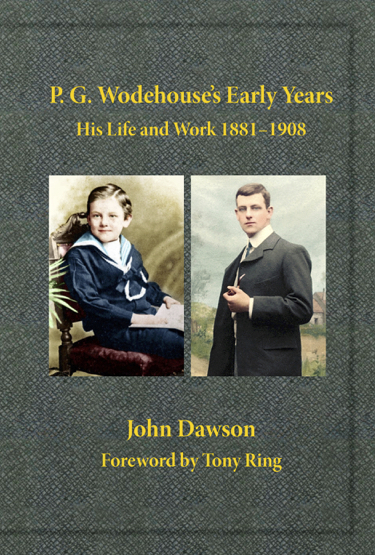
John Dawson recently shared with me a few excerpts from his book P. G. Wodehouse’s Early Years: His Life and Work 1881-1908.
The Context
Thomas Anstey Guthrie (1856–1934) of Kensington was a comic novelist and playwright who practiced law for a brief period after leaving school. His first published short story was a farce set in ancient Rome called “Accompanied by a Flute.” It ran in the humor magazine Mirth in 1878; a compositor’s error credited “F. Anstey,” the pen name he would use for the rest of his career.
While at Cambridge, Guthrie had begun an ingenious novel of a father and son switching bodies that he called Vice Versa, or A Lesson to Fathers. When finally published in 1882, it became an overnight sensation. Graphic: “A touch of the romance of Arabian Nights, some of the peculiar whimsicalities of Gilbert, a humour akin to Dickens, and an insight into modern school boy life as deep as that of Hughes or Farrar. A writer with a personality and a bright, clever style.”
Novelist Andrew Lang introduced Guthrie to the editor of Punch, F. C. Burnand. The result was “Voces Populi,” a series of sketches of Brits at work and play that were, according to Brander Matthews of Cosmopolitan: “Photographic in their accuracy. Anstey has caught the cockney in the very act of cockneyism, but wholly without bitterness or rancor. He knows his roughs, his ruffians, his housemaids, his travellers. He sees their weakness, but he is tolerant and does not dislike them in his heart”— another description that could have fit the work of Wodehouse.
In 1958 Plum told his biographer Richard Usborne that he was “soaked in Anstey’s stuff.” He had been for a long time; fifty-three years earlier, as he compiled notes for “Sunshine and Chickens,” (published in 1906 as Love Among the Chickens) he wrote: “Cook as old soldier like a man in Anstey’s Fallen Idol [1886] always grumbling and vaguely indignant with other people when he does anything wrong.” (Phrases, Notes Etc.) The character did not make it into the book.
From Wodehouse’s The White Feather of 1907: “In stories, as Mr. Anstey has pointed out, the hero is never long without his chance of retrieving his reputation,” which is the main theme of the story.
Enter BabooJabberjee
Guthrie’s most notable imprint on Wodehouse’s work comes from the pages of Baboo Jabberjee, B.A., published in 1897. Murphy: “At the end of the nineteenth century, hundreds of young Indians came to London to read law, which led F. Anstey to write a series of essays for Punch in the 1890s, supposedly written by one of them. They became the rage and the whole country quoted Mr. ‘Baboo’ Jabberjee, a pompous young Indian law student, who wrote weekly letters to ‘Hon’ble Punch,’ describing his experiences as a visitor to England. His style of speech was orotund eighteenth century Augustan English, and ten words were used when one would do, mixed in with Shakespearean misquotations.” Indeed—in the first installment, Baboo introduces himself to the editors: “Since my sojourn here, I have accomplished the laborious perusal of your transcendent and tip-top periodical, and hoity toity! I am like a duck in thunder with admiring wonderment at the drollishness and jocosity with which your paper is ready to burst.
Plum’s first quotes from the garrulous Indian appear in “The Manoeuvres of Charteris” and in book form in A Prefect’s Uncle: “The Bishop, like Mr. Hurry Bungsho Jabberjee, B.A., became at once the silent tomb.” The silent t. wheeze is one well known to Wodehouse’s readers.
It might have brought a smile of satisfaction to Wodehouse in May 1906 when Ernest Foster, then editor of Chums, the constant companion of his boyhood, commissioned him to write a “not so public-schooly serial with rather a lurid plot.” He turned to Bill Townend for ideas, and under the alias Basil Windham the pair collaborated on a serial novel “full of kidnappings, attempted murders, etc.” called The Luck Stone. It had a long gestation; serialization wasn’t begun until September 1908. Plum referred to the story in a 1911 letter to L. H. Bradshaw as “in the Andrew Home vein.” The formulaic page-turner might best be described to Americans of a certain age as a British version of a Hardy Boys adventure. ‘Basil Windham’ lifted Baboo’s rem acu tetigisti (Lt., you have touched the matter with a needle) which Anstey had cribbed from the Roman playwright Plautus, and mens sana in corpore sano (Lt., a sound mind in a sound body) courtesy of Juvenal; both phrases are well known to Wodehouse’s readers. The authors created a delightful Baboo clone with the Indian student Ram:
Misters and fellow-sufferers permit me to offer a few obiter dicta on unhappy situation in re lamentable foodstuffs supplied to poor schoolboy. For how without food, even if that food be the unappetising and a bit off, shall we support life and not pop off mortal coil, as Hon’ble Shakespeare says? ’Tis better, misters, as Hon’ble Shakespeare also says, to bear with the snip-snaps we know of than fly to others which may prove but a jumping from frying-pan into fire. Half a loaf is better than an entire nullity of the staff of life. (Abridged from original text)
Plum deprived English literature of what would surely have been a comic masterpiece by not letting his readers in on Ram’s recitation of Hamlet’s soliloquy: “Even in its original form this is admitted by most people to be a pretty good piece of writing, and Ram improved on the original. He happened to forget the exact words half-way through, and, scorning to retire gracefully, as a lesser man might have done, he improvised.”
Usborne detected Baboo’s influence in the speech patterns of three of Wodehouse’s most famous characters: “Take your line through Ram, into Psmith the buzzer, Bertie the burbler and Jeeves the orotund, and you may feel inclined to pay a passing tribute to F. Anstey for planting a seed in the rich soil of young Wodehouse’s burgeoning mind. Jabberjee was powerfully seminal to Psmith. Some of his false concords [disagreement of relative and antecedent, misgovernment of pronouns, mistaking the adverb for the adjective, etc.] are repeated verbatim by Bertie Wooster, and some of his inflated phraseology goes into Jeeves’s vocabulary. It was Jabberjee, not Bertie, who first misunderstood Shakespeare’s “an eye like Ma’s to threaten and command.” (“An eye like Mars, from Hamlet)
Chapter 10 of the book, entitled “A Booky Sort of Person,” discusses Wodehouse’s early reading habits and literary influences.
For all Plum enthusiasts, the book is a treasure trove!
(Permission to reproduce these excerpts on this blog site is gratefully appreciated).
By no stretch of imagination can I be held to be an expert on P. G. Wodehouse. If you have followed my Wodehouse-related posts over the past eight years, you would have already assessed the literary level of essays churned out by me. The scales would have fallen from your eyes. You would have realized that these have been sculpted by someone who had honed his linguistic skills ‘at a correspondence school and had never progressed beyond lesson three’; much unlike the Master Wordsmith of our times, who, like Michelangelo, leaves us enthralled in awe and admiration of many a literary David, Madonna and Pieta he has dished out. What Michelangelo was to marble, Plum is to literary humour, wit and wisdom. Like the former, the latter’s talents are also multi-faceted. If one was a sculptor, a painter and an architect, the latter was a prolific writer, publishing more than ninety books, forty plays, two hundred short stories, several poems and other writings between 1902 and 1974.
He used a mixture of Edwardian slang, quotations from and allusions to numerous literary figures, and several other literary techniques to produce a prose style that has been compared to comic poetry and musical comedy. One of the qualities of his oeuvre is its wonderful consistency of quality, tone, wit and wisdom. A wise man had once remarked that his works transport us to a sort of Garden of Eden where a benevolent sun always shines, though eating a certain fruit is forbidden. His characters may sound like trivial people doing trivial things, but Plumsville in itself is not at all trivial.
There are several lenses with which one could discern the messages embedded in his works. A literary lens would reveal his canvas to be very wide, comprising not only Shakespeare but also Agatha Christie, Sir Arthur Conan Doyle, Browning, Burns, Frost, Keats, Kipling, Omar Khayyam, Spinoza, Tolstoy, Tennyson, Wordsworth and many others. A spiritual lens would bring into sharp focus the importance of cultivating such personality traits as compassion, gratitude, empathy, humility, perseverance, aspiration, courage and goodness. A well-being lens would nudge us to avoid the pleasures of the table and remain fit and trim. A social lens would help us to notice the kind of efforts one has to keep making to keep the wolves at bay and notice the perils of economic inequality. A political lens would leave us scoffing at dictators and others. A theological lens would reveal the rich Biblical references and allusions in his works. A managerial lens reveals to us the art of managing bosses. A romantic lens would reveal a clear absence of cruder passions. Respect for women reigns supreme. Victorian norms prevail.
In a way, there is much in common between Wodehouse’s works and those of Jane Austen. Both happen to follow strict codes. Both play out as movies suitable for General Exhibition, thereby making these a family affair. Sex is taboo.
In Plumsville, friendly romps and jocular embraces are taken a jaundiced view of. Impersonation and white lies dished out in the course of a boat ride meet with approval; so do the pinching of umbrellas, policemen’s helmets, scarabs, silver cow creamers and such members of the animal kingdom as cats, dogs and pigs. Bunging in a policeman into a cooling stream is not scoffed at. One is forever living in a world which is essentially decent, uplifting and far away from the kind of trials and tribulations one faces in real life. Practical jokes do get played, albeit within limits. A chin-up attitude is the norm.
One of his unique skills is that of deploying a unique turn of phrase and the delightful use of similes. The laughter of Honoria Glossop gets likened to ‘the Scotch express going under a bridge.’ The Empress of Blandings is described as a balloon with ears and a tail. Examples such as these abound all across his oeuvre.
Yet another skill of his is that of weaving in several threads in the same narrative. He gives all the threads in his narrative the same dramatic weight, making them all result in happy endings. His characters do face the harsh slings and arrows of fate, but things invariably remain within tolerable limits. If problems of the lining of the stomach lead one to contemplate suicide, some simple exercise, such as chasing a servant down the street, quickly makes one realize the futility of giving up on the gift of life.
Many of my blog posts happen to be an outcome of a soulful analysis of his books and stories. Quite a few others are pastiches which make one realize the timelessness of his works. Some are examples of the kind of affliction Wodehousitis happens to be. If someone is in the terminal stage, no other literary figure attracts one’s attention. People one runs into get characterized as per the traits of some of his characters. A pitiless self analysis leads one to identify oneself with different characters created by Plum. All incidents in one’s mundane life get viewed through a Wodehousean lens, whether facing a pandemic or appearing in a court hearing or even when one receives an offer of a paltry sum at the hands of a Scandinavian young girl. In retrospect, even career blunders get looked at in a lighter vein.
Plum’s works happen to be an effective balm for a weary and wounded soul. When it comes to shrugging off those blues, these act like the pick-me-ups whipped up by Jeeves and make one rise over one’s dead self to higher things in life.
All this goes on to show that as a delectable affliction, Wodehousitis has a very long shelf life. Plum’s works continue to enthuse, educate and entertain his numerous fans the world over and would keep doing so for a very long time to come. The more the disruptions caused by advances in technology, the higher the risk of human alienation. The higher the level of alienation, the wider the prevalence of depression and psychosomatic illnesses. His works are based on the psychology of the individual and act as effective anti-depressants. This alone would ensure his perennial popularity.
‘Oh, I say, did you say Wodehouse helped you lose weight?’
‘Yes.’
‘Wodehouse as in P.G.?
‘Yes.’
‘The writer or the dietician?’
‘The writer, you ass! He invented the Swedish Exercises, you know. And the Larsen E.’
‘And you did them?’
‘No, I just read about them.’
A couple of years back, I went to a new doctor with my annual health check-up reports. Again, all the results seemed fine. I was eating healthy, staying active, walking twice a day. Balancing the halo on my head, I flashed a smile at him.
“You need to lose about 15 kg,” he said. “Put in more exercise.”
“But Doctor, I doubt I can do more than this. I’ve had multiple fractures on both my legs some years back.”
Like most normal people, this is when he should have said, ‘What!’ and I would have told him about my near-fatal road accident in an unquivering voice. But he did not raise an eyebrow. “Too long ago. You better get serious about exercise and consult a nutritionist if you want to stay fit.”
Some bedside manner, humph!
But not one to bear grudges, I moved on. I would look up some Swedish Exercises, I thought, having caught a page of Something New while sitting in the waiting room earlier. But, of course, I’m always equipped with a Wodehouse—one never knows when one may need a smile.
In this first Blandings Castle book, the hero Ashe Marson is a strapping young man who does the Larsen Exercises in the open, unmindful of the audience, till one day, just as he ‘unscrambled himself and resumed a normal posture’, the heroine of the book bursts into musical laughter. Like the rest of ‘Plum’ Wodehouse’s work, this has been a balm to my throbbing head and broken bones. Wodehouse is mild sunshine on a cold day, cool breeze on a hot day, and a gentle sprinkling of life lessons every day. More importantly, however, it proved to be an inspiration.
Many of Wodehouse’s novels mention the Swedish Exercises. But somehow, till that minute in the doctor’s waiting room, I hadn’t thought of them as an exercise that I could do. Or should do. Yes, imagining his characters twisting and turning always makes me smile. This bit from Jeeves and the Feudal Spirit has me in splits every time I read it.Bertie Wooster, against whose name there are 11 pages of incriminating matter in the Junior Ganymede Club register, asks Jeeves if there is anything there about fellow Drones Club member Stilton Cheesewright.
‘Damaging?’
‘A certain amount, sir.‘
‘Not in the real sense of the word, sir. His personal attendant merely reports that he has a habit when moved of saying “Ho!“ and does Swedish exercises in the nude each morning before breakfast.‘
In his book Over Seventy (1957), Wodehouse reveals that he did his “getting-up exercises before breakfast, as I have been doing since 1919 without missing a day.” He published over ninety books, hundreds of short stories, wrote or collaborated on at least 14 Broadway musicals, and died at the age of 93 while sitting in his armchair, going through a three-fourths-complete typescript of his last book, Sunset at Blandings.
Apart from the fact that he had immense talent and wrote at least 1000 words every day, I’ve often wondered what could account for such prolific work. He and his wife always had dogs and cats and even guinea hens around them that served as stress-busters? That, like Bertie Wooster, he never harboured any ill will towards anyone? By his own admission, that he had a case of infantilism and never developed mentally at all beyond his last year in school? That he exercised every day?
Bingo! E-V-E-R-Y-D-A-Y! His fictional exercises are believed to have been inspired by the regime invented by the Swede Pehr Henrik Ling or by that of Lieutenant Muller of the Danish Army. But in real life, Wodehouse followed a set of light exercises called the Daily Dozen, which Walter Camp invented and published in Collier’s magazine. He did it every day.
My visit to the nutritionist confirmed that every day was the magic word. She reviewed my diet and lifestyle and said only a few tweaks were needed to make them work for me. Instead of doing a bit of yoga in fits and starts, I started going up to the terrace to do yoga – not Swedish exercises – for half an hour every day at sunrise. Like magic, I lost over 12 kg in seven months. When I diluted the ‘everyday’ regime earlier this year, the needle started swaying the other way. I think I’ll need to begin reading Wodehouse every day again – no, not to follow his Swedish Exercises, but to exercise – any kind of physical exercise – every single day!
(Mala Kumar is a writer and editor who keeps her insanity intact by talking to kids, dogs, cats and plants.Her permission to reproduce it here is gratefully acknowledged.)
On the occasion of the 140th birth anniversary of P. G. Wodehouse, allow me to present a collection of a part of my blog posts on the Master Wordsmith of our times.
Many of my followers on social media keep complaining about suffering from dyspepsia of a Plummy kind. Even before they can devour a piece, a new one pops up. In the social media rapids, earlier posts are apt to sink without a trace rather promptly. Often, this leaves them disgruntled no end.
I hope this compilation would work like Mulliner’s Buck-U-Uppo, enabling fans of Plum to look up different blog posts at their own convenience and leisure, with a jaunty sang froid. I can readily imagine a reader, with this basket of plums by her side, relishing a single plum at a time while seated in her favourite rocking chair, with her preferred tissue restorative perched on a tiny table next to her.
These essays have been grouped under different sections. Volume I, entitled ‘A Soulful Analysis of the Wodehousean Canon’, has the following sections:
In Jeeves We Trust
Of Mentally Negligible Masters
Women in Plumsville
Analysing The Code of the Woosters
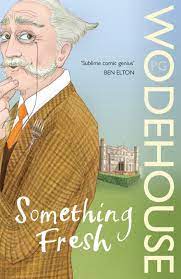
Something Fresh Under the Lens
The Girl Friend and Lord Emsworth
When Cupid Strikes
Some Seasoned Romances
Shades of Plum in Some Movies
Hapless Rozzers and Stern Lion-tamers
Matrimonial Bliss
Rogue Kids
Napoleon and Shakespeare
Of Politicos
Canines, Felines and Others
If Volume I takes an analytical view of the Wodehousean canon, the upcoming Volume II, entitled ‘Pip pip’, comprises pastiches and some autobiographical posts. It endeavours to highlight the relevance of his narratives in the contemporary times.
Over the years, many fans of P. G. Wodehouse world over have contributed to the essays which form a part of this compilation.I am grateful for the affectionate support received. Thanks are also due to Mr. Kevin Cornell, Mr. Suvarna Sanyal and Wikipedia for the illustrations; to Ms. Sneha Shoney, who has edited the text; to Mr. S. K. Sarath Bharati and Mr. Sanket Bhatia for composing the text and finalizing the layout.
This collection of essays is for private circulation only. The intention is not commercial but merely to share some thoughts regarding the oeuvre of P. G. Wodehouse.
Those who are keen on receiving a PDF version of Volume I may please mail a request to akb.usha1952@gmail.com. The PDF version can also be downloaded directly from here.









 ashokbhatia
The Indian Curry Dished Out by P. G. Wodehouse: Some Comments
Posted in What ho!, tagged Comments, Humour, India, Indian Curry, P G Wodehouse on November 17, 2021| Leave a Comment »
Bjorn Bergstrom, Sweden
Ashok, your excellent Indian Curry is really spicy! I can imagine how hard you must have worked on it to find all those references to India.
Chakravarti Madhusudana, Australia
P G Wodehouse never visited India. But even a first reading of his works reveals his affinity for India, Indians and Indian things in general. He may not be always complimentary about Indians and sometimes be even wrong, but his observations were totally without malice and always with an acute sense of the absurd.
In “The Indian Curry Dished Out”, Ashok Bhatia has made an extensive study of Indian references in Plum’s stories and novels. He has classified them into more than a dozen categories and presented them in a style that would be the envy of probably the master himself. I particularly liked the section “Missed Ingredients…” which hints at how PGW’s works might have been enriched by looking at other aspects of Indian culture.
This is a momentous work performed with great love and respect for Plum. I am sure it will be read with delight by Wodehouse fans whether or not they have an Indian background.
John Dawson, USA
This is a unique, delightful and informative essay. Of course I knew that Plum had referenced Indian matters quite a few times in his books, but the volume of these references you’ve included were surprising to me. You’ve done a superb job on an ambitious project! I don’t believe anyone has heretofore attempted to gather all of the Indian references in Wodehouse’s books. Please accept my congratulations for a lovely and worthwhile contribution to Wodehouse scholarship.
Masha Lebedeva, Russia
The article is absolutely wonderful. It not only gives us a chance to enjoy Master’s humour again and again but also a possibility to look through Plum’s eyes at India’s history, politics and culture. Bravo, Ashok, great work!
Kartik Pashupati, USA
Excellent essay. It’s interesting that Plum’s cat was named Poona. “Poonai” is also the Tamil word for cat, although I doubt if that’s what he had in mind. It’s also worth noting that all of the references to gemstones and similar artifacts stolen from Indian temples are parodies of “The Moonstone” by Wilkie Collins, which is said to be one of the earliest detective novels in English.
Nikhil Rathod, India
Thank you for the fascinating piece. It took me a while, but I finally finished all 50+ pages. You’ve really researched it!
A couple of things stood out to me:
– India was a huge part of British culture. More than PGW having a fascination for India, I got the impression he was just reflecting the popular culture. PGW was quintessentially English, which is reflected in his writing-style and stories. The references to India weren’t particularly knowledge about India.
– Speaking of “stories”, I’ve loved reading PGW. But, I always knew that the storyline or theme of most books never changed. Obviously, that didn’t lessen my enjoyment of his writing. Similarly, the references that you pointed out in your essay were also repeated in several books. The essay really illustrated this point.
I would have said, Happy Reading, in conclusion, but I don’t think we’ll find an author to compare. Again, thanks for sharing your essay.
Pradeep Swaminathan, India
Ashok has taken the pains book by book to correlate all facts that the Master has made about India. Right from the origins of Wodehouse Road in Colaba, Mumbai, to practically every single mention of anything connected with India. I was a small kid living in Colaba, in the early 60s, when my father was working for that very British institution – The Indian Railways. The colonial hangover still lingered. Colaba was where British India administered Mumbai and the surrounding areas. I still recollect the magnificent building we lived in – Beryl House. Just for the record the ICS exams were replaced with the IAS exams after 1947, so this British Structure is still very much there.
Back to Ashok. If and when he decides to share his essays publically do make it a point to delve deeply into them. How PGW without ever coming to India could garner so many facts about India amazes me. How Ashok has managed to pick each of these gems relate it to the book and give the references also amazes me.
Rajeev Varma, India
This is a fabulous collection of PGW’s literary rendezvous with the Indian curry – scorpions, cats, cobras, fakirs and their spikes, the Maharajas, the princes, the Taj Mahal and Mahatma Gandhi and Rabindranath Tagore – all put in an appearance. Some modern day Indian nationalists might be critical of what PGW felt about Mahatama Gandhi’s fasting but one must take into account the time and circumstances while he spoke of Indian Civil Disobedience. Ashok has admirably captured the essence of PGW’s humour and wit. Undoubtedly, Ashok’s write-up will be immensely liked by PGW’s fans all over India and even elsewhere.
Ashok’s command over the language and the flourish of presentation evoke immediate interest in his writing. A commendable work indeed!
Sanjit Ghatak, India
Imagine my rapture as I turned to page 49 of ‘The Indian Curry dished out by P. G .Wodehouse’ where you kindly mentioned about my humble effort to translate P. G. Wodehouse in Bengali.
At the outset, I must congratulate you on how you have painstakingly collated the India related references scattered in plethora of Wodehouse works, garnishing them suitably with appropriate comments. I hope you will not mind if I mention below some of the other India-related anecdotes appearing in Wodehouse work.
a) It was mentioned somewhere that a Hindu flung himself into the Ganges, got devoured by an alligator and considered the day well spent!
b) Horse racing was a favourite topic for Plum- Hon. Galahad Threepwood was a noted sportsman in his youth. Mention of winning the Great Calcutta Sweep was made on many occasions.
c) In Big Money Major Flood Smith “said something sharply in one of the lesser-known dialects of Hindu-Kush”.
Shalini Kala, India
What a feat – a comprehensive compilation of Plum’s India, accompanied with a wonderful commentary! Loved every bit of it. I think it will be a treat for any Indian or Indophile who has enjoyed PGW’s writings.
Sriram Paravastu, India
Brilliant writeup and accompanying cartoons by Suvarna Sanyal sir.
Subrata Sarkar, India
Superb. All people wanted to know about “Plum and India” but were too lazy to find out themselves. Hurry Bongsho Jabberjee is obviously a Bengali. I suspect Plum remembered the surname had something to do with incessant talking “chatter” which he recalled as “jabber”. And hence Jabberjee.
Oh! I must mention Suvarna Sanyal and his collage. He brings the characters to life with an additional x-factor.
Suvarna Sanyal, India
Truly PhD level work.
Swarupa Chatterjee, India
This is brilliant. Such an exhaustive account of PGW’s Indian references. And the accompanying illustration is out of the world!
Thakshila Jayasinghe, Sri Lanka
What a read! Enjoyed it very much. I had no idea there were so many references to India in Plum’s books. I suppose you only realise the extent of it when they’re all compiled together like this. Thank you for sharing this with me. It is truly a labour of love as only a real Wodehouse fan could’ve had such dedication.
Related Post:
Read Full Post »