Feeds:
Posts
Comments

Posts Tagged ‘Humour’

By no stretch of imagination can I be held to be an expert on cats. In any case, I have no clue as to how a cat which has been fed too much of cream would look like. Perhaps, having temporarily overcome its snootiness caused by the belief that in Ancient Egypt it would have been worshipped as a god of some reckoning, the milk of feline kindness would be coursing through its veins. Coming across a healthy mouse, it might just have shrugged its tender shoulders and decided to skip its quota of vitamins for the day. A wide grin would surely be adorning its visage.

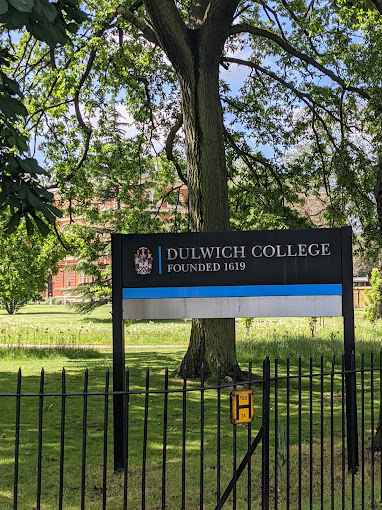
Anyone who had spotted me coming out of the hallowed portals of Dulwich College recently would have noticed the wide grin on my not-so-handsome countenance. She might have seriously suspected me to be a member of the feline species which had just gorged on a diet full of rich cream duly enriched with fat-soluble vitamins. The spotter would have been left twiddling her thumbs trying to figure out the singular absence of the morose look which usually adorns the face of the spotted, making her wonder if the latter had just put in his papers relinquishing his position as the honorary Vice President of the Global Morons’ Association.

She would not have been off the mark. My cup of joy was indeed running over. The sky was bluer. The grass was greener. The air was more fragrant. In short, God was in heaven, and all was well with the world. Peter Mark Roget, had he been around, would have described me as being blissful, chuffed, delighted, elated, ecstatic, glad, grateful, gruntled, pleased, happy, and satiated. At the time, the heart was overflowing with unalloyed joy.

The cause of my having attained this state of blissfulness was two-fold.

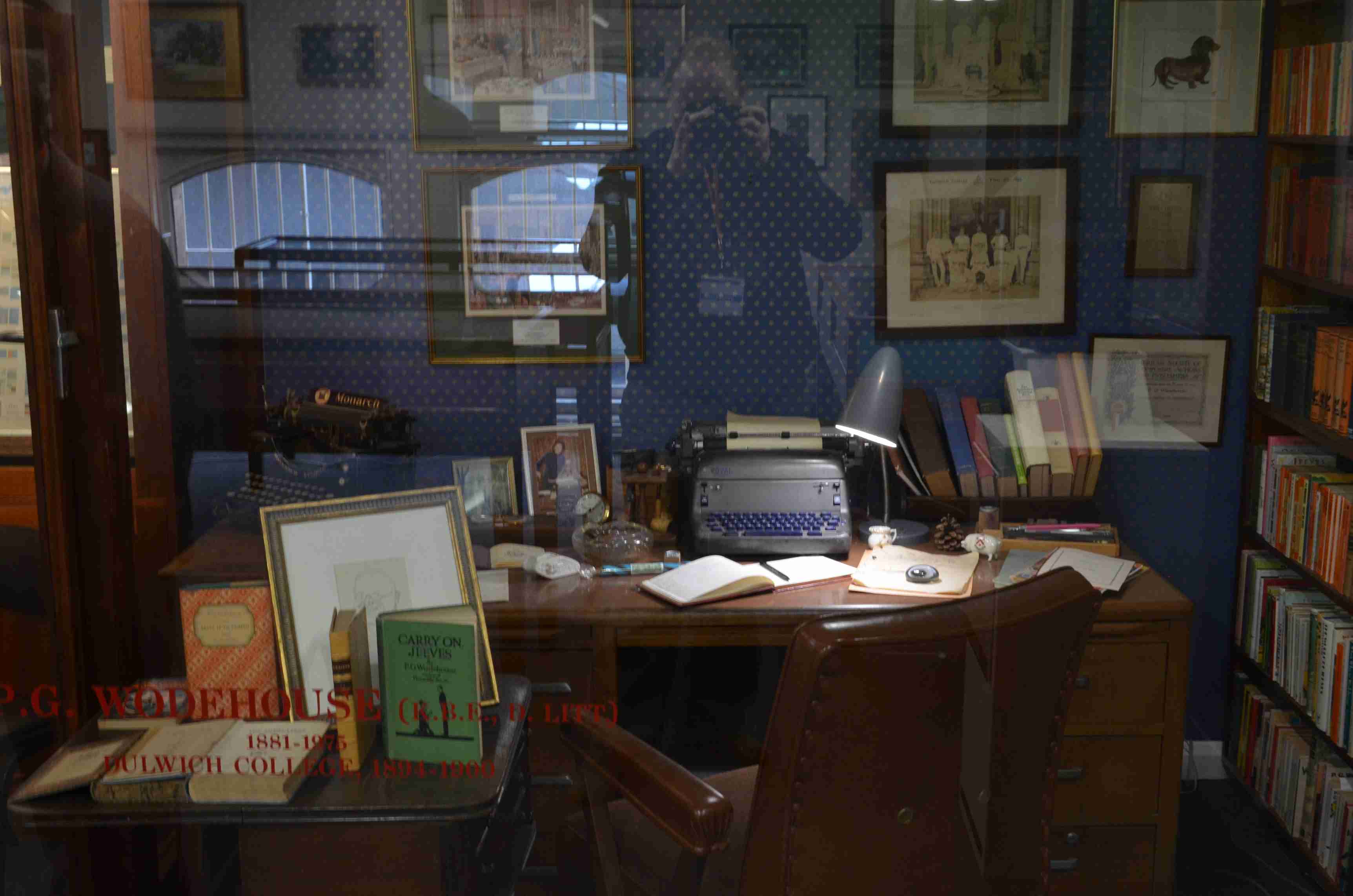
One, Dulwich College had turned out to be a treasure trove of Wodehousean memorabilia. A place where brainy coves who happen to admire the Master Wordsmith of our times could settle down to drink deep from the joyous waters of his works and his methods and dish out some scholarly research papers brimming with erudition of the first order. They could even soak in the ambience of his own study, a recreated version of the one at his home across the pond at Southampton in New York. After his death in 1975, Ethel had donated the same to his beloved Alma mater.

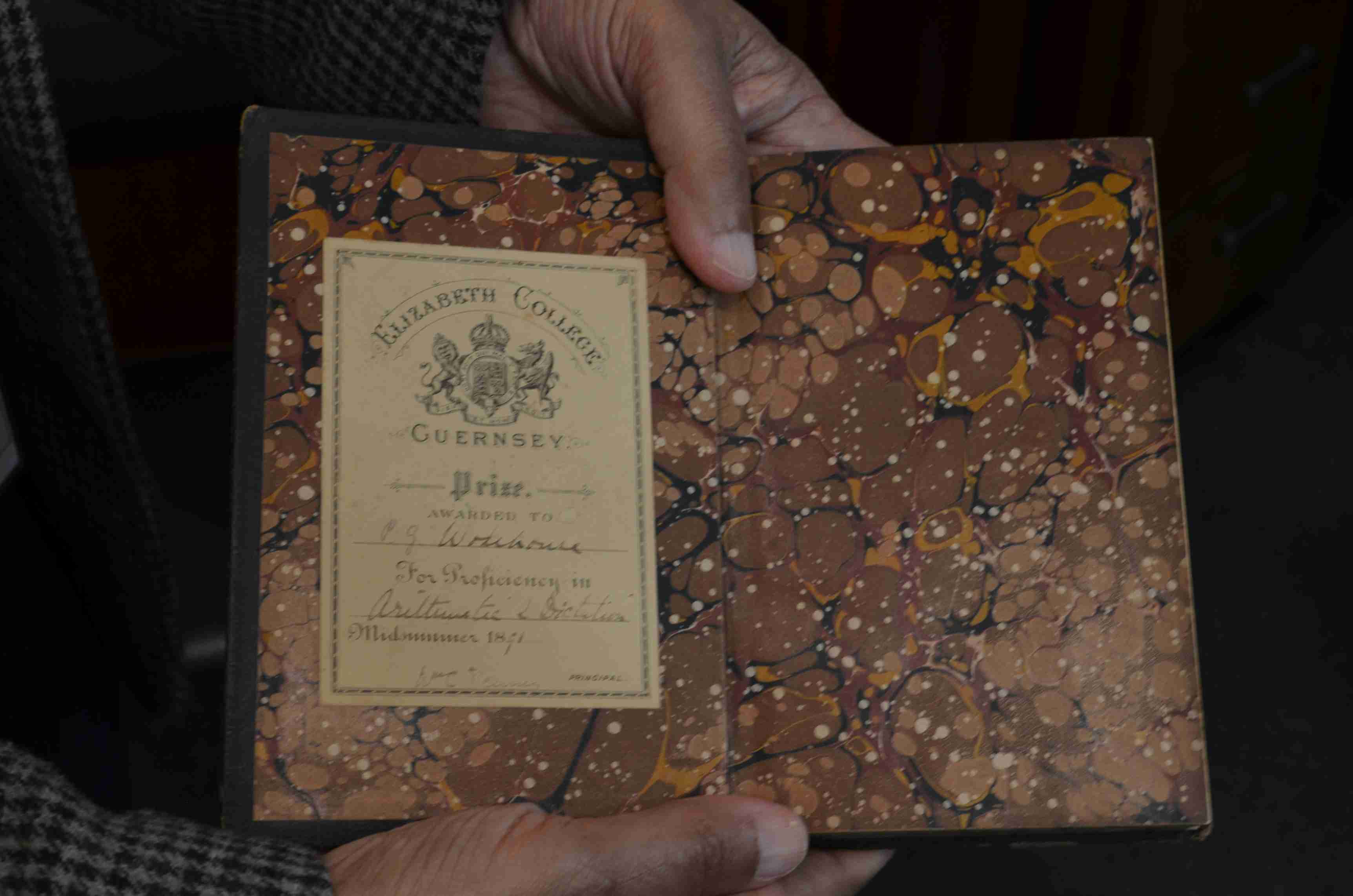
Two, an overwhelming feeling of gratitude pervaded my mortal frame. I was, and continue to be, amazed at the affection, care and conscientiousness with which Dulwich College has built up and maintains multi-faceted records pertaining to Plum. Besides his books and their translations or pastiches in very many languages of the world, one could peruse his academic report cards, cricket score sheets, records of singing and theatrical endeavours, duly embellished with some juicy comments from the Rev. Aubrey Upjohns of his life while he was there from 1894 till 1900.

Sample this specimen:

He has the most distorted ideas about wit and humour; he draws over his books and examination papers in the most distressing way and writes foolish rhymes in other people’s books. Notwithstanding he has a genuine interest in literature and can often talk with enthusiasm and good sense about it.

(Dulwich College report on Wodehouse, 1899)

It is well known that in addition to his sporting achievements, he was a good singer and enjoyed taking part in school concerts; his literary leanings found an outlet in editing the school magazine, The Alleynian.

It may be of interest to note that Plum’s six years at Dulwich were among the happiest of his life. According to a statement made by him:

“To me the years between 1894 and 1900 were like heaven.”

Perhaps it was this sentiment of Plum’s which rubbed off on me when I had the privilege of visiting the college, guided by Calista Lucy, the Keeper of the Archive.

The college was founded by Edward Alleyn in 1619. Since then, many of its alumni have made it proud of their achievements in different realms of human endeavour. A few other celebrities who have passed through its hallowed portals are the writers Raymond Chandler, Graham Swift and Michael Ondaatje, the banker Eddie George (Governor of the Bank of England), and Anand Panyarachun (Prime Minister of Thailand).

The buildings have obviously undergone several additions since 1900, when Plum ended his sojourn at Dulwich College. We entered through the North Cloister, a corridor which was open to the elements during Plum’s days. It was a place where he would do his Larsen exercises.

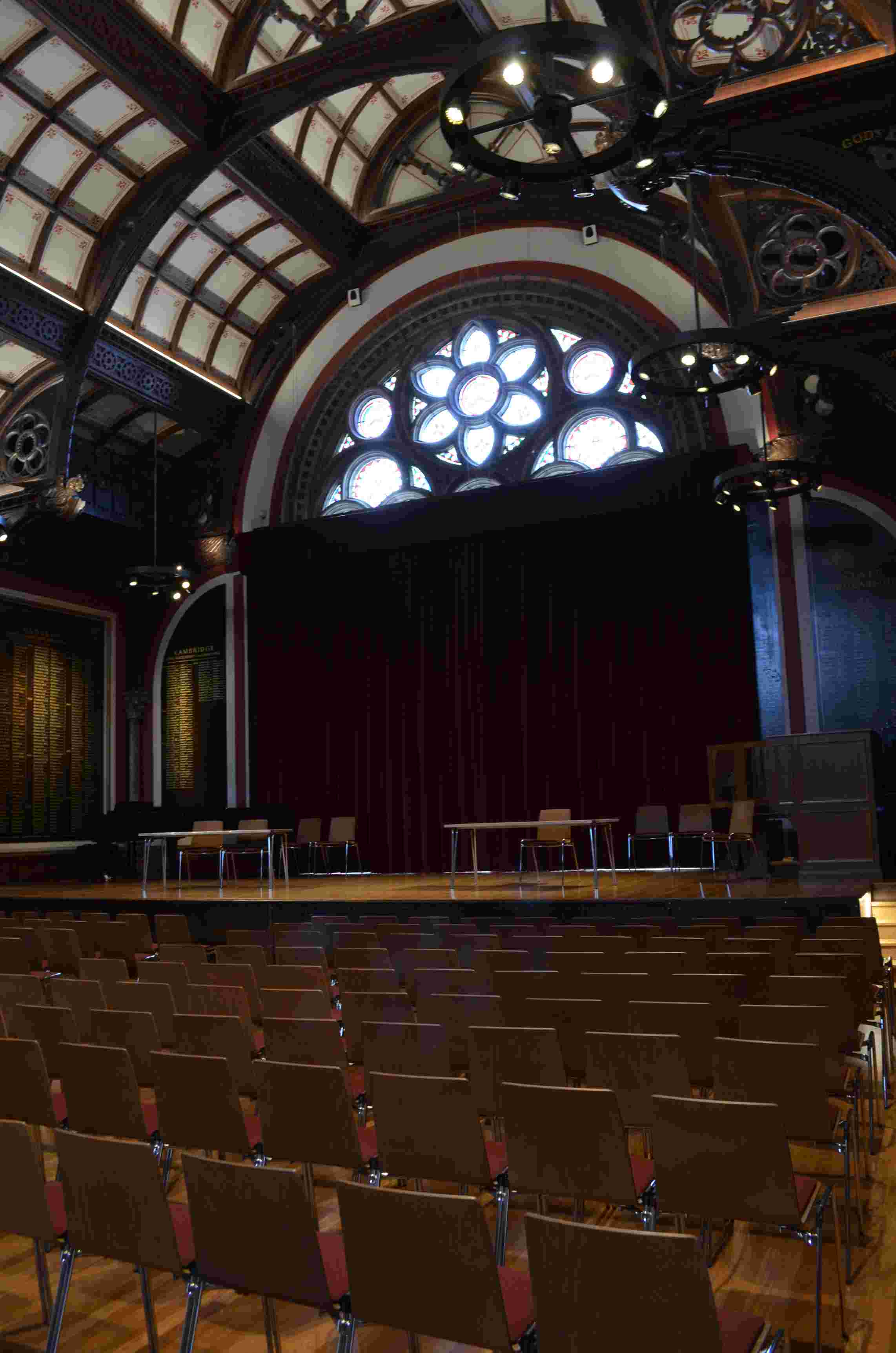
A grand staircase, adorned with portraits of various patrons of the college over time gazing benignly at us, led us to the Great Hall which is used for school assemblies and examinations. When Plum was at school, he and others would have eaten in the hall.

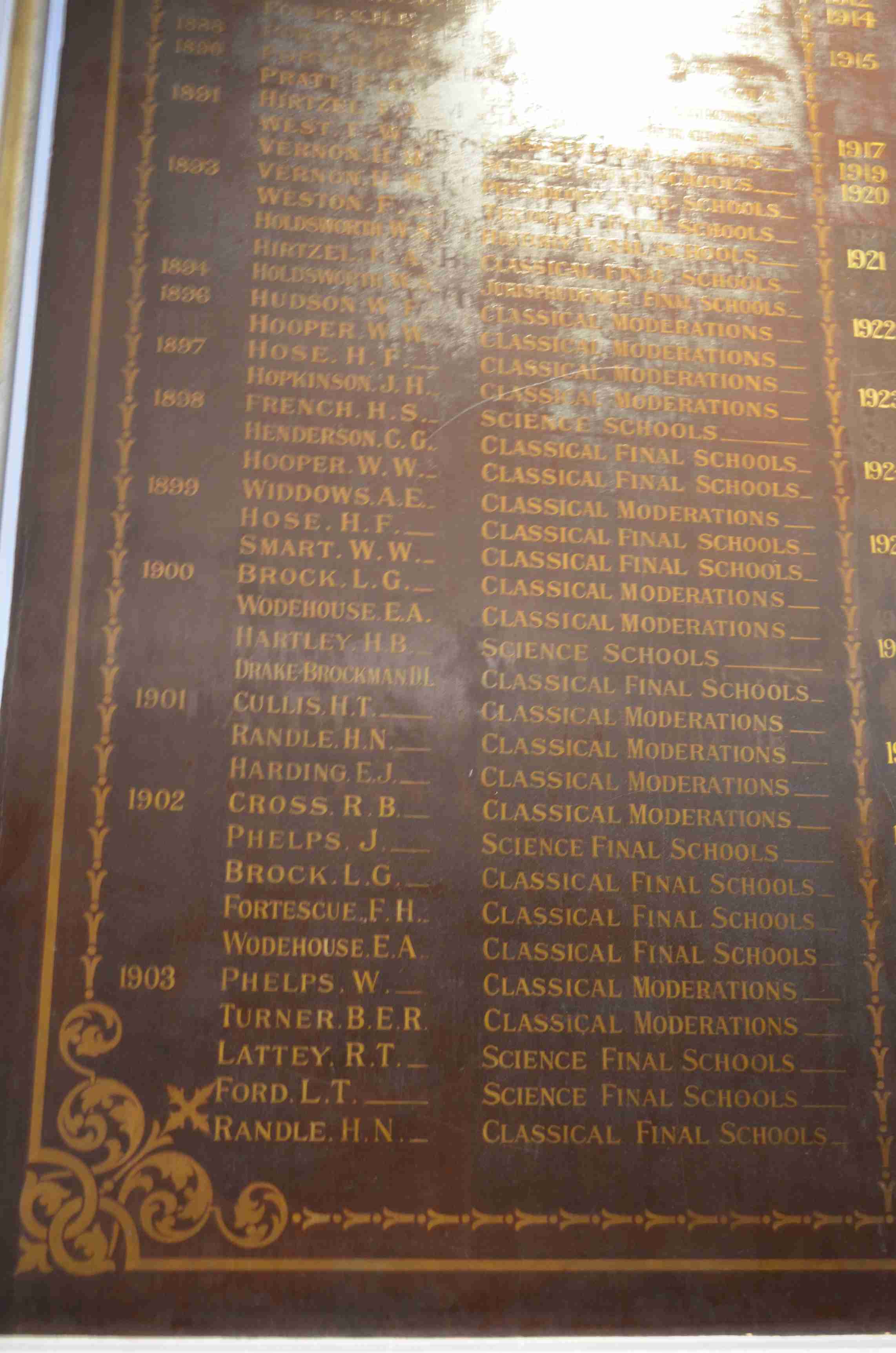
On the Honours Boards, one could see the name of Armine, Plum’s elder brother, who was also at the college. While the brother could subsequently gain admission to Oxford University, Plum was unable to do so owing to the financial difficulties faced by the family then.

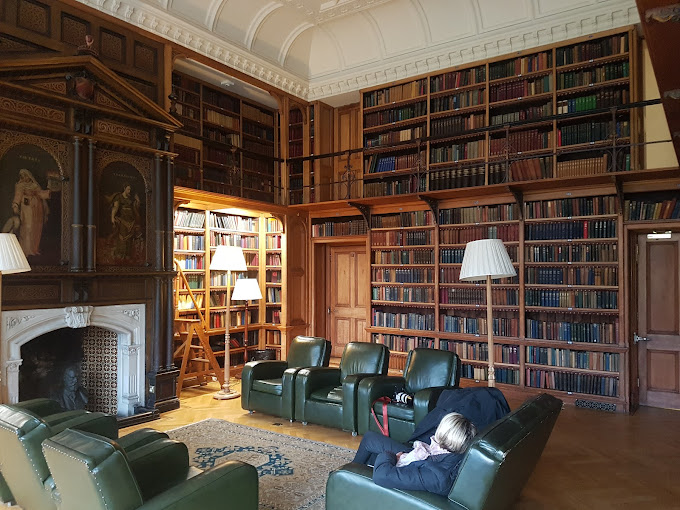
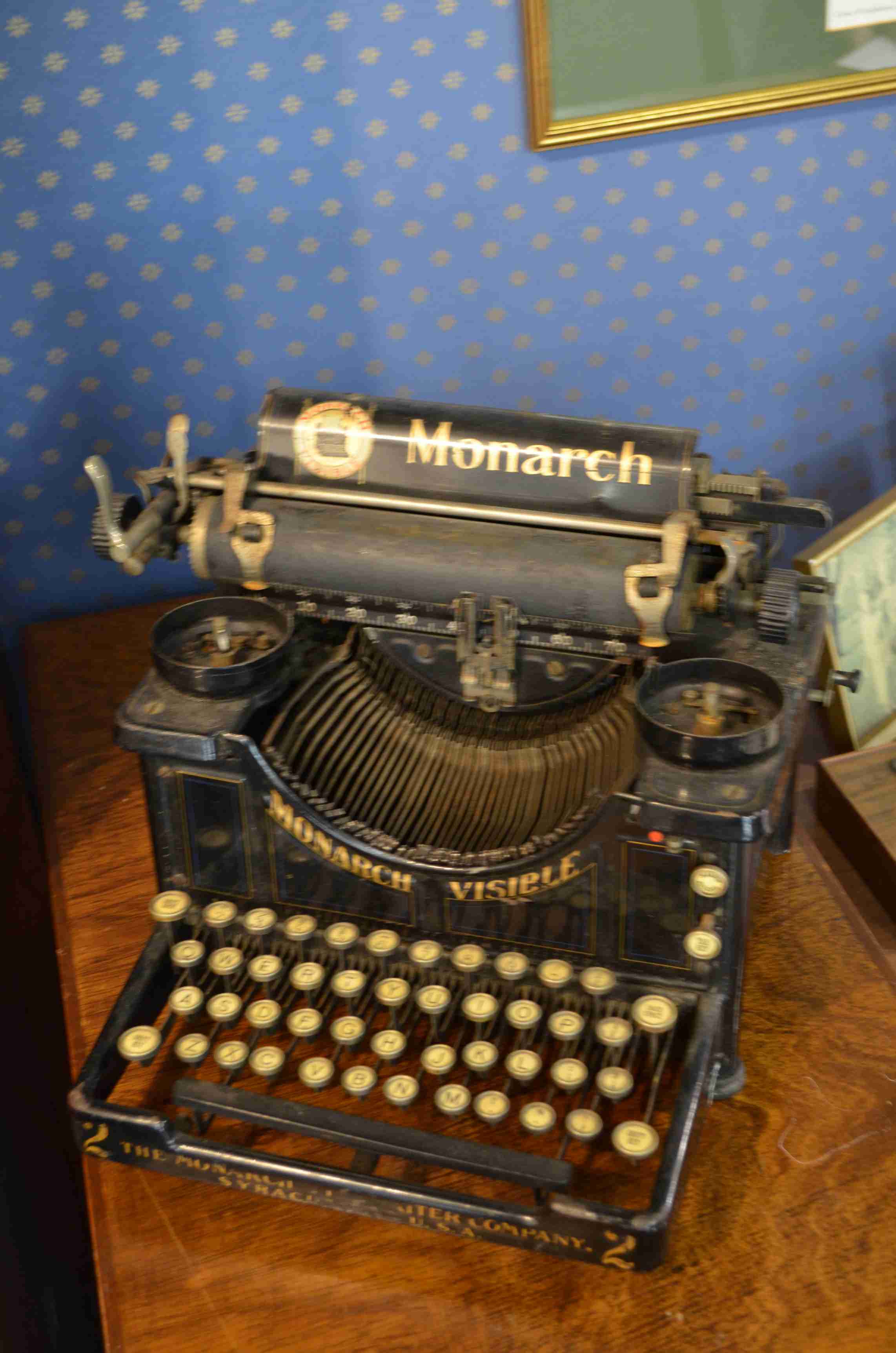
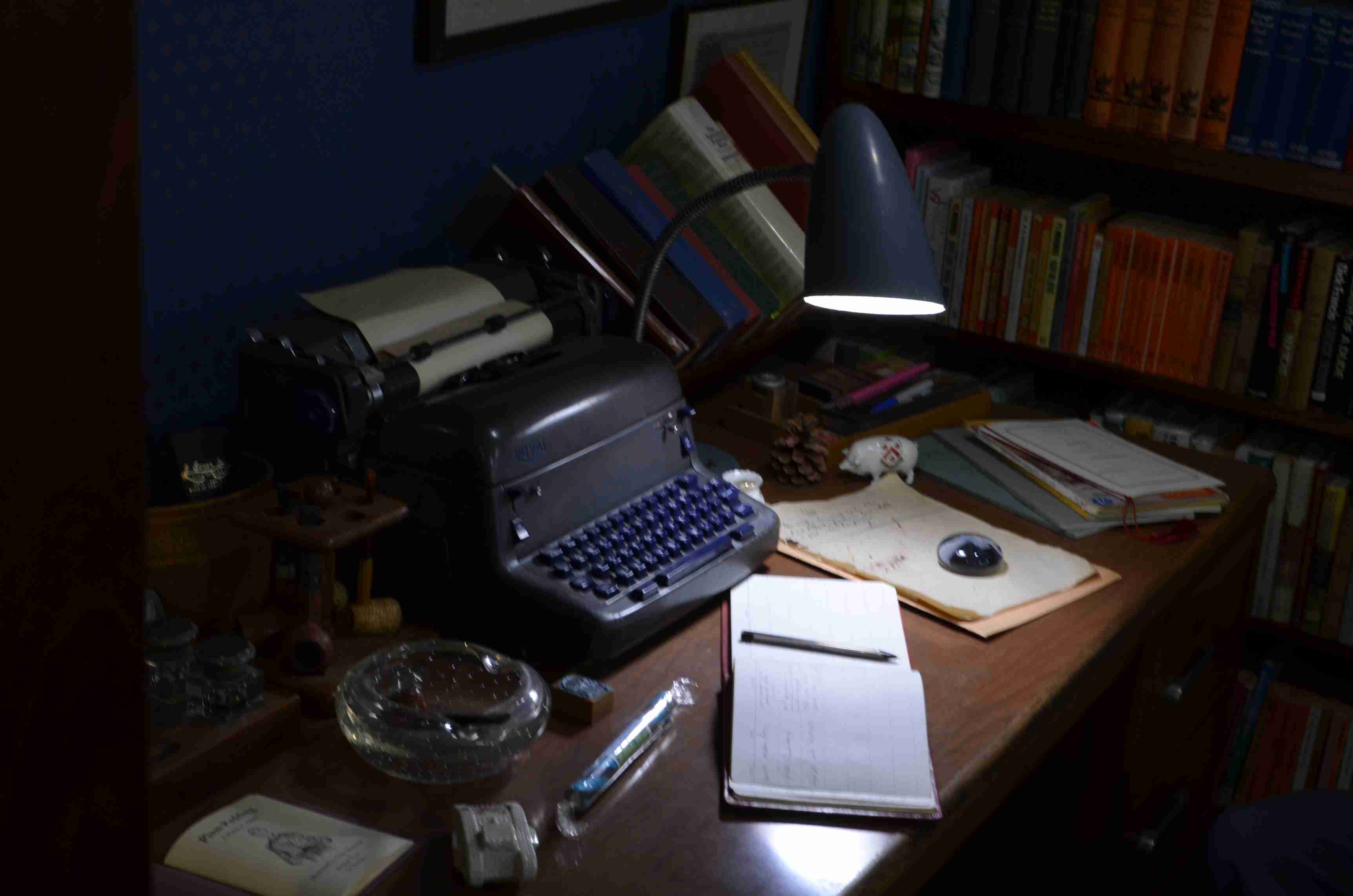
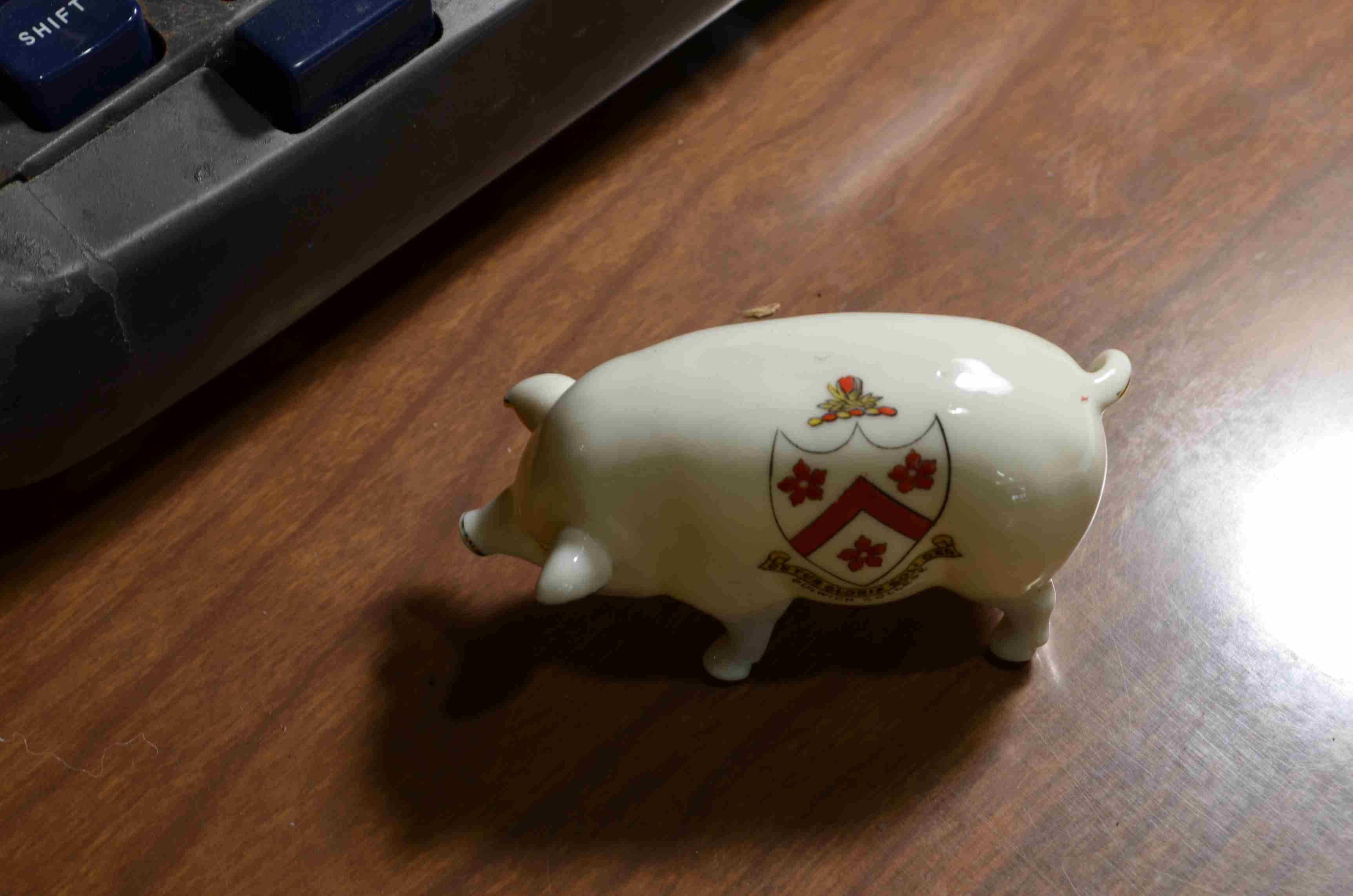
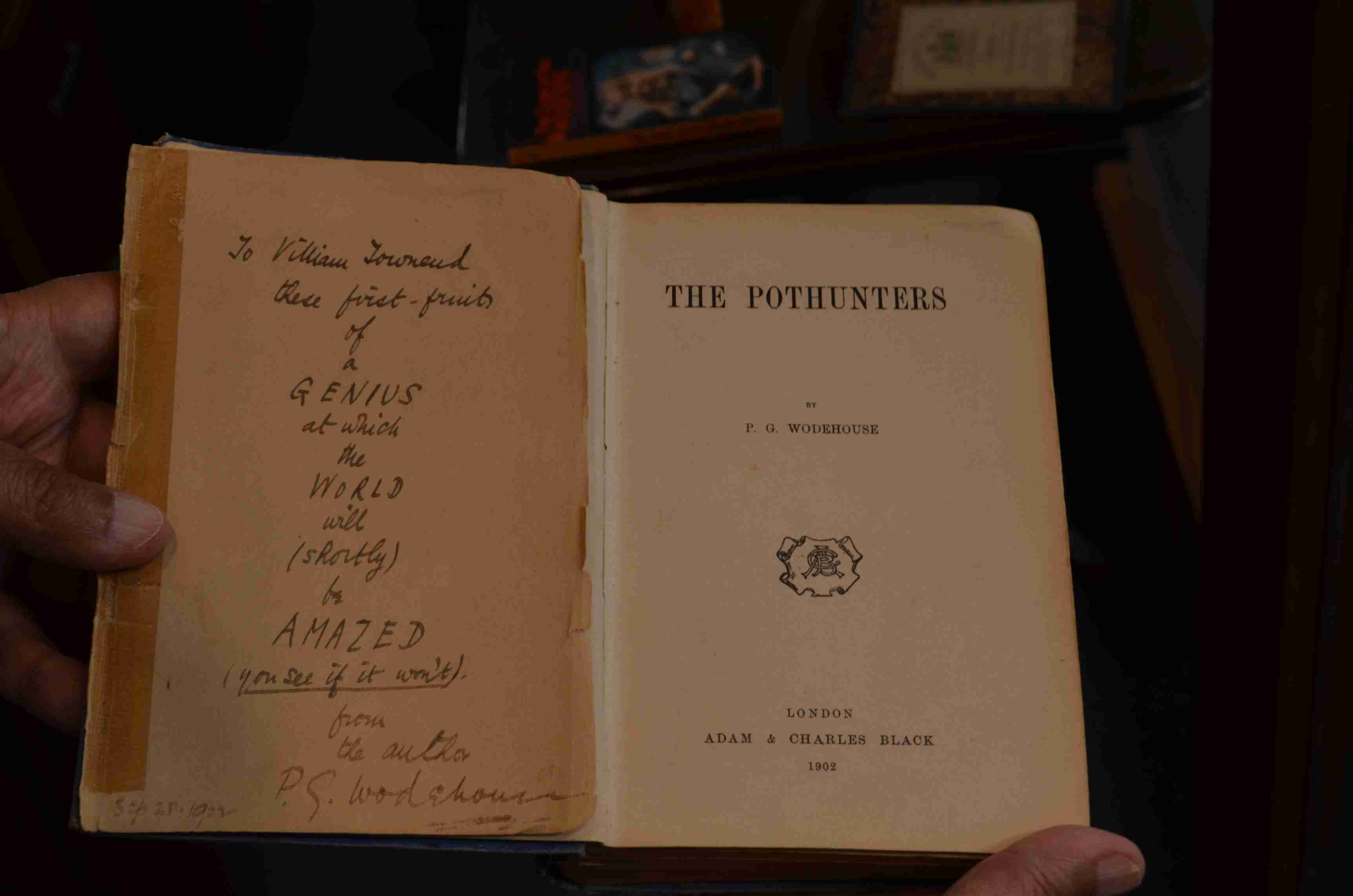
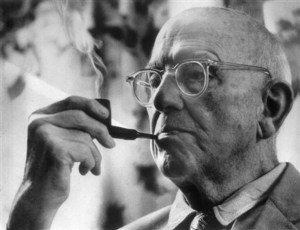
We passed by a well-stocked library of the college, named after Plum. Seeing the reconstructed study of his was a sheer delight. His working table, the chair that he used, two typewriters of his (one manual and another electric), his reading glasses, his pipes, the paperweights, a small figurine, and first editions of several of his books make the room come alive.

Calista was grace personified. She invited me to sit on Plum’s chair. Out of sheer reverence for the great man, I was hesitant, but than gave in to the temptation, merely to feel the vibrations of this genius humourist. The experience was something beyond words to describe, if you know what I mean. A signature in the Visitor’s Book was duly affixed.

What followed was a perusal of his personal collection of books, Dulwich College report cards, cricket score sheets, and his correspondence with various other luminaries and friends, all lovingly catalogued and preserved. The icing on the cake was surely to be able to go through his comments on a manuscript of his own, mostly in red colour. Such comments as “Good,” “OK, but needs to be improved,” and “Not funny enough, rework on this,” gave a sneak peek into the kind of perfectionist he was when it came to dishing out his uproariously funny works.

Passing through a hall which had a bespectacled scholar working on a research project, we came across a room full of translations of his works in many languages and an array of books inspired by Plum’s works and published by authors of different hues, ethnicities, and nationalities in their native lingua franca.    

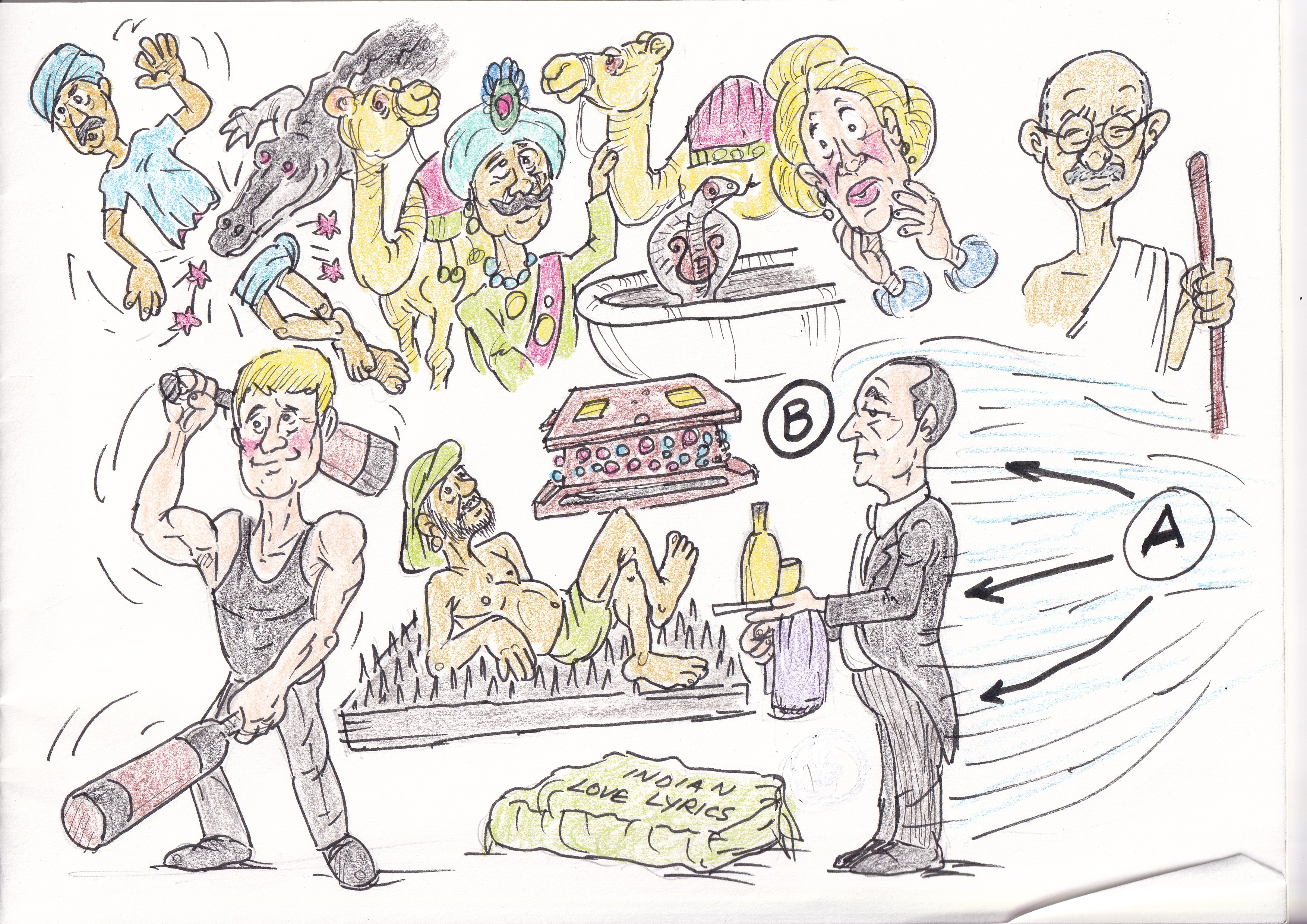
By way of a token of gratitude, I took the liberty of presenting my own compilation entitled “The Indian Curry Dished Out by Sir P. G. Wodehouse,” which is a long essay on various references to India in many of his works.

After expressing sincere gratitude to our gracious host for the time she could spare for us, I and my companion took leave of Calista and the college. If Lewis Carol had then described me as a Cheshire cat, albeit with a benevolent grin on my face, I would have taken the comment in my stride. The heart was aflutter. The world appeared to be full of joy, laughter, light, and sweetness. The everlasting value of the blissful cocoon left behind by Plum for Homo sapiens was driven home, yet again.

I also felt grateful to my Guardian Angels who had felicitated a trip to the Alma mater of P. G. Wodehouse by creating a concatenation of circumstances which had enabled my first ever trip to the United Kingdom.

If Plum and Ethel were then looking down from their cottage in heaven, I am reasonably certain that you would have noticed them both having a twinkle in their eyes. Perhaps, they might even have been waving at me!

Notes

  1. Most of the photos here are courtesy Dominique Conterno, my host in the UK.
  2. A few have been taken from the Dulwich College website.
  3. Caricatures courtesy Suvarna Sanyal.
  4. Plum at Dulwich courtesy the world wide web.
  5. Inputs from Calista Lucy towards giving this article a better shape are gratefully acknowledged.

Related Post

Read Full Post »

ashokbhatia's avatarashokbhatia

When someone of the calibre of Arunabha Sengupta decides to wield his pen (oops….keyboard!) and dishes out something Plummy, die-hard fans of the Master Wordsmith of our times rejoice. The sceptics make feeble attempts to punch holes in the arguments put forth. The fence-sitters suddenly realize that there is more to Plum than meets the intellectual eye.

The rest of humanity, comprising those who remain not-so-blissfully unaware of the blissful works of P G Wodehouse, continues to trudge through life, sans the succour which low-hanging fruits of eternal wisdom offer on the streets of Plumsville.

Source: About

View original post

Read Full Post »

If you ask a Wodehouse fan to quote the funniest situations in his works, he/she would have a tough time in choosing, because there are so many of them. Let me cite a few that come to my mind right now. (I am quoting purely from memory):

  1. The exchange of telegrams between Bertie and Aunt Dahlia in the early part of ‘Right Ho, Jeeves’. Those from the favorite aunt, although full of the choicest derogatory language that can be used against an irritating nephew, always end with the word ‘Love’.
  2. In the same novel, Tuppy glossop, overcome by hunger in the middle of the night (because he had returned the dishes at dinner, on Bertie’s advice, in order to impress his estranged fiance, Angela) goes to the kitchen, takes out whatever there is in the fridge and starts eating. His host, Tom Travers, his wife Dahlia, and their daughter, Angela, roused by the sound made by Tuppy, come into the kitchen and see him. Angela makes a pointed reference to a python.
  3. In the same novel again, the fully sozzled Gussie Fink Nottle, when the Head Master (the bearded bloke) first mis-pronounces Gussie’s name and after being corrected, says “I should say Mr Fink Nottle”, says “Of course you should, you silly ass ” and is loudly cheered. The author says ‘that someone should be public spirited enough to call their Head Master a silly ass went straight into the simple hearts of the scholars of the Market Snodsbury grammar school.’
  4. Towards the end of his famous speech on the occasion, Gussie notices Bertie standing in the back row and starts attacking him for being a pessimist and having tried to stop him (Gussie) from coming here to distribute the prizes, lest his trousers split at the back when he bends to give the prize. As the embarrassed Bertie tries to leave, a freckled kid in the row in front of him turns round and asks for his autograph.
  5. In ‘Summer lightning ‘, the Private Investigator, Percy Pilbeam, is all smiles after receiving a telegram about ‘big robbery’ at Blandings Castle. However, after Lord Emsworth’s secretary, Hugo Carmody, calls on him a little later to inform him about his services being required to investigate a pig robbery, not only is the bubble burst but the detective feels it an affront to his dignity that he, Pilbeam, should be called upon to be on a case like this! He tells Carmody so in no uncertain terms.
  6. In the same novel, Lord Emsworth’s younger brother, the dapper and sprightly Galahad Threepwood,(who has no right to be in the pink of health that he is in , in his fifties, after the type of life that he has led) tells Sue Brown (whom he looks upon as his own daughter) about how he hates tea, which he calls poisonous stuff, he himself being a life-long advocate of alcohol. He speaks of a friend of his “I told him with tears in my eyes not to drink it (tea) but he did not listen. He died within the year (run over by a hansom cab )”!
  7. In the same novel again, Hugo Carmody and Lord Emsworth’s niece, Millicent, who were out on the grounds in the evening are caught in a sudden rain and take shelter in the game keeper’s cottage that was at hand. It soon grows dark. After some time, the frightened girl says “There is someone here. He spoke in German”. Later it turns out that the sound Millicent had heard had been made by Lord Emsworth’s prize pig, the Empress of Blandings, which was hidden in the cottage by Ronnie Fish, Emsworth’s nephew.
  8. In ‘Heavy Weather’ (sequel to ‘Summer Lightning’), when it was discovered that the manuscript of Galahad’s memoirs, pilfered by Pilbeam and hidden by him in a cottage, had been eaten by the Empress of Blandings who was in the cottage unknown to Pilbeam, Lord Emsworth, instead of feeling sorry for the loss of his brother’s literary labour, feels worried about the effect of the ink on the Empress’s health.
  9. In ‘Money in the Bank’, the cross examination of Lionel Green by his former school mate, Jeff Miller, the young lawyer, in a case where Green is a witness for the prosecution and Jeff is the defence lawyer, Jeff asks “Is it not a fact that we used to call you stinky at school and on the day you took bath, a half holiday was declared for the school?” When the judge asks Jeff what relevance all this has with the case, he says he wants to shake the reliability of the witness.
  10. In the same novel, the eccentric peer, Lord Uffenham, asks Jeff “Do you know how you can tell the temperature ?” “Look at a thermometer?” “Simpler than that. Count the number of chirps a grasshopper makes in fourteen seconds, and add forty”‘.
  11. In the golf story ‘The Clicking of Cuthbert’, the celebrated Russian novelist, whom the members of the local literary club have been fawning upon, expressing his opinion: “Tolstoy and Wodehouse not bad; not good but not bad. I am the only novelist that counts.”
  12. The effect of Mulliner’s Buck-u-Uppo on the frail and timid young curate. It was actually meant for taming elephants in India but his aunt sends it to him by mistake and the effect on him after he imbibes one single does is nothing short of spectacular.

About the Author

Mr. Subbaraman is not unlike the ‘Oldest Member’ in Plum’s golf stories. He has already clocked 94 circumambulations around the sun. However, the dark clouds of wholsesome pessimism which often engulf a person at an advanced age are yet to hover upon him. He has been reading Wodehouse from his school days. Thirty-three years of slogging it out in the Archaeological Survey of India by assiduously tending to such world-famous artworks and monuments as the mural paintings of Ajanta, Lepakshi (A.P.), Brihadeeshwara Temple, Thanjavur (Tamil Nadu), Bamiyan Budha statues, Angora Wat of Cambodia etc., has failed to dull his passion for the works of the Master Wordsmith of our times. He has lived in Rome for nearly a year, studying art restoration. He has travelled in Europe. He has also studied in British Museum Research Laboratory, London. During 2023, he was honoured by the Government of India by a Padmashree award. His permission to publish this compilation of his here is gratefully acknowledged.

Read Full Post »

Here is a delightful post which speaks of a breed which has become almost extinct in our offices.

sureshsubrahmanyan's avatarSuresh's Corner

No one needs a word processor if he has an efficient secretary. Robertson Davies.

Let me declare at the very outset I had no idea who Robertson Davies (1913-95) was, when I came across that quote, and like any diligent writer I looked him up. Evidently one of the foremost novelists, playwrights, journalists and poets to come out of Canada; if I had not heard of him, that is down to my ignorance and no reflection on the man’s reputation. His relevance to this piece is his quote on the office secretary which I came across quite by accident, and the subject on which I was spurred to expound. Now the curious thing about that particular pearl of wisdom by Mr. Davies is that in the context of the present day automated, mechanized world in which we live, it could so easily be flipped, with much relevance, the other way…

View original post 1,607 more words

Read Full Post »

Ahoy there, my dear readers, gather around and let me regale you with the tale of my first encounter with the bewitching world of cinema. It was a sweltering summer day, the kind where even your sweat sweats, and I found myself being herded by my good mother into a dark hall which reeked of human sweat and stale tobacco. A set of noisily whirring wall-mounted fans were unsuccessfully trying to dispel the stuffy ambience inside. I was but a wee lad of about five summers then, not yet ready to face the world on my own, and so, like many other youths of my age and station, I clung to my parent’s skirts for dear life.

As we plopped ourselves down onto our seats, my imagination ran wild with thoughts of dashing heroes and fair maidens in distress, of swashbuckling adventure and sizzling romance. And what did we get? A paltry provincial flick that was as perplexing for a five-year-old as someone studying in the 5th standard trying to grasp the laws of quantum physics.

It purportedly bore some resemblance to the tale of Romeo and Juliet, although I can confidently declare that the Bard himself would have been scratching his head trying to figure out what the hullabaloo was about. From what I could gather, the movie was an incomprehensible cacophony of adults bawling in some alien tongue. And yet, a few scenes still stick in my noggin to this day.

For instance, there was one where the protagonist (or at least, I think he was ‘the one’) was getting pummeled by a bunch of goons, crying like a banshee. I couldn’t help but wonder why the fella didn’t just give them a good thrashing like a bona fide English gentleman – and then it dawned on me that he was probably too busy wailing like a newborn babe to do anything else. He would have done well to undergo a crash course in martial arts under someone like Roderick Spode.

Then came another scene where the leading lady was being implored to partake in some grub, and exasperated with the incessant pestering, she chucked the plate across the room like a discus thrower. I must admit, even at my tender age, I was mightily impressed by her spunk in the face of such adversity. She sounded like Minna Nordstrom throwing tantrums and insisting upon being offered some meatier roles on the screen in the days to come.

Needless to say, the film might as well have been the first production of the Perfecto-Zizz-baum Corporation, the leading movie studio headed by Mr. Schnellenhamer, envisaged at a time when he might have been having an odd disagreeable feeling, caused by what Roget’s Thesaurus would describe as agitation, fury, violent anger, wrath and similar emotions listed under the heading ‘Rage’, that too of an impotent kind. Discussions with his team of directors, script writers, music composers, yes-persons, deputy yes-persons, junior yes-persons, nodders, and trainee nodders might have led to a rather patchy outline of the movie.

What was on offer was a mere collection of moving images on a screen. However, despite my befuddlement and general indifference, I maintained a stiff upper lip and remained mum throughout the entire affair – a feat that earned me many a pat on the head and back from those around me. I suppose I had already honed my cinema etiquette from my prior dalliances with the proverbial idiot box, where I had already been spending quite a few jolly hours watching Mickey Mouse and Donald Duck.

But fret not, my companions, for the yarn doesn’t conclude just there. As soon as the film rolled to a halt and the lights flickered on, my dear old ma and I trudged along the sunny byways of Kolkata in search of refreshment for our weary souls. And lo and behold, we chanced upon a confectionery – Kamola Sweets, it was named – that promised to satiate our whims.

Picture my rapture, dear chums, when I first laid eyes upon the wondrous delicacies being served at this place. There were samosas as colossal as my noggin, chock-full of spiced potatoes and peas and dripping with oil – the kind of fare that’s more precarious than a boomerang sharpened to a razor’s edge. And then, there were the gulab jamuns, those pillowy globes of khoya (highly condensed milk) soaked in syrup and served piping hot – a dessert worthy of gods alone.

Needless to say, I was smitten with those toothsome delights, and I fancy that my ardour for cinema would have been just as fervent if only that rascal of a movie had been a tad more intelligible. But that’s life for you, my dearest bosom pals – brimming with twists and turns and the occasional sweet surprise.

In any case, it was like love at first sight. This is how my enchantment with movies began. As the lights dim and the images start rolling on the silver screen, I would sit wide-eyed, lapping up the juicy goings on with a single-minded devotion which would have put someone like Chaitanya Mahaprabhu to shame. The thrill of a car chase, the sheer pleasure of listening to some uplifting lyrics set to soulful music, the excitement of seeing a villain and his sidekicks getting brow-beaten by a smart hero, the gravity-defying stunts which would make someone like Newton squirm in his grave, and the rush of hormones when a comely heroine eventually fell into the arms of a dashing hero!  

As the couple walked hand in hand into a sunset and the credits started rolling by, one had no other option but to snap out of yet another phase of escapism. The thoughts quickly turned to satiating the needs of a stomach which suddenly started demanding its quota of nourishment.

I can go on and on, dear comrades, but have no intentions of boring you any further with the apparent frivolity of my first cinematic encounter which led to a lifetime bondage of sorts.

(Reviewed and somewhat spruced up by yours truly!)

Related Posts:

Read Full Post »

(This article first appeared in the Khaleej Times, Saturday, May 13, 2023)

Wodehouse wrote 95 books, and authored more than 30 plays and musical comedies, and more than 20 film scripts. His impact on the English language was considerable.

Those who follow my literary life are aware of my boundless admiration for P.G.Wodehouse (1881-1975), the great British comic novelist, playwright and lyricist, whom I consider to be an absolutely unrivalled craftsman of English prose. But since this column is not about literature, I will refrain from sharing with you the many examples of Wodehousean style and technique that justify my judgement. Instead, since our column is about language, I will just confine myself to some of the words the Master invented, or brought into circulation (a habit he shared with William Shakespeare, no less), to our endless delight. Of course, it’s much more fun to encounter these words in his novels, but this is just to whet your appetite!

Wodehouse wrote 95 books, and authored more than 30 plays and musical comedies, and more than 20 film scripts. His impact on the English language was considerable. The Oxford English Dictionary, for example, contains 1,756 quotations from Wodehouse to explain word usage. It confirms he invented multiple common expressions, like the word “cuppa” (as in “Come and have a cuppa”, Sam the Sudden, 1925) and “fifty-fifty” (“Let’s go fifty-fifty”, Little Nugget, 1913). And his famous character Jeeves, the super-smart valet to the feckless Bertie Wooster, is entered in the dictionary as a generic noun. A “Jeeves” means “a valet or butler especially of model behaviour.”

The most-quoted Wodehouse invention must be gruntled. It’s from his brilliant The Code of the Woosters (1938): ‘He spoke with a certain what-is-it in his voice, and I could see that, if not actually disgruntled, he was far from being gruntled.’ Now the word ‘disgruntled’ never had an antonym before, but here’s a mock-serious adjective meaning ‘satisfied’ or ‘contented’.

Wodehouse’s upper-class idlers, members of the Drones Club, were all steeped in alcohol, but the author did not describe them merely as inebriated. In his 1927 book Meet Mr Mulliner, Wodehouse had already anticipated new words for ‘drunk’: ‘Intoxicated? The word did not express it by a mile. He was oiled, boiled, fried … whiffled, sozzled, and blotto.’ His characters’ lexicon for those who have consumed too much fire-liquid also included: awash; lathered; illuminated; ossified; pie-eyed; polluted; primed; scrooched; stinko; squiffy; tanked; and woozled.

And, as befits a master of comic-hall theatre, Wodehouse had a great ear for onomatopoeia. At the age of 22 he published a story which used a new word for the sound of a cricket ball hitting a bat: ‘There was a beautiful, musical plonk, and the ball soared to the very opposite quarter of the field.’ (From Tales of St. Austin’s, 1903).

The same talent is evident in this description from Blandings Castle (1935) of a pig eating: ‘A sort of gulpy, gurgly, plobby, squishy, wofflesome sound, like a thousand eager men drinking soup in a foreign restaurant.’ Neither “plobby” nor “wofflesome” will be found in your home dictionary, but they marvellously convey a greedy and ill-mannered creature tucking in. Apply it to some of your acquaintances at their next meal?

When someone speaks sharply, it’s hard to think of a more original way of describing it than this, from the 1930 novel Very Good, Jeeves: ‘When not pleased Aunt Dahlia, having spent most of her youth in the hunting-field, has a crispish way of expressing herself.’ Also in Very Good, Jeeves, came a new way of saying things were ‘all right’ or ‘fine’: ‘“All you have to do,” I said, “is to carry on here for a few weeks more, and everything will be oojah-cum-spiff.”’

The Oxford English Dictionary includes at least one Wodehousean invention that didn’t last: “snooter”, meaning to ‘harass’ or to ‘snub’, (“My Aunt Agatha wouldn’t be on hand to snooter me for at least another six weeks”, The Inimitable Jeeves, 1923) never really caught on and is listed in OED with the parenthesis ‘Only in P. G. Wodehouse.’ But some Wodehousiana seems very contemporary. Zing, for instance, inserted to convey ‘the sudden advent of a new situation or emotion’, as the OED puts it, could work today but actually appeared in the 1919 book Damsel in Distress: ‘The generous blood of the Belphers boiled over, and then—zing. They jerked him off to Vine Street [police station].’

(The original article can be seen at https://www.khaleejtimes.com/lifestyle/arts-and-culture/my-boundless-admiration-for-p-g-wodehouse-an-unrivalled-craftsman-of-english-prose)

Read Full Post »

(Inspired by parts of Right Ho, Jeeves, The Code of the Woosters, and Clustering Around Young Bingo)

I had barely crossed the threshold of the dining room when I perceived Aunt Dahlia at the table, morosely tucking into salmon mayonnaise.

Being a keen observer, I could make out that she was in a sorrowful mood. A pall of despondency hung over her. It was as if she had been handed out a harsh sentence of thirty days without the option by a stern-looking beak.

She gave me a sharp look of the kind a person gulping down her last bit of coffee would give to a dead beetle at the bottom of her cup. She sighed and waved a depressed fork at me.

‘Hullo, Bertie, howsoever sad the circumstances, I thought I would never find you far away from the food. Try some of this salmon.’

‘Anatole’s?’ I queried.

‘No. I do not know why he has suddenly gone AWOL. Missing in action since the past two weeks, leaving all of us twiddling our thumbs. Poor Thomas, his digestion has already gone for a toss. I was so desperate to touch him for some vitamin M for Milady’s Boudoir. But I have had to put that proposal on hold.’

Well, Uncle Thomas, when his gastric juices have been giving him the elbow, is not his genial and benevolent self. To touch him for some funds then would be akin to waking a lion from its slumber.

‘Somehow, the new kitchen maid has struck an inspired streak. It suddenly seems to have come home to her that she isn’t catering for a covey of buzzards in the Sahara Desert, and she has put out something quite fit for human consumption.’

‘You never know with these temperamental French cooks,’ I chipped in on a sympathetic note, while mouthing a forkful of the salmon on offer.

‘Of late, he did seem a bit moody. Luckily, he left at a time when the new kitchen maid was just about to arrive. We are somehow…’

She broke off. The door had opened, and we were plus a butler.

‘Hullo, Seppings,’ said Aunt Dahlia. ‘Was there something you wanted to see me about?’

‘Yes, madam. It is with reference to Monsieur Anatole. He is on a video call on your laptop. He is desirous of having a word with you.’

‘Yoicks! Tally Ho!!’, she exclaimed excitedly. 

I had never suspected her of being capable of the magnificent burst of speed which she now displayed. She rose like a rocketing pheasant and was out of her seat and the room making for the instrument which was bracing itself for an acrimonious exchange of views between a hunting field expert and the typical Queen’s language laced with liberal doses of French which the God’s gift to our gastric juices deployed. And feeling that my place was by her side, I put down my plate and hastened after her, Seppings following at a loping gallop.

‘Hello, hello…’

Anatole’s round face popped up on the screen and one could discern a noisy air-conditioner growling in the background.  

‘Where are you calling from?’, Aunt Dahlia bellowed.

‘From India, Ma’am’.

‘What? India? What made you go to that God forsaken country?’

Sacre bleue! This is one pretty place – I am in Pondicherry, of which Madame is aware, I doubt myself.’

‘Pondicherry? Where the hell is that?’

‘Name of a dog, Madame! You don’t say! You are not serious! You haven’t heard of Pondicherry? It was a French colony years before.’

‘What are you doing there?’

‘I am ze most famous chef, Madame – know this! Even ze Indians know me. Several hotels here gave me jobs on ze platter.’

There was one of those long silences. Pregnant, I believe, is what they’re generally called. Aunt looked at butler. Butler looked at aunt. I looked at both of them. An eerie stillness seemed to envelop the room like a bubble pack for a silver cow creamer in transit.

‘But how can you leave us suddenly? It would have been nice if you could have at least told us about your plans,’ she said with as much politeness as she could muster. I couldn’t have believed that her robust voice could sink to such an absolute coo. More like a turtle dove calling to its mate than anything else.

Je suis vraiment désolé, Madame .’

‘It’s quite all right. What are you doing there?’

‘Listen. Make some attention a little. I bring my recipes. I add many new French dishes for a premier hotel here.’

‘New dishes? Introducing French cuisine for some hotel?’

Anatole perked up a bit. His soup-strainer kind of a moustache was quivering a bit. Like an artist’s who is showing his first ever painting to a connoisseur of art.

‘They already have places where you can find pastries and breads like the French baguette, croissants, pains au chocolat, pains aux amandes, macarons, crèmes caramel, etc. You pay little attention? I tell what I introduce here.’

‘Sure, I will, Monsieur Anatole, I will,’ cooed the aged relative. 

He then went on to rattle off several of his culinary achievements.

‘I introduce ze Boeuf bourguignon, Steak-frites, Poulet rôti, Ratatouille, Soupe à l’oignon, Bouillabaisse, Croque-Monsieur, Croque-Madame, Crêpe, Quiche Lorraine, to say a few. And, of course, many of which they never hear before, like Veloute auxfleurs de courgette, Consomme aux Pommes d’Amour, Sylphides a la Cremes d’ecrivesses, Mignonette de poulet Petit Duc, Pointes d’asperges a la Mistinguette, Supreme de foie gras au champagne, Neige aux Perles des Alpes, Timbale de ris de veau Toulousaine, Salade d’endive et de celery, Le Plum Pudding, L’Etoile au Berger, Bombe Nero, Friandises, and Diablotins.

Of course, all this made me drool like never before. I imagined the lavish spread Aunt Dahlia and I had discussed while we were at Totleigh Towers quite some time back. I had then graciously offered to undergo thirty days in the second division in lieu of Anatole’s services being transferred to Pop Bassett. Luckily, I had been dismissed without a stain on my character.

I went weak in my knees, imagining putting down the hatch some of the delicacies mentioned by him.

The irony of the situation also hit me hard. God’s gift to our gastric juices whisked off by a Third World country from right under our noses. The wizard of the cooking stove cocking a snook at us? My sister in Calcutta once did mention to me that this century belonged to countries like India and China, but I never took her seriously. If all our valets, butlers, chefs, and parlourmaids decided to migrate to one of the emerging economies, what would the harvest be? The British upper classes will be left behind twiddling their thumbs trying to figure out how to lead their lives. God save the Empire was the thought which I was ruminating upon, while Aunt Dahlia came direct to the nub of the matter.

‘That sounds great. When do you think we could sample these dishes here at Brinkley Manor?’

‘All in time desired. For the instant, I am content here. It is the beautiful life here. They give me big house with glass pyramid on top. I have a car with an Indian chauffeur. The beach is at distance of march from my house. It is just like Côte d’Azur. It is a place to make dream.’

‘You must be exaggerating – surely the place can’t be as beautiful as Brighton?’

‘Au contraire, Madame! There is a beautiful promenade with a tall statue of an old man walking with a stick in hand – Gandhi is his name, I think. Listen and take note – full moon evenings are magnifique here. You should make one visit here. In the evenings, lovely demoiselles in silk dress with gold jewels and fleurs de jasmin in their lustrous hair come for walk. Good heavens, do I give them company? You bet your last dime no. Hélas, I am too busy with my work. Me, I am French – work is sacré for me.’

‘Oh, so you are quite comfortable there, are you?’

‘Eh bien oui, Madame. I have a lady colleague – she teach me many South Indian dishes with strange names: dosa, idli, sambhar, rasam, vadai…Cest incroyable – they have amazing variety of plates in India. Like what, to each county her cuisine.’

‘The perfect life, eh, Anatole?’

‘I take some rough with some smooth, Madame. Behold and lo, in each man’s life, some rain must fall. The weather is hot and humid here. Often, intolerable. However, late afternoon onwards, sea breeze starts blowing in, bringing some comfort. Also, the place has very many people. A noisy city.’    

When it comes to milk of human kindness, there are indeed times when Aunt Dahlia’s kindly overtures do leave me, as Roget would put it, amazed, astonished, astounded, blown-away, dumbfounded, flabbergasted, jolted, and rendered speechless.

‘Is there anything you need from here?’

‘Kind of you to ask, Madame. Le soleil ici est très dur. Could you manage to send across one of my favourite chapeaux? Seppings can find one in my room. I shall let him know the address and the care taker’s phone number which he may need.’

‘Monsieur Anatole, thy will shall be done.’

While leaving, Aunt Dahlia cast a venomous look at the laptop, much like an Indian resident would eye a cobra, had she found it nestling in her bathtub. Seppings took over the dialogue, as we retired to the dining room. The pall of gloom had deepened considerably. My aged relative was fanning herself with a reproachful fork. She appeared to have aged a lot.

‘What do we do now?’, she looked at me enquiringly.

Before I could respond, there was a sound in the background like a distant sheep coughing gently on a mountainside. Jeeves had materialized, much like an Indian fakir.

‘Jeeves, do you know of the calamity that has befallen us?’, I asked.

‘Perhaps you allude to the prolonged absence of Monsieur Anatole from our midst, sir?’, he responded, unflappable as ever.

Tetigisti nub materiae, Jeeves. What do you suggest?’

Aunt Dahlia gave him a reverential look, pleading with her mute eyes.

‘Allow me some time to give the matter some thought, sir.’

‘Sure, Jeeves. Have as much fish as you need. A crisis has arisen in the affairs of Brinkley Manor. We need to come to the aid of the party.’

‘Indeed, sir,’ he bowed respectfully and withdrew.

Life at Aunt Dahlia’s lair would have become a tad boring had it not been for the sudden arrival of my cousin Angela from one of her trips to Cannes. We spent a good deal of time together in the open spaces, she lampooning Tuppy Glossop’s conduct at Cannes in no uncertain terms, while all I had to do was to make sympathetic noises in the interim.

Funny thing, talking to females, if you know what I mean. You need to utter only one sentence, switch over to a silent mode, and start thinking some beautiful thoughts of your own. You merely hear the party of the other part, without necessarily listening to it blowing off steam on whatever issue happens to be tormenting it at the time. More of a monologue kind of a thing. Bringing anything sideways into the so-called dialogue is as perilous as offering a juicy lamb sandwich to an enraged tigress.  

Meanwhile, Aunt Dahlia went about her daily routine in a listless, morose, and disgruntled manner. Uncle Tom kept complaining about the lining of his stomach registering frequent protests of a rather strong kind.

But the mood of our Guardian Angels suddenly turned benign. A miracle of sorts happened on the sixth day. A taxi pulled up, and, lo and behold, Anatole was amongst us! Back home. Duly tanned and dulled, possibly by the excessive heat and humidity braved by him while at Pondicherry. There were dark circles below the eyes. The moustache was drooping, Sure enough, his soul was bruised.

When told of the return of the prodigal chef, Aunt Dahlia perked up like a member of the canine species being offered a fish slice.  However, one glance at Anatole’s visage led her to steady herself against the sideboard. She spoke in a low, husky voice:

‘Are you fine, Monsieur Anatole?’

‘I do not think so, Madame.’

‘Why? What happened?’

‘I told you I was put up in a house with a glass pyramid on top.’

‘Oh, kind of a skylight?’

‘Yes. Honest to God, I liked it a lot. I used to look up at it and take in the moonlight sipping my post-dinner port.’

‘So, what went wrong?’

‘One night, I saw someone making faces at me through the glass pyramid.’

‘You mean someone was sitting on the roof?’

‘Oh là-là. You can say that. There was a walkway around the pyramid. This horrible man was standing on it, I guess. And I say, this is not true – jolly well no. But he kept staring at me making some faces. His eyes were bulging, and his mouth was open and tongue sticking out. Did it upset me? By Jove, you bet it upset me like anything. He looked like some rare fish in an aquarium.’

I must say that he had the complete attention and sympathies of the audience. Review the facts, I mean to say. There he had been, relishing his late-night snifter, thinking idly of whatever French cooks do think about when in an easy chair, hoping to look at the moon, and suddenly becoming aware of a frightful face menacingly peering at them. A thing to jar the sturdiest soul.

While I stood musing thus, Aunt Dahlia, in her practical way, was coming straight to the point:

‘When did this happen?’

Anatole did a sort of Swedish exercise, starting at the base of the spine, carrying on through the shoulder-blades and finishing up among the back hair.

‘Just two days after I spoke to you. Me, I am about to hit the hay, and presently I look up, and there is one who make faces against me through the dashed glass pyramid. Was that a pretty affair? Was that convenient? If you think I like it, you jolly well mistake yourself. I was so mad as a wet hen. And why not? I was an honoured guest there, isn’t it? I was at the place given to me, what-what, not a house for some apes? Then for what do blighters peer at me so cool as a few cucumbers, making some faces?’

‘Must have been very upsetting,’ said Aunt Dahlia.

Anatole clutched his drooping moustache and gave it a tug.

‘Wait yet a little. I am not finish. I say I see this type on the glass pyramid on top of the house, making a few faces. But what then? Does he buzz off when I shout a cry, and leave me peaceable? Not on your life. He remained planted there, not giving any damns, and stood regarding me like a cat watching a duck. Was this amusing for me? You think I liked it? I am not content with such folly. I think the poor mutt’s loony. Je me fiche de ce type infect. C’est idiot de faire comme ça l’oiseau… Allez-vous-en, louffier….’

‘Did you not complain to your hosts?’

Immédiatement. They said it is all right – they will check in the morning. What a heap of trash – blistering barnacles – I am like some cat on hot bricks – and they say it is all right. Forsooth!”

Aunt Dahlia laid a quivering hand on his shoulder.

‘That was very inhospitable on their part, I say. You must be shaken.’

‘All right? Nom d’un nom d’un nom! The hell they say it’s all right! Of what use to pull stuff like that? Wait one half-moment. Not yet quite so quick, my old sport. It is by no means all right. See yet again a little. It is some very different dishes of fish. I can take a few smooths with a rough, it is true, but I do not find it agreeable when one play larks against me on my windows. That cannot do. A nice thing, no. I am a serious man. If such rannygazoo is to arrive, I do not remain any longer in that house no more. I buzz off and do not stay planted.’

‘Of course. Those crazy loons!’, cried Aunt Dahlia, in that ringing voice of hers which had once caused nervous members of the Quorn to lose stirrups and take tosses from the saddle.

‘I tell them to make an immediate return booking. I collect all moneys due to me. Then I buzz off from that wretched place.’

‘You did the right thing’, cooed the aged relative. ‘I thought Indians believed in the principle that a guest is like God. What is the expression I am looking for, Jeeves?’

‘Perhaps you allude to a phrase in Sanskrit, Ma’am. Atithi devo bhavah.’

But Anatole went on, uttering such words as ‘marmiton de Domange’, ‘pignouf’, ‘hurluberlu’, and ‘roustisseur’. Lost on me, of course, because, though I sweated a bit at the Gallic language during my last Cannes visit, I’m still more or less an illiterate in that means of communication. I regretted this, for these words somehow sounded juicy.

Frenchmen are surely made of sterner stuff. Pretty soon, Anatole had regained his composure and got back to displaying his proficiency at the cooking stove, surpassing himself.

I am not a man who speaks hastily in these matters. I weigh my words. And I say again that Anatole had surpassed himself. The exotic fare dished out by him revived Uncle Thomas like a watered flower.

As we sat down to a sumptuous dinner, he was saying some things about the Government which they wouldn’t have cared to hear. With the soupe à l’oignon, he said but what could you expect nowadays? With the boeuf bourguignonde, he admitted rather decently that the Government couldn’t be held responsible for the rotten weather, anyway. And shortly after the quiche Lorraine, he was practically giving the lads the benefit of his whole-hearted support.

The dining table was yet again a lively place. Light-hearted family banter had once again become the norm. Aunt Dahlia was back to being a suave and genial host, presiding over the dinner-table on most nights. Often, the conversation in the group touched a high level and feasts of Reason and flows of Soul occurred. Angela and Tuppy had buried their hatchet and were no longer arguing whether a shark had indeed bitten Angela while she was swimming at Cannes. 

In other words, love and domestic peace had regained its throne. Flowers were in full bloom. Birds were twittering merrily. God was in heaven, and all was well at Brinkley Manor.

A day dawned when Jeeves and I were getting ready to drive back to the city. There was something troubling me within and I thought it fit to mention it to Jeeves.

‘Jeeves, I say, rummy all this, what? I mean Anatole popping back so very soon?’

‘Indeed sir. Most gratifying.’

‘Well, I suspect you had played some role there.’

‘Kind of you to say so, sir. I was somewhat baffled for a while, I must confess, sir. Then I was materially assisted by a fortunate opportunity that came up and I merely seized it.’

‘What opportunity?’

‘You may recall that some time back, Monsieur Anatole was very upset when Gussie Fink Nottle had made faces at him through the skylight of his bedroom.’

‘Yes. A chapter in the annals of Brinkley Manor which is not easy to forget.’

‘Since Anatole had given the contact particulars of the caretaker in Pondicherry to Seppings, it was not difficult for me to reach out to him. I explained the state of affairs at this end and he kindly accepted to help us out. He hired someone local to go on top of the house and deliver the goods, so to say, sir.’

‘Jeeves,’ I said, ‘this is genius of a high order.’

‘It is very good of you to say so, sir.’

‘What did Aunt Dahlia say about it?’

‘Details are not known to her, but she appeared gratified at the outcome, sir.’

‘To go into sordid figures, did she—’

‘Yes, sir. Two hundred pounds.’

‘Uncle Thomas?’

‘Yes, sir. He also behaved most handsomely, quite independently of Mrs Travers. Another two hundred and fifty pounds.

‘Good Lord, Jeeves! You’ve been coining the stuff!’

‘But, sir, I confess I owe one hundred pounds to the caretaker of the house where Anatole was staying while in Pondicherry.’

I gaped at the fellow.

‘Oh, for the services rendered?’

‘Indeed sir. There are no free lunches in life, as those across the pond say, sir.’

‘Well, I would hate to see you incurring a cost of that magnitude for benefitting a beloved aunt of mine. I suppose I had better pitch in and support you on that count.’

‘Why, thank you, sir. This is extremely generous of you.’

Notes:

  1. Inputs from Anand Pakiam, C G Suresh, Dominique Conterno, and Chakravarti Madhusudana are gratefully acknowledged.
  2. Illustration of Anatole courtesy Shalini Bhatia.
  3. Photo of beach road courtesy Sanjay Mohan.

Related Posts:

Read Full Post »

My dear friends, permit me to share with you the tale of my very first catch at a cricket match, an event that shall forever remain etched on the fabric of my memory.

I confess I am not as proficient in the game of cricket as, say, someone like Mike Jackson. Some of you may recall that he was a scion of a cricket clan, a distinction which I cannot claim. Nor do I have such a love for the outdoors as to think of ‘popping off’ a well-paying corporate assignment to play for my country. Anyhow, the sheer thrill of one’s first catch is not easy to forget.

So, grab a cuppa of your favourite tissue restorative and let me describe to you the sequence of events.

It was a bright and warm afternoon. The birds were chirping. The flowers were in full bloom, swaying in a gentle breeze. The bees and the butterflies were flitting about doing whatever they do. The sun, after a day’s hard work, was preparing to call it a day. I was standing at the infamous gully position during a school cricket match, determined to protect my team’s honour. I could not have fathomed the sequence of events that would soon conspire to change my destiny. Now, do not get me wrong, I am a fan of cricket, but I had never really been the one to actively participate in the game. I was more of a sideline spectator, cheering on my team with whatever degree of vibrancy I could muster.

On that ‘fateful day’ (the nearest phrase that I can think of at the moment), I remember how I wished to be an invisible entity, to disappear into thin air from the sight of my teammates, who looked at me with high expectations and aspirations. A keen observer might have noticed that my brow was furrowed. The stress of the mighty responsibility on my shoulders revealed itself in the profuse perspiration which adorned my not-so-handsome visage.

But as fate would have it, there was no escaping the inevitable. The ball, that red-colored round object that has the power to enchant and torment, came hurtling towards me with all its vim and vigour. It was like a thunderbolt, a messenger of the gods, which, if not dealt with, would bring upon calamity and chaos.

I did what any sane human being would do. I put out my open palm in a desperate attempt to shield myself from the oncoming danger. What were the odds that the ball would land in my hand? I must say, the chances were as slim as a hair on my by-now bald pate.

But lo and behold! The ball, in all its infinite wisdom, decided to fall in love with my palm and take some well-deserved rest there. Yes, you heard it right. It chose to stay there, to find solace and comfort in the warmth of my hand. It was a moment of ecstasy and of pure unadulterated joy. Words fail to describe that feel of the weight of the ball in my hands. It was like the loving caress of a specimen of the tribe of the delicately nurtured who had put her faith in my palm, much like Gladys putting her hands in those of Lord Emsworth, reposing her trust in him to protect her from the wrath of an irate Irish gardener charging at them at the speed of forty-five miles per hour. It was like the first-ever tender but electrifying touch of someone from the opposite sex, if you know what I mean.

Oh, the thrill of that moment! My heart was beating faster than a cheetah on a sprint! My breath was caught in my throat as I looked down at that precious ball, safely resting in my palm. The cheers (though not much but whatever my grey cells could register at the time) of my teammates and the people around me were music to my ears! It was as if I had conquered Mount Everest itself!

In that moment, I felt a sense of accomplishment that I had never felt before. I had done it! I had caught the ball, in just the right spot and at just the right time. I had made my team proud. Oh, what a feeling that was! It was as if I was suddenly swept away in a wave of euphoria, a wave that carried me higher and higher until I was sure that I would touch the very heavens, if only I dared to reach out!

And that, my dear followers, is how I felt when I took my first catch in a cricket match. It was a moment of magic, of beauty, of grace and of overwhelming joy! A moment that I will hold dear to my heart for all the days to come!

Mike Jackson would have been proud of me.

(Reviewed and somewhat spruced up by yours truly. Illustration courtesy the World Wide Web)

Read Full Post »

kaykay46's avatarTalk the Walk

Abstract

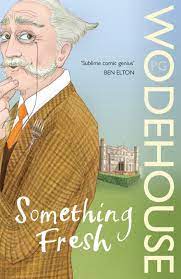
I re-read Something New by P G Wodehouse (PGW) for the umpteenth time recently. With a little digging, I found out that this novel had been first published in the USA on 3rd September 1915 and published in the UK as Something Fresh on 16th September 1915. Though there are some differences between the two, it is basically the same story. For the record, Lord Emsworth, Blandings Castle and its staff are introduced for the first time in this book. They would feature more prominently in PGW’s later novels and short stories.

Savouring Something New in its Kindle avatar last month, I was left in awe and admiration of PGW’s extraordinary ability to conjure up vivid word pictures of not just characters and situations but also locations and the processes at work. Secondly, PGW surprises you every now and then with his keen sense of observation and…

View original post 2,058 more words

Read Full Post »

The foundations of our civilization are quivering. Homo sapiens are faced with a mental health crisis of gigantic proportions. There is widespread concern about the pace at which the twin epidemics of Filmitis and Serialitis are spreading across countries and continents. Medical researchers of all hues are twiddling their thumbs, trying to figure out a cure for these afflictions which happen to be not only highly addictive but also pleasurable.

These afflictions affect all human beings, irrespective of their age, sex, cast, creed, or ethnicity. Post-2020, when a pandemic struck humanity, the spread of these virulent challenges has posed a serious challenge to humanity. These are said to be highly contagious. A word of mouth is all that is required to lead one to contract it. Even an inane post on a social media platform in a Facebook group like The Reviewer Collective could nudge one to start watching a movie or an OTT series and then get hooked to it. Often, a long period of bondage ensues. Frequent viewers of the delightfully diverse content on the OTT platforms gladden the hearts of many a producer-director duo. The shareholders of such platforms can be seen laughing all the way to their banks.

To put it simply, once the germs of Filimitis and Serialitis have managed to find a foothold in any neuro-system, one’s fate is sealed.

Most people suffer from Serialitis these days. The OTT platform throws an infectious suggestion. We decide to check it out. We get sucked in. The directors and the scriptwriters ensure we never get to leave the confines of their alt universe. We get stuck with it. At night, we shudder to think of what may happen next. ‘Filmitis’ is far more tolerable. Whatever happens, it gets wound up in around 120 minutes.

Often, we worry about kids spending too much time on their screens. When a kid starts believing that he/she has super-powers like those possessed by either Batman or Spiderman, our brows get furrowed. However, when it comes to addictions like Filmitis and Serialitis, we, the so-called adults, are no less.

The Symptoms

These ailments manifest themselves in many ways. A mood of apathy towards one’s near and dear ones sets in. Public interactions are often given a skip, unless mandated otherwise by an overbearing spouse. One develops a strong tendency to compare on-screen characters to those one comes across in real life. At work, haughty bosses get likened to such villains as Gabbar Singh (Sholay) and Mogambo (Mr. India).

A perpetual state of intoxication envelops one. Meticulous notes get made of the varied recommendations which keep pouring in from all sides. Lists showing the yet-to-be-watched offerings by our dream merchants get updated regularly. A pitiless analysis of the scintillating characters on the screen gets done. Wikipedia gets searched for more offerings featuring a favourite actor on the screen. Speculations get made as to what would have happened if they had responded to a situation differently.

Even lay viewers suddenly evolve into seasoned reviewers, offering insights into such aspects as acting proficiency, script writing, cinematography, music, lyrics, editing, and the like. I, for one, upon coming across an offering which sound exciting to me, would be in the transient grip of a ‘Eureka’ moment, rushing to share the information with aficionados who may devour it with much glee. Archimedes would surely be squirming in his grave.  

The most serious symptom happens to be the disinclination of all those suffering from Filmitis and Serialitis to seek a cure for these maladies. Once contracted, one is apt to remain happy and contented to continue in a state of perennial addiction. Medical fraternity is yet to find a solution to this unique kind of viral resistance.

Three Stages

There are three stages of these diseases which have been identified and catalogued so far.

Stage 1

In the first stage, one displays occasional signs of having any of the symptoms described above.

Stage 2

In the second stage, one shows grave signs of many of these symptoms, but is still considered treatable by a heavy dose of socializing. Quite a few in this category practice detachment and can leave a series mid-way, without any feelings of remorse or any desire to get back to it, ever. Lord Krishna, were He to come to know of such souls, would be pleased for them to have acquired this spiritual trait.

Stage 3

The third stage is the most critical one, with no cure in sight as of now. Medicos continue to be baffled. In this stage, one is obsessed with all facets of the production of the collages of moving images, much to the exclusion of every other kind of arts. In every situation of life, a streak of one of the narratives is invariably noticed.

All relatives, friends, seniors, colleagues, and juniors get identified with one or the other characters created on the screen. Lawyers sound like either Mickey Haller (The Lincoln Lawyer) or Woo Young-woo (Extraordinary Lawyer Woo). When visiting a hospital, female doctors get likened to Meredith Grey (Grey’s Anatomy). Nurses who go out of their way to assist us sound like Amy Loughren (The Good Nurse). When visiting a shopping mall, mumbling managers get likened to Glenn and smart salesgirls to Amy (Superstore) fame.   

A person suffering from the last stage of these disorders often complain of a stifling sensation. Nothing else in life appeals any longer. The allure of catching up on the latest on-screen fate of the characters often makes one lose sleep. Binge-watching becomes the norm. During days, when life really happens, one goes about the mundane affairs of life like a zombie with frayed nerves, bleary-eyed, and lost in one’s own thoughts.

Weaponizing these maladies

Do we need de-addiction centres to counter these viruses of Filmitis and Serialitis? Do we wish our medical research honchos to come up with a vaccine to keep the foundations of our civilization from quivering incessantly? Not necessarily. Instead, an innovative deployment of these viruses would help humanity in more ways than one.

The day is not far off when governments the world over may end up weaponizing these diseases.

Tackling obdurate enemies

Leaders as well as soldiers of armies wanting to attack a country could be easily lulled into a sense of complacency and inaction if facilitated by the border area networks offering free streaming of OTT content dished out by the country under attack. Wars would then be a thing of the past. Money being spent on arms of all kinds would eventually get deployed to eradicate poverty and illiteracy across all our continents.

Improving internal security

A similar treatment, if meted out to criminals, terrorist groups and internet warriors who keep spreading fake news, would ensure peace and harmony in the society. Crime rates would nosedive.

Providing joyful healthcare

Seriously ill patients awaiting a surgery while lying on a hospital bed, if fed with such stuff as Wagle Ki Duniya and Happy Family…Conditions Apply, would happily wait for their turn to come up, thereby improving the billings of private hospitals and nursing homes.

Building a chivalrous society

If such movies as Ghar, Chhoti Si Baat, and Veer Zara get promoted aggressively by our Movie Mughals, members of the so-called sterner sex would end up being more chivalrous, thereby minimizing misdemeanours directed at the delicately nurtured. Divorce rates would plummet. Loving husbands would be more likely to follow the example of Dr Anand (Silsila), ensuring that the doves of peace keep their wings flapping over their humble abodes. Parents who are brought up on a healthy diet of such movies as Gunjan Saxena and Babli Bouncer may give up their patriarchal mindsets and encourage their daughters to scale newer heights in their lives and careers.

Improving political discourse

Politicos in power might keep the opposition leaders similarly engaged, thereby reducing their propensity to keep making defamatory speeches or hurling choicest abuses upon them. Those cooling their heels in jail, if shown an offering like Dasvi, may even get motivated to improve upon their academic record. A general improvement in the quality of political discourse may thereby ensue. Better degree of sanity may prevail around election time.

Population control

Health ministers who are having sleepless nights worrying about their country’s galloping birth rates may consider targeting their denizens in the reproductive age group with such offerings as Basic Instinct, The Dirty Picture and Lady Chatterley’s Lover, thus keeping them distracted from their amorous impulses.

Cocking a snook at the First World countries  

When meeting the leaders of countries which keep showing their disdain towards an emerging economy, the premier of such a country merely needs to present his/her hosts with video recordings of such serials as Scandal, The Designated Survivor and The Diplomat.

By an innovative and clever deployment of these afflictions, the score of Gross National Happiness of all countries may improve drastically.

In other words, disorders like Filmitis and Serialitis need neither be contained nor cured. On the contrary, these need to be spread as quickly as may be possible. This would ensure that we continue devouring inane as well as cerebral stuff on our screens while slouching in our sofas, flowers are forever in bloom, God continues to be in heaven, and all remains well with the world.

Related Posts:

Read Full Post »

« Newer Posts - Older Posts »