Feeds:
Posts
Comments

Posts Tagged ‘India’

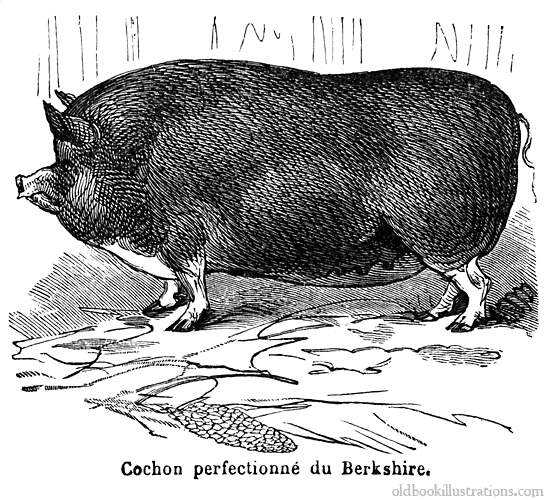
Those of you who watch the career achievements of the Empress of Blandings with keen interest may already be aware that the silver medal in the Fat Pigs class at the one-hundred-and-seventy-fifth annual Shropshire Agricultural Show held in 2023 has been won by the Earl of Emsworth’s black Berkshire sow.

Very few people, however, are aware how near that fine specimen of the porcine species came to missing the coveted honour.

Now it can be told.

This brief chapter of Secret History may be said to have begun on the night of the 6th of February, when news trickled in that the Animal Welfare Board of India (an advisory body under the Ministry of Fisheries, Animal Husbandry and Dairying), in its infinite wisdom, had issued a diktat exhorting all the lovers of ‘Gau-mata’ (cow mother) to celebrate the upcoming Valentine’s Day as ‘Cow Hug Day’. It extolled the many virtues of this much-revered animal, describing it as the backbone of Indian culture and even claimed that hugging with cow will bring emotional richness to the hugger, thereby making their life happy and full of positive energy.

As luck would have it, starting on the 13th of February, Lord Emsworth was away to the metropolis for a trip which was supposed to last three days. He hated being in London, but when one has to be a worthy descendant of one’s ancestors and duty calls, one has to take the rough with the smooth.  

While he was away, the Efficient Baxter hatched a juicy scheme in connivance with Lady Constance Keeble. An ingenious plan to boost the revenues of the Castle was unleashed. Learning from the unique initiative of the Government of India, a promotional poster went around on the social media announcing that, for a nominal charge, a person could walk into the Castle and hug the Empress on Valentine’s Day. As an exception, on the day, visitors were permitted to pose for a selfie with the regal animal. Of course, flash photography was not permitted, lest the Empress lose her sense of equanimity and sang froid.

Given the sound reputation of the Empress in the nearby counties, a good many people landed up on the day, and went back with big smiles on their faces, having just clicked a selfie of their having hugged the famous personality. Some even purchased different kinds of mementos, duly cast in ceramic and papier mâché, which were put up on sale on the occasion, depicting the Empress of Blandings in different poses. Special balloons shaped like her were eagerly lapped up by parents who were relentlessly pestered by their obdurate kids.    

At the end of the day, Lady Constance Keeble was delighted when The Efficient Baxter reported back on the magnitude of collections made. She was chuffed that she could not only manage to pay the exorbitant power charges for an entire year of operations at the Castle, but also execute the much-delayed plans for repairs and upgradation of facilities for all its guests, visitors, and impostors.

On the 15th of February, Empress of Blandings, always a hearty and even a boisterous feeder, for the second time on record, declined all nourishment.

On the 16th of February, George Cyril Wellbeloved, the pigman in the employ of Lord Emsworth, sent a telegram to Lord Emsworth which caused many at the local post office to raise their eyebrows by at least a quarter of an inch. The communication read thus:

Empress refuses feeding. Urgent. Need doctor immediately.

Lord Emsworth made an urgent call to the veterinary surgeon, cut short his visit to London, and rushed back to the Castle.

And on the morning of the 17th of February, the doctor called in to diagnose and deal with this strange asceticism, was compelled to confess to Lord Emsworth that the thing was beyond his professional skill.

To recapitulate the events so far:

February 6 – ‘Cow Hug Day’ notification gets issued in India.

February 7 – The Efficient Baxter comes up with a revenue-generation model by declaring the upcoming Valentine’s Day as the ‘Empress Hug Day’.

February 8 – Lady Constance Keeble, anxious about the finances at the Castle, approves the plan.

February 9 – Unbeknown to Lord Emsworth, a poster promoting the gala event gets released on social media.

February 10 – The Animal Welfare Board of India issues a terse notification declaring that its appeal for celebration of Cow Hug Day on 14th February stands withdrawn. Rupert Baxter promptly reports this to Lady Constance Keeble. Nevertheless, both decide to go ahead with their plans.

February 13 – Lord Emsworth leaves for the metropolis.

February 14 – ‘Empress Hug Day’ gets celebrated.

February 15 – Empress lays off the vitamins.

February 16 – Veterinary surgeon gets summoned.

February 17 – Veterinary surgeon baffled.

Right.

The effect of the veterinary surgeon’s announcement on Lord Emsworth was overwhelming. As a rule, the wear and tear of our complex modern life left this vague and amiable peer unscathed. So long as he had sunshine, regular meals, and complete freedom from the society of his younger son Frederick, he was placidly happy. But there were chinks in his armour, and one of these had been pierced this morning. Dazed by the news he had received, he stood at the window of the great library of Blandings Castle, looking out with unseeing eyes.

As he stood there, the door opened. Lord Emsworth turned, and having blinked once or twice, as was his habit when confronted suddenly with anything, recognized in the handsome and imperious-looking woman who had entered – his sister, Lady Constance Keeble. Her demeanour, unlike his own, betrayed the inner sense of gratification she was experiencing, having made a substantial contribution to the Castle’s coffers.

‘Clarence,’ she chipped in, ‘have you heard the good news?’

Lord Emsworth looked at her doubtfully.

‘What could be good these days? That man is an ass.’

As frequently happened to her when in conversation with her brother, Lady Constance experienced a swimming sensation in the head.

‘Will you kindly tell me, Clarence, in a few simple words, what you imagine we are talking about?’

‘I am talking about Smithers. Empress of Blandings is refusing her food, and Smithers says he can’t do anything about it. And he calls himself a vet!’

‘Then you haven’t heard? Clarence, Baxter, and I have managed to make a hefty collection on this Valentine’s Day. You no longer need to worry about our backlog of power bills and the critical repairs you were dreaming of carrying out at the Castle. Are you not happy?!’

‘And the Agricultural Show is already upon us!’

‘What on earth has that got to do with it?’ demanded Lady Constance, feeling a recurrence of the swimming sensation.

‘What has it got to do with it?’ said Lord Emsworth warmly. ‘My champion sow, with less than ten days to prepare herself for a most searching examination in competition with all the finest pigs in the county, starts refusing her food—’

‘Will you stop fussing over your insufferable pig and give your attention to something that really matters? I am trying to tell you that we have made a big pile of money while you were off to London to take care of some legal work.’

There was a silence. Brother and sister remained for a space plunged in thought. Lord Emsworth was the first to speak.

‘We’ve tried acorns,’ he said. ‘We’ve tried skim milk. And we have tried potato-peel. But, no, she will not touch them.’

Conscious of two eyes raising blisters on his sensitive skin, he came to himself with a start.

‘Pile of money, you say? How?’

Lady Constance spilled the beans. As she went on spilling the beans, the colour of her brother’s face started changing from a dull pink to a dark shade of red. His physical frame shuddered. His eyes, normally dull, looked like something out of an oxyacetylene blowpipe. As far as he was capable of being disturbed by anything that was not his younger son Frederick, he was disturbed. Somehow controlling his rage, he enquired.

‘Where is Rupert Baxter?’

‘He has gone off to the bank to deposit the amount we collected.’

‘I would surely like a word with him the moment he is back. If he thinks he can go about the place playing fast and loose with the Empress, exposing her to the trauma of getting hugged by all and sundry, and leading her to a mental state where she would refuse her daily quota of fifty-seven thousand and eight hundred calories, he is sorely mistaken. Absurd! Ridiculous! Did he think of seeking her consent before exposing her to such a preposterous arrangement?’

‘Clarence!’

Lord Emsworth blinked. Something appeared to be wrong, but he was convinced that he had struck just the right note – strong, forceful, dignified.

‘Eh?’

‘We had only worked for the overall good of the Castle.’

Lord Emsworth reflected.

‘But we have to take a strong line,’ he said firmly. ‘When it comes to her, I stand no nonsense. We have no right to deprive the Empress of her right to privacy. I am now going to the pigsty to see how to go about soothing her frayed nerves.’

There is no doubt that, given time, Lady Constance would have found and uttered some adequately corrosive comment on this imbecile suggestion; but even as she was swelling preparatory to giving tongue, Lord Emsworth looked wistfully at the door.

It was smoothly done. A twist of the handle, and he was where harmony prevailed. Galloping down the stairs, he charged out into the sunshine and rushed to the Empress’ abode. Each step that took him nearer to the sty where the ailing Empress resided seemed a heavier step than the last. He reached the sty, and, draping himself over the rails, peered moodily at the vast expanse of the pig within.

The imperial residence of the Empress of Blandings looked very snug and attractive in the mild sunlight. But beneath even the beautiful things of life there is always an underlying sadness. This was supplied in the present instance by a long, low trough, plainly full to the brim of succulent mash and acorns. The fast, obviously, was still in progress.

Not surprisingly, he found George Cyril Wellbeloved on duty there, wistfully viewing the untouched trough.   

‘What does she convey, George?’

‘Sir, I have an impression that it is a matter of time before Reason returns to its throne.’

‘But time is what we do not have’, pointed out Lord Emsworth gloomily.

‘From what I could gather from her grunts and oinks, and also from her body language, she is quite upset at being exposed to so many hugs on a single day. However, she is also happy that she could spread some sweetness and light in the lives of the common public reeling under the impact of unemployment, inflation and the harsher slings and arrows of Fate which are the lot of the lower and the middle classes. She feels that by permitting people to hug her, she has contributed towards bringing about societal change and motivated many to choose the path of universal peace and harmony on a day which celebrates love.’

‘What a fine soul she has!’, quipped Lord Emsworth. ‘I wonder if she has caught the Indian craze of females of all kinds inwardly aspiring to attain what is euphemistically alluded to as Size Zero. But she has never entertained such ambitions. Those who keep a track of her dietary habits already know that she is a hearty and boisterous feeder. You know very well that she lives to feed, thus fulfilling her innate desire to drink deep from the fountain called Life. She has never cared about looking like a balloon with two ears and a tail. She lives a blissful life without bothering about her Size Infinity looks. I daresay all this hugging business has left her totally shaken and stirred, right from her snout to her tail.’

‘Indeed, sir.’

‘It fails me as to how you permitted her getting exposed to such a traumatic experience.’

‘Lady Keeble instructed me to give the Empress a nice bath for the occasion, sir. Mr. Baxter asked me to make a temporary enclosure for people who came over and waited for a long time to do the honours. I merely followed my orders, sir.’

Lord Emsworth drew himself up and adjusted his pince-nez. He felt filled with a cool masterfulness. He felt strongly tempted to fire the pig man. But an inner voice reminded him of the impending competition due to take place in a few days. He also recalled his having had to eat humble pie in respect of Angus McAllister when a favourite pumpkin had to win a prize.

‘Orders, eh, what, what, what? How many times do I have to remind you that when it comes to the Empress’ welfare, you take orders only from me. No one else, and I repeat no one else, is permitted to do so. If you do not see eye to eye with me in this matter, Cyril, say so and we will discuss what you are going to do about it. I value your services highly, Cyril, but I will not be dictated to in my own Castle in any matter, especially anything pertaining to the Empress. Do I make myself clear?’

George Cyril Wellbeloved stood aghast. He thought he had done an outstanding job by following his instructions. He knew the unpredictable temper of Lord Emsworth and wondered if he was about to get sacked. He disliked the idea very much. Blandings Castle was in his bones. Elsewhere, he would feel as if he were in exile.

‘Indeed, sir’, said the pig man sheepishly.

‘You know you have a way of saying, “Indeed, sir,” which gives the impression that it’s only your feudal sense which prevents you from substituting the words, “Says you!”’

‘Is that so, sir?’

‘But how are going to get her to start feeding again? Being an expert at pig rearing, surely you can resolve this issue without further delay? We run the serious risk of her losing out on a medal at the upcoming Shropshire Agricultural Show and instead being relegated to the mean obscurity of merely an ‘Honourably Mentioned.’

‘Sir, I have a suggestion for you to consider. You may remember the time when I was arrested by police constable Evans of Market Blandings for being drunk and disorderly at the Goat and Feathers. I was then jugged for fourteen days without the option of a fine.’

‘What has that got to do with this?’, Lord Emsworth enquired, blinking his eyes. The agony of having to rejig his memory cells showed on his face.

‘But you had then managed to persuade the Empress to approach the trough?’, he said, brightening up a wee bit.

“Oh, is it?” said Lord Emsworth, and paused awhile in thought. He had a vague recollection that someone had once told him to do something – what, he could not at the moment recall – about someone of that name.

Beach was duly summoned to resolve the mystery. He reminded his employer rather frigidly that his previous attempts at pig-calling in his company, duly aided by Angela, had failed to deliver the goods. He went on to point out that what had eventually brought home the bacon then was a pig-call made by James Belford.

The expression on Lord Emsworth’s face was that of a drowning man who sees a lifeline. He fumbled in his trouser pockets and, duly aided and abetted by Beach, could locate his smart phone. He lost no time in getting James on the line. Once the preliminary greetings had been exchanged, the challenge was brought to James’ notice.

‘Most people don’t know it, but I had it straight from the lips of Fred Patzel, the hog-calling champion of the Western States. It is a traditional call which all pigs instantly recognize and respond to. Can I get to speak to your pig-man on the line? I shall explain it to him.’

‘Splendid idea,’ said a cheered-up Lord Emsworth, handing over the instrument to Cyril Wellbeloved.

After a brief exchange, Cyril repeated what he was told.   

‘Pig-hoo-o-o-o-ey!’

‘Nothing like it,’ James said. ‘You want to begin the “Hoo” in a low minor of two quarter notes in four-four time. From this build gradually to a higher note, until at last the voice is soaring in full crescendo, reaching F sharp on the natural scale, and dwelling for two retarded half-notes, then breaking into a shower of accidental grace-notes.’

Cyril went on practising the same till the time James approved of the outcome. The call was terminated, with Lord Emsworth offering profuse thanks to James and even inviting him and Angela to visit the Castle sometime soon.

The moment of reckoning had finally arrived.

Resting his hands on the rail before him, Cyril swelled before their eyes like a young balloon. The muscles on his cheekbones stood out, his forehead became corrugated, his ears seemed to shimmer. Then, at the very height of the tension, he let it go, as advised.

‘Pig-HOOOOO-OOO-OOO-O-O-ey!’

Slowly, fading off across hill and dale, the vast bellow died away. And suddenly, as it died, another, softer sound succeeded it. A sort of gulpy, gurgly, plobby, squishy, wofflesome sound, like a thousand eager men drinking soup in a foreign restaurant. And, as he heard it, Lord Emsworth uttered a cry of rapture.

The Empress was feeding.

The rest, as they say, is history.

Regrettably, both the unique ideas – whether that of a ‘Cow Hug Day’ or of a ‘Pig Hug Day’ – now remain consigned to a dustbin. Perhaps the ideas were a little ahead of their times. Were these to ever get revived, Valentine’s Days in future would witness disgruntled denizens experiencing a surge of positive energy and an inner glow of joy and satisfaction. Physical contact with a member of another species could work wonders for the psychology of an individual. Such initiatives would surely enthuse people to choose a more peaceable and wholesome approach to life, while keeping them away from such inane acts of mischief as aggression against some movies, coffee shops, fashionable retail outlets and even shops selling potatoes, tomatoes, and cucumbers.

Notes:

  1. Based on the story of the same name by P. G. Wodehouse.
  2. Also, inspired by https://thewire.in/humour/cow-hug-day-cancelled
  3. Illustration of the Empress courtesy Shiva Kumar.

Related Posts:

Read Full Post »

This young lad, aged about 20 years, was one of those who Mother Nature appeared to have wholly overlooked, while distributing her largesse, to each human.

What he lacked in looks, he also lacked in intelligence. It took more than a decade of his going to school for the family to finally accept that this lad was never going to acquire an education, of even a rudimentary level. One has to look for positives in everyone, but in this case, the only positives discernible were that he had an excellent appetite/digestion, and could fall asleep with utmost ease, at any time of the day. Also, his near genius at picking quarrels with anyone and everyone coming his way. The positive here was that he’d lose out every time, at every fight.

As the years rolled by, his unsavoury looks only worsened, while his intelligence continued to be low. The family were frankly worried, about his future; attempts to inculcate some money earning skills always failed.

Asked to graze a herd of cattle, a simple enough task, he led them into a patch of land under cultivation, which the hungry cattle decimated in a matter of minutes. Asked to distribute milk to different households, almost immediately the milk cans were overturned, and the entire supply spilled. Asked to collect and dispose garbage, he just rearranged them, along the route, adding to it some more of his own. Asked to help out at the village grocery stall, somehow, he managed to set off a fire within two hours, burning it to the ground. In short, in whatever he handled, Murphy’s Law prevailed. He excelled at speedily discovering and promptly implementing ways in which any task assigned to him could be messed up, without fail.

The family elders held a council, to discuss the available options, and the future course for this lad. The discussions were long and heated, as every suggestion bore within itself the seeds of failure. The lad himself just dozed during these discussions, waking up from time to time to only to replenish his stock of peanuts which he loved chewing even while half asleep.

Suddenly, a cousin, of his age, hit upon a brainwave. Since this fellow is thoroughly useless, and will never change for the better, he said, why not launch him into the world as a spiritual leader, as a Baba? The earnings could be good, he argued, and, with reasonable luck, sustain him practically for the rest of his life. This cousin also volunteered to help with the launch of the career of the lad as a Baba. He offered himself to deputise, at least in the initial stages, as a co-worker, as a deputy Baba. In fact, this cousin was eager to help with this family problem.

The suggestion was eagerly seconded by a distant female relative, of the same age. She was a female in a purely medical sense. Her emaciated appearance, her hollowed out cheeks and her general demeanour generally caused doubts about her gender itself. Whereas females had convex curves, hers were all of the concave kind. It was only her high shrill voice that convinced people that she was indeed a female. She even agreed, in fact, volunteered, to marry him, to help his image as a Baba.

The default option, of turning him into a Baba, was agreed to, and the initiation process began. In the confusion, his marriage, to that almost-female also went through. The location where the Baba would hold his sessions was no problem. One such site was available quite nearby, under a tree. This was, earlier, in fact, a place from which another Baba was operating, with a fair degree of success.

However, that Baba was manhandled severely, and chased away, when he made some improper suggestions, to the village headman’s wife, during one of his sermon sessions. At the close of that chase, he was last seen splashing across an irrigation canal and limping away at a high speed. He was assured of an   instant assassination if he ever showed his face again within a fifty-kilometre radius. Thus, this vacated space, with some scope for an existing client base, was now available.

But, a Baba has to speak, to deliver sermons, and he has to speak convincingly, even if the audience comprises mainly of half-witted women. The deputy Baba came up with a solution here. This Baba would interact only with his Deputy, and the audience also could interact only with the Deputy Baba. The Baba himself would maintain a total silence, and therein lay the secret of his greatness – that would be the message spread across the land; everything he said would be a secret, to be divulged only through his Deputy. For a good measure, he was also conferred the title of Rahasya Baba (The Mystery Baba).

Rahasya Baba became an instant hit. The dull glazed expression on his face suggested a deep contemplation of the infinite, of a world and wisdom concealed from the rest of humanity. Armed with an ash covered body, with liberal daubs of saffron and the various large beaded rudraksha chains effectively hiding his scrawny neck, he made a distinct impression on the beholder. The women disciples, especially the half-witted ones, swayed and swooned in ecstasy. The few men disciples came to feast their eyes on the Baba’s consort, that emaciated female seated next to him, about two paces behind him; the men were not sure of what exactly that figure was and were intrigued at that apparition.

The Deputy Baba also was a busy man. He was constantly on the move, conveying messages back and forth, to and from the Baba. Tiring work, this, as well as thinking up clever responses to silly questions. This called for inventive/imagination skills of a high order. But, the pickings, the recompense was good, and kept growing. His earlier job, as a bicycle repair mechanic in a distant town, was good, but nowhere near as good as this.

But, all too often, the offerings were in kind, and, some of these  were outright painful. An offering of pictures of deities, clearly cut from some calendar, and pasted on to a piece of cardboard, was so annoying that the Deputy Baba was sorely tempted to fling it back on to the face of the offering female. However, he contended himself by merely folding his hands in prayer and handing it back. He was reluctant to initiate anything suggestive of violence, considering that he was always the closest to the audience. But, at times, there was a bonanza as well. On occasions, some devotee would hand over a bottle of country arrack, and a pack of beedis. The Deputy Baba had problems only when sharing the same, later, with the Rahasya Baba and his wife, who insisted on even shares.

Talking of shares, the Deputy Baba wanted a review of the arrangements, whereby the offerings were shared on a basis of a mere 25% to him, and the rest to Rahasya Baba, and his wife. After a rather acrimonious session, with most of the shouting done by the wife, his share was hiked to 33%. He could not quietly pocket any of the offerings, as the wife kept her hawk-like vision firmly on him, throughout the collections process.

During this phase, Rahasya Baba and his wife also were now enjoying life much more. Their humble household had undergone a drastic improvement. In the pre-Baba days, a balanced meal was one in which the meagre revenues were balanced with the meagre fare on the table. But, now, the balanced meal took on a more conventional definition – that of three square meals a day, with regular non-veg items, pure desi ghee, sweets etc.

The wife was now blooming, flourishing as never before. The emaciated appearance was a thing of the past. The cheeks were now chubby, and the concavity of her curves had got replaced with convexity, reminding males with their lecherous looks of the scenic and curvaceous track of a mountain train. Now she walked with an almost seductive swing of the hips. Her gait no longer reminded one of a mud-crab scuttling for cover. Her vastly improved appearances did attract the attention of the Deputy Baba, but she kept him at a distance. She was smart enough to know that a dumb husband is always preferable to a smart lover.

Rahasya Baba’s fame spread far and wide. His client base now included devotees from far away towns, and even some international visitors. The fair-skinned goras/goris couldn’t quite pronounce Rahasya, so, it got anglicized to Rex. It was Rex baba who they came to offer obeisance and homage to. So, the name Rex Raba became the official name.

Rex Baba (under the guidance of his Deputy, of course) now held court at different venues. Franchise arrangements were set up in different areas, and his wife also acquired an audience. She was now known, as Rex Babette. Everything went on like clockwork.

Until, one sad day, the police arrived, to ensure crowd control. One of them recognized the Deputy Baba as the very same bicycle mechanic who had stolen a bicycle from the police station when it was given for some repair work. His immediate arrest, and subsequent incarceration meant that no more guidance, no more profound secret sharing between the Baba and his devotees.

This is how the story of Rex baba ended. Incredibly sad, indeed. However, soon enough, there is bound to come along some other Baba, to provide mental solace and comfort, so the devotees could cope with the sadness, deprivation, and such other mundane challenges of life.

Be patient, friends.

(The author is a retired banker. Decades of handling of the fragile egos of his bosses, studying and acting upon the psychology of his colleagues, and mentoring irate juniors, has failed to kill his creative grey cells. His thoughts are based on contemporary reality and are duly seasoned with ready wit, wisdom, humour, and satire. He unleashes these upon his unsuspecting public through his Facebook wall. He happens to be an ardent fan of P G Wodehouse.

His permission to post this piece here is gratefully acknowledged.)

Read Full Post »

There are indeed instances in one’s life which leave one shaken and stirred. Scales fall from one’s eyes. Like Bertie Wooster, one feels befuddled, bewildered, fazed, flummoxed, and perplexed. The reality of one of the several facets of life gets revealed, much like a mountain making a reappearance once the fog has vanished and the sun has come out in all its glory.   

While travelling in a local train in Switzerland recently, I had a rather unpleasant experience when a gentleman of Swiss origin ridiculed me for being an Indian.

It happened on the 1st of January 2023. The family had boarded a train to Lucerne to enjoy the fireworks display in the evening hours. Few stops before Lucerne, very many people boarded the train. We are used to overcrowding in trains in India, but this was a new experience for me – to see this happening in one of the advanced countries. I was already sitting on one of the few spring-back chairs available.

A gentleman, surely cast in the mould of Roderick Spode, had just come in along with many others. He looked at me sternly and asked me to get up. I got up and enquired if the gentleman wanted to occupy the seat. The gentleman clarified that he had asked me to stand up so that there is more space for others to squeeze in. So far, so good. But then he went on to give me a supercilious look and added rudely that such things happen only in India.

The basic message from the gentleman was right, but the rude and insulting way he said it hurt all of us. The fact that he insulted my country really hit hard. My daughter-in-law and my son intervened to say that he could have discussed this cordially, rather than being abrasive about it. But he went on arguing about it, claiming that he had spent a good deal of time in India and knew about how things worked there. Other passengers nearby kept telling us to avoid listening to his comments.

To give him a benefit of doubt, perhaps he had had a fight with his wife before leaving home that evening. However, a realization also dawned – that beneath a veneer of polite manners and sweet smiles, quite a few people in other countries may carry some deep-seated prejudices against those of Indian origin.

Jeeves would concur with me if I were to say that our psychology is such that when we love something, we somehow feel entitled to criticize it and make fun of it. But when someone else does it, we take offence! We are left twiddling our thumbs. I confess this is what happened to me on the day. I felt deeply embarrassed and wondered what I had done to deserve a treatment of this kind.

I admit I am a bit fluffy headed and forgetful, but by no stretch of imagination can I match the high standards set by Lord Emsworth in that department. I found it very difficult to forget this incident. On the contrary, it made me recollect many earlier instances when I did not have a satisfactory response to some meaningful and thought-provoking questions asked about India by those living abroad.

  • A cabbie in New York asking me as to why the government in the country was against Muslims and Christians.
  • A tourist from Canada who had just returned from India asking why the cab drivers in most parts of the country tended to either overcharge or harass customers. I wonder if she had ever lapped up the book ‘India and the Indians’, written by Lady Malvern who had spent some time in India.  
  • A young lady in Norway enquiring whether it was safe for her to travel to India alone. She quoted frequently reported rape and murder cases in the country she had read about.
  • Another lady in Sweden checking as to why Indians have a practice of shaming the victim in a rape case rather than putting the spotlight on the perpetrator of the crime.
  • A person of German origin asking if our metro cities did not have enough storm drains to ensure that periodic flooding did not take place.
  • A movie enthusiast of French origin enquiring why, despite the presence of a film certification body, people kept calling for boycotts of some movies. She wondered how Indians have become so intolerant, especially when they pride themselves on being an ancient civilization and have really demonstrated how to be a multi-ethnic society.
  • A teenager from Denmark asking why Indian households do not segregate their domestic waste and why the country lacks enough capacity to handle such waste.
  • A person from Denmark who asked me why India was so noisy.
  • A group of businesspersons from Finland wondering why it was far easier to deal with businesses in the west and the south of India than with those in the north of the country. Some of them said they had been cheated by the latter.

What I quote above happen to be snippets of conversations with lay citizens of different countries, spread over the past few years. Those of us who believe we have already acquired the status of a Vishwa Guru – A Global Teacher – and who are swayed by the nationalistic fervour so very fashionable in India these days, may immediately jump to enquire who gave the rights to people in advanced countries to judge India and Indians. They might even suspect and allege a global conspiracy to defame India.

It is no one’s case that our First World countries happen to be perfect. Of course, these suffer from many ills. Graffiti in public spaces is a common sight. So are cigarette butts in otherwise pristine public gardens.

But the point here is that if we Indians can ape the west in terms of fashion, social relationships and in so many other ways, why can’t we do something about the kind of courtesy we show to tourists and fellow citizens in public spaces? Why do we need a Prime Minister to tell us to improve our levels of hygiene and keep our public spaces spick and span? Why can’t we respect the law, rather than priding ourselves in breaking it? Why do our political parties depend on criminals to win over the voters? Why do justices of our Supreme Court have to get involved in ensuring that road safety standards improve across the entire country? Why are we worried about elections and inane internal issues when an enemy is gleefully usurping our territory on our borders? The mind boggles.     

We live in a multipolar world where interdependence between countries is an essential fact. Yes, as a country, India remains a work-in-progress. But we have tremendous soft power, whether in terms of our ancient scriptures, rich culture, music, dance, movies and the like. The diverse cuisine we have is popular across all countries. When it comes to frugal engineering, we shine on the global stage. The manpower we offer to the world is unique in many ways.

It is surely not wrong to be proud of our heritage. Nor is it improper to demand respect from others. But to remain blissfully unaware of our weaknesses and to do nothing to address the same will simply go on to ensure that chinks in the Brand India armour continue to fester.

A sister of Bertie Wooster’s lives in India. It follows that he would be gravely concerned about this situation. Perhaps, he may seek Jeeves’ advice on the issue. If so, I wonder if Jeeves would recommend a public relation campaign to improve India’s brand image worldwide. He may also suggest a mass communication drive within the country and ways to make a genuine effort to improve our civic infrastructure. Someone like Rupert Psmith may get one of his rich uncles to buy out a premier media house in a western country.

But the nub of the matter is that we, the Indians, need to indulge in a bout of introspection, and work upon improving our own civic habits and our behaviour towards others. The buck stops at us!

(Illustration courtesy R K Laxman)

Related posts:

Read Full Post »

China’s actions to keep violating its borders with India with impunity continue unabated. So do its endeavours to create a ‘string of pearls’ around India. Time will tell if its plans to become a global superpower fructify, but when it comes to its southern neighbour, it may never be able to win over the hearts of Indians.  

Rewind to 1962

India observes National Solidarity Day on the 20th of October every year. This day is observed to honour her Armed Forces. China had begun its assault on India on this date in 1962, giving a good thrashing to Indian forces which were ill-prepared then to meet the challenge.

As a child of around 10 years then, I still remember the kind of patriotic fervour which had sprouted amongst the country’s citizens at the time. Tension in the air. Ears glued to the news bulletins of All India Radio. Blackened windows at home. Stocking of groceries. Half-blackened headlights on all the motorized vehicles. Patriotic songs at school. Movement restrictions. People rushing to train stations to convey their best wishes to departing jawans. Blankets, woollens, medicines, and jewellery being openly donated to strengthen the country’s response.  

Not surprisingly, Bollywood had unleashed its soft power to counter the aggression. At trade fairs and other public spaces, a song, Awaaz do hum ek hain, featuring some of the popular heroes of the era, was getting shown.

What followed were visits by popular stars to the frontier, cheering up the jawans. And, of course, the immortal song, Ae mere watan ke logon, rendered by Lata Mangeshkar in the presence of Jawaharlal Nehru, at a function in January 1963.

Movies like Haqeeqat (Chetan Anand, 1964) brought the harsh reality of war to our cinema halls.

Cut to the present

Beginning on the 5th of May 2020, Chinese and Indian troops engaged in aggressive melee, face-offs, and skirmishes at different locations along the Sino-Indian border. In late May, Chinese forces objected to Indian road construction in the Galwan river valley. According to Indian sources, melee fighting on the 15th/16th of June 2020 resulted in the deaths of many Chinese and Indian soldiers. A low-voltage conflict persists till date, with occasional flare-ups across the border having become the norm.

This time round also, Bollywood has not failed us, but in a different way. The patriotic fervour is not getting whipped up. Instead, nationalistic sentiments appear to be already occupying the centre stage. Increasingly, it appears as if the soft power of Bollywood is being deployed to keep our attention away from the predatory tactics of our northern neighbour.

In 2020, the suicide of one of Bollywood’s popular stars, Sushant Singh Rajput, and his alleged girlfriend Rhea Chakraborty, kept us riveted to our television screens, conveniently forgetting the attack on our territorial integrity and even the raging pandemic.

These days, an unsavoury and inane controversy has been whipped up around the colour of the bikini worn by a Bollywood diva in a song of a movie which is scheduled to get released in January 2023. Sure enough, such issues as an aggression on our borders, galloping inflation, increasing unemployment, rising social distrust and polarization, and more people having gone down the poverty line in India have got swept under the carpet. The voyeuristic eyes of the so-called sterner sex of our species are having a field day. As luck would have it, the movie has ended up grabbing our eyeballs much before it would hit the screens.   

We appear to be living in an era of strident nationalism, backed by attempts to keep the fire of communal disharmony burning bright, ostensibly with a view to encashing the same for electoral gains for the ruling dispensation. We keep playing the victim card favouring the majority community to the hilt, painting the minor ones in villainous shades. Patriotism appears to have taken a backseat in our mental space.  

Of movies and patriotism

Amitabh Bachchan, a doyen of the industry, had made some insightful observations at a public function recently. He had spoken of the way in which the movie industry had always stood up against oppression of any kind, right through the days of British occupation of India in the past. For your ready reference, here is the link to his speech which I refer to:

He bemoaned the jingoism and imaginary historical movies which are in tandem with the current political discourse and even referred to the boycott culture which appears to be making light of the formal system of film censorship which India follows.

In a way, Vijay, the disgruntled hero of the iconic movie Pyaasa (Guru Dutt, 1957) was very much like the Vijay of Deewaar (Yash Chopra, 1975), played by Amitabh Bachchan himself. Both stood up against the traditional norms of society. Ganashatru (Satyajit Ray, 1990), mentioned by the renowned actor in his speech referred to above, gave us hope that howsoever rotten the system may be, the youth stand up to support a fair and just approach to problem solving.      

Bollywood deserves to be commended for the staple diet of opium it keeps dishing out for the Indian masses. However, this time around, the support of a pliant media, backed by a motivated use of social media channels, appears to be magnifying its endeavours at keeping us engaged, entertained, and enthused, enveloping us in a kind of selective amnesia, putting some critical issues on the backburner.

A time for some introspection?

In one of his articles, Prof Badri Raina had distinguished between nationalism and patriotism as under:

Nationalism enjoins upon us to believe that our air is the most salubrious, our water magical, our sunsets and sunrises uniquely blessed, our accumulated histories and legends superior to those of all others, our culture the only worthwhile culture, our religious faiths nearest to god, and our stores of knowledge beyond compare.

Patriotism acknowledges that where I live is my beloved space, warts, and all. It makes no claims to exceptionalisms that are thought to be God’s unique gift to us. It recognises that our streets are shabby, our lanes full of clutter, our habits shoddy, our resistance to rationality often grossly debilitating, our defiance of law a routine habit of mind, our male chauvinism shameful and violent, our casteism or racism or communalism deleterious to the most desirable ideals of human rights and human oneness.

While the dragon keeps giving us the chills at the borders, our trade relations continue to show a heart-warming trend. Total merchandise trade between India and China rose 34% to $115.83 billion in the 12 months to March 2022, according to data from the Commerce Ministry released to parliament some time back.

Time for us, the denizens of India, to look within and check if we have lost our innate sense of patriotism; or have we outsourced our thinking prowess and discriminatory powers, thereby losing our ability to sift the wheat from the chaff? Have we got used to getting distracted by inane internal issues and resigning to a relentless bullying by China thus? Can we demolish the narrow walls we have built around ourselves and take a strategic call on meeting external challenges of this kind?

Hopefully, our dynamic government is already working on the same.

Related Posts:

Read Full Post »

William Faulkner is reported to have said that “The past is never dead, it’s not even past.”

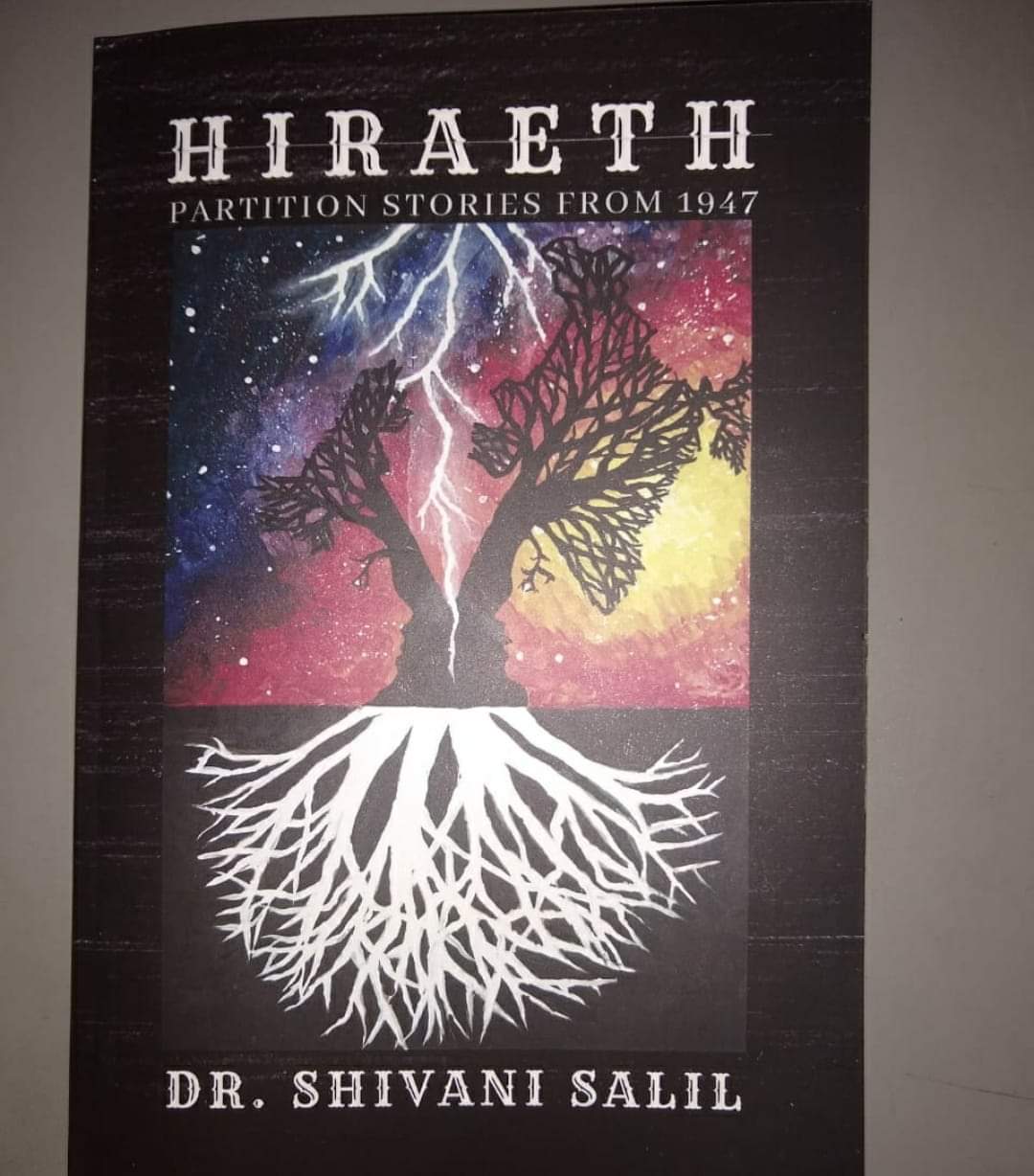
Partition, or rather the tearing apart of India into three parts circa 1947, has always been a theme of enduring interest. To those who lived to tell the diabolical tales of their survival, it brings back a flood of memories, awash with deep-seated regrets and a sense of deep loss of one’s original home and hearth. Hence the title Hiraeth, meaning a longing based on a feeling of helplessness of not being able to revisit a place.

To their succeeding generations, it is a valuable record of the trauma of the planet’s biggest mass migration on record. It also captures the endurance and resilience of the human spirit, of an innate will to live and prosper, and of keeping the descendants isolated from the traumatic pain and suffering of their preceding generations.

Just like the graphic works of Saadat Hasan Manto, Khuswant Singh and many others, Hiraeth captures the agony, the suspicion, the cruelty and the madness that pervaded the air in those turbulent times. A commendable endeavour, indeed.  

The stories, based on the experiences of the author’s grandparents and other seniors in her family circles, capture not only the courage and sacrifice but also the generosity of the human spirit. These are written with a piercing beauty, alive with moral passion and sorrowful insight.

However, a word of caution may be in order. Picking up and going through the book needs nerves of chilled steel. It took me close to three years to build up the courage to get a copy. I could then devour the stories only one at a time. Each one of them, so very poignantly written, made me either sob uncontrollably or cry. Identifying with the main characters was apparently my undoing. Suffering the pain and deprivation they underwent.

Somewhere, a father was killing his own daughter so as to protect the family honour. Elsewhere, a recently widowed lady was able to release her inner grief only when she came across the turban cloth of her late husband.

Some offered solace as well. A just-orphaned kid getting breast-fed and adopted by a lady who has undergone the trauma of giving birth to a stillborn child of her own, their different religions notwithstanding.

The last story touches upon the ripple effect of a parent’s decision on the next generation. It goes on to demonstrate that partition, though the term in itself is a highly sanitized version of what really transpired then, is not so much an event in the past, but one that continues to influence the descendants of those who survived it. Those displaced and uprooted have stood up, shaken off the dust of negativity from their feet, taken control of things and ensured that the coming generations did well in their life and career. But the scars remain.  

Thanks to the efforts put in by the publishers, the book is well presented. Urdu titles of stories have been beautifully calligraphed, adding a unique charm to the text. The use of common terms to address parents, grandparents and other relatives in Hindi/Punjabi language bring the stories closer home. The cover itself says a lot, though, at first glance, one does not appreciate it.

At the end of it all, the book does lead one to feel more anger and even more anguish. Is there a way to avoid such tragedies in future? Can our leaders not be more prescient and take better control of things? As human beings, we pride ourselves on our technological achievements. But do we care to dismantle the invisible walls that exist between us? Could we widen our consciousness in such a way as to avoid conflicts and wars? Could we not instead channelize our collective energies towards addressing environmental challenges that we, as a race, face?

One may well ask if there is any point in remembering yet again what one cannot forget in a lifetime. Perhaps, a closure lies in moving towards mutual acceptance of culpability, a joint mourning for the lives we took, the attendant horrors we inflicted upon each other and then go in for mutual forgiveness. However, it is easier said than done. Wounds of the flesh heal; not so with the mental scars. Thus, the cycle of violence continues unabated. It suits our politicians to keep stoking these dormant embers.  Often, we end up being mere puppets in their hands.

In fact, this is the larger purpose the book serves. It reminds us of our past follies. It makes us sit up yet again and start wondering as to how to take better care of ourselves and our brethren. It prompts us to build bridges wherever needed and break down the walls of our biases and prejudices. It shows us the futility of treating those different from us as ‘others.’ It exhorts us to use our individual intellect to judge if what we are doing is right, not to be led astray by jingoism, chest thumping and wars.

I am reminded of a song which Talat Mehmood had rendered in his velvet-like soothing voice long time back:

Hein sabse madhur woh geet jinhen hum dard ke swar mein gaate hain…

Roughly translated, this says that the songs which are the sweetest are the ones which are set to the melody of sorrow!

It is in this spirit that this book deserves to be picked up, devoured and brooded upon. 

About the Author:

Dr. Shivani Salil, MD, calls herself a voracious reader, in love with words – both written and spoken. She used to work at KEM Hospital, Mumbai, until some time back when a geographical move pushed her into a sabbatical. She currently resides in Hong Kong with her husband and daughter.

As a child, she harboured two dreams: one, to become a doctor and the other, to pursue literature so that she could become a writer. Having lived and loved her first dream, this book is a step forward towards the second.

Get to know more about her on her website http://www.shivaniwrites.in and her Facebook page http://www.facebook.com/shivaniwrites18.

Availability of the Book:

In India: https://www.amazon.in/Hiraeth-Partition-Stories-from-1947/dp/8194132622

In US: https://www.amazon.com/dp/B07WRLTGLC

In UK: https://www.amazon.co.uk/dp/B07WRLTGLC

In Canada: https://www.amazon.ca/dp/B07WRLTGLC

In Australia: https://www.amazon.com.au/dp/B07WRLTGLC

In Germany:
https://www.amazon.de/Hiraeth-Partition-stories-1947-English-ebook/dp/B07WRLTGLC

The book is available on Kindle as well and is free on Kindle unlimited.

(The book has been published by Room9 Publications (www.artoonsinn.com).

Goodreads:

Hiraeth: Partition stories from 1947 by Shivani Salil

My rating: 5 of 5 stars

https://ashokbhatia.wordpress.com/202…

Other Book Reviews on this Blogsite:

Read Full Post »

Along Came Love

Recently, I came across this wonderful site which has many delectable stories to narrate. Permit me to share this one with all of you.

FictionPur's avatarFictionPur

.

.

She was just an average young girl. Like 20 million others in India. Born in a loving middle class family, with normal pretty looks, average intelligence, a genuine heart and big dreams. Lofty aspirations fueled by movies and novels. Specially that of her future husband or boyfriend. All she wanted was a tall, dark, brooding, rich yet loving, possessive guy for herself. Nothing that can be termed as asking for much, if you ask her. But blame it on her deeply ingrained middle class values or lack of opportunities, the boyfriend phase never came in her life. She directly graduated to the matrimonial phase. And true to their word and ambitions, her parents swiftly found her a ‘suitable and nice boy’ as soon as she was of age.

And he was something she never thought she would ever end up with. Too sweet. Too understanding. Too accommodating…

View original post 2,325 more words

Read Full Post »

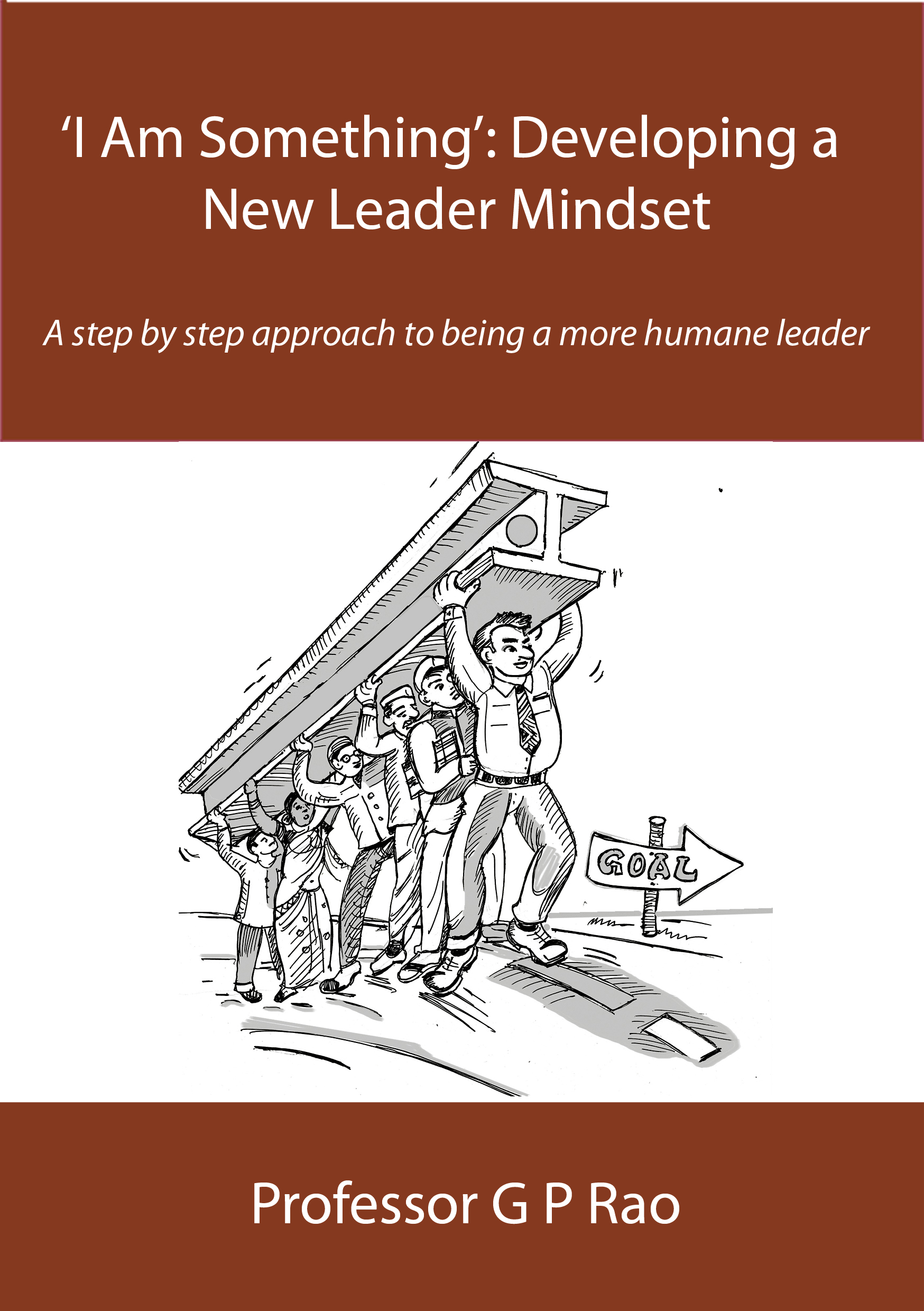
Can an organization’s human resource policies be so designed as to facilitate a bottoms-up approach to leadership? In other words, can it encourage and enable people at the lower rung to automatically assume a leadership role without anyone else egging them on to give their best?

It is well known that leadership is a function of at least two factors. The individual traits of an employee surely play a role. Another is the situation which could be such as to produce a leader. But for all the employees to spontaneously respond to a situation in an empathic manner in the face of an unforeseen crisis goes on to show that a share of the credit must also go to the design and implementation of conscious human resource policies.     

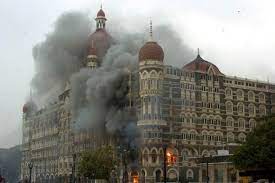
Consider the Mumbai Taj Hotel terror attack on the 26th of November, 2008. Not even a single Taj employee abandoned the hotel and ran away, but stayed right through the attack. They helped the guests escape. In the process, many employees died.

Eventually, this became an important psychology case study at Harvard. The result was a deep insight into the way in which the company’s recruitment policies had been designed. Three of the major factors which stood out have been as follows:

1) Taj did not recruit from big cities; instead, they recruited from smaller cities where traditional culture values still holds strong.

2) They did not recruit toppers; they spoke to school masters to find out who were most respectful of their parents, elders, teachers and others.

3) They taught their employees to be ambassadors of their guests to the organization, not ambassadors of the company to their guests.

For some details of what transpired during the terror attack and the Harvard study, please check out the following:

“The Ordinary Heroes of the Taj Hotel: Rohit Deshpande at TEDxNewEngland.”

The Tata group is well known for the values, integrity, transparency and fairness it practices while dealing with various stakeholders across all its business verticals. The response of its employees to the terror attack is merely one of the many manifestations of its enlightened human resource policies.  

Related Posts:

Read Full Post »

ashokbhatia's avatarashokbhatia

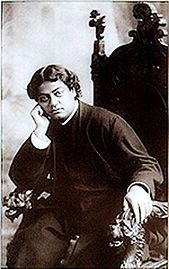
 A Tribute to Swami Vivekananda: Leader Extraordinary

“On the seventh of August 1941, in the city of Calcutta, a man died. His mortal remains perished but he left behind a legacy… that no fire can ever consume…”

That was the baritone, sonorous voice of Satyajit Ray in his documentary titled ‘Rabindranath’ created as a tribute to Rabindranath (a project mandated on Ray, the genius in film making, arts and literature, commissioned by Ministry of Culture, Government of India) on the occasion of the birth centenary of the another genius, Rabindranath Tagore the Nobel laureate poet, musician, novelist, dramatist, artist and philosopher. The first scene of the documentary depicted the last and final journey of Tagore to the burning ghat (crematorium).

Ray’s portrayal of Tagore began with the scene finale. But where do we start in our odyssey with the volcanic monk of India whose 150th birth anniversary we celebrated…

View original post 2,153 more words

Read Full Post »

What ho!

To the best of my knowledge and belief, P. G. Wodehouse never set foot on Indian soil. But he has often alluded to its exotic temples, its wildlife, its royalty, its fakirs and mystics with magical powers, and even its love lyrics. Many times he has vividly captured facets of my beautiful country, serving up a delectable curry spiced with uniquely Indian condiments.

In the essay under reference, the reader will find a random sample of references to India in Wodehouse’s novels and short stories. Such references are found across all his narratives, whether he is writing a Jeeves and Bertie story, a tale of Blandings, or a stand-alone novel. What I present here is merely a synopsis.

The Indian Curry: A Brief

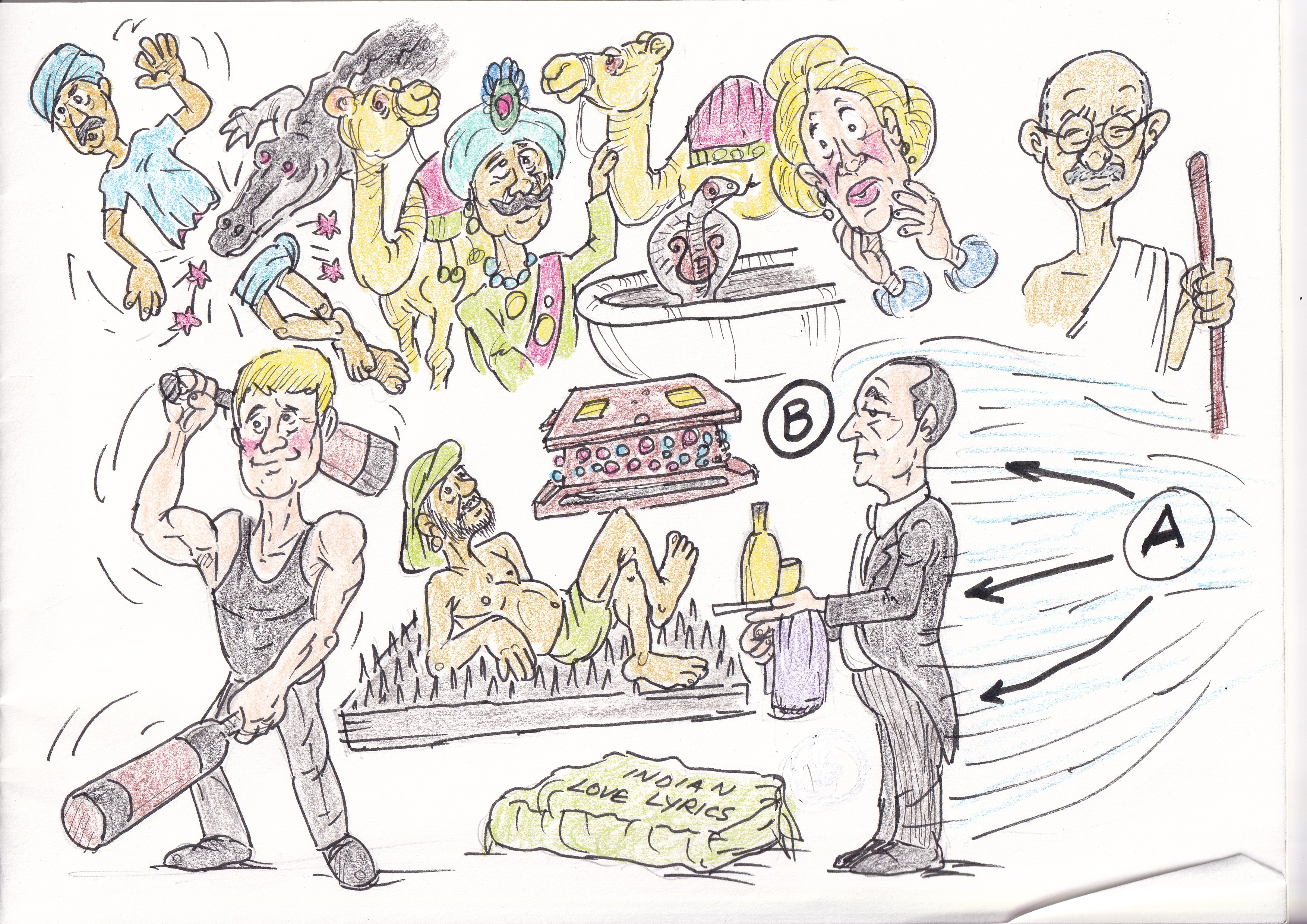
  • In some of his novels, jewels associated with idols of gods in Indian temples get stolen, with overzealous priests chasing the villains.
  • Indian fauna such as spiders, scorpions, cobras, elephants, tigers, cheetahs and lions regale the reader across many of Plum’s narratives. Walking butlers like Beach get described as elephants sauntering through an Indian jungle. Princes and maharajas of yore also find a mention occasionally.
  • Plum suggests a link between the Indian Civil Disobedience movement and the dietary and fasting habits of Mahatma Gandhi. Bertie Wooster motivates Tuppy Glossop to forsake pleasures of the table by quoting Mahatma’s example. The Cawnpore (now Kanpur) Mutiny gets referred to in at least two places.
  • Military men who had served in India as part of their duties tell us interesting anecdotes about that distant land, including about their time in the North Western Frontier Province. Some of you may recall that the latter was a province of British India from 1901 to 1947, when it was ceded to Pakistan.
  • When Bobby Wickham takes umbrage, she ticks off Kipper like a typhoon on the Indian Ocean. Elsewhere, to impress a heart throb, the hero claims to have used a Boy Scout pocket knife to teach the sharks there a lesson or two.
  • Indian scriptures often use the Sanskrit term ‘siddhi’ to signify either a remarkable accomplishment or a singular proficiency attained by an aspirant. These could be material, paranormal, supernatural or magical in nature, attained by such practices as meditation, yoga and intense ‘tapas’ (austere practices).

Like much else, this facet of India is also used by Plum to amuse, elevate and entertain his readers. Jeeves, for instance, gets repeatedly portrayed as someone who possesses the property of a gas floating from Spot A to Spot B without much ado. Some characters undergo an experience akin to that of curling up on spikes while others are found contemplating the infinite.

  • Wherever Plum is, love cannot be far behind. India has gifted the world with the Kama Sutra, but it is not surprising that Plum never alludes to this unique treatise, because he never used sex as a ploy to popularize his narratives. All of his male characters are steeped in chivalry, strictly bound by Victorian norms.

In his narratives, Wodehouse appears to have instead based his observations on The Garden of Kama, a collection of lyrical poetry of Indian origin published in 1901, which makes liberal use of imagery and symbols from the poets of the North-West Frontier of India and the Sufi poets of Persia (Iran). The poems, written by Laurence Hope, a pseudonym of Violet Nicholson, are typically about unrequited love and loss. One of her famous compositions, known as a ‘Kashmiri Song’, appears in at least two of Plum’s narratives. 

  • India rubber is one name for the natural rubber that comes from the sap of certain trees. Rubber trees that grow in South America and India produce the majority of India rubber. Plum uses its properties of agility, elasticity, flexibility and robustness to cover a wide range of physical endeavours of the characters in many of his narratives.
  • Some characters have a fetish for remaining as fit as a fiddle. One of the instruments which they happen to depend upon to do so is a pair of Indian clubs.
  • Some of his characters have either visited India or plan to do so. While Lady Malvern whips up a book relating to Indians, Crispin Blakeney goes off there to deliver a series of lectures. Some of us may recall that in ‘Bertie Changes His Mind’, Carry On, Jeeves, Bertie Wooster tells Jeeves that he has a sister in India.
  • Indian handicrafts come up for a mention. So does Taj Mahal. Gurudev Rabindranath Tagore’s dietary habits get commented upon. Some behavioural traits of Indians get covered. The age old sordid custom of ‘sati’ gets touched upon, as do the Indian Civil Services. Stilton Cheesewright has the unique distinction of having come under the spell of Buddhism briefly.
  • The Luck Stone, a concoction whipped up by Plum under the pseudonym Basil Windham, was serialized in a magazine known as ‘Chums: An Illustrated Paper for Boys’ during 1908-1909. It touches upon Indian Vedas, mythology and superstitions.

Some Missing Ingredients

Plum’s works surely throw up several references to India. But if he had wanted to, he could have used a number of other Indian resources to further enrich his narratives.

Alas, we do not find any mention of such literary figures as Kalidasa, besides Aryabhata or Ramanuja, the famous mathematicians. The Vedas do find a solitary mention but any other references to India’s soft power comprising such aspects as spirituality, its multi-layered scriptures and various dance forms are sadly missing.

Above all, the mind-numbing diversity of the spirit of India is missing. Its wide spectrum of ethnicities, languages, beliefs, practices and cuisines is nowhere to be found. These are facets of India which have missed out on his wit and wisdom. It is indeed a delectable irony of sorts that this write up is labelled as The Indian Curry Dished Out by P G Wodehouse, even though it has not thrown up even a single reference to any specifically Indian dish!

As to a liberal use of many other resources of an Indian origin, imagine a distraught Gussie Fink-Nottle pining for Madeline Bassett and sending messages to her through clouds passing overhead, a la ‘Meghadut’, the classic poem penned by Kalidasa. Poets like Ralston McTodd would have been found drawing some inspiration from the creative outpourings of Tagore. To improve Bertie’s intellect, all Florence Craye had to do was to insist that he peruse at least one of the chapters of the ‘Bhagavad Gita’. Laura Pyke could have drawn some inspiration from the science of ‘Ayurveda’, the healthy-lifestyle system that people in India have used for more than 5,000 years. Anatole could have been found whipping up ‘chhole-bhature’ or ‘dosa’s!

Yoga could have helped someone like Ashe Marson to treat his clients suffering from acute dyspepsia to heal faster and better. Sir Roderick Glossop could have gone about advising his loonier patients to make meditation an essential part of their mundane lives. Vicars could have lived a happier Thos-infested life while brooding on spiritual tenets dished out by Indian scriptures, thereby becoming hotter at their jobs. George Bevan, while working on one of his next musical comedies, could have been drawing inspiration from the ‘Natya Shastra’ of Bharata Muni. Gentlemen aspiring for India rubber legs could have been practising such dance forms as ‘Kathak’ or ‘Bharatnatyam.’

The possibilities are endless. The mind boggles. But one would do well not to be concerned with what might have been. Instead, the focus needs to be on the rich legacy Plum has left behind for us to rejoice in.

In fact, it is befitting that quite a few of his works have been translated into some other languages – like Bengali, Kannada, Telugu and Sanskrit – forming a pale parabola of subtle humour across India.

Consistent Depiction, Despite 1947

The India that Plum would refer to belongs to an era which is long since bygone. India gained independence in 1947, but his works published during the period from 1947 (Joy in the Morning) till 1974 (Aunts Aren’t Gentlemen) do not reveal much change in his imagination. Astral bodies, scorpions and cobras continue to rule the roost.

From a global perspective, the devastation caused by the Second World War (1939–45) was then the main area of concern, rather than the fact of India gaining independence on 15 August 1947. Plum had personally suffered in his life owing to political developments then and had relocated from Europe to USA during April 1947, never to visit Europe again. Owing to his preoccupation with other matters then, perhaps the last thing on his mind would have been the British (or American) reaction to the events unfolding in India. Hence his storylines and characters never touched upon the emergence of an independent India.

Love sans Borders

The love for Plum’s oeuvre in the Indian subcontinent transcends any political considerations. Moreover, Plum sets a gold standard of pristine humour not only in English but also in many other languages into which his works have been translated, including in many regional ones in India.

Plum dished out his narratives in a pre-Internet era, when access to information was severely restricted. It is amazing that based mostly on secondary data, so to say, he could leave behind for us a spicy Indian curry, making India shine through in so many ways through a vast array of his novels and stories.

Pip pip!

Notes:

  1. Illustration courtesy Suvarna Sanyal.
  2. The full text of this essay can be accessed at https://ashokbhatia.wordpress.com/2021/08/31/the-indian-curry-dished-out-by-p-g-wodehouse.
  3. A version of this synopsis appears in the December 2021 issue of Jeeves, the annual journal of The Wodehouse Society in Sweden (WSS).
  4. A version of this synopsis also appears in the March 2022 issue of The Wooster Sauce, the Quarterly Journal of The P. G. Wodehouse Society (UK).
  5. A version of this synopsis also appears in the Autumn 2022 issue of Plum Lines, the Qurterly Journal of The Wodehouse Society, USA.

Read Full Post »

ashokbhatia's avatarashokbhatia

The big and fat weddings which keep taking place all across the length and breadth of India are well known. These are occasions on which gullible parents, overjoyed by the prospect of finally getting rid of their respective wards, loosen their purse strings, showcasing their wealth, power and pelf.

Ostentatious decorations, lavish dinner spreads which could make Anatole raise his eyebrows a fraction of an inch, sumptuous upholstering of those in attendance and a chain of rituals which keep the hapless bride and the groom on their toes – all of these create an ambience which befits the social status of the well-heeled parents, making many others green with envy. It is another matter that such display of wealth often makes our tax sleuths sit up and take notice. The Bartholomews under their supervision promptly start sniffing around, their bare teeth on full display. Unless prompt steps are taken through…

View original post 1,003 more words

Read Full Post »

« Newer Posts - Older Posts »