Feeds:
Posts
Comments

Posts Tagged ‘India’

(Here is the final part of a story whipped up by Shalini, an eight year old who has an abundance of creative juices sloshing about within her. Yours truly was merely assigned the task of putting it to pen and paper, so to say.)

A chance meeting in Switzerland

Suraj was part of the school orchestra. The school orchestra had become popular. It was invited to play at the Lucerne Music Festival.

Rakesh and Kala were worried about the high expense involved. The school music teacher explained to them the importance of taking part in an international festival. Seeing the enthusiasm Suraj had for playing as part of the school orchestra, they decided to send him to Lucerne.

At the Mumbai international airport, whole family came to see off Suraj. Kala had packed some of Suraj’s favourite sweets. She had tears in her eyes but was happy that her son had got this opportunity.

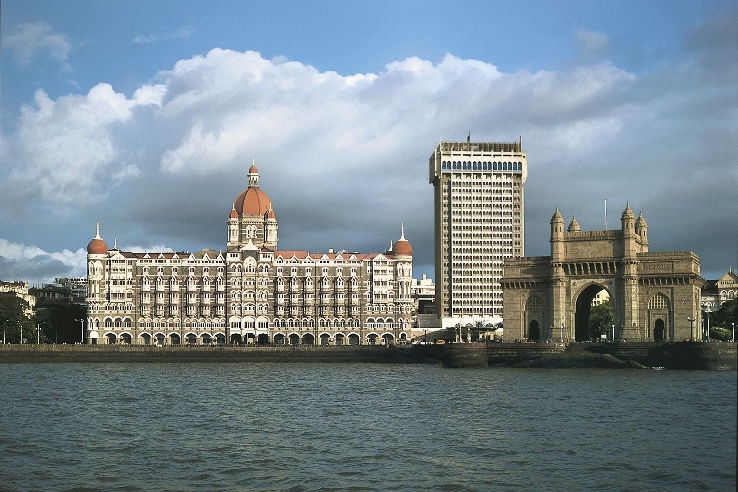
At Lucerne, the orchestra team was taken on a sight- seeing tour of the city. Suraj looked wide eyed at the lake, by the side of which was the Culture and Convention Centre where the team was to perform in a few days.

On the other hand, Leo was practicing hard on the piano. He was one of the students chosen by his school to take part in the orchestra which was coming from India. He had heard about India from his parents. He looked forward to making friends with some Indian students.

Three days before the performance, a practice session was held. When he entered the venue, a teacher stopped Leo from going inside.

‘You had already gone inside’, she said. ‘Where are you again coming from?’, she asked.

‘Maam, but I just came in. My mother just dropped me outside,’ said a surprised Leo.

‘OK, show me your school card.’

Leo showed her his school card. She took him inside and then identified Suraj. She called him over and checked his identity card also.

‘I am sorry. I must have made a mistake. But both of you look so much like each other’, she said and withdrew.

Suraj and Leo shook hands. Both were surprised to see each other. They looked like mirror images of each other.

The practice session began and went off well. When it was over, Leo ran into the arms of his mother who was waiting outside. He told her excitedly what had happened. Leila could not believe her ears. She went into the building, with Leo following her. She first met the teacher who had stopped Leo at the auditorium door. She was directed to where Suraj was standing with his school mates.

One look at Suraj, and Leila was happy and sad at the same time. Happy, because she thought she had met one of her missing children. Sad, because she did not know how to check if Suraj could indeed be her own lost child. She went ahead and shook hands with Suraj.

‘So, you come from India?’, she asked politely. She felt like hugging him.

‘Yes, maam,’ said Suraj respectfully. He somehow felt drawn towards Leila.

‘Where are your parents? Who are they?’

‘Maam, my father’s name is Rakesh. My mother’s name is Kala. We live in Mumbai.’

‘Do you have any brothers and sisters?’

‘Yes. We are four – two brothers and two sisters.’

Leila could not control her tears of joy. She gave Suraj and tight embrace and kissed him on his forehead.

‘My dear…..what is your name?’

‘Suraj, maam.’

‘Are you parents here with you?’

‘Only my father has accompanied. He is waiting outside.’

‘Let us go and meet him, then!’, said an excited Leila.

Outside the hall, Leila and Rakesh met. Rakesh was surprised to see Leo, who looked just like Suraj. After a brief introduction, Leila took Rakesh and Suraj to her home. There, Rakesh met Joseph, Livio, Sara and Anisa.

Joseph explained to Rakesh what happened when they went to India more than ten years back. Rakesh could not believe this could be happening. Late night, after dinner, Joseph dropped Rakesh and Suraj at the hotel where they were staying.

A family reunion 

The concert got over well. The Ambassador from India was the chief guest. Rakesh and Joseph met him together and explained what had happened. The ambassador suggested Joseph and the family visit India soon. A meeting between Leila and Kala would help, he thought.

Rakesh and Suraj returned to India. The day came when Joseph, Leila, Leo, Livio, Sara and Anisa came to Mumbai and met Rakesh, Kala, Madesh, Suraj, Sita and Yashoda. Leila was very happy to meet Kala and her other children.

Rakesh and Joseph went to the orphanage and met an elderly Sister Alicia. They told her about discovering each other by chance. They wondered if the orphanage had any record of how Madesh, Suraj, Sita and Yashoda had reached there. After searching old records, Sister Alicia gave them John’s address in Goa.

All of them travelled together from Mumbai to Goa. They sang songs together and were very happy. Leila was happy that all her lost children had been brought up so very well, with good family values. Several times, she expressed her gratitude to Kala for having taken so very good care of the children.

Upon reaching Goa, they located John, who confirmed that he had rescued four children when the boat accident took place. He was happy that the family had got reunited.

All is well that ends well

After some time, they all decided to be together at Lucerne in Switzerland. Jospeh helped Rakesh and Kala to start a catering service for Indian dishes. They stayed on two floors in the same apartment complex. They shared meals, ideas and things between themselves.

Madesh is now training for lawn tennis. Suraj has joined a violin academy and become part of a local music group. Sita has started studying to become a doctor. Yashoda has taken up a course in hotel management. She also helps her parents in their business.

Leo continues his practice on the piano. Livio has become a ski instructor. Sara is studying engineering. Anisa has started offering ballet classes. Often, she can be seen performing on stage in various parts of Europe and Asia.

Lake of Lucerne and Bristenstock

Leila and Joseph are happy that all of them are finally together. All the children are honest, truthful and good at heart. They have a strong character. They are talented. They speak politely and respect their elders.

The whole family has faith in a super power which keeps all the people in this world happy, joyful and satisfied.

(Related Post: https://ashokbhatia.wordpress.com/2018/07/05/an-eight-year-old-whips-up-a-story-part-1-of-2)


Read Full Post »

(Here is a story whipped up by Shalini, an eight year old who has an abundance of creative juices sloshing about within her. Yours truly was merely assigned the task of putting it to pen and paper, so to say.

The story is dedicated to the loving memory of Shri Murali Manohar Goel. It is the story of Leila, Joseph, Kala and Rakesh; of how the four pairs of twins born to Leila got separated; of how they came together again.)

The story of a family coming together again

Leila faces a storm

Leila was standing on the upper deck of a boat, watching the blue waves in the Indian Ocean. As the sun started setting, its rays created beautiful patterns. Some seagulls were diving down and catching fish for their supper. The skyline of Mumbai was just becoming visible.

Leila used to live in far off Lucerne, a big city in the heart of Switzerland. She and her husband, Joseph, had saved some money over past few years and planned this trip to India. They had landed in Delhi. They had seen the Taj Mahal in Agra. They had travelled through the Thar desert. Mumbai was their last stop, from where they they had taken a ferry to visit Elephanta Caves nearby. After two days, they were to catch a flight back to Switzerland.

Leila was tall and beautiful. She had hazel blue eyes and long dark hair. She was happy that their dream trip to India had gone well so far. As she gently patted her swollen abdomen, she thought how happy her eight babies, waiting to come into this world, would be.

Suddenly, she noticed some big waves rising in the ocean. A strong wind started blowing, rocking the boat. She turned and saw her husband Joseph had also joined her on the deck. Just then, a siren blew. A seaman came rushing, telling them to return to their cabin. A storm was coming, and the captain wanted all the boat’s passengers safe.

Even as Leila and Joseph were climbing down a staircase to reach their cabin, a very big wave hit the boat. It turned over dangerously. Leila looked at Joseph with alarm. Joseph pressed her hand by way of an assurance.

All of a sudden, Leila started feeling labour pains. Even before they could reach their cabin, the boat rolled over. She felt as if she was about to enter a watery grave. She was worried about the safety of her yet-to-be-born babies. Leila’s head hit a staircase rail and she lost consciousness.

When Leila awoke, she found herself in a white bed. She was connected to some tubes and an equipment at her back was making a rhythmic bleeping sound. A concerned Joseph, with his head in bandages, was sitting by her side. He patted her hand affectionately.

‘Where are we? What happened?’, she asked feebly.

Joseph smiled weakly.

‘We are in a hospital in Mumbai. Due to the storm, our boat had started sinking. The captain and the staff took good care. They brought us safely ashore and got us admitted here.’

Instinctively, Leila felt her abdomen. It felt empty.

‘What about the children?’, she asked with sudden alarm.

‘Well, you delivered all eight of them while on the boat itself. Congratulations, dear!’, said Joseph.

‘Hope they are fine? Where are they?’ Leila asked.

‘Hmm..as luck would have it, in the confusion, when the boat sank, we somehow lost four of them. But the other four are fine and safe, don’t worry.’

‘Can I see them? Where are the others?’

‘Yes, I shall tell the nurse to bring them in. Lovely kids. Two girls and two boys.’

‘But what happened to the others?’

‘We are trying to find out but have lost track. Police have asked people on the sea coast but we still have no news.’

‘That is so very sad’, said Leila, suppressing tears rolling down from her eyes. ‘How do the four remaining with us look?’, she asked after some time.

Just then, two nurses came in, carrying the four babies in their arms.

Leila was overjoyed to see the babies, who were all sleeping.

‘My little angels’, she said, kissing them all one by one. ‘I hope God is taking good care of the other four also!’

John survives the storm

John was an auto mechanic. He used to live in Goa and was unmarried. He had a nice helpful nature. He was on the same boat on which Leila and Joseph were.

After the boat sank, he found himself floating in the open sea. He was on some planks of wood. With him were four newly delivered babies – two boys and two girls. In the darkness, they were simply lying there, with a torn bed sheet from the boat covering them from the chilly air. Their eyes were closed. They were unaware of the storm around them. Two of them were even smiling, as they slept soundly.

John cuddled all four of them, two on each of his sides. He did not want any harm to come to them. He was praying and hoping that the winds would gently propel them towards a safe spot on the Mumbai sea shore.

Once ashore, John was wondering what to do with the four babies. He was poor and could not bring them up. He thought he could leave them at an orphanage which might take better care of them.

And this is what he did a few hours later when the raft hit the shallow shore. He went to a church nearby and met the pastor there. The pastor was caring and nice. He gave him some bread and warm soup. He also gave him some clothes to change.

Both of them dried up the four babies. They wrapped them up in fresh dry clothes. The pastor then accompanied him to a nearby parish which also had an orphanage. Sister Alicia, the in charge there, was happy to receive the kids. She had some nurses under her, who started taking good care of all the four.

After two days, when John had had some rest at a friend’s place in Mumbai, he came back to the orphanage. He felt that the kids were in good hands. He left his address with Sister Alicia and returned to Goa.

It never occurred to John to inform the local police about the four kids he had found in the sea waters after the boat had sunk.

Kala and Rakesh get a gift

In a two bedroom flat in Mumbai lived a couple, Kala and Rakesh. They were married for six years but were still childless. The doctors had advised them to adopt a child instead. Both used to love children. Often, they would pray to have a couple of children.

Kala was of medium height. She had beautiful eyes. She was very loving. She cared even for her neighbourhood kids, helping them in many ways.

Rakesh had a close friend in the restaurant where he worked. His name was Peter. Once, Peter was having dinner at their place. The topic of adopting children came up. Peter said he knew about an orphanage where they could try their luck.

Next Sunday, the three of them went to the orphanage together. Peter introduced them to the in charge there, one Sister Alicia. She walked around with them and introduced them to many children who were happy and playing in the compound.

Some lovely children caught the attention of Kala. They were very cute, with blue eyes and dark hair. Sister Alicia told them that these four kids had survived a boat accident some time back. She wondered if they were from some foreigner couple. She had tried locating their parents, but had failed to do so.

Kala and Rakesh were delighted to meet these four kids. They offered to take care of all of them. Sister Alicia could see they were good people. She agreed.

That is how the remaining four kids of Leila and Joseph found an Indian family. Kala named them Madesh, Suraj, Sita and Yashoda.

Leo, Livio, Sara and Anisa grow up

Back in Lucerne, Leila and Jospeh started bringing up the four kids lovingly. The boys were named Leo and Livio. The girls were named Sara and Anisa. Like their mother, all of them had hazel blue eyes and dark hair. Often, Leila would worry about her missing four children. She would pray to God that they be safe, wherever they may be.

Leo was a simple boy by nature. He was obedient and caring. Livio and Sara were naughty and playful. They liked to play pranks on others. Anisa was a quiet and studious child. They all looked the same. By nature, they were all quite different from each other.


They loved playing on swings. They enjoyed their outings on the lake. Leo and Anisa liked to spend time at the Natural History museum, identifying different butterflies and insects displayed there. Livio and Sara liked to visit the Transport Museum. All four of them liked skiing, swimming and ice skating. Trekking in the mountains was a favourite hobby of theirs.

Leo and Anisa gradually developed interest in music. Leo learnt to play the piano. Many times, he represented his school in different concerts. Anisa learnt ballet dancing. She was liked by all those who saw her perform.

All four of them looked like each other. Often, people would mix up between the four children. Livio or Sara would play a prank on another kid at school, but Leo or Anisa would have to take the blame. Leo or Anisa would do some good work, but Livio or Sara would get praised.

At night, all four of them would cuddle around Leila and go to sleep after listening to a story. Often, they heard the story of the boat accident. They believed that they had four other siblings who were their twins. But they did not know if those four were still alive. If so, where were they and what were they doing?

Madesh, Suraj, Sita and Yashoda blossom in India

In India, the other four kids started going to a good school near their home.

Madesh was naughty. He liked to play in the garden outside and would be found fighting with other kids. As he grew, he developed an interest in playing tennis. He thought he could play for India team when he grew up. Roger Federer was his role model.

Suraj was a quiet boy. He was good at studies. All his teachers liked him. He took to learning the violin. He dreamed of learning Western music from a professional academy. He wanted to play as part of an orchestra all over the world.

Sita was a quiet girl. She would play with her dolls all alone.  She was an obedient child. She was good at heart, and would willingly share her toys with other children. Her dream was to become a doctor and serve people.

Yashoda was a mischievous kid. She was intelligent and did well in her studies. At school, she would often make funny drawings in the copy books of other children. She was more like a tom boy and liked playing outside the home with other boys. She wanted to become a restaurant manager, like her father.

All the four of them were fond of listening to tales from Indian epics at night. Their grandmother, Rakesh’s mother, used to tell them stories from Ramayana and Mahabharata at night. On holidays, they would go out for picnics to such places as the Juhu beach. They loved making sand castles and picking up shells at the beach. They learnt good family values. They did not know they also had four siblings in a far off country known as Switzerland.

(Continued in Part 2)
Read Full Post »

ashokbhatia's avatarashokbhatia

After the 2008 economic meltdown, the management world has discovered that CEOs need to follow not only a Business Compass but also a Moral Compass to steer the enterprises they happen to head. Improving one’s Spiritual Quotient is now a sheer business necessity, and shall be more so in the decades to come.

It is here that Indian scriptures and sages provide a ready template for managers of all sizes and shapes. Let us consider a few facets of some of the pearls of Indian wisdom which find ready application in the realm of management.

Some pearls of Indian wisdom 

Ramayana

  • The entire narrative highlights the importance of values in our lives.Ramayana 1 Businesses which follow a policy of righteousness and conduct their operations in an ethical manner enjoy tremendous brand equity in the market. This rubs off on their products as well as on their employees.
  • Lord Rama decides to…

View original post 1,739 more words

Read Full Post »

ashokbhatia's avatarashokbhatia

Respected Sir,

As a lay citizen of India, allow me to say that you are spearheading a great drive to reform the education system of the country. There may be no big ticket announcements, but one can see some incremental steps which would help our youth to realize their full potential in the years to come.

I write this with all humility at my command, merely to suggest one such incremental reform, which, I am reasonably certain, can help our youth to develop their soft skills faster and better.

I write this to suggest that a special drive be launched to expose Indian students to the works of the eminent humourist, P G Wodehouse. By discovering, delving into and devouring these, our future citizens shall turn out to be cheerful, joyous and happy. India would soon become a country which would be not only chasing her Gross Domestic Product numbers…

View original post 1,312 more words

Read Full Post »

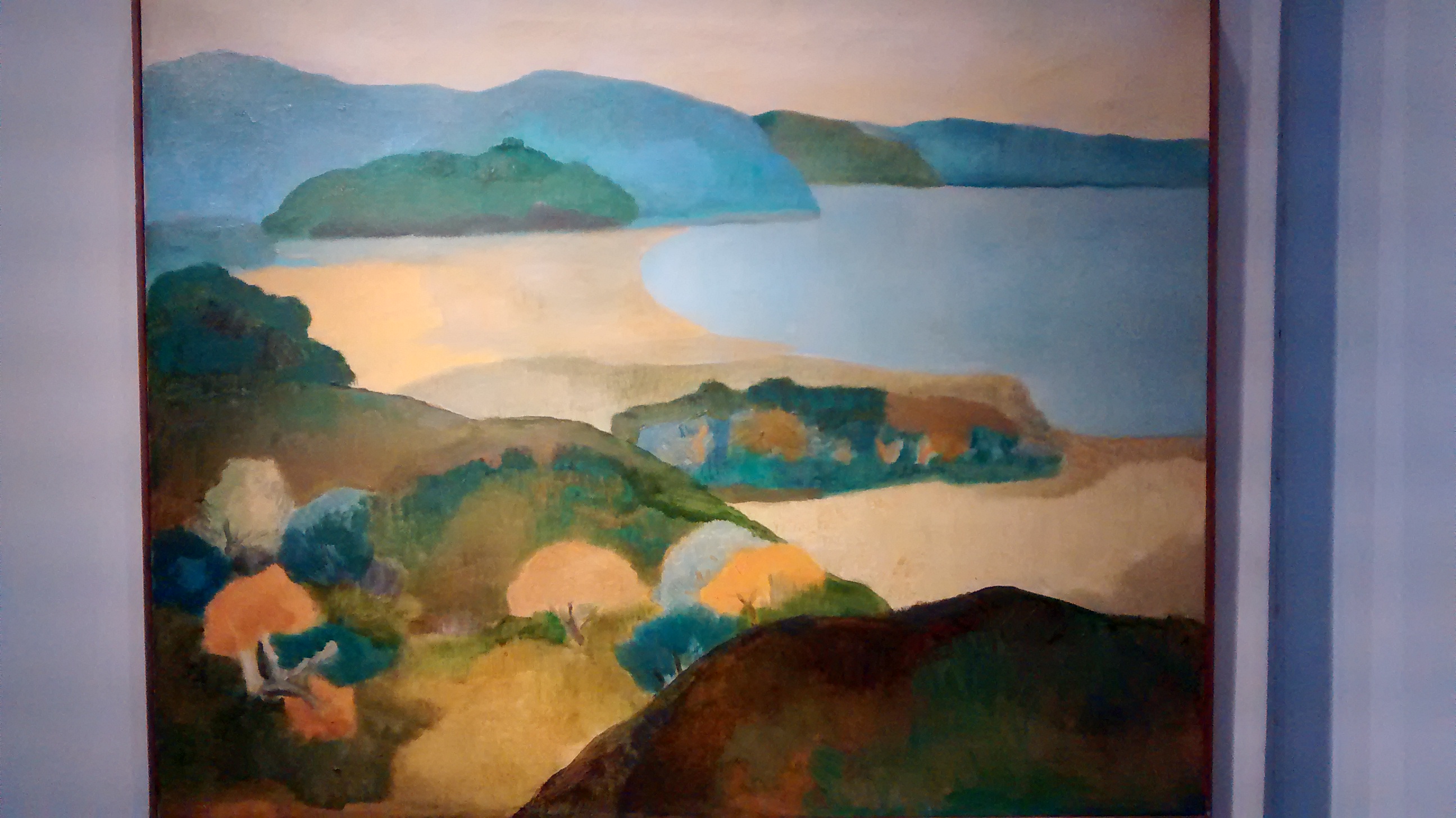
While continuing our walk through the corridors of the National Gallery of Modern Art, we are often mesmerised by the rich tapestry of artworks it offers.

Village Family (Sailoz Mukherjee)
 

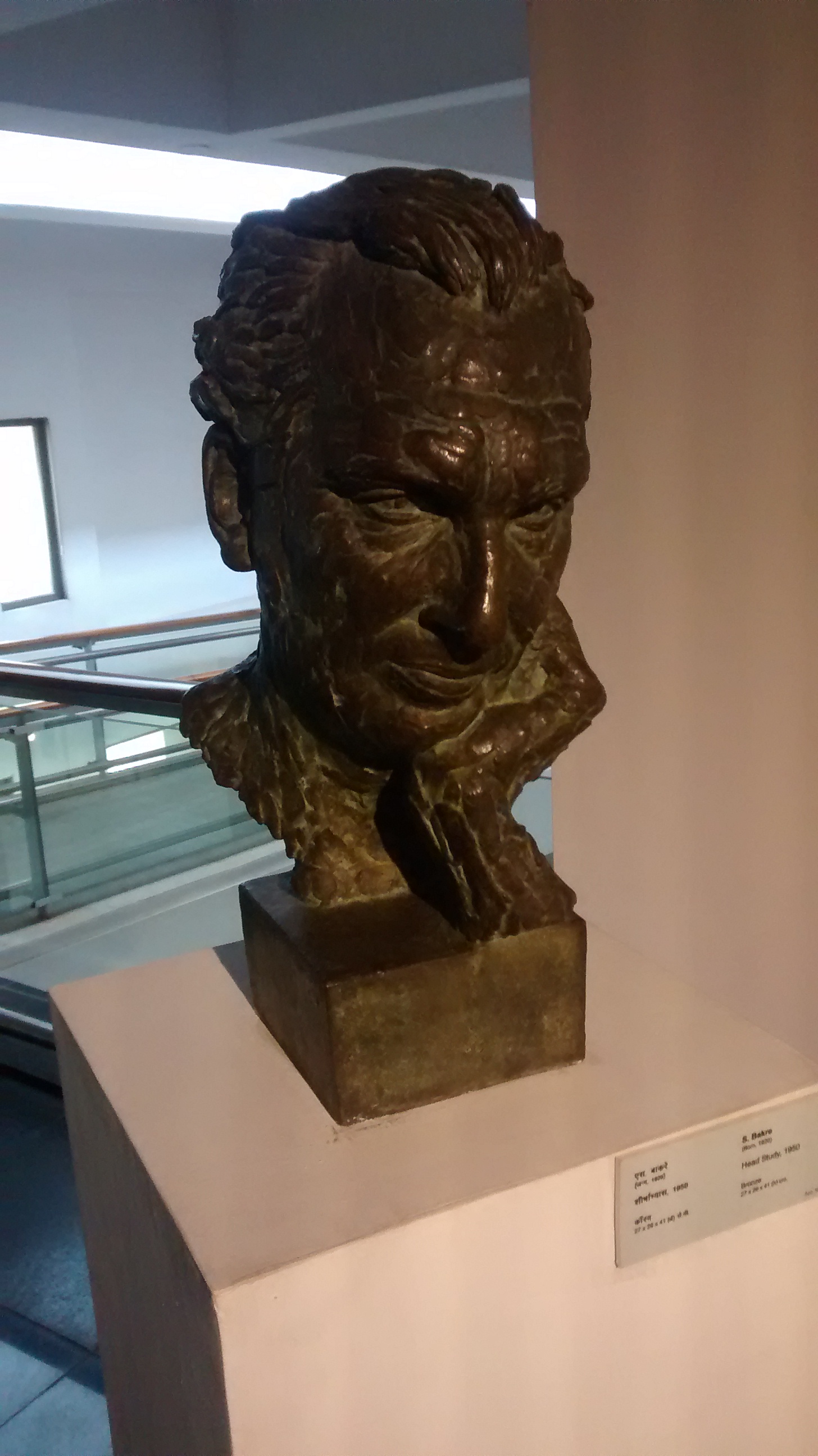
Head Study (S Bakre)


Nude (K H Ara)


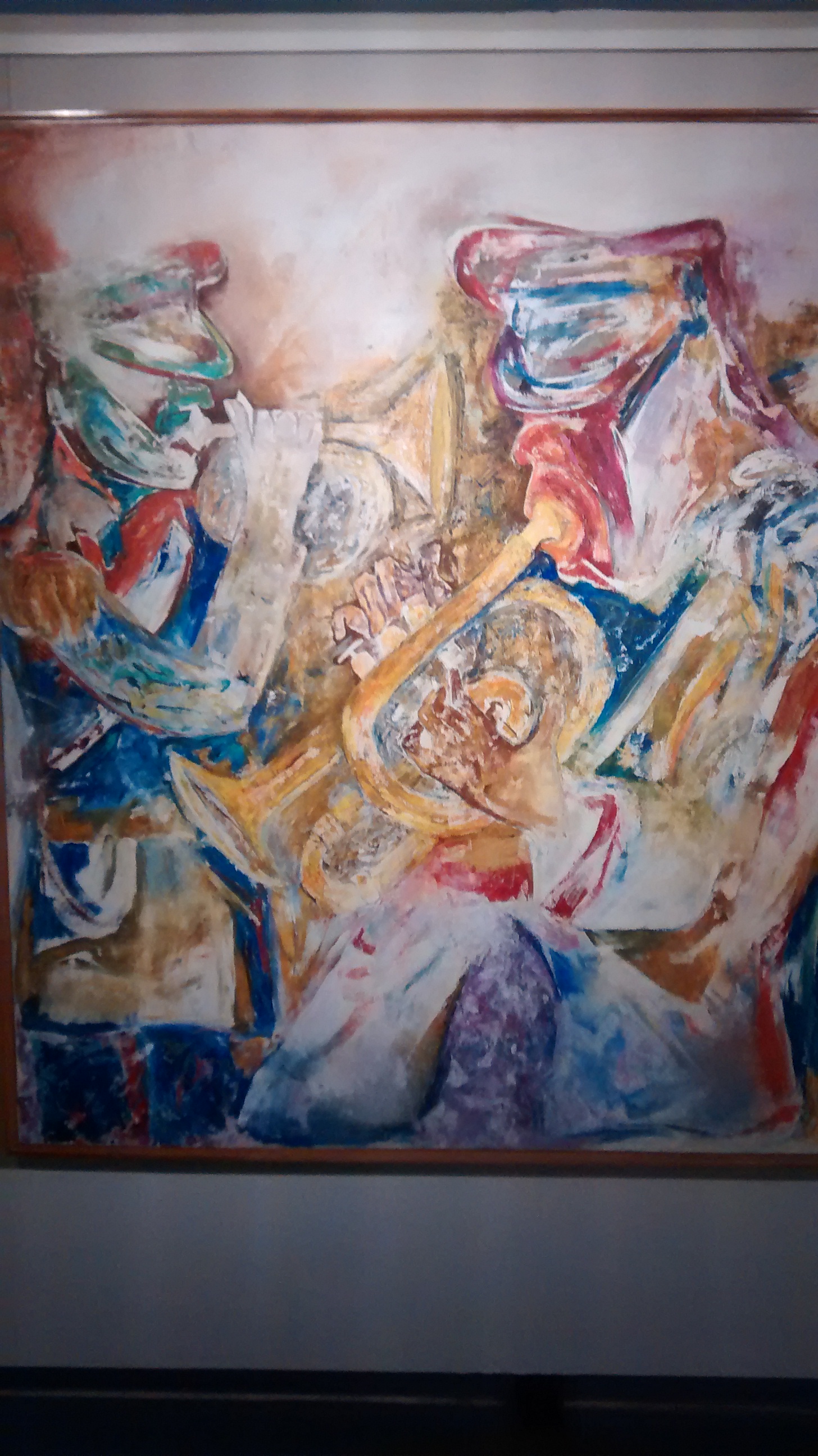
Practice Session (Krishen Khanna)


Landscape (Ram Kumar)


Old Man and the Bird (B C Sanyal)


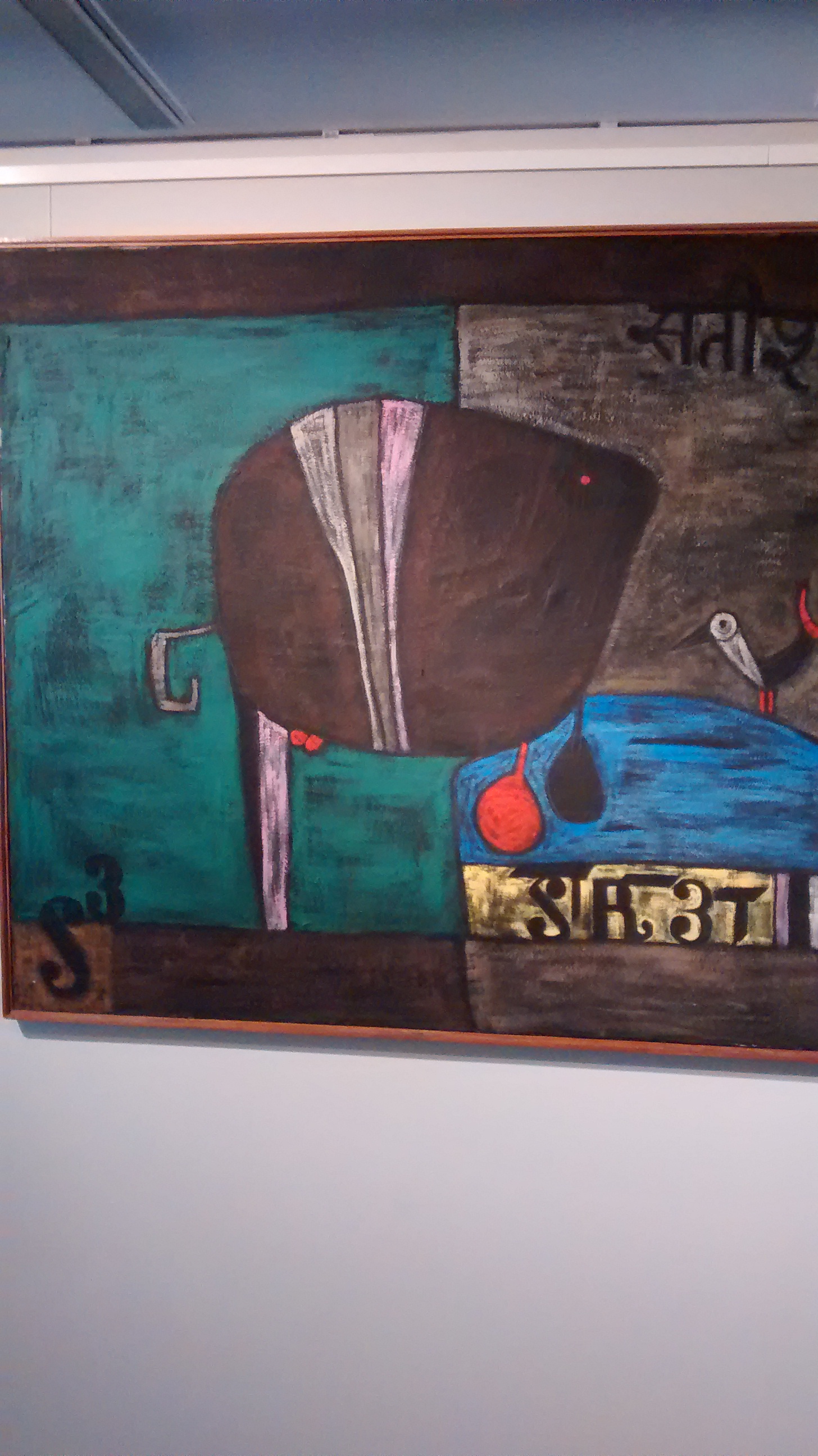
Untitled (Satish Gujral)


Thorn (N S Bendre)


Shakti (Chintamoni Kar)


Sea Creatures (Jaya Appaswamy)


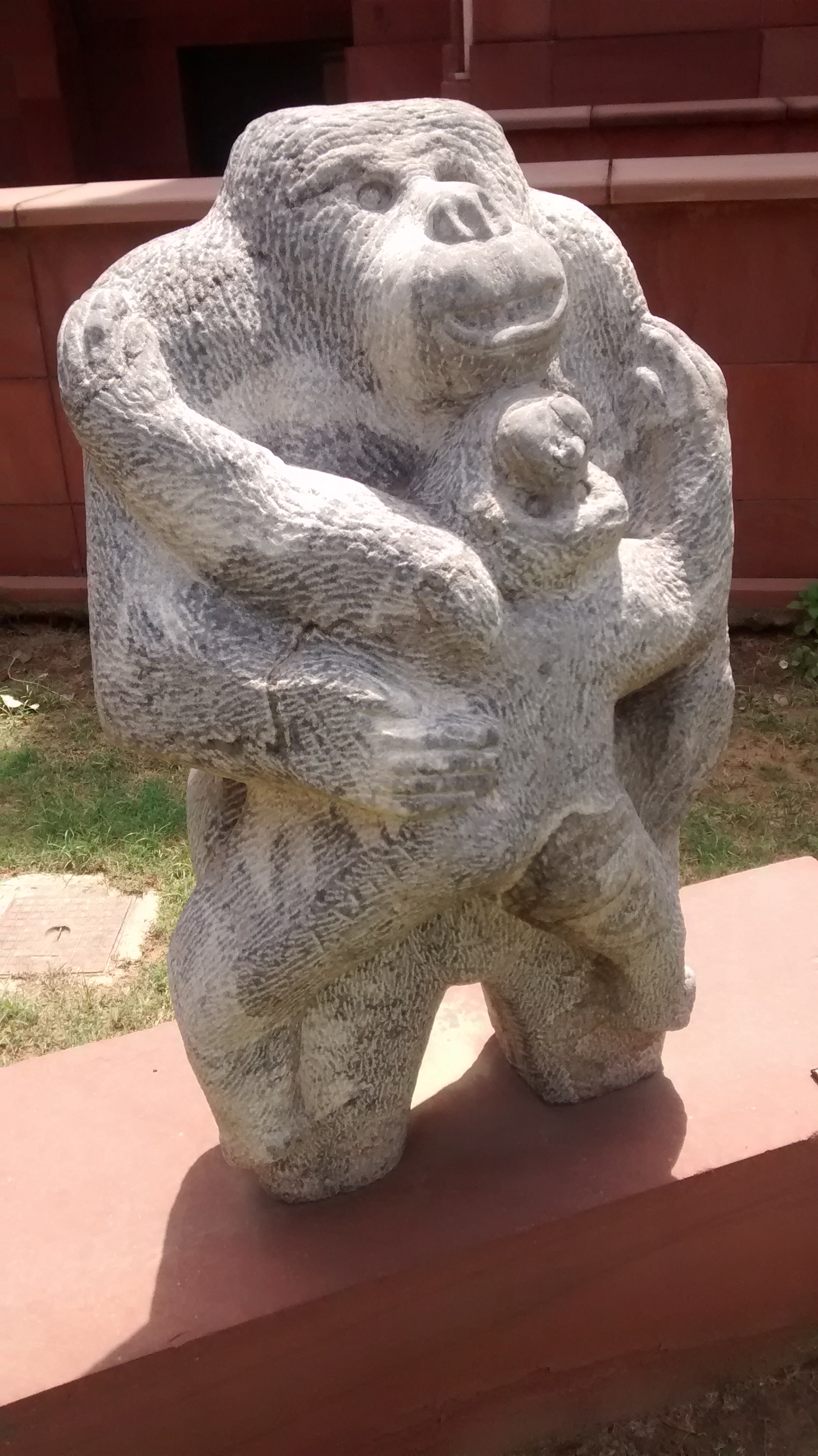
A sculpture in the lawns

The photographic skills of yours truly suffer from severe limitations. Hence the poor quality of the visual representation attempted here.

The artworks are well-lit, save and except the fact that the lighting arrangements often interfere with one’s endeavours to capture some of the artworks on one’s camera. This is especially so when art works happen to be protected with a sheet of transparent glass.

In fact, this remains an issue with most of the art galleries elsewhere too. Perhaps, museum curators and architects in general need to be sensitized to this simple need of a lay viewer while soaking in and wanting to capture images of national treasures of an artistic nature.

(Related Posts:

https://ashokbhatia.wordpress.com/2018/05/06/a-walk-through-the-national-gallery-of-modern-art-in-new-delhi-india-part-1

https://ashokbhatia.wordpress.com/2018/05/08/a-walk-through-the-national-gallery-of-modern-art-in-new-delhi-india-part-2-of-3)

Read Full Post »

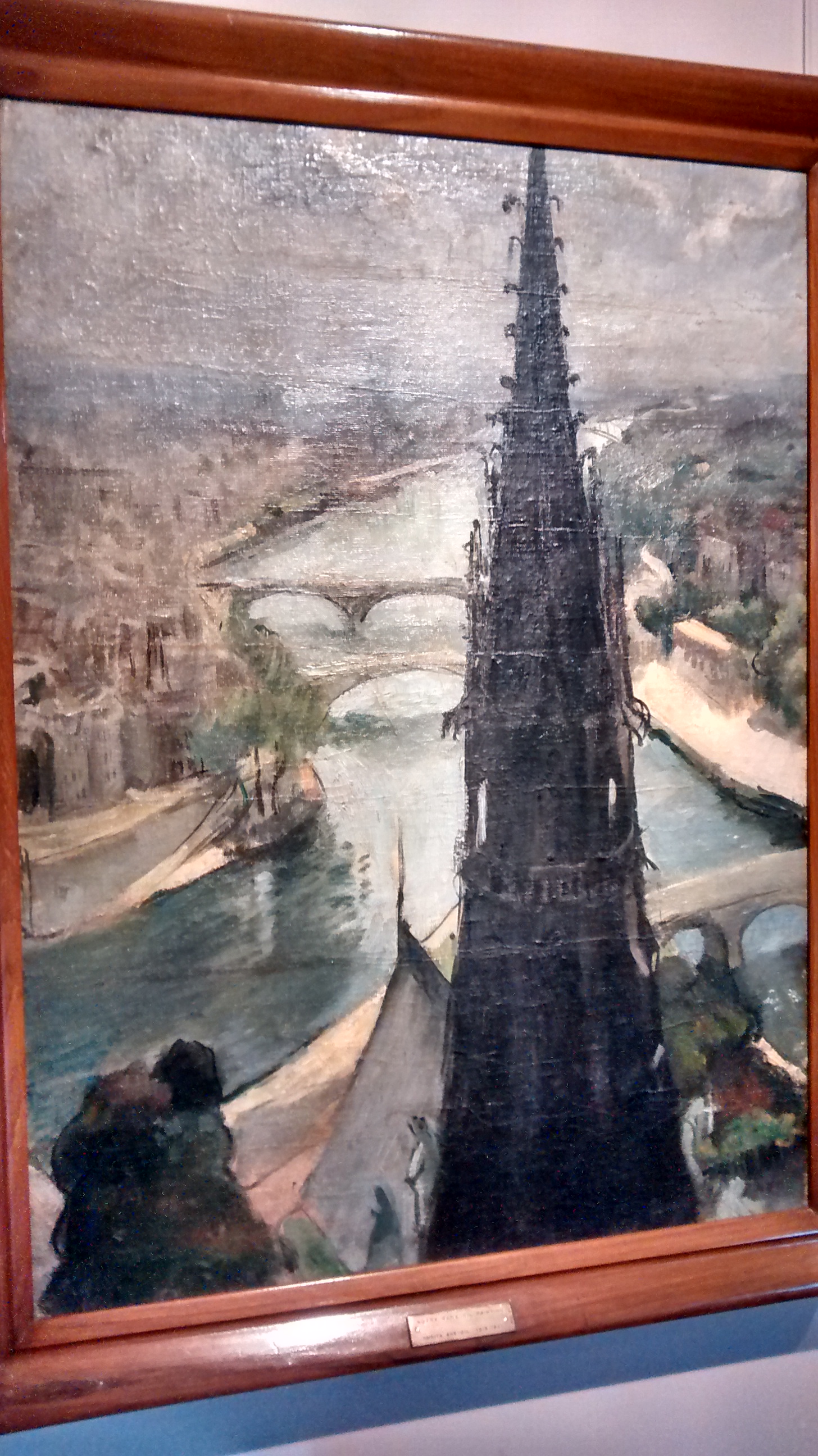
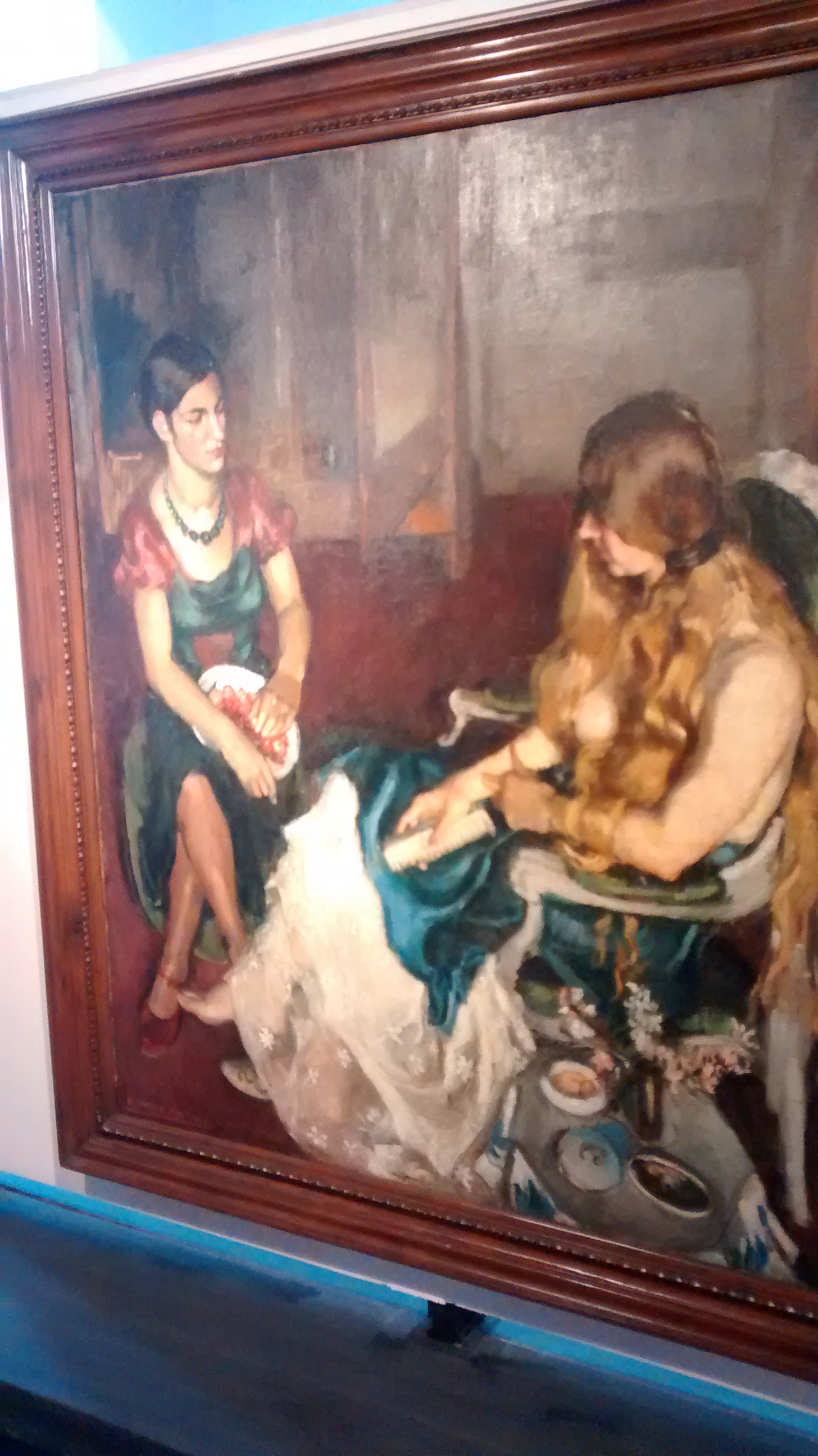
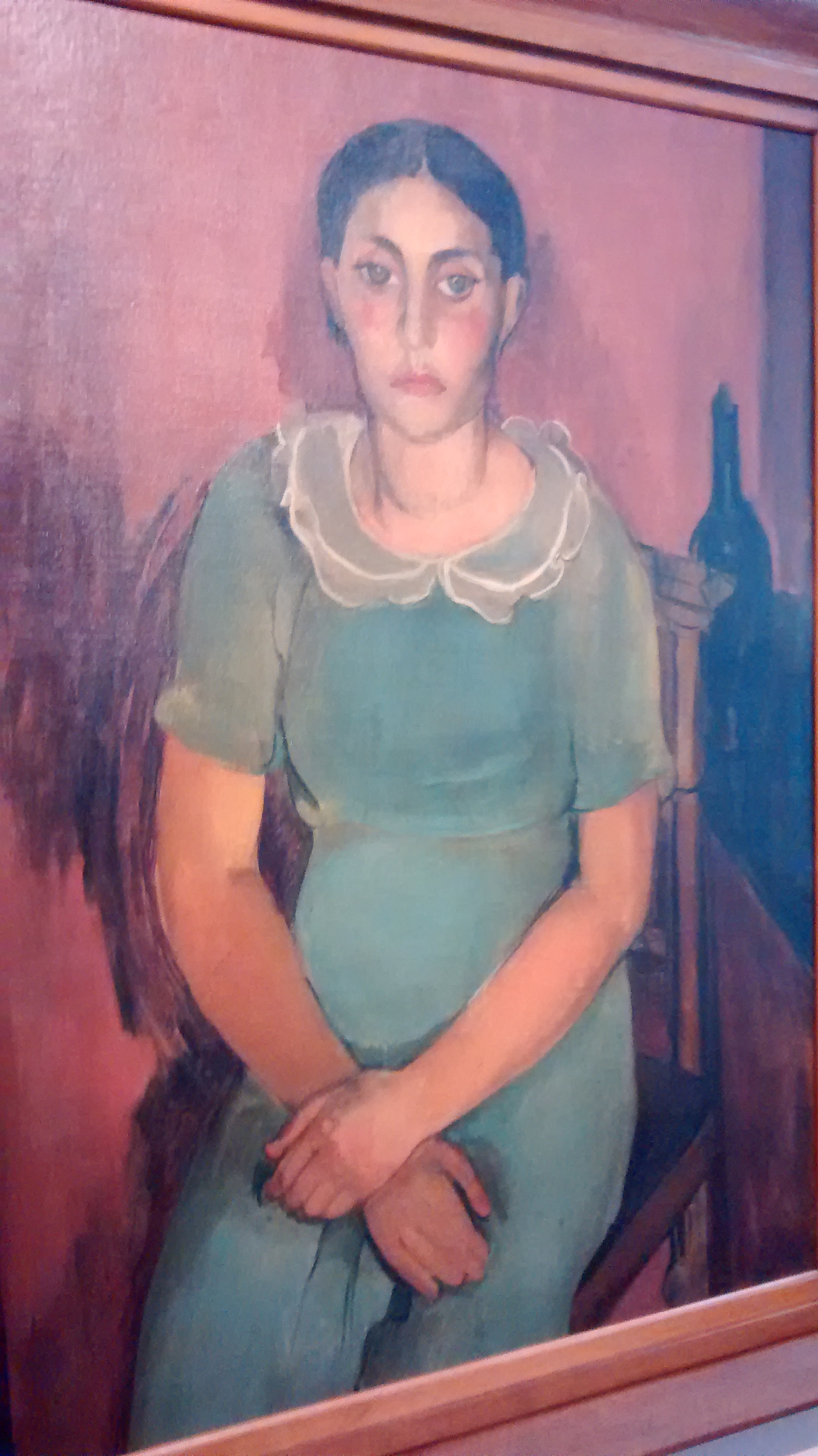
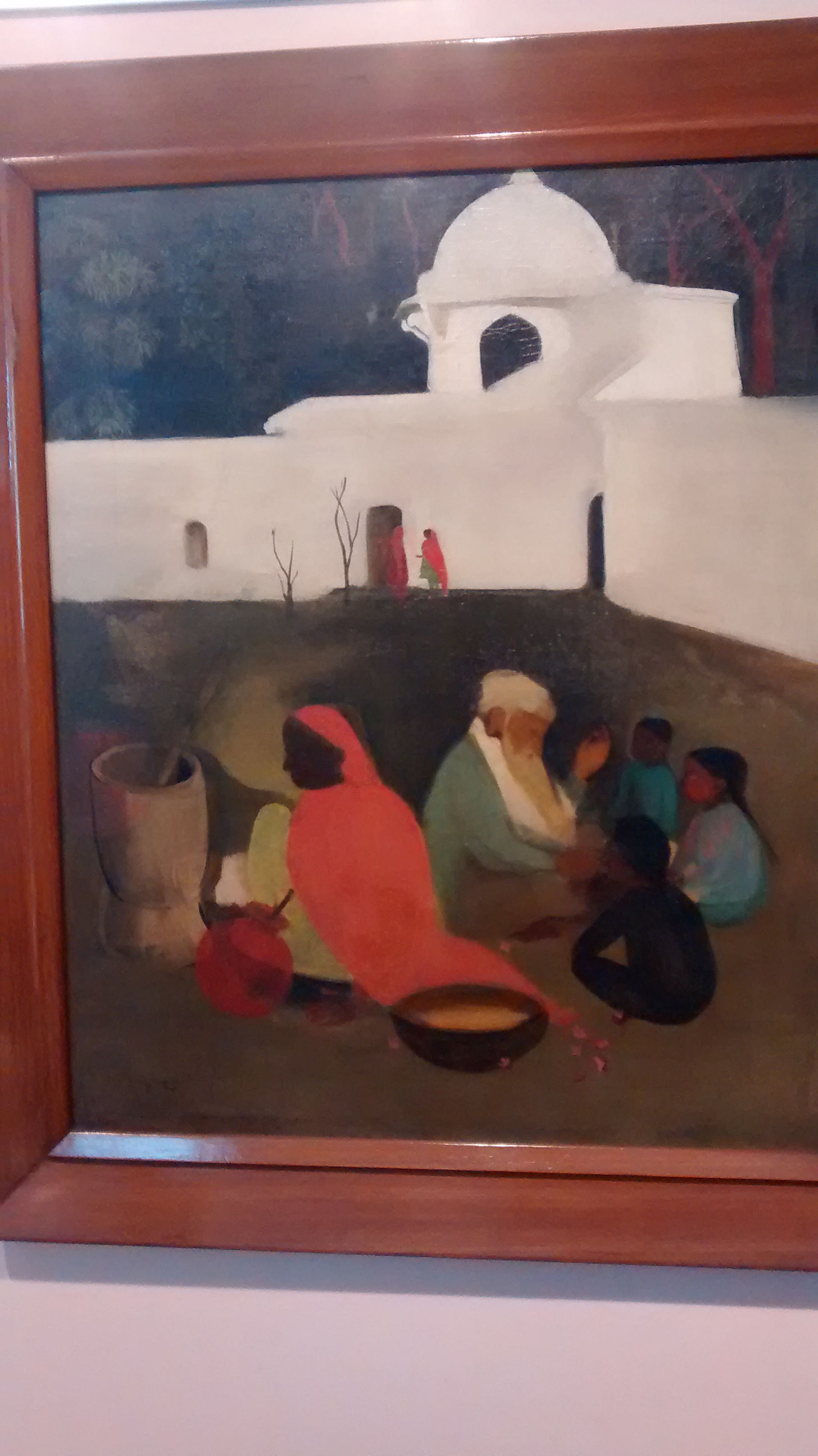
With 12,000 square meters of exhibition space, the Delhi branch of the National Gallery of Modern Art is one of the world’s largest modern art museums.

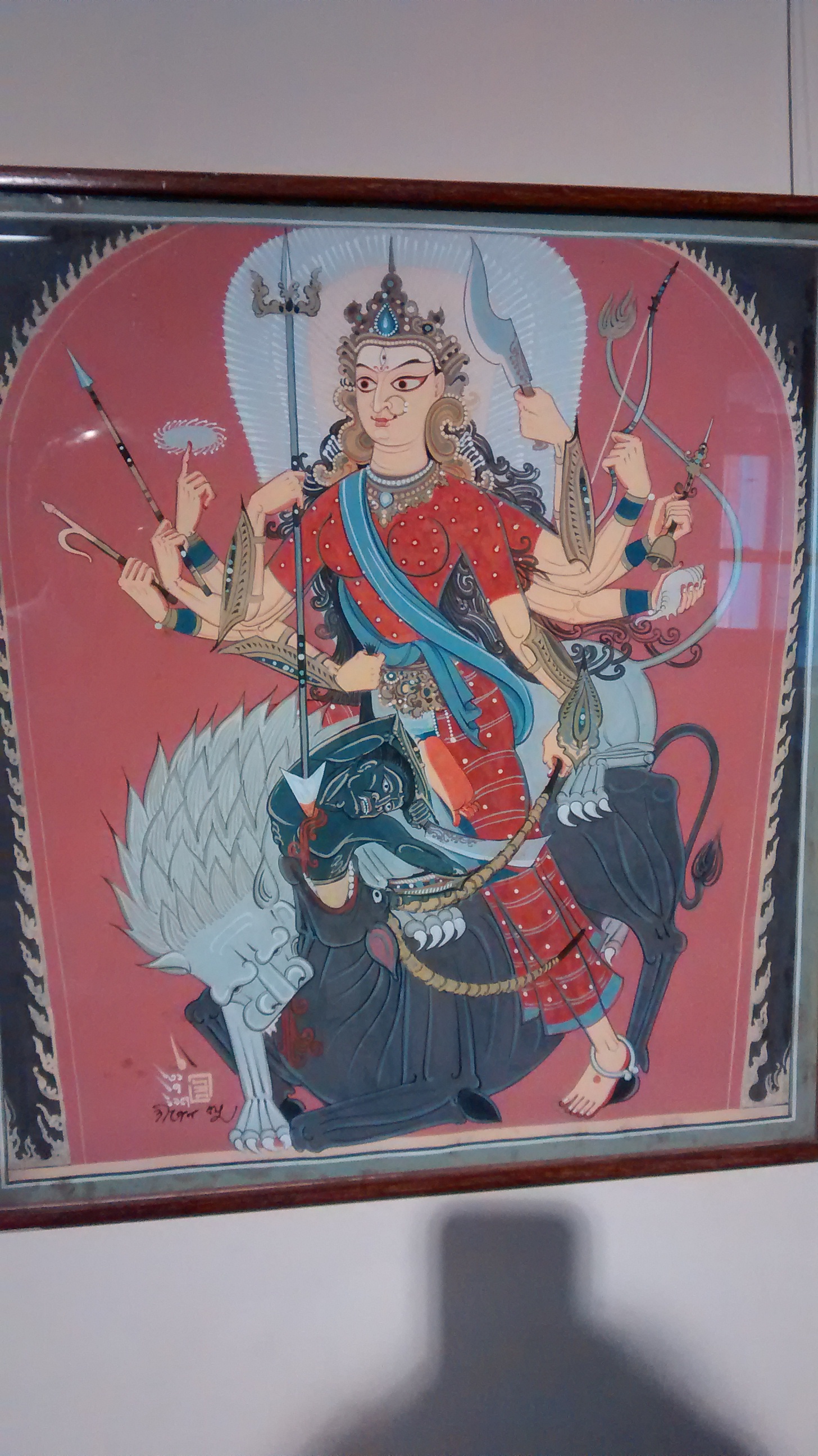
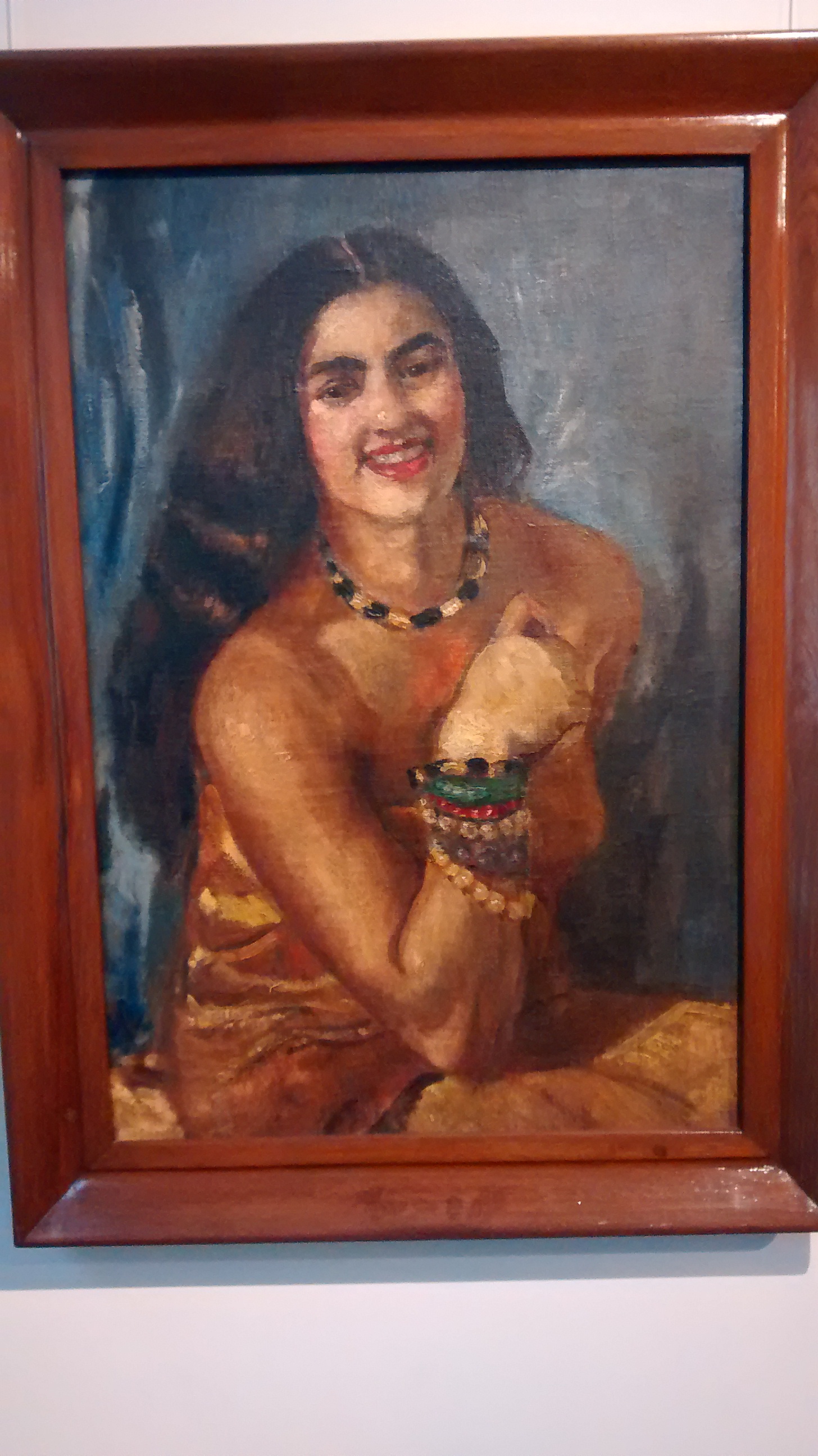
A walk down its corridors makes one marvel at the attention to detail and the sheer depth of talent showcased at the gallery. When the walk is aided and guided by a guy who is an enthusiastic art lover and a dynamic person, many of the artworks on display spring to life and touch the viewer’s soul.

Portrait of HH Bhagavat Singhjee of Gondal (Gujarat)


Toilet (Heman Majumdar)


Mahishasura Mardini (Dipen Bose)


Toilet (G C Bhatt)


Divine Flame (S L Haldankar)


Self Portrait (Amrita Sher Gil)


Self Portrait (Amrita Sher Gil)


Notre Dame (Amrita Sher Gil)


Young Girls (Amrita Sher Gil)


Study of a Model (Amrita Sher Gil)


The Ancient Storyteller (Amrita Sher Gil)


Three Pujarins (Jamini Roy)


Christ and a Boy (Jamini Roy)


Shiva and Sati (Nandlal Bose)

(Continued….)

(Related Posts: 

https://ashokbhatia.wordpress.com/2018/05/06/a-walk-through-the-national-gallery-of-modern-art-in-new-delhi-india-part-1

https://ashokbhatia.wordpress.com/2018/05/10/a-walk-through-the-national-gallery-of-modern-art-in-new-delhi-india-part-3-of-3)

Read Full Post »

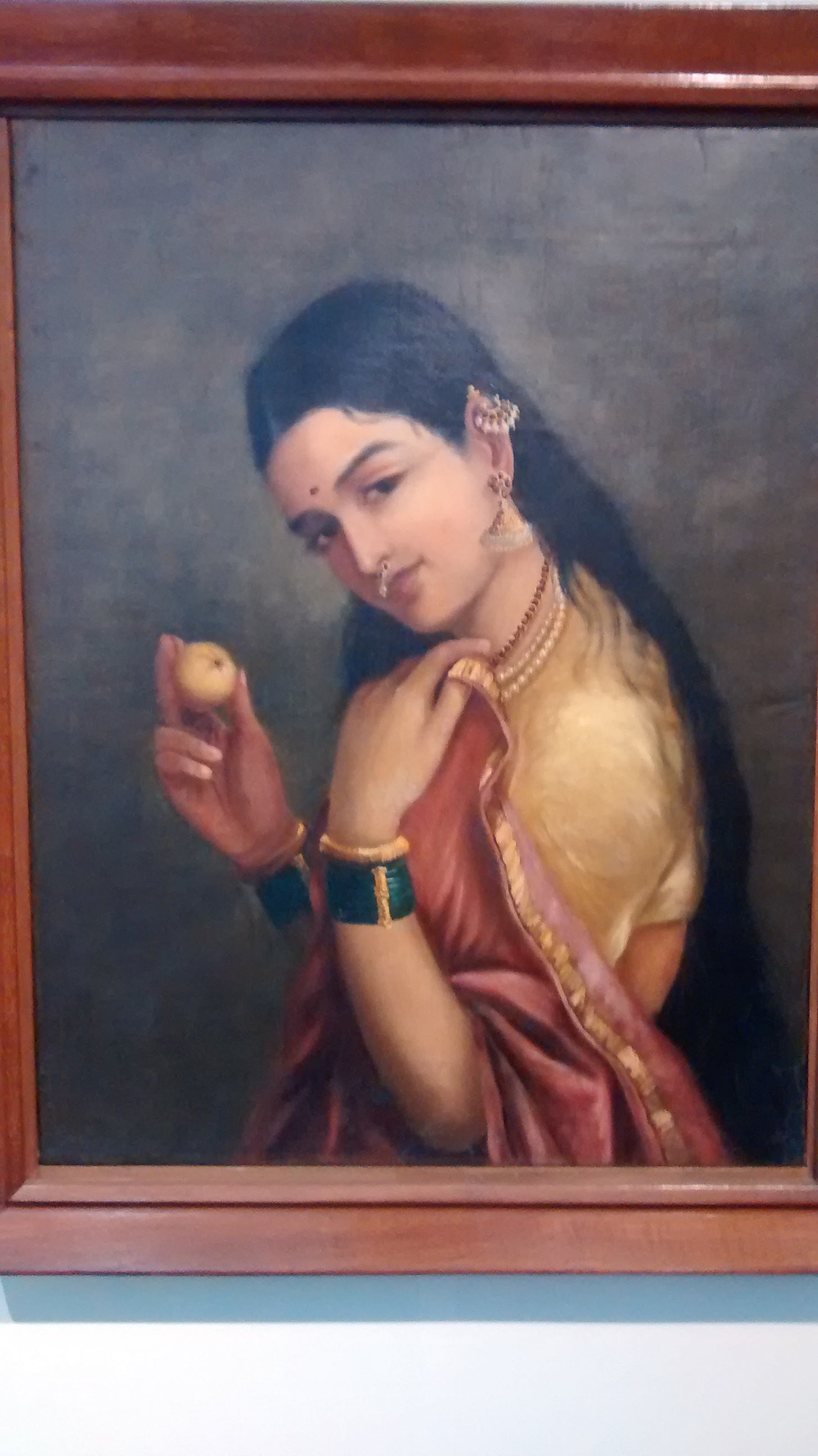
The National Gallery of Modern Art boasts of a collection of more than 14,000 works. The permanent collection, ‘In the seeds of time…’ has art objects tracing the life and times of the country during the 18th and the 19th century.

Its exquisite collection comprises miniature paintings, East India Company paintings, including works by such artists such as Thomas Deniell, Raja Ravi Varma, Rabindranath Tagore, Jamini Roy, Amrita Sher Gil and the like. It has several sculptures by various artists.

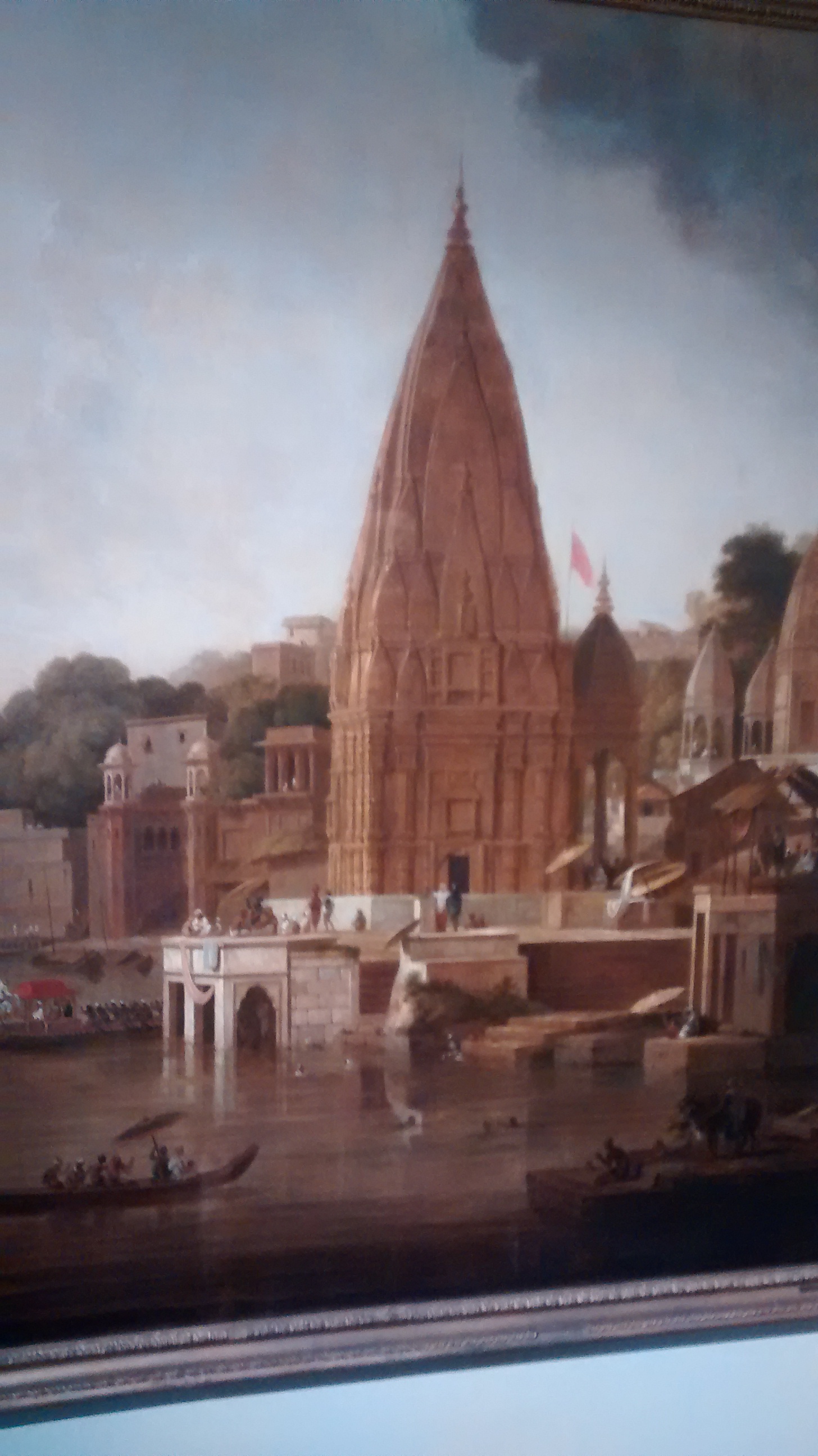
Banaras – Manikarnika Ghat (Thomas Deniell)


Mosque (Thomas Denille)


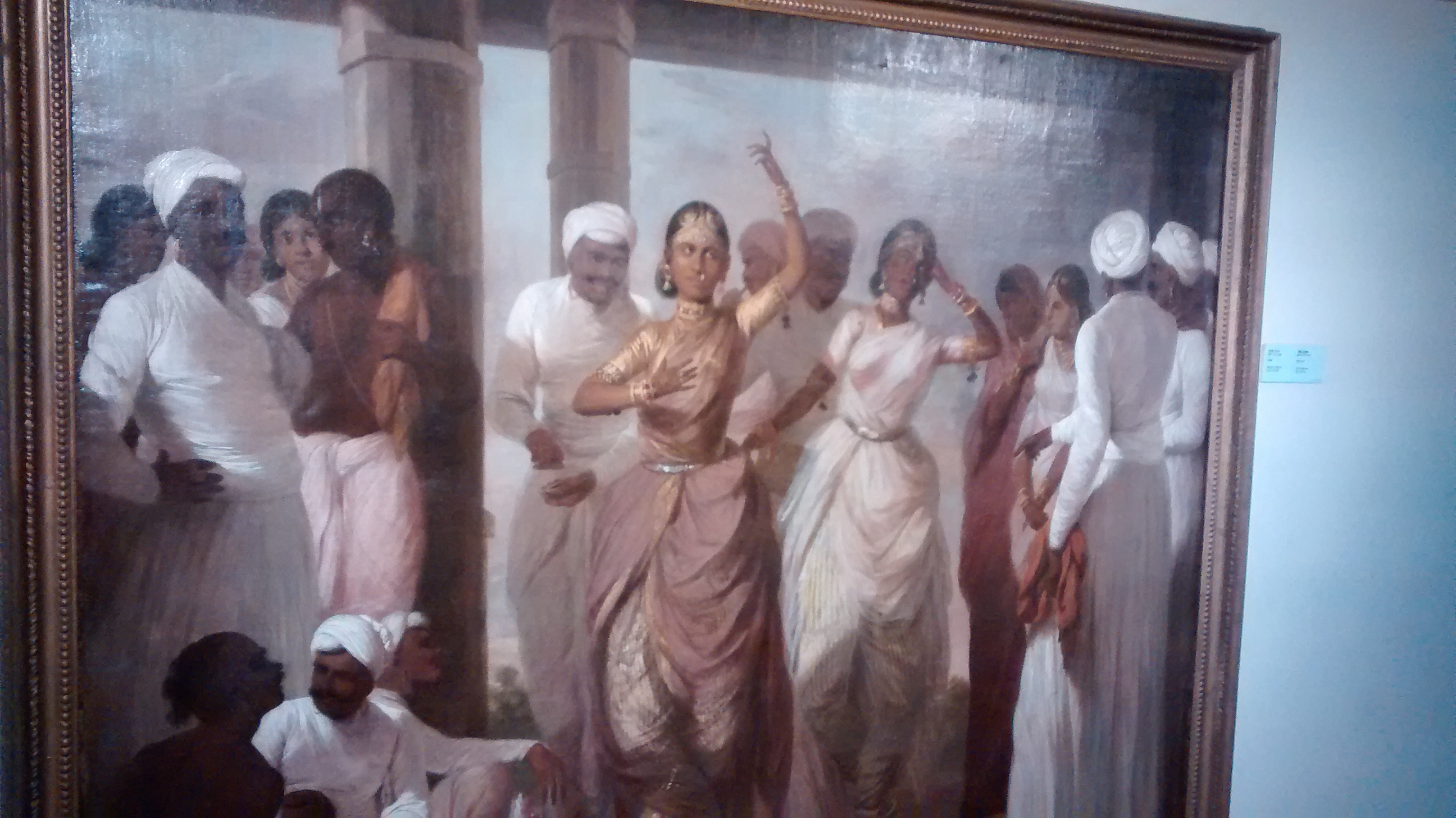
Dancers (Tilly Kettle)


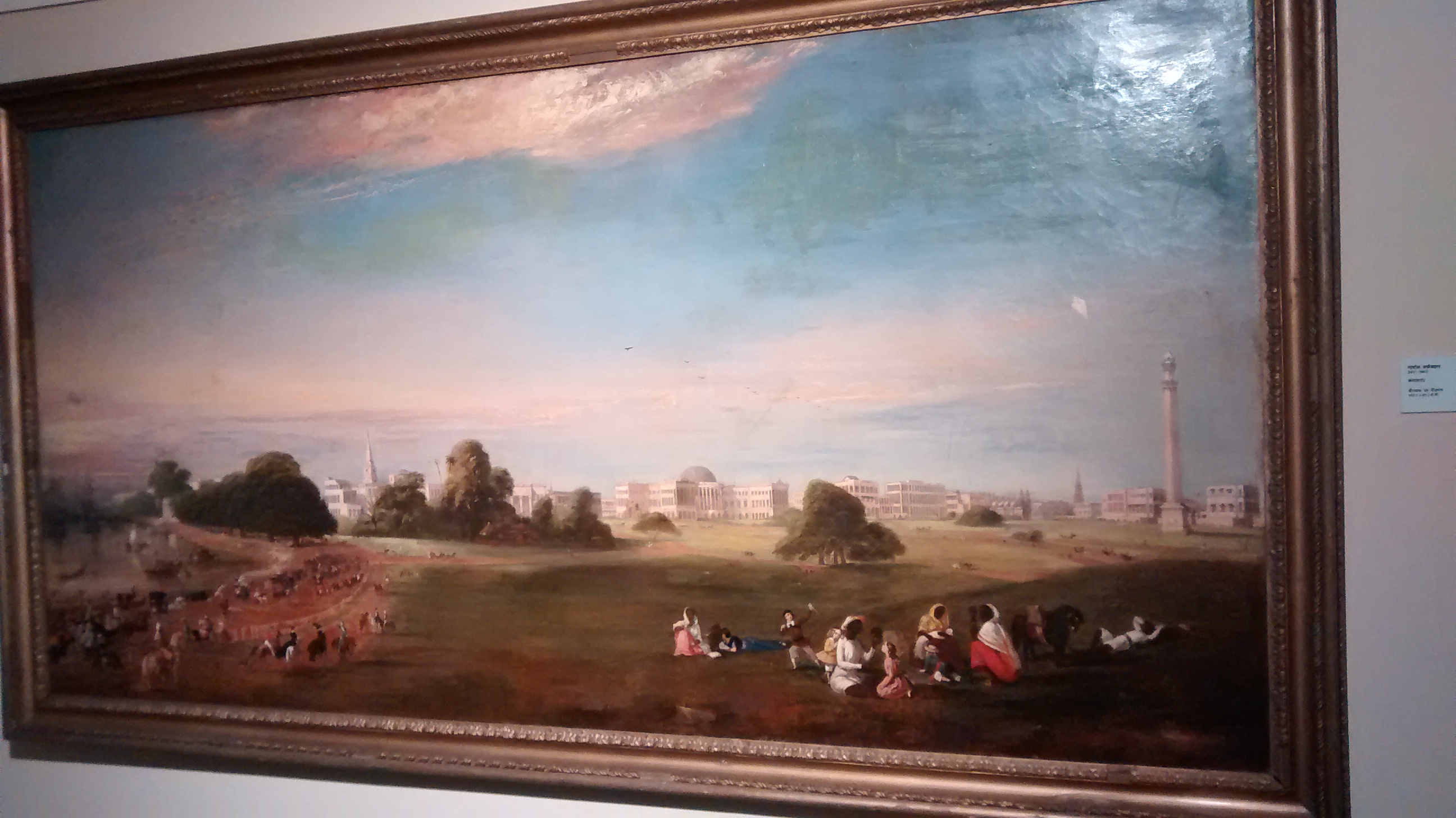
Calcutta (Marshal Claxtion)


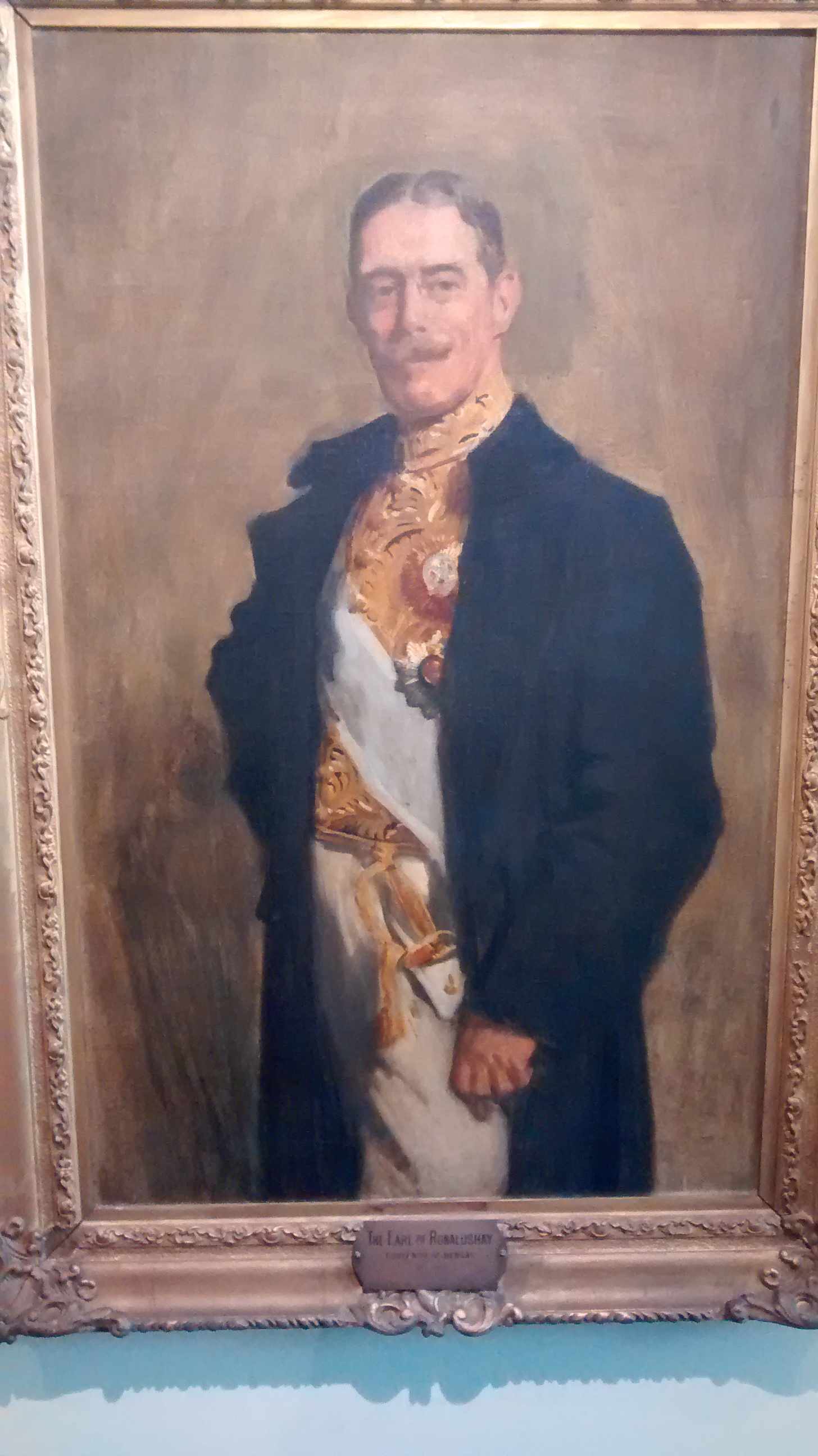
Lord Ronaldshey (G F Watt)


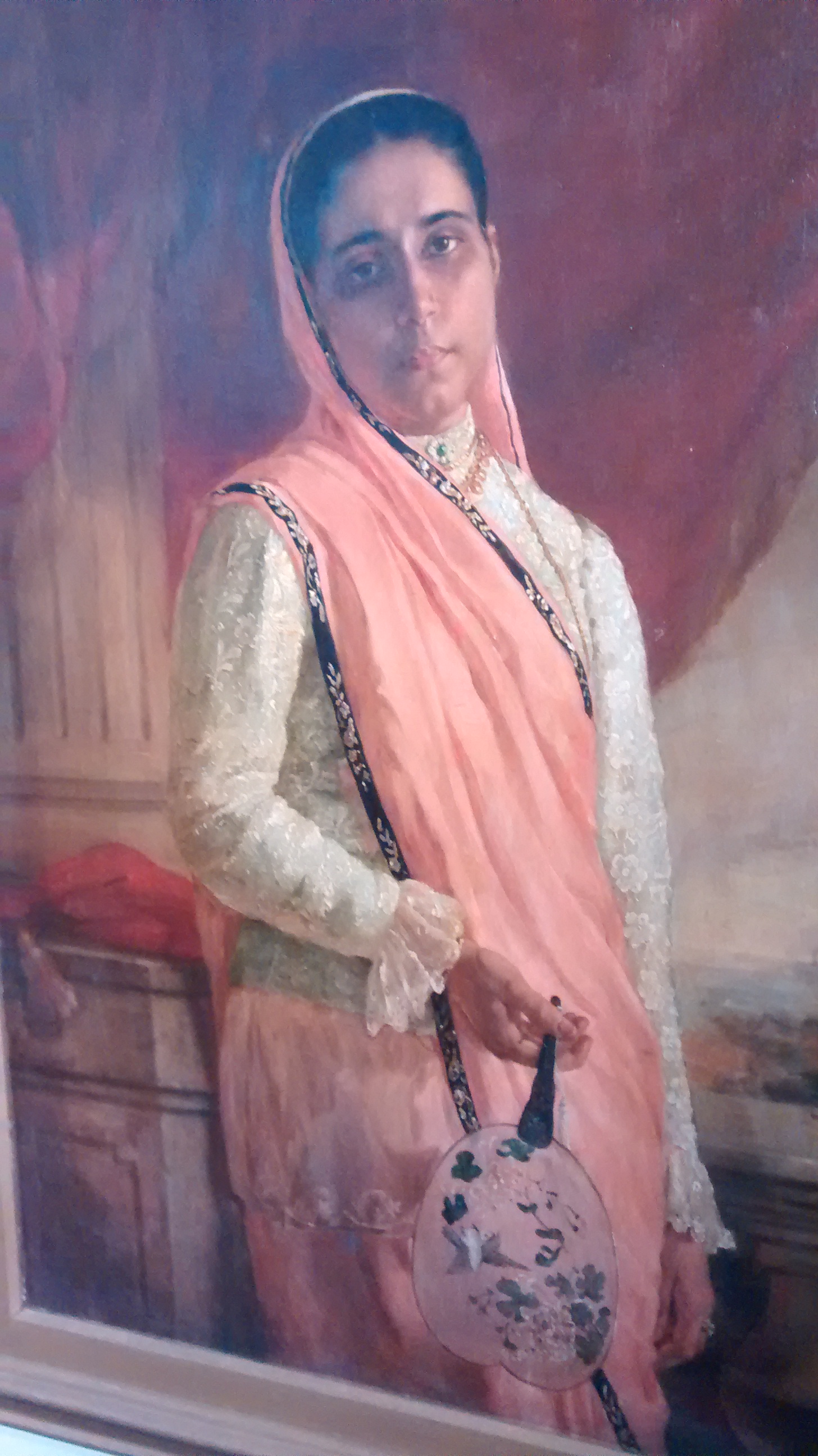
A Woman holding a Fruit (Raja Ravi Varma)


Girl holding Hooka and Broom (Raja Ravi Varma)


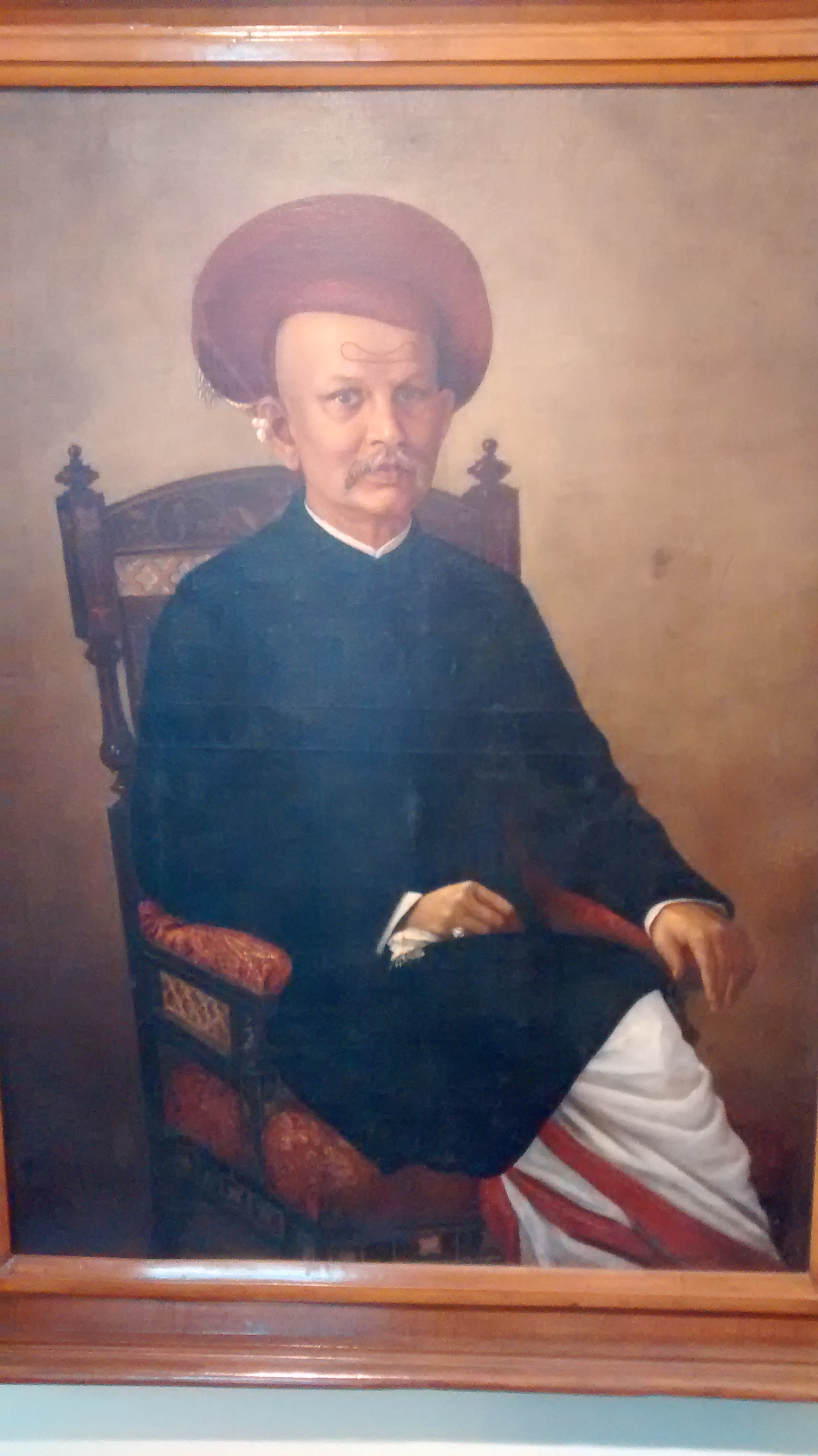
Portrait of a Gentleman (Raja Ravi Varma)


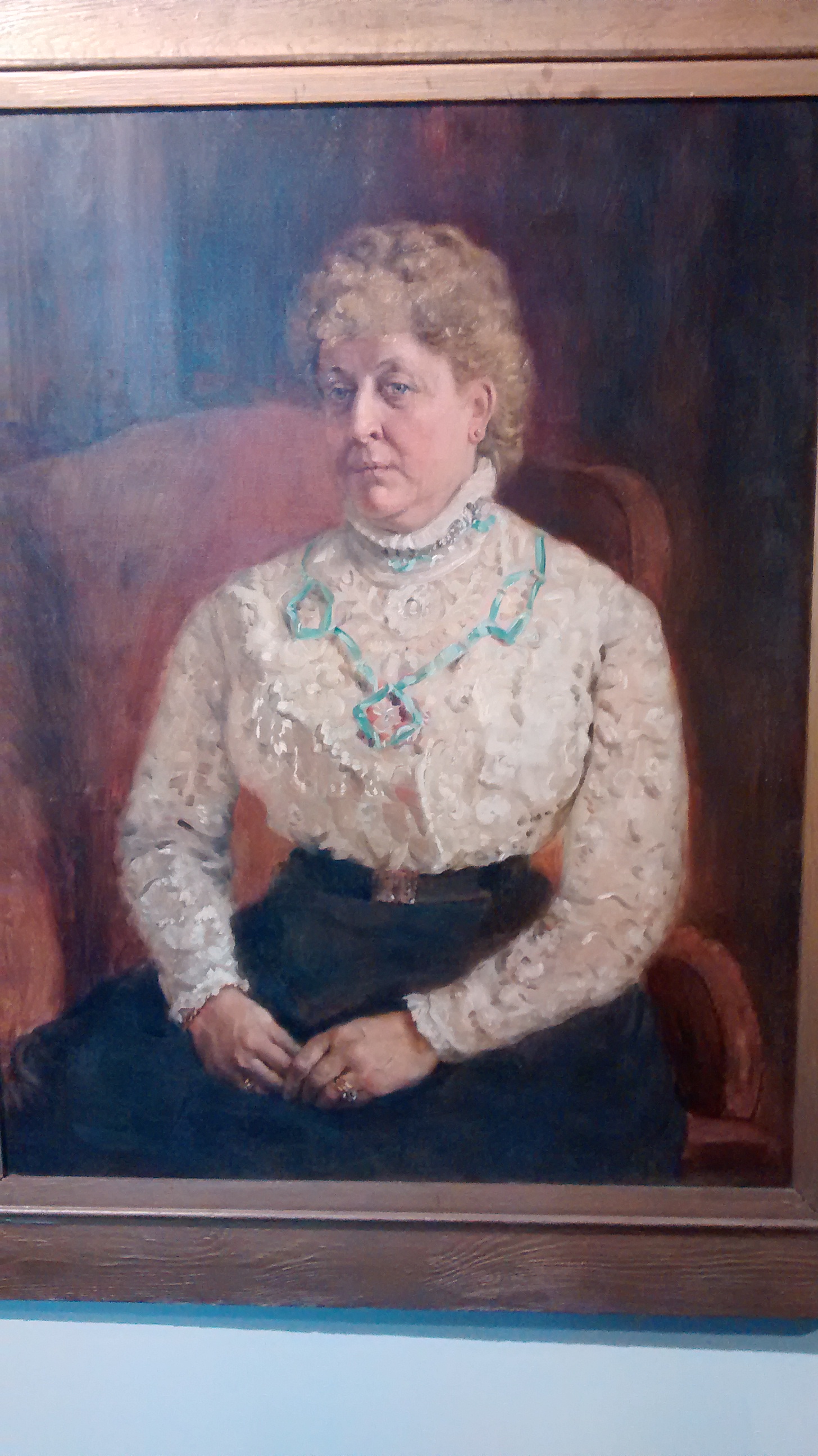
Lady Illiot (Haris Bert)


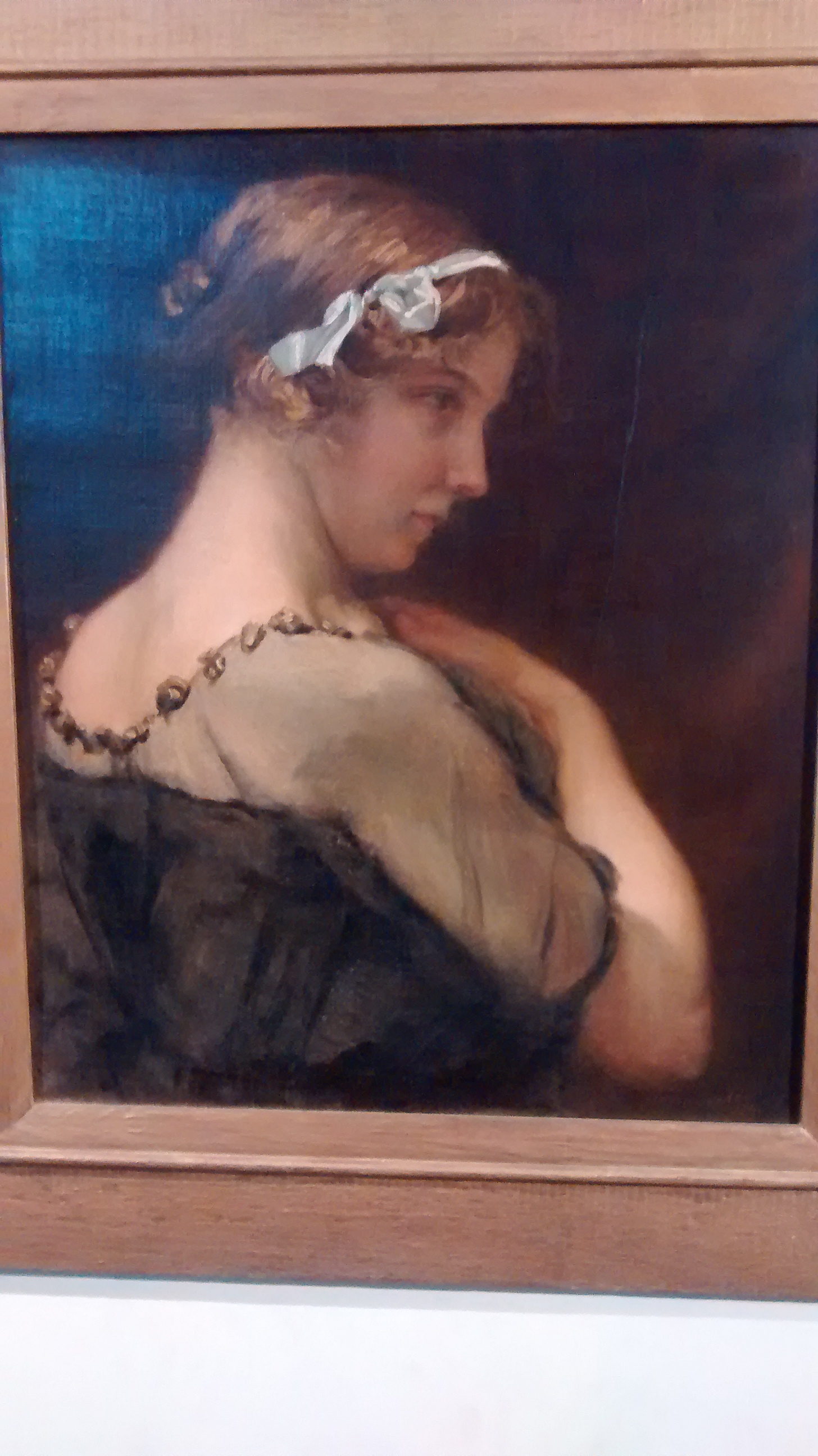
Portrait of a Parsi Girl (M F Pithawala)


Miss Clerk (M F Pithawala)


Malan, Female Gardener (M F Pithawala)


Miss William (M F Pithawala)


Saraswati (Chitragara Krishnappa)


Lakshmi (Chitragara Krishnappa)


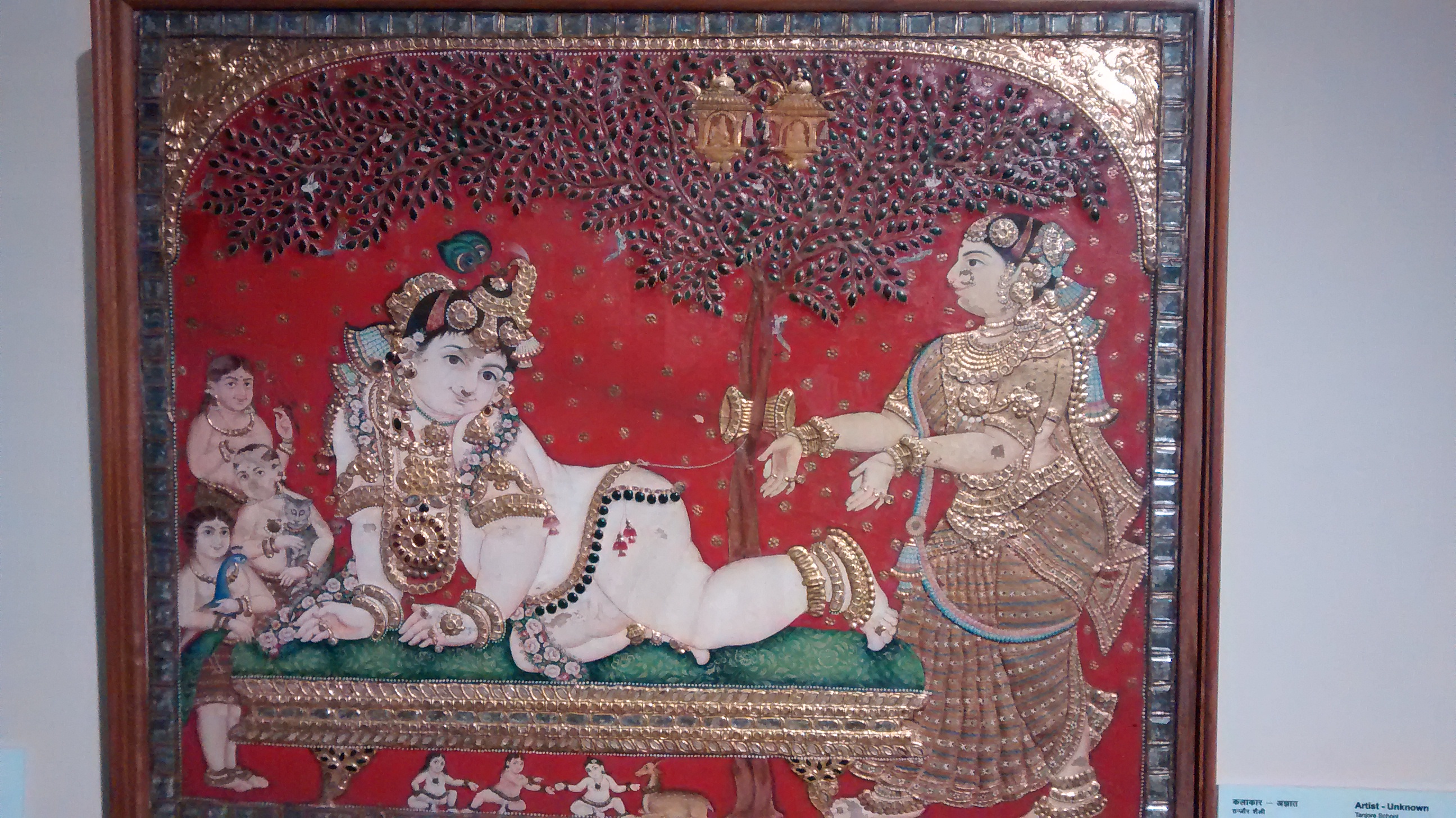
Bal Krishna (Unknown artist, Tanjore painting)


(Continued….)

(Related Posts:

https://ashokbhatia.wordpress.com/2018/05/08/a-walk-through-the-national-gallery-of-modern-art-in-new-delhi-india-part-2-of-3 

https://ashokbhatia.wordpress.com/2018/05/10/a-walk-through-the-national-gallery-of-modern-art-in-new-delhi-india-part-3-of-3)

Read Full Post »

Fans of P G Wodehouse can be found all over the world. When they decide to meet up once in a while, bread crumbs get thrown. Different versions of Sonny Boy get rendered. The Gussie Fink Nottle speech at Market Snodsbury School gets recreated.

Characters and situations get discussed gleefully. The milk of human kindness flows unabated. Flowers bloom. Sanity regains its throne in one’s mental framework. God takes some time off his onerous responsibilities and relaxes in heaven. All is well with the world.

During 2017, yours truly was fortunate to have had some such Plummy encounters. The video here recapitulates the same.

Enjoy!


(Related Posts:

https://ashokbhatia.wordpress.com/2017/05/03/a-drones-club-meeting-in-amsterdam

https://ashokbhatia.wordpress.com/2017/05/15/another-drones-club-meeting-at-asker-in-norway

https://ashokbhatia.wordpress.com/2017/11/23/a-plummy-encounter-in-new-delhi-india)

Read Full Post »

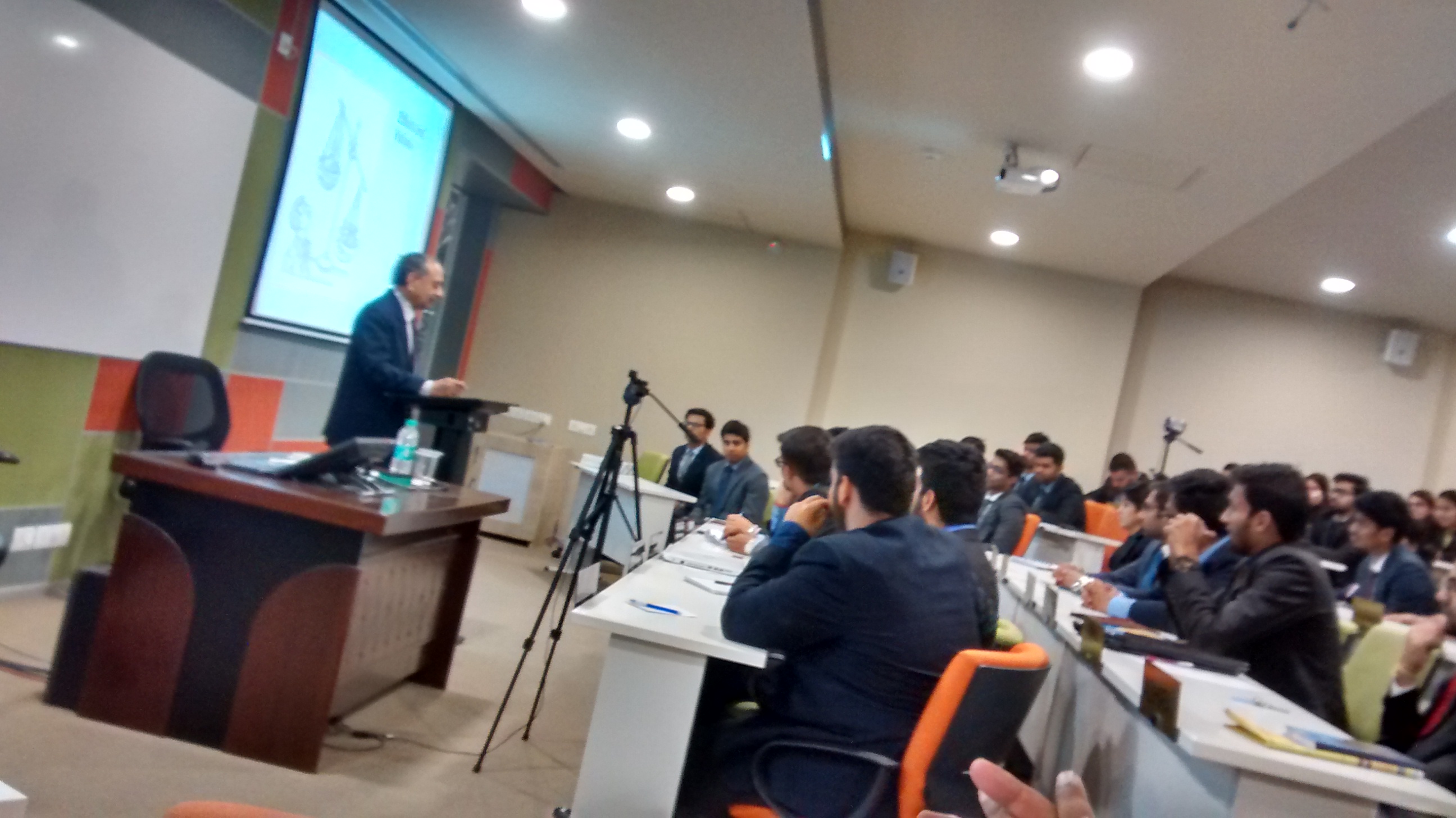
Encounters with brighter minds invariably leave an author invigorated. When managers, whether the practising kind or the aspiring kind, ask searching questions based on what one has proposed in one’s books or blogs, the writer’s thought process also gets enriched. The more pungent the query, the more fulfilled one feels.

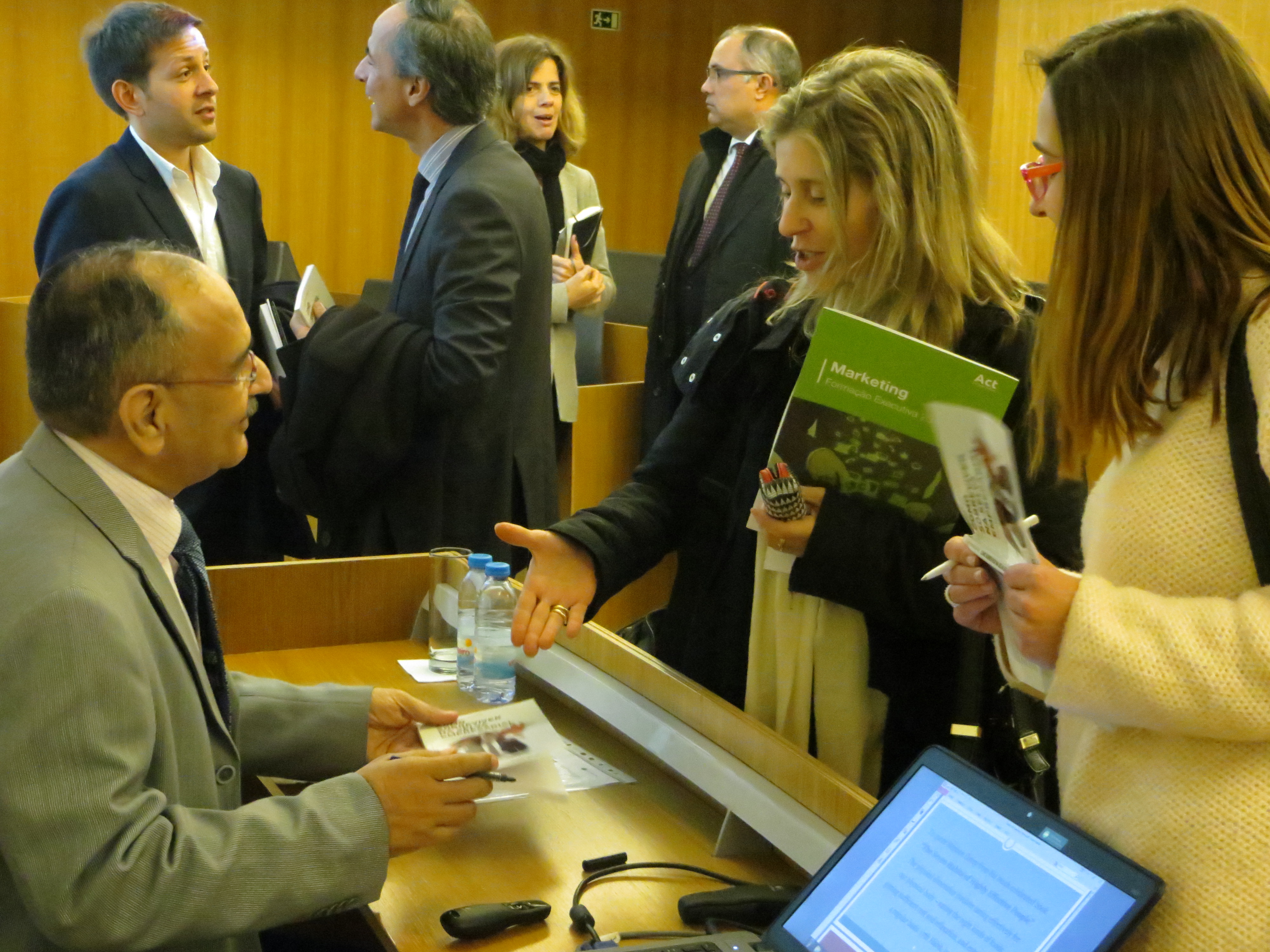
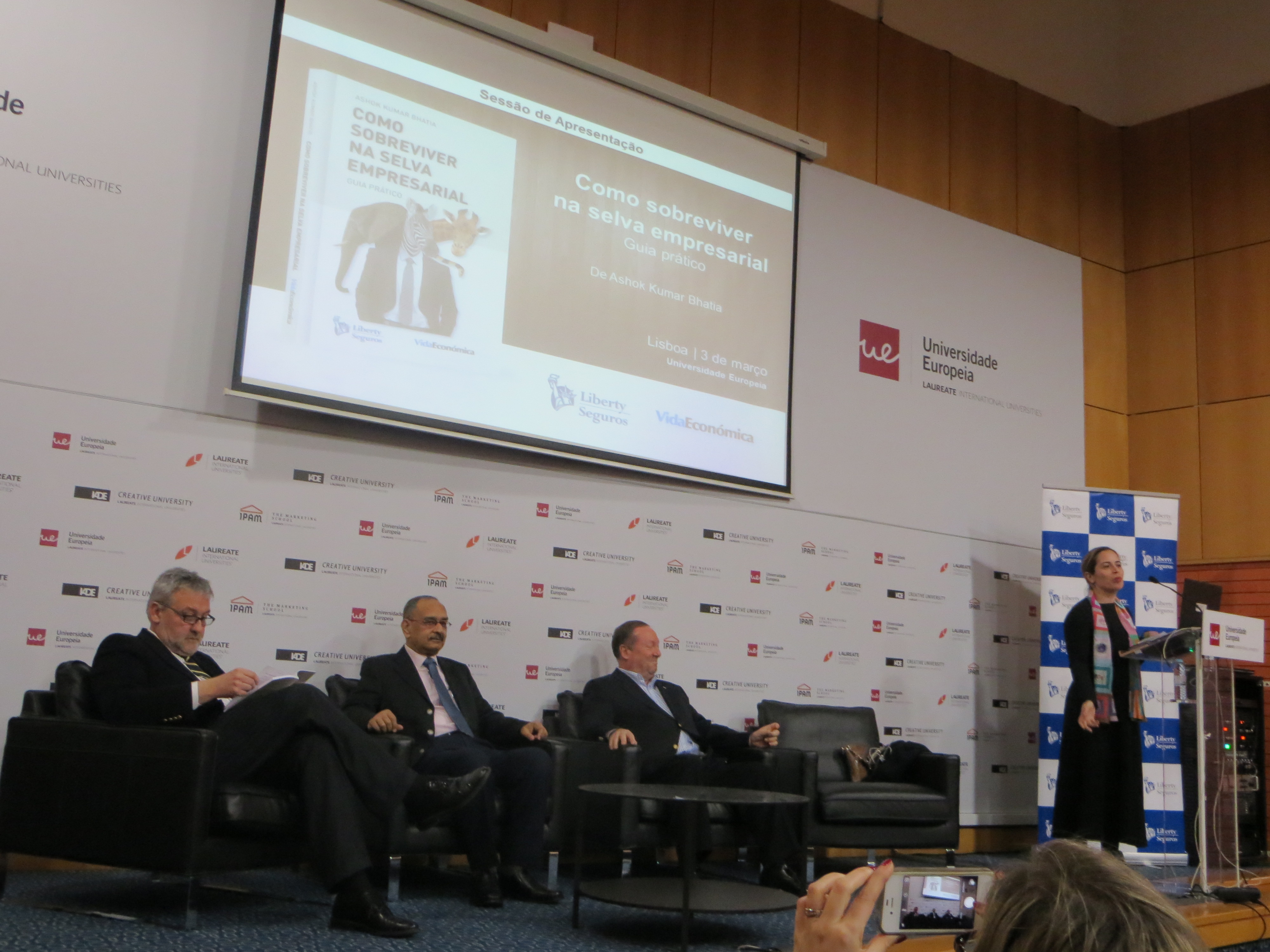
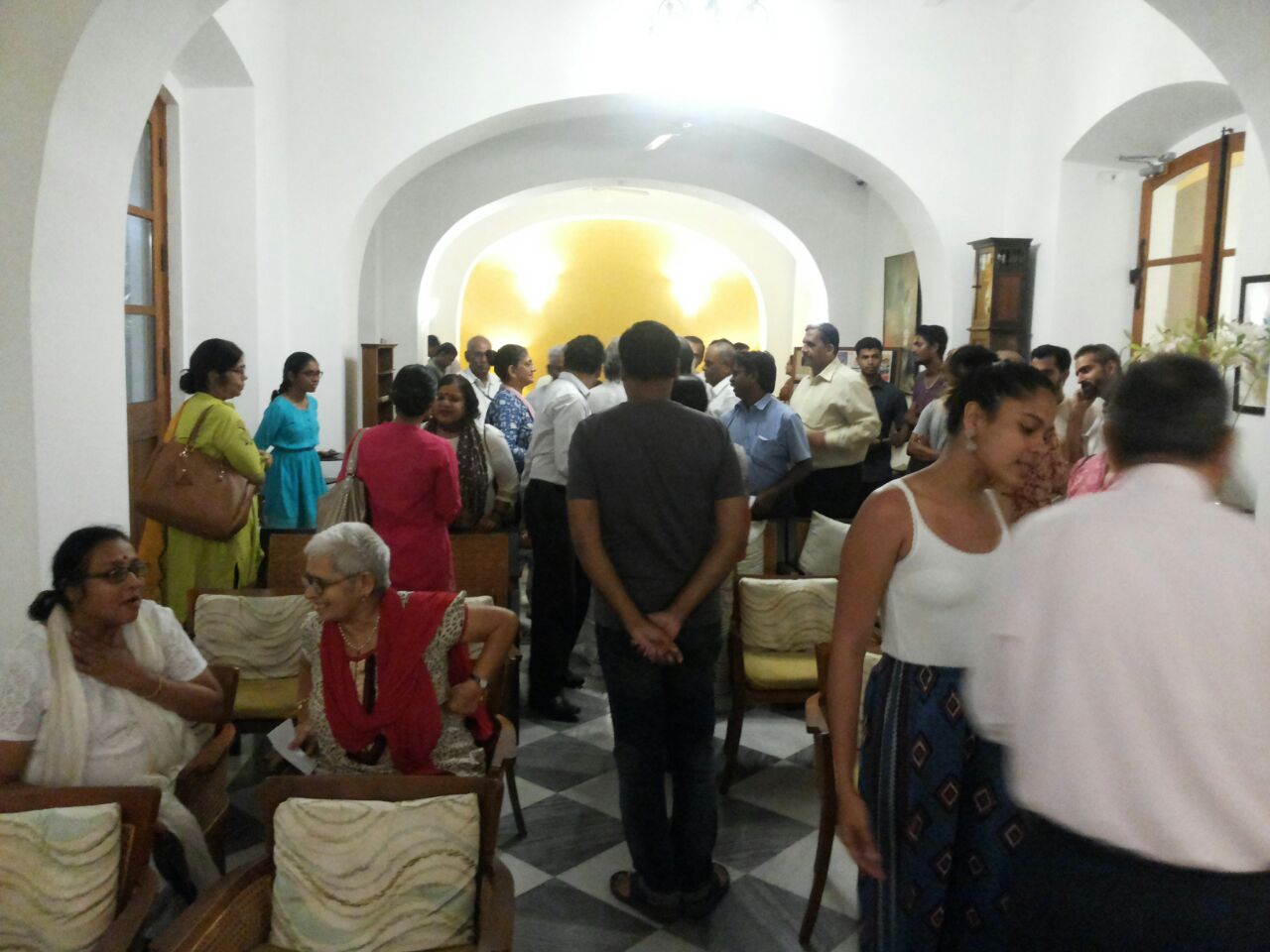
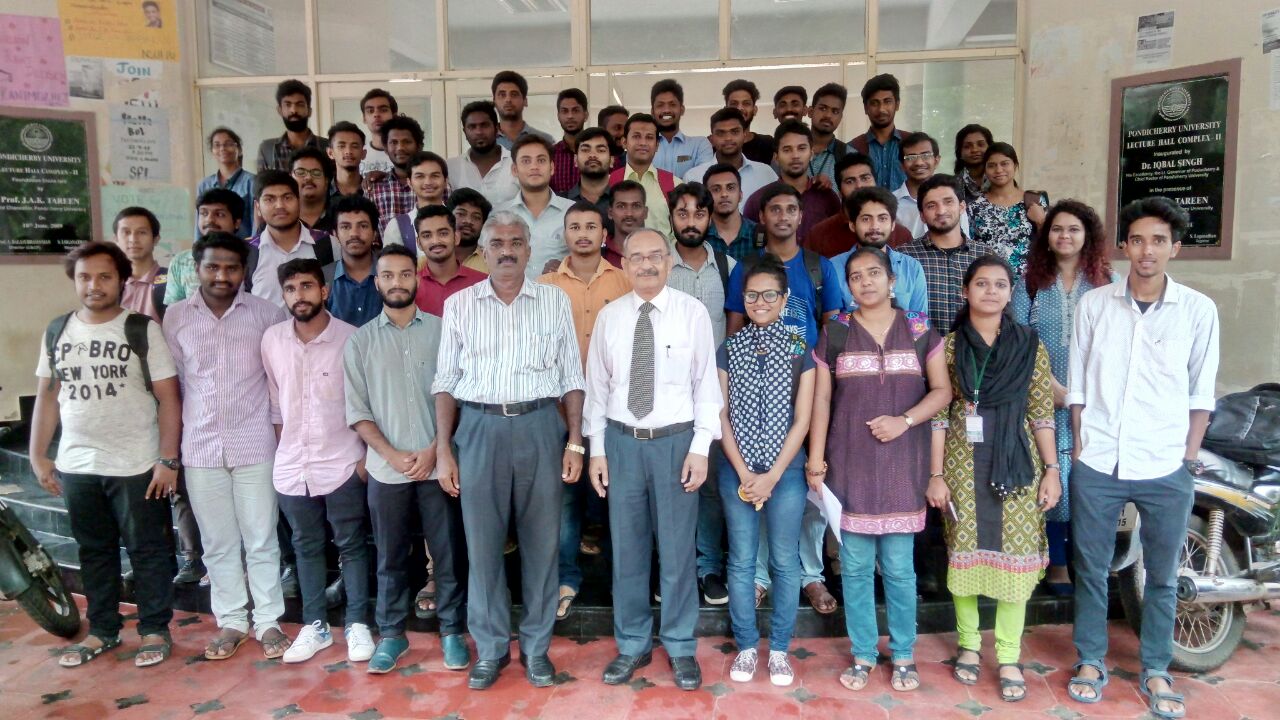
Over the past few years, yours truly has had several opportunities of interacting with youth who aspire to be future managers and entrepreneurs. The topics have been wide ranging, like Work Life Balance, Management Lessons from Movies, Management Lessons from India, Ethics and Values in Business, Managing Interpersonal Relationships, Four Pillars of Integral Management and Surviving in the Corporate Jungle.

Here are some of the outfits which have been kind enough to grant such opportunities:

  1. Catolica Porto Business School, Porto, Portugal.
  2. Department of Management Studies, Universidade Europeia, Lisbon, Portugal.
  3. Madras Management Association, Pondicherry Chapter, India.
  4. Sri Aurobindo Center for Advanced Research, Pondicherry, India.
  5. C K College of Engineering and Technology, Cuddalore, India.
  6. Sri Manakula Vinayagar Engineering College, Pondicherry, India.
  7. Indian Institute of Management, Lucknow: NOIDA Campus, India.
  8. International Minds in Finland, Finland.
  9. Madras Management Association, Chennai, India.
  10. Department of Management Studies, Pondicherry University, India.
  11. Department of Management Studies, Indian Institute of Technology, Delhi, India.
  12. Great Lakes Institute of Management, Gurgaon, India.

And mentioned below are some of the frequently asked questions yours truly has encountered in the recent past. Against each query, you will find a short summary of the response.

What precisely is Spiritual Quotient (SQ)? How does one develop it?

Those who have a high SQ have this uncanny ability to be creative and insightful in their approach to problem solving. They build up their level of self-awareness and there intuitive faculties. They realize that there is a realm of intelligence which is beyond the five senses that our physical bodies are endowed with.

SQ has several components: gratitude, self-esteem, self-awareness, consciousness, compassion, surrender, service and ego.

Meditation can help develop our Spiritual Quotient. So can heartfulness and mindfulness.

When you speak of the ‘Draupadi Syndrome’ in management parlance, you are speaking of managing multiple bosses. How does one handle such a situation?

Organizations are becoming flatter. Functional silos are breaking down. This means working in multi-disciplinary teams and reporting to multiple bosses at times.

Tact, patience and a better understanding of the psychology of each boss can help a manager to handle many bosses at the same time. Bad-mouthing one in front of the other would not help. Playing one against the other could also land one in a soup.

Due to parental pressure and financial insecurity, can one take up a job which is with a company which is marketing a dubious product?

It is not advisable to go in for a job where your value system does not match with that of the organization. You will not be able to put your heart into it. This may result into your being caught in a low-result and lower-rewards vicious cycle, undermining your self confidence.

If you are absolutely with your back to the wall, you may do so for a very short stint; be ready to change to the next one at the first possible opportunity.


You advise us to avoid being a Yes-man. How does one convey one’s difference of opinion to a senior? How does one say ‘no’ to one’s boss?

Politely. By marshalling your thoughts and sharing those with the senior at an appropriate time. Be open and respectful to his views. Registering dissent is a responsibility we all carry on our shoulders.

Please give examples of Eustress, the positive kind of stress you speak of.

When you are rushing for a meeting with your girl friend, or going to a movie, you feel a kind of stress which is positive in nature. When the end result is likely to be a pleasurable experience, you feel Eustress.

It follows that when we handle an assignment which connects us to a cause we happen to be passionate about, we experience positive stress. We enjoy doing it.  


According to you, interpersonal relationships have a half-life of their own, much like that of a radioactive substance. How can one increase the life span of a relationship?

I believe this can be done by avoiding anger, greed and a tendency to bad-mouth the party of the other part, especially when he/she is not present. Anticipating the needs of a person and assisting him/her in achieving a goal helps.


Ethics and Values in business: For an entity which is geared for generating a surplus for its equity holders and boasts of a great market valuation, just how practical is this concept?

Most businesses run on a quarter to quarter basis, with a focus on guideline values. But those which care about developing their brand equity operate based on a compass which is configured on a basic set of ethics and values.

In the Indian context, why do we respect Tatas? Because the group has a 150-year old tradition of good thoughts, good work and a basic sense of decency and honesty. They continue to do so much for the society, mostly in fields which have no direct connection to their diverse businesses.  

Any general career advice you would give to us?

Five years down the road, do you not see businesses becoming more dependent on technology? So, the writing on the wall is pretty clear. Be ready to embrace change. Learn digital skills and be ready to play a relevant role in the business, whether your own or that of someone else.

Do not be scared of bargaining for a better work-life balance. Remain connected to your inner self. Introspect, do a SWOT analysis, and create a USP for yourself. Invest in a good image on social media.

Build credibility. Observe company culture. Volunteer willingly. Build healthy relationships. Keep improving your skill-set.

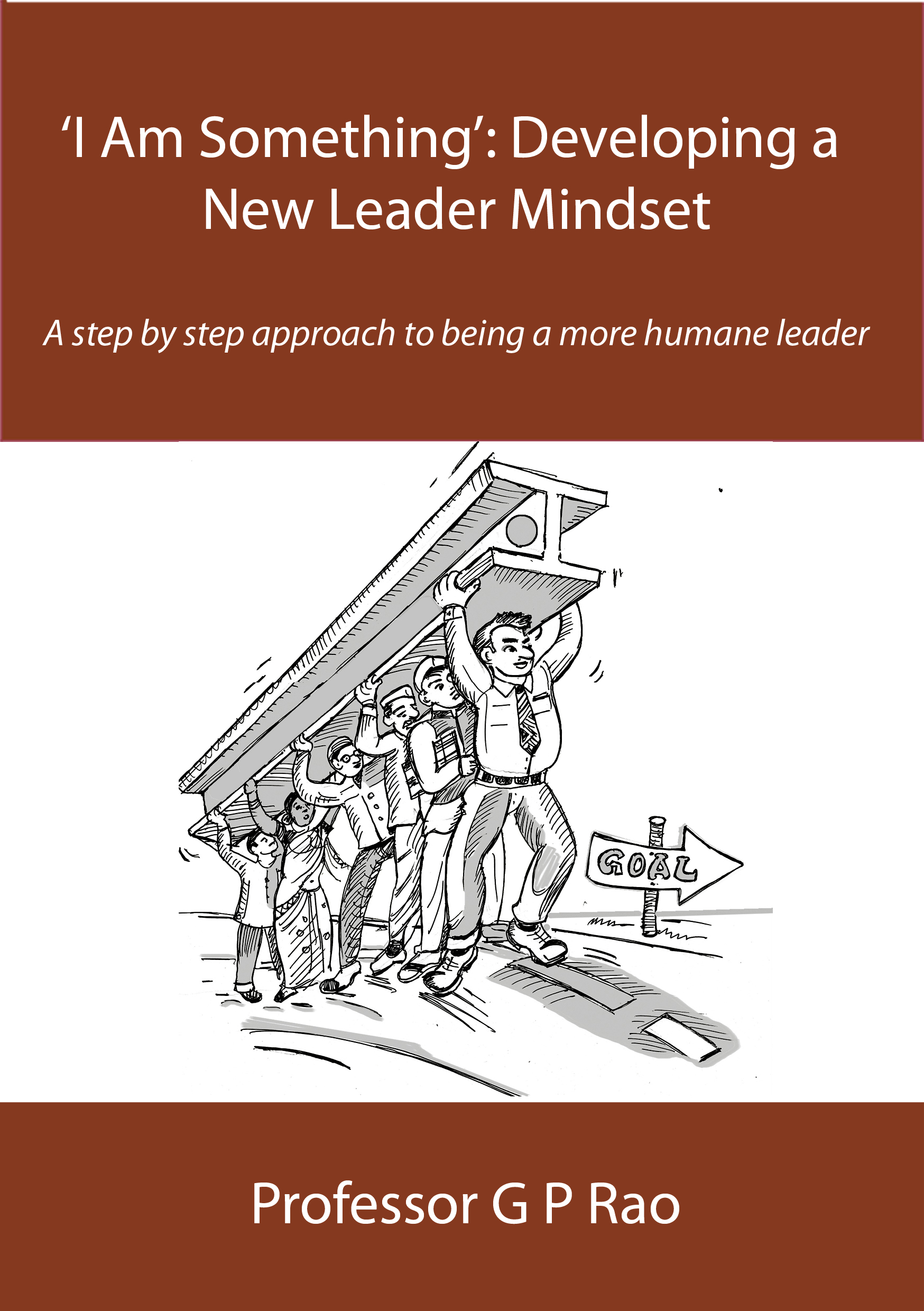
Book cover English Front

Each interaction proves to be a good learning opportunity!

(Wish to look up my profile? You can find it here.

Related post: https://ashokbhatia.wordpress.com/2016/04/01/about-me)


Read Full Post »

A recent trip to New Delhi gave me an opportunity of calling upon His Excellency Joao da Camara, the Ambassador of Portugal in India. He was kind enough to spare some time for me to be able to present my book ‘Como Sobreviver Na Selva Empresarial’ to him.


It happened to be a day when the smog enveloping the capital city of India was at its worst. A brief meeting with an amiable person like His Excellency left one breathing easier. The brief encounter proved to be an uplifting experience. His grace, warmth and hospitality yet again reminded me of the genial and affable disposition of the people of Portugal.

The informal meeting took place in his tastefully done up office. The frankness with which he spoke and the warmth he exuded was typical of the people of character, resource and rich culture he represents.

He spoke warmly of the centuries old connection between Portugal and India. He mentioned families of Indian origin who have made Portugal their home for the past six generations and who make it a point to scout around for Indian brides who would eventually marry the sons in their families.

He mentioned the richness of India’s ancient culture and the diversity of its citizens. He turned out to be a close friend of Ms Clara Nunes dos Santos, a senior diplomat in the Portuguese Government, whom I was fortunate to have met in Oslo a few months back, when she was the Ambassador of Portugal in Norway.

Recapitulating the historic ties

It may be recalled that Bartolomeu Dias, a Portuguese explorer, was the first one to have crossed the ‘Cape of Good Hope’ in the year 1488, opening the sea route to India.

Vasco da Gama, another nobleman from the household of the King of Portugal, finally landed at the port of Calicut on the 27th of May, 1498, heralding an era of European dominance of India.

In 1510, the capital of Estado Portugues da India (Portuguese state of India) was transferred from Cochin to Goa. In the 17th century, Goa became the capital of the vast Portuguese empire which spread from Mozambique to Nagasaki, controlling the entire Indian Ocean trade.

When India gained independence from British rule in 1947, relations between the two countries turned a wee bit sour over Portugal’s refusal to surrender its enclaves of Goa, Daman, Diu, Dadra and Nagar Haveli. Indian military intervened, ending Portuguese rule over these areas in 1961. Eventually, with the signing of a treaty in New Delhi in 1974 with the new democratic Portuguese Government, amicable bilateral relations were restored.

Trade and commerce between the two countries has only looked up thereafter, even though much potential remains to be explored in the future. During the visit of Prime Minister of Portugal His Excellency Antonio da Costa to India during January 2017, as many as six agreements have been signed between the two countries. These also include an agreement on defence cooperation.

One feels happy to have made a very modest contribution towards an exchange of softer management ideas between Portugal and India. The book authored by me first got published in Portugal. The original English version, ‘Surviving in the Corporate Jungle’, followed thereafter.

(A Portuguese version of this article can be found at Book Portugal Ambassador India Vida Economica)

(Related Posts:

https://ashokbhatia.wordpress.com/2017/05/30/a-meeting-with-the-ambassador-of-portugal-in-norway

https://ashokbhatia.wordpress.com/2017/06/21/a-meeting-with-the-minister-counsellor-of-portugal-in-switzerland

https://ashokbhatia.wordpress.com/2017/10/14/surviving-in-the-corporate-jungle-a-video)

(Note:

This is how you can lay your hands on the Portuguese version of the book, launched in Portugal during March, 2016, courtesy Liberty Seguros and Vida Economica.)

(The English version of the book, entitled ‘Surviving in the Corporate Jungle’, was released recently.)


Read Full Post »

« Newer Posts - Older Posts »