Feeds:
Posts
Comments

Posts Tagged ‘India’

ashokbhatia's avatarashokbhatia

The conscientious ones amongst the mandarins in the Indian Health Ministry cannot really be blamed for having sleepless nights. The epidemic of such lifestyle diseases as obesity, diabetes, hypertension and cardiovascular abnormalities is leaving them a wee bit clueless. The need of the hour is to come up with a scheme which nudges Indians of all sizes and shapes to start living slimmer and healthier lives.

Take obesity, for instance. As many as 60 million Indians – roughly 5% of the population – are considered obese. With more than 50 millionObesity image suffering from high blood sugar, India is a nation headed for a health tsunami the devastation caused by which would be anything but sweet. This is a grave threat to our vision of the country reaping a hefty demographic dividend in the years to come.

How do we motivate the Indian couch potatoes to switch off their TV sets…

View original post 993 more words

Read Full Post »

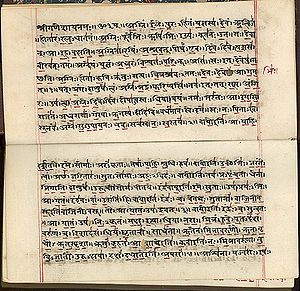
India offers to the world an immensely rich collection of sacred scriptures.rig-veda First and foremost are the Vedas, which could be justifiably referred to as the core of the spiritual and psychological soft power of India. Then there are the Upanishads, which capture the highest spiritual knowledge and experience that India can offer to the world.

India also has Puranas, Itihasas, Tantras, Dharma Shastras, and Sutras, besides the innumerable works of religious poetry in regional languages.

Ramayana and Mahabharata

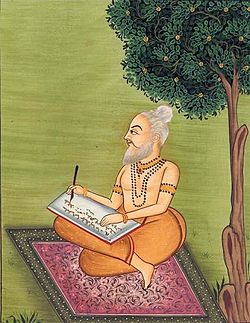
Amongst Indian scriptures, Ramayana and Mahabharata happen to be the most popular narratives. Both are pregnant with mature thought. Both contain teachings of political, religious, ethical and social kind. Both showcase, in a relatively simple language than that of the Vedas and the Upanishads, the Indian idea of Dharma, or righteousness.valmiki_ramayana

Both appeal to the soul as well as to the imagination of an intelligent mind. Even illiterates find gems of wisdom in these two epics. If philosophy, ethics, morals, social concepts, political thoughts or administrative justice form the warp in this unique fabric, heroic tales, human emotions, poetry, aesthetics, fiction, romance and villainy form the weft.

These epics showcase a highly developed sense of ethics and values, social and cultural realities of a distant past, besides intellectual and philosophical refinement. Lay persons could draw several life lessons from both these works. So could professionals of all hues.

Sanskrit, the supreme language  

Sanskrit is the language which forms the bedrock of a vast majority of these works. An intimate feeling of the language helps in understanding the multi-layered narratives better. One acquires a heightened sensitivity towards the shades of style and the context in which a statement is being made.

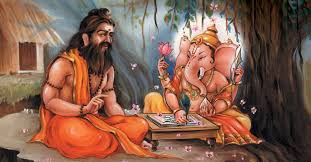
In today’s inter-connected world, one may not know Sanskrit but can still savour a fraction of the fragrant nectar of knowledge offered through any of the Indian scriptures.mahabharata-vyasa-ganesha

Sacred scriptures comprise a minor part of all the Sanskrit literature available from the Vedic to the pre-modern times. Nonetheless, they form the bedrock of Indian culture and spirituality.

Bhagavad Gita: The Song Celestial

Bhagavad Gita forms an integral part of Mahabharata, appearing in its Bhishma Parva. It comprises eighteen chapters. Broadly speaking, this unique composition touches upon three kinds of Yogas – Karma Yoga (The Yoga of Action), Gnana Yoga (The Yoga of Knowledge) and Bhakti Yoga (The Yoga of Devotion). [Yoga is a term which is often confused with physical practices of a certain kind. However, the term is used here in the sense of describing a communion, specifically the communion of an individual soul with the Divine.]

Upanishads articulate the philosophical principles concerning mankind, world and God. Gita explains the manner in which human beings can practice these subtle philosophical principles in their mundane lives.

Soulful management

One of the basic concepts enunciated by Krishna in the Bhagavad Gita is that Mahabharat Krishna Arjunaof the everlasting nature of the soul. The concept of a soul now finds a resonance even in modern management literature. In his book ‘The 8th Habit’, Stephen Covey urges professionals to pay heed to their ‘inner voice’. While proposing the whole person paradigm, he speaks of the four dimensions of a person – spirit, body, heart and mind.

From a management point of view, perhaps the most relevant are the concepts espoused under the overall umbrella of Karma Yoga. Here, Lord Krishna emphasizes the importance of self-less action, free of its rewards and gains. A state of inaction is held to be another form of action itself.

Gita III 6

कर्मेन्द्रियाणि संयम्य य आस्ते मनसा स्मरन्।

इन्द्रियार्थान्विमूढात्मा मिथ्याचारः स उच्यते।।

[A hypocrite is one who suffers from a false notion of having self-discipline. He is someone who controls the organs of action but continues to dwell upon the objects of sense.]

Gita III 7

यस्त्विन्द्रियाणि मनसा नियम्यारभतेऽर्जुन।

कर्मेन्द्रियैः कर्मयोगमसक्तः स विशिष्यते।।

[He who controls his senses by his mind and engages with the organs of action in a Yoga of Action achieves excellence in whatever he does.]

The concepts enshrined under Gnana Yoga are also highly relevant for management professionals. This is so because one of the major challenges in their careers is to keep unlearning, so the process of real learning can never cease.

Smart professionals always keep an open mind. They strive to keep abreast of latest technological developments. They keep learning from their failures as well as from their successes.

The Yoga of Devotion

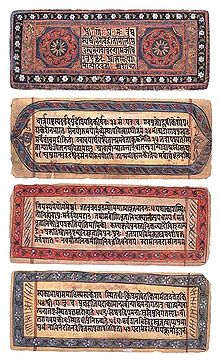
When it comes to Bhakti Yoga, the relevance of what Gita says is perhaps bhagavad_gitasomewhat limited as far as a practicing professional is concerned.

Loyalty and devotion – to a superior as well as to the company – are terms which readily spring to one’s mind. But in the absence of a truly charismatic business leader of the stature of Lord Krishna, blind devotion could perhaps lead to a catastrophe in one’s profession. A sense of misplaced loyalty often becomes an excuse for senior managers to remain in their comfort zones. Accepting fresh challenges becomes a key challenge. Their skill-sets start getting rusted. Much like stones which do not roll, they start gathering moss.

Time to rediscover the Gita

There is much that CEOs and managers can learn from the Bhagavad Gita. Its language is pregnant with symbolism at times. But it has rich lessons to offer for day-to-day conduct of business.

This stream of knowledge is close to 3,500 years old. It is never too late to rediscover it.

(Illustrations courtesy Wikipedia)

(Related Posts:

https://ashokbhatia.wordpress.com/2013/05/27/management-lessons-from-ramayana

https://ashokbhatia.wordpress.com/2013/07/12/management-lessons-from-mahabharata

https://ashokbhatia.wordpress.com/2015/09/04/management-lessons-from-the-life-of-lord-krishna

https://ashokbhatia.wordpress.com/2016/06/07/some-management-lessons-from-india)


Read Full Post »

ashokbhatia's avatarashokbhatia

The quiet evening saw the silver rays of moonshine descending upon Blandings Castle. The soft and silvery glow dimly lit up its ivied walls, its rolling parks, its gardens and its outhouses. The frenzied revelries of Christmas were another month away. Peace prevailed. Tranquillity ruled.

Blandings castle-enIn the cozy smoking room of Blandings Castle, two persons could be sighted. In the big chair nearest to the door, one could see the Earl of Emsworth, His Excellency the President of the Republic of Plumsville. He had a cigar in his mouth and a weak highball at his side. His fuzzy brain was softly whispering in his ears that life could not get any better. His son, Hon. Freddie, was happily busy in America, executing his marketing plans for Donaldson’s Dog-Joy Biscuits. Lady Constance Keeble was off to some South American countries on a charity drive for a few more weeks. He was…

View original post 2,530 more words

Read Full Post »

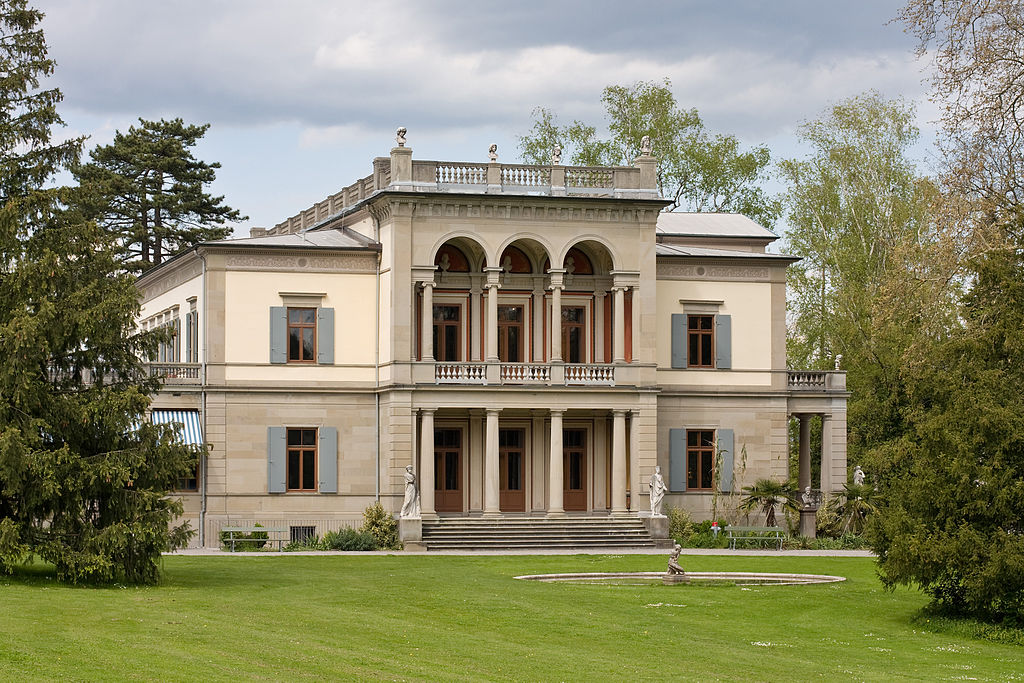
zuerich_rietberg-villa_wesendonck

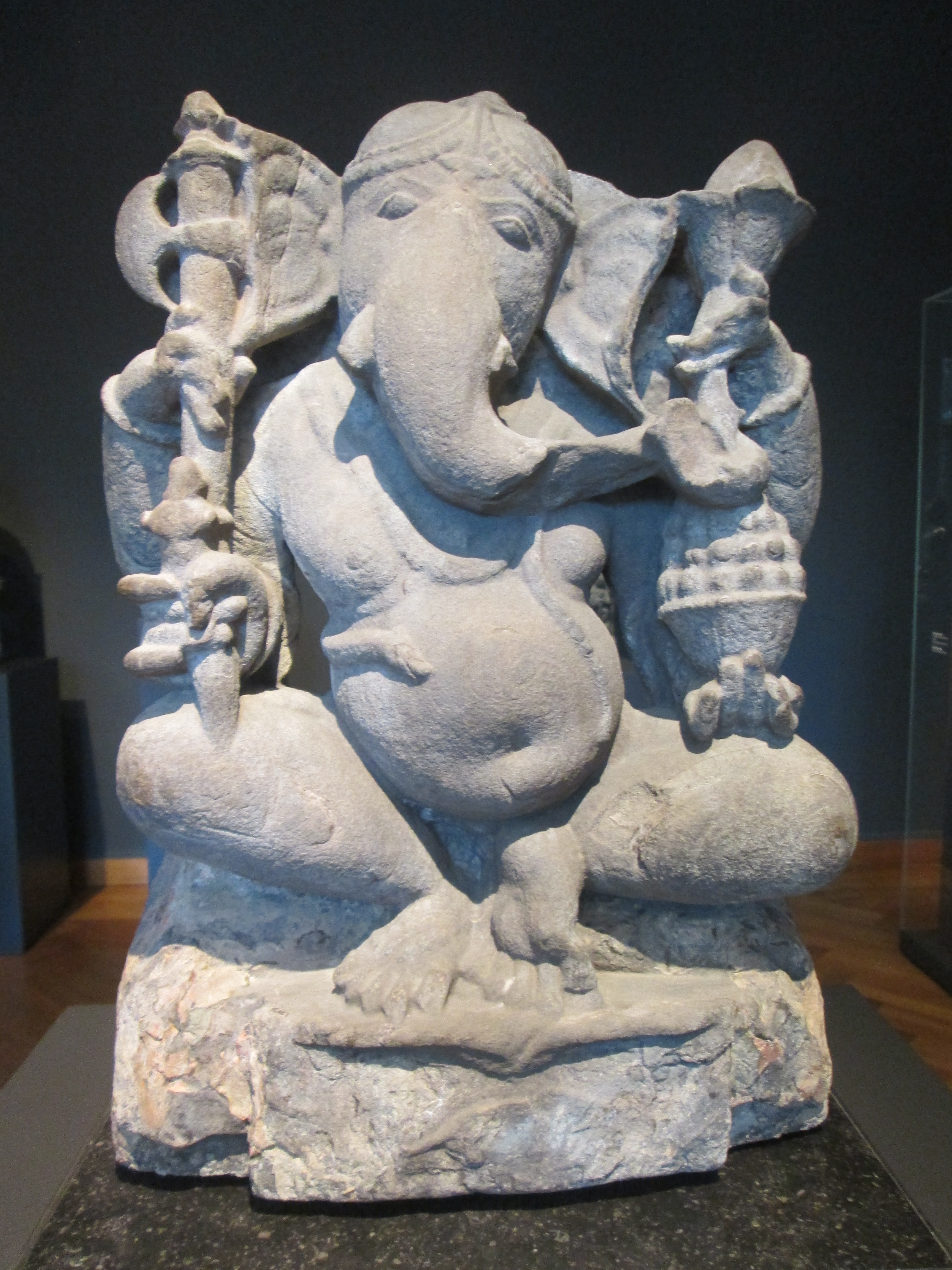
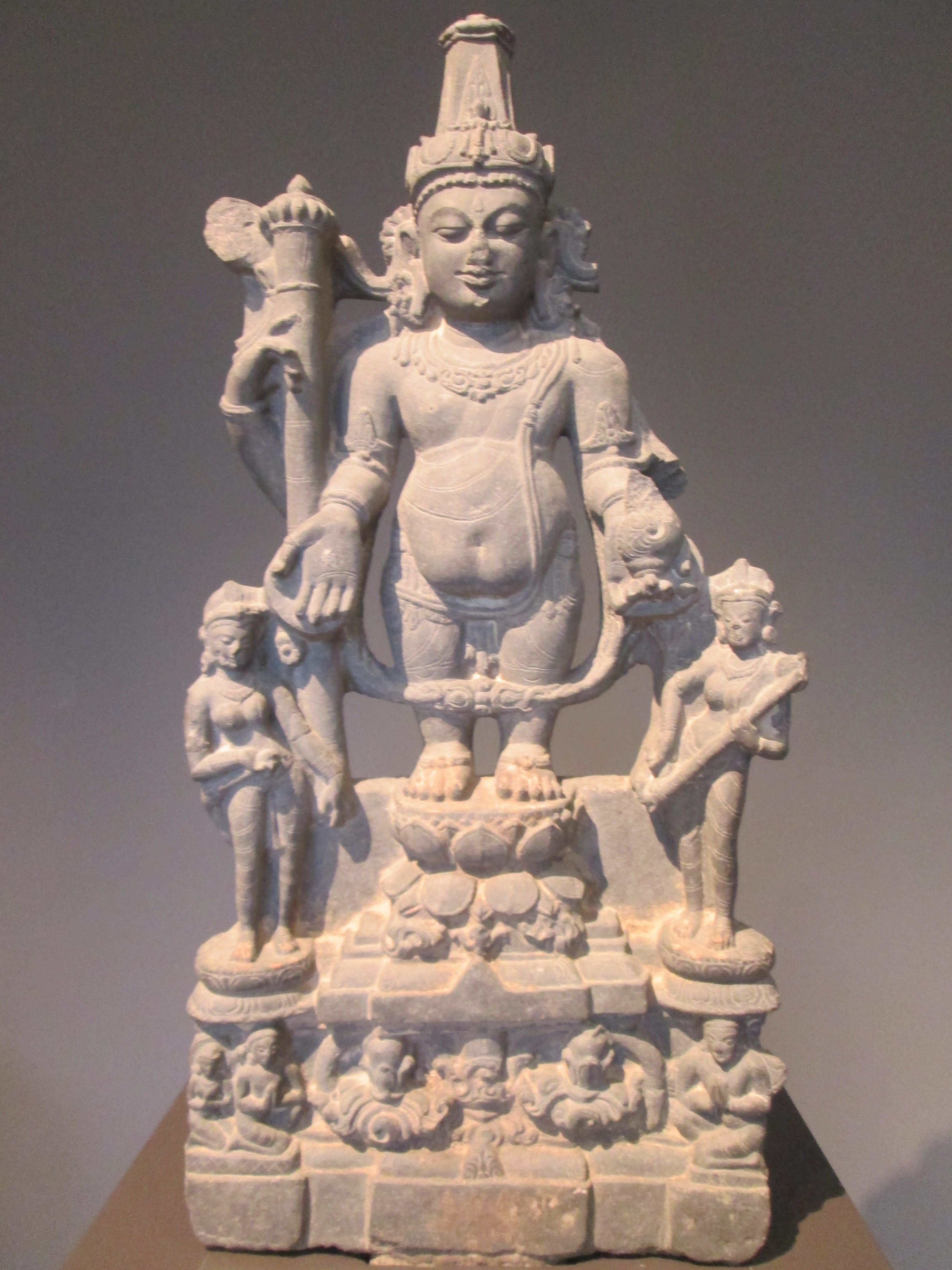
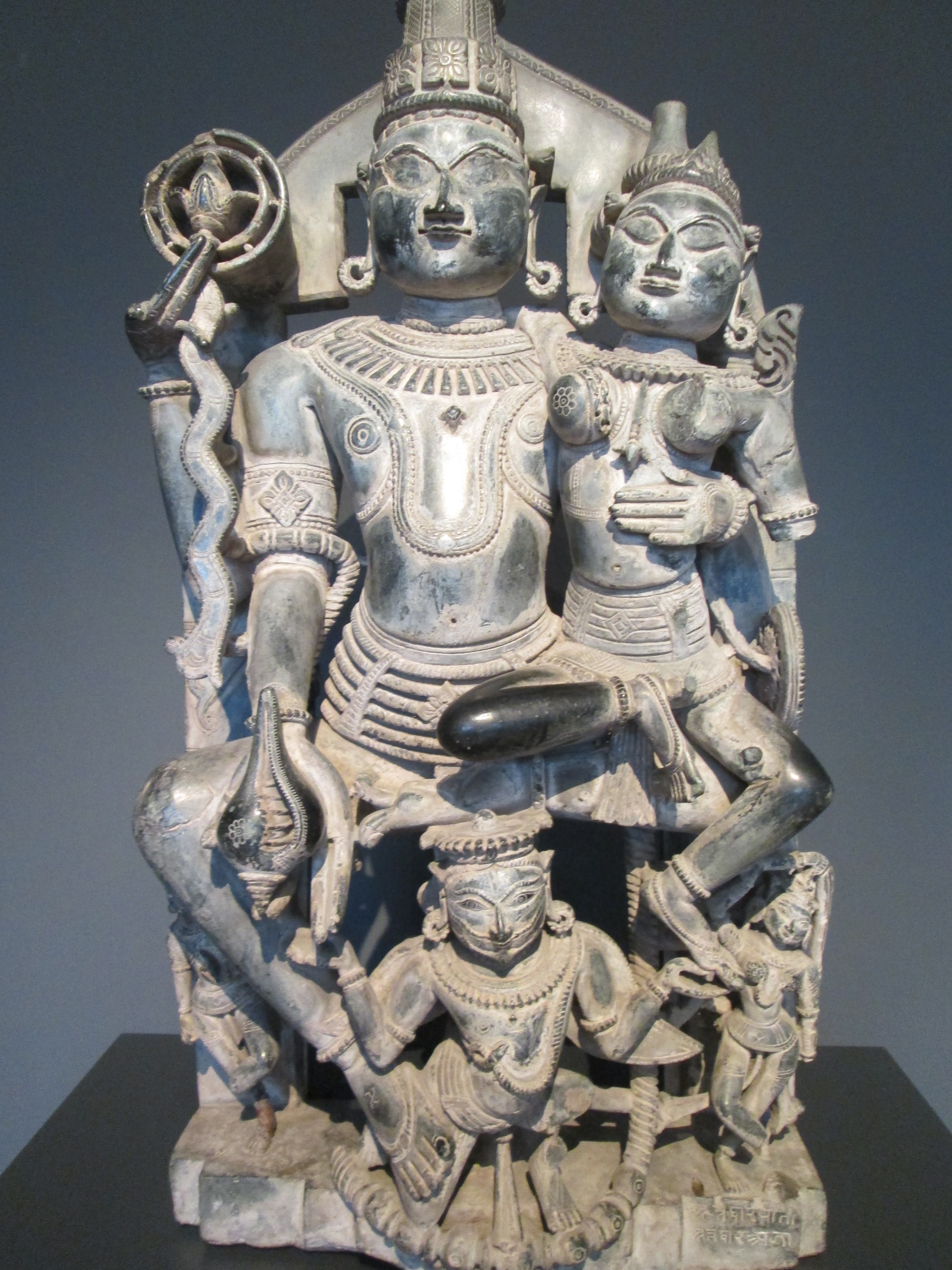
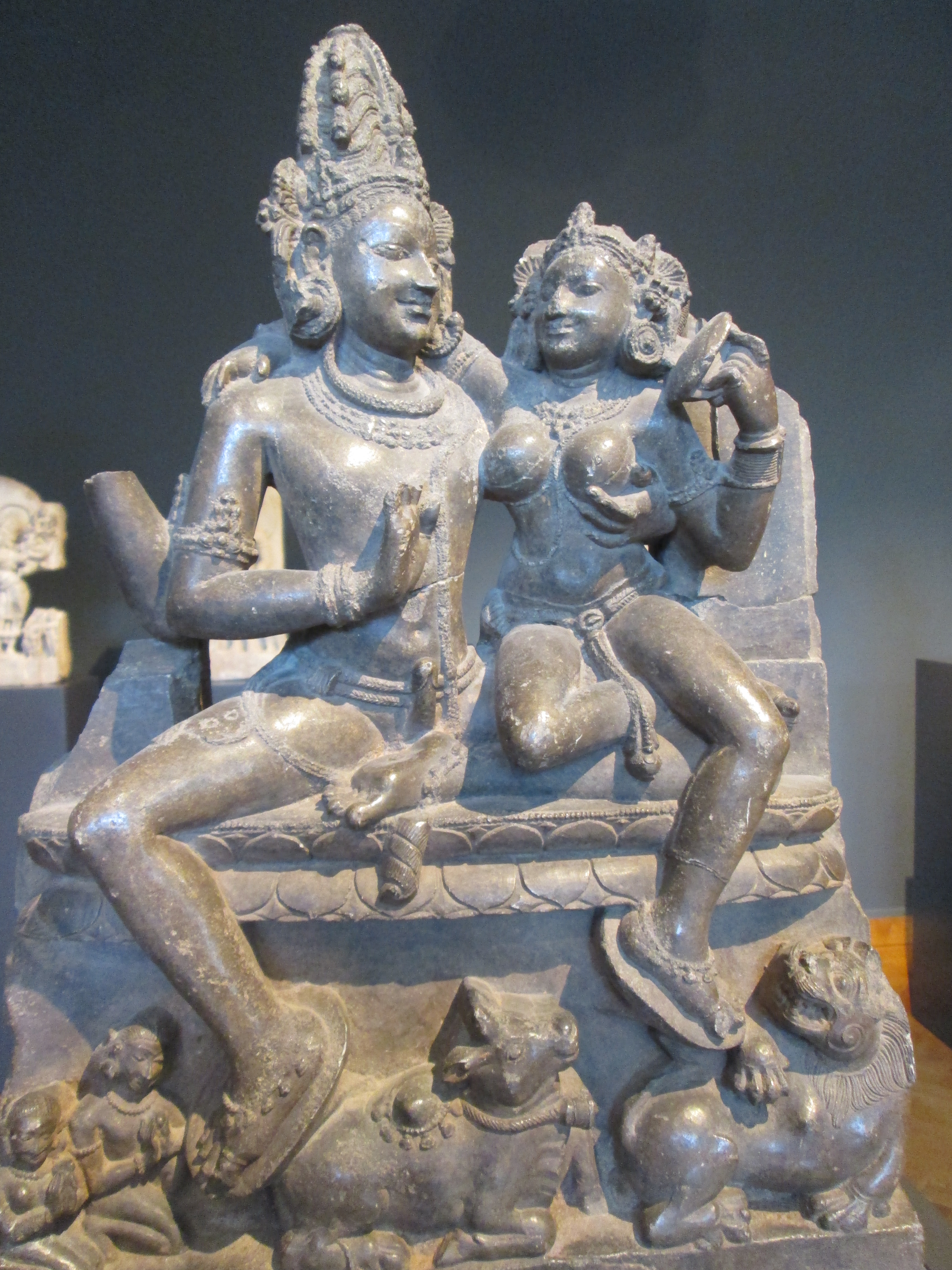
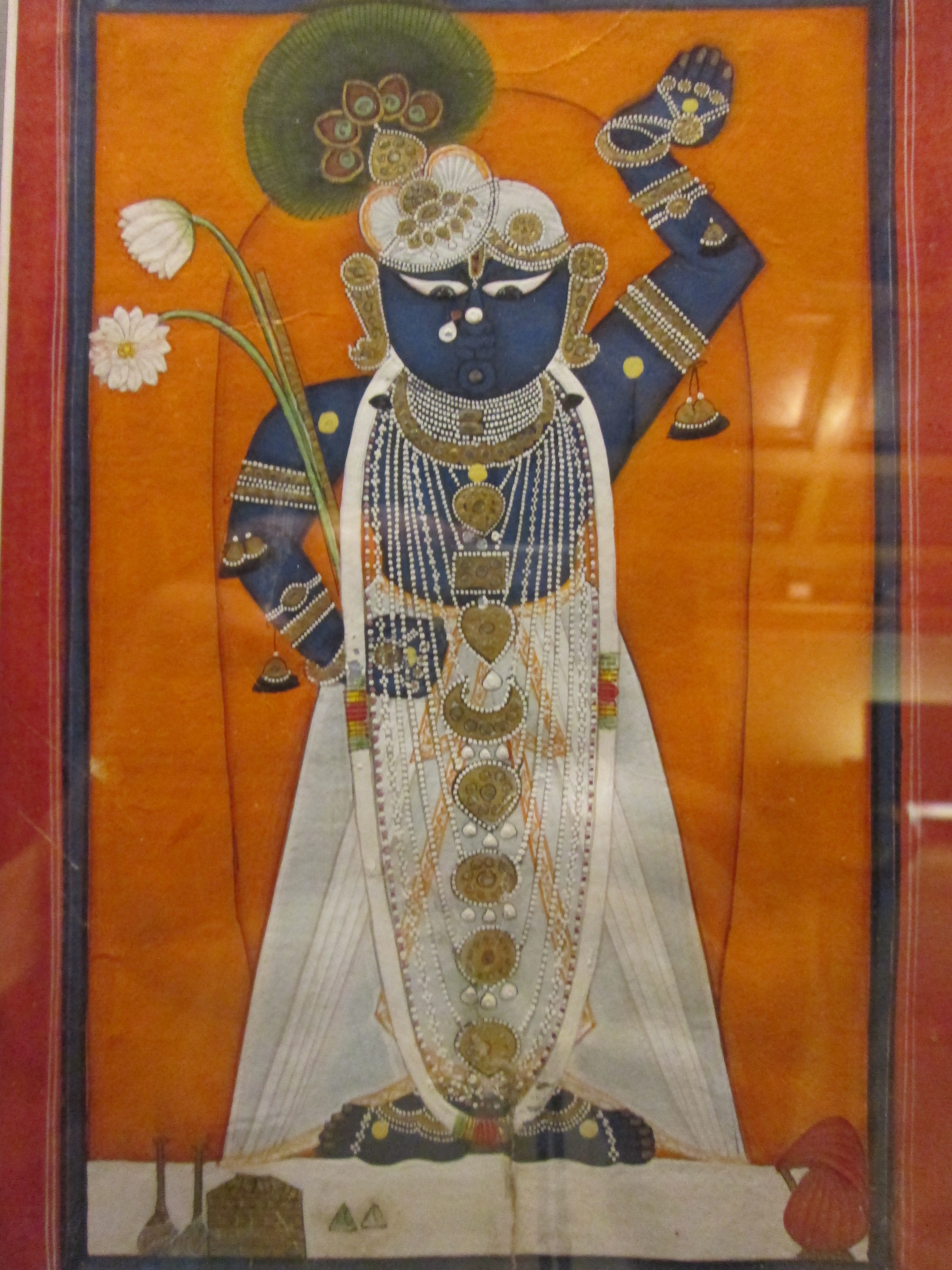
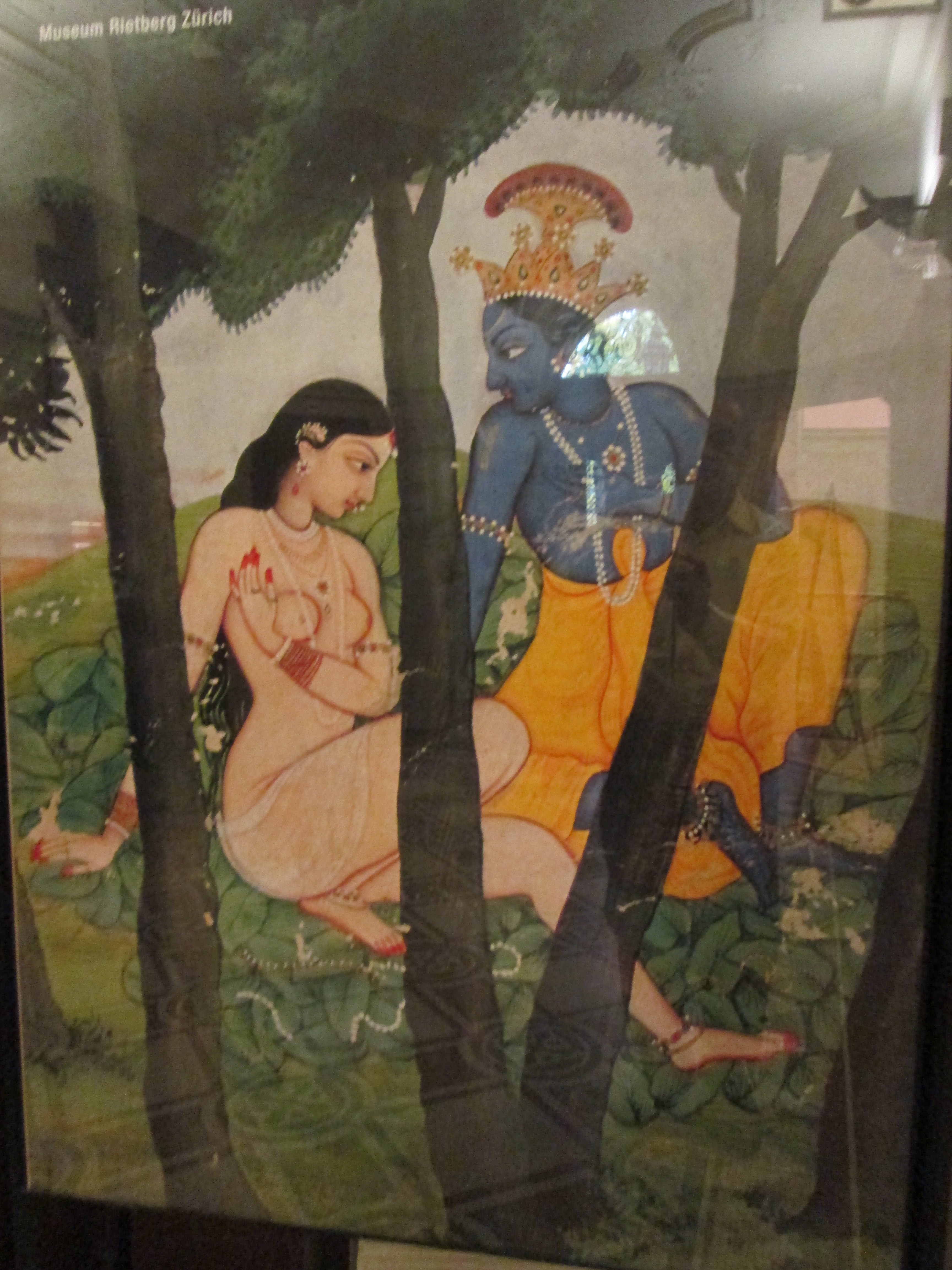
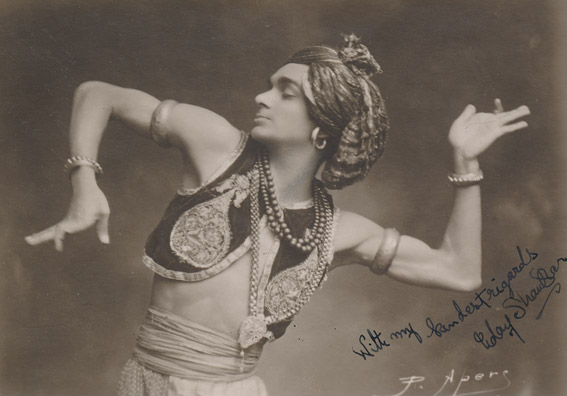
Indian art is much revered and valued in all major countries. So, the priceless collection of sculptures and paintings at Museum Rietburg in Zurich comes as no surprise.

Here are some of the artefacts one discovers while taking a saunter down the museum. These make one realize the immense potential of the soft power of India.

Zurich Rietberg 13

Zurich Rietberg 10

Zurich Rietberg 11

Zurich Rietberg 7

Zurich Rietberg 12

Zurich Rietberg 14

Zurich Rietberg 15

Zurich Rietberg 16

Zurich Rietberg 17

Zurich Rietberg 18

Zurich Rietberg 19

Zurich Rietberg 20

Zurich Rietberg 21

Zurich Rietberg 22

rietberg-india-buta-jumadi

Zurich Rietberg 23

Zurich Rietberg 24

rietberg-india-gita-govinda

rietberg-india-patan-sari

rietberg-india-uday-shankar

Art of any kind perhaps gets appreciated because it connects us with our own inner sense of aesthetics, beauty, love and harmony. The attempt to preserve and showcase the artworks of distant cultures and continents is praiseworthy indeed. It is a good example for other countries to emulate.

(Related Posts:

https://ashokbhatia.wordpress.com/2016/11/04/a-saunter-down-the-rietberg-museum-at-zurich-in-switzerland-part-1-of-3

https://ashokbhatia.wordpress.com/2016/11/06/a-saunter-down-the-rietberg-museum-at-zurich-in-switzerland-part-2-of-3

https://ashokbhatia.wordpress.com/2014/12/12/a-saunter-down-the-louvre-part-1

https://ashokbhatia.wordpress.com/2014/07/24/the-dance-of-life-at-the-national-gallery-of-norway)

Read Full Post »

(This post is dedicated to my mother, who earned her BA degree from the Department of Correspondence Courses of Delhi University in the year 1972. In the same year, I completed my B.Sc. Honours in Physics from Hansraj College, Delhi University, through the regular classroom method.)

Synopsis

The future of Distance Education can be bright and rosy only if it aims to improve the EmployabilityMay 2014 033 Quotient of those who subscribe to this stream of knowledge. Given the challenges it faces from traditional class-room learning and from the emerging realm of open on-line learning, there is a strong need to reinvent and reinvigorate the content being offered by it.

The mode of distance education therefore faces a twin challenge. One, proving itself superior to the traditional class-room learning. Two, that of being one-up on the open on-line content on offer to the youth of today, thanks to advances in technology.

Looked at from the perspective of an employer, when a candidate is being considered to be hired, she needs to not only overcome the barrier of a weaker perception of the distance education mode but also demonstrate her superior depth of applied knowledge. The unique strength that such a candidate brings to the table is possibly that of her prior working experience. It also shows that the candidate has the grit and determination necessary to complete the academic criteria of a course, even while handling a career and other mundane responsibilities of life.

In terms of credibility, on-line courses rank a poor third as of now. But the possibility of these catching up and making HR managers sitting up and taking notice of its contemporary and dynamic nature cannot be ruled out in the very near future.

How does the distance learning mode reinvigorate itself? The key lies in understanding the industry requirements and in incorporating the same to redesign the content on offer. Irrespective of the subject, contact programs which offer workshops on body language, communication skills and in building up self-confidence can help. In some cases, elementary IT skills could add value to a student’s marketability. In others, a crash course in a specific foreign language could perhaps help the candidate bag a dream assignment.

Customer is said to be the king. In the case of distance learning, the customer is the prospective student. If the focus is on improving her Employability Quotient based on the skill-gap felt by the industry, the mode of distance learning would improve upon its unique place in the education-mix on offer to the aspiring youth of today.

What the industry looks for

For any business, hiring is a critical activity. One, the person being recruited also brings in a set of attitudes, beliefs and value systems into the organization. These need to be matched with the core values and the culture of the organization. Two, the skills being brought to the table by the candidate have to be assessed realistically, so the person does not prove to be a misfit. Three, the kind of experience and its relevance to the assignment on hand needs to be evaluated. Four, the qualifications need to be checked, so the organization does not end up hiring either an over-qualified or an under-qualified person.

A premium on values

Attitudes, beliefs and values get formed from an early stage of one’s life. Hence, it would be naïve tovalues cartoon corruption assume that formal education at the higher level could play a role in shaping up the same. Yet, some steps could indeed be taken. Management lessons from literature and Indian scriptures, if made a part of the curriculum, would surely reinforce the learning of a career aspirant. Case studies which focus on the values that some brands stand for, such as Tatas and Siemens, could demonstrate the importance of fairness in business dealings. Likewise, details of corporate scandals could drive home the point that excessive greed leads to commercial ruin. Examples such as Satyam and Lehman Brothers readily come to one’s mind.

Skilling the young

Skill sets which a candidate is expected to possess obviously vary from assignment to assignment. In most cases, jobs of a technical nature need higher proficiency in the relevant technical domain. However, depending upon the candidate’s aptitude, skills can also be imparted on the job. For instance, a shoe factory can hire an engineering graduate engineer from any discipline and mould her according to their internal requirements.

For jobs of a non-technical nature, particularly those which fall in the realm of marketing, customer service, procurement, and the like, soft skills carry a much higher weightage. Skills in communication, leadership, collaboration, teamwork, analytics, adaptability and planning assume higher importance.
Evaluating experience

With a clear tendency amongst candidates to overstate their career accomplishments and emoluments, recruiters often have to dig deep to ferret out the truth. Often, past employers need to be contacted so as to ascertain the facts. Successes being quoted by a job seeker need to be seen in the context of the business environment in which the same are said to have been accomplished. The recruiter also needs to evaluate if the success was a team effort or an individual one.

Detailed questioning during the course of a personal interview alone enables the hiring person to understand the nuances of the range and depth of experience of a person.

The knowledge matrix

Often, one is aghast to find that a post-graduate in commerce cannot clarify as to on which side of the balance sheet the profit figure should appear. In such a case, a recruiter has to check her enthusiasm and not proceed to ask as to why it should appear on the ‘Liabilities’ side.

Our learning outcomes happen to be weak on conceptual clarity but excel at promoting rote and memory enhancement. Alas, such is the legacy of Lord Macaulay that we continue to follow till this day!

Unless one is hiring for a research and development slot or for an assignment which is highly technical in nature, one does not look for top grades and academic accomplishments. Grades may not be too good a measure of a candidate’s Intelligence Quotient but do show the capacity to work hard and the propensity to reproduce in an examination hall what has been taught in the classroom.

Pedigree does matter, though. Academic institutions have an image which invariably influences thec1 (25) learning outcomes, and thence, the value attached to a candidate’s qualifications.

A candidate who has undergone a standard classroom process gets taken more seriously than one who has been through the distance education mode. However, the advantage of the latter is that the candidate is likely to have a better Emotional Quotient, especially if she has been pursuing a career as well. This improves the adaptability of the employee and indicates better chances of success on the job.

Distance Education: Unique Selling Propositions

The stream of distance education offers several Unique Selling Propositions.

One, the seeker of knowledge is free of the tyranny of the classroom. No more for her the drudgery of listening to endless uninspiring lectures. There is no emphasis on fixed duration, fixed content dosage of a repetitive kind.

Two, a vast majority of those who opt for this stream are already pursuing either a career or another full-time educational endeavour. Upon successful completion, they bring much higher value to a prospective employer.

Three, prior practical experience brings in a level of maturity which helps the aspirant to shore up her Emotional Quotient, besides adding value to her knowledge base. From the point of view of the employer, this is a great value add.

Four, by shifting from the one-size-fits-all modules to flexible and segmented offerings to a career aspirant, the distance mode has the potential of surpassing the learning outcomes of traditional classroom learning as well as those of on-line learning.

When tyranny begets tyranny

Despite these unique features, employers have an in-built bias in favour of the products of the traditional classroom system.

This bias is rooted in the belief that those who have undergone the traditional process have followed a MICROMANAGINGdiscipline of fixed timings and withstood the boredom which goes with repetitiveness. On the other hand, those who have undergone the distance education mode are perceived to have merely wasted their time in worthless pursuits rather than focusing on academic enrichment of their lives.

Managements often believe that employees have to be physically available to them for a certain duration in the day and have to fall in line with the overall discipline of reporting times and a singular absence of check-out times. It is believed that to young ones, all work becomes routine and boring after some time. So, a candidate who has already undergone a possibly boring process might survive better and longer within the organization!

Such mundane considerations end up tilting the recruitment windmills in favour of those who have undergone a classroom stream of regular education. In other words, managements which believe in tyrannical practices at the work place end up reposing their trust and faith in hapless candidates who happen to be the products of yet another tyrannical system.

However, with the focus in the economy shifting from manufacturing to services, work-from-home is becoming a buzz word. This is happening also due to the personality traits of the millenials who are joining the work force, as also due to better availability of internet and connectivity. Better prospects are surely ahead for the stream of distance education.

Distance Education: Challenges

Being an important sub-set of the entire education eco-system, the challenges faced by the Distance Education mode are essentially the same as the ones being faced by the overall education system. Admittedly, there are finer differences which make this mode more susceptible to disruptive changes in the society at large.

The onslaught of technology

The rapid pace at which technology is changing is making the tasks of education and skill developmentinternet image 1 tougher. Artificial Intelligence (AI) is capable of taking on the tasks which require analytical skills. Capgemini, the consulting major, recently decided to replace 40% of its work done by its resource management group with IBM’s cognitive computing system, Watson. This shows that it is just not mechanical or repetitive jobs that are at risk.

Some crystal gazing

By 2025, almost 70% of India’s population is expected to be in the working age group. By then, thanks to AI and robotics, a large chunk of India’s present knowledge economy would have shrunk. As the contours of the new economy emerge, the country’s collective strength would get determined by world-class education. It would no longer be enough to have commerce and engineering students who can write codes. India would need thousands of research scholars who would be capable of critical thought. This work has to start today.

Augmenting ability, not merely certifying it

It is hoped that the forthcoming new educational policy of the country would suitably address the upcoming challenges of the 21st century. This policy needs to focus on enhancing cognitive skills, capacities for critical thinking and innovation. A robust foundation for the future can only be laid by gearing up all streams of education, including that of distance education, to augment cognitive skills and promote out-of-the-box thinking at all levels. Innovation, and research and development need to emerge as the primary goals of the higher education system. The focus of skill development needs to shift to augmenting the ability rather than remaining confined to the task of merely certifying skills.

The three Rs – reading, writing, arithmetic – must continue to form the core of education. Students who learn these must also learn to question and criticize, to think afresh and come up with new paradigms. They can then end up extending AI, rather than just succumbing to its growing prowess.

Meeting the challenges head-on

The feature of contact classes is a crucial one inasmuch as it gives the students a first-hand feel of the03 subject and the teacher an opportunity to engage in a direct interaction with the knowledge seeker. The image of the institute gets burnished. So does the quality of skills being imparted.

Enriching the contact element

The approach in future needs to be to enrich this feature even further. Tie ups with local professionals who are adept at imparting the kind of skills the industry looks for is a sure way to be one-up on the on-line courses. Students can obviously be given a basket of courses to choose from. Additional fee can be charged from those who wish to also take up an intensive communication or leadership course.

Another way to enrich this feature is to make management games, case studies and role-playing as essential elements of contact classes. An internship with a local business, under the guidance of a faculty member, can help the student hone her industrial skills and also add value to her curriculum vitae.

Segmented and specialized offerings

For those taking up courses related to travel and hospitality management, foreign language courses can be offered on an optional basis. Visits to local businesses and an apprenticeship with these could improve the Employability Quotient in a significant manner.

Quite a few vocational skills can be brought under the domain of distance education. This would be a great value add to the employment eco-system. Elementary IT skills, if imparted as a part of the academic offering, can surely help.

Adaptive learning: a flexible way forward

Adaptive learning views attainment of competency as its central goal, the duration of learning being

Squatting Scribe

Squatting Scribe

largely irrelevant. It recognizes that each knowledge seeker is unique and needs a tailor-made basket of courses which, if completed successfully, would make her a productive member of the society. Admittedly, this necessitates a common entry-level screening, which is simple and which gauges the capabilities of the incoming students at the entry-level and then offers them a route which makes them reach their career goals in the shortest possible time.

An industry interface

Distance education institutions which offer career counseling services and have full-time placement executives on board have a definite edge over those who neglect this vital last-mile connectivity

between the employers and the prospective employees.

By adding video sessions covering chats on important subjects with industry leaders, placement officers can add much value to the overall learning of the students. This is especially true of management courses where practical experience matters much more than the knowledge of theoretical formulae and concepts.

The need to reinvent distance education

Albert Einstein famously quipped that insanity is the act of doing the same thing over and over again and expecting different results. By that yardstick, if educationists persist in their belief that continuing with the traditional paradigm of distance education would be a panacea for India’s deepening youth skill crisis, it would amount to insanity!

The need of the hour is to reinvigorate and reinvent this crucial stream of education. A new paradigmpondy-univ-emblem needs to emerge. This paradigm needs to be based on the challenges of the 21st century. By substantially enriching the learning process alone can one hope to see India capitalizing on its demographic dividend. We are perhaps about to miss the bus already. The time to bring about this change starts now.

(A paper presented at the National Conference on Distance Education in India: Emerging Challenges and Prospects, organized by the Directorate of Distance Education, Pondicherry University, Pondicherry, India, on September 8th and 9th, 2016)

Read Full Post »

Psmith put the newspaper away. A sigh escaped him.

“Nothing makes sense”, he muttered.

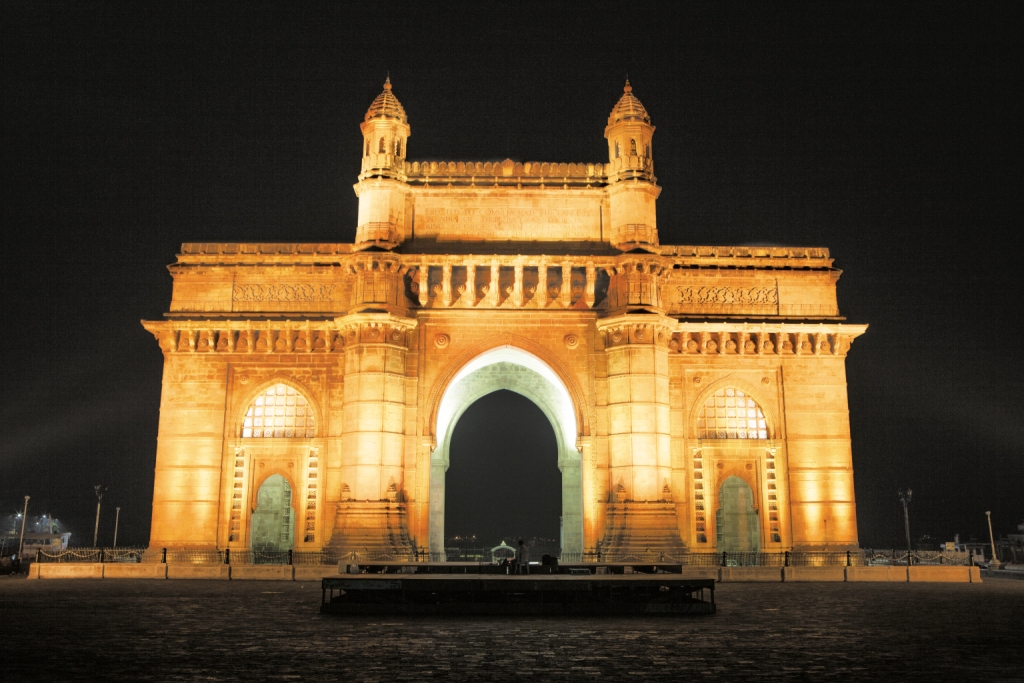
For the space of about twenty-five seconds, Mike, sitting across a small table on a sunlit balcony ingateway-of-india Mumbai, India, sat in silence.

“What is wrong with you?”, asked Mike, with a concerned look on his face.

Some time back, Psmith and Mike had been posted to the Mumbai branch of the New Asiatic Bank. It had taken them some time to get used to the hustle bustle of the noisy metropolis, often reeking of stale fish.

They had a centrally air-conditioned apartment all to themselves at Worli in one of the high-rise buildings overlooking the Arabian Sea. Being a Sunday, both were in a relaxed state of mind.

“How could people be so very excited about being taxed differently?”

“Who is excited? What are you referring to?”

“You would know that India is soon set to hop on to the Goods and Services Tax (GST) bandwagon. What the poor guys do not realize is that life is not going to be a bed of roses, as it is being made out to be.”

Mike continued to concentrate on the designer tea-pot in front of him, a complete picture of the model gown-wearing bank officer on his weekly off day.

“It is good to notice the concern you display for the citizenry which managed to slip out of British control some seventy years back. Perhaps, you are upset that it took them so long to realize that their entire country needed to be a unified market?”

“No. What I object to is the fundamental flaw in the GST. It is un-Indian. It is just too simple.”

Mike looked up in surprise. “What do you mean?”

“Comrade Jackson, no Indian tax system could be that simple. A universal tax percentage applied to everything so you know how to calculate it is just not right. It is handing over the power of understanding a tax to the people. Does this not take away the basic right of Indian taxation: confusion, opacity and obfuscation?’”

“But, surely, that should be good news?”

“Not for the few bespectacled gentlemen who try to figure things out, buried under the weight of those heavy tax books in some library of a government department. They would be rendered simply rudderless. They would resent this sudden deprivation of their tremendous power – of being the select few who could interpret and explain away the laws, the bye-laws, the rules, the notifications, the rulings by various tribunals and councils from time to time, and what not. I sense a revolt of sorts brewing up soon enough.”

“Oh, you mean to say that the bureaucrats would not be too pleased with the new taxation system?”

“Elementary, my dear Jackson. They would surely not relish the prospect of losing their power over the people. Also, the only way they can earn the extra money required to keep their families grinning from ear to ear.”

“Hmm…you do have a point there.”

“Not only this. Should a simple taxation law come into play, imagine the number of taxation experts India Parliament Housewho would be rendered jobless. Their care-worn clients would no longer be spending hours in their plush offices, trying to figure out the nuances of filing quarterly returns. They would instead be sitting in a fine dine restaurant, treating their lissome secretaries to a sumptuous dinner, while having told the spouse of a pressing need to attend a crucial meeting at the office.”

“But you would agree that the GST idea is indeed noble, simple, global and logical.”

“Which is why I suspect there is so much resistance to it. The government has been trying to sit people down and explain to them why the current system of taxation is the work of some mad people who happen to grace the opposition chairs now. Of late, it even decided to reach out to the latter and ensure that they were no longer sulking at the party presently in power walking off with all the credit for having brought in this landmark change. And note that the party in power now had itself obstructed the same change when it happened to be in the opposition.”

“But what do you think is so very exciting about the present system? I think it is known as Value Added Tax. They have several other taxes as well.”

“Well, for one, that should be known instead as Value Reduced Tax, simply because you have less value once you have paid it. Then they have excise, individual state taxes, octroi tax, entry tax, professional tax, luxury tax, entertainment tax, sleeping peacefully at night tax, Bengali sweets tax, South Indian dosa and idli tax, North Indian chhole bhatoore tax, West Indian poha and shri khand tax, did-not-tell-your-wife-and-came-to-Pondicherry tax, Clean India tax, farmers’ mental happiness tax, road accident tax, child-not-doing-too-well-at-school tax, mother-in-law irritant tax, enduring the politicians tax, having-to-watch-inane-movies tax, waiting for delivery of public services tax, and many more in the same genre.”

“Ah, life could be surely simpler!”

“But the good point here is that the common citizen can never afford to be lazy or complacent. The Indian tax system has always been designed to keep the common citizen on his toes. Agile. Confused. Uncertain. Feeling illiterate. There has always been an element of surprise. He opens a letter and finds that he has a tax due. And he starts asking himself, ‘What tax is this? I was not aware a tax like this existed. Do I need to pay it? Is there no way to avoid paying it?’ And off he goes to seek some solace from his tax consultant who is happy to demystify the affair and get another excuse to raise a bill on the hapless wannabe tax-evader.”

“You appear to be quite impressed with the Indian taxation system!”

“Yes, Comrade! They have an excellent system which matches their age-old spiritual values. Anythingemblem_of_india-svg that makes you feel small, negligible and illiterate is bound to flatten your ego in no time. You could even be a director of our bank. But when you get a tax notice which you do not understand, you feel all of a twitter. You take a more benevolent view of humanity in general. Even your driver and your lift operator seem like angels in distress, facing similar challenges in life. You realize that there is no escaping the taxation system. It is as immortal as a soul is said to be.”

“But what makes you think the GST is likely to be simpler, when it comes to the fine print? I was told that it would need even the humble barber to file as many as forty odd returns to the government every quarter?”

Psmith slid out of his chair with a disgruntled sigh, and dusted his dressing gown. “Perhaps there is something in what you say. I propose that we call the new system as the Great Spiritual Tax instead. It would make all businesses across all the states and territories of India equally worried. They might even turn to spirituality and seek divine intervention to set their house in order. It would not be wrong to surmise that a commercial crisis has indeed arisen. A period of great anxiety has begun, especially so for small businesses.”

Mike looked up with some surprise.

“Let me explain,” said Psmith, raising his hands. “Once the new system takes over, all businesses would be required to register. Whether for manufacturers, distributors or retailers, it would be virtually impossible to escape the tax net. The luxury of doing business based on fake bills would no longer be theirs. In fact, past transactions could also come in for greater scrutiny. Besides, the Income Tax sleuths would be easily able to figure out the real income levels of businessmen of all hues, sizes and shapes. The entire business eco-system would totter.”

“Are you trying to say that the size of the Indian parallel economy would shrink?”

“Quite possible, Comrade Jackson. Your keen intelligence reaffirms my faith in your unique abilities. However, I doubt if this could be good news for the country.”

“How do you say this?”

“If you would delve deep into your memory cells, you would recall the 2008 financial crisis which engulfed the world. Do you think the Indian economy suffered as much as our so-called advanced economies then?”

“I do not think so. The Indian economy showed greater resilience then.”

“If so, allow me to point out that one of the major factors discovered and held to have helped India then was the existence of an underground economy.”

“Indeed?!”

“I do believe so, though I confess I am not an expert at such matters. Take the informal economy awayRashtrapati Bahavan and what do you get? A rigid and formal economy which has a much higher dependence on formal debt markets. The risk of overstating debts grows manifold. Next time round, when another Lehman Brothers show up on the horizon, the Indian economy could be found in deeper waters. Having a thriving parallel economy helps.”

“You surely surprise me. You sound like an ardent advocate of the parallel economy!”

“On the contrary, I do not. My point is very simple. Why should we allow only our businesses to suffer when the political parties themselves continue to enjoy the fruits of an underground nature? Why not clean up the Indian political act as well and provide a level playing field to all her citizens? Why should the Indian politicos be spared of a taste of their own medicine that they prescribe for the toiling masses?”

“Whatever, the Indian GST is now already on a roll. The bill has received the assent of the President of India. The only hope you can entertain is that of the implementation getting goofed up and the process getting delayed somehow. My understanding is that if the steps of setting up a GST Council, an agreement on a basic tax rate and the detailed procedures take longer than a year, the implementation deadline might as well get shifted to April 2018. If that happens, the government itself may keep it on the back burner for some time.”

“Oh, you allude to the risk of embracing unpredictable consequences of adopting a new taxation system in the run-up to the 2019 parliamentary elections!”

“Yes. In fact, yet another challenge before them might be that of the absence of internet connectivity all over the country. Even if the GST Network gets perfected, how would they ensure that a dealer in, say, Sikkim, can secure a registration in Kerala? It is good to hear of a seamless market, but a smooth roll-out would need a strong internet backbone all across.”

“Well, sure enough, their best men would be working out the finer details and smoothening the road to implementation. The stakes are high indeed. The reputation of the present government rides on how it handles a challenge of this nature. But what you are missing on, Comrade Jackson, is the key factor of human ingenuity. When it comes to paying any taxes, it knows no bounds.”

“But I am not quite sure if there could be an easy escape route for any business, as you yourself had rightly pointed out just now.”

“But we underestimate the propensity of human beings to go to any lengths to avoid paying any taxes. Innovation is the name of the game in this case. Sure enough, the Indian tax experts would now bemap-of-india burning the proverbial mid-night oil, getting ready to advise their anxious clients about some new creative practices they could adopt under the new tax regime. Given the level of primal hate harboured by all businesses towards the act of paying any kind of taxes, advisors in the business of tax avoidance would be twiddling their thumbs, endeavouring to figure out ingenious methods of beating the new system at its own game.”

Mike smiled.

“As always, you have hit the nail on its head. But this is a universal fact which governments all over the world have to cope with. Is there any other thing you are not too comfortable about?”

“Yes, though I do not know how your intuitive faculties are so very advanced as to guess this. I do not quite see eye to eye on the strategy of dumping more and more indirect taxes on the hapless citizenry, while not working aggressively to expand the direct taxes base.”

“I really do admire your depth of thinking on the subject. Do you refer to recent reports that merely one percent of the people pay income tax in India?”

“Indeed. What an irony!”

“Perhaps, you imply that politicians of all hues lack the courage to take some unpopular steps. Rather than chasing more people to pay income tax, they prefer to use the indirect taxes route which is relatively invisible?”

“Yes. Perhaps they follow the advice of their sage Chanakya who famously said that taxes should be collected by inflicting the least possible pain on the citizens, much like a bee would collect nectar from a flower in bloom!”

“And what do you think our own bank would have to undergo?,” Mike asked.

“Serious matter. Under the new dispensation, we shall need to register in all the states and unionpsmith-1909 territories. Perhaps, even in districts, where we have branches. This is going to be a compliance nightmare. I hear some talk of all the banks lobbying for a facility to register with a centralized agency which would pool, reconcile, analyze and audit our transactions. If so, this agency could distribute the revenue earned through us to different states where the transaction has occurred.”

Mike rose from his chair and stretched his arms. His gaze drifted off to a couple of fishing boats bouncing up and down on the bluish-green waters of the Arabian Sea.

“These are deep waters, indeed. I wonder why we are discussing such matters on a lazy Sunday morning? I rather think I’ll nip down to Haji Ali and take some fresh air into my lungs,” said he. “You couldn’t come too, I suppose?”

“On the contrary,’ said Psmith, ‘I could, and will. A stroll will just restore those tissues which the gruelling discussion of the last half-hour has wasted away. It is a fearful strain, this taxation toil. Let us trickle towards the place mentioned by you. Comrade Jackson, lead me to this picturesque dargah of yours of which I have heard so much.”

Read Full Post »

The soft power of India is well known. Spirituality. Arts. Culture. Movies.

Here is a great post on the soft power of Bollywood.

Enjoy!

findshars's avatarMy Views On Bollywood

By

Sharada Iyer

The recently released film ‘Talvar’ by Meghna Gulzar has created such a buzz that not only did the Honourable President of India, Shri Pranab Mukherjee contact the director’s office and express his desire to see the film, but an online campaign has also been started on social media with a plea to the Chief Justice of India to re-open the case.

IMG-20151021-WA0016 (image source-Bombay Times)

The film has managed to create quite a stir both in the media as well as the public as it brings to light the unbelievable callousness of the investigating police officers involved which resulted in a lot of precious evidence being lost forever. The ego clashes of the two CBI groups have been laid bare for the public to ponder upon thus raising many questions regarding the hurried closure and judgement of the case.

It is indeed remarkable for a Bollywood film…

View original post 2,110 more words

Read Full Post »

LEADERSThere is something unique about managers from India. Apparently, they have a Western mind and an Eastern heart. In other words, a unique combination of analytical prowess and intuitive faculties.

Here is a thought-provoking guest post from Mr K V Rao, Resident Director – ASEAN, Tata Sons Ltd , Singapore.

“I was born and raised in India in small towns, and started reflecting how is it that so many of my compatriots make it to global leadership positions ?

Many of our ilk have left the shores, for distant foreign lands. Have studied and imbued the best of cultures, but retained some of some of that inner rusticity, and native eclectic personalities. They have made it to the top jobs of Google, Microsoft, Mastercard, or a Pepsi, and the list is endless and still more to surface. All have been exceptional fighters, who seem to compete fiercely but fairly, often guided by their simple inner compass. All have had their roots in Middle Class India. What is the magic that’s at work ?

Typically, in a middle class family, that typifies some common basics – a high dose of personal values with low resources, what in a South Indian phrase is termed as “high thinking and simple living” hard work, education, discipline are the key mantras drilled into young minds, to help them break through the glass ceiling. Exceptionally strong personal family bonds, and a natural willingness to put oneself down for the other, compassion and care seem to naturally flower

What are those simple things that make them such effective leaders. Here are some reflections:

  1. There was never enough ….’   If one grew up in my generation in middle class India, life was always on the edge. Just about balancing ends with limited means. That meant, living happily and contented with what you have, than to aspire for what you don’t. Realism, practicality. But, also have the uncanny ability to stretch the buck – unbelievable value engineers, we are naturally. No wonder, hard to beat an Indian at cost cutting. !. Defining needs vs wants was deeply embedded in the frontal lobe of the mind, filtering away desires 🙂
  2. “We always ate together….” . Families would wait for each other to eat together. (Also the fact that there were hardly fridges then, and you ate hot and fresh !). There was sharing and caring. The bonds built were deep that lasted a life time, and giving and serving each other, imprinted that quality of care for a lifetime for another member of the family.
  3. “We celebrated together, we mourned together …” Families, lived as communities, extended with relatives, friends and neighbours. Much to the chagrin of modern nuclear families, there was little private and personal space  ! … All celebrations were shared, and so were the strains of illness or misfortune. Jumping in to help, give someone a shoulder was so very natural. That was the normal thing to do, not an act of valor or sacrifice. Your loss was mine, your success too was mine. Empathy a natural flow.
  4. Maths and English, are important…. “. Our fathers simply emphasized on 2 subjects, Maths and English, particularly in South India, as if they were meant to train the left and right brains, and eventually spur some whole brain activity. In hindsight, they seem to make sense. English opened the doors to global opportunities, the computational abilities pushed forward analytical thinking.
  5. “ We laughed a lot, joked, and pulled each others leg…Families, neighbors, and community living provided the best of entertainment, and a source of immense comedy. Radio and cinema were the only companions, and Black & White TV just came in with one or two long running serials. Sense of humour was valued, and we learnt to laugh, when nothing else could be done. Being sportive and getting the rough edge, is so normal, no big deal. It built great resilience and forbearance, for there were many things we could not change but had to live with.
  6. We prayed together….. . There was always a routine of prayer, whether you liked it or not. Before you start the day, go to college, go to exam, go to an interview. All of which, reinforced the positive belief, that no matter what, there is something more powerful and higher that resides above you, and cares for you should you make the effort to reach out. It ingrained the simple truth of focusing on the effort and leaving the ultimate result to the forces that be. It also made one more prepared to take risks, and face failure – a trait that today people struggle with, to fail, and yet to rise and be innovative.
  7. “ There is always a fix ….”  Last but not the least, there was never a “no” to be taken. There is always a fix, a ‘Jugaad’ if you may, or a work around. Hard to accept and give up. Persistence, thinking upside down, creativity or sheer street-smart tactical reflexes. Or the ability to bow, and accept failure honestly and humbly. It’s a potent combination of inner strength and outer smartness, to craft a strategy that works in the face of adversity.
  8.  “ You are not the smartest .. “. When you grew up, you always had someone much smarter than you, much better than you. You often wonder you were blessed or damn lucky to be where you are. There is a common streak of simplicity and most importantly humility. Go back to point 6, above – there was also someone “above” there who wished you well. Humility reinforced. !

It is not the top management schools that honed the skills alone, but the middle class homes of India that gave many of our generation, that inner compass and embedded CPU that makes one see life with a set of different lenses.

Leadership today, hinges on the ability to inspire, share, care, lead with empathy. Inflect clarity, sharpness, and fight the forces of competition with courage and tenacious persistence, never to give up. The ability to remain cheerful, spread laughter and joy around the work place. The training school of which is located in middle class Indian homes, that have often produced top class international business leaders.”


Read Full Post »

After the 2008 economic meltdown, the management world has discovered that CEOs need to follow not only a Business Compass but also a Moral Compass to steer the enterprises they happen to head. Improving one’s Spiritual Quotient is now a sheer business necessity, and shall be more so in the decades to come.
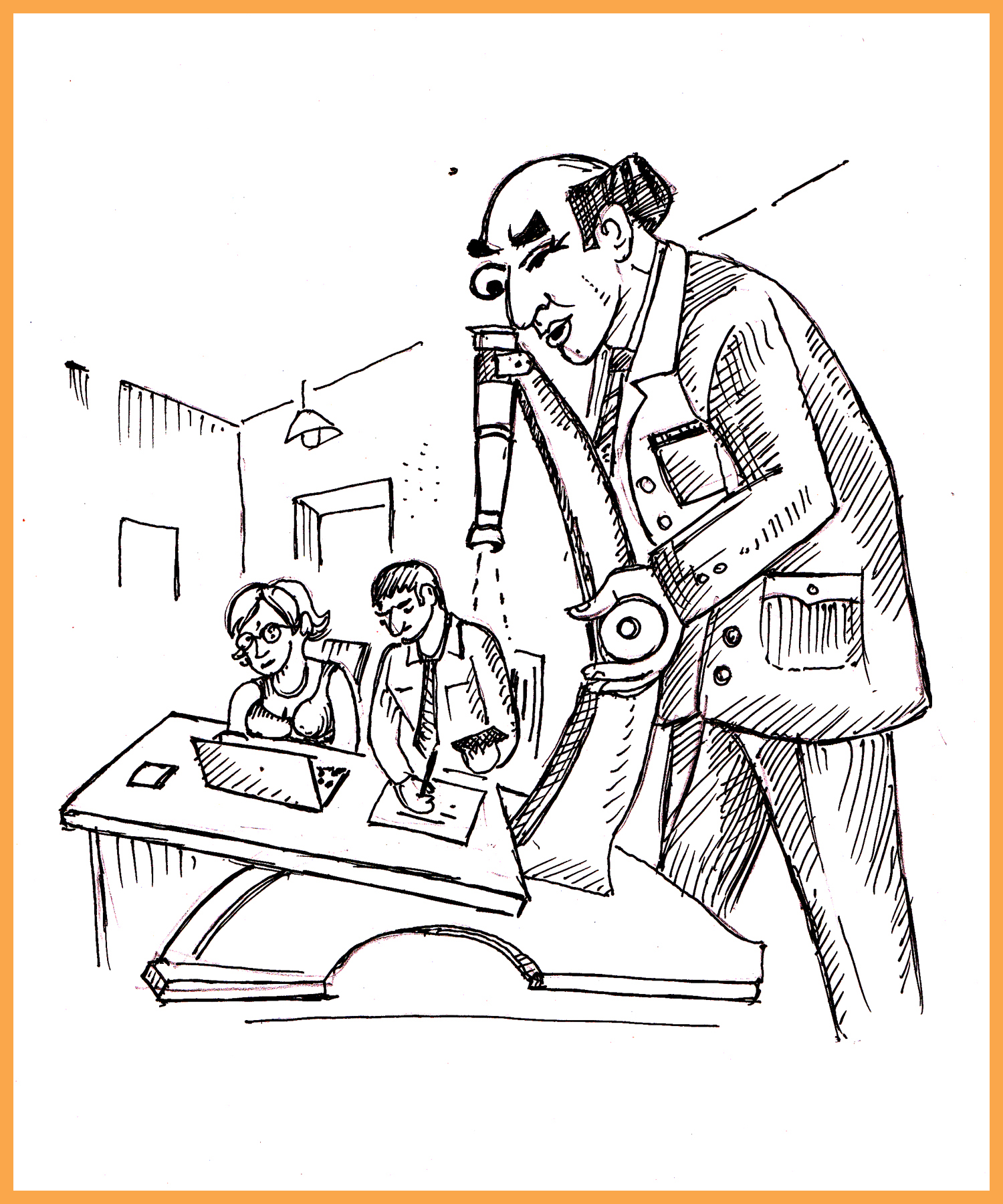
It is here that Indian scriptures and sages provide a ready template for managers of all sizes and shapes. Let us consider a few facets of some of the pearls of Indian wisdom which find ready application in the realm of management.

Some pearls of Indian wisdom 

Ramayana

  • The entire narrative highlights the importance of values in our lives.Ramayana 1 Businesses which follow a policy of righteousness and conduct their operations in an ethical manner enjoy tremendous brand equity in the market. This rubs off on their products as well as on their employees.
  • Lord Rama decides to leave his comfort zone for fourteen years and ends up connecting with lesser mortals better. Likewise, CEOs and marketing honchos of today who travel through the hinterland to get a better first-hand feel of the customer’s pulse do a far better job of servicing the market.
  • An alliance with Sugreeva, coupled with an out-of-the-box unconventional army, eventually leads to Sita getting traced and Ravana getting vanquished. Mergers and alliances based on mutual respect and trust leads to better market share. Mighty objectives can be achieved even based on frugal resources.
  • Beware of sycophants. A couplet in Sundara Kanda of Ramcharitmanasa clearly advises us to ignore the advice of a paid deputy, a doctor and a teacher who speak positively out of either fear or expectation of a gain. A king who acts upon such motivated advice loses his kingdom, his body and his righteousness (dharma) as well.
  • When Sita gets banished from the kingdom, Rama’s role is not much different from that of a true-blue CEO whose loyalty to the company’s overall welfare is unflinching.
  • CEOs and managers who entertain amorous intentions in respect of women team members and managements which look the other way just because they accord a higher priority to business goals than to the character of their top honchos could take a leaf out of Rama’s conduct.

Mahabharata

  • The attachment of Dhritarashtra, the blind king, to his evil son, Mahabharat Draupadi_and_PandavasDuryodhana, proves to be highly destructive in nature. The entire Kuru clan gets eliminated. CEOs who promote their kith and kin without assessing the overall welfare of an organization get doomed likewise. Same holds true for many a political outfit.
  • Arjuna’s skills in archery are well-known. He achieves mighty feats based on his power of intense concentration on the job at hand. Multi-tasking, a misleading buzzword in current business parlance, has no place in his dictionary.
  • The perseverance of Pandavas eventually pays off. Repeated setbacks do not deter them from seeking their share in the kingdom. War follows only when even a settlement with five villages only gets turned down by Duryodhana. The tenacity of bouncing back in the face of adversity that Pandavas display is worth emulating by MNCs which try to penetrate the Indian market.
  • The unity of purpose amongst the five Pandava brothers is exemplary. Theirs is a unified and invincible family which goes through its trials and tribulations as a single unit. Likewise, large conglomerates like Tatas draw their strength from a set of core values. Each company within the group’s fold has a unique place in the market. The companies operate in fields as disparate as salt and software. Yet, all of them are connected by a common value system and a similar business philosophy.
  • The manner in which Krishna persuades a demoralized Arjuna to take up his arms by enunciating the basic principles of life in the Bhagavad-Gita is exemplary.

Bhagavad-Gita

  • One of the basic concepts enunciated by Krishna in the Bhagavad-Krishna_Arjuna_GitaGita is that of the everlasting nature of the soul. The concept of a soul now finds a resonance even in modern management literature. In ‘The 8th Habit’, Stephen Covey urges professionals to pay heed to their ‘inner voice’. While proposing the whole person paradigm, he speaks of the four dimensions of a person – spirit, body, heart and mind.
  • Over its eighteen chapters, Krishna propounds the intricacies of different forms of Yoga, a philosophical system which treats all life as a management enterprise. It exhorts managers to be impartial, not favouring any one goal, any one mode any one or group of persons.
  • A manager’s goal is the total overall good, in keeping with environmental necessities and societal requirements.
  • He is not swayed by happiness or sorrow, ego or nepotism, greed or desire.
  • He is not swayed by external temptations of tangible, material success and thus attains a state of happiness, peace and contentment. He radiates positivity and his decisions bring happiness sooner or later to maximum number of people.
  • In other words, detachment is the key takeaway from Bhagavad-Gita. Detachment from the rewards of any work or action taken results into a neutral state of mind.

Thirukkural

This is a classic Tamil ‘sangam’ (3rd century BC to 4th century AD) literature

Thiruvalluvar

Thiruvalluvar

composition. It has 1,330 couplets or ‘kurals’. It was authored by the renowned poet Thiruvalluvar. It is replete with words of wisdom. It is simple and contains profound messages.

Thirukkural has 133 chapters, each containing 10 couplets. Broadly speaking, all the 133 chapters can be divided into three sections: Righteousness, Wealth and Love. Even though the contents are meant for kings of yore, many of the messages are equally relevant for CEOs of business world.

Consider these ‘kurals’:

  • It is not good to forget the benefit received; but it is good to forget then and there the injury done by another. (108)
  • Those who alienate friends by back-biting may have forgotten the art of making friends through suavity of speech. (187)
  • Entering an assembly without sufficient knowledge is like playing at a dice board without its knowledge. (401)
  • Men of foresight who guard themselves against coming events know no distress. (429)
  • A king must act after measuring the strength of his plan, his own resources, the strength of the enemy and that of the ally. (471)
  • Let men be chosen with deliberate care; when once the choice is made, let no suspicions crawl into your soul. (509)
  • Strict enquiry and impartial justice mark the rule of a just monarch. (541)
  • The greatness of a person is proportionate to the strength of his will power. (595)
  • What you have clearly decided to do, do it without hesitation and delay. (668)
  • An unfinished deed and an unfinished fight will, like a half-extinguished fire, cause ultimate harm. (674)

Each ‘kural’ is complete in itself. It deserves to be meditated upon, one at a time, and imbibed in our day-to-day lives. One wonders at the keen observations of the poet, his sagacity and the effort he has taken to collate and compile this beautiful work, replete with words of wisdom which continue to be as relevant today as they were in the days of yore.

Chanakya Neeti 

Chanakya is a well-known Indian teacher, philosopher, economist, jurist and chanakyaroyal advisor. He is said to have lived from 350-275 BCE. He authored the ancient Indian political treatise, the Arthshastra. He is considered a pioneer in the field of political science.  He assisted the first Mauryan emperor, Chandragupta, in his rise to power. He is widely credited for having played an important role in the establishment of the Mauryan Empire.

One of his seminal works happens to be Chanakya Neeti, or Chanakya’s Aphorisms. It is a treasure trove of wisdom and speaks of the criteria to be used to judge people, the need for keeping one’s intentions confidential, the value of continued learning, situations wherein it pays to be a hypocrite, the supremacy of one’s duty, and the like.

He draws an interesting analogy between the animal kingdom and those who waste their time criticizing others. He holds such persons to be worse than the crows amongst birds and dogs amongst animals.

Sri Aurobindo

Profound thoughts of one of the prominent Indian seers of modern times, Sri Aurobindo, could be interpreted to propose a different paradigm of management. Sri_aurobindo

Whereas the Western model of management thought is based on such functions as Marketing, Finance, Production and People, the Eastern model, so to say, could be said to comprise four pillars of management: Perfection, Harmony, Power and Wisdom. Collectively, this paradigm could be called Integral Management.

Analyze the conduct of any business leader and one is apt to find the underlying presence of all these elements. It does not matter whether a manager handles marketing, finance, production or human resources.

  • It is by striving for perfection that one achieves excellence in results. Being perfect implies putting our best foot forward and doing our best under the given circumstances. It is the striving for perfection which assumes significance.

When Apple launches a new product, the whole market is abuzz. The toil and hard work which goes into creating and launching a new product is exemplary indeed.

  • A harmonious conduct with respect to all key stakeholders is essential for sustained success in business. Relations with financial institutions, regulatory authorities, customers, distributors, suppliers, staff and labour need to be based on a harmonious blend of business needs and the principles of natural justice.

The manner in which the Taj Hotel management responded after the 26/11 terror attack is a shining example of harmonious conduct of business.

  • Use of power with a sense of responsibility, that too for the greater good, leads to higher brand equity for a business. Marketing prowess can influence customers’ decision making, and has to be directed at their needs and not wants. Financial strength can also be leveraged to do something useful for the society. Administrative authority comes with a great deal of responsibility.

The case of Dr Pachauri being shown the door by TERI in a sexual harassment case is just one of the several examples of how the high and mighty should not exercise the power at their command.

  • Wisdom in decision-making leads to a sustainable business, which gives back to the society and the environment what it draws from the same.

In September 1898, Jamsetji Nusserwanji Tata decided to set aside half of his wealth as an endowment to establish a university of science. His donation was worth Rs. 30 lacs in those days. The other half he left for his two sons. The Indian Institute of Science eventually came up in 1911, paving the way for quality research and teaching in India.
This is the kind of unique learning which an aspiring manager receives in her formative years in the Eastern world.

Managers with a Western Mind and an Eastern Heart

Successful CEOs and managers of the future would need to be those who have a Western Mind and an Eastern Heart.

The success of the likes of Satya Nadella (currently the CEO of Microsoft) and Sundar Pichai (currently the CEO of Google Inc) goes on to show the growing importance of managers who are not only exposed to the Western models of management but also steeped in Eastern wisdom in the realm of management.

(Presented as a talk to the members of the Pondicherry Chapter of Madras Management Association during June 2016)

(Related Posts:

https://ashokbhatia.wordpress.com/2013/05/27/management-lessons-from-ramayana

https://ashokbhatia.wordpress.com/2013/07/12/management-lessons-from-mahabharata

https://ashokbhatia.wordpress.com/2015/09/04/management-lessons-from-the-life-of-lord-krishna

https://ashokbhatia.wordpress.com/2015/01/16/management-lessons-from-thirukkural

https://ashokbhatia.wordpress.com/2015/10/06/managerial-perfection-notes-from-a-seminar-at-pondicherry-india

https://ashokbhatia.wordpress.com/2016/03/26/harmony-in-management-a-seminar-at-pondicherry-india)

Read Full Post »

Whosoever coined the term ‘patient’ in the distant past was indeed blessed patient 1with some degree of prescience. He could foresee that the poor soul will have to earn this exalted status in life the hard way. He would need to patiently await his turn in long serpentine queues at hospitals and at doctor’s clinics. He would have to be patient with his bank balance when it starts depleting the moment he is examined by a doctor. He would need to be patient and suffer the ignonimity of undergoing all the tests prescribed. He would then again have to patiently wait to report back the results to the doctor concerned. Nerves of chilled steel would be required to consume all the medications written out illegibly on a piece of paper. His reserves of patience would once again be called upon to mitigate his suffering when side effects of the drugs start tormenting him.

A singular challenge faced by patients of all hues, sizes and shapes these days is that of continuity. Family doctors happen to be a tribe which has become almost extinct by now. Gone are the days when a personal rapport with the family doctor could work wonders, or when the emphasis used to be more on physical examination and the symptoms of the patient rather than on excessive medical tests.

The ‘haves’ and the ‘have-nots’

In a dichotomous health delivery market like that of India, we have the multitudes of ‘have-nots’ who struggle to make two ends meet. For them, a challenge on the health front is not the very first priority to be handled. The question of survival itself comes first. When the body simply revolts and there are no options left, they turn to government-run centres and hospitals and make do with whatever facilities they are able to access.

Not so for the well-heeled ones. They have the means to avail the servicespatient 2 offered by swank hospitals run by the private sector. Recourse to fancy insurance schemes becomes helpful. In any case, since health is held to be more important than wealth, a slice of the latter getting lost to restore the former is seldom bemoaned. On the contrary, the massive cost incurred on a hospital stay gets worn on their slick sleeves, much like a proud soldier would display his medals earned on the fronts, and comes in pretty handy for an uplifting ego boost.

They get to pick and choose. Word of mouth often helps. Brand recognition helps. When an emergency comes up, distance becomes the determining factor.

Upon entering such institutions, the patient is spoilt for choice. Options for accommodation include air-conditioned special rooms, deluxe air-conditioned rooms and even super deluxe suites. He is then put on an assembly line and subjected to awe-inspiring medical diagnostics. The fear of the unknown on part of the patient helps the corporate body to fulfil its obligations towards its shareholders. When a surgery is deemed necessary, the kind cruelty of a surgeon’s knife also ends up drilling a gaping hole in the patient’s pocket. Admittedly, the patient has the satisfaction of having being in safe hands and possibly also getting the necessary relief.

Sandwiched between these two layers of society are the not-so-well-heeled. They detest the dinghy corridors and the surging crowds in public institutions. They place their trust in the private outfits, get exploited financially, and end up missing the objective healthcare advice dished out by medical practitioners in government clinics and hospitals.

A Supermarket approach to getting healed

Those who are well-heeled and suffer from life style diseases have even a wider patient 3choice available to them. They are like true customers in a market economy which could be best characterized as ‘laissez faire’. Hospitals and clinics in the private sector advertise their wares smartly and entice such customers to avail their services. Once a patient has enrolled himself, a Customer Relationship Management software takes over. Greetings on birthdays and anniversaries, special screening camps, package deals – these are but some of the pretexts which get used to woo the patient for his next round of illness.

The well-heeled also have the luxury of choosing the system of medicine they wish to pursue. Allopathy is believed to be providing only interim succour or, in most cases, a basic relief. A regimen of popping the pills, exercise and food habits gets prescribed. Once they have become used to the same, life runs in an auto-pilot mode.

The well-heeled explorers

But the human nature is always on the lookout for refinements and the proverbial icing on the cake. A sense of creative dissatisfaction prevails. Despair and despondency soon take over and the search starts for an alternate system of healing. New frontiers get explored. New therapists get met. Merits and demerits of various kinds of treatments on offer get analyzed threadbare by those around, while the patient experiences the inner glow of satisfaction at being the centre of continued attraction and also at exploring new frontiers, much like a Columbus on a maiden voyage to discover Newfoundland.Patient Columbus-Day

This is not to say that an explorer-type attitude can be scoffed at. It reveals a sunny disposition on part of the inner being. The soul, unhappy at being burdened with a physical sheath which is infirm, merely endeavours to attain a state of perfection in the body allotted to it during a particular birth cycle. It uses all the powers at its command – analytical or intuitional – to achieve good health. It tries to bring about better harmony between its body, mind and soul. Wisdom gleaned from the medical fraternity as well as from the scriptures assists the soul in this task.

Besides managing a bodily affliction, patients have to confront the cold impersonality and crass commercialization of the healthcare delivery mechanism. This is but one of the perils of being a patient in today’s world.

(All illustrations are courtesy the world wide web)

(Note: Part of an article which appeared in NAMAH journal: http://www.namahjournal.com/doc/Actual/Patients-and-the-art-and-science-of-healing-Vol-24-iss-2.html)

(Related Post: https://ashokbhatia.wordpress.com/2016/05/22/the-science-of-healing)

Read Full Post »

« Newer Posts - Older Posts »