
Esteemed patrons, you may recall that Father’s Day gets celebrated on the third Sunday of every month of June. It manifests as a sporadic event that, to the detriment of fathers, does not adequately recognize their rightful place in our lives. Perhaps, this terrible reality stems from the fathers themselves, who, misguided by their own inadequacies, fail to embrace their pivotal role in their offspring’s lives. This woeful state of affairs tragically relegates countless fathers to a rather unjust oblivion, depriving them of the heartfelt admiration that they so richly deserve.On this propitious occasion, I invite you to join me in honouring the esteemed progenitors of our race by embarking upon a transcendental sojourn among the multidimensional fatherly exemplars who grace the literary canon that I happen to be somewhat familiar with.

In Our Vernacular
Allow me to commence with the riches of my mother tongue: literary jewels on paternal relationships in Bengali literature.
1. Firstly, dear readers, let me draw your attention to Rabindranath Tagore’s “Kabuliwala,” for it masterfully celebrates the profound bond between a father and daughter. Rahmat, the protagonist, is estranged from his daughter because of his professional commitments, but he gradually finds solace in Mini, a young Indian girl he encounters. Through its tender narration, “Kabuliwala” deftly explores Rahmat’s connection with Mini, as documented (in first person) by Mini’s biological father.
2. Another Tagore masterpiece that deserves mention is “Khokababur Protyabartan,” (“The Return of the Kid”) which tells the tale of a father’s sacrifice in replacing his child as his master’s son after the latter drowned in water. He does so out of his tremendous sense of duty and loyalty towards his master
3. “Yoggeshwarer Yagna,” (“The Offerings of Yoggeshwar”) is another literary gem from Tagore’s treasury. It delves into a father’s anxiety regarding his daughter’s marriage and the eventual resolution of his tribulations.
4. Furthermore, it would be remiss of me not to mention Sarat Chandra Chattopadhyay’s “Mahesh,” which beautifully presents the tender connection shared between a father and his daughter, although the story primarily revolves around the bond between a human and an animal.
5. Lastly, one should not forget Upendrakishore Roychowdhury’s “Adventures of Goopy and Bagha,” where a subtle fatherly figure emerges in the form of the ghost king. Though the story does not explicitly delve into the father-ward relationship, the king of ghosts offers unwavering support to the protagonists, embodying the essence of a father – to proffer guidance, care, and love during times when it is most imperative.
I confess that what I have covered here is but a minuscule fragment from the vast oceanic expanse of Bengali literature which beautifully bestows accolades upon the patriarchs who are undoubtedly the quintessential protagonists of any narrative.
In English Language
English literature, too, sketches out numerous father-ward relationships deserving of exploration on Father’s Day. Countless literary works illustrate the profound bond between a father and his ward showcased ingeniously by their creators.
Some of the noteworthy examples, my discerning readers, include:
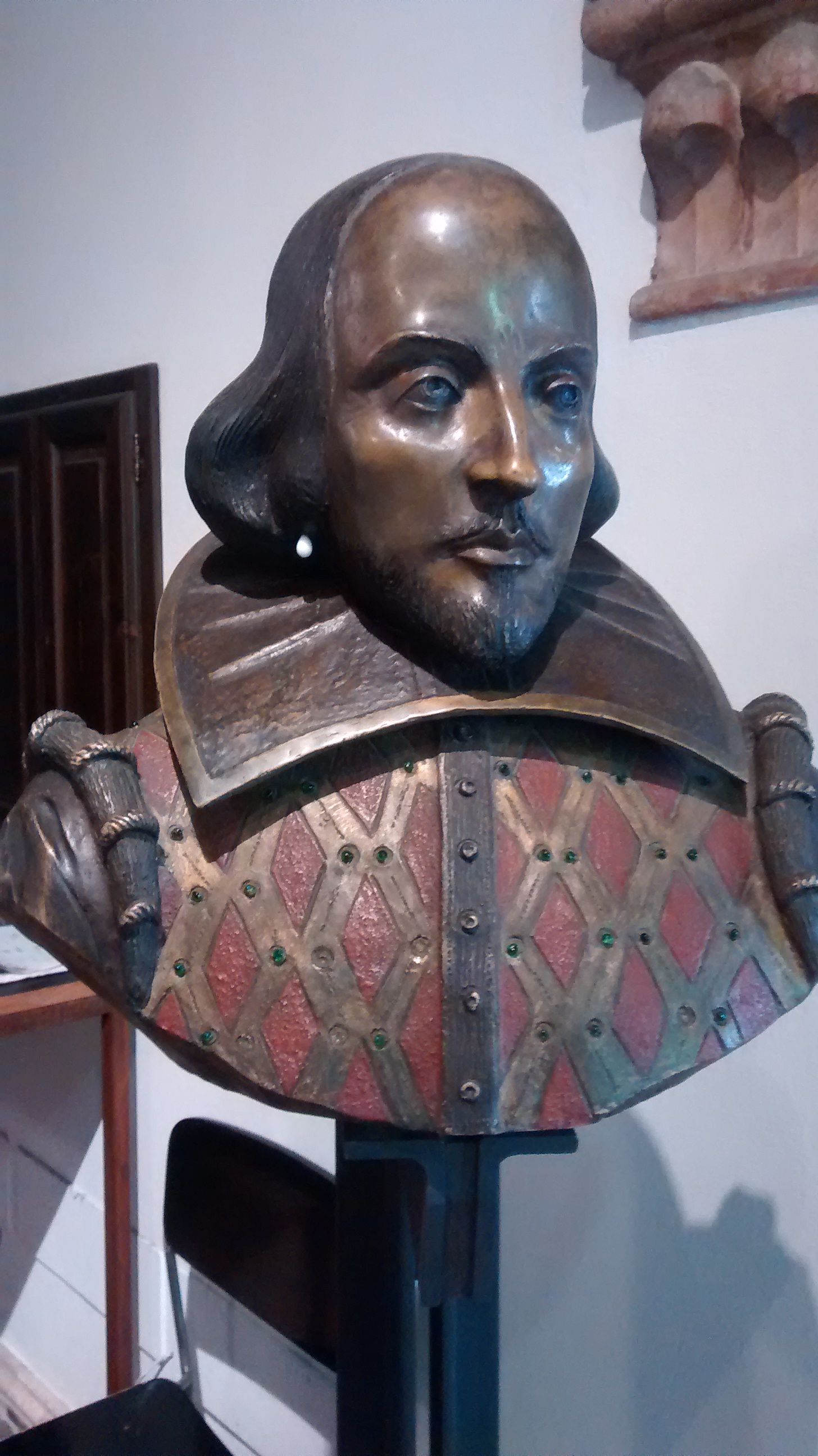
1. The venerable Shakespeare’s opus magnum, Hamlet, lends itself to a peculiar intergenerational dynamic in the familial sphere, where the titular ‘Prince of Denmark’ attains the realisation that the passing of his father was an act of corporeal malevolence, perpetrated by his own mother and dear uncle. Fuelled by an unbridled sense of filial devotion to his patriarch, he makes a covenant to exact just retribution. One of my innumerable preferences is when the knightly Hamlet emits the immortal line – “He was a man. Take him for all in all, I shall not look upon his like again”.
2. Jane Austen’s “Pride and Prejudice” portrays the paternal figure of Mr. Bennet exuding an endearing tenderness towards his family, particularly his daughters, effectively representing the epitome of a responsible father within any household.
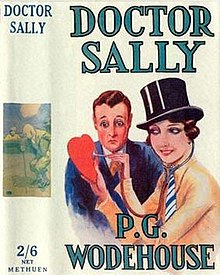
3. Upon perusing P.G. Wodehouse’s sagacious and witty “Blandings Castle” chronicles, one cannot help but admire the touching rapport between Freddy and his paternal figure– none other than the woolly-headed Lord Emsworth. Though at first, his lordship’s distaste for his offspring may seem unjustified, an explanation, documented in Wodehouse’s literary oeuvre, lays bare the reasoning thus:
Unlike the male codfish which, suddenly finding itself the parent of three million five hundred thousand little codfish, cheerfully resolves to love them all, the British aristocracy is apt to look with a somewhat jaundiced eye on its younger sons.
Nevertheless, in a display of magnanimous character, the nobleman strives zealously to extricate Freddy from the ramifications of his follies.
Wodehouse presents to us a wide range of paternal figures. Bingo Little feels proud when Algernon Aubrey Little tops a bonny baby contest. Blumenfeld Senior depends upon his kid to vet his upcoming theatrical productions before unleashing them upon the unsuspecting public. At the other end of the spectrum, we find a hapless Sir Roderick Glossop who, upon refusing to part with a sum of ten shillings by way of protection money to his soon-to-be stepson Seabury, gets treated to a tumble down a staircase duly covered with butter. To Mr. Pett, never at his ease with boys, Ogden Ford is a constant irritant. He dislikes his stepson’s personality, and he more than suspects him of stealing his cigarettes. He is frustrated at his own inability to be able to catch him in the act.
4. The literary figment by the great Margaret Mitchell, in her monumental masterpiece ‘Gone With The Wind’: a character of singular fortitude and paternal instinct, Gerald O’ Hara, an Irishman of rough-hewn exterior, loud of voice and manner, with a penchant for tippling and carousing, yet despite his brusque proclivities, provides a glimpse into the tenderest of fathers, as he moulds his daughter Scarlet into a force to be reckoned with, a lioness amongst men. Truly, Mitchell’s creation of Gerald is a nuanced and complex portrayal of an individual who, despite his faults, remains a loveable figure, endearing himself to the readers as he enchants his daughter with tales and kisses her goodnight.
5. In “The Godfather,” Mario Puzo masterfully depicts the intricate father-son bond of Vito Corleone and his four children. Vito lavishes his love on his eldest, Sonny, imparting his business know-how with hopes of a successful succession. He dutifully protects his other sons – Freddy and Michael – with equal fervour. He approves of Michael’s pursuit of education which aligns with his own lifelong aspiration. Vito also cares deeply for his daughter Connie, readily coming to her aid. As family head, Vito staunchly defends his children whenever they are in peril.
6. The creation of Harper Lee, ‘To Kill a Mockingbird’, chronicles the life of a patriarch who sets an arduous benchmark for fatherhood. The eminent Atticus Finch, with his lofty principles, intrepid spirits, august demeanour, staunch fidelity, and altruistic benevolence, stands tall as an embodiment of the ideal father figure, capable of instilling awe and admiration in any progeny. Indeed, he epitomizes what every child could possibly fantasize about their dream daddy.
7. In Alistair MacLean’s “Fear is the Key,” Talbot, the father, tormented by the untimely death of his son, embarks on a vengeful quest against those responsible.
8. Robin Cook’s “Fever” chronicles Charles Martel’s desperate struggle to save his daughter from the clutches of acute leukaemia, vividly capturing the depth of their relationship.
By no stretch of imagination can these honourable mentions considered to be exhaustive. As is the case with all the languages of the world, the Anglo-Saxon dialect affords innumerable variants in its portrayal of paternal figures. One bows in reverence to all the literary geniuses who have immortalized fathers by depicting them empathically for posterity.

In Other Languages
Whilst one may contend that this is perhaps not the most suitable juncture, I am strongly compelled to discuss yet another aspect of a father’s impact on his offspring’s life and offer a word of caution.
My understanding of foreign literature (excluding English) is limited. However, I find a remarkable book that explores a troubled father-son relationship.
Henrik Ibsen’s Norwegian play “Ghosts”, written in 1881, shows how a father can negatively affect his son’s life. In the story, Oswald suffers because of his father’s past mistakes, which lead to bad consequences.
Honestly, I have not read much foreign literature besides English works. But I do aspire to change that and explore more of the many amazing books available to us. Like the stories mentioned before, we are bound to find innumerable tales of brave fathers that would keep inspiring future generations for a long time.
Fathers in Indian Epics
In the vast and rich tapestry of the Indian literary tradition, the two epics that stand out like sparkling jewels are the Ramayana and the Mahabharata. These ancient works of art are not only a testament to the prodigious creative imagination of the Indian psyche but also a poignant portrayal of the sublime bonds between family members.
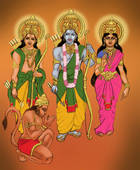
1. If I am to think of the Ramayana, my consciousness about father’s agony for his child is prominent with the image of Dasharatha, the father of Rama, whose life was plunged into an abyss of sorrow and despair when his own transgressions resulted in the exile of his beloved son. The heartrending portrayal of Dasharatha’s plight, as he withers away in unceasing agony, is a testament to the towering genius of Valmiki.
2. In a similar vein, the Mahabharata is a sublime exposition of familial relations. One of the main characters is that of Dhritarashtra, the blind king, whose blind love for his own sons leads to disastrous consequences not only for the Kuru clan but also for the society at large. When crushed by the weight of his unutterable grief arising out of the loss of all his sons in the ill-fated war between the Pandavas and the Kauravas, he intends to crush his nephew Bheema with his bare hands. Lord Krishna, however, manages to save the day by letting him instead crush an iron statue of the nephew. This is a vivid portrayal that invokes both pity and admiration for the old king.
Yet another key character, Arjuna, the mighty warrior, laments the death of his teenage son Abhimanyu by a group of cunning warriors on the Kauravas’ side. Overcome by grief, he vows either to kill Jayadrath by the time the sun sets the next day, or, if unsuccessful, to immolate himself thereafter. Here also, Lord Krishna intervenes by means of a celestial trick, thereby saving Arjuna’s life and avoiding an eventual loss in the war for the Pandavas.
Henceforth, it can be declared with utmost conviction that the oeuvres of literature not only eulogize sundry acts of valour and divinity but do so with great intensity, capturing a father’s unmistakable predilection towards his offspring.
To Conclude
To most of us, fathers happen to be role models. When they are emotionally present, we, the kids, become more resilient and confident. When they listen to our woes and setbacks with affirmation and empathy, we get an inner resilience. When they apologize, they show us the value of humility, courage, and emotional accountability. A hug, irrespective of how grown up we are, boosts our morale no end.
In summation, fathers, my splendid patrons, shoulder the weight of numerous literary masterpieces. On a day exclusively dedicated to celebrating fathers, let us extend our warmest admiration to all of them anywhere on this planet. Let us unreservedly acknowledge their invaluable contributions to the lives of their beloved children, thus affirming their truly splendid and invaluable roles.
(Reviewed and somewhat spruced up by yours truly!)
Related Posts:






 ashokbhatia