Feeds:
Posts
Comments

Posts Tagged ‘Kalidasa’

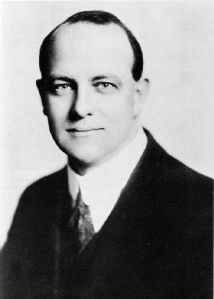
Wodehouse

P. G. Wodehouse is essentially a romantic at heart. Matters of the heart play a vital role in almost all the narratives dished out by him.

Bertie Wooster keeps avoiding a walk down the aisle, thanks to the support he gets from Jeeves. Yet, at the end of The Mating Season, we find him basking in the glow of satisfaction at having been instrumental in putting the affairs of quite a few couples in order.

In the Blandings saga, we meet a morose Gertrude who is pining for Beefy Bingham, her lover. She spreads depression in the house and, worse still, tries to be “helpful” to Lord Emsworth by tidying his study.

Mr. Mulliner keeps recounting love stories of various nephews and nieces of his. Ukridge may try and run a chicken farm, but the subplot of the love affair between Jeremy Garnet and Phyllis runs throughout the narrative. The spell of a quiet summer evening prompts Jeremy to confide his love to Phyllis.

The Literary Parabola of Seasons

It is hard to think of romance without thinking about the seasons. Whether it is the first warmth of spring pulling us out of hibernation or the quiet reflection that comes with autumn, there is an innate connection between the rhythm of nature and the emotional lives we lead. Wodehouse, of course, recognises this. He does not just use the seasons as convenient backdrops for romantic entanglements; he weaves them into the very fabric of his characters’ emotional journeys. Like that feeling of optimism you get on the first sunny day after months of grey skies, Wodehouse’s characters are often moved by the weather in ways they barely recognize themselves. It is this subtlety—this almost imperceptible nudge from nature—that aligns him with the great literary tradition of using the external world to reflect inner states.

The motif of seasons is deeply embedded in literature, symbolising various emotional and psychological states of characters. Many English literary experts have skilfully employed seasons to reflect inner turmoil, personal growth, and other emotional shifts.

In Sonnet 18 (“Shall I compare thee to a summer’s day?”), Shakespeare compares the beloved to a summer’s day, symbolising beauty, and vitality, while also lamenting the fleeting nature of summer and, by extension, life, and youth. In The Winter’s Tale, the season of winter represents both the coldness of jealousy and tyranny as seen in King Leontes’ irrational behaviour, whereas spring (in the later acts) symbolises rebirth, redemption, and forgiveness.

In his poem To Autumn, John Keats captures the beauty and melancholy of autumn, a season of maturity and ripeness and goes on to meditate on the bittersweetness of life’s temporality.

Tess of the d’Urbervilles by Thomas Hardy aligns Tess’s emotional journey with the changing seasons. The novel starts in spring, symbolising Tess’s innocence, and moves through summer and autumn, reflecting her growing despair and tragedy. Winter, in the end, represents death and loss.

In A Christmas Carol, Charles Dickens uses winter as a backdrop to explore themes of coldness, isolation, and redemption. The harsh, biting cold reflects Ebenezer Scrooge’s miserly, frozen heart. Yet, through transformation, the holiday spirit (and warming of his heart) mirrors a kind of internal spring-like rejuvenation.

Robert Frost, in Stopping by Woods on a Snowy Evening, depicts winter as representing solitude, contemplation, and the pull of death. The character’s momentary pause in a quiet, snow-covered wood suggests the allure of rest and surrender, while the journey he must continue reflects the mundane obligations of life.

These writers masterfully intertwined the natural cycle of seasons with human emotions, adding symbolic depth to their character’s emotional and psychological experiences. The ever-changing seasons become metaphors for the ups and downs of human life, making them a timeless tool in literary exploration.

The USP of Wodehouse

What sets Wodehouse apart is his imaginative use of Cupid’s machinations during different seasons. Cupid is indubitably one of the author’s most important comrade-in-arms. But the freedom to strike at will does not come without its attendant responsibilities. Love is in the air. Devotion is permitted. But physical intimacy is a taboo. Aphrodite has limited access to the goings-on. Eroticism is denied entry. An occasional occurrence which could amount to mild titillation alone is allowed. Across the oeuvre, Cupid is subject to strict Victorian norms of behaviour.

However, all this does not lessen his ingenuity in bringing lovers together. There are occasions on which even a member of either the feline or the canine species facilitates the development of a bond. Behind the frivolity and farcical events of Wodehouse’s narratives, Cupid ensures an almost imperceptible use of natural elements to influence the lives of the author’s characters. While stuck together on a rock by the seaside, a high tide in Mr. Wilton’s Holiday leads to a reconciliation between Jack and Mary.

Cupid even goes on to use different seasons as arrows in his quiver to smoothen the way to new relationships blossoming. In many of the relationships between two love birds, seasons provide a perfect backdrop. While the seasons may appear incidental to the plot, these not only embody the emotional states of the characters but also serve as invisible matchmakers.

Seasons become mere puppets in the deft hands of Cupid in a few cases. These play a key role in nudging Wodehouse’s characters toward romantic resolutions. Spring, summer, autumn, and winter often serve as metaphorical agents of Cupid, facilitating encounters, softening hearts, and reuniting sundered hearts. In fact, in such cases, seasons don the hat of an active participant in the narrative, behaving like key actors involved in the act.

Let us consider a few examples to see how Cupid assists Wodehouse in propelling the romantic chemistry between his characters by using various seasons as either a backdrop or a catalyst.
Spring: The Season of Blossoming Love

In Wodehouse’s fiction, spring invariably represents renewal, hope, and the blossoming of love. The imagery of spring, with its vibrant colours, warming temperatures, and burgeoning life, mirrors the rekindling or the birth of romantic feelings among characters. Wodehouse takes advantage of spring’s association with new beginnings to nudge his characters towards forging romantic affiliations, often underlining the season’s role as Cupid’s chief lieutenant.

Bertie Wooster takes some inspiration from Tennyson when he says:

“In the spring, Jeeves, a livelier iris gleams upon the burnish’d dove.”

He even imagines a charming girl to come up to him and seek his assistance in saving her from assassins.

“I don’t know if you know that sort of feeling you get on these days around the end of April and the beginning of May, when the sky’s a light blue, with cotton-wool clouds, and there’s a bit of a breeze blowing from the west? Kind of uplifted feeling. Romantic, if you know what I mean. I’m not much of a ladies’ man, but on this particular morning it seemed to me that what I really wanted was some charming girl to buzz up and ask me to save her from assassins or something.”

Similarly, in No Wedding Bells for Bingo, Cupid assists Wodehouse in explicitly tying romantic developments to the season. Bertie Wooster’s bumbling friends, eager to woo their respective partners, often find their romantic aspirations coming to fruition as spring blooms. Wodehouse seems to imply that the very air of spring carries romance, infecting even the most hopeless of suitors with renewed vigour and enthusiasm. Even Jeeves, who, when surprised, raises his eyebrows merely a fraction of an inch, is affected by spring fever. Towards the end of the story, we find that Bertie tells Bingo Little’s uncle that Bingo wants to marry Mabel, a waiter, and he, moved by the books read out to him, approves. Uncle declares that he plans to marry his cook, in whom Jeeves had shown interest earlier. However, Jeeves has already scratched the fixture and instead has another engagement of sorts with another girl, Mabel, the waiter whom Bingo had wanted to marry!

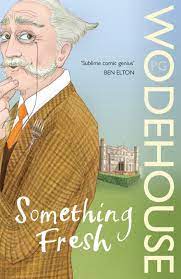
In Something Fresh, the sunshine of a fair spring morning incites a feeling of novel jauntiness amongst the residents of London. This is followed by the scene where Ashe Marson and Joan Valentine discover each other, and the seeds of romance get planted.

It is not that Cupid’s arrows prove to be effective in all the cases.

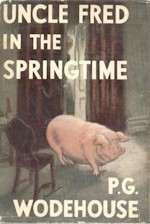
The spring motif continues with novels like Uncle Fred in the Springtime wherein the affair between Valerie and Horace comes to a satisfactory conclusion. However, Cupid’s arrows fail in the case of Polly and Gilpin. In Spring Fever too, Terry, who is initially wary of Mike due to his overwhelming good looks, warms up to him when she sees his battered face after a failed burglary attempt. Stanwood and Eileen also get together. But Mrs Punter runs off with Augustus Robb, leaving Shorty and Spink ruing their loss in love.

In the short story The Custody of the Pumpkin, the annual Spring Flower Show provides the backdrop for a classic Wodehouse romance. Lord Emsworth, obsessed with his prized pumpkin, is blissfully unaware that his son, Freddie Threepwood, is using the occasion to court a gardener’s daughter. The setting, with its blossoming flowers, is emblematic of the unanticipated flourishing of romance. While Lord Emsworth is preoccupied with his vegetables, spring’s inherent charm works on Freddie and his love interest, quietly orchestrating their courtship. Spring’s effect here is subtle but inevitable, as the characters seem unable to resist its influence.

Spring is also often a time for transformation in Wodehouse’s world. Characters who, during winter, might have been cynical, brooding, or emotionally distant, find themselves rejuvenated as the warmer weather arrives. When the ogre of winter is around, the characters’ instincts for self-preservation often dominate their tender thoughts of love. But once the winter is gone, the seasonal change from gloom to joie de vivre affects not only flora and fauna but also causes an emotional thawing amongst the Homo sapiens. Cupid assists Wodehouse in using this to show characters moving from a state of emotional hibernation to one of action and, eventually, romantic fulfilment.

Summer: Love in Full Bloom

If spring is the season of new beginnings, then summer in Wodehouse’s works represents the full bloom of love. It is as if Cupid decides to deploy the season at full throttle, its quiver operating on all its six cylinders. The warmth of the sun, long days, outdoor events such as garden parties and village fairs, a quick swim in a lake, and occasional bouts of rain create ideal conditions for love to grow further, often leading to a cementing of romantic affiliations. The languid pace of summer reflects the unhurried nature of developing affections, where flirtations deepen, and scales fall from couples’ eyes as they realise their love for each other.

Summer is the time when you can hear a snail clear its throat a mile away. When the sun is finishing its obligations for the day and rushing to a well-earned night of rest and repose, gnats and many other kinds of insects start fooling about all over the place.

In Right Ho, Jeeves, Bertie tells us it is July twenty-fifth when he returns from a trip to Cannes looking bronzed and fit. While at Cannes, a crisis arises in the matter of Tuppy Glossop and Angela Travers. They fall out due to Angela saying that Tuppy was getting fat and Tuppy not believing that a shark attacked her while at Cannes. Gussie Fink-Nottle is besotted with Madeline Bassett but does not have the courage to express his love to her. Eventually, it takes a dangerous midnight cycle ride by Bertie for Angela and Tuppy to reconcile their differences and for Madeline and Gussie to make up.

In The Mating Season, Madeline is yet again convinced that Bertie is secretly pining for her when he catches a 2.45 AM Milk Train and hides in the shrubbery, aiming to intercept the morning post which carries a letter from Gussie scratching the fixture with Madeline, thereby throwing a spanner in his plans to retain his bachelorhood. By the time the narrative ends, we find that Madeline and Gussie are reunited, Esmond Haddock has defied his aunts and is engaged to Corky, Constable Dobbs is reconciled with Queenie, and Gertrude has eloped with Catsmeat. Bertie’s bachelor status remains protected.

Cupid’s Benign Arrows

Cupid’s quiver contains many kinds of arrows. Other than the normal ones directed at consenting adults, on a few occasions, he also shoots the benign kind which are devoid of amorous intentions of any kind. Instead, these uplift the Spiritual Quotient of the ones at the receiving end. Or the kind that make one live up to the expectations of someone who is much younger in age, thereby also proving oneself worthy of one’s glorious ancestors.

In The Love that Purifies, we come across boys of a tender age who happen to be infatuated with Hollywood divas. We have Thos, who is besotted with Greta Garbo. We have Bonzo, who is in awe of Lilian Gish. Then, we have Sebastian Moon, whose affections are focused on Clara Bow. How these infatuations transform the behaviour of young boys is the nub or crux of the story. We are reminded that even menaces to society, in general, assume a saintly disposition when under the influence of the charms of their transient heartthrobs.

In Lord Emsworth and the Girl Friend, we discover that the lordship detests wearing stiff collars and making speeches. However, on the Parva School Treat Day, coinciding with the August Bank Holiday, when Blandings Castle becomes, in his lordship’s opinion, a miniature Inferno, he has little option but to fall in line with the command of Lady Constance Keeble. But that does not come in the way of his developing a respectful devotion towards Gladys. When she desires to have some flarze and gets spotted by Angus McAllister when doing so, the latter comes out of the potting shed at forty-five miles per hour. Gladys is quick to seek protection. She not only clutches the tails of Lord Emsworth’s coat but also slips her small, hot hand into his. It is a mute vote of confidence, and Lord Emsworth intends to be worthy of it. He stands up to the gardener and even defies his sister by refusing to deliver a speech.

The experience of Esmond Haddock and Lord Emsworth shows us that when Cupid strikes, even spines made of cottage cheese get transformed into those made of chilled steel!

When Rain Gods Assist Cupid 

In Summer Lightning, Hugo Carmody is surprised to find that it has been raining and decides to rush to the cottage nearby.

Ho! for the cottage, felt Hugo, and headed for it at a gallop. He had just reached the door, when it was flung open. There was a noise rather like that made by a rising pheasant, and the next moment something white had flung itself into his arms and was weeping emotionally on his chest.

The ‘something white’ is Millicent, Lord Emsworth’s niece, frightened by the Empress stashed in the gamekeeper’s cottage.

In Leave it to Psmith, the hero’s first encounter with Eve comes about when she is caught in a sudden spell of rain beneath the awning of Messers Thorpe & Briscoe. Even though he says he is above softer emotions in general, Eve, who is sumptuously upholstered at the time, stirs a chord within him. Chivalry comes into play. Stealing the best umbrella available in the cloakroom of the club and rushing out to offer it to her is the work of a moment for him. Had Cupid not been assisted by the Rain Gods at the time, his machinations might have been in vain.

Summer’s role as Cupid’s agent is also evident in the way characters often find themselves outdoors during the warm months, in situations that lend themselves to romantic misunderstandings and reconciliations. Wodehouse’s characters often attend tennis matches, picnics, and boating excursions during the summer, all of which provide opportunities for private conversations, furtive glances, and sudden declarations of love. The idyllic natural settings serve as romantic catalysts, drawing characters together under the spell of the summer sun.

Moreover, summer’s association with heat and intensity often mirrors the emotional heat of Wodehouse’s love stories. The heightened emotions of characters — whether it is the confusion of unspoken feelings, jealousy, or the passion of newfound love — often come to a head during this season.
Autumn: The Season of Mists and Mellow Fruitfulness

Autumn, with its falling leaves and cooling air, often signals a time of reflection in Wodehouse’s works. This season is less about the exuberance of new love and more about characters realizing their feelings, coming to terms with past mistakes, or making decisions about their romantic futures. In many ways, autumn represents a transitional phase in the romantic arc of Wodehouse’s characters — a period of contemplation before the final act of a romantic resolve. Cupid, perhaps tired of the hectic time he has had in the previous two seasons – spring and summer – does a bit of introspection, reviewing the progress of the arrows shot earlier on whatever technical gizmo he uses to keep a track of things, and deciding the future course of action in each case.  

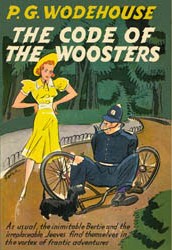
In The Code of the Woosters, Jeeves tells Bertie that autumn is a season of mists and mellow fruitfulness.

One of the reasons for Bertie visiting Totleigh Towers is to heal a rift between Gussie Fink-Nottle and Madeline, Sir Watkyn’s daughter. Madeline incorrectly believes Bertie to be in love with her, and she has promised to marry him if her engagement should ever fail. To avoid this calamity to befall him, Bertie persuades Madeline to invite him down, but he learns upon arriving that Gussie and Madeline have already reconciled. A parallel romantic track is that of Stiffy Byng and Harold Pinker. A silver cow creamer, a notebook of Gussie’s which insults the host, Sir Watkyn Bassett, a policeman’s helmet, and the Eulalie effect on Roderick Spode – all take turns to play a spoilsport. Eventually, Cupid succeeds in his mission and both the couples get united.

In Jeeves and the Old School Chum, when a carefully packed lunch basket goes missing at the Lakenham Races, and the car carrying Rosie M Banks and her old school friend Laura Pyke runs out of fuel in the middle of nowhere, a fight ensues between the two friends. Bingo Little wins an intense argument with the owner of a house nearby and ensures that his wife gets her afternoon cup of tea. The romance between the couple is back on its throne.

She turned for an instant to Bingo, and there was a look in her eyes that one of those damsels in distress might have given the knight as he shot his cuffs and turned away from the dead dragon. It was a look of adoration, of almost reverent respect. Just the sort of look, in fact, that a husband likes to see.

“Darling!” she said.

“Darling!” said Bingo.

“Angel!” said Mrs Bingo.

“Precious!” said Bingo.

Cupid is thus successful in rekindling the romance between the wife and the husband, which had earlier come under strain owing to a clash between Bingo’s dietary habits and Laura Pyke’s strict diet regime based only on fat-soluble vitamins.

The Indian Summer

Many of Wodehouse’s fans are aware of his evocative use of the term Indian Summer, which is said to be a period of unseasonably warm, dry weather that sometimes occurs in autumn in temperate regions of the northern hemisphere. The UK Met Office Meteorological Glossary published in 1916 defines an Indian summer “a warm, calm spell of weather occurring in autumn, especially in October and November”.

In Indian Summer of an Uncle, Wodehouse touches upon yet another facet of love – that of a more mature variety. When Uncle Goerge starts planning a walk down the aisle with a much younger Rhoda Platt, Jeeves explains the phenomenon as follows:

“One must remember, however, that it is not unusual to find gentlemen of a certain age yielding to what might be described as a sentimental urge. They appear to experience what I may term a sort of Indian summer, a kind of temporarily renewed youth.”

For those in an advanced age, holding hands and physical intimacy gets relegated to the background. Instead, common ailments and related medications and therapies rule the roost. At times, the lining of the stomach paves the way for a couple to start sharing the trials and tribulations of life with each other. When Piggy and Maudie, the latter being the aunt of Rhoda Platt, happen to meet after a gap of many years, Cupid is quick to seize the initiative and ensures that their romance gets rekindled.

While autumn may lack the vibrancy of spring and summer, its quiet beauty is essential to Wodehouse’s romantic narratives. It allows characters the space to reflect, reconsider, and eventually take action to secure their happy endings. In this way, autumn becomes an integral agent of Cupid, providing the emotional clarity needed for love to succeed.

Autumn’s natural imagery — with its sudden riot of beige, yellow and brown colours, and the promise of winter’s chill and its eventual strokes of brilliant white on the landscape — often evokes a sense of urgency in Wodehouse’s characters. As the days grow shorter, characters are compelled to make decisions about their romantic futures. Cupid can be seen using this season to build tension, pushing characters toward decisive action. The cooling air of autumn can often be seen as a metaphor for the characters’ cooling patience, forcing them to act before it is too late.
Winter: Love Amidst the Chill

Though less frequently employed in Wodehouse’s works, winter nonetheless plays a significant role in his romantic comedies. The cold, stark landscape of winter can serve as a powerful contrast to the warmth of human affection. In some of his stories, the challenges of winter — whether it be physical cold, isolation, or the dormant state of nature — underscore the importance of companionship and love as a source of warmth and vitality.

In The Ordeal of Young Tuppy, the latter and Angela have again had the proverbial lover’s tiff. While on a rebound, Tuppy starts flirting with an athletic girl named Miss Dalgleish who lives near Bleaching. The girl is fond of dogs; Bertie supposes Tuppy wants an Irish water-spaniel to give her as a Christmas gift. To impress the girl, Tuppy participates in a local game of football, where he performs well but is sad to find out later that the girl was not present on the occasion, having rushed off to London looking for an Irish water-spaniel. A fake telegram imploring Tuppy to rush to the aid of an ailing Angela lands up, restoring the relationship between the two.

In Something Fresh, a concatenation of circumstances leads to Ashe Marson travelling in an open cart from Market Blandings to the Castle in biting cold. Wodehouse describes cold as an ogre that drives all beautiful things into hiding.

Below the surface of a frost-bound garden there lurk hidden bulbs, which are only biding their time to burst forth in a riot of laughing colour; but shivering Nature dare not put forth her flowers until the ogre has gone. Not otherwise does cold suppress love. A man in an open cart on an English Spring night may continue to be in love; but love is not the emotion uppermost in his bosom. It shrinks within him and waits for better times.

In The Knightly Quest of Mervyn, Mervyn Mulliner wants to marry Clarice Mallaby. She thinks he is a chump and does not consent to marry him. Mervyn wants to prove himself and asks her to give him a quest, like the knights of old. It is December, and she has always wanted to eat strawberries in the middle of winter, so she tells Mervyn that she will reconsider his proposal of marriage if he acquires a basket of strawberries for her before the end of the month. After having had many setbacks in his knightly mission, he lands up at Clarice’s house and intercepts a package which has strawberries for her from Oofy Posser in whom Mervyn had earlier confided. He gets an idea and calls out to Clarice that he brought her strawberries. However, by the time she reaches the room, he has absent-mindedly eaten all the strawberries. Clarice throws him out in the chilly weather, not even allowing him to retrieve his hat. Cupid fails yet again, though Mr Mulliner concludes the story to his companions at Angler’s Rest thus:

“So there the matter rests. The whole thing has been a great blow to my cousin’s son, for he considers — and rightly, I suppose — that, if you really come down to it, he failed in his quest. Nevertheless, I think that we must give him credit for the possession of the old knightly spirit to which our friend here was alluding just now.

He meant well. He did his best. And even of a Mulliner more cannot be said than that.”

In A Damsel in Distress, Maud is shocked to see how fat Geoffrey has become since the one year they met in Wales. Though he has inherited a great deal of money, he now sports a triple chin and talks only of food. Winter forms a backdrop when Geoffery speaks of his having lived on a yacht during the previous winter.

Upon discovering that the party of the other part is now close to thirty pounds overweight, the tender emotion of love in Maud’s bosom evaporates. She realises her mistake. She rushes to the nearest phone, gets George on the line, and asks if he has gained any weight in the last year and if he has ever been to Florida during winter and relished a fish called pompano! When George replies in the negative, Cupid’s endeavours succeed, and their romantic affiliation is sealed.

Winter’s challenges — both literal and metaphorical — often lead characters to realise the value of love as a source of comfort and joy in an otherwise cold world. The season’s emphasis on survival and endurance mirrors the perseverance required for love to thrive despite obstacles. In many ways, Cupid uses the season of winter as a test of true love, as couples must navigate the season’s difficulties to find warmth and happiness in each other’s company.

Though less romantic on the surface than spring or summer, winter provides Wodehouse with opportunities to explore the depth and resilience of romantic relationships. It is a season where love tries to prove its worth by enduring hardship and by a conduct which is not only chivalrous but also knightly. Seeds of love may occasionally lie dormant in the frozen soil, ready to sprout as and when the season of spring kicks in.

The Six Seasons of Kalidasa

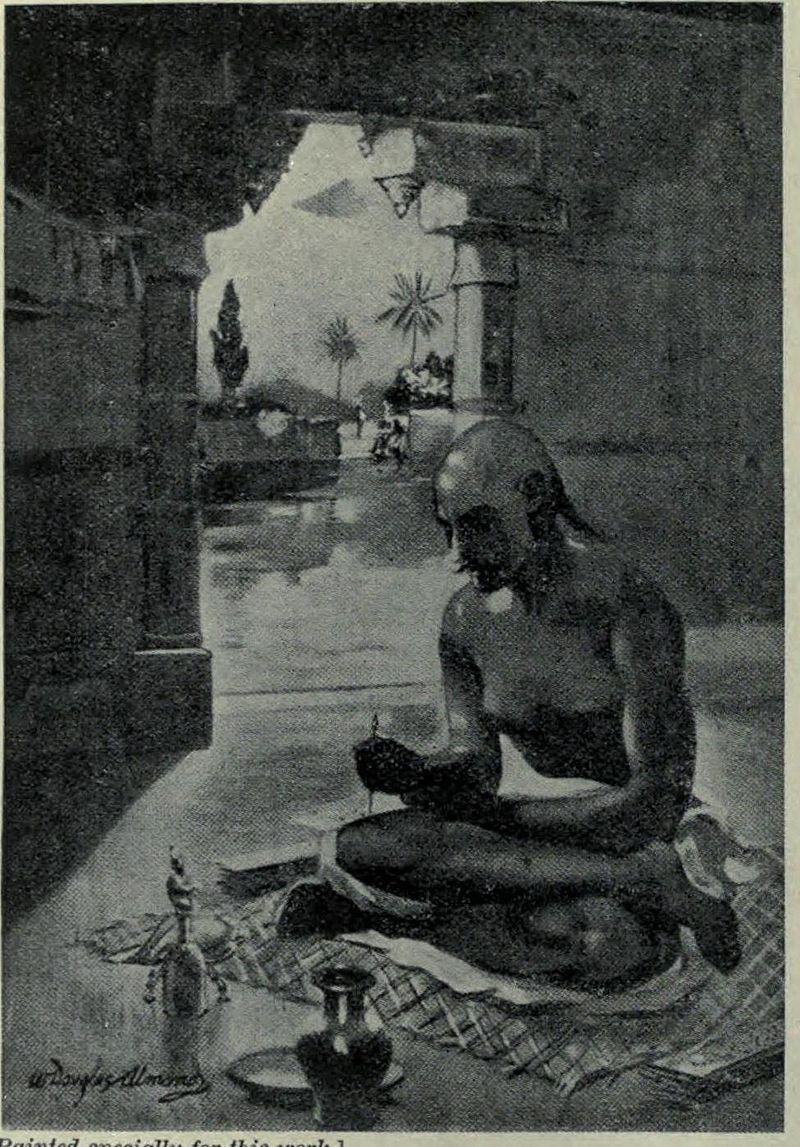
Yet another literary figure who, like Wodehouse, has captured different seasons with highly insightful narratives is Kalidasa.

Kalidasa, said to be born in India in the fourth century AD, is widely regarded as the greatest poet and dramatist in the Sanskrit language. His evocative portrayal of female beauty, an enthusiastic depiction of the affairs of the heart, and the diverse ways in which ladies dress up for a romantic encounter with their beloved in each of the six seasons typical of a tropical country would have surely attracted Cupid’s attention.

In one of his seminal works, Ritusamhara (Medley of Seasons), Kalidasa describes six seasons in his inimitable style: Spring (Vasanta), Summer (Greeshma), Monsoon (Varsha), Autumn (Sharad/Patjhad), Pre-winter (Hemant), and Winter (Shishir). Each one is dealt with evocative descriptions of the elements of nature. The seasons form a backdrop for the affairs of the heart and the sensuous pleasures of the skin.

In Harmony with Mother Nature

In the works of P.G. Wodehouse, the seasons play a subtle yet significant role in shaping the romantic lives of his characters. Spring brings new beginnings and the promise of love, summer sees romance in full bloom, autumn provides space for reflection and realisation, and winter challenges love to survive amidst the cold. Each season, with its unique qualities, acts as an agent of Cupid, quietly orchestrating the romantic entanglements and resolutions that define Wodehouse’s timeless comedies.

All of us have occasionally experienced that curious, unexplainable surge of nostalgia that comes with a crisp autumn breeze or a sudden downpour in summer. An often-overlooked slice of his literary brilliance is how he grounds quite a few exaggerated situations in something so universal — the changing seasons. We have all watched relationships blossom in spring, only to weather the storms of winter. Wodehouse reminds us, with a wink and a smile, that love, like the seasons, goes through its cycles. And while his characters might find themselves tangled in knots, he trusts that much like nature itself, things have a way of sorting themselves out in time. In a world that so often feels chaotic, it is this quiet reassurance that keeps us coming back to his stories, much like the comfort of the seasons returning year after year.

By aligning the emotional journeys of his characters with the changing seasons, Wodehouse creates a world where love is not only a matter of human interaction but also a natural phenomenon, influenced by the rhythms of the earth itself. The seasons, in their silent and invisible way, become crucial agents in the hands of Cupid to stage the grand drama of attraction, affection, desire, infatuation, and love.

After all, he is supposed to be the son of the love goddess Venus and the god of war Mars. His role in nudging Wodehouse’s characters towards a conclusion of their affairs of the heart deserves to be appreciated and applauded.

Notes:

  1. This article is inspired by Plumtopia’s blog post ‘The Four Seasons of Wodehouse’ (link below).
  2. Inputs from a Wodehouse expert and Suryamouli Datta are gratefully acknowledged.
  3. Plum’s caricature courtesy Suvarna Sanyal.
  4. A version of this article appears in the March 2025 issue of Wooster Sauce, quarterly journal of the P G Wodehouse Society (UK).

Related Posts:

Read Full Post »

Read Full Post »

It is not often that one comes across a live performance that promotes the cause of environment and sustainable living. The ballet from Ukraine, aptly titled Song of the Forest, takes the issue of environmental protection to a different level altogether.

The Theme

It is a magical tale of love between the forest girl Mavka and the young man Lukash. The world of man and nature interact. There is love, betrayal, despair, and human greed. There is the dependence of the animal kingdom on the forest. Either of the main protagonists cannot forget the magical moment of love. It is also a story about how fate changes for someone who loses touch with nature and stops listening to his inner voice.

The relationship between Mavka and Lukash develops gradually and coincides with the seasons. The ballet portrays the beginning of a relationship between Lukash and Mavka during spring. Their love blossoms during the summer, a season of fertility of the Ukrainian land.

Autumn brings Lukash’s betrayal as he marries another woman. Come winter, and both Mavka and Lukash die. Their souls eventually meet in the world of eternity.

The ballet has many mythological images from Ukrainian fairy tales. What is also endearing is the occasional presence of forest animals that appear on the stage at regular intervals. Characters with malevolent intentions are also unobtrusively woven into the flawless movements of the dancers.   

At its core, the ballet is a story of the fearless Mavka, who seeks peace in her world, just as Ukraine fights for freedom and peace in her country today.

Background

Song of the Forest is a legendary ballet that has been the pride of Ukrainian choreography for over 75 years. It celebrates romance as well as the purity of classical ballet technique. The ballet has already entered the Golden Fund of Ukrainian musical culture.

It is based on a play of the same name The Song of the Forest (1911) by Lesya Ukrainka, who was one of Ukrainian literature’s foremost writers, best known for her poems and plays. She was also an active political, civil, and feminist activist.

Gentle and lyrical music by the Ukrainian composer Mykhailo Skorulskyi was written for the ballet in 1936. It would not be wrong to say that he has gifted us with a real hymn to living nature and pure love. The music has a romantic aspect, is full of folklore, and captures the vivid moods of nature in a musical language. However, in the soundtrack, one misses a few sounds one typically associates with a forest. Like, either the occasional chirping of birds, or an infrequent roar of some animals.

Premiered in 1946, the ballet highlights the crucial need to promote a dialogue between man and nature, an aspect of our lives that most of us ignore these days, albeit at our own peril.

The Skill of the Artists

The ballet is filled with complex duet supports and has fascinating choreographic patterns. The skill and sophistication of the artists of Grand Kyiv Ballet artists leave the audience spellbound. The grace with which they move and the poise with which they perform either an assemble, a grande jeté, a plié, a pirouette, or a tour en l’air, leaves one mesmerised.

Forests in Indian Epics and Dramas

Forests play an important role on our planet and are part of many epic plays from India and elsewhere. Narratives of the Ramayana and the Mahabharata – both epics that are revered across South Asia – keep shifting from the kings’ palaces to forests. Almost all the works of Kalidasa in Sanskrit are replete with references to nature.  

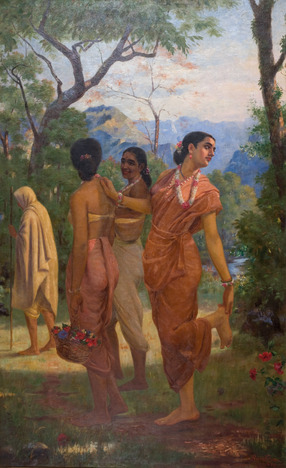
By way of an example, the heroine of Abhigyan Shakuntalam (The Recognition of Shakuntala) adores nature and is brought up in an area populated by dense forests. The play moves freely from the deep forest to the urban palace and from the earth to different levels of the heavens. The heroine falls in love with a king. Like Mavka and Lukash, their love also blossoms in the forest. However, upon return to his palace, the king forgets her. Eventually, the king realises his folly and the two get united.

Abhigyan Shakuntalam was probably the first Asian drama translated into Western languages. It is also one of the very first Sanskrit works ever translated into English. The first translation was done by the famous orientalist, Sir William Jones, in 1789. Its publication was a sensation and it went into five editions over two decades. It was translated into German in 1791, and into French in 1803. Later it was translated into several other Western languages. It inspired operas and ballets, including Marius Petipa’s ballet La Bayadère.

The hero of Meghadootam (The Cloud Messenger), a classic poem composed by Kalidasa, is a love-lorn yaksha. He has been banished by his master to a remote region for a year and is pining for his wife who lives in a far-off land. He requests a cloud hovering above to take a message of love to his wife.

Likewise, Ritu Samhara (An Account of All Seasons), a medium-length poem, captures in evocative detail all the six seasons in a tropical country like India. In all these literary masterpieces, nature plays an integral part.  

The Venue

During April 2024, the Song of the Forest was performed at the Drammen Theatre in Norway.

It is a magnificent building dating back to 1870 and has faced many challenges, including fires. But with each setback, it has risen like a Phoenix and emerged stronger. The last upgrade of the complex happened in 1997.

The theatre, and its courteous staff, enabled many amongst the audience to create a memory to be cherished for a long time to come!  

Notes:

  1. Part of the text is borrowed from the websites of Grand Kyiv Ballet and Drammens Theatre.
  2. Illustrations are courtesy the world wide web. Painting of Shakuntala is by Raja Ravi Varma.

Related Posts:

https://ashokbhatia.wordpress.com/2016/05/14/the-six-seasons-of-kalidasa-in-bollywood


Read Full Post »

Introduction

“In shattered gates, your radiant stride, proclaiming triumph’s song,

In the vast ascension from shadows, yours, the victory throng.

O triumphant soul, at life’s dawn anew,

In your grasp, the hopeful scythe, cutting bonds askew.

Through ancient woes, in desolation’s field, let freedom ring,

Come, O melancholy, come, O tranquil, yours, the victory spring.

Come, O unstained essence, come, O fearless breath,

In the morning sun’s arrival, midst storms, vanquish death.

The chariot of sorrow, in your path, resounds loud,

Awaken the dormant minds, in the heavens, be proud.

In the tapestry of life, weave melodies of joy,

Yours, the call of victory, that nothing can destroy.”

The translated lines above are from a song by Rabindranath Tagore. To me, they provide a clear description of the ‘Fearless Monk’ from India, which resonates with me and many others.

On His Birth Anniversary

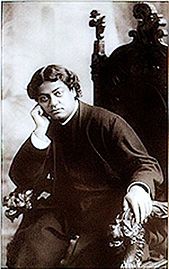
As we commemorate Swami Vivekananda’s birth anniversary, it’s customary to applaud his spiritual wisdom and profound contributions. However, let us embark on a unique journey into an often-overlooked facet of his personality – his impeccable sense of humour, beautifully encapsulated in many of his writings, however, I want to highlight particularly the piece titled ‘Paribrajak’ or ‘Traveller’. Here, we get a glimpse into the witty and comical storytelling prowess of Swamiji, accompanied by his closest disciples, Brother Tu (Swami Turiyananda) and Sister Nivedita.

Lethargy and the Diary Debacle

Swamiji, in his typical playful style, initiates the narrative with a candid confession about his inability to maintain a daily journal of his travel experiences. Blaming it on his inherited Bengali lethargy (and of course, his ‘inability’ to remember dates), he humorously claims his intention to write daily but continuously postpones it to eternity due to various engagements. The struggles of a Bengali writer unfold comically, resonating with the perpetual promises to put pen to paper but succumbing to the irresistible allure of life’s myriad distractions.  Call it a shade of procrastination if you will.

Sea Sickness and Lord Hanuman

The adventure at sea brings its fair share of amusement as Swamiji ponders whether Hanuman, Lord Rama’s devoted monkey disciple, also experienced sea sickness during his legendary leap to Lanka. Tongue-in-cheek, Swamiji suggests that Hanuman might have encountered some sickness when he accidentally stumbled upon a demon’s mouth. Comparing their voyage on a ship to Hanuman’s ‘heroic leap’, (apart from the ‘small detail’ that Lord Hanuman managed to accomplish through a mere leap, here we have Swamiji, an ‘ordinary person’ (?!), attempting to achieve the same feat by riding in a ship that sways with the whims of the waves!), Swamiji further jokes that their fellow travellers are no less than mischievous imps (who Lord Hanuman encountered upon arriving in Sri Lanka), but unfortunately, as Swamiji describes, he himself is stuck traveling with these imps who, according to Swamiji, are heavy meat eaters, solely fixated on using forks and knives for their meals. With a playful tone, Swamiji teases his beloved disciple, Brother Tu, for being afraid of being assaulted by these harmless items of cutlery.  For, according to Swamiji, his disciple is quite traumatized about the fact that those imps who have taken the shape of travellers will be quite eager to have him (Brother Tu) as a snack!

Comic Description of the Sea and Rivers

In the realm of Kalidasa’s poetic tapestry, the sea unfurls its boundless expanse, merging seamlessly with the distant orbits of the wheel. Along the shores, dark blue illusions dance amidst rows of swaying palms, their rhythm mirroring the heartbeat of the forest. On the maritime horizon, where the earth meets the sky, a black line dissolves into the saline stream of the ocean, creating a mesmerizing spectacle.

Swamiji takes a jocular dig at the famed poet Kalidasa’s romanticized depiction of the sea in his work “Raghuvamsa”. He asserts that reality differs greatly from poetic imagination. From the ship’s wild swings to Britannias shouting slogans, Swamiji amusingly reveals how his disciple, Brother Tu, succumbs to seasickness, likening his troubled state to a desperate search for the first grain of rice consumed during a rice eating ceremony. He then dives into humorous descriptions of India’s rivers, adding a splash of laughter to the narrative.

A Satire on Caste and British Rule

Swamiji uses his unique sense of humour to shed light on the caste system prevalent in India during the British Raj. With a sarcastic tone, he applauds the British government for considering all Indians as mere “natives,” thereby eradicating the evil of caste discrimination.

Moving on, he mocks the Indians who attempted to disown undesirable aspects of Hinduism by claiming to be of Aryan descent and enlightened by British blood, only to find that the British government disagreed. Swamiji emphasizes the need to cherish and learn from the West rather than blindly imitate it.

Racism and the Loss of Homesickness

Condemning racism, Swamiji humorously compares the Western concept of maintaining a distance from natives to India’s caste system. He expresses how this realization, though bitter, temporarily erased his homesickness, as it mirrored the Indian belief of a caste getting corrupted when mingling with people of lower social standing.

Entertaining Tales of Forts, Businessmen, and Seasickness

Swamiji entertains readers with amusing stories of forts, businessmen, and the challenges faced by fellow travellers on their voyage to the west. The witty anecdotes and lively descriptions bring history and places to life, providing delightful storytelling and a fresh perspective.

A Humorous Take on Cultures and History

Swamiji, the master of wit, unveils a delightful indifference as he takes us on a journey through cultures and the histories of nations. With his clever and comical lines, he effortlessly breathes life into his writing, leaving us in stitches. Let me share with you one such gem that may leave you chuckling uncontrollably.

“The Europeans,” quips Swamiji, “believe it is scandalous to have bare feet, so they go to great lengths to cover them up, completely disregarding the exposure of any other body parts! And in this incredible land of India, women are expected to cover their heads with veils, seemingly unconcerned about which other body part is on display in the process.”

Swamiji’s light-hearted tone adds an extra layer of amusement and intrigue to his narrative, making it an enjoyable ride. 

How Swamiji Channels His Inner Western Art: A Delightful Analysis

Being an ardent admirer of the great humourist P.G. Wodehouse (whom, I think, Swamiji had never met), I can’t help but spot the same brilliant wit in Swamiji’s works! Believe it or not, his clever observations about society, the history of any nation documented, his fellow companions, and even himself, bring back fond memories of Plum’s delightful creations. You simply must delve into this masterpiece (Traveller) to grasp the essence of my claim. But alas, I must offer my sincerest apologies to my dear readers, as my feeble attempts at capturing the same mirth in my humble language may do grave injustice to the brilliance of his original writings.  But fear not, for Swamiji’s words are an absolute riot,   

For example, in the realm of architectural contemplation, Swamiji’s astute reflections on the nuances of German and French architecture elicit a hearty guffaw. With a dash of wit as effervescent as a perfectly shaken cocktail, he wittily opines:

“Behold the robust and masculine visage of German Architecture, akin to a residence crafted for grand elephants or noble horses. Contrastingly, the French architectural symphony, tailored for our cherished animal companions, paints a tableau of celestial beings frolicking in ethereal realms!”

Surely, such ingenious observations offer a sneak peek into the kind of humour-laced glasses which Swamiji used to differentiate between two starkly different architectural styles.

In a similar vein, Wodehouse describes a street in London in his inimitable tongue-in-cheek manner as follows:

In shape Arundell Street is exactly like one of those flat stone jars in which Italian wine of the cheaper sort is stored. The narrow neck that leads off Leicester Square opens abruptly into a small court. Hotels occupy two sides of this; the third is at present given up to rooming houses for the impecunious. These are always just going to be pulled down in the name of progress to make room for another hotel, but they never do meet with that fate; and as they stand now so will they in all probability stand for generations to come.

(Something Fresh)

In Conclusion

This exploration of Swami Vivekananda’s humour unveils a side of him rarely discussed – his comic genius. By delving into his humorous travel writings, readers gain insight into the wit possessed by this esteemed Indian monk. Beyond being a spiritual leader, Swamiji emerges as a storyteller with a keen sense of humour, inviting everyone to dive into the hilarity and discover the “Indian Monk with a sense of humour” for themselves.

Cheers to the fearless monk who not only enlightened our minds and exhorted us to lead purposeful lives, but also tickled our funny bones!

Related Posts:

Read Full Post »

I conclude this series in celebration of the 10th anniversary of this blog site! I wish to thank all my followers and readers who have always encouraged me (and keep doing so) in this journey.

ashokbhatia's avatarashokbhatia

Uncle Fred and Shakespeare

Yet another sterling example of Wodehouse’s use of Shakespeare is found in Uncle Fred in the Springtime (1939).

When Alaric, Duke of Dunstable decides to take Empress of Blandings away from her loving master and get her fit, Lord Emsworth calls in the services of the redoubtable Uncle Fred. Fred arrives full of the joys of spring, with nephew Pongo Twistleton and old friend Polly Pott in tow, and despite the efforts of the efficient Baxter, endeavours to scupper the Duke and bring together a variety of romantic couplings.

The perils of a financial obligation

‘Beginning by quoting from Polonius’s speech to Laertes, which a surprising number of people whom you would not have suspected of familiarity with the writings of Shakespeare seem to know, Mr Pott had gone on to say that lending money always made him feel as if he were rubbing velvet the…

View original post 1,386 more words

Read Full Post »

ashokbhatia's avatarashokbhatia

KalidasaKalidasa, said to be born in the 4th century AD, is widely regarded as the greatest poet and dramatist in the Sanskrit language.  Had he been alive today, he would have been a very busy man, possibly assisted by a huge team of research assistants, dishing out scripts, dialogues and lyrics for a vast majority of our dream merchants in Bollywood.

His emphasis on capturing the innate beauty of nature might not have enthused many of our present day producers and directors. However, his evocative portrayal of female beauty and the passionate depiction of the affairs of the heart would have surely had the Bollywood movie makers in enthrall.

In his ‘Ritusamhara’ (Medley of Seasons), Kalidasa describes six seasons in his inimitable style: Summer (Greeshma), Monsoon (Varsha), Autumn (Sharad/Patjhad), Pre-winter (Hemant), Winter (Shishir) and Spring (Vasanta). Each one is dealt with evocative descriptions of the elements of…

View original post 590 more words

Read Full Post »

When Kalidasa speaks of Summer in Ritusamhara, he not only talks of the hot and dusty earth but also of the comfort of fountains and lily ponds, the moonlit nights spent either on cold slabs of marble or on terraces, the expectations of a good monsoon soon to follow and the affairs of the heart. He touches upon the manner in which lovers prepare for courtship in this harsh season. The use of fragrant flowers and sandal paste gets mentioned. The mention of soft sounds of the anklets worn by lissome damsels fires up one’s imagination.

The poet might as well have alluded to the kind of summer that Pondicherry offers. Howsoever oppressive the heat may feel during the first half of the day, late afternoon onwards, a cool breeze starts blowing in from the sea-side. The trees start swaying with gay abandon. The lily ponds can be forgotten. As the sun starts packing up its bags for a night’s well earned rest and repose, denizens rush to the promenade and enjoy a leisurely stroll thereat.

If the tender coconuts on offer provide succour to a hapless traveller by the day, small garlands made up of fragrant jasmine flowers provide a welcome relief during the evening hours. One’s olfactory senses kick in. The soul drives solace. The colour of either the skin or the hair, which wears such a garland and boasts of such a treat to one’s senses, no longer matters. The mere thought of a leisurely stroll which comes with the perks of an intoxicating aroma wafting in frequently lifts one’s soggy spirits no end.

Vendors peddling frozen desserts and ice creams of all sizes and shapes laugh all the way to their respective banks. Those dishing out fruit juices and smoothies also do brisk business. Owners of outdoor cafes miss their normal rush of customers, who prefer to pop up instead at restaurants which offer air-conditioned comfort. Hotels boasting of swimming pools are hard pressed to accommodate guests who would like to take the plunge. Boutiques which offer organically made perfumes often run out of supplies. Those selling cotton garments never complain of any slackness in their business.

Like the poet envisages, cool rays of moonlight provide great comfort late in the evenings. Just lying on one’s terrace and looking up at the moon makes one forget the harshness of the hot and humid days. The sheer expanse of twinkling stars leaves one invigorated. The skies are invariably clear and one can easily see distant constellations.

The reasons for Pondicherry being attractive during summers are not hard to find. The place is small in size and one does not waste much time commuting from one place to the next. Even though it offers metropolitan comforts, it is not a concrete jungle. Mother Nature still holds sway. Environment is clean. People are friendly and cool.

An early morning dip in the sea perks one up no end. So do boat rides, surf riding and scuba diving. The crowds are lesser, making it a good time to enjoy a peaceful vacation in this little town. With lesser number of people swarming at the beaches, one can enjoy one’s private space at most public places.

As someone who has lived in Pondicherry for over two decades, one finds that the summers were almost 2 degrees cooler in the past than what one finds these days. My favourite spot is a neem tree in the backyard of my house, where I can devour a Blandings story dished out by P G Wodehouse, with a kettle full of green tea by my side, duly accompanied by some cookies.

I am sure you have perfected your own methods of enjoying the summer in Pondicherry. Feel free to share your ideas with me!

(Images courtesy www)

(A version of this appears here: https://www.pondylive.com/simple-pleasures-of-a-pondicherry-summer-starry-nights-sea-breeze-sweat-and-surf)


Read Full Post »

ashokbhatia's avatarashokbhatia

The departure of the rainy season leaves us with a weather which is hot and humid. The sky is a clean blue. The sun tends to get merciless yet again but is unable to catch up with the ferocity it displays during summers. Rivers and lakes are full to the brim, but are relatively quieter.

In ‘Ritusamhara’, Kalidasa captures this season as evocatively as he does all others. All the natural features of autumn get compared to either some activity or some ornament of the delicately nurtured. Immaculate moonshine is often said to be veiled by clouds. Twinkling stars get alluded to as jewellery of the autumnal night. Affairs of the heart invariably take centre stage.

Bollywood does not refrain from showing us the beauty of this season in all its glory while the hero and the heroine profess their love for each other. But there is a…

View original post 790 more words

Read Full Post »

Uncle Fred and Shakespeare

Yet another sterling example of Wodehouse’s use of Shakespeare is found in Uncle Fred in the Springtime (1939).

When Alaric, Duke of Dunstable decides to take Empress of Blandings away from her loving master and get her fit, Lord Emsworth calls in the services of the redoubtable Uncle Fred. Fred arrives full of the joys of spring, with nephew Pongo Twistleton and old friend Polly Pott in tow, and despite the efforts of the efficient Baxter, endeavours to scupper the Duke and bring together a variety of romantic couplings.

The perils of a financial obligation

‘Beginning by quoting from Polonius’s speech to Laertes, which a surprising number of people whom you would not have suspected of familiarity with the writings of Shakespeare seem to know, Mr Pott had gone on to say that lending money always made him feel as if he were rubbing velvet the wrong way, and that in any case he would not lend it to Pongo, because he valued his friendship too highly. The surest method of creating a rift between two pals, explained Mr Pott, was for one pal to place the other pal under a financial obligation.’

Of Hamlet and optimism

When Pongo Twistleton takes a pessimistic view of the plan hatched by Lord Ickenham, the latter consoles Polly thus.

‘I hope he isn’t frightening you, Polly.’
‘He is.’
‘Don’t let him. When you get to know Pongo better,’ said Lord Ickenham, ‘you will realize that he is always like this — moody, sombre, full of doubts and misgivings. Shakespeare drew Hamlet from him. You will feel better, my boy, when you have had a drink. Let us nip round to my club and get a swift one.’

Of poets being commercial

When Ricky tries to strike a deal with Duke, a comment on poets having a keen eye on royalty returns pops up.

‘Poets, as a class, are business men. Shakespeare describes the poet’s eye as rolling in a fine frenzy from heaven to earth, from earth to heaven, and giving to airy nothing a local habitation and a name, but in practice you will find that one corner of that eye is generally glued on the royalty returns. Ricky was no exception. Like all poets, he had his times of dreaminess, but an editor who sent him a cheque for a pound instead of the guinea which had been agreed upon as the price of his latest morceau was very little older before he found a sharp letter on his desk or felt his ear burning at what was coming over the telephone wire.’

The art of soliloquising

Of Aunts who soliloquise

Many of those who belong to the so-called sterner sex might appreciate the sentiment expressed here:

‘As far as the eye could reach, I found myself gazing on a surging sea of aunts. There were tall aunts, short aunts, stout aunts, thin aunts, and an aunt who was carrying on a conversation in a low voice to which no body seemed to be paying the slightest attention. I was to learn later that this was Miss Emmeline Deverill’s habitual practice, she being the aunt of whom Corky had spoken as the dotty one. From start to finish of every meal she soliloquised. Shakespeare would have liked her.’
[The Mating Season (1949)]

When smoking habits come under the lens

Lancelot Bingley, an upcoming young artist, is engaged to Gladys Wetherby, a poetess, who not only has great skill with the pen but also has the face and figure of a superior kind of pin-up girl. However, for them to be able to take a saunter down the aisle, financial support from Gladys’ Uncle Francis, an obese game hunter, is necessary.

Lancelot gets commissioned to paint a portrait of Uncle Francis, who is known to abhor tobacco in any form. However, Lancelot decides to smoke a quiet cigar in the garden when Uncle and her magnificent cook happen to come along. Hamlet gets invoked.

“That, or something like it, was what I said, and I dived into the shrubbery. The voices came nearer. Someone was approaching, or rather I should have said that two persons were approaching, for if there had been only one person approaching, he would hardly have been talking to himself. Though, of course, you do get that sort of thing in Shakespeare. Hamlet, to take but one instance, frequently soliloquised.”

[A good cigar is a smoke (Plum Pie, 1966)]

When hesitation takes over

In order to maintain matrimonial harmony, Bingo Little needs to establish an alibi which would undo the damage done since Rosie M Banks has discovered a photo of his in the Mirror, which shows him being led by a gruff policeman along with Miss Mabel Murgatroyd, a redhead of singular beauty.

Freddie Widgeon gets consulted at the Drones. The option of shoving his chin out and saying ‘So what?’ to the love of his life is ruled out. Freddie then reminds him of the old gag about ‘women being tough babies in the ordinary run of things but becoming ministering angels when pain and anguish wring the brow.’ An accident must come about. Getting hit by a cab is not favoured. An idea of a typewriter falling on Bingo’s toe then takes shape. Back in his Wee Tots office, Bingo attempts it.

When it comes to describing a state of hesitation, Shakespeare comes to one’s aid.

‘It really began to seem as if Freddie Widgeon’s typewriter-on-toe sequence was his only resource, and he stood for some time eyeing the substantial machine on which he was wont to turn out wholesome reading matter for the chicks. He even lifted it and held it for a moment poised. But he could not bring himself to let it fall. He hesitated and delayed. If Shakespeare had happened to come by with Ben Jonson, he would have nudged the latter in the ribs and whispered “See that fellow, rare Ben? He illustrates exactly what I was driving at when I wrote that stuff about letting ‘I dare not’ wait upon ‘I would’ like the poor cat in the adage.”

[Bingo bans the bomb (Plum Pie, 1966)]

Of Humour, Humourists and the Bard

Plum held the Bard in high esteem. He once said that “Shakespeare’s stuff is different from mine, but that is not to say that it is inferior.” The frequent use of Shakespearean phrases by Plum merely attests to the same.

Even when putting across a note on humour, Plum does not hesitate to quote the Bard.

“I only asked him how many crows can nest in a grocer’s jerkin. Just making conversation.”
“And what was his reply? Tinkling like a xylophone, he gave that awful cackling laugh of his and said ‘A full dozen at cockcrow, and something less under the dog star, by reason of the dew, which lies heavy on men taken with the scurvy’. Was that sense?”
“It was humour.”
“Who says so?”
“Shakespeare says so.”
“Who’s Shakespeare?”
“All right, George.”
“I never heard of any Shakespeare.”
“I said all right, George. Skip it.”
“Well, anyway, you can tell him from now on to keep his humour to himself, and if he hits me on the head just once more with that bladder of his, he does it at his own risk.”
[A Note on Humour (Plum Pie, 1966)]

How about a Plummy Kalidasa?!

Those familiar with the works of Kalidasa, a poet known for his delicately romantic works in the Sanskrit language, could justifiably rue the fact that Plum, a romantic at heart himself, never got around to quoting him. If a translation had been used by Plum, his fans would have had an even richer harvest to feast upon.

Imagine a distraught Gussie Fink Nottle pining for Madeline Bassett and sending messages to her through clouds passing by above, a la Meghadootam. An exchange of letters and telegrams would have no longer been necessary. Clouds would have acted as a means of communication – a prospect which the younger lot exposed to the Internet of Things and Cloud Computing these days would have thoroughly approved of.

Ritusamhara, a compendium of lover’s escapades across diverse seasons, would have made rich contributions to the lake side jaunts of Honoria Glossop with Bertie Wooster, what with the latter scheming to push her younger brother into the lake waters. With Kalidasa’s support, the description of a harsh winter evening in Something Fresh – when Ashe Marson is being escorted to Blandings Castle – would have got bolstered no end.

A Plummy Shakespeare

Die-hard fans of The Bard might not be too amused at the Plummy version of the ageless poet. Some linguistic purists might also register a protest, possibly composing a nasty e-mail or two even as you read this piece, if piece is indeed the word I want. But there shall never be a doubt as to the additional layer of rich Shakespearean icing dished out by P G Wodehouse on top of so many of his oh-so-delicious Plum cakes, adding to the delight of his fans worldwide.

(Notes:

  1. Inputs received from some ardent fans of Wodehouse are gratefully acknowledged.
  2. A scholarly perspective on the subject can be found here

Related Posts: 

https://ashokbhatia.wordpress.com/2017/07/01/presenting-a-plummy-shakespeare-part-1-of-3

https://ashokbhatia.wordpress.com/2017/07/08/presenting-a-plummy-shakespeare-part-2-of-3

https://ashokbhatia.wordpress.com/2017/06/26/the-perils-of-not-suffering-from-shakespearitis)

Read Full Post »

ashokbhatia's avatarashokbhatia

After a long spell of a harsh summer, the monsoon ushers in a season of joy and relief. The aroma of the scorched earth touched by the first torrent of rains is intoxicating. Birds and beasts are equally delighted. The whole nature changes its texture.

This is indeed the season where Bollywood outdoes itself. Farmers rejoice. Those who are lonely go about dancing in the rain, hoping that a beloved would be discovered soon enough. Lissome heroines prance about in their fully drenched attires, performing dance steps which could put an Olympic gymnast to shame. When it gets pitch dark, lightning helps young ladies to locate their lovers.

Courtship reaches a higher level of intensity. Hormones run amok. Sounds of thunder make the heroine cling closer to the hero. Those who have lost their beloveds to the harsh workings of Fate fondly recollect their lady-love in this season. Perched on…

View original post 885 more words

Read Full Post »

Older Posts »