Feeds:
Posts
Comments

Posts Tagged ‘Leadership’

(Here are some excerpts from a blog by Mr N Harihara Subramaniyan. The full version can be found at his own blog site: http://www.visionhari.com/chanakya.php.

Permission to reproduce it here is gratefully acknowledged.)
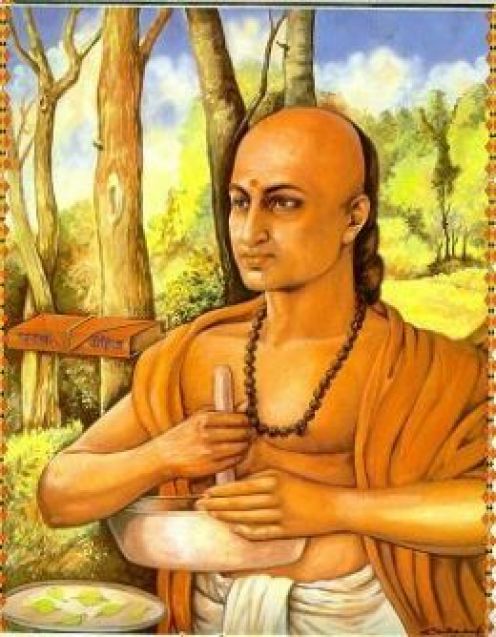
 

Chanakya was an Indian teacher, philosopher, and royal advisor. Originally a professor of economics and political science at the ancient Takshashila University, Chanakya managed the first Maurya emperor Chandragupta’s rise to power at a young age. He is widely credited for having played an important role in the establishment of the Maurya Empire, which was the first empire in archaeologically recorded history to rule most of the Indian subcontinent. Chanakya served as the chief advisor to both Chandragupta and his son Bindusara. Chanakya is traditionally identified as Kautilya or Vishnu Gupta, who authored the ancient Indian political treatise called Arthasastra (Economics). As such, he is considered as the pioneer of the field of economics and political science in India, and his work is thought of as an important precursor to classical economics. His works were lost near the end of the Gupta dynasty and not rediscovered until 1915.

Brief About Chanakya

Son of Rishi Chanak, Chanakya, also known as Kautilya or Vishnugupta, was born in Pataliputra, Magadh (modern Bihar), and later moved to Taxila, in Gandhar province (now in Pakistan). At a very early age little Chanakya started studying Vedas. The Vedas considered being the toughest scriptures to study were completely studied and memorized by Chanakya in his infancy. He was attracted to studies in politics. In politics Chanakya’s acumen and shrewdness was visible right from childhood. He was a student of politics right from child hood. Known as a masterful political strategist, He knew how to put his own people in the opposite camp and spy the enemy without his knowledge before destroying him forever. Chanakya was an ace in turning tables in his favor irrespective of the circumstances. He never budged to pressure tactics by the ruthless politicians. In this way after studying religion and politics, he turned his attention to economics, which remained his lifelong friend. “Nitishastra”, a treatise on the ideal way of life shows his in depth study of the Indian way of life. He was a professor (acharya) of political science at the Takshashila University and later the Prime Minister of the Emperor Chandragupta Maurya. He is regarded as one of the earliest known political thinkers, economists and king-makers. He was the man to envision the first Indian empire by unification of the then numerous kingdoms in the Indian sub-continent and provide the impetus for fights against the Greek conqueror Alexander.

Leadership Qualities

  • He was brave enough to speak from his heart to any ruler at any situation.
  • His strategic movement based on information from enemy side using his spies
  • He administered well on various faculties like law & order, taxation, revenue, foreign policy, defence, war, strategy formation and foreign relations etc.
  • He worked at the total annihilation of problems by the roots.
  • As a person, Chanakya had been described variously, as a saint, as a ruthless administrator, as the king maker, a devoted nationalist, a selfless ascetic and a person devoid of all morals.
  • Some of his stark views made him into an ambivalent personality for the world like the observance of morals and ethics was secondary to the interests of the ruler.

Principles & Practices

Chanakya advocated the following for the welfare of country

  • Self-sufficient economy not dependent on foreign trade.
  • An egalitarian society where there are equal opportunities for all.
  • The efficient management of land is essential for the development of resources.
  • The state should take care of agriculture at all times.
  • Government machinery should be directed towards the implementation of projects aimed at supporting and nurturing the various processes; beginning from sowing of seeds to harvest.
  • The nation should envisage constructing forts and cities.
  • Internal trade was more important to Chanakya than external trade.
  • The state should collect taxes at a bare minimum level, so that there is no chance of tax evasion.
  • Laws of the state should be the same for all, irrespective of the person who is involved in the case.
  • Destitute women should be protected by the society because they are the result of social exploitation and the uncouth behavior of men.
  • Antisocial elements should be kept under check along with the spies who may enter the country at anytime.

Chanakya envisioned a society where the people are not running behind material pleasures. Control over the sense organs is essential for success in any endeavor. Spiritual development is essential for the internal strength and character of the individual. Material pleasures and achievements are always secondary to the spiritual development of the society and country at large.

Achievements

His work on Arthashastra transcends the time broadly covers fourteen areas

  • Deals with the King – his training, appointment of minister etc.
  • Describes the duties of various officers of the state and gives a complete picture of the state activities.
  • Concerned with law and administration of justice.
  • On suppression of crimes.
  • A sundry collection of topics including salaries of officials.
  • On foreign policy and constituent elements of state.
  • The way in which each of the six methods of foreign policy may be used in various situations
  • Relates to calamities.
  • On preparations of war.
  • Concerned with fighting and types of battle arrays.
  • How a conqueror deal with a number of chiefs rather than one king.
  • Shows how a weak king when threatened by a stronger one must overpower him.
  • Concerned with the conquest of the enemy’s fort by fighting.
  • Deals with occult practices.

Literary Works

Chanakya is perhaps less well known outside India compared to other social and political philosophers of the world like Confucius and Machiavelli. His foresight and wide knowledge coupled with politics of expediency helped found the mighty Mauryan Empire in India. He compiled his political ideas into the ‘Arthashastra’, one of the world’s earliest treatises on political thought and social order. His ideas remain popular to this day in India. In Jawaharlal Nehru’s Discovery of India, Chanakya has been called the Indian Machiavelli. Three books are attributed to Chanakya: Arthashastra, Nitishastra and Chanakya Niti. Arthashastra (literally ‘the Science of Material Gain’ in Sanskrit) is arguably the first systematic book on economics. It discusses monetary and fiscal policies, welfare, international relations, and war strategies in details. Many of his nitis or policies have been compiled under the book title Chanakya Niti. Nitishastra is a treatise on the ideal way of life, and shows Chanakya’s in depth study of the Indian way of life.
 

Read Full Post »

Teams

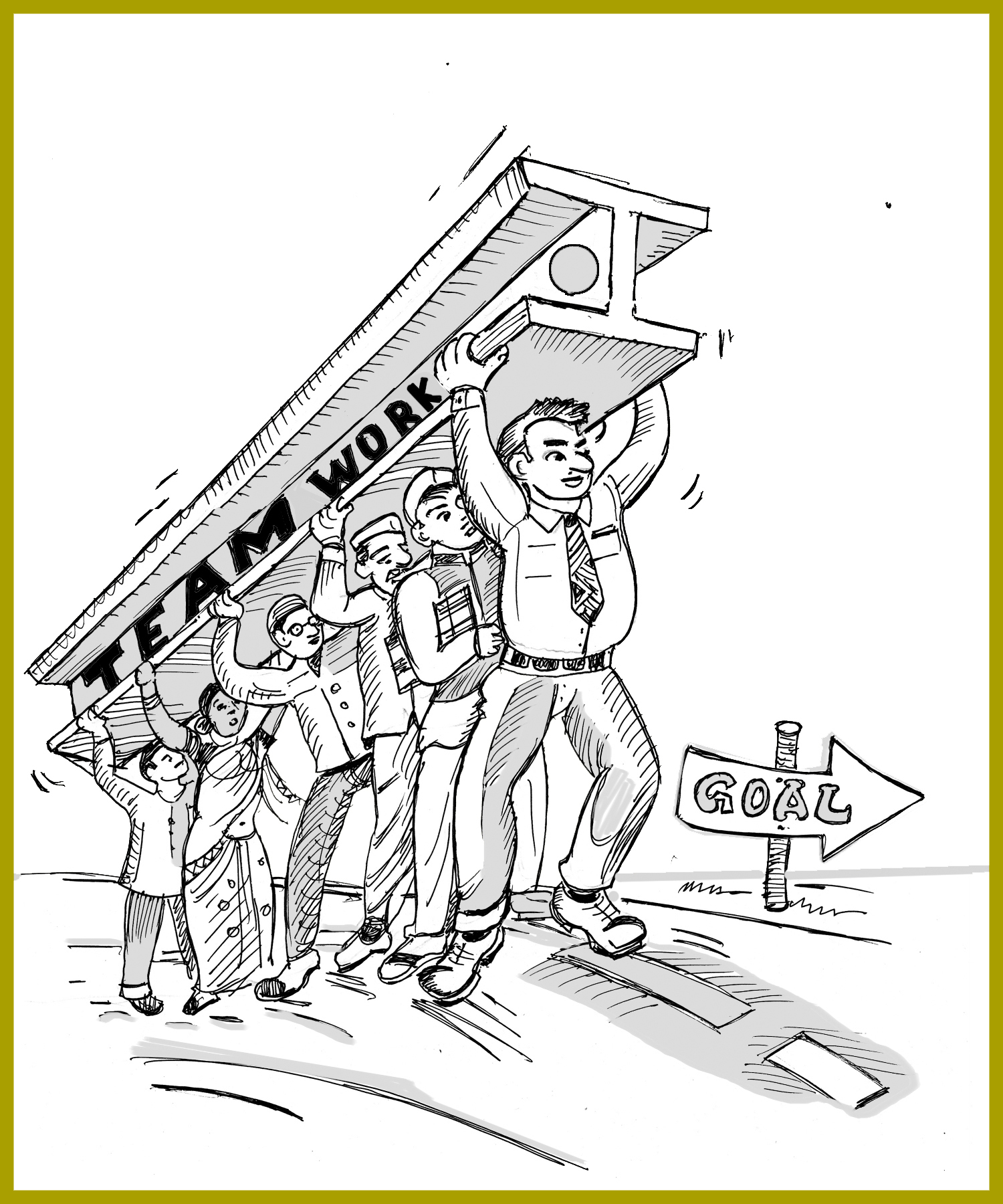
For cross-functional tasks to be carried out, build teams with due care. Let your team have like-minded people as well as a minority of likely dissidents who will ensure the team does not go off track.

Hunters have practised this art since the beginning of our civilization.

(Excerpt from my book ‘Surviving in the Corporate Jungle’, the English version of which was released recently. The Portuguese version of the excerpt follows.)


EQUIPAS

Para que as tarefas multifuncionais possam ser realizadas, deverá constituir as equipas com todo o cuidado. Assegure que na sua equipa há pessoas que pensam da mesma forma, mas também alguns tendencionais dissidentes que irão garantir que a equipa se mantém no bom caminho.

Os caçadores praticam esta arte desde o início da nossa civilização.

(This is how you can lay your hands on the Portuguese version of the book, launched in Portugal during March, 2016.)


Read Full Post »

Pressure is an ‘external’ stimulus. Stress is what ‘we’ experience. The level of stress we experience therefore is directly proportional to the pressure we receive. The good news is that stress is inversely proportional to our inner strength and resilience.

Since each individual is uniquely configured, the response of each person to the same level of pressure would be different. Some would take it lightly and focus on the action at hand, thereby improving their chances of a better and quicker delivery of results. Others would take it seriously, and jeopardize their own achievements and career. Those who are ever-anxious and have an ‘A’ type personality would invariably experience more stress than those who are the happy-go-lucky ‘B’ types.

Stress experienced by a professional is also a function of time. The psychological condition varies with time and also plays a role.

To sum up, a mathematical formulation for stress could qualitatively be along the following lines:

stress

Distress can be handled positively. Art of creative dissatisfaction, loosening up and letting go, a habit of forgiveness, a dash of humour, and meditation can help.

A little bit of stress is good for a professional’s health and output. Thanks to Richard Lazarus and Hans Selye, we understand the distinction between ‘eustress’ and ‘distress’!

(Excerpt from my book ‘Surviving in the Corporate Jungle’, the English version of which was released recently. The Portuguese version of the excerpt follows.)


STRESS

A pressão é um estímulo “externo”. O stress é o que “nós” sentimos. O nível de stress que sentimos, portanto, é diretamente proporcional à pressão que recebemos. A boa notícia é que o stresse é inversamente proporcional à nossa
força interior e resiliência.

Como cada indivíduo tem uma configuração única, a resposta de cada um ao mesmo nível de pressão será diferente. Alguns conseguem aceitar a pressão de ânimo leve, concentrando-se naquilo que estão a fazer e aumentando, assim, as suas probabilidades de uma execução mais rápida e com melhores resultados. Outros levam a pressão demasiado a sério, pondo em perigo as suas próprias realizações e carreira. Aqueles que estão sempre ansiosos e têm uma personalidade do tipo A sofrem invariavelmente de mais stresse do que os ‘deixa-andar’ do tipo B.

O stress que um profissional sente é também uma função do tempo. A condição psicológica varia com o tempo e também desempenha um papel.

É possível lidar com a angústia de forma positiva. A arte da insatisfação criativa, soltar-se e deixar andar, o hábito de perdoar, uma pitada de humor e meditação, tudo isso pode ajudar.

Um pouco de stress é bom para a saúde e para os resultados de um profissional.  Graças a Richard Lazarus e Hans Selye, sabemos distiguir o ‘eustress’ (stress bom) do ‘distress’ (stress mau)!

(This is how you can lay your hands on the Portuguese version of the book, launched in Portugal during March, 2016.)

Read Full Post »

Chief Executive Officers and  top honchos should retire themselves every five to six years. This would ensure some sanity in the operations of the company. As to lesser mortals, there is no point in clinging to their seats of power till ill health (or worse, death) comes knocking on the door.

Life is much bigger and brighter than work. The many shades of life which remain to be explored after retirement include simple joys – spending exclusive time with one’s spouse, putting life in the reverse gear by playing with grandchildren, taking up hobbies neglected for years, and fulfilling other desires which had merely remained benign intentions all those years.

(Excerpt from my book ‘Surviving in the Corporate Jungle’, the English version of which was released recently. The Portuguese version of the excerpt follows.)


REFORMA

Os Diretores Executivos e os manda-chuvas devem reformar-se ao fim de 5 ou 6 anos. Com isso garantem alguma sanidade às operações da empresa. Quanto aos simples mortais, não há nenhuma vantagem em manterem-se agarrados aos seus lugares de poder até que os problemas de saúde (ou, pior, a morte) lhes venham bater à porta.

A vida é muito maior e mais interessante do que o trabalho. Entre as muitas nuances da vida que continuam a ser exploradas após a reforma estão as alegrias simples – passar mais tempo com o cônjuge, fazer marcha-atrás e brincar com os netos, dedicar-se a passatempos que foram negligenciados
durante anos e cumprir outros desejos que nunca passaram.

(This is how you can lay your hands on the Portuguese version of the book, launched in Portugal during March, 2016.)

Read Full Post »

How does one handle bosses and secretaries? What are the scientific laws which govern interpersonal relations? What kind of management lessons can be drawn from Indian epics?

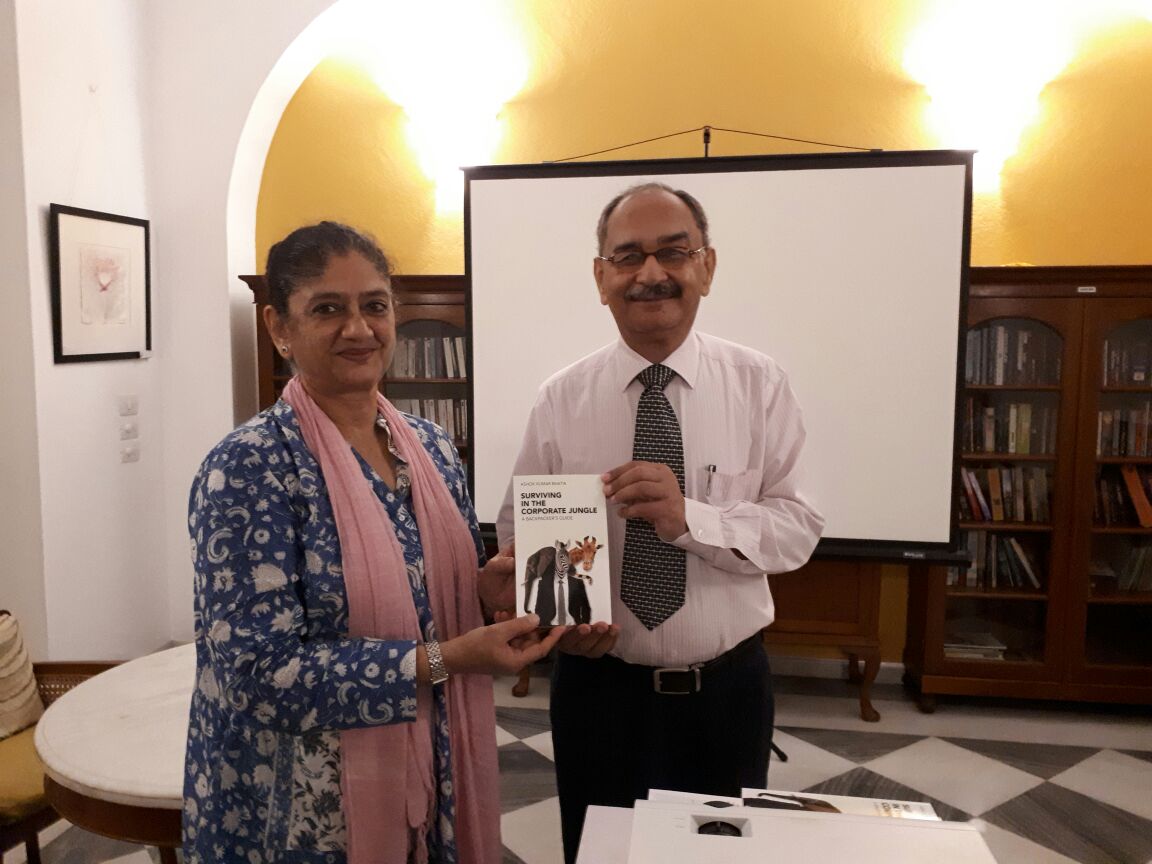
Launched in the Portuguese market in March 2016, the book ‘Surviving in the Corporate Jungle’ was recently unleashed upon unsuspecting business magnates and management honchos at Pondicherry in India.

The book, published by Partridge India, presents insightful lessons for managers at all levels – the aspiring kind, the practicing and the tired kind, and even the retired kind. For hassled business executives and entrepreneurs, relentlessly chasing goals and deadlines, the punchy prose – infused with a Wodehousean humour – should come as a relaxing and uplifting read.  

No connection with Vasco da Gama

One does not claim to be a descendant of Vasco da Gama, but it so happened that the original manuscript, penned in English along the coast of the Bay of Bengal over the last three years, found its way to Porto, Portugal, on the Atlantic coast. CEO World, a unique start up there, managed to secure the support of Liberty Seguros. Vida Economica took it up for publication in Portuguese.

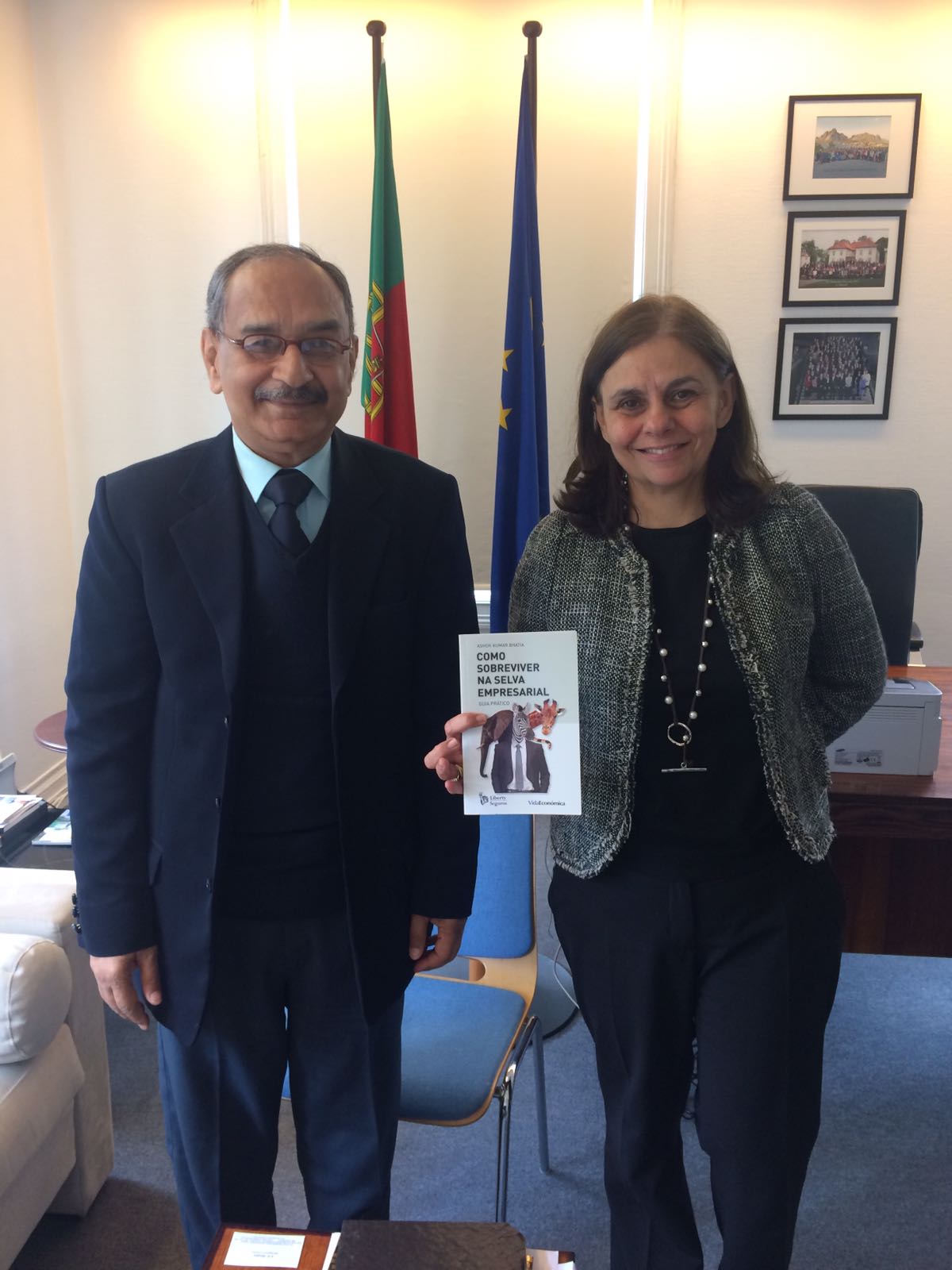
The Portuguese version, ‘Como Sobreviver Na Selva Empresarial’, has found its way to the office of the Hon’ble Prime Minister of Portugal, His Excellency, Mr. António Luís Santos da Costa, GCIH, who has roots in Goa.

It has also been presented to Ms. Clara Nunes dos Santos, the Ambassador of Portugal in Norway, and to Mr. José Manuel Castro Santiago, Minister – Counsellor at the Embassy of Portugal in Switzerland.

The book has also been discussed at IMiF (International Minds in Finland), a select group of entrepreneurs and intellectuals in Finland.

English version launched at Pondicherry, India

Recently, a book launch function was organized at Pondicherry, India, by People for Pondicherry Heritage (PPH), a group of individuals and NGOs who are passionate about protecting as well as showcasing the unique heritage of Pondicherry.

Ms. Sunaina Mandeen of PPH spoke of the need to preserve our values and our rich heritage, the latter including works of literary kind.

Ms. Sunaina Narang introduced the author to the audience.

While launching the upgraded English version of the book, Mr. R Mananathan, Chairman of Manatec Electronics Private Limited, spoke warmly of several topics covered in the book. He found it to be a unique book which covers a vast area of business management. In particular, it touches upon leadership, administration and refined concepts in the domain of human resources. He felt that I deserve credit for having summed up my forty year long practical experience and present it in a crisp and humorous manner. He wished that the language used could have been somewhat simpler in some parts, though.

Mr. P Rangaraj, Chairman and Managing Director, Chemin Controls and Instrumentation Private Limited, said that the book is replete with rich management lessons which would be useful to managers and business owners of all kinds. He was appreciative of the fact that the book also draws upon such Indian ancient scriptures as Ramayana, Mahabharata and Thirukkural.

The book presentation on the occasion touched upon some of the hundred odd topics covered in the book, like Meeting the Boss halfway through, Female Power and Stress, among others.

The presentation also brought into focus a new perspective on leadership by means of an upgraded Blake Mouton Grid, wherein a third dimension is proposed – that of the Concern for Ethics. It advocates the importance of developing not only one’s intelligence and emotional quotient, but also one’s spiritual quotient.

The book transports the reader back to an era when the instructive yet delightful works of such luminaries as C Northcote Parkinson, Lawrence J Peter and Sharu Rangnekar ruled the management book market.


The launch of the book in two countries is a reaffirmation of the fact that managerial knowledge and skills happen to be universal in nature. Books can act as bridges between two countries and two civilizations and bring these closer to each other for the purpose of forging mutually beneficial relationships.

Press coverage

Here is a press report covering the launch event: http://www.thehindu.com/news/cities/puducherry/the-art-and-science-of-management/article19338392.ece

Details

“Surviving in the Corporate Jungle”

By Ashok Kumar Bhatia

(http://www.amazon.in/Surviving-Corporate-Jungle-Ashok-Bhatia/dp/1482888505)

(This is how you can lay your hands on the Portuguese version of the book, launched in Portugal during March, 2016.)

(Related Posts:

https://ashokbhatia.wordpress.com/2016/02/26/the-book-como-sobreviver-na-selva-empresarial-guia-pratico

https://ashokbhatia.wordpress.com/2017/05/30/a-meeting-with-the-ambassador-of-portugal-in-norway

https://ashokbhatia.wordpress.com/2017/06/21/a-meeting-with-the-minister-counsellor-of-portugal-in-switzerland

https://ashokbhatia.wordpress.com/2017/05/23/an-interaction-with-senior-professionals-in-finland

https://ashokbhatia.wordpress.com/2017/09/14/a-book-presentation-session-at-madras-management-association-chennai-india)


Read Full Post »

An effective tool in the management’s arsenal to reward and motivate guys who excel in their jobs.

There are two key challenges faced in case of promotions:

  1. Pressure for time-bound promotions

Everyone expects to get promoted after having slogged it out at a given level in the organization for a few years. The reason you find most organizations top-heavy today is because the management twenty years back did not pay attention to managing the aspirations of its people and instead went along with the philosophy of time-based promotions!

  1. Managing is different

Doing a job yourself is one thing. Getting it done through others is a different ball game altogether. To be a good manager, one needs to be a leader, bestowed with skills in team building, communication, delegation, and supervision. Often, two-thirds of the promotions in corporates are based on incumbents putting in an impressive show in their present role. Once promoted, the incumbent is left twiddling his thumbs, trying to figure out how to manage the same activity through others.

The solution possibly lies in building up a culture which rewards good performance but does not overlook the projected managerial talent of the promotee. Job rotation, counselling, and job enrichment are some of the tools which a wise Human Resource guy may use to manage the majority which deems a promotion as its birth-right, based only on the fourth dimension of our universe – time!

A populist approach like resorting to time-based promotions can also be practised, provided there is an aggressive scheme in place to enforce employee separations as well, that too in a time-bound manner!

(Excerpt from my book ‘Surviving in the Corporate Jungle’, the English version of which was released recently. The Portuguese version of the excerpt follows.)

PROMOÇÕES

Uma ferramenta eficaz no arsenal de gestão para premiar e motivar os indivíduos que se destacam nas suas funções.

As promoções levantam sobretudo duas dificuldades:

1. Pressão para ser promovido dentro de um determinado limite de tempo

Qualquer um espera vir a ser promovido depois de se ter arrastado num determinado nível da organização durante vários anos. A razão por que a maioria das organizações hoje em dia são tão pesadas é porque há  vinte anos as chefias não souberam gerir as aspirações dos seus subordinados e deixaram-se levar pela filosofia das promoções baseadas no tempo!

2. Ser chefe é diferente

Uma pessoa fazer um trabalho ela própria é uma coisa. Fazer com que esse trabalho seja feito por outros é uma coisa completamente diferente. Para ser um bom chefe, é preciso ser um líder, dotado de competênciasde
coordenação de equipas, comunicação, delegação e supervisão. Muitas vezes, dois terços das promoções das empresas baseiam-se no facto dos candidatos à
promoção ressaltarem de forma impressionante as suas funções atuais. Uma vez conseguida a promoção, o promovido fica a girar os polegares, a tentar descobrir como realizar as mesmas funções através dos outros.

A solução passa, possivelmente, por estabelecer uma cultura empresarial que recompense o bom desempenho, mas sem negligenciar o potencial talento de gestão dos promovidos. A rotação no trabalho, o aconselhamento e o enriquecimento das funções são algumas das ferramentas que um Diretor de Recursos Humanos sábio poderá usar para gerir a maioria dos colaboradores que estão convencidos que a promoção é um direito que lhes assiste desde
a nascença, com base apenas na quarta dimensão do nosso universo – o tempo!

Uma abordagem populista que recorra a promoções baseadas no tempo também pode ser praticada, desde que esteja igualmente implementado um sistema agressivo que permita distinguir os colaboradores, também de forma
limitada no tempo!

(This is how you can lay your hands on the Portuguese version of the book, launched in Portugal during March, 2016.)

Read Full Post »

packages

Packages are negotiable only at the entry stage; later on, they tend to lose their elasticity!

Bear in mind that packages are not necessarily related to the innate worth of an incumbent. These have more to do with the company’s corporate ego (read brand value), and also the comfort levels offered. Companies offering high-pressure assignments in high-entropy business environments tend to be more liberal with the packages they offer.

The rate of growth of packages outside the company would always be better than the jumps you get in-house. If you are willing to challenge yourself and move out of your present comfort zone, do not grumble for long; find another exciting opportunity and move on!

As postulated by the Motivation-Hygiene Theory of Herzberg, packages fall in the Hygiene category of rewards. To use a medical analogy, their presence does not necessarily make a person healthier; on the contrary, their absence can cause deterioration in health.

To put it simply, when it comes to individual motivation levels, packages have a rather short shelf life.

When it comes to chucking out the deadwood, organizations could come up with innovative severance packages!

(Excerpt from my book ‘Surviving in the Corporate Jungle’, the English version of which was released recently.)

Read Full Post »

All ideas which sound revolutionary from a new incumbent fade exponentially over a period of time. The incumbent himself gets bored and a sense of fatalism sets in. A smart incumbent would call it quits before he reaches this state of vegetation.

Seniors who decide to overstay their welcome run the risk of being derided and hounded out. They do a great disservice to the organization and also end up lowering the morale of their would-be-successors who have to wait interminably for getting a shot at occupying the throne in the corner office.

A tired and exhausted lion can no longer afford to cling to his seat of power.

(Excerpt from my book ‘Surviving in the Corporate Jungle’, the English version of which was released recently. The Portuguese version of the excerpt follows.)


Read Full Post »

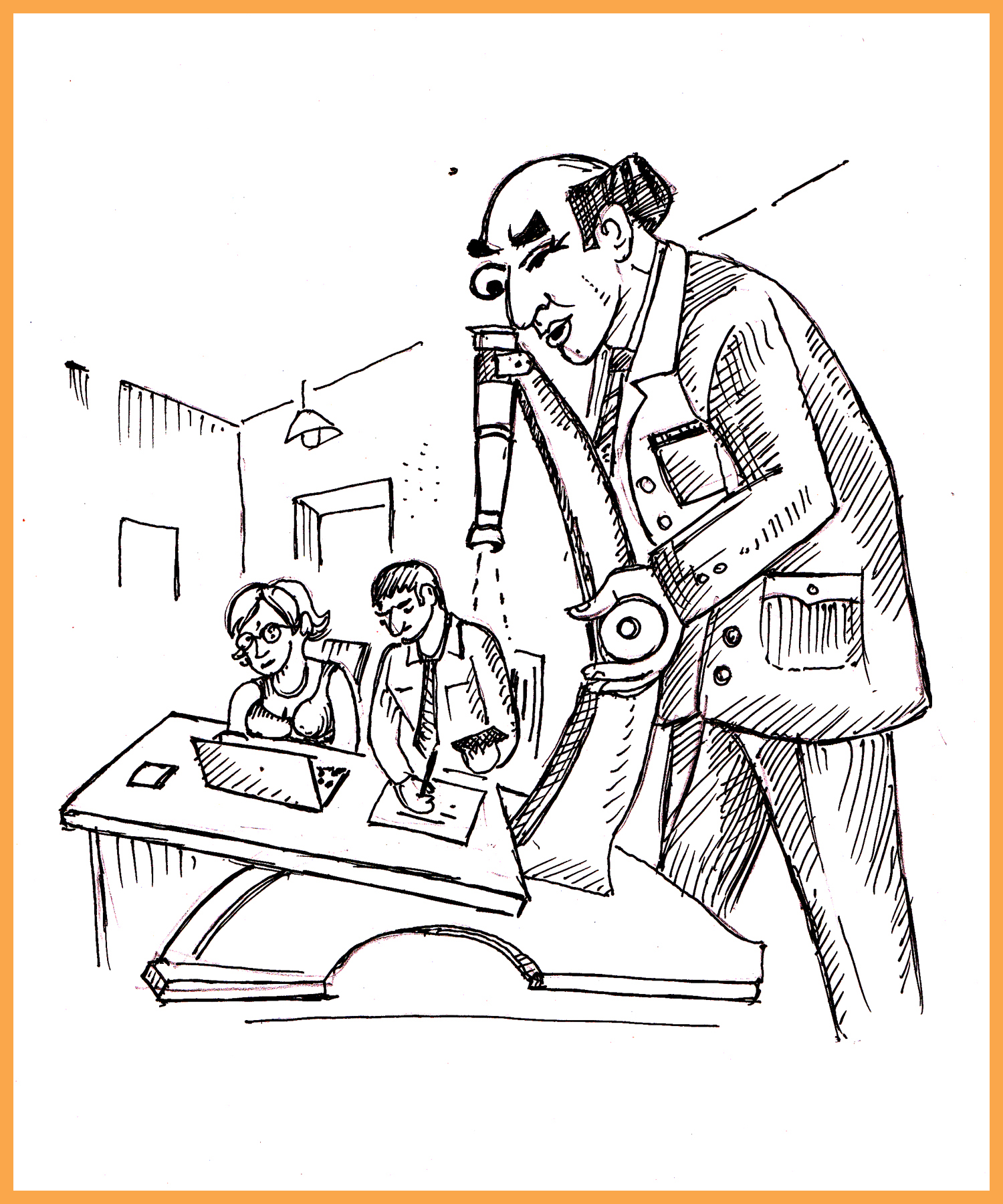
A sure way of becoming a liability for your team and also for your employers is to micromanage – getting into the nitty-gritty of each and every aspect of the task at hand.

Learn to delegate and allow your team members to make mistakes.

Demand results, but develop your people in the long run.

If you happen to report to a boss who believes in getting things done by breathing down your neck, try the following to keep your sanity in check:

  1. Make it a habit to meet him half-way through.
  2. Empathize with the poor soul. Try to reduce his blood pressure. That is what you get paid for.
  3. Be clear about your deliverables.
  4. Sincerity helps. Following due processes and protocol helps.
  5. Have a positive attitude. At an opportune time, let him know that you are not too comfortable being micromanaged.

(Excerpt from my book ‘Surviving in the Corporate Jungle’, the English version of which was released recently. The Portuguese version of the excerpt follows.)

MICROGESTÃO

A maneira mais certa de se tornar um peso para a sua equipa e também para seus empregadores é a microgestão –meter-se em todas as tarefas até ao mais ínfimo pormenor.

Aprenda a delegar e a permitir que os seus colaboradores cometam erros.

Exija resultados, mas desenvolva as competências dos seus colaboradores no longo prazo.

(This is how you can lay your hands on the Portuguese version of the book, launched in Portugal during March, 2016.)

Read Full Post »

After the 2008 economic meltdown, the management world has discovered that CEOs need to follow not only the Business Compass but also a Moral Compass to steer the enterprises they happen to run. Improving one’s Spiritual Quotient is now a sheer business necessity, and shall be more so in the decades to come.

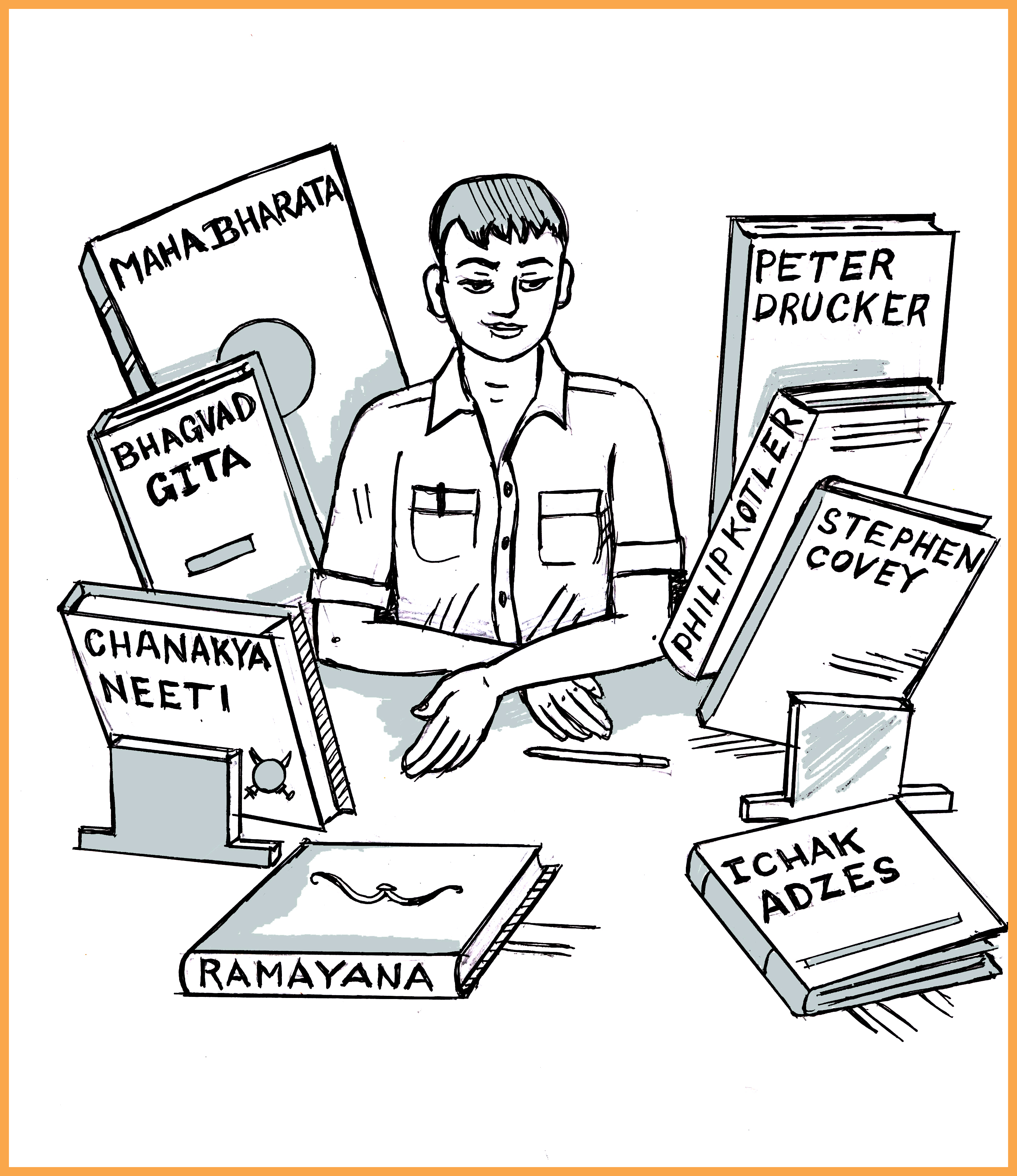
It is here that Indian scriptures and sages provide a ready template for managers of all sizes and shapes.

The bookSurviving in the Corporate Jungle’ covers some lessons from the following:

-Ramayana

-Mahabharata

-Bhagavad-Gita

-Thirukkural

-Chanakya Neeti

-Sri Aurobindo

Managers with a Western Mind and an Eastern Heart

The success of the likes of Satya Nadella (currently the CEO of Microsoft) and Sundar Pichai (currently the CEO of Google Inc) goes on to show the growing importance of managers who are not only exposed to the Western models of management but also steeped in Eastern wisdom in the realm of management.


Read Full Post »

« Newer Posts - Older Posts »