Feeds:
Posts
Comments

Posts Tagged ‘Leadership’

Leaders

Management can be learnt; leadership is inborn. The good news is that in most cases, leadership styles trickle down the organization and get copied. This spawns leaders in the same genre and also improves behavioural consistency across the entire set up.

Successful leaders have several outstanding traits. Their intuitive faculties are well developed. They do not say one thing and do another. They handle tough tasks themselves. They take responsibility for their failures, often shielding their team mates. They do not have henchmen to execute their dirty plans so their own hands look clean. They put everyone on the same pedestal. They never encourage yes-men. They always encourage no-men to speak up.

CEOs who rank high not only on their Intelligence Quotient and Emotional Quotient but also on their Spiritual Quotient go on to make super leaders. Their concern for business ethics is as high as their concern for business results.

Lao-Tzu, a Chinese philosopher, said ‘To lead the people, walk behind them’.

(Excerpt from my book ‘Surviving in the Corporate Jungle’, the English version of which was released recently. The Portuguese version of the excerpt follows.)

LÍDERES

A gestão pode ser aprendida; a liderança é inata. A boa notícia é que, na maioria dos casos, os estilos de liderança encontram-
se espalhados pela organização e são replicados, o que produz líderes do mesmo tipo, melhorando ao mesmo tempo a consistência comportamental ao longo da cadeia hierárquica.

Os líderes de sucesso têm em comum vários traços que se destacam. As suas faculdades intuitivas estão bem desenvolvi as. Não dizem uma coisa e fazem outra. Enfrentam eles próprios as tarefas difíceis. Assumem a responsabilidade pelos seus fracassos, muitas vezes, protegendo os seus colaboradores.

Não recorrem a capangas para executar os seus planos sujos e parecer, assim, que têm as mãos limpas. Põem todos no mesmo pedestal. Nunca incentivam os “lambe-botas”. Incentivam sempre os “discordantes” a falarem.

Lao-Tzu, um filósofo chinês, disse: “Para liderar as pessoas, ande atrás delas”.

(This is how you can lay your hands on the Portuguese version of the book, launched in Portugal during March, 2016.)

Read Full Post »

It makes sense to follow the golden rule, ‘the boss is always right’, even when he is absolutely wrong and is a perfect fool. However, sycophancy has its long-term limitations. Once in a while, if you do not agree with the boss, find the courage and the right time to register your disagreement. This way, you end up becoming a more effective and a healthier manager.

Beware of juniors who are ‘yes men’. They could be pretty dangerous to your career progression in the long run.

(Excerpt from my book ‘Surviving in the Corporate Jungle’, the English version of which was released recently.)

(This is how you can lay your hands on the Portuguese version of the book, launched in Portugal during March, 2016.)

Read Full Post »

Finland is a country which has smoothly embraced rapid change from being an agrarian economy to being a knowledge economy. Innovation happens to be a key priority. India, on the other hand, is still grappling with the disruptive changes that the advent of the 4th Industrial Revolution bestows on its citizenry. It has earned global acclaim in the realm of “Jugaad”, which could be translated as either Informal Innovation or as Frugal Engineering.

INTERNATIONAL MINDS in FINLAND (IMiF) is a global community of 500 plus inquisitive souls whose IQ (read Intelligence Quotient, also Inquisitiveness Quotient) is rather high. It believes in co-aggregating and creating value in/with/for Finland. The community works with the single purpose of soaking in as much knowledge and wisdom as they possibly can from our vast universe. To this end, the community provides a platform for such persons of universal good will who would not mind sharing their knowledge and experience with them.

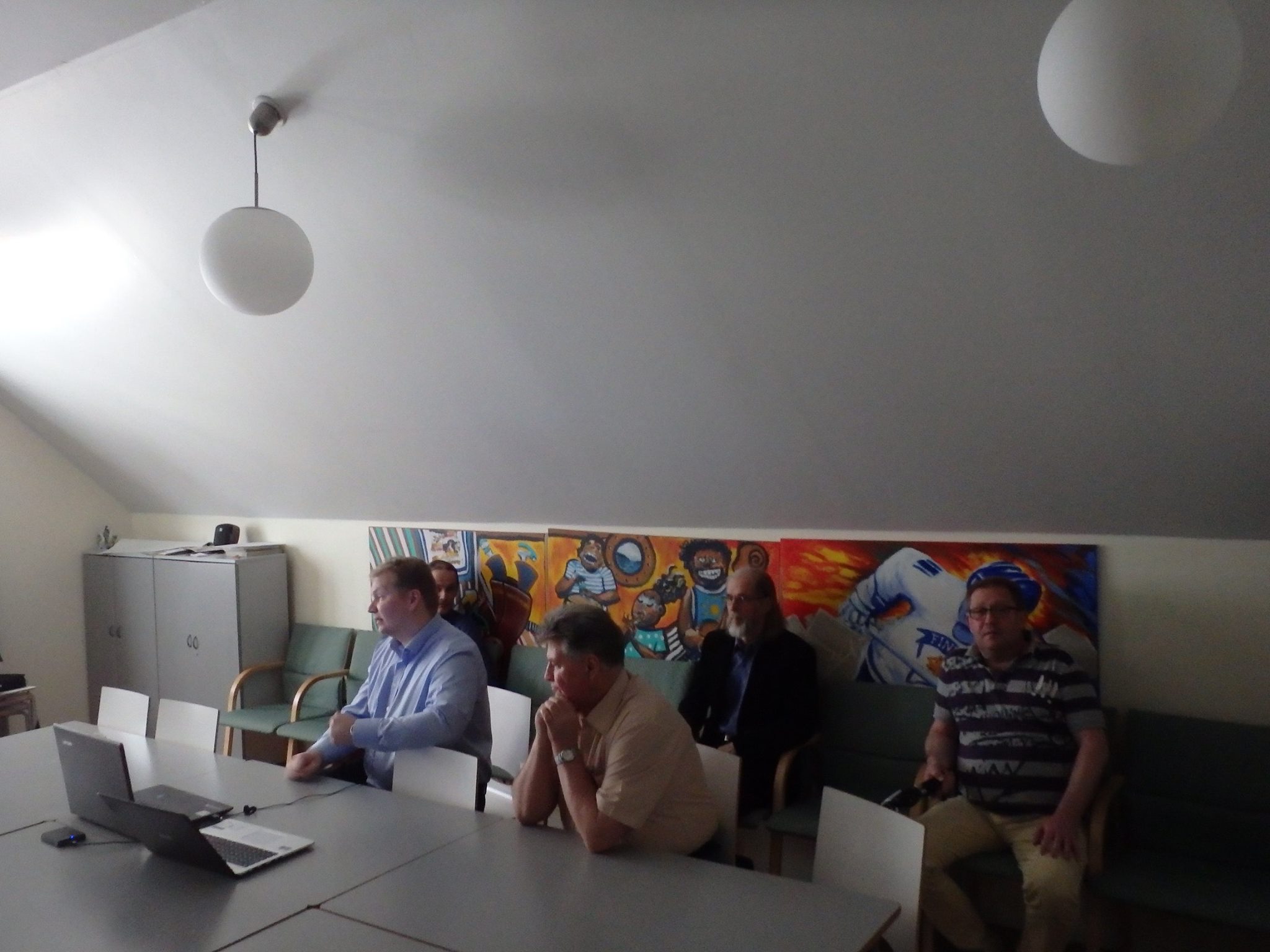
And that is how it came about that yours truly recently had an opportunity of interacting with some of the finest minds in Finland. While more than 500 luckier souls comprising the community continued to play the roles assigned to them in life elsewhere, a motley group of 5 singularly unlucky ones had to undergo the trauma of listening to some boring stuff dished out by yours truly. Their risk taking appetite surely deserves kudos.

While Lorena provided administrative support, Ludwig (Mylly´s CEO), Alexey (A professional who has mastered some of the intricacies between Russia and Finland, even in terms of logistics), Roman (IMiF´s Chairman and founder of TPOINT), Olavi (Young at heart, though an officially retired university professor), MARCO (co-initiator of IMiF) and Tim (An international business person), assembled at Mylly, a cultural centre at Kotka, to hear what yours truly from far off India had to convey.

Title of the talk

Surviving in the Corporate Jungle.

Key Takeaways

Analysis Paralysis

The role of intuition in decision-making can never be underestimated.

Meeting bosses half-way through

It is crucial to help one’s boss to keep his blood pressure under control.

Female Power

It pays to have gender parity at the work place.

His Master’s Voice

Avoiding being a Yes-man pays. Senior managers have the responsibility of registering dissent.

Overstaying One’s Welcome

Does the flight of your career appear to have rough weather ahead? Press the EJECT button in the cockpit.

Managing Stress

Build inner resilience. Meditate regularly. Do not allow garbage to get collected in the mind. Carry out a cleaning exercise every single day.

Quotients

Intelligence Quotient and Emotional Quotient are fine. What we also need to develop and use in business is our Spiritual Quotient.

Work Life Harmony

Avoid becoming a slave to technology.

Of Production, People and Ethics

Various leadership styles emerge. Charmless Charlies. Missionary Zealots. Road Rollers. Armchair Revolutionaries. Crazy Conformists. Sponge Comforters. Incumbent Chiefs. Super Chiefs.

Details can be accessed here.

A comment from one of the five wise men

Why is SQ (Spiritual Quotient) so very important in decision-making?

Being spiritual means one takes decisions which create a win-win situation for all stakeholders. Ethics and Values also come into play. In the long run, brand equity grows. So does shareholder wealth.

An example from the Tata-Benz collaboration during World War II was cited. Details can be found here.

(Others skipped discussing any other ideas, so relieved they were that the ordeal of listening to yours truly was finally over!)

The global nature of management thoughts

Managerial thoughts transcend national boundaries. Possibly because the principles of setting up and running an enterprise happen to be universal in nature. The core of the psychology of a manager also does not vary from country to country.

It is great to be able to share some experiential insights with, and also learn from, senior professionals who operate in another business environment and in a distinctly different work culture.


(Notes:

IMiF can be found:

In the public presence https://www.facebook.com/internationalmindsinfinland

In the private presence

https://www.facebook.com/groups/INTERNATIONALMINDSinFINLAND

Presentation based on my book ‘Surviving in the Corporate Jungle’, the English version of which was released recently.

This is how you can lay your hands on the Portuguese version of the book, launched in Portugal during March, 2016.)

Read Full Post »

How many times can you kill your mother-in-law to avail leave?! Excuses for being late to work and for excessive leaves are a sign of weakness of will power and character.

Offering excuses for a fouled up job is just not done. Be bold, accept your share of the blame, and make amends.

To help your team to grow and zoom, get out of your ivory tower, try to redress their difficulties, and demonstrate your leadership qualities.

(Excerpt from my book ‘Surviving in the Corporate Jungle’, which covers more than hundred topics of interest to managers of all hues, shapes and sizes)

Read Full Post »

conflict

An executive fighting his boss

– when he feels the top dog is wrong – is a good sign.

Executives fighting between themselves in the boss’ presence is also the sure sign of a healthy work culture.

Seniors airing their difference of opinion or berating their colleagues is an unhealthy sign.

We all remember the fable of a monkey which mediated between two warring cats and gobbled up the entire piece of cheese at hand.

(Excerpt from my book ‘Surviving in the Corporate Jungle’)

Read Full Post »

This is a malaise every workplace is stricken with. You may have a set of intelligent, obedient and relevant people working for you. But it is quite likely that half of them would have fallen into the trap of complacency. They would have become critical of the company/department, would be working in a comfort zone, and would be displaying a singular lack of initiative. They would no longer have the shine in their eyes and would surely not be operating on all four cylinders.

Your Human Resources honchos would be neglecting this lot at the company’s long-term peril. An antidote package could comprise a sustained program of employee engagement, elaborate mentorship, job rotation, sponsorships for advanced educational courses (either online or in the distance mode), and recreational breaks. Simply spicing up their work life would also help.

At the individual level, keep watching for signs of falling into the trap of complacency. Analyse, introspect, and then speak to your seniors the moment you notice the zeal gone. Or, become a rolling stone and gather no moss!

(Excerpt from my book ‘Surviving in the Corporate Jungle’)

Read Full Post »

Celebrating the first anniversary of having launched a book in Portuguese in March 2016.

English version to follow soon….!

ashokbhatia's avatarashokbhatia

Surviving in the Corporate Jungle

BookFrontCover

This is a short introduction to a book by yours truly, the Portugese version of which is getting launched in Portugal shortly. The launch event  in Porto is planned on the 2nd of March, along with a talk on “Work Life Harmony” at the  Catolica Porto Business School  of  Universidade Catolica do Porto. The launch event in Lisbon is planned at Universidade Europeia on the 3rd of March, 2016, as part of an event titled ‘Passport to India.’

How this book happened

Forty years back, the School of Business at a prestigious university in India made a big mistake. They awarded me a degree in Business Management. They were so very happy to see me off the campus that they even awarded a silver medal to me.

I owe this book to my professors – some of whom taught so well that I learnt a…

View original post 586 more words

Read Full Post »

On the occasion of Thiruvalluvar day, celebrated on this day in the state of Tamil Nadu in India, in memory of Saint Thiruvalluvar who is said to have lived in a period between second century BC and 8th century AD.

ashokbhatia's avatarashokbhatia

Thirukkural (திருக்குறள்), also known as the Kural, is a classic Tamil ‘sangam’ (3rd century BC to 4th century AD) literature composition. It has 1,330 couplets or ‘kurals’. It was authored by the renowned poet Thiruvalluvar.

The Thirukkural is one of the most important works in the Tamil language. This is reflected in some of the other names by which the text is given by such as ‘Tamil marai’ (Tamil Vedas); ‘poyyamozhi’ (words that never fail); and ‘Deiva nool’ (divine text).

Just like ‘Ramayana’, ‘Mahabharata’, ‘Bhagavad-Gita’ and other scriptures, Thirukkural is also replete with words of wisdom. It is simple and contains profound messages.

Thirukkural has 133 chapters, each containing 10 couplets. Broadly speaking, all the 133 chapters can be divided into three sections: Righteousness, Wealth and Love. In the text below, the serial number of each couplet appears on the top, followed by its Tamil text and then by…

View original post 1,682 more words

Read Full Post »

The Indian view of the discipline of management speaks of four pillars of Integral Management – Wisdom, Power, Harmony and Perfection. Of these, Power is a potent tool which, when harnessed judiciously, enables organizations and individual managers to scale greater heights.

Organizations wield tremendous power. They do so not only by virtue of their financial prowess but also by way of their brand equity, their size, their reach in the market and the kind of innovative products or services they offer. They exercise influence on the society – first, by identifying its latent desires, and then by serving the same.

Individuals who are part of organizations also wield tremendous power over its resources and its people. Arrogance and exploitation could easily follow.

However, if Power is understood as “strength and force, Shakti, which enables one to face all that can happen and to stand and overcome” difficulties connected with “men, events, circumstances, means”, then Power could be used for the overall good of humankind.

Thus, with power comes the attendant responsibility of using it wisely and equitably. Checks and balances need to be put in place to ensure that boundaries set by values and ethics do not get transcended. Keeping a strict control on arrogant behaviour is the sine qua non of long-term success in career.

Power needs to be used in a socially responsible manner. Using the power to share the gains of business with relevant stakeholders makes good sense. Deployment of power to benefit the society at large, that too in a manner which does not harm the environment, ensures that the business remains sustainable.

Managers also have a latent power – of their mind, their will, their ambition, their attitude, their passion and their soft skills. By channelizing the same appropriately, they could rise to greater heights and become more evolved persons, exercising greater influence on the events and people they are connected with.

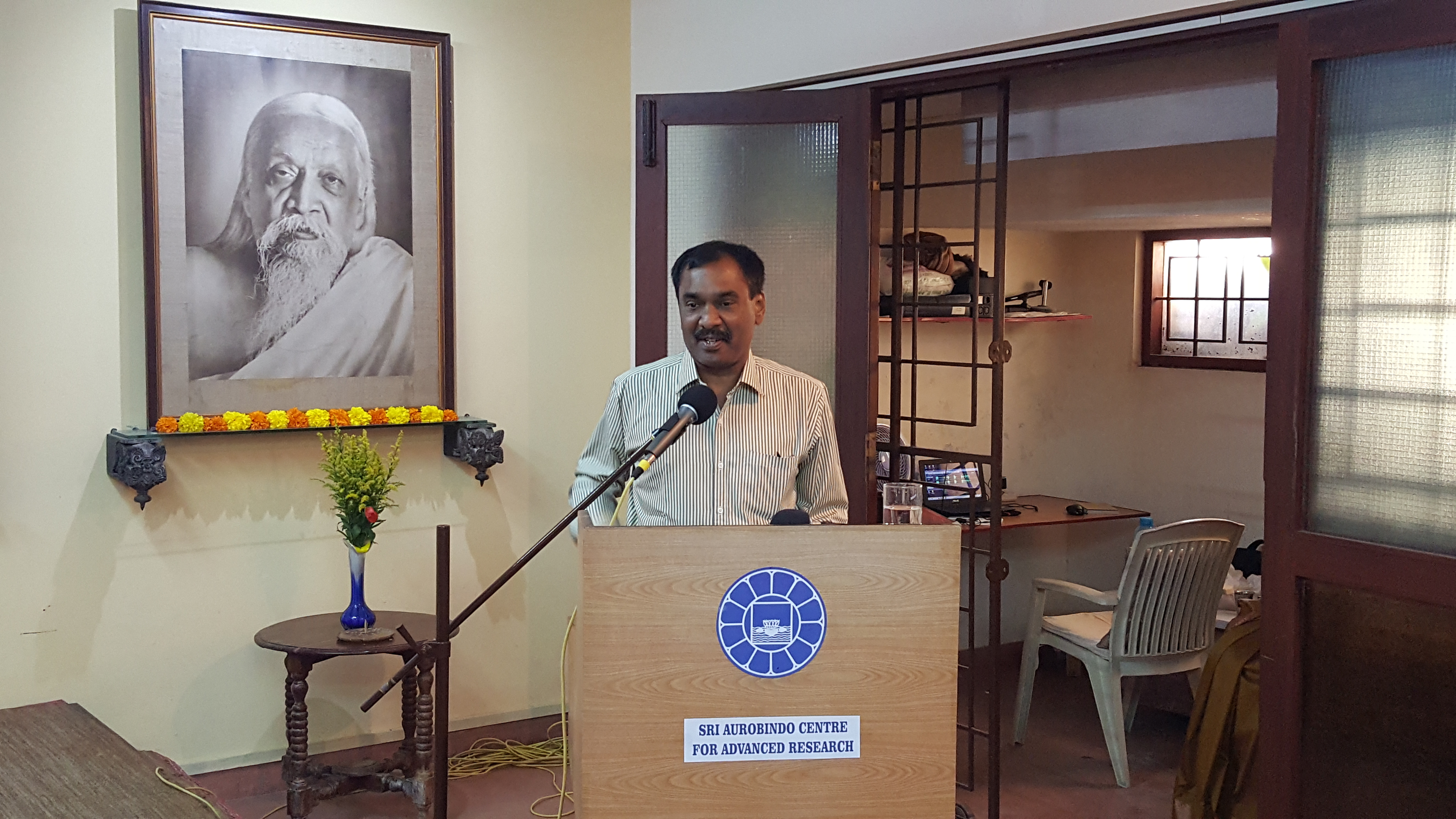
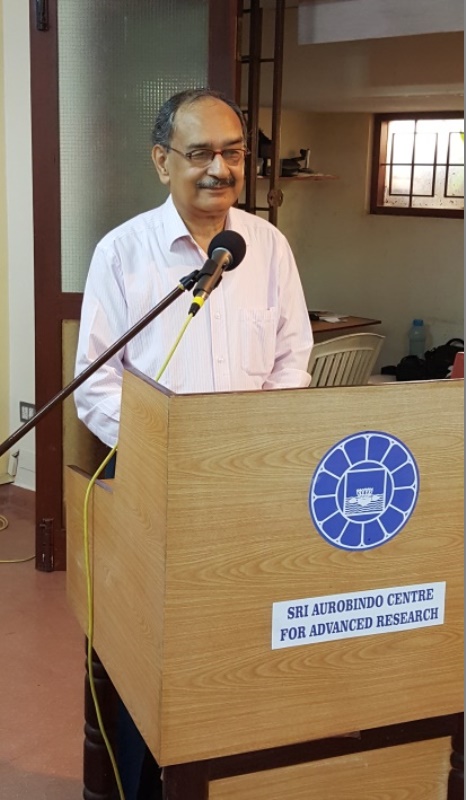
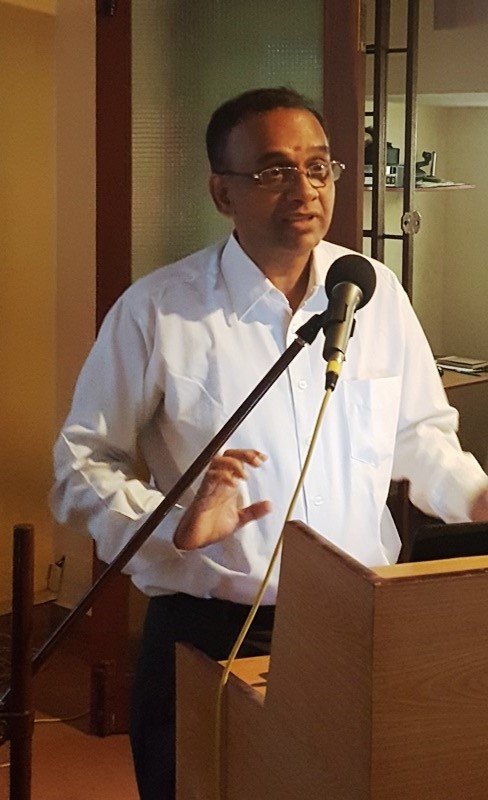
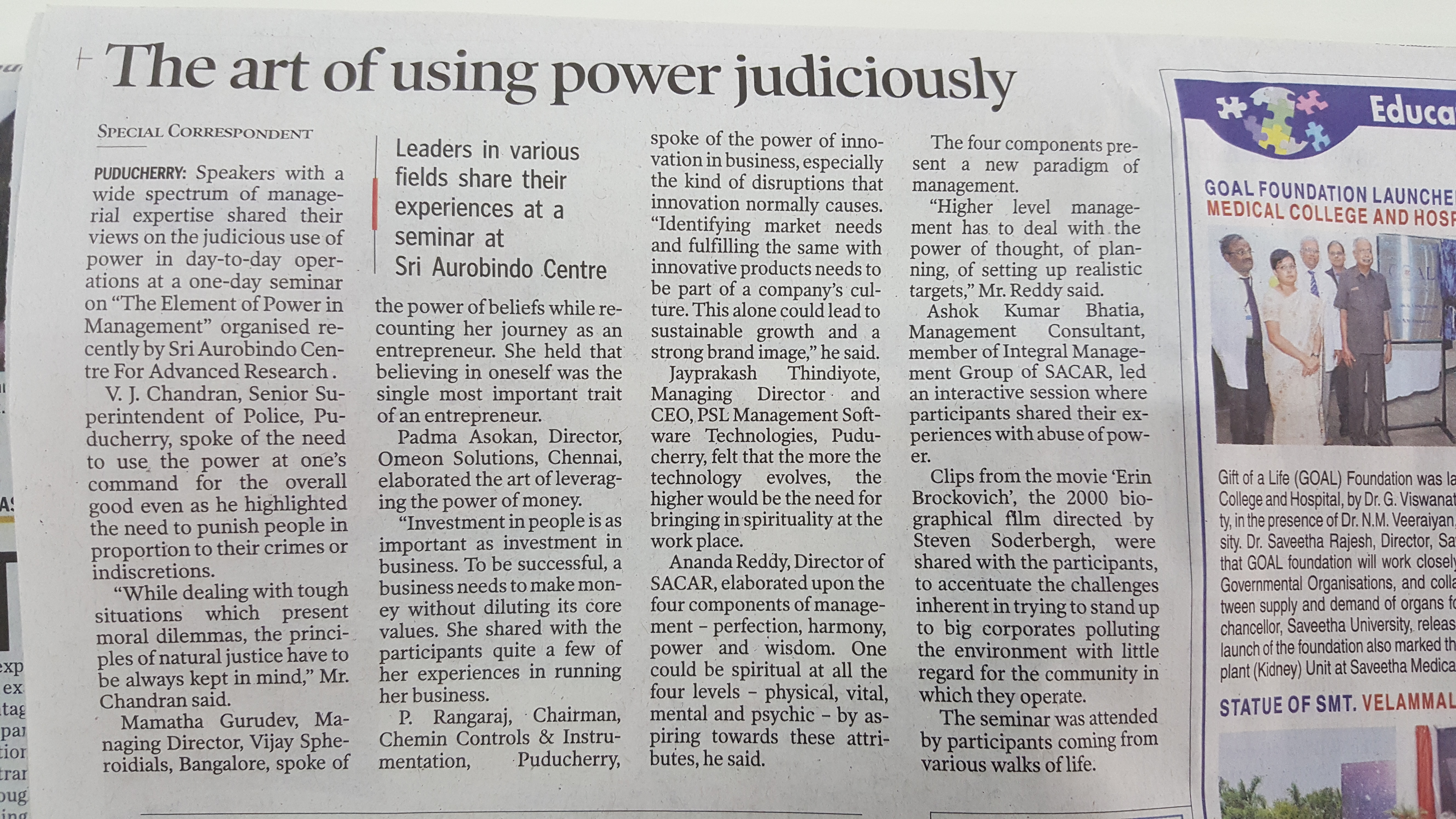
At a one-day seminar on “The Element of Power in Management” organized by SACAR on the 6th of August, 2016, speakers from a wide spectrum of managerial expertise shared their views on the judicious and responsible use of power in day-to-day operations.
SACAR Power Aug 2016 B

Dr. Ananda Reddy, the Director of SACAR, elaborated upon the four components of Management ― Perfection, Harmony, Power and Wisdom. He said that one could be spiritual at all the four levels – physical, vital, mental and psychic by aspiring towards what are called perfection, harmony, power and wisdom. These, he proposed, present a new paradigm of Management. On the level of thought, Power comes into play. Higher level management has to deal with the power of thought, of planning, of setting up realistic targets. He highlighted the importance of using power in a responsible and judicious manner.
SACAR Power Aug 2016 A

Dr. V. J. Chandran, IPS, SSP, Government of Puducherry, spoke of the need to use the power at one’s command in a spiritual manner – for the overall good. He highlighted the need to punish people in proportion to their crimes or indiscretions. While dealing with tough situations which present moral dilemmas, the Principles of Natural Justice have to be always kept in mind. Assuming responsibility and accountability is important. Improving upon one’s quality of work, one’s ability and one’s personal expertise alone helps. He shared with the participants certain instances where abuse of power led to severe complications for the society at large.
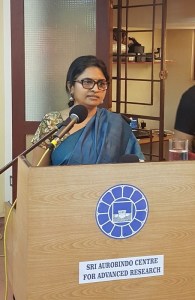
SACAR Power Aug 2016 3Ms. Mamatha Gurudev, Managing Director, Vijay Spheroidials, Bangalore, spoke of the power of beliefs while recounting her journey as an entrepreneur. She held that believing in oneself was the single most important trait of an entrepreneur. It makes sense to cultivate a habit of looking within and of being in touch with one’s own inner self. Trust reposed in one by others also empowers oneself. The focus should always be on the process, not on the person. She exhorted the participants to change their attitude from ‘I can’t do it yet’ to that of ‘I can do it’.
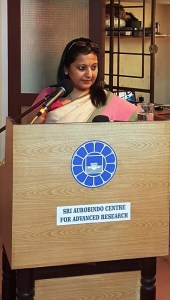
SACAR Power Aug 2016 4Ms. Padma Asokan, Director, Omeon Solutions, Chennai, elaborated the art of leveraging the power of money. Money needs constant activity and circulation. It should be used to increase wealth and prosperity. Wealth belongs to the divine and those who hold it are mere ‘’Trustees” and not “Possessors”. Investment in people is as important as investment in business. To be successful, a business needs to make money without diluting its core values. She shared with the participants quite a few of her experiences in running her business.
SACAR Power Aug 2016 5

As part of an interactive session, conducted by yours truly, participants spoke of the various ways in which they had experienced, and occasionally countered, the abuse of power. Clips from the movie ‘Erin Brockovich’ were shared with the participants, showcasing the challenges inherent in trying to stand up to big corporates polluting the environment with little regard for the community in which they operate.

SACAR Power Aug 2016 6

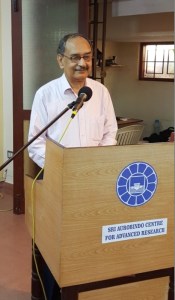
Mr. P. Rangaraj, Chairman, Chemin Controls & Instrumentation, Puducherry, spoke of the power of innovation in business. He touched upon some unique success stories and highlighted the need to make frugal engineering a routine habit. He described the kind of disruptions that innovation normally causes and explained the elements of perfection, harmony and wisdom which are necessary to upscale and market a new product or service.  Identifying market needs and fulfilling the same with innovative products needs to be part of a company’s culture. This alone could lead to sustainable growth and a strong brand image.

SACAR Power Aug 2016 7

Mr. Jayprakash Thindiyote, Managing Director and CEO, PSL Management Software Technologies, Puducherry, touched upon the power of technology. He spoke of rapid advances in the field of robotics and the advent of Artificial Intelligence. He felt that the more the technology evolves, the higher would be the need for bringing in spirituality at the work place. Having respect for alternative views, effective communication, genuine compassion and a creative approach to problem solving alone could help a business grow in future. He exhorted managers to be like an I-POD, that is, have an Inner Peace but be Outwardly Dynamic.

Mr. Ganesh Babu, Founder and CEO, Winning Minds Solutions, Puducherry, and Dr. Arvind Gupta, Assistant Director, Directorate of Distance Education, Pondicherry University, coordinated the entire event. Their back up support was invaluable in the planning as well as the hosting of the entire event.

Dr. Shruti Bidwaikar, Assistant Director, SACAR, summed up the proceedings and offered a vote of thanks.sacar-power-seminar-hindu
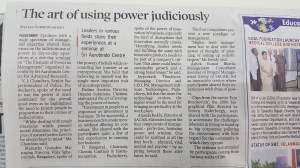
The seminar received an overwhelming response from participants coming from various walks of life, like government officials, management educationists, corporate executives, businessmen, Aurovillians, entrepreneurs and students.

The Integral Management Group of SACAR had already covered the facet of Perfection and Harmony in the past. The next event, focusing on the facet of Wisdom, is planned to be hosted during March, 2017.

(Link to a write up which appeared in The Hindu of September 13, 2016:

Best Regards

Read Full Post »

LEADERSThere is something unique about managers from India. Apparently, they have a Western mind and an Eastern heart. In other words, a unique combination of analytical prowess and intuitive faculties.

Here is a thought-provoking guest post from Mr K V Rao, Resident Director – ASEAN, Tata Sons Ltd , Singapore.

“I was born and raised in India in small towns, and started reflecting how is it that so many of my compatriots make it to global leadership positions ?

Many of our ilk have left the shores, for distant foreign lands. Have studied and imbued the best of cultures, but retained some of some of that inner rusticity, and native eclectic personalities. They have made it to the top jobs of Google, Microsoft, Mastercard, or a Pepsi, and the list is endless and still more to surface. All have been exceptional fighters, who seem to compete fiercely but fairly, often guided by their simple inner compass. All have had their roots in Middle Class India. What is the magic that’s at work ?

Typically, in a middle class family, that typifies some common basics – a high dose of personal values with low resources, what in a South Indian phrase is termed as “high thinking and simple living” hard work, education, discipline are the key mantras drilled into young minds, to help them break through the glass ceiling. Exceptionally strong personal family bonds, and a natural willingness to put oneself down for the other, compassion and care seem to naturally flower

What are those simple things that make them such effective leaders. Here are some reflections:

  1. There was never enough ….’   If one grew up in my generation in middle class India, life was always on the edge. Just about balancing ends with limited means. That meant, living happily and contented with what you have, than to aspire for what you don’t. Realism, practicality. But, also have the uncanny ability to stretch the buck – unbelievable value engineers, we are naturally. No wonder, hard to beat an Indian at cost cutting. !. Defining needs vs wants was deeply embedded in the frontal lobe of the mind, filtering away desires 🙂
  2. “We always ate together….” . Families would wait for each other to eat together. (Also the fact that there were hardly fridges then, and you ate hot and fresh !). There was sharing and caring. The bonds built were deep that lasted a life time, and giving and serving each other, imprinted that quality of care for a lifetime for another member of the family.
  3. “We celebrated together, we mourned together …” Families, lived as communities, extended with relatives, friends and neighbours. Much to the chagrin of modern nuclear families, there was little private and personal space  ! … All celebrations were shared, and so were the strains of illness or misfortune. Jumping in to help, give someone a shoulder was so very natural. That was the normal thing to do, not an act of valor or sacrifice. Your loss was mine, your success too was mine. Empathy a natural flow.
  4. Maths and English, are important…. “. Our fathers simply emphasized on 2 subjects, Maths and English, particularly in South India, as if they were meant to train the left and right brains, and eventually spur some whole brain activity. In hindsight, they seem to make sense. English opened the doors to global opportunities, the computational abilities pushed forward analytical thinking.
  5. “ We laughed a lot, joked, and pulled each others leg…Families, neighbors, and community living provided the best of entertainment, and a source of immense comedy. Radio and cinema were the only companions, and Black & White TV just came in with one or two long running serials. Sense of humour was valued, and we learnt to laugh, when nothing else could be done. Being sportive and getting the rough edge, is so normal, no big deal. It built great resilience and forbearance, for there were many things we could not change but had to live with.
  6. We prayed together….. . There was always a routine of prayer, whether you liked it or not. Before you start the day, go to college, go to exam, go to an interview. All of which, reinforced the positive belief, that no matter what, there is something more powerful and higher that resides above you, and cares for you should you make the effort to reach out. It ingrained the simple truth of focusing on the effort and leaving the ultimate result to the forces that be. It also made one more prepared to take risks, and face failure – a trait that today people struggle with, to fail, and yet to rise and be innovative.
  7. “ There is always a fix ….”  Last but not the least, there was never a “no” to be taken. There is always a fix, a ‘Jugaad’ if you may, or a work around. Hard to accept and give up. Persistence, thinking upside down, creativity or sheer street-smart tactical reflexes. Or the ability to bow, and accept failure honestly and humbly. It’s a potent combination of inner strength and outer smartness, to craft a strategy that works in the face of adversity.
  8.  “ You are not the smartest .. “. When you grew up, you always had someone much smarter than you, much better than you. You often wonder you were blessed or damn lucky to be where you are. There is a common streak of simplicity and most importantly humility. Go back to point 6, above – there was also someone “above” there who wished you well. Humility reinforced. !

It is not the top management schools that honed the skills alone, but the middle class homes of India that gave many of our generation, that inner compass and embedded CPU that makes one see life with a set of different lenses.

Leadership today, hinges on the ability to inspire, share, care, lead with empathy. Inflect clarity, sharpness, and fight the forces of competition with courage and tenacious persistence, never to give up. The ability to remain cheerful, spread laughter and joy around the work place. The training school of which is located in middle class Indian homes, that have often produced top class international business leaders.”


Read Full Post »

« Newer Posts - Older Posts »