Feeds:
Posts
Comments

Posts Tagged ‘Leadership’

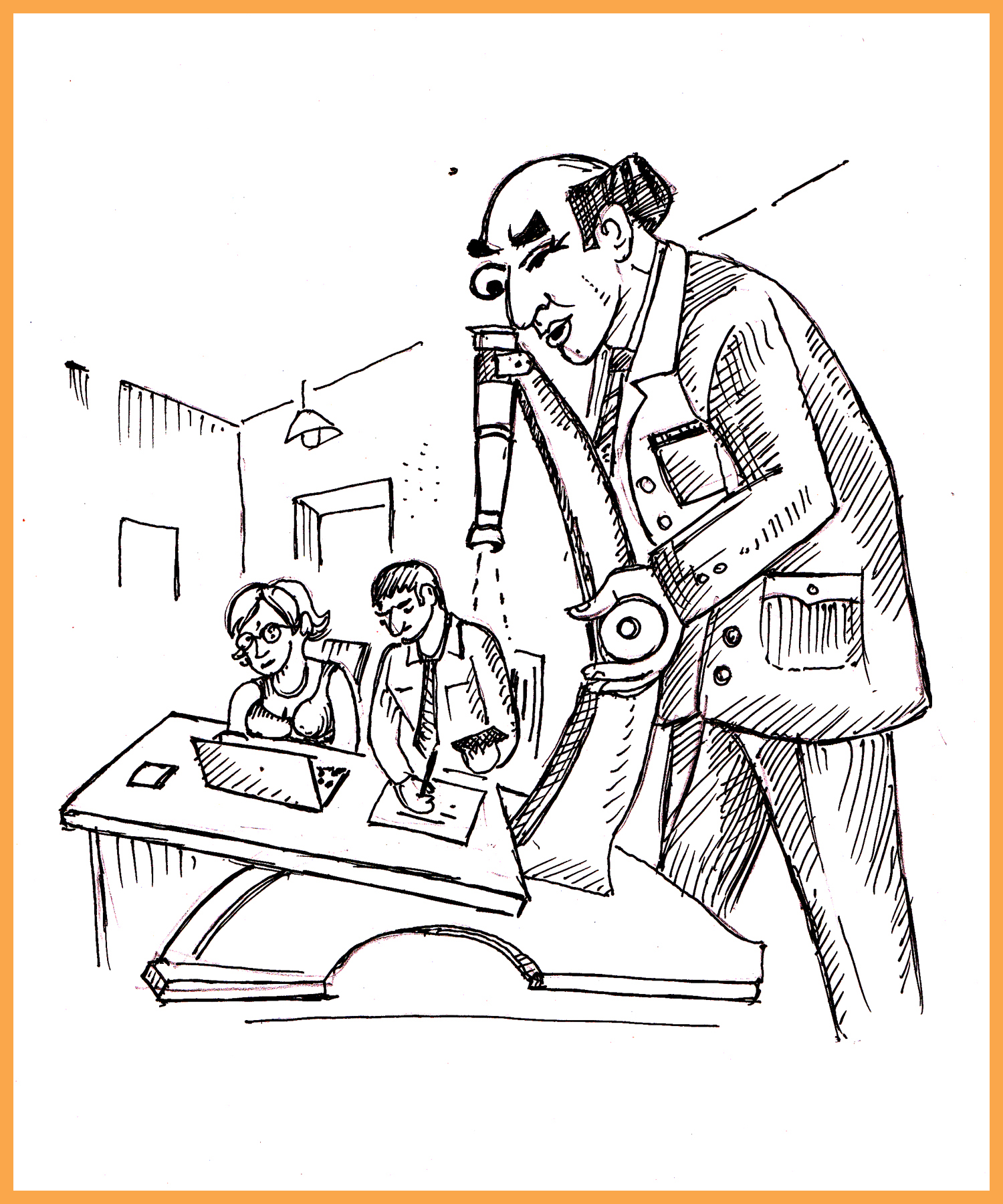
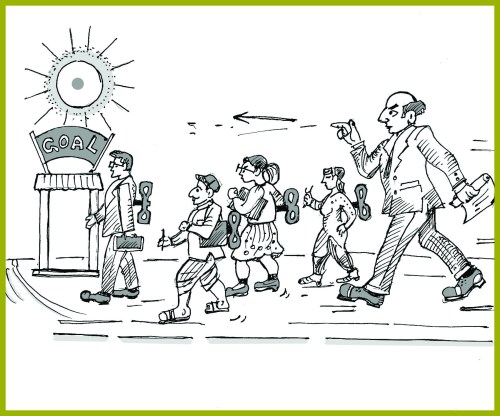
One of the professional hazards CEOs face is that of giving in to relentless pressure and becoming Road Rollers. Quarterly targets have to be necessarily met. Stakeholders have to be kept happy. Auditors have to be kept in good humour. Regulatory agencies have to be held at an arm’s length. Star performers have to be kept excited.

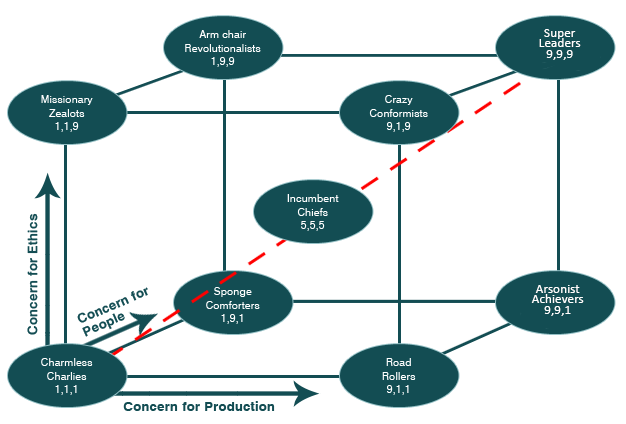
Amidst all this razzmatazz, CEOs run the risk of caring about results alone. They would achieve targets by ruthlessly crushing anything that comes in their way. Concern for Production gets the top priority. Concern for People takes a back seat. Concern for Ethics gets dumped. In terms of the modified Blake Mouton Grid, they end up being slotted at 9,1,1.X Y Z upgraded

Such heartless hard task masters end up neglecting even the genuine needs of their team members. Employees have to be dealt with in a stern manner. Shorter working hours are held to be injurious to employee’s health. Trade unions have to be manipulated. Signs of a white-collar mutiny, if any, are to be handled severely. People are like spare parts in a machine, simply to be replaced at the first signs of trouble.

In their jaundiced view, someone asking for some time off to ensure her kid makes a successful bid to enter a prestigious academic institution simply lacks commitment to organizational goals. A person wanting to leave office one hour early so as to be able to celebrate her marriage anniversary is merely offering an excuse to shirk her responsibility.

In the pursuit of excellence on the bourses, accounting norms evolve to loftier levels. Window dressing of financial information becomes the norm. Customer billings get preponed and get squeezed into the last few days of each month. Hapless auditors are kept busy highlighting Receivables and Customer Returns which get deftly swept under the carpet. Auditors keen on not losing a prestigious client easily get persuaded to fall in line.

Since the entire focus is on quarterly guidelines being exceeded, the organization suffers from Corporate Myopia. Vision Statements remain a set of pious intentions and can be seen only where these belong – on office walls and on display shelves.

When it comes to complying with a plethora of rules and regulations, the regulatory agencies have to be simply ‘managed’. Records need to be fudged, wherever necessary. Testing software and instrumentation has to be rigged, so as to show results within the legal parameters. Liaison officers need to be appointed so the inspectors could be kept in good humour. Government seniors have to be molly cuddled, so that they look the other way when violations are brought to their attention. Lobbying for suitable changes in government policy invariably assumes top priority.

When Road Rollers rule the roost for a long time, organizations often end up sitting on a dormant volcano which could erupt any time. Attrition rates gallop. Key performers get burnt out. People lack focus and work merely to show off. A sense of lethargy pervades. The percentage of employees of the Y-kind plummets. Managements concerned about lack of employee morale and motivation keep calling in experts to cheer up team members, with minimal results. MICROMANAGING

Often, micro-managing skills are applauded. Thus, grooming of future leaders assumes a lower priority. This leads to an absence of succession planning.

When faced with smarter government agencies who either sense a loss of public revenue or a scandal which might sully the image of the political party in power, such CEOs often invite greater trouble for their organizations. In one stroke, financial gains made over several years get wiped out. The organization’s brand image gets sullied.

Most of the times, such CEOs behave like pilots about to press the eject button in their cockpits. However, their reputation precedes them. Parachuting down to greener pastures becomes a challenge.

Have you ever had the good fortune of working with a Road Roller CEO? If so, and if you survived for a long duration, sincere appreciation is in order. You have already developed nerves of chilled steel, a trait so very essential to success in business. What you need now perhaps is a crash course to boost your Emotional and Spiritual Quotients, so your organization and your team members can breathe easy!

Note: Inputs from Ms Somali K Chakrabarti are gratefully acknowledged. She can be found here.

{Related Posts:

https://ashokbhatia.wordpress.com/2015/12/24/looking-for-ceos-inspired-by-the-yuletide-spirit

https://ashokbhatia.wordpress.com/2016/01/07/ceos-who-happen-to-be-charmless-charlies}

Read Full Post »

Lord Krishna, whose birthday will be celebrated tomorrow, happens to be one of the most revered and liked gods of the Hindu pantheon. Looked at from a management point of view, he is a leader par excellence. He manages events and people in such a manner that the end result is eventually positive and leads to a greater good.

Here are some facets of his personality which might be instructive for managers at all levels.

A friendly demeanour

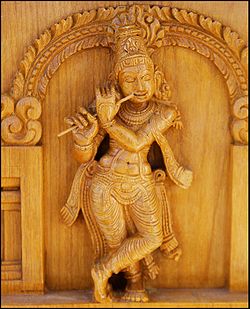
When a devotee plans to seek a straight forward favour, like when a much-awaited promotion is due and hard workKrishna_holding_flute has indeed been put in for the purpose, Lord Rama is often the more sought after religious figure. But when a devious request has to be made, say when praying for the transfer of a CEO who keeps disturbing one’s mental peace, the attention invariably turns to Lord Krishna. After all, he is our friend, with whom we can be frank and open!

This is the kind of appeal Krishna has. The fact that he has been depicted as a playful child and teenager adds to his unique image. The manner in which he treats his friends like Arjuna and Sudama multiplies his allure as a great problem solver. His ready availability is his Unique Selling Proposition. This is a quality which many a manager would find good to imbibe.

Flexibility in Approach

When it becomes apparent that Jarasandh would not allow the kingdom of Mathura to enjoy uninterrupted peace as long as he and Balarama are there, Krishna does not hesitate to leave his comfort zone. In order to ensure that the denizens of the city remain safe, he decides to build a new capital at Dwarka and shift his operating headquarters there.

When market dynamics change, business leaders and their team members in FMCG companies do not hesitate to travel to the hinterland. This helps them to understand the customer psyche better, thereby improving their presence in diverse markets.

Examples abound of companies which did not keep pace with the changes in technology and the market place. They continue to remain alive in our memories only.

Accessibility

Whosoever happens to be facing a challenge can approach him. Whether it is Arjuna or Duryodhana, there is no hesitation in seeking his help. Yes, whether and how he decides to help depends on which side of ‘Dharma’ we happen to be on. Duryodhana gets the support of his entire army, whereas Arjuna ends up getting him as a personal charioteer.

The privilege of accessibility is granted even to those opposed to him. Sisupala has the liberty of abusing him publically. Admittedly, he has a quota which, when exceeded, results into his death.

True blue leaders are invariably accessible to their team members. When a sudden challenge pops up, anyone can reach out to them and seek guidance.

Adherence to ‘Dharma’ (Righteousness)

The values inherent in a corporate policy, the vision for the company, the mission of the organization – theseMahabharat Disrobing_of_Draupadi constitute the ‘Dharma’ of all leaders, CEOs and managers.

When Krishna gets invited to the palace of Duryodhana for a rich feast, he declines. Instead, he prefers to have simple food at Vidura’s place. When Draupadi gets disrobed in King Dhritarashtra’s court, he manages to protect her honour. When a war becomes inevitable, he sides with the Pandavas. Invariably, he sides with those who follow the path of righteousness.

Strategy and Vision

In a careful reading of the major turning events in the whole narrative of Mahabharata, Krishna emerges as an eminent strategist. He keeps Draupadi’s frustration under check. He knows that Kauravas would never agree to let Pandavas have their share of the kingdom in a peaceful manner. Yet, he himself goes to plead their cause so that peace is given a last chance.

In the battle that ensues, he virtually leads the 7 divisions of Pandavas’ army to a decisive win against the 11 divisions of Kauravas’ army.

All mighty warriors on the Kauaravas’ side fall with specific inputs from Krishna. In case of Bhishma, Arjuna attacks him standing behind Shikhandi. Dronacharya is misled to believe that his son Ashwatthama has fallen. When Duryodhana appears to be invincible in his mace fight with Bhima, Krishna gestures to the latter to hit the former below the navel, thereby incapacitating him. When Balarama gets upset with Bhima for having broken a cardinal principle in his final fight with Duryodhana, Krishna intervenes to pacify him by reminding him of the several injustices perpetrated by the Kauravas on Pandavas.

Detachment

The manner in which Krishna persuades a demoralized Arjuna to take up his arms by enunciating the basic principles Mahabharat Krishna Arjunaof life in the Bhagavad Gita is exemplary. The gospel of devotion to duty, without attachment or desire of reward, continues to show the way of life to all those who seek light in the dark problems of life.

Krishna not only preaches but also practices detachment. Consider the manner in which he decides to leave his home and hearth in Gokul and Vrindaban. To him, the call of duty, of restoring the kingdom of Mathura to King Ugrasena, a just and righteous monarch dethroned and imprisoned by his own son, Kansa, is supreme. The fact that Kansa happens to be his maternal uncle does not stand in the way of Krishna killing him to achieve his goal.

He does not entertain the thought of ruling over Mathura himself. He believes that in order to be a competent ruler, he first needs to complete his study of the Vedas, achieve proficiency in warfare and understand the nuances of governance.

What does a CEO do when business conditions warrant a manufacturing unit to be shut down, even though he himself had painstakingly set it up two decades back? What does a manager do when a much-liked junior commits an act of impropriety and has to be asked to leave the company? Or, when a plum assignment has to be given up due to compelling personal reasons? A sense of detachment comes in handy in all such situations. The higher the level of detachment, the more objective the decision is likely to be.

Unstinted Support

When Abhimanyu gets killed on the battle field, a grief-stricken Arjuna vows to slay the warrior responsible – Jayadratha – by next sunset, or end his own life. Krishna manages to save Arjuna’s honour, bringing much relief to the Pandavas.

To those who remain committed and loyal to them, leaders provide unstinted support.Krishna

The Many Masks

Krishna does not hesitate to reveal himself in his entirety in the midst of the battlefield. Arjuna is petrified to see the ‘Vishwa Roopa’ of someone he considers to be a close friend.

Leaders also wear several masks. They could be polite and gentle. They could be loving and compassionate. But if the situation demands it, they could also invoke dread and fear amongst their team members. Just like Krishna, they possess a multi-faceted personality.

The Inner Voice

One of the basic concepts enunciated by Krishna in the Bhagavad Gita is that of the everlasting nature of the soul. The concept of a soul now finds a resonance even in modern management literature. In ‘The 8th Habit’, Stephen Covey urges professionals to pay heed to their ‘inner voice’. While proposing the whole person paradigm, he speaks of the four dimensions of a person – spirit, body, heart and mind.

Intuition

Once the war gets over and all his sons have got killed, Dhritarashtra attempts to kill Bhima by crushing him in a close embrace. Krishna is able to read his mind and deftly pushes across a metal statue instead, thereby saving Bhima’s life.

Smart managers go beyond ‘analysis paralysis.’ They do use information, but they also rely on their intuition. A more balanced decision-making comes about.

Tenacity and Perseverance

When the disappearance of a valuable gem, the ‘syamantak mani’, is attributed to Krishna, he does not wallow in self-pity. With a chin-up attitude, he keeps working on the problem till the time it becomes clear that his conduct is as pure as the driven snow.

CEOs with a tenacity of purpose build up a unique team of followers. Perseverance is ingrained in their character. To give up does not come easily to them.

A Global MindsetMahabharat Draupadi_and_Pandavas

Personally, Krishna has little to gain from the great war. All his actions are directed towards the overall benefit of the society. Once Yudhishtira assumes the charge of the entire kingdom, peace prevails and development comes about.

Great business leaders share the same quality with Krishna. They try to give back to society in more ways than one. Sustainable business practices ensure that their companies’ operations do not cause irreparable damage to the eco-system.

Leading from Behind

Unlike Lord Rama, who leads an army from the front, Lord Krishna leads it from behind. The former leads an army of monkeys. The latter leads an army of illustrious people. Each one has great prowess, expertise and self-mastery. He also gets to handle people who are more shrewd and cunning.

In the initial phases of industrial revolution, when manufacturing was the primary activity, most of the leaders had to lead their teams from the front. In the services sector, as also in the emerging knowledge economy, leaders mostly manage from behind.

Depending upon the situation at hand, leaders switch from one mode to another. The style also varies from person to person.

A Tryst with Adversity

Krishna lives a unique life which is full of adverse circumstances. He is born in captivity. He is separated with hisKrishna birth parents immediately after his birth. Even as a child, he manages to survive attempts on his life. He leaves his foster home, never to return. He leaves the city of his birth and relocates to a far off place. He continues to be busy solving other’s problems throughout life. His whole clan gets destroyed in a bitter fight between its own members.

At no stage do we find Krishna blaming his circumstances. He is self-assured. He is confident. He is clear on what he wants to achieve. His methods may be rough at times, but they deliver.

Sure enough, like many a business leader, he pays a heavy price for upholding righteousness. With little time for family and children, the progeny is destined to remain unsung.

Tough situations bring out the best within managers. Life strives to chisel their character into a fine shape, much like a finely carved statue which is much admired by those who view it from the outside. Few realize the pain, suffering and sacrifice that the stone has undergone to achieve that exalted beauty and that state of perfection.Krishna_Arjuna_Gita

Krishna – A Spiritual Leader

Much like a business leader of modern times, Krishna displays vision, flexibility in approach, resourcefulness and an excellent capacity to command. The authority that he exercises over others is born more out of love and concern, not fear. He is the trouble-shooter par excellence who leads, inspires, guides and motivates. He sets a fine example for business leaders and managers to emulate.

Krishna is a role model for spiritually inclined leaders and managers. He demonstrates that being spiritual does not necessarily mean being soft. It only implies that one’s decisions and actions are rooted in stark pragmatism, backed by sound values and propelled by a desire to achieve the greater good.

(Related posts:

  1. https://ashokbhatia.wordpress.com/2013/05/27/management-lessons-from-ramayana
  2. https://ashokbhatia.wordpress.com/2013/07/12/management-lessons-from-mahabharata)

Read Full Post »

Professionals need to step back every once in a while and check if their brand image is bright and shining. Keeping one’s brand value burnished helps in career progression. It is also an immensely satisfying slice of life which promotes self-worth and boosts self-confidence.

Here is a checklist of the kind of inputs which go into keeping a professional’s brand value burnished.

1. Under-promise, over-deliver
Being aware of our core strengths as well as limitations helps us to assess our chances of success in delivering on a project. By ensuring that we commit conservatively but deliver zealously, we build up a reputation of reliability. There are indeed times when a polite ‘no’ could save us from denting our reputation.

2. Practice honesty and openness in relationships
Our colleagues and team members are equally smart. They are quick to sense a touch of opacity on our part. They detest a lack of transparency in us. Dealing with those around us with honesty ensures that they repose their faith and trust in us. As a result, our capability of getting things done improves.

3. Be a friend, philosopher and guide
All of us have some expertise which may not be directly relevant to our Key Result Area. It could be an insight into theTEAMS realm of alternative therapies which a colleague can use for one of her family members. It could be about handling rebellious teenagers at home. If we put such expertise to use by helping others around us, word goes around and others rush in to seek our counsel. We might have the image of a tough task master, but this softer aspect of our personality helps us to build a unique brand for ourselves.

4. Network
Whether within the organization or outside, networking goes a long way in building up our reputation. The trick, however, is in avoiding those with a negative outlook, while promoting ties with those who have positive vibes.

5. Keep learning
Keeping the saw sharpened always helps. By refreshing our knowledge pool continuously, we remain a leader in more ways than one. Often, a dash of humility is all it needs to remain ahead of the curve.

6. Be genuine
By being ourselves, we enhance our dependability. Others feel reassured and refreshed after each encounter with us. They do not mind confiding in us. In turn, this helps us to understand and address their anxiety and concerns better. Our ability to deliver improves.

A brand is all about reliability and dependability. It offers good value for money. So do professionals who work on the basis of deliverables. Smart ones realize that an image is merely a matter of perception. It needs to be backed by real inputs so one’s brand value remains intact and is kept burnished at all times.

Read Full Post »

WORK-LIFE BALANCECXOs of today operate in a hyper-competitive, fast-paced world. Round the clock connectivity gives them a great advantage – of being always accessible. However, it also takes a heavy toll. Making time for personal commitments poses a serious challenge; so does the absence of introspection as to where their own life and career is headed.

Here are some simple and do-able tips for CXOs to keep driving in the fast lane, with a clear view of the horizon and occasional stopovers in the sunlit valleys of life. In other words, to achieve the delicate goal of better work-life harmony.

Family time IS important

If you happen to be in station, earmark a time of the day which is exclusively for the family. Could be breakfast time. Could be dinner time. Make sure your international calls and Skype conferences are scheduled in such a way as to not to impinge on to this time.

Treat your weekly off days with the respect they deserve. Do not allow yourself the luxury of driving over to your office on such days.

Avoid sweating over small stuff

Small stuff is important. But you do have team members who take care of the minute details. Guide them, by all means. Do not get directly involved. You would only get blamed for micro-managing.

Prioritize well. Prioritize in advance. Follow Bhagavad Gita, which exhorts us to render our duties faithfully, guided not by desired results but by imperatives of the tasks themselves.

Check if you suffer from a decision fatigue. Put routine decision-making in an auto-pilot mode. This is bound to free up lot of your time which could be used more productively.

Managing technology

Let your biological age not bog you down. Learn and use technology in such a manner as to ensure some breathing space for yourself. That is when you will feel connected to terrestrial life outside your extra-terrestrial universe of work.

Technology can enable you to be virtually present at different places in different time zones. It can also enable you to be connected to anything critical happening which you genuinely feel might need your intervention. Use technology to delegate better and more effectively.

Schedule your priorities

Time is a finite resource. Use it intelligently. Engage when necessary; take a break when required. Meaningful interactions with family and close friends could leave you well charged up for the tasks ahead. Productive discussions with clients and professionals can help in resolving issues more effectively.

Excellence needs the fuel of passion. When passion drives your professional journey, constraints become less formidable. Tasks cease to become chores. Wise scheduling of your priorities results into excellence.

From IQ and EQ, on to SQ

Give your overworked brain some rest. Try using your heart to decide upon an issue. You will notice that improving your Spiritual Quotient would improve your performance. Small doses of gratitude and compassion help. Being aware of yourself and being conscious of what is happening within you helps. Humility helps. Developing equanimity helps.

Happiness and contentment within is great to have. You end up radiating it to those around you. Harmony in the work atmosphere improves. Output of the whole group improves.

You might find that IQ, EQ and SQ are like the spokes in the wheel of life, of which career is but one component. If all are equally developed, the wheel does not wobble – it runs smoothly.

A non sequitur?!

Before I sign off, allow me the liberty to pose a question. By hyphenating ‘work’ and ‘life’, are we not demeaning life? While chugging through our careers, we could honestly believe that work is much greater than life. In fact, it is merely a part of life. A subset, which needs to be in harmony with all other aspects of the multi-hued experience we call life. Perhaps, it is time to correct our perspective.

My proposal is this. Next time round, do not think about work-life harmony. Think only about achieving a state of harmony between the work-sphere of your life and the other spheres of your life – family, friends, hobbies, and the like.

When the conductor of an opera gets on to the stage to produce music that touches our souls, what he strives for is excellence, based on harmony. A discordant note from a single cello could ruin the performance. Likewise, all CXOs strive to get desired results, based on a harmony – between different managerial functions, between the organization and its various stakeholders and, above all, between the different constituents of their own lives.

So, how do you achieve this state of harmony? Would you like to share some insights?

Read Full Post »


The art of managing people has been analysed in great detail by theorists in the past, and commendably so. McGregor was bang on target when he came up with the X and Y approach to managing people. Also, Robert R. Blake and Jane Mouton came up with their Management Grid concept, where the X-axis has ‘Concern for Production’ and the Y-axis has ‘Concern for People’. This proved to be a very useful tool to classify leadership styles.

With due respects to the brilliant work done by those mentioned earlier, one would like to make the concept of a Management Grid more contemporary by adding a new dimension, Z. This axis covers our ‘Concern for Ethics and Values’.

Based on the concept of this grid, leadership styles may well be categorized as follows:

1,1,1: Charmless Charlies
One can only wish their organizations the best of luck.

9,1,1: Road Rollers
They would achieve a target by ruthlessly crushing anything that comes in their way.

1,9,1: Sponge Comforters
As long as employees have an identity crisis, they are in high demand, ready with a bucket and a towel to listen to their woes and comfort them.

9,9,1: Arsonist Achievers
Under them, short-term goals would get achieved. Means be damned.

1,1,9: Missionary Zealots
Saint-like souls who have willy-nilly ventured into the business world.

9,1,9: Crazy Conformists
Those working under them could soon get referred to a lunatic asylum.

1,9,9: Armchair Revolutionists
They could be assets to political outfits owing an allegiance to some outdated doctrines.

5,5,5: Incompetent Chiefs
A middle-level successful manager on whom greatness has been thrust by a benevolent fate.

9,9,9: Super Leaders
A balanced Chief Executive Officer who leads his team successfully in the long run. To be spotted, head-hunted, and hired without further delay.

When it comes to corporate governance, most businesses are driven more by greed than by the norms of propriety. Compliance with statutory provisions and indulging in tax avoidance rather than blatant tax evasion are given a short shrift. As a repercussion, we end up having more controls and complex laws, thereby making non-compliance even more attractive.

The good news is that there are indeed enlightened businesses and right thinking managers who score high on the Z-axis as well. Such businesses have been around for more than a century and have done well for themselves; they have also given back to society in terms of advanced medical facilities, support to fine arts and sports, and several other Corporate Social Responsibility initiatives. The Tata group of India is a shining example of the same.

Read Full Post »

LEADERSLet us say that you happen to be a very successful CEO. A spate of rewards, tons of recognition and loads of adulation has left you with an after-glow of inner contentment. Entrapped by the spoils of success, have you started taking life easy? Have you started believing that you are infallible?

It is perhaps a good time to introspect. Here are seven habits which highly successful CEOs never get addicted to. Let us check our present score and evaluate where we stand.

1. Being partial or dishonest

You would always find them transparent and fair in their dealings. Never would you find them cheating. They set high standards in conduct of business, based on values and principles they cherish and believe in.

2. Dwelling on the past

It is not that they have not made their share of mistakes in the past. But they have learnt from them and marched on towards the future. Never would you find them gloating about their past companies and victories. They live in the present, never allowing their past to define them.

3. Letting down their team members

They would never let down a team member. Praising in public and firing in private is one of their key personality traits. They identify, nurture and mentor talent. They take good care of their people, earning life-long loyalty. Those who have hung onto their coat tails would be willing to make important sacrifices for them.

4. Being conformists

They know what they want. They are willing to get off the beaten track and achieve what they have set their hearts and minds on. They know how to manage controversies. They have the requisite skills to bring even their worst critics on board.

5. Saying ‘Yes’ when they mean ‘No’

They tend to be good listeners. Whether they agree or disagree with you is entirely a different matter. They can argue out their case well. They have mastered the art of putting across a disagreement without breaking a relationship.

6. Being surrounded by sycophants

They encourage dissent. They believe that healthy disagreements form the bedrock of good decision-making. Listening to – or indulging in – gossip or lose talk is never one of their favorite activities. Attention to detail is one of their key characteristics.

7. Being late

Unless they have a very good reason to have got delayed, highly successful CEOs are downright punctual. And we are not talking of client meetings alone. We are also speaking of internal meetings, with their own team members. This trait keeps others in the company on their toes, invariably following the dictum of punctuality.

Are we guilty of having cultivated any of these habits? If so, can we make a conscious attempt at overcoming these?

Which are the habits you try not to form, so as to sustain your progress in life?

Would you like to add some more habits to the list above?!

Read Full Post »

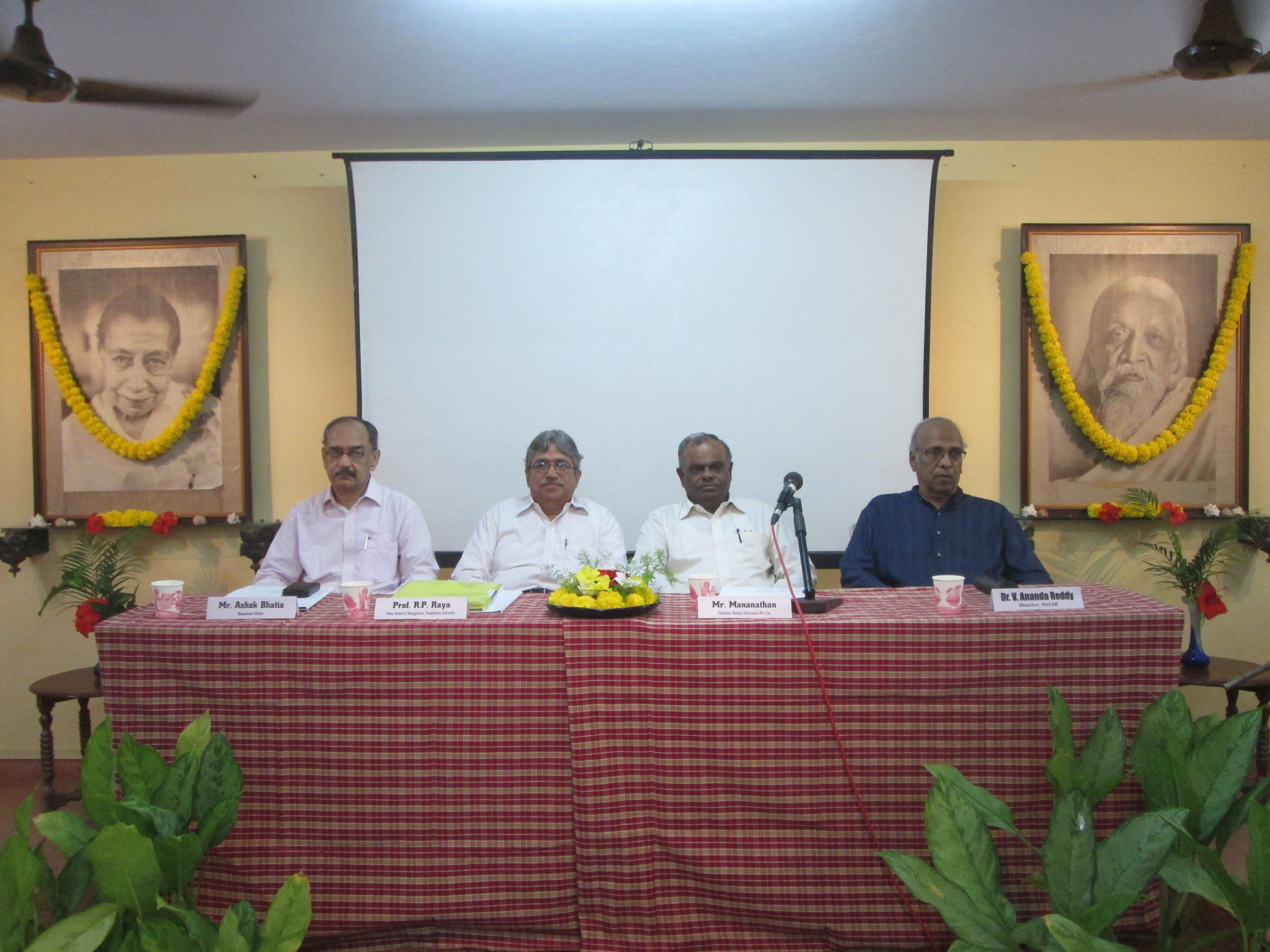
Can a business be run without resorting to corrupt practices? This was one of the several questions attempted to be answered by management experts at a recent seminar organized by Sri Aurobindo Center for Advanced Research at Pondicherry (SACAR) at Pondicherry in India.1 Inaugural Session IMG_2266At every step, a business faces a choice – whether to indulge in corrupt practices to get what is its legitimate due, or face hardships and bottlenecks in meeting its obligations towards such stakeholders as its suppliers and employees.SACAR Dr ReddyThere are no simple answers to this vexed issue. However, there could be innovative ways of handling such challenges. A strong anti-corruption image helps. The conviction, that this is just not done, takes time to radiate to those who place such a demand on the business.

Another way to face such a challenge is to politely decline meeting an illegal demand. Instead, an offer to fund a legitimate activity which falls in the realm of CSR and shores up the image of the official/department concerned could get readily accepted. This could be by way of toilets being set up in schools, trees being planted and maintained on a main thoroughfare, or by investing in a scheme of social benefit.

???????????????????????????????The conviction emanates from an inner strength and a resolve to ensure that the dealings of the corporate concerned remain above board. Once adopted and marketed as a strategic choice, the business gains in the long-term – by adding value to its own brand equity and by gaining public trust. In turn, this could be leveraged to command better margins in the market place and also to attract better talent at a lesser cost.???????????????????????????????According to a business captain who addressed the participants at the seminar, the core mantra is to not to readily give in to illegitimate demands and to do simply what is in one’s control. The path of righteousness is not easy to tread but can be adhered to successfully if the top management has the necessary conviction. Decision making based on good values and an inner connection always helps a business person to strike this delicate balance in its operations.

Speakers at the seminar also touched upon VUCA and the increasing rate of change in the business environment. Studies which have proved that businesses which adhere to the basic values of honour, truth, beauty, justice and love were quoted do better in the long run. Participants were exposed to leadership lessons drawn from such Indian scriptures as Ramayana, Mahabharata, Thirukkural and also from Sri Aurobindo’s works.???????????????????????????????The value of meditation and resultant control of one’s mind was demonstrated. A panel discussion explained the likely changes in the business environment over the next decade and outlined the leadership and management attributes which would become more relevant in the times to come. The emphasis was on leaders who steer their businesses not only directed by an economic compass but also by a moral one.

The seminar, entitled ‘Preparing Future Business Leaders and Managers: An Inner Approach’, drew an enthusiastic response from business managers, scholars and students alike. It was addressed by Dr. Ananda Reddy, Director of SACAR, Mr. R. Mananathan, Chairman and MD, Manatec group of companies, Prof R. P. Raya, Dean, School of Management, Pondicherry University, Dr. Saikat Sen from SAFIM, Prof. Kisholoy Gupta, Mr. J. V. Avadhanulu, Mr. Ganesh Babu and yours truly;  a heady mix of management educators, lifestyle coaches, business thinkers and influencers.

Read Full Post »

Thirukkural (திருக்குறள்), also known as the Kural, is a classic Tamil ‘sangam’ (3rd century BC to 4th century AD) literature composition. It has 1,330 couplets or ‘kurals’. It was authored by the renowned poet Thiruvalluvar.

The Thirukkural is one of the most important works in the Tamil language. This is reflected in some of the other names by which the text is given by such as ‘Tamil marai’ (Tamil Vedas); ‘poyyamozhi’ (words that never fail); and ‘Deiva nool’ (divine text).

Just like ‘Ramayana’, ‘Mahabharata’, ‘Bhagavad-Gita’ and other scriptures, Thirukkural is also replete with words of wisdom. It is simple and contains profound messages.

Thirukkural has 133 chapters, each containing 10 couplets. Broadly speaking, all the 133 chapters can be divided into three sections: Righteousness, Wealth and Love. In the text below, the serial number of each couplet appears on the top, followed by its Tamil text and then by its near-literal translation in English.

Thiruvalluva

Practising as well as aspiring managers could draw quite a few lessons from Thirukkural. Here is a modest attempt to capture a few of its facets.

Leadership

Leadership is more of an attitude and a way of living and behaving. It is about opening one’s heart. It is about inspiring those around one. It is about leading others by example. It is about standing up for others and shielding them from harm.

770Thirukural 770Of what avail is the army of heroic warriors if there be no general to guide them?

388Thirukural 388He is a God among men who shields his subjects.

A good leader is an avid listener. He encourages dissent.

416Thirukural 416Listen to wholesome counsel however meager; for out of it springs great good.

389Thirukural 389The world is under the sway of the monarch who puts up with bold and bitter counsel.

529Thirukural 529Reject none on the score of disagreement. Men who have become estranged will flock to you.
LEADERS

A leader’s life is not easy. Following ‘dharma’ (righteousness) is his/her foremost trait. Being impartial and just is another.

33Thirukural 33Avail yourself of all opportunities. Do not cease from practicing Dharma on all possible occasions to the best of your ability.

111Thirukural 111An equity which knows no partiality is in itself a unique virtue.

432Thirukural 432Niggardliness, empty honor, blind favoritism, are all the faults of a king.

541Thirukural 541Strict enquiry and impartial justice mark the rule of a just monarch.

Intuition plays an important role in the life of a leader. Steve Jobs’ life is a living example of this trait.

429Thirukural 429Men of foresight who guard themselves against coming events know no distress.

Leadership is about human experiences and not about processes.

578Thirukural 578The world belongs to a king who can do his duty and yet be courteous.

Mergers and acquisitions often follow the rule of tying up with a former adversary in business. Google acquired Android, YouTube and Motorola Mobility, so as to extend the reach of its business as also to diversify into related verticals.

679Thirukural 679It is much more urgent to secure the alliance of one’s enemies, than to do good to one’s friends.

Brand Image of an Organization

Thirukkural has chapters which are intended for developing and managing kingdoms. The attributes of an ideal kingdom mentioned in the ancient text are equally applicable to the contemporary corporate world.

738

Thirukural 738Five are the ornaments of a kingdom – absence of disease, wealth, fertility, happiness and security.

This can be interpreted to mean that a great company is one which has a strong brand image amongst all its stakeholders. Healthy and vibrant employees form the backbone of a company. By generating a surplus for its shareholders, wealth gets created. A culture which enables fertile imagination and innovation ensures its long-term survival and well-being. A result-oriented but relaxed culture results into greater happiness of its employees. Guarding the company’s assets – material as well as intellectual – ensures survival in a highly competitive environment.

Management

Managers need to be resolute, decisive and action-oriented. Loyalty to the management and operating within the company policy paradigm are two of the several qualities they need to have.

668Thirukural 668What you have clearly decided to do, do it without hesitation and delay.

766Thirukural 766Heroism, honor, tried policy and fidelity to the king, these four are an army’s shelter.

Stephen Covey has spoken of the habit of ‘sharpening the saw’. The poet also emphasizes the need to keep upgrading our subject knowledge, so as to do well in our careers.

401Thirukural 401Entering an assembly without sufficient knowledge is like playing at a dice board without its knowledge.

444Thirukural 444To follow in the footsteps of those who are greater than oneself is the crown of one’s strengths.

Planning, and thinking ahead, needs to be given a high priority. Want to beat the competition? Know its strengths and review your plans accordingly.

461Thirukural 461After much deliberation over profit and loss and the final gains, launch on a task.

471Thirukural 471A king must act after measuring the strength of his plan, his own resources, the strength of the enemy and that of the ally.

Restraining anger is important. Anger is also an important weapon in a manager’s arsenal. It can be used to put in place a team member who might be getting too big for his boots. When held back and allowed to simmer within, it can be used very effectively. Patience and forbearance are recommended. We also need to have the knack of getting our timing right!

305Thirukural 305If a man were to guard himself, let him restrain anger. Otherwise anger gets the better of him.

487Thirukural 487The wise will not fly into a passion when assailed; they allow their anger to smoulder within till the right time comes.

158Thirukural 158Conquer with forbearance one who has done you harm and caused you anguish.

484Thirukural 484One can succeed in the attempt to conquer the world if the right time and the right place are chosen.

Management is all about getting things done. A smart manager would know what needs to be done, who is the best person for doing it, and the right time to get it done.

516Thirukural 516The thing to be done, the proper person for it and the appropriate time for doing it, must all be duly weighed.

Meetings

Here are some guidelines on when to speak, how to speak and what to speak.

711Thirukural 711Men should weigh their words in speaking when addressing an audience.

714Thirukural 714Before brilliant people, be brilliant; before plain people, be as plain as white chalk.

715Thirukural 715The humility to maintain silence before superiors is the best of all good qualities.

Planning and Execution

The poet exhorts us to avoid procrastination.

674Thirukural 674An unfinished deed and an unfinished fight will, like a half-extinguished fire, cause ultimate harm.

675Thirukural 675Do a thing after carefully deliberating on five things – resources, means, the time, the nature of the deed, and the place.

ch-12-we-and-us-2

677Thirukural 677The manner in which a thing should be done is to be determined after consulting an expert.

Getting Hired

Whether we are hiring a chartered accountant or an engineer, the cultural fit with the company is of great importance. People who sound the same based on their CVs are all different. Their value systems are determined by the family they belong to and the environment they have grown up in. Their personality traits are not the same.

Would they fit in with their immediate team members? Would they vibe well with the culture of the organization? These are some of the questions to be asked so as to ensure that we make better hiring decisions.

960Thirukural 960Out of modesty springs one’s greatness. Out of humility rises the honor of the family.

951Thirukural 951Probity and a sense of shame are virtues innate only in men of noble lineage.

The poet also exhorts us to make a hiring choice with due diligence.

509Thirukural 509Let men be chosen with deliberate care; when once the choice is made, let no suspicions crawl into your soul.

632Thirukural 632A minister should have five qualities: tenacity of purpose, birth in a respectable family, welfare of people, profound learning and perseverance.

Managing the Self

Like all spiritual texts, Thirukkural also extols the virtues of connecting with one’s inner self.

Being amiable and speaking positively helps.

93Thirukural 93To welcome one with a pleasant look and loving words is righteousness.

Helping others in a self-less manner may result into long-term loyalists getting developed. However, help rendered to an ungrateful person could be a waste of one’s time and efforts.

103Thirukural 103Help done expecting no return, if weighed, will be vaster than the sea.

105Thirukural 105Help rendered is not in terms of the return but its value depends on the receiver.

Forgetting and forgiving helps us to reduce our own stress levels.

108Thirukural 108It is not good to forget the benefit received; but it is good to forget then and there the injury done by another.

Self control is the real treasure. So is walking on the right path.

122Thirukural 122There is no greater wealth than self-control; treasure it as your wealth.
132Thirukural 132Strive hard to walk in the right path. One finds it one’s surest ally.

Tiruvalluvar_Statue_Kanyakumari

Loose talk, inane gossip and back-biting happen to be some of the tricks of making enemies and losing friends!

187Thirukural 187Those who alienate friends by back-biting may have forgotten the art of making friends through suavity of speech.

200Thirukural 200Speak profitable words; avoid nonsense.

Gems of General Wisdom

Renown

234Thirukural 234The wise are not favored by the gods; but the renowned on earth are adored by them.

Compassion

250Thirukural 250Oppress not the weak; remember your own fate in stronger hands.

Truth

298Thirukural 298Water cleanses the body; truth cleanses the soul.

True knowledge

352Thirukural 352Men of pure vision are led from darkness to light.

Will Power

595Thirukural 595The greatness of a person is proportionate to the strength of his will power.

Challenges

621

Laugh over your obstacles; nothing like it to push them further and further.

FEMALE POWER

When it comes to cautioning leaders and managers against amorous advances within the confines of their place of work, Thirukkural is silent. However, it is interesting to note that in the Love section, it does deal with matters of romance, sex and lust. If there are observations from the view-point of the so-called sterner sex, we also find insights from the delicately nurtured amongst us. To that extent, the text may be held to demonstrate a decent level of gender parity. Chivalry is far from being dead!

Each ‘kural’ is complete in itself. It deserves to be meditated upon, one at a time, and imbibed in our day-to-day lives. One wonders at the keen observations of the poet, his sagacity and the effort he has taken to collate and compile this beautiful work, replete with words of wisdom which continue to be as relevant today as they were in the days of yore.

(Notes:

  1. English translations of the ‘kurals’ quoted here are courtesy Mr V R Ramachandra Dikshitar, as per the book ‘Thirukkural of Tiruvalluvar’ brought out by The Adyar Library and Research Centre of The Theosophical Society, Chennai, India; ISBN 81-85141-08-8.
  2. My sincere gratitude to various persons who enabled this multilingual compilation.
  3. An abridged version of this post also appears in my book ‘Surviving in the Corporate Jungle’, ISBN 978-1-4828-8850-8.)

(Related Posts:

https://ashokbhatia.wordpress.com/2017/11/14/the-many-faceted-thirukkural

https://ashokbhatia.wordpress.com/2013/05/27/management-lessons-from-ramayana

https://ashokbhatia.wordpress.com/2013/07/12/management-lessons-from-mahabharata

https://ashokbhatia.wordpress.com/2015/09/04/management-lessons-from-the-life-of-lord-krishna

https://ashokbhatia.wordpress.com/2017/02/01/sacred-scriptures-of-india-and-the-bhagavad-gita)

Read Full Post »

Learning from Failures

With a higher level of uncertainty, a leader’s chances of failure would also go up. A failure which results into pain and suffering can also be taken as a boon, as time often proves. If the right lessons are drawn, the chances of a failure repeating itself in future can be drastically brought down.

Consider these words of wisdom from Narad when he tries to explain to Savitri’s mother as to why she must marrya1 1 (11) Satyavan and suffer on the terrestrial plane.

‘Although the shaping god’s tremendous touch
Is torture unbearable to mortal nerves,
The fiery spirit grows within
And feels a joy in every titan pang.’
(Savitri, page 444)

Leaders wear their crowns of glory. But the crown does not come cheap. The cost they have to bear is that of the cross they have to carry.

‘Hard is the world-redeemer’s heavy task;
The world itself becomes his adversary,
Those he would save are his antagonists:
This world is in love with its own ignorance,
Its darkness turns away from the savior light,
It gives the cross in payment for the crown.’
(Savitri, page 448)

Management by Consent

In the times to come, the profile of the followers would also be different. Hierarchical authority is already proving difficult to manage change; there is no reason to believe this would not be even more so in the future. The followers would demand a higher degree of participation in the decision-making processes. Leaders who recognize this need of their followers and create a working environment which enables the same would achieve higher levels of efficiency and effectiveness in their business processes.

Creating a non-coercive environment in which employees and other stakeholders are clear about the corporate identity and the mission would be far more important than it is today. Reverse mentoring would be more a norm than an exception in the days to come.

Consider the all-powerful God of Death. When accosted by Savitri, he does not dictate terms. He allows a reasonableSavitri_Yama discussion on the subject. He keeps changing the line of his arguments, intent upon denying Savitri the life of her husband. He tries his best to dissuade her from changing one of the basic laws of nature. He even declares “I, Death, am the gate of immortality.”

Savitri is undaunted. She points out that if this creation has arisen out of a meaningless void, if matter can come forth from energy, and life from matter, and mind from life, and if soul can peep through the flesh, what is wrong in hoping that the imperfect man of today will someday transform himself into the perfection of God?

The God of Death eventually loses the argument, his authority and also his stature. But his greatness lies in the fact that he has the good grace to permit and then lose an argument to a person who looks like a mere mortal. Realizing her sincerity of purpose, he even grants her a boon.

In Ramayana, the villain is Ravana, a highly learned and accomplished person. One of the reasons for his downfall is to neglect the advice of nay-sayers. His wife, Mandodari, brother Vibheeshana and grandfather Malyavaan – all advise him to return Sita to Rama. Instead, he chooses to listen to his courtiers who play on his ego and pride and advise him not to do so.

A couplet in Sundara Kanda of Ramcharitmanasa clearly advises us to ignore the advice of a paid deputy, aRamayana 2 doctor and a teacher who speak positively out of either fear or expectation of a gain. A king who acts upon such motivated advice loses his kingdom, his body and his righteousness (dharma) as well.

When Lord Rama decides to accept Vibhishana in his fold, he does not simply order the same. He consults all seniors present before arriving at a decision.

Monsanto’s CEO, Robert Shapiro, had the ability to go against traditional hierarchy. He initiated strategy sessions with cross-sections of employees of different ranks, specialties and geographical perspectives and reaped rich dividends for his company.

The Moral Compass

Leaders who believe in sustainable businesses would not only use their commercial compass while determining the direction to take. Using a moral compass would be a valuable trait amongst the future leaders. A strong inner core, embedded with a value system which recognizes the needs of the society at large, would be a great quality to have. A pre-condition for employing key managers would be their endorsement and support of the core values of the business.

Sticking to some core values which are steeped in righteousness eventually leads to success. The main protagonist, Rama, is depicted in Ramayana as an epitome of virtue. He is an ideal king, an ideal son and a pragmatic person. He sets high ethical standards in warfare and invariably sides with dharma, or righteousness.Krishna_Arjuna_Gita

One of the basic concepts enunciated by Shri Krishna in the Bhagavad Gita is that of the everlasting nature of the soul. The concept of a soul now finds a resonance even in modern management literature. In ‘The 8th Habit’, Stephen Covey urges professionals to pay heed to their ‘inner voice’. While proposing the whole person paradigm, he speaks of the four dimensions of a person – spirit, body, heart and mind.

A random sample of all successful business houses which have been around for more than a century now – Siemens and Tatas, for instance – is ample proof that ethics in business do pay dividends in the long run. Names of such business houses enjoy tremendous brand equity in the market; understandably, that rubs off on their products as well.

When the likes of Siemens and Wal-Mart come clean on their misdemeanors, they set an excellent example of probity in the business world. When Mr. Ratan Tata, the Chairman Emeritus of India’s salt to software conglomerate, rues his inability to enter some fields of business because of the absence of a level playing field in India, his focus is on one of the core values of his business.

Indra Nooyi is charting a unique course for Pepsico globally, shedding traditional markets and going in for healthier food products instead.

Preparing Leaders for 2025!

In a careful reading of the major turning events in the Mahabharata, Krishna emerges as an eminent strategist. He keeps Draupadi’s frustration under check. He knows that Kauravas would never agree to let Pandavas have their share of the kingdom in a peaceful manner. Yet, he himself goes to plead their cause so that peace is given a last chance.

Eventually, all mighty warriors on the Kauaravas’ side fall with specific inputs from Krishna. In case of Bhishma,Krishna Arjuna attacks him standing behind Shikhandi. Dronacharya is misled to believe that his son Ashwatthama has fallen at the behest of Krishna. When Duryodhana appears to be invincible in his mace fight with Bhima, he gestures to the latter to hit the former below the navel, thereby incapacitating him. When Balarama gets upset with Bhima for having broken a cardinal principle in his final fight with Duryodhana, Krishna intervenes to pacify him by reminding him of the several injustices perpetrated by the Kauravas on Pandavas.

Much like a business leader of modern times, Krishna displays vision, flexibility in approach, resourcefulness and an excellent capacity to command. He is the trouble-shooter par excellence who leads, inspires, guides and motivates.

Captains of industry today can set a personal example by getting cross-functional teams in their organizations to come up with suggestions to face the challenges of future effectively. They can also emulate some of the traits, thereby leading to a trickle-down effect across the entire organization.

HR honchos can re-design their appraisal processes and re-assess training needs of key managers to address this issue.

Those in senior management positions can consciously plan to hone their skills in areas they find themselves deficient.

Management institutes can tweak their course content to ensure that those leaving their hallowed portals possess these traits, so as to improve their contribution towards the organizations they decide to either float or serve.

Indian scriptures are replete with instances which demonstrate the importance of good values and ethics.chanakya Ramayana speaks of righteousness to be upheld at any cost. Mahabharata tells us to limit our ambitions and desires and be reasonable in life, lest a fate worse than death may befall us. Bhagavad Gita – the song celestial – is like an ocean full of practical advice for managers young and old alike. Chanakya Neeti is full of pearls of wisdom. All these are waiting to be explored by those who are interested in being spiritual as well as practical in their approach to problem solving and leading people to their goals.

(Note: On matters spiritual, inputs from a subject expert, philosopher and guide are gratefully acknowledged.)

[Related Post: https://ashokbhatia.wordpress.com/2014/12/02/grooming-future-business-leaders-a-spiritual-approach-part-1%5D

Read Full Post »

Abstract
Can tenets from the realm of Spirituality help in grooming business leaders for the future? This two-part article attempts to answer this query. It first proposes the dominant characteristics of the business environment of the future. It then goes on to joining the dots between the apparently diverse fields of Management and Spirituality in respect of each such characteristic. An enhanced role for intuitive faculties, inner resilience, dynamism, a global and inclusive mindset, clarity of purpose, learning from failures, managing by consensus and cultivating a moral compass are some of the leadership traits discussed. Examples are drawn from the business world, as also from such Indian scriptures as Ramayana, Mahabharata and Sri Aurobindo’s ‘Savitri.’

Leadership is a much discussed virtue in management literature. However, like Peter Drucker says, there is no ideal LEADERStype of leader. “Leadership personality’, ‘leadership style’ and ‘leadership traits’ don’t exist”, he writes in The Leader of the Future. The emergence of a leader is the result of a complex interplay of two factors – personality traits of the leader and what needs to be done at a given point in time. The moment the two become congruent, a new leader could emerge on the scene and deliver the goods!

I am convinced that the leaders of tomorrow would need personality traits which would be qualitatively different from those of today. Here is my take on what business environment (say, circa 2025) would be like, and how our future business leaders would be tackling it.

2025 – A Likely Business Scenario

What would be the business environment like in 2025? Let us try to crystal-gaze and find out the kind of possibilities the future portends:
• Business leaders in 2025 shall be working against the backdrop of a world which would, in all likelihood, be a multi-polar one, with Asia, particularly China, exerting more influence on global events.
• It would be a world which would be more inter-connected, commercially and otherwise.
• Thanks to new communication means, the individual empowerment levels would have risen significantly. Social paradigms would have transformed further, with a more individualistic mindset. Hence, employee expectations would be qualitatively different from what managers typically face today.
• Also, it would be a more urbanized world. Thanks to the rise of a new global middle-class, society in general would internet image 1have reached a higher level of aspiration, resulting into a much higher demand for energy, food and water. On the flip side, income disparities would have risen substantially.
• Changes arising out of our climatic patterns would also pose a formidable challenge to the leaders of those times. Internet security concerns would perhaps be centre-stage.
• Disruptive changes are quite likely to overwhelm us. These changes could come in the form of impact of new technologies in the field of robotics, biotechnology, space sciences and communication. Increasingly, governments world over may start becoming enablers of entrepreneurship, faced as they will be with direct and intensive pressure from those they govern. We shall surely be seeing more entrepreneurs amongst our midst – whether in the commercial sector or in the societal sector.

A Business Leader in 2025

Beyond Analysis Paralysis

Since the level of entropy in the system would have gone up further by then, a business leader of circa 2025 would have to be adept at making decisions under a higher level of uncertainty. The abnormal today would be the new normal, and many a leader would be feeling more like experts at river rafting in our economic and statutory rapids, often being called upon to go against the current.

For those who are quantitatively inclined, advanced statistical tools would become more sophisticated. There will be an overdose of data as well as information available to a business leader then. However, ultimately, his/her intuitive abilities would prove to be more valuable. Even today, most innovators think ‘out-of-box’. Businessmen, when creating a new vertical, are apt to take a leap of faith, that is, decisions off-the-seat-of-their-pants/skirts/sarees and not on voluminous reports of an analytical nature.

Sir Colin Marshall, the ex-Chairman of British Airways, transformed his organization into one of the premier Mahabharat Draupadi_and_Pandavascustomer service kinds in the days of yore. The uncertainty he faced in the period of his association with BA was monumental and serves as an example to be followed by CEOs of future.

Jeff Bezos of Amazon came up with the concept of ‘predictive analytics’, paving the way for all of us to enjoy the convenience of shopping on-line.

A logical corollary of the above would be the need for a leader to be ahead of the curve. Those who have counter-intuitive responses and place a higher trust in their natural instincts would surely fare better.

In Mahabharata, after the war is over, Pandavas visit Dhritarashtra to offer their respects and condolences. By using his intuitive skills, Lord Krishna is able to save Bheema’s life. When the uncle proceeds to hold Bheema in a crushing embrace, a metallic statue of similar dimensions is offered to him instead.

Likewise, in Sri Aurobindo’s Savitri, Narada has the gift of fore-knowledge. He is not averse to Savitri marrying Satyavan whom he describes as ‘a marvel of the meeting of earth and heaven’ but adds:

Heaven’s greatness came, but was too great to stay.
Twelve swift-winged months were given to him and her;
This day returning Satyavan must die.
(Savitri, page 431)

Intuitive abilities of a manager typically arise from three distinctive domains – the cultural upbringing, experience in one’s formative years and one’s value system imbibed from elders and role models. Regular meditation and introspection also helps.

An Inner Resilience and Dynamism

There would be a strong need for a much higher degree of inner resilience, because this alone would enable them to keep their stress levels under control even in trying circumstances.

Dynamism will be yet another critical input. It would ensure that they are able to steer their businesses through thec1 (25) dense economic fog enveloping the business highways.

This is where tenets of spirituality can play a vital role. Take the example of the character of Savitri, as portrayed by Sri Aurobindo in his epic composition. She has fore-knowledge of the imminent death of Satyavan, her husband. Does she get scared? No. She faces the monumental task of facing the Lord of Death himself. She never gives up hope, displays exemplary courage and resilience and successfully reasons out the revival of her husband. She handles the whole situation all by herself, walking tall but lonely – as a true leader of humanity.

‘Whoever is too great must lonely live.
Adored he walks in the mighty solitude;
Vain is his labour to create his kind,
His only comrade is the Strength within.’
(Savitri, page 368)

As a seer extraordinaire, Sri Aurobindo brings to us in a very concise form the symbolic affirmation of life on earth. He did not compose Savitri as a management treatise. But like all other scriptures, the epic poem contains invaluable lessons for potential as well as practicing managers.

In the Ramayana, we see Lord Rama waging a war on Lanka with very limited resources, backed by an army whichRamayana 1 is pretty out-of-the-box or unconventional. It is an army which is highly motivated, expecting minimal facilities. The challenge of crossing the sea is also faced in a highly unconventional manner. Goes on to show the power of the dynamism of a true leader even when circumstances are highly unfavorable.

The World Economic Forum had proposed a theme centered on the twin traits of resilience and dynamism for 2013. Given that there are no risk free growth models available to leaders and CEOs of the future, one could not have agreed more with this proposition.

A good example of facing flak and not losing sight of one’s goals is that of Larry Page of Google. He continues to trust his instincts and doing what he thinks is best for his business.

A Global, Self-less and Inclusive Mindset

Given a much more inter-connected world, a business leader in the future would need to possess a vast knowledge of commercial, behavioral and societal norms followed in different parts of the world. A primary task would obviously be to ensure that his/her organization has world-class management processes. Only those institutionalizing best practices in strategic planning, marketing and human relations would be able to make their organization a successful one. The fact that a leader would, in all likelihood, be leading a multi-cultural team of followers would pose a challenge – irrespective of whether the situation demands a leadership which is ‘transactional’ or ‘transformational’.

A self-less and inclusive mindset would imply taking on board all stakeholders in a situation that warrants an Mahabharat Krishna Arjunaimportant decision to be made. A true business leader would work for the overall benefit of the society and environment at large.

When Lord Krishna delivers the message of Bhagavad Gita on the battle field, it is not for the narrow purpose of Pandava’s victory. It is the song celestial, delivered for the benefit of the entire humanity.

When Ashwapathy, the virtuous and noble King of Madra in Savitri, seeks a progeny, he does not behave like a sorrow-stricken childless King. He acts like a representative and true leader of humanity. He is engaged in a quest, but not for a personal gain like having a child. He is seeking that creative principle which has the power to end human frustrations, discontents and ills. He is doing so for the entire humanity. He recognizes the painful truth that neither science and technology, nor religion and art, have so far managed to free mankind from the clutches of ignorance, suffering and death. Is there a way the age-old aspiration of mankind seeking a union with its Creator could get realized? Can a higher power come down and help him achieve this goal for the sake of humanity? Aswapathy’s impassioned plea eventually wins the promise of grace from the Divine Mother.

In the Ramayana, we do not like Lord Rama banishing Sita to the forest merely because an ordinary citizen had cast aspersions on her character. But he acts like a true blue CEO who shows no mercy when upholding the path of righteousness even at a huge cost in terms of personal happiness and comfort.

When one considers the example of Compaq’s Eckard Pfeiffer, who was a leader in a race against himself, it becomes clear as to how organizational renewal can be brought about. “No matter what industry a company competes in”, he said, “it must live with one foot in the present and the other in the future….There is simply no other way to build world leadership”.

A Clarity of Purpose

When faced with higher levels of uncertainty, a calm mind and clarity of purpose become the sine qua non of success.
According to one version of the Ramayana, both Rama and Sita are committed to the welfare of the people. They are aware that by remaining confined to their palaces and royal trappings, they would not be able to serve the purpose for which they exist. Thus, when an opportunity presents itself in the form of Kaikeyi’s demands at the time of His coronation, they accept the fait accompli with equipoise and leave their comfort zone with a great clarity of purpose.

Note how Savitri declares the completion of her mission (to locate a soul-mate) to her father.a1 1 (13)

‘The son of Dyumatsena, Satyavan
I have met on the wild forest’s lonely verge.
My father, I have chosen. This is done.’
(Savitri, page 424)

Savitri’s supreme self-confidence is revealed when she convinces her mother about the need of not changing her decision, despite Sage Narad’s prophetic announcement that Satyavan has only one year to live.

‘Let Fate do with me what she will or can;
I am stronger than death and greater than my fate;
My love shall outlast the world, doom falls from me
Helpless against my immortality.’
(Savitri, page 432)

(Part 2 to follow)

Read Full Post »

« Newer Posts - Older Posts »