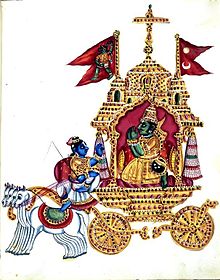
The proposition of reincarnation contained in Bhagavad Gita leads one to an interesting corollary – that of accumulation of the effect of one’s actions over several lives. It is as if one has a Savings Bank account of one’s Karmas.
The good news is that if one’s present is based on one’s past actions and thoughts, one can use one’s Free Will to shape one’s own future by punching the right buttons in the present.
A Do-It-Yourself Approach
In other words, what is on offer here is a Do-It-Yourself approach. This is how Lord Krishna explains it:
उद्धरेदात्मनात्मानं नात्मानमवसादयेत् |
आत्मैव ह्यात्मनो बन्धुरात्मैव रिपुरात्मन: || 6.5||
Elevate yourself through the power of your Self, and not degrade yourself, for the Self can be the friend and also the enemy of oneself.
Ultimately, it is up to an aspirant alone to accept the responsibility for either blessing or damning herself. Each life gives one an opportunity for self-growth and also the strength to pull oneself out of one’s bubble of misconceptions and prejudices. How one makes use of these is up to oneself.
The Divine is not a Chief Administrative Officer who keeps an account of all of one’s thoughts and actions of endless lifetimes. Surely, our Guardian Angels would then have to undertake a massive work of this nature with the help of several super computers, duly backed by an elaborate system of codes, managing a huge database, backed by impeccable information security and a sharp Operating System which could give our colleagues in the Silicon Valley a run for their money.
नादत्ते कस्यचित्पापं न चैव सुकृतं विभु: |
अज्ञानेनावृतं ज्ञानं तेन मुह्यन्ति जन्तव: || 5.15||
The omnipresent God does not involve Himself in the sinful or virtuous deeds of anyone. The living entities are deluded because their inner knowledge is covered by ignorance.
But one’s personal system is designed such that when one is reborn, the operating system of Karma gets freshly installed. Past files containing memories get quarantined in the deep recesses of the subconscious, only to be partially retrieved if one decides to undergo professional regression therapy of some kind. Evidence of this kind has been reported by Dr Brian Leslie Weiss in a series of books, like the one entitled ‘Many Lives, Many Masters’. But there is no dearth of sceptics who take a dim view of an approach of this kind.
However, with each birth, files containing all the past attachments are brought forward intact and stored in a hidden encrypted secured partition. This balance sheet of one’s actions, alluded to as Sanchita Karmas, or Collective Actions, has a component of current asset which goes by the name of Destiny (Praarabdha). It captures one’s past actions which are due for fruition during the current life. The core Karma application computes the result from one’s actions in the present life, keeping in view one’s Sanchita Karmas, and keeps updating the balance sheet.
The Theory of Karma
In accordance with the Theory of Karma, the spiritual earnings of an unsuccessful aspirant in the previous life bear fruit. Accordingly, ones who had not made much progress in their past lives are kept waiting in the stack of celestial abodes whereas those who had traversed quite a distance and developed dispassion are not sent to the celestial abodes. They are given birth in a spiritually evolved family, to facilitate the continuance of their journey, albeit through a newly installed operating system along with the updated balance sheet in the hidden partition. Such a birth is a great fortune because the parents inculcate divine wisdom in the child from the very beginning, thereby putting the new born soul on a faster track of evolution.
Lord Krishna explains this concept as follows:
प्राप्य पुण्यकृतां लोकानुषित्वा शाश्वती: समा: |
शुचीनां श्रीमतां गेहे योगभ्रष्टोऽभिजायते || 6.41||
अथवा योगिनामेव कुले भवति धीमताम् |
एतद्धि दुर्लभतरं लोके जन्म यदीदृशम् || 6.42||
The unsuccessful yogis, upon death, go to the abodes of the virtuous. After dwelling there for many ages, they are again reborn in the earth plane, into a family of pious and prosperous people. Else, if they had developed dispassion due to long practice of Yog, they are born into a family endowed with divine wisdom. Such a birth is very difficult to attain in this world.
If Charles Darwin had ever ventured to touch upon the process of further evolution of human consciousness, Homo sapiens would perhaps have been enlightened on the subject. However, here we are given a proposition which provides us a ready template for the spiritual ascension of an individual. It also provides us with a tacit assurance that all our benign motivations are likely to get fulfilled sooner or later, provided these are strong enough and are accompanied by intense activities appropriate for their fulfilment.
तत्र तं बुद्धिसंयोगं लभते पौर्वदेहिकम् |
यतते च ततो भूय: संसिद्धौ कुरुनन्दन || 6.43||
On taking such a birth, O descendant of Kurus, they reawaken the wisdom of their previous lives, and strive even harder toward perfection in Yog.
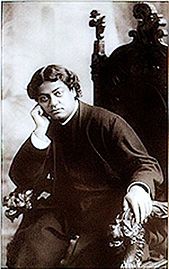
Stalwarts like Buddha, Christ, Adi Shankaracharya, Swami Vivekananda and Mother Teresa who continue to inspire lesser mortals the world over were surely purer souls which had attained a much higher level of perfection in their previous lives, thereby leading by example in their lives that we happen to know of. All these persons were obviously a rare breed.
Here, the importance of perseverance takes on a deeper meaning. Whereas many of us pursue several things with single-minded devotion in our lives and produce significant results for ourselves and also for those around us, here we find an overarching endeavour of perseverance, spread over many lives. The project of attaining liberation is managed throughout the life cycle of one’s journey. With each life, one’s brand equity gets a boost.
प्रयत्नाद्यतमानस्तु योगी संशुद्धकिल्बिष: |
अनेकजन्मसंसिद्धस्ततो याति परां गतिम् || 6.45||
With the accumulated merits of many past births, when these yogis engage in sincere endeavour in making further progress, they become purified from material desires and attain perfection.
A CEO who has aligned herself to the practice of self-control and detachment is bound to be as close to perfection as possible. This does not permit her to avoid acting as an intra-preneur, though. Taking a proprietary interest in the scheme of things is essential to her personal growth and evolution in the realm of management.
Easing the iron grip of Karma
If what one is now is the result of our past actions, it follows that whatever one wishes to be in future can be produced by one’s present actions. One creates one’s own future and either beefs up or tarnishes one’s own brand equity.
Though Bhagavad Gita waxes eloquent on Karma Yoga, it does not necessarily showcase the Theory of Karma. Instead, the enticement on offer here is that it shows one a way to transcend the cycle of one’s actions, by controlling one’s desires and by practising the art of detachment from its results.
It is a well recognized fact that in any given hierarchy, rules governing the conduct of employees vary depending upon one’s level of operation. Take the example of punching clocks or gadgets which help administrators keep a track of late comers or early leavers from a factory. The rules which govern, say, shop-floor level employees, cannot be the same as those applied to CEOs, simply because the latter’s roles are far wider. The hapless souls have to maintain their sangfroid in an era of 24×7 connectivity. Hence, their time-bound physical availability on the campus need not be as strict as that of a shop-floor employee. However, if they happen to be heading the manufacturing activities, they set a healthy example by being on their desk some thirty odd minutes before the work day starts. This way, they not only avoid traffic blues of a rush hour but also enjoy a quiet time which helps them to organize their work better for the day.
Likewise, the Theory of Karma espoused in Indian scriptures applies only to those who operate at the material level of things. As they start growing out of the operational level and give up attachment, as well as aversion, altogether and perform all actions with a sense of duty, maintaining their equipoise in success and failure, they get released from the bondage of their own actions. With such a balance in the account, the application starts rewarding with higher privileges. Such souls end up easing the iron grip of Karma on their lives. Unless they start abusing their privileges, they end up experiencing the bliss of true freedom.
The Savings Bank accounts of Karma of such souls could gradually be declared to be inoperative in nature. Their personal Operating System of Karma could breathe easy, with the core application deactivated.
Indeed, the proposition of enabling one to transcend the cycle of Karma is a Unique Selling Proposition of Bhagavad Gita.
(Inputs from an IT-expert are gratefully acknowledged)
(A version of this blog post will appear in a yet-to-be-published book on Gita and Management, authored by yours truly)








 ashokbhatia
The Book on Leader Mindsets: Some Comments
Posted in Management Lessons, tagged Book, Comments, feedback, Leadership, Management, SPANDAN on June 1, 2019| Leave a Comment »
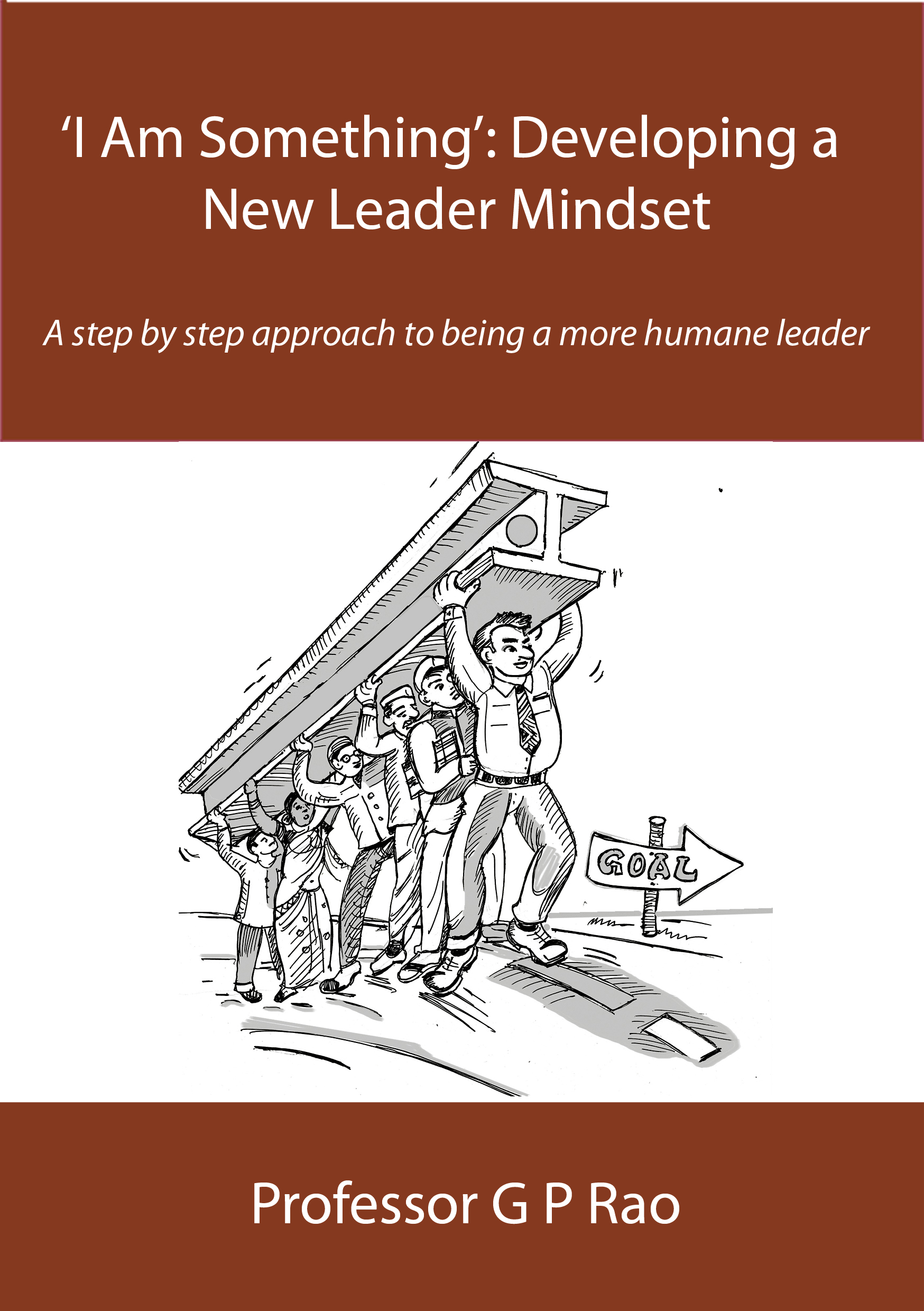
“Little did I imagine that someday Professor Rao will do an empirical study and bring out a book on this subject. The book brings out leadership mindsets so clearly and analyses these based on research and experiential wisdom. The thing that struck me most was the linkage of these styles with the three gunas in Hindu scriptures: Sattva, Rajas and Tamas. The book does not prescribe any style but makes the reader think through what his style is and what he would like it to be. Then, it provides the reader with a pair of new glasses and suddenly one starts seeing things in a different perspective.”
Satish Sekhri
Formerly Managing Director
Bosch Chassis Systems Ltd,
Pune, India
(An excerpt from the Foreword to the book)
“I think the leader mindset proposed in the book is “Indian tinted”. As someone from the “West”, I am pleased to enrich my understanding with “your views”. You make a good contribution to enlarge our perspectives on how you see the leader mindset.
Very few of us are internally STRONG to accept negativity; also, the contexts that most of us live with is toxic. So, “I Am Something” approach can be extremely healthy.
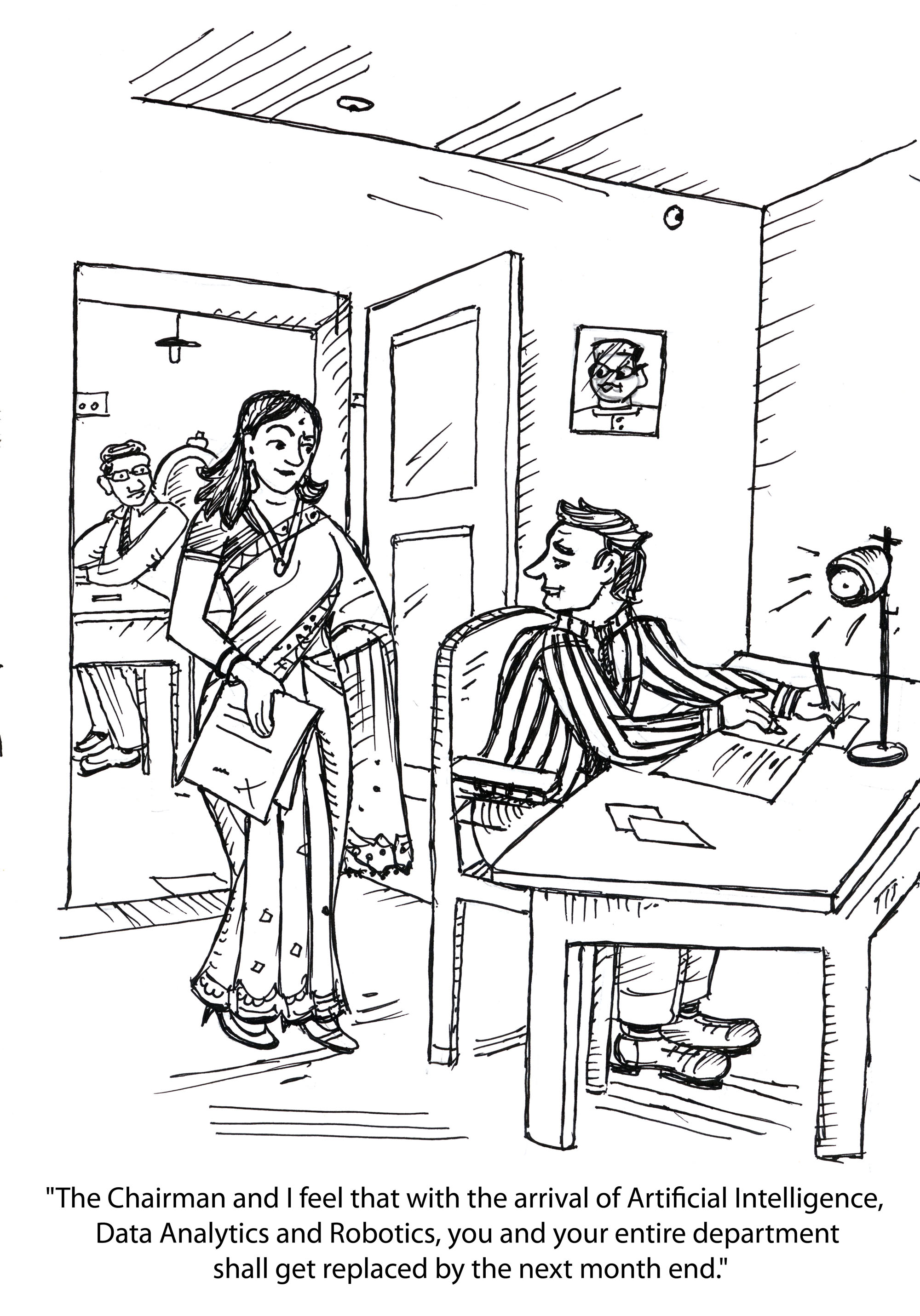
When you try to explore the role of human values in the face of Industrial Revolution 4.0 (AI, Robotics, etc), you may consider the fact that the drivers of technology ARE weak in terms of human values.
I think that we are headed towards a phase of self-inflicted extermination, possibly leading to the emergence of a new species. Before the end of this century, we will have ourselves and the others species. We will be creating living beings among us and, little by little, we (little and fragile creatures) will fade away, hopefully graciously. We do not wish to change ourselves. We also do not have the collective will power to change the context in which we operate. So, the next evolutionary step of our civilization may get taken much earlier than most of us may think.”
Marco Paulo Abrunhosa Cardoso
Serving in boards in different jurisdictions
Finland
“The writing is excellent. As the editor of a journal, I rarely see papers with no errors. Your book is thus a rarity. I initially wondered why some words like “Student” and “Maternalistic” are capitalized. I now realize that there is a meaningful reason behind it.
I see that the style is half-way between a discourse and a scholarly
paper. If you are positioning it as a scholarly paper (like a journal
article or academic book), it certainly needs more references. The book has some quotations which too need references.
This book is obviously positioned as to not tap into management
literature on leadership a lot (at least in part 1). Rather, it offers another way to look at leadership.”
Ram Mohan Pisharodi
Marketing Professor/Chief Editor, Alliance Journal of Business Research at Oakland University
Greater Detroit Area, USA
“From an Australian’s point of view, I found that the thesis of the book provides a fresh perspective on the issue of leadership – a very sub-continental perspective and interpretation.
It appears that the intent of the book is to provide aspiring (or current) leaders with a way for them to become a happier and more contented person. Greater contentment would lead to a warmer and more positive individual. The thesis is supported by research and empirical observation.
My conclusions include the following issues:
Dr Jack Jacoby
Executive Chairman
Jacoby Consulting Group, Australia
Read Full Post »