Feeds:
Posts
Comments

Posts Tagged ‘Leadership’

Of Swollen Minds and Shallow Hearts

A vast majority of managers fall in this category. With money power ruling their lives, they cannot be blamed for behaving like robots, relentlessly chasing materialistic goals. With the heart playing a subservient role to that of the mind, analytical skills rule supreme. Intuition, feelings and emotions take a back seat, leading to rapid burnouts and build up of stress. We run into managers who are driven entirely by results, a prospect tolerated with much glee by top managements. Often, they lose the trust and confidence of their team members, resulting into a human relations crisis. External titillations offered by life provide transient moments of gratification. The inner glow of happiness eludes them.

This tribe, which puts a premium on the ‘I and Me’ approach to decision-making, experiences a hollowness within. Minds are whirling with ideas, indicating the dire need to practice brain-stilling, as opposed to brain-storming. Hearts are shallow, resulting into lack of empathy and concern for others. They need the maximum amount of the kind of meditation practice one would refer to as Heartfulness.

Of Balanced Hearts and Minds

Managers in this category are indeed the luckier ones, because they are able to deliver results on a more sustainable basis. Their heads are screwed on right. Their hearts have a modicum of the milk of human kindness flowing through its chambers. By balancing the output of their active brains with the emotional vibes generated by their empathic hearts, they lead happier and more contented lives.

This tribe takes the ‘We and Us’ approach to decision-making. Loved by their team members, they make better business leaders. Since the emphasis placed on results is balanced by the importance given to their people, they command a high level of trust from their loyal team members. If one were to look back at the kind of bosses one still keeps in touch with, even if the formal association had occurred quite some time back, one is apt to find them having achieved this delicate balancing act between the mind and the heart while handling matters.

Of Larger Hearts and Sharper Minds

These are the ones who care about humanity in general. They end up assuming leadership roles while handling challenges facing a particular business group or the society at large. Their thinking is strategic. Their vision is lofty and innovative, at times even disruptive. They take a holistic view of matters at hand. In the process, they extend their sphere of influence to all stakeholders of business. Corporate Social Responsibility is not a mere public relations exercise for them, but an agenda which has to be pursued as vigorously as any other business goal. The inner glow of happiness and contentment does not elude them.

This is a rare breed indeed. It believes in, and follows, a ‘They’ approach to decision-making. Fame comes easily to them. Humility is one of their key personality traits. They become role models, not only for those who observe them at close quarters, but also for people at large. Their minds are vibrant, firing on all twelve cylinders. Their hearts are already overgrown, encompassing a much wider segment of humanity. They are living examples of the potential Heartfulness has, and what it can offer to humanity.

The opportunity of a transformation  

A manager has it within herself to bring about an inner transformation from the ‘I and Me’ attitude to the ‘We and Us’ mindset. Introspection can lead to it. A benevolent senior could propel her on this path of an inner journey of evolution. Even a major setback in life could lead to it.

The germ of this inner desire nestles within her, silently planted there in an embryonic form by their upbringing. The trick lies in discovering and nurturing it, so an opportunity of transforming oneself is not lost. Her core personality and attitudes help. The catalyst of this process of transformation happens to be the value system inherited by her from her elders.

Managers who ignore the need for a transformation of this kind run the risk of being poor team players, stunting their own growth.

Read Full Post »

Why do we hold leadership to be something which is fascinating? Perhaps we do so because of the inherent complexity it represents.

One, it is the outcome of a delicate chemistry between an individual and his/her environment. All individuals have personality traits. Some of these come to the fore under some special circumstances. Take away those circumstances, and the trait may continue to remain dormant for a long time.

It follows that there is as much probability at work here as, say, in the tossing of a coin or in a game of chance. In the realm of human resources, we see examples of dullards becoming heroes in a given situation. In case of brands and organizations, we come across several cases where some which were ‘nothing’, when assiduously worked upon and when the market conditions were right, evolved into ‘everything’ and started enjoying commendable market equity.

Two, experts have always been at pains to distinguish it from management. To the initiated, if management is all about people and processes which enable an organization to run smoothly, leadership is all about disruptive vision which could spur innovation and end up transforming the way the organization works and responds.

If one were to draw a parallel from the vast pantheon of Hindu gods and goddesses, one could perhaps say that if management is represented by someone like Lord Vishnu, leadership could be held to be portrayed better by someone like Lord Shiva. One is said to be maintaining and running the universe, while the other is the disruptive force which creates things anew.

Three, the term leadership itself leads us to another pertinent question – that of people being led. Just who are these followers? What are their characteristics? What are their aspirations? It is regrettable that while much research has been done on leadership, the followers – who make a leader what he/she is – have got a short shrift. The traits of this multitude of humanity have never been directly addressed; these are merely covered elsewhere, under the guise of subjects like motivation, communication, delegation, and the like.

Be that as it may, the charisma which a leader is said to possess remains a subject of relentless enquiry. This is yet another reason as to why leadership is fascinating. The inherent difficulty in defining the aura of a leader perhaps makes the phenomenon called leadership an enigma. Anything which is not readily grasped by the human mind invites even more attention. Such are indeed its ways. However, if one were to speak to one’s heart, the mystery unfolds. Human values, compassion and empathy come into play. The cumulative effort of a leader to connect with his/her followers goes a long way in creating the larger-than-life charismatic image of a leader.

Read Full Post »

ashokbhatia's avatarashokbhatia

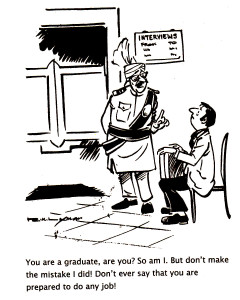
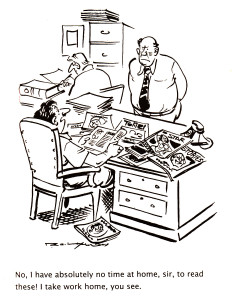
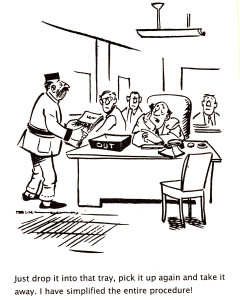
The management issues R K Laxman touches upon in his witty cartoons are wide-ranging. The messages are hard-hitting. For any manager who is trying to beat the blues, here is an effective anti-dote.

Driving the Boss Nuts

Cartoon Admitting Mistakes

The perils of over-committing oneself

Cartoon Flexibility in Jobs

Punctuality

Cartoon Punctuality

Caught reading naughty magazines in office?

Cartoon Taking Work Home

Simplifying systems and procedures

Cartoon Simplifying Procedures

A manager’s life never has a dull moment. His/her career is like driving a crazy car which is always going either too fast or too slow. From the time a manager enters the n-dimensional space of his/her career space, till the time the boots/sandals are hung right and proper, a roller-coaster ride with uncertain twists and turns is the only certainty.

To maintain one’s sanity, it helps to revisit the works of literary geniuses who have created an eternal world full of blooming flowers bathed in the soft glow of  humor. For those amongst us who are…

View original post 49 more words

Read Full Post »

Often, your truly is asked about the contents of the book entitled ‘Surviving in the Corporate Jungle’.

The video clip here covers in brief some of the 110+ topics covered in the book.

Enjoy, and be a smarter and happier manager!

(Related Post:

https://ashokbhatia.wordpress.com/2017/10/14/surviving-in-the-corporate-jungle-a-video)

Read Full Post »

ashokbhatia's avatarashokbhatia

Amongst the kinds of CEOs we have reviewed so far elsewhere, this kind happens to belong to a very rare species in the private sector. However, many public sector outfits, government departments and political outfits owing allegiance to some outdated doctrines could boast of a significant number of CEOs of this genre.

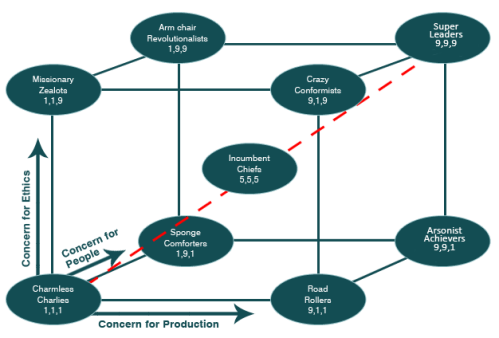
Concern for Output or for results is not their priority. Concern for People is their primary concern. Concern for Ethics is also uppermost in their minds. In terms of an upgraded Blake Mouton Grid, they rank at 1,9,9.X Y Z upgraded

Trade unions of all hues simply love them. Managements dread and despise them. To face an ardent believer who pounds his fists onto teak wood tables of conference rooms and demands strict compliance with labour and industrial laws of all kinds is a prospect which owners bestowed with nerves of chilled steel wish to avoid.

Those who happen to have…

View original post 152 more words

Read Full Post »

ashokbhatia's avatarashokbhatia

CEOs who happen to rank very high in terms of their Concern for Production and Concern for Ethics but rank poorly in terms of Concern for People fall in this category. They are crazy about getting results. They strive to conform to high values, ethics and systems and procedures.

In terms of an upgraded Blake Mouton Grid, they rank at 9,1,9.X Y Z upgraded

Driven by ideals, these CEOs happen to be perfectionists. They are passionate about their work. They are technically proficient. In their value system, goals are as important as the means to achieve them.

In the hearts of their team members, they strike terror. Anyone who is deemed to be either ineffective or inefficient is ruthlessly ticked off. Much like Napoleon, they have no use for losers. They are extremely reluctant to buy excuses. They reprimand in public and may never shower praise even in private.

Under them, attrition rates…

View original post 409 more words

Read Full Post »

ashokbhatia's avatarashokbhatia

This breed of CEOs is not as rare as one would believe it to be, provided the canvas is not restricted to the private sector alone. Consider some non-government organizations working in the social sector. Or, look at some government-owned companies or research outfits. In many such cases, one is apt to run into CEOs whose Concern for Production is not inspiring. Nor is their Concern for People. They are primarily driven by their Concern for Ethics. Their work ethics are drawn from a value system which places a high premium on discipline and procedural compliance. A feudal approach comes naturally to them. Their passion for perfection could easily drive others around them crazy.

In terms of an upgraded Blake Mouton Grid, they rank closest to 1,1,9.X Y Z upgraded

CEOs of this kind thrive in environments where the control over resources provided is not very strict, where excuses and justifications for lapses…

View original post 359 more words

Read Full Post »

ashokbhatia's avatarashokbhatia

This is the most commonly found breed of CEOs. They are crazy about getting results. They plan well. They execute even better. People rank high amongst their priorities. They protect them much like a tigress would shield her cubs. But when it comes to ethics, values and systems, they could not care less. Auditors cannot be faulted for labelling them as arsonists.

Managements love them. The efficient ones amongst their team members adore them. The sloppy ones dread them. Their Concern for Production is invariably high. They are often sharp when it comes to adapting newer technologies in the organization’s processes. Their Concern for People is also high. They can be found praising their people in public while ruthlessly ticking them off in private.

However, when it comes to Concern for Ethics, they rank very poorly. Their value systems are driven by commercial goals alone. Systems and procedures are merely the…

View original post 633 more words

Read Full Post »

ashokbhatia's avatarashokbhatia

One of the relatively rare species of CEOs is that of the Sponge Comforters. These are hapless souls who are gifted with too much of the Milk of Human Kindness sloshing about within them. They happen to be compassionate by nature. People are their first priority. It is easier to persuade them to buy excuses.

Their key strength is their Concern for People. In their value paradigm, Concern for Production and Concern for Ethics take a back seat. In terms of the modified Blake Mouton Grid, they happen to be in the 1,9,1 slot.X Y Z upgraded

Their people just love them. The loyalty they command is often exemplary. Even though the feudal spirit prevails, their style of functioning is democratic in nature. People working with them are invariably happier. Work gets done in a calmer and more relaxed atmosphere. Physical activity does not get confused with efficiency. Their planning is excellent. Their…

View original post 335 more words

Read Full Post »

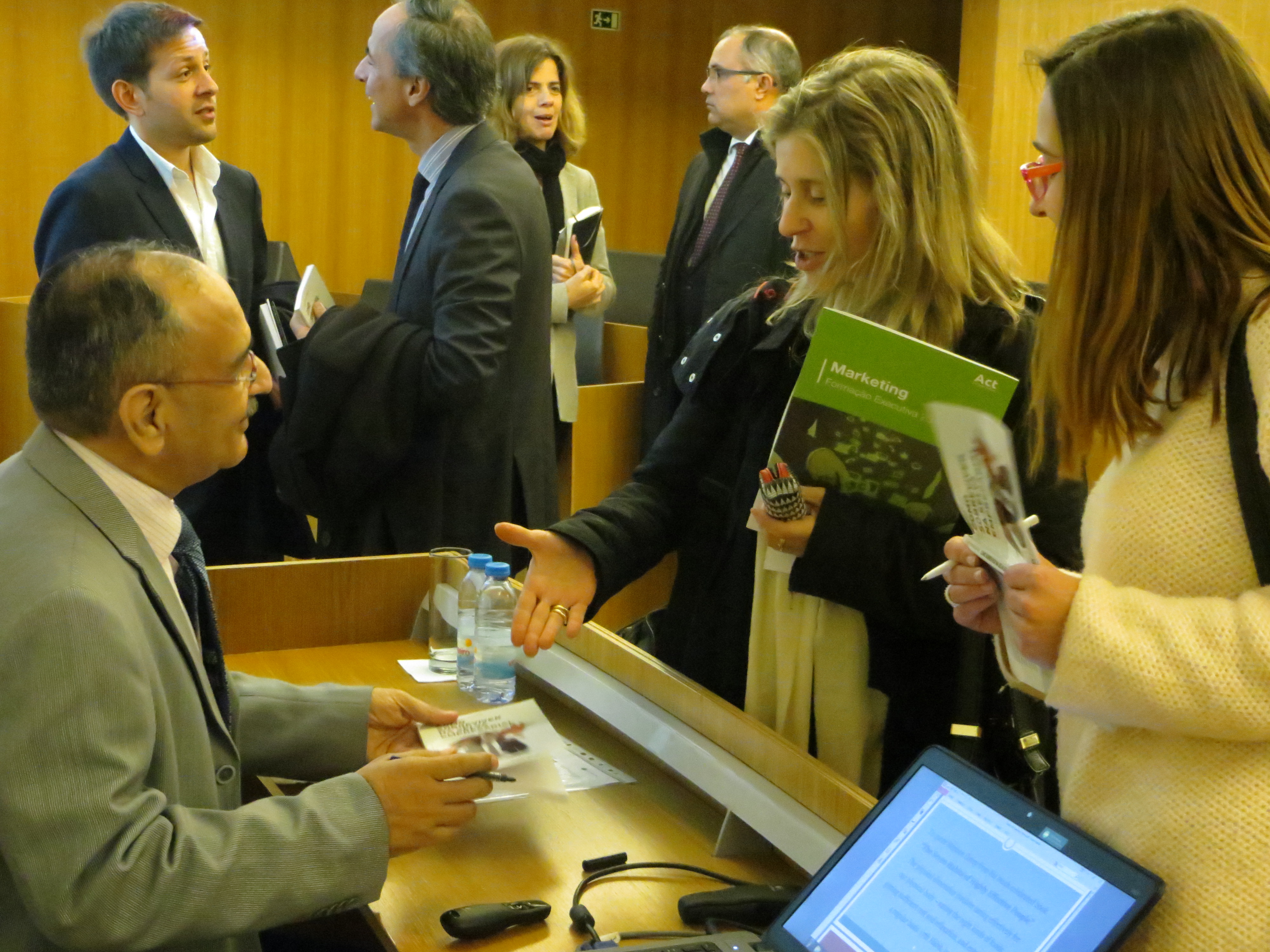
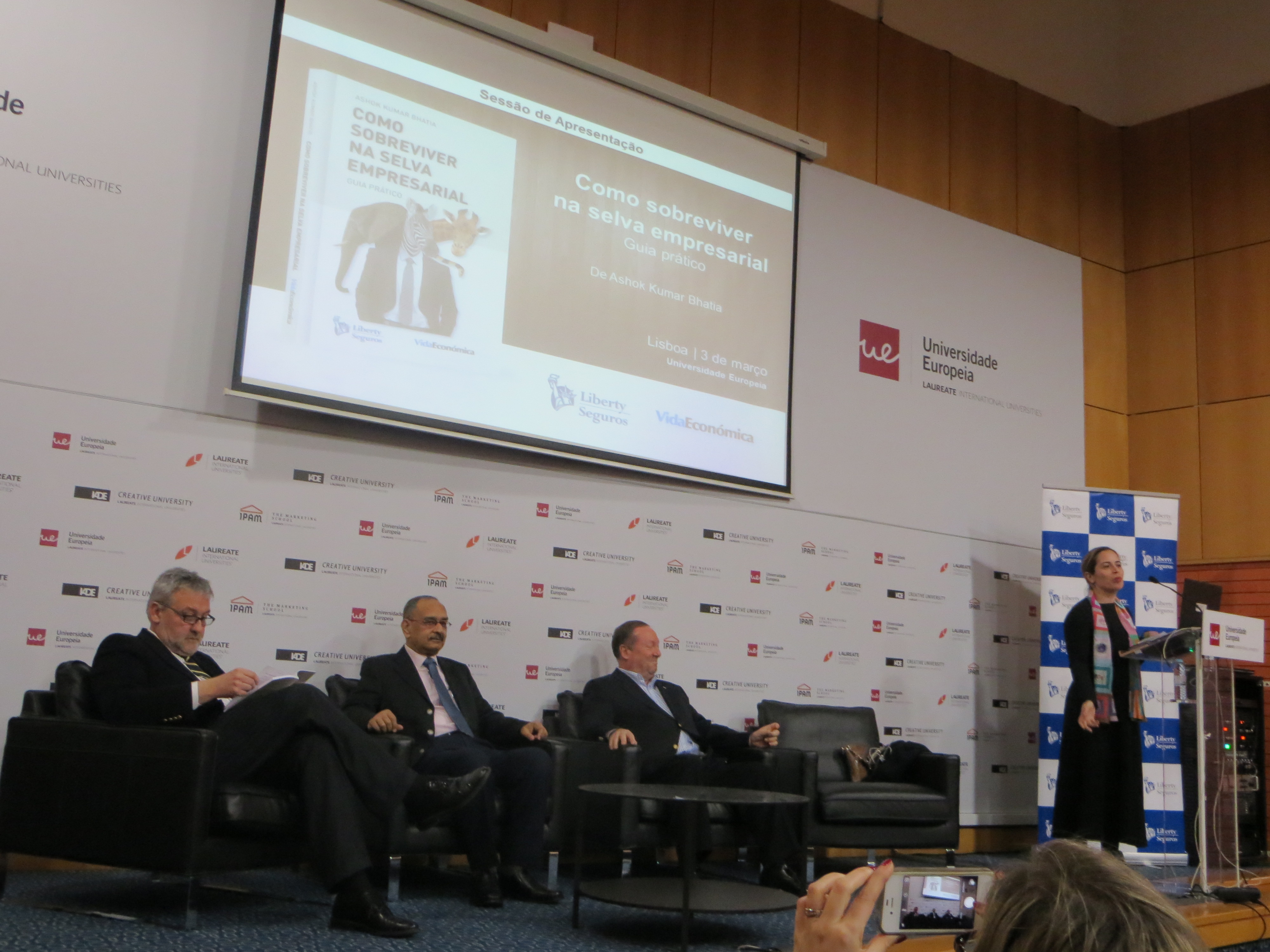
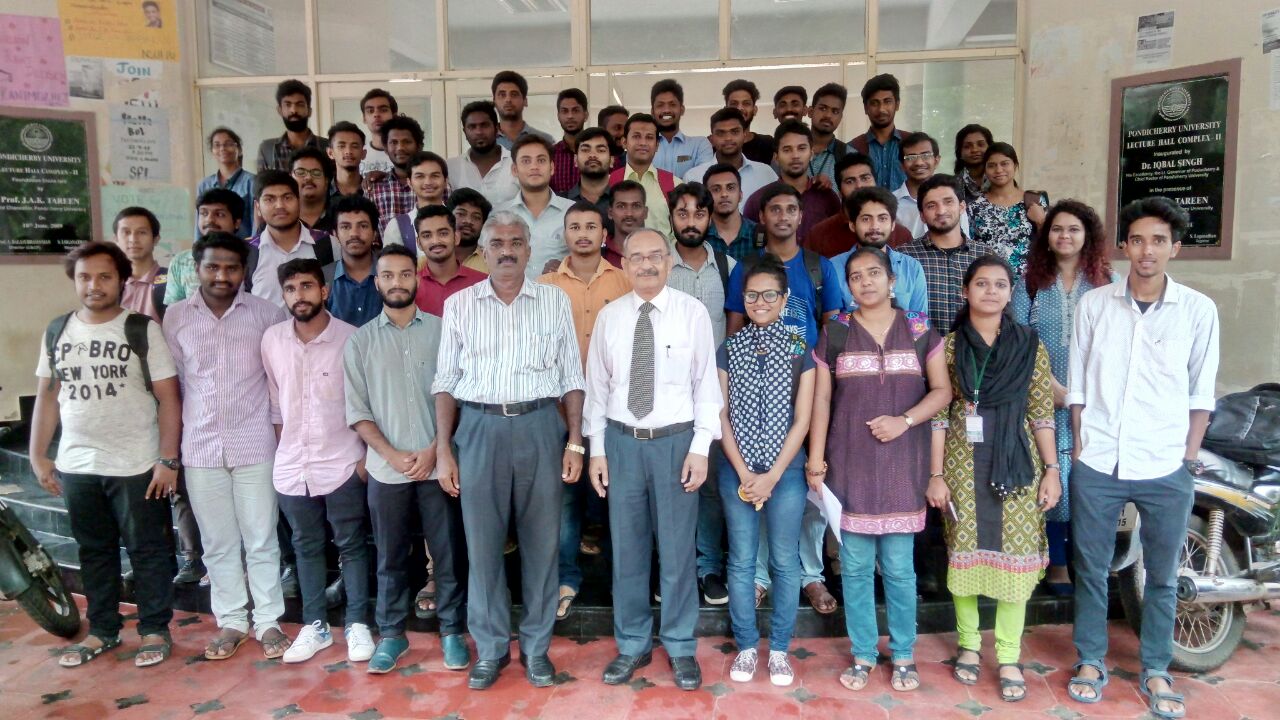
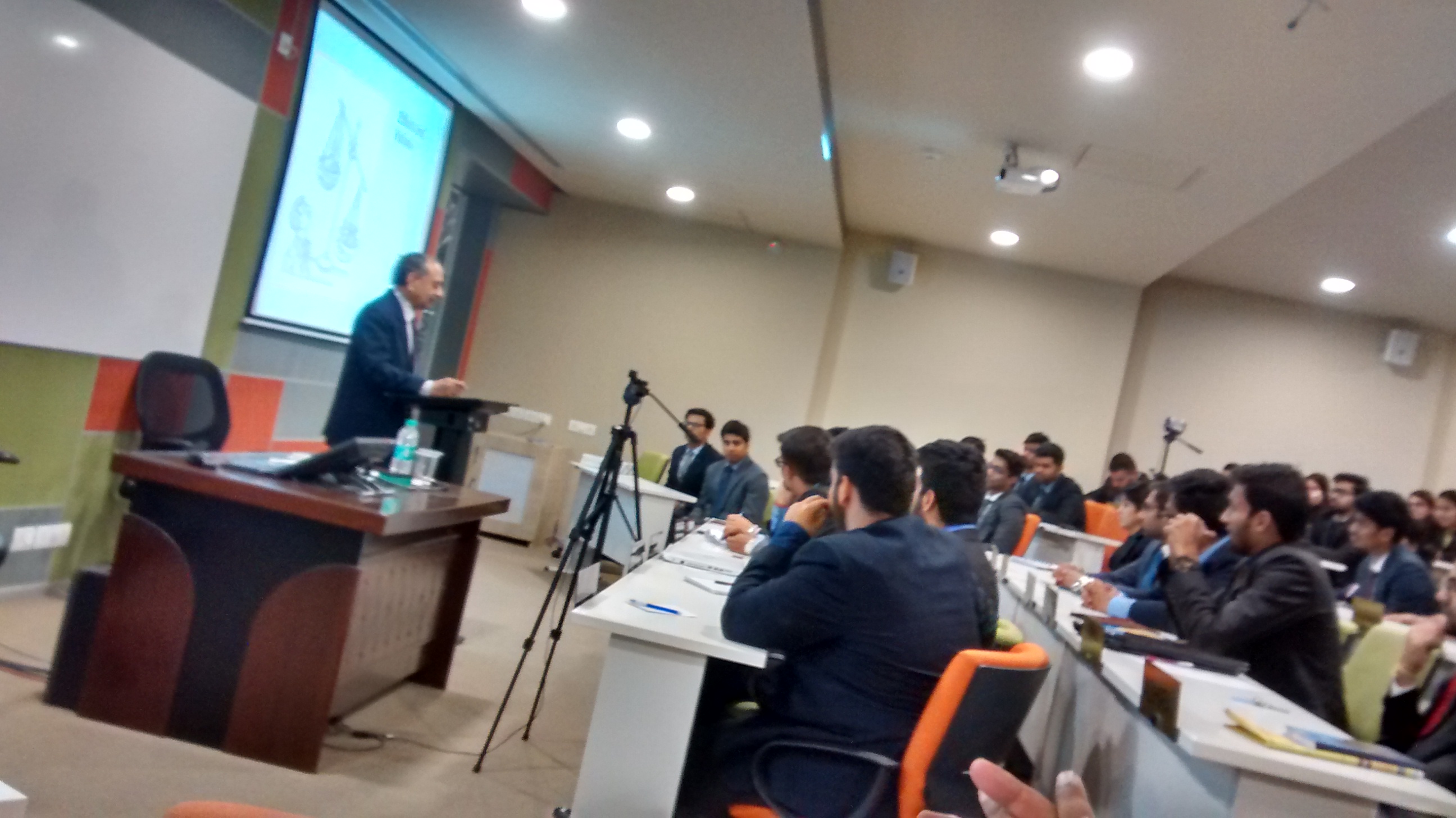
Encounters with brighter minds invariably leave an author invigorated. When managers, whether the practising kind or the aspiring kind, ask searching questions based on what one has proposed in one’s books or blogs, the writer’s thought process also gets enriched. The more pungent the query, the more fulfilled one feels.

Over the past few years, yours truly has had several opportunities of interacting with youth who aspire to be future managers and entrepreneurs. The topics have been wide ranging, like Work Life Balance, Management Lessons from Movies, Management Lessons from India, Ethics and Values in Business, Managing Interpersonal Relationships, Four Pillars of Integral Management and Surviving in the Corporate Jungle.

Here are some of the outfits which have been kind enough to grant such opportunities:

  1. Catolica Porto Business School, Porto, Portugal.
  2. Department of Management Studies, Universidade Europeia, Lisbon, Portugal.
  3. Madras Management Association, Pondicherry Chapter, India.
  4. Sri Aurobindo Center for Advanced Research, Pondicherry, India.
  5. C K College of Engineering and Technology, Cuddalore, India.
  6. Sri Manakula Vinayagar Engineering College, Pondicherry, India.
  7. Indian Institute of Management, Lucknow: NOIDA Campus, India.
  8. International Minds in Finland, Finland.
  9. Madras Management Association, Chennai, India.
  10. Department of Management Studies, Pondicherry University, India.
  11. Department of Management Studies, Indian Institute of Technology, Delhi, India.
  12. Great Lakes Institute of Management, Gurgaon, India.

And mentioned below are some of the frequently asked questions yours truly has encountered in the recent past. Against each query, you will find a short summary of the response.

What precisely is Spiritual Quotient (SQ)? How does one develop it?

Those who have a high SQ have this uncanny ability to be creative and insightful in their approach to problem solving. They build up their level of self-awareness and there intuitive faculties. They realize that there is a realm of intelligence which is beyond the five senses that our physical bodies are endowed with.

SQ has several components: gratitude, self-esteem, self-awareness, consciousness, compassion, surrender, service and ego.

Meditation can help develop our Spiritual Quotient. So can heartfulness and mindfulness.

When you speak of the ‘Draupadi Syndrome’ in management parlance, you are speaking of managing multiple bosses. How does one handle such a situation?

Organizations are becoming flatter. Functional silos are breaking down. This means working in multi-disciplinary teams and reporting to multiple bosses at times.

Tact, patience and a better understanding of the psychology of each boss can help a manager to handle many bosses at the same time. Bad-mouthing one in front of the other would not help. Playing one against the other could also land one in a soup.

Due to parental pressure and financial insecurity, can one take up a job which is with a company which is marketing a dubious product?

It is not advisable to go in for a job where your value system does not match with that of the organization. You will not be able to put your heart into it. This may result into your being caught in a low-result and lower-rewards vicious cycle, undermining your self confidence.

If you are absolutely with your back to the wall, you may do so for a very short stint; be ready to change to the next one at the first possible opportunity.


You advise us to avoid being a Yes-man. How does one convey one’s difference of opinion to a senior? How does one say ‘no’ to one’s boss?

Politely. By marshalling your thoughts and sharing those with the senior at an appropriate time. Be open and respectful to his views. Registering dissent is a responsibility we all carry on our shoulders.

Please give examples of Eustress, the positive kind of stress you speak of.

When you are rushing for a meeting with your girl friend, or going to a movie, you feel a kind of stress which is positive in nature. When the end result is likely to be a pleasurable experience, you feel Eustress.

It follows that when we handle an assignment which connects us to a cause we happen to be passionate about, we experience positive stress. We enjoy doing it.  


According to you, interpersonal relationships have a half-life of their own, much like that of a radioactive substance. How can one increase the life span of a relationship?

I believe this can be done by avoiding anger, greed and a tendency to bad-mouth the party of the other part, especially when he/she is not present. Anticipating the needs of a person and assisting him/her in achieving a goal helps.


Ethics and Values in business: For an entity which is geared for generating a surplus for its equity holders and boasts of a great market valuation, just how practical is this concept?

Most businesses run on a quarter to quarter basis, with a focus on guideline values. But those which care about developing their brand equity operate based on a compass which is configured on a basic set of ethics and values.

In the Indian context, why do we respect Tatas? Because the group has a 150-year old tradition of good thoughts, good work and a basic sense of decency and honesty. They continue to do so much for the society, mostly in fields which have no direct connection to their diverse businesses.  

Any general career advice you would give to us?

Five years down the road, do you not see businesses becoming more dependent on technology? So, the writing on the wall is pretty clear. Be ready to embrace change. Learn digital skills and be ready to play a relevant role in the business, whether your own or that of someone else.

Do not be scared of bargaining for a better work-life balance. Remain connected to your inner self. Introspect, do a SWOT analysis, and create a USP for yourself. Invest in a good image on social media.

Build credibility. Observe company culture. Volunteer willingly. Build healthy relationships. Keep improving your skill-set.

Book cover English Front

Each interaction proves to be a good learning opportunity!

(Wish to look up my profile? You can find it here.

Related post: https://ashokbhatia.wordpress.com/2016/04/01/about-me)


Read Full Post »

« Newer Posts - Older Posts »