Posts Tagged ‘Lenses’
Long live Wodehousitis!
Posted in What ho!, tagged David, Humour, Lenses, Madonna, Michelangelo, P G Wodehouse, Pieta, Wodehousitis on May 30, 2025| Leave a Comment »
Long live Wodehousitis!
Posted in What ho!, tagged David, Humour, Lenses, Madonna, Michelangelo, P G Wodehouse, Pieta, Wodehousitis on October 28, 2021| 6 Comments »

By no stretch of imagination can I be held to be an expert on P. G. Wodehouse. If you have followed my Wodehouse-related posts over the past eight years, you would have already assessed the literary level of essays churned out by me. The scales would have fallen from your eyes. You would have realized that these have been sculpted by someone who had honed his linguistic skills ‘at a correspondence school and had never progressed beyond lesson three’; much unlike the Master Wordsmith of our times, who, like Michelangelo, leaves us enthralled in awe and admiration of many a literary David, Madonna and Pieta he has dished out. What Michelangelo was to marble, Plum is to literary humour, wit and wisdom. Like the former, the latter’s talents are also multi-faceted. If one was a sculptor, a painter and an architect, the latter was a prolific writer, publishing more than ninety books, forty plays, two hundred short stories, several poems and other writings between 1902 and 1974.
He used a mixture of Edwardian slang, quotations from and allusions to numerous literary figures, and several other literary techniques to produce a prose style that has been compared to comic poetry and musical comedy. One of the qualities of his oeuvre is its wonderful consistency of quality, tone, wit and wisdom. A wise man had once remarked that his works transport us to a sort of Garden of Eden where a benevolent sun always shines, though eating a certain fruit is forbidden. His characters may sound like trivial people doing trivial things, but Plumsville in itself is not at all trivial.
There are several lenses with which one could discern the messages embedded in his works. A literary lens would reveal his canvas to be very wide, comprising not only Shakespeare but also Agatha Christie, Sir Arthur Conan Doyle, Browning, Burns, Frost, Keats, Kipling, Omar Khayyam, Spinoza, Tolstoy, Tennyson, Wordsworth and many others. A spiritual lens would bring into sharp focus the importance of cultivating such personality traits as compassion, gratitude, empathy, humility, perseverance, aspiration, courage and goodness. A well-being lens would nudge us to avoid the pleasures of the table and remain fit and trim. A social lens would help us to notice the kind of efforts one has to keep making to keep the wolves at bay and notice the perils of economic inequality. A political lens would leave us scoffing at dictators and others. A theological lens would reveal the rich Biblical references and allusions in his works. A managerial lens reveals to us the art of managing bosses. A romantic lens would reveal a clear absence of cruder passions. Respect for women reigns supreme. Victorian norms prevail.
In a way, there is much in common between Wodehouse’s works and those of Jane Austen. Both happen to follow strict codes. Both play out as movies suitable for General Exhibition, thereby making these a family affair. Sex is taboo.
In Plumsville, friendly romps and jocular embraces are taken a jaundiced view of. Impersonation and white lies dished out in the course of a boat ride meet with approval; so do the pinching of umbrellas, policemen’s helmets, scarabs, silver cow creamers and such members of the animal kingdom as cats, dogs and pigs. Bunging in a policeman into a cooling stream is not scoffed at. One is forever living in a world which is essentially decent, uplifting and far away from the kind of trials and tribulations one faces in real life. Practical jokes do get played, albeit within limits. A chin-up attitude is the norm.
One of his unique skills is that of deploying a unique turn of phrase and the delightful use of similes. The laughter of Honoria Glossop gets likened to ‘the Scotch express going under a bridge.’ The Empress of Blandings is described as a balloon with ears and a tail. Examples such as these abound all across his oeuvre.
Yet another skill of his is that of weaving in several threads in the same narrative. He gives all the threads in his narrative the same dramatic weight, making them all result in happy endings. His characters do face the harsh slings and arrows of fate, but things invariably remain within tolerable limits. If problems of the lining of the stomach lead one to contemplate suicide, some simple exercise, such as chasing a servant down the street, quickly makes one realize the futility of giving up on the gift of life.
Many of my blog posts happen to be an outcome of a soulful analysis of his books and stories. Quite a few others are pastiches which make one realize the timelessness of his works. Some are examples of the kind of affliction Wodehousitis happens to be. If someone is in the terminal stage, no other literary figure attracts one’s attention. People one runs into get characterized as per the traits of some of his characters. A pitiless self analysis leads one to identify oneself with different characters created by Plum. All incidents in one’s mundane life get viewed through a Wodehousean lens, whether facing a pandemic or appearing in a court hearing or even when one receives an offer of a paltry sum at the hands of a Scandinavian young girl. In retrospect, even career blunders get looked at in a lighter vein.
Plum’s works happen to be an effective balm for a weary and wounded soul. When it comes to shrugging off those blues, these act like the pick-me-ups whipped up by Jeeves and make one rise over one’s dead self to higher things in life.
All this goes on to show that as a delectable affliction, Wodehousitis has a very long shelf life. Plum’s works continue to enthuse, educate and entertain his numerous fans the world over and would keep doing so for a very long time to come. The more the disruptions caused by advances in technology, the higher the risk of human alienation. The higher the level of alienation, the wider the prevalence of depression and psychosomatic illnesses. His works are based on the psychology of the individual and act as effective anti-depressants. This alone would ensure his perennial popularity.
Long live Wodehousitis!
(Illustration courtesy Suvarna Sanyal)
Related Posts:
Of Leadership and its myriad lenses
Posted in Management Lessons, tagged Book, CEO, Leadership, Lenses, Management, Models, Practice, Theory on February 26, 2019| Leave a Comment »

The fascinating process we call Leadership can be viewed through several lenses. Each lens offers a unique perspective. Some are more comprehensive, others less so. But almost all reveal a facet which is distinctive in its own way.
Some of the lenses which management theorists and practitioners have used over the last 150 years to view the enigma called leadership are discussed in brief here.
The Trait Lens
The lens of the Trait Theories makes us notice the kind of personality traits of a leader which make him effective. Domain knowledge, self-confidence, interpersonal skills and charisma are some of the critical components here. However, these presume that the environment and the followers have no role to play when it comes to assessing the effectiveness of a leader. With such a uni-dimensional approach, where the personality traits of the leader alone count, it is neither practical nor desirable to compare this approach to that of the three mindsets under discussion here.
The Behavioural Lens
The lens of the Behavioural Theories of leadership leads us to such operating styles as dictatorial, autocratic, democratic, laissez-faire, and the like. In the spectrum of direct authority exercised, if the dictatorial style implies maximum control, the laissez-faire style would relate to minimum control, though not amounting to abdication.
The Contingency Lens
Yet another lens which we use to view the phenomenon of leadership is that of the Contingency Theories. These posit that the effectiveness of a leader is determined by the interplay of several factors – personality traits, behavioural patterns, nature of the task at hand, the composition of the group being led, and the kind of situation at hand.
An example is that of Fred Fiedler’s theory. It proposes that in extremely favourable or unfavourable situations, task-oriented leaders fare better, whereas in moderate situations, relationship-oriented leaders deliver better results. As a logical corollary, in a business situation which is changing rapidly, a new leader with a more appropriate operating style needs to be brought in.
The Situational Lens
The Hersey-Blanchard Situational Model is yet another lens with which one may view leadership. This one proposes that effective leadership rests on two fundamental concepts: Leadership Style and the group’s Performance Readiness level.
It follows that there is no single ‘best’ style of leadership. Effectiveness of a leader varies not only with the characteristics of the group being led; it also depends on the goal to be achieved.
The level of maturity of the followers determines the leadership style which would work the best. While dealing with new entrants to the organization, a leader would do well to follow a Directing Style. While dealing with seasoned professionals, a Delegation Style would yield better results. The other two styles envisaged are Coaching and Supporting.
The Transactional Lens
Then we have the lens of the Transactional Theories of viewing leadership. These are characterized by a transaction made between the leader and the followers. By implication, these place a higher premium on positive and mutually beneficial relationships between leaders and their respective followers. The effectiveness of leadership is thus believed to be dependent on the alignment between individual and organizational goals.
These theories propose that a system of reward and punishment alone works. A well-defined hierarchy, where everyone knows who the leader is and who is following, is a sine qua non. In a way, this is a premise which subjugates people, reducing them to mere cogs in the wheel, with no concern for social or human values. The adage ‘my way or the highway’ readily comes to one’s minds.
The Transformational Lens
The Transformational Theories provide yet another lens with which one may view leadership. Transformational leaders inspire their followers by their vision, by setting examples which are worthy of emulation, and by the sheer force of their own personality. In the process, they themselves develop as leaders. They are also able to groom leaders out of their more competent followers.
Four components of this model happen to be:
- Intellectual stimulation.
- Consideration for individual team members.
- Inspirational motivation.
- Idealized influence.
Transformational leadership theories work on the premise that people are motivated by the task that must be performed. This implies that the culture of the organization is such as to act as a key enabler for such leaders to be effective. There is an emphasis on cooperation, collective action and healthy competition. Tasks are designed to be challenging and desirous. The whole system is geared towards placing the community above individual egos.
The Lens of Three Mindsets
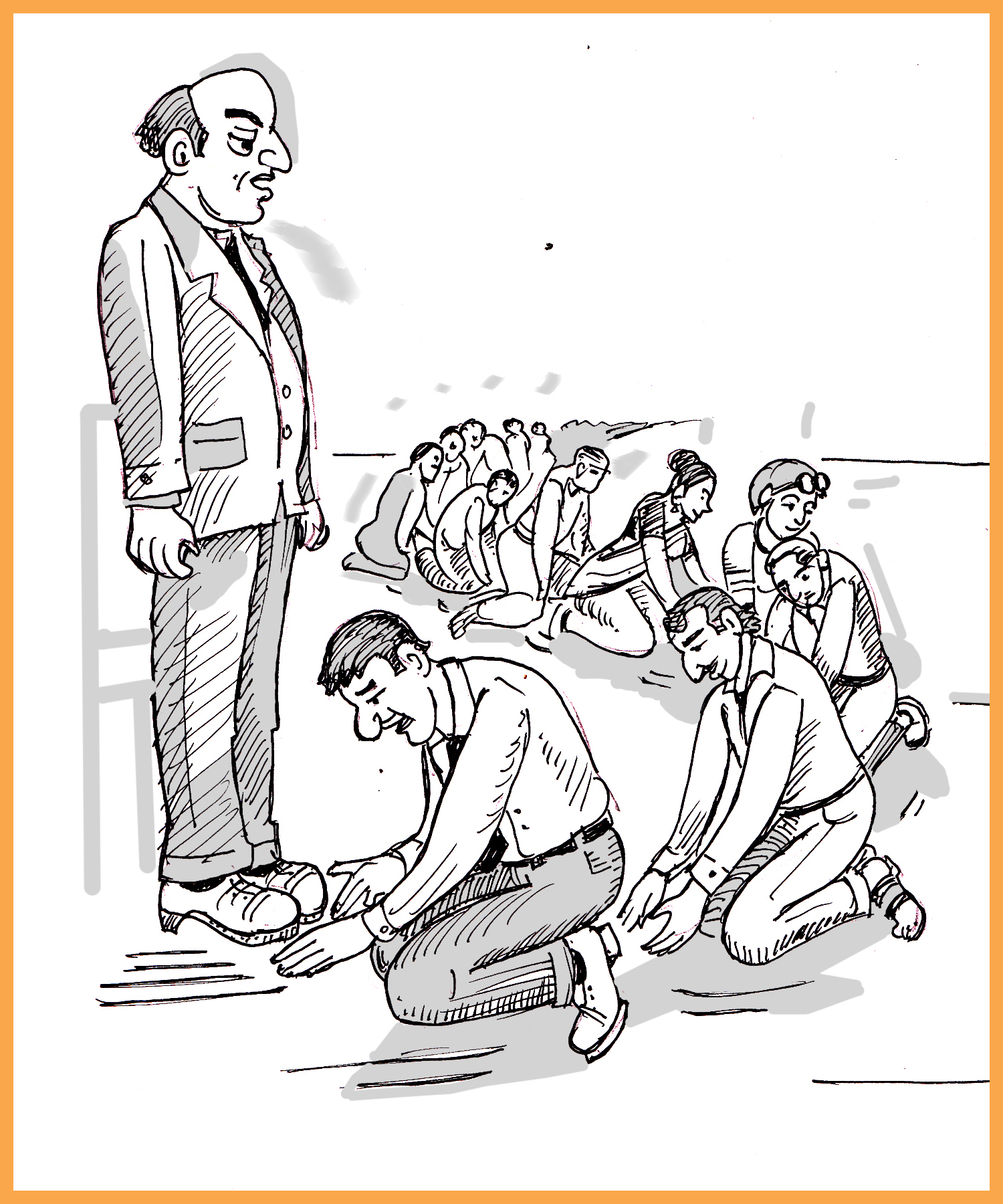
Yes-Men
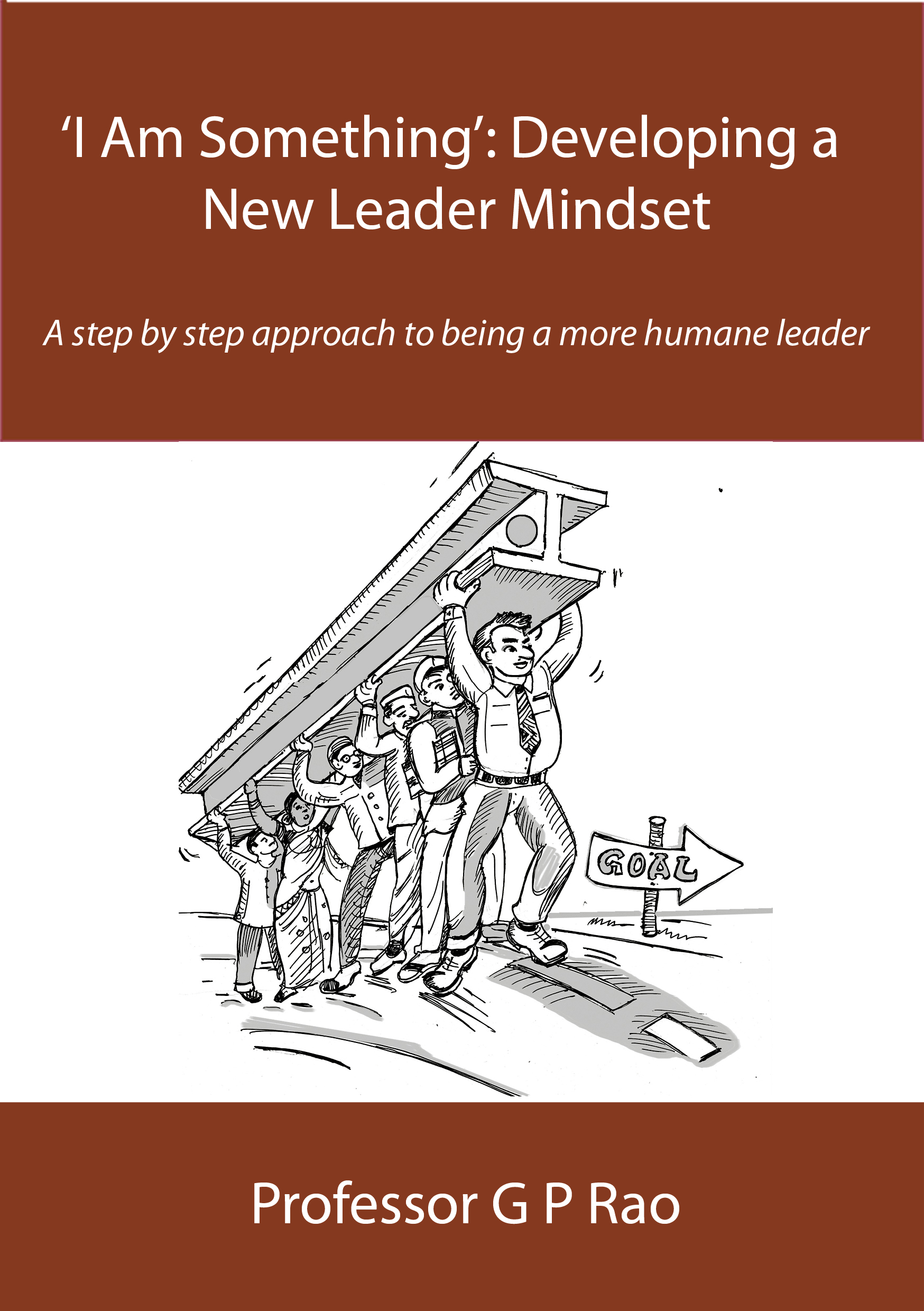
Prof G P Rao, an eminent authority in the field of Organizational Behaviour, has recently proposed a new approach to viewing leadership.
This approach proposes three kinds of leadership mindsets: “I Am Everything’, ‘I Am Nothing’ and ‘I Am Something’. These are not mutually exclusive but co-exist, much like the three traits (Gunas) mentioned in Indian scriptures: Satvik, Rajasik and Tamasik. Time and business environment play key roles in determining the dominant mode of mindset a business leader has at a given point in time.
In a highly favourable business climate, a leader is apt to have an ‘I Am Everything’ mindset. In an unfavourable setting, a leader may end up having an ‘I Am Nothing’ mindset. In a moderate situation, an ‘I Am Something’ mindset is likely to prevail.

The approach is based on an empirical study and has been implemented in an IT organization in India. It has been discussed in detail in the book on Leader Mindsets.
The Composite Lens of Results, People and Ethics
This proposition is based on my own managerial experience of over four decades in the private sector. The basic premise here is that decisions are based not only on commercial considerations but also on sound ethics and values. Decisions which would serve the strategic interests of the organization and would never lead it to a situation of public disgrace and compromise.
If one were to take the liberty of modifying the Blake Mouton Grid, the leadership style of such a CEO would qualify for either a 9,9,9 or a 5,5,5 classification.

The modified grid leads us to 9 different styles which we have already discussed elsewhere in detail.
An Evolutionary Thought Process
Human thoughts forever keep evolving. Newer experiences come about. Refined paradigms surface. But each succeeding step is like a stepping stone. It is built upon the success achieved by, as well as upon the deficiencies noticed in, the previous ones. The different lenses of viewing leadership we have discussed here are no exception.
What we have attempted here is merely indicative and not exhaustive. Many more interpretations of leadership exist. Many more models and theories would emerge in the times to come. As businesses hurtle forward, armed with newer and smarter technologies, the need for humane leaders would only become more acute.
This would surely lead to newer lenses which would be more comprehensive and elaborate, and would better serve the needs of commercial enterprises better in future.
(A version of this article appears as one of the chapters of the book ‘I Am Something: Developing a New Leader Mindset’.)
(Related Post: https://ashokbhatia.wordpress.com/2015/12/24/looking-for-ceos-inspired-by-the-yuletide-spirit)
-
Recent Posts
Buy the Book

buy the book
Categories
-
cc
Tags
Art Bertie Wooster Bhagavad Gita Bingo Little Birthday Blake Mouton Grid Blogging Bollywood Book Campus Life CEO Chivalry Consciousness Coronavirus Corruption Edwin Empress of Blandings English Ethics Feminism Happiness Health Hindi Hollywood Human Values Humour India Jeeves Kalidasa KIds Leadership linkedin Literature Lord Emsworth Love Lyrics Mahabharata Mahatma Gandhi Management Movies Music Norway Paintings Panjab University People P G Wodehouse Politics Pondicherry Portugal Psmith Puducherry Rabindranath Tagore Ramayana Ritusamhara R K Laxman Romance Rosie M Banks Rupert Psmith Seasons Shakespeare Social Media Something Fresh Songs SPANDAN Spirituality SQ Sri Aurobindo Stephen Covey Switzerland Tatas Thos UBS Values Wodehousitis WomenArchives
- March 2026 (1)
- February 2026 (5)
- January 2026 (2)
- December 2025 (1)
- November 2025 (2)
- October 2025 (2)
- September 2025 (3)
- August 2025 (3)
- July 2025 (2)
- June 2025 (2)
- May 2025 (4)
- April 2025 (5)
- March 2025 (5)
- February 2025 (4)
- January 2025 (4)
- December 2024 (6)
- November 2024 (6)
- October 2024 (6)
- September 2024 (5)
- August 2024 (5)
- July 2024 (4)
- June 2024 (4)
- May 2024 (5)
- April 2024 (5)
- March 2024 (3)
- February 2024 (1)
- January 2024 (4)
- December 2023 (2)
- November 2023 (3)
- October 2023 (3)
- September 2023 (3)
- August 2023 (5)
- July 2023 (5)
- June 2023 (7)
- May 2023 (6)
- April 2023 (6)
- March 2023 (8)
- February 2023 (8)
- January 2023 (7)
- December 2022 (6)
- November 2022 (5)
- October 2022 (8)
- September 2022 (5)
- August 2022 (6)
- July 2022 (6)
- June 2022 (8)
- May 2022 (7)
- April 2022 (8)
- March 2022 (7)
- February 2022 (3)
- January 2022 (7)
- December 2021 (4)
- November 2021 (8)
- October 2021 (7)
- September 2021 (6)
- August 2021 (7)
- July 2021 (7)
- June 2021 (9)
- May 2021 (8)
- April 2021 (9)
- March 2021 (10)
- February 2021 (8)
- January 2021 (8)
- December 2020 (7)
- November 2020 (6)
- October 2020 (5)
- September 2020 (9)
- August 2020 (9)
- July 2020 (8)
- June 2020 (8)
- May 2020 (6)
- April 2020 (5)
- March 2020 (7)
- February 2020 (4)
- January 2020 (7)
- December 2019 (12)
- November 2019 (10)
- October 2019 (5)
- September 2019 (9)
- August 2019 (10)
- July 2019 (9)
- June 2019 (14)
- May 2019 (13)
- April 2019 (14)
- March 2019 (11)
- February 2019 (11)
- January 2019 (14)
- December 2018 (12)
- November 2018 (12)
- October 2018 (14)
- September 2018 (9)
- August 2018 (10)
- July 2018 (10)
- June 2018 (8)
- May 2018 (11)
- April 2018 (11)
- March 2018 (6)
- February 2018 (9)
- January 2018 (10)
- December 2017 (10)
- November 2017 (9)
- October 2017 (8)
- September 2017 (11)
- August 2017 (10)
- July 2017 (10)
- June 2017 (11)
- May 2017 (9)
- April 2017 (7)
- March 2017 (7)
- February 2017 (8)
- January 2017 (10)
- December 2016 (9)
- November 2016 (11)
- October 2016 (10)
- September 2016 (10)
- August 2016 (9)
- July 2016 (6)
- June 2016 (10)
- May 2016 (10)
- April 2016 (10)
- March 2016 (10)
- February 2016 (12)
- January 2016 (10)
- December 2015 (11)
- November 2015 (11)
- October 2015 (10)
- September 2015 (10)
- August 2015 (10)
- July 2015 (10)
- June 2015 (10)
- May 2015 (10)
- April 2015 (10)
- March 2015 (9)
- February 2015 (10)
- January 2015 (8)
- December 2014 (9)
- November 2014 (8)
- October 2014 (8)
- September 2014 (7)
- August 2014 (7)
- July 2014 (7)
- June 2014 (7)
- May 2014 (7)
- April 2014 (7)
- March 2014 (7)
- February 2014 (6)
- January 2014 (7)
- December 2013 (6)
- November 2013 (6)
- October 2013 (6)
- September 2013 (6)
- August 2013 (6)
- July 2013 (6)
- June 2013 (6)
- May 2013 (6)
- April 2013 (6)
- March 2013 (6)
- February 2013 (6)
- January 2013 (6)
- December 2012 (4)
- November 2012 (4)
- October 2012 (3)
- September 2012 (2)
- August 2012 (4)
- July 2012 (2)
- June 2012 (2)
- May 2012 (2)
- April 2012 (2)
- March 2012 (2)
- February 2012 (3)
- December 2011 (3)
- November 2011 (1)
- October 2011 (2)
- September 2011 (2)
- August 2011 (2)
- July 2011 (2)
- June 2011 (3)

 ashokbhatia