Posts Tagged ‘Love’
Of Valentine’s Day, A Sentiment Called Love, and P G Wodehouse
Posted in Uncategorized, What ho!, tagged Death, Humour, Love, P G Wodehouse, Paradise Lost, Valentine's Day on February 14, 2026| Leave a Comment »
From Heartache to Hilarity: Why Wodehouse Is the Ultimate Breakup Guru: Guest Post by Suryamouli Datta
Posted in What ho!, tagged Breakups, Humour, Love, mental-health, P G Wodehouse, personal-development, Rejection, Relationships, Shakespeare on February 14, 2025| Leave a Comment »

The youth today live in technology-infested times which run closer to the speed of thought. Besides performing well at their jobs in accordance with their business leaders’ exhortations to work ninety hours a week, they have to cope with such delicate matters of the heart as maintaining relationships, situationships, and even mini-micro alliances, sans a commitment of any kind. If some are lucky to reach their romantic goals, there are many others who fail. They get up in the middle of the night to check if their current heartthrob has answered their latest missive on WhatsApp. In the absence of one or realising that their number itself has been blocked by the party of the other part, a sense of gloom envelopes them. A state of despondency follows. Some of them feel as if life has come to a dead end. A sense of lack of self-worth follows. Rejection stares them in the face.
The Sting of Rejection
Rejection is said to be a universal experience, but few words capture its sting better than Mirza Ghalib’s timeless couplet:
‘Nikalna khuld se Adam ka sunte aaye hain lekin,
Bade beabru ho kar tere kuche se hum nikle.’
Which translates to (according to my humble sense of English):
“We have heard of Adam’s fall from Eden’s gate,
But I was cast from your street in a far worse fate.”
This poignant verse reminds us that rejection feels deeply personal, like being cast out of paradise itself. For many, the road to recovery feels arduous. But as you journey through this article, you will see that rejection, though painful, is not the end. By the end of this journey, you might even find yourself humming a tune of resilience and joy.
It has been immortalised in poetry, literature, and song, proving that unrequited love is as old as humanity itself. Shakespeare, with his knack for articulating the ineffable, said it best in Twelfth Night:
“If music be the food of love, play on,
Give me excess of it; that, surfeiting,
The appetite may sicken, and so die.”
In other words, even the Bard himself recognised the bittersweet ache of rejection.
Yet, rejection is not a closed door; it is merely a redirection. As Robert Burns mused in A Red, Red Rose, love’s pain is as much a part of the human condition as its joys. While rejection spares no one, this article shines a light on the unique challenges men face, from societal pressures to emotional expectations. It offers a humorous yet empathetic lens to navigate this universal experience.
But before diving into the tales of resilience and humour, let us first unravel the many reasons behind romantic rejections.
Why Rejections Happen
Romantic rejection is a dance as old as time, its steps often clumsy and fraught with miscommunication. Why does it happen? The reasons are many. Sometimes, it is a simple lack of compatibility—a collision of two worlds that fail to align. At other times, it is the timing: meeting the right person at the wrong time or vice versa. Social conventions, family expectations, or even the mysterious workings of the human heart often create barriers.
In a world of ever-shifting expectations and instant communication, misunderstandings and mismatched desires are common culprits in any episode of romantic rejection. Yet, understanding these dynamics can help demystify the pain and bring clarity to the situation. Often, rejection is less about the person being rejected and more about circumstances, timing, incompatible goals, or a stark mismatch between the value systems of two souls.
Consider Kipling’s words in his poem If:
“If you can meet with Triumph and Disaster
And treat those two impostors just the same…”
For all its inevitability in the course of life, rejection is not without its sting. It is a curious mix of bruised ego and wounded hope, a moment that can leave even the most self-assured feeling disheartened. To pretend it does not hurt would be a folly. While the rainstorm may feel unwelcome, it clears the air for brighter days. Rejection, too, serves as a temporary squall, one that will pass, leaving behind a wiser and stronger self.
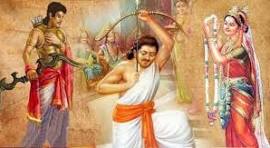
Tales from the Epics: Lessons in Rejection
Rejection is an ancient theme, and even the heroes of great epics have faced it. These stories demonstrate that being turned down, though painful, often becomes a defining moment in a person’s journey, shaping their character and decisions. However, they also serve as cautionary tales of how unresolved rejection can spiral into bitterness or tragedy.
Consider the story of Karna from the Mahabharata. During Draupadi’s swayamvara, Karna, a warrior of unmatched skill and bravery, is rejected outright when Draupadi declares she will not marry someone of uncertain lineage. Publicly humiliated, Karna’s bitterness festers and influences his alliances and decisions, leading to devastating consequences during the Kurukshetra war. His story is a powerful reminder of how unaddressed emotions from rejection can ripple destructively through one’s life.
Similarly, in The Iliad, Achilles feels slighted when Briseis, his war prize, is taken from him. Though not a romantic rejection, the perceived insult plunges him into a spiral of rage and withdrawal. His refusal to fight leads to the death of his close friend, Patroclus, a tragedy that forces Achilles to confront the cost of his wounded pride.
In the Odyssey, Odysseus’s encounters with rejection are more symbolic, but they highlight the importance of perseverance in the face of adversity. His unwavering determination to return to his wife, Penelope, and reclaim his kingdom reflects how resilience can prevent rejection from devolving into despair or destructive behaviour.
In modern contexts, such unresolved emotions can have equally dire consequences. Many tragic stories emerge from individuals who, unable to process rejection, spiral into harmful behaviours—hurting themselves or others. From violent outbursts to long-lasting emotional scars, unaddressed rejection can take a dangerous toll. It underscores the critical need to develop emotional resilience and seek healthy outlets for processing these experiences.
These stories, spanning cultures and eras, echo a universal truth: rejection is a part of life’s fabric. What matters is how we respond—whether we let it define us or use it as a catalyst for growth, wisdom, and a deeper understanding of our place in the world.

Modern-Day Tales of Rejection
From digital ghosting to public embarrassments, rejection wears many faces in today’s world, and here is how some navigated through it.
- The Coffee Refund Request
In Sydney, a man requested a refund for a coffee he purchased on a date that did not meet his expectations. After the woman expressed disinterest, he sent her a payment request for $6. This unusual reaction garnered attention online and sparked debates about entitlement in dating. - Astrological Overshare
Chloe Ferrari shared an embarrassing personal story where, after being rejected, she coped by excessively discussing astrology and tarot readings with her friends. While harmless, the incident left her cringing at her own over-analysis of the rejection. - Public Humiliation at a School Dance
A teenager’s rejection at a school dance became a public ordeal when the girl’s friends repeatedly relayed her disinterest throughout the day. The boy’s embarrassment served as a harsh reminder of how peer dynamics can amplify rejection. - Digital Ghosting
In the age of online dating, ghosting has become an ordinary form of rejection. One Reddit user recounted how an intense emotional connection developed over weeks disappeared without explanation, leaving them questioning their self-worth. - The Entitled Ex
A man who was rejected after a brief romantic encounter became infamous online for his persistence in trying to rekindle the relationship. His entitled behaviour was widely criticised as an inability to accept rejection gracefully. - Cultural Mismatches
Cultural differences often contribute to romantic rejections. One story highlighted a relationship that ended due to family pressures and differing cultural expectations, leaving both individuals feeling torn between personal desires and societal norms. - Extreme Responses
A tragic case involved Antonio Wilson, who reacted violently after being rejected by a woman he had recently met. This devastating incident underscored the importance of emotional regulation and the dangers of taking rejection too personally. - Rejection Leading to Growth
Many stories online feature individuals who used rejection as a catalyst for personal growth. One individual shared how a painful breakup inspired them to pursue a long-dormant passion for art, eventually leading to a career change. - Social Media Missteps
Rejection through social media miscommunications is increasingly common. In one instance, a person’s message to a potential partner was misconstrued, leading to a rejection that could have been avoided with clearer communication. - Violent Reprisals: In deeply patriarchal societies like those of India, we keep hearing about cases where rejection could result in either an acid attack or even death for the female who is supposed to have meekly accepted a proposal.
Rejection: A nudge from the universe?
But why linger in the shadow of rejection when the world offers an abundance of opportunities to move forward? But while some rejections sting, others, when seen in a rear-view mirror, can be downright amusing. Perhaps this is the perfect moment to sign up for that art class you have been eyeing or to rediscover an old hobby. Each new endeavour not only serves as a distraction but as a gateway to fresh connections and experiences. Let rejection be the beginning of something exciting—a new chapter in your story, one that is brimming with promise.
Let us consider another angle—what if rejection was not a loss but a rescue mission in disguise? Sometimes, the very person whose approval you were seeking might not have been the best fit for your life. Imagine being tied to someone who critiques your choice of socks or insists that pineapple belongs on pizza (the horror!). Rejection, in such cases, is not a rejection of you, but a quiet nudge from the universe saying, “You are dodging a bullet here, mate.”
So, the next time you feel the sting of rejection, think of it as a form of celestial quality control—a chance to wait for someone whose quirks and kindness complement yours, rather than someone who sees you as a “project” to be fixed. After all, is freedom not better than being saddled with someone who might have made your life a continuous “series of unfortunate events”?

Finding Comfort in Wodehouse’s World
Not everyone reacts to rejection the same way. While some graciously accept their fate, others let rejection gnaw at them—brooding over imagined slights, raging against rivals, or sinking into self-pity. Then there are some, like Psmith (Leave it to Psmith), who refuse to take a no as an answer and even go to the extent of lying through their teeth to win over the party of the other part amid a boat ride. Also consider the case of Sam Shotter (Sam the Sudden) who does not get stupefied when his first impulsive kiss ends up offending Kay Derrick. He persists. He even gets injured while trying to rescue Kay’s cat from atop a tree, eventually tilting the scales in his favour.
For those who feel rejection is the end of the road, P. G. Wodehouse’s works might help by showing that every setback carries the potential for laughter and growth. His stories transport us to a world where heartbreak is tinged with hilarity and optimism is always just around the corner. Wodehouse’s characters endure romantic calamities, yet they emerge unscathed—often better off.
Wodehouse’s characters showcase a wide spectrum of responses:
- The Diplomatic Resigner (Henry in Frozen Assets): When rejected by Kay, he quietly accepts it, shrugs, and exits stage left.
- The Jealous Brooder (Arthur Welsh in When Doctors Disagree): Turns suspicious and miserable but does not refrain from jousting like a knight in shining armour.
- The Misunderstood Optimist (Bertie Wooster) – Laughs it off and moves on, seeing rejection as just another twist in life’s comedy. He is often misunderstood, even while planting a brotherly kiss on the cheeks of a lady with whom he might have been engaged at some point of time in the past. Many of his misguided rivals call him a snake in the grass.
- The Persistent Wooer (like Psmith and Sam, as above, and George Emerson, a Hong Kong Police Officer (Something Fresh) who eventually succeeds in convincing Aline to elope with him.
- The Rejection Technocrat (Bobby Wickham) who has perfected the art of engineering rejections in her favour, as in Mr. Potter Takes a Rest Cure, and in Jeeves in the Offing.
- The Sulker, like the Nodder, who, when rejected, turns to food for comfort.
At its heart, Wodehouse’s world suggests the best way to handle rejection – with humour. His characters may falter, but they never let rejection define them—they dust themselves off, find something (or someone) else to amuse them and carry on.
Wodehouse’s genius lies not just in his comic prose but also in his ability to show that every setback is a setup for a delightful comeback. His characters stumble, falter, and fall, but they rise with an unwavering sense of humour that is nothing short of inspiring. They pick up the fragments of their crushed souls, reassemble them together with the glue of equanimity, and march on to greener pastures. In their resilience, readers find a comforting reminder that no setback is insurmountable. His wisdom lies in showing us that rejection is never the end but a bend in the road, often leading to a brighter future. This is how Rudyard Kipling puts it:
“If you can keep your head when all about you
Are losing theirs…
Yours is the Earth and everything that’s in it…”
Wodehouse himself often revels in the relief his characters feel after narrowly escaping unsuitable matches. Bertie Wooster, for instance, pops champagne every time he wriggles free from Madeline Bassett’s dreamy clutches. In the grand scheme of things, rejection may simply be a way of sparing you from a relationship that might have been, let us say, less of a romantic comedy and more of a psychological thriller.
Rejection is often mistakenly seen as a judgment of one’s character or worth, but this could not be farther from the truth. Much like Bertie Wooster, who never allows a broken engagement to dampen his unshakable spirit, you too can rise above the moment. Your value is intrinsic, unshaken by external opinions.
Often, it is others who can see your brilliance when you are blinded by the fog of rejection. Let this be a reminder that your self-worth is untouchable, regardless of any romantic setback.
If handling rejections is an art, then Bertie Wooster, ably assisted by Jeeves, is its Picasso.

The Pale Parabola of Rejection in Wodehouse’s World
When the world seems bleak and rejection has you questioning your charms, there is no better balm than the tales of P. G. Wodehouse. His stories remind us that life’s hiccups, including romantic rejections, can often be blessings in disguise, served by the universe with a generous dash of humour. Let us delve into some of his timeless works where even the downtrodden and rejected find their way to a jolly good resolution!
1. Jeeves in the Offing
- Synopsis: Bertie Wooster is surprised to find from an announcement in The Times that he has willy-nilly become engaged to Roberta “Bobbie” Wickham. The latter’s motive is to put a pressure on her mother to instead approve of her plans to walk down the aisle with Reginald “Kipper” Herring. With Jeeves’s assistance, the engagement is amicably dissolved, and Bobbie gets engaged to Kipper, allowing Bertie to return to his bachelor life.
- Best for: Individuals entangled in unintended romantic commitments seeking a graceful exit.
- Quote to Recharge: “You would not enjoy Nietzsche, sir. He is fundamentally unsound.”
2. The Rummy Affair of Old Biffy
- Synopsis: Biffy Biffen becomes engaged to Honoria Glossop but realizes they are incompatible. Despite initial despair, he eventually finds happiness elsewhere, illustrating that initial rejections can lead to better outcomes.
- Best for: Those mourning the end of a mismatched relationship, seeking hope for future compatibility.
- Quote to Recharge: “The voice of Love seemed to call to me, but it was a wrong number.”
3. The Story of Webster
- Synopsis: Bingo Little’s affection for Mary Burgess is unreciprocated. He finds solace in the companionship of Webster, highlighting the comfort pets can provide during emotional lows.
- Best for: Individuals experiencing unrequited love, seeking comfort in non-human companionship.
- Quote to Recharge: “It is a good rule in life never to apologise. The right sort of people do not want apologies, and the wrong sort take a mean advantage of them.”
4. The Metropolitan Touch
- Synopsis: Bertie Wooster attempts to assist his friend Tuppy Glossop in winning the affections of a girl, but their efforts lead to humorous failures. The tale emphasises the unpredictability of romantic pursuits and the importance of humour in facing rejection.
- Best for: Individuals who have faced repeated romantic setbacks and need a reminder to find humour in the situation.
- Quote to Recharge: “Chumps always make the best husbands. When all is said and done, someone has to sit opposite you at the breakfast table.”
5. The Delayed Exit of Claude and Eustace
- Synopsis: Bertie’s cousins, Claude and Eustace, face romantic rejections but soon move on to new adventures, demonstrating the transient nature of such setbacks.
- Best for: Individuals struggling to move past a recent rejection, needing encouragement to embrace new opportunities.
- Quote to Recharge: “There is no surer foundation for a beautiful friendship than a mutual taste in literature.”
6. The Inferiority Complex of Old Sippy
- Synopsis: Sippy Sipperley, feeling inadequate after a romantic disappointment, rediscovers his confidence through writing, highlighting the therapeutic power of creative pursuits.
- Best for: Those whose self-esteem has been affected by rejection, seeking to rebuild confidence through personal achievements.
- Quote to Recharge: “The only cure for grey hair is the guillotine.”
7. Jeeves and the Yuletide Spirit
- Synopsis: Bertie’s plans to win over a love interest during Christmas go awry, but he finds contentment in the festive spirit and companionship, suggesting that joy can be found beyond romantic pursuits.
- Best for: Individuals feeling the sting of rejection during festive seasons, seeking solace in other aspects of life.
- Quote to Recharge: “I had not the heart to touch my breakfast. I told Jeeves to drink it himself.”
8. A Damsel in Distress
- Synopsis: In this delightful tale, George Bevan, a composer, falls for Maud Marshmoreton, only to find himself caught in a series of misunderstandings. Though initially rejected, George learns to take setbacks in his stride and remains steadfast in his pursuit of happiness. Eventually, owing to Maud’s strong dislike of obese gentlemen with triple chins, he scores.
- Best for: Those grappling with misunderstandings in romantic pursuits, seeking encouragement to approach the situation with optimism.
- Quote to Recharge: “She had the look of one who had drunk the cup of life and found a dead beetle at the bottom.”
9. Fate (from Young Men in Spats)
- Synopsis: Freddie Widgeon, perpetually unlucky in love, faces yet another romantic disappointment. However, through a series of comedic events, he realises that life’s twists and turns often lead to unexpected joy.
- Best for: Those feeling that rejection is a recurring pattern in their lives, needing a reminder that fate has its own plans.
- Quote to Recharge: “It is never difficult to distinguish between a Scotsman with a grievance and a ray of sunshine.”
10. The Man Upstairs
- Synopsis: Annette Brougham, an artist, initially rejects the advances of her upstairs neighbour, a struggling composer. Through shared interests and persistence, the story unfolds into a lesson about patience and timing in love.
- Best for: Those who feel disheartened by initial rejections, reminding them that persistence, when respectful, can sometimes lead to success.
- Quote to Recharge: “She had an eye that could open an oyster at sixty paces.”
11. Uncle Fred Flits By
- Synopsis: In this tale, Uncle Fred intervenes in a romantic mix-up involving his nephew. The story is a whirlwind of wit and absurdity, showing how humour and boldness can transform awkward situations.
- Best for: Those seeking to laugh at the absurdities of life and approach rejection with audacious humour.
- Quote to Recharge: “Some minds are like soup in a poor restaurant—better left unstirred.”
12. The Ordeal of Young Tuppy
- Synopsis: Tuppy Glossop falls for the athletic Miss Dalgleish, a dog lover. To win over her affections, he endures a rough match of rugby football, only to discover that she had instead preferred to go to the city to check on a water spaniel. He returns to the fold of Angela, thereby fulfilling the wishes of Aunt Dahlia.
- Best for: Those who have exaggerated their interests to impress a romantic interest, only to be caught in an uncomfortable situation.
- Quote to Recharge: “The sky darkened, birds stopped singing in the trees, and a great hush seemed to fall upon nature as young Tuppy came to grips with his fate.”
13. Frozen Assets
- Synopsis: Henry, convinced that his fiancé Kay is the love of his life, is devastated when she chooses Jerry Shoesmith over him. However, in a rare moment of self-awareness, he realises that her departure is a blessing in disguise. Instead of wallowing in sorrow, he gracefully moves on, content in the knowledge that an incompatible relationship has been averted.
- Best for: Those who, in retrospect, recognise that rejection saved them from an ill-suited relationship.
- Quote to Recharge: “He felt he had had an escape. He was a man who liked an orderly existence. Kay, whatever her superficial charms, was manifestly a girl who preferred her existences disorderly.”
14. Bingo Little: A Serial Romantic’s Journey
Synopsis: In his pre-nuptial phase, Bingo Little’s romantic escapades are nothing short of legendary. His affections shift between a waitress named Mabel, the formidable Honoria Glossop, revolutionary Charlotte Corday Rowbotham, and several others. However, after each failed affair, Bingo does not sulk—he simply realises that his latest flame was never meant to be, and his “true soulmate” is still out there waiting. Eventually, he finds lasting love with Rosie M. Banks, a romance novelist whose sentimental outlook aligns with his own.
Best for: Those who fall in love too quickly and end up subjecting many of those from the tribe of the delicately nurtured to bouts of rejection, can yet believe that fate would be kind to them and the best match could just be round the corner.
Quote to Recharge:
“Bingo, like so many of the population of the world, had had love in his life before and had thought each time that it was the real thing.”
15. The Juice of an Orange
Synopsis: Wilmot Mulliner is devastated when his beloved, Mabel, rejects him. Instead of rebounding gracefully, he takes solace in food—only to find himself plagued by indigestion. A doctor prescribes a strict diet of orange juice, and miraculously, this new regimen transforms not just his digestion but his entire personality. From a timid nodder, he evolves into a man who asserts himself, speaking up to authority and reclaiming control over his life.
Best for: Those who need a post-breakup confidence boost through a healthier diet.
Quote to Recharge:
“There is no surer foundation for a beautiful friendship than a mutual taste in literature.”
16. Mr Potter Takes a Cure: An Engineered Rejection
Synopsis: Not all rejections are inflicted by the party of the other part; sometimes, they are cleverly orchestrated by the party of the first part itself. Bobbie Wickham, ever the mischief-maker, finds herself beset with Clifford Gandle, a member of Parliament. Her mother believes he would be a steadying influence on her and, thus, the right match. She concocts an elaborate scheme that leads her mother to believe that Clifford is eccentric, making her forbid Bobby to dream of marrying him.
Best for: Those looking for creative ways to shoo off imposed suitors without breaking hearts outright.
Quote to Recharge: “Bobbie is one of those girls you can’t say no to. And the trouble is, she knows it.”
17. Pongo Twistleton in “Uncle Fred in the Springtime”
Synopsis: Pongo Twistleton often finds himself ensnared in romantic entanglements thanks to his uncle’s schemes. In one instance, he is pursued by a woman who ultimately rejects him upon realising he is not as wealthy as she assumed. Pongo is secretly thrilled, as he has no real interest in the relationship.
Best for: Those who have ever been pursued for the wrong reasons, only to be freed by rejection.
Quote to Recharge: “There are few things in life so agreeable as being rejected by someone you had no intention of proposing to in the first place.”
18. Monty Bodkin in “Heavy Weather”
Synopsis: Monty Bodkin, a charming but somewhat directionless young man, is briefly involved with a woman who ultimately rejects him, deciding he lacks ambition. Rather than sulking, Monty rejoices—he had no desire for a life filled with excessive responsibilities anyway.
Best for: Those who prefer living on their own terms rather than meeting someone else’s expectations.
Quote to Recharge: “There is a certain serene joy in realising you have been spared from a lifetime of unnecessary hard work.”
19. Eustace Mulliner in “Open House”
Synopsis: The idea of his joining the British Embassy in Switzerland had never appealed to Eustace. However, he changed his mind when an argument arose between his girlfriend and his aunt as to who should whack him first with the heaviest parasol at hand. He went on to being awarded the Order of the Crimson Edelweiss, Third Class, with crossed cuckoo-clocks, carrying with it the right to yodel in the presence of the Vice-President.
Best for: Those who are flexible when it comes to making career choices.
Quote to Recharge: “Women, he knew, in moments of mental stress, are always apt to spray the blame a good deal.”
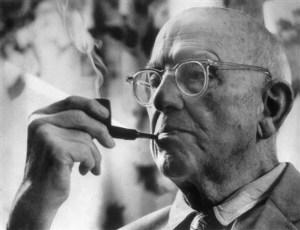
Wodehouse – A Breakup Guru
Well, of the many things that Wodehouse has taught us, one stands out. It is that rejection may not always be a tragedy, making one plumb new depths of despondency and wallow in self-pity. On the contrary, it is sometimes the universe handing you a lucky escape on a plate with a watercress around it. After all, who would not breathe easier knowing they have narrowly avoided drawing a father-in-law like Pop Bassett, whose disapproving stare could crack granite? Or a mother-in-law like Lady Wickham who could turn a casual conversation into an inquisition? Worse still, imagine being shackled for life to someone like Aunt Agatha, a woman with all the warmth of an overzealous prison warden.
So, the next time life hands you a romantic “no,” take a leaf out of Wodehouse’s world—laugh it off, see the humour in it, and move forward with the light-hearted wisdom of a true Wodehousean. Some escapes, as Bertie Wooster would tell you, are worth celebrating with a stiff w. and s., though, in his case, he is adequately supported in such matters by Jeeves.
Transforming Rejection into Resilience
The lessons gleaned from Wodehouse’s characters offer a roadmap for handling rejection with humour and grace, proving that resilience is not just about moving on or surviving – it is about thriving.
Rejection is as inevitable as the rising sun, but how we respond to it defines us. With the right perspective, even the most painful rejection can be an opportunity for growth, self-reflection, and, dare we say, humour. Some find solace in intellectual pursuits, others in sheer determination—but the key lies in embracing rejection as a moment of transformation rather than defeat. And nowhere is this lesson better embodied than in the resilience of great minds, from history to literature. And who better than P.G. Wodehouse to provide that shift? His characters, forever tumbling from one disaster to the next, show us that even rejection can be an art form—if approached with the right mix of wit and nonchalance.
And if rejection does rear its head again, do not let it be a tragedy. Down the road, when you look back at that experience, you might be thanking the universe for nudging you in a better direction in life. Picture yourself recounting the moment with all the theatrical flair of a Shakespearean soliloquy or the dry wit of a Wodehouse character. Turn it into an anecdote to laugh over with friends, one that garners chuckles rather than sympathy. Remember, life is far too short to dwell on the rejections of yesterday. As the ever-optimistic Bertie might say,
“A short while ago, the air was congested with V-shaped depressions, but now one looks north, south, east, and west and descries not a single cloud on the horizon – except the fact that Gussie’s wedding is still off, and that cannot be helped. Well, this should certainly teach us, should it not, never to repine, never to despair, never to allow the upper lip to unstiffen, but always to remember that, no matter how dark the skies may be, the sun is shining somewhere and will eventually come smiling through.”
How Wodehouse Can Help
Wodehouse is not just about dodging doomed engagements or bouncing back from rejection—he is the literary equivalent of a well-brewed cup of tea on a rainy day, served with some hors d’oeuvres dished out by Anatole. His words have a way of making life’s messiest moments feel like harmless inconveniences. In a world full of serious literature, Wodehouse reminds us that it is perfectly fine to laugh at ourselves.
Reading Wodehouse is an intellectual exercise wrapped in laughter. His clever wordplay and unexpected twists distract you from sadness and pull you into a world where the grandiosity of life’s troubles is reduced to a ‘well-being.’

The Fermat Analogy
Some people nurse heartbreak by drowning in sorrow; others tackle their misfortunes with distraction. There is a story about a man so devastated by a romantic rejection that he became obsessed with solving Fermat’s Last Theorem—and in doing so, forgot all about his heartbreak.
This is not unlike the effect of reading Wodehouse. Much like a mathematician tackling an impossible proof, a Wodehouse reader gets caught up in his intricate wordplay, precise comedic setups, and masterful use of logic and absurdity. By the time you have unravelled his sentences, the sadness has vanished, replaced by a deep appreciation for the precision of comedy.
Reading Wodehouse is, in many ways, like solving an elegant mathematical problem—it is structured, logical, and immensely satisfying. He sets up his premises like a scientist forming a hypothesis, leads us through an unexpected middle like an experiment gone amusingly wrong, and lands at a conclusion so inevitable yet surprising that it feels like Q.E.D.
Take, for instance, Wodehouse’s approach to comic miscommunication. His ability to create farcical situations often follows the patterns of logical paradoxes and probability problems, where each new event is an unintended consequence of the previous one, creating a feedback loop of hilarity.
One of the best examples of this is in Right Ho, Jeeves, where Bertie Wooster, in an attempt to help his friend Gussie Fink-Nottle confess his love to Madeline Bassett, inadvertently sets off a chain reaction of disasters. Bertie helps Gussie, a lifelong teetotaller, to consume alcohol for courage before proposing. However, Gussie overindulges, leading to an entirely unforeseen series of events—offending dinner guests, delivering an embarrassing speech, and mistakenly proposing to the wrong woman, Angela Travers.
This setup mirrors a logical paradox—where each action taken to resolve a problem only amplifies it, leading to an absurd yet inevitable conclusion. Just as mathematical paradoxes create seemingly contradictory truths, Wodehouse’s miscommunications turn simple conversations into elaborate webs of confusion, proving that even the most calculated plans can unravel in the most delightful ways.
If Fermat’s Last Theorem captivated mathematicians for centuries, Wodehouse’s writing does the same for the humourist’s mind. His works are a masterclass in comedic mechanics, sentence precision, and intricate plotting—qualities that should delight any scientist, mathematician, or logician who enjoys a perfectly constructed problem and its delightful resolution.
Whether you are a romantic or a rationalist, a mathematician, or a misfit, one thing is clear – losing yourself in Wodehouse is the best possible distraction from heartbreak.

A Song to End the Journey
Before we bid adieu, let us celebrate the spirit of resilience and light-heartedness—values that Wodehouse championed, and that life often demands of us. Rejection, as we have seen, is not the end of the story—it is merely a plot twist. What begins in sorrow can transform into joy with the right perspective.
As Ghalib reminds us of the sting of heartbreak, he also hints at better times ahead:
“Unke dekhe se jo aa jate hain munh pe raunaq,
Woh samajhte hain ke beemar ka haal achcha hain.”
(“My face is flushed with joy upon seeing my beloved,
Beloved mistakes my sickness to be a sign of good health.”)
Also, this philosophy is captured beautifully in a timeless Bollywood song from the Hindi movie Hum Dono (1961). In this film, the hero, a happy-go-lucky man, approaches his beloved’s father to ask for her hand in marriage. In his enthusiasm, he prioritises the meeting over an important job interview, hoping love will triumph. But reality strikes hard—the father, unimpressed, rejects him outright, citing his irresponsibility and lack of financial stability. Instead of despairing, the hero takes this rejection as a challenge and enlists in the army, proving that setbacks can be stepping stones.
The song Main Zindagi Ka Saath Nibhata Chala Gaya, written by the legendary lyricist Sahir Ludhianvi, composed by Jaidev, and sung by the inimitable Mohammad Rafi from the same film, seconds the opinion that setbacks can be stepping stones and that one must take them sportingly. It echoes the very essence of Wodehouse’s world—where setbacks are met with a smile, and where a light heart can weather any storm. It is a melody of acceptance, resilience, and moving forward with indefatigable enthusiasm.
As the lyrics remind us, life is best lived with a smile, a touch of humour, and an unwavering faith that brighter days always lie ahead.
References
- https://www.theguardian.com/lifeandstyle/2022/sep/07/man-demands-refund-after-unsuccessful-coffee-date
- https://www.bbc.com/lifestyle/articles-astrology-and-heartbreak
- https://www.teenvogue.com/story/teen-rejected-at-dance-personal-essay
- https://www.nytimes.com/modern-dating-ghosting
- https://www.buzzfeed.com/article-entitled-ex-boyfriend-viral-rejection-story
- https://timesofindia.indiatimes.com/lifestyle/culture-based-breakups
- https://www.cnn.com/news/tragic-rejection-response
- https://medium.com/how-rejection-transformed-my-life
- https://www.huffpost.com/miscommunication-in-modern-dating
- https://www.psychologytoday.com/relationship-miscommunications
Related Posts:
Of P. G. Wodehouse, Different Seasons, and Cupid
Posted in What ho!, tagged Cupid, Humour, Infatuation, Kalidasa, Literature, Love, P G Wodehouse, Ritusamhara, Romance, Seasons on October 10, 2024| 2 Comments »

P. G. Wodehouse is essentially a romantic at heart. Matters of the heart play a vital role in almost all the narratives dished out by him.
Bertie Wooster keeps avoiding a walk down the aisle, thanks to the support he gets from Jeeves. Yet, at the end of The Mating Season, we find him basking in the glow of satisfaction at having been instrumental in putting the affairs of quite a few couples in order.
In the Blandings saga, we meet a morose Gertrude who is pining for Beefy Bingham, her lover. She spreads depression in the house and, worse still, tries to be “helpful” to Lord Emsworth by tidying his study.
Mr. Mulliner keeps recounting love stories of various nephews and nieces of his. Ukridge may try and run a chicken farm, but the subplot of the love affair between Jeremy Garnet and Phyllis runs throughout the narrative. The spell of a quiet summer evening prompts Jeremy to confide his love to Phyllis.

The Literary Parabola of Seasons
It is hard to think of romance without thinking about the seasons. Whether it is the first warmth of spring pulling us out of hibernation or the quiet reflection that comes with autumn, there is an innate connection between the rhythm of nature and the emotional lives we lead. Wodehouse, of course, recognises this. He does not just use the seasons as convenient backdrops for romantic entanglements; he weaves them into the very fabric of his characters’ emotional journeys. Like that feeling of optimism you get on the first sunny day after months of grey skies, Wodehouse’s characters are often moved by the weather in ways they barely recognize themselves. It is this subtlety—this almost imperceptible nudge from nature—that aligns him with the great literary tradition of using the external world to reflect inner states.
The motif of seasons is deeply embedded in literature, symbolising various emotional and psychological states of characters. Many English literary experts have skilfully employed seasons to reflect inner turmoil, personal growth, and other emotional shifts.
In Sonnet 18 (“Shall I compare thee to a summer’s day?”), Shakespeare compares the beloved to a summer’s day, symbolising beauty, and vitality, while also lamenting the fleeting nature of summer and, by extension, life, and youth. In The Winter’s Tale, the season of winter represents both the coldness of jealousy and tyranny as seen in King Leontes’ irrational behaviour, whereas spring (in the later acts) symbolises rebirth, redemption, and forgiveness.
In his poem To Autumn, John Keats captures the beauty and melancholy of autumn, a season of maturity and ripeness and goes on to meditate on the bittersweetness of life’s temporality.
Tess of the d’Urbervilles by Thomas Hardy aligns Tess’s emotional journey with the changing seasons. The novel starts in spring, symbolising Tess’s innocence, and moves through summer and autumn, reflecting her growing despair and tragedy. Winter, in the end, represents death and loss.
In A Christmas Carol, Charles Dickens uses winter as a backdrop to explore themes of coldness, isolation, and redemption. The harsh, biting cold reflects Ebenezer Scrooge’s miserly, frozen heart. Yet, through transformation, the holiday spirit (and warming of his heart) mirrors a kind of internal spring-like rejuvenation.
Robert Frost, in Stopping by Woods on a Snowy Evening, depicts winter as representing solitude, contemplation, and the pull of death. The character’s momentary pause in a quiet, snow-covered wood suggests the allure of rest and surrender, while the journey he must continue reflects the mundane obligations of life.
These writers masterfully intertwined the natural cycle of seasons with human emotions, adding symbolic depth to their character’s emotional and psychological experiences. The ever-changing seasons become metaphors for the ups and downs of human life, making them a timeless tool in literary exploration.

The USP of Wodehouse
What sets Wodehouse apart is his imaginative use of Cupid’s machinations during different seasons. Cupid is indubitably one of the author’s most important comrade-in-arms. But the freedom to strike at will does not come without its attendant responsibilities. Love is in the air. Devotion is permitted. But physical intimacy is a taboo. Aphrodite has limited access to the goings-on. Eroticism is denied entry. An occasional occurrence which could amount to mild titillation alone is allowed. Across the oeuvre, Cupid is subject to strict Victorian norms of behaviour.
However, all this does not lessen his ingenuity in bringing lovers together. There are occasions on which even a member of either the feline or the canine species facilitates the development of a bond. Behind the frivolity and farcical events of Wodehouse’s narratives, Cupid ensures an almost imperceptible use of natural elements to influence the lives of the author’s characters. While stuck together on a rock by the seaside, a high tide in Mr. Wilton’s Holiday leads to a reconciliation between Jack and Mary.
Cupid even goes on to use different seasons as arrows in his quiver to smoothen the way to new relationships blossoming. In many of the relationships between two love birds, seasons provide a perfect backdrop. While the seasons may appear incidental to the plot, these not only embody the emotional states of the characters but also serve as invisible matchmakers.
Seasons become mere puppets in the deft hands of Cupid in a few cases. These play a key role in nudging Wodehouse’s characters toward romantic resolutions. Spring, summer, autumn, and winter often serve as metaphorical agents of Cupid, facilitating encounters, softening hearts, and reuniting sundered hearts. In fact, in such cases, seasons don the hat of an active participant in the narrative, behaving like key actors involved in the act.
Let us consider a few examples to see how Cupid assists Wodehouse in propelling the romantic chemistry between his characters by using various seasons as either a backdrop or a catalyst.
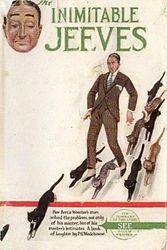
Spring: The Season of Blossoming Love
In Wodehouse’s fiction, spring invariably represents renewal, hope, and the blossoming of love. The imagery of spring, with its vibrant colours, warming temperatures, and burgeoning life, mirrors the rekindling or the birth of romantic feelings among characters. Wodehouse takes advantage of spring’s association with new beginnings to nudge his characters towards forging romantic affiliations, often underlining the season’s role as Cupid’s chief lieutenant.
Bertie Wooster takes some inspiration from Tennyson when he says:
“In the spring, Jeeves, a livelier iris gleams upon the burnish’d dove.”
He even imagines a charming girl to come up to him and seek his assistance in saving her from assassins.
“I don’t know if you know that sort of feeling you get on these days around the end of April and the beginning of May, when the sky’s a light blue, with cotton-wool clouds, and there’s a bit of a breeze blowing from the west? Kind of uplifted feeling. Romantic, if you know what I mean. I’m not much of a ladies’ man, but on this particular morning it seemed to me that what I really wanted was some charming girl to buzz up and ask me to save her from assassins or something.”
Similarly, in No Wedding Bells for Bingo, Cupid assists Wodehouse in explicitly tying romantic developments to the season. Bertie Wooster’s bumbling friends, eager to woo their respective partners, often find their romantic aspirations coming to fruition as spring blooms. Wodehouse seems to imply that the very air of spring carries romance, infecting even the most hopeless of suitors with renewed vigour and enthusiasm. Even Jeeves, who, when surprised, raises his eyebrows merely a fraction of an inch, is affected by spring fever. Towards the end of the story, we find that Bertie tells Bingo Little’s uncle that Bingo wants to marry Mabel, a waiter, and he, moved by the books read out to him, approves. Uncle declares that he plans to marry his cook, in whom Jeeves had shown interest earlier. However, Jeeves has already scratched the fixture and instead has another engagement of sorts with another girl, Mabel, the waiter whom Bingo had wanted to marry!
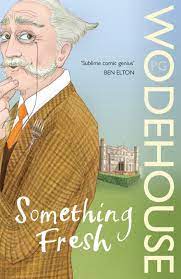
In Something Fresh, the sunshine of a fair spring morning incites a feeling of novel jauntiness amongst the residents of London. This is followed by the scene where Ashe Marson and Joan Valentine discover each other, and the seeds of romance get planted.
It is not that Cupid’s arrows prove to be effective in all the cases.
The spring motif continues with novels like Uncle Fred in the Springtime wherein the affair between Valerie and Horace comes to a satisfactory conclusion. However, Cupid’s arrows fail in the case of Polly and Gilpin. In Spring Fever too, Terry, who is initially wary of Mike due to his overwhelming good looks, warms up to him when she sees his battered face after a failed burglary attempt. Stanwood and Eileen also get together. But Mrs Punter runs off with Augustus Robb, leaving Shorty and Spink ruing their loss in love.
In the short story The Custody of the Pumpkin, the annual Spring Flower Show provides the backdrop for a classic Wodehouse romance. Lord Emsworth, obsessed with his prized pumpkin, is blissfully unaware that his son, Freddie Threepwood, is using the occasion to court a gardener’s daughter. The setting, with its blossoming flowers, is emblematic of the unanticipated flourishing of romance. While Lord Emsworth is preoccupied with his vegetables, spring’s inherent charm works on Freddie and his love interest, quietly orchestrating their courtship. Spring’s effect here is subtle but inevitable, as the characters seem unable to resist its influence.
Spring is also often a time for transformation in Wodehouse’s world. Characters who, during winter, might have been cynical, brooding, or emotionally distant, find themselves rejuvenated as the warmer weather arrives. When the ogre of winter is around, the characters’ instincts for self-preservation often dominate their tender thoughts of love. But once the winter is gone, the seasonal change from gloom to joie de vivre affects not only flora and fauna but also causes an emotional thawing amongst the Homo sapiens. Cupid assists Wodehouse in using this to show characters moving from a state of emotional hibernation to one of action and, eventually, romantic fulfilment.

Summer: Love in Full Bloom
If spring is the season of new beginnings, then summer in Wodehouse’s works represents the full bloom of love. It is as if Cupid decides to deploy the season at full throttle, its quiver operating on all its six cylinders. The warmth of the sun, long days, outdoor events such as garden parties and village fairs, a quick swim in a lake, and occasional bouts of rain create ideal conditions for love to grow further, often leading to a cementing of romantic affiliations. The languid pace of summer reflects the unhurried nature of developing affections, where flirtations deepen, and scales fall from couples’ eyes as they realise their love for each other.
Summer is the time when you can hear a snail clear its throat a mile away. When the sun is finishing its obligations for the day and rushing to a well-earned night of rest and repose, gnats and many other kinds of insects start fooling about all over the place.
In Right Ho, Jeeves, Bertie tells us it is July twenty-fifth when he returns from a trip to Cannes looking bronzed and fit. While at Cannes, a crisis arises in the matter of Tuppy Glossop and Angela Travers. They fall out due to Angela saying that Tuppy was getting fat and Tuppy not believing that a shark attacked her while at Cannes. Gussie Fink-Nottle is besotted with Madeline Bassett but does not have the courage to express his love to her. Eventually, it takes a dangerous midnight cycle ride by Bertie for Angela and Tuppy to reconcile their differences and for Madeline and Gussie to make up.
In The Mating Season, Madeline is yet again convinced that Bertie is secretly pining for her when he catches a 2.45 AM Milk Train and hides in the shrubbery, aiming to intercept the morning post which carries a letter from Gussie scratching the fixture with Madeline, thereby throwing a spanner in his plans to retain his bachelorhood. By the time the narrative ends, we find that Madeline and Gussie are reunited, Esmond Haddock has defied his aunts and is engaged to Corky, Constable Dobbs is reconciled with Queenie, and Gertrude has eloped with Catsmeat. Bertie’s bachelor status remains protected.
Cupid’s Benign Arrows
Cupid’s quiver contains many kinds of arrows. Other than the normal ones directed at consenting adults, on a few occasions, he also shoots the benign kind which are devoid of amorous intentions of any kind. Instead, these uplift the Spiritual Quotient of the ones at the receiving end. Or the kind that make one live up to the expectations of someone who is much younger in age, thereby also proving oneself worthy of one’s glorious ancestors.
In The Love that Purifies, we come across boys of a tender age who happen to be infatuated with Hollywood divas. We have Thos, who is besotted with Greta Garbo. We have Bonzo, who is in awe of Lilian Gish. Then, we have Sebastian Moon, whose affections are focused on Clara Bow. How these infatuations transform the behaviour of young boys is the nub or crux of the story. We are reminded that even menaces to society, in general, assume a saintly disposition when under the influence of the charms of their transient heartthrobs.
In Lord Emsworth and the Girl Friend, we discover that the lordship detests wearing stiff collars and making speeches. However, on the Parva School Treat Day, coinciding with the August Bank Holiday, when Blandings Castle becomes, in his lordship’s opinion, a miniature Inferno, he has little option but to fall in line with the command of Lady Constance Keeble. But that does not come in the way of his developing a respectful devotion towards Gladys. When she desires to have some flarze and gets spotted by Angus McAllister when doing so, the latter comes out of the potting shed at forty-five miles per hour. Gladys is quick to seek protection. She not only clutches the tails of Lord Emsworth’s coat but also slips her small, hot hand into his. It is a mute vote of confidence, and Lord Emsworth intends to be worthy of it. He stands up to the gardener and even defies his sister by refusing to deliver a speech.
The experience of Esmond Haddock and Lord Emsworth shows us that when Cupid strikes, even spines made of cottage cheese get transformed into those made of chilled steel!
When Rain Gods Assist Cupid
In Summer Lightning, Hugo Carmody is surprised to find that it has been raining and decides to rush to the cottage nearby.
Ho! for the cottage, felt Hugo, and headed for it at a gallop. He had just reached the door, when it was flung open. There was a noise rather like that made by a rising pheasant, and the next moment something white had flung itself into his arms and was weeping emotionally on his chest.
The ‘something white’ is Millicent, Lord Emsworth’s niece, frightened by the Empress stashed in the gamekeeper’s cottage.
In Leave it to Psmith, the hero’s first encounter with Eve comes about when she is caught in a sudden spell of rain beneath the awning of Messers Thorpe & Briscoe. Even though he says he is above softer emotions in general, Eve, who is sumptuously upholstered at the time, stirs a chord within him. Chivalry comes into play. Stealing the best umbrella available in the cloakroom of the club and rushing out to offer it to her is the work of a moment for him. Had Cupid not been assisted by the Rain Gods at the time, his machinations might have been in vain.
Summer’s role as Cupid’s agent is also evident in the way characters often find themselves outdoors during the warm months, in situations that lend themselves to romantic misunderstandings and reconciliations. Wodehouse’s characters often attend tennis matches, picnics, and boating excursions during the summer, all of which provide opportunities for private conversations, furtive glances, and sudden declarations of love. The idyllic natural settings serve as romantic catalysts, drawing characters together under the spell of the summer sun.
Moreover, summer’s association with heat and intensity often mirrors the emotional heat of Wodehouse’s love stories. The heightened emotions of characters — whether it is the confusion of unspoken feelings, jealousy, or the passion of newfound love — often come to a head during this season.
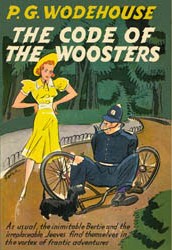
Autumn: The Season of Mists and Mellow Fruitfulness
Autumn, with its falling leaves and cooling air, often signals a time of reflection in Wodehouse’s works. This season is less about the exuberance of new love and more about characters realizing their feelings, coming to terms with past mistakes, or making decisions about their romantic futures. In many ways, autumn represents a transitional phase in the romantic arc of Wodehouse’s characters — a period of contemplation before the final act of a romantic resolve. Cupid, perhaps tired of the hectic time he has had in the previous two seasons – spring and summer – does a bit of introspection, reviewing the progress of the arrows shot earlier on whatever technical gizmo he uses to keep a track of things, and deciding the future course of action in each case.
In The Code of the Woosters, Jeeves tells Bertie that autumn is a season of mists and mellow fruitfulness.
One of the reasons for Bertie visiting Totleigh Towers is to heal a rift between Gussie Fink-Nottle and Madeline, Sir Watkyn’s daughter. Madeline incorrectly believes Bertie to be in love with her, and she has promised to marry him if her engagement should ever fail. To avoid this calamity to befall him, Bertie persuades Madeline to invite him down, but he learns upon arriving that Gussie and Madeline have already reconciled. A parallel romantic track is that of Stiffy Byng and Harold Pinker. A silver cow creamer, a notebook of Gussie’s which insults the host, Sir Watkyn Bassett, a policeman’s helmet, and the Eulalie effect on Roderick Spode – all take turns to play a spoilsport. Eventually, Cupid succeeds in his mission and both the couples get united.
In Jeeves and the Old School Chum, when a carefully packed lunch basket goes missing at the Lakenham Races, and the car carrying Rosie M Banks and her old school friend Laura Pyke runs out of fuel in the middle of nowhere, a fight ensues between the two friends. Bingo Little wins an intense argument with the owner of a house nearby and ensures that his wife gets her afternoon cup of tea. The romance between the couple is back on its throne.
She turned for an instant to Bingo, and there was a look in her eyes that one of those damsels in distress might have given the knight as he shot his cuffs and turned away from the dead dragon. It was a look of adoration, of almost reverent respect. Just the sort of look, in fact, that a husband likes to see.
“Darling!” she said.
“Darling!” said Bingo.
“Angel!” said Mrs Bingo.
“Precious!” said Bingo.
Cupid is thus successful in rekindling the romance between the wife and the husband, which had earlier come under strain owing to a clash between Bingo’s dietary habits and Laura Pyke’s strict diet regime based only on fat-soluble vitamins.
The Indian Summer
Many of Wodehouse’s fans are aware of his evocative use of the term Indian Summer, which is said to be a period of unseasonably warm, dry weather that sometimes occurs in autumn in temperate regions of the northern hemisphere. The UK Met Office Meteorological Glossary published in 1916 defines an Indian summer “a warm, calm spell of weather occurring in autumn, especially in October and November”.
In Indian Summer of an Uncle, Wodehouse touches upon yet another facet of love – that of a more mature variety. When Uncle Goerge starts planning a walk down the aisle with a much younger Rhoda Platt, Jeeves explains the phenomenon as follows:
“One must remember, however, that it is not unusual to find gentlemen of a certain age yielding to what might be described as a sentimental urge. They appear to experience what I may term a sort of Indian summer, a kind of temporarily renewed youth.”
For those in an advanced age, holding hands and physical intimacy gets relegated to the background. Instead, common ailments and related medications and therapies rule the roost. At times, the lining of the stomach paves the way for a couple to start sharing the trials and tribulations of life with each other. When Piggy and Maudie, the latter being the aunt of Rhoda Platt, happen to meet after a gap of many years, Cupid is quick to seize the initiative and ensures that their romance gets rekindled.
While autumn may lack the vibrancy of spring and summer, its quiet beauty is essential to Wodehouse’s romantic narratives. It allows characters the space to reflect, reconsider, and eventually take action to secure their happy endings. In this way, autumn becomes an integral agent of Cupid, providing the emotional clarity needed for love to succeed.
Autumn’s natural imagery — with its sudden riot of beige, yellow and brown colours, and the promise of winter’s chill and its eventual strokes of brilliant white on the landscape — often evokes a sense of urgency in Wodehouse’s characters. As the days grow shorter, characters are compelled to make decisions about their romantic futures. Cupid can be seen using this season to build tension, pushing characters toward decisive action. The cooling air of autumn can often be seen as a metaphor for the characters’ cooling patience, forcing them to act before it is too late.
Winter: Love Amidst the Chill
Though less frequently employed in Wodehouse’s works, winter nonetheless plays a significant role in his romantic comedies. The cold, stark landscape of winter can serve as a powerful contrast to the warmth of human affection. In some of his stories, the challenges of winter — whether it be physical cold, isolation, or the dormant state of nature — underscore the importance of companionship and love as a source of warmth and vitality.
In The Ordeal of Young Tuppy, the latter and Angela have again had the proverbial lover’s tiff. While on a rebound, Tuppy starts flirting with an athletic girl named Miss Dalgleish who lives near Bleaching. The girl is fond of dogs; Bertie supposes Tuppy wants an Irish water-spaniel to give her as a Christmas gift. To impress the girl, Tuppy participates in a local game of football, where he performs well but is sad to find out later that the girl was not present on the occasion, having rushed off to London looking for an Irish water-spaniel. A fake telegram imploring Tuppy to rush to the aid of an ailing Angela lands up, restoring the relationship between the two.
In Something Fresh, a concatenation of circumstances leads to Ashe Marson travelling in an open cart from Market Blandings to the Castle in biting cold. Wodehouse describes cold as an ogre that drives all beautiful things into hiding.
Below the surface of a frost-bound garden there lurk hidden bulbs, which are only biding their time to burst forth in a riot of laughing colour; but shivering Nature dare not put forth her flowers until the ogre has gone. Not otherwise does cold suppress love. A man in an open cart on an English Spring night may continue to be in love; but love is not the emotion uppermost in his bosom. It shrinks within him and waits for better times.
In The Knightly Quest of Mervyn, Mervyn Mulliner wants to marry Clarice Mallaby. She thinks he is a chump and does not consent to marry him. Mervyn wants to prove himself and asks her to give him a quest, like the knights of old. It is December, and she has always wanted to eat strawberries in the middle of winter, so she tells Mervyn that she will reconsider his proposal of marriage if he acquires a basket of strawberries for her before the end of the month. After having had many setbacks in his knightly mission, he lands up at Clarice’s house and intercepts a package which has strawberries for her from Oofy Posser in whom Mervyn had earlier confided. He gets an idea and calls out to Clarice that he brought her strawberries. However, by the time she reaches the room, he has absent-mindedly eaten all the strawberries. Clarice throws him out in the chilly weather, not even allowing him to retrieve his hat. Cupid fails yet again, though Mr Mulliner concludes the story to his companions at Angler’s Rest thus:
“So there the matter rests. The whole thing has been a great blow to my cousin’s son, for he considers — and rightly, I suppose — that, if you really come down to it, he failed in his quest. Nevertheless, I think that we must give him credit for the possession of the old knightly spirit to which our friend here was alluding just now.
He meant well. He did his best. And even of a Mulliner more cannot be said than that.”
In A Damsel in Distress, Maud is shocked to see how fat Geoffrey has become since the one year they met in Wales. Though he has inherited a great deal of money, he now sports a triple chin and talks only of food. Winter forms a backdrop when Geoffery speaks of his having lived on a yacht during the previous winter.
Upon discovering that the party of the other part is now close to thirty pounds overweight, the tender emotion of love in Maud’s bosom evaporates. She realises her mistake. She rushes to the nearest phone, gets George on the line, and asks if he has gained any weight in the last year and if he has ever been to Florida during winter and relished a fish called pompano! When George replies in the negative, Cupid’s endeavours succeed, and their romantic affiliation is sealed.
Winter’s challenges — both literal and metaphorical — often lead characters to realise the value of love as a source of comfort and joy in an otherwise cold world. The season’s emphasis on survival and endurance mirrors the perseverance required for love to thrive despite obstacles. In many ways, Cupid uses the season of winter as a test of true love, as couples must navigate the season’s difficulties to find warmth and happiness in each other’s company.
Though less romantic on the surface than spring or summer, winter provides Wodehouse with opportunities to explore the depth and resilience of romantic relationships. It is a season where love tries to prove its worth by enduring hardship and by a conduct which is not only chivalrous but also knightly. Seeds of love may occasionally lie dormant in the frozen soil, ready to sprout as and when the season of spring kicks in.

The Six Seasons of Kalidasa
Yet another literary figure who, like Wodehouse, has captured different seasons with highly insightful narratives is Kalidasa.
Kalidasa, said to be born in India in the fourth century AD, is widely regarded as the greatest poet and dramatist in the Sanskrit language. His evocative portrayal of female beauty, an enthusiastic depiction of the affairs of the heart, and the diverse ways in which ladies dress up for a romantic encounter with their beloved in each of the six seasons typical of a tropical country would have surely attracted Cupid’s attention.
In one of his seminal works, Ritusamhara (Medley of Seasons), Kalidasa describes six seasons in his inimitable style: Spring (Vasanta), Summer (Greeshma), Monsoon (Varsha), Autumn (Sharad/Patjhad), Pre-winter (Hemant), and Winter (Shishir). Each one is dealt with evocative descriptions of the elements of nature. The seasons form a backdrop for the affairs of the heart and the sensuous pleasures of the skin.

In Harmony with Mother Nature
In the works of P.G. Wodehouse, the seasons play a subtle yet significant role in shaping the romantic lives of his characters. Spring brings new beginnings and the promise of love, summer sees romance in full bloom, autumn provides space for reflection and realisation, and winter challenges love to survive amidst the cold. Each season, with its unique qualities, acts as an agent of Cupid, quietly orchestrating the romantic entanglements and resolutions that define Wodehouse’s timeless comedies.
All of us have occasionally experienced that curious, unexplainable surge of nostalgia that comes with a crisp autumn breeze or a sudden downpour in summer. An often-overlooked slice of his literary brilliance is how he grounds quite a few exaggerated situations in something so universal — the changing seasons. We have all watched relationships blossom in spring, only to weather the storms of winter. Wodehouse reminds us, with a wink and a smile, that love, like the seasons, goes through its cycles. And while his characters might find themselves tangled in knots, he trusts that much like nature itself, things have a way of sorting themselves out in time. In a world that so often feels chaotic, it is this quiet reassurance that keeps us coming back to his stories, much like the comfort of the seasons returning year after year.
By aligning the emotional journeys of his characters with the changing seasons, Wodehouse creates a world where love is not only a matter of human interaction but also a natural phenomenon, influenced by the rhythms of the earth itself. The seasons, in their silent and invisible way, become crucial agents in the hands of Cupid to stage the grand drama of attraction, affection, desire, infatuation, and love.
After all, he is supposed to be the son of the love goddess Venus and the god of war Mars. His role in nudging Wodehouse’s characters towards a conclusion of their affairs of the heart deserves to be appreciated and applauded.
Notes:
- This article is inspired by Plumtopia’s blog post ‘The Four Seasons of Wodehouse’ (link below).
- Inputs from a Wodehouse expert and Suryamouli Datta are gratefully acknowledged.
- Plum’s caricature courtesy Suvarna Sanyal.
- A version of this article appears in the March 2025 issue of Wooster Sauce, quarterly journal of the P G Wodehouse Society (UK).
Related Posts:
Fall in love if you want to lose weight: Guest Post by Asokan Ponnusamy
Posted in What ho!, tagged A Damsel in Distress, Humour, Leave it to Psmith, Love, Martin's Restaurant, Obesity, P G Wodehouse, Rupert Psmith, Strand Cinema on November 13, 2023| Leave a Comment »
Different ways in which Bollywood heroines express their love
Posted in The Magic of Movies!, tagged Bollywood, Hindi Movies, Love, Romance on June 30, 2023| 6 Comments »
When Cupid strikes, a relationship blossoms. But when it comes to expressing love, our dream merchants often deem it fit to put the hero on the forefront, who conveys his feelings in myriad ways. The colourful spectrum of the ways in which they express their emotions ranges from their being chivalrous to even being tormentors. Earlier, in a blog post, I had touched upon the nine different ways in which a hero sets about wooing the love of his life.
But occasionally, our dream merchants overcome their patriarchal mindset and let the heroine also express such tender sentiments as affection, adoration, adulation, devotion, attachment, fondness, passion, or love. Occasionally, they capture the precise moment when it dawns upon her that she is falling in love with the hero.
However, such songs are rather few and rare. But howsoever limited the availability of such songs, the range of emotions these songs capture is very wide. Some are downright submissive or devotional in nature. The bliss of domesticity gets poignantly showcased. Some are mildly flirtatious in their tone. Some others capture a dispute between the two also getting resolved in the process. Many others, picturized on the bold and the beautiful amongst the tribe of the delicately nurtured, express their admiration for the party of the other part in a frank and forthright manner. Some of these get rendered while the heroine is enjoying the bliss of solitude, or even in the presence of the party of the other part, thereby leaving the latter with no option but to eventually succumb to the charms of the party of the first part.
I do not allude here to songs of a rather seductive nature, like ‘Raat akeli hai…’ (Jewel Thief, 1967), ‘Husn ke laakhon rang…’ (Johnny Mera Naam, 1970) or ‘Kajra re…’ (Bunty aur Babli, 2005). You are not apt to find any ‘item numbers’ listed here. Songs where the heroine is pining for the hero in his absence do not appear in this compilation. Nor do I wish to cover here the songs which capture both the hero and the heroine expressing their unabashed love for each other, because these are available a dime a dozen, so to say.
Consider the following which come to my mind in this context.
Kisi ne apna banake mujh ko…
Movie: Patita (1953)
Singer: Lata Mangeshkar
Composer: Shankar Jaikishan
Lyricist: Shailendra
Aap ki nazron ne samjha…
Anpadh (1962)
Singer: Lata Mangeshkar
Composer: Madan Mohan
Lyricist: Raja Mehndi Ali Khan
Bhanwra bada naadaan…
Sahib, Bibi aur Ghulam (1962)
Singer: Asha Bhosle
Composer: Hemant Kumar
Lyricist: Shakeel Badayuni
Tere pyar mein dildaar…
Mere Mehboob (1963)
Singer: Lata Mangeshkar,
Composer: Naushad
Lyricist: Shakeel Badayuni
Jaaiye aap kahaan jayenge…
Mere Sanam (1965)
Singer: Asha Bhosle
Composer: O. P. Nayyar
Lyricist: Majrooh Sultanpuri
Tum hi meri manzil…
Khandan (1965)
Singer: Lata Mangeshkar
Composer: Ravi
Lyricist: Rajendra Krishan
O mere sona re…
Teesri Manzil (1966)
Composer: R. D. Burman
Lyricist: Majrooh Sultanpuri
Dheere dheere machal…
Anupama (1966)
Singer: Lata Mangeshkar
Composer: Hemant Kumar
Lyricist: Kaifi Azmi
Ye kaun aaya…
Sathi (1968)
Singer: Lata Mangeshkar
Composer: Naushad
Lyricist: Shakeel Badayuni
Na jiya laage na…
Anand (1971)
Singer: Lata Mangeshkar
Composer: Salil Chowdhury
Lyricist: Gulzar
Le to aaye ho humein…
Dulhan Wohi Jo Piya Man Bhaye (1977)
Singer: Hemlata
Composer and Lyricist: Ravindra Jain
Tere bina jiya jaaye na…
Ghar (1978)
Singers: Lata Mangeshkar, Kishore Kumar
Composer: R D Burman
Lyricist: Gulzar
Ankhiyon ke jharokhon se…
Ankhiyon Ke Jharokon Se (1978)
Singer: Hemlata
Composer and Lyricist: Ravindra Jain
Sona kitna sona hai…
Hero No. 1 (1997)
Singers: Udit Narayan, Poornima
Composer: Anand-Milind
Lyricist: Sameer
Dil deewana…
Maine Pyar Kiya (1989)
Singer: Lata Mangeshkar
Composer: Raam-Laxman
Lyricist: Asad Bhopali
Dheeme dheeme gaoon…
Zubeida (2001)
Singer: Kavita Krishnamurthy
Composer: A.R. Rahman
Lyricist: Javed Akhtar
Khatti meethi…
Shirin Farhad Ki To Nikal Padi (2012)
Singer: Shreya Ghoshal
Composer: Jeet Ganguli
Lyricist: Amitabh Bhattacharya
Uff…
Bang Bang (2014)
Singers: Harshdeep Kaur & Benny Dayal
Composer: Vishal-Shekhar
Lyricist: Anvita Dutt
Moh moh ke dhaage…
Dum Laga Ke Haisha (2015)
Singers: Papon, Monali Thakur
Composer: Anu Malik
Lyricist: Varun Grover
Kaun tujhe…
M S Dhoni – The Untold Story (2016)
Singer: Palak Muchhal
Composer: Amaal Mallik
Lyricist: Manoj Muntashir
Pal…
Jalebi (2018)
Singer: Shreya Ghoshal
Music: Javed – Mohsin
Lyrics: Prashant Ingole & Kunaal Vermaa
Over time, with changes in our social attitudes, the heroines have gradually evolved from being mostly devotional to being more open, frank, and even flirtatious and goofy; bindaas is the word that comes to my mind!
On several occasions, the heroine tries to mollify a hero whose feelings have been willy-nilly hurt by her. For a list of such songs, please see this lovely post from Dusted Off.
Related Posts:
Of Valentine’s Day, A Sentiment Called Love, and P G Wodehouse
Posted in What ho!, tagged Death, Humour, Love, P G Wodehouse, Paradise Lost, Valentine's Day on February 10, 2023| 10 Comments »
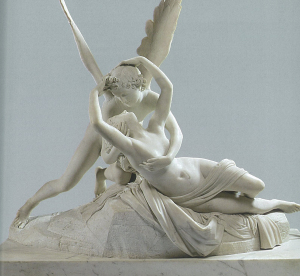
One of the major events our marketing honchos keenly look forward to happens to be the Valentine’s Day. Promotional goods flood the market. Aggressive campaigns get launched, with a sharp eye on the purse of the customer. Producers of chocolate, balloons and heart-shaped objects rule the roost. A sense of eager anticipation prevails. Love is in the air. Couples can be seen holding hands and whispering sweet nothings in each other’s ears, cooing to each other like turtle doves.
Quite a few friends of mine believe me to be a romantic. However, I confess I have never quite understood the sentiment alluded to as love. Perhaps, I am too much of a perfectionist. Or, I may be a creature of rigid habits, inwardly shuddering at the prospect of being ‘reformed’ in any way by a member of the species of the delicately nurtured.
Often, I wonder if the concept of love is merely a mirage which people keep chasing relentlessly, possibly encountering a few oases of a deeper level of infatuation along the way.
Love – A Gigantic Swindle?
What exactly does it entail to be in love with someone? If at all someone gets to experience this sentiment which is responsible for a major chunk of our literature, fine arts, and movies, why would one be referred to as having fallen in love? Is this sentiment akin to the ‘bottomless perdition’ referred to by John Milton in Paradise Lost?
Instead, why can’t people follow the example of such kids as Thomas Gregson, Bonzo Travers and Sebastian Moon? Some of you may recall how they rose in love by trying to be worthy of the affections of their favourite silver screen divas like Greta Garbo, Lilian Gish, and Clara Bow.
Consider the views of the highly opiniated and strong-willed Ann Chester of Piccadily Jim fame who calls love a swindle of gigantic proportions. She hates all this noise about love, as if it were something wonderful that was worth everything else in life put together.
“Because I’ve had the courage to think about it for myself, and not let myself be blinded by popular superstition. The whole world has united in making itself imagine that there is something called love which is the most wonderful happening in life. The poets and novelists have simply hounded them on to believe it. It’s a gigantic swindle.”
She continues further.
“I believe in marriage. . .but not as the result of a sort of delirium. I believe in it as a sensible partnership between two friends who know each other well and trust each other. The right way of looking at marriage is to realise, first of all, that there are no thrills, no romances, and then to pick out someone who is nice and kind and amusing and full of life and willing to do things to make you happy.”

Of Love, Saint Valentine, and Martyrdom
I am reasonably certain that the soul of the 3rd century Italian Saint Valentine would be rather pleased at the positive press he keeps getting year after year, though his name represents not only courtly love but also being worthy, strong, and powerful. Those who have already experienced this emotion can alone confirm if these personality traits happen to be essential for one to aspire to be a star performer in the realm of love.
However, there is no evidence that poor Saint Valentine was a patron of lovers. Just before his beheading, apparently, he wrote a note to a girl, whose eyesight he had restored, signed ‘from your Valentine’. This might have inspired today’s lovers to associate him with romantic overtures. Moreover, during the Middle Ages, it was believed that birds paired in mid-February. This could have been another factor which could have led to Valentine’s Day getting widely recognized as a day for romance and devotion.
The fact that he was martyred on February 14, 269 at the behest of Claudius II, the then Roman Emperor, might have even led people to say that they fall in love. Those who are experts on the topic of love alone may be able to say if it feels like being martyred at the altar of love when one falls in it. After all, it would need nerves of chilled steel to willingly surrender one’s freedom, carefreeness, and sovereignty to another human being, thereby, in a way, getting martyred upon falling in love. Sure enough, they follow Indian scriptures which strongly advocate the spiritual concept of surrender, albeit to a higher power.

Shades of Love
Having exercised my limited grey cells a wee bit and having perused some of the narratives of P G Wodehouse, I have veered around to the view that he captures at least three shades in the rainbow of this much-revered sentiment.
Light Pink: The Butterfly/Chamois State
Those who behave like either butterflies or the chamois of the Alps constitute this category. Consider these cases from the oeuvre of Plum and you would know what I mean.
“Are you insinuating that I am the sort of man who turns lightly from one woman to another—a mere butterfly who flits from flower to flower, sipping . . .?”
(Frederick Mulliner to Jane Oliphant in Portrait of a Disciplinarian)
“But the real reason was that he thought Boko was a butterfly.”
I couldn’t follow her. She had me fogged. Anything less like a butterfly than good old Boko I’ve never set eyes on.
“A butterfly?”
“Yes. Flitting from flower to flower and sipping.”
(Nobby Hopwood, to Bertie Wooster, Joy in the Morning)
“I haven’t seen Pongo since we were kids.”
“Even then he was flitting from flower to flower like a willowy butterfly.”
(Bill Oakshott and Lord Ickenham, Uncle Dynamite)
“I think young Mike Cardinal is a butterfly, Shorty; the kind that flits from flower to flower and sips.”
(Terry Cobbold to Lord Shortlands, Spring Fever)
“And this will show you the sort of flitting and sipping butterfly the hound is.”
(Catsmeat Potter-Pirbright, to Bertie, about Esmond Haddock, The Mating Season)
Like so many young doctors with agreeable manners and frank blue eyes, Ambrose Gussett continued to be an iodoform-scented butterfly flitting from flower to flower but never resting on any individual bloom long enough to run the risk of having to sign on the dotted line.
(Up from the Depths)
“He is a flitting butterfly and a two-timing Casanova.”
(Valerie Twistleton, speaking of Horace Davenport, The Shadow Passes)
For some time past, it appeared, he had been flitting round this girl like a pimpled butterfly, and it had suddenly come to him with a sickening shock that his emotional nature had brought him to the very verge of matrimony.
(Oofy Prosser’s self-realization, The Word in Season)
“And you stand revealed as a cross between a flitting butterfly and a Mormon elder,” said Sally with spirit. “You and Brigham Young, a pair.”
(Sally Painter to Freddie Widgeon, Ice in the Bedroom)
“The trouble with you, Bertie, is that you haven’t got it in you to understand true love. You’re a mere butterfly flitting from flower to flower and sipping, like Freddie Widgeon and the rest of the halfwits of whom the Drones Club is far too full.”
(Gussie Fink-Nottle accusing Bertie Wooster in Stiff Upper Lip, Jeeves)
“Like so many substantial citizens of America, he had married young and kept on marrying, springing from blonde to blonde like the chamois of the Alps leaping from crag to crag.”
(Summer Moonshine)
It was unfortunate that none of these arguments presented themselves to Bill Oakshott as he turned the corner. In Otis Painter he saw just another libertine, flitting from flower to flower and sipping, and we are already familiar with his prejudice against libertines.
(Uncle Dynamite)
‘What did he say?’
‘Well, he seemed to hint, unless I misunderstood him, that the above Haddock hadn’t, as it were, done right by our Nell. According to Catsmeat, you and this modern Casanova were at one time holding hands, but after flitting and sipping for a while he cast you aside like a worn-out glove and attached himself to Gertrude Winkworth. Quite incorrect, probably. I expect he got the whole story muddled up.’
(Corky and Bertie Wooster, The Mating Season)
Dark Pink: The Nightingale State
What happens when the sentiment of love has survived the ravages of time? Or, when two persons suddenly rediscover each other and sparks of love fly. Having had a rich experience in their lives, they use their astonishingly rich repertoire to ‘sing’ to each other like nightingales, sharing their social, familial, health, and many other issues with much felicity.
In most of his works, P G Wodehouse regales us with the topsy-turvy romances of couples who are invariably in the impressionable phases of their lives. But in a few of his narratives, such as Indian Summer of an Uncle, Extricating Young Gussie, and Ring for Jeeves, even a seasoned romance gets celebrated. Gone are the impulsive breakoffs linked to sharks, moustaches, and an abysmal record at the golf links. Nor are we treated here to an impetuous affair kick-started by the heroine’s cat being saved by a chivalrous and dashing hero. Instead, we are allowed to bask in the soft glow and warmth of a long drawn out romance the embers of which get rekindled after several years.
Such couples often find a common cause in family affairs, shared ailments, and, of course, areas of common interest. Piggy and Maudie, Joe and Julia, and Mrs Spottsowrth and Captain Biggar fit into this category. So do Sir Roderick Glossop and Lady Chuffnell and James Duff and Beatrice Chavender.
Bright Red: The Turtle Dove State
Marriage is not a process for prolonging the life of love, sir. It merely mummifies its corpse.
(The Small Bachelor)
However, the good news is that as long as the embers of romance are aglow, a bright red shade of love prevails.
Consider the state of matrimonial bliss Bingo Little attains after he has realized that Rosie M Banks is indeed The One as far as he is concerned. Much like a sub-atomic particle which altogether skips an orbit and jumps from one to another, he transcends from being a butterfly to a turtle dove state.
We know Bingo Little to be a diehard romantic, perennially in love with some dashing female or the other. Even when at school, he is reported to have had the finest collection of actresses’ photographs; at Oxford, his romantic nature was a byword. He is inclined to fall in love at first sight on a regular basis and become highly emotional about his affections.
Residents of Plumsville are aware that objects of his affection have included a waitress named Mabel; Honoria Glossop, the formidable daughter of Pop Glossop; Daphne Braythwayt, a friend of Honoria; Charlotte Corday Rowbotham, a revolutionary; Lady Cynthia Wickhammersley, a family friend of Bertie’s; and Mary Burgess, niece of the Rev. Francis Heppenstall. After each failed affair, Bingo does not necessarily sulk. The scales fall from his eyes, and he suddenly realizes that the next girl alone is his true soul mate.
After many failed affairs, Bingo ends up marrying the romance novelist Rosie M. Banks, an author whose outlook on life happens to match well with that of his.
Within ten days of having met his future wife, Bingo announces to Bertie Wooster that he has been successful in his latest endeavour.
‘Good Lord! That is quick work. You haven’t known her for two weeks.’
‘Not in this life, no,’ said young Bingo. ‘But she has a sort of idea that we must have met in some previous existence. She thinks I must have been a king in Babylon when she was a Christian slave. I can’t say I remember it myself, but there may be something in it.’
(The Inimitable Jeeves)
In the post-matrimony phase, we find a Bingo Little who is completely transformed. He is singularly devoted to his wife. Maintaining matrimonial peace and harmony is the sole purpose of his life. When it comes to keeping his lady-love happy and contented, there is little that he leaves to chance.
‘Oh, sweetie-lambkin, isn’t that lovely?’
‘What?’
‘Laura Pyke wants to come here.’
‘Who?’
‘You must have heard me speak of Laura Pyke. She was my dearest friend at school. I simply worshipped her. She always had such a wonderful mind. She wants us to put her up for a week or two.’
‘Right-ho. Bung her in.’
‘You’re sure you don’t mind?’
‘Of course not. Any pal of yours…’
‘Darling!’ said Mrs Bingo, blowing him a kiss.
‘Angel!’ said Bingo, going on with the sausages.
(Jeeves and the Old School Chum)
Wherever Plum is, love cannot be far behind. He covers its varied hues with much aplomb. If he, the Master Wordsmith of our times, has covered this sentiment so very extensively, I guess it must have some merit to it.
In any case, to all those who claim to be besotted, captivated, charmed, enamoured, enchanted, enraptured, obsessed, smitten, and taken in by a party of the other part, I hereby extend my best wishes. May their tribe flourish, keeping our marketing honchos, authors as well as publishers of mushy romantic books, movie moguls, and many others laughing all the way to their respective banks.
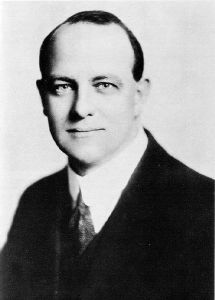
The Pale Parabola of Love
Staunch believers in the concept of love, as well as purists, may register a protest at missing out on a few other shades of this sentiment in Plum’s universe which thrives on humour, wit, and positivity. A unique feature of this universe is that nothing negative happens here. The worst suffering may involve looking for strawberries around Christmas time and getting fined as well as jugged for trying to steal some. Or, being confronted by someone like Roderick Spode who goes about issuing sinister threats to lover boys who make the party of the other part cry. The ultimate sacrifice may be going on a strict vegetarian diet and forsaking the pleasure of putting steak and kidney pie down the hatch till the time the relations are restored, and love is back on its shimmering throne.
Even death does not depress. Nor does it make the spirits sag. Instead, it finds mention in a positive vein. It confers wealth, castles and titles upon the best loved heirs and wards, thereby spreading joy and sunshine all around.
A Pristine Shade of Love
Plum presents a pristine version of love. He takes the reader on a leisurely stroll in his Garden of Eden where apples are of the high hanging kind and such creatures as snakes are singularly missing. A strict code of chivalry is in vogue. Romance blossoms. Devotion is permitted. But physical intimacy is a taboo. Aphrodite has limited access to the goings on. Eroticism is denied entry. Saint Valentine would have heartily approved.
It is rather fitting that Plum decided to hand in his dinner pail on Valentine’s Day, a day associated with love, romance, and devotion. He bequeathed his works to all his fans, spreading eternal joy and sweetness on this planet.
(Notes: Butterfly/Chamois quotes are courtesy Ana Jung. Inputs from Suryamouli Datta are gratefully acknowledged.)
Related Posts:
Some spontaneous-sounding love songs from Bollywood
Posted in The Magic of Movies!, tagged Bollywood, Dialogues, Love, Lyrics, Music, Poem, Songs, Spontaneous on December 29, 2022| 4 Comments »
Most of the songs in the movies being churned out by Bollywood happen to portray feelings of love. One often wonders as to how the heroine and the hero keep changing their outfits in each of the stanzas, keeping the wardrobe designers and producers laughing all the way to their respective banks. The high walls of manmade borders melt away, as they are seen wandering about on different continents of the world without any visa/immigration hassles, proving the age-old adage of Vasudhaiv Kutumbukam. Not to speak of the bevy of choreographers and a 100-piece orchestra which keeps following them scrupulously, without missing a single beat.
But once in a blue moon, we get treated to a love song which is more spontaneous in its depiction. The lyricist and the music director obviously work harder on creating such songs which appear as if these are getting composed by the couple in real time on the screen.
Consider the following songs which fall in this category.
One of the very few love songs which has an office setting as a background.
Jaane kahaan mera jigar gaya ji…
Movie: Mrs and Mr 55 (1955)
Singers: Mohd. Rafi, Geeta Dutt
Music Director: O P Nayyar
Lyricist: Majrooh Sultanpuri
Here is a flirtatious song from an otherwise serious movie. The back-and-forth chat between the heroine and the hero is a sheer delight.
Hum aapki ankhon mein…
Movie: Pyasa (1957)
Singers: Mohammed Rafi, Geeta Dutt
Music Director: S D Burman
Lyricist: Sahir Ludianvi
What happens when a lovers’ tiff results into a lovelorn backchat between the pair?
Achha ji main haari chalo…
Movie: Kala Pani (1958)
Singers: Mohd. Rafi & Asha Bhosle
Music: S.D. Burman
Lyricist: Majrooh Sultanpuri
A mischievous heroine puts the poor hero through an ordeal and then has the cheek to teasingly ask as to how he is feeling!
Haal kaisa hai janaab ka…
Movie: Chalti Ka Naam Gaadi (1958)
Singers: Kishore Kumar, Asha Bhosle
Music Director: S.D.Burman
Lyricist: Majrooh Sultanpuri
Claiming some dues from the party of the other part can happen even during a stage performance!
Paanch rupaiya barah anna…
Movie: Chalti Ka Naam Gaadi (1958)
Singers: Kishore Kumar, Asha Bhosle
Music Director: S D Burman
Lyricist: Majrooh Sultanpuri
How did you fall in love with me, asks the heroine coyly!
Sach bata tu mujh pe fida…
Movie: Sone ki chidiya (1958)
Singers: Asha Bhosle, Talat Mehmood
Music: O P Nayyar
Lyricist: Sahir Ludhianvi
Yet another song where bickering between a couple takes place during a stage performance.
Tere pyar ka aasra chahta hoon…
Movie: Dhool Ka Phool (1959)
Singers: Mahendra Kapoor, Lata Mangeshkar
Music Director: N. Datta
Lyricist: Sahir Ludhianvi
A romantic poem gets composed as the hero plays a muse to the heroine.
Chupke se mile pyaase pyaase…
Movie: Manzil (1960)
Singers: Geeta Dutt, Mohammed Rafi
Music Director: S. D. Burman
Lyricist: Majrooh Sultanpuri
The lovers list the precautions the party of the other part should take, lest any harm may come to the flora and fauna around.
Bikhra ke zulfien chaman mein na jaana…
Movie: Nazrana (1961)
Singers: Mukesh, Lata Mangeshkar
Music Director: Ravi
Lyricist: Rajendra Krishan
A delectable confluence of Carnatic and Hindustani music, this song captures the rivalry between two persons, both trying to woo the young lady.
Ek chatur naar…
Movie: Padosan (1968)
Singers: Manna Dey, Kishore Kumar
Music Director: R D Burman
Lyrics: Rajendra Krishan
Getting the beloved to accept that she loves the lover.
Baagon mein bahaar hai…
Movie: Aradhana (1969)
Singers: Lata Mangeshkar, Mohd. Rafi
Music Director: S D Burman
Lyricist: Anand Bakshi
Even surreptitious meetings between a couple get overshadowed by the heroine’s wish to return home early!
Achha to hum chalte hain…
Movie: Aan Milo Sajna (1970)
Singers: Kishore Kumar, Lata Mangeshkar
Music Director: Laxmikant-Pyarelal
Lyricist: Anand Bakshi
Strictly speaking, only the first portion of this song happens to be dialogue-driven. Nevertheless, overall, it surely has a dash of spontaneity to it!
Sa re ga ma pa…
Movie: Abhinetri (1970)
Singers: Lata Mangeshkar, Kishore Kumar
Music Director: Laxmikant-Pyarelal
Lyricist: Majrooh Sultanpuri
The subtle art of dodging the police by showcasing a clandestine meet as a lovers’ date.
O mere raja, khafa na hona…
Movie: Johnny Mera Naam (1970)
Singers: Kishore Kumar, Asha Bhosle
Music Director: Kalyanji Anandji
Lyricist: Rajinder Krishan
A budding romance soon gets transformed into a life-long commitment.
Aap yahaan aaye kisliye…
Movie: Kal Aaj Aur Kal (1971)
Singers: Kishore Kumar, Asha Bhosle
Music Director: Shankar Jaikishan
Lyricist: Neeraj
Social barriers and taboos keep the heroine on tenterhooks, whereas the hero is not worried about such mundane issues.
Gir gaya jhumka…
Movie: Jugnu (1973)
Music Director: S D Burman
Singers: Kishore Kumar, Lata Mangeshkar
Lyricist: Anand Bakshi
Two playful songs, depicting the sprouting of romantic feelings between two teenagers.
Mujhe kuchh kehna hai…
Hum tum ek kamre mein band hon…
Movie: Bobby (1973)
Singers: Shailendra Singh, Lata Mangeshkar
Music Director: Laxmikant Pyarelal
Lyrics: Anand Bakshi
Couplets (dohas) of such Sufi poets as Rahim and Kabir have regaled generations with pristine wisdom, duly laced with an earthy common sense. Trust Rajshri Productions to string some of these together for our sake.
Bade badaai na karen…
Movie: Ankhiyon Ke Jharokhon Se (1978)
Singers: Hemalata, Jaspal Singh
Music Director: Ravindra Jain
Lyrics: Dohas of Rahim and Kabir
Keep the dialogue on and love will soon follow it its wake!
Suniye, kahiye…
Movie: Baton Baton Mein (1979)
Singers: Kishore Kumar, Asha Bhosle
Music Director: Rajesh Roshan
Lyricist: Amit Khanna
The hero regales a bunch of kids with a juicy story about his encounter with a lion.
Mere paas aao mere doston…
Movie: Mr. Natwarlal (1979)
Singer: Amitabh Bachchan, Master Ravi
Music Director: Rajesh Roshan
Lyricist: Anand Bakshi
The hero and the heroine are cooing to each other like turtle doves. They keep rhyming words and phrases and end up creating an impromptu song!
Kaise ho pagal…
Movie: Chashme Buddoor (1981)
Singers: Raj Kamal, Hemanti Shukla
Music Director: Raj Kamal
Lyricist: Indu Jain
When his six younger brothers fall hopelessly in love, the elder one guides them!
Pyaar tumhen kis mod pe le aaya…
Movie: Satte Pe Satta (1982)
Singers: Kishore Kumar, Bhupinder and others
Music Director: R D Burman
Lyricist: Gulshan Bawra
These are songs which, I believe, showcase a higher level of creativity on the part of our lyricists and music directors. To bring in a spontaneity of this kind is no mean task. Alas, these are very few and far between.
Can you think of any songs which could be added to this list? If so, please leave behind a comment below.
{Note: Inputs from Ms Madhulika Liddle, Mr Sunil Jain and Ms Pooja Agrawal are gratefully acknowledged}.
Related Posts:
A Mature Shade of Love in Movies
Posted in The Magic of Movies!, tagged Bollywood, Hollywood, Love, Movies, Romance on September 29, 2022| Leave a Comment »

Come Valentine’s Day and the air is fragrant with thoughts of love, caring and compassion. The movie buffs amongst us are literally spoiled for choice. For example, we can catch up on one of the breezy romcoms, like 50 First Dates (2004, Peter Segal), Rab Ne Bana Di Jodi (2008, A Match Made by God, Aditya Chopra), No Strings Attached (2011, Ivan Reitman) or Yeh Jawaani Hai Deewani(2013, Crazy Youth, Ayan Mukerji). 
Or, we can delve into our personal collections and rediscover classics such as Gone With the Wind(1939, Victor Fleming, George Cukor, Sam Wood), Mughal-e-Aazam(1960, K Asif, The Emporer of the Mughals), The Sound of Music(1965, Robert Wise) or Guide (1965, Vijay Anand).
We also have the choice of curling up on a love couch and savoring romantic escapades of the mature and ripe kind. Here are some movies…
View original post 715 more words
Lord Emsworth and the Girl Friend: When Nature stands still
Posted in What ho!, tagged Blandings Castle, Flowers, Girlfriend, Gladys, Humour, Lord Emsworth, Love, Nature, P G Wodehouse on June 10, 2022| Leave a Comment »
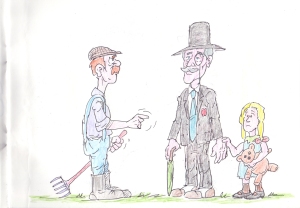
Much like all masters perched on the literary high table, P G Wodehouse also used Nature as a colluding partner in his narratives. When all is well with the world, roses are in bloom, bees and birds go about doing what they are ordained to do, and the sun goes about spreading cheer with due benevolence. But when giant egos clash or a disaster looms large, Nature stops in its tracks, birds stop chirping noisily, breeze ceases to blow and even flowers stand still.
In other words, Nature is depicted as having a sensitive soul, cheered up when the proceedings are going as per plans, but looking askance when the reverse happens. In the hands of proficient wordsmiths, it assumes a character of its own and provides mute support to the goings on in the narrative.
By way of an example, consider the story ‘Lord Emsworth and the Girl…
View original post 742 more words
Lord Emsworth and the Girlfriend: A Viewpoint
Posted in What ho!, tagged Awe, Girlfriend, Gladys, Humour, Lord Emsworth, Love, P G Wodehouse on June 8, 2022| Leave a Comment »
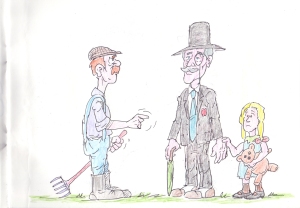
The narratives dished out by Plum not only amuse but also educate the lay reader. Critics may label these as escapist fares, but that does not take away the kind of social and spiritual lessons which are embedded therein.
When a girl whom you have come to respect seeks your protection, you try to rise to her expectations. Suddenly, the spine which was made of cottage cheese gets transformed into one of chilled steel. You stand up to bullies and tell them where they get off. You look them in the eye and make them wilt, making them beat a hasty retreat from their time-tested positions. Like Angus McAllister, they suddenly find more merit in ‘ceasing to be a Napoleon than to become a Napoleon in exile.’
The Parva School Treat Transformation
When the story begins, we find that Lord Emsworth’s soul is weighed down with woe. The…
View original post 786 more words
-
Recent Posts
Buy the Book

buy the book
Categories
-
cc
Tags
Art Bertie Wooster Bhagavad Gita Bingo Little Birthday Blake Mouton Grid Blogging Bollywood Book Campus Life CEO Chivalry Consciousness Coronavirus Corruption Edwin Empress of Blandings English Ethics Feminism Happiness Health Hindi Hollywood Human Values Humour India Jeeves Kalidasa KIds Leadership linkedin Literature Lord Emsworth Love Lyrics Mahabharata Mahatma Gandhi Management Movies Music Norway Paintings Panjab University People P G Wodehouse Politics Pondicherry Portugal Psmith Puducherry Rabindranath Tagore Ramayana Ritusamhara R K Laxman Romance Rosie M Banks Rupert Psmith Seasons Shakespeare Social Media Something Fresh Songs SPANDAN Spirituality SQ Sri Aurobindo Stephen Covey Switzerland Tatas Thos UBS Values Wodehousitis WomenArchives
- March 2026 (1)
- February 2026 (5)
- January 2026 (2)
- December 2025 (1)
- November 2025 (2)
- October 2025 (2)
- September 2025 (3)
- August 2025 (3)
- July 2025 (2)
- June 2025 (2)
- May 2025 (4)
- April 2025 (5)
- March 2025 (5)
- February 2025 (4)
- January 2025 (4)
- December 2024 (6)
- November 2024 (6)
- October 2024 (6)
- September 2024 (5)
- August 2024 (5)
- July 2024 (4)
- June 2024 (4)
- May 2024 (5)
- April 2024 (5)
- March 2024 (3)
- February 2024 (1)
- January 2024 (4)
- December 2023 (2)
- November 2023 (3)
- October 2023 (3)
- September 2023 (3)
- August 2023 (5)
- July 2023 (5)
- June 2023 (7)
- May 2023 (6)
- April 2023 (6)
- March 2023 (8)
- February 2023 (8)
- January 2023 (7)
- December 2022 (6)
- November 2022 (5)
- October 2022 (8)
- September 2022 (5)
- August 2022 (6)
- July 2022 (6)
- June 2022 (8)
- May 2022 (7)
- April 2022 (8)
- March 2022 (7)
- February 2022 (3)
- January 2022 (7)
- December 2021 (4)
- November 2021 (8)
- October 2021 (7)
- September 2021 (6)
- August 2021 (7)
- July 2021 (7)
- June 2021 (9)
- May 2021 (8)
- April 2021 (9)
- March 2021 (10)
- February 2021 (8)
- January 2021 (8)
- December 2020 (7)
- November 2020 (6)
- October 2020 (5)
- September 2020 (9)
- August 2020 (9)
- July 2020 (8)
- June 2020 (8)
- May 2020 (6)
- April 2020 (5)
- March 2020 (7)
- February 2020 (4)
- January 2020 (7)
- December 2019 (12)
- November 2019 (10)
- October 2019 (5)
- September 2019 (9)
- August 2019 (10)
- July 2019 (9)
- June 2019 (14)
- May 2019 (13)
- April 2019 (14)
- March 2019 (11)
- February 2019 (11)
- January 2019 (14)
- December 2018 (12)
- November 2018 (12)
- October 2018 (14)
- September 2018 (9)
- August 2018 (10)
- July 2018 (10)
- June 2018 (8)
- May 2018 (11)
- April 2018 (11)
- March 2018 (6)
- February 2018 (9)
- January 2018 (10)
- December 2017 (10)
- November 2017 (9)
- October 2017 (8)
- September 2017 (11)
- August 2017 (10)
- July 2017 (10)
- June 2017 (11)
- May 2017 (9)
- April 2017 (7)
- March 2017 (7)
- February 2017 (8)
- January 2017 (10)
- December 2016 (9)
- November 2016 (11)
- October 2016 (10)
- September 2016 (10)
- August 2016 (9)
- July 2016 (6)
- June 2016 (10)
- May 2016 (10)
- April 2016 (10)
- March 2016 (10)
- February 2016 (12)
- January 2016 (10)
- December 2015 (11)
- November 2015 (11)
- October 2015 (10)
- September 2015 (10)
- August 2015 (10)
- July 2015 (10)
- June 2015 (10)
- May 2015 (10)
- April 2015 (10)
- March 2015 (9)
- February 2015 (10)
- January 2015 (8)
- December 2014 (9)
- November 2014 (8)
- October 2014 (8)
- September 2014 (7)
- August 2014 (7)
- July 2014 (7)
- June 2014 (7)
- May 2014 (7)
- April 2014 (7)
- March 2014 (7)
- February 2014 (6)
- January 2014 (7)
- December 2013 (6)
- November 2013 (6)
- October 2013 (6)
- September 2013 (6)
- August 2013 (6)
- July 2013 (6)
- June 2013 (6)
- May 2013 (6)
- April 2013 (6)
- March 2013 (6)
- February 2013 (6)
- January 2013 (6)
- December 2012 (4)
- November 2012 (4)
- October 2012 (3)
- September 2012 (2)
- August 2012 (4)
- July 2012 (2)
- June 2012 (2)
- May 2012 (2)
- April 2012 (2)
- March 2012 (2)
- February 2012 (3)
- December 2011 (3)
- November 2011 (1)
- October 2011 (2)
- September 2011 (2)
- August 2011 (2)
- July 2011 (2)
- June 2011 (3)

 ashokbhatia